



Futures Order Execution: How Exchanges Match, Fill, and Safeguard Your Trades
Overview #
You click "Buy." A fraction of a second later, the exchange confirms your fill. Between those two moments, your order traveled through a validation gateway, entered an electronic order book, competed against thousands of other orders under specific matching rules, and generated a trade that will be guaranteed by a central counterparty. Understanding what happens in that fraction of a second — and what protects your money throughout the process — is what separates informed traders from passengers.
Most traders think of execution as binary: either you got filled or you didn't. But the mechanics of HOW you get filled determine your slippage, your queue position, your fill probability, and ultimately whether the system protects you when something goes wrong. This article traces the complete path of a futures order from your platform to the matching engine and beyond.
The Order Lifecycle on CME Globex #
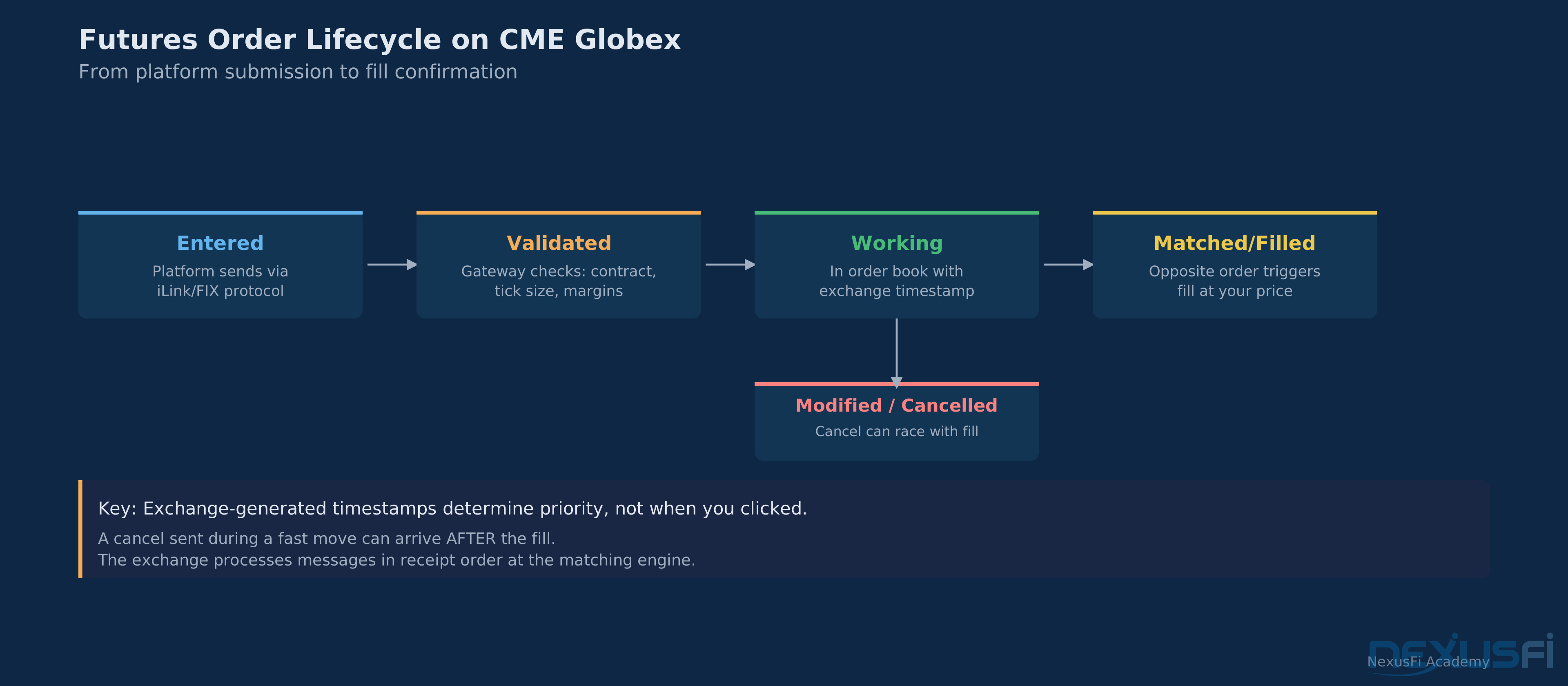
Every order on CME Globex passes through four distinct states before reaching its final disposition. Understanding these states explains why your platform shows "Working" before "Filled" — and why a cancel request can arrive too late.
State 1: Entered. Your trading platform sends the order via the iLink or FIX protocol to the exchange gateway. At this point, the exchange has received your message but hasn't validated it yet. Network latency between your platform and the exchange gateway typically ranges from 1-50 milliseconds depending on your connectivity — co-located servers measure this in microseconds.
State 2: Validated. The exchange gateway checks your order against contract specifications: Is the tick size correct? Is the contract currently trading? Does your clearing firm have sufficient margin capacity? Orders that fail validation are rejected immediately. This is why you occasionally see "Order Rejected" messages — the gateway caught a problem before the order reached the book.
State 3: Working. Your order enters the central limit order book with an exchange-assigned timestamp. This timestamp — not when you clicked the button — determines your queue priority. For limit orders, you're now waiting in line at your specified price level. For market orders, this state is basically instantaneous because the matching engine processes them immediately against resting liquidity.
State 4: Matched/Filled. An opposing order triggers a match at your price. The matching engine pairs your order with one or more counterparties and generates execution reports sent back through the same protocol path. Partial fills are common when your order size exceeds available liquidity at the best price.
There's a fifth possibility that catches traders off guard: Cancel racing a fill. If you send a cancel while the market is moving fast, your cancel message can arrive at the matching engine AFTER a fill has already occurred. The exchange processes messages in receipt order. You thought you cancelled; the exchange says you're filled. The exchange is right.
As Fat Tails explained on NexusFi, CME matching algorithms vary by instrument, and stop orders are converted to market orders at the trigger price, then participate in the applicable matching process. The distinction matters because it affects whether you get the exact trigger price or experience slippage.
Matching Algorithms: How the Exchange Decides Who Gets Filled #
Not all futures products use the same matching rules. CME Globex employs three primary algorithms, and the one your product uses directly affects your fill probability and queue position.
FIFO (First In, First Out) is used by virtually every liquid futures contract — ES, NQ, CL, GC, ZB, and most products retail traders encounter. Orders at the same price level are filled in strict time priority. The first order to arrive at that price gets filled first. This is why co-location matters for high-frequency firms: microseconds of time priority translate into billions of dollars annually. For retail traders, it means your limit order at 5200.00 sits behind every other limit order that arrived at 5200.00 before yours.
Pro-Rata allocation is used primarily for certain options and spread products. Instead of time priority, orders at the same price are filled proportionally based on their size. If you have 100 contracts resting and the total resting quantity at that price is 1,000, you receive roughly 10% of any incoming order. Pro-rata matching rewards size rather than speed — a at the core different incentive structure.
Lead Market Maker (LMM) allocation gives designated market makers a guaranteed minimum fill percentage at the best price. This exists because exchanges need market makers to provide liquidity in less-active products. The LMM gets their allocation first; remaining quantity is distributed via FIFO or pro-rata among other participants.
SMCJB noted on NexusFi that the CME publishes which matching algorithm each product uses in its GCC Product Resources documentation — and emphasized that "pretty much every liquid FUTURES product on Globex uses plain FIFO." The practical implication: for the products most traders trade, time priority is everything.
The Regulatory Framework: Who Watches the Watchers #
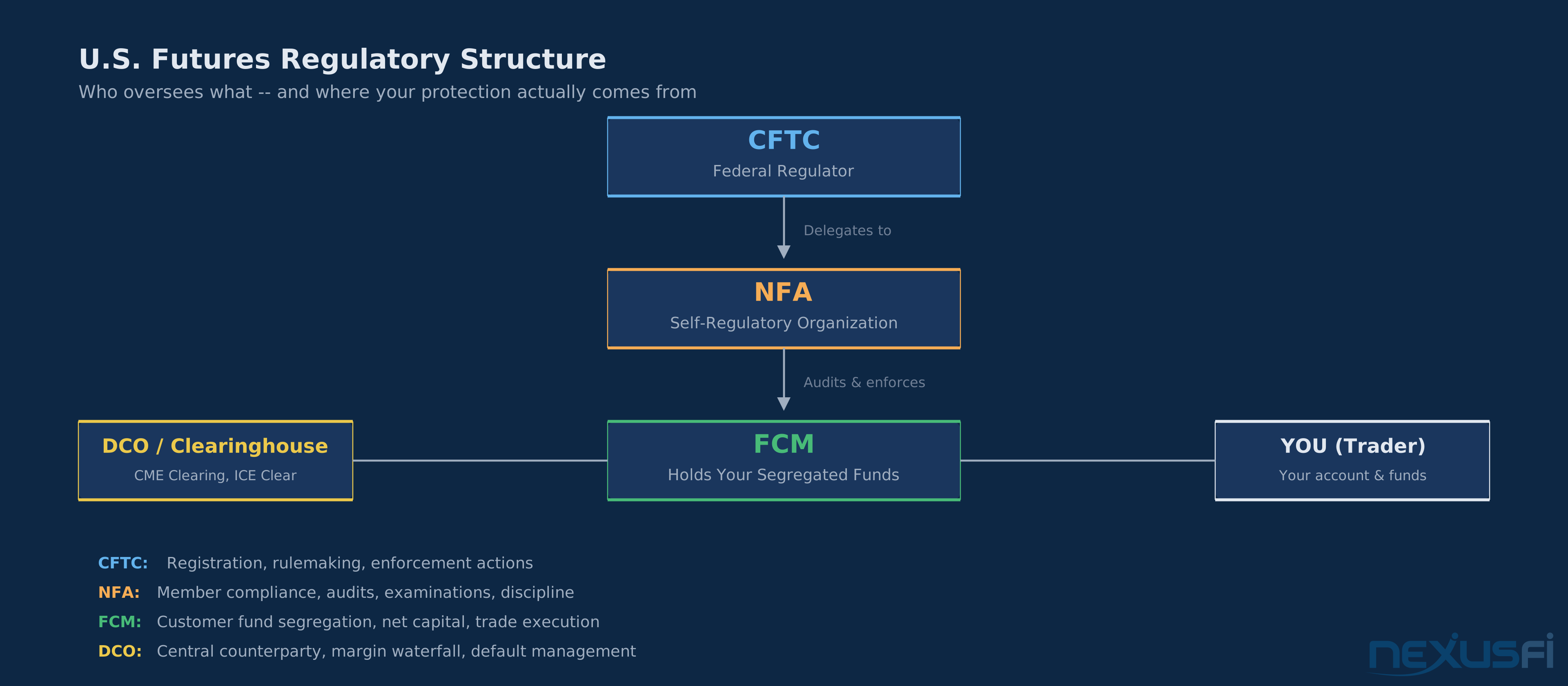
Futures markets operate under a layered regulatory structure where each entity has specific responsibilities. Understanding this structure matters because your protection depends on it.
The CFTC (Commodity Futures Trading Commission) sits at the top as the federal regulator. They set the rules: registration requirements, position limits, anti-manipulation enforcement, and oversight of all market participants. The CFTC doesn't audit every broker directly — they delegate frontline supervision.
The NFA (National Futures Association) serves as the industry's self-regulatory organization. Every FCM, introducing broker, commodity trading advisor, and commodity pool operator must be an NFA member. The NFA conducts examinations, enforces compliance, processes customer complaints, and maintains the BASIC system where you can look up any registered firm's disciplinary history.
FCMs (Futures Commission Merchants) are the firms that actually hold your money and clear your trades. This is the critical distinction many traders miss: the platform you trade on and the FCM that holds your funds may be different entities. NinjaTrader Brokerage, for example, is both a platform provider and an FCM. Other platforms route through third-party FCMs. Your clearing agreement tells you which entity is your FCM — and that's where your safety analysis should focus.
DCOs (Derivatives Clearing Organizations) — the clearinghouses like CME Clearing and ICE Clear — guarantee trade performance through central counterparty clearing. After your trade is matched, the clearinghouse inserts itself between buyer and seller, guaranteeing both sides. This eliminates counterparty risk at the trade level but does not protect your cash from FCM mismanagement.
The Fund Custody Chain: Where Your Money Actually Sits #
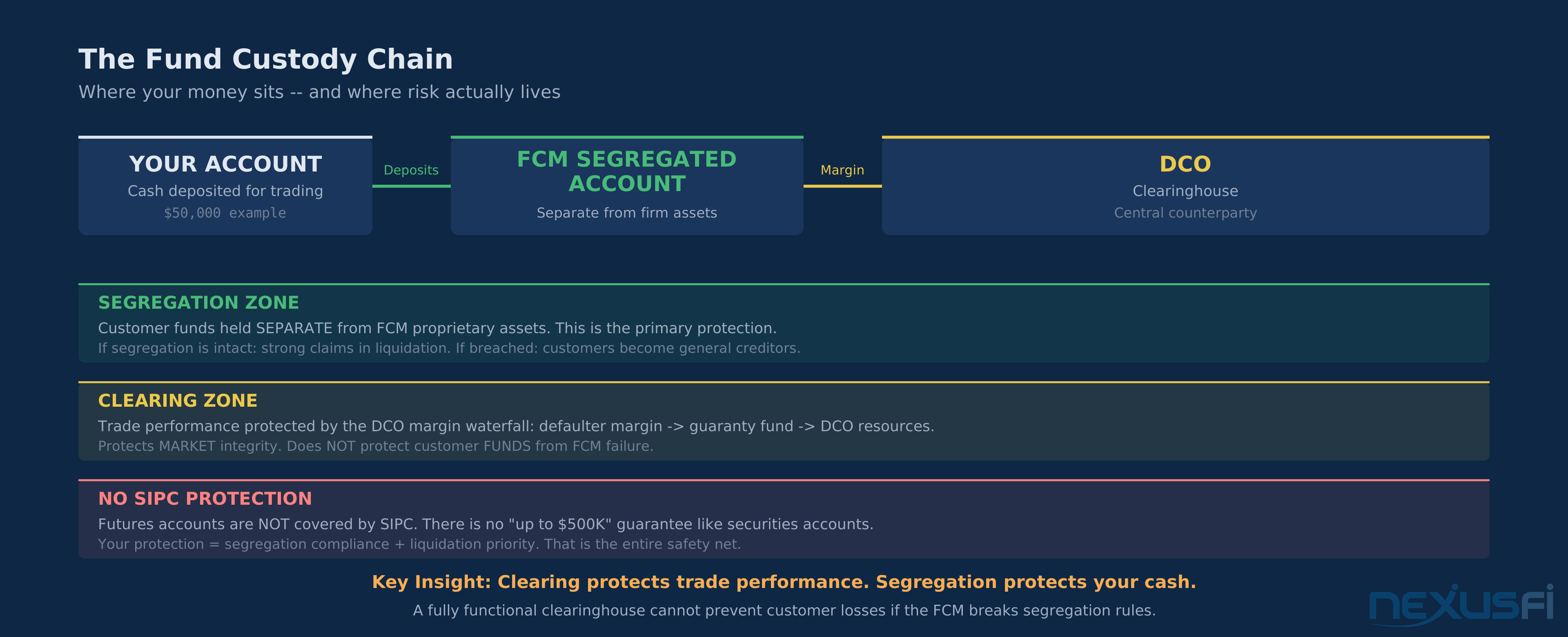
When you wire $50,000 to fund a futures trading account, those funds follow a specific custody path. The safety of your capital depends entirely on the integrity of this chain.
Your cash goes into an FCM segregated account — a bank account that is legally required to be separate from the FCM's own operating funds. This is the primary protection in futures: customer funds cannot be commingled with firm assets. The FCM then posts margin to the clearinghouse based on your open positions.
Here's what many traders don't understand: futures accounts have no SIPC protection. SIPC covers securities accounts up to $500,000. Futures accounts have zero insurance coverage. Your protection consists entirely of (1) the segregation requirement, (2) the FCM's compliance with that requirement, and (3) your priority claim in any liquidation proceeding.
The clearinghouse's default waterfall — the system that absorbs losses when a clearing member fails — protects trade performance, not customer funds. If a clearing member defaults on a position, the waterfall ensures the other side of the trade still gets paid. But if an FCM misuses segregated customer funds, the clearinghouse cannot make customers whole. As Big Mike has warned on the NexusFi brokers forum: "there is NO INSURANCE for funds deposited at an FCM. You have only the trust in the FCM's accounting practices to save you."
When It Goes Wrong: MF Global and PFG Best #
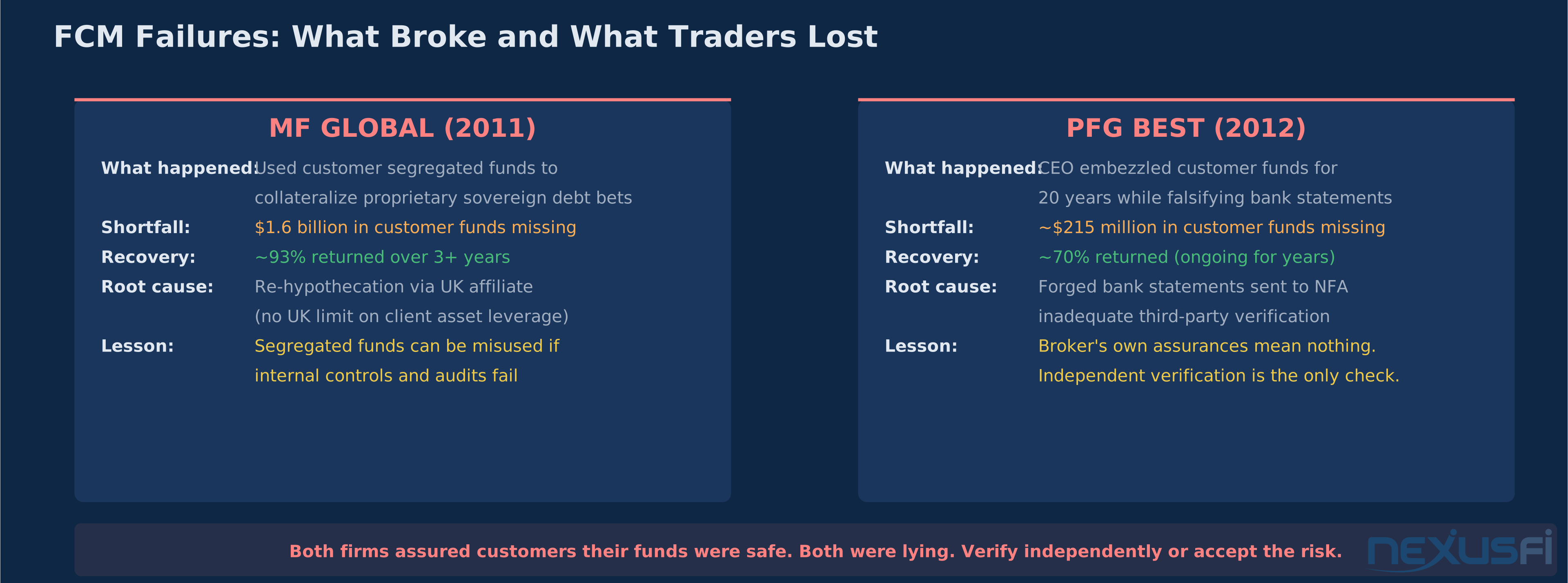
Two catastrophic FCM failures in consecutive years demonstrated exactly how bad things can get when fund segregation breaks down.
MF Global (2011) used customer segregated funds to collateralize proprietary bets on European sovereign debt. Through a UK affiliate with looser re-hypothecation rules, the firm leveraged client assets in ways that U.S. regulations were supposed to prevent. When their sovereign debt positions collapsed, $1.6 billion in customer funds went missing. Customers eventually recovered approximately 93% of their funds — but only after years of litigation and trustee proceedings.
PFG Best (2012) was even more brazen. CEO Russell Wasendorf Sr. embezzled customer funds for two decades while personally forging bank statements submitted to the NFA. When the fraud was finally discovered, approximately $215 million in customer funds were missing. Recovery reached roughly 70%, again only after extended proceedings.
Both firms told customers their money was safe. Both were lying. The lesson is uncomfortable but essential: verbal assurances from your broker about fund safety are meaningless. Only independent verification through public regulatory records provides actual evidence.
These failures directly led to enhanced regulations, including electronic confirmation of segregated fund balances that make PFG-style document forgery far more difficult. But no regulation eliminates risk entirely.
The 5-Minute Broker Safety Check #
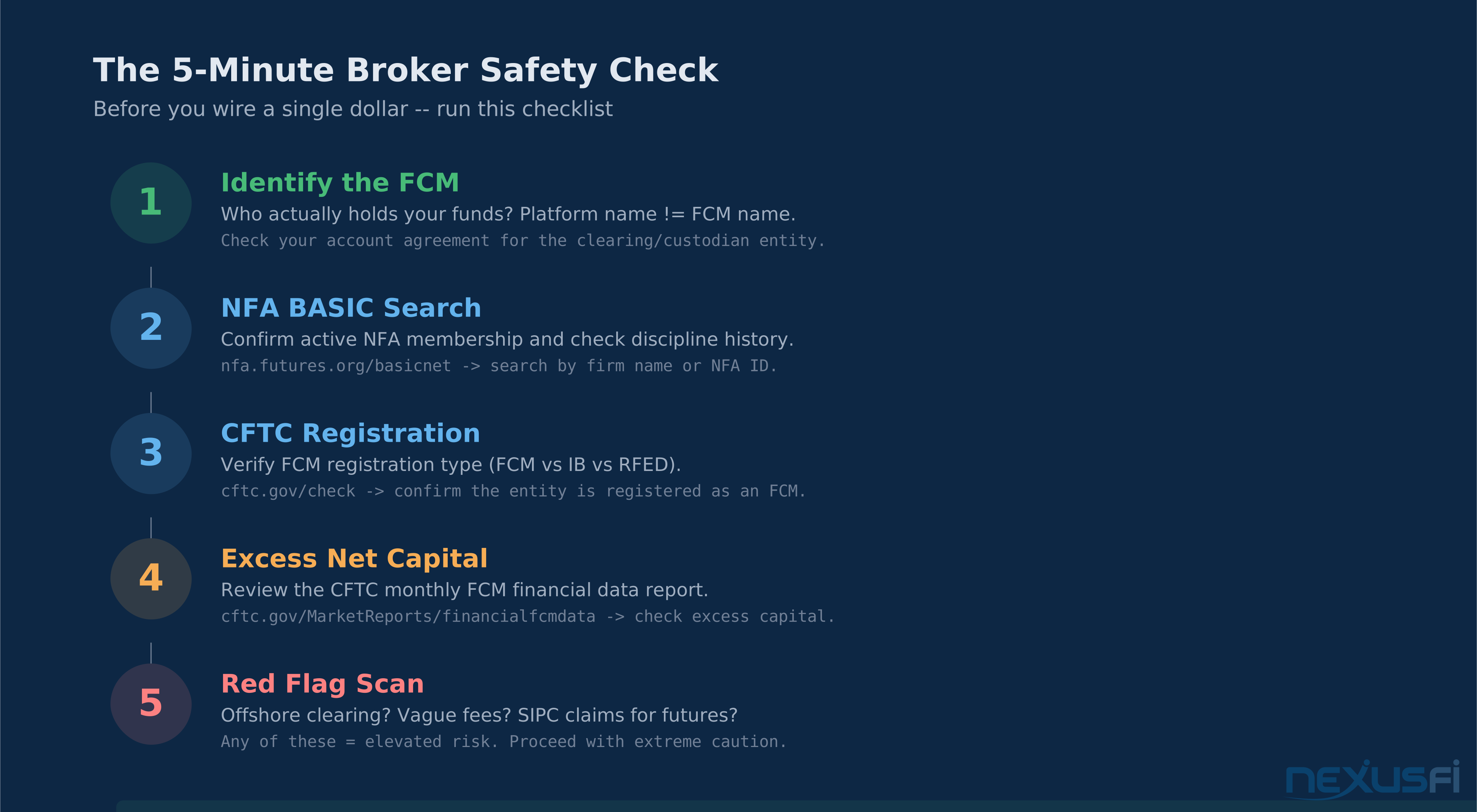
Before wiring a single dollar to any futures broker or FCM, run this due diligence process:
Step 1: Identify the FCM. Platform name does not equal FCM name. Check your account agreement for the clearing/custodian entity. That's who actually holds your money.
Step 2: NFA BASIC Search. Go to nfa.futures.org/basicnet and search by firm name or NFA ID. Confirm active membership and review the entire disciplinary history. Any significant actions should give you pause.
Step 3: CFTC Registration Verification. Confirm the entity is registered as an FCM (not just an introducing broker or RFED). FCM registration means they're subject to the full capital requirements and segregation rules.
Step 4: Review Excess Net Capital. The CFTC publishes monthly FCM financial data at cftc.gov/MarketReports/financialfcmdata. Look for the "Excess Adjusted Net Capital" figure. Larger excess capital provides a bigger buffer against operational shocks. Compare across FCMs to understand relative capitalization.
Step 5: Red Flag Scan. Offshore clearing arrangements, vague fee structures, claims of SIPC protection for futures accounts, or reluctance to disclose the clearing FCM — any of these should trigger elevated scrutiny. As djkiwi noted in the detailed NexusFi "Futures Broker Due Diligence" thread following the PFG collapse, independent verification is the only real check available to retail traders.
What Matters for Your Trading #
The execution and safety infrastructure of futures markets works well the vast majority of the time. CME Globex processes millions of orders daily with extraordinary reliability. Clearinghouses have weathered every market crisis since their creation without a customer default.
But "works well most of the time" is not the same as "guaranteed." Three practical principles emerge:
Execution awareness improves your trading. Understanding FIFO priority, the cancel-racing-fill problem, and the distinction between gateway validation and matching engine processing helps you set realistic expectations for fills — especially during fast markets.
Fund safety is your responsibility. No regulator, exchange, or clearinghouse guarantees your account against FCM failure. Segregation requirements provide strong protection, but enforcement depends on the FCM's honesty. Diversifying across multiple FCMs is the only structural mitigation available to retail traders.
Verify, don't trust. Every piece of information about your FCM's financial health is publicly available through CFTC and NFA resources. Use it. The traders who lost money at MF Global and PFG Best didn't lack access to warning signs — they lacked the habit of checking.
The system between your click and your fill is sophisticated, fast, and remarkably strong. Understanding it doesn't just make you a better-informed trader. It makes you a harder target for the rare but real failures that can wipe out an account.
Knowledge Map
Prerequisites
Understand these firstReferences This Article
Articles that build on this topicCitations
- — Are stop orders placed in queue? (2014) 👍 10“CME matching algorithms are explained here”
- — To be filled or not to be filled (2016) 👍 2“Pretty much every liquid FUTURES product on Globex uses plain FIFO”
- — Is Amp at risk of going under? (2020) 👍 7“There is NO INSURANCE for funds deposited at an FCM”
- — Class Action Lawsuit: AMP Global Clearing LLC (2020) 👍 21“IB has excess capital of $4 billion”
- — Edge Clear futures broker (2020) 👍 5“Segregated bank account held separate from working capital of the FCM”
- — Futures Broker Due Diligence Notes post PFG (2012) 👍 3“Independent verification is the only real check available to retail traders”