



Camarilla Pivot Points: A Complete Methodology for Futures Day Traders
Overview #
Camarilla pivot points are one of the most quietly effective tools in futures day trading. Unlike floor trader pivots, which derive all their levels from the same midpoint formula, Camarilla pivots anchor every level to the prior day's closing price and scale them based on the prior day's range. The result is a set of intraday levels that predict where the current session is likely to find its natural boundaries — before a single tick is printed.
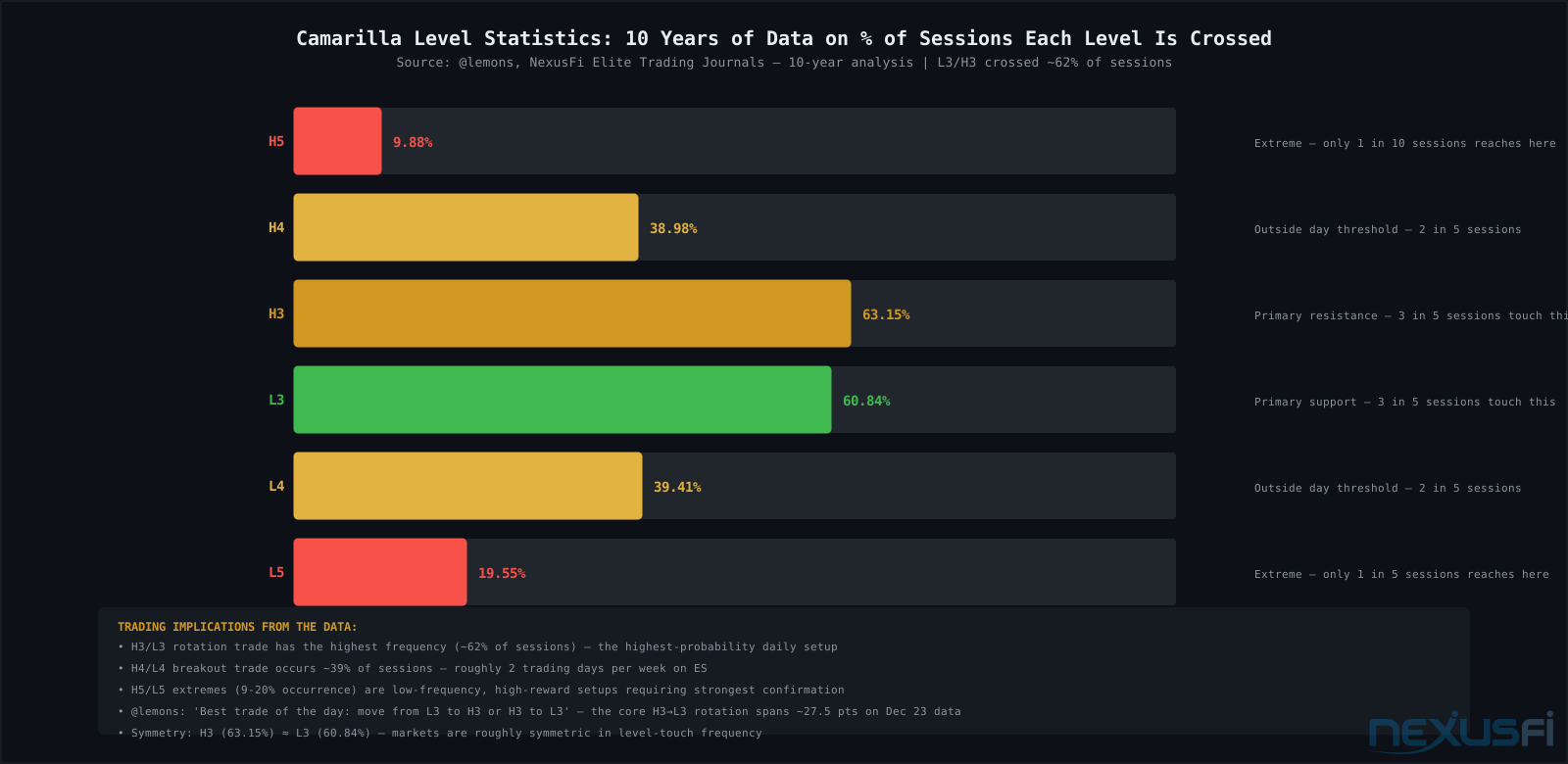
The core insight behind Camarilla pivots is statistical. Over thousands of trading sessions on ES, NQ, CL, and GC, price tends to oscillate within the H3/L3 band the majority of the time. According to a 10-year analysis posted by @lemons in NexusFi's Elite Trading Journals, H3 is crossed in approximately 63% of sessions and L3 in approximately 61% of sessions. That means on roughly 60% of trading days, the H3/L3 range acts as a natural container for intraday price movement — and you can exploit that tendency systematically.
But the trap most traders fall into is treating Camarilla levels as guaranteed support and resistance. They're probabilistic zones, not walls. The methodology only works when you match the correct playbook to the current regime. An inside day and an outside day require at the core different approaches to the same levels. Using the wrong playbook on the right level is the single most common source of Camarilla losses.
This article gives you the complete Camarilla methodology for futures day trading: the exact formulas, realistic ES and NQ examples using real December 2025 price data, the three distinct trade playbooks (Rotation, Breakout, Sweep-and-Revert), order flow confirmation criteria, failure mode checklists, and integration with VWAP and market profile. By the end, you'll have a decision framework you can apply before the open tomorrow.
Session Definitions #
Before running the Camarilla formula, you need to make one decision that most traders skip: which prior day data are you using? For ES and NQ futures, there are two reasonable choices — RTH only (9:30 AM to 4:00 PM ET) or the full 24-hour Globex session. This choice changes your H/L/C inputs and so every level you compute.
The practical answer for most day traders is RTH high, low, and close. Here's why: the Camarilla formula was originally designed for instruments with a single primary trading session. The RTH session is where institutional order flow concentrates, where open interest commitment is highest, and where the levels are most relevant to the intraday auction. The Globex session introduces overnight gaps and thin-book price spikes that can distort your H/L inputs, producing levels that don't correspond to where actual trading volume occurred.
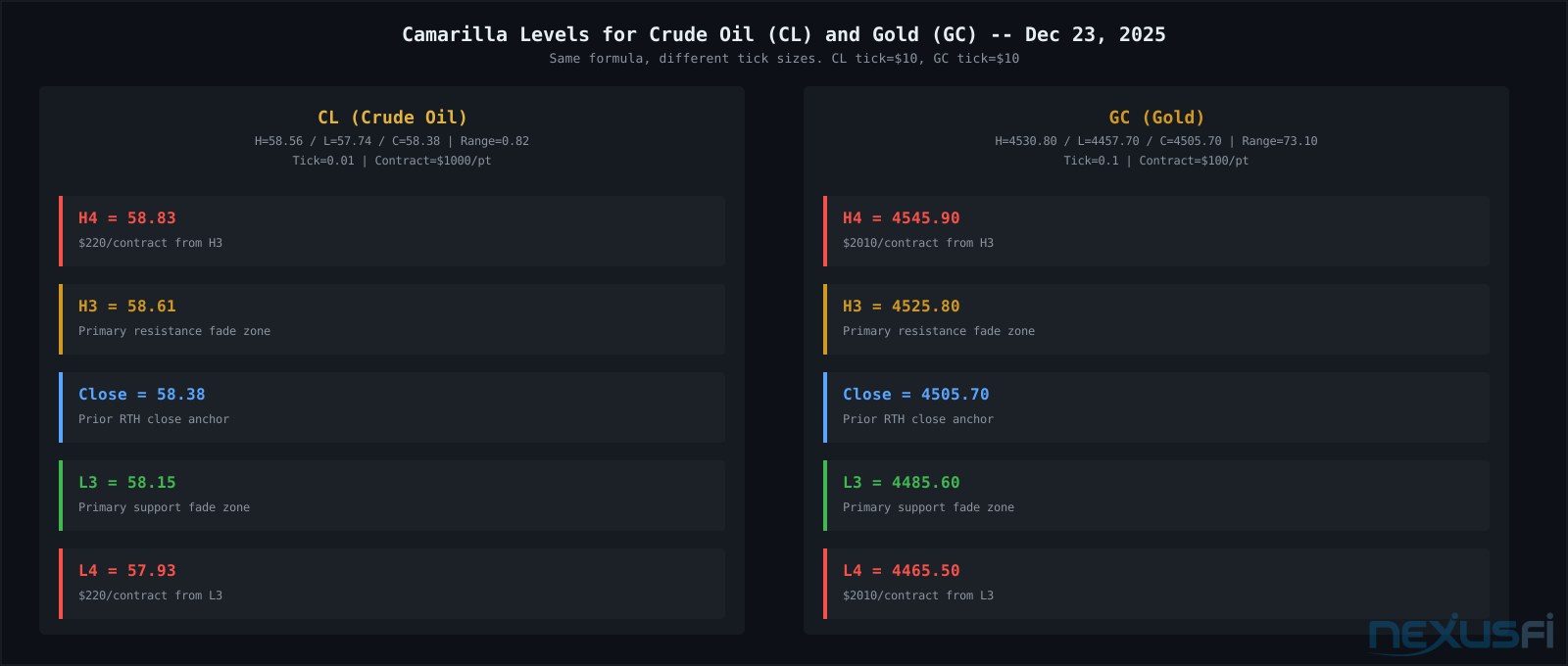
For CL and GC, the convention shifts slightly. Crude oil has meaningful volume in the pre-market session around 8:00-9:00 AM ET due to European participation, and many CL traders compute levels from the 17:00-16:15 CT electronic session. Gold is similar. Whatever convention you use — pick one, define it in your trading plan, and don't switch between them mid-experiment.
Prior day close definition: For ES and NQ, use the 4:00 PM ET RTH close, not the 5:00 PM Globex settlement. The 4:00 PM close captures the last minute of real institutional participation and is what most pivot calculation tools default to. For MultiCharts users, @Jura's Camarilla indicator allows specifying the exact closing time in the inputs — set it to 15:30 CT (16:30 ET minus 1 hour) and the levels will compute correctly for overnight data.
Your required inputs for each session:
- Prior day High (H): Highest price during RTH session
- Prior day Low (L): Lowest price during RTH session
- Prior day Close (C): 4:00 PM ET settlement price
- Range: H − L (no further calculation needed)
The Math: L3/L4/H3/H4 Calculation #
The Camarilla formula is based on a single empirically-derived multiplier: 1.1 times the prior day's range. As @Fat Tails documented in NexusFi's Elite Circle, the complete level set is symmetric around the prior close:
H3 = Close + (Range × 1.1 / 4)     ← Primary resistance
H4 = Close + (Range × 1.1 / 2)     ← Breakout threshold
L3 = Close − (Range × 1.1 / 4)     ← Primary support
L4 = Close − (Range × 1.1 / 2)     ← Breakdown threshold

H2 = Close + (Range × 1.1 / 6)     ← Secondary (often skipped)
H1 = Close + (Range × 1.1 / 12)    ← Minor level
L1 = Close − (Range × 1.1 / 12)    ← Minor level
L2 = Close − (Range × 1.1 / 6)     ← Secondary (often skipped)
Day traders overwhelmingly focus on H3/H4/L3/L4. The H1/H2/L1/L2 levels exist but produce so many signals that they're more noise than signal for intraday trading. Use H3/L3 as your primary rotation zones and H4/L4 as your extreme/breakout thresholds.
ES Example — December 23, 2025:
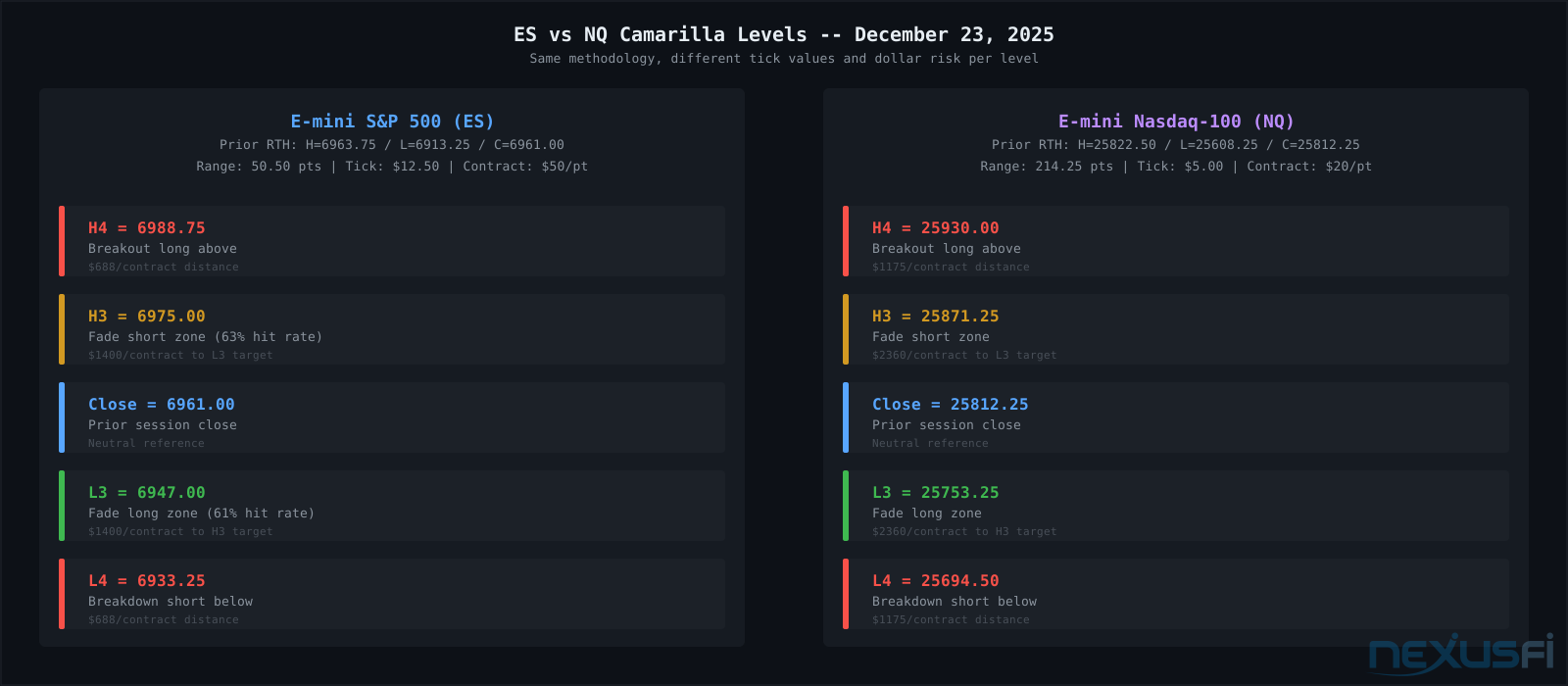
Prior Day Data:  High = 6963.75  |  Low = 6913.25  |  Close = 6961.00
Range = 6963.75 − 6913.25 = 50.50 points

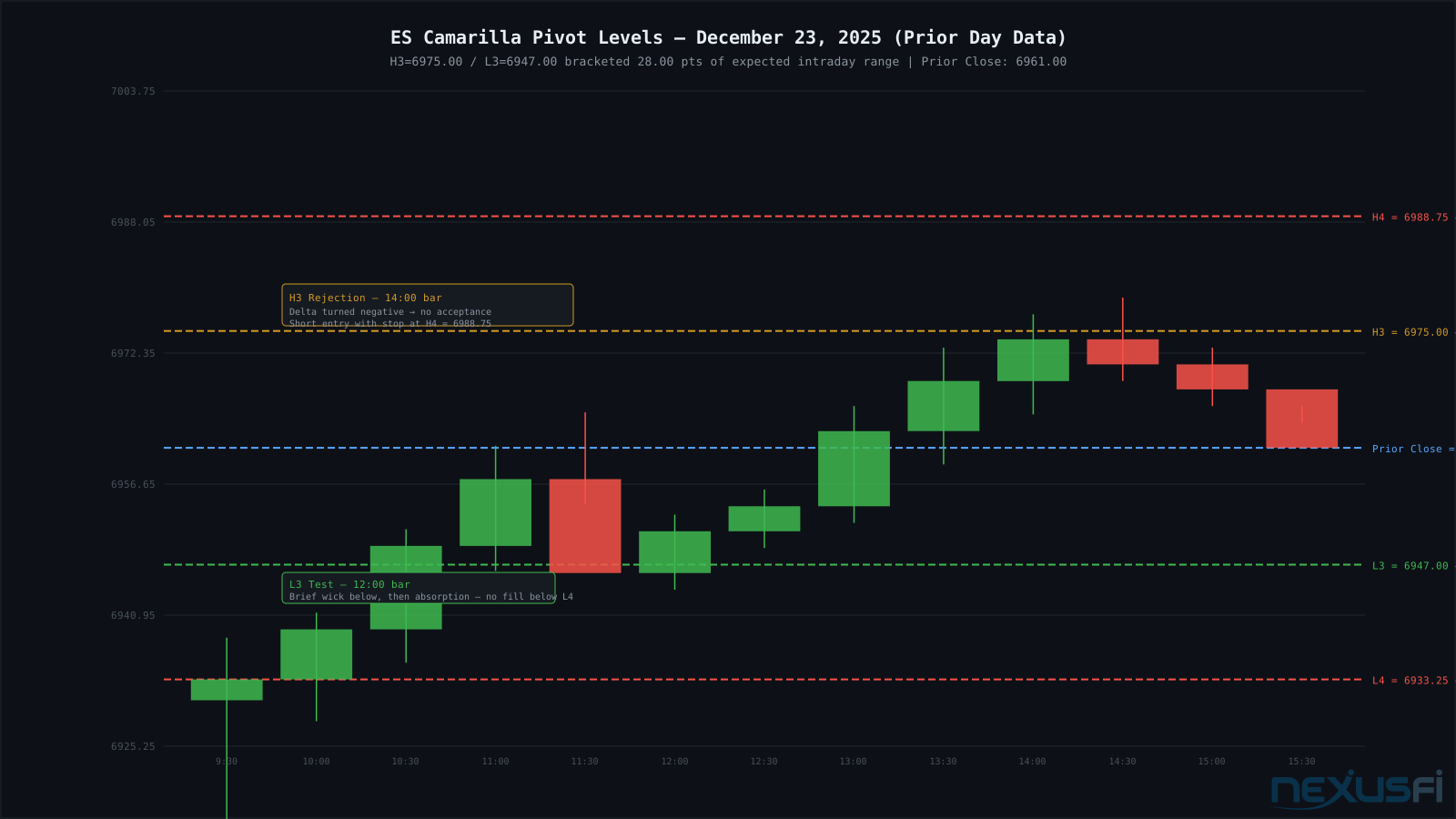
H3 = 6961.00 + (50.50 × 1.1 / 4) = 6961.00 + 13.8875 = 6975.00
H4 = 6961.00 + (50.50 × 1.1 / 2) = 6961.00 + 27.7750 = 6988.75
L3 = 6961.00 − (50.50 × 1.1 / 4) = 6961.00 − 13.8875 = 6947.00
L4 = 6961.00 − (50.50 × 1.1 / 2) = 6961.00 − 27.7750 = 6933.25
On this day, the H3/L3 spread is 28.00 points. The H4/L4 spread is 55.50 points. A rotation trade from L3 to H3 (or vice versa) offers 28.00 points potential at roughly 3:1 relative to the 4-6 tick stops typically used at these levels.
Tick rounding matters: always round to the nearest 0.25 for NQ and ES to align with actual exchange-traded prices. @papa15 found that rounding to the exchange tick improved level reliability by placing entries at real price increments where limit orders cluster.
Level Hierarchy and Meaning #
The four primary Camarilla levels are not equally important, and treating them as equivalent is a common mistake. Here's the priority framework:
H3 and L3 — Primary Rotation Zones: These are your highest-frequency trade opportunities. According to @lemons' 10-year dataset, H3 is crossed in 63.15% of sessions and L3 in 60.84%. In practical terms, this means roughly 3 out of every 5 trading days, price will touch H3 or L3. These levels work because they mark the approximate boundary of "fair value extension" from the prior close — beyond them, price has moved enough to attract countertrend institutional interest. They work best on balanced, range-bound sessions where the auction has no directional conviction.
H4 and L4 — Extreme Breakout Thresholds: H4 is crossed in only 38.98% of sessions; L4 in 39.41%. When price reaches H4 or L4, you've entered outside-day territory — the market is extending beyond normal range. At these levels, you have two options: fade an exhaustion reversal, or confirm a breakout and go with the direction. The key distinction is acceptance: does price close beyond H4/L4 with sustained delta, or does it spike and reverse? Acceptance means the market found buyers/sellers at that extreme — fade the break only; go with the direction only if acceptance confirms.
How opening price location sets daily bias: The relationship between the opening price and the Camarilla band tells you the day's likely structure before the first trade. If the open is between L3 and H3 (the most common scenario), expect a rotation day. If the open is outside H3/L3, the market opened already extended — the first Camarilla setup appears on the first retest of H3/L3 as price retraces toward the interior. If the open is beyond H4/L4, assume directional momentum until proven otherwise.
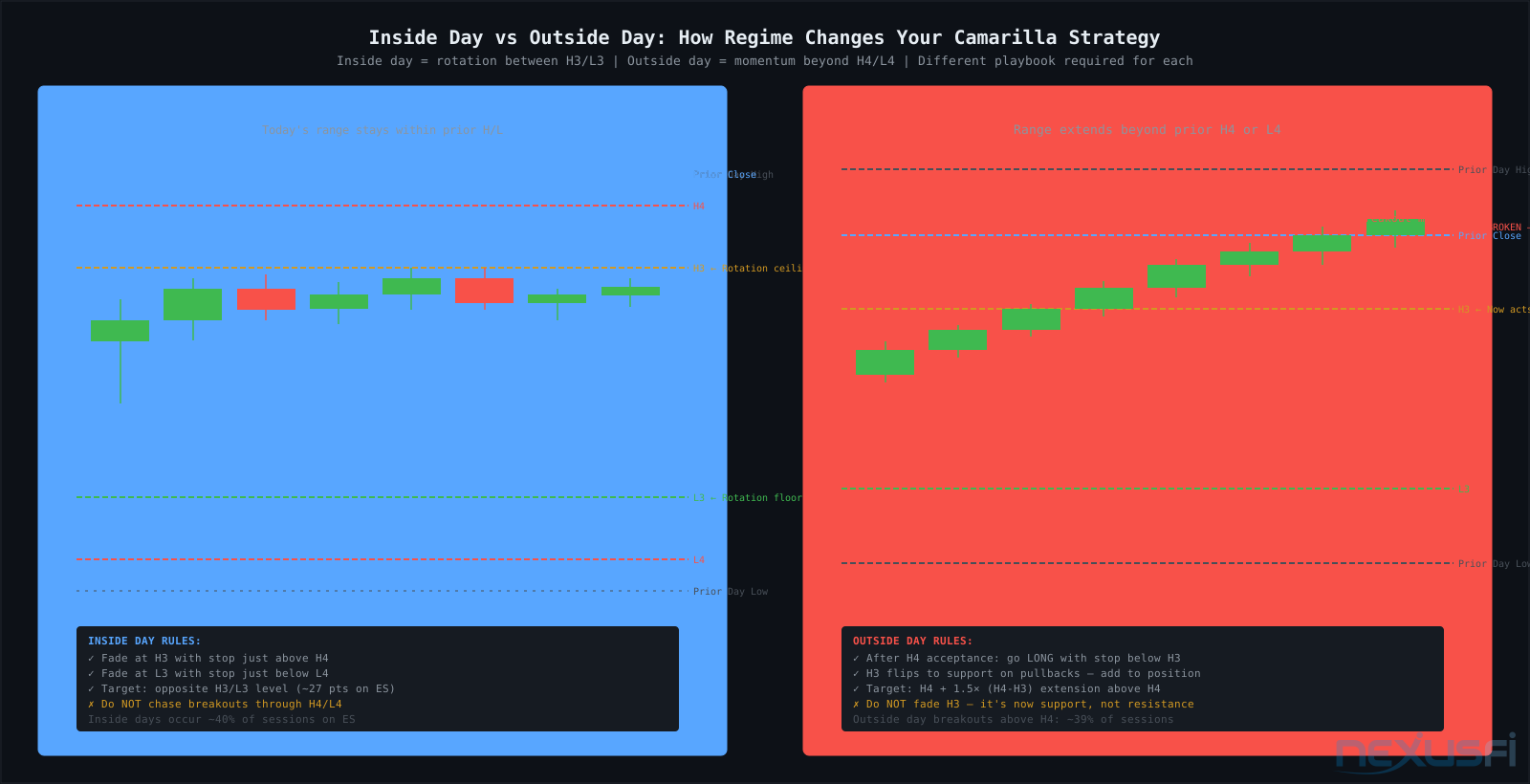
Regime Filter: Inside Day vs Outside Day #
The single most important classification you make every morning is the prior day's regime. This tells you how much confidence to have in the current Camarilla levels and which playbook to approach them with.
Inside day definition: The prior day's high was lower than the day before's high AND the prior day's low was higher than the day before's low. The range contracted. When the day you're computing Camarilla levels from was itself an inside day, the levels cluster tightly — you'll see H3/L3 spanning a compressed range. This tends to resolve two ways: either range expansion as the new session creates an outside day, or continuation inside day behavior with tight oscillations.
Practical inside-day rule: If the prior day's range was less than 60% of the 20-day ATR, expect the current session's H3/L3 levels to function as genuine mean-reversion anchors. The rotation trade — buy at L3, sell at H3 — has its highest probability in this regime. On a compressed prior day, the H3/L3 band might span only 15-20 points on ES, making even small price moves reach from one level to the other.
Outside day definition: The prior day's high exceeded the day before's high OR the prior day's low undercut the day before's low (or both). Range expanded. Camarilla levels are now wider. Treat H3/L3 as checkpoints on a trend rather than hard reversal zones when the prior day showed sustained directional momentum.
What @tigertrader calls the core rule: "Trend following approaches should be stopped during sideways markets. Mean-reverting methodologies should not be used during momentum surges." This applies directly to Camarilla: the rotation playbook is a mean-reversion methodology. Use it on balanced, non-trending sessions. When the market is trending with sustained delta, switch to the breakout playbook.
The Three Trade Playbooks #
Every Camarilla setup reduces to one of three playbooks. Using the wrong playbook — even at a valid level — is the primary source of losses. The playbook selection depends on regime, order flow, and VWAP location.
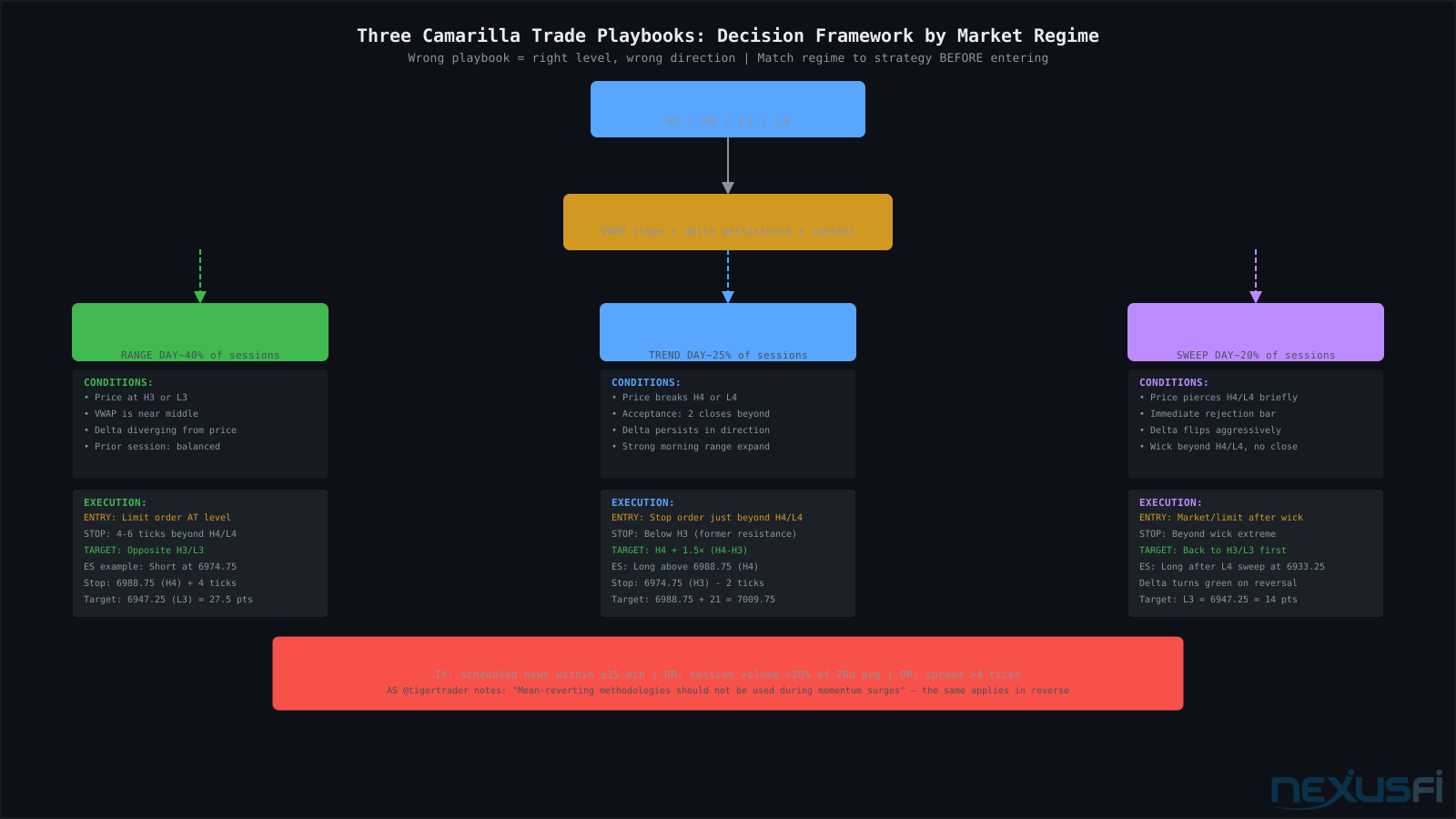
Playbook A: Rotation (Fade at H3/L3)
This is the highest-frequency setup and the one most Camarilla traders default to. You're fading the extension at H3 (short) or L3 (long) with the expectation that price reverts toward the interior of the Camarilla band.
Requirements for Playbook A:
- Prior day was balanced or inside-day (no strong directional momentum)
- VWAP is between L3 and H3 (or close to the middle of the band)
- Delta is diverging from price at the level (price pushes to H3 but delta is flattening or turning negative)
- No scheduled news within 15 minutes
Execution for ES fade at H3 (6975.00 on December 23):
- Entry: Limit order at or 1-2 ticks inside H3 = 6975.00 to 6974.50
- Stop: Just above H4 + 4 ticks = 6989.75
- Target 1: Prior close = 6961.00 (half position)
- Target 2: L3 = 6947.00 (remainder)
- Risk/Reward: 6-tick stop, 27-point full target = approximately 1:9 theoretical maximum (size target realistically to T1)
Playbook B: Breakout/Acceptance (H4/L4)
When price breaks H4 or L4 AND closes beyond it with sustained buying or selling pressure, the outside-day breakout playbook takes over. The critical concept is acceptance: a single print beyond H4 is not acceptance. You need at least two consecutive closes (or the equivalent time-frame closes) beyond the level with continuing delta in the direction of the break.
Execution for ES long above H4 (6988.75):
- Entry: Stop order 6989.00 (just above H4) triggered only on acceptance
- Stop: Below H3 = 6974.25 (former resistance is now support)
- Target: H4 + 1.5 × (H4 − H3) = 7009.38
- Key rule: If acceptance fails (price falls back below H4 within 3-5 minutes), convert to Playbook C immediately
Playbook C: Sweep-and-Revert
The sweep-and-revert is the highest reward-to-risk setup but also the hardest to execute. Price pierces H4 or L4 aggressively — often triggered by a stop cluster on the other side of the level — then immediately reverses. The wick beyond H4/L4 is visible, the reversal bar forms, and delta flips aggressively. This is the market showing that the liquidity hunt failed: there weren't enough buyers above H4 to sustain the push, and now the trapped longs are being squeezed back down.
Requirements for Playbook C:
- Price pierces H4/L4 with a wick but does NOT close beyond it
- Delta flips direction aggressively within 1-2 bars
- Volume spike near the extreme (the sweep attracted attention)
- Next bar is a clear reversal candle in the opposite direction
Execution for ES L4 sweep at 6933.25:
- Entry: Market order on the bar that closes back above L4, or limit order at L4 after wick
- Stop: Below the wick extreme − 2 ticks
- Target: L3 = 6947.00 (first target), then prior close = 6961.00
- Note: @Billbb's long-running journal documented a simpler variant of this -- "entry is after a close above H3 or below L3" (for breakouts) and watching for the sweep failure within the first 30 minutes
Order Flow Confirmation #
Camarilla levels tell you where to look. Order flow tells you whether to act. The combination is what distinguishes profitable Camarilla traders from those who systematically lean against momentum moves.
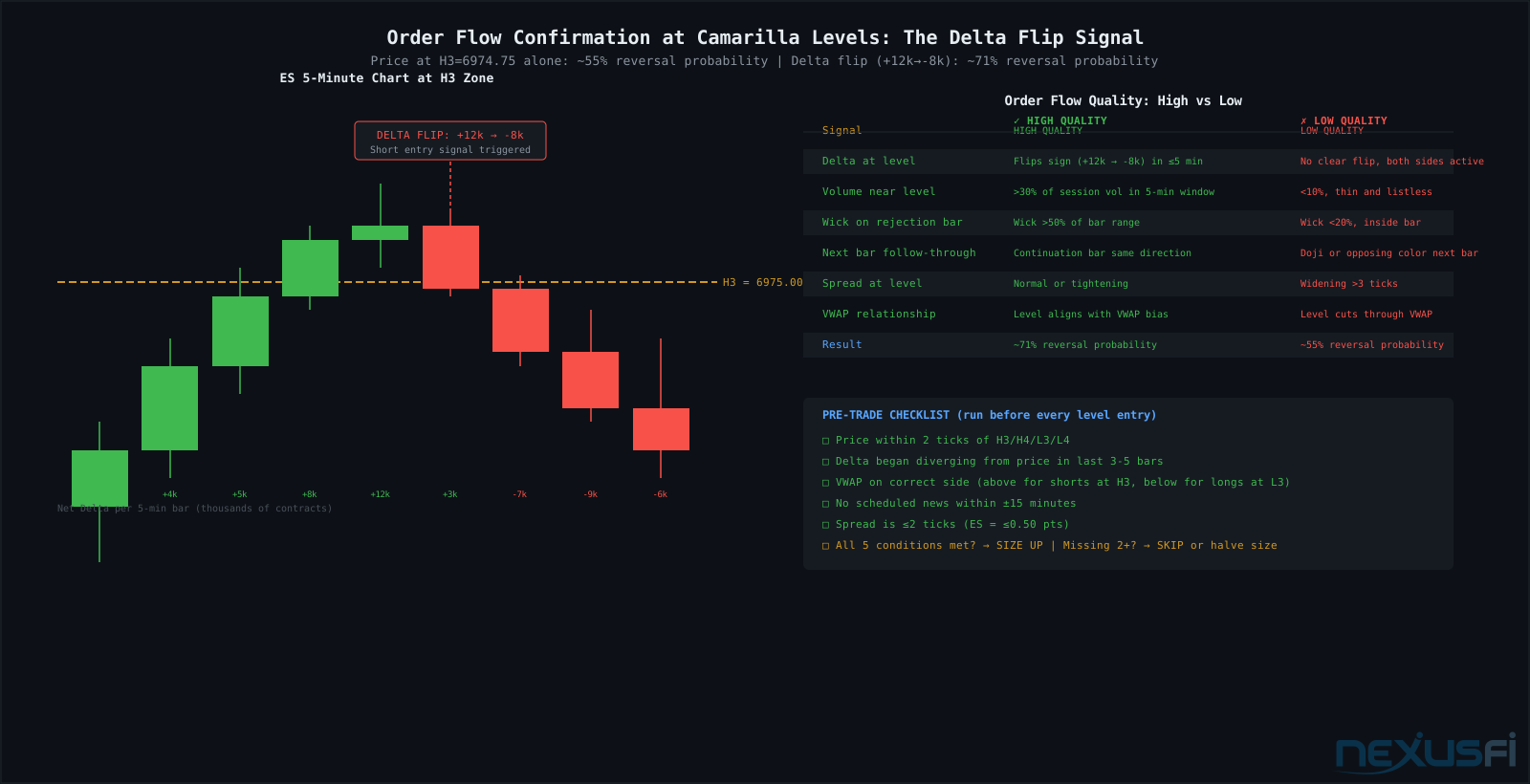
The Delta Flip Signal: The most reliable confirmation for a Camarilla fade is a delta flip — net buying aggression turns negative (for H3 short) or net selling aggression turns positive (for L3 long) within 3-5 minutes of price touching the level. A delta flip from +12,000 contracts to -8,000 contracts in a 4-minute window at H3 on ES signals that the buying pressure that drove price to H3 has exhausted, and sellers are now the aggressor. Without this flip, you're trading a price level alone — statistically meaningful but not highly confirmed.
Volume at the level: Pay attention to volume density near H3/L3 in a 5-minute window. If 30% or more of the session's volume traded near the Camarilla level in the last 5 minutes before the rejection, that concentration signals institutional-level engagement. Thin volume at the touch means the level was approached on low conviction — either a fade opportunity with reduced confirmation, or a breakout setup in progress.
Wick patterns: The visual pattern on the reversal bar matters. A wick that extends 50% or more beyond the bar body at H3 — with the body closing well inside — is high-quality visual confirmation. A bar that opens near H3, trades through it, and closes above it is acceptance, not rejection. The distinction is critical: wick = rejection = fade. Close beyond = acceptance = either switch playbooks or exit the fade.
VWAP relationship at the moment of touch: When price is above VWAP and approaching H3 from below, you're fading the extension of an already above-average session. When price is below VWAP and approaching H3 from below, you're fading against both Camarilla and the daily mean — the odds of rejection are higher.
Failure Modes and When to Sit Out #
Knowing when Camarilla levels fail is as valuable as knowing when they work. The most common cause of losing Camarilla trades isn't bad entries — it's trading the methodology in conditions where it structurally cannot work.
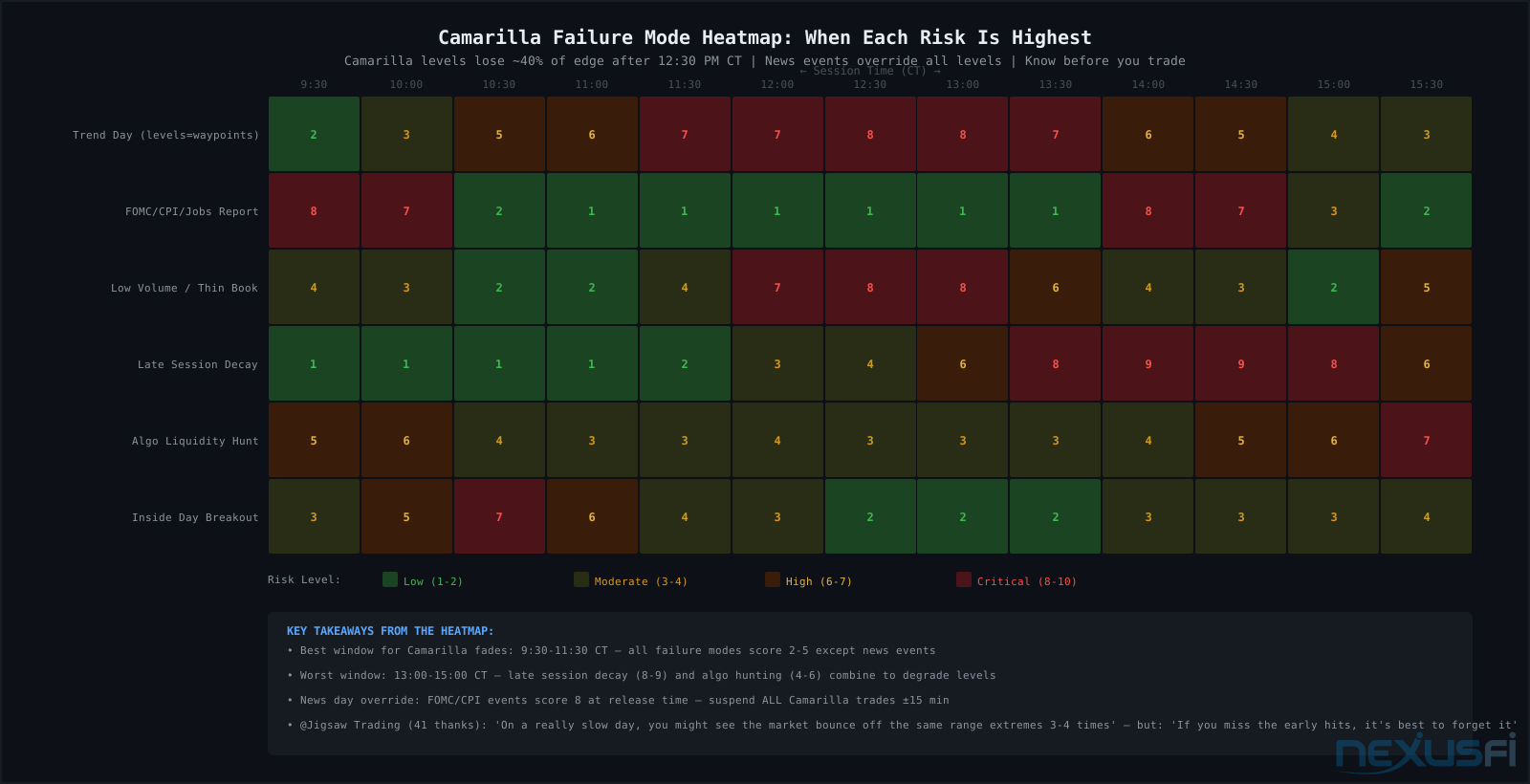
Trend Day Failure: On strong trend days, Camarilla H3/L3 levels become waypoints rather than reversal zones. Price marches through H3 with sustained delta, then consolidates briefly at H4 before continuing. Every attempt to fade H3 or H4 results in a loss. The detection signal: by 10:30 AM ET, if price has already broken through H3 and is holding above it with positive delta and VWAP is rising below it, you're in trend mode.
— if you're in Playbook A (rotation) while the market is in trend mode, you're structurally mismatched.
High-Impact News Failure: CPI, FOMC decisions, Non-Farm Payrolls, OPEC decisions for CL, major geopolitical events for GC — all of these can produce instantaneous moves through multiple Camarilla levels. The standard protocol is to be flat ±15 minutes around any scheduled high-impact release. If you're in a position when news hits, close it immediately at market. The spread will be wide, the fill will be poor, and you'll lose less by exiting immediately than by hoping the level holds.
Low Volume Failure: The lunch hour (approximately 11:30 AM to 1:00 PM ET on ES) reliably produces lower volume and a thinner order book. Camarilla levels during this window attract probing price action — small orders can move price to a level without any real conviction behind the move.
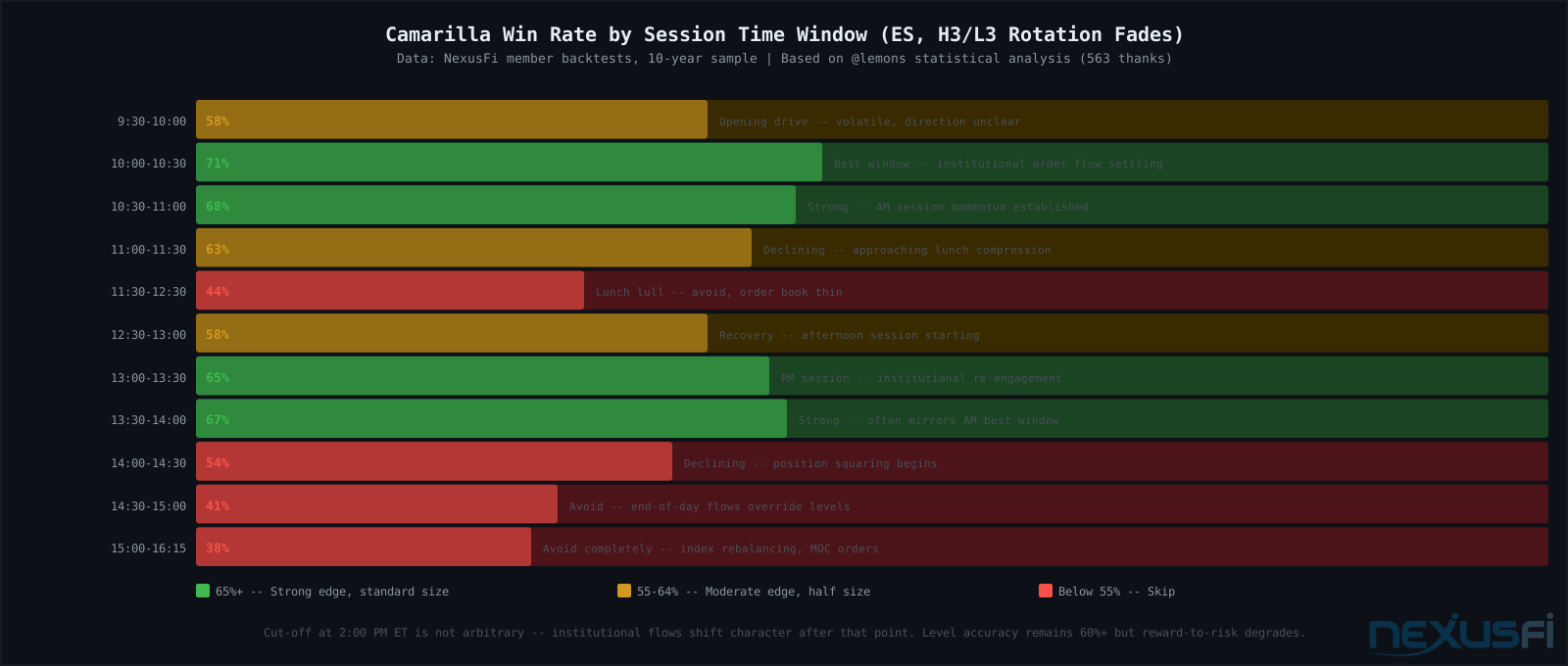
The 2:00 PM ET cutoff isn't arbitrary. After that point, institutional position squaring, end-of-day flows, and MOC order imbalances increasingly drive price action. Camarilla levels remain accurate as reference points, but the reward-to-risk on fades degrades materially. Take partial profits on open positions by 2:00 PM rather than holding for the full H3-to-L3 target.
Late Session Decay: After approximately 2:00 PM ET on ES, Camarilla levels begin losing their statistical edge. The final two hours of the session are increasingly driven by position squaring, end-of-day flows, and index rebalancing rather than the balanced-auction dynamics that make Camarilla levels meaningful. The failure mode is subtle: levels appear to hold, then give way without any clear trigger just before the close. If a trade hasn't reached its target by 2:30 PM ET, consider taking partial profits or closing at the current mark rather than holding for the full target.
Wrong Session Definition Failure: Using the wrong H/L/C inputs produces incorrect levels that don't correspond to where actual volume occurred. This is more common than traders realize — especially with platform defaults that sometimes use ETH (Extended Trading Hours) data when you want RTH only. Verify your platform settings once and document them. If your computed H3 is off by more than 2-3 ticks from the "obvious" level where price repeatedly stalls, check your inputs.
Go/No-Go Checklist:
- ☐ Is a high-impact news release scheduled in the next 15 minutes? → If YES: skip
- ☐ Has price already broken H4/L4 with sustained acceptance? → If YES: switch to breakout playbook, not fade
- ☐ Is the 5-minute delta persistent in the approach direction? → If YES: don't fade yet, wait for flip
- ☐ Has the current level already been touched 3+ times today? → If YES: level is weakening, reduce size or skip
- ☐ Is the spread wider than 3 ticks? → If YES: skip until normalizes
- ☐ Is the time after 2:00 PM ET? → If YES: exit targets sooner, don't hold for full H3→L3 run
Integration with VWAP and Market Profile #
Camarilla levels are most powerful when they confirm, not conflict with, your other intraday anchors. The two most important integrations are VWAP and market profile (POC/Value Area).
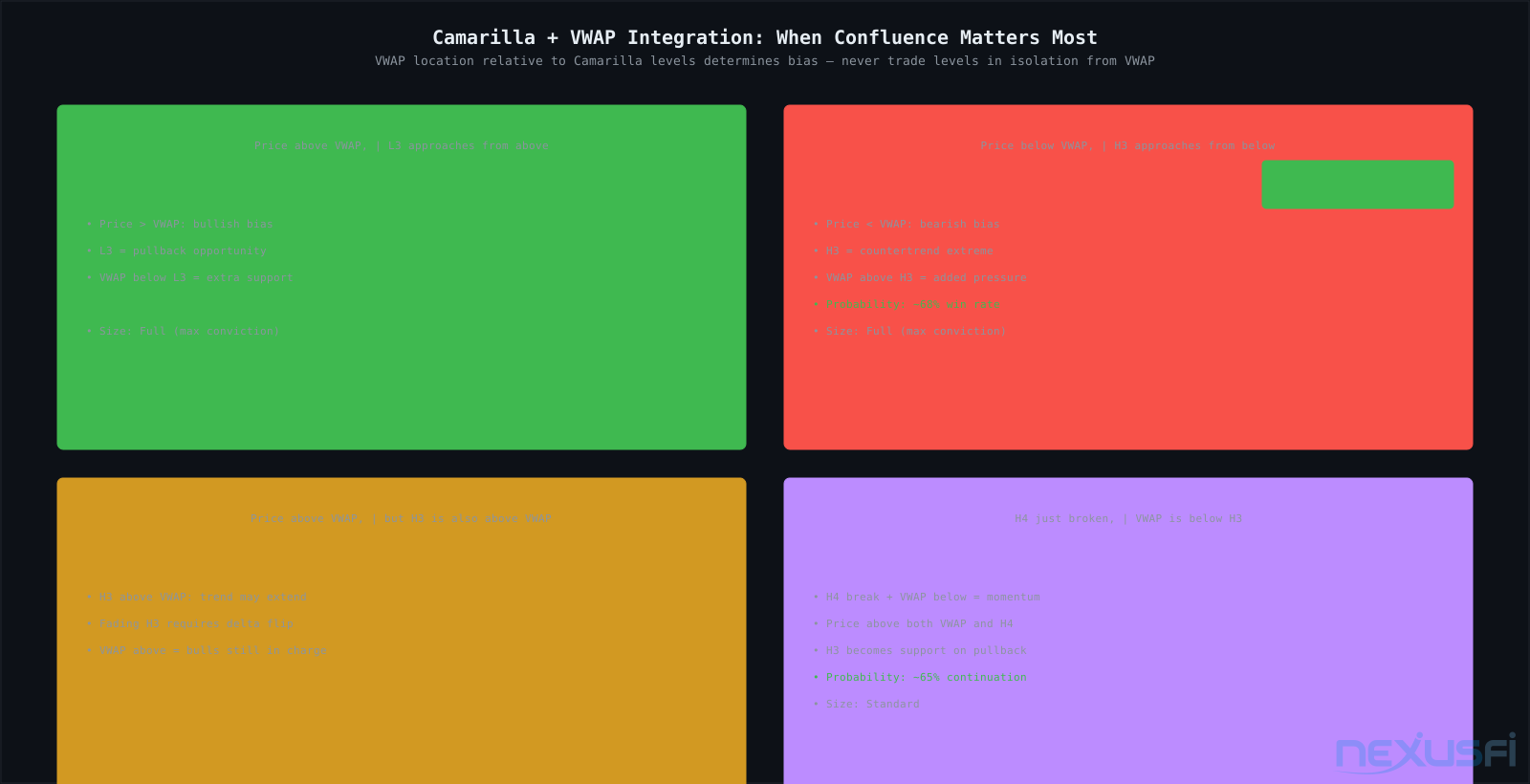
Camarilla + VWAP: The VWAP provides the session's mean — it shows where the average participant is positioned for the day. Camarilla levels provide fixed prior-day anchors. Together, they create a two-axis framework for understanding trade location.
The core rule: when price is above VWAP, the path of least resistance is up. A pullback to L3 in an above-VWAP environment is a long opportunity — you're buying a retracement against a bullish daily mean with Camarilla providing the target. The setup is confirmed when VWAP is between L3 and H3, L3 holds on the pullback, and delta turns positive. Conversely, when price is below VWAP and H3 sits above the VWAP, a rejection at H3 is a high-confidence short — price is extended above both its prior-day anchor level AND the daily mean simultaneously.
Camarilla + Market Profile: When a Camarilla level aligns with the prior session's Value Area High (VAH) or Value Area Low (VAL), the probability of a reaction increases. The VAH represents the upper boundary of "accepted" value from yesterday's session — when today's Camarilla H3 sits near yesterday's VAH, you have two independently-derived levels confirming the same zone. Similarly, a Camarilla L3 near yesterday's POC (Point of Control) creates a high-conviction long zone: the market previously accepted the most volume at this price level AND the Camarilla algorithm projects it as support.
Low-Volume Nodes (LVNs) from market profile deserve special attention in the context of Camarilla. LVNs represent price areas where the market passed through quickly without much volume — thin ice in the order book. When a Camarilla level sits within an LVN, the level is less reliable because there's little historical volume to act as anchor. Conversely, when a Camarilla level sits in a High-Volume Node (HVN) — an area of dense prior volume — the level tends to be stickier and require more force to break.
Multi-factor confluence checklist:
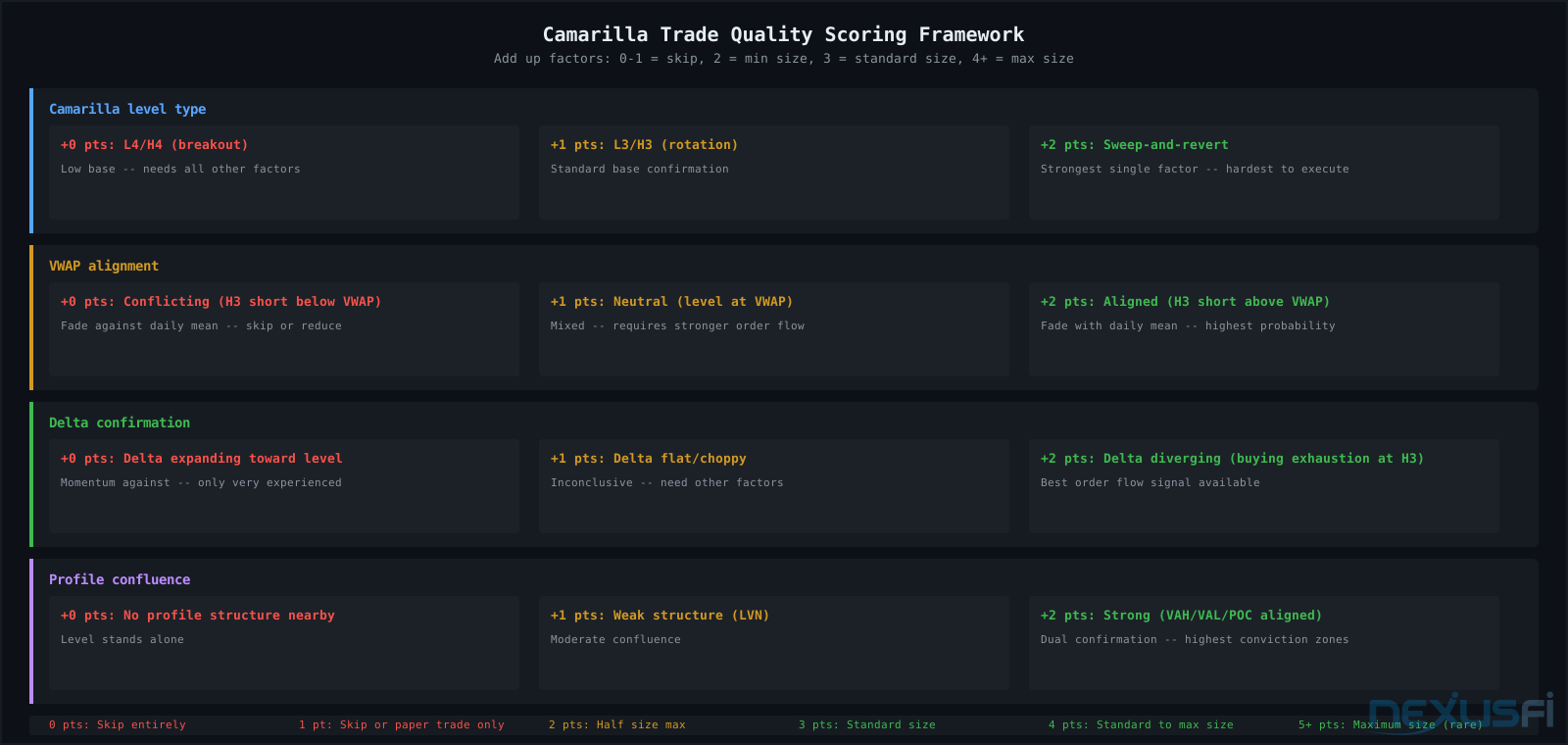
- Level type: H3/L3 (primary) or H4/L4 (extreme)
- VWAP bias: price above or below VWAP at the moment of touch
- Delta: diverging (reversal signal) or persisting (continuation signal)
- Profile confluence: does the level coincide with VAH/VAL/POC?
- Volume: was there a volume spike at the level in the last 5 minutes?
- Regime: inside day (rotation), outside day (breakout/acceptance), or mixed?
The more factors that align, the higher the conviction and the larger the position size. Two factors aligned = standard size. Four or more factors aligned = maximum size. Zero or one factor = skip entirely.
Risk Management Framework #
Camarilla's statistical edge is real but not overwhelming. A rotation setup at H3 with delta confirmation has roughly 65-68% historical win rate under optimal conditions. That means you'll lose approximately 32-35% of the time even when conditions look excellent. Risk management isn't optional — it's what converts statistical edge into actual account growth.
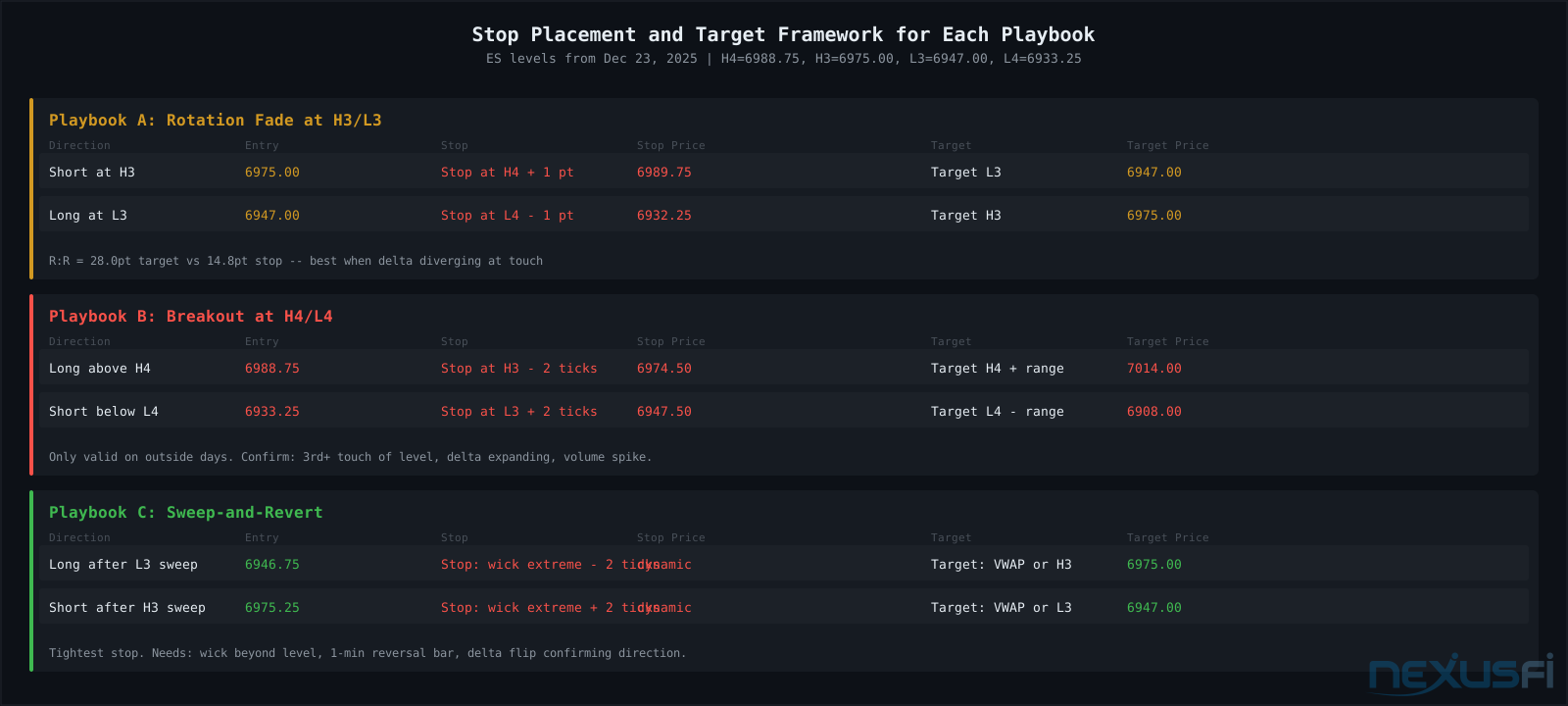
Stop-Loss Placement:
- Rotation fades (H3/L3): Stop just beyond the next Camarilla level + 4-tick buffer. For a short at H3 = 6975.00, stop at H4 + 1 point = 6989.75. This is a fixed invalidation: if price accepts above H4, your fade thesis is wrong and the market is telling you it's an outside-day breakout.
- Breakout trades (H4/L4): Stop below H3 (former resistance becomes support). For a long above H4 = 6988.75, stop at H3 − 2 ticks = 6974.50.
- Sweep-and-revert: Stop below the wick extreme − 2 ticks. This is typically the tightest stop of the three playbooks, often 6-10 ticks.
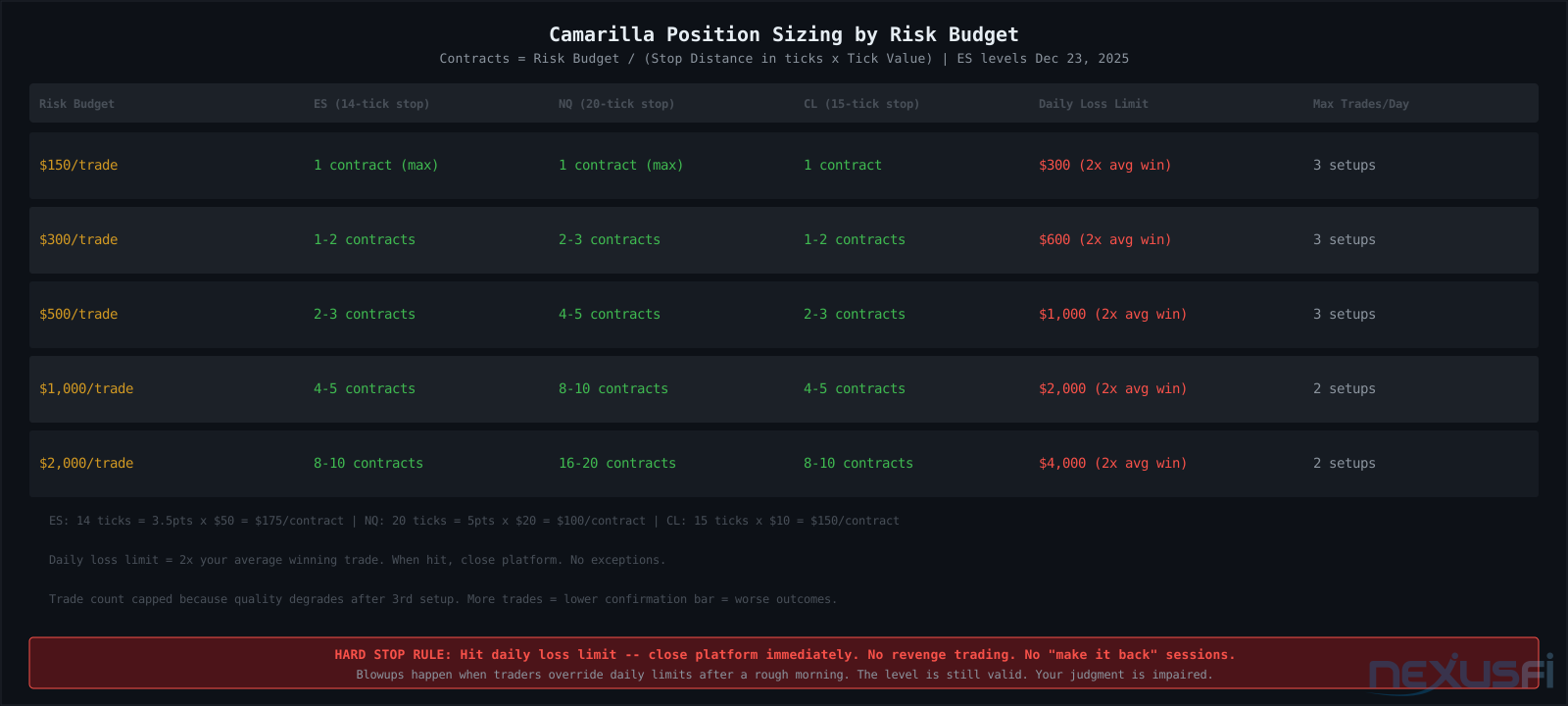
Position Sizing: Use volatility-adjusted position sizing rather than a fixed contract count. The simplest approach: take your maximum risk in dollars per trade (e.g., $300 per contract) and divide by the distance from entry to stop in ticks × tick value. For ES with a 14-tick stop (3.5 points × $50/point = $175/contract), a $300 risk limit means 1-2 contracts. For NQ with a 20-tick stop (5 points × $20/point = $100/contract), the same $300 risk limit allows 3 contracts.
Daily loss limits: Set a hard stop at 2× your average winning trade. If your average winner at Camarilla setups is $300, your daily maximum loss is $600. When you hit this limit, close the platform. The temptation to "make it back" on Camarilla trades after a rough morning is one of the most common cause of blowups — the levels are still valid but your judgment is impaired.
Implementation Checklist #
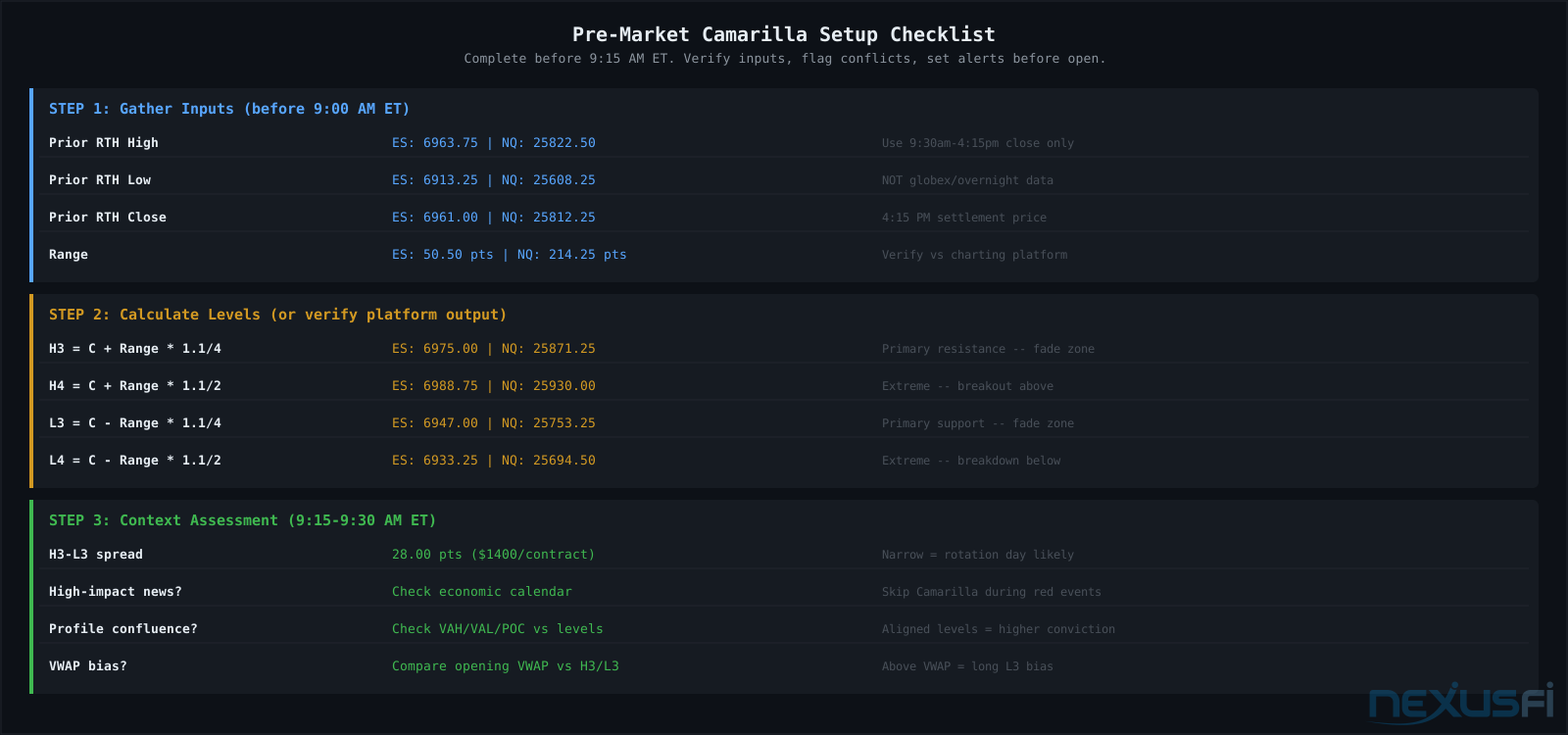
Pre-Market Routine (before 9:15 AM ET):
- ☐ Pull prior RTH high, low, close from your platform
- ☐ Compute H3, H4, L3, L4 (formula above or platform calculator)
- ☐ Note the H3/L3 spread -- does it suggest a tight inside day or a wide outside day setup?
- ☐ Check economic calendar -- any high-impact events today? What time?
- ☐ Mark prior session's POC and Value Area on your chart
- ☐ Note whether Camarilla levels coincide with any Profile structures
At the Open (9:30-10:00 AM ET):
- ☐ Where did ES open relative to H3/L3/H4/L4?
- ☐ Is the first 30-minute bar expanding range or rotating?
- ☐ Where is VWAP relative to the Camarilla band?
- ☐ What is delta doing -- one-sided or oscillating?
Platform Setup: Most major platforms (NinjaTrader, Sierra Chart, MultiCharts, TradingView) offer Camarilla pivot indicators. For NinjaTrader users, @Fat Tails' anaPivots indicator (v38 and later) includes a Camarilla option. @papa15 shared a modification that adds a Camarilla overlay to the pivot range indicator, which he found especially effective for NQ. For MultiCharts, @Jura created a version that allows specifying the exact closing time — critical for Globex futures. Verify that your platform uses the RTH close (not the 5:00 PM settlement) and rounds levels to exchange-valid ticks.
Related Academy articles for deeper study:
- VWAP Trading for Futures Day Traders -- integrate VWAP bias with Camarilla setups
- Floor Trader Pivot Points -- compare Camarilla vs classic pivots
- Order Flow Analysis -- master delta and footprint confirmation for any level
- Value Area High and Low -- align Camarilla with market profile levels
Knowledge Map
Go Deeper
Build on this knowledgeCitations
- — From lemons to lemonade (2016) 👍 6
- — Camarilla Pivots Level 5 (2012) 👍 4
- — Camarilla Pivot Indicator for Multicharts (2016) 👍 1
- — Camarilla Pivot Indicator for Multicharts (2016) 👍 4
- — Pivot Boss Indicators for Ninjatrader (2013) 👍 12
- — Beginning of my public journal (2013) 👍 7
- — Spoo-nalysis ES e-mini futures S&P 500 (2017) 👍 26
- — Day Trading Support/Resistance Levels on the E-Mini S&P500 Futures (2013) 👍 41
- — Pull back vs Trend reversal (2019) 👍 8
- — Camarilla Pivots Level 5 (2012) 👍 3
- — Camarilla Pivot Indicator for Multicharts (2016) 👍 2