



Pivot Points: The Floor Trader's Map for Futures Day Trading
Overview #
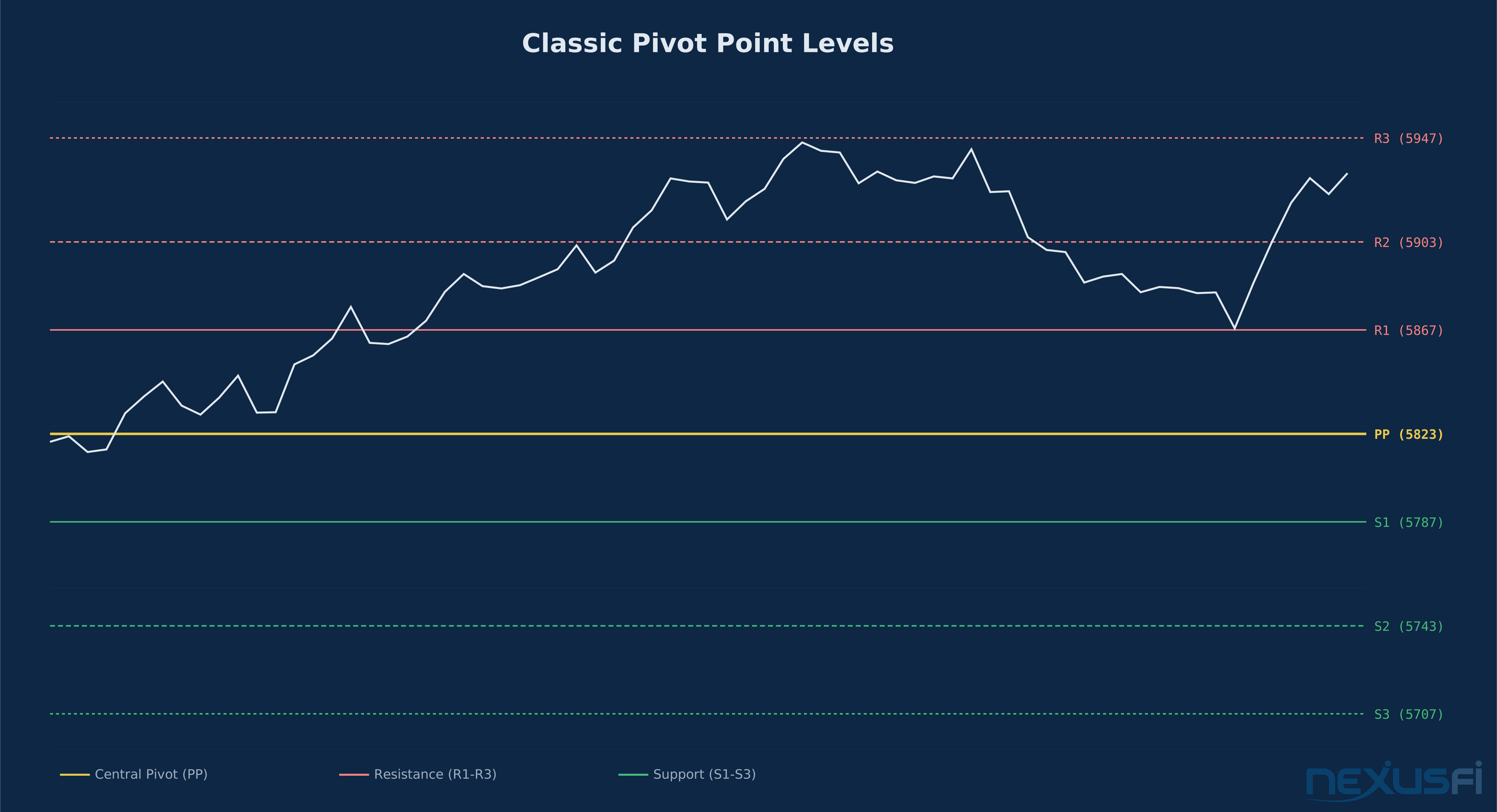
Pivot points are pre-calculated price levels derived from the prior session's high, low, and close. They produce a central pivot — the day's estimated fair value — plus symmetrical support and resistance levels above and below it. Every morning before the open, you have a complete map of where price is likely to react, reverse, or accelerate.
Floor traders invented this framework because they needed something that worked without computers. As @Fat Tails [explained on NexusFi] [1], "Floor traders did not have access to calculators or handheld devices, so what they needed were simple benchmarks or pivots available right from the start of the session. Those benchmarks were based on the prices that were officially published by the exchange for the prior day."
The genius of pivot points isn't mathematical sophistication — it's collective agreement. When hundreds of traders calculate the same levels from the same data, those levels become genuine support and resistance through order clustering. That self-fulfilling mechanism has weakened in electronic markets but hasn't disappeared. Pivot levels still concentrate liquidity, stops, and decision-making at predictable price zones.
For futures day traders, pivots serve three functions: they define your directional bias (is the market above or below fair value?), they provide objective entry and exit levels, and they frame whether the session is likely balanced or trending.
The Classic Formula #
The standard floor pivot calculation uses the prior session's high (H), low (L), and close (C):
Central Pivot: PP = (H + L + C) / 3
Resistance Levels:
- R1 = (2 x PP) - L
- R2 = PP + (H - L)
- R3 = H + 2(PP - L)
Support Levels:
- S1 = (2 x PP) - H
- S2 = PP - (H - L)
- S3 = L - 2(H - PP)
The central pivot PP approximates yesterday's "typical price" — a rough proxy for value. R2 and S2 project one full prior-day range above and below that value. R3 and S3 extend further for trend-day scenarios.
Classic pivots are the most widely watched variant. If you're only going to use one set, use these.
Alternative Calculation Methods #
Fibonacci Pivots #
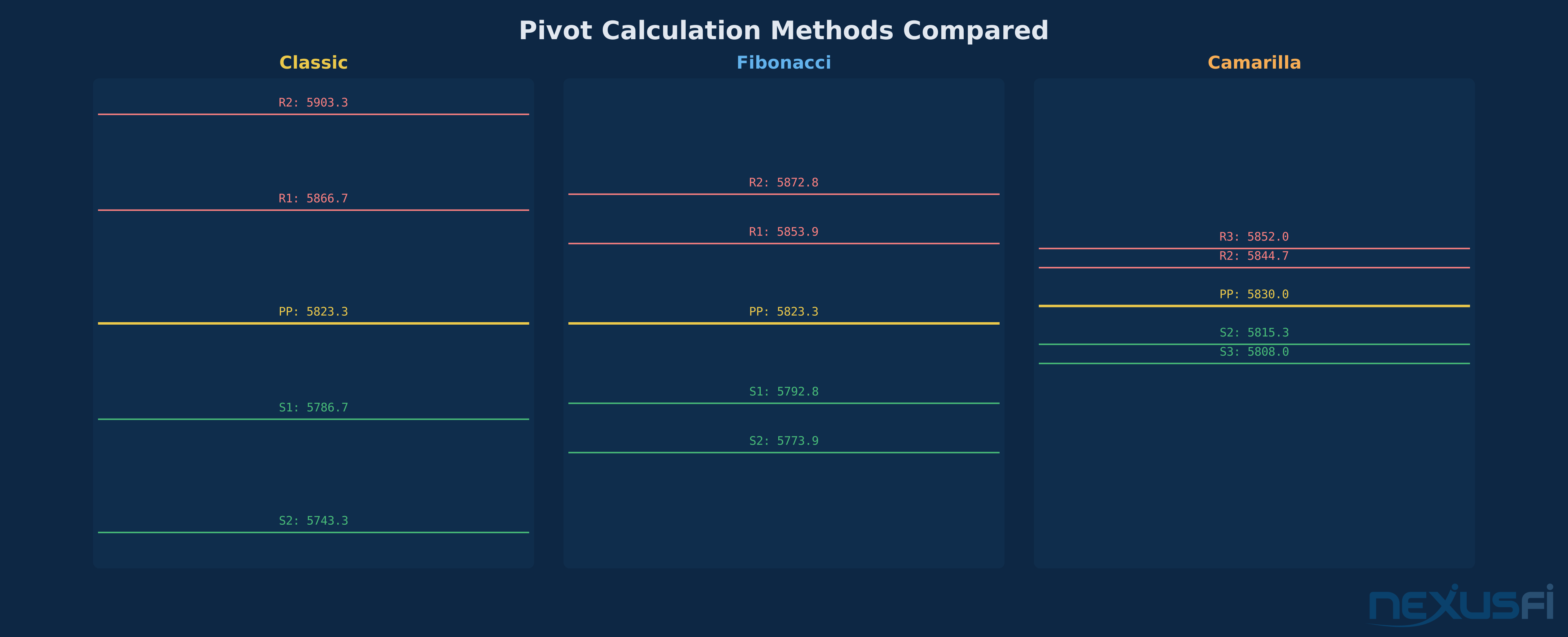
Fibonacci pivots use the same central pivot but scale support and resistance by Fibonacci ratios of the prior range:
- R1 = PP + 0.382(H - L)
- R2 = PP + 0.618(H - L)
- R3 = PP + 1.000(H - L)
- S1 = PP - 0.382(H - L)
- S2 = PP - 0.618(H - L)
- S3 = PP - 1.000(H - L)
The spacing is symmetrical and often produces more "natural" levels in volatile markets. Fibonacci pivots work well in NQ where the daily range is large and price tends to move in measured extensions. If you already use Fibonacci retracement levels, these will feel familiar.
Camarilla Pivots #
Camarilla pivots anchor to the prior close rather than the typical price, producing tighter levels designed for mean reversion:
- R1 = C + (H - L) x 1.1/12
- R2 = C + (H - L) x 1.1/6
- R3 = C + (H - L) x 1.1/4
- R4 = C + (H - L) x 1.1/2
Support levels mirror symmetrically below. The R3/S3 levels are the primary fade zones; R4/S4 mark breakout territory.
Camarilla excels in range-bound sessions. The tighter spacing gives scalpers precise zones for entries and exits. On balanced days in ES, Camarilla levels often capture the session's rotation points better than classic pivots.
Woodie Pivots #
Woodie's formula weights the close more heavily:
PP = (H + L + 2C) / 4
Support and resistance levels derive from this close-weighted pivot. The result shifts the central reference toward the settlement price, which some traders prefer for instruments where the close carries particular significance.
As @Fat Tails [noted] [1], pivot variants "all rely on self-fulfilling prophecy, and they only work if there are enough disciples who believe in them." Classic pivots have the largest following. Camarilla has a strong niche among scalpers. Fibonacci fits traders already using retracement logic. Woodie is a stylistic preference rather than a universal upgrade.
RTH vs. ETH: Which Data to Use #
This is the most important practical decision for futures traders, and @Fat Tails [addressed it directly] [2]: "The floor pivots date back to a time when no handhelds or PCs were available. It is based on the high, the low and the close (settlement) of the prior session."
The choice between Regular Trading Hours (RTH) and Electronic Trading Hours (ETH) data depends on the instrument:
RTH pivots (recommended for regionally-tied instruments):
- US index futures: ES, NQ, YM, RTY
- US interest rate futures: ZB, ZN
- Instruments tied to a single national economy
ETH/Globex pivots (recommended for globally-traded instruments):
- Currency futures and forex
- Commodities increasingly shifting to ETH
For ES and NQ day trading, use RTH data (9:30 AM - 4:00 PM ET). The regular session captures the period of highest institutional participation and most meaningful price discovery. Using 24-hour data dilutes the signal with low-liquidity overnight action.
For CL, the choice is less clear-cut. Fat Tails notes that "commodities like oil and gold are used all over the world... it does not make any more sense to use metrics tied to US trading times." Many CL traders have shifted to ETH pivots, but RTH pivots remain defensible given the concentration of liquidity during US hours.
Never calculate pivots from a calendar day (midnight to midnight). Always use the exchange's session boundaries.
The Pivot Range Concept #
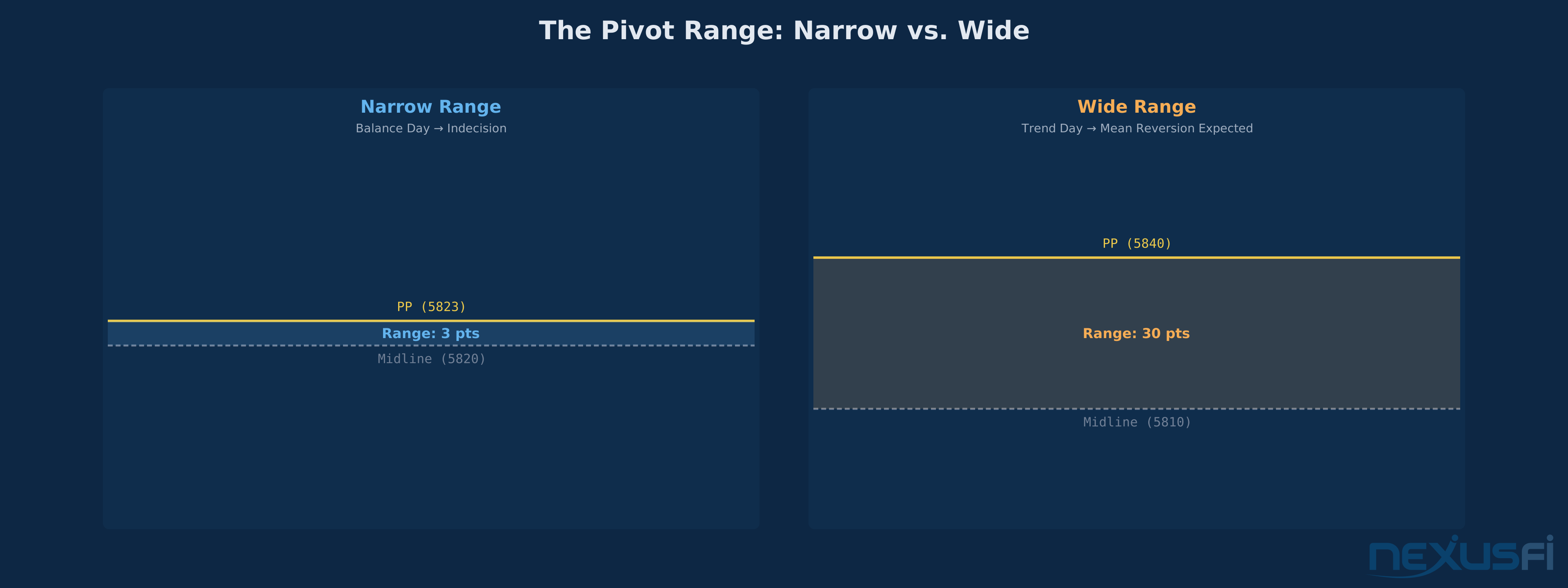
@Fat Tails [introduced a nuance] [3] that most pivot resources miss: the pivot range. Take yesterday's midline ((H + L) / 2) and mirror it around the central pivot PP. The resulting line is the Pivot Range Line (PRL).
The pivot range tells you about yesterday's character:
- Narrow pivot range (PP close to midline): Yesterday was a balancing day. Today expects indecision near the pivot.
- Wide pivot range (PP far from midline): Yesterday was a trending day. Today is more likely to balance as price explores the new value area between yesterday's close and today's pivot.
This is a simple but powerful regime filter. A wide pivot range after a trend day biases you toward mean-reversion setups. A narrow range after a balance day biases you toward breakout scenarios.
Reading the Pivot Map #
Directional Bias #
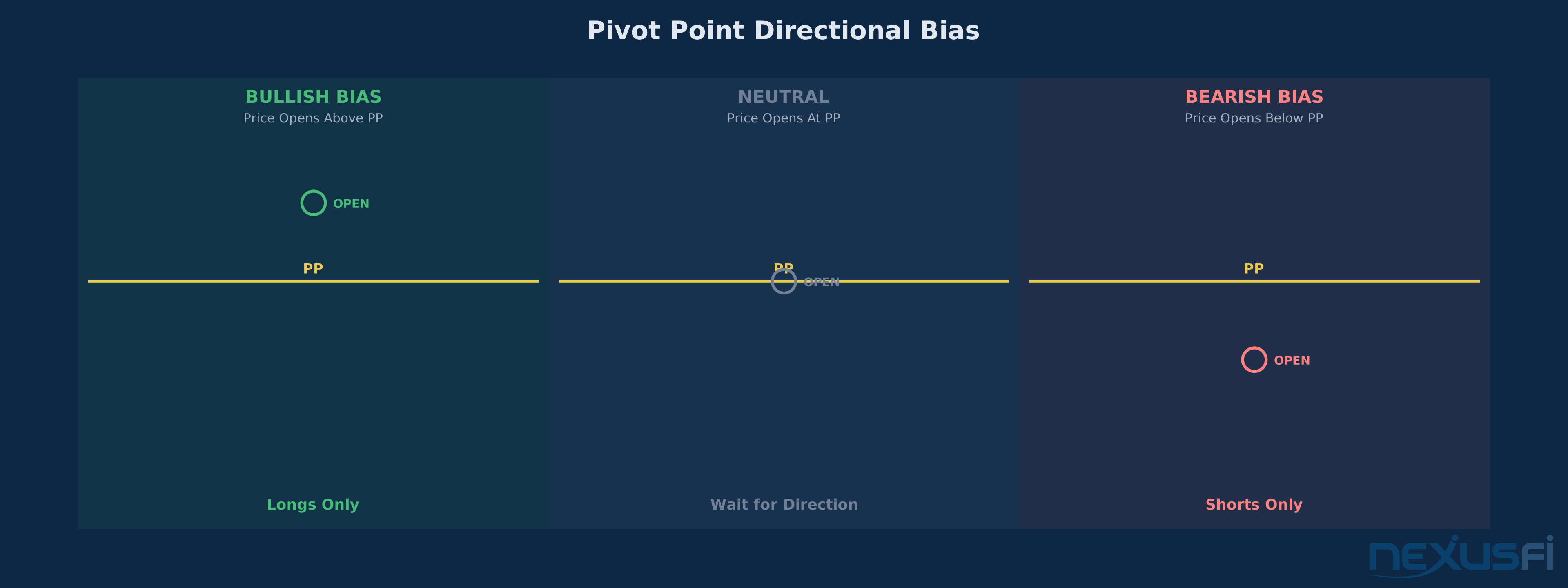
The central pivot is your line in the sand:
- Price opens above PP: Bullish bias for the session. Look for longs on pullbacks to support levels.
- Price opens below PP: Bearish bias. Look for shorts on rallies to resistance levels.
- Price opens at PP: No directional edge. Wait for acceptance above or below.
This isn't a mechanical rule — it's a starting framework. If price opens above PP but immediately fails back below, the bias flips. The key is watching whether price accepts above or below the pivot during the first 15-30 minutes.
Level Hierarchy #
Not all pivot levels carry equal weight:
- PP: The most important level. First touch of the day often produces the strongest reaction.
- R1/S1: Primary support and resistance. Most balanced sessions rotate between these levels.
- R2/S2: Extension levels. Reaching these suggests a directional session.
- R3/S3: Trend-day targets. If price reaches R3/S3, the session is decidedly one-directional.
First touches of any level tend to produce the strongest reactions. Multiple tests weaken the level as resting orders get absorbed.
Trading Strategies #
Strategy 1: Pivot Bounce (Mean Reversion) #
The bread-and-butter pivot setup.
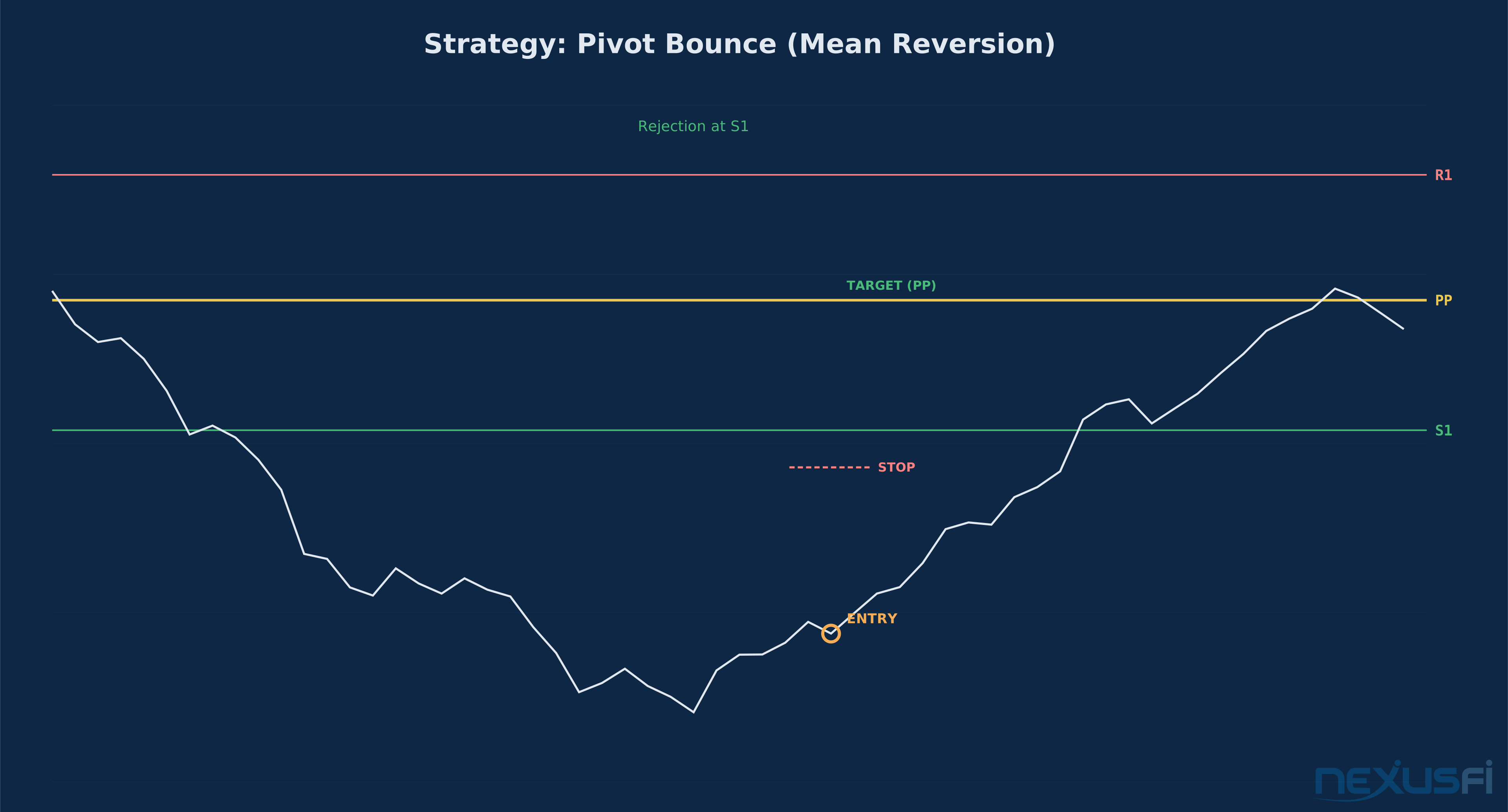
Setup: Price approaches S1/R1 (or S2/R2) with decelerating momentum. You're looking for a rejection, not just a touch.
Entry: Fade toward the central pivot after a rejection candle forms at the support or resistance level. Confirmation from tape reading (absorption, delta divergence) increases probability.
Stop: Beyond the pivot level by a structural buffer — 2-4 ticks in ES, 5-10 ticks in CL.
Target: Return to PP for first target. Opposite S1/R1 for extended target.
Best conditions: Balanced sessions, moderate volatility, no imminent news trigger. As @GruttePier [observed in his trading journal] [4], "floor trader pivots work well as profit targets since price hesitates there."
Strategy 2: Breakout with Acceptance #
Setup: Price breaks through R1 or S1 with expanding volume. This isn't a wick-through — you need a 5-minute close beyond the level.
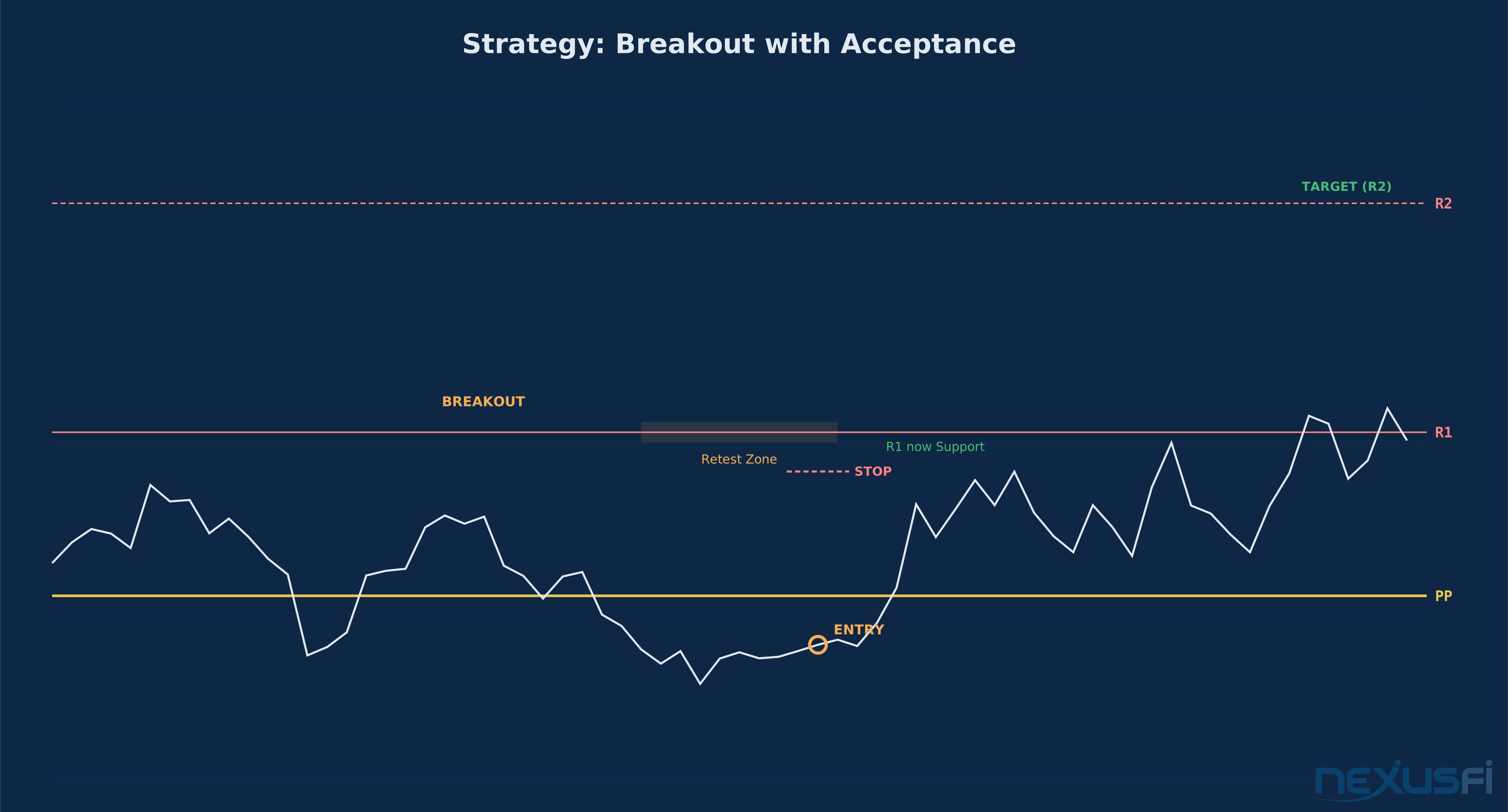
Entry: After the initial break, wait for a pullback to the broken level (R1 becomes support, S1 becomes resistance). Enter on the hold/rejection of the retest.
Stop: Below the retest low (or above for shorts). If price falls back through the broken level, the breakout failed.
Target: R2/S2 for first target, R3/S3 for trend-day extension.
Best conditions: Trending days, post-news momentum, strong overnight directional move. Avoid taking breakout trades on mere wick-throughs without acceptance.
Strategy 3: Central Range Rotation #
Setup: Price oscillates between S1 and R1 without breaking either. The VWAP is relatively flat.
Entry: Buy at S1 with bullish order flow confirmation. Sell at R1 with bearish confirmation.
Stop: Beyond S2/R2 — this is a range trade, so a break of S2/R2 means range expansion and your thesis is wrong.
Target: Opposite pivot level (S1 to R1 or R1 to S1).
Best conditions: Pre-announcement positioning days, low-trigger mornings.
Strategy 4: Multi-Timeframe Pivot Alignment #
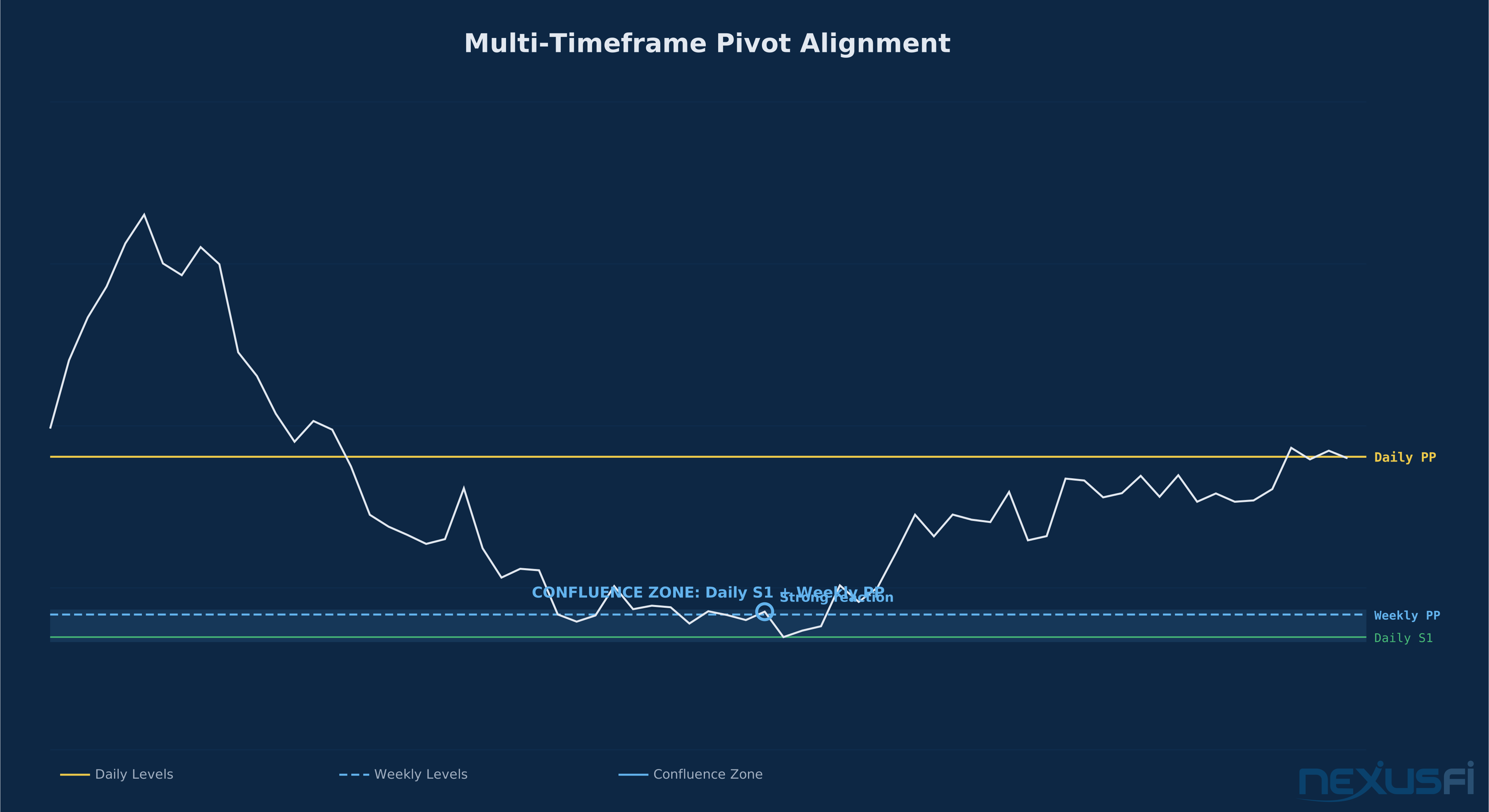
Setup: Daily and weekly pivots cluster at the same price zone. This creates a much stronger reaction level than either timeframe alone.
Entry: Trade the reaction at the clustered level using your preferred confirmation method.
Management: These levels tend to produce larger, more sustained reactions. Give the trade room.
Why it works: Daily pivots capture day-trader positioning. Weekly pivots capture swing-trader positioning. When both groups are watching the same price, the liquidity concentration is significant.
Integration with Other Tools #
Pivot points work best as the structural map layered with confirmation tools:
Pivots + VWAP #
The single most powerful combination for intraday futures trading. PP above VWAP confirms bullish institutional flow. PP below VWAP confirms bearish. When PP and VWAP converge at the same price, that level becomes a critical decision point for the entire session.
Pivots + Volume Profile #
A pivot level that aligns with a Volume Profile high-volume node (HVN) or value area edge produces the strongest reactions. A pivot at a low-volume node (LVN) is more likely to slice through — LVNs act as price accelerators, not barriers.
Pivots + Prior Day Structure #
Pivot levels near yesterday's high, low, or close create overlap zones. These overlaps are the highest-probability reaction areas on any chart. The combination of calculated levels and historical price memory concentrates both mechanical orders and discretionary decision-making.
Pivots + Opening Range #
If the opening range break (first 15-30 minutes) clears a pivot level, continuation probability increases. The opening range tells you what the market "decided" about the pivot — accepted above it, rejected below it, or stuck at it.
Pivots + Market Internals #
For ES and NQ, checking market internals (advance/decline, $TICK) at pivot levels adds breadth confirmation. A pivot bounce with strong internals is higher conviction than one where internals are deteriorating.
The principle: use pivots as the map, then stack 2-3 confluence factors for confirmation. More than 3 factors creates analysis paralysis.
When Pivot Points Work #
High-probability conditions:
- Balanced/rotational market regime
- Moderate volatility
- Multiple timeframe pivot alignment (daily + weekly)
- Pivot aligns with round numbers (ES 5000, NQ 20000, CL $70)
- First test of a level (stronger than subsequent tests)
- 9:30-10:30 AM ET window (peak institutional participation)
- Prior day's range was less than 1 ATR
Pivots excel at framing the day's expected structure before the open. Even on days when levels don't produce tradeable reactions, knowing where pivots sit relative to the open helps you categorize the session type within the first 30 minutes.
When Pivot Points Fail #
Low-probability conditions:
- Major macro catalysts (FOMC, NFP, CPI)
- Strong trend/discovery days where momentum overrides level-to-level rotation
- Volatility expanding sharply
- Gap opens beyond pivot levels (context partially invalidated)
- Overnight session already resolved the pivot area
- 11:30 AM - 1:00 PM ET lunch chop (levels get violated by low-volume noise)
The critical failure mode: Fading a trend day. When the market is in discovery mode, pivots get run through without meaningful reaction. Traders who keep fading R1, then R2, then R3 on a genuine trend day get demolished. The pivot framework tells you this is happening — if R1 breaks with acceptance, your mean-reversion playbook is wrong for the day. Switch to breakout/continuation.
Rule of thumb: if the market is in discovery mode, pivots shift from reversal zones to measured-move targets.
Instrument-Specific Notes #
ES (S&P 500 E-mini) #
ES is the cleanest pivot instrument. High liquidity means levels produce the most "textbook" reactions in balanced conditions.
- Use RTH Classic pivots as primary reference
- Treat levels as zones (plus/minus 2 points), not exact prices
- Round numbers (5000, 5100, 5200) can be more important than calculated pivots
- VWAP + pivot + prior value area = the strongest ES intraday framework
- Caution: ES trends hard on macro flows. Don't assume mean reversion will hold during FOMC or CPI releases
NQ (Nasdaq 100 E-mini) #
NQ is 2-3x more volatile than ES. Pivots fire more frequently but also produce more overshoots.
- Fibonacci pivots often fit better than classic (captures the larger range extensions)
- Wider pivot spacing: R1-R2 is typically 60-100 points vs. 15-25 in ES
- Expect "tags and runs" — price overshoots the level before reversing
- Wait for acceptance/rejection, not just level touch
- Be quicker to switch from fade to breakout mode than in ES
CL (Crude Oil) #
CL is event-driven. Pivot levels can be invalidated within seconds by inventory data, OPEC headlines, or geopolitical developments.
- Consider session-specific pivots (Asian, European, US) rather than a single daily calculation
- Camarilla pivots work well for CL scalp zones; Classic for broader context
- Whole dollar amounts ($70, $75, $80) often carry more weight than calculated levels
- EIA inventory report (Wednesday 10:30 AM ET) can invalidate all morning pivot work
- Smaller position size, wider stops, shorter holding time vs. index futures
Practical Workflow #
Before the session (5-10 minutes):
- Calculate Classic pivots from the prior RTH session
- Mark PP, R1-R3, S1-S3 on your chart
- Add VWAP, prior day high/low/close
- Note the pivot range width: narrow (expect indecision) or wide (expect balance after trend)
- Check the economic calendar
At the open:
- Where does price open relative to PP? Above = bullish bias, below = bearish
- Does the opening range accept above or below the pivot?
- Is VWAP confirming the same directional bias?
During the session:
- Balanced: Fade pivot extremes. Buy S1 tests, sell R1 tests, target PP for first partial
- Trending: Trade acceptance/breakout. If R1 breaks and holds, buy the retest targeting R2
- If your initial bias is wrong, reverse the framework
End of session:
- Did you follow the regime framework?
- Were there first-touch reactions you missed?
- Were there fades that failed because it was a trend day?
Pivot points won't tell you exactly where the market will turn. They'll tell you where the market is most likely to make a decision — and that's the information a day trader actually needs. Combined with VWAP, volume profile, and sound regime awareness, pivots remain one of the most practical tools in a futures day trader's toolkit.
Knowledge Map
Prerequisites
Understand these firstReferences This Article
Articles that build on this topicCitations
- — Pivot points (2013) 👍 17“Floor pivot calculation methods and RTH vs ETH pivot choice”
- — (Actual) Floor Pivot Point (2016) 👍 13“Floor pivots vs GLOBEX pivots and instrument-specific recommendations”
- — Pivot Point Calculation (2010) 👍 7“Pivot range concept and balancing vs trending day analysis”
- — GruttePier's trading journal to getting profitable (2017) 👍 6“Floor trader pivots as profit targets”
- — APEX 300K+: The Journey (2023) 👍 6“amaPivotsDaily indicator with floor pivots and Jackson Zones”