



On Balance Volume (OBV): The Cumulative Volume Indicator That Reveals Whether Money Is Flowing In or Out
Overview #
On Balance Volume (OBV): The Cumulative Volume Indicator That Reveals Whether Money Is Flowing In or Out
The Single Most Important Thing About OBV #
On Balance Volume does one thing and does it well: it tells you whether volume is accumulating behind upward price moves or behind downward ones. That's it. No fancy math, no adjustable parameters, no optimization needed. Joe Granville introduced it in 1963 with a thesis that still holds: volume precedes price. When volume flows into a market before price catches up, OBV spots it. When volume dries up while price grinds higher, OBV calls the bluff.
The NexusFi community has been building and refining OBV-based tools since 2009. Big Mike himself created an [OBV Divergence indicator] [1] that generated 129 replies and 64 thanks — one of the most engaged indicator threads in Elite Circle history. The indicator spawned forks for [MotiveWave] [2], additions like [Bollinger Bands overlays on OBV] [3], and a full [EasyLanguage version] [4] for TradeStation. That kind of longevity tells you something about the indicator's staying power.
Here's the thing about OBV that separates it from fancier volume tools: it's completely transparent. You can calculate it by hand on a napkin. That simplicity means you actually understand what the indicator is telling you, which matters more than most traders realize when they're stacking three oscillators on top of each other and wondering why the signals conflict.
Joe Granville and the Birth of Volume Analysis #
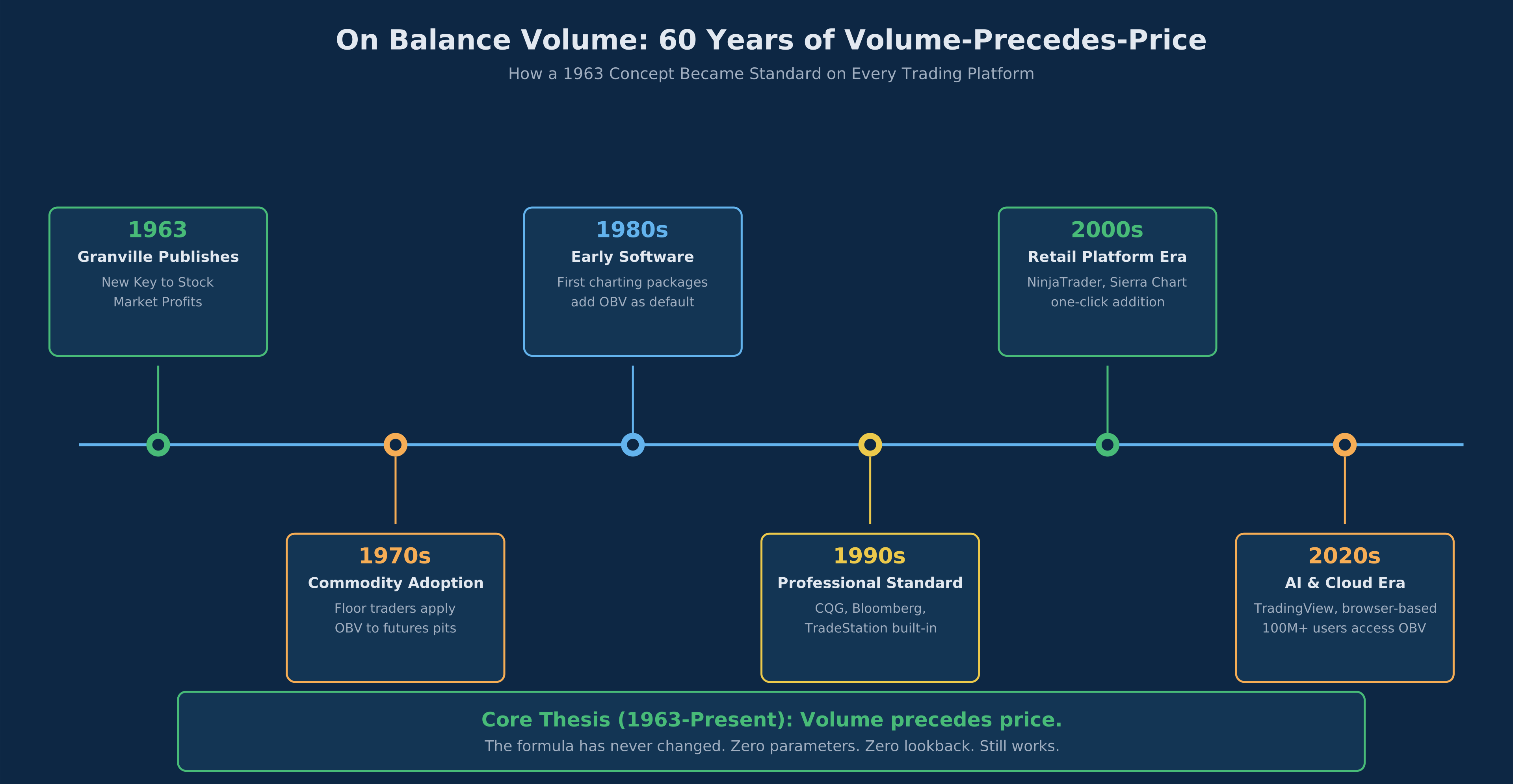
Joseph Granville published Granville's New Key to Stock Market Profits in 1963, and it changed how a generation of traders thought about volume. Before OBV, most traders looked at volume as an afterthought — maybe they'd glance at the volume bars at the bottom of a chart. Granville argued that was backwards. Volume was the leading indicator; price was just the lagging confirmation.
His core insight was almost embarrassingly simple: if a stock (or futures contract) closes higher on heavy volume, that's accumulation — money flowing in. If it closes lower on heavy volume, that's distribution — money flowing out. Chain those observations together into a running total, and you get a line that reveals the underlying buying and selling pressure that price alone can't show.
| Year | Milestone |
|---|---|
| 1963 | Granville publishes OBV concept in New Key to Stock Market Profits |
| 1970s-80s | OBV integrated into early charting software, adopted by commodity traders |
| 1990s | Default indicator in CQG, Bloomberg, TradeStation |
| 2000s-present | Ships with NinjaTrader, TradingView, Sierra Chart — one-click addition |
OBV's transition to futures happened naturally. The formula is instrument-agnostic: anything with a close price and a volume number works. Futures traders adopted it because volume spikes in contracts like ES, NQ, and CL carry specific meaning — they often mark institutional participation, inventory rebalancing, or algorithmic execution. OBV captures those flows in a way that raw volume bars can't.
How OBV Works: The Calculation #
The formula is three lines of logic:
- If today's close is higher than yesterday's close: Add today's volume to the running OBV total
- If today's close is lower than yesterday's close: Subtract today's volume from the running total
- If today's close equals yesterday's close: OBV stays unchanged
That's the entire calculation. No parameters. No lookback period. No smoothing. The starting value is arbitrary (usually zero) — what matters is the direction and shape of the OBV line, not its absolute level.
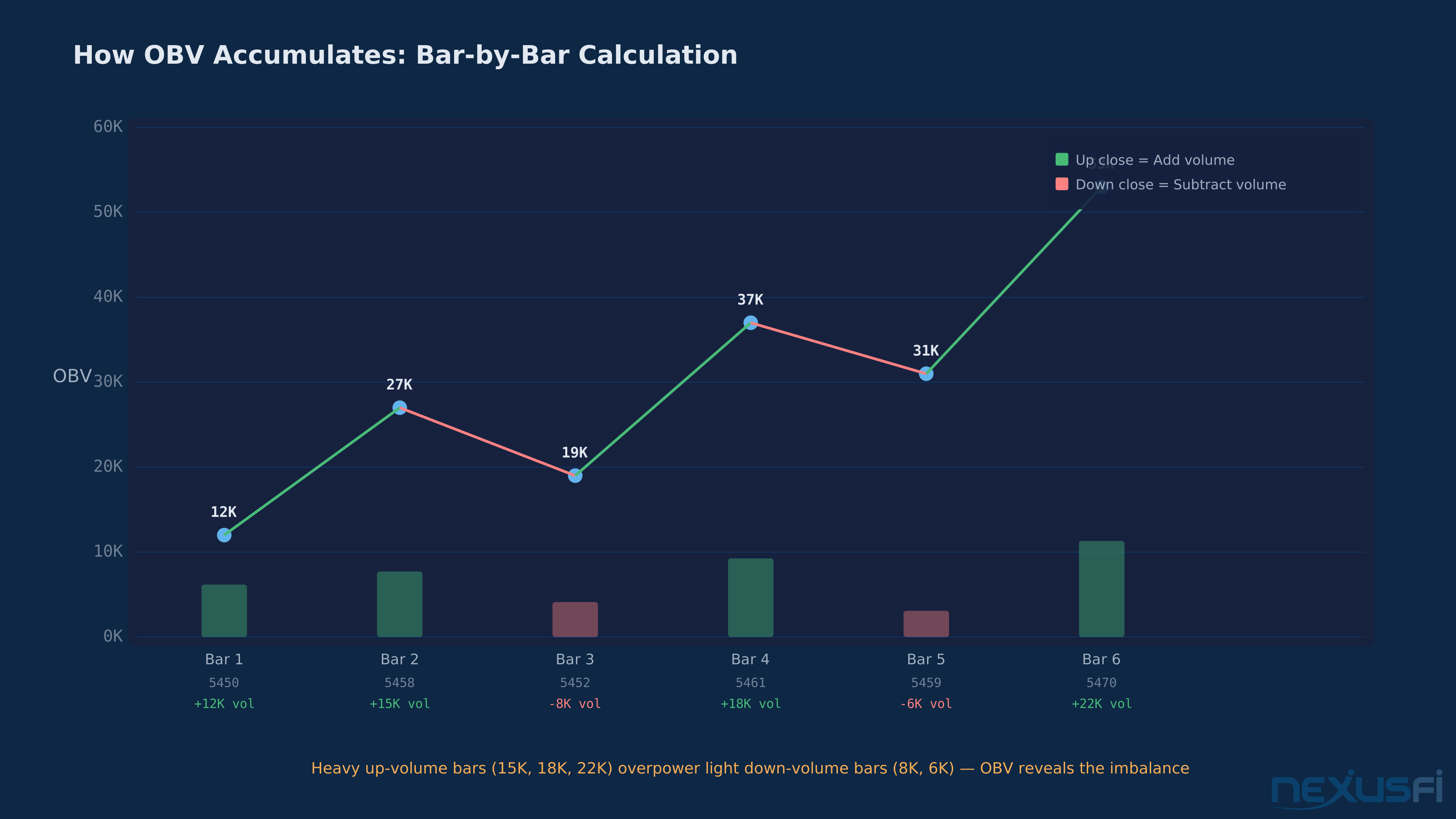
Here's what it looks like with real numbers:
| Bar | Close | Volume | Direction | OBV Calculation | Running OBV |
|---|---|---|---|---|---|
| 1 | 5450 | 12,000 | (start) | 0 + 12,000 | 12,000 |
| 2 | 5458 | 15,000 | Up | 12,000 + 15,000 | 27,000 |
| 3 | 5452 | 8,000 | Down | 27,000 - 8,000 | 19,000 |
| 4 | 5461 | 18,000 | Up | 19,000 + 18,000 | 37,000 |
| 5 | 5459 | 6,000 | Down | 37,000 - 6,000 | 31,000 |
| 6 | 5470 | 22,000 | Up | 31,000 + 22,000 | 53,000 |
Notice the pattern: price went up 20 points over six bars, and OBV climbed steadily. The up moves came on heavier volume (15K, 18K, 22K contracts) than the down moves (8K, 6K). OBV captures that asymmetry in a single line. You can see at a glance that buying pressure dominated.
The beauty of this approach is the implicit weighting. Heavy-volume bars carry more OBV impact than light-volume bars. A 50,000-contract bar that closes higher swings the OBV line far more than a 5,000-contract bar going the other way. This means OBV naturally amplifies the moves where institutional-size participation is happening.
Reading OBV for Trend Confirmation #
The first and most basic use of OBV: does the volume flow agree with the price trend?
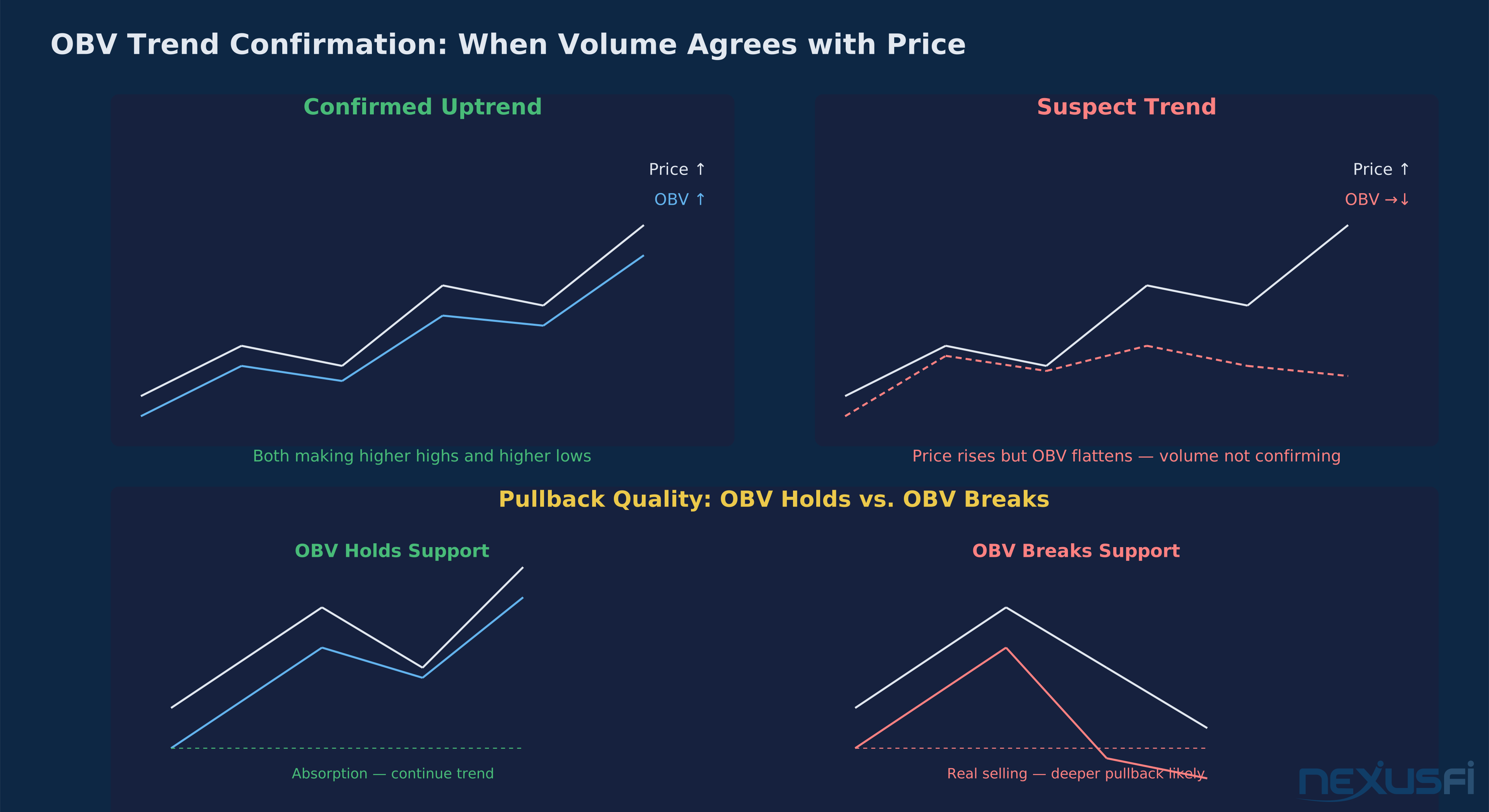
Confirmed uptrend: Price makes higher highs and higher lows. OBV also makes higher highs and higher lows. The trend has volume support — buyers are adding on rallies and not disappearing on pullbacks. This is the green light for trend-following strategies.
Confirmed downtrend: Price makes lower highs and lower lows. OBV also makes lower highs and lower lows. Sellers are pressing on declines and buyers aren't stepping in on bounces. Short bias is supported.
Suspect trend: Price makes new highs but OBV doesn't confirm. Or price makes new lows but OBV holds above its own lows. This mismatch is your first warning that something's off under the surface.
The key insight: don't look at bar-by-bar OBV changes. That's noise. Look at the swing structure of the OBV line itself. Draw trendlines on OBV, identify its swing highs and lows, and compare that structure to the price structure. When they agree, trust the trend. When they diverge, pay attention.
As one NexusFi community member put it while trading Micro futures: "The OBV is (usually) helpful. I just took three trades, and the OBV was my guide." ([sstheo's MYM journal] [8]). That "usually" qualifier is honest and important — OBV confirms trends most of the time, but it's the exceptions that generate the most valuable signals.
Pullback Quality Assessment #
A refined application that active traders use: during a pullback within an uptrend, watch whether OBV holds above its recent swing low.
- OBV holds: The pullback is absorption — sellers are testing but not overwhelming the buy flow. Good setup for trend continuation entries.
- OBV breaks its swing low: The pullback has real selling behind it. The trend may be shifting, or at minimum the pullback will be deeper than expected.
This single technique — checking OBV structure during pullbacks — eliminates a significant number of false continuation entries. You're no longer just trusting that a pullback "should" bounce because it's hitting support. You're verifying that the volume flow agrees.
OBV Divergence: The Warning Signal That Arrives Early #
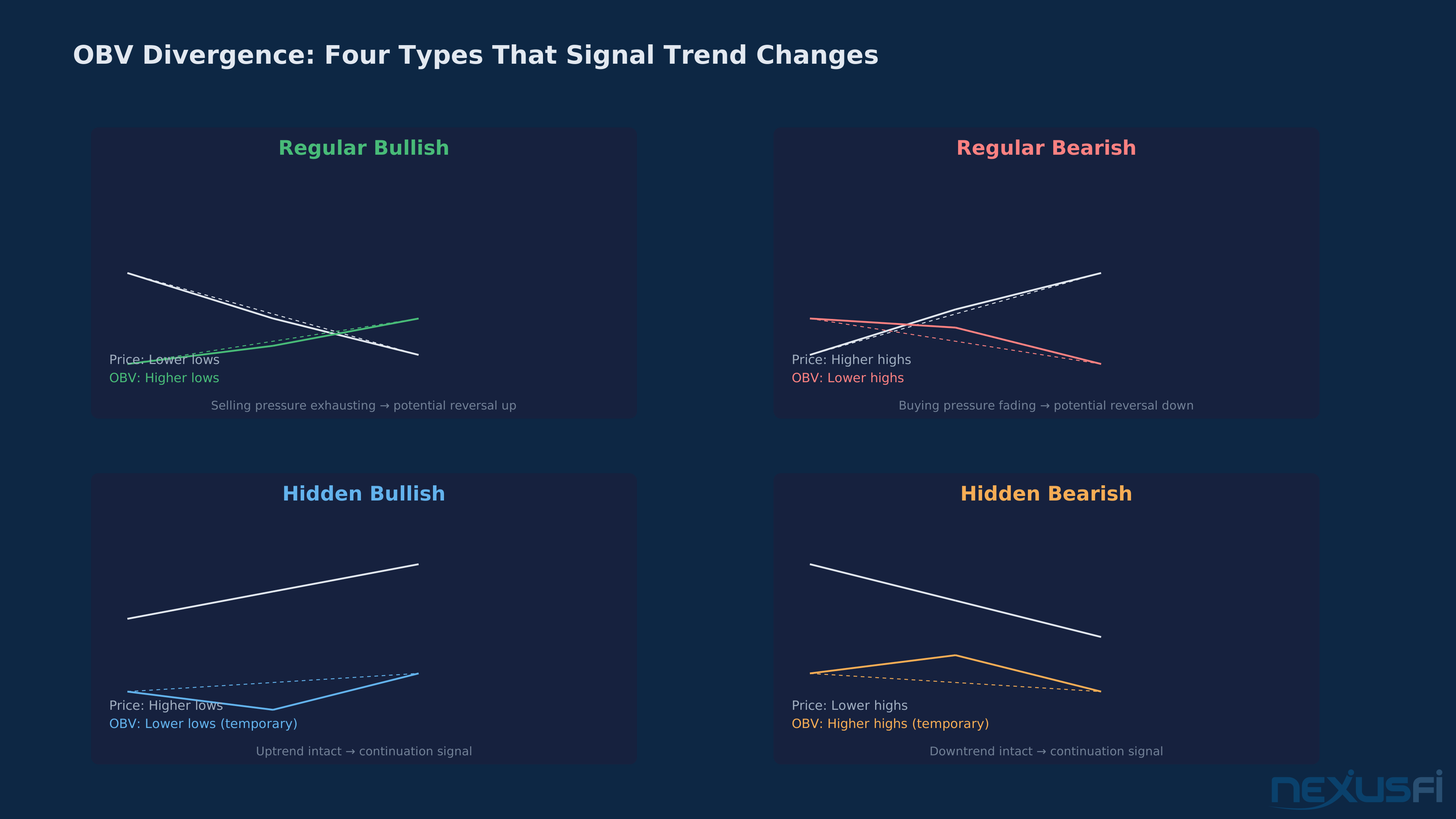
Divergence between OBV and price is where this indicator earns its reputation. Four types matter:
Regular Bullish Divergence #
Price makes a lower low. OBV makes a higher low. Translation: the most recent selloff came on lighter volume than the previous selloff. Selling pressure is exhausting itself. Buyers may be quietly accumulating at lower prices.
Regular Bearish Divergence #
Price makes a higher high. OBV makes a lower high. Translation: the most recent rally came on lighter volume than the previous rally. Buyers are losing interest at higher prices. The breakout lacks participation.
Hidden Bullish Divergence #
Price makes a higher low (still in an uptrend). OBV makes a lower low but quickly recovers. Translation: the trend is intact despite the OBV dip — often caused by a thin-volume session that doesn't represent true selling pressure. Continuation signal.
Hidden Bearish Divergence #
Price makes a lower high (still in a downtrend). OBV makes a higher high but fails to sustain it. Translation: buying interest is sporadic and unsustained. The downtrend has more room to run.
The critical filter: Divergence alone is not a trade signal. It's a setup condition. You still need a price-action trigger — a breakout retest, a swing-level reclaim, a candlestick reversal pattern. Big Mike's OBV Divergence indicator marks potential divergence points with colored diamonds and squares, but as he noted, the [divergence prints only when specific conditions align] [5], not on every OBV-price disagreement.
Professional traders add a volume-spike filter: the divergence bar's volume should be at least 1.5 times the 20-bar average volume to be considered significant. This cuts false signals dramatically. A divergence on thin lunchtime volume in ES means nothing. A divergence during the morning drive on 2x average volume means everything.
Combining OBV with Price Action: The Execution Framework #
OBV is a filter, not a signal generator. Here's how to combine it with specific price patterns:
Breakout Confirmation #
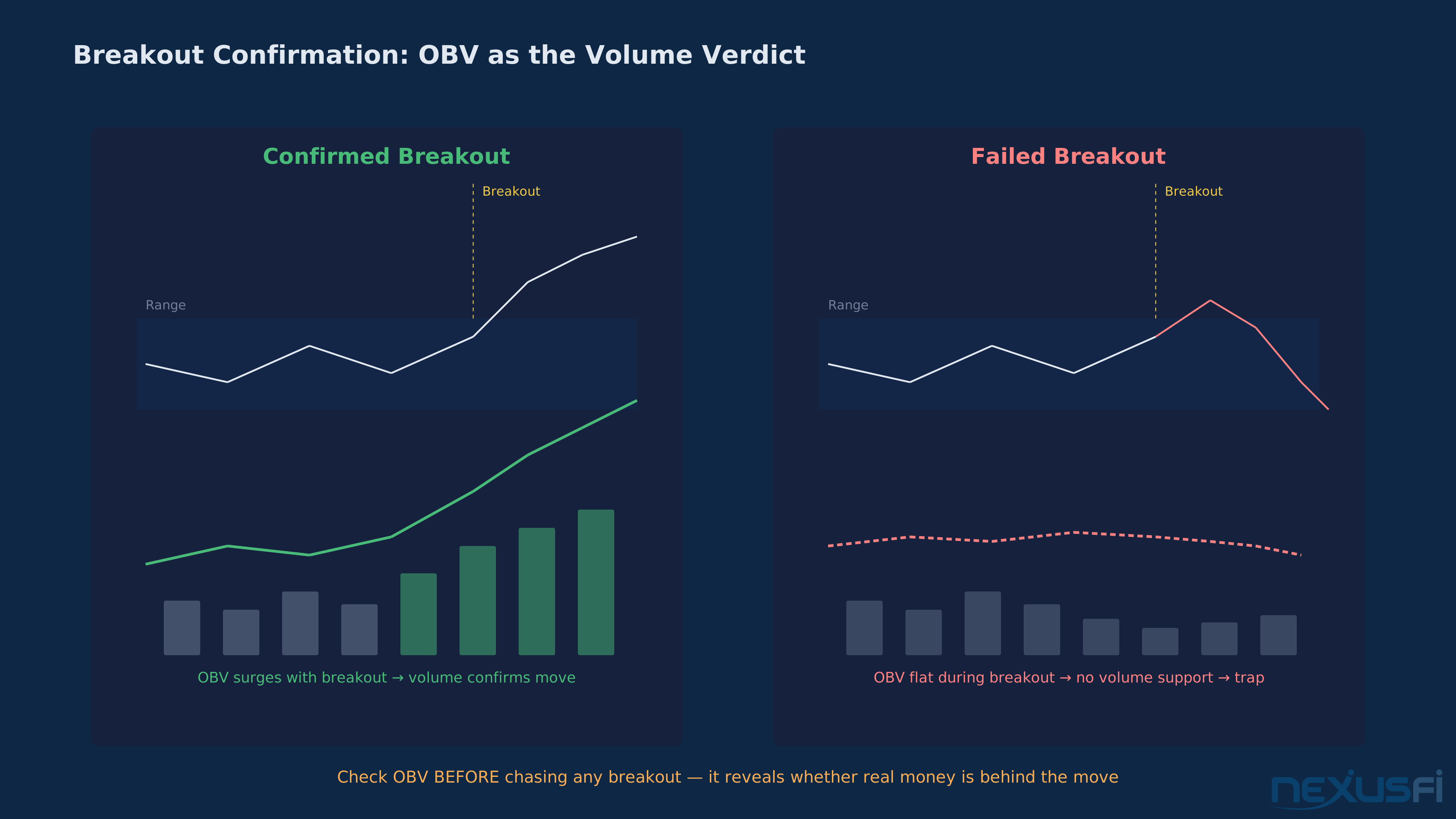
Price breaks above a consolidation range. Check OBV:
- OBV makes a new swing high on the breakout bar: The breakout has volume support. Enter on the first pullback to the breakout level. Stop below the range low.
- OBV is flat or declining during the breakout: Red flag. This is a thin-volume breakout that's more likely to fail. Stand aside or look for the fade.
This single rule — checking whether OBV confirms a breakout — would have saved traders from countless false breakout entries. As one NexusFi member noted in the "All you need" thread: "For a trend continuation breakdown or breakout to be valid it should ultimately be confirmed by volume. I use the OBV to see that volume..." ([Blz17] [7]).
Failure Swing Detection #
Price makes a new high, then drops below the prior swing low. If OBV never confirmed the new high (OBV's high was lower than its previous high), this is a classic failure swing with OBV backing the short side. The combined signal — price failure swing plus bearish OBV divergence — is one of the highest-probability reversal setups available.
Candlestick Pattern Enhancement #
A hammer or engulfing bar at support is more reliable when OBV has been rising over the last 3-5 bars. The volume flow is already shifting bullish before the candlestick pattern prints. This gives the reversal pattern a volume tailwind that improves follow-through.
OBV Trendlines #
Draw trendlines directly on the OBV line. This is an underused technique. If price breaks its trendline but the OBV trendline holds, the breakdown is likely to be a shakeout — a mean reversion setup. If both trendlines break simultaneously, the move is more likely real.
OBV Across Futures Markets: ES, NQ, and CL #
OBV behaves differently depending on the market's characteristics. Understanding those differences prevents you from applying a one-size-fits-all approach.
E-Mini S&P 500 (ES) #
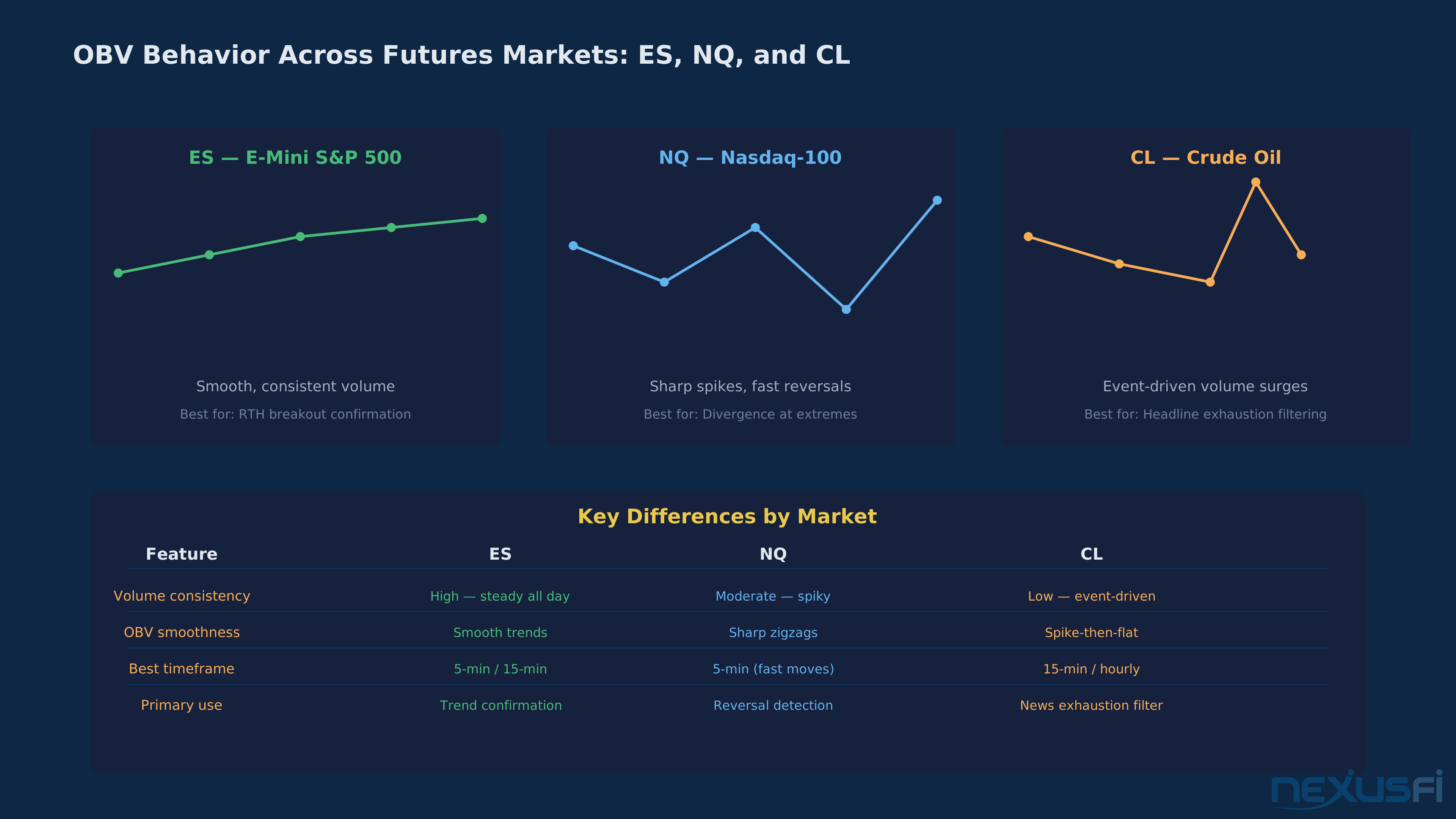
ES is the most liquid futures contract in the world. OBV works well here because volume is consistent enough to produce smooth, readable signals. The key ES-specific applications:
- RTH open breakouts: The 9:30 AM ET range breakout is one of the most-traded setups in ES. OBV confirmation during the first 15-30 minutes separates real institutional participation from empty gap fills. A breakout with rising OBV on 15,000+ contracts per 5-minute bar is genuine. A breakout on 6,000 contracts is suspect.
- VWAP + OBV alignment: When price is above VWAP and OBV is trending higher, you have both price-weighted and cumulative volume evidence pointing in the same direction. This double confirmation is as clean as it gets for ES day trading.
- Afternoon distribution: OBV declining during a 2-3 PM price grind higher often precedes a late-session sell-off. Institutions take profits in the afternoon by slowly distributing into retail buying. OBV catches this before price rolls over.
Nasdaq-100 (NQ) #
NQ has sharper moves and faster reversals than ES. OBV is especially useful here because:
- Liquidity vacuums: NQ can move 50 points in seconds during thin periods. OBV helps distinguish whether a spike is backed by real volume or is just a thin-market artifact. A 50-point NQ spike with flat OBV is a trap. The same spike with OBV surging is a genuine breakout.
- Tech rotation signals: OBV divergence in NQ often precedes sector rotation days. When NQ makes new highs but OBV lags, it frequently signals that tech leadership is waning before the price chart shows it. This is hidden distribution by large funds.
- Overnight session volume: NQ trades actively in globex hours. Running OBV across the 24-hour session (not just RTH) captures Asian and European flows that set up the US open.
Crude Oil (CL) #
CL is event-driven. OPEC decisions, inventory reports, geopolitical disruptions — all create volume spikes that can distort standard technical analysis. OBV handles this well because:
- Inventory report reactions: Wednesday's 10:30 AM ET EIA report creates massive volume bars. OBV separates the initial knee-jerk from the follow-through. If OBV rises sharply on the report bar and continues rising for the next 3-5 bars, the reaction is genuine. If OBV spikes then immediately flattens, the market is absorbing the move and a reversal is likely.
- OPEC headline exhaustion: CL often rallies on OPEC production cut headlines, then fades. OBV bearish divergence during these headline-driven rallies is one of the most reliable mean-reversion signals in energy trading.
- Contango/backwardation shifts: OBV trends in CL often align with shifts in the forward curve structure. Sustained OBV accumulation during a backwardation steepening confirms genuine physical demand rather than speculative froth.
Platform Implementation: Getting OBV Right #
OBV is available on every major platform, but implementation details matter. Get these wrong and your OBV signals will be unreliable.
The Contract Roll Problem #
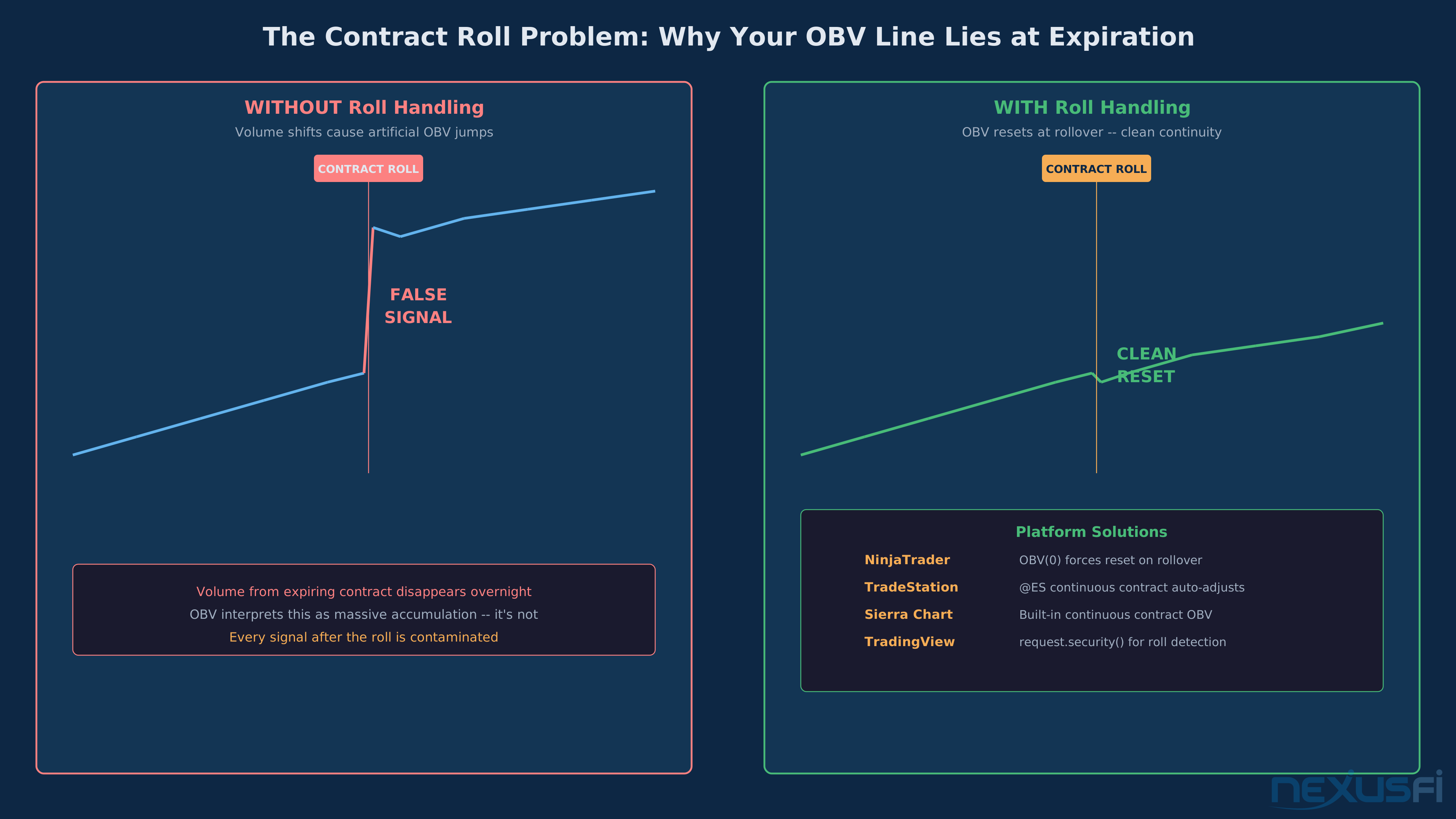
This is the number-one source of bad OBV readings in futures. When a contract expires and volume shifts to the next month, OBV can produce a massive artificial spike or drop if your chart doesn't handle the transition properly.
| Platform | Roll Handling | Best Practice |
|---|---|---|
| NinjaTrader | OBV(0) forces reset on rollover |
Always use the 0 parameter; without it, OBV carries across contracts and produces false jumps |
| TradeStation | Use continuous contract with volume adjustment | @ES continuous contract handles rolls automatically |
| TradingView | Manual request.security logic needed |
Add a rollover detection script or use TradingView's built-in continuous contract handling |
| Sierra Chart | Built-in continuous contract OBV | Select "Continuous Contract" in chart settings before adding OBV |
Visual Configuration #
- Color-code the OBV line: Green when OBV is above its previous value, red when below. This instant visual cue speeds up your scanning.
- Add a moving average to OBV: A 20-period SMA on OBV smooths out the noise and makes divergences easier to spot.
- Volume-average overlay: Plot the 20-bar average volume as a separate reference. When OBV moves are backed by above-average volume bars, the signal has more weight.
Alert Setup #
The most useful OBV alerts:
- OBV divergence detector: Alert when OBV makes a higher low while price makes a lower low (or vice versa). This is what Big Mike's [OBV Divergence indicator] [1] automates.
- OBV breakout: Alert when OBV exceeds its highest value in the last N bars (suggesting fresh volume accumulation).
- OBV/price divergence threshold: Only trigger when the divergence involves bars with volume above 1.5x the 20-bar average.
OBV vs. Other Volume Indicators: Where It Fits #
OBV isn't the only volume tool available. Understanding where it fits in the ecosystem prevents redundancy.
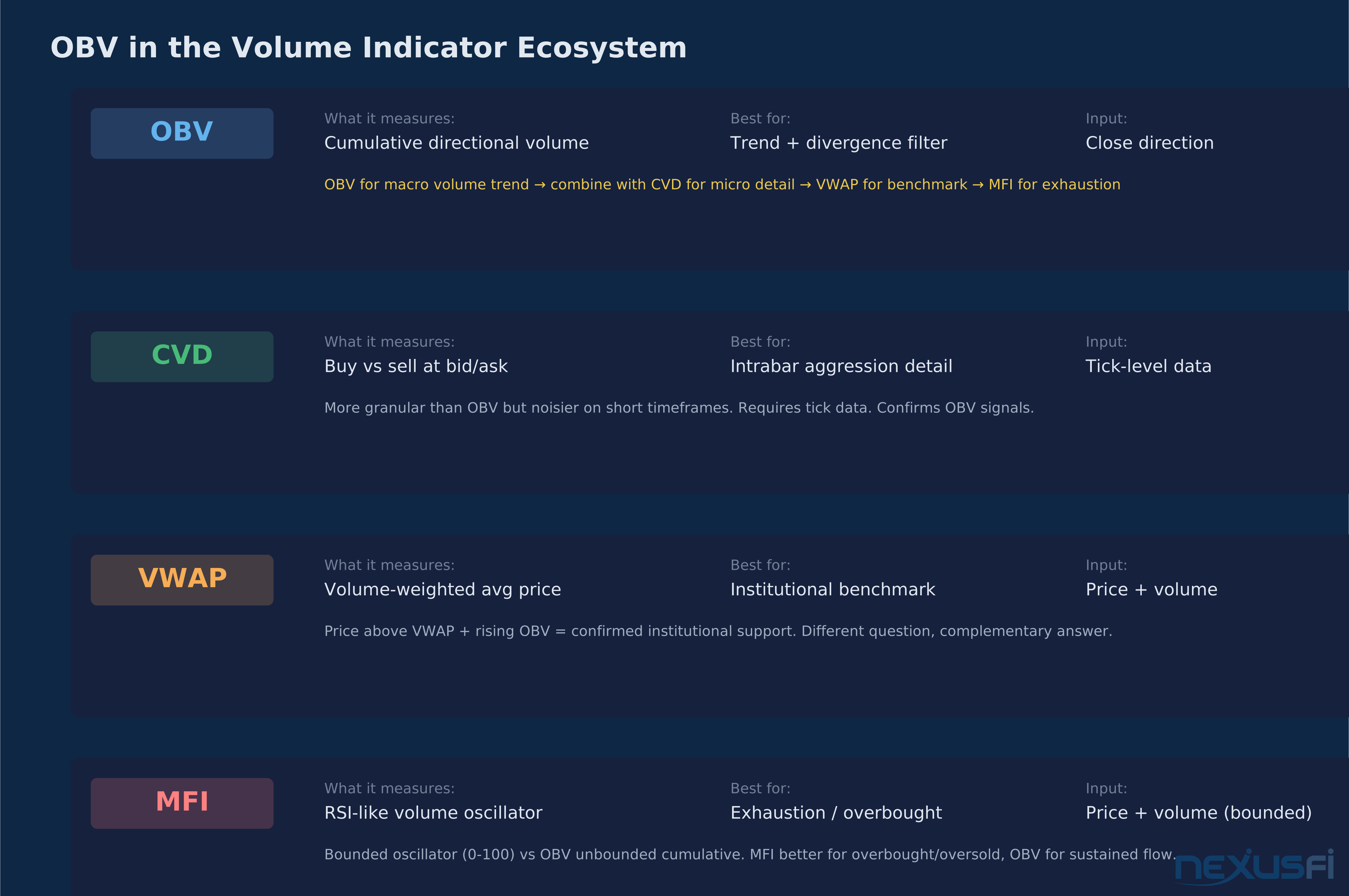
OBV vs. Cumulative Volume Delta (CVD): CVD separates buy volume from sell volume using trade-level data (bid vs. ask hits). OBV only uses close direction. CVD is more granular but requires tick-level data and can be noisy on short timeframes. OBV is simpler and works on any bar data. Use both: OBV for the macro volume trend, CVD for intrabar aggression detail. Fat Tails' excellent analysis of [Effective Volume vs. OBV] [6] on NexusFi explores these distinctions in depth.
OBV vs. VWAP: VWAP tells you the average price weighted by volume — a benchmark. OBV tells you whether volume is flowing in or out — a momentum measure. They answer different questions and combine powerfully: price above VWAP with rising OBV is a confirmed institutional-supported uptrend.
OBV vs. Money Flow Index (MFI): MFI combines price and volume into an RSI-like oscillator with overbought/oversold zones. OBV is unbounded and cumulative. MFI is better for identifying exhaustion; OBV is better for tracking sustained accumulation or distribution.
OBV vs. Volume Profile: Volume Profile shows where volume clustered at specific price levels. OBV shows the direction of volume flow over time. They're complementary: Volume Profile gives you the "where," OBV gives you the "which way."
The NexusFi community has experimented extensively with OBV variants. The [OBVM-CD indicator] [9] in the Elite Circle adds MACD-style convergence/divergence processing to OBV, creating a momentum oscillator from the volume line. These custom tools demonstrate that OBV serves as a foundation that more complex volume analysis can build on.
Common Pitfalls: What Gets Traders Into Trouble #
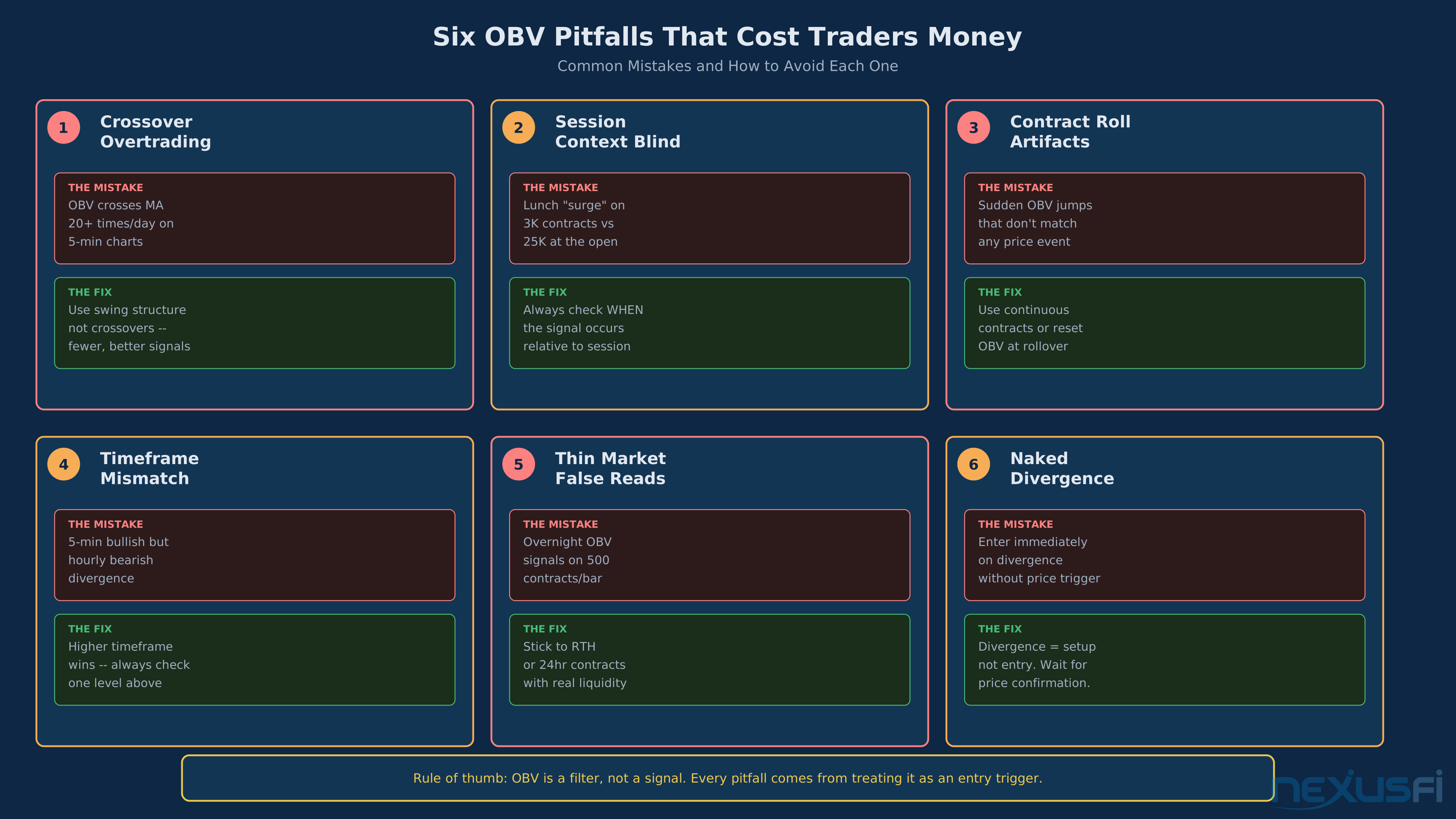
1. Overtrading OBV Crossovers #
OBV crossing above or below a moving average generates frequent signals on short timeframes. Most are noise. Use swing structure (higher highs/higher lows in OBV) instead of crossovers. The swing approach produces fewer, higher-quality signals.
2. Ignoring Session Context #
OBV doesn't normalize for session liquidity patterns. Volume at the 9:30 open dwarfs volume at 12:30 lunch. An OBV "surge" during lunch on 3,000 contracts is meaningless compared to the same move at the open on 25,000 contracts. Always consider when the OBV signal is occurring relative to the session structure.
3. Contract Roll Artifacts #
Already covered above, but worth repeating: this is the most common technical error. If your OBV line has sudden discontinuous jumps that don't correspond to any price event, check your contract rollover settings first.
4. Timeframe Mismatch #
OBV on a 5-minute chart may show bullish divergence while OBV on the hourly chart shows bearish divergence. The higher timeframe wins. Always check at least one timeframe above your trading timeframe for OBV alignment before acting on a signal.
5. Using OBV in Thin Markets #
OBV requires meaningful volume to work. In thinly traded contracts or extended hours on lower-volume futures, OBV signals are unreliable. Stick to RTH for OBV analysis in most cases, unless the contract trades actively 24 hours (like ES or NQ globex).
6. Naked Divergence Trading #
Seeing divergence and immediately entering a position. This is the fastest way to get stopped out by a trend that continues beyond the divergence signal. Divergence is a setup condition, not an entry trigger. Wait for price confirmation — a swing-level reclaim, a trendline break, a reversal candlestick pattern. The extra patience costs you a few ticks on the entry and saves you from catching falling knives.
Practical Application: A Decision Framework #
Use this checklist when incorporating OBV into your analysis:
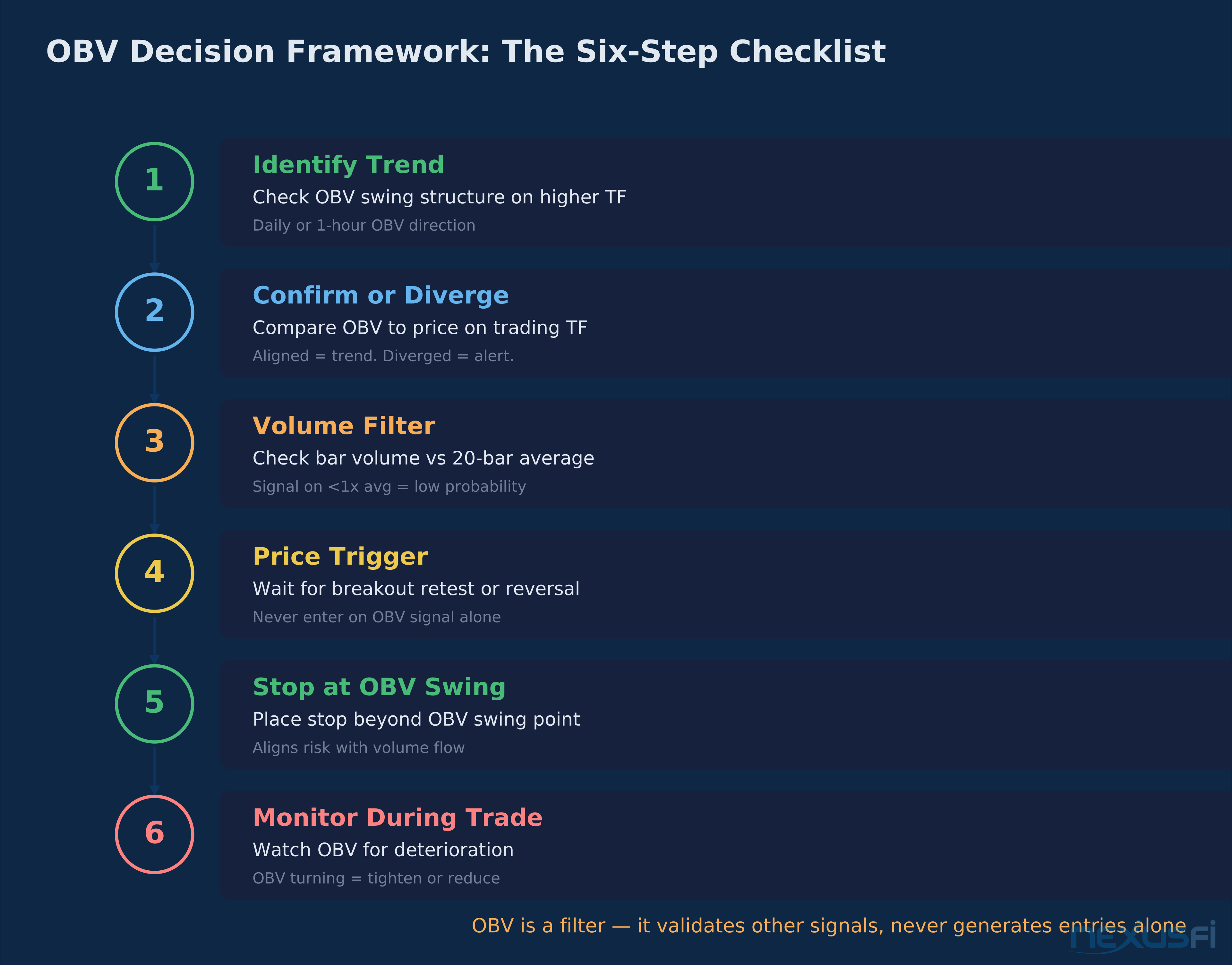
Step 1: Identify the Trend (Higher Timeframe) Check OBV swing structure on the daily or hourly chart. Is OBV making higher highs/higher lows (bullish) or lower highs/lower lows (bearish)? This sets your directional bias.
Step 2: Look for Confirmation or Divergence (Trading Timeframe) On your trading timeframe (5-min, 15-min), does OBV confirm the trend? Or is there a divergence forming? Confirmation means trade with the trend. Divergence means wait for a trigger.
Step 3: Apply the Volume Filter Is the divergence or breakout happening on above-average volume? Check the current bar's volume against the 20-bar average. Signals on below-average volume are lower probability.
Step 4: Wait for the Price Trigger Don't enter on OBV alone. Wait for:
- A breakout retest for trend continuation
- A swing-level reclaim for reversals
- A candlestick pattern for tactical entries
Step 5: Set Stops at OBV Swing Points Place your stop just beyond the most recent OBV swing low (for longs) or swing high (for shorts). This aligns your risk with the underlying volume flow, not just arbitrary price levels. It often produces tighter, more meaningful stops.
Step 6: Monitor OBV During the Trade If OBV starts diverging from your position direction during the trade, tighten your stop or reduce size. OBV turning against you while you're in a trade is an early warning that the edge is eroding.
The Bottom Line #
OBV has survived 60+ years for a reason. It reduces the complex question of "where is volume flowing?" to a single cumulative line that even beginning traders can read. Its power isn't in generating signals by itself — it's in filtering every other signal you use. A breakout with OBV confirmation is more reliable than one without. A divergence with volume-spike backing is more meaningful than one on thin air.
Start simple: add OBV to your chart with a 20-period moving average. Watch how it behaves relative to price over a few dozen sessions. You'll start seeing the divergences and confirmations intuitively, and that volume-aware lens will improve every other tool in your trading toolkit.
The NexusFi community has 15+ years of OBV discussion, custom indicators, and real trading applications across multiple platforms. The [OBV Divergence thread][1] alone contains 129 responses from traders who've tested, modified, and refined OBV approaches across NinjaTrader, TradeStation, and MotiveWave. That collective experience — not just the indicator's formula — is what makes OBV worth understanding deeply.
See Also #
- Delta Analysis & Cumulative Volume Delta (CVD) — Where OBV uses close direction, CVD separates buy from sell volume at the tick level. Use OBV for the macro trend and CVD for intrabar aggression detail.
- Money Flow Index (MFI) — MFI combines price and volume into an RSI-like oscillator with overbought/oversold zones. Where OBV tracks cumulative flow direction, MFI measures volume-weighted momentum exhaustion.
- Divergence — The complete framework for spotting and trading divergence across all indicator types, including OBV divergence setups.
- VWAP — The volume-weighted average price benchmark. OBV tells you the direction of flow; VWAP tells you the fair-value price. Price above VWAP with rising OBV is a confirmed institutional-supported uptrend.
- Volume Profile — Shows where volume clustered at specific price levels. OBV gives you the "which way"; Volume Profile gives you the "where." Complementary tools for complete volume analysis.
- Chaikin Money Flow (CMF) — Another Granville-influenced volume indicator that measures money flow over a fixed lookback period, versus OBV's unbounded cumulative approach.
Knowledge Map
Go Deeper
Build on this knowledgeReferences This Article
Articles that build on this topicCitations
- — OBV (on balance volume) Divergence indicator (2009) 👍 64“Hello all, Some recent posts have been talking about OBV. I have been on a Divergence kick lately, so decided I wanted to write an OBV Divergence indicator. It turned out pretty well, so I am releasing it here. This is for VIP Users Only.”
- — Sharing Motivewave Indicators Thread (2017) 👍 11“I started this thread so that users of Motivewave can share indicators with each other. OBV Divergence Indicator I had Mike's OBV Divergence Indicator made for Motivewave. Per Mike's request, this indicator is for Elite Members only.”
- — OBV (on balance volume) Divergence indicator (2010) 👍 13“I added BBands to the OBVDiver indicator on top of Cory's EMA addition. It gives it a MACD_BBLines look...It's not a bad way to avoid chop...I generally look for longs when the Dots go out of the Upper BBand and vice versa for shorts...”
- — EasyLanguage OBV On Balance Volume Indicator (2010) 👍 15“Here is my custom version of the OBV (On Balance Volume) indicator. Plot 1, 2, 3 and 4 should be invisible and are just used for color reference. Let me know what you think. Below is the code, attached is the .pla for MultiCharts. https://nexusfi.”
- — OBV (on balance volume) Divergence indicator (2009) 👍 8“Divergence prints if there is a Cyan Diamond or a Meganta Square. If there is not a diamond or square, there is no divergence which means the MA is moving in the same direction as the OBV itself. Mike”
- — custom daily indicator that using 1-minute info (Pascal Willain - Effective Volume) (2012) 👍 13“Before doing anything we should look at what effective volume is about. Let me do some comparisons with other indicators: (1) OnBalanceVolume (OBV) simply adds up the volume of the bar series shown on the chart without taking into account the price c...”
- — All you need (2009) 👍 2“No problem. For a trend continuation breakdown or breakout to be valid it should ultimately be confirmed by volume. I use the OBV to see that volume is confirming the breakout or breakdown. So as an example see the attached picture.”
- — Making a Living with the Micros (2021) 👍 1“The OBV is (usually) helpful https://nexusfi.com/attachment.php?attachmentid=312971 The MYM has enough volume that I am able to watch the OBV. I just took three trades, and the OBV was my guide.”
- — APEX 300K+: The Journey (2023) 👍 4“don't sleep like a lot of people so I get a lot of programming done between 1 AM - 4 AM .. last night I worked on simplifying my charts .. specifically, combining indicators and creating algorithms to simplify my thinking ..”