



VWAP: The Volume-Weighted Benchmark That Shows Where the Money Actually Traded
Overview #
VWAP — Volume Weighted Average Price — is the single line on your chart that every institutional desk in the world is watching. Not because it's a magic indicator. Because it's the benchmark. When a portfolio manager asks their execution desk "how'd we do today," the answer comes back in basis points relative to VWAP.
That makes VWAP different from every other moving average on your chart. A 20-period EMA is arbitrary — you picked 20, someone else picked 50, and neither of you can explain why beyond "it looked good in backtesting." VWAP isn't arbitrary. It's the volume-weighted average of every transaction in the session. It's the same number on every screen, every timeframe, every platform. As @JonnyBoy puts it in his [529-post VWAP thread on NexusFi][1]: "When I look at the market I want to see the structure exactly as every other trader sees it. VWAP allows me to do that because it is identical for every other trader on the planet."
That universality is the source of its power. VWAP doesn't predict where price will go. It tells you where the money already went — and that information shapes how institutional traders, algorithms, and execution desks interact with the market for the rest of the session.
The Math #
The VWAP calculation is straightforward:
VWAP = Cumulative(Price x Volume) / Cumulative(Volume)
For each bar in the session, multiply the typical price (usually the average of high, low, and close) by the volume traded during that bar. Sum those products from the session open to the current bar. Divide by total cumulative volume.
Two properties matter for trading:
VWAP is cumulative and anchored. Unlike a moving average that drops old data as new bars arrive, VWAP carries every transaction from the anchor point forward. Early-session bars with heavy volume (the open) exert enormous influence. By late afternoon, each new bar barely moves the line.
VWAP is timeframe-independent. A 1-minute chart and a 15-minute chart show the same VWAP line. This isn't true of any period-based moving average. A 20 EMA on a 5-minute chart is a completely different line than a 20 EMA on a 1-minute chart. VWAP doesn't have this problem because it's calculated from raw trades, not bars.
Session Definition: RTH vs. Globex #
The first decision any VWAP trader makes is: where does the calculation start?
RTH VWAP anchors to the Regular Trading Hours open (9:30 ET for equity index futures like ES and NQ, 9:00 ET for energies like CL). This is the most commonly used session VWAP and the one most institutional desks benchmark against. RTH is where the majority of volume trades, where options market makers are active, and where the widest participation occurs.
Globex (ETH) VWAP anchors to the overnight session open (6:00 PM ET for CME products). This captures the full 23-hour trading day including overnight flow from Asian and European sessions. Some traders display both RTH and ETH VWAP simultaneously — @JonnyBoy uses "the RTH VWAP as the green/red hashed line" and "ETH VWAP as the magenta/blue hashed line" on the same chart, noting that trades under both VWAPs suggest strong directional conviction.
Which one matters? For day trading ES and NQ during US hours, RTH VWAP is the primary reference. Institutional execution algorithms benchmark to RTH. But when RTH and ETH VWAP diverge much — say, after a large overnight gap — the gap between them creates a zone of conflicting institutional benchmarks. That zone tends to produce choppy, two-sided price action until one VWAP is clearly accepted or rejected.
For CL, session definition matters even more because crude trades actively across European hours. Many CL traders use a VWAP anchored to the 3:00 AM ET London open or the 9:00 AM ET RTH open depending on their trading window.
VWAP as Dynamic Support and Resistance #
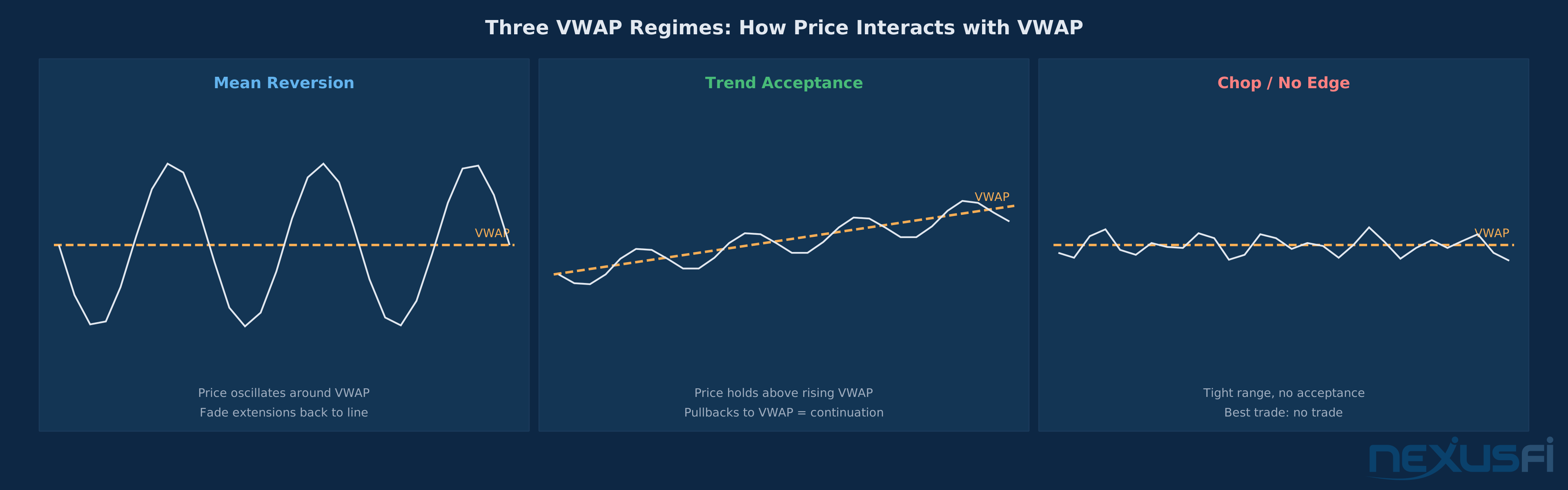
VWAP behaves as a reference level — but how it behaves depends entirely on the regime. There are three distinct modes, and identifying which one you're in is the entire game.
Regime 1: Mean Reversion (Rotational Days) #
On range-bound, rotational days, price oscillates around VWAP like a rubber band. The line acts as a magnet. Moves away from VWAP attract selling (above) or buying (below) that pulls price back. VWAP touches and retests are frequent.
This is the regime where VWAP fade setups thrive. Price extends to a standard deviation band, stalls, and returns to VWAP. The market is in balance — no directional conviction — and VWAP represents fair value that both sides agree on.
You'll recognize this regime by: flat or nearly flat VWAP slope, price crossing VWAP multiple times during the session, and standard deviation bands that remain roughly parallel.
Regime 2: Trend Acceptance (Directional Days) #
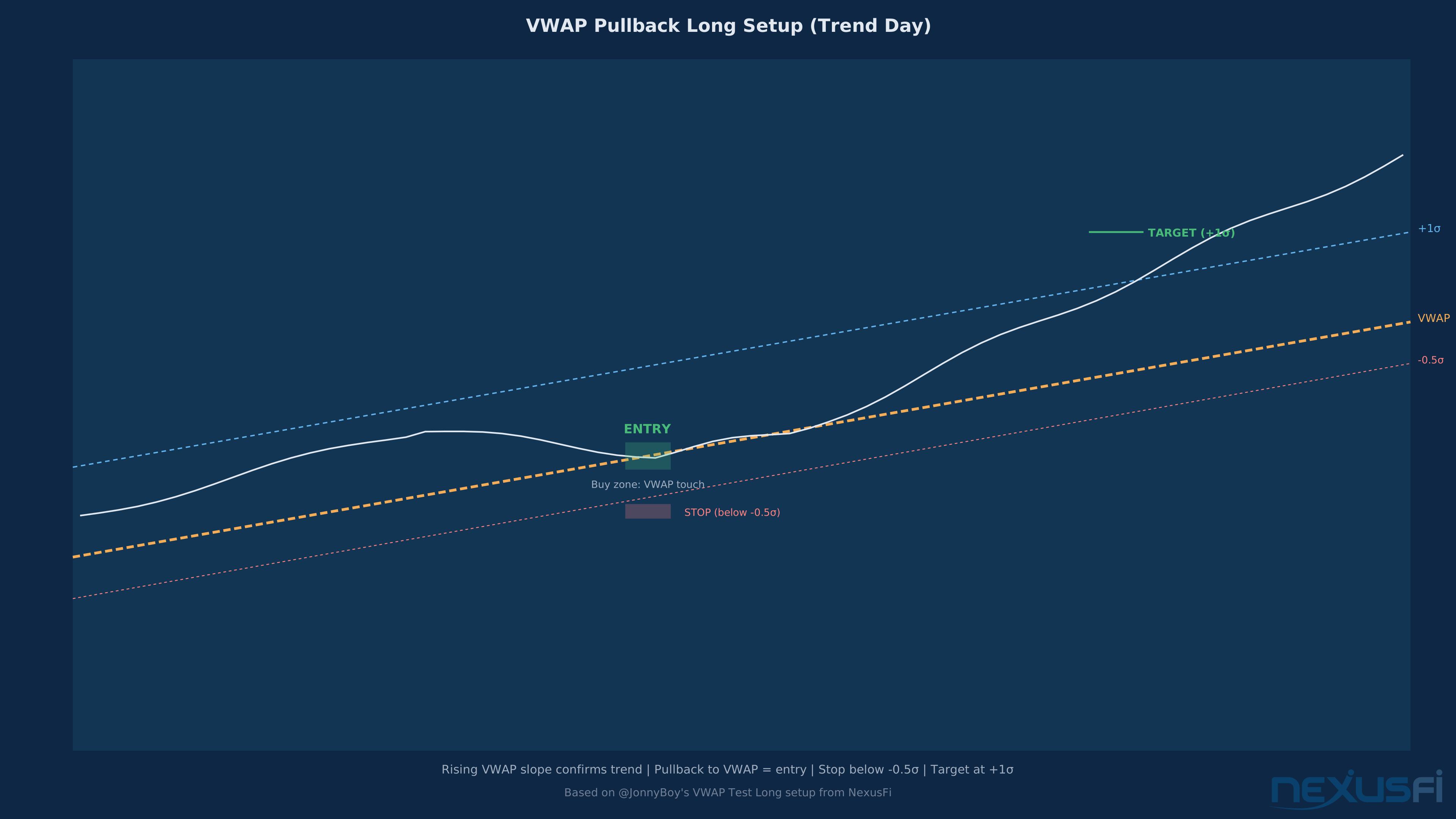
On trending days, price establishes early above or below VWAP and stays there. VWAP becomes trailing support (in uptrends) or resistance (in downtrends). Pullbacks to VWAP are buying opportunities in uptrends — not fade signals.
@JonnyBoy's VWAP Test Long Setup describes this regime precisely: "Price should transition from +SD1 to VWAP and settle within the +/- 0.25 SD of VWAP. A touch of VWAP is ideal, but doesn't always happen." The setup requires VWAP slope to be positive — a flat or negative slope invalidates the long entry.
This is where traders get hurt fading VWAP. In a genuine trend, shorting at VWAP because "it should act as resistance" is fighting the dominant flow. The slope of VWAP is the tell: a VWAP with a clear positive slope in the first 90 minutes isn't inviting fades — it's confirming directional acceptance.
Regime 3: Chop (No Acceptance) #
Price whips above and below VWAP with no sustained acceptance on either side. Volume is typically light and distributed without conviction. VWAP provides no useful structural reference because neither side has control.
The correct VWAP trade in this regime is no trade at all. As @josh put it bluntly on NexusFi:
"VWAPs don't 'work,' nor do moving averages, nor does anything. It's just information. It's not trading. Blindly buying and selling because of one average price line won't be profitable."
How to Identify the Regime #
The first 60-90 minutes of RTH typically reveal which regime is active:
REGIME IDENTIFICATION CHECKLIST
- Opening drive holds above/below VWAP with slope — Trend acceptance (Regime 2)
- Price crosses VWAP 3+ times before 10:30 ET — Rotation/mean reversion (Regime 1)
- Price oscillates around VWAP in narrow range with declining volume — Chop (Regime 3)
This regime identification step is non-negotiable. Every VWAP strategy — fade, trend continuation, breakout — has a regime where it works and a regime where it destroys your account. Knowing which regime you're in before placing a trade is the single most important VWAP skill.

Standard Deviation Bands #
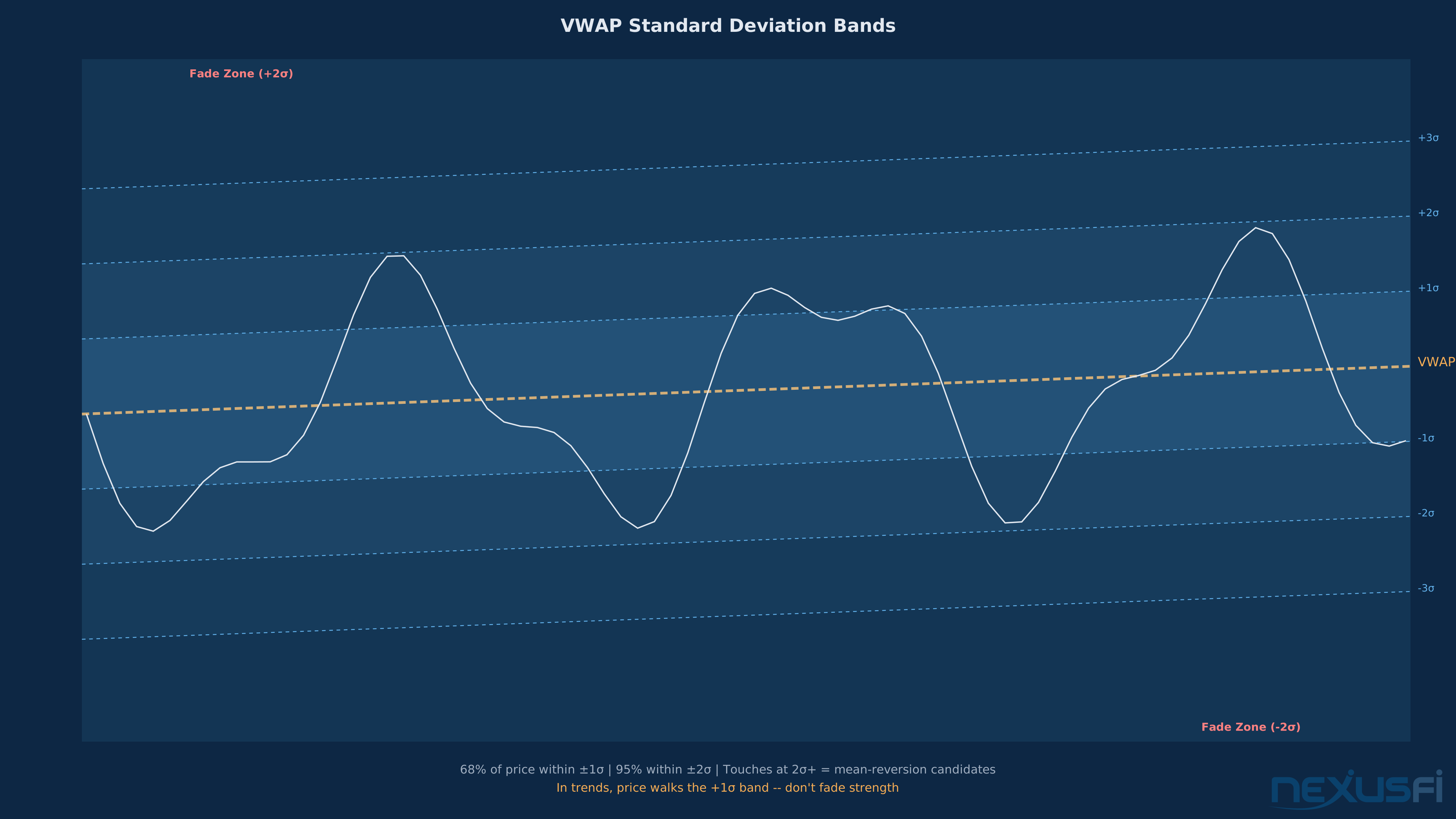
Raw VWAP is one line. Add standard deviation bands and you get a probabilistic framework that quantifies how far "too far" actually is.
The calculation: Standard deviation bands measure the dispersion of price around VWAP. The formula uses the running variance of price-times-volume relative to VWAP:
- +1 sigma / -1 sigma: Contains roughly 68% of price action
- +2 sigma / -2 sigma: Contains roughly 95% of price action
- +3 sigma / -3 sigma: Contains roughly 99.7% — extreme deviation
How Bands Work in Practice #
In mean-reversion regimes, bands function as overextension zones. When price reaches the 1.5 to 2 sigma band, the statistical probability of continued extension drops sharply. A fade back toward VWAP becomes the higher-probability trade — provided there's confirmation from declining aggression on the tape.
In trending regimes, price "walks" the bands. In a strong uptrend, price stays between VWAP and +1 sigma or even between +1 sigma and +2 sigma for extended periods. The bands don't signal "overextension" here — they confirm trend strength. Fading at the +1 sigma band in a genuine trend is a losing proposition.
Band Width as Volatility Proxy #
The width of VWAP bands expands during volatile sessions and contracts during quiet ones. Early in the session, bands are narrow because the sample is small. They widen through the morning as the session develops.
A sudden band expansion mid-session signals a volatility regime change — often driven by news, inventory data, or a significant level break. When bands expand rapidly, existing VWAP-based setups may need recalibration.
ES and NQ Band Behavior #
For ES, a 1 sigma band typically corresponds to 3-8 points depending on session volatility. For NQ, 1 sigma runs wider — 15-35 points on average — reflecting NQ's higher beta. These aren't fixed numbers. They're session-dependent and expand on high-volatility days (FOMC, NFP, CPI) and contract on light-volume sessions.
For CL, bands need roughly a 1.5x multiplier relative to equity index futures due to crude's higher intraday volatility and sharper event-driven spikes.
Anchored VWAP #
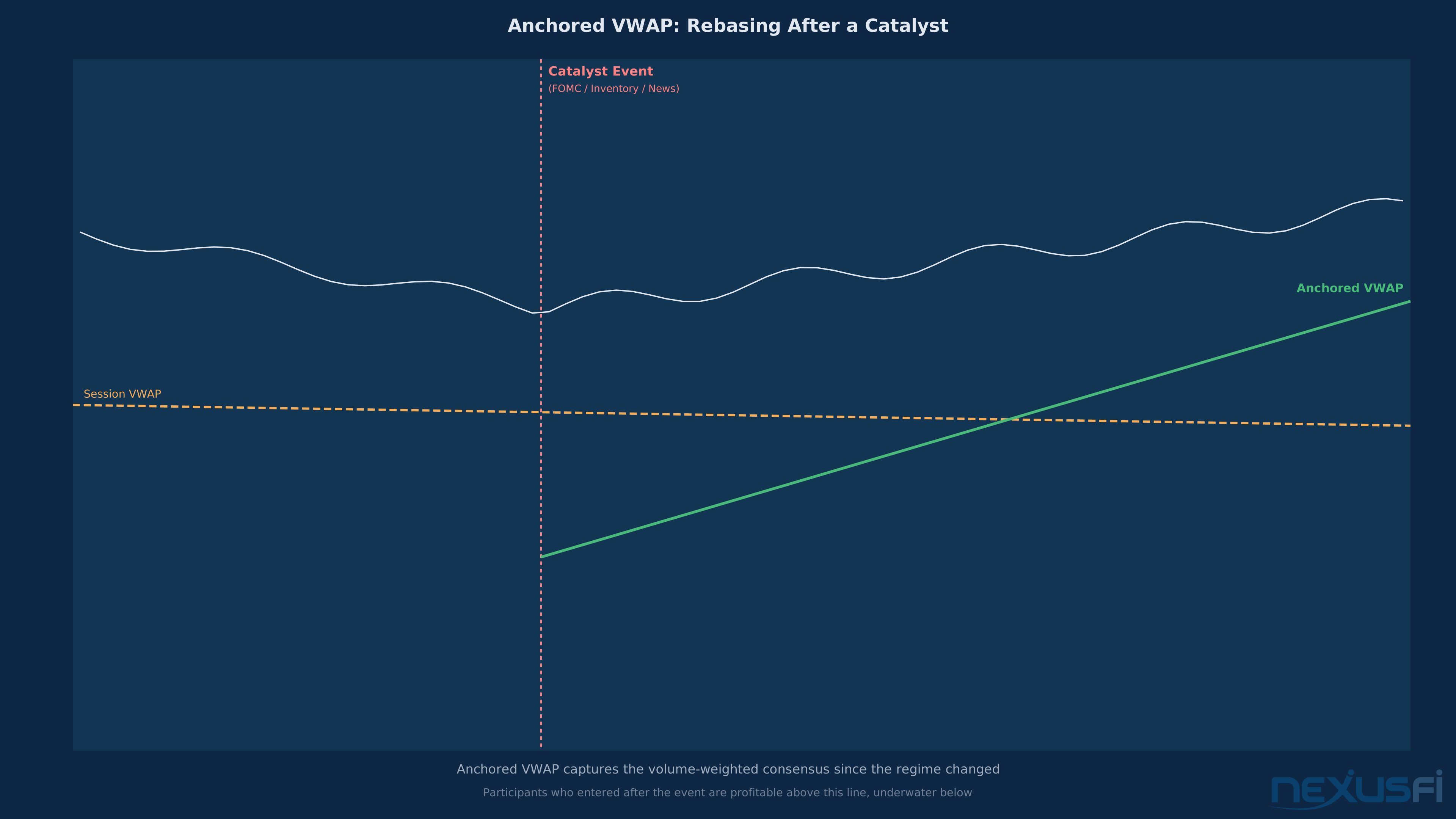
Session VWAP resets daily. Anchored VWAP starts wherever you tell it to — and that flexibility is where serious traders find edge.
What Anchored VWAP Reveals #
When you anchor VWAP to a specific event or price point, you're asking: "What's the volume-weighted average price since this particular moment?" That answer tells you where participants who entered after that event are positioned on average. If price is above the anchored VWAP, the average participant since that event is profitable. Below, they're underwater.
Common Anchor Points #
Event anchors — the most institutionally meaningful:
- FOMC announcement bar: shows average price since the Fed spoke
- NFP / CPI release: anchors to the macro trigger
- Earnings gap (if trading equity index futures around major reports): captures post-event flow
Structural anchors — swing-based:
- Prior week's high or low: VWAP from significant swing captures weekly positioning
- A failed breakout bar: anchored VWAP from the rejection point shows where trapped traders sit
- Multi-day low or gap fill: anchors to the start of a potential reversal
Time-of-day anchors:
- Anchored to the opening range completion (30 minutes after RTH open): captures post-open consensus
- Anchored to the European close (11:30 AM ET): marks the shift to US-only participation
Why Anchoring Works #
The logic is straightforward. Large institutional orders don't execute in a single print. They execute over hours or days using algorithms that slice orders across the session. If an institution began accumulating after a Fed announcement, their average entry price approximates the anchored VWAP from that announcement. When price pulls back to that level, they have incentive to defend it — because that's where their position breaks even.
This isn't guaranteed. But it creates a probabilistic tendency for anchored VWAP levels to attract price action, especially at significant event-driven anchors where institutional participation was heavy.
VWAP vs. TWAP: Execution Algorithms #
Understanding how institutional execution algorithms use VWAP clarifies why the line has structural significance on your chart.
VWAP Execution Algorithms #
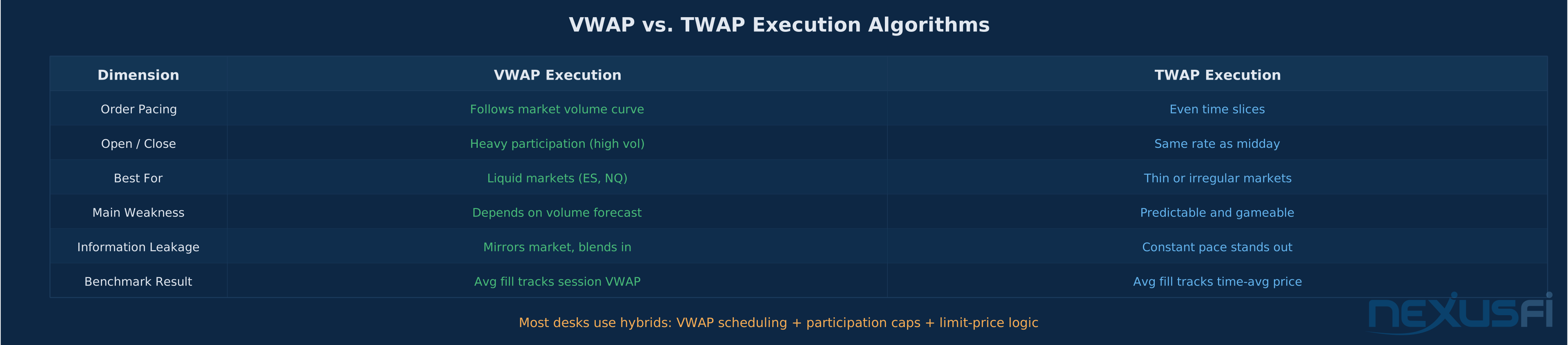
A VWAP execution algorithm slices a large order into smaller pieces and distributes them across the session in proportion to expected volume. During the high-volume open (9:30-10:00 ET), the algorithm sends more orders. During the quiet midday, it throttles back. During the closing auction, it ramps up again.
The goal: the average execution price matches or beats the session VWAP. This makes VWAP the effective "target price" for large institutional orders — and it's why price often gravitates toward VWAP during periods of heavy institutional execution.
TWAP Execution Algorithms #
TWAP (Time Weighted Average Price) distributes orders evenly over time regardless of volume. Every 30-second slice gets the same number of contracts whether it's the active open or the dead lunch hour.
TWAP is preferred when:
- The trader wants to minimize information leakage (TWAP is less predictable)
- Volume forecasts are unreliable
- The contract is less liquid and chasing volume spikes would cause excessive impact
Why This Matters for Your Charts #
When you see price repeatedly testing and respecting VWAP during the session, you're partly observing the footprint of VWAP execution algorithms. They're designed to buy dips below VWAP and sell rallies above it — creating the mean-reversion behavior that VWAP traders exploit.
On days with heavy institutional VWAP-targeted execution (rebalancing days, index reconstitution), VWAP becomes a stronger magnet. On days with light institutional flow, VWAP's gravitational pull weakens.
Trading with VWAP: ES, NQ, and CL #
The ES/NQ Time-of-Day Framework #
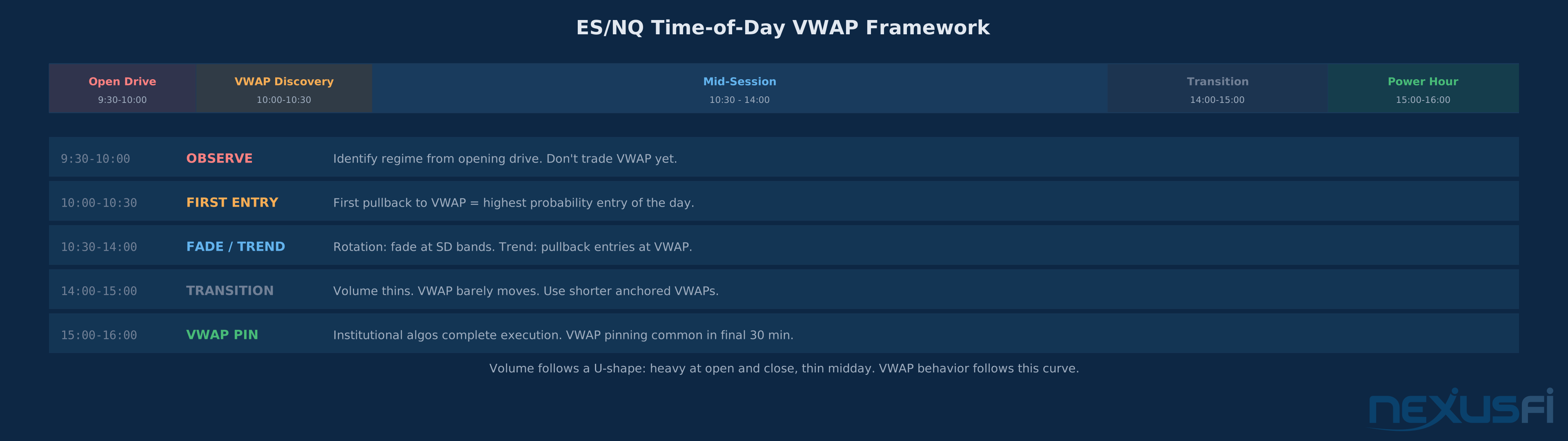
Opening Drive (9:30-10:00 ET)
The first 30 minutes establish whether price accepts above or below VWAP. This is the highest-volume period and sets the VWAP anchor with the strongest weighting. Don't trade VWAP setups yet — you're observing to identify the regime.
Watch for: Does price hold above VWAP with slope? Does it cross VWAP multiple times? Does it gap and never touch VWAP (rare, strongly directional)?
VWAP Discovery (10:00-10:30 ET)
The first meaningful VWAP test typically occurs here. If price has been trending above VWAP, the first pullback to VWAP is the highest-probability entry of the day. @michaelleemoore notes that many experienced VWAP traders look for a "bounce off the OR-H with VWAP right there for support" — the confluence of opening range high and VWAP creates a strong reference level.
Mid-Session (10:30-14:00 ET)
Volume declines. VWAP-based mean reversion is most reliable here because the line has stabilized (enough cumulative volume that new bars barely move it). Standard deviation bands provide the framework: fade extensions to 1.5-2 sigma back toward VWAP with tight risk.
In trending sessions, VWAP acts as trailing support/resistance. Use pullbacks to VWAP as continuation entries if the slope confirms the trend.
Power Hour (15:00-16:00 ET)
Volume surges again as institutional orders complete their VWAP execution schedules. This creates a "VWAP pinning" effect — price often gravitates toward VWAP in the final 30 minutes as algorithms finish their work. VWAP breaks in the last hour tend to be more sustainable than mid-session breaks because the volume is real.
CL-Specific Adjustments #
Crude oil marches to its own rhythm. Three adjustments:
Inventory data anchoring. EIA petroleum inventory reports (10:30 AM ET Wednesdays) create the most significant VWAP reanchoring opportunity in any futures market. The volume spike around the release effectively creates a "new session" within the session. Many CL traders anchor a second VWAP to the inventory bar and trade around that level for the remainder of the day.
Wider bands. CL's intraday volatility runs higher than ES or NQ relative to its price. Standard deviation bands on CL can produce signals at 1 sigma that ES traders wouldn't see until 1.5 sigma. Apply a 1.5x multiplier to your band-based rules when trading CL.
Geopolitical overrides. Supply disruption news, OPEC announcements, and geopolitical events can cause CL to move 3-5% intraday. When this happens, VWAP becomes a lagging reference point that can't keep up with the regime change. These are days to anchor a new VWAP to the event bar rather than relying on session VWAP.
When VWAP Breaks Down #
VWAP has failure modes that destroy traders who don't account for them.
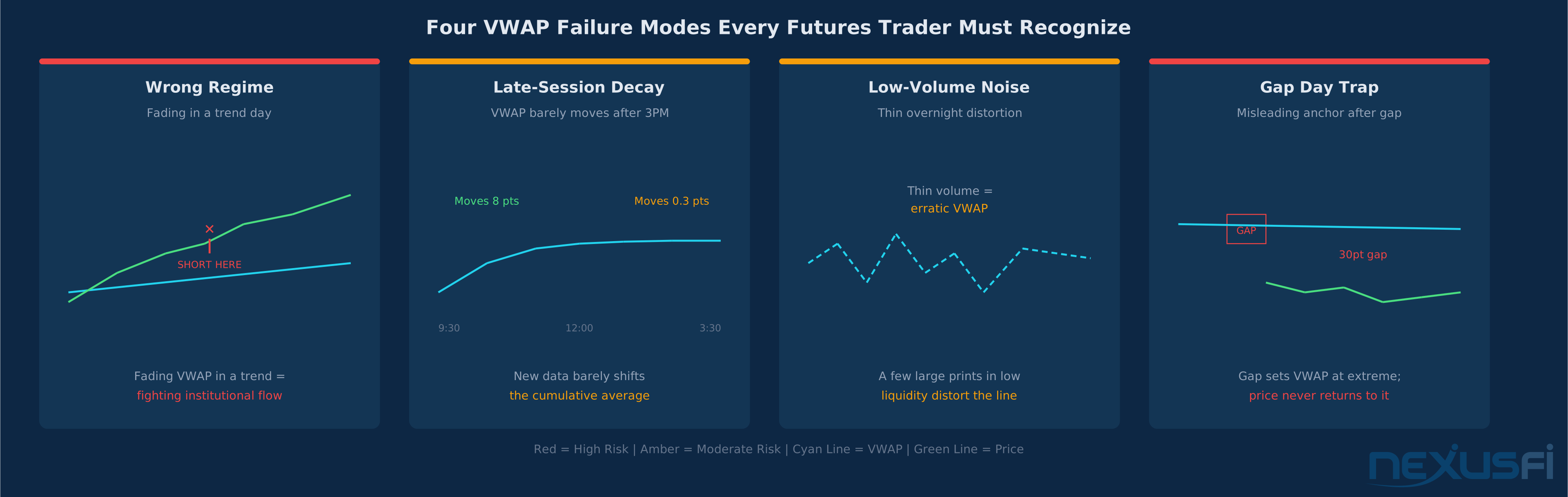
Applying the wrong regime. The number one VWAP mistake: fading at VWAP in a trend or playing continuation in a chop session. VWAP is just information. The regime determines what that information means. Getting this backwards is expensive.
SLOPE-FIRST RULE: Before any VWAP-based entry, check VWAP slope first. Positive slope + price above VWAP = trend mode, not fade mode. Negative slope + price below VWAP = trend mode short, not bounce mode. Flat slope = mean reversion setups are in play. Ignoring slope is the fastest way to lose money trading VWAP.
Late-session irrelevance. By 3:00 PM ET, session VWAP has accumulated so much data that it barely moves. A 100-lot print at 3:30 PM has almost zero effect on VWAP. The line becomes a historical summary rather than a real-time reference. Late-session traders often switch to shorter anchored VWAPs (anchored to the 2:00 PM bar, for example) to get a more responsive reference.
Low-volume noise. In overnight sessions or during holiday-shortened trading, VWAP can be computed from a thin volume base. A few large prints in low liquidity can distort the line. RTH VWAP during normal-volume sessions is reliable. Globex VWAP during a holiday weekend is not.
Gap days. When ES gaps 30 points at the open, the opening prints set VWAP at an extreme level. Price may spend the entire session well below the opening VWAP because the gap created a misleading anchor. On large gap days, consider anchoring VWAP to 15-30 minutes after the open — once the gap reaction has played out — rather than the official session open.
Using VWAP as a system. VWAP is a reference level, not a trading system. "Buy when price touches VWAP" is not a strategy any more than "buy when price touches a round number" is a strategy. VWAP needs context: regime identification, band location, slope, volume confirmation, and order flow agreement. Without those inputs, it's just a line.
Practical Integration #
VWAP delivers the most value when combined with complementary market structure tools:
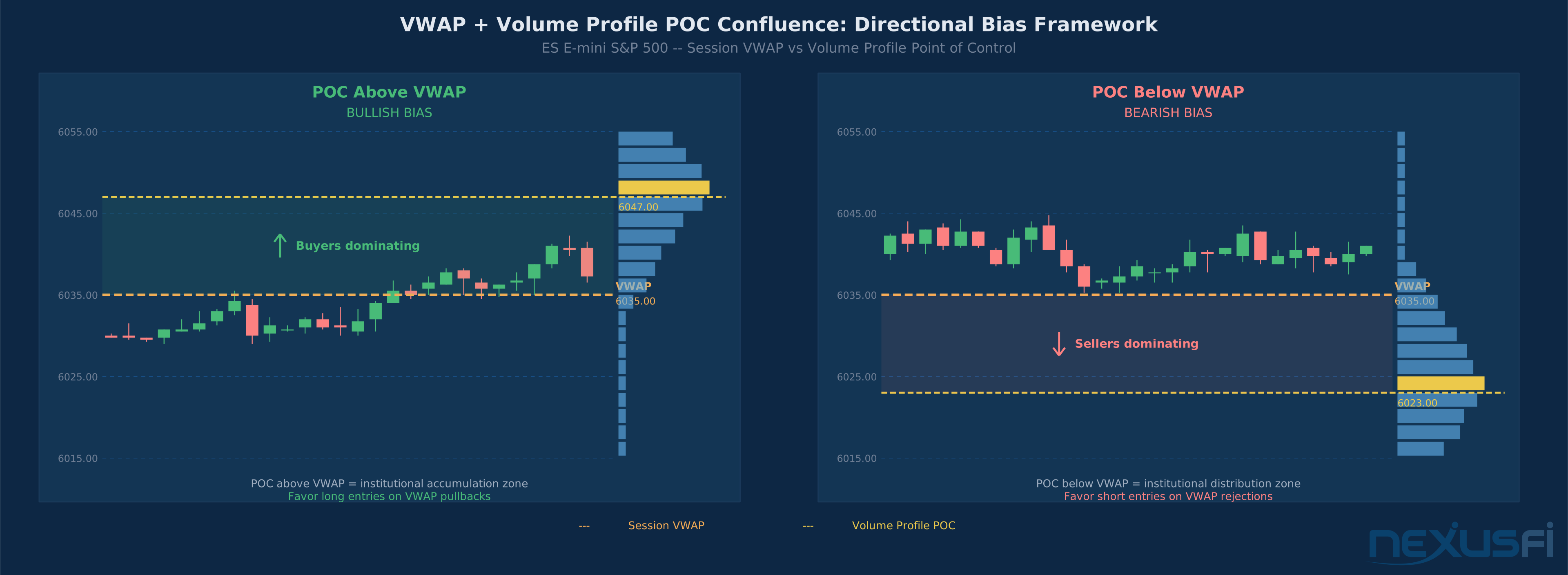
VWAP + Volume Profile. When the Volume Profile POC and session VWAP converge, you have a high-conviction reference level.
The POC-VWAP relationship reveals whether the day's volume is concentrated above or below the average price — a directional bias signal.
VWAP + Opening Range. The opening range high/low combined with VWAP creates a simple but effective framework. If price is above both VWAP and the opening range high, buyers are in control. Below both, sellers dominate. When price is above one but below the other, the market hasn't decided — and that's a zone to avoid or scalp only.
VWAP + Order Flow. Delta and cumulative delta can confirm or reject VWAP-based entries. A pullback to VWAP with aggressive buying on the tape (positive delta spike) confirms the level as support. A pullback to VWAP with passive selling (negative delta, declining bid volume) suggests the level will break.
VWAP + Multiple Timeframe Anchors. Displaying session VWAP alongside weekly or monthly anchored VWAP creates a hierarchy of institutional reference levels. When price sits between a rising weekly anchored VWAP (below) and session VWAP (above), the weekly anchor can act as a stronger support level because it represents a larger body of institutional positioning.
The traders who extract consistent edge from VWAP don't use it as a signal generator. They use it as a framework for understanding where institutional money has already committed — and they build their trade decisions around that structural information.
Knowledge Map
Go Deeper
Build on this knowledgeReferences This Article
Articles that build on this topicCitations
- — VWAP for stock index futures trading? (2020) 👍 72“VWAP is the true average price plotted over time. It is the price of each transaction as weighted by its volume.”
- — VWAP for stock index futures trading? (2020) 👍 38“Price should transition from +SD1 to VWAP and settle within +/- 0.25 SD. Place BUY STOP between +SD 0.25 and +SD 0.5.”
- — VWAP for stock index futures trading? (2019) 👍 19“RTH VWAP is the green/red hashed line. ETH VWAP is the magenta/blue hashed line. SD bands +1 +2 +3 and -1, -2, -3.”
- — VWAP for stock index futures trading? (2019) 👍 16“VWAP is just the volume weighted average price of the day. It is a benchmark for institutions and traders.”
- — VWAP for stock index futures trading? (2020) 👍 15“VWAPs don't work, nor do moving averages, nor does anything. It's just information. It's not trading.”
- — VWAP for stock index futures trading? (2019) 👍 29“Inletcap's favorite trade is a bounce off the OR-H with VWAP right there for support.”
- — VWAP for stock index futures trading? (2020) 👍 3“Once VWAP has settled, you'll see the POC either above or below the VWAP. That's your skew.”
- — The Total Cost of Transactions on the NYSE (1988)
- — Transaction Cost Analysis for Futures (2013)