



ACD Trading Method: Mark Fisher's Opening Range Framework for Futures
Overview #
Mark Fisher's ACD method is one of the most enduring systematic trading frameworks in futures markets — not because it's simple, but because it's built around a concept that never goes away: the opening range captures the market's first honest auction, and everything that follows is either accepting or rejecting that initial price discovery.
Fisher, who traded crude oil and other futures for decades and ran the MBF Clearing Corporation, published the framework in his 2002 book "The Logical Trader: Applying a Method to the Madness" (Wiley, 2002). The title is precise. ACD is not a mechanical system that fires signals automatically. It is a logical framework for reading what the market is saying in real time, with clearly defined levels that tell you where directional bias begins and where it breaks down.
This article covers the complete ACD framework: the Opening Range, A-Up and A-Down levels, C-Up and C-Down levels, The Number, the Pivot Range, On-Line and Off-Line day classification, and how to apply ACD across multiple timeframes in ES and CL futures.
Why the Opening Range Matters #
The opening of the regular trading session is not just the first trade. It is the first moment when the full participant pool — retail, institutional, algorithmic, and market-making — can interact simultaneously at true exchange prices. The overnight session has a different cast: thinner liquidity, different risk appetites, often purely reactive to news flow.
When the regular session opens, the opening range captures the initial price discovery of that full-participant auction. The range high and low for the first defined period represent where buyers and sellers genuinely contested, and where — temporarily — neither side dominated enough to push decisively.
That contested zone becomes the reference point for the entire ACD framework. A market that leaves this zone and sustains trade beyond it is telling you something definitive: the full-participation auction has resolved into a directional bias. A market that stays inside the zone, or that breaks out and immediately reverses, is telling you something equally definitive: the auction has not resolved.
The Opening Range period varies by instrument. Fisher originally used 45 minutes for crude oil, which reflects the volatility of the CL pit opening and the time it typically takes for that market to find its initial equilibrium. For ES, where liquidity is much greater and price discovery more efficient, shorter opening periods of 15 to 30 minutes are commonly used. The appropriate window is the one that, historically for your chosen instrument, reliably captures the initial two-sided contest before a directional bias emerges.
As @Fat Tails noted in the ACD thread on NexusFi:
"The red bit is the opening range for the first 45 minutes. Fisher uses 45 minutes for CL, but smaller opening periods for other instruments. The A-Down level is obtained by subtracting 8 ticks from the lower end of the opening range."
-- @Fat Tails (Source)
A-Up and A-Down: The Directional Bias Levels #
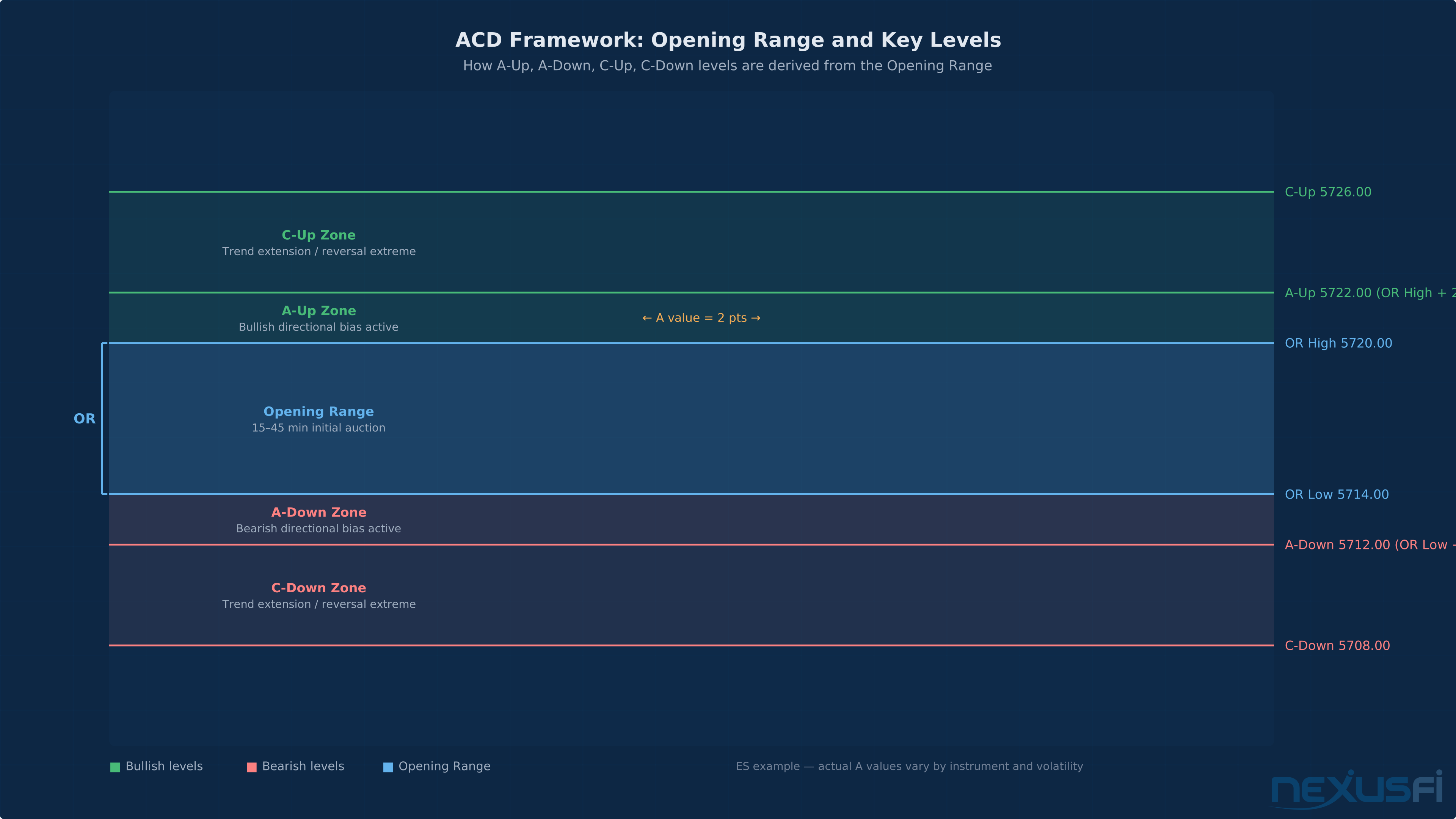
Once the Opening Range is established, the A levels are placed a defined distance beyond the OR high and OR low. The A value — the distance in ticks or points from the OR boundary — is not standardized. This is deliberate. Fisher argues explicitly that markets change over time and that a rigid formula would eventually stop working as conditions evolved.
For CL, a common A value is 8 ticks. For ES, traders often use 2 points. But these numbers are starting points, not mandates. The correct A value for any instrument and time period is the one that filters out noise — that small amount beyond the Opening Range high or low that allows you to distinguish a genuine directional break from a brief false probe.
A-Up is the Opening Range high plus the A value. A-Down is the Opening Range low minus the A value.
The critical concept in ACD is not just reaching these levels — it is sustaining trade beyond them. A single tick through A-Up means nothing. The market tagging A-Up for one second and then reversing is not a directional bias signal. It is noise.
What confirms a valid A-Up or A-Down is time spent beyond the level. Fisher's original criteria for CL was that price must remain below A-Down for at least 23 minutes (half the opening period) to constitute a valid confirmation. In practice, traders adapt this based on their timeframe: some use closes, some use time at price, some use a combination of both.
@Inletcap, who has traded both CL and ES extensively and shared detailed ACD analysis on NexusFi, describes it this way:
"My definition of 'sustain trade' is subjective. I look at time and volume spent above or below the levels and make a discretionary call as to whether or not I feel trade was 'sustained' above or below the level. For all intents and purposes — if the market stays above/below A_xx for a few minutes then I will say that we have 'Made A_Up' or 'Made A_Down'."
What A-Up and A-Down Tell You #
When A-Up is made:
- Buyers have established control of the initial auction
- The Opening Range now functions as support
- Directional bias is long for the session
- One looks to enter long on pullbacks to the OR or A-Up area
When A-Down is made:
- Sellers have established control
- The Opening Range now functions as resistance
- Directional bias is short for the session
- One looks to enter short on bounces to the OR or A-Down area
Critically: once A-Up is made, A-Down cannot be made that day, and vice versa. The system recognizes only one directional bias per session. If price makes A-Up and then reverses all the way back through the OR and makes A-Down, that is not a change of bias within the ACD framework — it is a C-Down signal, which will be covered shortly.
The Failed A: The Reversal Signal #
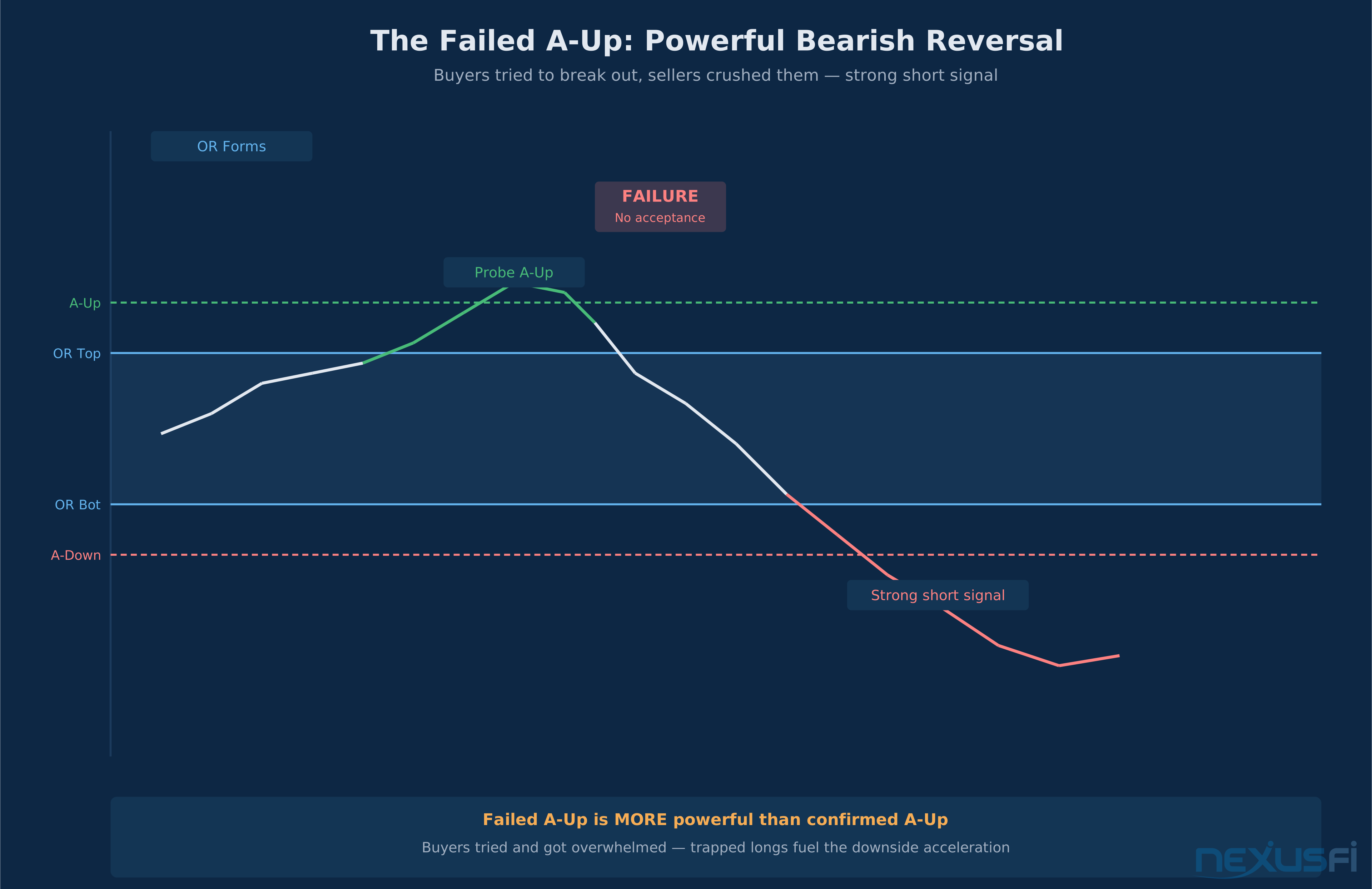
What if price probes toward A-Up but does not sustain trade above it? This is a Failed A-Up, and in many ways it is more powerful than a confirmed A-Up.
A Failed A-Up tells you: buyers attempted to take control, got through the threshold, and then sellers overwhelmed them and drove price back through the Opening Range. This is an extremely bearish signal — not because A-Up failed, but because of what the failure reveals about commitment. Buyers tried. Sellers crushed them. The resulting bias is strongly short.
As @Inletcap describes it, the failed A is:
"A very powerful clue as it tells you that buyers almost got control of the market, but sellers ran them over and have conviction."
When both A-Up and A-Down fail in the same session, the result is complete directional uncertainty — no bias is established, and the ACD framework signals that you are in a rotational, two-sided market with no clear trend for the day.
Never trade the touch. Trade the acceptance. A single tick through A-Up is noise — acceptance is signal.
C-Up and C-Down: The Reversal Confirmation Levels #
C levels address the situation that every directional trader faces: what happens if you are on the wrong side, and the market doesn't just fail to make A — but actually reverses and establishes a bias in the opposite direction?
C-Up and C-Down levels represent the confirmation that a reversal is real, not just a retest.
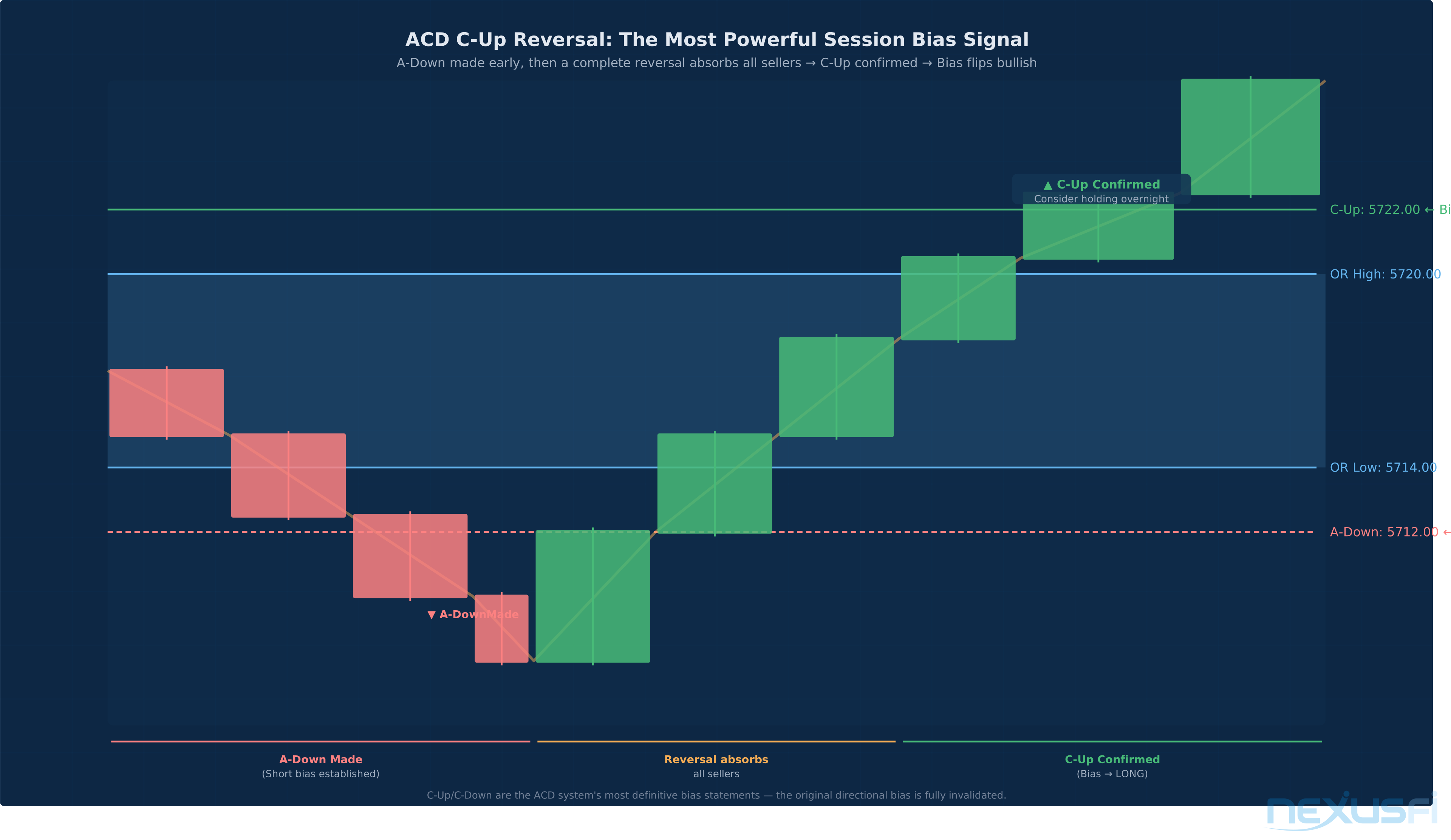
Suppose A-Down has been made. Price fell through A-Down, sustained below it, and you are short with directional bias down for the day. Then price reverses. It moves back up through A-Down, through the Opening Range, and continues climbing. When does this stop being a bounce against your short bias and become a legitimate sign that the day's character has changed?
That is what the C level answers.
C-Up is defined as: the day has made A-Down, and then price not only recovered back through the Opening Range but has now sustained trade above a level defined as C-Up (typically the OR high plus a larger value than A — Fisher's original CL parameters placed C-Up at 13 ticks above the OR low, though implementations vary).
When C-Up is confirmed:
- The original short bias (A-Down) is completely invalidated
- Buyers have proven overwhelming conviction — they absorbed the entire downward move AND continued higher
- The session bias reverses to bullish
- The signal is so strong that Fisher himself suggested considering holding winning long positions overnight
@Inletcap's description is illuminating:
"C_Up is a very powerful 'signal' as it tells you that buyers stepped up in a very convincing way and have complete control of the market. At this point you had better be focusing on long trades and you might want to consider taking a portion of your day position home with you overnight."
The C level is the ACD framework's way of acknowledging that markets can make genuine intraday reversals of trend, and providing a specific, non-arbitrary threshold that confirms when a reversal is real rather than a noise bounce.
C-Up and C-Down are the market's strongest intraday statements. Fisher recommended considering overnight holds after C-reversals.
The Pivot Range: Where Price Is Relative to Value #
The Pivot Range is the ACD framework's reference for where "value" is expected to be on any given day. It is calculated from the prior session's high, low, and close, and typically represents a zone — not a single line — around the traditional floor pivot.
The Pivot Range serves two functions:
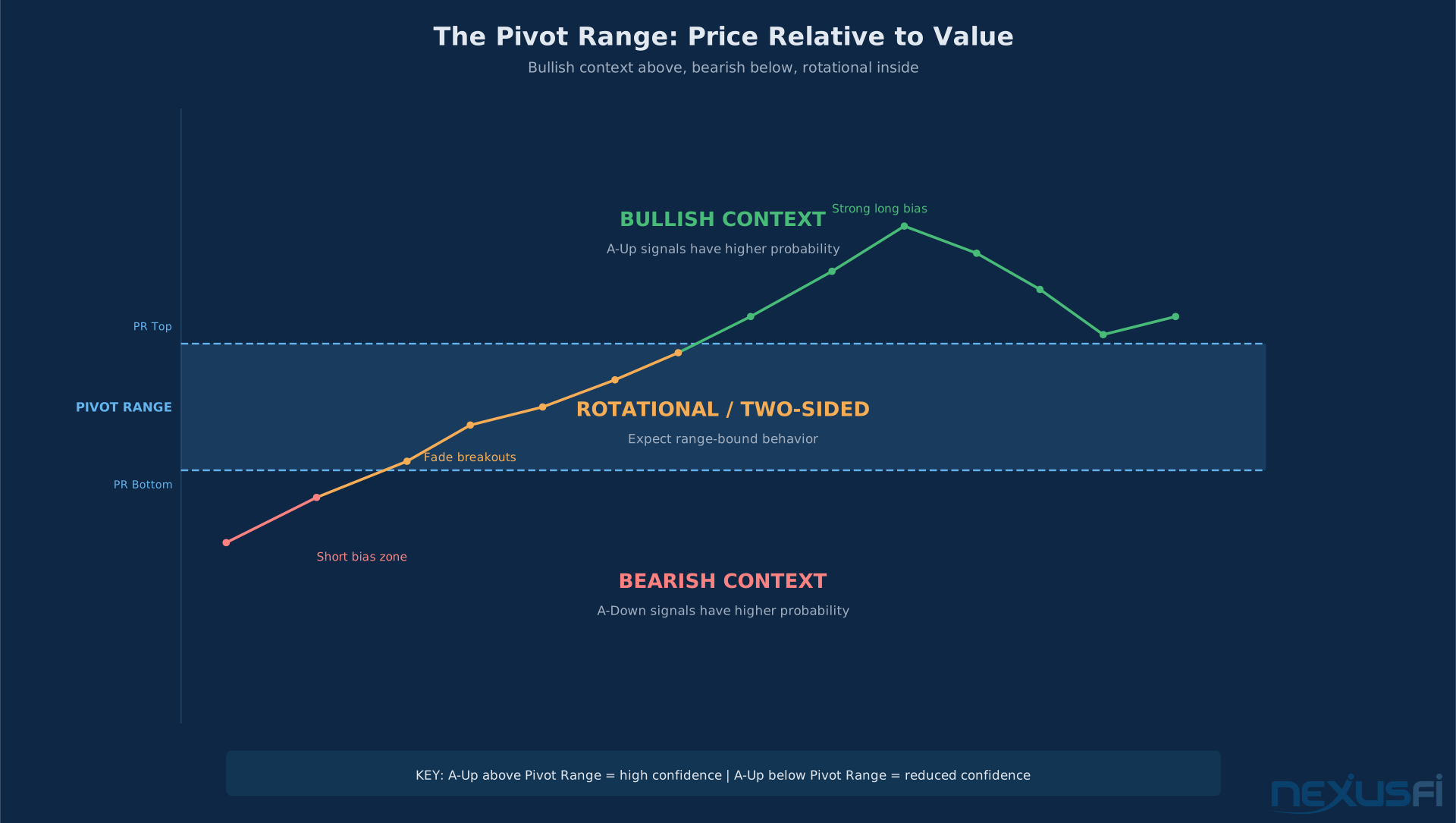
As a trend filter: If price is above the Pivot Range, that is bullish context. Below it, bearish. This works in conjunction with the A level signals — an A-Up in a market that is also trading above the Pivot Range is a stronger signal than one that is fighting against bearish Pivot Range context.
As a range definition: When price is inside the Pivot Range, expect two-sided, rotational behavior. The market is in "value" and is likely to search both sides before committing. When price is outside the Pivot Range, the probability of directional follow-through increases.
@Fat Tails, who coded one of the most widely-used opening range and ACD indicators for NinjaTrader on NexusFi, describes the Pivot Range as "the blue range" that "can be considered as a trend filter" alongside the opening range and overnight range. (Source)
In practice, many ACD traders use the Pivot Range as follows:
- Fade attempts to break the Pivot Range from outside (trade back toward value) when price is extended
- Avoid fighting momentum when price has definitively left the Pivot Range with A-Up or A-Down confirmed
- Use the Pivot Range edges as stop reference zones — if a long trade cannot hold above the Pivot Range, the trade is wrong
The Number: Daily Bias Score #
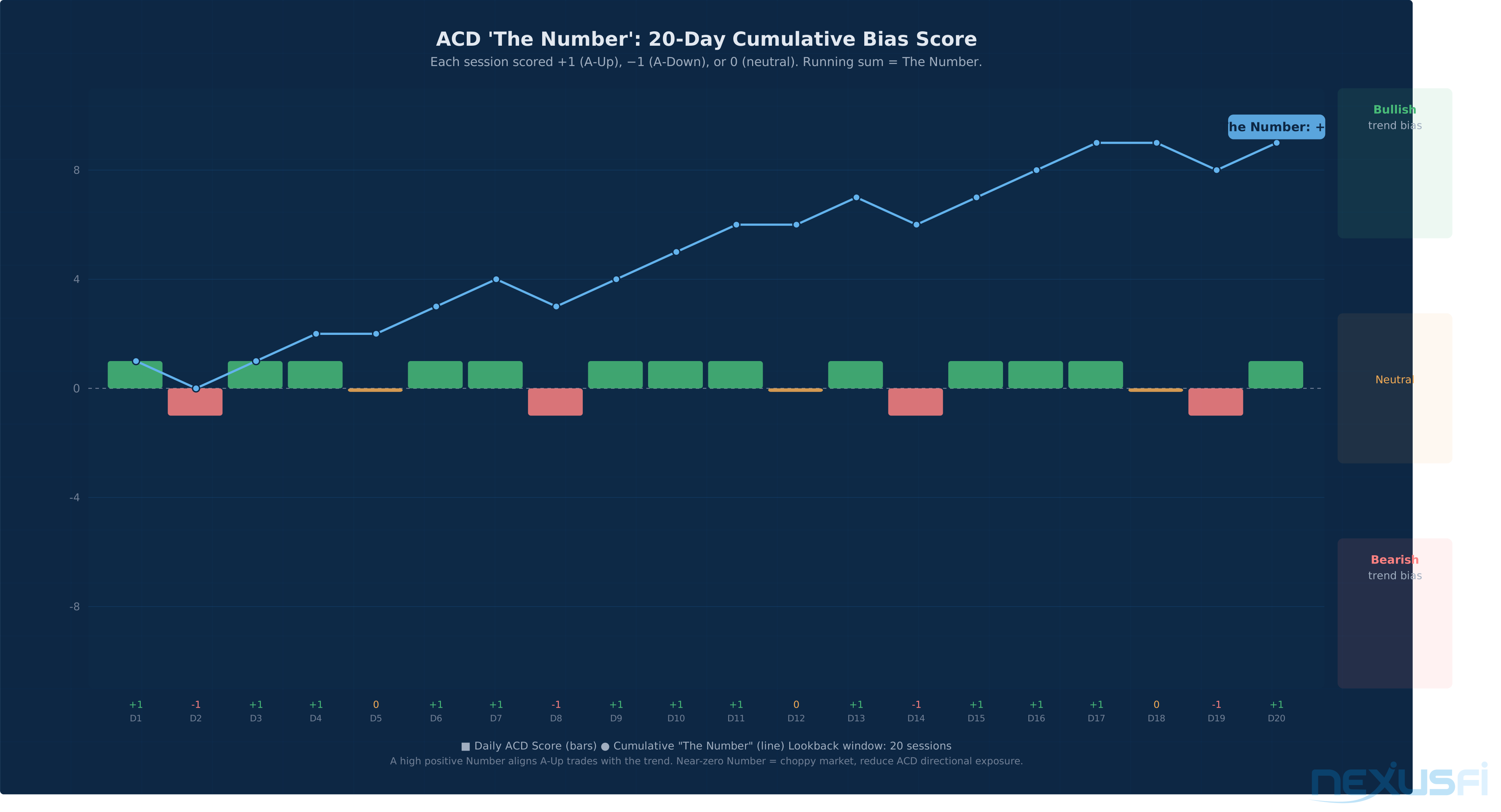
One of Fisher's more sophisticated contributions is what he calls "The Number" — a running score that tracks daily bias over a lookback period, typically 20 to 30 days.
Each trading day receives a score based on its ACD result:
- Day makes A-Up: +1 (or a positive value)
- Day makes A-Down: -1 (or a negative value)
- Day is neutral (neither A-Up nor A-Down made, or both failed): 0
- C-Up or C-Down days may receive higher absolute values to reflect their significance
The Number is the sum of these daily scores over the lookback period. A high positive Number means the market has been making A-Up the majority of days — it has a strong bullish trend. A deeply negative Number signals persistent bearish bias. A Number near zero signals a directionless, choppy market where ACD directional trades are likely to underperform.
The Number serves as a regime filter. If you are considering a long trade based on A-Up, but The Number is deeply negative, you are fighting a headwind. The longer-term trend of the market — as measured by ACD scores — argues against the intraday bullish signal. Some traders weight their position size or confidence based on The Number: full size when The Number aligns with the intraday signal, reduced size when they conflict.
The Number can also be applied across timeframes. A weekly Number tracks the average of daily Numbers, creating a multi-week trend picture. A monthly Number provides even higher-level trend context. When monthly, weekly, and daily Numbers align, the ACD framework suggests the highest-probability setups.
On-Line and Off-Line Days: The Session Regime Filter #
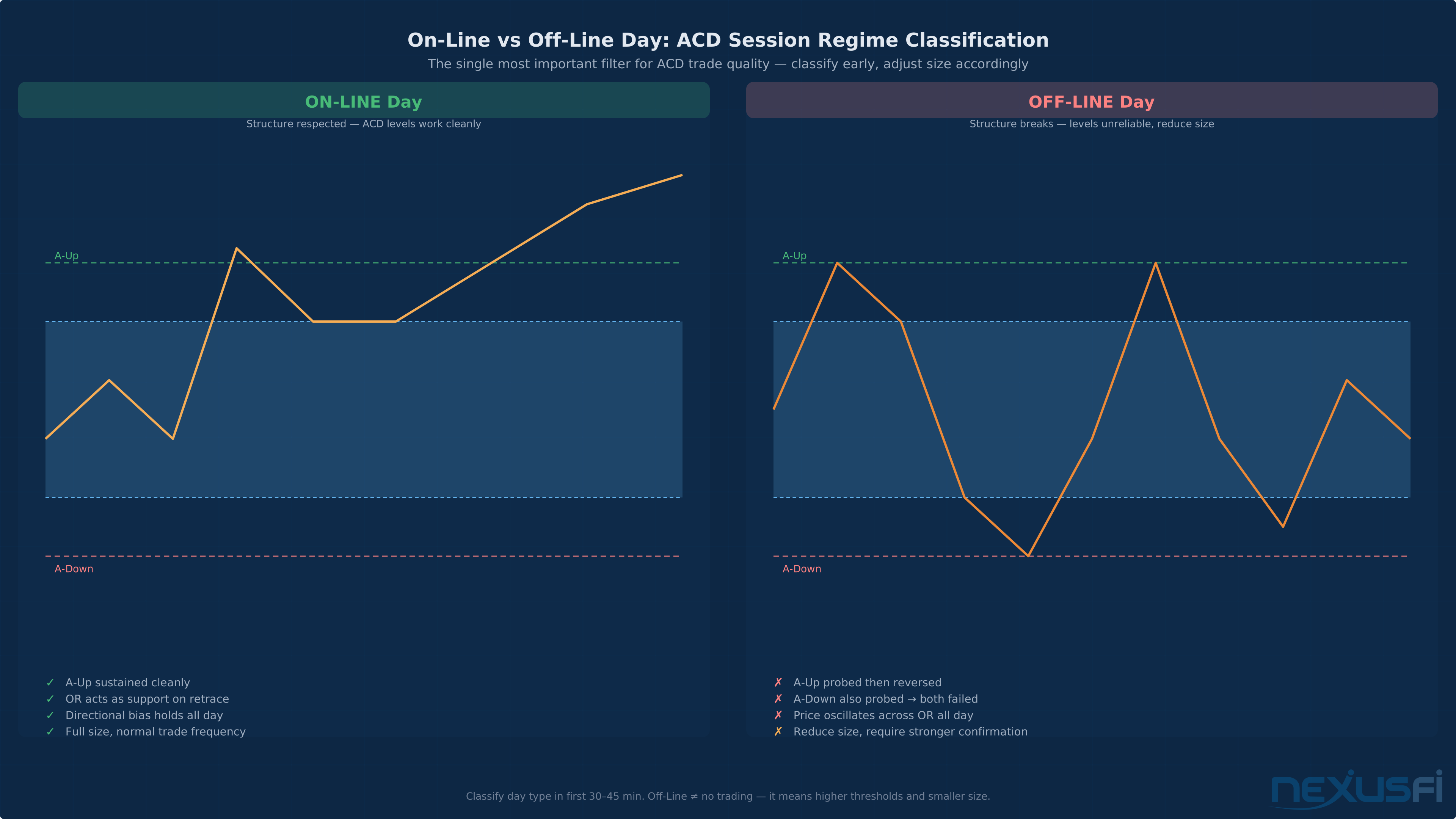
The most subtle and most important concept in the ACD framework is the distinction between On-Line and Off-Line days.
An On-Line day is one where the market is "on its game" — where structure is respected, where the Opening Range functions as expected, where A levels resolve cleanly and the resulting directional bias is followed through on. On-Line days are where ACD trading performs best.
An Off-Line day is one where the market behaves erratically — where the Opening Range fails to contain price in the expected manner, where A levels generate false signals, where the normal structural rules break down. Off-Line days often correspond to unusual news events, low liquidity periods, or regime changes that overwhelm the normal auction process.
The distinction is not calculated — it is observed. By the first 30 to 45 minutes of the session, an experienced ACD trader is already asking: "Is this market behaving the way a well-structured auction should, or is it doing something unusual?"
Signs of an Off-Line day developing:
- Opening Range expands dramatically wider than historical norm
- A levels are violated almost immediately without confirmation
- Both A-Up and A-Down are tested within the first hour
- Price oscillates wildly across all reference levels with no clean resolution
- The Pivot Range offers no structural resistance or support
When Off-Line behavior is detected:
- Reduce position size immediately
- Require higher confirmation thresholds before entering
- Accept that the day's P&L may be limited by unfavorable conditions
- Prioritize capital preservation over capturing every move
On-Line days support more trade attempts and larger size. Off-Line days require fewer, higher-quality setups and smaller risk.
When Off-Line behavior appears in the first 30 minutes, cut size immediately. Protecting capital on Off-Line days IS your edge.
Multi-Timeframe ACD Application #
The ACD framework was originally conceived as a single-session tool, but sophisticated practitioners extend it across timeframes to create a complete market picture.
The Hierarchy #
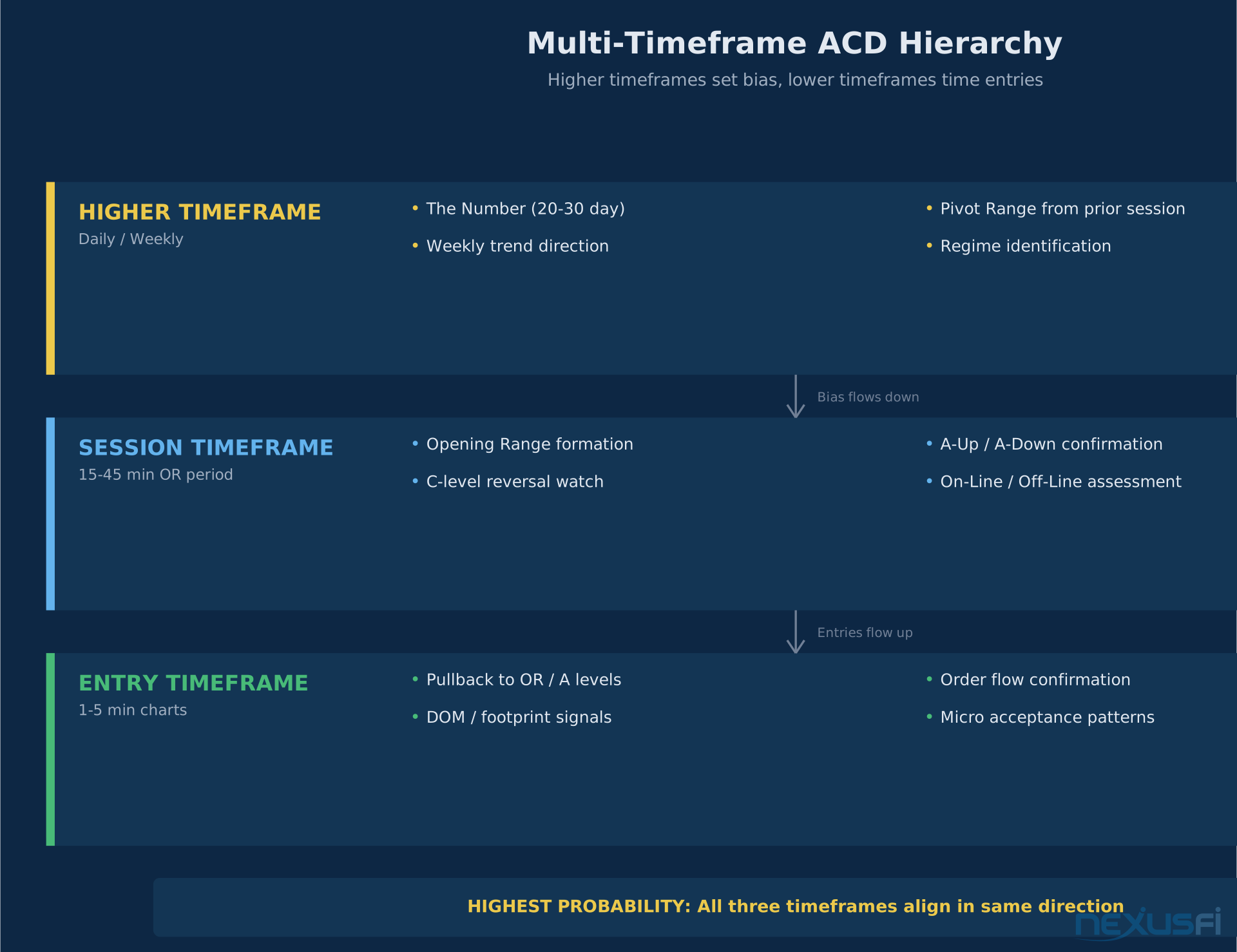
Higher timeframe (daily / weekly): Establish The Number — the longer-term trend bias. Calculate the Pivot Range from prior week's or prior session's prices. Determine whether you are fighting or aligning with the larger trend.
Session timeframe (30-minute / 15-minute): Identify the Opening Range, place A and C levels, observe the initial auction, and confirm directional bias.
Entry timeframe (5-minute / 1-minute): Time entries based on reaction at A, C, Pivot Range, or OR levels observed on the session chart. Use microstructure cues — slowing momentum, acceptance vs. rejection candlestick patterns — to refine entry.
The key principle: lower timeframe entries must align with higher timeframe bias. If the daily Number is negative (persistent short bias) and the session makes A-Down (intraday short signal), the two-timeframe alignment creates a high-confidence setup. If the daily Number is positive but the session makes A-Down, the conflict reduces confidence and position size should reflect that.
ES vs. CL Application #
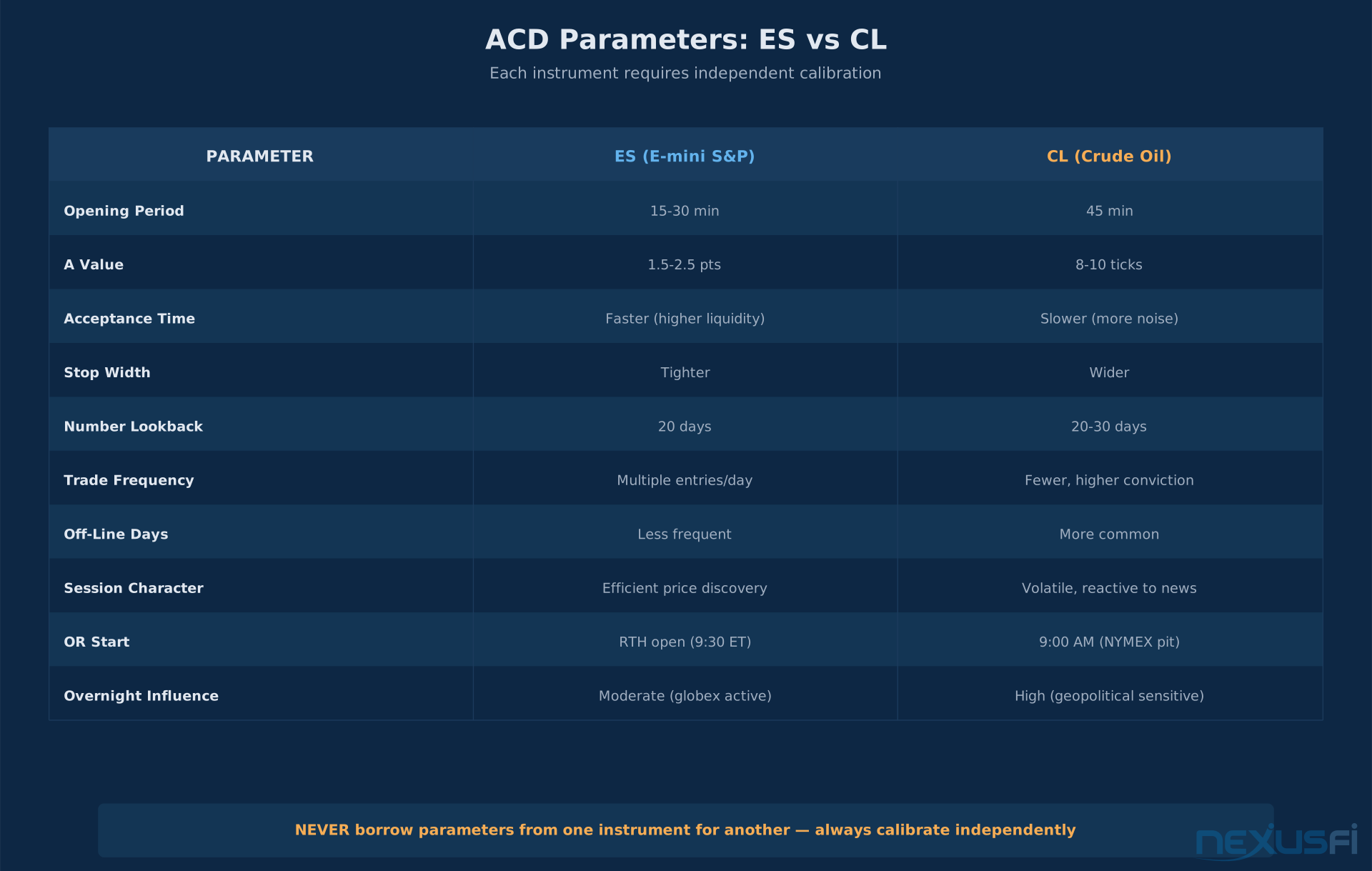
- Opening period: 15--30 minutes is standard for RTH
- A value: 1.5--2.5 points above/below OR (instrument-specific calibration required)
- Acceptance: ES tends to resolve cleanly; acceptance is often visible within a few bars
- Stop placement: Tighter than CL because ES's greater liquidity means less noise per tick
- Number lookback: 20 days is common
- Trade frequency: On-Line ES days can support multiple ACD-based entries
- Opening period: 45 minutes in Fisher's original framework, with some using 30 minutes for the CME electronic session
- A value: 8--10 ticks is a starting point; calibrate to recent volatility
- Acceptance: CL requires more patience — the initial break is frequently noisy and can reverse before genuine directional bias establishes
- Stop placement: Wider than ES; a move that would represent noise in CL would be a clean signal in ES
- Number lookback: 20--30 days; oil trends can persist longer
- Trade frequency: Fewer, higher-conviction setups per day in CL; Off-Line days are more common
@Fat Tails, who extensively analyzed and coded ACD tools for NinjaTrader, noted that the opening range approach "can be used for testing purposes" and that "the opening range can be shifted away from the start of the regular session" — important for CL, where Fisher suggests starting the opening period at 9:00 AM for the NYMEX pit open rather than the CME electronic open. (Source)
Practical ACD Trade Execution #
The Pre-Market Setup #
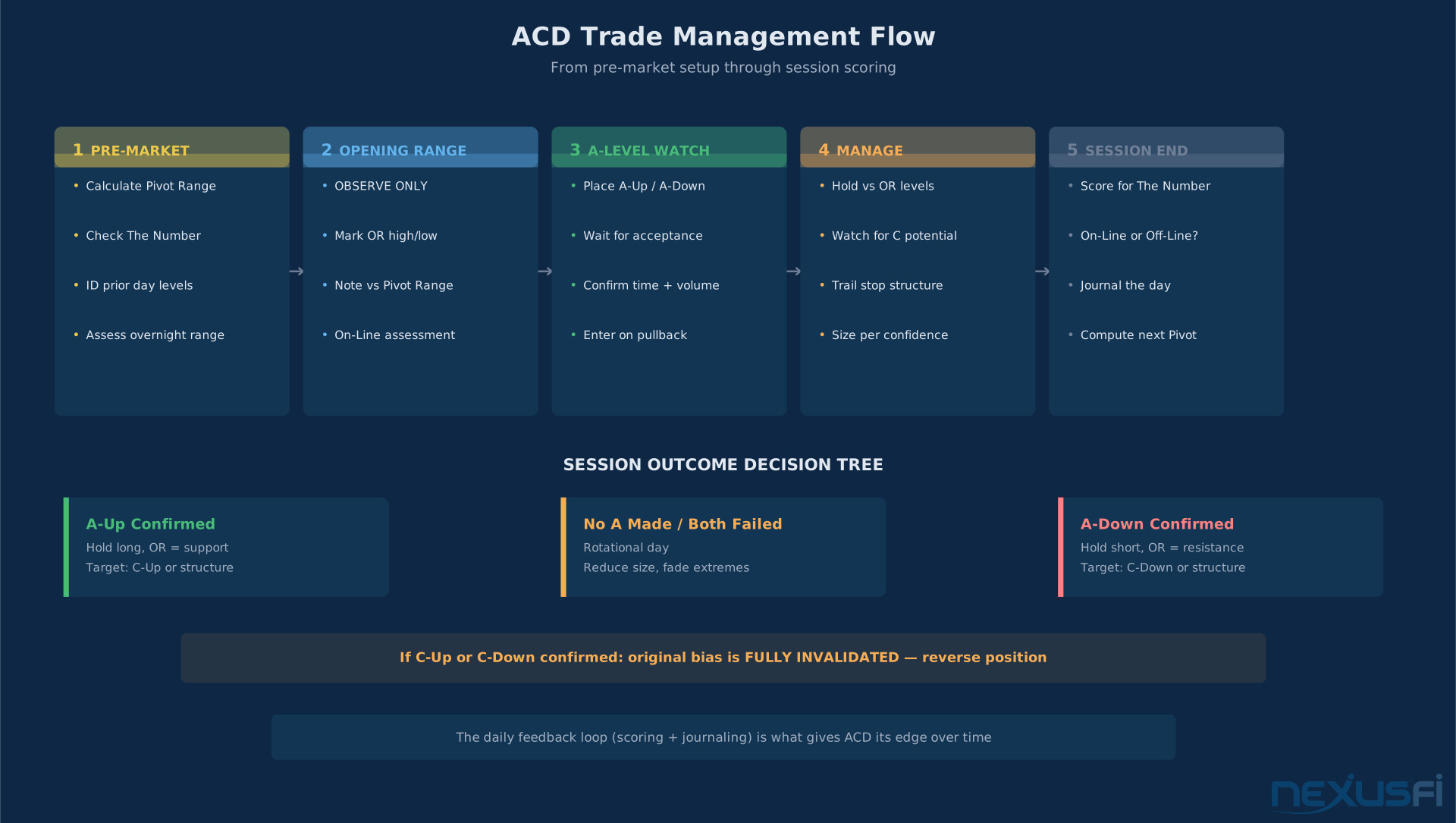
Before the session opens:
- Calculate yesterday's A and C levels (for context)
- Calculate today's Pivot Range from prior session high, low, close
- Check The Number — what is the longer-term trend bias?
- Identify overnight range high and low for additional context
- Mark any significant prior day reference levels (prior day high, low, close)
During the Opening Range Period #
Do not trade. Observe. Let the market reveal itself.
Watch: Is price finding equilibrium in a defined range, or is it immediately impulsive in one direction? Is the initial range expanding or contracting? How does price behave relative to the Pivot Range?
Mark the OR high and low as they develop. As the opening period closes, you have your baseline for the day's ACD levels.
After the Opening Range: Watching for A #
Place your A-Up and A-Down levels on the chart. Now the question is whether the market is going to resolve directionally.
The most common ACD entry pattern:
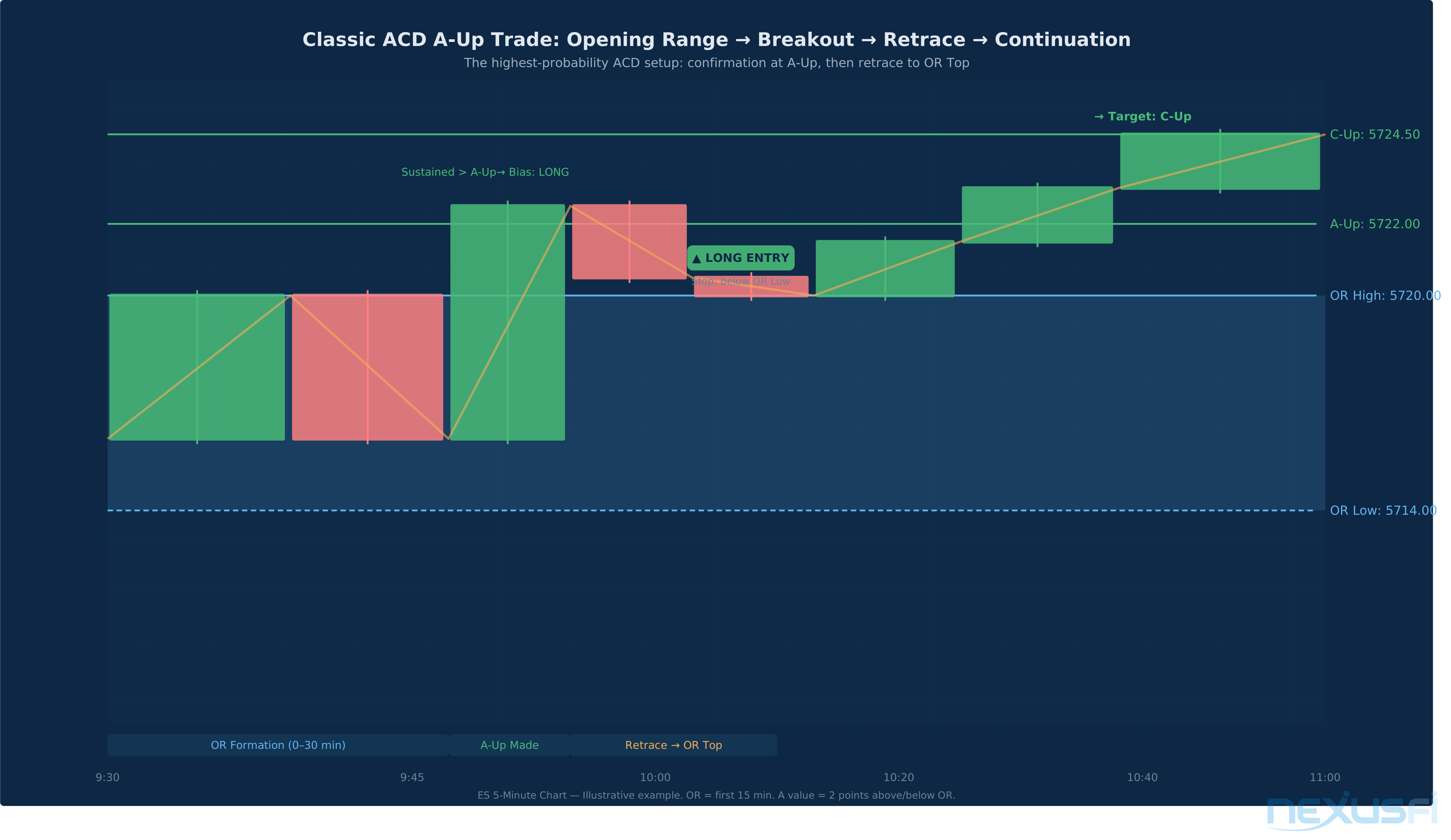
A-Up trade: Price breaks above A-Up and sustains. Confirm acceptance. Enter long on the first pullback to the OR top or A-Up level with stops below the OR bottom. Target: C-Up or next significant structural reference.
A-Down trade: Price breaks below A-Down and sustains. Confirm acceptance. Enter short on the first bounce to OR bottom or A-Down level with stops above OR top. Target: C-Down or next significant structural reference.
Failed A entry (contrarian): Price probes A-Up but reversal is sharp and immediate. The reversal closes below OR mid. This is a short entry with directional bias now favoring A-Down. The Failed A entry tends to produce faster, more impulsive moves because it catches participants who entered the failed breakout on the wrong side and must now exit.
As @Inletcap notes about the A_Up/OR_Top retrace:
"This is my favorite — market makes A_Up then retraces to the OR_Top on decent RVOL. I've seen some of the most explosive moves off this. Good stop location is under the OR_Bottom."
Managing the Position #
The ACD framework provides a natural trade management structure:
- If long after A-Up: hold while price is above OR top. If price closes back below OR top with conviction, bias has shifted and longs should be reduced.
- If short after A-Down: hold while price is below OR bottom. OR bottom recapture invalidates the short.
- If C-Up or C-Down occurs: recognize the significance. The conventional ACD wisdom is that C reversals are worth holding overnight, as they signal a complete shift in session character that often extends into the next day.
ACD and Context: What the Framework Doesn't Do #
The ACD framework does not exist in isolation. Fisher himself emphasized this — ACD levels are reference points within the larger market context, not mechanical signals to be followed blindly.
@Fat Tails made this point directly in the ACD thread:
"The problem with ACD is that markets change. So Fisher is absolutely correct not to include a standard formula to calculate the A, C, and D points... to use ACD properly, you would have to code an indicator that gives you the conditional probability that a breakout will continue after it has exceeded a defined threshold."
-- @Fat Tails (Source)
ACD works best when combined with:
- Volume profile and value area: An A-Up that occurs while price is also above the prior day's value area and POC is stronger than one that is fighting against value.
- VWAP: @Inletcap explicitly notes his favorite trade is "the OR_Top Retrace Trade with VWAP sitting right there." (Source) When A-Up is confirmed and price retraces to OR top while VWAP is also at that level, the confluence creates a very high-probability long entry.
- Prior day highs and lows: Key structural levels from the prior session often align with ACD levels or serve as natural targets.
- Order flow confirmation: At key ACD levels, footprint charts and DOM can reveal whether absorption is occurring (good for fades) or imbalance is building (good for breakout continuation).
Common Mistakes in ACD Trading #
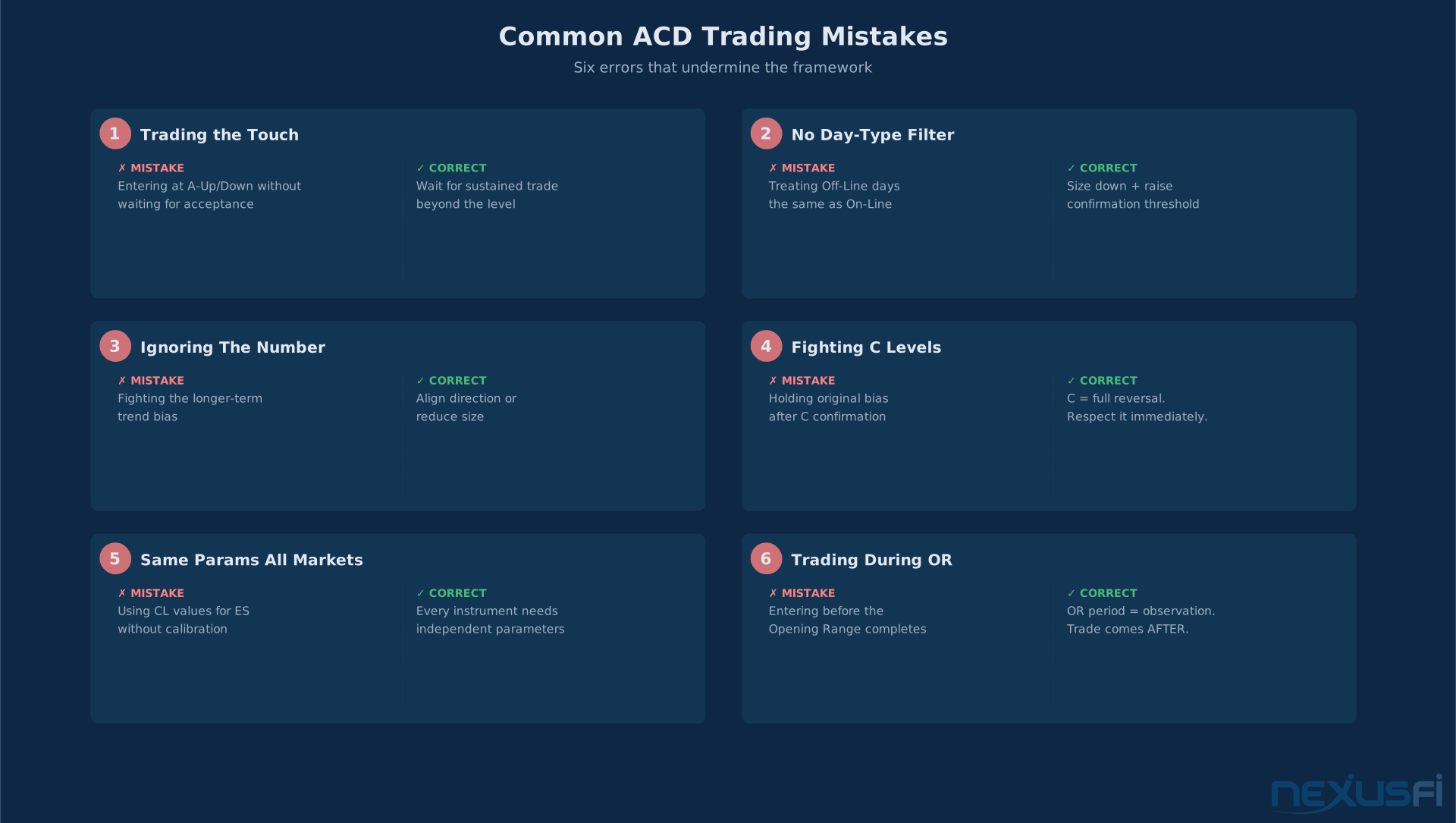
1. Trading the touch instead of the acceptance
The most common mistake: entering a position the instant price reaches A-Up or A-Down without waiting for confirmation that the level is holding. Level touches are cheap. Acceptance — sustained directional activity beyond the level — is expensive for the losing side and valuable for the winning side.
2. No day-type filter
Treating every day as On-Line. On Off-Line days, mechanical application of ACD levels produces a series of small losses as each signal reverses before resolving. The solution is to size down and raise the confirmation threshold on days that are not behaving as expected.
3. Ignoring The Number
Taking directional ACD trades that run against the longer-term trend bias embedded in The Number. A short on A-Down when The Number is +8 (strongly bullish) is fighting the trend. You are not wrong to take the trade, but you should take it with smaller size and tighter stops.
@mfbreakout, who studied Fisher's methods extensively and shared practical ACD insights on NexusFi, puts it bluntly:
"A and C values are a small component of ACD method. Try to use ACD for getting context. Time is more important than price. Traders waste time trying to figure out if A up is confirmed by trying to see if price stayed above a certain level by 2 ticks, 5 ticks etc. They have little clue as to what 30 days, 5 days number line reading is showing and try to go long on confirmed daily A up when number line is -8 etc and get surprised all day long."
-- @mfbreakout (Source)
4. Fighting C-Up and C-Down
Once a C-level reversal is confirmed, continuing to hold positions from the original A-side is one of the worst mistakes available. C-Up and C-Down are the market's most definitive statements. The directional bias has reversed. Staying short through C-Up because "the original A-Down was valid" is letting ego override the framework.
5. Applying identical parameters across instruments
Using the same OR period and A values for ES that worked for CL without calibration. Every instrument has its own volatility character and opening range behavior. Parameters must be derived from that instrument's historical data, not borrowed from another market.
6. Over-trading during the Opening Range period
Some traders, eager to participate, enter trades during the opening period before the OR has formed. This defeats the entire purpose of the framework. The OR period is for observation. The trade comes after.
ACD Across Market Conditions #
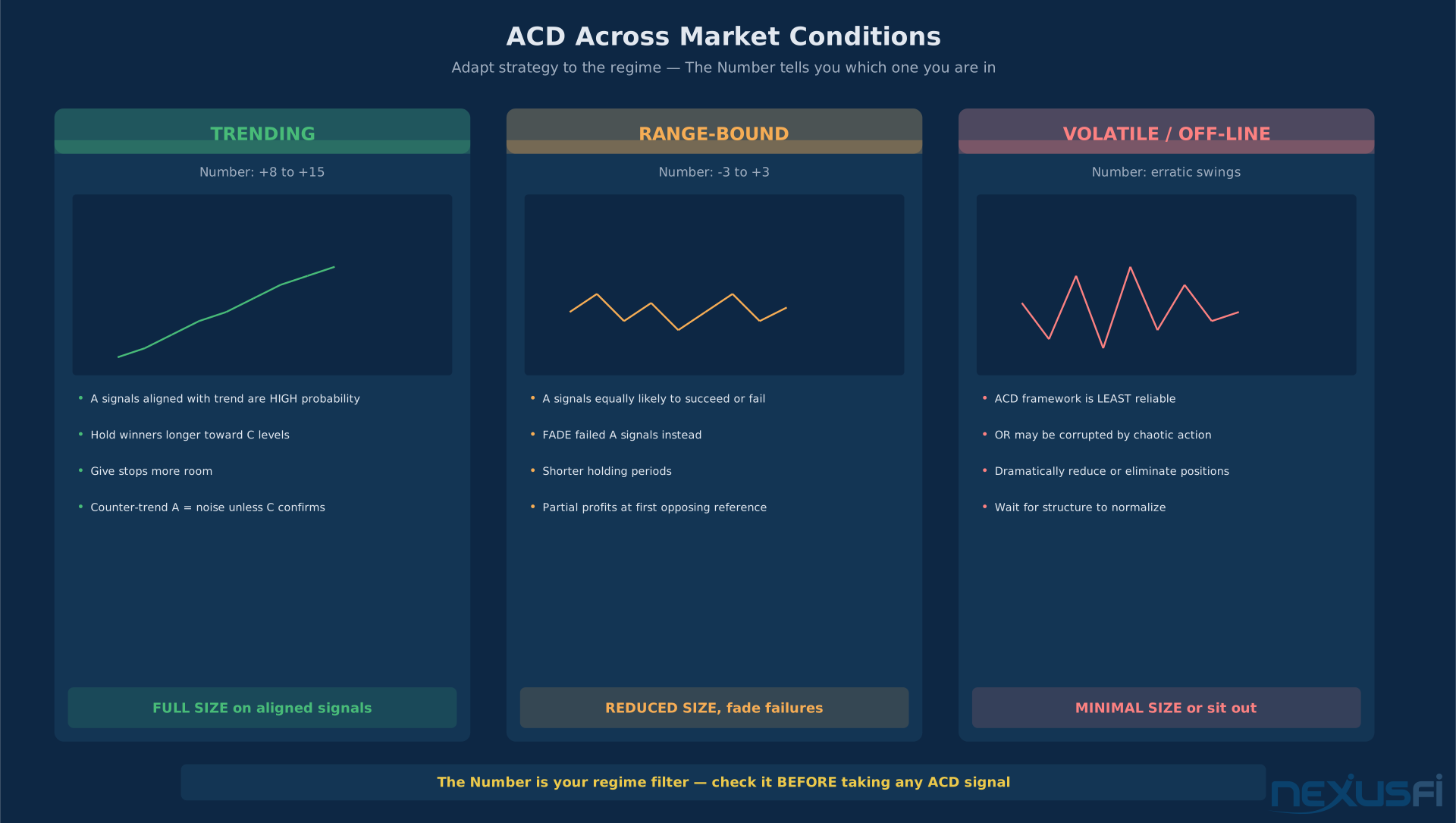
Trending Markets (High Positive or Negative Number) #
When The Number is strong in one direction, ACD signals that align with that direction carry much higher probability. A-Up signals in a market with a Number of +12 have much higher follow-through odds than A-Up signals in a flat Number market.
Trade approach: Take all same-direction A signals, hold winners longer (toward C levels), give more room before stops are triggered. On countertrend days where the opposing A is made, treat it as noise against the trend unless C confirmation appears.
Range-Bound Markets (The Number Near Zero) #
When The Number is near zero, the market has no persistent trend. A-Up and A-Down signals are roughly equally likely to follow through or fail.
Trade approach: Fade failed A signals rather than trading confirmed ones. Use shorter holding periods. Take partial profits at the first opposing reference. Be prepared for multiple small gains rather than one large directional hold.
Volatile, Off-Line Markets #
In true Off-Line conditions — markets responding to extreme news, sudden volatility spikes — the ACD framework is least reliable. The Opening Range itself may be corrupted by the chaotic initial price action.
Trade approach: Dramatically reduce or eliminate ACD-based positions. Wait for market structure to normalize before re-engaging.
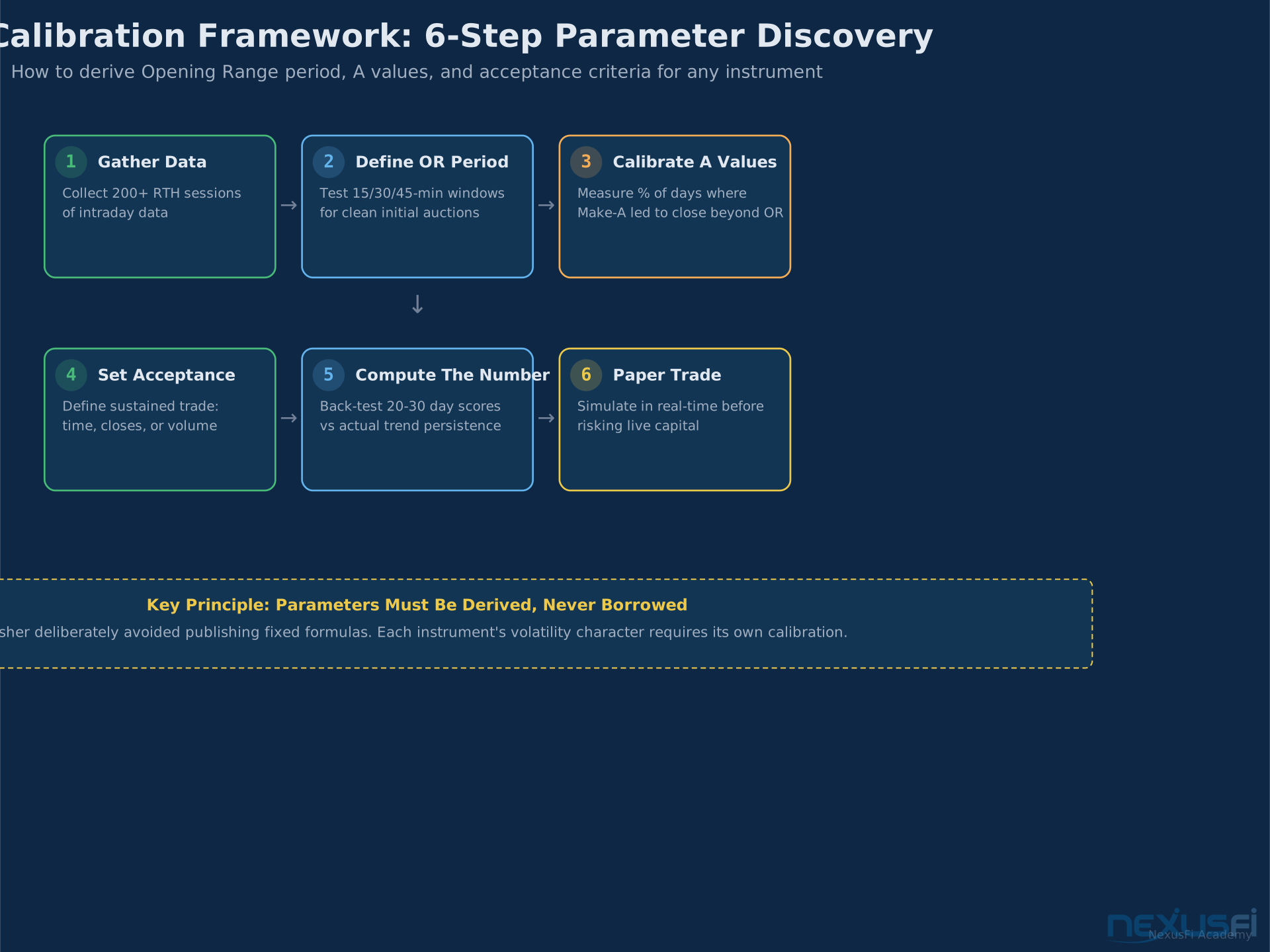
Calibrating ACD for Your Instrument and Timeframe #
The practical work of implementing ACD begins with calibration. For any instrument you wish to trade with this framework:
- Gather historical data: Collect at least 200 sessions of intraday data
- Define your Opening Range period: Start with the standard for your instrument (45 min for CL, 15--30 min for index futures) and test whether A levels derived from this period historically provide clean directional signals
- Test A values: For a range of A values (in ticks or points), measure what percentage of days that "Made A-Up" also closed above the OR top, and what average move followed. This gives the statistical foundation for your A parameter
- Define acceptance criteria: What constitutes "sustained" trade beyond A? Five minutes? Three closes? Calibrate this against historical false breaks
- Compute The Number: Back-test daily ACD scores to confirm that high positive/negative Numbers correlate with trend days
- Paper trade: Before risking capital, execute ACD trades in simulation to build pattern recognition around what real acceptance and real failure look like in your chosen instruments
As @Fat Tails pointed out, this is precisely why Fisher avoided publishing rigid parameters:
"If you know the probabilities for different thresholds and/or the scope of the expected move, this can be exploited."
-- @Fat Tails (Source)
The work of ACD is in discovering those thresholds for your markets, not in blindly applying someone else's numbers.
Integrating ACD Into a Complete Trading System #
ACD is most powerful as a daily directional framework that operates alongside other tools rather than as a standalone system. A complete ACD-based approach might look like:
Morning: Compute Pivot Range, review The Number, identify prior day structure levels. Pre-open: Determine overnight range, assess news environment, assess whether normal On-Line behavior is likely. Opening period: Observe without trading. Mark OR levels. Note how price is behaving relative to Pivot Range. A-level watch: Alert at A-Up and A-Down levels. Wait for acceptance. Enter on confirmation. Session management: Manage position against OR and Pivot Range levels. Watch for C-level potential. End of session: Score the day for The Number. Note whether it was On-Line or Off-Line. Review what worked and what did not.
The feedback loop — scoring each day and tracking The Number — is what transforms ACD from a collection of setups into a systematic framework with real edge. The Number is not just a signal. It is a self-calibrating trend indicator that tells you, in the clearest possible terms, what the market has been doing for the past month of sessions.
The Logical Trader's Edge #
What makes ACD durable is that it is not based on patterns that disappear when they become widely known. It is based on structural market behavior — the opening auction, directional commitment, acceptance and rejection — that reflects how actual buying and selling pressure manifests in price.
The market will always have an opening. That opening will always reveal the first contest between buyers and sellers. The question of whether one side has genuinely established control versus made a noise probe that will reverse is always relevant. As long as futures markets are contested at open, the ACD framework provides a structured way to answer that question.
Fisher said it himself: the method is not magic. It is logic. The A level is not a magic number. It is a threshold that, when sustained, tells you that buyers or sellers have committed enough to suggest the market is going somewhere. The C level is not a reversal signal — it is a statement that the original commitment was completely overwhelmed and the other side is now fully in charge.
Trade with the framework. Verify your A values. Track The Number. Respect Off-Line days. Combine ACD with volume profile, VWAP, and order flow context. And never trade the touch — trade the acceptance.
That is the logical trader's edge.
See Also #
- Opening Range: Why the First 15 Minutes Define Your Entire Trading Session
- Volume Profile: Reading the Market's Structural Blueprint at Every Price Level
- VWAP: The Volume-Weighted Benchmark That Shows Where the Money Actually Traded
- Initial Balance: The First Hour That Defines Your Entire Trading Day
- Market Profile (TPO Charts)
- Pivot Points: The Floor Trader's Map for Futures Day Trading
- Footprint Charts: Reading the Bid-Ask Volume Inside Every Price Bar
Knowledge Map
Prerequisites
Understand these firstGo Deeper
Build on this knowledgeReferences This Article
Articles that build on this topicCitations
- — ACD trading By Mark Fisher (2011) 👍 9“The red bit is the opening range for the first 45 minutes. Fisher uses 45 minutes for CL, but smaller opening periods for other instruments. The A-Down level is obtained by subtracting 8 ticks from the lower end of the opening range.”
- — ACD trading By Mark Fisher (2010) 👍 22“The problem with ACD is that markets change. So Fisher is absolutely correct not to include a standard formula to calculate the A, C and D points. To use this, you would have to code an indicator that gives you the conditional probability that a breakout will continue after it has exceeded a defined threshold.”
- — ACD trading By Mark Fisher (2013) 👍 25“The opening range can be shifted away from the start of the regular session (Mark Fisher suggests to start the opening period at 8:30 AM EST).”
- — InletCap's Random Collections (2016) 👍 90“My definition of 'sustain trade' is subjective. I look at time and volume spent above or below the levels and make a discretionary call as to whether or not I feel trade was 'sustained' above or below the level.”
- — InletCap's Random Collections (2016) 👍 90“If price goes near or through A_Up and reverses, you have a condition called a Failed A_Up. This is yet another, more powerful clue as it tells you that buyers almost got control of the market, but sellers ran them over and have conviction.”
- — InletCap's Random Collections (2016) 👍 42“C_Up is a very powerful 'signal' as it tells you that buyers stepped up in a very convincing way and have complete control of the market. At this point you had better be focusing on long trades and you might want to consider taking a portion of your day position home with you overnight.”
- — InletCap's Random Collections (2016) 👍 42“This is my favorite -- market makes A_Up then retraces to the OR_Top on decent RVOL. I've seen some of the most explosive moves off this. Good stop location is under the OR_Bottom.”
- Mark Fisher — Investopedia explanation of ACD system origin
- Mark Fisher — The foundational text for the ACD trading framework
- — ACD trading By Mark Fisher (2014) 👍 15“A and C values are a small component of ACD method. Try to use ACD for getting context. Time is more important than price. Traders waste time trying to figure out if A up is confirmed by trying to see if price stayed above a certain level by 2 ticks, 5 ticks etc. They have little clue as to what 30 days, 5 days number line reading is showing and try to go long on confirmed daily A up when number line is -8 etc and get surprised all day long.”