



Direct Market Access (DMA) for Futures Traders: Connecting Algorithms Directly to CME
Overview #
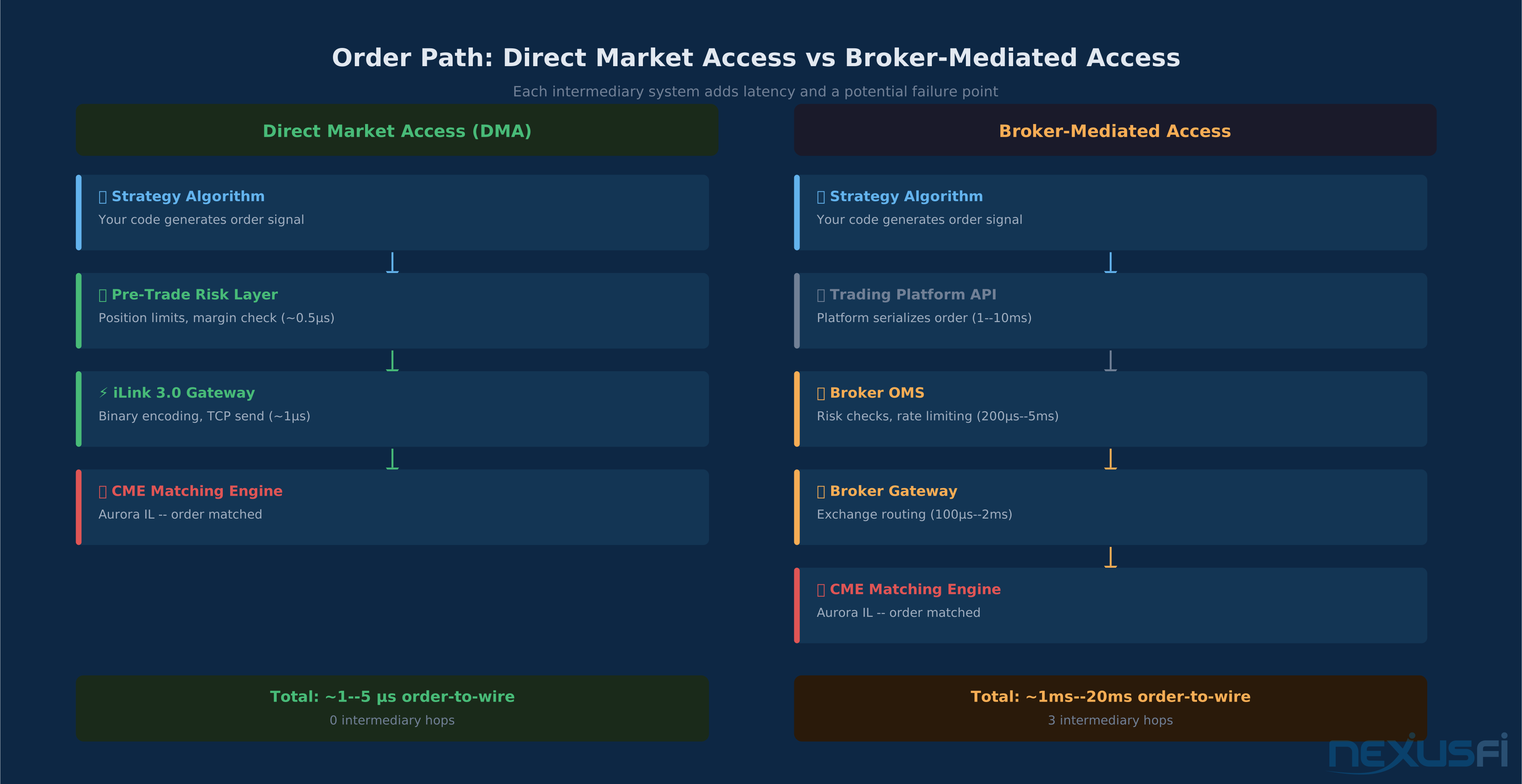
Direct Market Access (DMA) means your algorithm's orders reach the CME Globex matching engine without passing through a broker's order management system. Instead of your order traveling: strategy -> broker API -> broker OMS -> risk checks -> exchange gateway -> CME, it travels: strategy -> exchange gateway -> CME.
That sounds like a subtle difference. It isn't. Every intermediate system adds latency, reduces order type availability, and introduces a failure point. For strategies where execution quality is the edge — scalpers, market makers, statistical arbitrage — DMA isn't a premium feature. It's the minimum viable infrastructure.
Nanoconda's DMA implementation uses CME's iLink 3.0 protocol for order entry and MDP 3.0 for market data, running from servers physically co-located in CME's Aurora, IL data center. This article covers what DMA actually means technically, why it matters for specific strategy types, and what the transition from broker API to DMA involves in practice.
What DMA delivers that broker access cannot:
- Sub-10µs order-to-wire latency (vs 500µs--20ms via broker)
- All 31+ CME iLink 3.0 order types (vs broker subset of 10--20)
- MBP-10 + MBO full-depth market data (vs aggregate or delayed feeds)
- No broker intermediary risk layers between your algorithm and the exchange
- $0 per-order routing fees on flat-rate managed infrastructure
See the Nanoconda RDL listing for DMA service tiers and pricing. This article explains the technical framework.
What Direct Market Access Actually Means #
DMA is a precisely defined concept in futures markets. It refers to connectivity where your algorithm sends orders directly to the exchange using the exchange's native API protocol, without any intermediary broker system handling or re-routing those orders.
For CME Globex, the native protocol is iLink 3.0. Orders formatted in iLink 3.0 binary format go directly from your server to CME's matching engine. No broker OMS touches them.
The contrast is with sponsored access or indirect market access: your firm submits orders, but they pass through a broker's risk and routing infrastructure first. The broker's systems add latency — typically 500µs to 20ms — and may reject or modify orders based on their risk parameters.
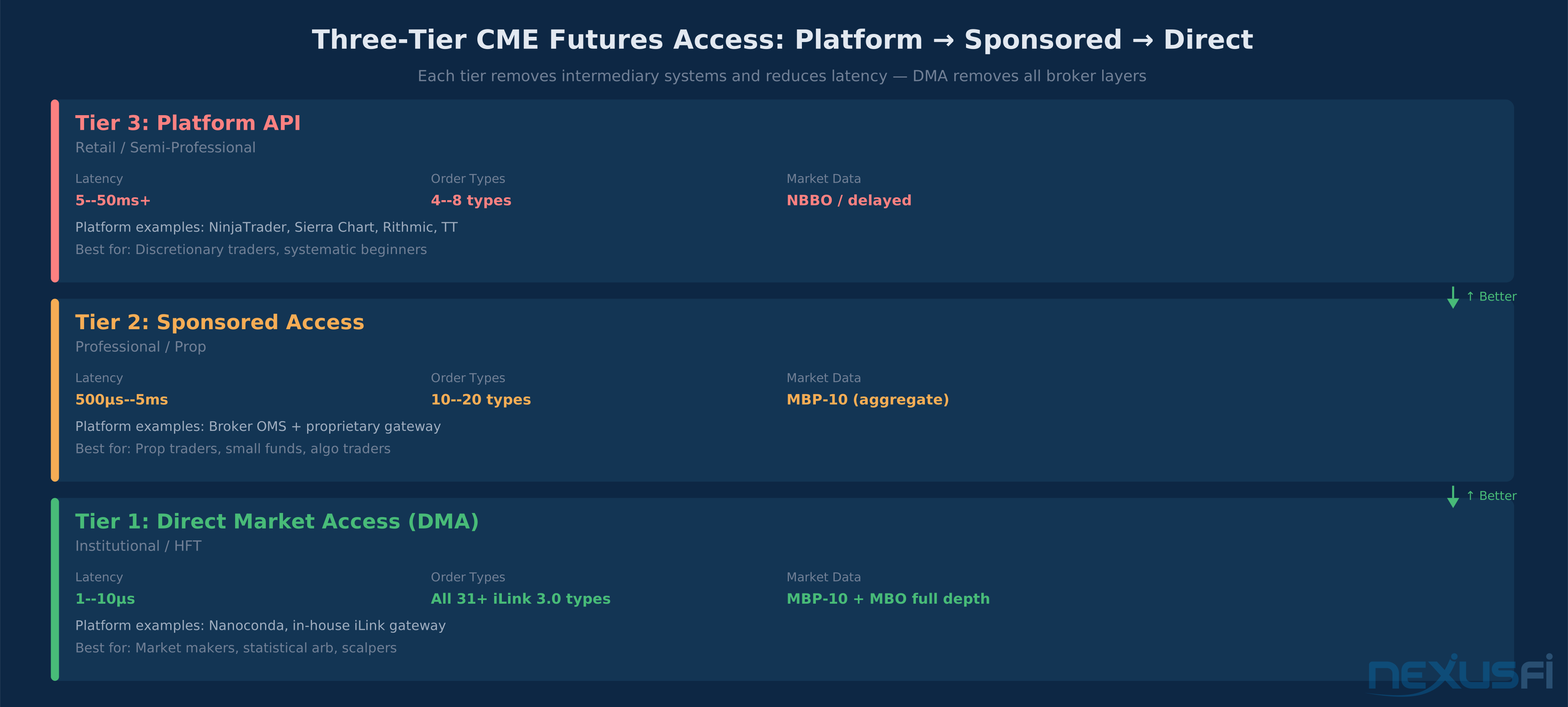
Three-level access hierarchy for CME futures:
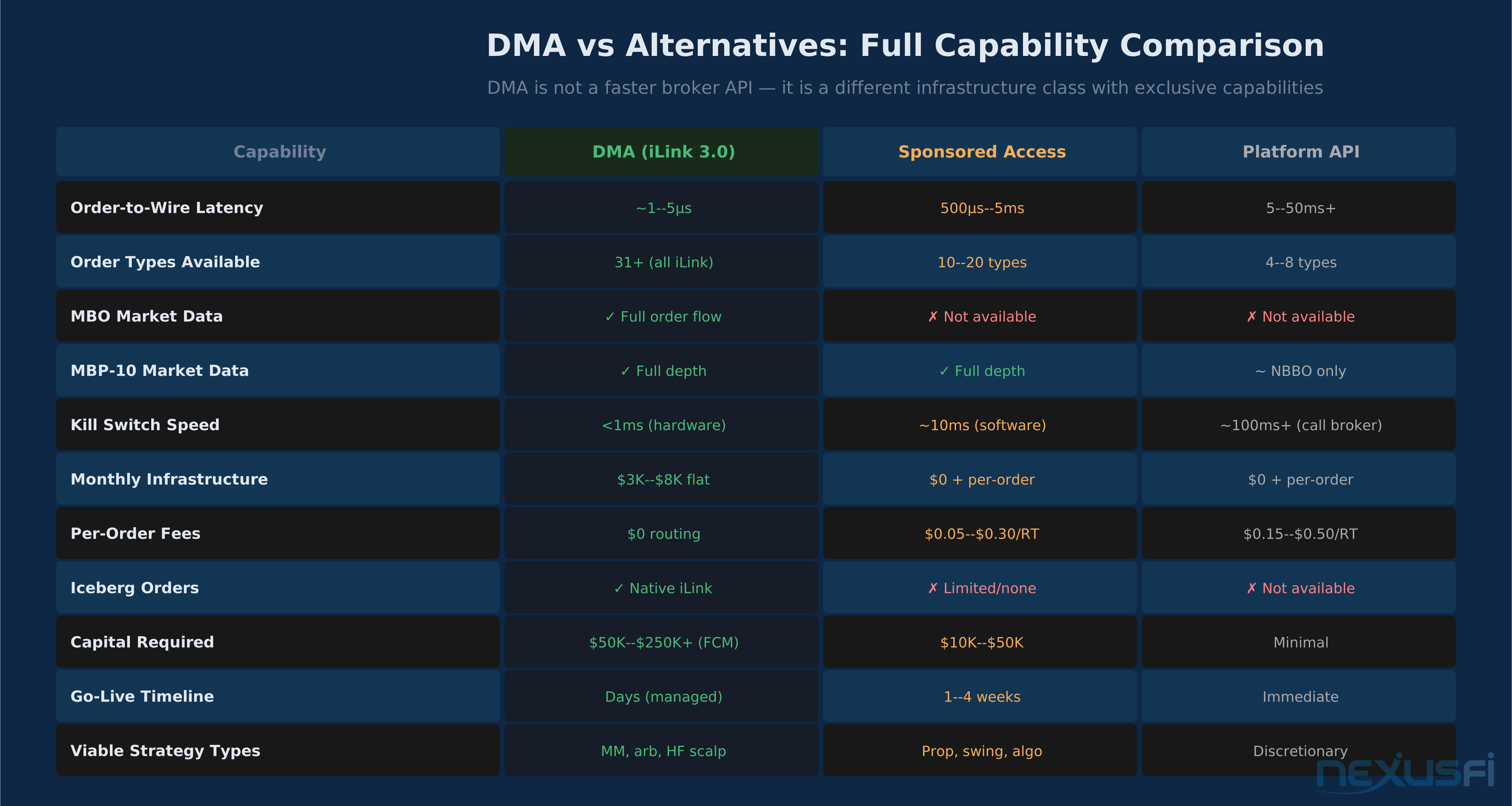
- Direct Access (DMA): iLink 3.0 orders from co-located server to CME. Typical latency: 1--10µs order-to-wire. Full order type support. Requires CME-certified infrastructure.
- Indirect / Sponsored Access: Orders pass through broker OMS before reaching CME. Latency: 500µs--5ms. Broker subset of order types. Standard for professional prop traders.
- Platform API: Trading platform (NinjaTrader, Sierra, Rithmic) mediates between algorithm and broker. Latency: 5--50ms+. Limited order types. Standard for retail and semi-professional traders.
That observation identifies the core trade-off: broker infrastructure adds safety layers, but every safety layer adds latency.
The iLink 3.0 Protocol #
CME's iLink 3.0 is a binary FIX-based protocol (FIX over TCP/IP) with extensions for exchange-specific functionality. It replaced the older iLink 2.0 in phases starting in 2017. Understanding its structure explains both the performance advantages and the technical requirements of DMA.
Key iLink 3.0 capabilities:
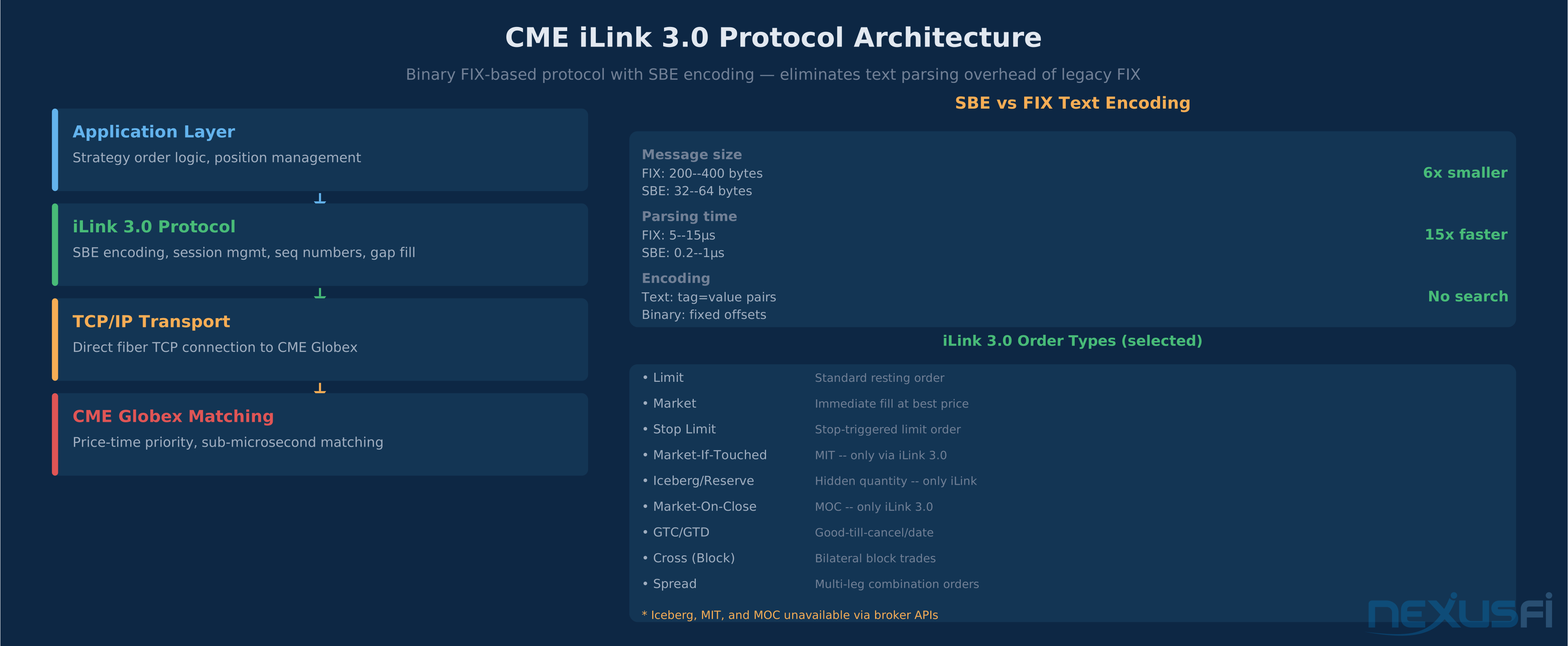
SBE (Simple Binary Encoding): iLink 3.0 uses SBE encoding rather than verbose FIX tag=value format. SBE eliminates the parsing overhead of text-based protocols — messages are fixed-length binary with minimal encoding/decoding. This contributes directly to sub-10µs latency.
Session management: iLink 3.0 manages sessions explicitly with sequence numbers, gap fill, heartbeats, and retransmission. Unlike fire-and-forget protocols, iLink 3.0 guarantees delivery confirmation and handles disconnection/reconnection cleanly.
31+ order types: iLink 3.0 supports order types unavailable through broker APIs: Market-If-Touched (MIT), Stop-Limit, Market-On-Close (MOC), Iceberg (Reserve), GTC/GTD, and cross-product spread orders. Strategy types that require MIT or Iceberg orders cannot be implemented through most broker APIs.
Cross-margin functionality: iLink 3.0 supports portfolio margining requests and cross-product netting that isn't available through intermediary access.
Fat Tails (one of NexusFi's most respected technical contributors) described the distinction precisely in a 2012 thread on ultra-low latency trading: "To execute HFT strategies they require Ultra-Low Latency Direct Market Access (ULLDMA), which is also called no-touch. The DMA flow passes through risk checking algorithms which do not delay processing... the orders do not have to leave the co-location site."
That "no-touch" concept is the key: ULLDMA means the order path from algorithm to matching engine never leaves the co-location facility. No external network hop, no broker system in the path.
MDP 3.0: Market Data in Direct Access Environments #
DMA for order entry only solves half the problem. The other half is market data. For algorithms trading on sub-millisecond signals, the quality and latency of market data is as important as order routing latency.
CME's MDP 3.0 (Market Data Platform) is the market data counterpart to iLink 3.0. It provides:
MBP-10 (Market-By-Price, 10 levels): Full 10-level order book depth on both bid and ask sides. Each level shows the aggregate quantity available at that price. This is the standard for professional algorithmic trading and is what most "direct" platform connections provide.
MBO (Market-By-Order): Individual order visibility. Rather than aggregate quantities per price level, MBO shows each individual order — its size, the time it entered the queue, and (in CME's implementation) an order ID that persists through modifications. This is only available via MDP 3.0 and not accessible through broker API feeds.
The practical difference: an algorithm reading MBP-10 sees "400 contracts available at 4522.50 bid." An algorithm reading MBO sees those 400 contracts broken into individual orders — say, four orders of 100 each, placed at different times. The one placed 40ms ago might represent a large participant who will absorb selling. The one placed 2ms ago might be a layered order that will cancel on fill.
@artemiso documented this distinction from direct personal experience in a NexusFi post from 2020 discussing routing directly through his own iLink over co-location: noting that when his orders constituted a significant portion of the top levels, he could observe depth discrepancies in data providers that aggregated feeds compared to what he saw in his own direct feed.
MBO data requires DMA-level infrastructure. It's not available via broker API or third-party market data vendors — they receive and re-transmit MBP data only. This creates an information asymmetry: DMA traders see individual order structure; everyone else sees only aggregate prices.
DMA Cost Structure and Requirements #
DMA is not "free" even when the per-order routing cost is zero. The infrastructure costs are real and front-loaded. Understanding the full cost picture determines whether DMA makes economic sense for a given strategy.
Infrastructure costs (managed via Nanoconda):
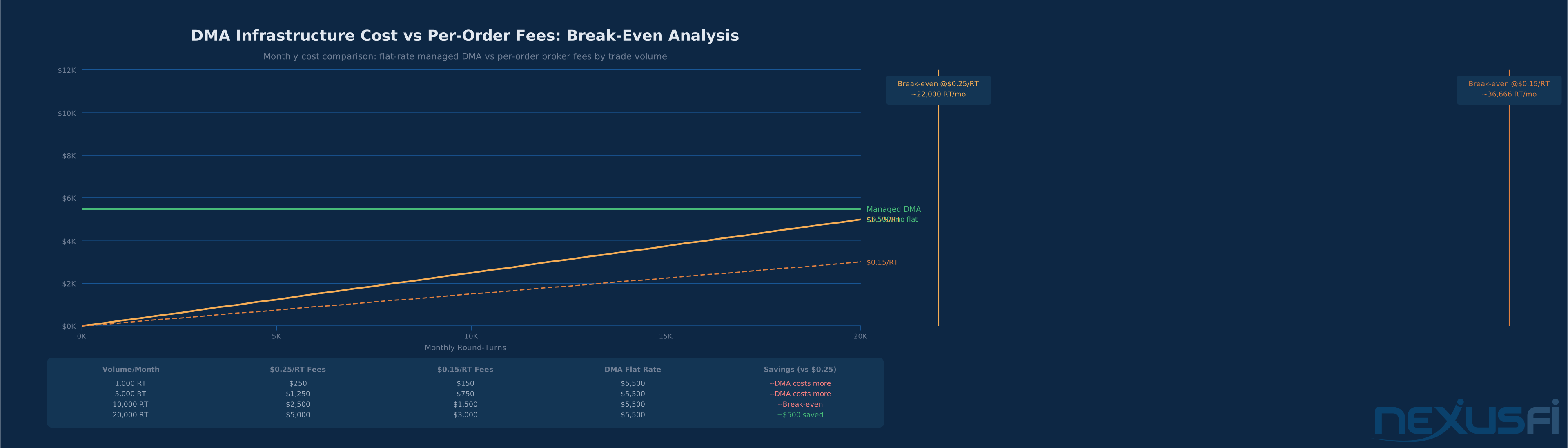
- Monthly flat rate: $3,000--$8,000/month depending on service tier
- No per-order fees (vs $0.10--$0.30/order via sponsored access)
- Includes dedicated hardware, iLink gateway, MDP feed handler, FCM integration
Break-even analysis: At 100 round-turns/month: managed DMA saves ~$20--$60 in per-order fees. Break-even requires 1,500--4,000 round-turns/month at typical managed rates.
At 500 round-turns/month: savings of $100--$300/month — still below the managed infrastructure cost.
At 5,000 round-turns/month (active algorithmic trader): savings of $1,000--$1,500/month in routing fees alone, plus execution quality improvement. DMA begins making clear economic sense.
At 10,000+ round-turns/month: routing fee savings can equal or exceed the managed infrastructure cost. DMA is economically necessary at scale.
Capital requirements: DMA requires an FCM (Futures Commission Merchant) willing to clear your activity directly. FCMs typically require:
- Minimum account size: $50,000--$250,000 (varies by FCM)
- Demonstrated algorithmic trading track record
- Risk management documentation
- Net capital adequacy demonstration
Regulatory requirements: DMA traders are subject to CFTC regulations on automated trading. Regulation AT (if finalized) would add pre-trade risk control requirements. Current requirements include order-level audit trails and pre-trade position limits configured at the infrastructure level.
Queue Position and Execution Priority #
Queue position is the concept that explains why latency matters in limit order markets, and why DMA at co-location provides advantages that lower-latency internet access cannot replicate.
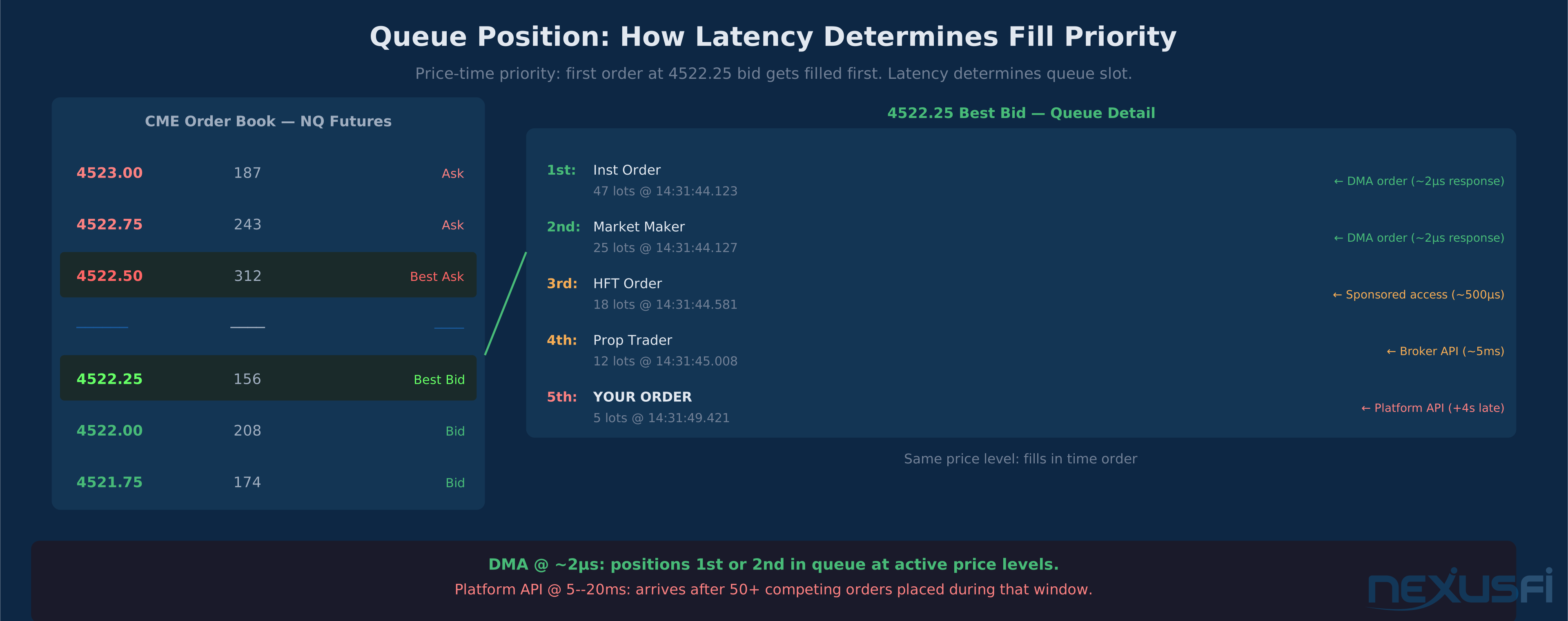
In a price-time priority market (which CME Globex is for most instruments), limit orders at the same price are filled in the order they were received. The first order at 4522.25 bid gets filled before the second order at 4522.25 bid.
The Queue Position Math: In a 500-contract book at the inside bid, an order arriving 10ms late is behind every order that arrived in the preceding 10ms. During high-activity periods, 50+ new orders/second at the inside level means a 10ms latency disadvantage puts you behind 50+ competing orders — before you even consider the orders already resting. DMA-level latency reduces this from "50+ orders ahead" to "0--2 orders ahead."
Queue position is permanent once you're behind it. If 500 contracts are ahead of you in the book, those orders have priority until they fill or cancel — you cannot reclaim queue position. DMA orders that arrive microseconds before a market move secure priority that millisecond-latency connections cannot recover. This is the specific mechanism through which co-location translates to consistent execution quality.
For strategies that post resting limit orders (market making, passive scalping, statistical arbitrage), queue position at attractive price levels determines fill quality. An order placed at the inside bid when there are already 500 contracts ahead of it will trade differently than the same order placed first in queue.
The queue dynamics at scale:
In liquid contracts like ES or NQ, price levels can have 200--2,000 contracts queued during active sessions. A 10ms latency disadvantage means you're always inserting behind orders that arrived with sub-millisecond response times. In fast-moving markets, a 10ms order may never execute at the intended level — price has moved by the time it arrives.
This captures the variance problem: broker API latency is not consistent — it degrades under load precisely when you most need fast execution.
@hyperscalper, discussing microsecond scalping infrastructure in 2021, identified the baseline: "U.S. futures out of Chicago (Aurora) at the CME, for example, is the physical location" — meaning the physical Aurora IL location is the reference point from which all other latency is measured additively.
Strategy Types That Require DMA #
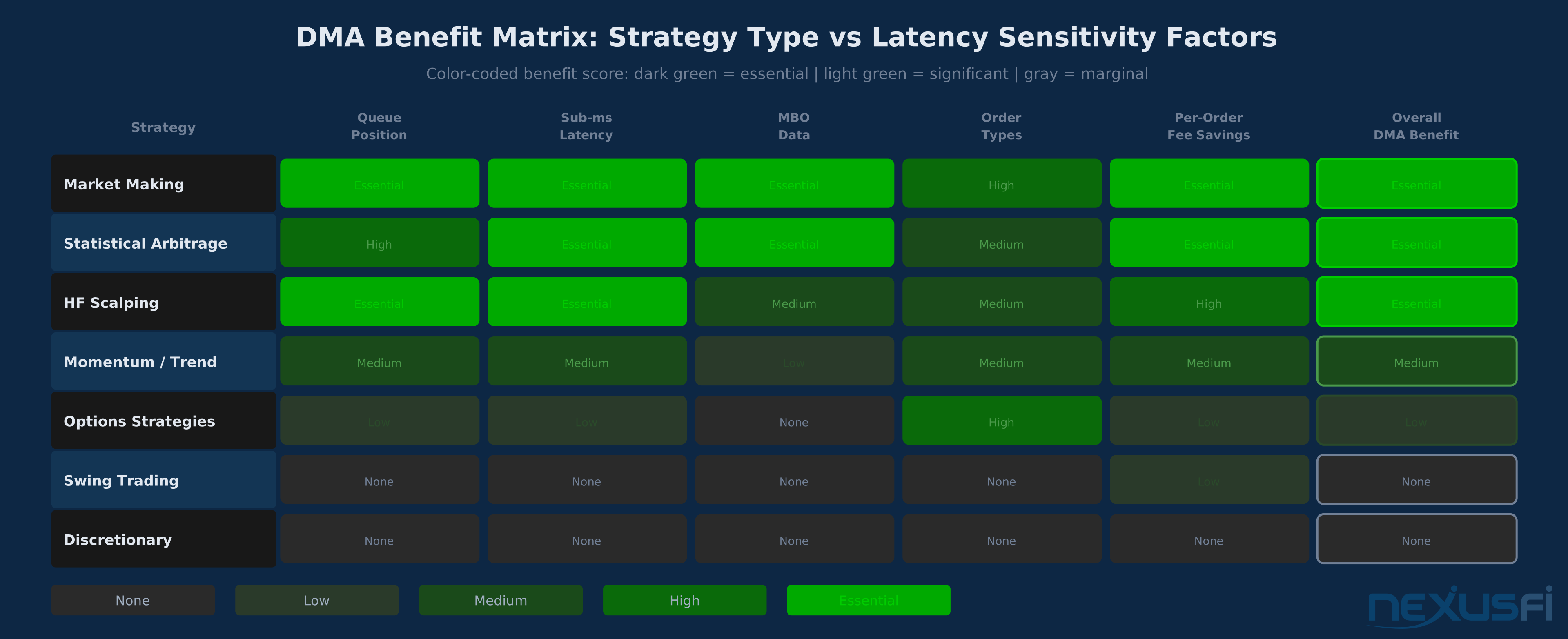
Not all trading strategies benefit from DMA. The decision to invest in DMA infrastructure should be driven by whether your strategy's edge depends on execution quality metrics that broker access cannot provide.
Strategies that benefit most from DMA:
Market Making / Liquidity Provision: Posting resting bid/ask orders and profiting from the spread. Profitability requires consistent queue position at the inside market. Requires sub-millisecond response to changes in competing quotes. DMA is typically required for viable market making.
Statistical Arbitrage: Exploiting price discrepancies between correlated instruments (ES/SPY, ES/NQ spread, calendar spreads). Arb windows close in microseconds. Broker latency means arb opportunities are gone before orders arrive.
High-Frequency Momentum: Reacting to order flow signals from MBO data — seeing a large institutional order cancel or fill before the aggregate MBP shows the change. Requires both MBO data (DMA only) and sub-millisecond order submission.
Scalping at Institutional Scale: Taking 1--4 tick profits repeatedly with high volume. At 500+ round-turns per day, execution quality on each trade compounds much. A systematic 0.25 tick execution advantage at 500 round-turns is 125 ticks/day — material P&L.
Strategies where DMA provides marginal benefit:
Swing trading (hours to days): Execution quality over a 3-minute period is irrelevant. Broker API adds negligible disadvantage.
Options strategies: CME options market structure differs from futures. Wider spreads make latency less critical. DMA benefits are minimal.
Discretionary trading: Human reaction times (200--500ms) dominate latency math. Fastest broker API is fast enough.
@ChrisK5 posed the capital question directly in a 2017 co-location thread: "If you want to go direct market, you need at least half a million to a million in capital at most brokers." That was accurate for 2017 — managed co-location providers have reduced the capital threshold, but the strategic requirement remains: DMA only makes sense if your strategy's edge is latency-sensitive.
FCM Integration in DMA Architecture #
Every futures trade, regardless of how it's executed, must be cleared through an FCM (Futures Commission Merchant). The FCM holds margin, processes daily mark-to-market settlement, and provides the regulatory framework for futures trading.
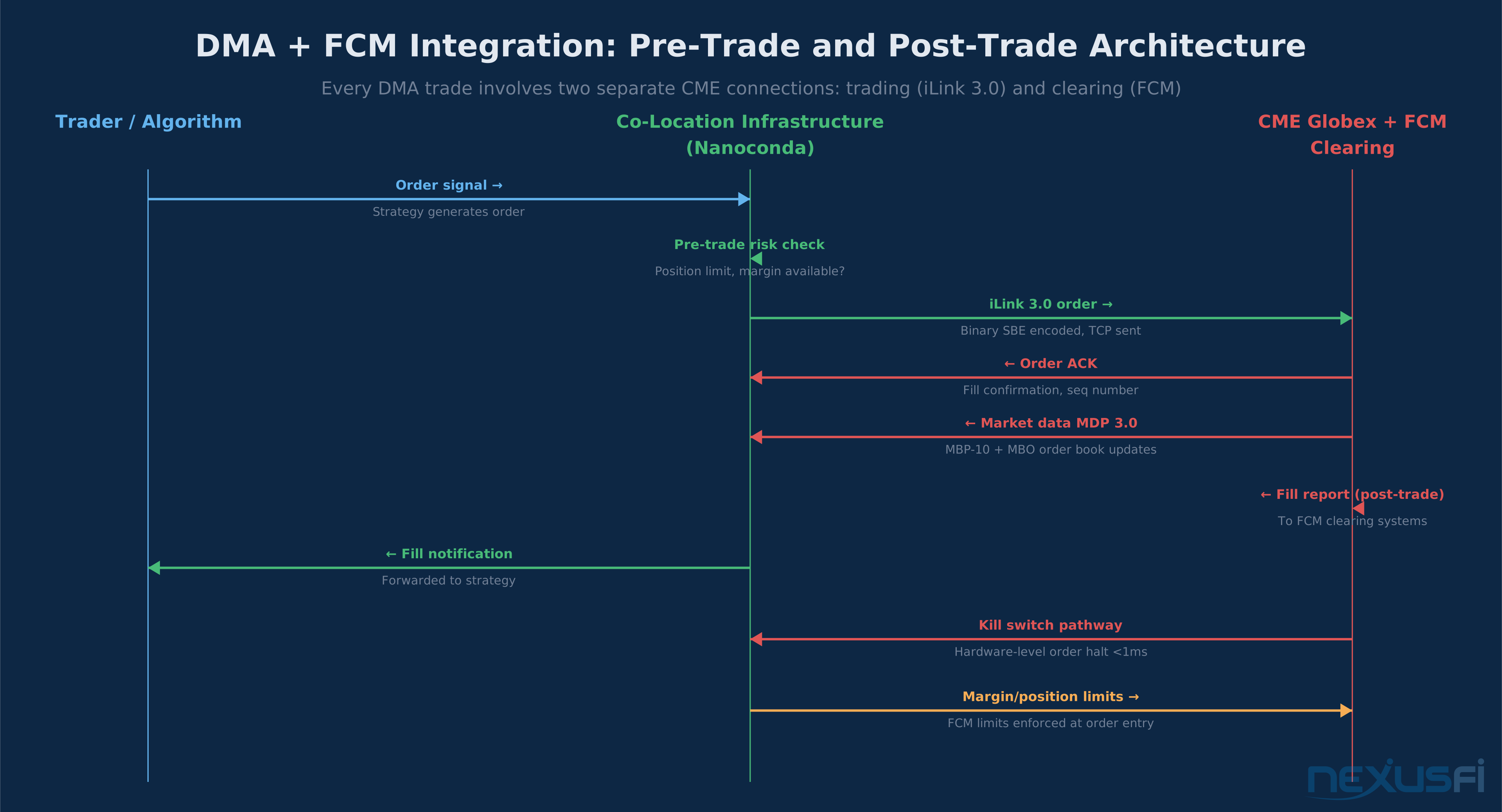
In DMA setups, FCM integration is a technical requirement, not just a business relationship. The FCM connects to CME's clearing systems; your co-location infrastructure connects to CME's trading systems. These are separate interfaces that must be integrated.
The FCM role in DMA:
Pre-trade: The FCM sets position and margin limits that the DMA provider enforces in the pre-trade risk layer. Nanoconda's infrastructure implements these limits at the order entry level — orders that would breach FCM-specified limits are rejected before reaching the matching engine.
Post-trade: Fill confirmations from CME go both to your algorithm (via iLink acknowledgment) and to the FCM's clearing systems. The FCM reconciles positions, calculates daily margin calls, and reports to NFA/CFTC.
Kill switch: The FCM has the ability to halt all orders from an account. In DMA infrastructure, this kill switch operates at the hardware level — it can stop orders in under 1ms, faster than any software-level cancellation.
Choosing an FCM for DMA:
FCMs vary much in their experience with algorithmic DMA clients. Key questions:
- What are the minimum account size requirements for DMA access?
- What position limits do they set by default, and how are custom limits configured?
- What is the standard kill switch latency?
- Do they support Nanoconda's infrastructure or require a specific gateway setup?
Advantage Futures, Phillip Capital, Stonex, and AMP are among the FCMs frequently mentioned in NexusFi discussions for algorithmic futures trading with DMA-compatible infrastructure.
Transition from Broker API to DMA #
Most traders who adopt DMA infrastructure have previously traded through broker APIs. The transition involves technical integration, regulatory compliance, and operational discipline changes.
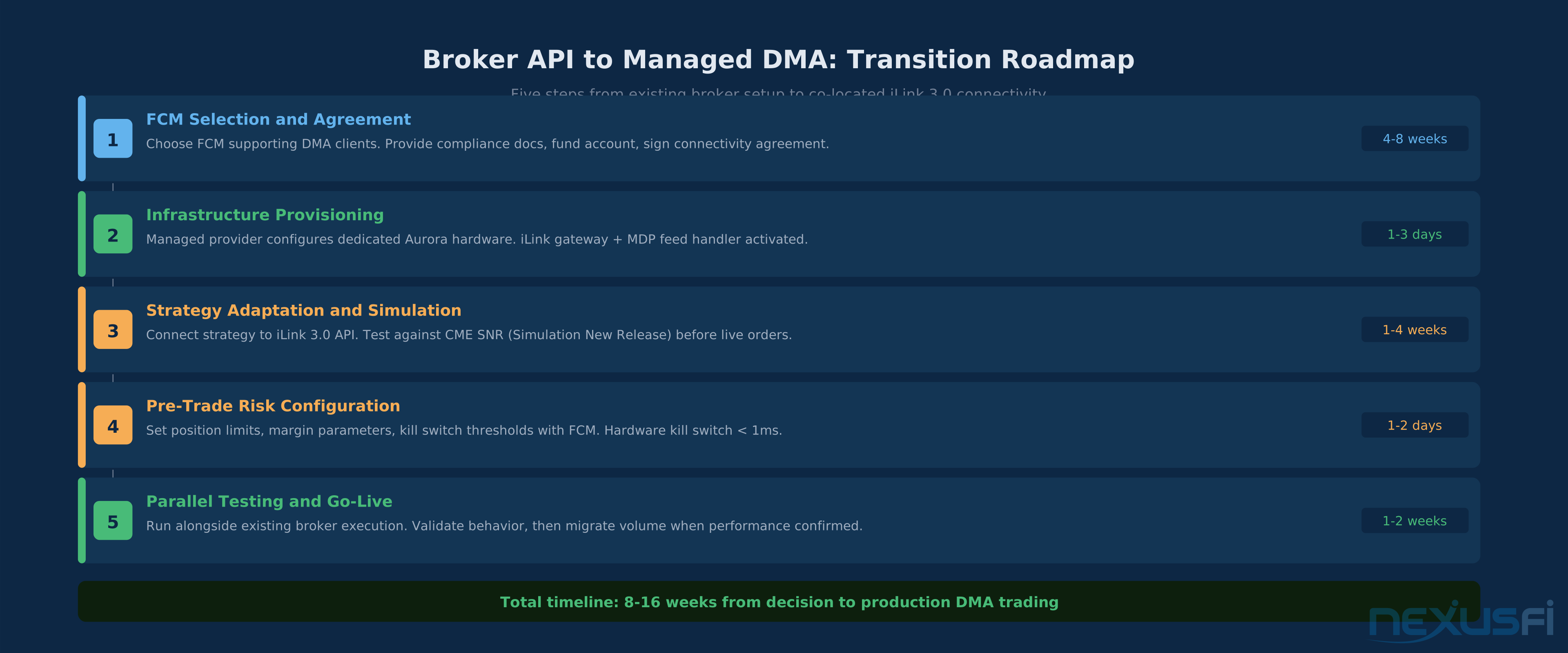
Technical transition steps:
- FCM selection and agreement: Sign with an FCM willing to support direct access. This requires compliance documentation, account funding, and a connectivity agreement.
- Infrastructure provisioning: With managed co-location (Nanoconda), this is the provider's responsibility. Hardware is provisioned in Aurora IL; you receive API credentials.
- Strategy adaptation: iLink 3.0 order types and behavior differ from broker API behavior. Orders need testing against CME's certification environment (Simulation New Release, or SNR) before going live.
- Pre-trade risk configuration: Work with FCM to set position limits, margin parameters, and kill switch thresholds.
- Parallel testing: Run strategy in parallel with existing broker execution to verify behavior before migrating volume.
What changes operationally:
Order management: iLink 3.0 requires explicit session management. Your algorithm must handle sequence number gaps, retransmissions, and heartbeat maintenance. Broker APIs abstract this; iLink 3.0 exposes it.
Market data handling: MDP 3.0 provides more data at higher throughput. Algorithms need to process MBO updates efficiently or they create their own internal latency.
Risk discipline: Without a broker OMS acting as a backstop, your pre-trade risk logic must be strong. Runaway algorithms reach the matching engine directly — the only circuit breaker is your own risk infrastructure and the FCM kill switch.
Incident response: Issues with broker API can be escalated to the broker. Issues with DMA infrastructure require direct diagnosis. Nanoconda's managed approach provides infrastructure support, but strategy bugs remain the trader's problem.
Who Benefits from Direct Market Access #
The decision to adopt DMA infrastructure should be made analytically, not aspirationally. DMA is a significant infrastructure investment with specific strategy requirements. Getting it right means understanding exactly where your strategy sits in the latency-sensitivity spectrum.
Strong DMA candidates:
- Algorithmic scalpers executing 500+ round-turns/day with sub-2 tick average targets
- Statistical arbitrage strategies across correlated futures pairs (ES/NQ, ZN/ZB, CL calendar spreads)
- Market makers in liquid contracts who need consistent queue position
- Firms with strategies that require MBO data (individual order visibility)
- Traders who have maxed out the performance headroom of their current broker API
Weak DMA candidates:
- Strategies with 10+ minute average holding periods
- Traders with less than $50K allocated to systematic trading
- Algorithmic traders still validating their edge (DMA infrastructure overhead adds operational complexity before the edge is proven)
- Discretionary traders — human reaction times make latency differences irrelevant
DMA doesn't create an edge that doesn't exist. If your strategy loses money through a broker API, co-location won't fix it. DMA removes execution constraints — it doesn't make losing strategies profitable. The traders who benefit most from DMA already have a validated edge being held back by infrastructure latency, not traders still searching for what their strategy should be.
The honest test:
If you can run your strategy profitably through a broker API and the primary limitation is execution quality rather than risk parameters or order types, DMA is likely your next infrastructure upgrade.
If your strategy is unprofitable and you believe DMA would fix it, reconsider. DMA removes infrastructure disadvantages. It doesn't create edges that don't exist. The traders who benefit most from DMA already have validated strategies and are seeking to capture more of an existing edge — not discovering the edge for the first time.
See the Nanoconda RDL listing and the related article on Managed Co-Location for Futures Traders for the complete infrastructure picture. For the exchange-level context, see the Exchange Co-Location for Futures Traders article.
Knowledge Map
Go Deeper
Build on this knowledgeCitations
- — I Am A Self-Directed Trader About To Broker With JP Morgan's Institutional Side (2022) 👍 5“Non-DMA software like TT has credit modules that your broker can access and set limits. They have communal data gateways. While still fast, every one of these additional steps creates software latency.”
- — Faster than Rithmic ? CME direct rough cost ? (2012) 👍 5“To execute HFT strategies they require Ultra-Low Latency Direct Market Access (ULLDMA), which is also called no-touch. The DMA flow passes through risk checking algorithms which do not delay processing.”
- — Daytrading.Coach Review (2020) 👍 10“I was routing directly to CME through my own iLink over colo - and the depth on IQFeed was lesser than my own orders alone!”
- — Rithmic Latency Calculations (Plus trading remotely) (2022) 👍 5“I built a system using Rithmic's API and I tested this latency, and depending on how volatile the market was, this was the largest aspect of my latency chain.”
- — Discussion of a Micro Scalping Day Trading Facility (2021) 👍 2“U.S. futures out of Chicago (Aurora) at the CME, for example, is the physical location”
- — CME Aurora Illinois Co-location? (2017) 👍 2“If you want to go direct market, you need at least half a million to a million in capital at most brokers.”
- — Official CME documentation for iLink 3.0 protocol
- — CME MDP 3.0 technical documentation for market data platform