



Day Trading Margins and Intraday Margin Policies: What Every Futures Trader Should Know Before Sizing Up
Overview #
Here's what trips up even experienced futures traders: the margin number you see on your platform isn't what the exchange requires. It's what your broker decided to require — and those are two at the core different things.
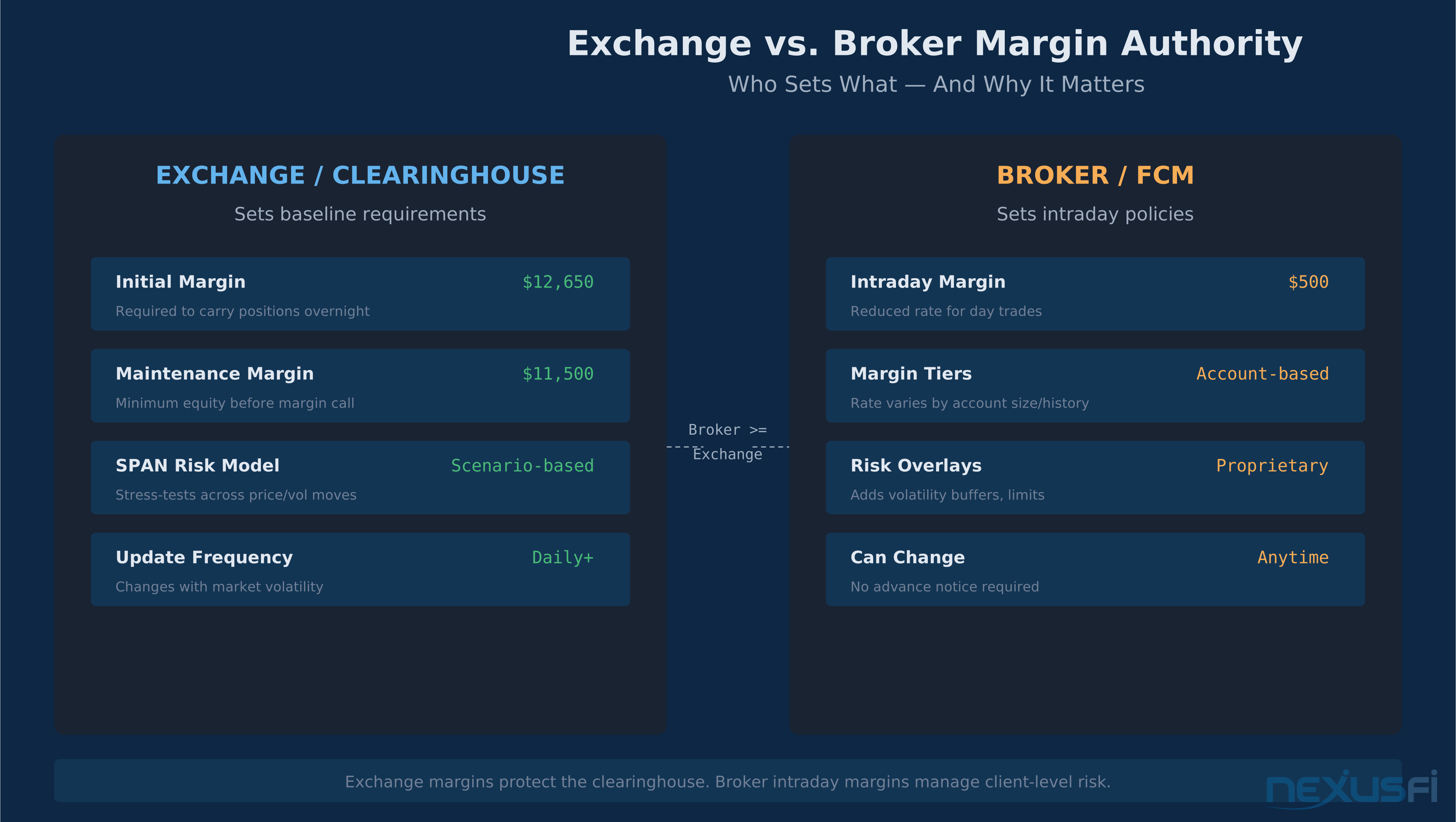
Day trading margins in futures are set by your broker (technically, your FCM — Futures Commission Merchant), not by the CME, ICE, or any exchange. The exchange sets initial and maintenance margins for overnight positions. Your broker looks at those numbers, applies their own risk model, and gives you an intraday margin that's often 30-70% of the overnight requirement. Sometimes less. As [bobwest explains] [1] on NexusFi: "Margin is totally unregulated for intraday trades. If you only trade intraday, you will never need to meet initial margin or maintenance margin, which are exchange requirements."
That single fact reshapes how you think about capital, leverage, and risk. And getting it wrong can mean a margin call you didn't see coming.
Key Concepts #
Exchange Margin — The initial and maintenance margin levels set by the exchange (usually via the clearinghouse). These are the baseline requirements for carrying a position through the close. The CME publishes these numbers and updates them regularly based on market volatility.
Intraday (Day Trading) Margin — The margin your broker requires to hold a position during regular trading hours, with the expectation that you'll close before the session ends. This is entirely a broker decision [14]. As [bobwest notes] [2]: "Once a new 'day' begins at 1700 Chicago time, brokers are again free to require whatever margin they like, until the day's close."
Initial Margin — The amount required to open or add to a position. For overnight positions, this is set by the exchange. For intraday positions, your broker sets this independently.
Maintenance Margin — The minimum equity threshold to keep positions open. Drop below this and you're getting a margin call. For intraday positions, brokers enforce their own maintenance thresholds with faster reaction times than end-of-day checks.
SPAN Margin — Standard Portfolio Analysis of Risk, originally developed by CME in 1988 [11]. The exchange's scenario-based risk model that calculates how much margin a position requires by stress-testing it across multiple price and volatility scenarios. Used by more than 50 exchanges and clearing organizations worldwide as the industry standard for portfolio risk assessment, SPAN generates the exchange-level margin numbers that serve as the foundation for everything else.
Margin Call — A demand from your broker to either deposit additional funds or reduce your position size. Intraday margin calls happen faster than you think — and in fast markets, the broker may liquidate your position before you even see the alert.
How It Works: Exchange vs. Broker Authority #
The Exchange Sets the Floor #
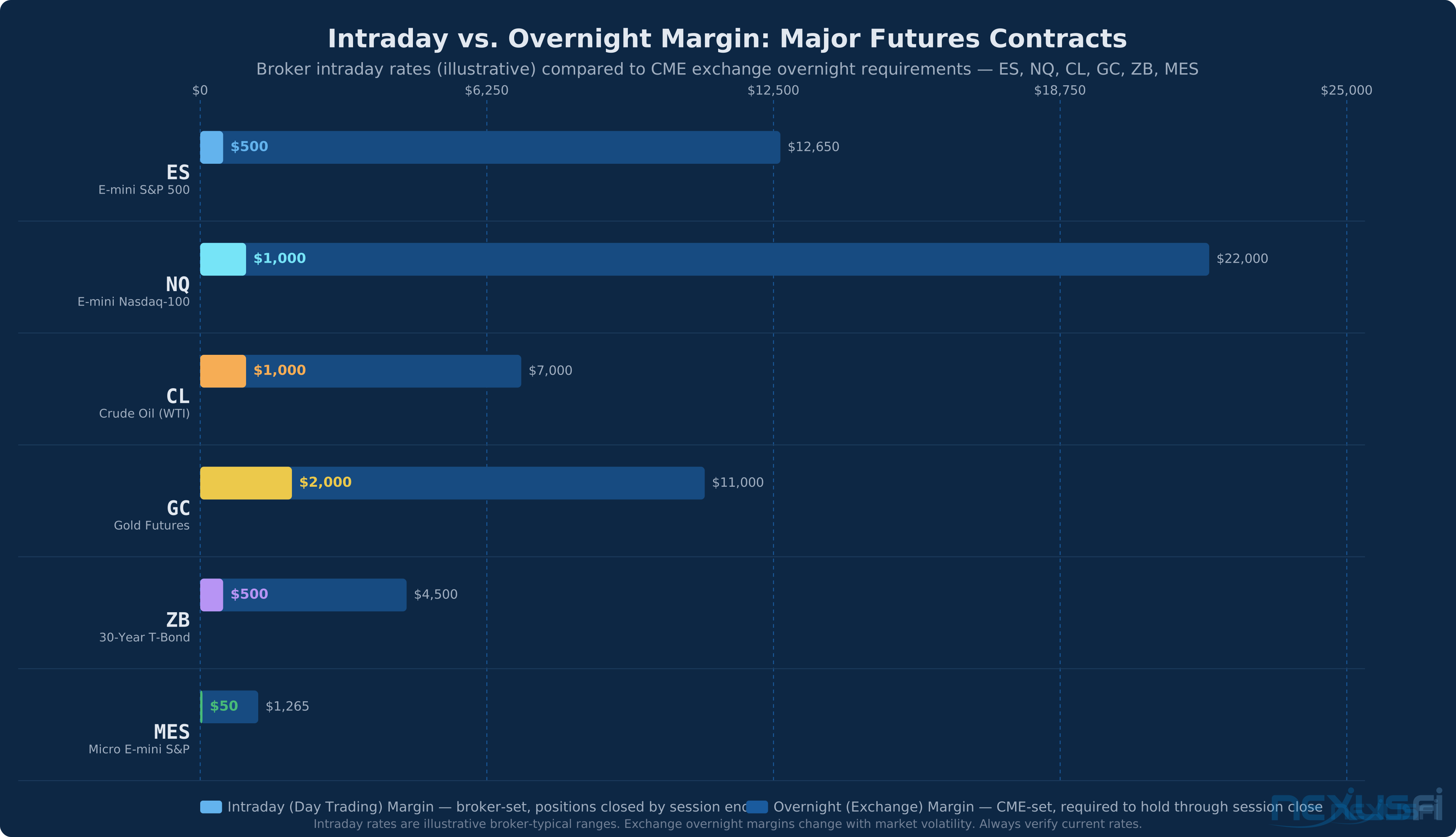
Every futures contract has exchange-mandated margin requirements. For ES (E-mini S&P 500), the CME publishes current margin requirements on its website [12] — typically in the range of $12,000-$13,000 for initial margin and roughly 90-100% of that for maintenance, though these numbers change with market conditions. These numbers exist to protect the clearinghouse — they represent the worst-case daily price move the exchange expects to cover.
The exchange recalculates these using SPAN, which runs scenarios across price movements and volatility changes. When volatility spikes, exchange margins go up. When markets calm down, they come back down. The exchange doesn't care whether you're day trading or holding overnight — these are the carry requirements for end-of-day positions.
The Broker Sets the Intraday Rate #
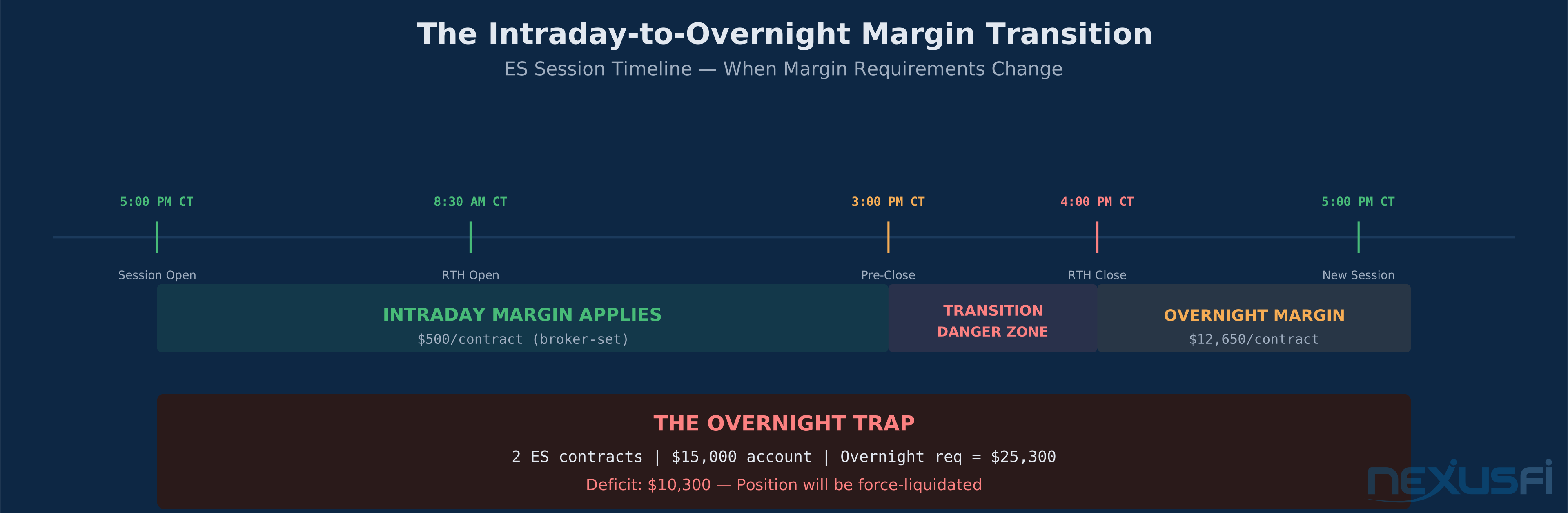
Here's where it gets interesting. Your broker looks at the exchange margin and says: "For positions that will be opened and closed during the trading day, we'll require something different." That "something different" is usually much lower — often $500-$2,000 for ES when the exchange margin is $12,000+. The NFA's Margins Handbook, prepared by the Joint Audit Committee of U.S. futures exchanges and regulatory organizations [13], establishes the framework under which FCMs set and monitor these margin requirements.
Why the discount? Because intraday positions have less risk exposure. You're not holding through the overnight session where gaps can destroy accounts. You're trading during liquid hours when the broker can liquidate your position quickly if needed.
But — and this is critical — the broker can change their intraday margin whenever they want. [As discussed on NexusFi] [3]: "Brokers also boost their intraday margins during times of high volatility, because of the higher risk of traders dropping below their minimum requirements." Before a Fed announcement or on a especially volatile day, your $500 intraday margin on ES might jump to $2,000 or even full exchange margin without warning.
What Determines Your Broker's Intraday Margin #
Brokers don't pick intraday margin numbers randomly. Their risk teams use several inputs:
Volatility — Higher implied or realized volatility means higher intraday margins. The broker calculates what could happen to your position in the next few minutes and adjusts so.
Liquidity — Contracts with thin order books get higher margins because the broker might not be able to liquidate you at a reasonable price. This is why exotic futures carry higher intraday requirements than ES.
Product Risk Class — Energy futures (CL, NG) generally carry higher intraday margins relative to their exchange margins than equity index futures. The risk profile is different.
Account Size and History — Some brokers tier their intraday margins by account size or trading history. A well-capitalized account with a clean track record might get lower intraday requirements than a minimum-funded account.
Concentration Limits — Trading 100 contracts of ES is a different risk profile than trading 1 contract. Many brokers apply nonlinear scaling — your per-contract margin might increase as your position grows.
Margin Tiers: Not Everyone Gets the Same Rate #
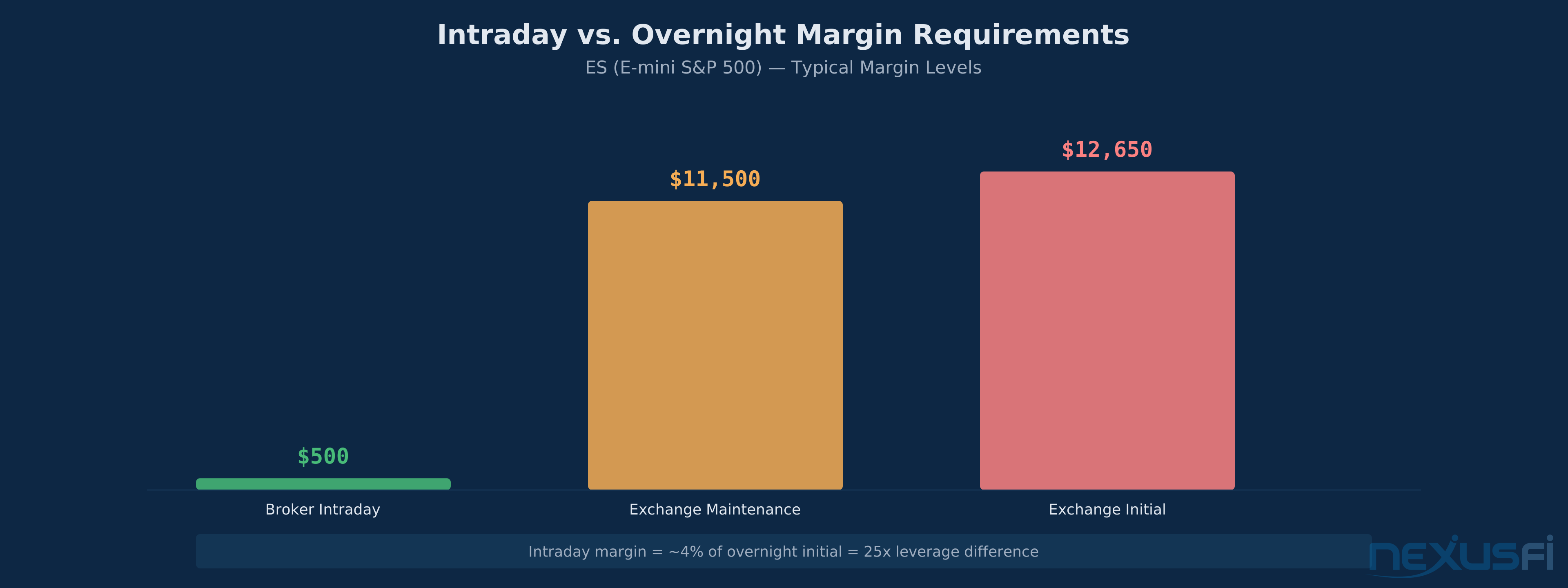
Many brokers structure intraday margins in tiers. The specifics vary by firm, but the concept is consistent: your margin rate depends on your account characteristics.
Common tiering factors include:
Account Net Liquidation — Larger accounts often qualify for lower per-contract intraday margins. The logic is straightforward: a $200,000 account trading 5 ES contracts has a very different risk profile than a $5,000 account trading 5 ES contracts with $500 intraday margin.
Trading Permissions — Some brokers require explicit "day trading permissions" that unlock lower intraday margins. These might require a minimum account balance, a certain number of days with the broker, or passing a risk acknowledgment.
Product Volatility Class — Interest rate futures, equity index futures, energy futures, and agricultural futures often have different margin tier structures because their volatility profiles are at the core different.
Position Concentration — Even within a tier, your effective margin rate might increase as your position size grows relative to your account equity. This is the broker's way of limiting leverage when they see concentration risk building.
The Intraday-to-Overnight Transition: Where Accounts Get Destroyed #
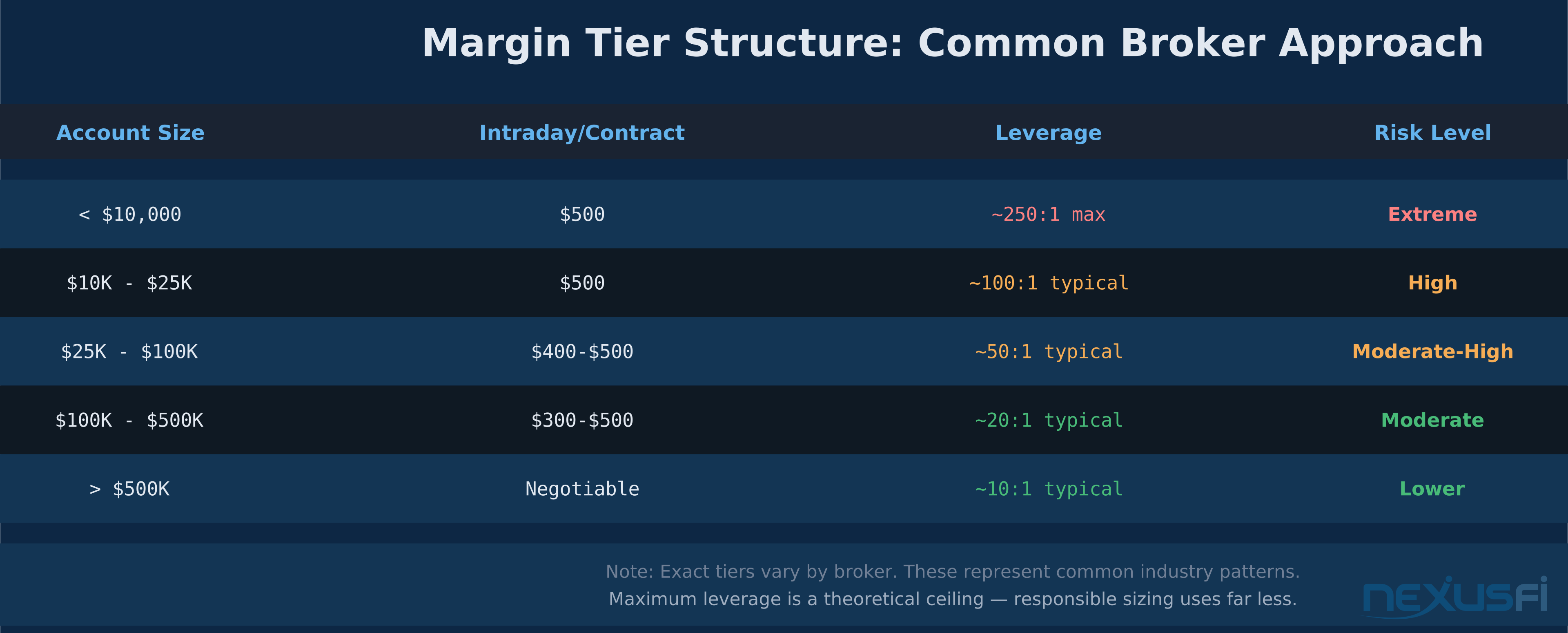
This is the margin scenario that catches traders off guard. You've been trading all day with comfortable intraday margins. It's 3:45 PM CT. The market's about to close. And you're still holding a position.
At the session close (the exact time varies by broker, but it's typically tied to the CME session boundary at 4:00 PM CT for equity index futures), your intraday margin requirement jumps to the full exchange overnight margin. If you've been riding $500 intraday margin per contract on ES and the overnight requirement is $12,000, you need 24x more capital to hold that position.
[As one NexusFi trader warns] [4]: "Don't forget to always close out your positions if you're pushing your intraday leverage hard."
If you don't have the funds to cover overnight margin, your broker will liquidate your position — often at the worst possible time.
The timing mechanics matter here:
- Mark-to-market at settlement — Your account equity is recalculated based on the settlement price, not the last traded price.
- Overnight requirement kicks in — The full exchange-set initial margin applies.
- Margin deficit check — If your equity doesn't cover the overnight requirement, you get a margin call or auto-liquidation.
Some brokers define their intraday window differently. [As explained on NexusFi] [5]: "'Normal' trading hours can vary from broker to broker. Most will just say anytime the instrument is traded." This means one broker might consider 5:00 PM CT to 4:00 PM CT the next day as the "intraday" window, while another might define it as 8:30 AM to 3:00 PM CT. Know your broker's exact cutoff — and consider evaluating your broker's financial health to understand how they handle these transitions.
SPAN Margin: The Risk Engine Behind Exchange Requirements #
SPAN (Standard Portfolio Analysis of Risk) is the CME's margin methodology, used by institutional-grade brokerages and retail firms alike. Understanding it helps explain why exchange margins move the way they do — and why your intraday margins are anchored to those numbers.
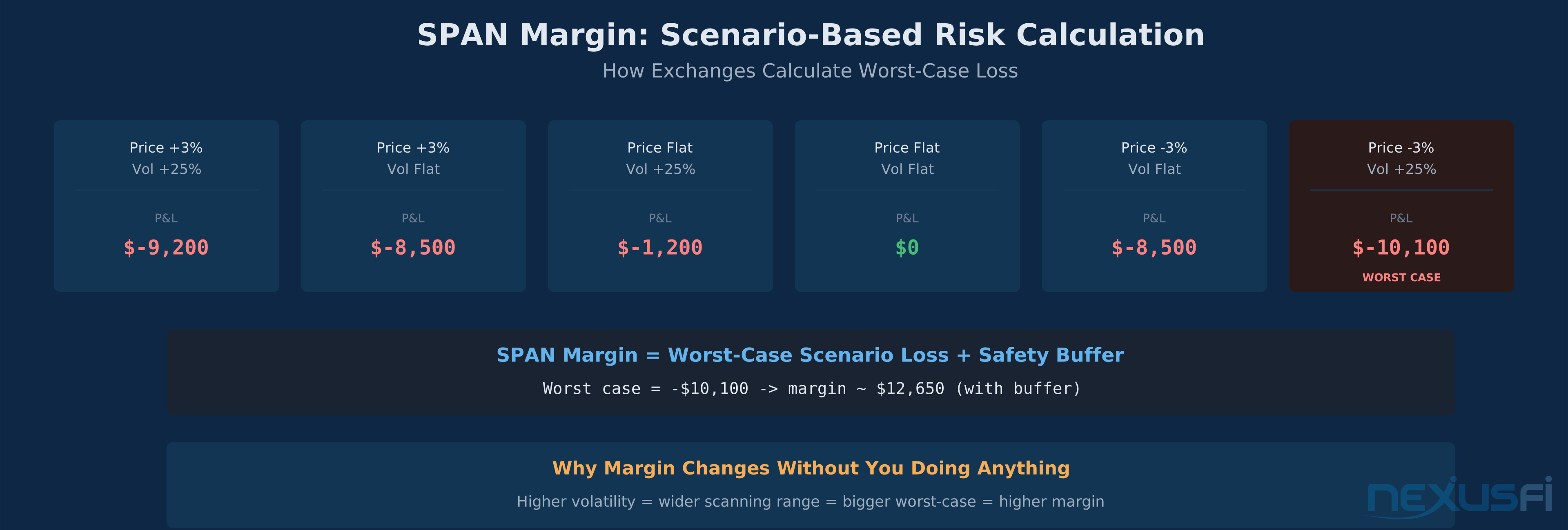
SPAN works by stress-testing your portfolio across multiple scenarios. It asks: "If the market moves up X points, down X points, volatility expands, volatility contracts — what's the worst-case loss?" That worst-case loss, across all scenarios, becomes your margin requirement.
Key SPAN mechanics for day traders:
Price Scanning Range — The maximum expected price move the exchange models for a one-day horizon. When markets get volatile, this range expands, and margin requirements jump.
Inter-Commodity Spread Credits — If you're holding offsetting positions in correlated products (like long ES and short NQ), SPAN may reduce your margin because the risk is partially hedged. This offset recognition doesn't always translate to intraday margins — your broker may not pass through these credits during the trading day.
Volatility Scenarios — SPAN models both price moves AND volatility changes simultaneously. This is why margin can increase even when the market isn't moving much — if implied volatility rises, the risk model sees more potential for future movement.
The important practical takeaway: SPAN margin is dynamic. It changes as market conditions change. And when the exchange raises SPAN requirements, your broker's intraday margin typically adjusts upward too — sometimes with a lag, sometimes immediately.
Micro Contracts: Lower Margin, Same Risk Principles #
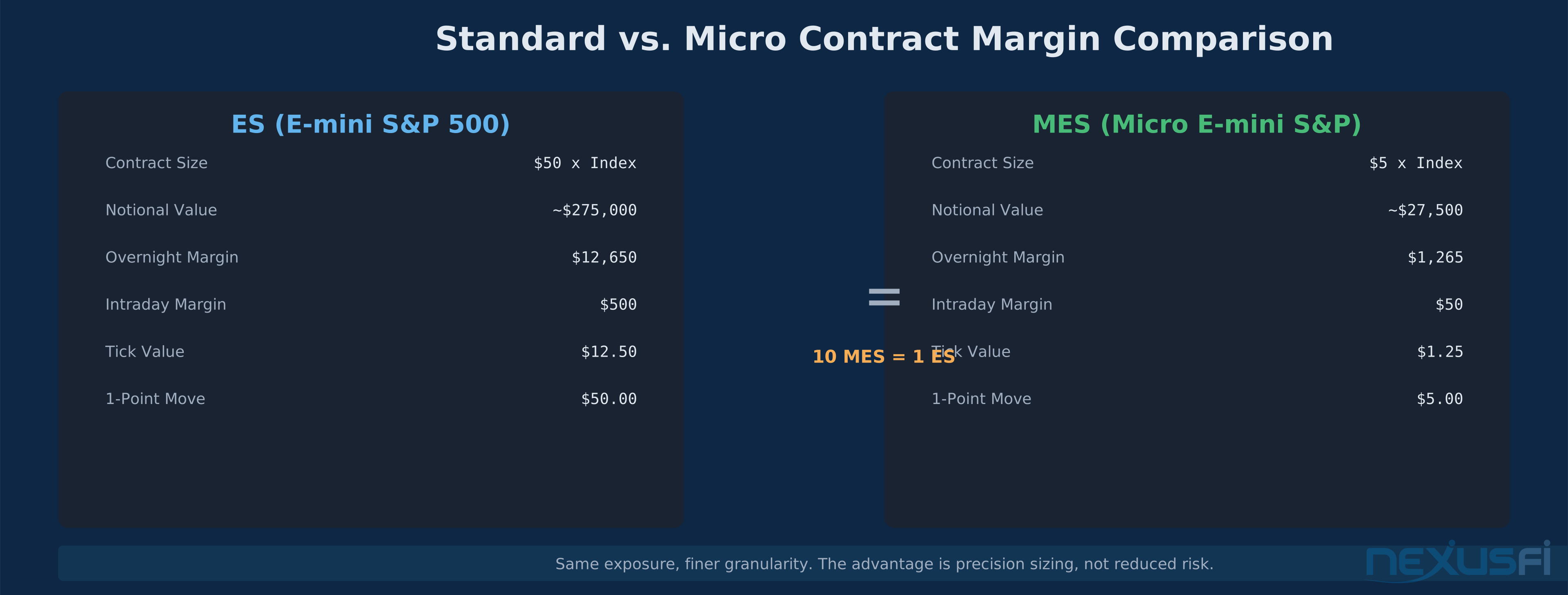
Micro futures (MES, MNQ, MCL, etc.) have transformed retail futures trading precisely because of their margin implications. A Micro E-mini S&P 500 (MES) contract is 1/10th the size of a standard ES contract, and its margin requirements scale so.
Where ES might require $500-$1,000 intraday and $12,000+ overnight, MES intraday margins run $50-$100 with overnight around $1,200. This allows finer position sizing and lower capital barriers to entry.
But here's what the marketing materials don't emphasize: some brokers apply different intraday factors for micro contracts. Because the absolute risk per contract is already small, a few brokers set intraday margin at 100% of the micro exchange margin rather than offering a reduced intraday rate. The percentage discount you get on standard contracts doesn't always transfer proportionally to micros. [As one NexusFi member observed] [15], margin requirements for micro contracts like MES can vary dramatically between brokers — from $40 at one firm to over $450 at another for the same contract.
[As discussed on NexusFi] [7]: "You see day trading margins on ES in the range of a few hundred dollars, depending on the broker (FCM). The exchange doesn't set day trading margins — that's entirely the broker's province."
The micro advantage is real for position sizing and capital efficiency. But stacking 10 MES contracts is the same exposure as 1 ES contract — and your margin might not be exactly 10x the micro rate. Concentration limits, correlation effects, and broker overlays still apply. Don't confuse "lower barrier to entry" with "lower risk."
Intraday Margin Calls: What Actually Happens #
Margin calls during the trading day work differently than overnight calls, and they happen faster than most traders expect.
Triggers #
Your broker monitors your account equity in real time (or near-real time). A margin call triggers when:
- Your equity drops below the maintenance threshold — An adverse price move reduces your account equity below what's required to hold your current positions.
- You increase position size — Adding contracts when you're already near the margin threshold.
- The broker raises intraday margins — Volatility spike, news event, or pre-announcement margin hike reduces your available equity without any trade.
- Mark-to-market adjustment — Settlement price differs from last traded price, changing your equity calculation.
What Happens Next #
The response sequence varies by broker, but typically follows this pattern:
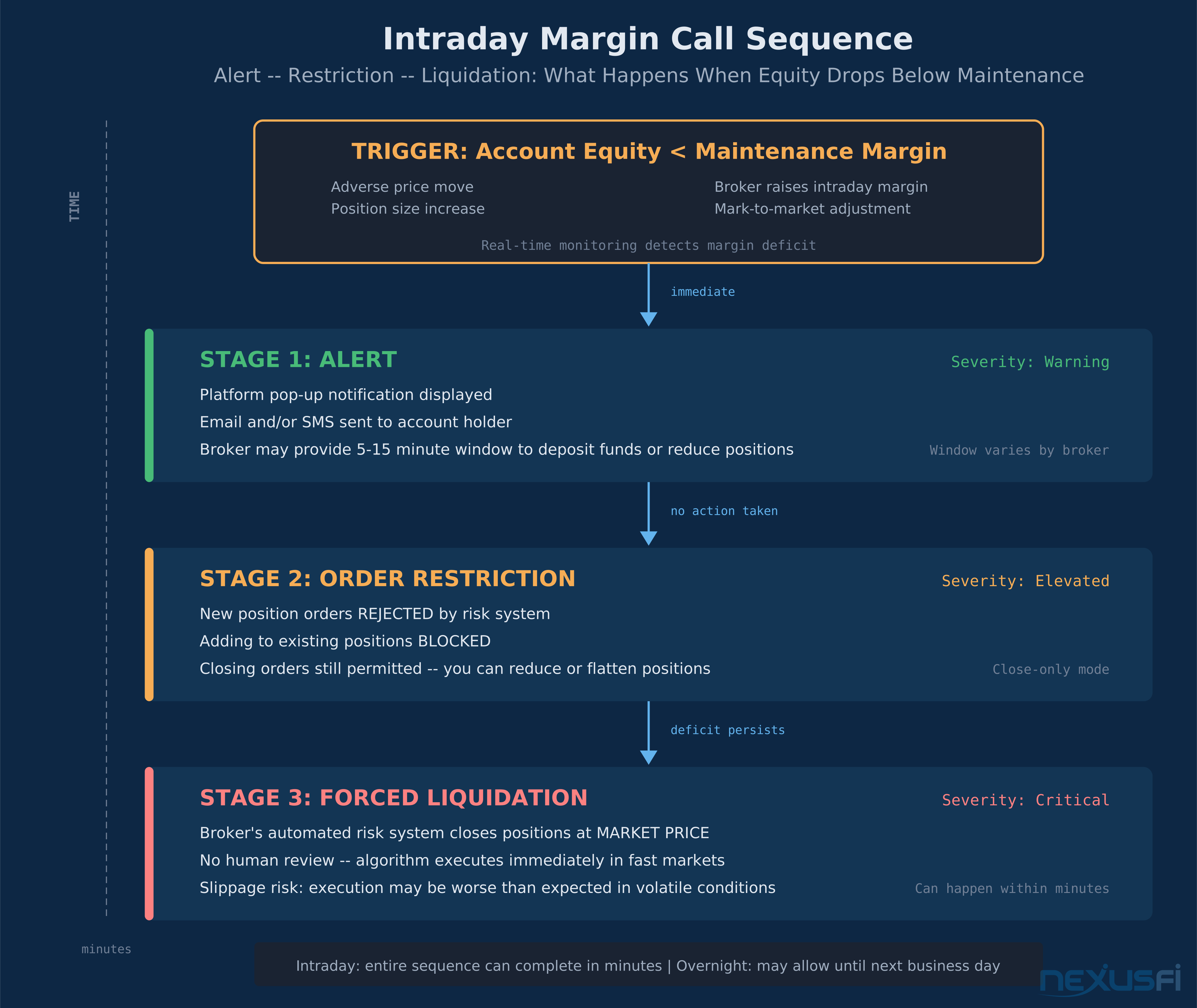
Alert — You get a notification (platform pop-up, email, SMS) that your account is in margin deficit. Some brokers give you a window — maybe 5-15 minutes — to add funds or reduce positions.
Order Restriction — New orders may be rejected. Some brokers restrict you from adding to positions but still allow you to close existing ones.
Forced Liquidation — If you don't act, the broker closes your positions at market price. This isn't a negotiation. [As described on NexusFi] [6]: "To open a position intraday - not holding it past the market close - the day trading margin requirements are your operative number. If you don't have enough, you can't trade."
The critical difference between intraday and overnight margin calls: speed. An overnight margin call might give you until the next business day to meet the requirement. An intraday margin call can result in liquidation within minutes. In fast markets, the broker's risk system might liquidate you automatically without a human ever reviewing the decision.
Prevention #
Smart margin management isn't complicated, but it requires discipline:
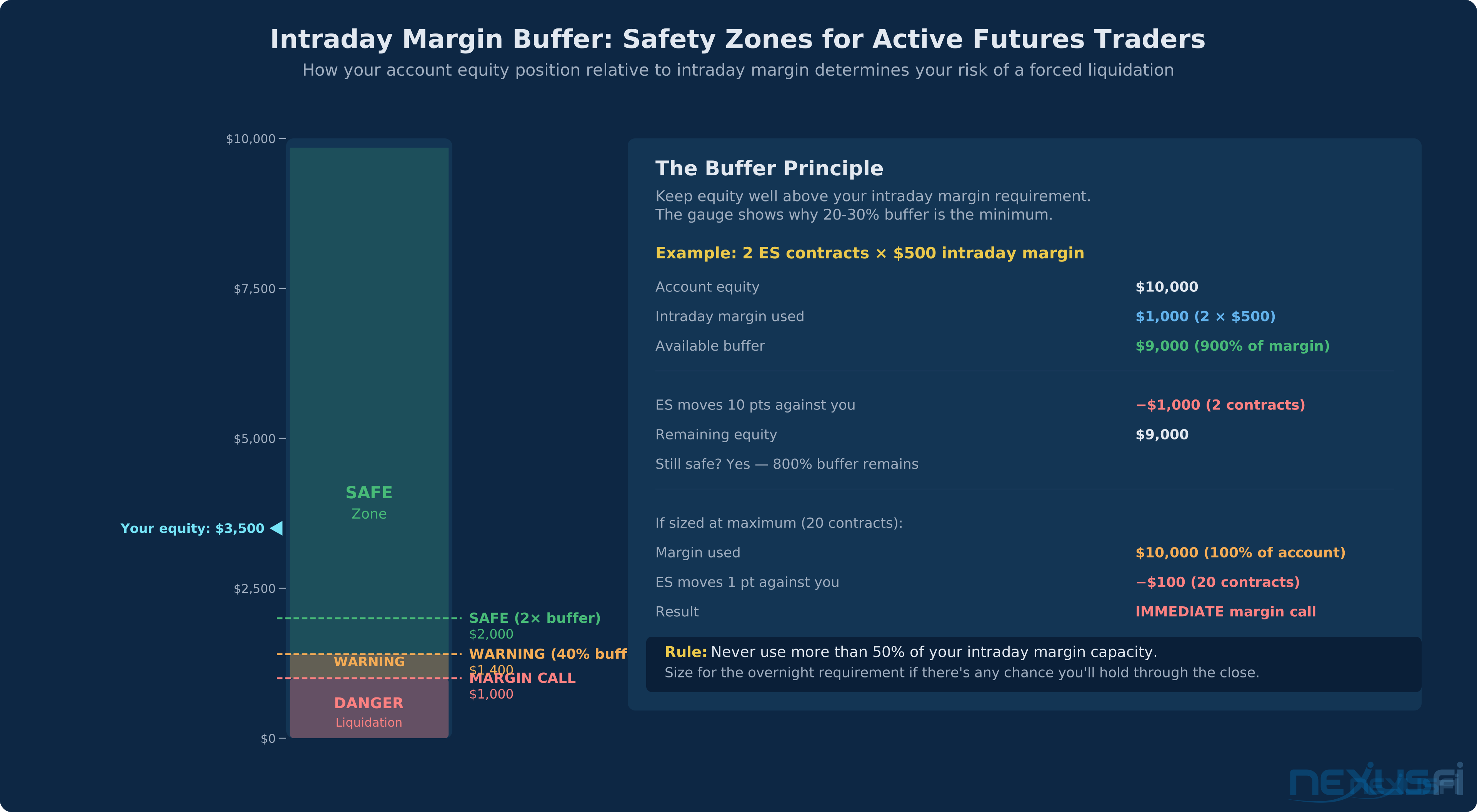
- Keep a buffer — Don't use 100% of your available margin. A 20-30% equity buffer above your intraday margin requirement gives you room for normal market fluctuations.
- Know your broker's cutoff time — If your position hits the session boundary and you're using intraday margin, you need to either close or have sufficient equity for overnight requirements.
- Monitor volatility — Before FOMC, CPI, or other major releases, check whether your broker has raised intraday margins. Many brokers publish margin changes in advance; some don't.
- Size for the overnight requirement — If there's any chance you might hold through the close, size your position based on overnight margin, not intraday. This single habit prevents the most common margin surprise.
Practical Calculations #
Example 1: Standard ES Day Trade #
- Exchange Overnight Initial Margin: ~$12,650
- Exchange Overnight Maintenance Margin: ~$11,500
- Broker Intraday Margin: $500 (varies by broker)
You have a $10,000 account (margin treatment also varies by account type). At $500 intraday margin, you can technically trade 20 ES contracts during the day. But should you? That's $2.5 million in notional exposure on a $10,000 account — 250:1 leverage. One 2-point move against you is $2,000 loss (20% of your account). This is why [experienced NexusFi traders recommend] [8] treating low intraday margins as a tool for capital efficiency, not an invitation to maximize leverage.
Example 2: Micro E-mini (MES) Day Trade #
- Exchange Overnight Initial Margin: ~$1,265
- Exchange Overnight Maintenance Margin: ~$1,150
- Broker Intraday Margin: $50-$100 (varies by broker)
Same $10,000 account. At $50 intraday margin, you could theoretically trade 200 MES contracts — equivalent to 20 ES contracts. Same exposure, same risk. The micro contract didn't change the risk; it changed the minimum unit of position sizing. The real advantage is that you can trade 3 MES contracts ($150 margin) instead of being forced into a full ES contract ($500 margin) when you want smaller exposure.
Example 3: The Overnight Trap #
You're trading 2 ES contracts intraday with $2,000 in margin locked up ($1,000 per contract). Your account has $15,000. At 3:55 PM CT, you're up $800 on the position and thinking about holding overnight. Overnight margin is $12,650 per contract — that's $25,300 for 2 contracts. Your account equity is $15,800 (original $15,000 + $800 unrealized). You're $9,500 short of the overnight requirement. If you don't close before the cutoff, you're getting liquidated.
What to Look For in Your Broker's Margin Policy #
Not all intraday margin programs work the same way. Before committing to a broker, ask:
- What are the intraday margin rates by product? Get specific numbers, not "competitive margins." Ask if rates change during high-volatility events.
- What defines the intraday window? When does intraday margin start and stop? Is it session hours only, or a broader window? [As NexusFi members have noted] [9], this varies much between firms.
- How are margin calls handled? What's the response time? Is there auto-liquidation? What's the notification method?
- Do micro contracts get the same percentage reduction? Some brokers offer deep intraday discounts on standard contracts but not on micros.
- Are there tier or account minimum requirements? Some of the lowest advertised margins require specific account balances or trading permissions. (Unlike equities, futures aren't subject to the Pattern Day Trader rule — but brokers may impose their own account minimums.)
- What happens during events? Does the broker pre-announce margin increases for FOMC, NFP, or other scheduled events?
[As one knowledgeable NexusFi member puts it] [10], Interactive Brokers, for example, "is not a broker that is seeking smaller, more risk-seeking traders, and does not cater especially to the day trader by providing low day-trading margins."
That's a legitimate business choice — but you need to know where your broker falls on that spectrum.
The Bottom Line #
Day trading margins are a leverage tool, not a risk management tool. Your broker gives you low intraday margins because they can liquidate you quickly during market hours. That doesn't mean you should use all of it.
The traders who survive long-term treat intraday margin as a capital efficiency mechanism — trading smaller products (micros) or fewer contracts to match their risk tolerance, not maximizing contracts because the margin allows it.
Know your exchange margin. Know your broker's intraday margin. Know exactly when one transitions to the other. And size your positions for the worst case, not the best case. That's the real margin of safety.
Looking for a specific futures broker? Browse the NexusFi Brokers Directory for detailed profiles and community reviews of futures brokers and their margin policies.
Knowledge Map
Go Deeper
Build on this knowledgeReferences This Article
Articles that build on this topicCitations
- — Question about intraday margins (2021) 👍 6“Margin is totally unregulated for intraday trades”
- — Why are NinjaTrader initial margins so low? (2022) 👍 3“Once a new day begins at 1700 Chicago time...”
- — Margins for MES (2020) 👍 4“Brokers also boost their intraday margins during times of high volatility”
- — understanding margin & leverage in emini and futures (2017) 👍 3“don't forget to always close out your positions”
- — Help understanding margin (2018) 👍 7“Normal trading hours can vary from broker to broker”
- — losses can exceed deposits (2015) 👍 6“the day trading margin requirements are your operative number”
- — Where would you start as a beginner with $1500 to risk? (2023) 👍 3“The exchange doesn't set day trading margins”
- — What's this confusion with margins? (2021) 👍 8“Brokers can set margins wherever they like”
- — Micro E-Mini Contracts actual Cost? (2021) 👍 2“intraday margin terminology varies between firms”
- — Question about Interactive Brokes ES Margin + Trading Experience (2022) 👍 1“not a broker seeking smaller, more risk-seeking traders”
- — CME SPAN Methodology Overview (2024)
- — E-mini S&P 500 Margins - CME Group (2026)
- — NFA Margins Handbook - Joint Audit Committee (1999)
- — Margin: initial vs maintenance vs day trading (2017) 👍 7“Intraday margin is set by the FCM/broker and may vary between firms”
- — Emini Micro margin and brokers (2019) 👍 2“S&P500 Micro emini requires $40 DayTrade margin at AMP vs $452 intraday margin at Interactive Brokers for the same contract”