



Nanoconda Managed Co-Location: Institutional-Grade CME Infrastructure Without the Institutional Price Tag
Overview #
Managed co-location for futures trading is what happens when you want the infrastructure advantages of running your algorithm inside the exchange's data center — without hiring a data center team to operate it. That's the entire value proposition, and Nanoconda's version of it is specific: CME-certified software, dedicated hardware in Aurora, IL, and exchange connectivity via iLink 3.0 and MDP 3.0, available on a flat monthly subscription.
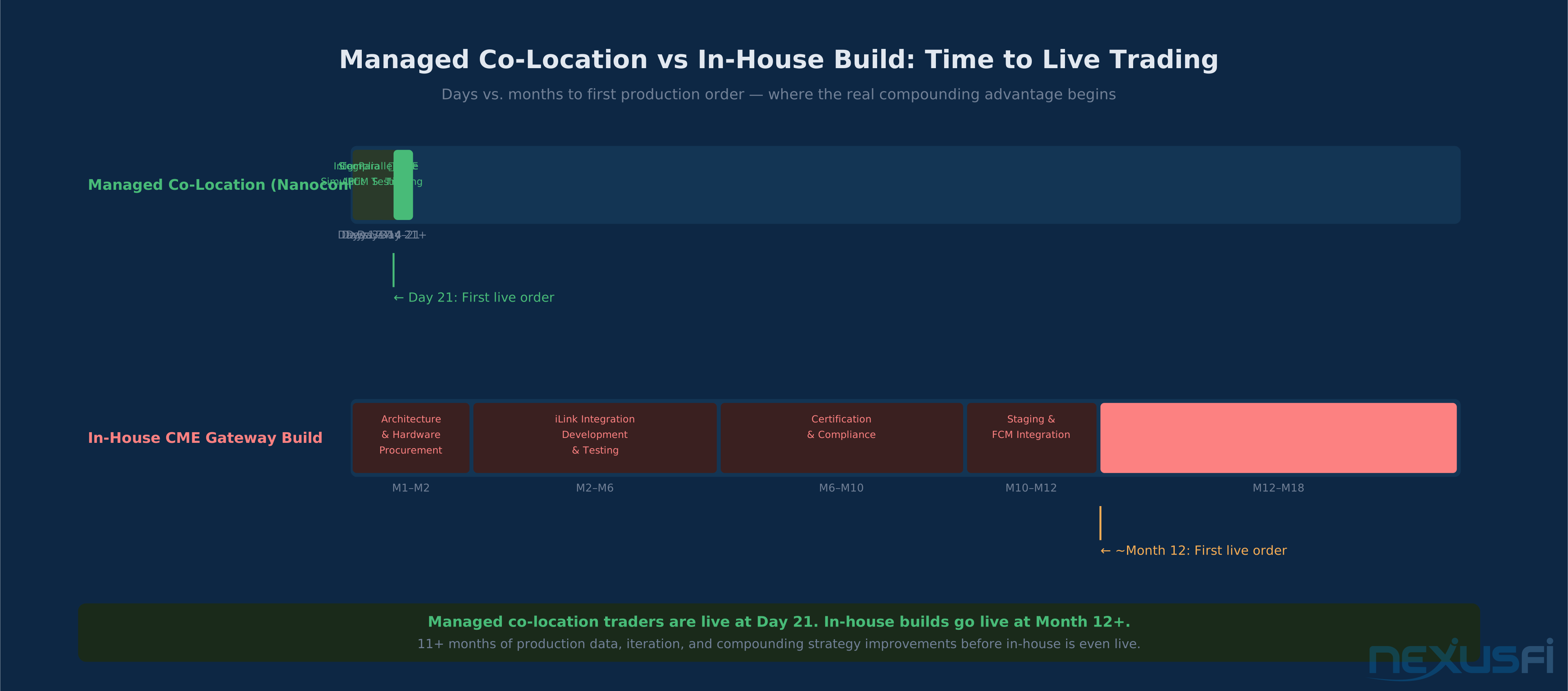
The alternative — building this in-house — costs $200,000 to $1,000,000 and takes 12 to 18 months. The managed approach gets you live in days.
This article covers what managed co-location actually includes in practice, why the Aurora data center is the geographic anchor of CME futures trading, what latency numbers like "~1 microsecond order-to-wire" actually mean for your strategy, and when managed co-location makes economic sense versus alternatives.
What Nanoconda's managed co-location delivers:
- Dedicated hardware in CME's Aurora, IL data center
- ~1µs order-to-wire latency
- CME Certified ISV status (iLink 3.0 gateway, MDP 3.0 feed handler)
- FCM integration
- $0 per-order routing fees — flat monthly pricing
- Go-live in days, not months
See the Nanoconda RDL listing for service tiers and pricing. This article covers the infrastructure concepts and trading implications.
What Managed Co-Location Means for Futures Traders #
The term "co-location" is frequently misused. What it actually means is physical proximity to the exchange matching engine — your hardware in the same data center where trades are executed, so your orders and market data travel microseconds instead of milliseconds.
Self-managed vs. managed co-location:
In a self-managed setup, you negotiate rack space directly with the exchange or a co-location provider, procure your own hardware, establish your own CME cross-connects, configure your network, build your feed handlers for CME's MDP 3.0 binary protocol, develop your own iLink 3.0 gateway (or license one), maintain your infrastructure 24/6, and handle every outage yourself.
In a managed setup, all of that is outsourced. The provider owns the relationship with the data center, the cross-connects are already in place, the exchange protocols are already implemented and certified, the hardware is operational, and your responsibility is deploying your strategy. You send your algorithm; the provider gives it a place to run.
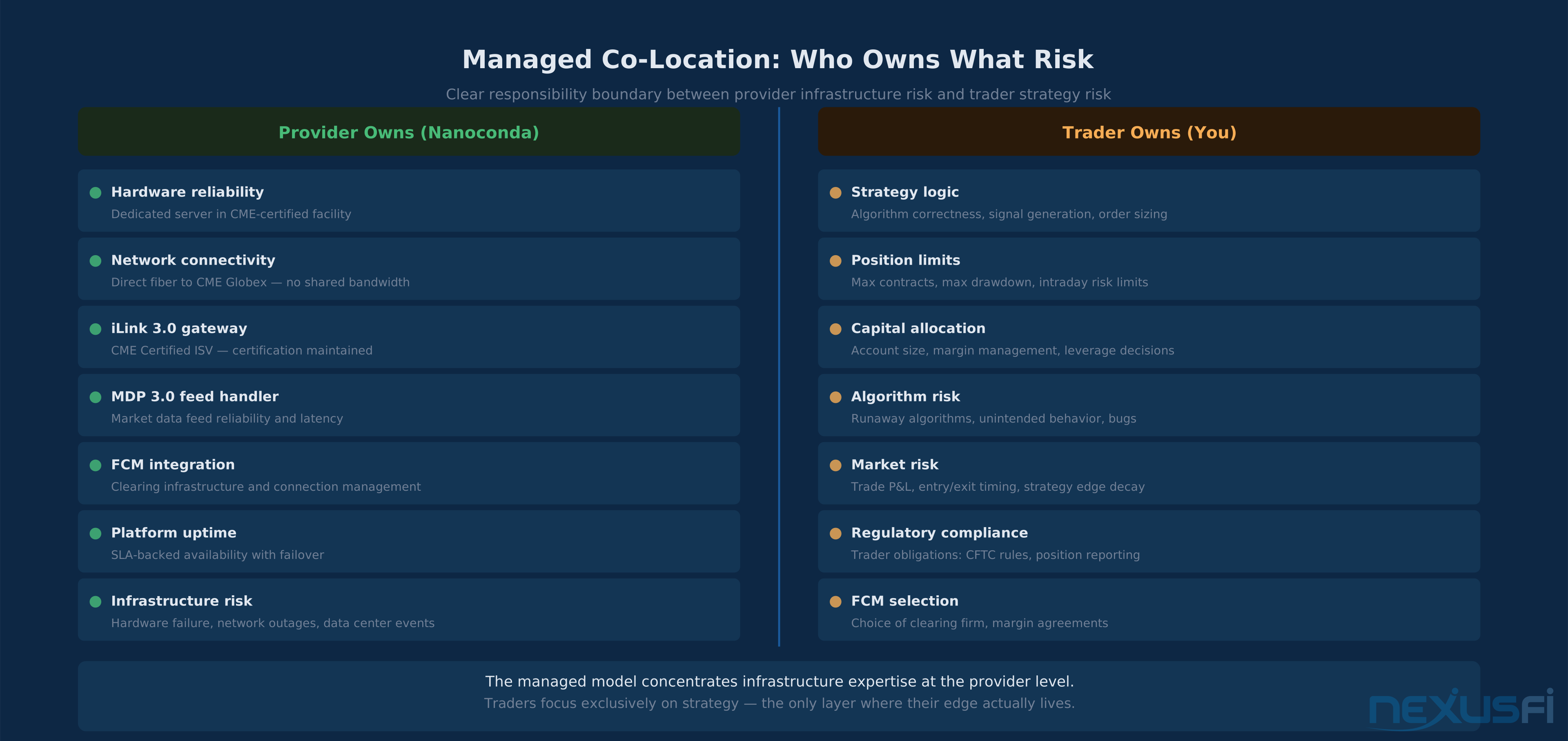
The critical distinction: Managed co-location handles where and how your strategy runs. It doesn't make trading decisions. Your algorithm, your risk parameters, your position logic — that's still entirely yours. The managed provider is responsible for the physical and network layer; you're responsible for everything above it.
The managed approach attacks exactly this bottleneck — by eliminating the network hop.
@hyperscalper quantified the gap in a 2021 NexusFi micro scalping thread: Aurora is "only a fraction of a millisecond" for co-located traders versus the 30-60ms round-trip for non-co-located internet-connected traders. At $50/tick on ES, that latency difference is measurable in execution quality.
Aurora, IL: Why Location Is the Starting Point #
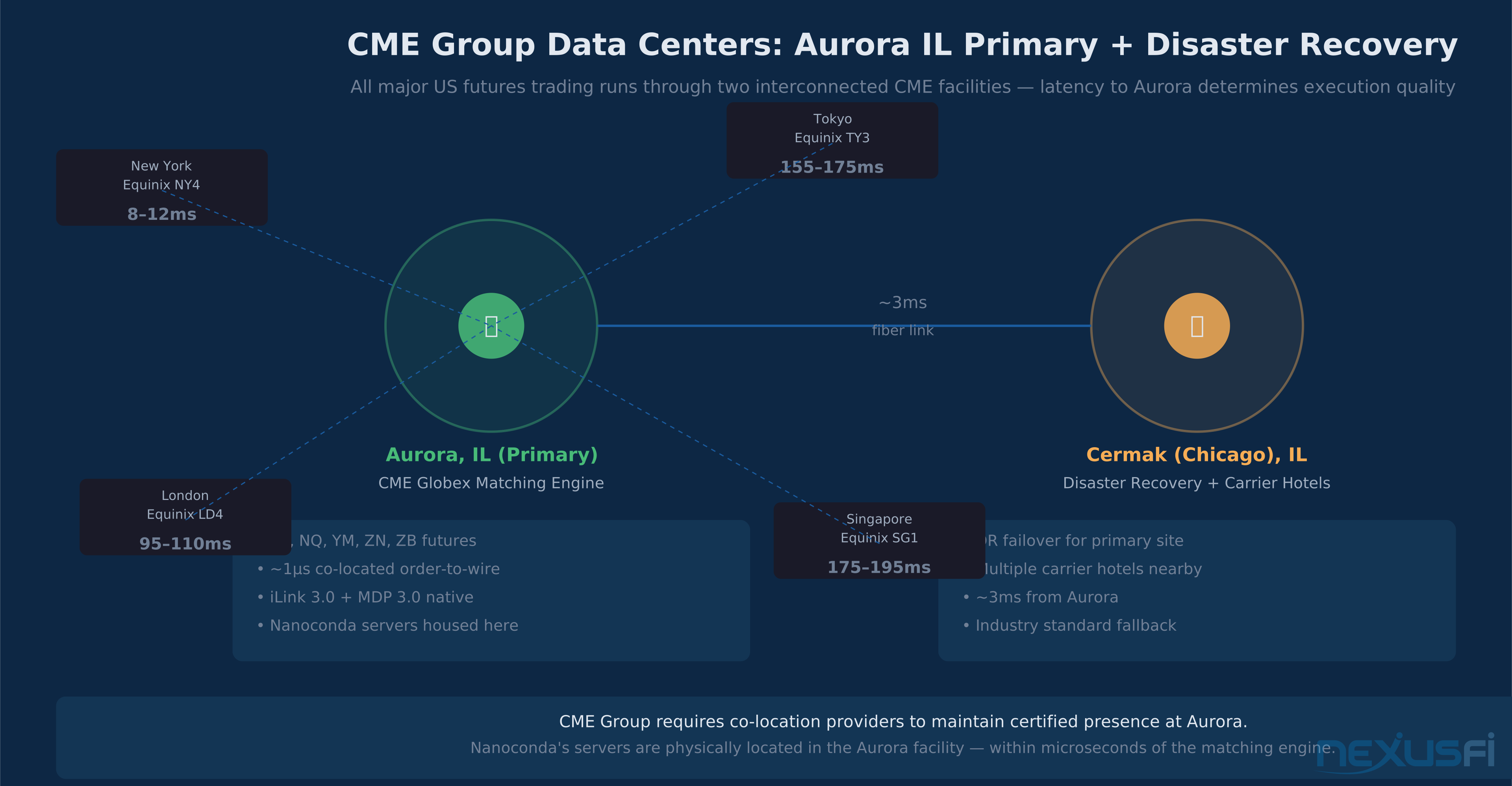
CME Group's primary matching engine for US futures runs in Aurora, Illinois — specifically the CH4 data center in the Chicago suburbs. Every CME futures contract (ES, NQ, CL, GC, ZB, 6E, and all the micros) has its matching engine here.
What Aurora means for latency:
- Co-located in Aurora: order-to-exchange round trip measured in microseconds (1-100µs range depending on configuration)
- Chicago area, not co-located: 1-10ms round trip
- East Coast: 8-15ms round trip
- West Coast or international: 30-80ms+ round trip
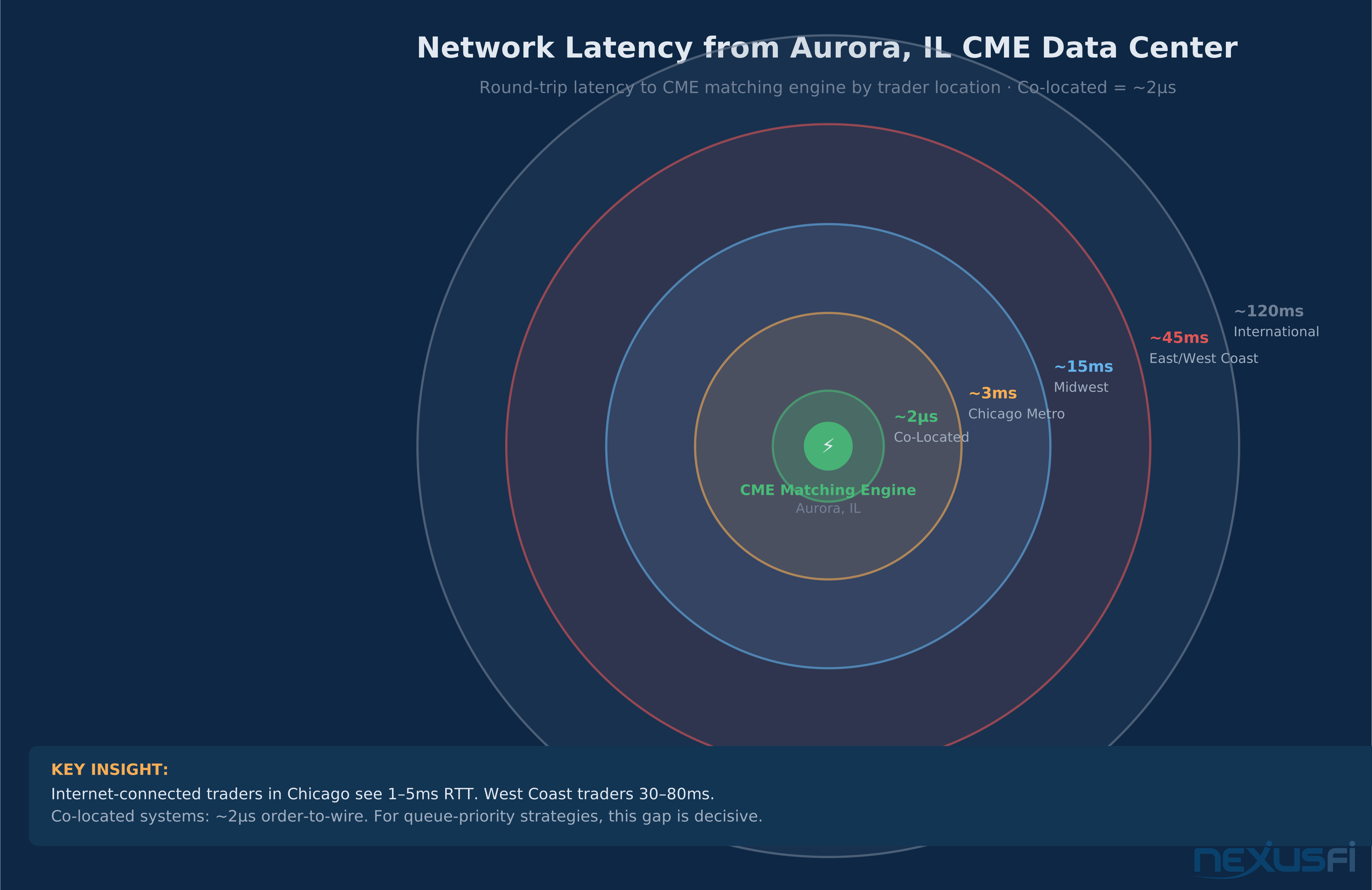
The latency numbers aren't just vanity metrics. They determine execution outcomes in a specific way: every millisecond of latency means every other market participant who reacts to the same event before you gets priority in the order queue. CME's matching engine uses price-time priority. You can have the right price; if you're late, you're behind everyone who submitted at the same price earlier.
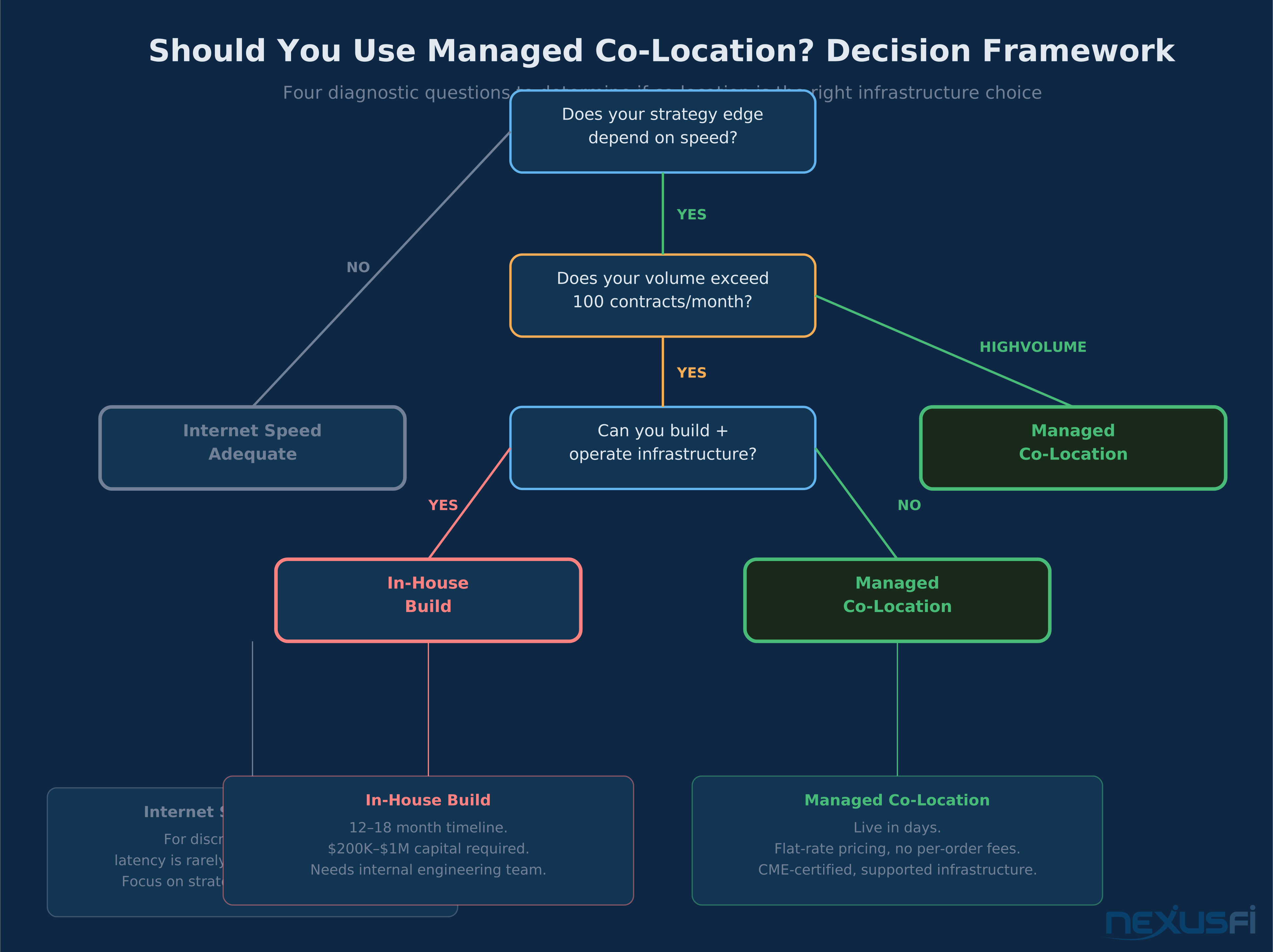
For strategies that aren't latency-sensitive — most discretionary traders, swing traders, even many systematic traders — co-location adds no meaningful edge. For strategies that compete on speed (market making, statistical arbitrage, momentum scalping with tight windows), Aurora proximity is the starting condition, not a differentiator.
See Exchange Co-Location for Futures Traders for a full treatment of co-location concepts and how to evaluate whether proximity matters for your specific strategy.
The Full Stack: What Nanoconda's Service Includes #
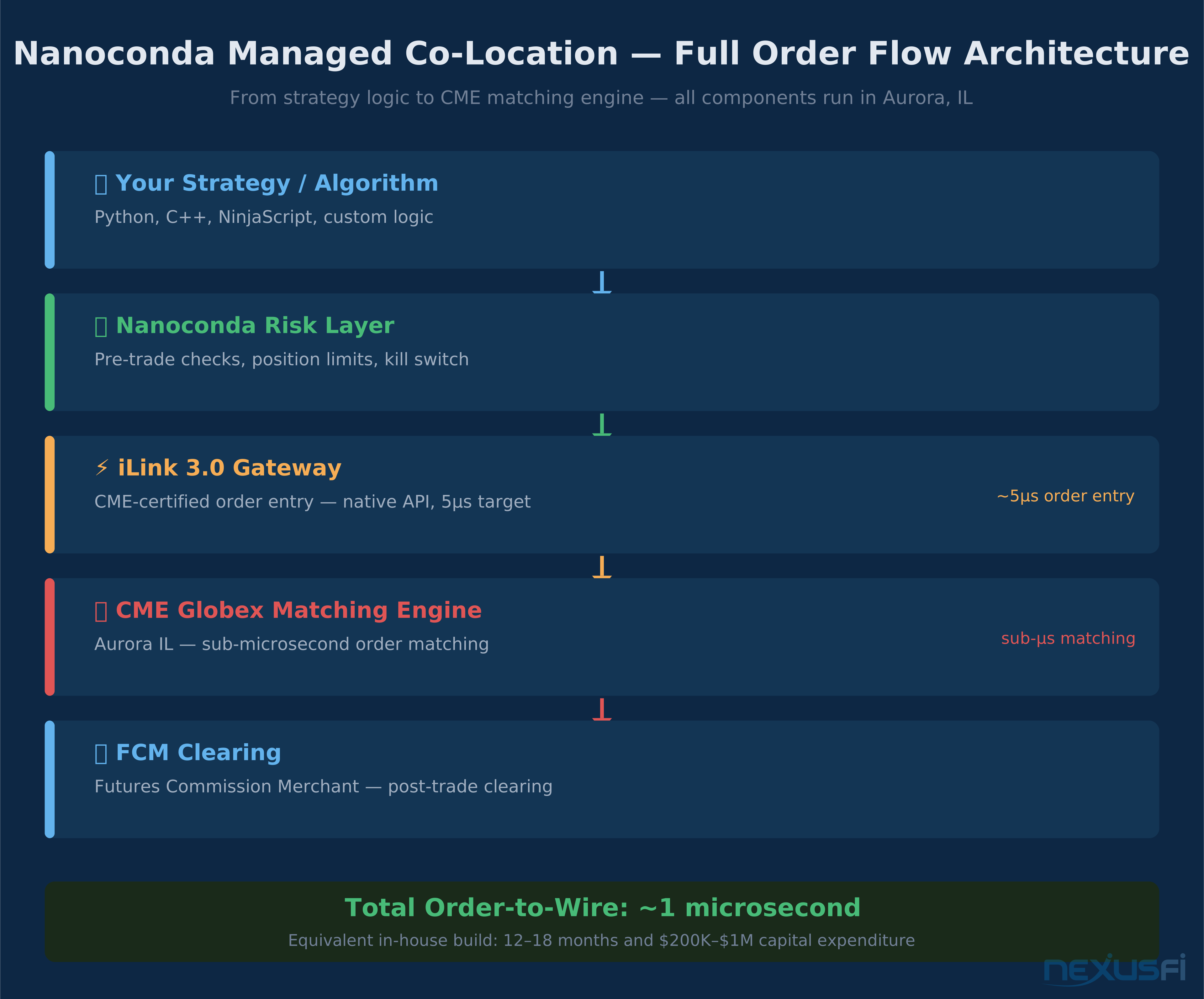
Nanoconda's architecture bundles components that firms typically acquire, build, and operate separately. Understanding what each component does clarifies the value.
iLink 3.0 Gateway
iLink 3.0 is CME's binary order entry protocol — the language your orders must speak to reach CME's matching engine directly. Building and certifying a gateway for iLink 3.0 compliance is a multi-month engineering project. Nanoconda's gateway is already built and CME-certified, which matters because CME's ISV (Independent Software Vendor) certification program validates that the implementation meets exchange standards for connectivity, risk controls, and protocol handling.
An iLink 3.0 connection to the exchange's CGW (Customer Gateway) or MSGW (Market Segment Gateway) provides sub-microsecond order injection when co-located. Compared to a broker's FIX gateway (which sits between you and the exchange and introduces additional software latency at each hop), direct iLink is the difference between talking to the exchange yourself versus sending notes through intermediaries.
MDP 3.0 Feed Handler
MDP 3.0 (Market Data Protocol 3.0) is CME's market-by-order (MBO) binary feed — every order book event, every trade, every quote update. Building a feed handler that processes MDP 3.0 at the rates CME transmits during high-volatility sessions requires specialized engineering.
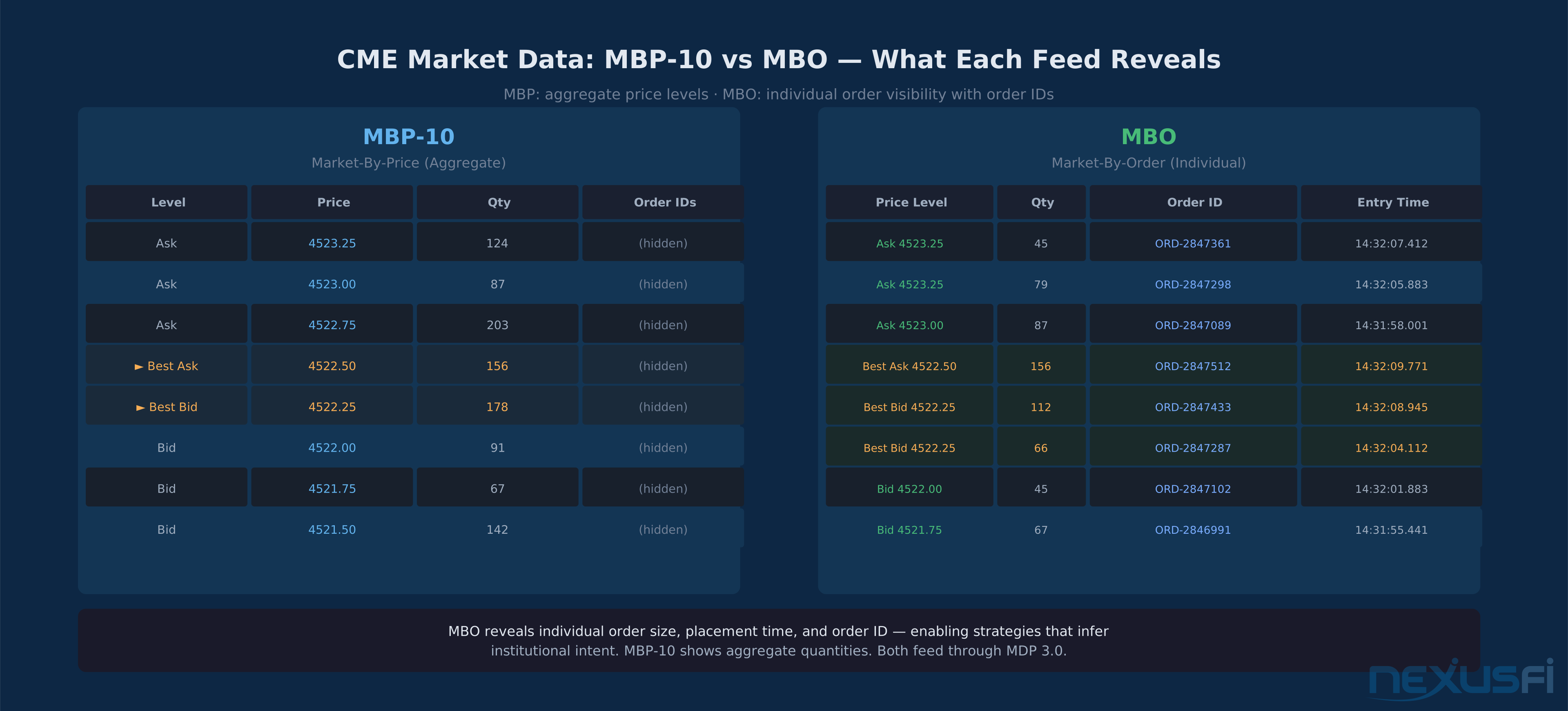
The key is MBO versus MBP. Market-by-price data shows you price levels and aggregate quantities. Market-by-order data shows you every individual order in the book — its placement, modification, and cancellation. For strategies that trade order flow, MBO provides information that MBP obscures.
Aurora Colocation Hardware
Nanoconda provides dedicated servers in the Aurora data center, not shared cloud instances. Dedicated hardware matters because:
- No "noisy neighbor" effects from co-tenants consuming CPU cycles or memory bandwidth
- Kernel bypass networking is possible (standard in ultra-low-latency configurations)
- Direct memory access to feed handler output enables strategy code to read market data without OS context switches
- Thermal management is predictable — you're not competing with other workloads for cooling
FCM Integration
Your orders still need to clear through an FCM (Futures Commission Merchant). Nanoconda's platform integrates with FCMs to route cleared trades back, handle position reporting, and manage the settlement layer. The iLink 3.0 order entry is pre-trade; the FCM handles post-trade.
Latency Economics: Why ~1µs Matters (and When It Doesn't) #
Nanoconda advertises "~1µs order-to-wire latency." This number needs context to be useful.
Order-to-wire is the time from when your strategy code submits an order to when the order leaves the server's network interface. It does not include:
- Network transit time from server to exchange gateway (a few hundred nanoseconds in Aurora)
- Exchange processing time (hundreds of nanoseconds to a few microseconds)
- Acknowledgment return time
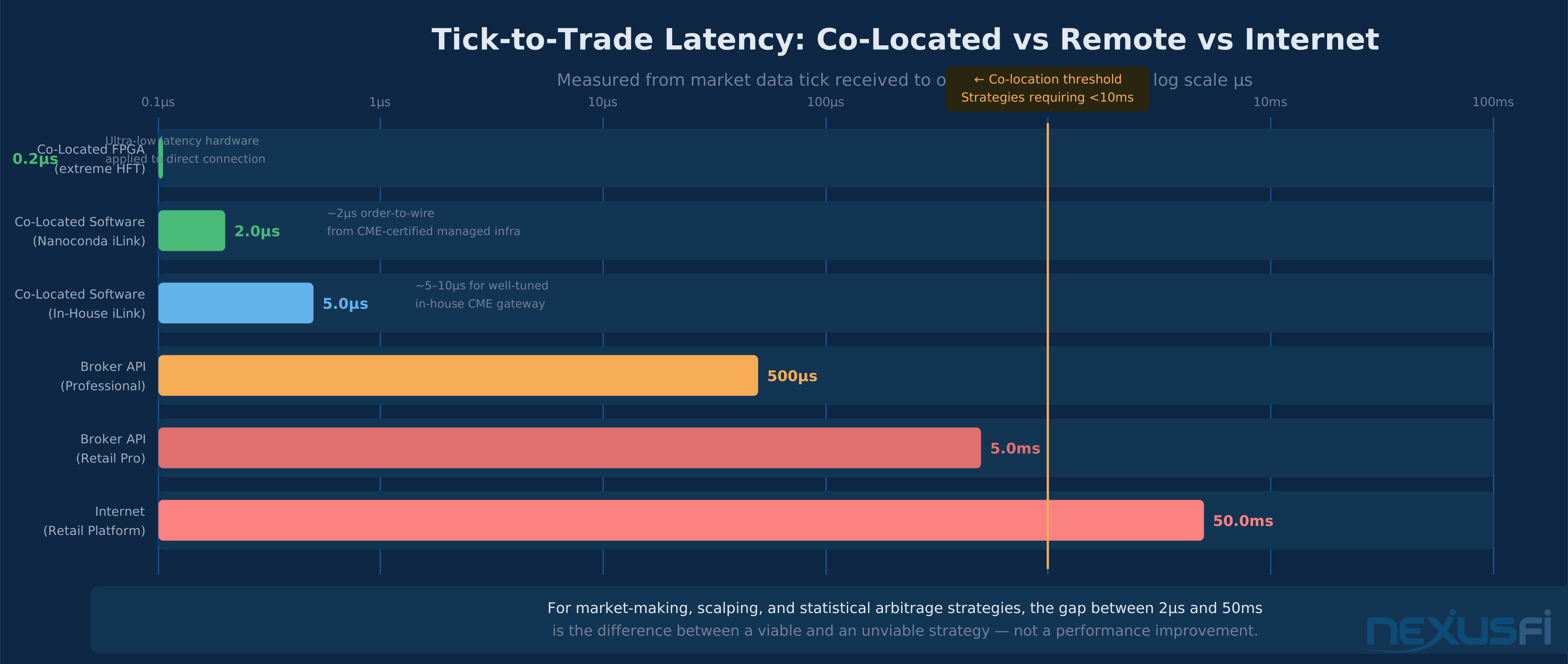
The full round trip from order submission to confirmation receipt in Aurora is typically in the 5-50µs range for a well-configured co-located setup.
Compare that to the broker API alternatives:
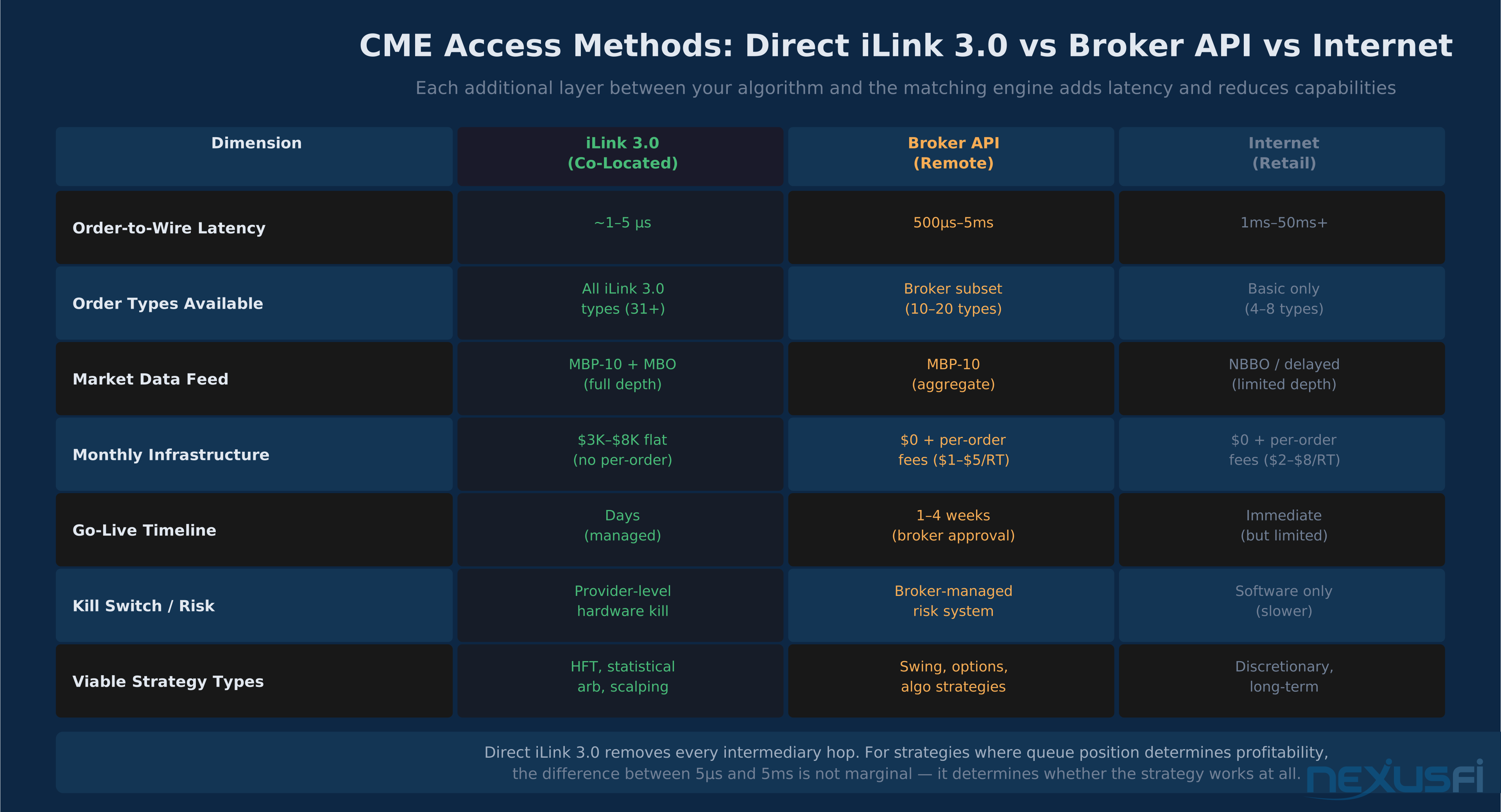
- Rithmic (standard retail, Chicago): 1-5ms round trip to exchange
- Interactive Brokers TWS: 5-50ms round trip
- Internet-connected broker FIX: 10-100ms+
For most trading strategies, the difference between 50µs and 5ms doesn't change outcomes. But there's a specific class of strategies where it matters:
Latency-sensitive strategies (managed co-location typically necessary):
- Market making on thin instruments — filling at posted prices before anyone else adjusts
- Statistical arbitrage with a sub-second decay window
- News-event momentum in the first few hundred milliseconds after release
- Aggressive order flow trading that depends on being early in the queue
Latency-insensitive strategies (managed co-location typically unnecessary):
- Trend following on daily or hourly bars
- Swing trading with multi-day holding periods
- Option-on-futures strategies held overnight
- Systematic strategies with execution windows measured in minutes
Don't mistake latency for edge. A 1µs execution capability doesn't create alpha — it removes a constraint that might have prevented you from capturing alpha that already exists in your strategy logic. Managed co-location is an infrastructure prerequisite for certain strategies, not a strategy itself.
@SMCJB analyzed the order path precisely in a 2022 NexusFi thread on fastest VPS options: "When your platform generates an order it sends it to the brokers gateway which could be in Cermak or Aurora. After a quick credit check your broker sends the order to the exchange matching engine in Aurora. So your order had to travel from your system, to the broker's gateway, to the exchange." Managed co-location with direct iLink removes every broker intermediary from this path.
iLink 3.0 and MDP 3.0: The Exchange Connectivity Layer #
CME's exchange protocol stack is what distinguishes professional CME access from retail broker access. Understanding what's underneath matters for evaluating managed co-location options.
iLink 3.0 (order entry)
CME's third-generation order entry protocol uses Simple Binary Encoding (SBE) over TCP. Key characteristics:
- Binary (not text-based FIX), much reducing parsing overhead
- Multiple connection types: CGW (Customer Gateway) for most order types, MSGW (Market Segment Gateway) for specialized access
- Pre-trade risk validation integrated into the gateway — the exchange runs risk checks before accepting each order
- Supported order types: limit, market, stop, stop limit, FAK (Fill and Kill), FOK (Fill or Kill), Iceberg, reserve
Traditional broker APIs typically implement a subset of these order types and add their own abstraction layer on top. Direct iLink gives you every exchange-native order type exactly as CME implemented it.
MDP 3.0 (market data)
CME's multicast-based market data protocol delivers three levels of data:
- Channel data: trade summaries, settlement prices, security definitions
- MBP-10 (Market by Price): top 10 price levels with aggregate quantities
- MBO (Market by Order): every individual order in the book
MBO is the premium tier. It shows you not just that 500 contracts are offered at a price, but how many individual orders make up that quantity and what size each order is. This matters for:
- Detecting large institutional orders being worked iceberg-style
- Understanding order book depth beyond surface quantities
- Identifying when a price level is thin (many small orders) versus anchored (one or two large orders)
See Futures Broker Technology Infrastructure for context on how this connectivity layer compares to standard broker infrastructure.
Cost Structure: Flat Rate vs. Build-in-House Economics #
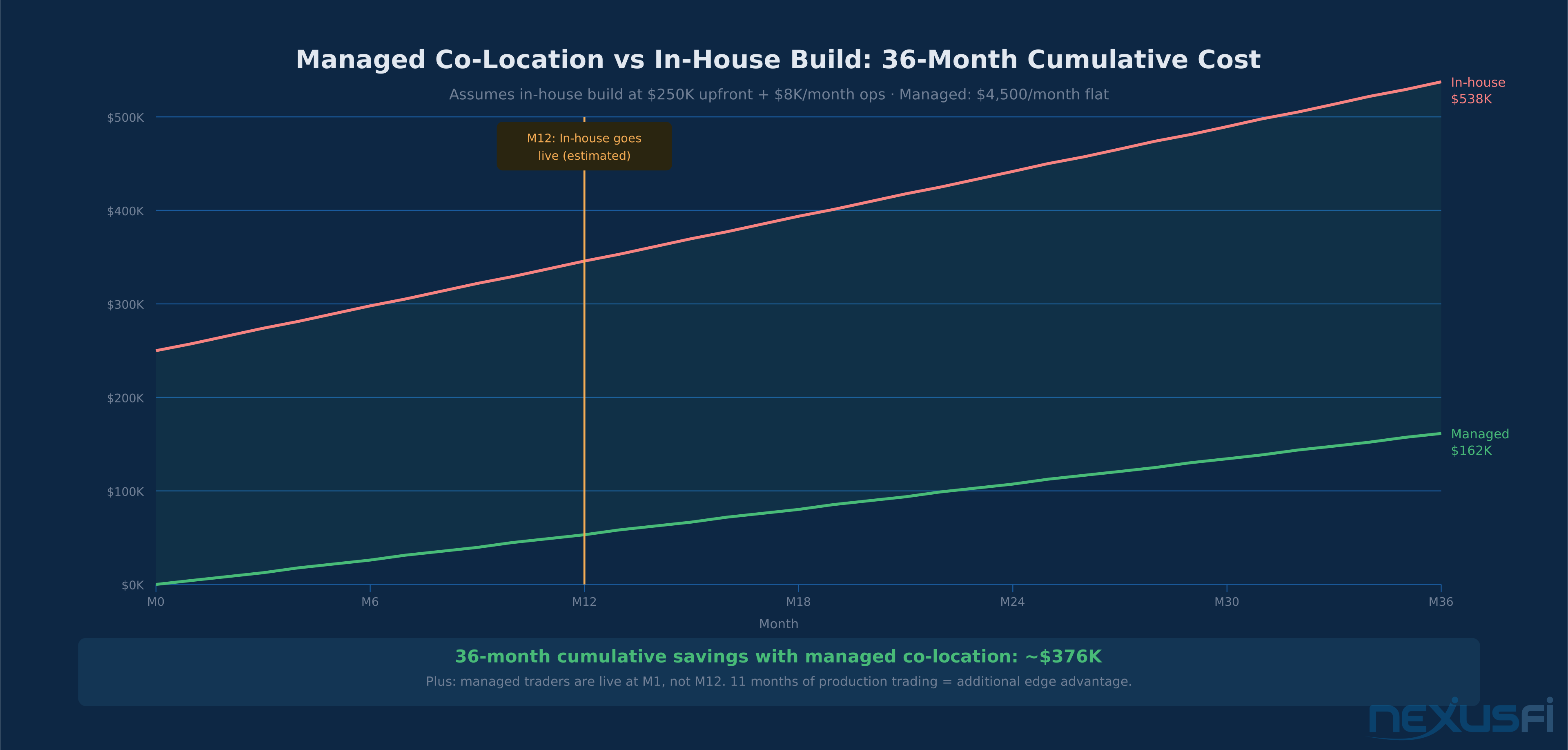
Nanoconda's pricing model is a flat monthly subscription. The alternative is building in-house. The economics break down like this:
Build-in-house costs:
- iLink 3.0 gateway development: $150,000-$500,000 in engineering time
- CME ISV certification process: 3-6 months, significant legal and compliance overhead
- MDP 3.0 feed handler development: $50,000-$200,000 in specialized engineering
- Aurora co-location (rack, power, cross-connects): $2,000-$10,000/month
- Dedicated hardware procurement: $20,000-$100,000 one-time
- Operations staff for 24/6 monitoring: $100,000-$200,000/year
- Timeline from start to live: 12-18 months
Managed co-location (Nanoconda) costs:
- Monthly subscription: flat rate (contact for current pricing)
- Time to live: days
- No CME certification burden
- No infrastructure headcount
The break-even analysis depends on your engineering costs. If you can build the full stack in-house at $300,000 total and maintain it for $150,000/year, the managed option must cost less than the amortized build cost to be cheaper per month. For shops with dedicated infrastructure teams already, build-in-house may pencil out at scale. For trading teams where every engineer's hour is better spent on strategy development, managed co-location captures a real cost advantage.
There's also a hidden cost in the build model that rarely shows up in estimates: unplanned downtime. An in-house CME gateway that loses connectivity during a volatile session costs real money. Nanoconda's 24/6 operations model is included in the subscription — that coverage is effectively free compared to staffing it yourself.
The $0 routing fee matters at scale. Standard broker routing (Rithmic, CQG, TT) charges $0.25-$0.50 per contract. At 1,000 round turns per day, that's $250-$500 in daily routing costs — $65,000-$130,000 per year. Managed co-location with $0 routing fees can make the subscription cost effectively neutral or negative at moderate-to-high volume.
Who Benefits From Managed Co-Location #
Not every trader needs co-location. Not every co-located trader needs the managed approach. Here's how to think about fit:
Best fit for managed co-location:
Systematic traders who have a working strategy with documented edge, need sub-millisecond execution to capture it, but don't have (or don't want) a dedicated infrastructure team. This is the classic gap: the strategy is ready; the infrastructure to run it at the right speed isn't, and building that infrastructure is a distraction from the core activity of developing alpha.
Quantitative trading firms with 1-5 people often fall here. The engineering bandwidth to maintain production infrastructure 24/6 simply isn't there when the same engineers need to be researching strategies, backtesting, and live monitoring.
Not a good fit:
Discretionary traders, swing traders, any trader whose strategy operates on a timeframe where milliseconds don't affect outcomes. The cost-benefit doesn't work if your edge doesn't require the latency.
Firms building proprietary infrastructure as a competitive moat — if your differentiation is your execution infrastructure, managed co-location gives your competitors equal access to equivalent infrastructure.
— for strategies where broker-level latency is acceptable, co-location at all may not matter.
The Onboarding Process: Days, Not Months #
The 12-18 month build timeline for in-house CME gateway development is a real constraint. Managed co-location compresses this to days because the infrastructure is already running — you're deploying your strategy into a live environment, not building the environment.
Typical onboarding sequence:
- Integration: Connect your strategy code to Nanoconda's shared memory API. The feed handler delivers MDP 3.0 data directly to shared memory; your strategy reads from there without OS context switches. The iLink gateway accepts orders via the shared memory interface as well.
- Simulation testing: Run your strategy against live market data without sending orders. Validates that your feed handler consumption and order generation logic works correctly in the production environment.
- FCM setup: Your FCM account gets linked for clearing. Order fills route back through the clearing layer after execution.
- Go-live: Production orders start flowing.
The technical integrations are documented. CME certification is Nanoconda's responsibility, not yours. The engineering work on your side is connecting to the provided APIs — not building the APIs themselves.
Risk Management in a Managed Environment #
Direct CME access via iLink 3.0 introduces risk considerations that broker-intermediated access doesn't. When your orders go directly to the exchange with minimal intermediary layers, your pre-trade risk controls must be more strong, not less.
What the managed provider handles:
- Exchange connectivity risk: if the iLink connection drops, the provider's infrastructure manages reconnection, and typically provides kill-switch capability to cancel open orders
- Infrastructure-level risk: hardware failure, network failure, data center events
What you must handle:
- Strategy-level risk: position limits, daily loss limits, maximum order size
- Algorithm risk: correct behavior under unexpected market conditions (halt scenarios, circuit breakers, pricing anomalies)
- Pre-trade risk: validating each order before submission against your risk rules
The infrastructure partnership is how HFT has always worked — the provider handles the exchange connectivity layer; the trading firm handles the strategy.
See Futures Broker Pre-Trade Risk Controls for a full treatment of risk systems and what controls belong at different layers of the execution stack.
Knowledge Map
Go Deeper
Build on this knowledgeReferences This Article
Articles that build on this topicCitations
- — Getting a co location dedicated server, but need some help! (2013) 👍 8“If you use stop or limit orders, these are residing at the exchange. There is a race condition between your network latency and the exchange's reaction time.”
- — Discussion of a Micro Scalping Day Trading Facility (2021) 👍 2“LOWEST POSSIBLE LATENCIES (COLOCATION?) In most of what I'll discuss, U.S. futures out of Chicago (Aurora) at the CME, for example, is the physical location of the exchanges.”
- — Which the best faster VPS to retail (2022) 👍 8“When your platform generates an order it sends it to the brokers gateway which could be in Cermak or Aurora. After a quick credit check your broker sends the order to the exchange matching engine in Aurora.”
- — confused ab. collocation service and data feeds && trade execution relationships (2016) 👍 2“It is better to colo near the broker server. The location of the exchange server is completely irrelevant in your case.”
- — High-Frequency, HFT, Algo, Flash, New-Thread (2010) 👍 6“Your HFT provides DMA or direct exchange connection software for trading. They would likely partner with several collocation vendors such as Equinix, 7ticks or Guavatech to get a collocated service.”
- — Faster than Rithmic? CME direct rough cost? (2012) 👍 5“To execute HFT strategies they require Ultra-Low Latency Direct Market Access (ULLDMA), which is also called no-touch. The DMA flow passes through risk checking algorithms which do not delay order execution.”
- — Nanoconda -- CME Direct Market Access for HFT Futures
- — CME Group -- Co-Location Services