



Cotton Futures (CT): The Complete Trading Guide
Overview #
Cotton is one of the most volatile soft commodity futures on the planet. It gaps. It locks limit. It moves 5 cents in the first 60 seconds after a USDA report and then sits there, no bids, no offers, just a locked market and you can't get out. If that description sounds uncomfortable, good — it means you're understanding what trading CT actually involves before you put capital at risk.
The ICE Cotton No. 2 contract (ticker: CT) is the global benchmark for physical cotton price discovery. It's been trading at Intercontinental Exchange since the New York Cotton Exchange merged with ICE in 2007, and before that the NYCE was the benchmark going back to 1870. The contract settles physical delivery of upland cotton and serves as the pricing reference for the entire global cotton trade. Mills in Bangladesh, spinners in Vietnam, merchants in Liverpool — they all watch ICE CT.
For futures traders, CT offers something rare: a market driven by genuine supply and demand fundamentals, seasonal patterns that repeat with statistical regularity, and volatility events that produce clean breakouts when you're positioned correctly. The downside — and it's a real downside — is that those same events can trap you in positions you cannot exit for days. Knowing that risk going in is the difference between professional CT traders from the people who blow up the first time corn or cotton locks limit.
Cotton is priced in cents per pound. The contract covers 50,000 pounds of deliverable cotton. Every cent per pound move is worth $500 per contract. Every 0.01 cent (one tick) is $5.00. At typical margins of $2,500-$3,000 initial, a 5-cent limit move against you — which is entirely possible and happens regularly — represents $2,500 in P&L in a market you cannot exit.
That's the context. Now let's talk about how to actually trade it.
Overview #
Contract Specifications #
ICE Cotton No. 2 is a physically deliverable contract. That changes the character of the market compared to cash-settled instruments — there's a real commodity at the other end that must be delivered or received if you're holding through expiration.
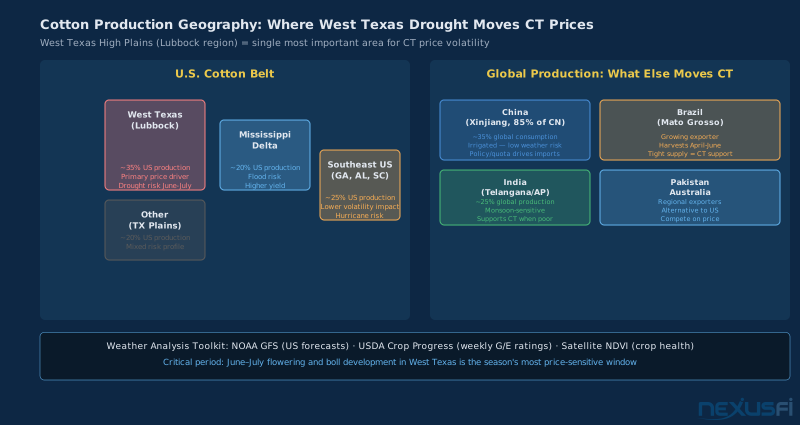
Contract size: 50,000 pounds net weight of upland cotton
Pricing unit: U.S. cents per pound
Tick size: 0.01 cent per pound = $5.00 per contract
Daily price limit: 5 cents per pound = $2,500 per contract above or below the prior settlement. Limits expand to 10 cents after multiple consecutive limit sessions.
Delivery months: March (H), May (K), July (N), October (V), December (Z)
Trading hours: 8:00 AM — 2:00 PM ET (floor session characteristics, though mostly electronic now)
Initial margin: Approximately $2,500-$3,000 per contract (varies by broker and volatility regime)
P&L math: 1 cent/lb move × 50,000 lbs × $0.01 = $500 per contract. A 10-cent rally is $5,000 gross per contract.
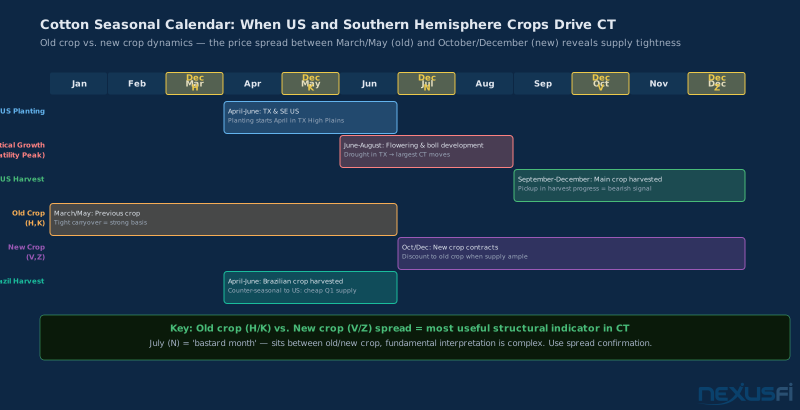
The delivery months map directly to the crop calendar. Old crop is generally H/K (March/May contracts). July (N) is the transition — traders call it the "bastard month" because it sits right between old and new crop, making its fundamental interpretation more complex. New crop is V/Z (October/December), representing the upcoming or recently harvested crop year.
The Limit Lock Problem #
This deserves its own section because it's the defining risk characteristic of CT trading.
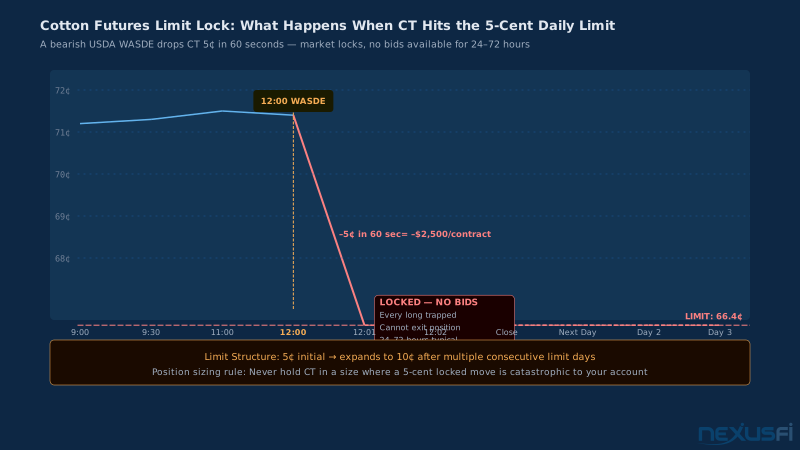
When the USDA releases a bearish WASDE in July and the market wants to go down 8 cents instantly, it can't. It hits the 5-cent limit and stops. Orders pile up. Every long in the world wants to exit. There are no sellers willing to take on that risk below limit, and trading basically freezes. You are trapped.
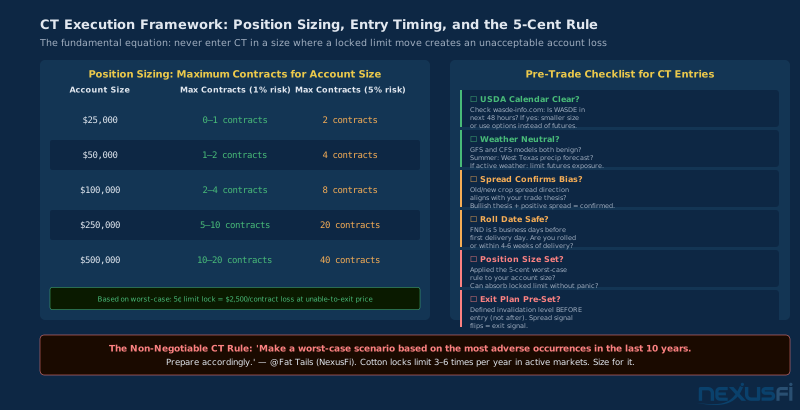
Cotton futures can and do lock limit for multiple consecutive sessions. In 2011, cotton hit daily limits repeatedly during an extreme bull run that took prices above $2/lb. In any given year, expect 3-6 limit moves around USDA releases and weather events. Size every position knowing that you may not be able to exit for 24-72 hours after a major fundamental shock.
His advice on position sizing applies directly to CT: "Make a worst case scenario based on the most adverse occurrences over the last 10 years and prepare so."
The mechanism is identical in cotton. Same limit structure, same trap.
When a market locks, you have two theoretical options: spread into a month that hasn't locked yet (if one exists), or wait. Neither is comfortable. The practical response is to not be in situations where a limit move creates an unacceptable loss in the first place.
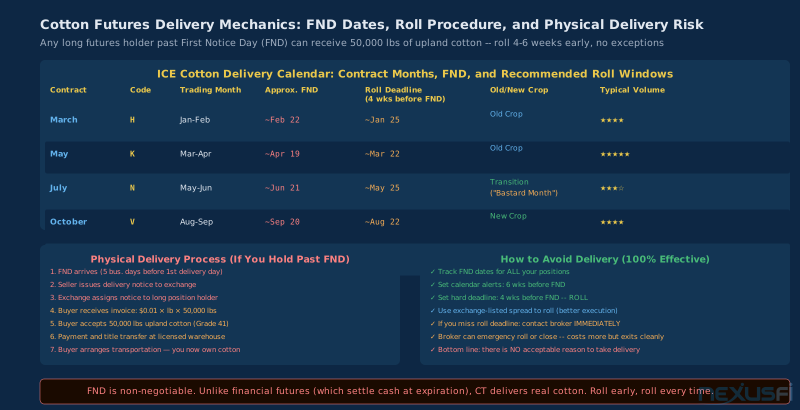
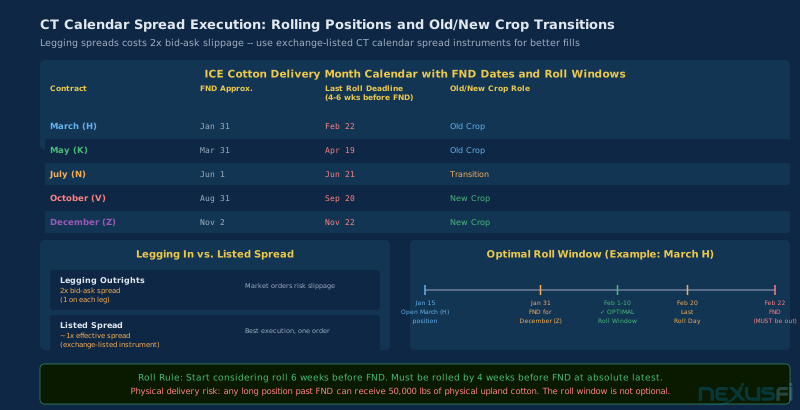
First Notice Day (FND) falls five business days before the first delivery day of each contract. Any long futures holder after FND can be assigned physical delivery of 50,000 pounds of cotton. Most traders roll 4-6 weeks before expiration to avoid this entirely — but know the dates. ICE publishes them on the contract specifications page.
What Moves Cotton Prices #
Cotton pricing is driven by four primary forces. Weather dominates during the growing season. Chinese demand drives the demand side year-round. USDA reports are the crystallization points where these forces get reflected in official numbers. Polyester competition moderates the price ceiling over multi-year cycles. Learn to think in this hierarchy — it's how the market itself is thinking.
Weather: The Primary Trigger #
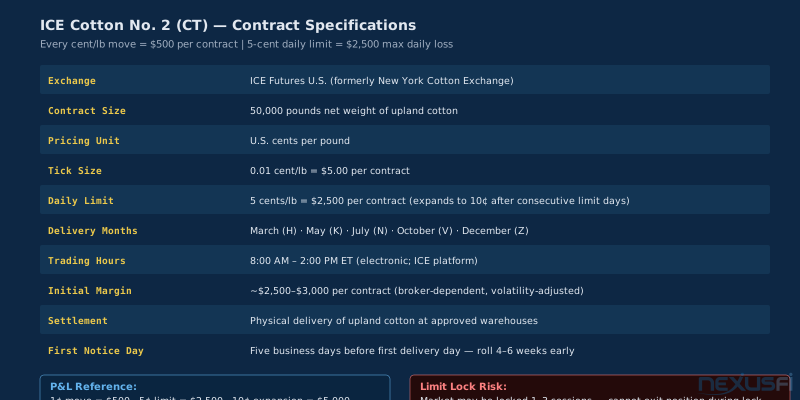
Cotton is an exceptionally weather-sensitive crop. Unlike grains where the production region is spread across a vast geography, a meaningful portion of US upland cotton production concentrates in a relatively small area around Lubbock, Texas and the Texas High Plains. When West Texas gets a drought, the entire market reacts.
US production regions:
- West Texas / Texas High Plains (Lubbock region): The single most important area for price volatility. Dry conditions here — especially during the critical June-July flowering and boll development period — have historically caused the largest CT price moves. This is where your weather bookmarks should point.
- Mississippi Delta: Wetter, higher-yield cotton. Floods are the risk here, not drought.
- Southeast US: Georgia, Alabama, the Carolinas. Contributes meaningfully to total production but less weather-price impact than West Texas.
International production that matters for CT pricing:
- India's Telangana and Andhra Pradesh states: India is the world's second-largest cotton producer. The Indian monsoon (June-September) drives production estimates. A poor monsoon in these states supports CT prices.
- China's Xinjiang Province: Xinjiang accounts for approximately 85% of China's domestic cotton production and is almost entirely irrigated, making it less weather-sensitive than US cotton. This is important — Xinjiang weather events rarely move CT prices because irrigation buffers yield risk.
- Brazil (Mato Grosso state): Brazil has emerged as a major cotton exporter over the last decade. A bad Brazilian crop (roughly counterseasonally from the US, harvesting April-June) can tighten the global supply picture for northern hemisphere mills.
The weather analysis toolkit: NOAA's Global Forecast System (GFS) for US weather, USDA's Crop Progress reports for condition ratings, and satellite NDVI (Normalized Difference Vegetation Index) data for crop health assessment. Professional traders monitor these data points daily during the US growing season.
Follow the USDA Crop Progress report every Monday at 4:00 PM ET during the growing season (approximately April through November). The "Cotton: Good/Excellent" percentage is the number to watch. A drop from 45% to 35% G/E in a single week can cause a 3-5 cent gap at the next open.
USDA Reports: The Official Scoreboard #
Four USDA reports matter for CT traders:
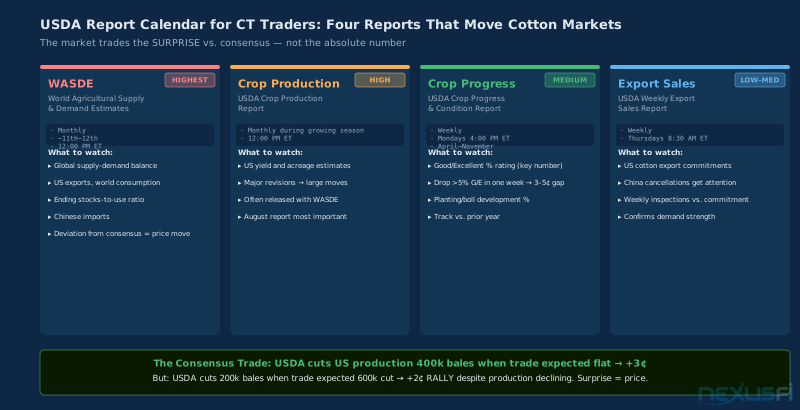
WASDE (World Agricultural Supply and Demand Estimates): Released monthly, typically around the 11th-12th at 12:00 PM ET. This is the single most important data release for cotton. USDA publishes global supply-demand balance sheets — US production, US exports, world consumption, Chinese imports, world ending stocks. The ending stocks-to-use ratio is the key number. A tight stocks-to-use (under 40%) supports higher prices. The market doesn't trade the absolute number — it trades the deviation from average trade expectations. USDA cuts US production by 400,000 bales when the trade expected flat? That's a 3-cent move. USDA cuts by 200,000 bales when the trade expected a 600,000 bale cut? That's a 2-cent rally even though production fell.
Crop Production: Separate from WASDE, released monthly during the growing season, provides USDA's yield and acreage estimates for the US crop. Major revisions here drive large moves.
Crop Progress: Weekly, Monday at 4:00 PM ET during April-November. Condition ratings (Excellent/Good/Fair/Poor/Very Poor) are the most market-relevant component. Planting progress and boll development percentages also matter during their respective windows.
Export Sales: Released Thursday mornings at 8:30 AM ET. Weekly data on US cotton export commitments and inspections. Strong export sales — especially to Asian mills — confirm demand and support prices. Weak or cancelled sales (China cancellations get specific attention) pressure the market.
The market moves on the surprise, not the absolute number. When USDA releases WASDE at noon, experienced CT traders have already built a model of what the consensus expects. The initial move in the first 60 seconds tells you what the market thinks of the deviation from that consensus. Learning to read the direction and magnitude of that initial move — before the noise and whipsaw — is one of the most valuable skills in commodity futures trading.
Chinese Demand: The Demand Driver #
China consumes approximately 35-40% of global cotton production. No other single country comes close. Understanding how Chinese textile demand and government policy interact with CT pricing is non-negotiable for anyone trading this market seriously.
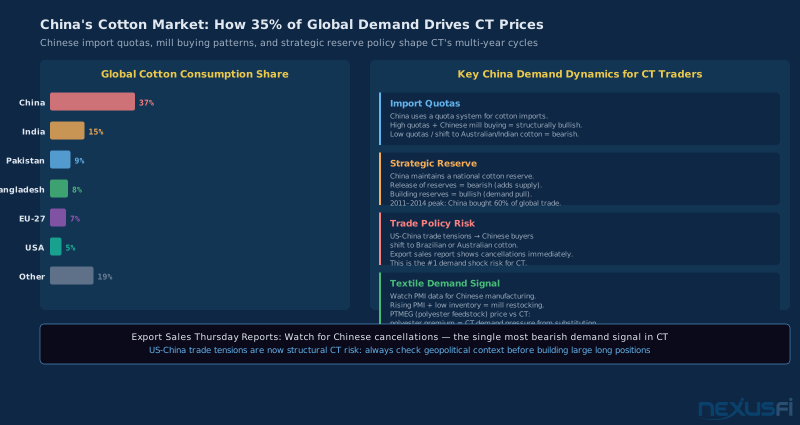
The key dynamics:
Import quotas: China operates a quota system for cotton imports. When quotas are generous and Chinese mills are buying US cotton at scale, it's structurally bullish for CT. When quotas are tight or Chinese buyers shift to cheaper Australian, Indian, or Brazilian cotton, US export sales dry up.
State Reserve (SRB) activity: China's National Development and Reform Commission maintains a strategic cotton reserve. When the government decides to auction reserve stocks to domestic mills (to depress prices and support textile industry competitiveness), those auctions act as a price ceiling. When the government buys cotton to replenish reserves, it's additional demand that doesn't show up in normal trade flows until USDA picks it up in export data.
Xinjiang considerations: Geopolitical restrictions on Xinjiang cotton (due to sanctions from various governments) have created a bifurcated global cotton market. US and European brands largely cannot source Xinjiang cotton — this creates structural support for non-Xinjiang supply, including US cotton, in certain demand channels.
RMB/trade policy: A stronger RMB makes US cotton cheaper for Chinese buyers. US tariffs on Chinese goods and Chinese retaliatory tariffs create periodic disruptions to normal trade flows that show up in export cancellations.
Polyester Competition: The Price Ceiling #
Polyester is made from petroleum (PET/PTA feedstocks). When polyester costs less per unit of comparable fiber performance, textile mills substitute polyester for cotton in blended fabrics. This substitution creates an effective price ceiling for CT over multi-year cycles.
The approximate substitution threshold: when CT trades above 85-90 cents/lb for an extended period, mills begin substituting polyester in price-sensitive end markets (workwear, budget apparel). Above $1.10/lb, the substitution accelerates. Below 65-70 cents/lb, cotton regains market share.
This is a multi-month to multi-year dynamic, not a week-to-week trading signal. For short-term CT traders, the relevant point is: massive fundamental bull runs (2011's run above $2/lb) eventually end when polyester substitution erodes the demand base.
Seasonality and the Agricultural Calendar #
Cotton's seasonality is more reliable than most market participants realize. The underlying crop calendar doesn't change, which means volatility and directional tendencies follow recurring patterns.
US crop calendar:
- March-June: Planting season (peak planting late April-May). Market watches planting progress percentages from weekly Crop Progress reports. Planting delays due to cold or wet conditions are modestly bullish.
- June-September: Growing season. This is the danger zone. Weather risk is maximum here. West Texas heat stress and drought during July-August peak boll development has historically caused the largest price moves of any calendar period.
- September-November: US harvest. Yield confirmation comes in. Early harvest with good yields is bearish. Late or poor yields maintain or accelerate weather-driven bull moves.
- October-March: Export marketing window. US cotton enters trade channels. Export sales data becomes the dominant weekly driver.
Indian and global overlay:
- June-September: Indian monsoon season. Affects India's Kharif cotton crop. Poor monsoon = bullish global supply picture.
- October-December: Indian harvest. Large harvest with competitive pricing pressures global benchmarks.
- January-April: Chinese mill restocking season. Chinese demand typically picks up here ahead of the spring manufacturing ramp. This seasonally supportive period often produces the lowest volatility of the year.
ATR by season: Historical analysis shows cotton's 14-day ATR averages roughly 0.8-1.2 cents/lb during January-April (quiet demand-driven period), expands to 1.5-2.5 cents/lb during May-June (planting concerns beginning), and peaks at 2.0-3.5+ cents/lb during July-September (peak weather risk). Plan your position sizing and stop placement around these regime shifts — a stop that works fine in February may get blown out by Monday morning noise in July.
What this means for strategy: Selling option premium (collecting time decay through theta) works better in Q1 when volatility is suppressed. Buying options ahead of USDA reports or during the summer growing season captures the volatility expansion. Trend-following strategies have their best setups during confirmed weather or demand-driven trends (usually June-September). Mean reversion has its best conditions during the subdued January-April period.
The same seasonal vol dynamics that @myrrdin describes for coffee apply directly to cotton. Summer growing seasons create options premium opportunities that don't exist in financial futures.
Market Microstructure and Execution #
CT trades electronically on ICE's WebICE platform. The market is thinner than financial futures — typical bid-ask spreads run 1-3 ticks (1-3 × $5 = $5-$15 per contract). During active periods (USDA reports, major weather events), the spread can widen much and depth deteriorates.
Practical execution guidelines:
Avoid market orders in CT. Limit orders execute at defined prices. In a fast market post-WASDE, a market buy order can fill 10-20 ticks off the quoted price. Use limit orders even in trending conditions — the slight miss rate is worth the execution quality improvement.
The floor session period (8:00 AM — 2:00 PM ET) concentrates volume. Most meaningful price discovery happens in the first 60-90 minutes of trading and around the USDA report times. After 2:00 PM, liquidity deteriorates. Position entry and exit during peak hours minimizes slippage.
Rolling contract positions: Begin rolling 4-6 weeks before FND. The exchange-listed CT spread (e.g., buying May while selling December) provides better execution than legging the roll. Check the spread market before assuming you can replicate it by trading both outrights independently.
For all options on CT: bid-ask spreads are wider than futures — often 3-5 ticks in normal markets. Account for that in your options P&L projections.
Technical Analysis in a Fundamental Market #
CT is a fundamentals-driven market. Price charts reflect weather, USDA reports, and Chinese demand — they don't drive them. That said, technical levels matter because other traders watch them, creating self-fulfilling behavior around key price points.
Price levels that matter in CT:
Support and resistance cluster around round numbers (70¢, 75¢, 80¢) and at prior USDA reaction lows/highs. Markets that locked limit at a price often revisit that level later — the "limit lock memory" effect.
The 50-day and 200-day moving averages get attention from trend-following funds. When CT is in a trending fundamental environment, MA crossovers align with trend direction and get bought/sold aggressively by systematic traders.
Volume confirms breaks: In CT, volume during limit-move sessions is meaningless (locked market = no transactions). Post-limit resumption volume on the first tradeable day is the meaningful signal. Heavy selling after a bearish lock confirms the move; thin volume after lock suggests short-covering may reverse it.
The most valuable use of technical analysis in CT: identify when price reaches extremes that create asymmetric fundamental opportunities. When weather risk is real, buying oversold technical conditions gives you the technical as confirmation rather than thesis.
CT's cleanest technical setups happen when fundamental and technical align: trending fundamental story (drought, tight carryover) + clear breakout on volume = high-probability setup. Counter-trend technical trades in a strong fundamental environment are the trap that gets most technically-oriented commodity traders.
Spread Trading: Old Crop vs New Crop #
Calendar spreads in CT offer some of the most reliably exploitable seasonal trades in any commodity market. The spread between old-crop contracts (H/K) and new-crop contracts (V/Z) directly reflects the market's assessment of near-term supply tightness versus future availability.
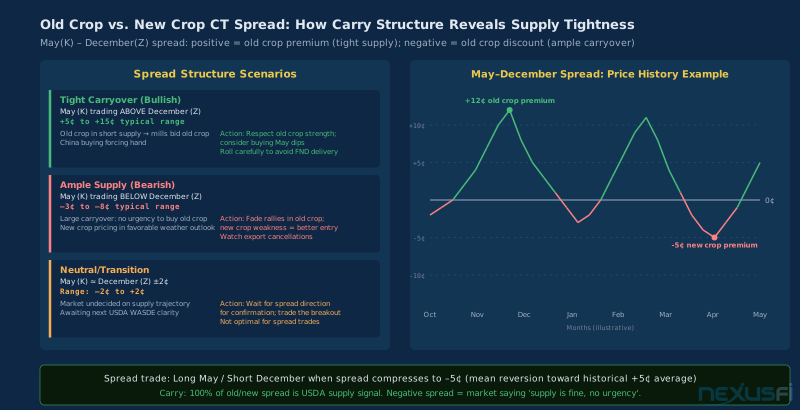
Structure: The most common spread is H/Z (March vs December) or K/Z (May vs December). Both pair an old-crop front month against a new-crop deferred. July (N) is the transition month — often referred to as the "bastard month" because it can represent either crop year depending on where the US harvest timing falls in any given year. As @brentf noted in the Commodities forum about bean spreads (same concept applies to cotton): the old/new crop distinction in the transitional month "is not always clear whether it is representative of old crop or new crop. This should be taken into consideration if trading this spread."
What the spread tells you:
- Contango (new crop at premium to old crop): Normal carry market. Current supply is ample. Storing cotton from now to new crop delivery costs money (insurance, storage, financing), which shows up as a natural premium in deferred prices.
- Backwardation / Inversion (old crop at premium to new crop): Tight current supply. Mills need cotton now and can't wait. Certification inventories are low. The basis (cash minus futures) is firm in physical markets. This is a bullish structural signal for old-crop contracts.
Trading mechanics: Spreads require less margin than outright futures — typically $300-$800 per spread depending on the contract combination and volatility regime. This makes the math look attractive. Don't be fooled. Spreads are not low risk. Around USDA reports, both legs can reprice simultaneously, and the spread can move 3-4 cents against you in the same session. A spread that looked well-capitalized at low margin can generate losses that exceed what you'd have risked in an outright.
A concrete example: Suppose it's April and the current crop year's ending stocks are historically tight at 3.5 million bales. West Texas is starting the growing season dry. Old-crop (May CT) is trading 200 points (2 cents) over new-crop (December CT). A trader who expects the tightness to persist or worsen would buy May/sell December. The thesis: if West Texas doesn't get rain and the new crop is also at risk, the inversion would extend. The invalidation: a significant rain event in Texas that improves new-crop prospects would collapse the spread as December reprices higher and May sells off. Stop placement on the spread itself would be a move back to flat or into carry (May back below December).
Spread trades have lower margin but are not safer than outright positions around USDA reports. The WASDE can shift both current-year and next-year estimates simultaneously, causing the spread to move violently. The risk of being trapped in a limit-locked spread exists if one leg hits limit while the other doesn't — and the legs can move independently on extreme report days.
Options on CT: The Professional Risk Toolkit #
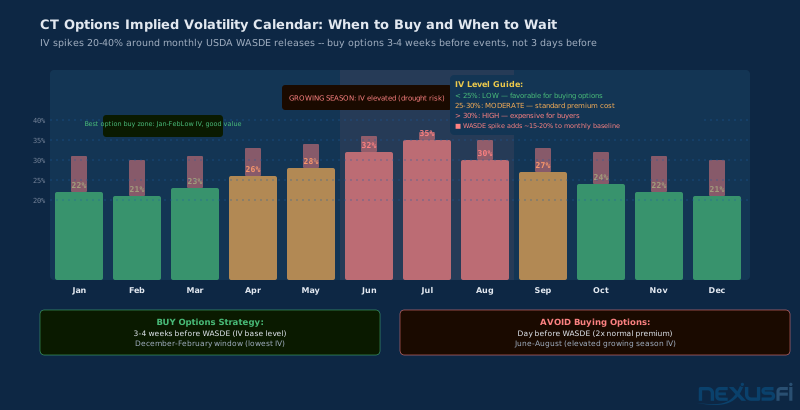
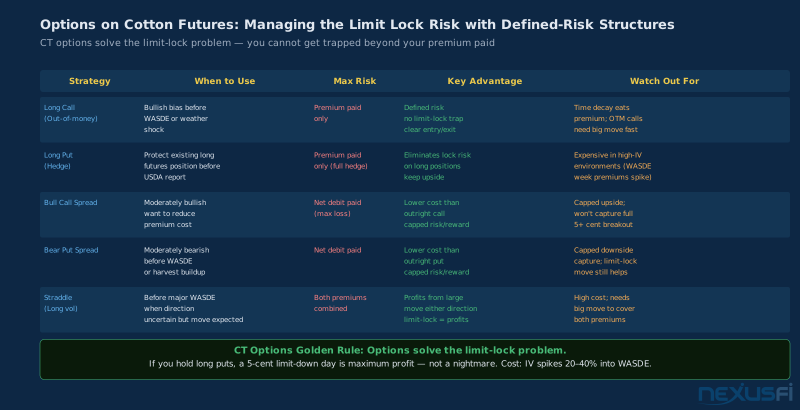
CT options solve the limit-lock problem. When you hold a long put, a 5-cent locked-limit day is maximum profit — not a nightmare you can't exit. The tradeoff: implied volatility spikes 20-40% into major WASDE releases, making options expensive precisely when the protection is most valuable.
When options make sense over futures:
Before major USDA reports, when direction is uncertain but a large move is probable, options define your maximum risk at the premium paid. Long straddles (buying both a call and put at the same strike) profit from the move regardless of direction — and in CT, the moves are often large enough to justify the combined premium cost.
When you have a fundamental thesis but want to limit downside, buying calls instead of going long futures eliminates the catastrophic scenario of a surprise bearish WASDE locking you into an inability to exit.
Critical structural note: CT options on futures are American-style, exercisable at any time. Approaching expiration, deep in-the-money options typically get exercised and converted to futures positions. If you're holding ITM options near expiration, understand that automatic exercise into a futures position is the standard outcome.
The IV calendar: options get expensive in the week before major WASDE releases (typically around the 11th--12th monthly). Buying options well before the event — 3-4 weeks out when IV is lower — is the professional approach. Don't buy protection on the eve of the report; you'll pay 2x-3x normal premium for the same strike.
Key strategies: long call (bullish, defined risk), long put hedge (protect existing long futures), bull call spread (reduce premium cost, cap upside), bear put spread (defined cost downside protection), long straddle (directional uncertainty, large move expected).
Practical Considerations #
Position sizing for limit lock: Calculate your maximum acceptable loss per contract assuming a full 5-cent adverse move ($2,500) that you cannot exit for 24 hours. Then divide your total risk allocation by that number. If you can afford to lose $1,000 per trade, you're trading one contract with the knowledge that a bad USDA could cost you $2,500. Most professional CT traders risk no more than 1% of capital per trade, which at $2,500 maximum loss per contract implies a minimum account size of $250,000 per contract traded.
Where to find CT data:
- ICE website: Real-time quotes, contract specs, settlement prices, certified stocks
- USDA Cotton and Wool Outlook: Monthly analysis from USDA's Economic Research Service
- USDA WASDE: Available at usda.gov/WASDE at 12:00 PM ET on release days
- USDA AMS Export Sales: Released Thursdays at 8:30 AM ET, shows weekly cotton export commitments by country
- COT reports: CFTC.gov, Disaggregated Commitments of Traders, "Other Reportables - Cotton #2"
Tax treatment: ICE Cotton No. 2 qualifies as a Section 1256 contract for US taxpayers. Gains and losses receive 60/40 treatment — 60% long-term capital gains rates, 40% short-term, regardless of how long the position was held. This is the same treatment as CME futures. Mark-to-market accounting applies at year-end.
Comparison to related soft commodities: If you're already trading coffee (KC), cocoa (CC), or sugar (SB), you have the right mental framework for CT — seasonal weather markets, USDA/production report sensitivity, thin liquidity relative to financial futures. The main differences are CT's specific US weather sensitivity (West Texas in summer) versus Brazil frost risk for coffee or West Africa dry season for cocoa.
Trading cotton futures successfully requires a clear hierarchy: weather in key growing regions during the US summer (June-August) is the primary driver, followed by Chinese demand and policy, followed by USDA report impacts. Position sizing must account for limit lock risk — the market can trap you in a losing position for 24-72 hours. Use options for event risk management, ATR-based stops for technical risk management, and the crop calendar to align your strategy with the seasonal volatility regime.
Knowledge Map
Go Deeper
Build on this knowledgeReferences This Article
Articles that build on this topicCitations
- — Limit Up Limit Down Question (2012) 👍 8“Take into account that a position can move against you more than a limit move before you will be able to get out. Take into account that lock limit moves may inflict psychological pain on you, as you will be unable to exit your position and clear your head. Make a worst case scenario based on the most adverse occurrences over the last 10 years and prepare accordingly.”
- — Help needed on Locked limit (2014) 👍 12“War story time: It was June 30 2011, the day a major crop report was coming out. I was long corn going into the report. We open at 9:30 and immediately go lock limit down. It opened there and stayed there, didn't budge a tick all day. No chance to get out of my position... So I lost 60 cents, or $3,000 per contract.”
- — Selling Options on Futures? (2022) 👍 4“When I talk about weather markets, I mean a certain time of the year when future prices for a commodity are primarily driven by weather, particularly cotton, corn, soybeans. The expected move during those critical weather windows can be several times the normal daily range.”
- — Softs (Fundamentals) (2018) 👍 5“If you are looking for a free daily newsletter that gives good information on cotton: 'This week in Grain' by John Payne from Daniels Trading is available for the public. It gives information on Cotton, Corn, Beans and Wheat every Friday -- fundamentals, COT data, seasonal patterns.”
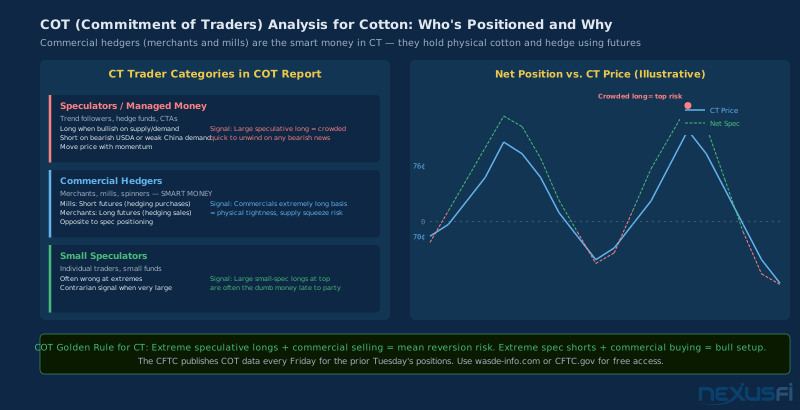
- — Softs (Fundamentals) (2019) 👍 3“The COT data for softs is an essential tool. Commercial hedgers in cotton are the mills and merchants who must buy physical cotton. When commercials are heavily long the basis and short futures, it indicates they expect prices to fall -- but they need to lock in their physical supply. This divergence from normal patterns is a signal.”
- — Theice.com (2024)
- — Ers.usda.gov (2024)
- — Cotton.org (2023)
- — Softs (Fundamentals) (2018) 👍 4“COT data for cotton is an essential trading tool -- commercial hedgers (the mills, merchants) must hedge physical exposure. When commercials are building longs, it signals physical tightness not yet reflected in futures. Combine COT with seasonal data for highest-probability setups.”
- — commodity spreads (2018) 👍 5“When executing commodity calendar spreads including old/new crop spreads, the exchange-listed spread instrument typically gives better execution than legging the two outright contracts separately. The bid-ask spread on each leg adds up -- the listed spread market is generally tighter.”
- — commodity spreads (2014) 👍 4“When evaluating any commodity spread, deliverable stocks vs open interest is the critical metric. Physical delivery constraints in the nearby month are what give commodity calendar spreads their unique risk profile compared to cash-settled futures spreads.”
- — Diversified Option Selling Portfolio (2020) 👍 4“For soft commodity options including cotton, the implied volatility regime matters as much as direction. Selling options in CT when IV is elevated (post-USDA report) captures the IV crush. Buying options when IV is low (quiet weather period) gives better value for defined-risk positions.”