



Crude Oil (CL) Futures: The Complete Trading Guide
Overview #
Crude oil futures — ticker CL — are the world's most actively traded commodity contract. On a busy day, over 1.5 million CL contracts change hands on CME Globex, each representing 1,000 barrels of West Texas Intermediate. That's roughly $100 billion in notional value moving through a single order book.
CL attracts a different crowd than equity index futures. Where ES responds to earnings, Fed policy, and sector rotation, crude oil reacts to OPEC production cuts, EIA inventory surprises, tanker routes through the Strait of Hormuz, and refinery maintenance schedules. The catalysts are physical, geopolitical, and seasonal — a at the core different trading environment than equity indices.
This difference matters because it changes how you read price action. CL can trade in a $3-4 range for two weeks, then rip $5 in a single session on an inventory surprise or OPEC headline.
Even experienced traders approach CL with humility. The contract moves fast, the catalysts are binary, and the leverage is real.
Key Concepts #
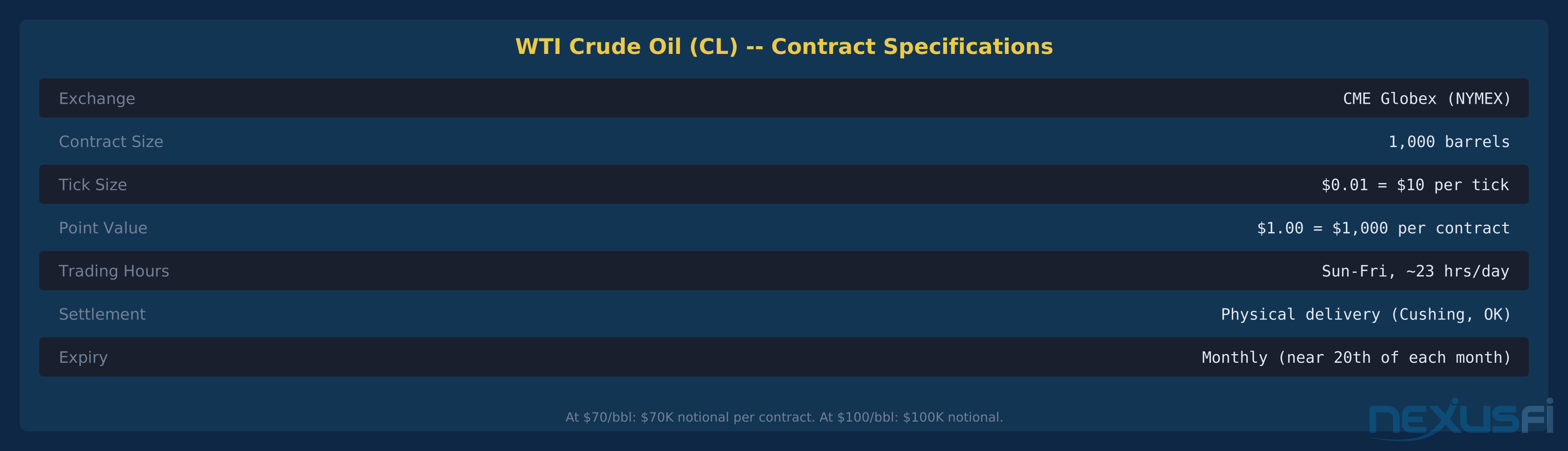
Contract Specifications — Per CME Group contract specifications, one CL contract represents 1,000 barrels of WTI crude oil. With crude at $70, that's $70,000 in notional per contract. The minimum tick is $0.01 per barrel, worth $10 per tick. A $1.00 move equals $1,000 per contract. CL contracts are listed monthly, with the front two months carrying the vast majority of volume and open interest.
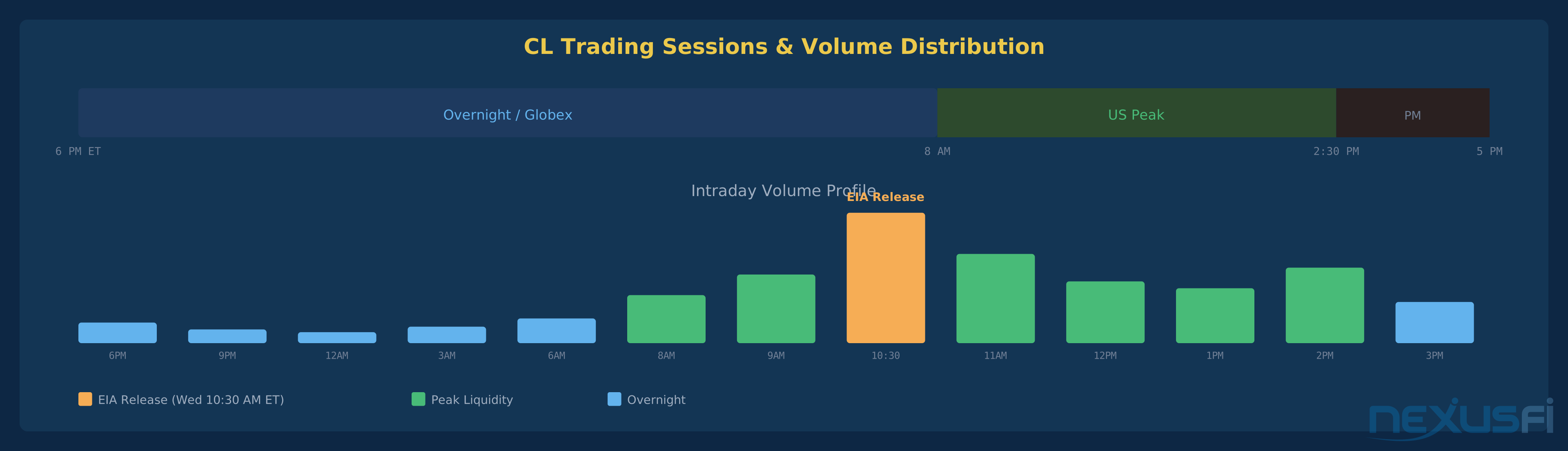
Trading Sessions — CL trades on CME Globex nearly 23 hours per day, Sunday through Friday, with a 60-minute daily maintenance break (typically 5:00-6:00 PM ET). But liquidity isn't uniform. The US morning session (8:00 AM - 2:30 PM ET) carries the heaviest volume and tightest spreads, especially around the 10:30 AM ET EIA inventory release on Wednesdays. The overnight session (6:00 PM - 8:00 AM ET) carries 30-40% of daily volume and responds to Middle East headlines, Asian demand data, and European macroeconomic releases. As @mfbreakout noted in the NexusFi Crude Analysis thread, "this is for traders who just wonder what CL will do without having a trade on. Analysis/thinking/work before placing any trade."
Margin Requirements — CME sets initial margin for CL outright positions, which fluctuates based on volatility. During calm markets, expect $6,000-$8,000 per contract; during geopolitical escalations or supply shocks, margin can jump to $10,000+ overnight. Many brokers offer reduced intraday margins ($1,000-$2,500), but this is broker-provided leverage, not exchange-mandated. The gap between intraday and overnight margin is a trap — holding a CL position past the session break triggers the full exchange requirement.
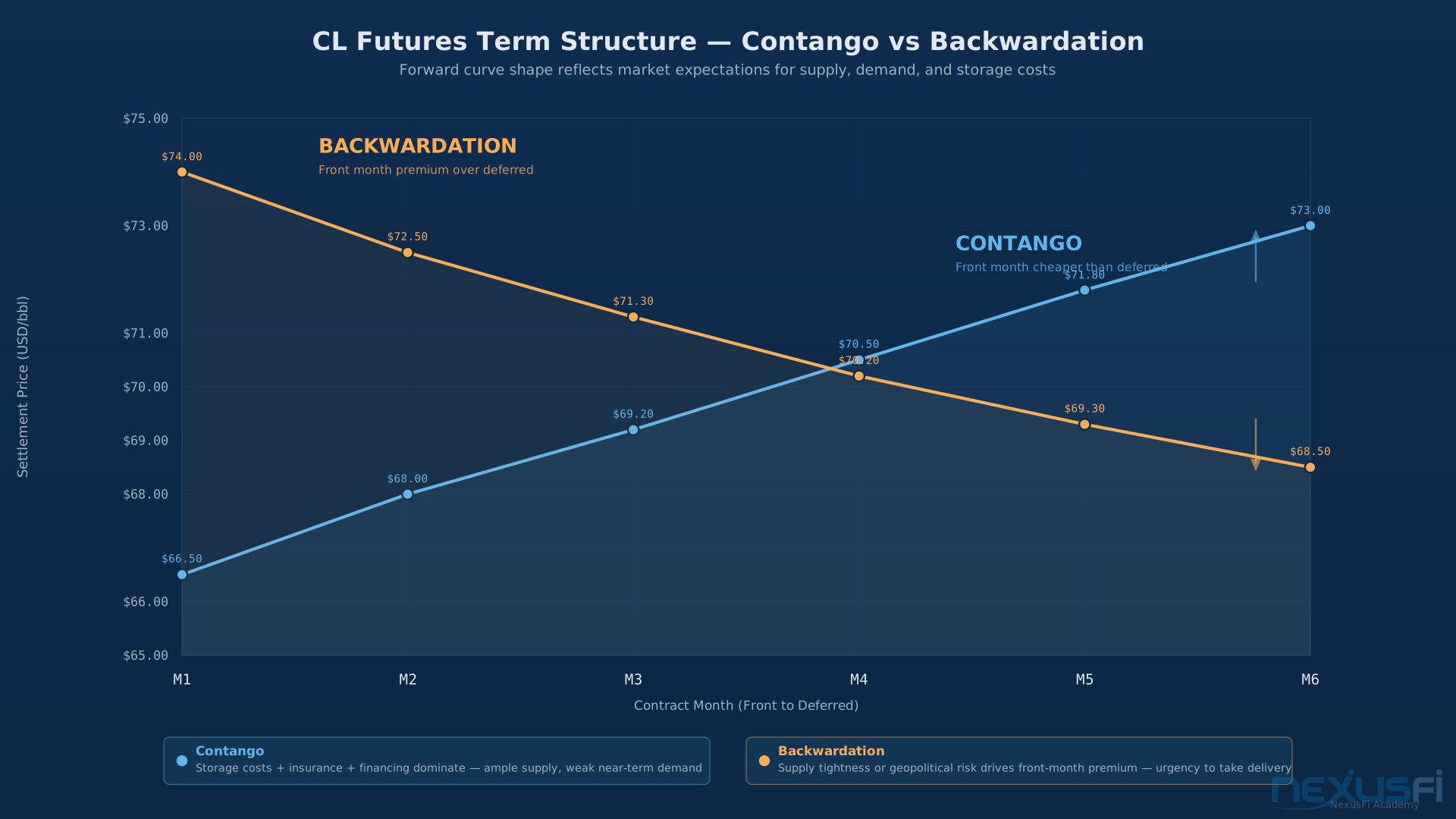
Monthly Rollover — CL contracts expire monthly, not quarterly like ES. The front-month contract expires around the 20th of each month, and active trading migrates to the next month roughly 3-5 trading days before expiration. The roll involves the "spread" between months, which reflects storage costs, interest rates, and supply/demand expectations. When the market is in contango (front month cheaper than back month), storage economics dominate. In backwardation (front month more expensive), supply tightness is the signal. Understanding the term structure is mandatory — this is roll logistics AND market intelligence rolled into one.
Settlement — CL is a physically deliverable contract, settled against delivery at Cushing, Oklahoma. Most speculators and day traders never see delivery — they roll or close positions before the expiry window. But the physical delivery mechanism matters because it anchors CL to real-world supply constraints. When Cushing storage fills up, the term structure warps. When Cushing draws down, the front month strengthens. As the April 2020 negative price event demonstrated, ignoring physical mechanics can be catastrophic.
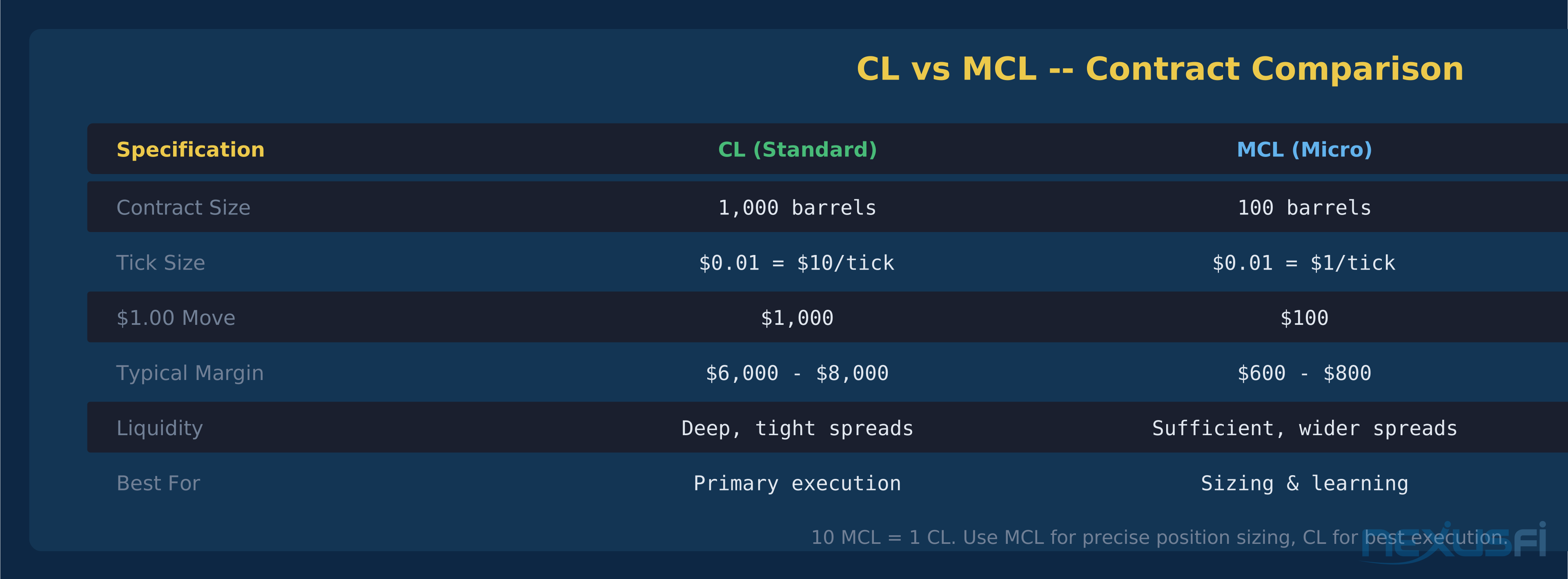
Micro WTI Crude Oil (MCL) — CME launched Micro WTI Crude Oil futures (MCL) at one-tenth the size of CL: 100 barrels per contract, $1 per tick, $100 per dollar move. MCL has become popular for traders who want CL's volatility profile with more precise position sizing. Ten MCL contracts equal one CL contract. The trade-off is liquidity — MCL spreads can widen during volatile sessions, and depth is thinner than the standard contract. For learning CL's personality and building position sizing discipline, MCL is the right starting point.
How It Works #
What Moves Crude Oil #
CL is a macro-physical hybrid. Price responds to both financial flows and real-world supply/demand. The key catalysts, ranked by typical market impact:
EIA Weekly Petroleum Status Report — The EIA publishes its Weekly Petroleum Status Report every Wednesday at 10:30 AM ET, making it the single most predictable weekly trigger for CL. The headline crude inventory number matters, but sophisticated traders watch Cushing-specific stocks, gasoline and distillate inventories, implied demand figures, and production data. The API report (released Tuesday evening) often front-runs the EIA, creating a "two-phase" reaction pattern. The market doesn't react to the number alone — it reacts to the surprise versus the consensus estimate.
EIA Two-Phase Reaction Pattern The API (American Petroleum Institute) report drops Tuesday evening (~4:30 PM ET) and often pre-runs the Wednesday EIA move. When API shows a surprise draw, CL lifts overnight — then the EIA Wednesday at 10:30 AM ET either confirms the move (continuation) or contradicts it (reversal). Trading both phases separately is a viable approach: fade an API-driven overnight spike at resistance, then trade the EIA confirmation the next morning. The Thursday morning session — 24 hours post-EIA — often sees the second leg as institutional flows catch up.
OPEC+ Production Policy — OPEC and its allies control roughly 40% of global crude production. Decisions on production quotas, compliance enforcement, and voluntary cuts directly reprice the CL term structure. The market prices in expected OPEC action before meetings, so the trigger isn't the decision itself — it's the deviation from expectations. A "surprise" cut when the market expected a rollover can send CL up $3-5 in minutes. @japiazza captured this in the CL Crude Analysis thread: the community tracks OPEC compliance data, production estimates, and meeting commentary in real-time because these events reshape the entire supply picture.
Geopolitics and Supply Disruption — Pipeline outages, tanker seizures, sanctions enforcement, and military escalation in producing regions create supply shock risk. These moves are binary — they either happen or they don't, and they create gap risk that stops can't fully manage. The Strait of Hormuz alone handles roughly 20% of global oil supply; any credible threat to that chokepoint reprices the entire curve.
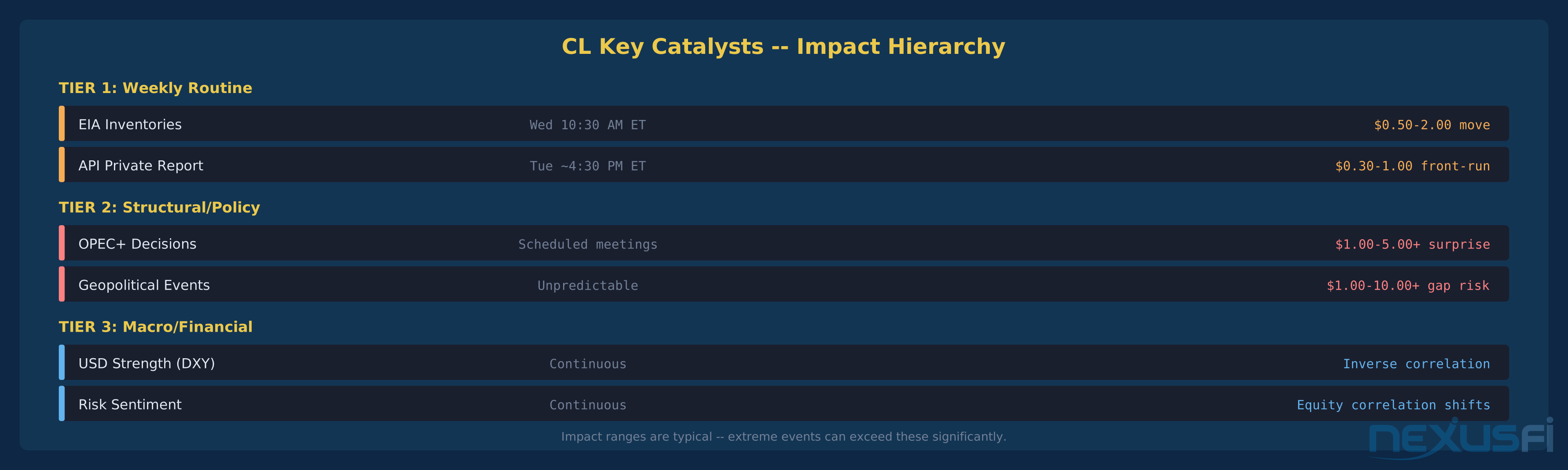
USD and Macro Regime — CL is denominated in US dollars, so dollar strength suppresses oil prices (all else equal) and dollar weakness supports them. Beyond the direct currency effect, CL also trades as a macro risk asset. During risk-on environments, CL tends to rally with equities. During stagflation fears, CL can decouple and trade on its own supply/demand narrative.
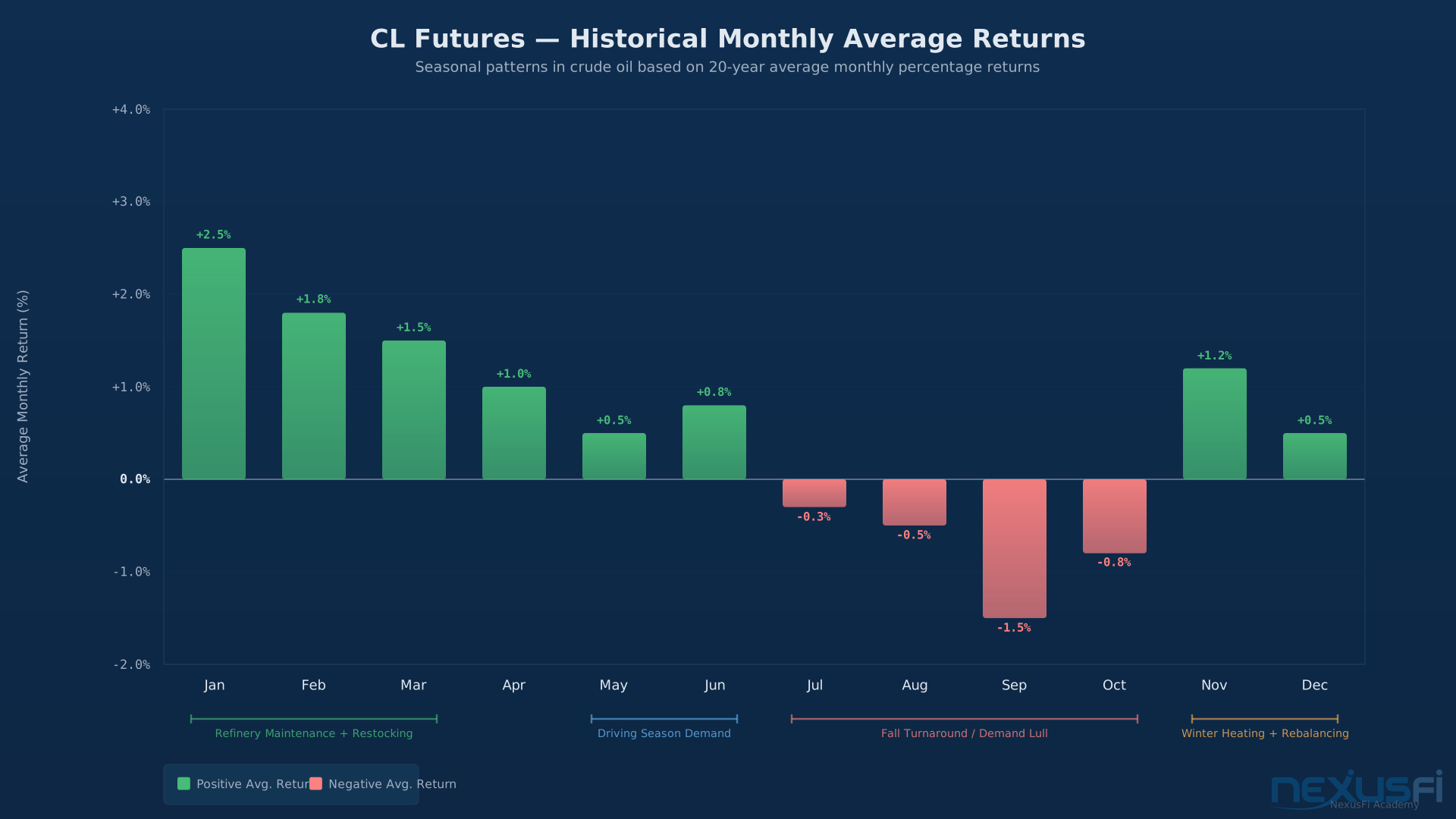
Seasonality — Crude oil has well-documented seasonal patterns tied to driving season demand (summer gasoline), heating oil demand (winter), and refinery maintenance cycles (spring/fall turnarounds). These aren't mechanical signals — they're bias filters. A seasonal tendency toward strength combined with an inventory draw is a higher-conviction setup than seasonality alone.
Market Microstructure #
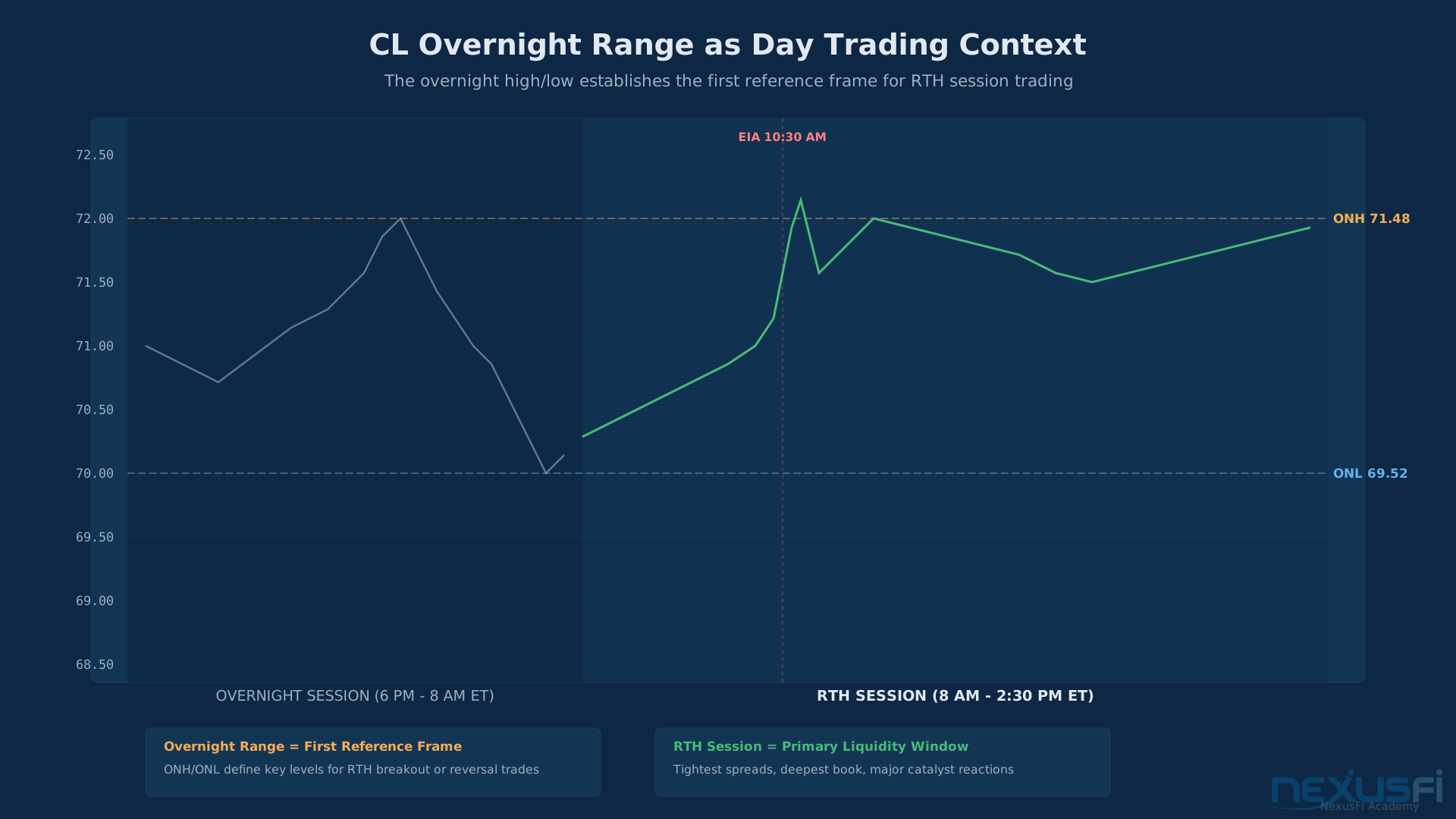
CL's order book behaves differently from ES. Where ES has deep, algorithmic liquidity that regenerates quickly, CL's book can thin dramatically around catalysts. @VinceVirgil's NexusFi journal documented a structured approach: "My trade rules are fairly specific in nature. I typically look at a broader picture on the day, using the overnight highs and lows." This highlights a CL reality — the overnight range provides essential context that doesn't exist in purely RTH analysis.
The bid-ask spread in CL is typically 1 tick ($0.01, or $10) during peak RTH hours, but can widen to 3-5 ticks during overnight thin periods or immediately following a major headline. Slippage on market orders during EIA releases regularly exceeds 5-10 ticks. This is the cost of volatility — CL gives you the range, but it extracts the spread.
Practical Application #
Day Trading CL #
The overwhelming majority of active CL traders are intraday scalpers targeting 20-50 tick moves ($200-$500 per contract).
The session window matters because CL's volatility and liquidity peak during this window.
Effective CL day trading requires:
- Pre-market preparation: Identify the overnight high and low, check the API number (if released), review the economic calendar for EIA timing, and assess the macro backdrop (dollar strength, equity futures direction). The overnight range establishes the first reference frame.
- Event risk management: Don't enter new positions within 5-10 minutes of the EIA release unless your strategy is specifically event-driven. The initial spike frequently reverses partially or completely. Traders who chase the first move often give it back within minutes.
- Volatility-adjusted sizing: CL average true range (ATR) on a daily timeframe typically runs $1.50-$3.00, but can expand to $4-6 during OPEC events or geopolitical shocks. Your position size should be calibrated to current ATR, not to a fixed dollar amount.
- Level-based entries: Volume Profile POC, Value Area boundaries, prior session high/low, and VWAP provide the structural reference. CL respects these levels, but the reactions are faster and more violent than in ES. As @ESFXtrader documented in the NexusFi CL Day Trading thread, multiple chart timeframes confirm whether a level will hold: "it is confirmed on at least 3 charts that I always have up."
Two Core CL Setups #
The following setups are well-documented in the CL trading community and provide specific, executable frameworks rather than abstract concepts. Both require practice on a simulator or MCL before live deployment.
Setup 1: EIA Reaction Fade
The EIA Weekly Petroleum Status Report (Wednesday, 10:30 AM ET) creates the most predictable weekly volatility event in CL. The initial spike is dominated by algorithmic order flow and retail stop-running — the tradeable opportunity is the fade after exhaustion.
- Pre-conditions: Identify pre-report range (typically 30-60 minutes of consolidation before 10:30 AM). Note the overnight high/low and prior session POC as reference targets.
- Entry criteria: Wait 90-120 seconds after the 10:30 AM release. Watch for exhaustion signals — a failed test of the spike extreme (prior high/low rejection), a lower high after an upspike, or a higher low after a downspike. The initial algo-driven move typically exhausts within 1-2 minutes as real institutional flow absorbs the spike.
- Stop placement: Above/below the spike extreme (the highest or lowest tick reached in the initial reaction). This is your invalidation — if price exceeds the spike extreme, the move is continuation, not exhaustion.
- Targets: VWAP or prior session POC are natural mean-reversion targets. The spike often retraces 50-75% within the first 10-15 minutes as price returns toward value.
- Risk/reward math: With CL at $65, a 15-tick stop equals $150 risk per contract. Targeting 22+ ticks ($220) delivers minimum 1:1.5 risk/reward. At $70, the math scales proportionally — CL's tick value is constant ($10/tick regardless of price level).
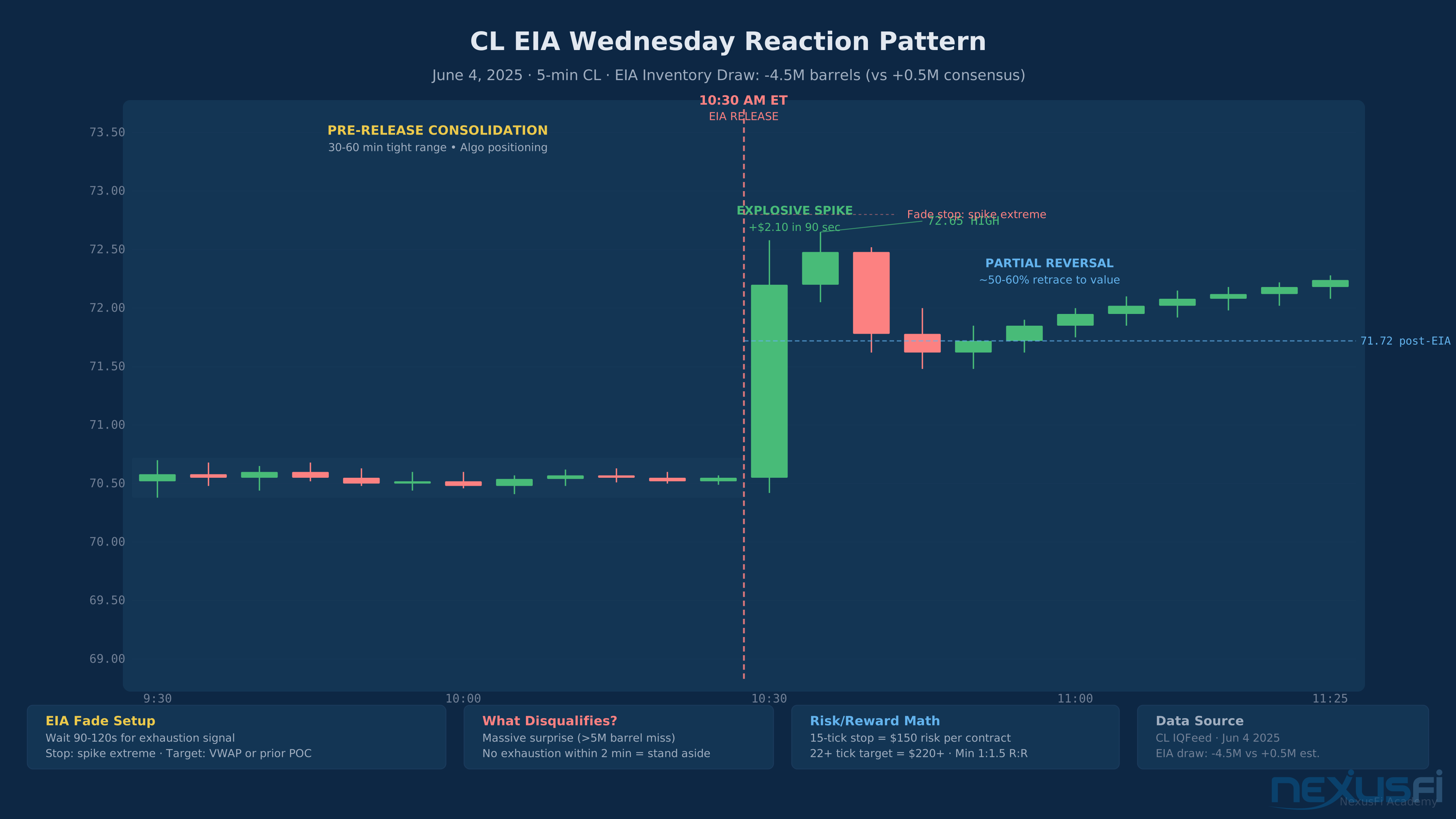
- What disqualifies the setup: If the EIA number produces a massive surprise (>5 million barrel deviation from consensus), the move may be structural repricing rather than a fadeable spike. If price doesn't show exhaustion within 2 minutes, stand aside.
— the break out of that congestion is the signal.
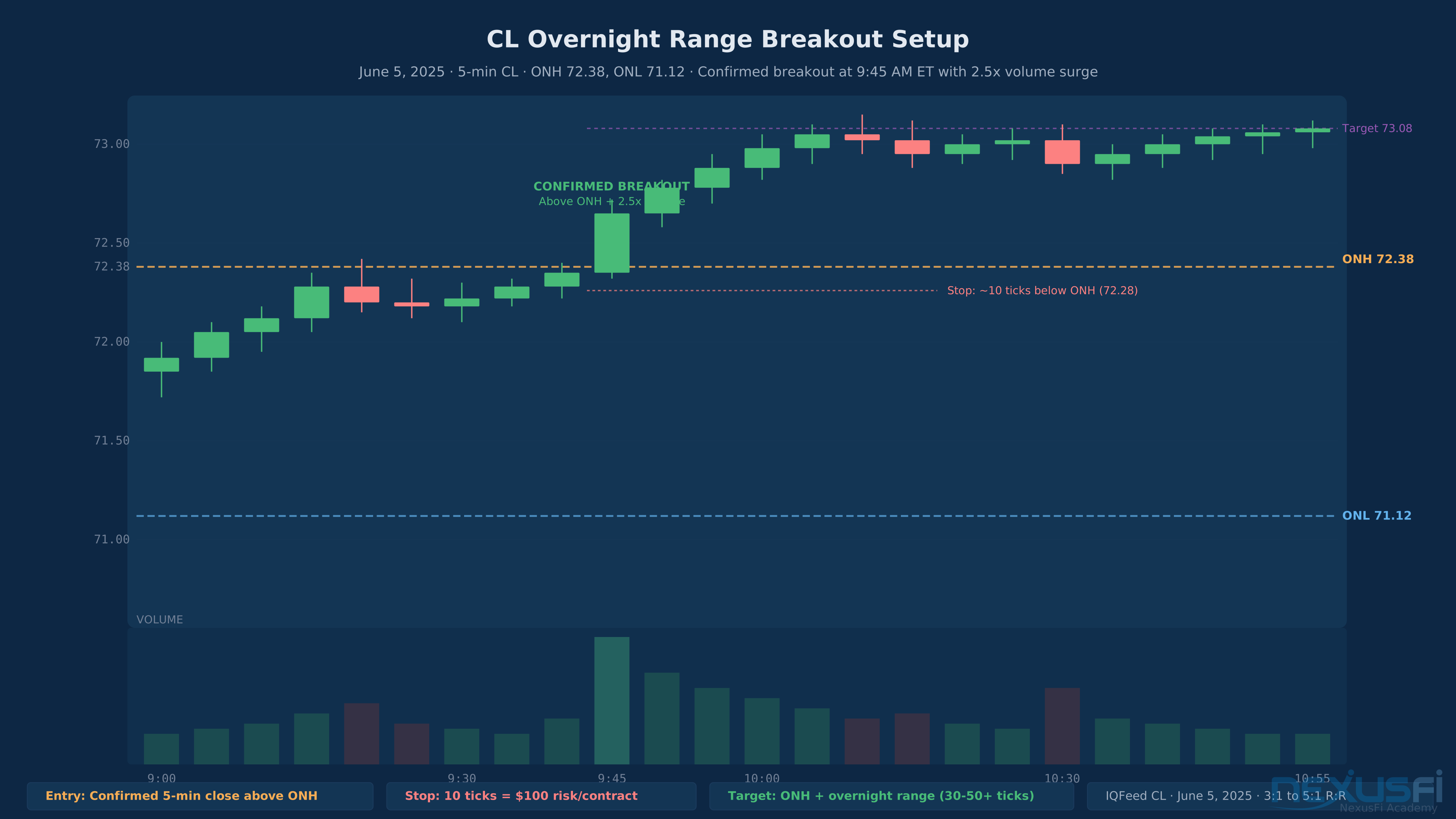
- What disqualifies the setup: If the breakout occurs within 30 minutes of the EIA report (10:00-10:30 AM on Wednesdays), the pending trigger may invalidate any directional thesis. If overnight volume was extremely thin (holiday or pre-holiday session), the range is less meaningful as a reference.
Both setups share a critical principle: the overnight range and EIA event create defined structure that makes entry, stop, and target decisions mechanical rather than discretionary. That's the difference between a tradeable setup and a vague directional bias.
Swing Trading and Multi-Day Holds #
CL swing trading requires understanding the term structure. A trader holding a long position in backwardation earns a positive roll yield as the front month converges toward the spot price. In contango, the roll yield is negative — you're paying to hold the position.
Swing positions in CL face significant overnight gap risk. A surprise OPEC announcement, a Middle East escalation, or a large API miss after the close can gap CL $1-3 at the reopen. Position sizing for swing trades must account for this gap exposure — stops don't protect you from moves that happen between sessions.
CL-Specific Behavioral Characteristics #
Several patterns distinguish CL from other futures:
- Inventory day predictability: Wednesday mornings (EIA day) have a distinct pre-release consolidation pattern. CL often narrows its range in the 30-60 minutes before 10:30 AM, then explodes in both directions at the release.
- OPEC headline sensitivity: CL can move $2-3 on a single Reuters or Bloomberg headline about production policy. These moves are not gradual — they're step-function repricing events that can trigger stop cascades.
- Correlation regime shifts: CL's correlation with the S&P 500 isn't stable. It flips between positive correlation (risk-on/risk-off regime) and decorrelation (supply-specific regime).
- Overnight range as context: CL's overnight session carries more weight than ES's overnight session because physical crude markets (actual cargo transactions, refinery purchases) influence pricing during global business hours.
Common Mistakes #
Treating CL like ES with bigger ticks. CL's volatility profile, trigger structure, and participant composition are at the core different from equity index futures.
Ignoring the term structure. Traders who focus exclusively on the front-month chart miss the information embedded in the spread between contract months.
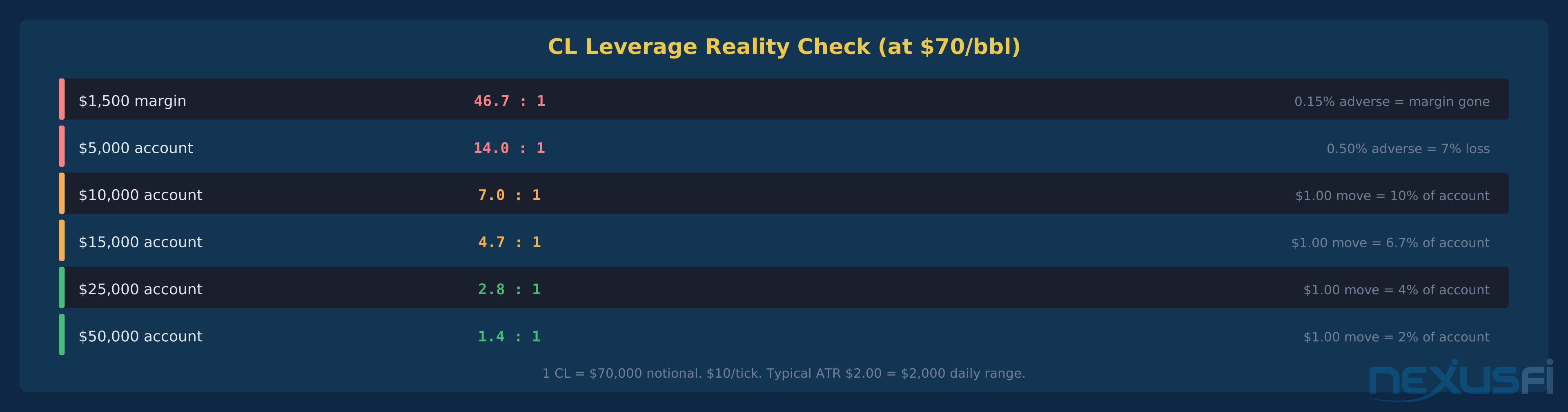
Over-sizing on intraday margin. A broker offering $1,500 intraday margin per CL contract doesn't mean one contract per $1,500 is appropriate. With CL at $70, one contract is $70,000 notional — that's 46:1 leverage.
Chasing the EIA spike. The initial 30-second reaction to the EIA inventory number is dominated by algorithmic order flow and stop-running.
Holding through events without a plan. Sitting in a CL position when the EIA drops, OPEC announces, or geopolitical headlines break is a gamble, not a trade.
CL's leverage is real and unforgiving. One contract at $70 crude controls $70,000 in notional value. A $2 adverse move — routine on OPEC days — costs $2,000 per contract. Size for the worst-case move, not the average day.
Knowledge Map
Prerequisites
Understand these firstGo Deeper
Build on this knowledgeReferences This Article
Articles that build on this topicCitations
- — Gary's CL method (2009) 👍 65“I would like to start with a simple statement -- the primary idea of this post is to help me.”
- — The CL Crude-analysis Thread (2015) 👍 8“This is for traders who just wonder what CL will do without having a trade on. Analysis/thinking/work before placing any trade.”
- — CL Trades (2013) 👍 14“My trade rules are fairly specific in nature. I typically look at a broader picture on the day, using the overnight highs and lows.”
- — Trading CL (Crude Oil Futures) (2009) 👍 14“Trading CL -- My scalping way -- Time: 9:00 AM - 2:15 PM (EST).”
- — CL Day Trading: THE EDGE-Multiple Charts (2012) 👍 5“It is confirmed on at least 3 charts that I always have up.”
- — The CL Crude-analysis Thread (2015) 👍 5“These threads are invaluable. I am a member of a small group of crude oil traders and we meet daily.”
- — The Scalper's Journey (2016) 👍 9“I also started trading CL.”
- CME Group — WTI Crude Oil Futures Contract Specifications
- U.S. Energy Information Administration — Weekly Petroleum Status Report