



Gold Futures (GC): The Complete Trading Guide
Overview #
A Fed rate decision in Washington can move gold futures before Tokyo finishes its morning session. A single CPI print can push GC $30 in minutes. No other futures market sits at the intersection of monetary policy, geopolitical risk, and global currency flows quite like gold — making it one of the most reactive and liquid instruments on the CME. Traded on COMEX as the full-size GC (100 oz) or micro MGC (10 oz), gold futures give traders direct exposure through standardized contracts with defined tick sizes, margin requirements, and delivery mechanics. Whether you're using GC for analysis or MGC for execution, the contract structure, session behavior, and price driver framework below is the foundation everything else builds on.
This article covers the practical knowledge experienced futures traders need to trade gold effectively — contract mechanics, liquidity profiles, macro drivers, correlations, volatility regimes, and execution considerations. It's a reference, not a textbook. If you're already comfortable with futures mechanics and margin concepts, you're in the right place.
Key Concepts #
Before diving in, here's the shorthand you'll encounter throughout:
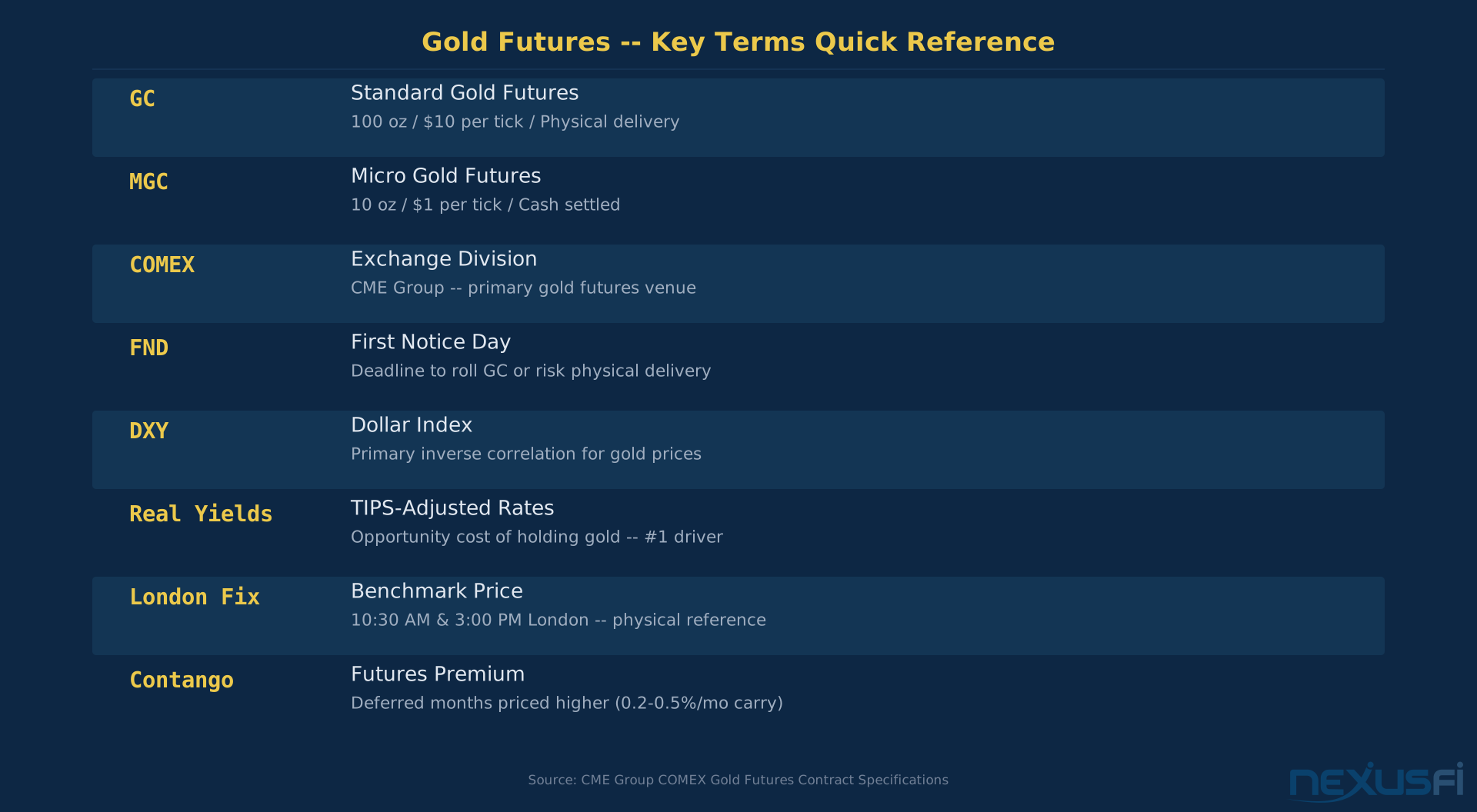
- GC — Standard Gold Futures (100 troy oz per contract, COMEX/CME)
- MGC — Micro Gold Futures (10 troy oz per contract, COMEX/CME)
- COMEX — The Commodity Exchange division of CME Group where gold futures trade
- Tick — Minimum price increment ($0.10 per troy ounce for both GC and MGC)
- Tick Value — Dollar P&L per tick ($10.00 for GC, $1.00 for MGC)
- First Notice Day (FND) — The first date on which a long position holder may be notified of intent to deliver physical gold
- DXY — U.S. Dollar Index, the primary currency correlation for gold
- Real Yields — Treasury yields adjusted for inflation (TIPS yields), arguably the most important single driver of gold prices
- London Fix — The twice-daily benchmark pricing process (10:30 AM and 3:00 PM London time), administered by ICE Benchmark Administration on behalf of the LBMA [11], that serves as the reference price for physical gold transactions worldwide
Contract Specifications #
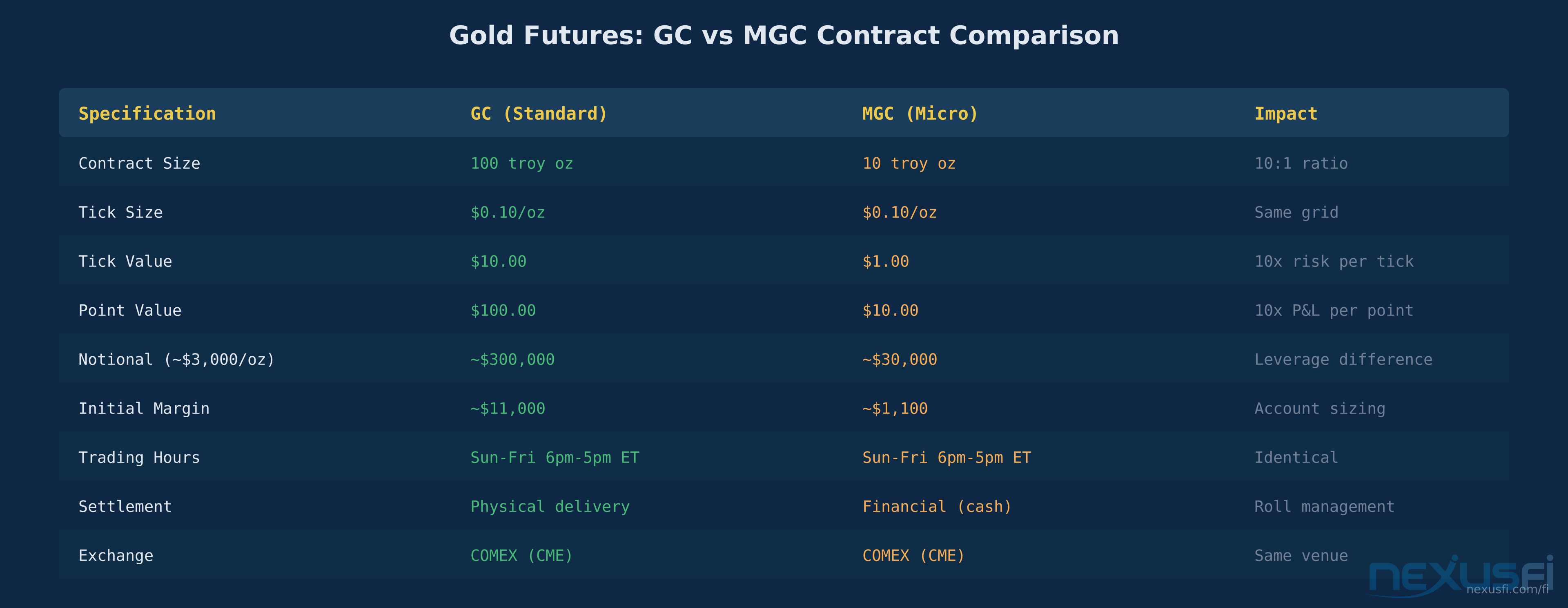
Gold futures come in two sizes that trade on the same exchange with the same tick grid but very different risk profiles.
GC — Standard Gold Futures #
The full-size contract represents 100 troy ounces of gold. At $3,000/oz, that's $300,000 in notional value — serious leverage against typical initial margin of $11,000-$13,000 (exchange minimum; brokers may require more). Each $0.10 tick moves your P&L by $10.00. A full $1.00 point move = $100.00 per contract.
GC is physically deliverable. That sounds dramatic, but fewer than 1% of contracts result in delivery. What it means practically: you need to roll your position before First Notice Day or risk being assigned delivery notices. Most active traders roll to the next front month 2-3 weeks before FND.
As @kevinkdog [noted on NexusFi] [1], gold margin requirements can be significant — $8,250 initial margin for a single contract means even modest position sizes tie up significant capital.
MGC — Micro Gold Futures #
One-tenth the size of GC at 10 troy ounces per contract. Same tick size ($0.10/oz) but tick value drops to $1.00. Notional value at $3,000/oz is $30,000 with initial margin around $1,100.
Here's the important difference beyond size: MGC is financially settled, not physically deliverable. No delivery risk, no FND calendar management. For most retail and smaller institutional traders, this simplifies position management much.
As @Salao documented extensively in his [gold trading journal][2], many experienced traders use GC charts for analysis but execute on MGC for tighter position sizing — especially when managing risk through volatile sessions. His approach of [posting GC 5m and 60m charts alongside MGC 5m execution charts] [3] is a common workflow.
Delivery Months and Roll Cycle #
GC trades in February (G), April (J), June (M), August (Q), October (V), and December (Z) — the even months. The front two months typically carry the most liquidity, with the nearest active month often accounting for 60-70% of daily volume.
Roll timing matters. Spread between the expiring and next-active contract reflects carry cost (storage + financing minus convenience yield). In normal conditions, gold futures trade in contango (deferred months priced higher), typically 0.2-0.5% per month reflecting the cost of carry.
Trading Hours and Session Behavior #
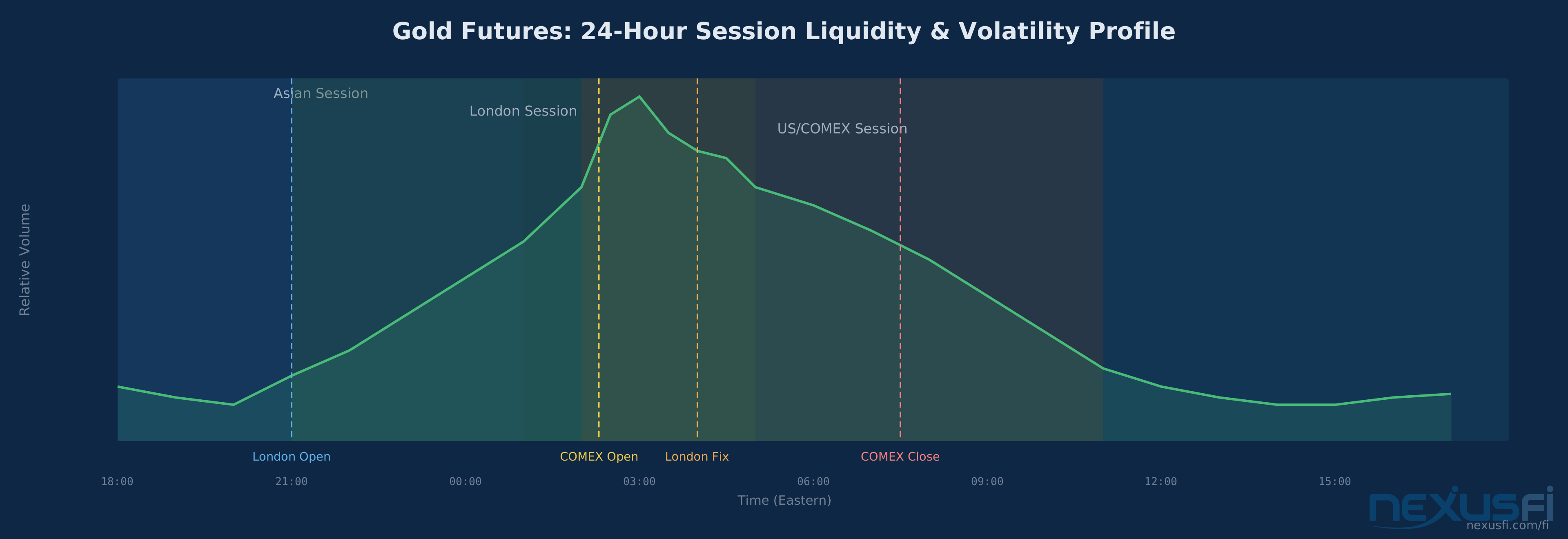
Gold futures trade nearly around the clock on CME Globex: Sunday 6:00 PM to Friday 5:00 PM Eastern, with a daily 60-minute maintenance break from 5:00-6:00 PM ET.
Session Breakdown #
Asian Session (6:00 PM - 3:00 AM ET): Lowest liquidity window. Spreads widen, depth thins, and price action tends toward range-bound movement. Most institutional flow is absent. Gap risk is elevated for positions held through this window. That said, significant overnight moves often occur here when geopolitical events break.
London Session (3:00 AM - 11:30 AM ET): Liquidity picks up substantially as European desks come online. The London gold fix (10:30 AM London / 5:30 AM ET for the AM fix) creates a natural liquidity anchor. This is where the first major volume wave of the day hits.
US/COMEX Session (8:20 AM - 1:30 PM ET): Peak liquidity. The COMEX open at 8:20 AM ET frequently produces the session's widest price swings in the first 30-60 minutes. The London-New York overlap (approximately 8:00 AM - 11:30 AM ET) is the most liquid window of the entire 23-hour trading day.
As Fi covered in our [CME margin changes article] [5], the shift to percentage-based margins for precious metals in early 2026 directly affects position sizing calculations during volatile moves — the margin itself becomes dynamic.
Execution Implications #
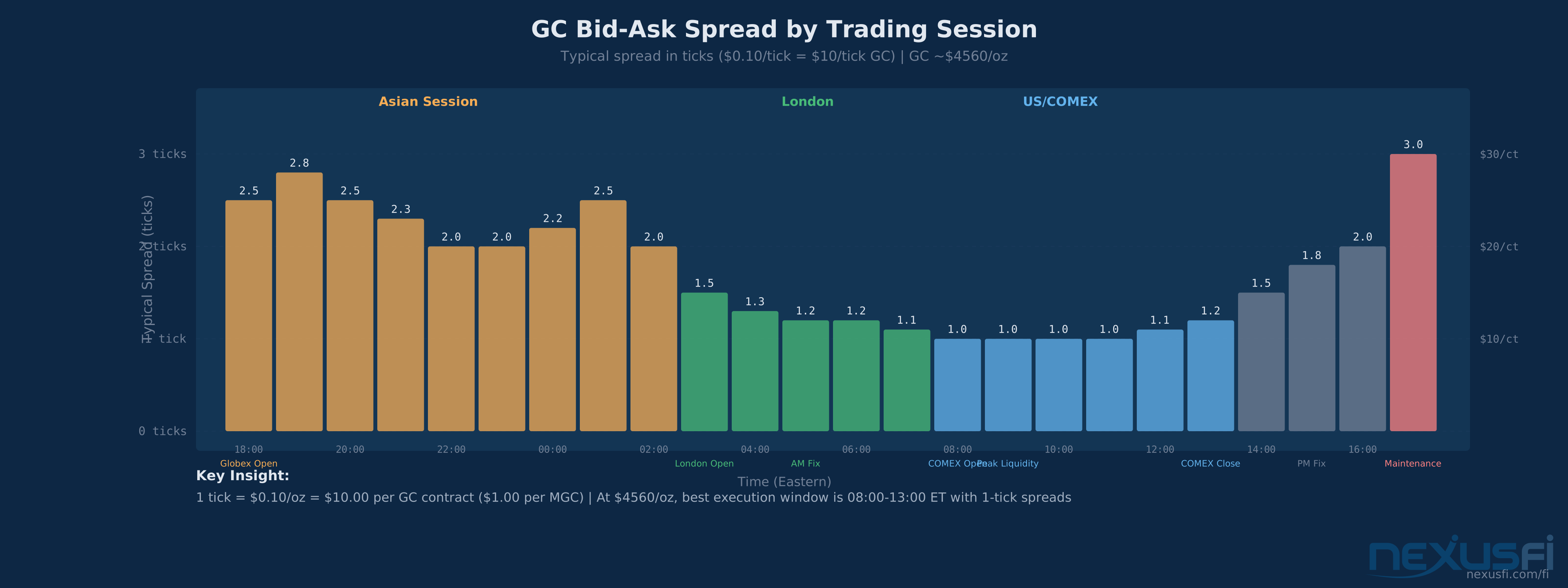
Spread behavior varies dramatically by session. During peak US hours, GC typically trades with a 1-tick spread ($0.10). During Asian hours, spreads can widen to 2-3 ticks. MGC spreads tend to be 1-2 ticks wider than GC in all sessions due to lower participation.
Stop placement needs to account for session: a stop that's comfortable during COMEX hours may get hunted during thin Asian trading. Many experienced gold traders either widen stops for overnight holds or simply go flat before the Asian session.
Price Drivers #
Gold doesn't trade like other commodities. It has almost no consumption-driven supply/demand dynamics (existing above-ground stock dwarfs annual mine production). Instead, gold trades primarily as a monetary asset, and the futures price is driven by a web of interconnected macro factors.
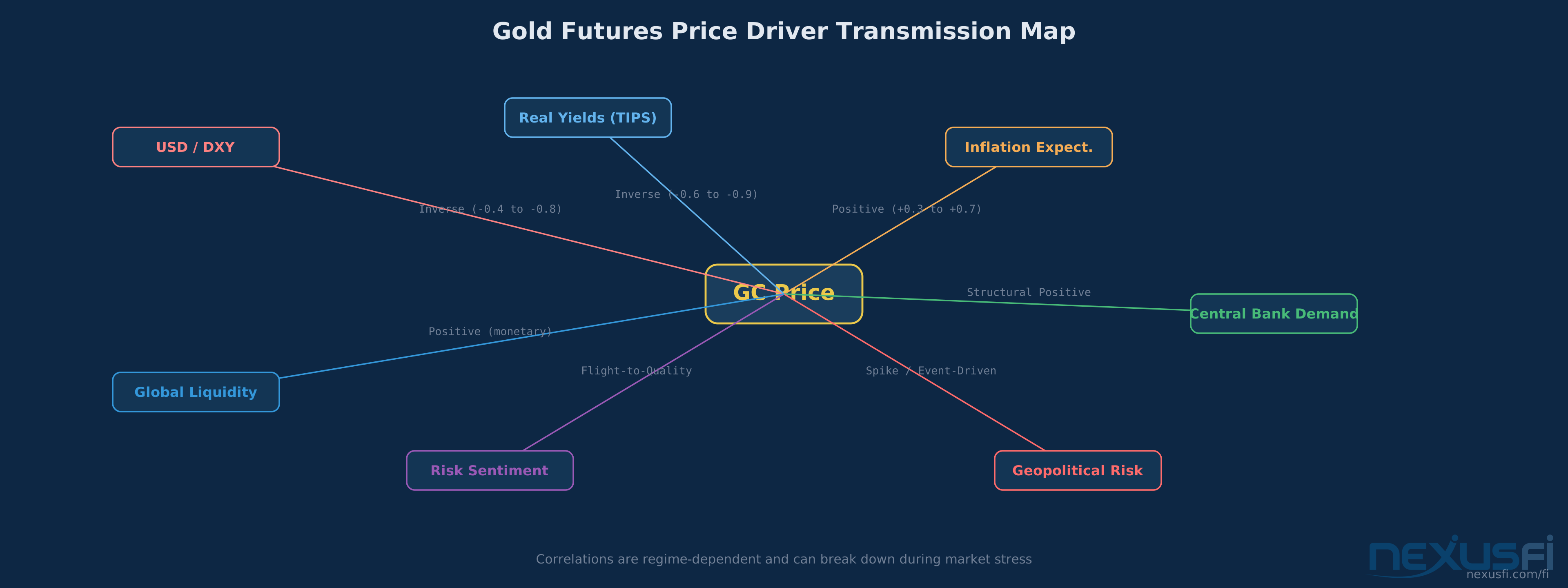
USD / DXY (Inverse Correlation) #
The most persistent relationship in gold trading. When the dollar strengthens, gold typically weakens — and vice versa. The correlation ranges from -0.4 to -0.8 depending on the regime, but it's not constant.
This relationship breaks down during periods when both gold and the dollar rise simultaneously — usually during extreme risk-off events where capital flows into both as safe havens. The 2008 financial crisis and early COVID crash both showed this decorrelation.
Mechanically: gold is denominated in USD globally. A stronger dollar makes gold more expensive for foreign buyers, reducing demand at the margin. A weaker dollar makes gold cheaper internationally, supporting demand.
Real Yields / TIPS (Inverse Correlation) #
This is arguably the most important single driver. Real yields (nominal Treasury yields minus inflation expectations, measured via TIPS) represent the opportunity cost of holding gold. Gold pays no income — when real yields rise, the cost of holding gold increases. When real yields fall or go negative, gold becomes relatively more attractive.
The correlation between gold and 10-year TIPS yields runs from -0.6 to -0.9 during normal regimes. Tracking the 10-Year TIPS constant maturity yield on FRED [10] tells the story clearly: when real yields dropped below -1% in 2020-2021, gold rallied to all-time highs. When real yields surged to +2.5% in 2023, gold corrected sharply.
For futures traders, this means watching the TIPS yield curve — especially the 5-year and 10-year real yields — provides leading context for gold directional bias.
Inflation Expectations #
CPI prints, PCE releases, and breakeven inflation rates all move gold futures. The relationship is positive but regime-dependent: gold benefits from rising inflation expectations only when those expectations aren't already priced in and when the Fed isn't responding aggressively enough to contain them.
The strongest gold moves come from CPI surprises that exceed consensus, especially when the Fed is perceived as behind the curve. A +0.4% MoM CPI print when consensus was +0.2% can move GC 2-3% in a single session.
Central Bank Demand #
Central bank gold buying hit record levels in 2022-2023 — the World Gold Council reported over 1,000 tonnes of net purchases in both years [9] (1,082t in 2022, 1,037t in 2023) — and has remained elevated. This is structural demand — driven by reserve diversification away from USD-denominated assets — and provides a persistent bid under gold prices.
This driver is slow-moving and doesn't create intraday trading signals, but it shifts the baseline. Understanding that 25-30% of annual gold demand now comes from central banks explains why gold has maintained elevation even during periods of rising real yields.
Geopolitical Risk #
The "safe-haven bid" is real but unreliable as a systematic edge. Gold spikes on geopolitical headlines — wars, sanctions, political instability — but the duration and magnitude of these moves varies enormously. Some events produce multi-week rallies; others produce intraday spikes that fully retrace within 48 hours.
For futures traders, geopolitical risk primarily matters for risk management: overnight gap potential, stop placement, and position sizing. If you're holding GC through a weekend with elevated geopolitical tension, understand that Sunday's open can gap $20-50+/oz.
Correlation Structure #
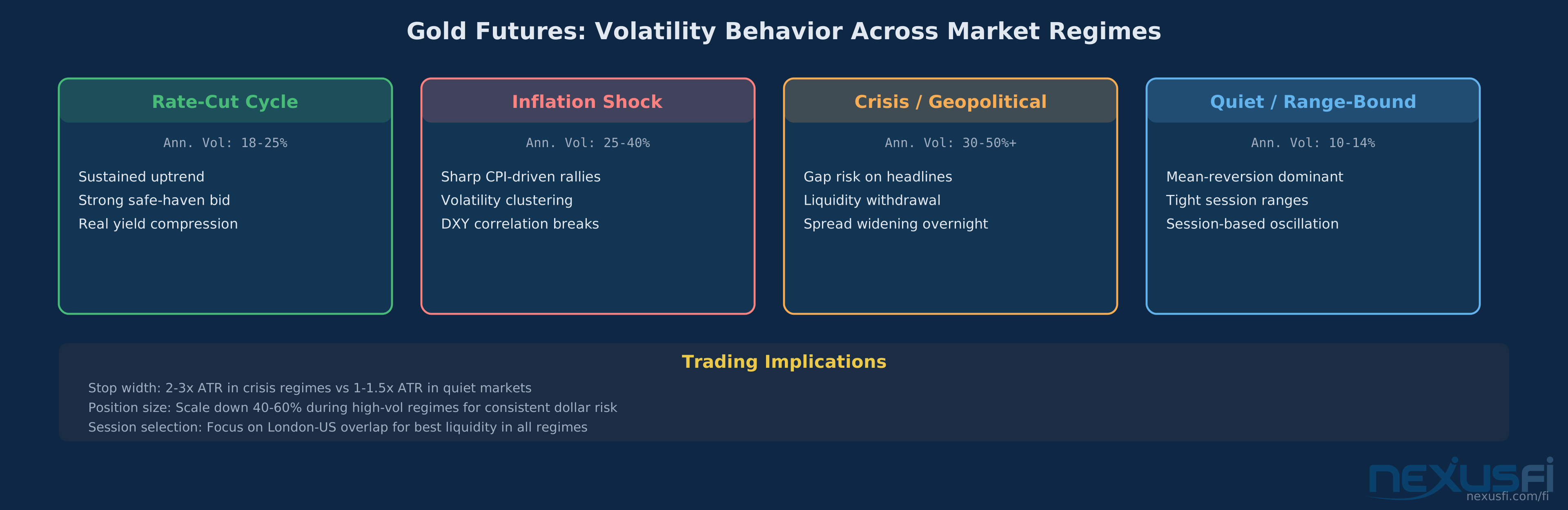
DXY — The Primary Correlation #
Negative correlation, typically -0.4 to -0.8. Strongest during normal market regimes. Breaks down during extreme risk-off (both rise) or during commodity supercycles (both driven by different macro forces).
Practical application: many gold traders keep DXY or a USD basket visible on their screens. A divergence — gold rising while DXY also rises — is a signal to pay attention. Either the correlation is about to reassert (one of them reverses) or a regime shift is underway.
Treasury Yields #
Negative correlation with real yields, mixed with nominal yields. Gold can rally alongside rising nominal yields if inflation expectations are rising faster than rates — which is exactly what happened during 2021-2022.
Silver (SI) and the Gold-Silver Ratio #
Gold and silver typically move together with gold leading. The gold-silver ratio (GC price / SI price) oscillates between roughly 50:1 and 90:1 over multi-year cycles, with extremes above 100:1 during crisis periods.
Some traders use the ratio as a relative value signal: when the ratio is historically stretched (above 80:1), silver tends to outperform on the next leg of precious metals strength. As @Soycorn noted in his [options portfolio discussions] [6], understanding gold's correlation to silver helps in structuring cross-metal positions.
When Correlations Break #
This matters more than the correlations themselves. All of the above relationships are regime-dependent. During liquidity crises, margin calls force liquidation of everything simultaneously — gold, bonds, equities all sell off together. During structural monetary regime changes (like the shift from QE to QT in 2022), correlation structures can invert for months.
The lesson: use correlations as context, not as signals. A correlation that has been stable for two years can break overnight when the macro regime shifts.
Volatility and Regime Behavior #
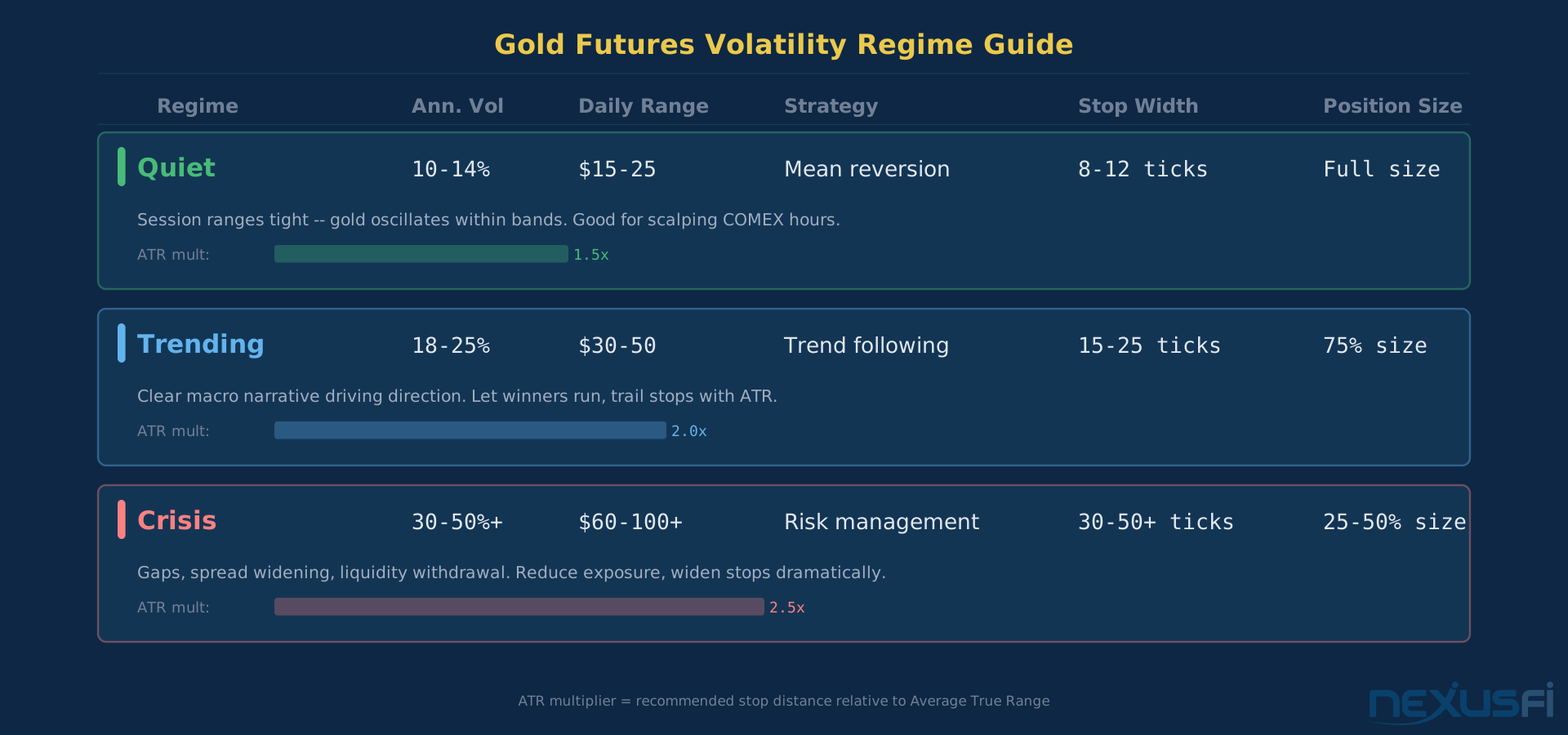
Gold's volatility profile is unlike equities. It can sit in 10-14% annualized volatility for months during quiet macro environments, then explode to 30-50%+ during crises or policy shocks. Volatility clustering is especially pronounced — once gold starts moving, it tends to keep moving.
Historical Patterns #
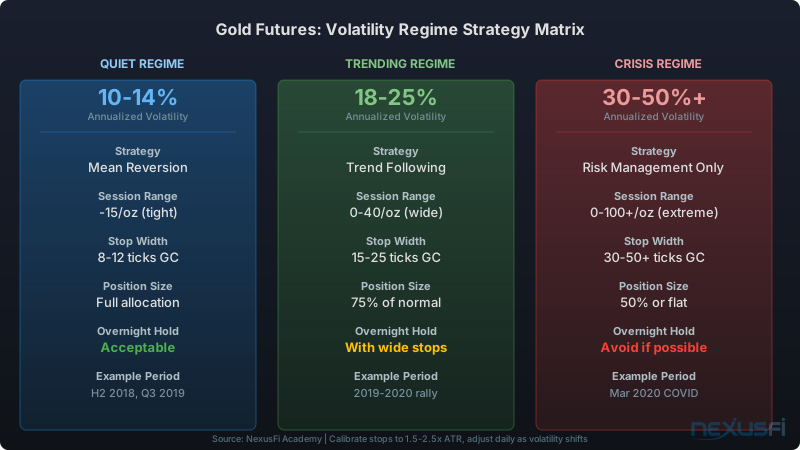
- Quiet regime (Vol 10-14%): Mean-reversion strategies work. Session ranges are tight. Gold oscillates within defined bands, often responding to session-based flows rather than macro catalysts.
- Trending regime (Vol 18-25%): Trend-following dominates. Usually corresponds to a clear macro narrative (rate cuts, dollar weakness). The 2019-2020 rally from $1,300 to $2,000 was a textbook trending regime.
- Crisis regime (Vol 30-50%+): Risk management is the only strategy. Gaps, spread widening, and liquidity withdrawal make execution difficult. The March 2020 COVID crash saw gold drop 12% in a week before rallying 30% over the following months.
@Scalpingtrader's approach [7] captures the key principle here — he doesn't force a method on the market. When the gameplan says range, he fades. When it says trend, he follows. Adapting to the current volatility regime, rather than applying a fixed strategy, is the difference between traders who survive regime shifts and those who get run over.
Impact on Trading Decisions #
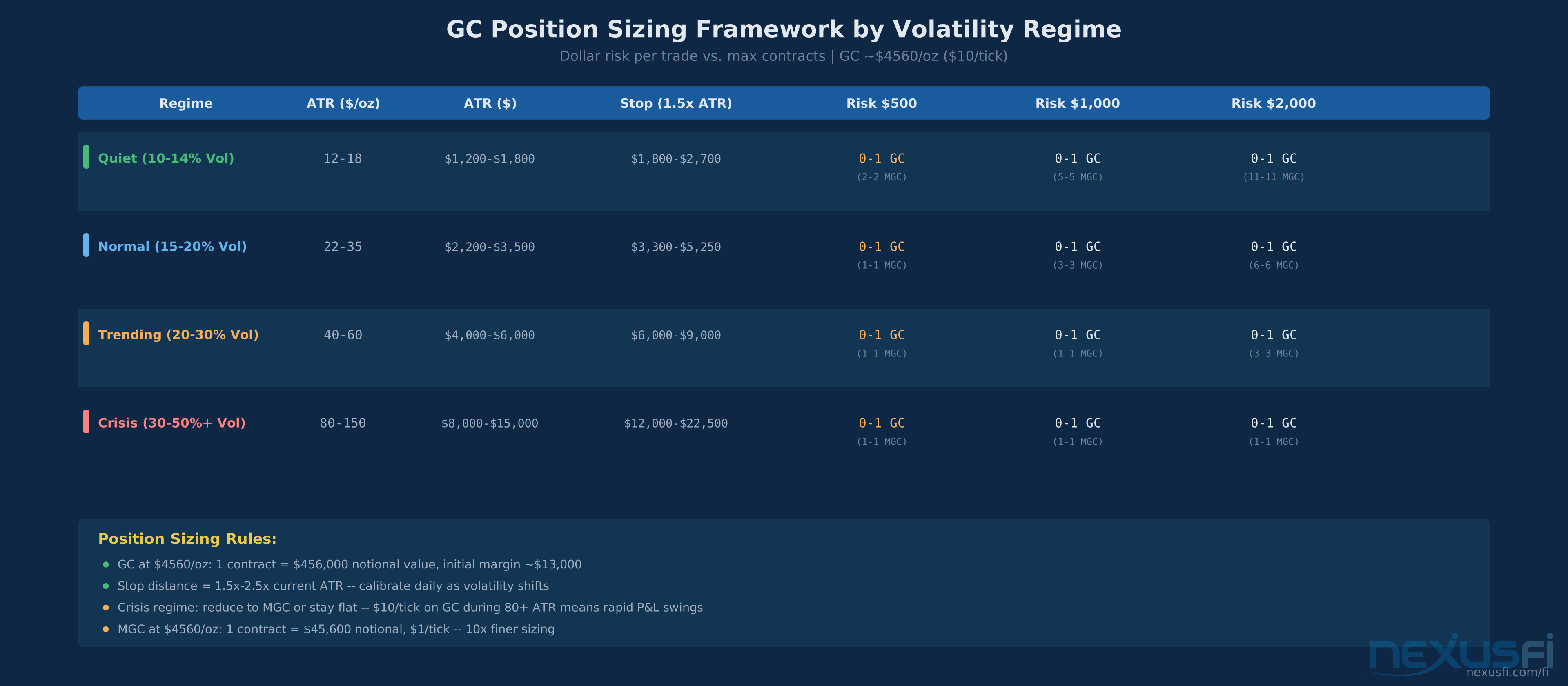
Stop placement must adapt to regime. A 10-tick stop on GC might be appropriate in a quiet environment but represents noise during a crisis regime. The standard approach: calibrate stops to 1.5-2.5x current ATR, adjusting daily as volatility shifts.
Position sizing follows the same logic. If you target $500 risk per trade, that's 50 ticks on GC in a quiet market but needs to be reduced to perhaps 2-3 contracts when ATR doubles during high-volatility periods.
Seasonal Patterns #
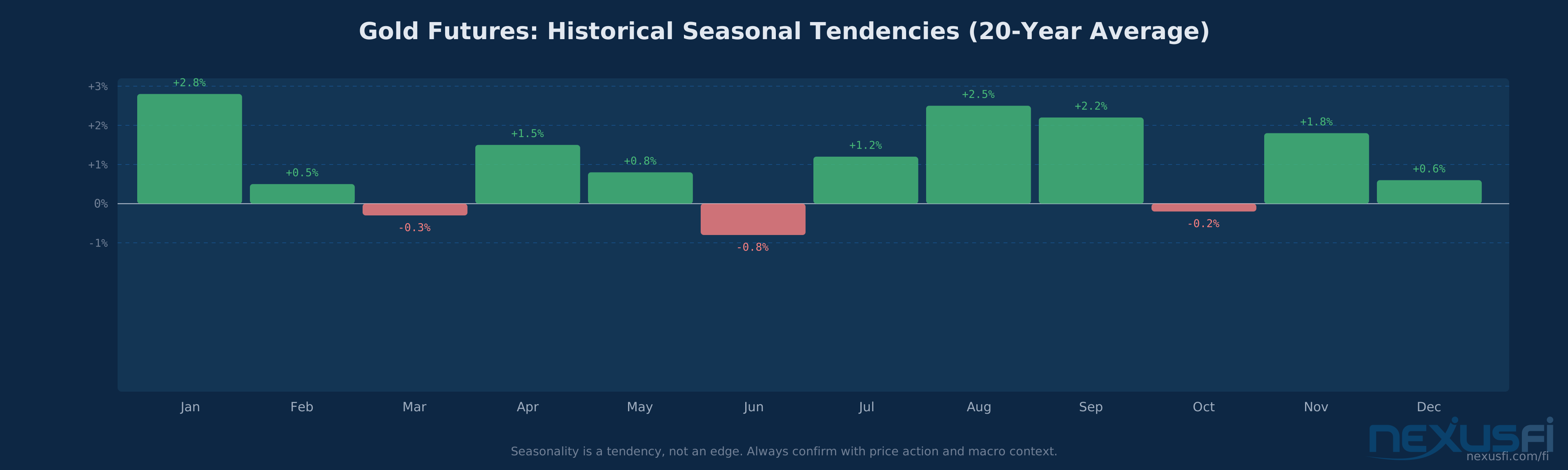
Gold exhibits historical seasonal tendencies, though these are guidelines rather than edges:
- January: Historically the strongest month, driven by post-holiday demand, Chinese New Year buying, and new-year portfolio allocation
- August-September: Typically strong as Indian festival season (Diwali, Dhanteras) drives physical demand, and institutional hedging for year-end increases
- March and June: Historically the weakest months, often corresponding to periods when macro catalysts are absent and positioning is light
- November: Often strong as year-end portfolio hedging demand picks up
The critical caveat: seasonal patterns in gold are tendencies measured over 20+ year averages. In any given year, the macro regime will override seasonality completely. A rate-hike cycle will crush gold regardless of seasonal tailwinds. A geopolitical crisis will drive gold higher regardless of seasonal headwinds.
Use seasonality as a tiebreaker when other factors are neutral — never as a primary directional signal.
Practical Trading Considerations #
Contract Selection: GC vs MGC #
The choice depends on account size and risk tolerance:
- GC: $10/tick means practical minimum account size of $25,000-$50,000 for responsible position sizing. Better liquidity, tighter spreads, deeper book.
- MGC: $1/tick allows much finer position sizing. As @Salao demonstrated over hundreds of trades, [starting with MGC for execution while using GC for analysis] [4] is a proven workflow. Especially valuable for scaling into positions (adding 1-2 MGC at a time vs full GC lots).
Roll Management #
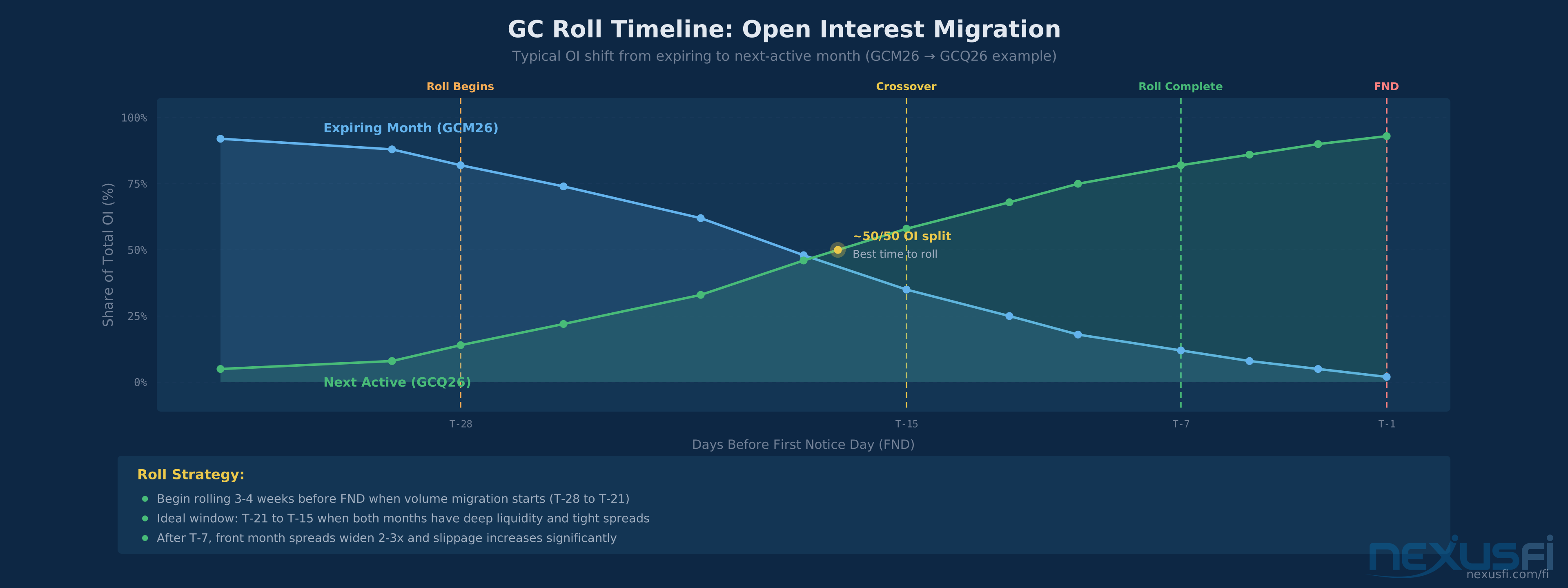
For GC (physically deliverable): roll at least 2-3 weeks before First Notice Day. Volume and open interest migration to the next active month typically begins 3-4 weeks before expiration. Waiting until the last week risks poor fills as liquidity drains from the expiring month.
For MGC (cash-settled): less urgency, but volume still migrates early. Roll when the next month's volume exceeds the current month — usually about 2 weeks before expiration.
Execution Timing #
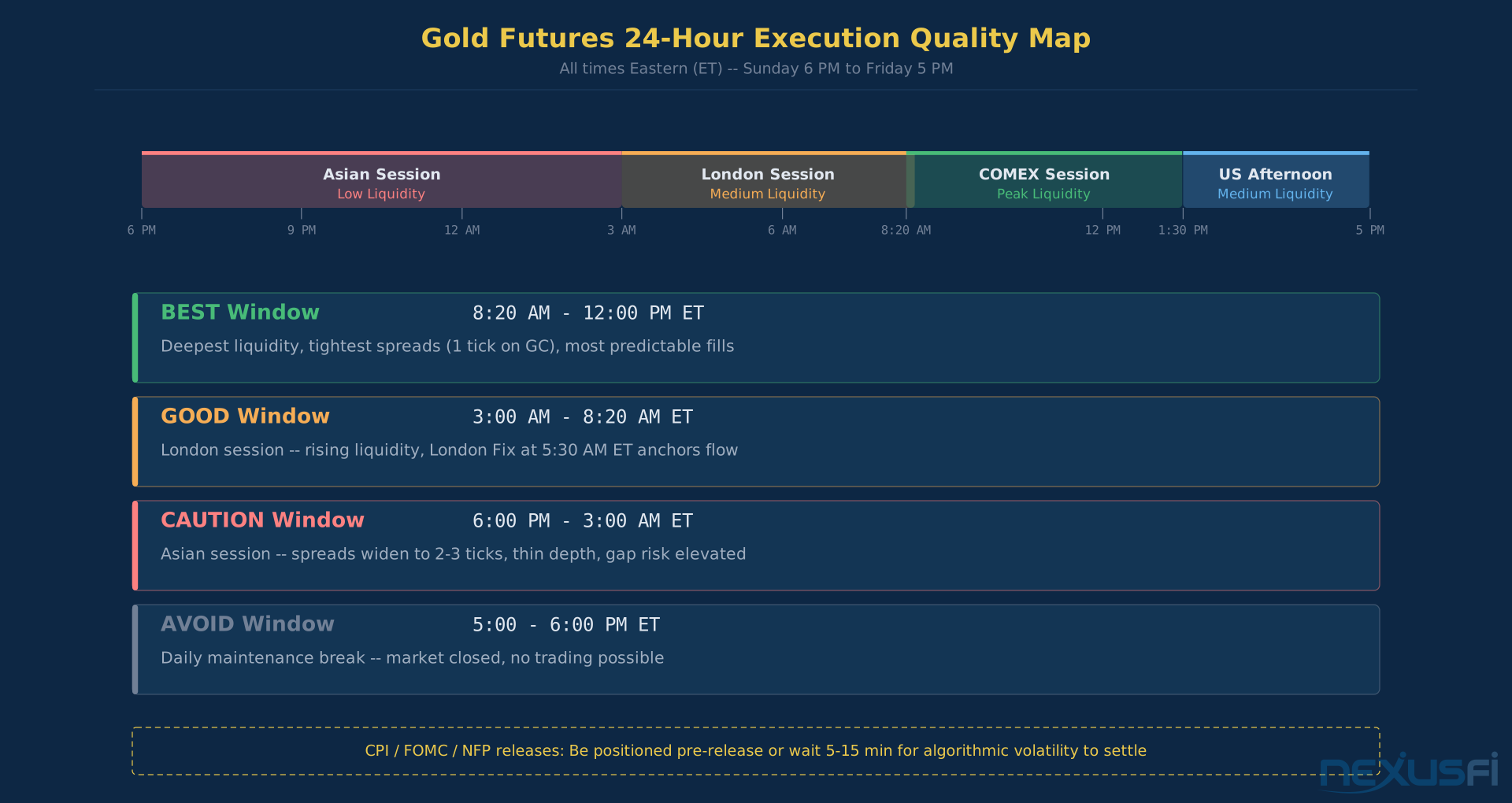
Best execution window: 8:20 AM - 12:00 PM ET (COMEX open through midday). Deepest liquidity, tightest spreads, most predictable order book behavior — the prime window for scalping strategies on GC. Worst execution: 5:00-6:00 PM ET (market closed for maintenance) and the first hour of the Asian session (thinnest liquidity).
For event-driven trades around CPI/FOMC/NFP: be in position or stay out. The first 30 seconds after a release are for algorithms — human traders should either be positioned pre-release with defined risk or wait for the initial volatility to settle (typically 5-15 minutes).
Overnight Risk #
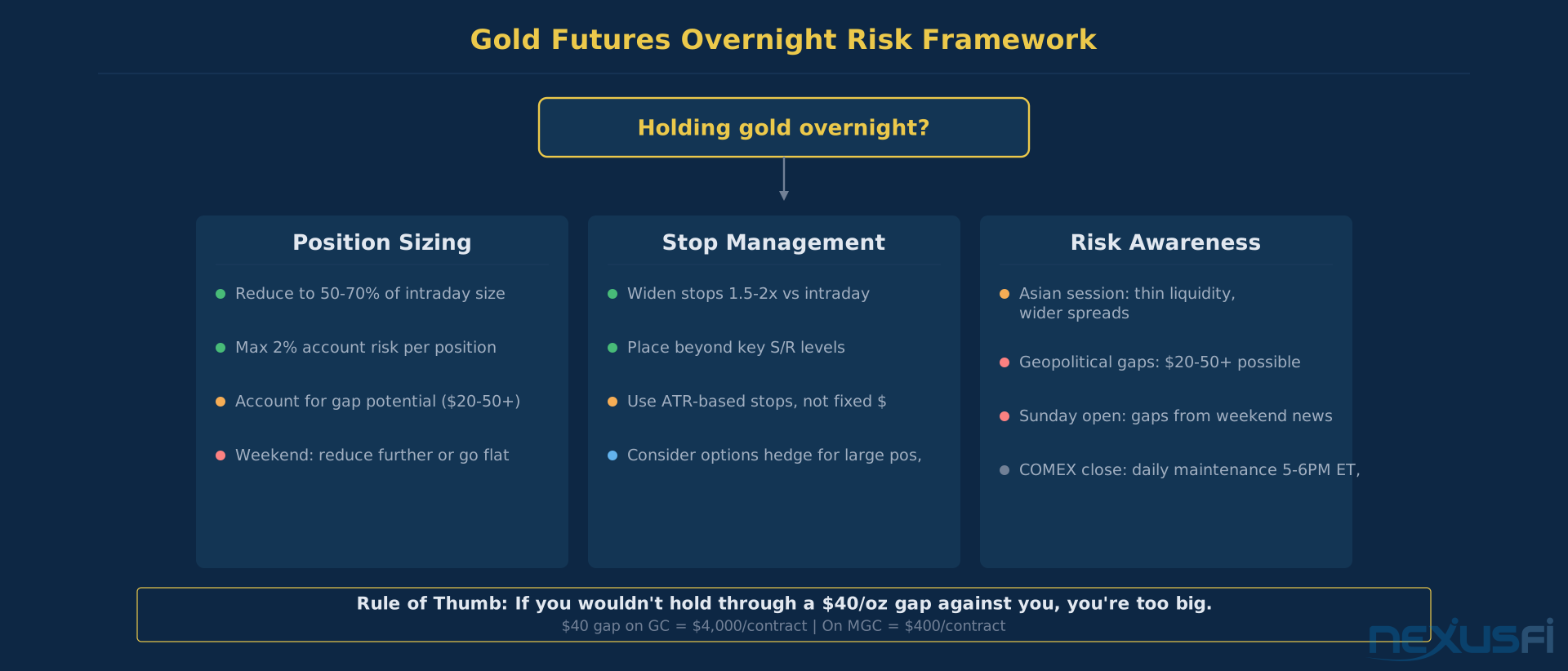
Gold trades nearly 24 hours, but meaningful gaps occur regularly — especially around geopolitical events and Asian-session headline risk. If you carry positions overnight:
- Size down (reduce by 30-50% vs your intraday position)
- Widen stops beyond clear support and resistance levels to account for Asian-session noise
- Know your weekend risk tolerance — Sunday opens can gap much after news breaks during the Saturday-Sunday close
@PilotTrader's volume profile approach [8] demonstrates a systematic framework for gold entries — combining session-specific volume analysis with clear target management at value area boundaries.
Links to Deeper Articles #
Gold futures trading intersects with several broader topics covered elsewhere in the Academy:
- E-mini S&P 500 (ES) Futures — For cross-asset correlation context
- E-mini Nasdaq-100 (NQ) Futures — Growth-sensitive equity exposure, often inversely correlated with gold during risk-off
- Crude Oil (CL) Futures — Another commodity with shared macro sensitivity (inflation, USD)
- Average True Range (ATR) — Essential for gold volatility-adjusted stop placement
- Support and Resistance — Key levels in gold often attract significant order flow
- Risk Management — Position sizing frameworks applicable to gold
- Scalping Strategies — Applicable to GC during high-liquidity COMEX sessions
Gold is one of the most liquid, most macro-sensitive, and most technically responsive futures markets in the world. It rewards traders who understand its unique character — part safe haven, part monetary asset, part geopolitical barometer — and who adapt their approach to the prevailing regime rather than forcing a single methodology across all conditions.
Knowledge Map
Prerequisites
Understand these firstGo Deeper
Build on this knowledgeReferences This Article
Articles that build on this topicCitations
- — Future price and value on 1 contract? (2021) 👍 4“Gold margin requirements discussion”
- — Salao's Journal (2019) 👍 6“Gold trading journal - GC/MGC workflow”
- — Salao's Journal (2019) 👍 6“GC analysis with MGC execution”
- — Salao's Journal (2020) 👍 8“GC trading with lower volatility”
- — CME Switches to Percentage-Based Precious Metals Margins After Record Gold Surge (2026) 👍 1“CME percentage-based margins”
- — Diversified Option Selling Portfolio (2018) 👍 7“GC options and cross-metal positions”
- — Growing seeds from a rotten mind (2022) 👍 6“GC range trading with delta”
- — Pass the Gauntlet?: Using Volume Profile Trend Accumulation Set-Up (2019) 👍 6“Volume profile GC trading”