



ICE Futures US: The Complete Guide to Soft Commodity Futures
Overview #
Every cotton futures contract you trade — the ones that move with the USDA crop report and spike when a hurricane aims at the Mississippi Delta textile corridor — settles at ICE Futures US. So does cocoa, coffee arabica, sugar, orange juice, and the U.S. Dollar Index. These aren't niche products on a forgotten exchange. They're the backbone of the global agricultural derivatives market, and ICE Futures US is where price discovery happens for all of them.
ICE Futures US is the designated contract market for U.S. soft commodity futures. "Soft" isn't a regulatory term — it's industry shorthand for agricultural commodities that aren't grains or oilseeds. The exchange traces its roots to the New York Board of Trade (NYBOT), which the Intercontinental Exchange (ICE) acquired in January 2007 for $1.1 billion. Before that, NYBOT was itself the product of multiple mergers: the Coffee, Sugar & Cocoa Exchange and the New York Cotton Exchange combined in 1998. The lineage matters because these contracts carry decades of institutional knowledge about delivery logistics, crop-year calendars, and fundamental driver cycles that CME Group contracts don't.
ICE Futures US operates under CFTC oversight as a designated contract market (DCM). Clearing flows through ICE Clear US, a derivatives clearing organization (DCO) that sits separately from the exchange entity. ICE uses a hybrid trading model: electronic trading on the ICEBlock and WebICE platforms alongside an open outcry pit at 11 Hanover Square in New York for select contracts and spreads.
If you're a CME trader looking to diversify into softs, the product mechanics are different enough to matter. Contract sizes are set for physical delivery at specific warehouses and ports. Prices often move on fundamentals — Brazilian frost, Caribbean hurricanes, West African political instability — rather than on Fed policy and gamma squeezes. The trader who ignores crop fundamentals in these markets eventually gets buried by someone who doesn't.
New to ICE Futures US? Start with cotton (CT) or sugar (SB) — they're the most liquid among the softs and the most documented in NexusFi's Commodities forum. Coffee (KC) and cocoa (CC) are worth learning once you've got the analytical framework down. Orange Juice (OJ) is more thinly traded and best approached by experienced soft commodity traders.
The Core Contract Suite #
ICE Futures US has six major products that matter for most traders. Here's the honest breakdown of what each one is and who should care about it.
Cotton No. 2 (CT) #
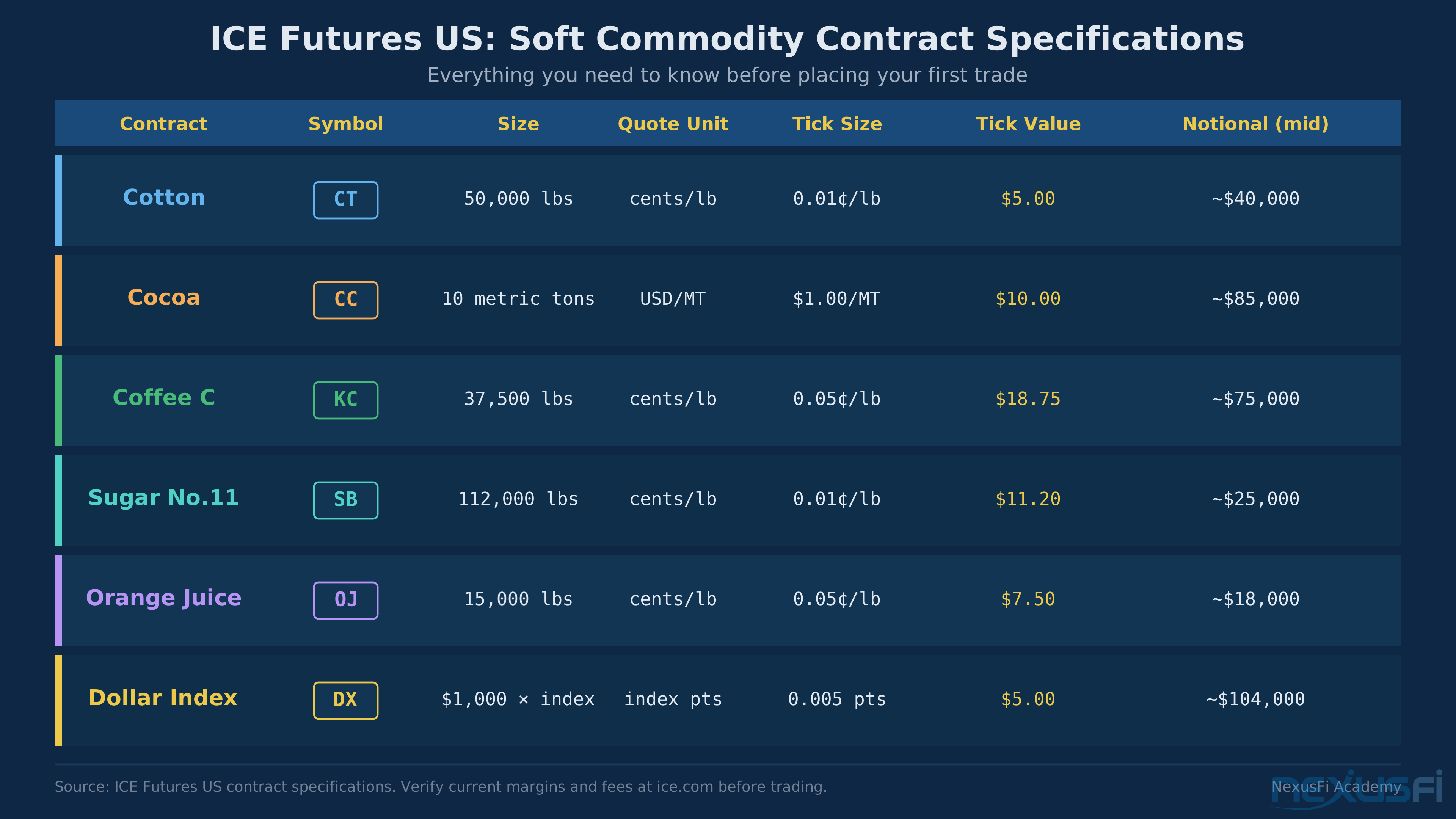
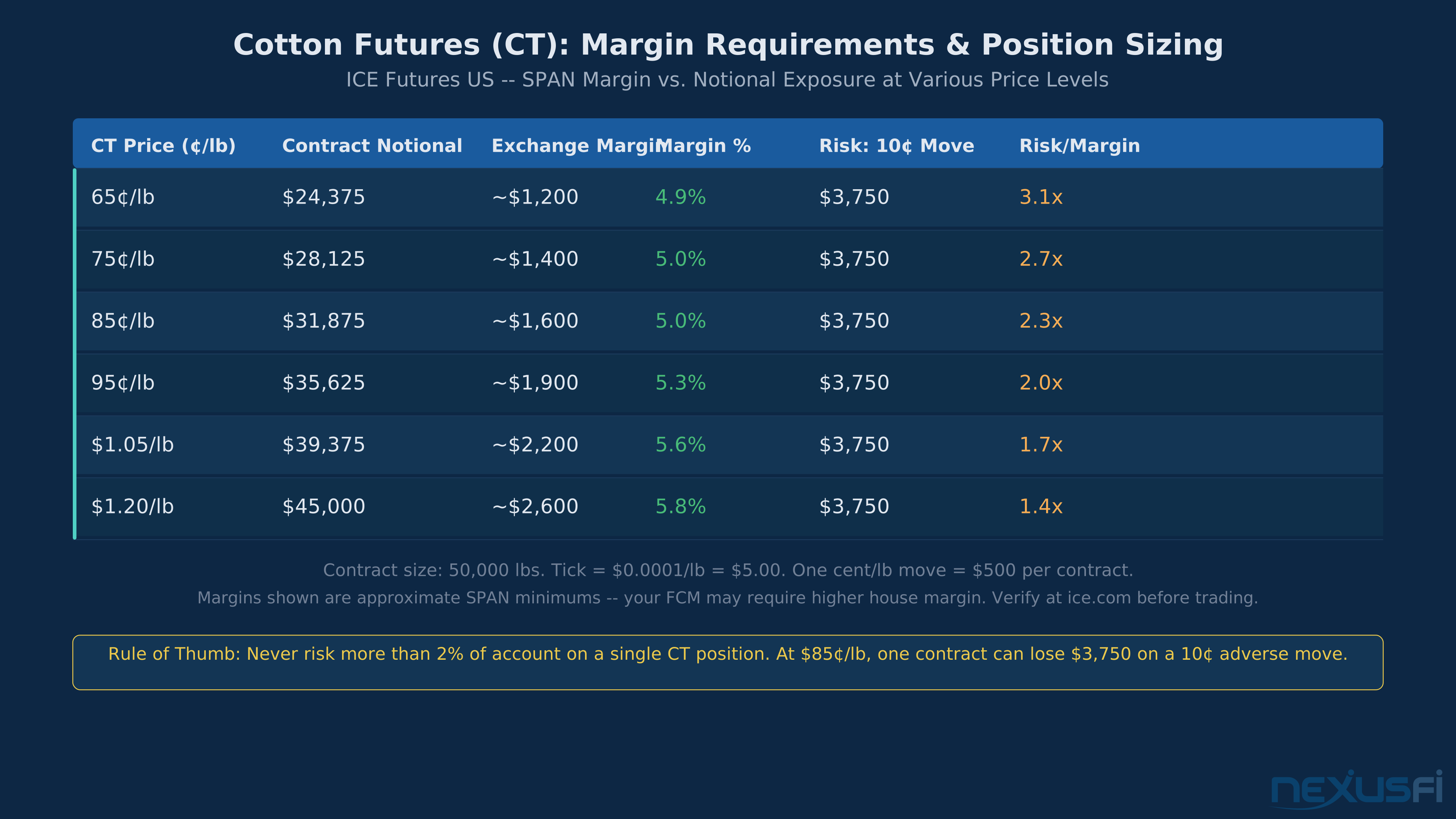
Cotton is priced in cents per pound, trades in 50,000-pound contracts, and settles via physical delivery at approved U.S. warehouses in Memphis, New Orleans, and select Southeast ports. The full tick is $0.0001 per pound ($5.00 per tick), and the minimum price fluctuation for standard futures is 1/100 of a cent per pound.
The USDA's World Agricultural Supply and Demand Estimates (WASDE) report drives cotton pricing more than almost any single data point drives any other commodity. Published monthly, it updates U.S. and global supply and demand projections for cotton, and cotton prices can gap 200-400 points when the data surprises. @myrrdin has been explicit about this dynamic in the NexusFi Commodities forum — cotton fundamental analysis starts with WASDE, then weather in the U.S. cotton belt (West Texas, Mississippi Delta), then mill demand from China and Pakistan.
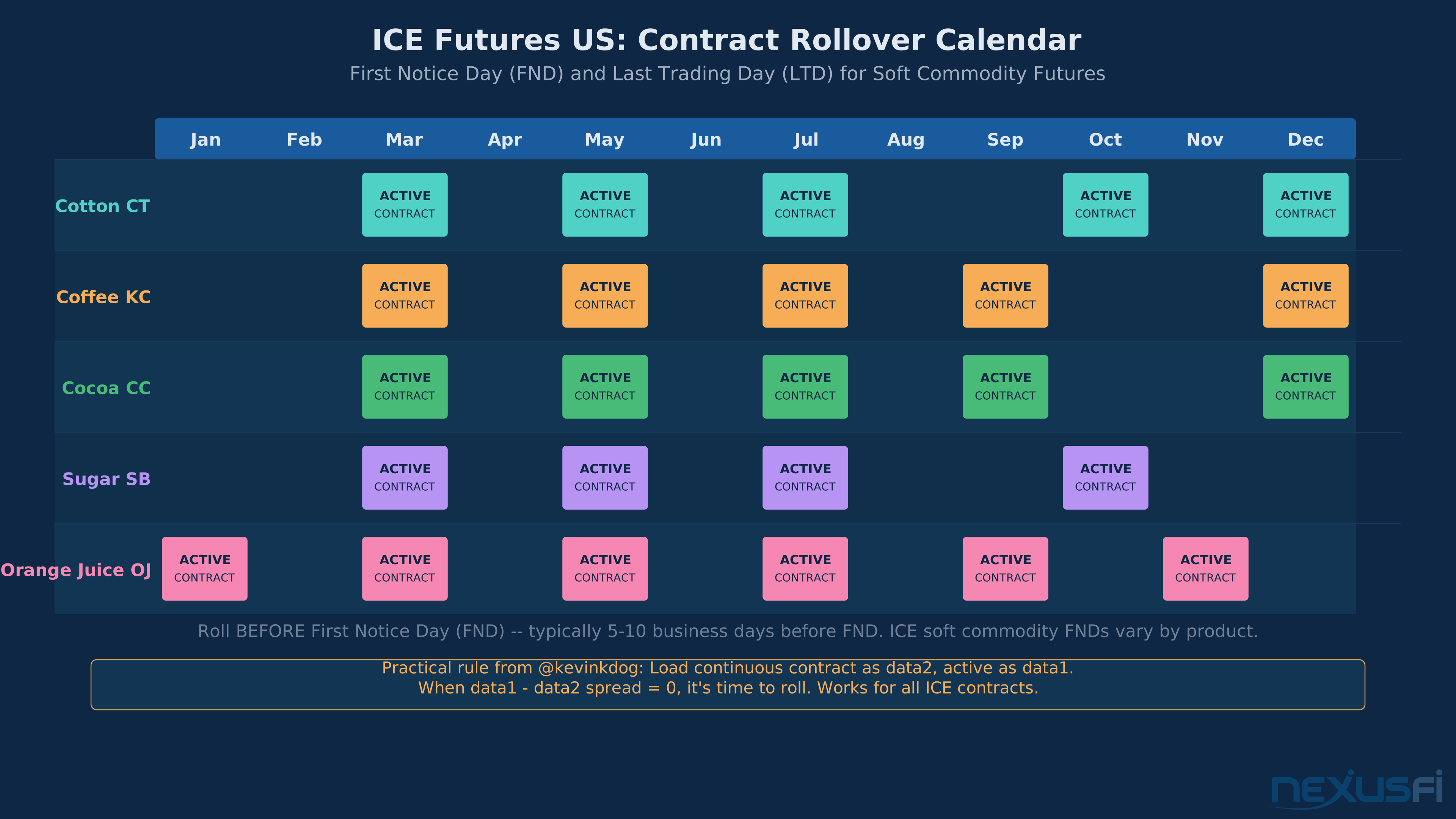
Active contracts: H (March), K (May), N (July), V (October), Z (December). Liquidation date is seven business days before the last business day of the delivery month. If you're holding cotton futures into the delivery notice period, you need to understand warehouse receipt mechanics. Most retail traders roll before first notice day.
The typical margin for one CT contract runs $1,500--$2,500 depending on ICE Clear US requirements and your FCM's house margin. With 50,000 lbs at say 80 cents/lb, the notional is $40,000, so leverage is meaningful but not insane compared to ES.
Coffee C (KC) #
Coffee arabica futures price in cents per pound on a 37,500-pound contract. Full tick is $0.0005 per pound ($18.75 per tick). Delivery is at approved ports in the U.S., Northern Europe, and Mexico — ICE maintains a significant approved warehouse network for coffee because the physical delivery logistics involve warehouse receipts and quality differentials.
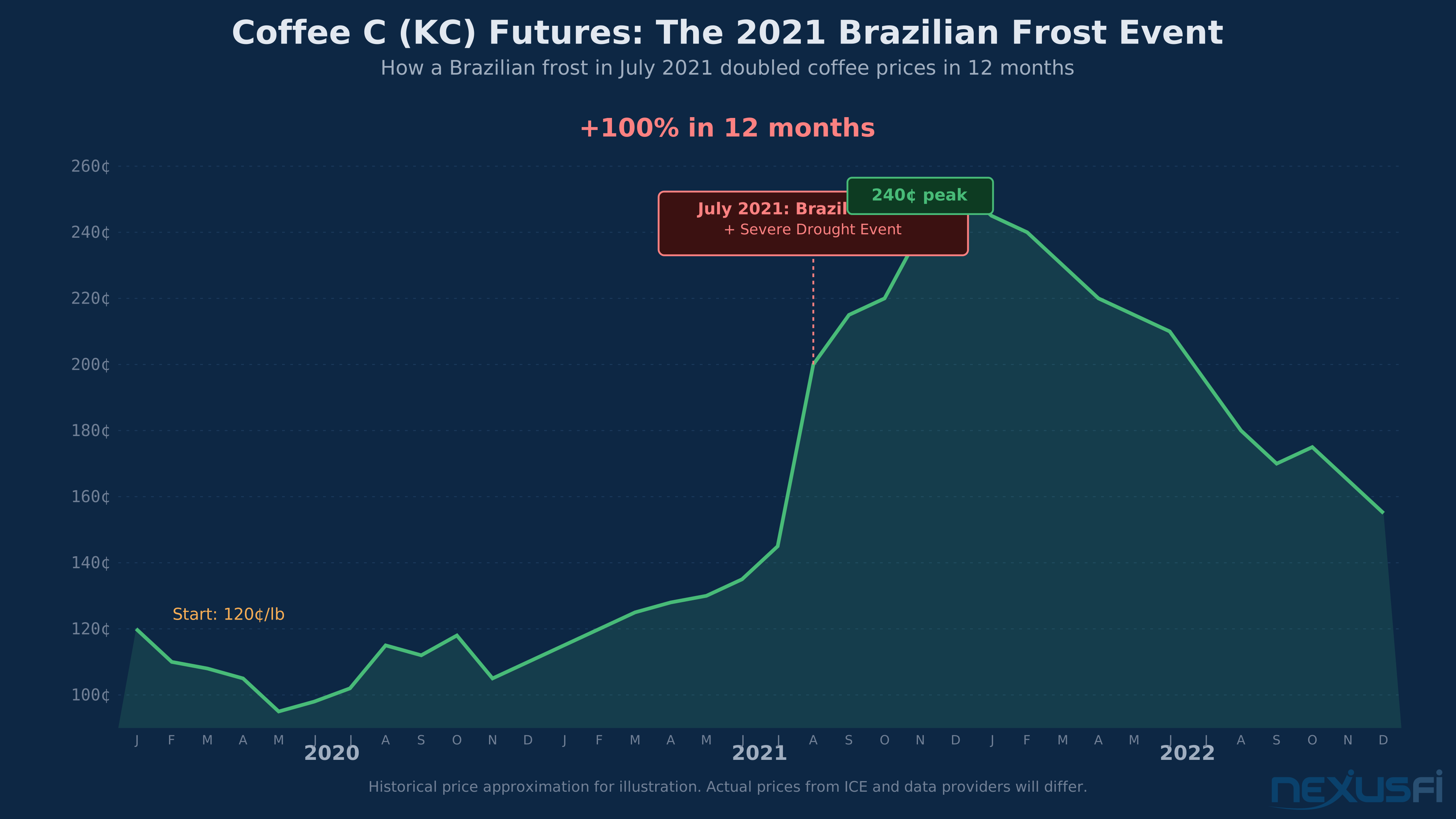
The differential structure is important: coffee from different origins trades at premiums or discounts to the base contract price. Colombian coffee might trade at a premium; Vietnamese robusta gets priced separately on LIFFE (now Euronext). When Brazil — which produces 30-40% of world arabica supply — has a frost or drought event, KC moves violently. The 1994 "Black Frost" in Brazil caused KC to spike from $0.80/lb to nearly $3.00/lb in about 18 months. More recently, 2021 saw Brazil's Minas Gerais face dual disasters (frost in July, severe drought through the growing season), and KC ripped from $1.20 to over $2.50.
As @myrrdin noted in a 2019 post on NexusFi's Commodities section, the analytical framework for coffee combines COT data (tracking commercial vs. speculative positioning), Brazilian crop cycle analysis (arabica is biennial — high-yield years alternate with low-yield years), and Vietnam robusta crop data as a substitute demand signal.
Active months: H (March), K (May), N (July), U (September), Z (December). ICE quotes an "Other" delivery month option but the five main months carry almost all the liquidity.
Cocoa (CC) #
Cocoa futures trade in metric tons, not pounds — 10 metric tons per contract, priced in USD per metric ton. This is your alert: the quoting convention is different from the other softs. Full tick is $1/MT ($10 per tick). The contract code on most platforms is CC.
West Africa — Côte d'Ivoire and Ghana specifically — produces roughly 60% of the world's cocoa beans. Political instability in either country, disease outbreaks (the witches' broom fungus), or unexpected crop failures create sharp moves. The 2023-2024 El Niño event hammered West African cocoa production hard enough that cocoa prices hit $10,000/MT in early 2024 — a price level not seen in 45 years.
The ICE fee structure is a real cost: ICE charges exchange fees that run around $0.96 per side for outright transactions on cocoa, on top of your FCM's commission.
Active months: H (March), K (May), N (July), U (September), Z (December).
Sugar No. 11 (SB) #
Sugar No. 11 is the world benchmark for raw cane sugar — the "No. 11" refers to the FOB (free on board) contract grade. Contract size is 112,000 lbs (50 long tons). Price quotes in cents per pound, with a minimum tick of $0.0001/lb ($11.20 per tick).
Brazil is the world's largest sugar producer and the dominant factor in SB pricing. Ethanol economics matter: Brazil's sugar mills can flex between producing sugar and ethanol depending on relative prices, so Brazilian energy policy and gasoline prices directly affect global sugar supply. India's monsoon performance, Thailand's harvest, and EU subsidies all contribute.
@myrrdin in 2019: "Seasonals für sugar are bullish after early June for the most recent 15 and 30 years (not 5 years), and the chart has followed the seasonal chart nicely since October 2018." Seasonal analysis is genuinely useful in sugar — unlike equity index futures where seasonals get arbed away, agricultural commodity seasonals reflect real physical realities (harvest periods, storage costs, shipping logistics) that create persistent patterns.
Active months: H (March), K (May), N (July), V (October).
Orange Juice (OJ) #
Frozen concentrated orange juice (FCOJ) futures are the smallest of the major ICE Futures US products: 15,000 lbs per contract, priced in cents per pound. Full tick is $0.0005/lb ($7.50 per tick). Florida is the dominant production zone for the U.S. physical market; Brazil supplies global demand.
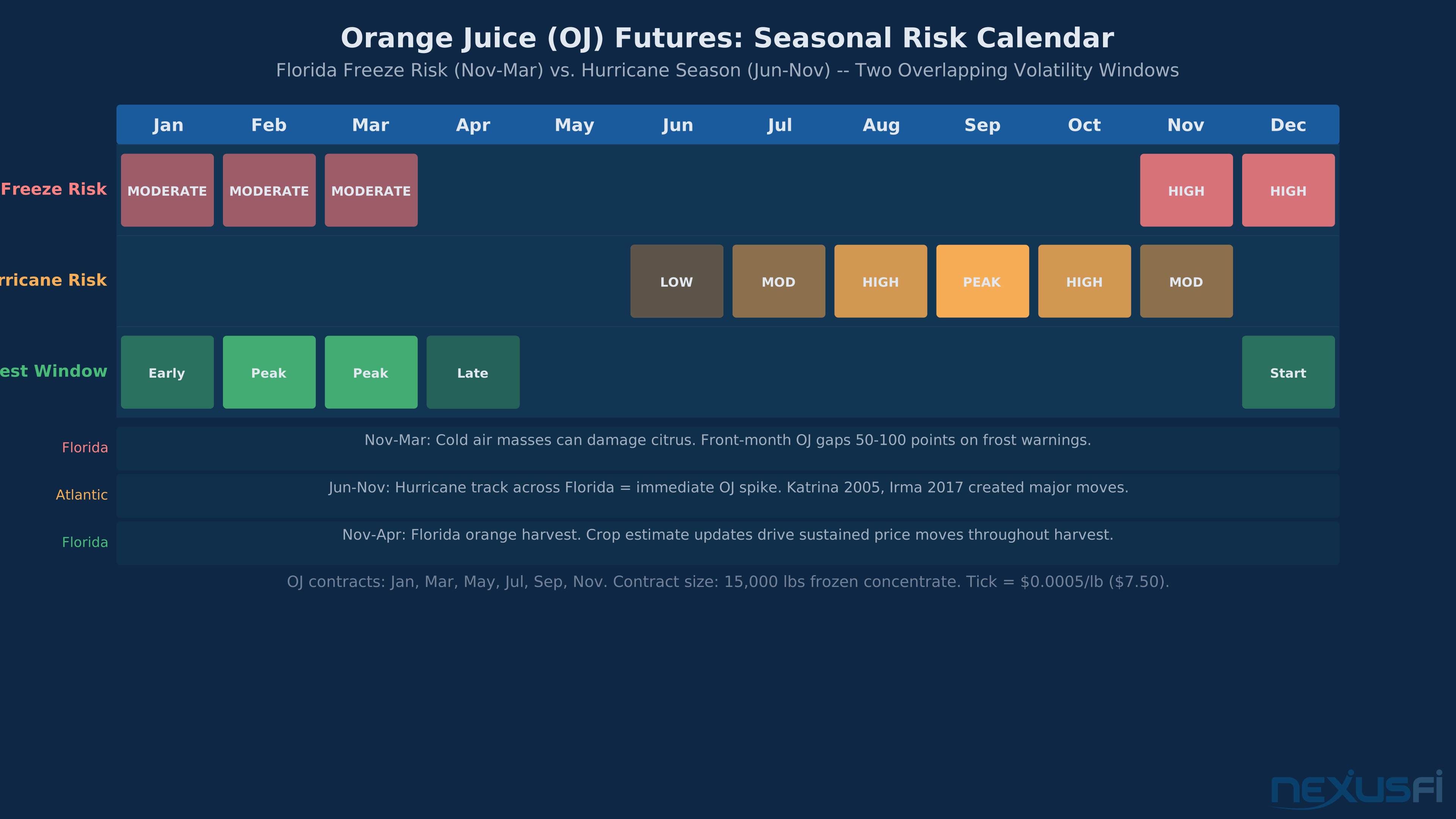
Hurricane season (June through November) is the primary risk event for OJ. A direct hit on Florida's Indian River County or the Immokalee area can destroy the harvest. The 2004 hurricane season (four storms hit Florida) caused OJ to spike from $0.80 to over $2.00. Citrus greening disease (Huanglongbing) has been destroying Florida citrus trees for over a decade, reducing U.S. production structurally.
Liquidity in OJ is thinner than in the other softs. Bid-ask spreads can widen to 30-50 ticks during low-activity periods. OJ is not a scalper's market. Position traders who follow the crop reports and weather patterns can find excellent risk/reward setups, but intraday noise-to-signal ratio is poor.
Active months: F (January), H (March), K (May), N (July), U (September), X (November).
U.S. Dollar Index (DX) #
The Dollar Index (DX) is the odd one out — it's not an agricultural commodity. The Dollar Index measures the value of the USD against a basket of six major currencies: EUR (57.6%), JPY (13.6%), GBP (11.9%), CAD (9.1%), SEK (4.2%), CHF (3.6%). Contract size is $1,000 × the index value; minimum tick is 0.005 ($5.00 per tick).
ICE Futures US is the only U.S. exchange where the DX trades. CME doesn't list it — DX is an ICE-exclusive product, which is one reason many forex traders maintain ICE clearing relationships. DX volume is significant enough that it's effectively the benchmark for USD strength, though the broader forex market moves DX more than DX moves forex.
Settlement is cash-based. No physical delivery. Active months: H (March), M (June), U (September), Z (December).
ICE Fees: What You Actually Pay #
ICE's fee structure is worth understanding before you start trading. Unlike CME, where exchange fees are publicly listed and relatively straightforward, ICE has a multi-tier structure that varies by contract, trade type, and clearing arrangement.
For soft commodity futures (CT, CC, KC, SB, OJ), ICE charges exchange fees per side:
- Cotton: ~$0.98 per side for outrights
- Cocoa: ~$0.96 per side for outrights
- Coffee: ~$1.14 per side for outrights
- Sugar: ~$0.70 per side for outrights
- Orange Juice: ~$0.90 per side for outrights
These are exchange fees only. Add your FCM's commission (typically $0.25--$1.50 per side depending on your volume), NFA fee ($0.02 per side), and clearing costs. All-in, a round-turn in coffee might cost $3.00--$5.00 total.
ICE also charges data fees separately from exchange fees. ICE Futures US market data requires a separate subscription — typically routed through your platform — and the fees are meaningful. Traders who compare "cheap" brokers often forget that ICE market data through platforms like CQG, Trading Technologies (TT), or Rithmic can add $50--$200/month depending on the package.
The fees are real, but as
Trading Hours and the ICE Session Structure #
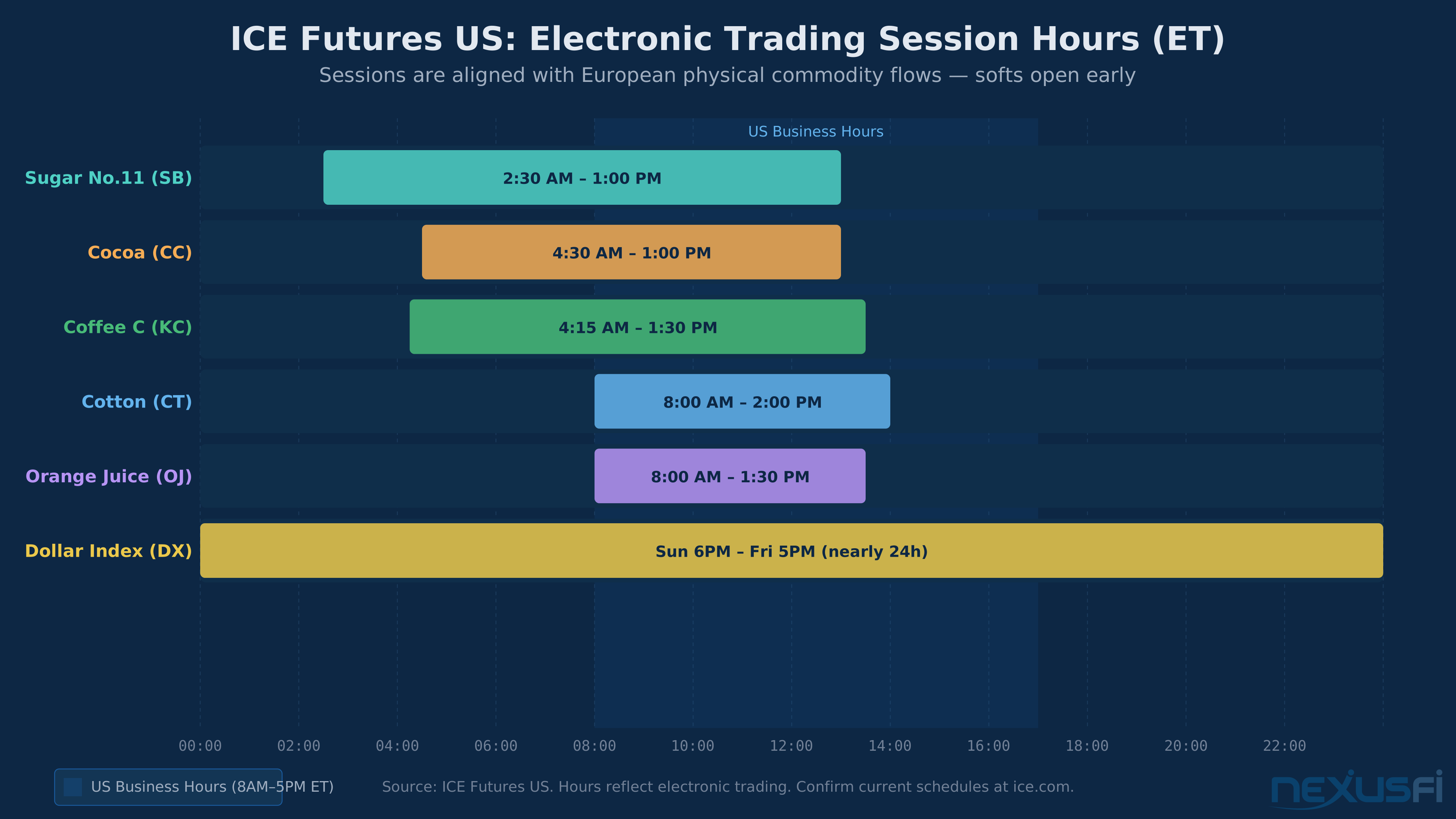
ICE Futures US operates on a hybrid electronic/open outcry model, though electronic trading now dominates. The trading day structure for soft commodity futures:
Cotton (CT)
- Electronic: 8:00 AM — 2:00 PM ET
- Open Outcry: 8:00 AM — 2:00 PM ET (closing period at 2:00 PM)
Cocoa (CC)
- Electronic: 4:30 AM — 1:00 PM ET
Coffee (KC)
- Electronic: 4:15 AM — 1:30 PM ET
Sugar No. 11 (SB)
- Electronic: 2:30 AM — 1:00 PM ET
Orange Juice (OJ)
- Electronic: 8:00 AM — 1:30 PM ET
Dollar Index (DX)
- Electronic: Sunday 6:00 PM — Friday 5:00 PM ET (nearly 24 hours)
The sugar market opens at 2:30 AM ET because the physical sugar market is heavily influenced by European trading, and ICE wants to capture that European open overlap. For U.S.-based traders, this means setting alerts rather than sitting at the screen at 2:30 AM unless you're specifically a sugar specialist.
The 4:00 AM — 1:00 PM window captures both the European and U.S. sessions for cocoa and coffee, which is intentional — European trading firms are major participants in these markets given the physical commodity flow relationships between West Africa and European chocolate manufacturers, and between Latin America and European coffee roasters.
How Physical Delivery Works #
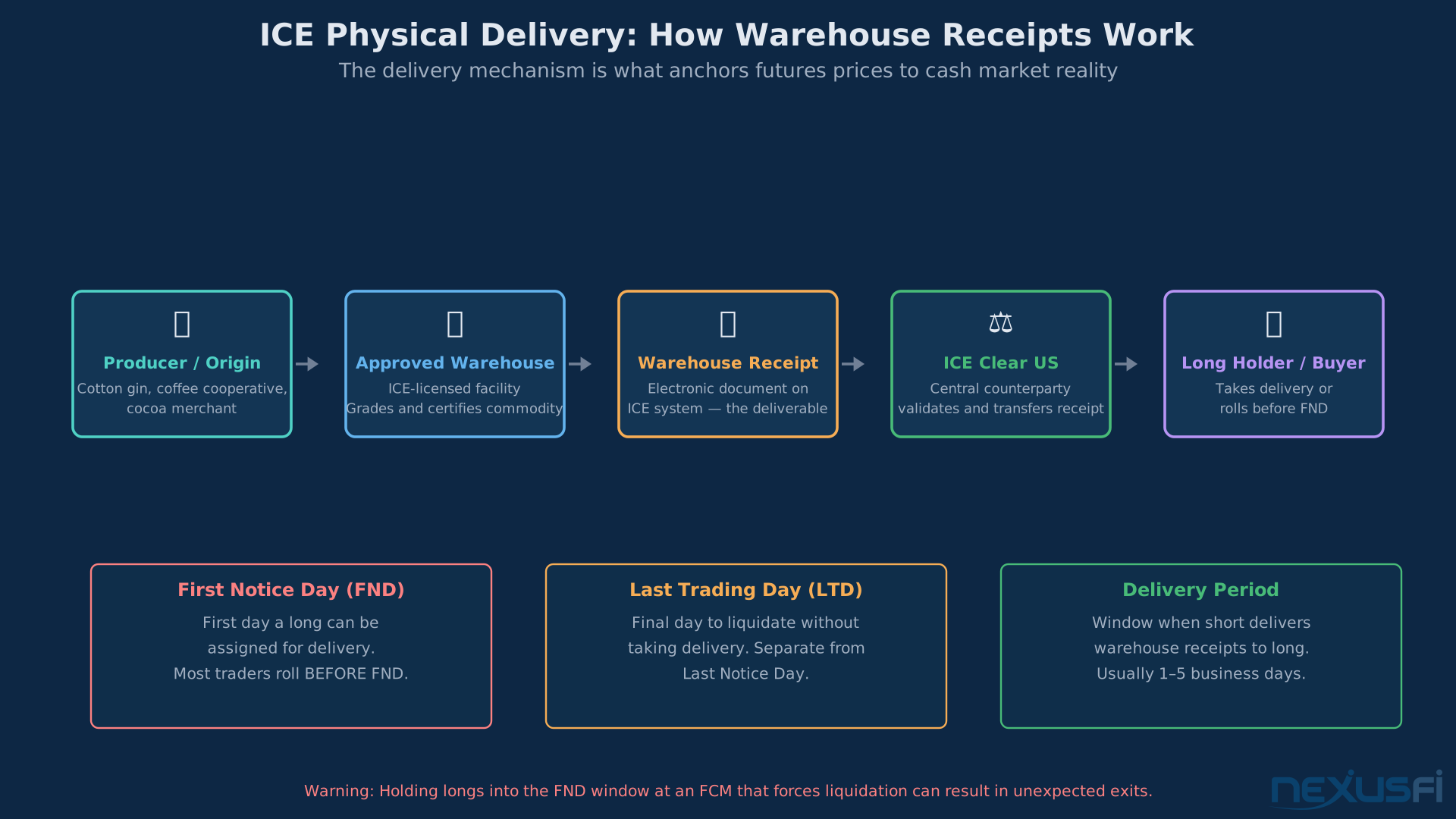
Physical delivery is the mechanism that keeps ICE futures prices anchored to cash market reality. Most retail traders never take delivery — you roll before first notice day. But understanding how delivery works clarifies why ICE prices behave the way they do.
Cotton delivery: Physical cotton is delivered via warehouse receipts at approved warehouses in the U.S. — Memphis, Galveston, Houston, New Orleans, and other points. The warehouse receipt represents specific bales that have been graded. Cotton grade and staple affect the basis between spot and futures.
Coffee delivery: Green coffee beans are stored in ICE-approved warehouses in U.S. ports (New York, New Orleans, Delaware), Northern European ports (Antwerp, Bremen, Hamburg, Rotterdam), and Mexican ports. Quality differentials by origin are significant — you might receive Colombian (premium) or Ethiopian (discount) depending on what's in the warehouse.
Cocoa delivery: Cocoa is delivered as bags of cocoa beans to approved warehouses in Authorized Delivery Points in the U.S. (Port of New York, Delaware) and Europe. Grade specifications apply.
Sugar No. 11: FOB, free on board, at approved loading ports in any country that produces raw sugar. This is genuinely global — ICE maintains an approved port list that includes Brazilian, Indian, Thai, and Caribbean ports.
Orange Juice: FCOJ-A grade, delivered to warehouses in Florida and New Jersey.
The practical implication: if you're trading ICE futures with any interest in the physical market (hedgers, agricultural trading firms, commodity merchants), the delivery specification defines the exact quality and location of what you're buying or selling. For pure financial traders, the delivery mechanism creates predictable convergence behavior as contracts approach expiration — basis traders and arbitrageurs keep futures prices honest relative to spot.
ICE Clear US: The Clearing Structure #
ICE Clear US (ICUS) is the derivatives clearing organization for ICE Futures US. It sits between buyers and sellers as the central counterparty for all cleared trades. Understanding ICUS matters if you're thinking about margin and clearing risk.
ICUS requires members to post initial margin based on a SPAN (Standard Portfolio Analysis of Risk) methodology. ICE sets SPAN parameters based on volatility analysis and worst-case scenario modeling for each product. Your FCM then applies house margin on top of ICUS's minimum — the "customer margin" you see in your account is always at least the exchange minimum, often higher.
Cross-margining: ICE Futures US and ICE Clear Europe (ICEU) have cross-margining arrangements for certain spread positions. If you're long KC and short London Robusta (LIFFE), a proper clearing arrangement can reduce your combined margin requirement versus holding each position at its full margin.
Clearing membership for FCMs at ICE Clear US requires passing ICE's financial and operational standards. When you trade ICE futures through your broker, your FCM is the clearing member, and you're their customer. The systemic risk chain is: you → your FCM → ICE Clear US. Unlike Lehman Brothers (which went through LCH.Clearnet in Europe), ICUS has maintained clean operations through multiple market stress events including the 2020 COVID volatility spike and the 2024 cocoa price crisis.
Fundamentals Drive Soft Commodity Prices #
This is where ICE markets diverge most sharply from CME equity futures. Price discovery in soft commodities is at the core-driven in ways that technical analysis alone can't capture.
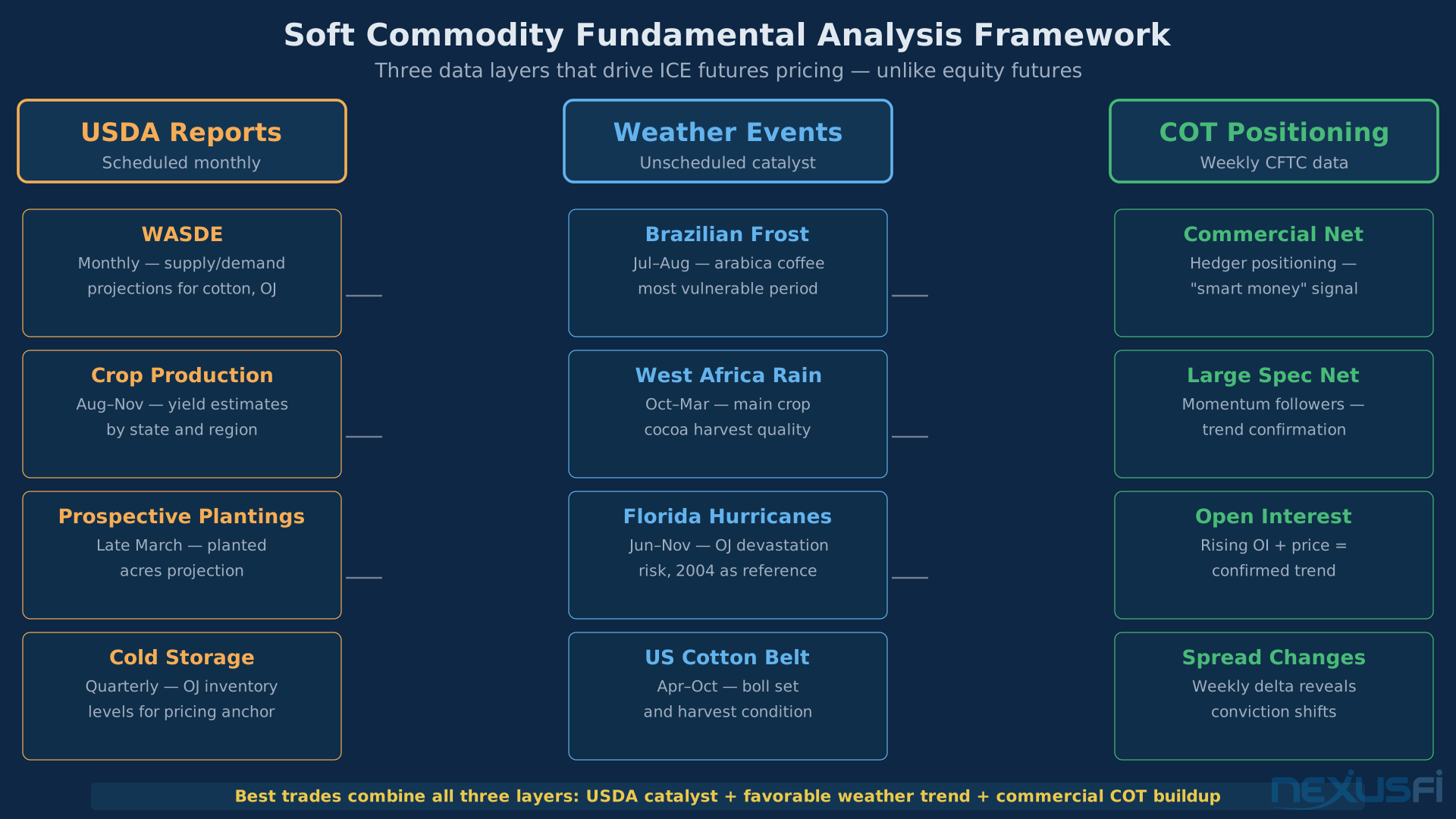
The USDA report calendar: Every month, USDA publishes the WASDE, which updates supply and demand projections for U.S. and global agriculture including cotton, and periodic supply reports for other commodities. The Prospective Plantings report (late March) and Crop Production reports (August-November) are major events for cotton. Published at 12:00 PM ET, these reports create predictable volatility windows.
Brazilian production cycles: Brazil dominates global arabica coffee (KC) and sugar (SB) production. The Brazilian coffee harvest cycle is biennial — arabica trees alternate between high-yield and low-yield years. Understanding where Brazil is in that cycle affects your medium-term positioning bias. For sugar, watch Brazilian hydrous ethanol prices (CEPEA) — when ethanol is more profitable than sugar, mills flex toward ethanol production, reducing sugar supply.
Weather windows: Each crop has specific weather-sensitive periods:
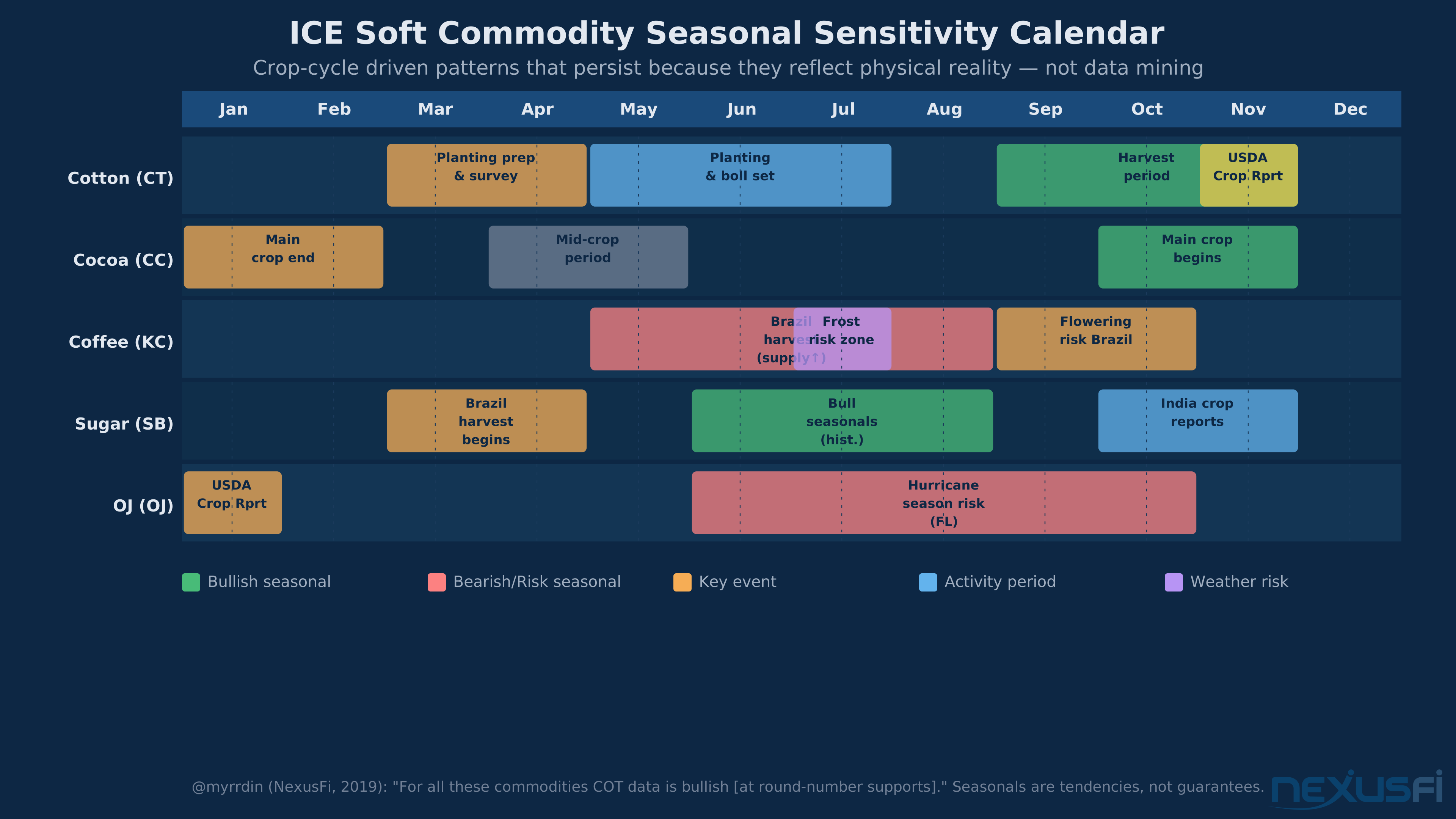
- Cotton: Planting (April-May), boll set (July-August), harvest (September-November)
- Coffee: Flowering (September-November in Brazil), cherry development (December-February)
- Cocoa: Main crop harvest (October-March in West Africa), mid-crop (April-September)
- Sugar: Harvest crush season varies by hemisphere
- OJ: Freeze risk (November-March), hurricane season (June-November)
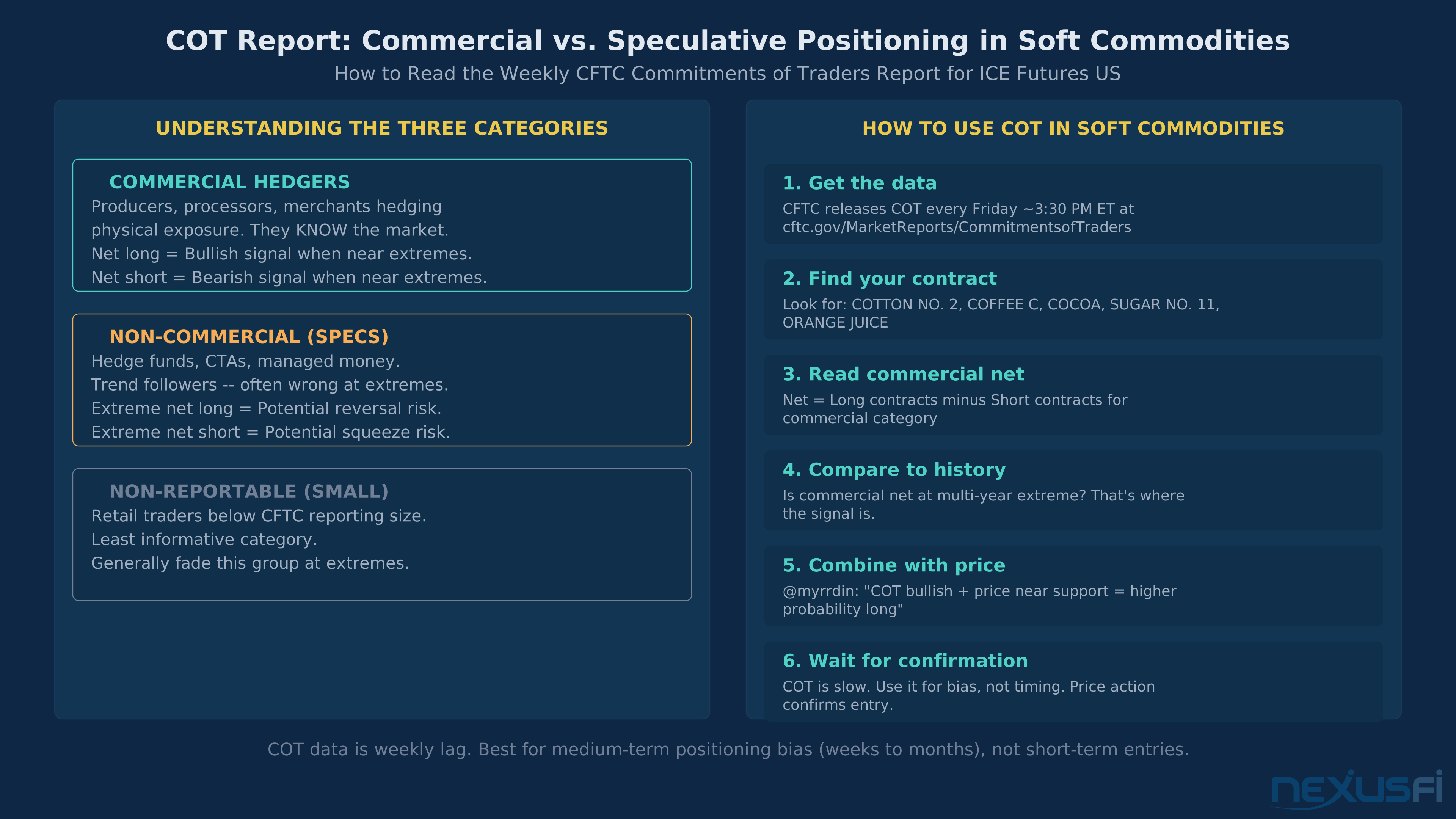
COT data: The CFTC's Commitments of Traders report, published weekly, shows commercial, non-commercial (speculative), and small trader positioning for each ICE contract. @myrrdin uses COT as a primary confirmation signal for softs trades. When commercials are heavily net long at price levels near historical support, the risk/reward for speculative longs improves.
@myrrdin's Framework (from NexusFi Commodities forum): "For soft commodities, I start with COT data for positioning bias, then check price relative to historical support/resistance. When commercials are net long at multi-year extremes near price support, the trade setup has a genuine edge." This multi-layer approach — COT + price structure + seasonal tendency — is the foundation of professional soft commodity analysis.
Technical Analysis Considerations for Soft Commodities #
Technical analysis works in softs — with adjustments. Price behavior in at the core-driven markets is choppier during extended periods of stable fundamentals, then moves explosively when fundamentals shift. The classic technical setups work, but they're more vulnerable to being wiped out by a fundamental trigger than they would be in equity index futures.
Support and resistance from historical price memory: Coffee at $1.00/lb, Sugar at $10/lb, Cotton at $0.70/lb — these round number levels accumulate significant historical trading activity and tend to hold or produce violent rejections. @myrrdin explicitly noted in 2019 that all three (KC at $1, SB at $10, OJ at $1) were near round-number supports. These levels get etched into market memory because they represent economic breakeven thresholds for producers.
Seasonality patterns: Agricultural commodity prices have persistent seasonal tendencies tied to crop cycles. Sugar has documented bullish tendencies in early June (northern hemisphere pre-harvest period), coffee tends to weaken during Brazilian harvest (May-September), cocoa tends to strengthen before the main crop begins. These are tendencies, not certainties — but they're more persistent than seasonal patterns in financial futures because they reflect real physical realities.
Open interest tracking: Thin months in soft futures have poor intraday liquidity. Pay attention to open interest concentration. For KC (coffee), the December and March contracts typically carry the most open interest. OJ often sees concentration in the March and July contracts. Trading the front month when it's within two weeks of expiration in a thin market is a recipe for bad fills.
ICE-Specific Risk: Unlike CME equity futures where most retail platforms bundle data costs, ICE market data requires a separate subscription — typically $50-200/month through Rithmic, CQG, or TT. Factor this cost into your all-in cost comparison before assuming ICE is cheaper than alternatives.
ICE Fees vs. CME Fees: What You're Actually Paying #
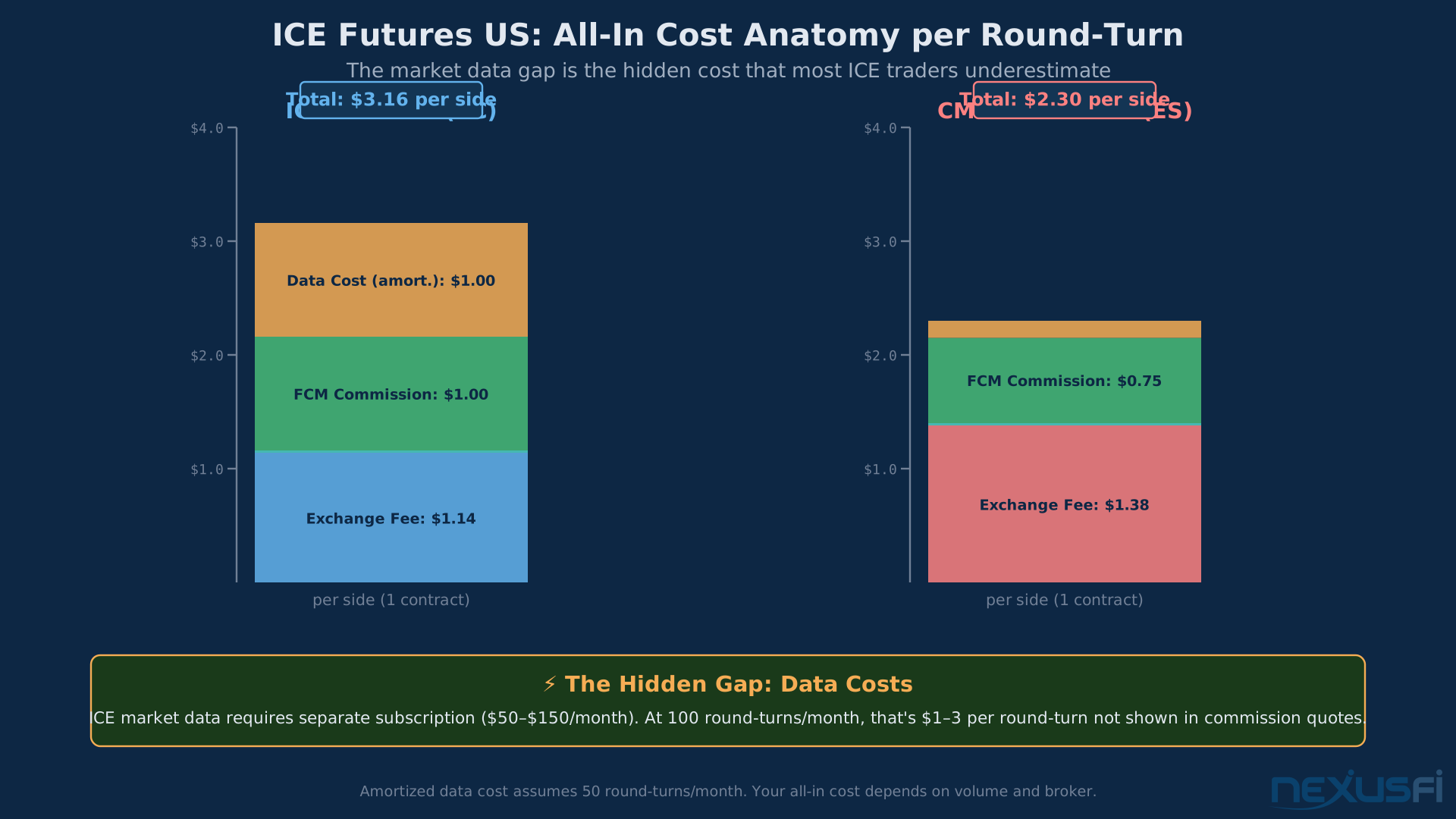
Traders who've only done CME products often underestimate ICE's fee structure. Here's a direct comparison:
CME ES (E-mini S&P 500)
- Exchange fee: $1.38 per side (outrights, 2024 rate)
- NFA fee: $0.02 per side
- All-in (FCM commission included): ~$2.00--$3.50 per side
ICE Coffee KC
- Exchange fee: ~$1.14 per side
- NFA fee: ~$0.02 per side
- All-in: ~$2.00--$3.50 per side
The exchange fees are comparable. The meaningful difference is data costs. CME Group data is widely included in broker packages (Rithmic, CQG, many others include CME data). ICE data requires separate permissioning through ICE's data licensing. Many retail-focused platforms either don't carry ICE data or charge extra for it.
The practical result: if you're at a broker like AMP Futures or TopstepTrader using Rithmic or NinjaTrader, you may need to add an ICE data package to trade soft commodities. Budget an additional $50--$150/month depending on your platform and the specific contracts you want. This is a real barrier that filters out casual ICE traders — which actually creates opportunity because softs are underfollowed relative to equity and energy futures.
Who Should Trade ICE Futures US #
Commodity traders and hedgers: The primary use case. Agricultural processors, food companies, commodity merchants, and agribusiness hedgers all use ICE futures to manage their physical market exposure. When Nestlé or Cargill needs to lock in cocoa costs for their chocolate production schedule, they use CC. When a Brazilian coffee cooperative needs to hedge their next crop, they use KC.
Fundamental-driven speculators: Traders who follow crop reports, weather models, COT positioning, and supply/demand analysis can find real edge in soft commodities. The market rewards research. Technical-only traders often struggle in softs until they integrate fundamental context.
Spread traders: The intermarket spreads in softs (coffee vs. cocoa, sugar vs. ethanol, cotton vs. polyester prices) can create defined-risk opportunities that are largely uncorrelated to equity markets. Coffee-cocoa spreads have historically mean-reverted around supply/demand cycles. Cotton-synthetic fiber spreads respond to energy prices and emerging market consumption trends.
Portfolio diversifiers: If your entire book is ES, NQ, and CL, adding a soft commodity position provides genuine diversification. The correlation between KC (coffee) and ES over rolling 3-month periods is typically low — sometimes even mildly negative during equity stress events when commodity supply disruptions dominate pricing.
Practical Setup: Getting Started on ICE #
Broker choice: Not every FCM supports ICE Futures US. Verify before opening an account. Major FCMs that support ICE include R.J. O'Brien, ADM Investor Services, Marex, Advantage Futures (Chicago), and most introducing brokers that also offer CME. Online retail brokers like Interactive Brokers (IBKR) offer ICE futures with their standard futures data package.
Platform setup: NinjaTrader, Sierra Chart, MultiCharts, and Trading Technologies all support ICE data. The key step is enabling ICE Futures US data permissioning through your data feed provider. Rithmic, CQG, and TT each have separate ICE data packages. With NinjaTrader, you'll typically need to enable ICE through the Kinetick data service settings.
Contract codes: ICE uses standard symbols: CT (cotton), CC (cocoa), KC (coffee arabica), SB (sugar), OJ (orange juice), DX (Dollar Index). On Rithmic, these appear as CT, CC, KC, SB, OJ, DX. On TT, the prefix is typically ICE. Confirm your platform's exact symbology before building charts.
Rollover timing: ICE soft commodity rollover timing differs from CME. @kevinkdog described a practical approach for CC (cocoa) using TradeStation: load the active contract as data1, load the continuous contract as data2, and create an indicator that plots data1-data2. When the spread goes to zero, it's time to roll. This avoids manual date-tracking and works across all ICE contracts.
USDA report calendar: Bookmark the USDA's NASS (National Agricultural Statistics Service) publication calendar. WASDE, Crop Production, Grain Stocks, and Prospective Plantings dates are known months in advance. These are scheduled volatility events — similar to FOMC for bond traders. Position sizing and stop placement need to account for the potential gap moves on report day.
ICE vs. CME: The Definitive Comparison for Futures Traders #
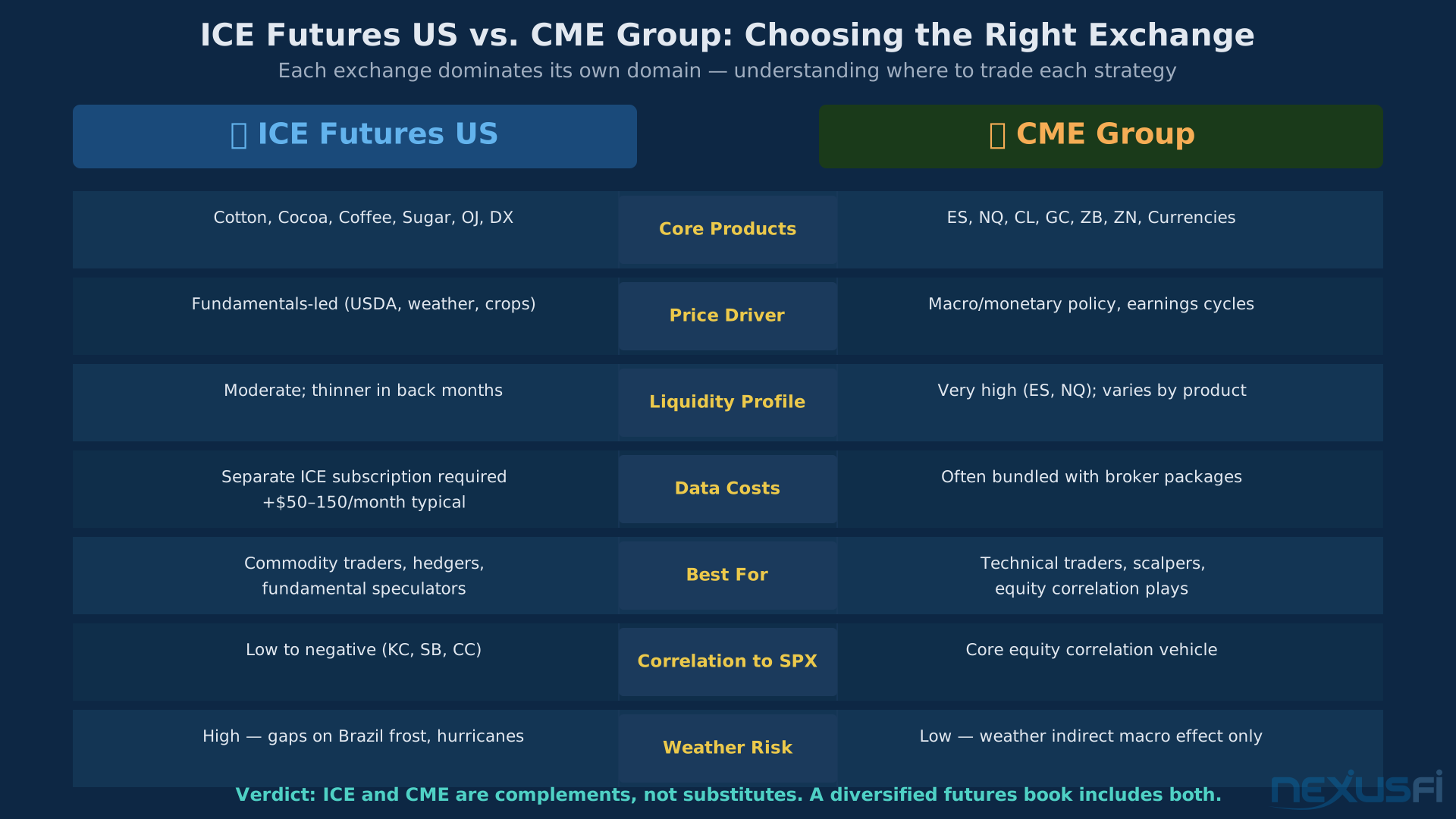
| Factor | ICE Futures US | CME Group |
|---|---|---|
| Core products | Cotton, Cocoa, Coffee, Sugar, OJ, DX | ES, NQ, CL, GC, ZB, ZN, currencies |
| Liquidity profile | Moderate; thinner than CME equity | Very high (ES, NQ) to moderate (commodities) |
| Price driver | Fundamentals-led with technical overlay | Mixed; equity/macro-driven |
| Data costs | Separate ICE subscription required | Often included in broker packages |
| Trading hours | Varied; 4:00 AM — 2:00 PM ET range | Nearly 24/5 electronic for most products |
| Margin requirements | SPAN-based, typically 3--7% of notional | SPAN-based, varies widely |
| Physical delivery | Yes (for most contracts) | Varies; ES is cash-settled |
| USDA report exposure | High (cotton, OJ especially) | Indirect through macro effects |
| Correlation to equity | Low to negative in stress scenarios | Core correlation vehicle |
The honest answer about when to trade ICE vs. CME: if you have a fundamental view on agricultural supply and demand, and you're willing to learn the crop cycles and USDA report calendar, ICE is worth the setup cost. If you're a pure technical trader who relies on tight spreads and high-frequency setups, CME equity and energy futures will frustrate you less.
Key Risks Specific to ICE Futures US #
Gap risk on USDA reports: A surprise in the monthly WASDE can gap cotton 300 points (150 basis points, $1,500 per contract) at the open. This isn't unusual — it happens several times per year. Position sizing and stop placement need to account for this. Standard practice is to either be flat before a major USDA report or carry stops wide enough that a gap doesn't blow through them catastrophically.
Weather event gaps: A hurricane warning for Florida can gap OJ 50-100 points overnight. A frost warning for Brazilian coffee belt can gap KC 500-1,000 points. These events happen on weekends and in the middle of the night. If you carry positions over multi-day periods in soft commodities, you're accepting this tail risk.
Delivery logistics risk: Contracts that enter the delivery period create logistical complications for holders of long positions who are not set up for physical delivery. Know your FCM's policy on forced liquidation near first notice day. Most retail FCMs will liquidate your position automatically before first notice day if you're still long. Understand the timeline.
Liquidity risk in back months: The third and fourth active months in most soft commodity contracts have very thin markets. Trading OJ in the fourth active month may mean a 50-tick spread and 5-contract depth on either side. Always trade front-month or second-month in softs unless you have a specific structural reason to own further-dated contracts.
ICE platform outages: ICE has experienced periodic technology issues over the years. The ICE trading platform had documented outages in 2017 and 2019 that created brief but chaotic market conditions. Having manual order placement capabilities through your FCM's desk is useful insurance for ICE traders — unlike CME, where fallback electronic paths are more redundant.
Building a Soft Commodity Framework #
The traders who consistently profit in ICE soft commodities share a few characteristics. They follow the USDA report calendar obsessively. They track Brazilian and West African weather models during sensitive crop periods. They use COT data to identify when commercial hedgers are positioned — the smart money in agricultural markets is the commercial sector, not speculators.
They also size conservatively. The notional value of a coffee futures contract at $2.00/lb is $75,000 (37,500 lbs × $2.00). A 10-cent-per-pound move is $3,750 per contract. A major fundamental shift can move KC 40-50 cents in a month. That's $15,000--$18,750 per contract. This isn't the same risk profile as trading one ES contract, where a 40-handle move ($2,000) is a bad week but not an account-threatening event.
The practical starting point: read the USDA's World Agricultural Outlook Board (WAOB) briefing page. Follow ICE's own market data and reports (free on their website). Start with one contract — cotton or sugar are the most liquid among the softs. Paper trade through at least one USDA report cycle before using real capital. And find the NexusFi Commodities forum threads — @myrrdin has shared years of fundamental analysis on softs that compresses the learning curve substantially.
ICE Futures US is a different game from CME. Not harder, not easier — different. The traders who respect that difference and build the right analytical framework around it find genuine opportunities that the CME-only crowd completely misses.
Knowledge Map
Prerequisites
Understand these firstGo Deeper
Build on this knowledgeCitations
- — Softs (Fundamentals) (2019) 👍 2“I currently hold long futures (and in the case of coffee short put options) in coffee, sugar, and orange juice. For all these commodities COT data is bullish. Prices of all these commodities are close to round number supports (KC 1, SB 10, OJ 1).”
- — Rollover triggers for ICEUS - CC? (2021) 👍 3“I hate the ICE fees, but being able to trade Coffee, Sugar, Cotton, Orange Juice, Cocoa and the Dollar Index is well worth it.”
- — Selling Options on Futures? (2013)“Please join ICE for a mid-year analysts' roundtable on the cotton, coffee, sugar, cocoa and orange juice markets.”
- — Seasonal Trades (2018) 👍 3“Seasonals für sugar are bullish after early June for the most recent 15 and 30 years.”
- — Rollover dates for GC, SI, ZC and ZS (2013) 👍 13“For commodity futures this is not the case, but most part of the time the roll happens before first notice date.”
- — Ice.com (2024)
- — Nass.usda.gov (2024)
- — Welcome to NexusFi Commodities (2010) 👍 8“The soft commodity markets -- cotton, coffee, cocoa, sugar, OJ -- trade on ICE Futures US and require a different analytical framework than equity futures. Fundamental drivers dominate.”
- — Agricultural Futures Trading Principles (2016) 👍 7“ICE soft commodities have genuine seasonality that persists because it reflects physical reality -- harvest calendars, growing seasons, shipping logistics. Unlike equity seasonal patterns which get arbed away.”
- — Commodity Options Trading (2015) 👍 4“COT data for soft commodities is worth tracking weekly. The commercials in cotton and sugar have good track records of positioning ahead of major USDA reports.”