



RBOB Gasoline (RB) Futures: The Complete Trading Guide
Subtitle: How to trade the world's benchmark wholesale gasoline contract — from crack spreads and RVP specification changes to the most consistent seasonal pattern in energy markets
Overview #
RBOB gasoline futures are the world's benchmark for wholesale gasoline — the contract that refiners use to lock in margins, hedgers use to protect fuel costs, and traders use to express views on driving demand, refinery capacity, and the seasonal patterns that make RBOB one of the most consistently seasonal markets in futures.
Understanding RBOB means understanding three things: the physical product chain from crude oil through refinery to pump, the RVP specification calendar that creates RBOB's most reliable annual price trigger, and the crack spread relationships that tie RB permanently to crude oil (CL) and heating oil (HO).
This guide covers what you need to trade RB futures: exact specifications, what drives gasoline prices, the RVP specification change that creates the most consistent trade in energy markets, crack spread mechanics, calendar spread opportunities including the RBJ-RBZ seasonal, and risk management for this volatile contract.
What Is RBOB Gasoline? #
RBOB stands for Reformulated Blendstock for Oxygenate Blending. The name encodes the key to understanding the contract: RBOB is the refinery blendstock that requires mixing with ethanol at the terminal before it becomes the finished gasoline consumers purchase at the pump. NYMEX RB settles against delivery of RBOB at New York Harbor — a chemically specific product that travels from Gulf Coast refineries via the Colonial and Plantation pipelines before ethanol blending at the rack.
RVP governs the most important seasonal pattern. Reid Vapor Pressure (RVP) measures a fuel's tendency to evaporate. Under Clean Air Act section 211(h), EPA caps summer gasoline RVP at 9.0 psi to curb evaporative VOC emissions that produce ground-level ozone [5]; winter gasoline faces no federal RVP ceiling. The mandatory transition between winter-spec RBOB (RVP 13.5 psi, October-March) and summer-spec RBOB (RVP 9.0 psi, April-September) creates the most consistent annual price trigger in the energy complex.
[1] This cliff-edge specification change forces refiners to produce an entirely different product for summer delivery — a structural, predictable annual impulse.
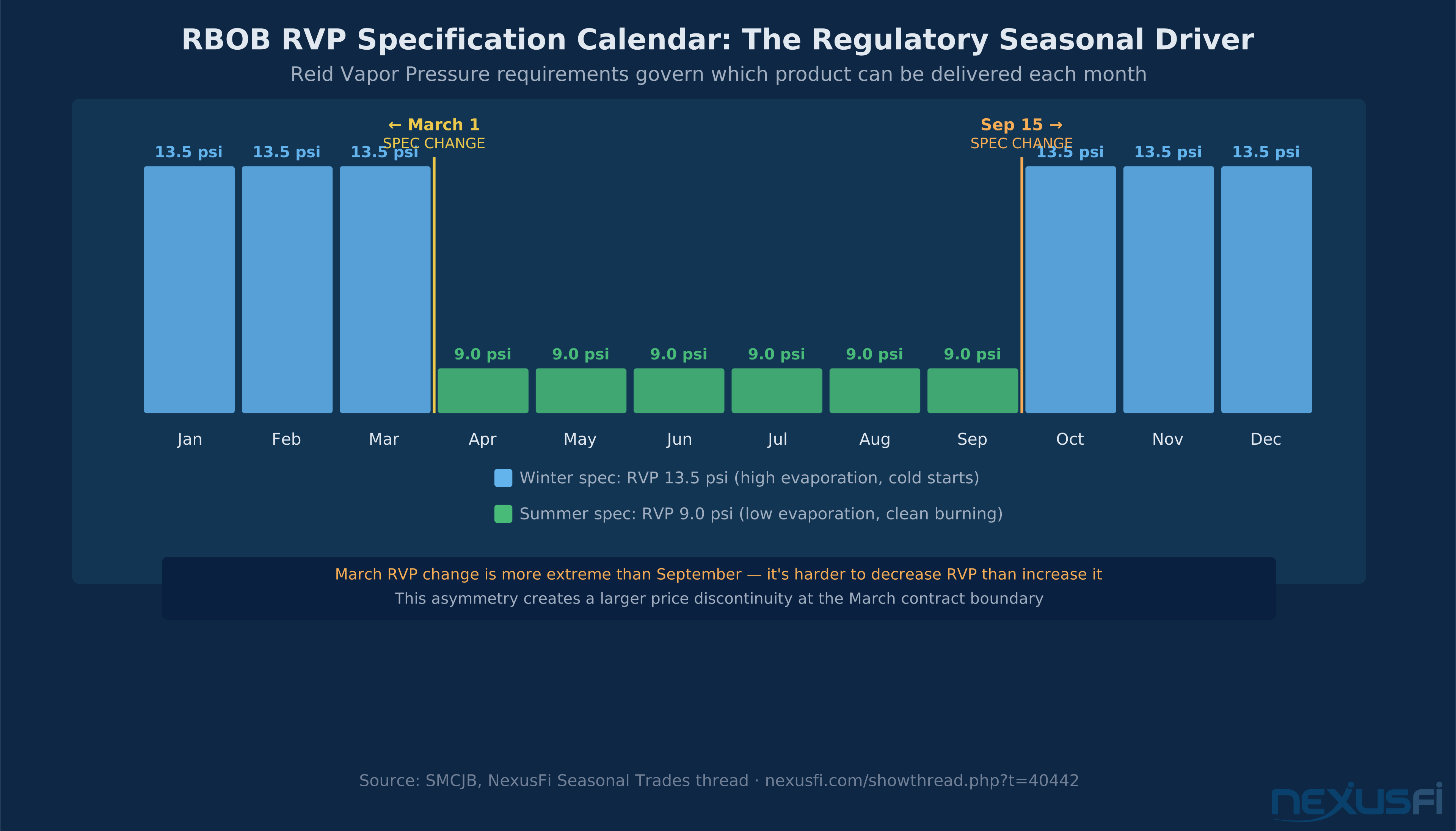
RBOB is the gasoline leg of the NYMEX energy complex. Crude oil (CL), RBOB gasoline (RB), and heating oil/ULSD (HO) trade as an interconnected complex linked through refinery economics. Understanding RB means understanding its relationships to both its feedstock (CL) and its competing refined product (HO).
Contract Specifications #
The Full-Size RB Contract #
| Specification | Detail |
|---|---|
| Exchange | NYMEX (CME Group) |
| Trading Symbol | RB |
| Contract Size | 42,000 U.S. gallons (~1,000 barrels) |
| Price Quotation | U.S. dollars and cents per gallon |
| Minimum Tick | $0.0001 per gallon |
| Tick Value | $4.20 per tick |
| Settlement | Physical delivery, New York Harbor |
| Last Trading Day | Last business day of month preceding delivery |
| Listed Contracts | 36 consecutive months |
| Trading Hours | CME Globex: Sunday-Friday 6:00 PM-5:00 PM ET |
Full contract details are maintained by CME Group [7].
Dollar Exposure Reference #
At $2.50/gallon, one RB contract is $105,000 notional (42,000 x $2.50). The $4.20/tick creates dollar exposure that surprises new traders:
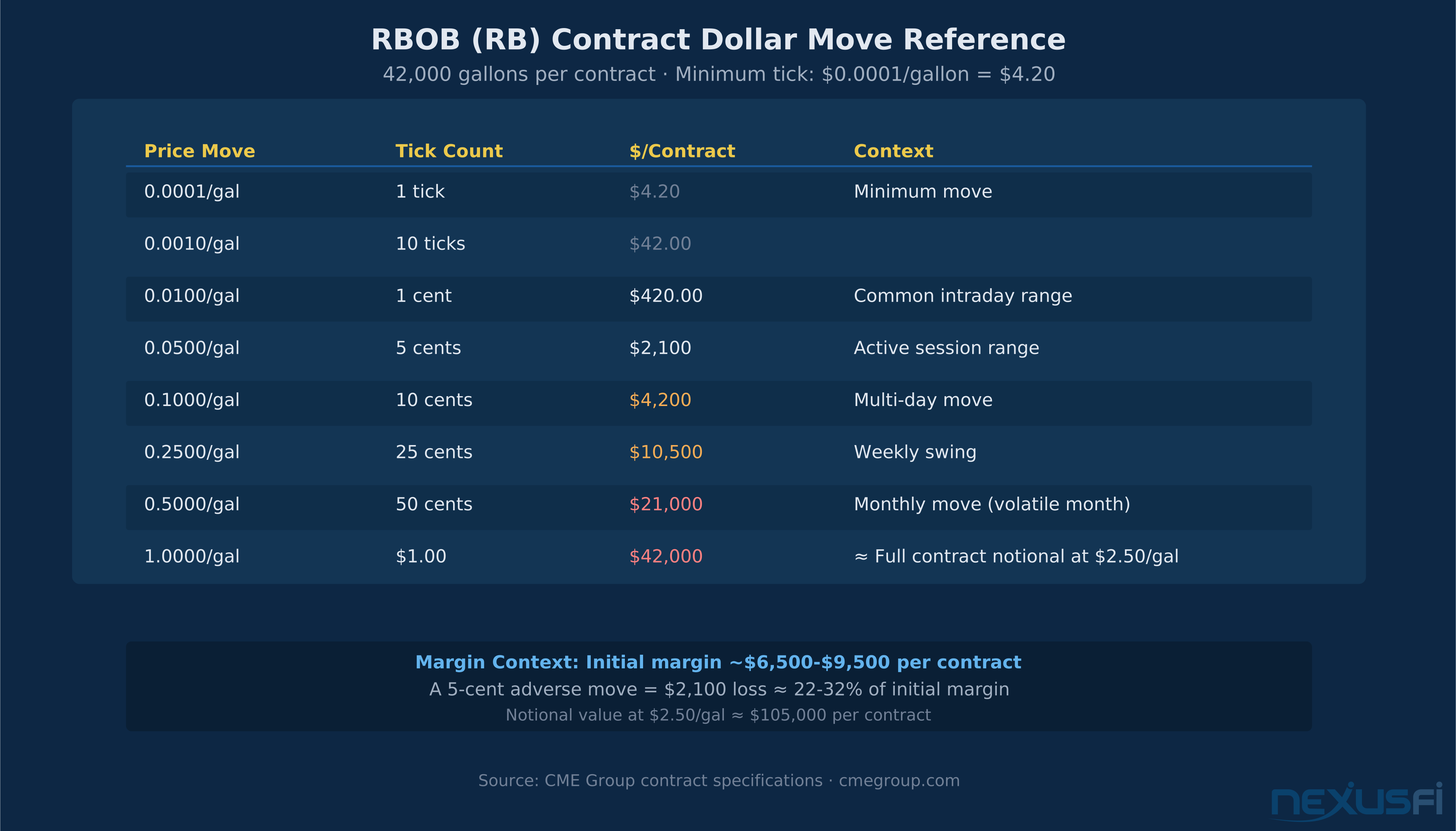
A ten-cent move ($0.10/gallon) produces $4,200 per contract — routine during seasonal transitions and inventory surprises. A fifty-cent move, which occurred multiple times in 2022, equals $21,000 per contract. Position sizing must be calibrated to dollar exposure, not tick counts.
Physical Delivery Mechanics #
RB settles against physical delivery of RBOB blendstock at New York Harbor meeting current-season EPA RVP specifications. Virtually all speculative positions are closed before expiry, but the physical mechanism matters:
- Specification cliff: March RBOB cannot be delivered into April because the RVP specification changes. This forces complete liquidation of winter-spec inventory before summer-spec contracts become active.
- Pipeline nominations: Physical market players on the Colonial pipeline must nominate volumes by specific dates, creating pre-deadline volume surges that generate recurring order flow patterns.
- NYH vs. Cushing basis: Unlike CL (which delivers at Cushing, Oklahoma), RB delivers at New York Harbor. The pipeline artery from Gulf Coast production to Northeast demand constrains arbitrage and creates regional gasoline pricing anomalies.
The Gasoline Price Chain: From Crude to Pump #
RBOB price forms from several independently-moving components:
RBOB Price = Crude Feedstock Cost + Refining Margin (Crack) + Colonial Pipeline
           + Product Specification Premium + Seasonal Supply/Demand Balance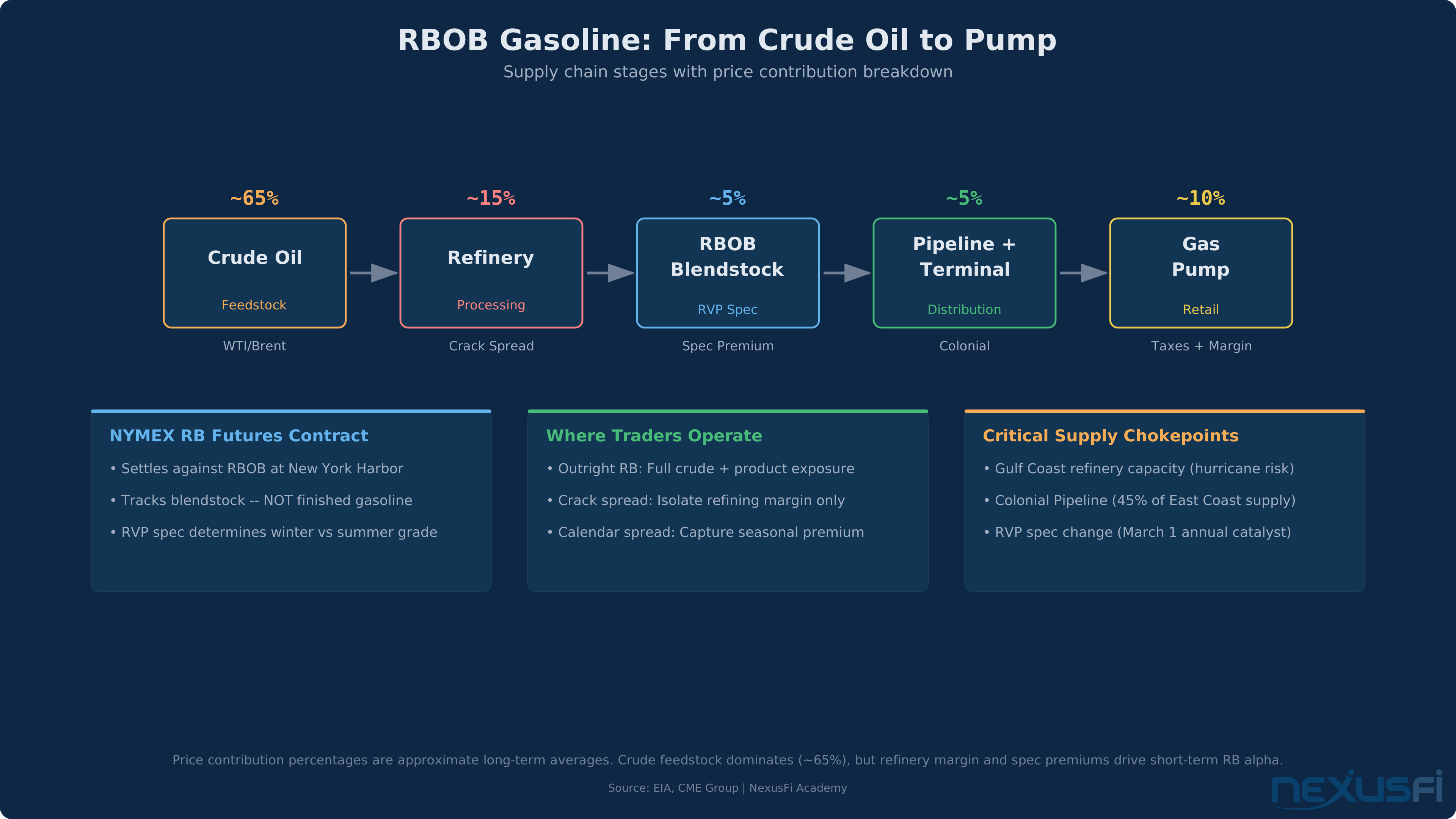
The most important implication: RBOB can rally sharply when crude oil is flat if refinery throughput drops, if pipeline capacity fills, or if demand spikes ahead of driving season.
The Colonial Pipeline carries roughly 45% of the refined products consumed on the East Coast. When Colonial experiences disruptions — as in the 2016 Alabama spill and 2021 ransomware attack — RBOB spikes immediately because the primary supply route to the largest U.S. consumption market is severed. The spring maintenance season (February-April) also compounds the RVP specification change: refineries take units offline for planned maintenance precisely when the product specification switches from winter to summer grade and demand is rising. This convergence of lower production, mandatory specification transition, and rising demand makes spring the most consistently bullish seasonal window for RBOB.
Seasonal Patterns: RBOB's Most Reliable Edge #
The Annual RBOB Cycle #
RBOB exhibits more pronounced and consistent seasonal patterns than almost any other futures contract — because they are driven by regulatory calendar constraints (EPA RVP dates), not just weather or demand estimates.
October-February (Pre-Spec Change): Post-driving-season weakness. Gasoline demand is low, refineries operate in winter-spec mode, and RBOB often follows crude without a product-specific premium. The weakest seasonal period for outright RB on an average-return basis.
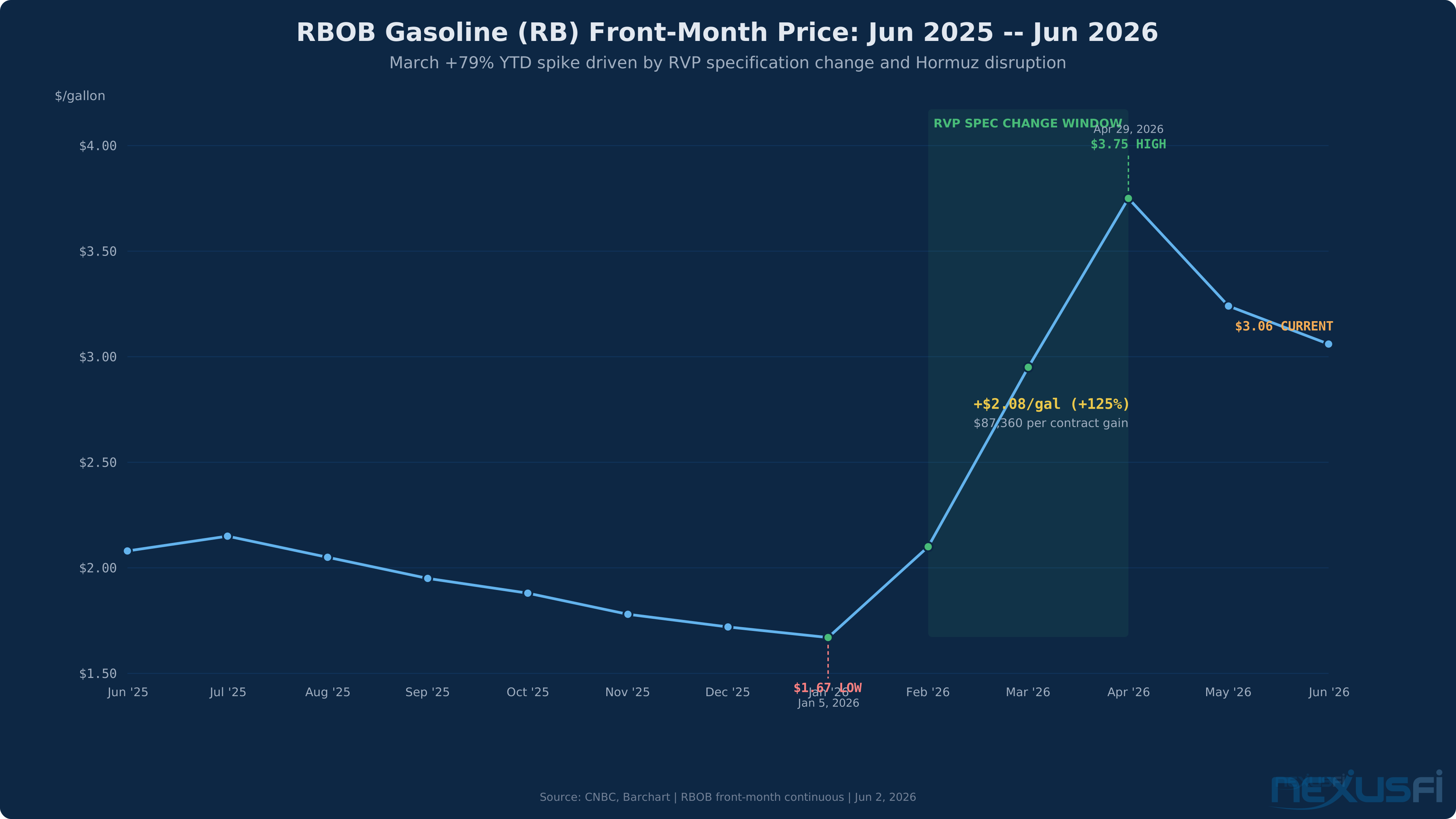
February-April (Specification Change Window): RBOB's signature seasonal window. The market anticipates the March 1 RVP specification change weeks in advance. Refiners must restructure output, pre-driving-season demand is building, and any inventory shortfall in summer-spec gasoline creates outsized price moves.
May-August (Driving Season): Peak U.S. gasoline consumption. RBOB closely tracks crude during this period, with product-specific premiums driven by hurricane threats (Gulf Coast refinery disruptions) and demand surprises.
September (Post-Season Transition): Labor Day marks the traditional end of driving season. RBOB typically weakens relative to HO as the gasoline demand premium fades and refineries transition back to winter-spec production.
RBOB Monthly Return Profile #
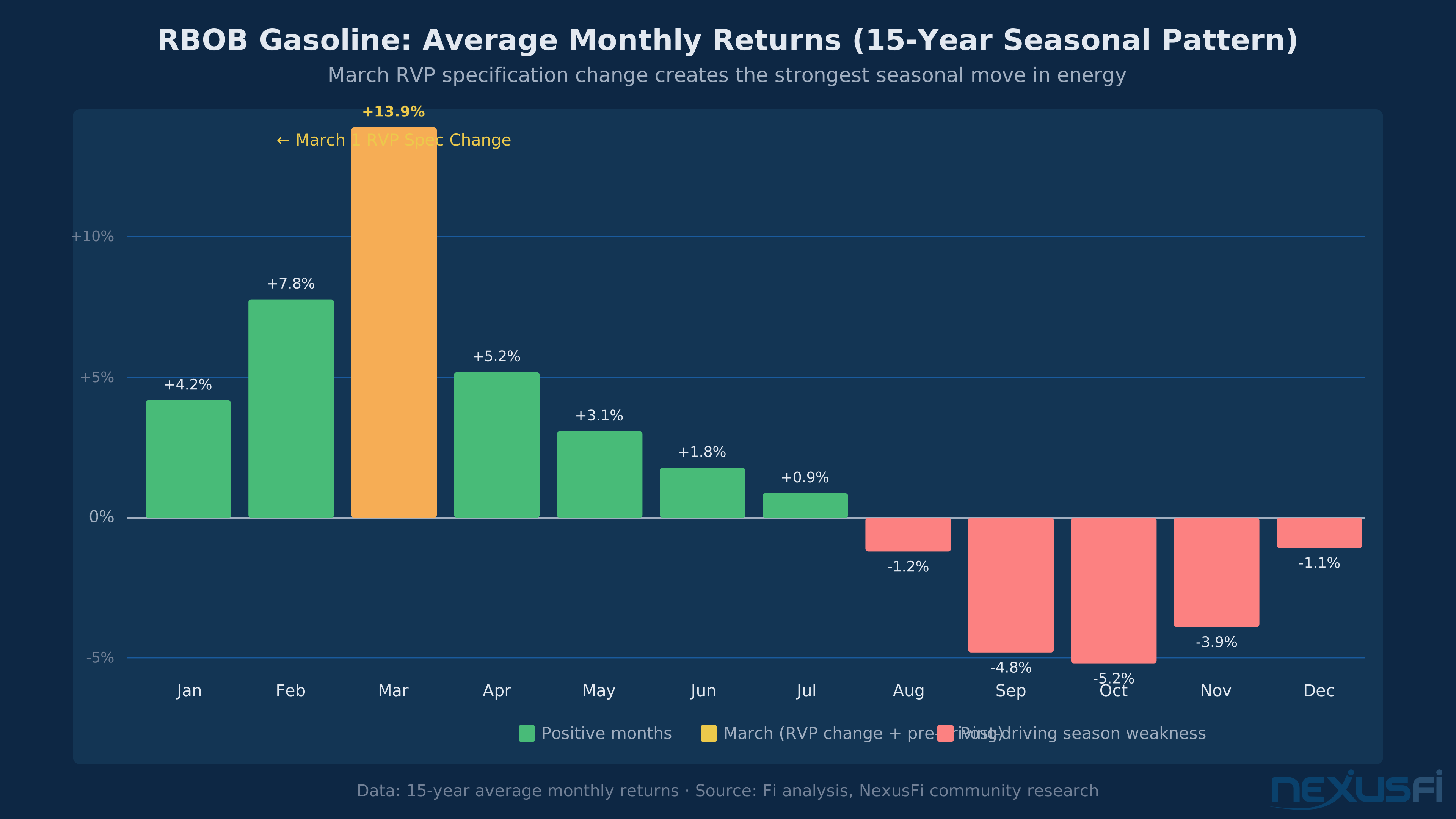
March stands out dramatically — averaging +13.91% over 15-year periods. This is not noise. It is the direct expression of the RVP specification change forcing a structural market repricing every year. The pattern fails when macro shocks override it (2020 COVID demand collapse), but the underlying physical mechanism is intact every year regardless of macro conditions.
Seasonal Failure Modes #
Despite RBOB's regulatory-calendar anchor, seasonal patterns fail when:
- Demand destruction events: A severe recession or COVID-level demand shock can flatten the driving season entirely
- Crude oil regime overrides: A $10-15/barrel crude decline during Feb-Apr can overwhelm the product-specific seasonal tailwind
- Abnormally warm winters: When heating demand is weak, gasoline inventories can build before the spec change, muting the March catalyst
- Structural supply additions: A major unplanned refinery restart immediately before the spec change can overwhelm the bullish seasonal
The March 1 RVP specification change is the most reliable annual trade setup in energy futures. Unlike weather-driven seasonal patterns, this one is anchored to a regulatory calendar date that repeats every year without exception. Combine it with confirming inventory data — gasoline stocks below the 5-year seasonal average entering February — and you have a structural edge that the market refreshes every single year.
Crack Spreads: Trading the Refinery Margin #
What the RBOB Crack Measures #
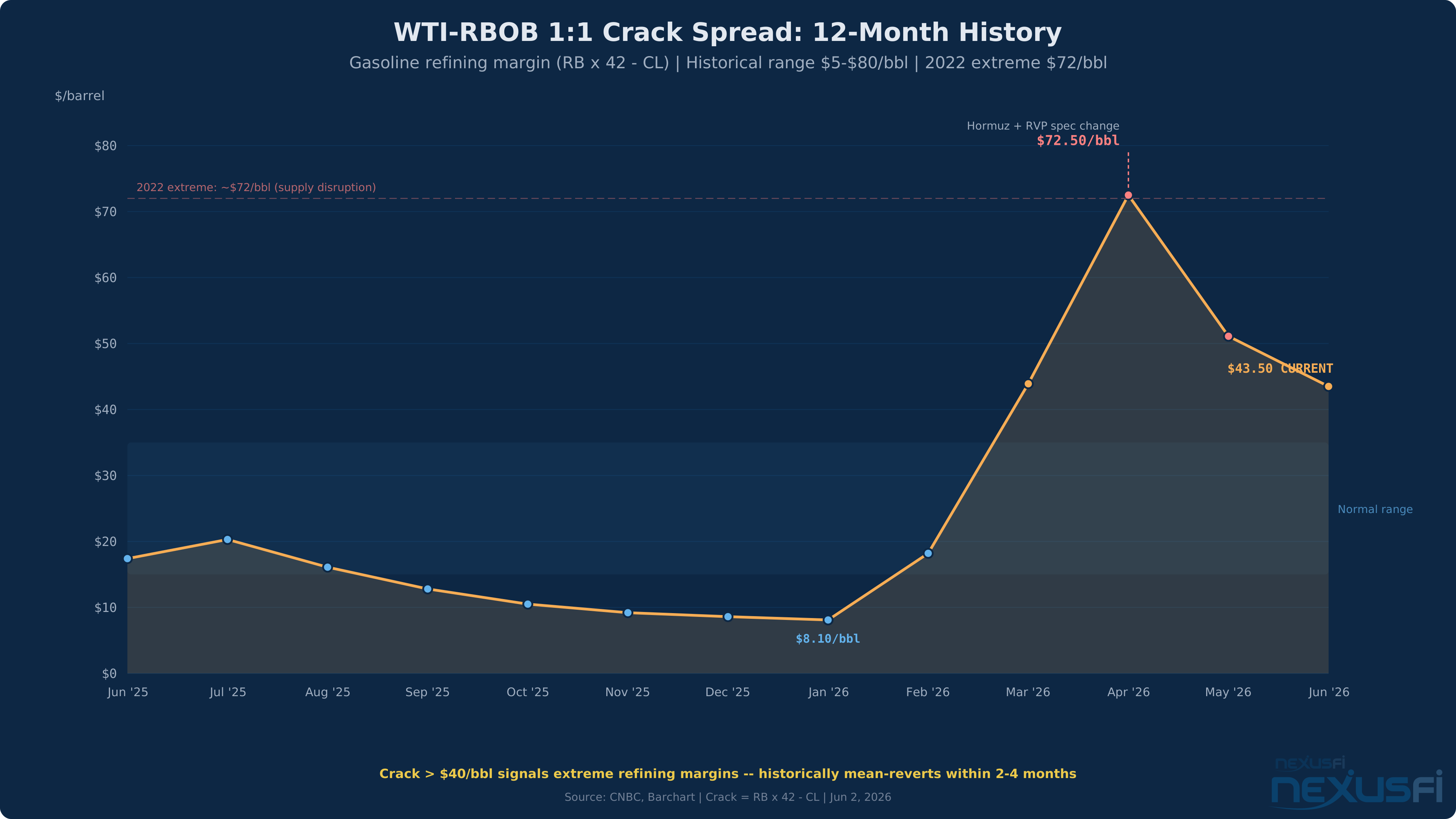
The RBOB crack spread is the price difference between RBOB gasoline and the crude oil required to produce it. In dollar-per-barrel terms, it is a notional refining margin:
RB Crack (1:1) = RB price x 42 - CL priceAt RB = $2.50/gallon and CL = $70/barrel:
RB = $2.50 x 42 = $105/barrel -> Crack = $105 - $70 = $35/barrelThis $35/barrel is the gross refining spread. Historical ranges: roughly $5-$80/barrel, with 2022 seeing extreme highs during the supply disruption.
Standard Crack Spread Ratios #
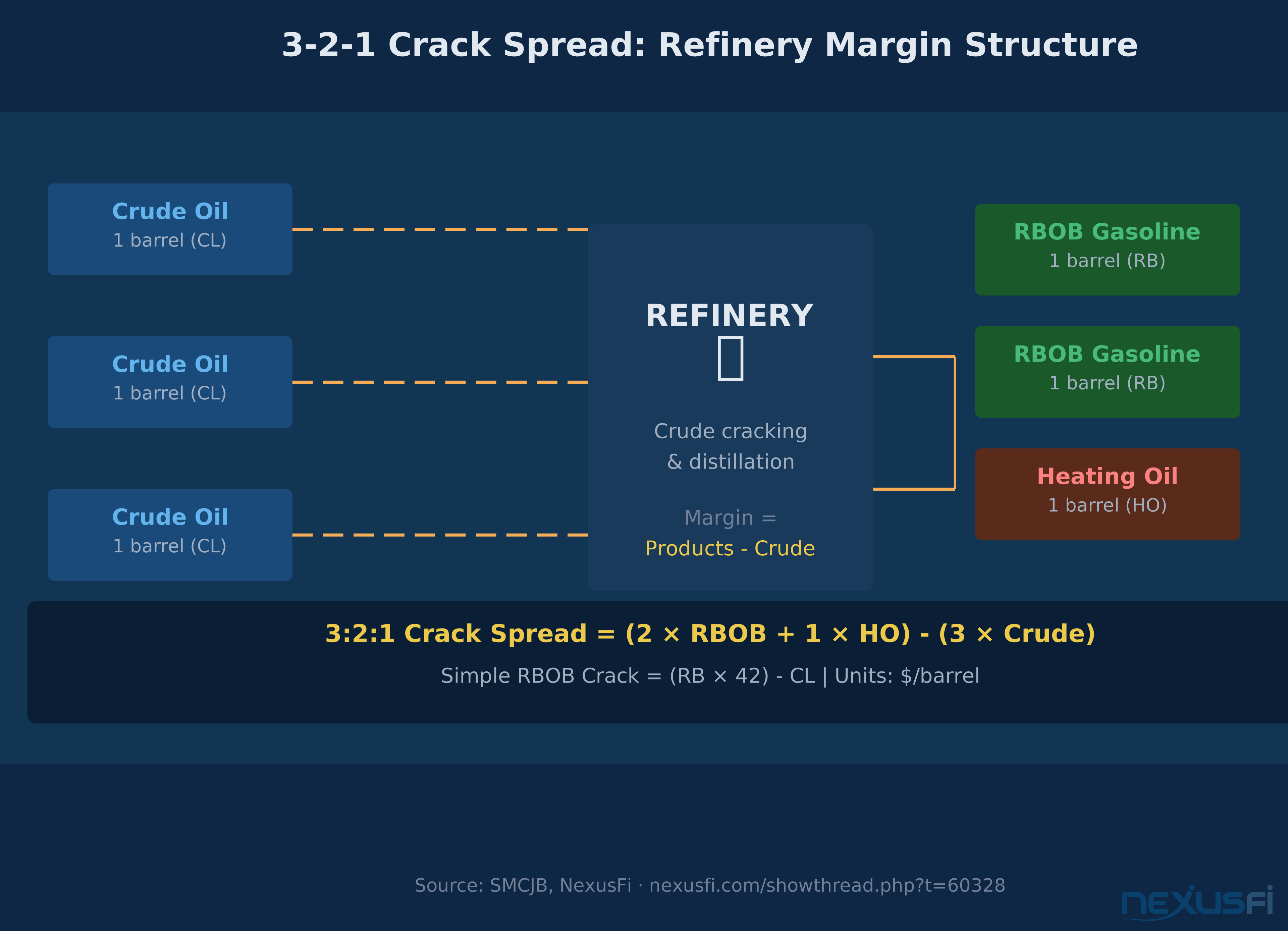
3:2:1 Crack: Three crude barrels produce two RBOB barrels and one HO barrel — the industry standard for U.S. refinery economics:
3:2:1 Crack = (2 x RB in $/bbl + 1 x HO in $/bbl) / 3 - CL price1:1 RBOB Crack: Pure gasoline-crude differential, for expressing a view on gasoline supply/demand without distillate exposure.
@SMCJB catalogues the tradable crack spread universe: "WTI-RBOB Crack — CL vs RB... Brent-RBOB Crack — BRN vs RB" as NYMEX-listed implied spreads. [2] He also notes that "some people look at Brent-RBOB cracks as well as/instead of WTI-RBOB, since CL is a landlocked Oklahoma crude, while RBOB is a New York Harbor delivered Gasoline Feedstock contact." [3]
Seasonal Crack Spread Patterns #
Winter-Spring crack expansion (January-April): As driving season approaches and RVP specifications force product transitions, RBOB cracks typically expand. Refiners produce a harder-to-make lower-RVP product while demand strengthens. Long crack positions in January-February frequently capture this expansion through April.
Summer crack compression (May-July): At peak driving season, refineries run at maximum utilization. Ample supply and stable demand compress margins from spring highs.
Crack Spread vs. Outright RBOB #
| Factor | Outright RB | Long RB/Short CL Crack |
|---|---|---|
| Crude oil beta | Full exposure | Largely hedged |
| Gasoline-specific alpha | Full | Full |
| Overnight gap risk | High | Reduced |
| Margin requirement | Full per-leg | SPAN-credited |
| Basis risk | None | NYH/Cushing geographic |
Calendar Spreads: Trading the RBOB Curve #
Reading the Forward Curve #
The RBOB forward curve encodes market expectations about seasonal supply and demand:
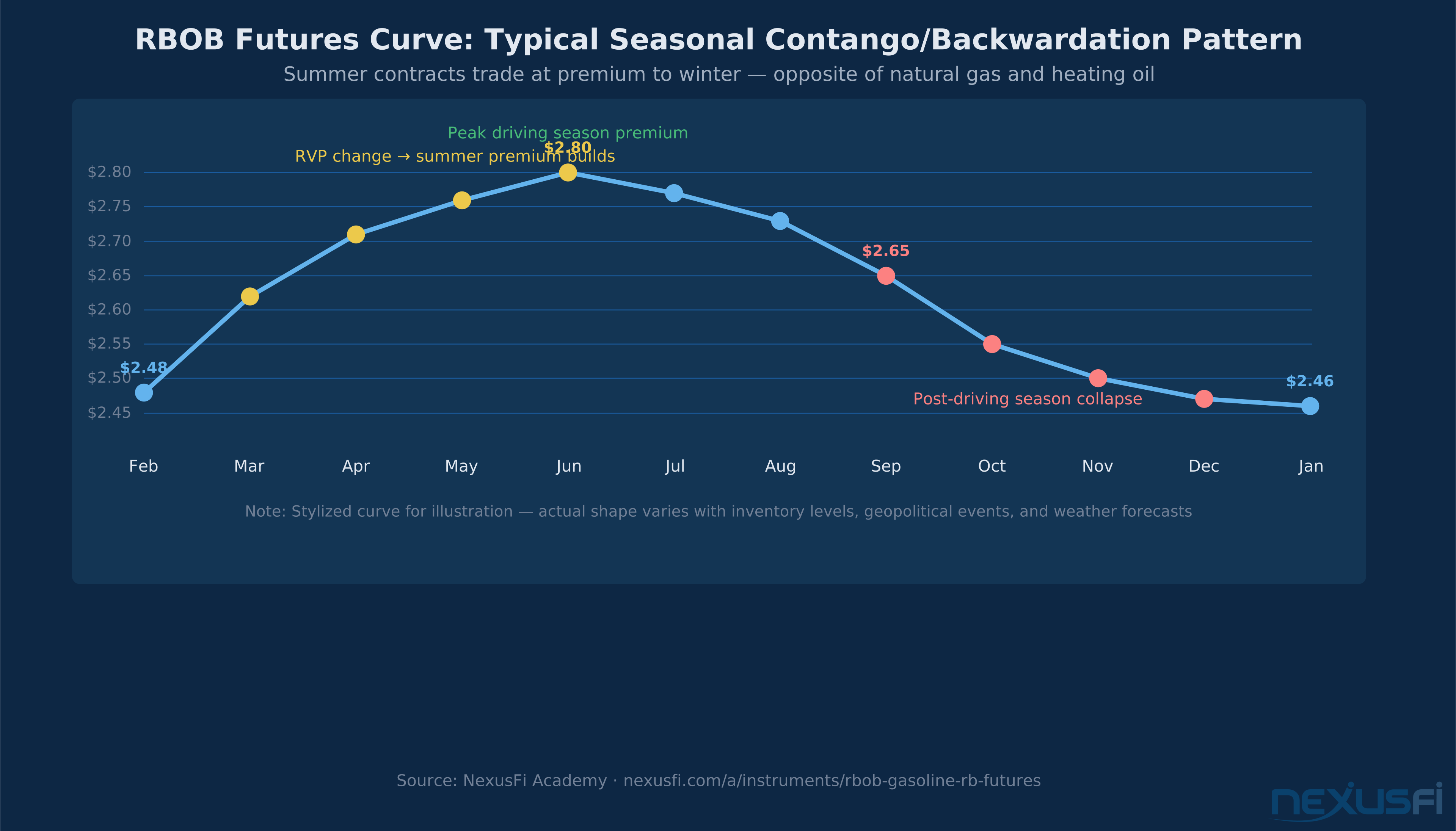
Backwardation in prompt months signals current physical tightness — refineries can't produce summer-spec fast enough, or demand is running above forecast.
Contango signals adequate supply. Post-driving-season (September-October), the curve typically flattens as stocks build.
Seasonal bulge: The characteristic RBOB curve shape has summer months (May-August) at a premium to both winter months and distant contracts — the market pricing the driving season premium and RVP transition cost well in advance.
The RBJ-RBZ Calendar Spread: RBOB's Premier Seasonal Trade #
The most celebrated RBOB seasonal spread is RBJ-RBZ: long April (J), short December (Z).
@ron99 in the NexusFi Seasonal Trades thread documented the quantitative case: "Seasonally gasoline stocks decline in Feb and March as refiners start switching from winter grade to summer grade... Has consistent best start and exit dates. Averages +$1,988 per year." [4]
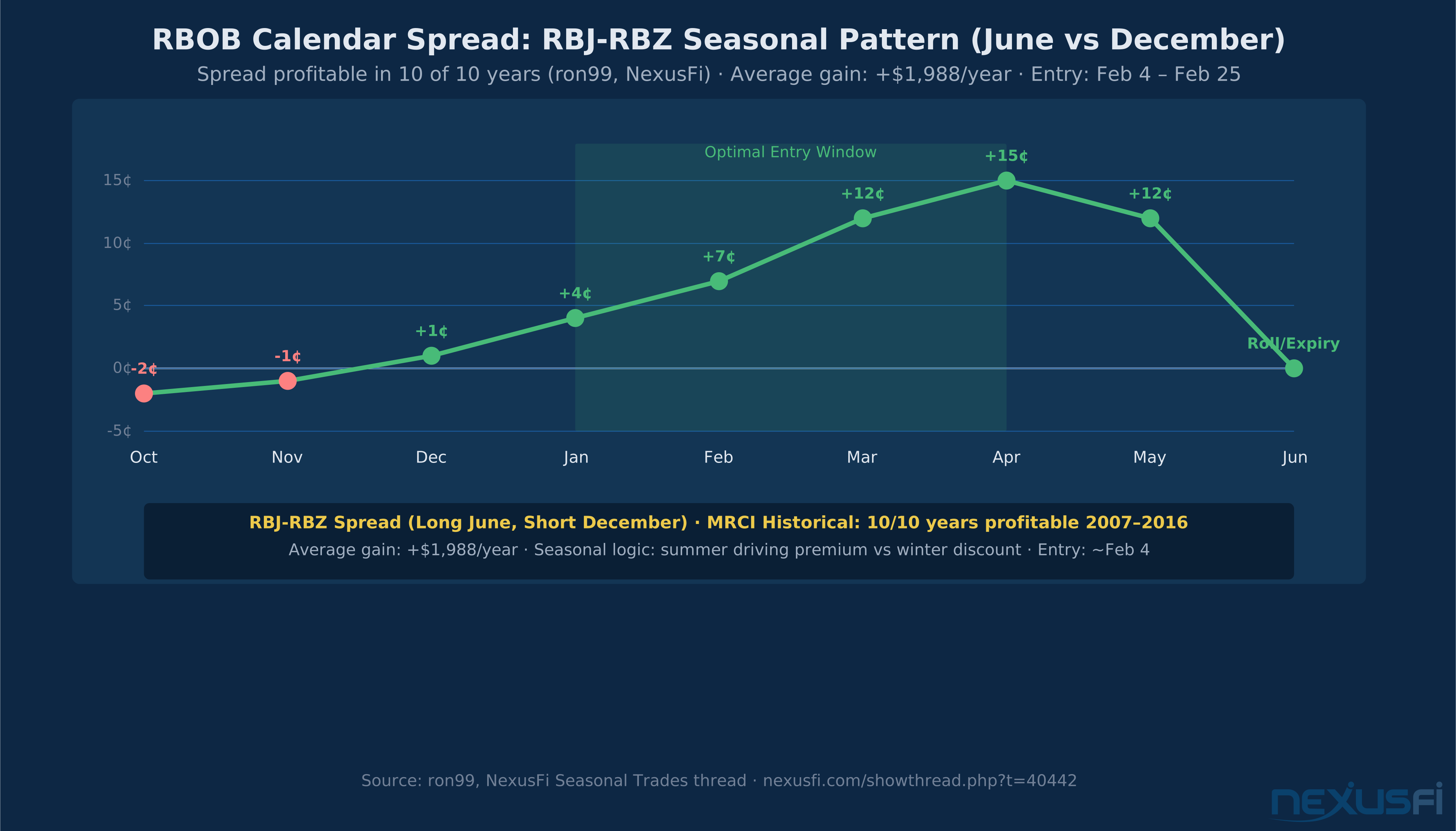
The RBJ-RBZ trade captures two structural factors simultaneously:
- April (RBJ) is summer-spec RBOB: As the March 1 RVP specification switches, April delivery requires lower-RVP, more complex-to-produce gasoline. Demand is rising with driving season.
- December (RBZ) is winter-spec RBOB: Simpler to produce, benefits from lower seasonal demand. December reflects post-driving-season fundamentals.
The spread between these specifications expands predictably as the specification change approaches. Entry window: typically February 4-25, before the final rush of refiners repositioning. Beyond RBJ-RBZ, the RBK-RBV (May vs. October) spread captures driving season premium versus post-season shoulder, generally profitable long in the January-April entry window.
RBOB vs. Heating Oil: The Product Spread #
RBOB and Heating Oil emerge from the same crude oil feedstock and compete for refinery output. Their price relationship is one of the most informative signals in petroleum markets:
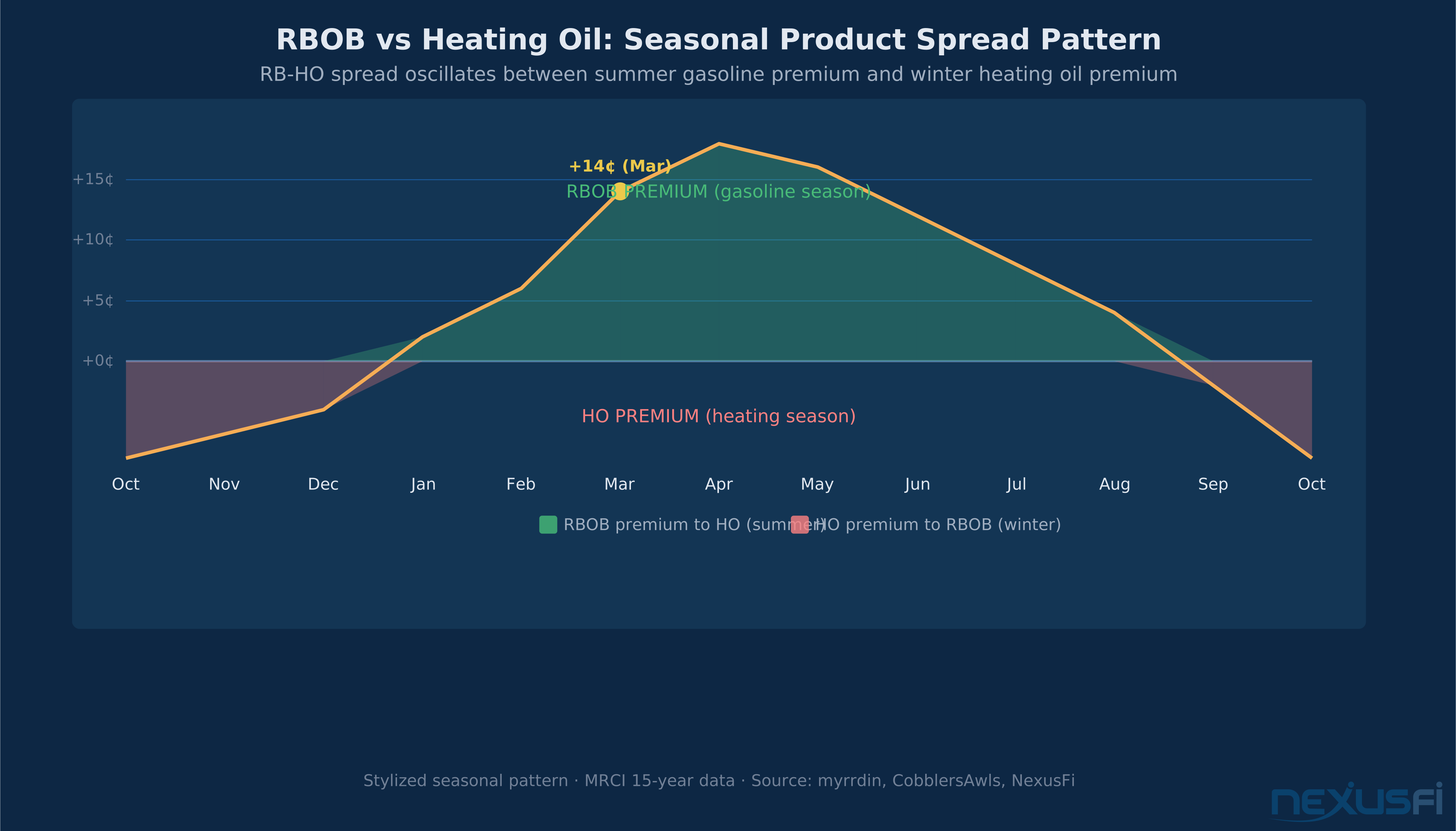
Summer structure (RBOB premium, April-August): Driving season demand drives refiners to maximize gasoline output. RBOB trades at a per-barrel premium to HO.
Winter structure (HO premium, September-February): Heating and diesel demand strengthens. Refiners shift toward maximum distillate yield. HO commands a per-barrel premium to RBOB.
Trading the product spread: A long RB / short HO position (entering January-February) captures the seasonal RBOB premium expansion through summer. A short RB / long HO position (entering August-September) captures the reverse. Both legs correlate with crude oil, so the net position is primarily a bet on refinery product yield economics. Since both RB and HO quote in $/gallon with identical $4.20/tick exposure, a 1:1 ratio is dollar-neutral — the standard approach for product spread trading.
Market Drivers: What Moves RBOB #
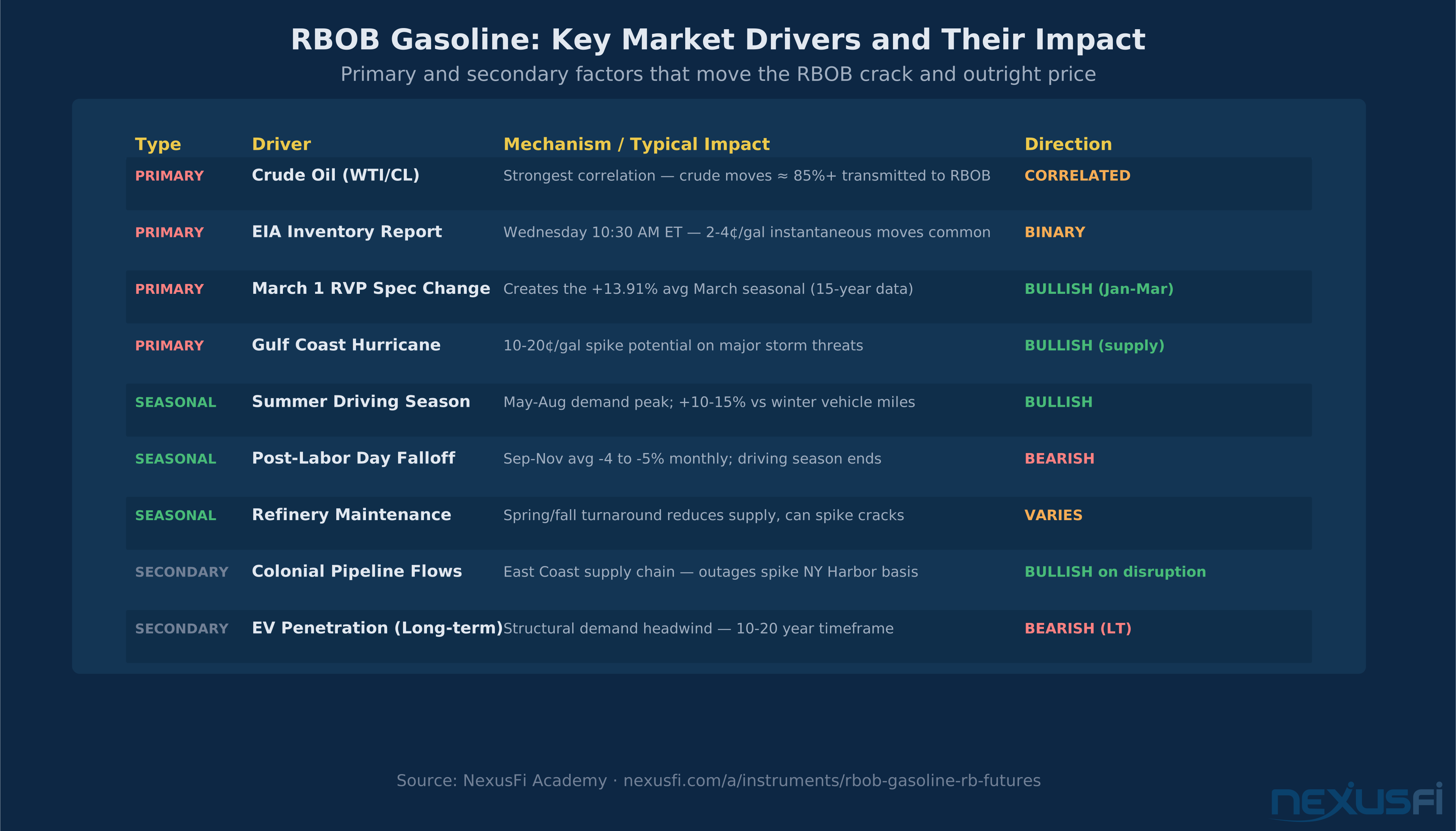
Primary Drivers #
1. Crude Oil (CL): The dominant driver. RBOB correlates 60-75% with CL on a rolling 30-day basis. When crude moves on macro factors — OPEC+ decisions, geopolitical risk, USD strength — RBOB moves with it. Traders who ignore crude are operating blind.
2. EIA Weekly Petroleum Status Report (Wednesday 10:30 AM ET) [6]: The single most important weekly trigger for RBOB price action. Key gasoline-specific metrics:
- Total gasoline stocks versus the 5-year seasonal average (surplus or deficit?)
- Implied gasoline demand (the "disappearance" calculation)
- Refinery utilization and gasoline production rates
- Blending component vs. finished gasoline split
A larger-than-expected gasoline draw typically rallies RBOB; a surprise build often triggers selling. The API report (Tuesday evenings) front-runs the EIA and creates a two-phase reaction.
3. RVP Specification Calendar: The mandatory annual catalyst. The March 1 specification change is the most important calendar date in gasoline futures trading. Its effects on the forward curve, calendar spreads, and refinery economics are reliable enough to anchor seasonal strategies.
Secondary Drivers #
4. Hurricane and Refinery Risk: Gulf Coast hurricanes threatening Houston or Port Arthur refineries create immediate RBOB spikes. This seasonally concentrated risk (June-November) adds a risk premium to summer RBOB contracts that dissipates in winter.
5. Colonial Pipeline Status: Any disruption creates immediate RBOB spikes. The 2016 spill and 2021 cyberattack are the template events — both created sharp gap-up moves that stops could not prevent.
6. Driving Demand Data: Memorial Day surveys, AAA travel forecasts, and monthly demand estimates provide context. A stronger-than-expected driving season sustains summer premiums.
7. Gasoline Export and Import Flows: When European gasoline (Eurobob on ICE) trades at a premium to NYMEX RBOB adjusted for freight, arbitrage flows east, drawing down U.S. stocks and supporting RB prices.
Technical Characteristics and Risk Management #
Intraday Price Behavior #
RBOB concentrates its big moves around specific triggers — EIA Wednesday releases, Monday OPEC headlines, pipeline news. Outside catalyst windows, RBOB can trade in tight ranges for hours, then move $0.05-$0.10 in minutes. Physical crude markets trade globally, and RBOB is sensitive to overnight events. Monday opens can gap significantly following weekend OPEC news, geopolitical developments, or weather events.
The leverage reality: one RB contract is $105,000 notional. Exchange initial margin is typically $7,000-$12,000. Intraday margins at brokers can be $2,000-$4,000, implying 25:1 to 50:1 leverage. A $0.05 adverse move ($2,100 per contract) against a position sized to intraday margin destroys a substantial portion of the margin posted.
Position Sizing and Stop Placement #
For a $100,000 account with 1% risk per trade ($1,000 maximum), with a 50-tick ($210) stop:
Max contracts = $1,000 / $210 = 4.76 -> 4 contractsWith a 100-tick ($420) stop: 2 contracts. See position sizing for the complete framework.
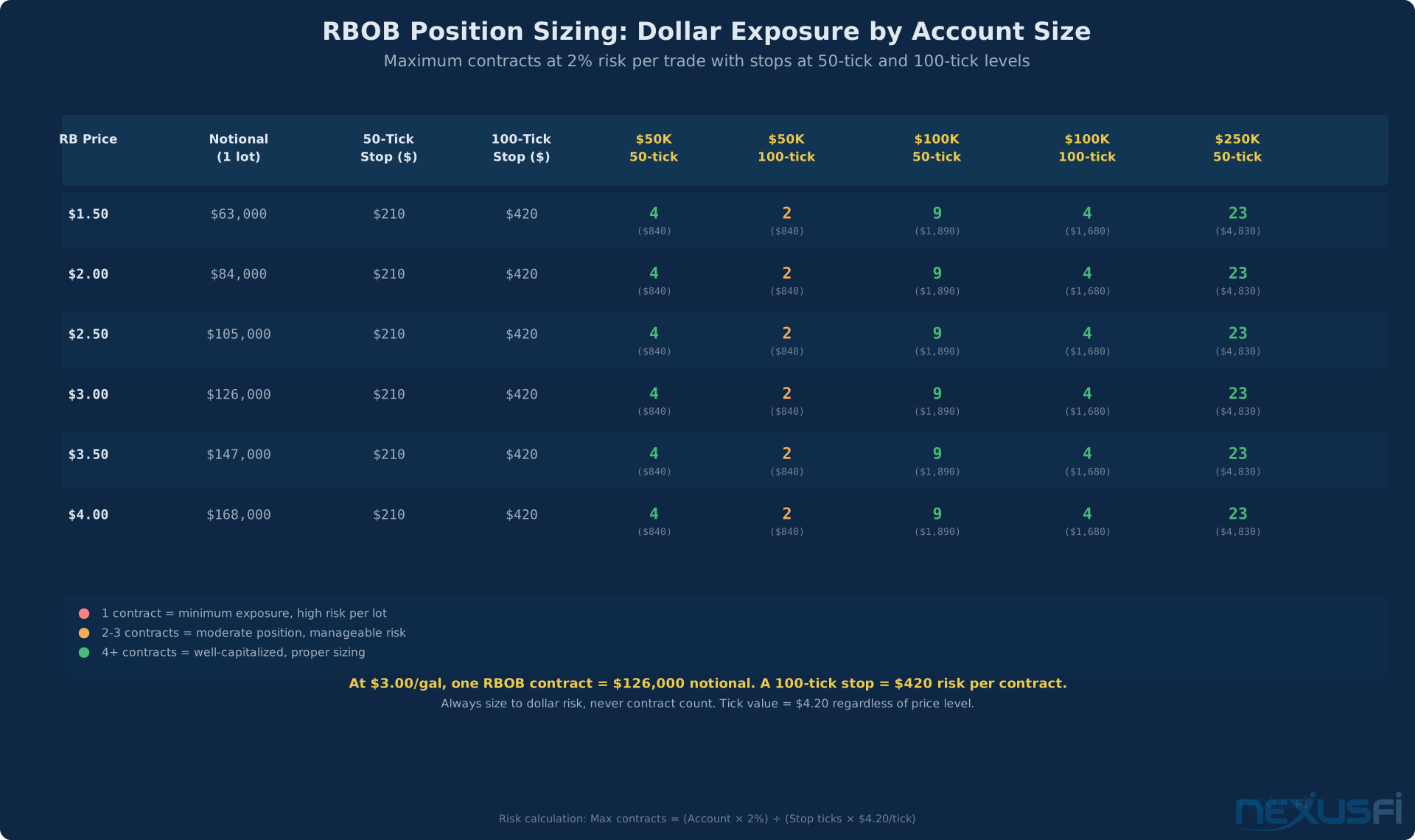
RBOB's average daily range (ATR) runs $0.03-$0.08/gallon in calm markets, expanding to $0.10-$0.20+ during trigger events. Stops tighter than half the daily ATR are virtually certain to be triggered by noise. Do not enter new positions within 5-10 minutes of the Wednesday EIA release — the initial reaction frequently reverses within 30 minutes, and bid/ask spreads widen dramatically during the release.
Spread-Specific Risk #
Leg execution risk: When legging into a spread manually rather than using exchange-implied spread functionality, adverse moves in the first leg can result in worse-than-expected entry. Use exchange-implied spread orders when available.
Correlation breakdown risk: Historical correlations between RB-CL and RB-HO are not constant. The 2020 COVID demand collapse showed extreme correlation breakdown, with gasoline demand falling far faster than crude production responded. Strategies built on historical correlations fail exactly when the underlying physical dynamics shift.
Roll management: Front-month RBOB liquidity deteriorates roughly 7-10 days before the last trading day. Rolling positions 2-3 weeks before expiry avoids bid/ask widening that can materially impact P&L.
RBOB vs. Other Energy Futures #
| Feature | RBOB (RB) | Crude Oil (CL) | Heating Oil (HO) |
|---|---|---|---|
| Product type | Refined gasoline blendstock | Raw feedstock | Refined ULSD distillate |
| Delivery point | New York Harbor | Cushing, Oklahoma | New York Harbor |
| Primary seasonal driver | RVP spec change (March 1) | Storage/OPEC cycle | Heating demand (Nov-Feb) |
| Peak season | Apr-Aug (driving) | No dominant seasonal | Oct-Mar (heating) |
| vs. CL correlation | 60-75% | -- | 60-75% |
| Key calendar spread | RBJ-RBZ (+$1,988/yr avg) | Front/deferred storage | Q1/Q2 heating spread |
| Seasonal product relationship | Competes with HO for yield | Feedstock for both | Competes with RB for yield |
RBOB's regulatory RVP calendar gives it a more predictable and reliable seasonal pattern than either CL (driven by geopolitics and storage economics) or HO (driven by temperature uncertainty). This predictability makes RBOB calendar spreads among the most consistently-traded seasonal positions in energy markets.
Knowledge Map
Prerequisites
Understand these firstGo Deeper
Build on this knowledgeReferences This Article
Articles that build on this topicCitations
- — The CL Crude-analysis Thread (2015) 👍 5“Gasoline/RBOB -- Opposite. Demand>Supply in Summer, Supply>Demand in Winter -- Hence Summer trades at a premium to Winter.”
- — Seasonal Trades (2017) 👍 4“RBOB has different summer specs than it does winter specs. The required RVP of March RBOB is 13.5, while RVP of April is 9.0.”
- — Seasonal Trades (2017) 👍 3“RBJ-RBZ spread worked 10 of last 10 years. Averages +$1,988 per year. Seasonally gasoline stocks decline in Feb and March as refiners start switching from winter grade to summer grade.”
- — Crude Crack Spread and Soybeans Crush Spread Indicators (2023) 👍 4“The five most common crack spreads: WTI-Heating Oil (CL vs HO), WTI-RBOB (CL vs RB), Brent-Heating Oil, Brent-RBOB, Brent-Gasoil. Complex cracks: 2:1:1, 3:2:1, 5:3:2.”
- — Margin relief for futures spreads? (2017) 👍 5“Since CL is a land locked Oklahoma crude, while RBOB is a New York Harbor (NYH) delivered Gasoline Feedstock contact, some people look at Brent-RBOB cracks.”
- — RBOB Gasoline Jan-May21 Spread (2020) 👍 2“RBF21-RBK21 seasonal entry. MRCI season from 30 Sep to 06 Dec. Exit price ranged between -19.17 to -28.48.”
- — Backadjust futures contracts for spread trading backtesting (2023) 👍 4“The seasonality is a big issue here. If you just use the unadjusted continuous contract it will look like you should go long this spread every spring and short it every fall. In reality that is mostly a factor of the seasonality/rollovers.”
- — The CL Crude-analysis Thread (2016) 👍 3“I found most interesting was the strength of the spread based on seasonal cycles. Normally the RBOB-HO spread would be negative around this time of year but we see continued strength.”
- — Energies (2020) 👍 4“An interesting seasonal trade at this time of the year is the RB-HO. MRCI recommends the March contracts, which were profitable between middle of December and Christmas in each of the most recent 15 years.”
- — Gasoline Reid Vapor Pressure (2024)
- — Weekly Petroleum Status Report (2026)
- — RBOB Gasoline Futures Contract Specifications (2026)