



Natural Gas (NG) Futures: The Complete Trading Guide
Subtitle: How to trade Henry Hub natural gas futures
Overview #
Natural gas futures are one of the most actively traded energy contracts on the planet
The CME's Henry Hub Natural Gas contract (NG) prices physical delivery of 10,000 MMBtu at the Henry Hub interconnection in Erath, Louisiana. It's the benchmark for U.S. natural gas pricing and, increasingly, a proxy for global LNG export economics. For retail futures traders, NG offers volatile intraday moves, deeply seasonal patterns, and calendar spread structures you won't find in equity index futures.
But this market demands respect. Natural gas has produced some of the most spectacular blowups in commodity trading history precisely because the fundamentals that drive it
This guide covers everything you need to trade NG futures: contract specifications, what actually drives prices, the seasonal patterns that create repeatable opportunities, and the practical considerations that keep you in the game.
Key Specifications #
Contract Family #
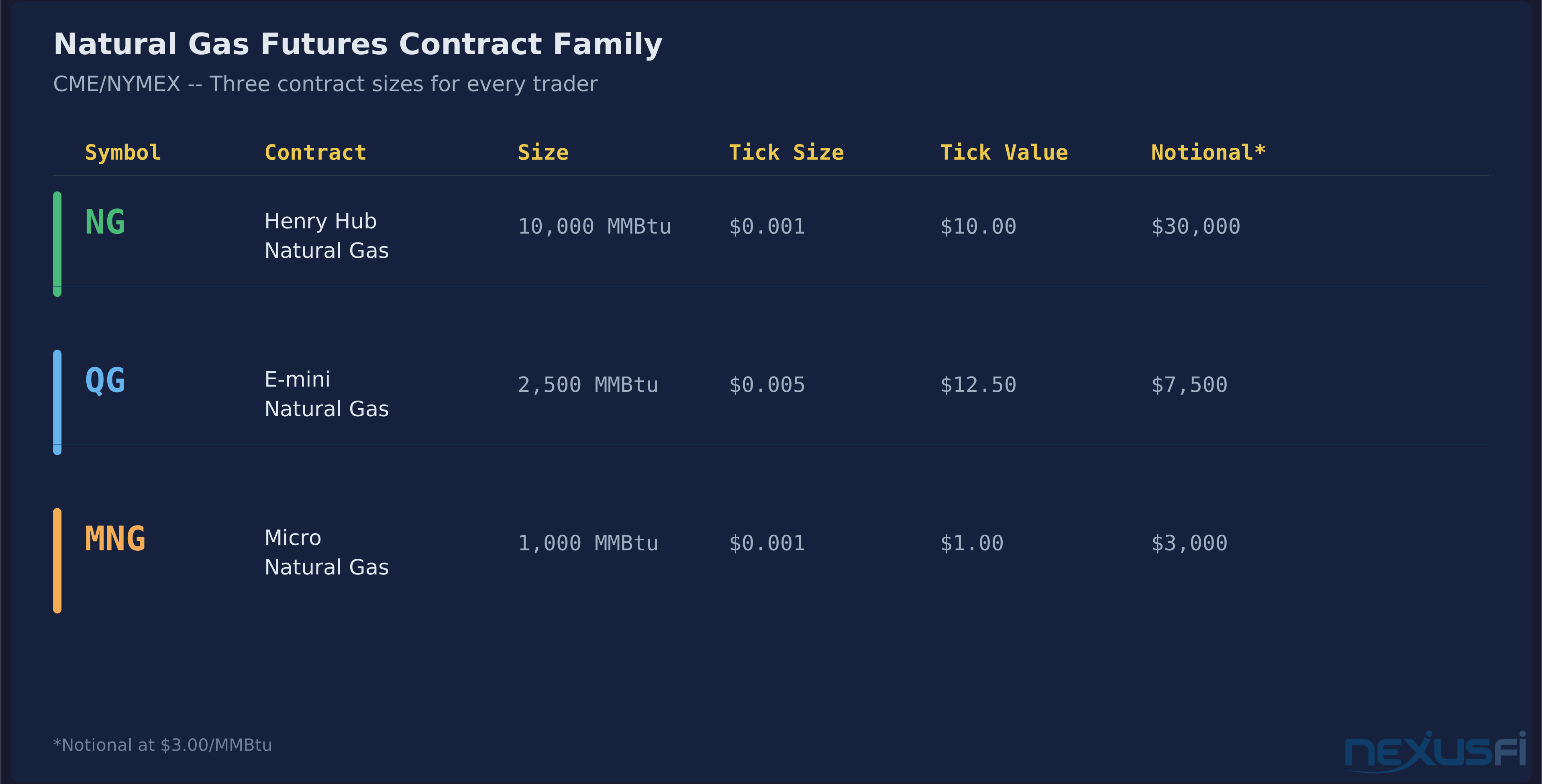
| Contract | Symbol | Size | Tick Size | Tick Value | Exchange |
|---|
|
| Henry Hub Natural Gas | NG | 10,000 MMBtu | $0.001/MMBtu | $10.00 | NYMEX/CME |
|---|---|---|---|---|---|
| Micro Natural Gas | MNG | 1,000 MMBtu | $0.001/MMBtu | $1.00 | NYMEX/CME |
The full-size NG contract at $3.00/MMBtu has a notional value of $30,000. At a typical margin of $2,500-$4,000 (varies by volatility regime), that's roughly 8-12:1 leverage. The E-mini (QG) and Micro (MNG) contracts offer smaller exposure for position sizing flexibility.
Trading Hours #
NG futures trade on CME Globex nearly 23 hours per day, Sunday through Friday:
- Globex: 6:00 PM - 5:00 PM ET (next day), with a 60-minute break
- Peak liquidity: 9:00 AM - 2:30 PM ET (U.S. cash market hours)
- EIA report spike: 10:30 AM ET every Thursday (weekly storage report)
Contract Months and Delivery #
NG lists contracts for every calendar month, up to 12 years out
Each contract month has its own personality. Winter months (November through March) carry higher implied volatility and wider spreads. Summer months (April through October) trade at lower absolute prices and tighter ranges
What Moves Natural Gas Prices #
The Storage Fundamental #
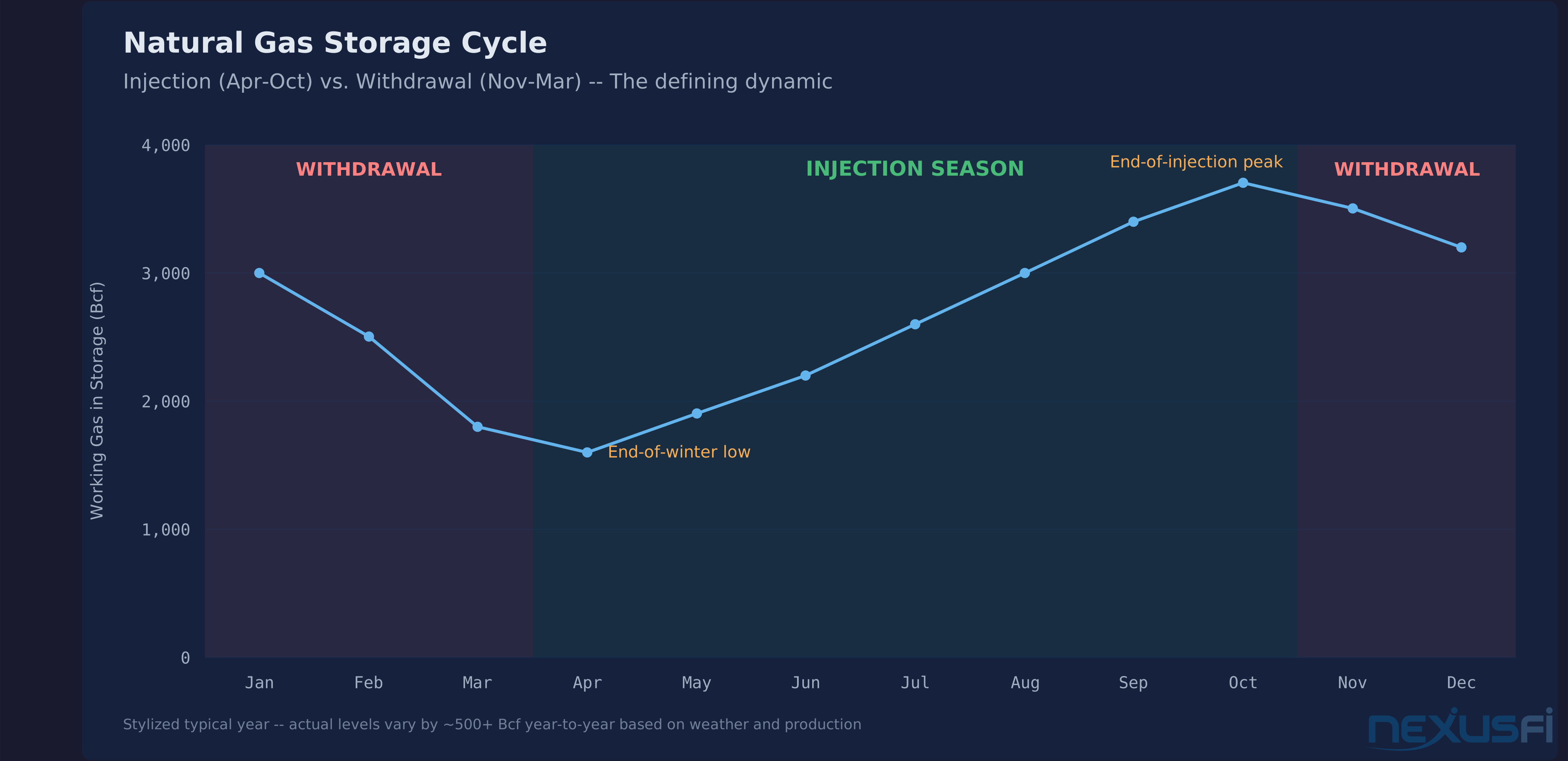
The single most important thing to understand about natural gas is storage. The U.S. injects gas into underground storage facilities for roughly 7.5-8 months a year (April through October) and withdraws it all in 4-4.5 months (November through March). This asymmetry creates the defining dynamic of the market.
[1]
This storage dynamic creates the market's defining feature: the end-of-winter storage level determines whether March pricing reflects scarcity or surplus. Everything else
Weather: The Short-Term Driver #
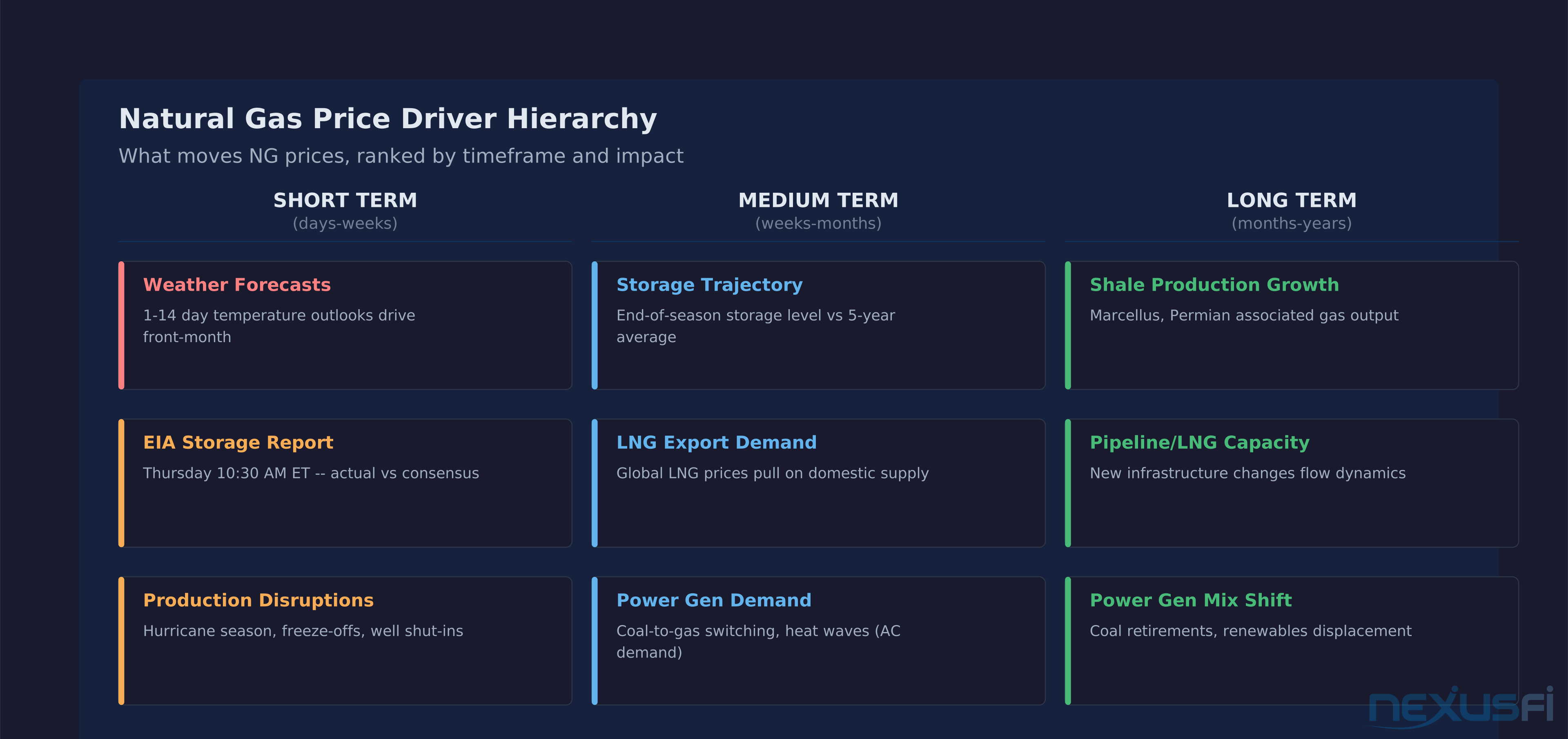
In the short term, weather expectations dominate natural gas pricing. Cold winters increase heating demand, accelerating storage withdrawals. Warm winters leave excess gas in storage, collapsing winter premiums. The impact is binary and fast.
[2] And the problem for traders is that you don't know at the start of winter whether it's going to be a one-week cold snap or an entire season of below-normal temperatures.
The EIA Weekly Natural Gas Storage Report, released every Thursday at 10:30 AM ET, provides the hard data. It reports net changes in working gas storage compared to the prior week and the five-year average. Deviations from consensus expectations regularly produce 2-5% moves in the front month within minutes of release.
Why NG Spikes Are Different #
Natural gas produces scarcity-driven price spikes that are at the core different from other commodity moves. The reason is simple and sobering: people's lives depend on it.
[3]
This is why NG can spike from $3 to $6 in weeks during a severe winter, while crude oil moves are typically more measured. The demand curve becomes effectively vertical when storage drops to critical levels
Henry Hub: No Longer Just Domestic #
Henry Hub pricing has evolved much. What was once purely a U.S. domestic benchmark now increasingly reflects global LNG export economics.
[4] Pipeline-constrained supply areas like West Texas and Appalachia now trade at significant discounts to Henry Hub, while the benchmark itself tracks Gulf Coast supply meeting international demand.
This shift matters for traders who rely on historical correlations. The NG contract you're trading today responds to different forces than the same contract ten years ago.
Supply-Side Factors #
On a longer-term basis, production growth matters enormously. The shale revolution transformed U.S. natural gas from a scarcity-priced commodity to an abundance-priced one. Key supply drivers include:
- Shale production: Marcellus/Utica (Appalachia) and Permian Basin associated gas dominate U.S. supply
- Associated gas: Natural gas produced alongside crude oil drilling
- Pipeline capacity: Regional bottlenecks create basis differentials between production areas and demand centers
- LNG export capacity: New liquefaction terminals increase the floor on domestic prices by connecting U.S. supply to higher-priced international markets
Demand-Side Factors #
- Residential/commercial heating: Weather-driven, concentrated in winter months (November-March)
- Power generation: The largest and growing source of demand as coal plants retire and gas replaces them
- Industrial use: Chemical feedstock, fertilizer production, manufacturing
- LNG exports: Growing rapidly as terminal capacity expands
- Mexican pipeline exports: Steady growth as Mexico's own production declines
Seasonality and Calendar Spreads #
The Injection/Withdrawal Cycle #
Natural gas follows the most pronounced seasonal pattern of any major futures contract. The cycle breaks into two phases:
Injection Season (April - October): Production exceeds demand. Storage builds week over week. Prices tend to trend lower or consolidate as the market prices in comfortable end-of-injection storage levels.
Withdrawal Season (November - March): Demand exceeds production. Storage draws down. Prices carry a winter premium that either expands (cold forecasts) or collapses (warm forecasts) as the season progresses.
This creates predictable term structure patterns. Winter contracts (especially January, February, March) trade at premiums to summer contracts. The spread between summer and winter represents the market's pricing of storage risk.
The Calendar Spread Game #
Calendar spreads
Common NG spread structures include:
- Summer/Winter: Long a winter month, short a summer month (or vice versa), expressing a view on seasonal premium
- March/April (the "Widow Maker"): Long March, short April
- Same-month deferred: Long near-month, short deferred-month of the same calendar month next year (e.g., long Jan26, short Jan27)
[5]
Contango and Backwardation #
NG term structure shifts between contango (front month cheaper than deferred) and backwardation (front month more expensive) based on storage conditions:
- Comfortable storage + warm forecast: Deep contango
- Tight storage + cold forecast: Steep backwardation
The Reuters/Kemp column captured a typical shift during the 2020-2021 winter: "The six-month calendar spread between January and July has slumped into a contango of almost 13 cents, from a backwardation of over 40 cents" as mild early-winter temperatures relieved storage pressure. [6]
Practical Considerations #
Volatility and Position Sizing #
NG is much more volatile than most major futures contracts on a percentage basis. Daily ranges of 3-5% are common, and 8-10% moves happen during storage report surprises or weather forecast shifts. Position sizing must account for this.
A common approach: size your NG position so the dollar risk per tick is comparable to what you'd take in ES or CL. Because NG's $10/tick (full-size) generates large P&L swings on percentage moves, many retail traders use the E-mini (QG) or Micro (MNG) to right-size their exposure.
Margin Dynamics #
NG margins are not static. The CME adjusts them based on realized volatility, and they can increase 50-100% during high-volatility winter events. Getting margin-called because the exchange raised requirements overnight
[7] Winter month margins routinely trade at multiples of summer month margins.
Spread Trading Mechanics #
One advantage of NG spread trading: spreads can still trade even when outrights hit circuit breakers.
[8] This is a professional technique worth understanding
The EIA Report: Thursday at 10:30 #
The weekly EIA Natural Gas Storage Report is the most important recurring event for NG traders. Here's how to trade around it:
- Consensus estimates: Published Tuesday-Wednesday by major wire services. The market typically prices in the consensus by Thursday morning
- The deviation trade: The move happens on the actual number versus consensus, not versus last week. A -100 Bcf draw that matches consensus barely moves the market; a -120 Bcf draw versus -100 consensus can produce a 3%+ spike
- Pre-report positioning: Many traders flatten or reduce size ahead of the report. Spreads are often preferred over outrights for expressing a storage view with less gamma risk
- Post-report follow-through: The initial spike typically takes 5-15 minutes to stabilize. The real directional move emerges over the next 1-2 hours as the market processes implications for end-of-season storage
Regional Price Differentials #
The NG futures contract prices gas at Henry Hub in Louisiana. But actual gas prices vary dramatically by region due to pipeline constraints and local supply/demand:
- Algonquin City Gate (Boston): Can trade $15-20/MMBtu above Henry Hub in January during cold snaps, because New England lacks pipeline capacity from production areas
- West Texas (Waha): Often trades at $1-2 discount to Henry Hub due to excess associated gas production and limited pipeline takeaway capacity
- SoCal Border: Premium to Henry Hub due to California's limited pipeline imports and high demand
These basis differentials create additional spread trading opportunities for specialists but are beyond the scope of this article.
When NG Futures Don't Work #
Natural gas futures are not ideal for all strategies:
- Trend following on daily timeframes: NG mean-reverts more than it trends, especially in the injection season. Multi-day trends are unreliable outside of withdrawal season
- Tight-stop scalping: The $10/tick full-size value combined with volatile price action means tight stops get run regularly. Use the micro contract or widen stops appropriately
- Fundamental-free technical trading: Pure chart pattern trading in NG ignores the dominant driver (storage/weather). The supply/demand picture should inform every technical setup
- Holding through roll without understanding contango cost: In contango markets, continuously rolling long NG positions bleeds value as you sell cheap nearby and buy expensive deferred contracts
Knowledge Map
Prerequisites
Understand these firstGo Deeper
Build on this knowledgeReferences This Article
Articles that build on this topicCitations
- — Nat Gas Bullish , not Bearish! (2016) 👍 4“The underlying fundamental for NG is storage.”
- — Selling Options on Futures? (2013) 👍 3“Weather is the main driver of NG futures movement in Dec.”
- — Selling Options on Futures? (2014) 👍 5“NatGas (like electricity) is different than many commodities in that people's lives depend upon it.”
- — Trading natural gas futures (2021) 👍 2“The US is exporting more LNG and Henry Hub is reflecting more and more the fundamentals of the Gulf Coast supply market.”
- — Trading natural gas futures (2017) 👍 4“The NGJ-NGH spread is called widow maker for good reason.”
- — Trading natural gas futures (2020) 👍 1“The six-month calendar spread slumped into a contango of almost 13 cents, from a backwardation of over 40 cents.”
- — Trading natural gas futures (2019) 👍 3“NG margins drop 20%/$1100 effective tonite. (Feb & Mar only, but G&H are 300% of April).”
- — Trading natural gas futures (2018) 👍 4“When NGH9 was limit up, I was still able to buy NGH9 above the circuit break price by buying NGG9 and then selling the G9/H9 spread.”
- — Trading natural gas futures (2024) 👍 5“US production exceeds demand April through October, but falls short of demand November through March.”
- — Trading natural gas futures (2016) 👍 4“The heavily oversupplied NG market of the last several years is a very different market.”