



Heating Oil (HO) Futures: The Complete Trading Guide
Subtitle: How to trade NYMEX Ultra Low Sulfur Diesel — the refined product at the heart of the distillate complex
Overview #
Heating oil futures are misnamed. The contract most traders call "HO" has not been about residential heating oil for decades. Since the early 2000s, the NYMEX Heating Oil contract has referenced Ultra Low Sulfur Diesel (ULSD) — the refined distillate fuel that powers trucks, trains, construction equipment, farm machinery, and industrial facilities worldwide. Heating demand in the northeastern United States is a real seasonal factor, but it represents a fraction of the total demand equation.
Understanding this distinction is not pedantic. It changes how you analyze the market, which data you watch, and when you expect HO to move independently of crude oil.
The HO contract is one of the most important instruments in the NYMEX energy complex. It trades alongside Crude Oil (CL) and RBOB Gasoline (RB) as the three-legged foundation of U.S. petroleum futures markets. The crack spread between HO and CL — the HO crack — is one of the most actively traded spread relationships in commodity markets, used by refiners, hedgers, and speculators alike to express views on refining margins.
For futures traders, HO offers:
- Volatile intraday price action driven by inventory data, weather, and refinery events
- Deep seasonal patterns in both outright prices and calendar spreads
- Crack spread structures for relative-value trading
- Genuine fundamental differentiation from crude oil when distillate markets tighten
This guide covers everything you need to trade HO futures: exact contract specifications, what actually drives distillate prices, the seasonal patterns that create tradable edges, crack spread mechanics, and the practical risk management considerations that separate successful energy traders from those who get blown out.
Contract Specifications #
The Full-Size HO Contract #
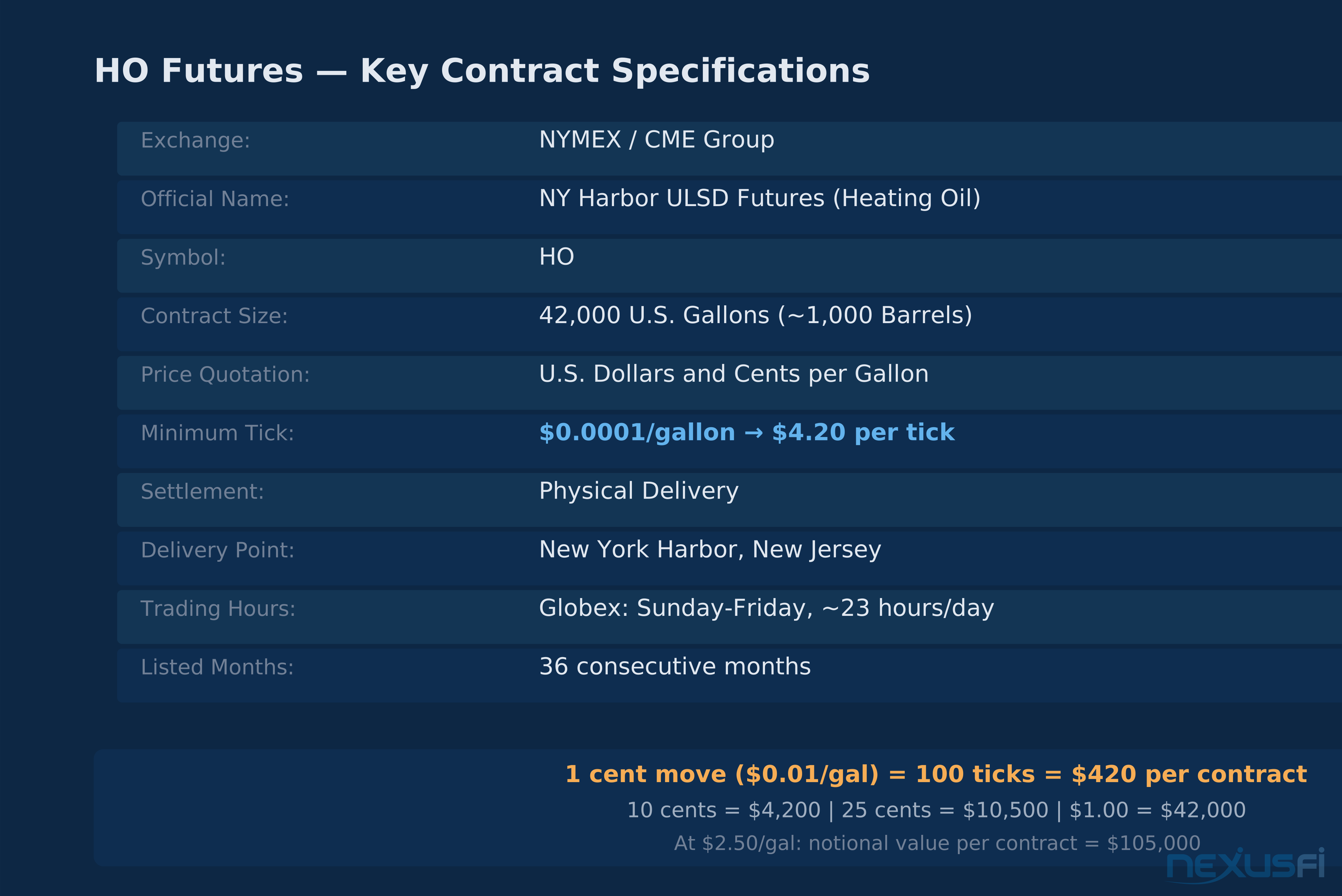
| Specification | Detail |
|---|---|
| Exchange | NYMEX (CME Group) |
| Official Product Name | NY Harbor ULSD Futures |
| Trading Symbol | HO |
| Contract Size | 42,000 U.S. gallons (~1,000 barrels) |
| Price Quotation | U.S. dollars and cents per gallon |
| Minimum Tick | $0.0001 per gallon |
| Tick Value | $4.20 per tick |
| Settlement | Physical delivery |
| Delivery Location | New York Harbor area, New Jersey |
| Trading Hours | CME Globex: Sunday--Friday 6:00 PM--5:00 PM ET (60-min break daily) |
| Last Trading Day | Last business day of the month preceding delivery month |
| Listed Contracts | 36 consecutive months |
Full contract specifications, including delivery procedures and final settlement rules, are maintained on the CME Group NY Harbor ULSD Futures product page.[10]
Tick Math and Dollar Exposure #
The HO contract quotes in dollars per gallon. At $2.50/gallon, one full contract has a notional value of $105,000 (42,000 × $2.50). At $3.00/gallon, that rises to $126,000. This makes HO one of the larger-notional NYMEX energy contracts on a per-tick basis.
Each minimum tick move of $0.0001/gallon is worth $4.20. A one-cent move ($0.01/gallon) is 100 ticks — $420 per contract. A ten-cent move ($0.10/gallon) — common during supply disruptions or refinery outages — is $4,200 per contract.
For context: the CL crude oil contract moves $10 per tick (0.01/barrel), versus HO's $4.20 per tick. But HO can move in large absolute terms: during the February 2021 Texas freeze and the 2022 Russian invasion of Ukraine, HO moved $0.50--$1.00+ per gallon in single sessions — $21,000--$42,000+ per contract.
NexusFi member
[1] The mini contract (QH) at 21,000 gallons exists on paper but trades with basically zero liquidity — NexusFi members consistently advise against attempting to trade it.
Physical Delivery Mechanics #
HO is a physically settled contract. The delivery point is New York Harbor, New Jersey — specifically, pipeline or barge delivery of Ultra Low Sulfur #2 fuel oil meeting ASTM D975 Grade No. 2-D S15 specifications (maximum 15 parts per million sulfur).
In practice, the overwhelming majority of HO open interest is closed before the last trading day. But physical delivery mechanics matter because they influence:
- Prompt spread behavior: the January--February spread often tightens as heating season peaks and physical demand stresses the pipeline network
- Last trading day volatility: thin paper interest and physical shorts can create squeeze conditions
- Basis behavior: the difference between NYMEX settlement prices and actual rack prices at terminals reflects regional transportation and storage costs
The E-mini QH: Why It Doesn't Work #
The E-mini Heating Oil contract (QH, 21,000 gallons) is listed but functionally illiquid.
[2] If you need smaller HO exposure, trading the full HO contract at reduced position size is the only practical option.
How HO Is Priced: The Refined Product Framework #
HO is not crude oil with a markup. Understanding the pricing stack is essential.
The Distillate Pricing Framework #
HO futures price ≈ Crude Oil Component + Refining Margin + Transportation/Logistics + Product Market Balance + Risk PremiaEach component moves independently:
Crude Oil Component: The primary input. Roughly 60--75% of HO price changes track crude oil over rolling 30-day windows. WTI (CL) and Brent are the primary crude benchmarks.
Refining Margin: The profit a refiner earns converting crude to ULSD. When margins are high (often during distillate supply crunches), HO rises relative to crude. When refinery utilization is high and margins are compressed, the relationship tightens.
Transportation and Logistics: Physical HO must move from Gulf Coast refineries (the primary production hub) to New York Harbor. Pipeline capacity, weather disruptions, and vessel availability all create temporary price differentials.
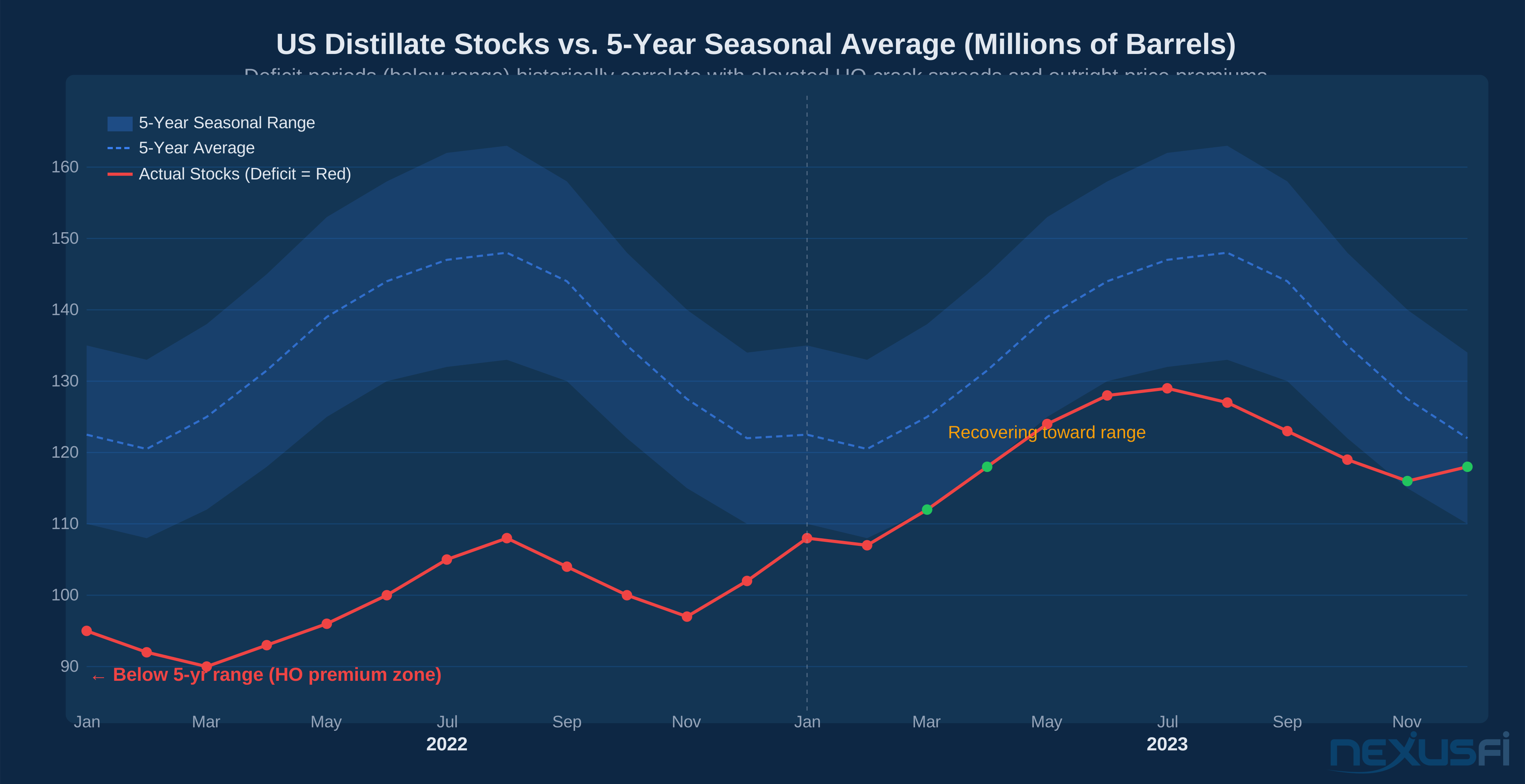
Product Market Balance: Distillate inventory relative to its seasonal norm is the most important near-term price driver. The EIA reports this weekly. When distillate stocks fall below the 5-year seasonal average, HO carries a premium; when stocks build above average, the premium collapses.
[7]
Risk Premia: Geopolitical events, cold weather forecasts, and refinery disruption risk all add premia that can persist for days or weeks before resolving.
Contango and Backwardation in HO #
HO curve structure differs meaningfully from crude oil because distillate storage economics are distinct.
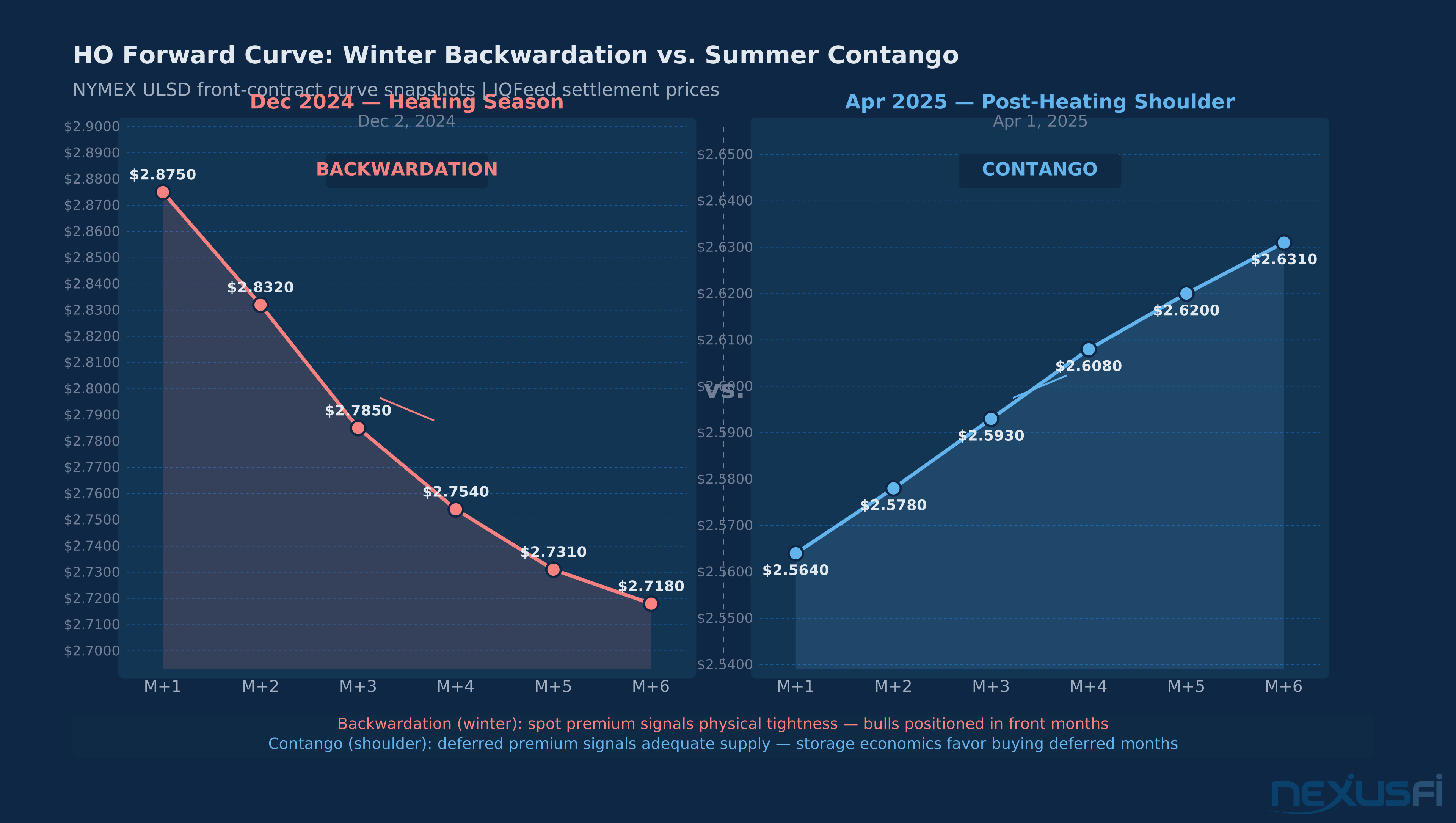
Backwardation (spot > forward) in HO typically signals:
- Current distillate supply shortage or demand spike
- Refiners and/or consumers pulling product into the prompt month
- Heating season peak demand with low inventory levels
Contango (spot < forward) in HO typically signals:
- Adequate to excess distillate supply
- Refinery run rates recovering from maintenance
- Post-heating-season shoulder period with stocks building
The front-month spread (Jan--Feb or Feb--Mar during heating season) is one of the most closely watched indicators of physical tightness. When this spread widens into backwardation during winter months, it signals genuine physical demand exceeding supply at current prices — a potential directional signal.
Fundamental Drivers: What Actually Moves HO #
1. EIA Weekly Petroleum Status Report #
The single most important weekly data release for HO traders. Published every Wednesday at 10:30 AM ET by the U.S. Energy Information Administration[11], this report is one of several critical government commodity releases that move energy futures. It contains:
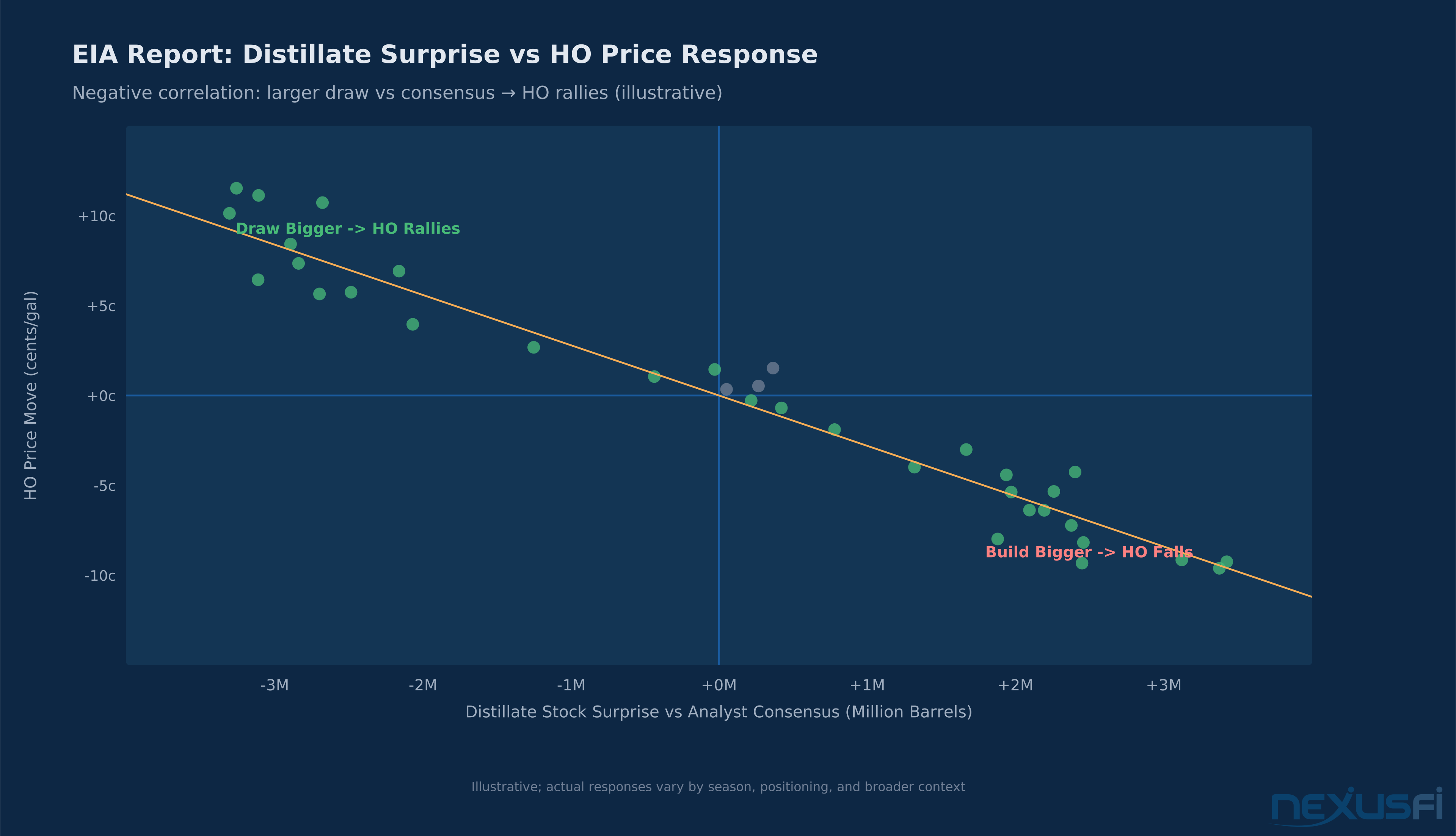
The EIA distillate number matters more than the crude headline for HO traders. Always check distillate stocks versus the 5-year seasonal average — that's the real market signal. A draw larger than expected typically lifts HO regardless of what crude did that day.
- Distillate fuel oil stocks: The headline number for HO trading. Reported in millions of barrels, compared against the 5-year seasonal average range. A draw larger than expected typically pushes HO higher; a surprise build often triggers selling.
- Implied demand: Calculated as refinery production minus inventory change minus imports/exports. This "disappearance" figure is a noisy but real proxy for consumption.
- Refinery utilization: What percentage of operable refining capacity is running. Low utilization (below 90%) signals potential supply constraints ahead.
- Distillate production: Barrels per day of distillate output from U.S. refineries. Tracks refiner economics in real time.
- Imports and exports: Distillate trade flows increasingly matter as the U.S. exports more diesel to Latin America and Europe.
NexusFi member @ron99 on tracking EIA distillate data: "The next 2 EIA inventory reports for the last 5 years (weeks 47 & 48) have shown a large gain in distillate stocks every year... That leads to this drop in HO futures."[4] Understanding the seasonal inventory patterns that drive predictable responses to EIA data is foundational to HO trading.
2. Weather — Beyond the Heating Degree Day #
Heating degree days (HDDs) measure how cold it is relative to a 65°F baseline. More HDDs = more heating demand = more distillate consumed in the Northeast. But the weather relationship is more complex:
- Temperature anomalies in the Northeast drive prompt month HO most directly. A cold snap in Boston and New York matters more than average temperatures across the country.
- Duration matters: A single cold week with large HDs is often priced in quickly and reverts. A persistent cold pattern over 4--6 weeks draws down inventories in ways the market cannot quickly reverse.
- Timing within the heating season: A cold snap in early December (before stocks have been drawn down) has less impact than the same cold snap in late January when East Coast distillate inventories are already stressed.
3. Refinery Operations #
Refineries are complex systems with scheduled and unscheduled downtime. For HO traders:
- Planned maintenance seasons: Spring (March--May) and fall (September--October) are typical refinery turnaround periods. When major refineries take units offline for maintenance, distillate production drops and HO typically rallies.
- Unplanned outages: Refinery fires, equipment failures, or weather-related shutdowns (hurricane season in the Gulf Coast) can create sharp, immediate HO spikes. When BP's Whiting refinery in Indiana suffered a site-wide power failure in February 2024, fund managers sold 86 million barrels in petroleum futures contracts in a single week.[8]
- Yield optimization: Refiners can adjust their crude processing to maximize either diesel or gasoline output. When diesel cracks are high, they run for maximum distillate yield, adding supply. When gasoline margins are higher, they shift — reducing distillate production.
4. Industrial and Transportation Demand #
Because ULSD powers trucking, rail, and construction, HO demand tracks economic activity:
- ISM Manufacturing and Services PMI: Strong economic activity = more freight movement = more diesel consumption
- Trucking industry data: American Trucking Associations tonnage index correlates with distillate demand
- Agricultural seasons: Spring planting and fall harvest drive large temporary spikes in farm diesel consumption in the Midwest
5. Export and Import Flows #
The U.S. has become a significant distillate exporter, particularly to Latin America and Europe. This export demand creates a new channel through which global diesel prices influence domestic NYMEX HO prices.
- Latin American demand: Venezuelan refinery capacity has collapsed; the region now imports heavily from the U.S. Gulf Coast
- European arbitrage: When ICE Gasoil (the European diesel benchmark) trades at a premium to NYMEX HO (adjusted for freight and quality), U.S. exporters ship barrels east — drawing down domestic stocks and supporting HO prices
Seasonal Patterns: Trading the Predictable Calendar #
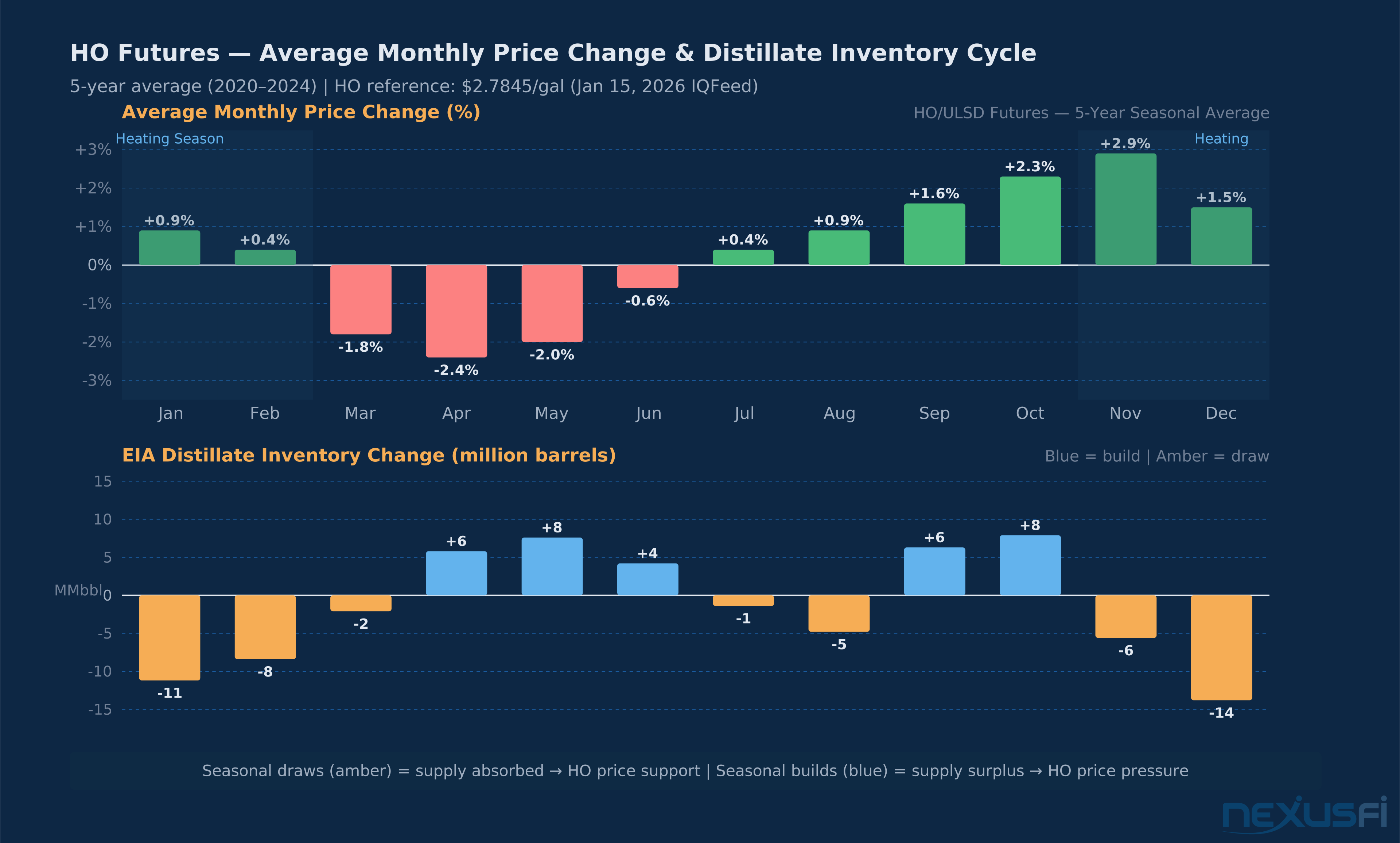
HO exhibits among the most pronounced seasonal patterns of any futures contract. These patterns emerge because distillate demand and supply have genuine calendar regularities.
The Annual Distillate Cycle #
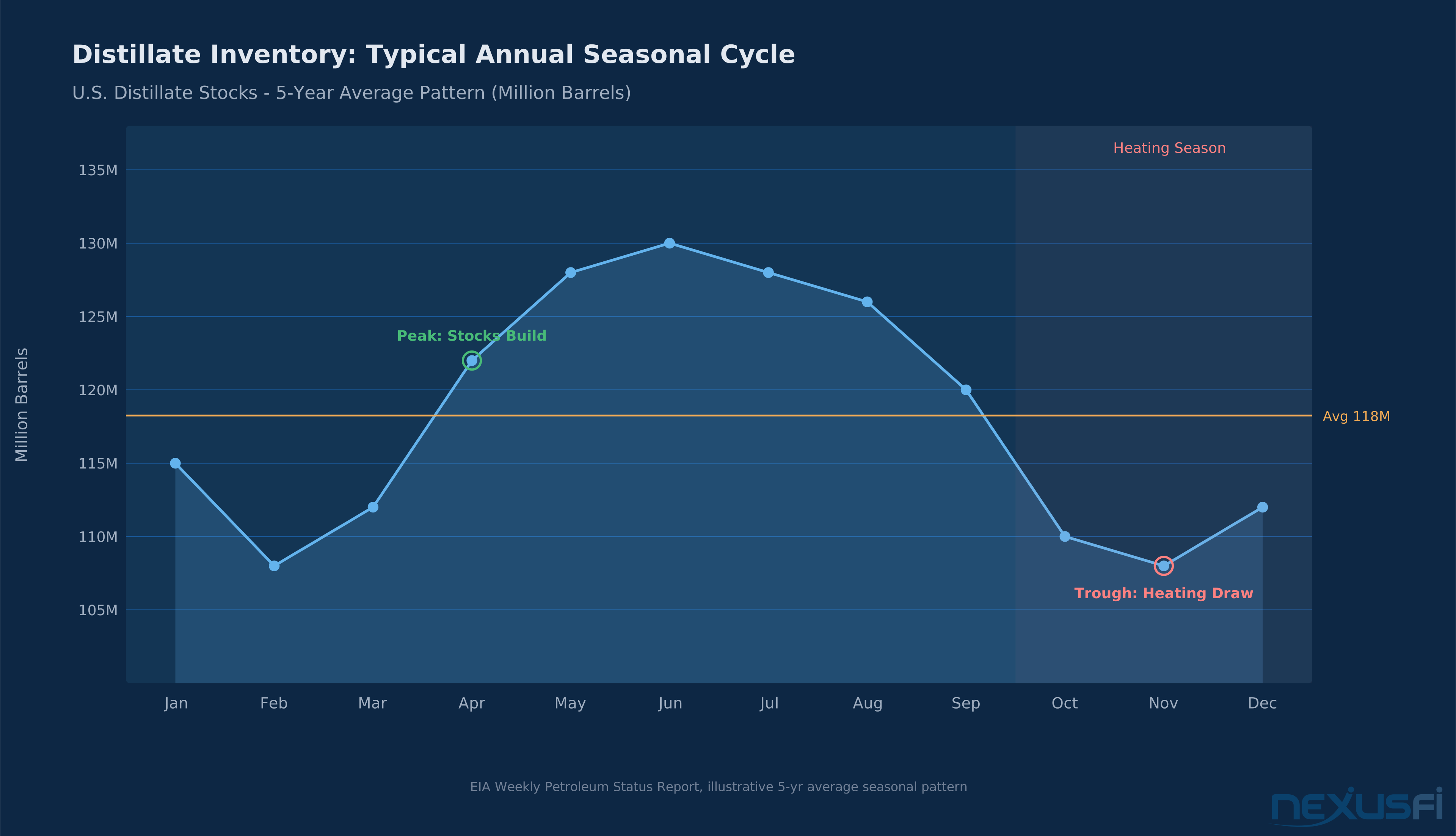
September--October: Pre-Season Build Distillate inventories typically build during early fall as refiners come off summer gasoline mode and begin producing more heating oil in anticipation of winter. HO calendar spreads for the winter months often weaken during this period as supply builds.
November--February: Heating Season Peak residential heating demand in the Northeast. EIA distillate stocks typically draw down during this period. Cold weather events during these months create the most violent HO price moves. Prompt month HO typically strengthens relative to deferred months as physical demand rises.
March--May: Post-Heating, Pre-Summer Shoulder Heating demand collapses as temperatures rise. Distillate stocks typically rebuild. HO often weakens in absolute terms and relative to crude. Calendar spreads for summer months frequently slide into contango.
June--August: Summer Industrial Demand Lower than winter but not absent. Industrial, construction, and agricultural demand provides a floor. Refineries often run heavily in summer to maximize gasoline production, which constrains distillate output — sometimes creating supply shortfalls.
Seasonal Calendar Spread Patterns #
The most reliable HO seasonal trades involve calendar spreads rather than outright directional positions.
[3]
Common seasonal spread patterns include:
- Long October / Short January: Expects pre-season build to overestimate winter demand; January contracts often carry a risk premium that dissipates if winter is mild
- Long February / Short May: Expects any late-season cold snap to have lingered longer than the market anticipated
- Short Spring / Long Fall: Bets on the structural inventory build/draw pattern to repeat across seasons
Seasonal Failure Modes #
Seasonality in HO fails when structural changes override the calendar:
- Abnormally warm winters can leave inventories at record highs well into February, collapsing the typical heating season premium
- Major refinery outages can create summer supply crunches that look nothing like historical patterns
- Geopolitical shocks (Russian export disruptions, Middle East conflict affecting shipping) override seasonal signals entirely
NexusFi member
[4] But he's combining seasonal tendency with a specific weather forecast — the combination of a seasonal lean plus confirming data is more powerful than either alone.
Seasonality without confirmation fails. Combine your seasonal lean with current EIA inventory data, weather forecasts, and refinery utilization before entering any HO seasonal trade. The calendar tells you where to look — the data tells you whether to act.
HO vs. Crude Oil: Correlation and Decoupling #
When HO Trades With Crude #
During periods of macro-driven oil market moves — OPEC+ production cuts or hikes, recession fears, geopolitical risk-off — HO and CL move together with high correlation. A trader in HO during these periods is essentially making a leveraged crude oil bet with added distillate risk.
Signs that HO is trading with crude:
- Rolling 30-day correlation above 0.85
- HO crack spreads (HO/CL differential) holding relatively stable
- EIA reports creating only modest deviations before reverting
When HO Decouples from Crude #
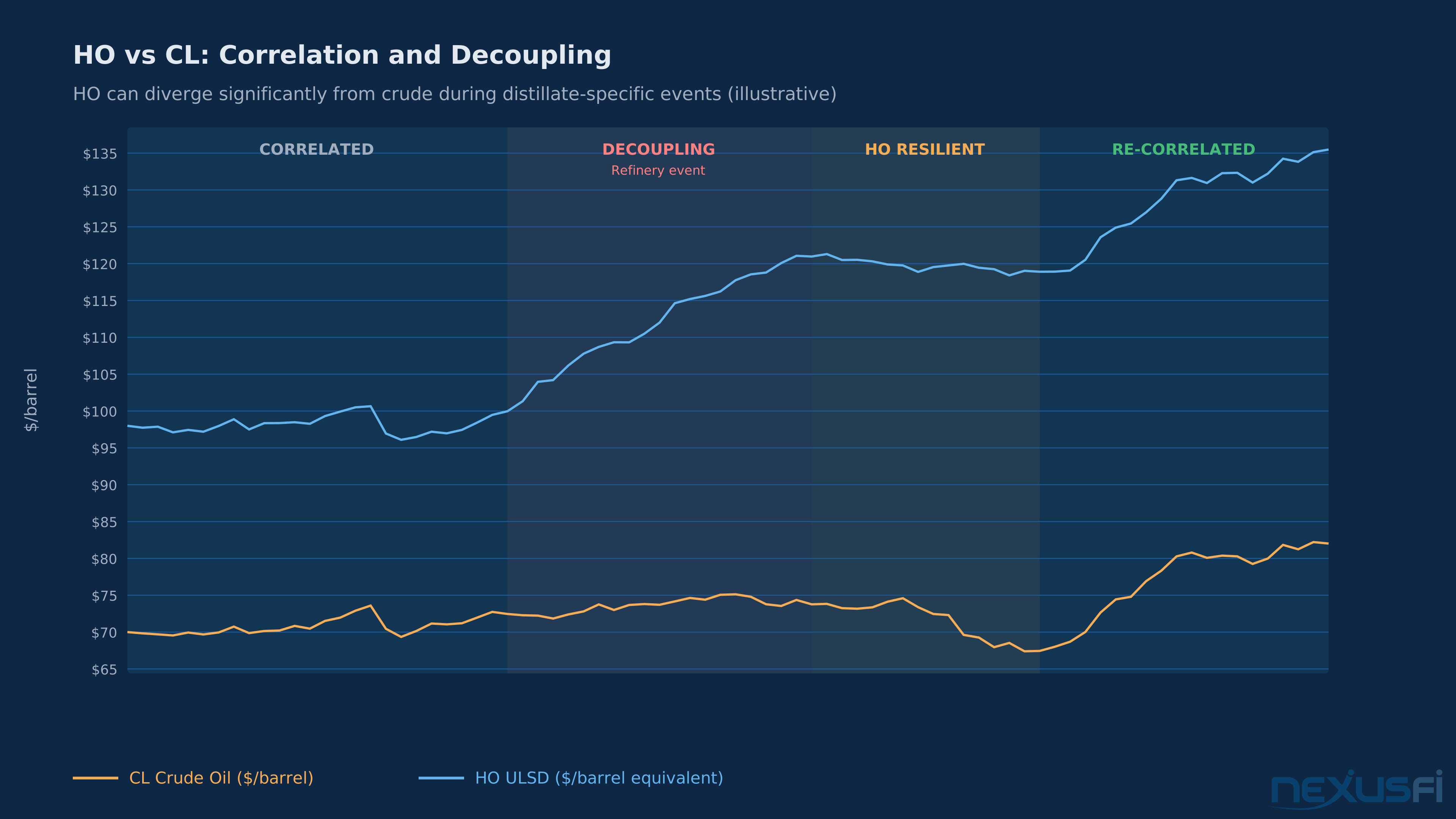
HO diverges from crude when distillate-specific factors dominate:
Distillate inventory tightness: When distillate stocks fall well below the 5-year seasonal average, HO can rally even when crude is flat or falling. The market is pricing product scarcity, not crude scarcity.
Refinery maintenance: If major refinery turnarounds remove distillate production capacity, HO rises while crude may be unaffected or even pressured (by reduced crude demand from offline refineries).
Weather events: A polar vortex hitting the Northeast drives HO demand sharply without necessarily affecting crude directly.
Export demand spikes: If European gasoil prices spike due to Russian supply disruptions, U.S. exports surge, drawing down domestic distillate stocks and rallying HO — even if crude is unchanged.
Sustained HO strength against flat or falling crude is one of the cleanest signals of a genuine distillate supply shortage — and often the best risk/reward entry window. When the HO-CL basis widens persistently over 2+ weeks without a clear catalyst reversal, the market is telling you something real about product scarcity.
The HO-CL Basis #
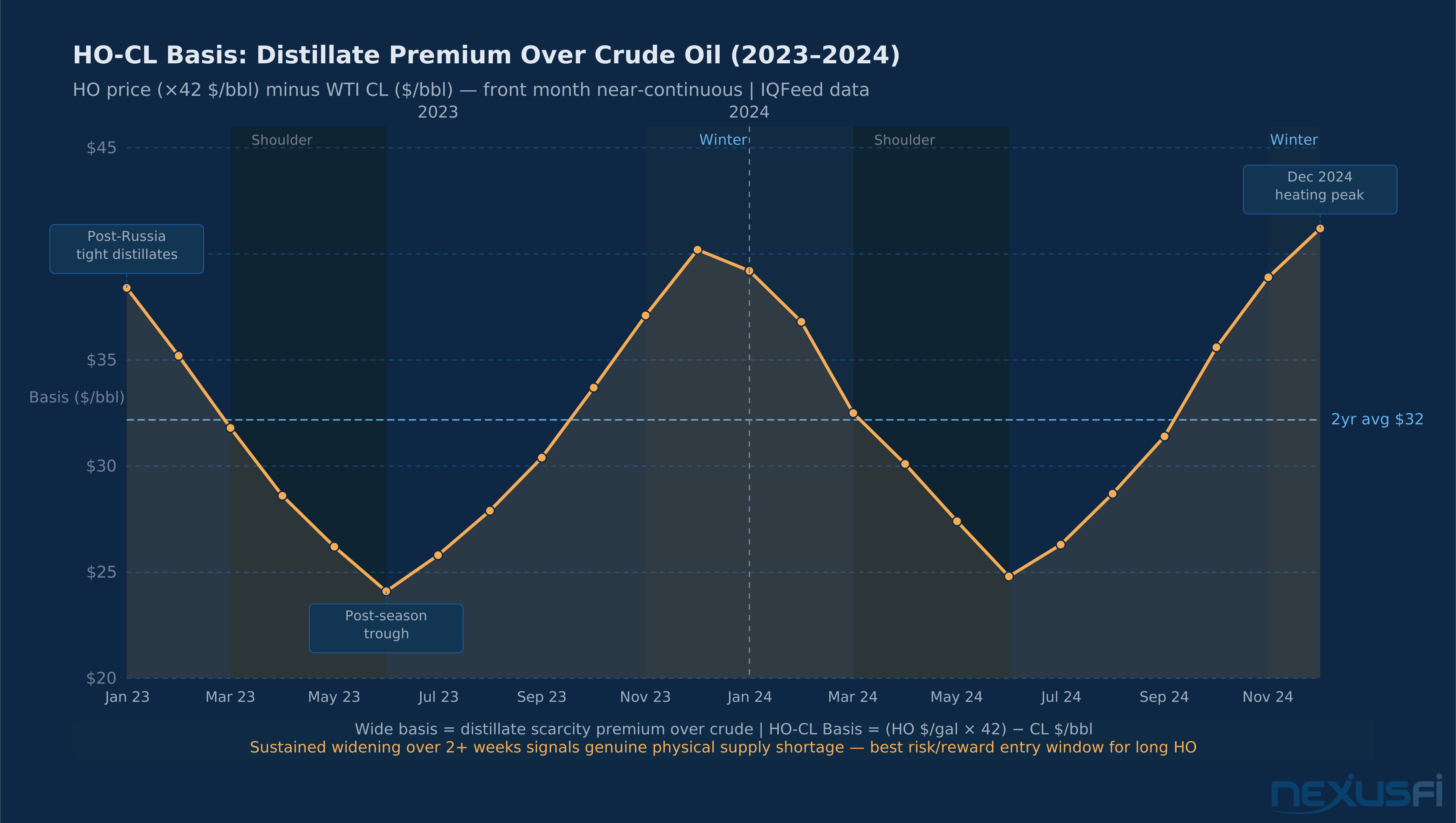
The price difference between HO (in $/barrel equivalent) and CL (in $/barrel) is the distillate premium. Converted to barrel terms:
HO-CL Basis = (HO price in $/gallon × 42) - CL price in $/barrelWhen this basis is wide, distillates are commanding a premium — often a signal of genuine physical tightness. When it's narrow, refining margins are compressed and product markets are well-supplied.
Crack Spreads: Relative Value in the Refinery Complex #
What the HO Crack Measures #
The HO crack spread is the difference between the value of heating oil (ULSD) and the crude oil required to produce it. It is a standardized proxy for refining profitability.
The basic 1:1 HO crack:
HO Crack = HO price (in $/barrel) - CL price (in $/barrel)Convert HO from cents per gallon to dollars per barrel: multiply by 42.
At HO = $2.50/gallon and CL = $70/barrel:
HO = $2.50 × 42 = $105/barrel
HO Crack = $105 - $70 = $35/barrel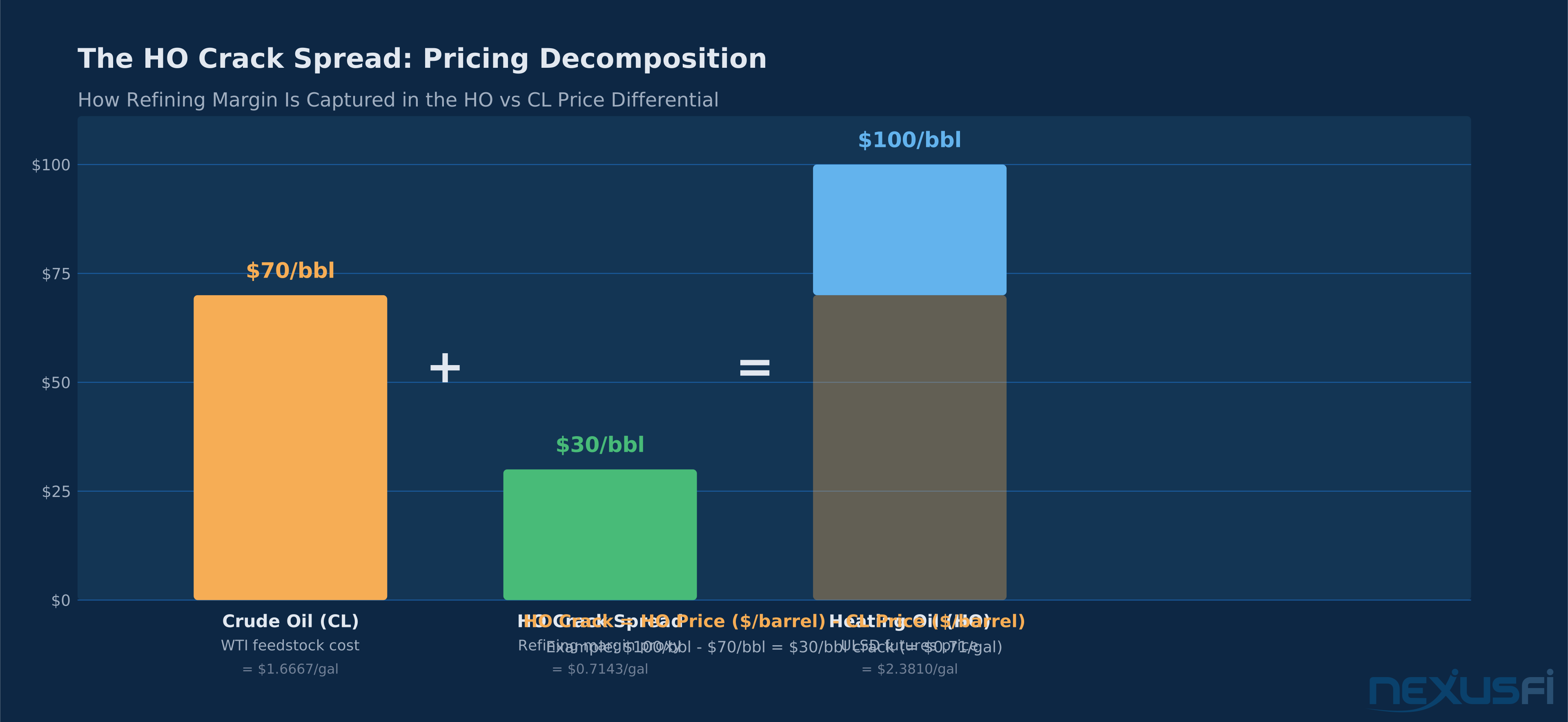
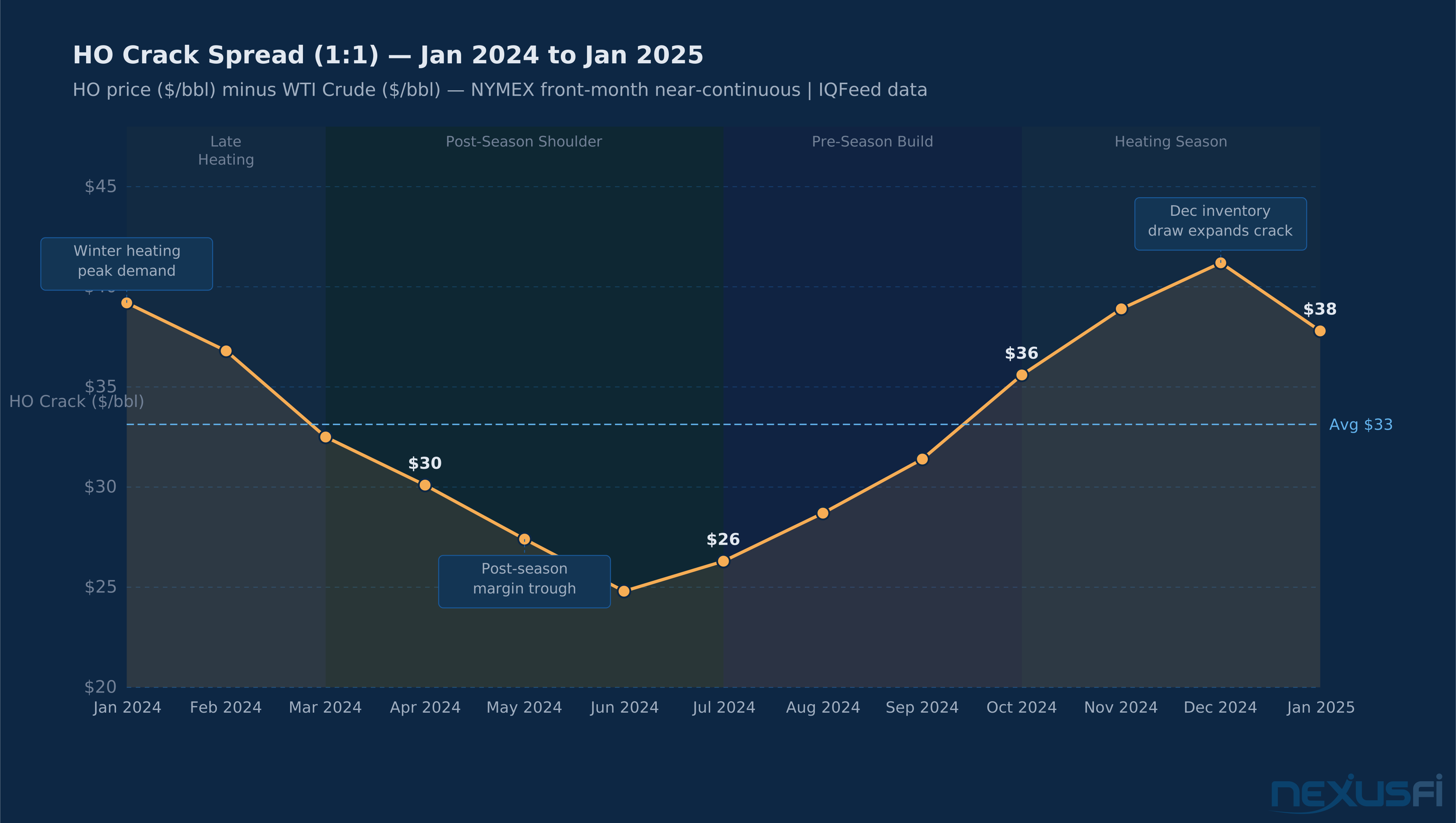
This $35/barrel notional margin is the gross refining margin before operating costs. Historical ranges have been roughly $10--$80/barrel, with the extremes during the 2022 supply disruptions.
The 3:2:1 Crack Spread #
The industry benchmark crack spread uses three crude barrels to produce two RBOB Gasoline (RB) barrels and one distillate barrel:
3:2:1 Crack = (2 × RB price + 1 × HO price) / 3 - CL priceAll in barrel-equivalent terms. This approximates real refinery economics better than a pure HO crack because refineries produce both gasoline and distillate.
[2][6]
Trading Crack Spreads #
Crack spreads trade as implied spreads on CME/NYMEX, meaning you can leg in separately or use the exchange's implied functionality to execute both legs simultaneously. For an in-depth look at platform capabilities for multi-leg execution, see Spread Trading Tools and Platforms. CME Group publishes detailed implied intercommodity crack spread pricing rules covering the 1:1 and 3:2:1 ratios used for matching these trades.[12]
Long crack spread: Long HO, short CL. Profits when refining margins expand — when distillate demand is strong relative to crude supply, or when refinery outages cut product supply without affecting crude prices directly.
Short crack spread: Short HO, long CL. Profits when refining margins compress — when crude rallies faster than product prices, or when distillate supply builds faster than demand.
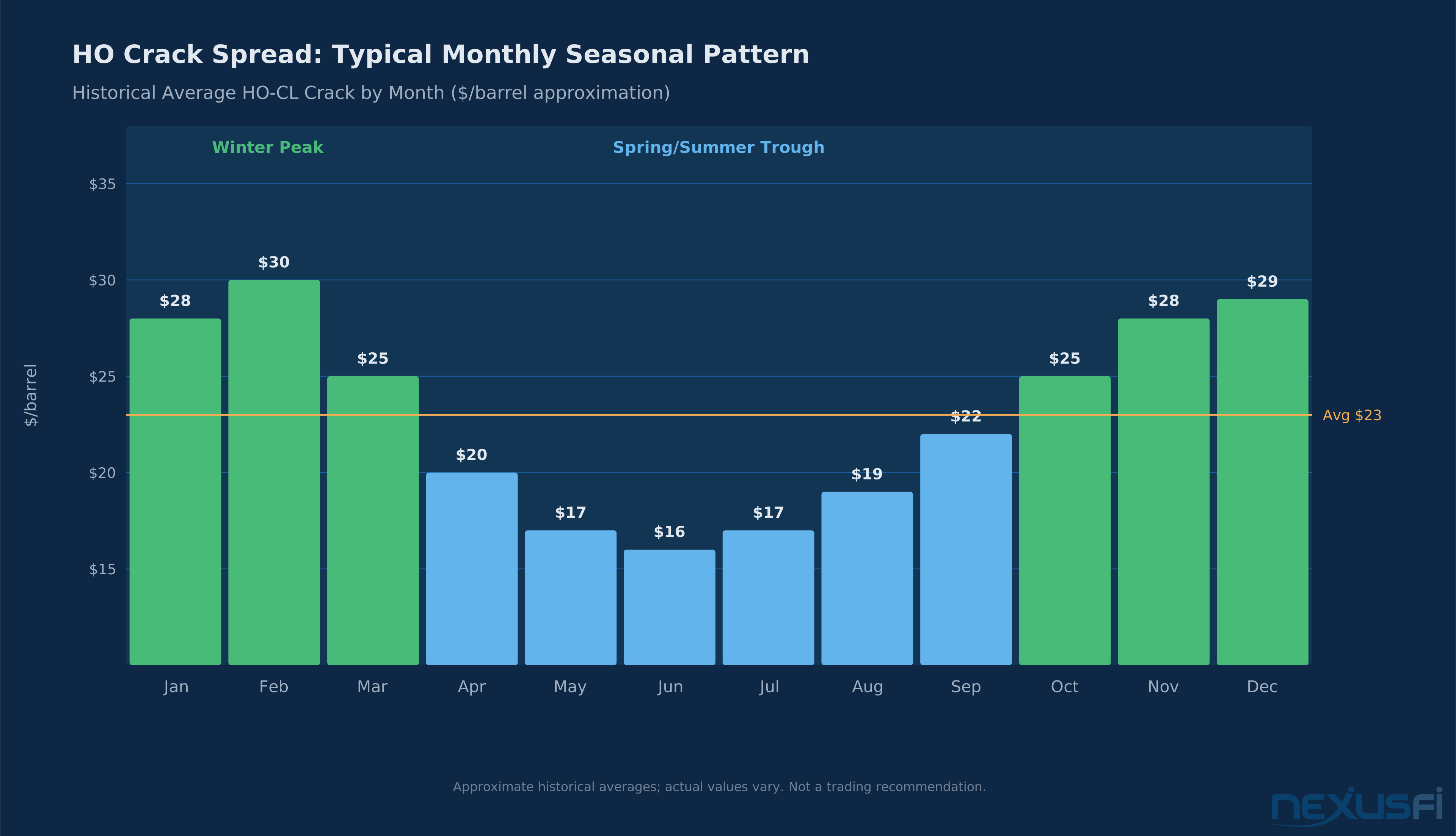
Seasonal crack spread patterns: HO cracks typically widen entering winter (higher distillate demand) and compress in spring (weaker demand, refineries running hard). This seasonal tendency makes the HO crack a popular vehicle for seasonal spread trading.
Crack Spread Risk #
Crack spreads are a proxy for refining margin, not the actual margin. Basis risk exists because:
- NYMEX prices reflect NY Harbor, not the actual delivery point for a specific refinery
- The contract ratio (1:1 or 3:2:1) doesn't perfectly match any individual refinery's actual product slate
- Regional transportation costs and quality differentials add noise to the "margin" signal
Curve Structure and Calendar Spread Opportunities #
Reading the HO Forward Curve #
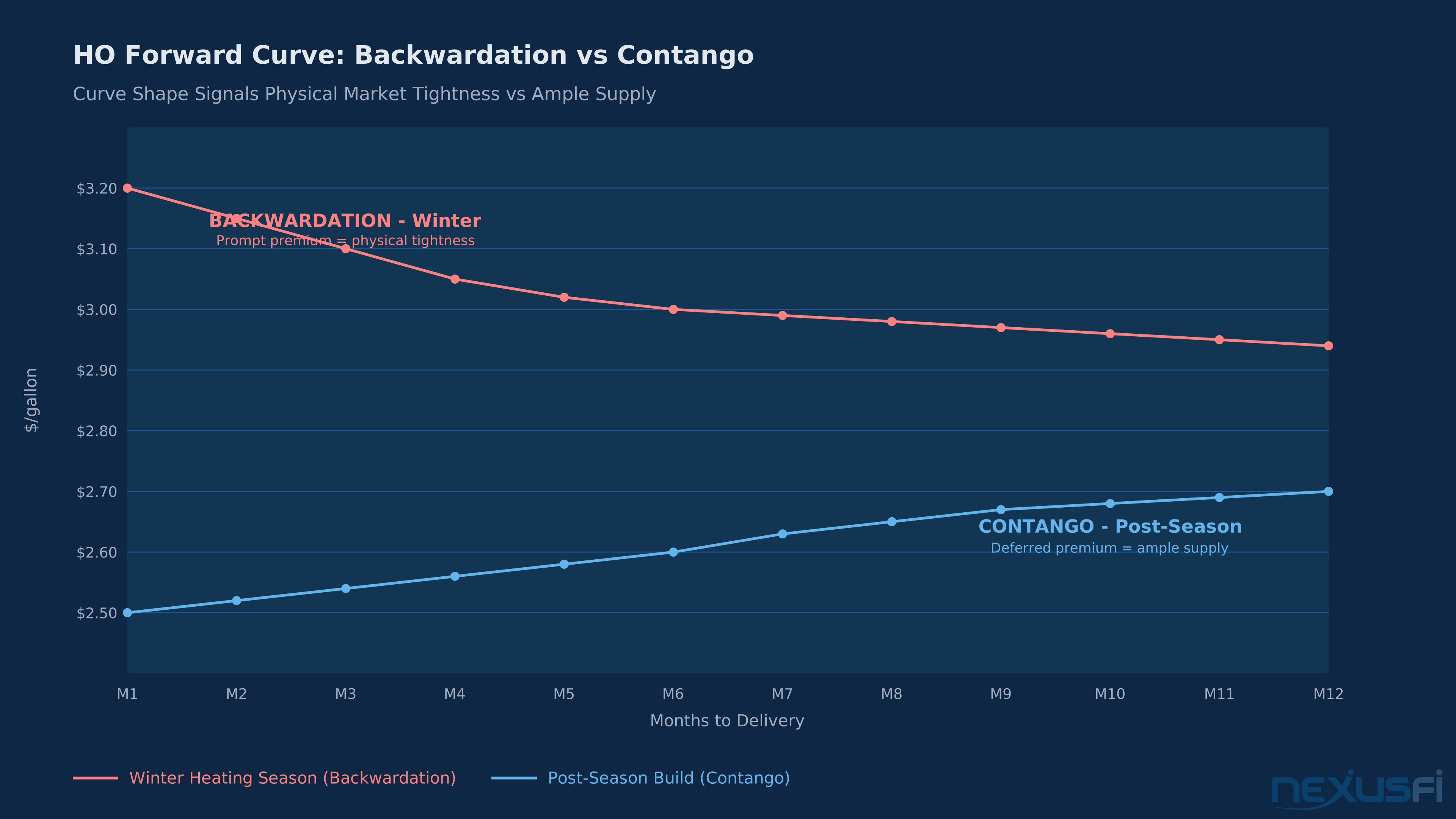
The HO futures curve plots prices for each contract month from prompt (nearest delivery) through 36 months out. The shape tells a story about market expectations:
Steep backwardation in winter months: Front-month HO > deferred months. Signals current physical tightness. Prompt demand is pulling on available supply. The market is willing to pay up now rather than wait.
Flat curve in shoulder seasons: Mar--May and Sep--Oct curves often flatten as inventories rebuild and the market has reduced urgency about near-term supply.
Seasonal bulge: Sometimes the winter months (Oct--Feb) trade at a premium to both the prompt front month and the distant deferred contracts. This "seasonal bulge" reflects anticipated winter demand that isn't present yet but is expected.
Calendar Spread Trading #
Calendar spreads — long one delivery month, short another — let traders express views on the relative tightness of different time periods without taking outright directional crude exposure.
Q1/Q2 spread (January vs. April): The heating season vs. post-season spread. Long Jan/Short Apr profits if winter is colder than expected; Short Jan/Long Apr profits if winter is mild or stocks are adequate.
Summer/Winter crack (Aug vs. Feb): A more complex spread expressing views on whether summer refinery economics or winter heating economics will dominate the next 6 months.
Front month roll: HO rolls monthly, and the spread between the expiring front month and the new front month (the "nearby roll") reflects spot physical market conditions. Tight physical markets create backwardation in the roll; loose markets create contango.
Roll Management for HO Traders #
HO front-month liquidity concentrates in the nearest delivery month until about 7--10 days before the last trading day. At that point:
- Open interest migrates to the second contract month
- The front-month can become illiquid with wide bid/ask spreads
- Execution quality for market orders deteriorates
Position rolling for HO is best done 2--3 weeks before the last trading day, while the front-month still has adequate liquidity. Waiting until the final days risks slippage that can materially impact P&L.
Mark the HO roll date on your calendar 3 weeks before the last trading day. Set an alert. Waiting "just one more day" for a better roll price has cost more traders more money in slippage than any amount of roll spread optimization has ever saved.
@Fat Tails on setting up HO in NinjaTrader: "Heating Oil is one of the headache instruments, because the contract month is not identical with the expiry month, so you have to use the symbol HO||||1 instead of HO for Interactive Brokers."[5]
Trading Implementation and Risk Management #
Practical Execution Considerations #
Liquidity profile: HO liquidity concentrates in the front 2--3 contract months. Beyond that, bid/ask spreads widen and open interest thins. For position sizes above 5 contracts, checking depth-of-market before submitting market orders is essential.
Peak volatility windows:
- 10:30 AM ET Wednesday: EIA report release. Most violent price moves of the week.
- Monday open: Weekend weather developments and geopolitical events from the weekend price in rapidly.
- 7:45 AM ET: European market open, which brings energy-sector flow into the NYMEX
Margin and volatility: CME initial margin requirements fluctuate with volatility. During periods of high market stress, margins can increase by 30--50% with minimal notice. Position sizing must account for potential margin calls during sustained adverse moves.
Position Sizing for HO #
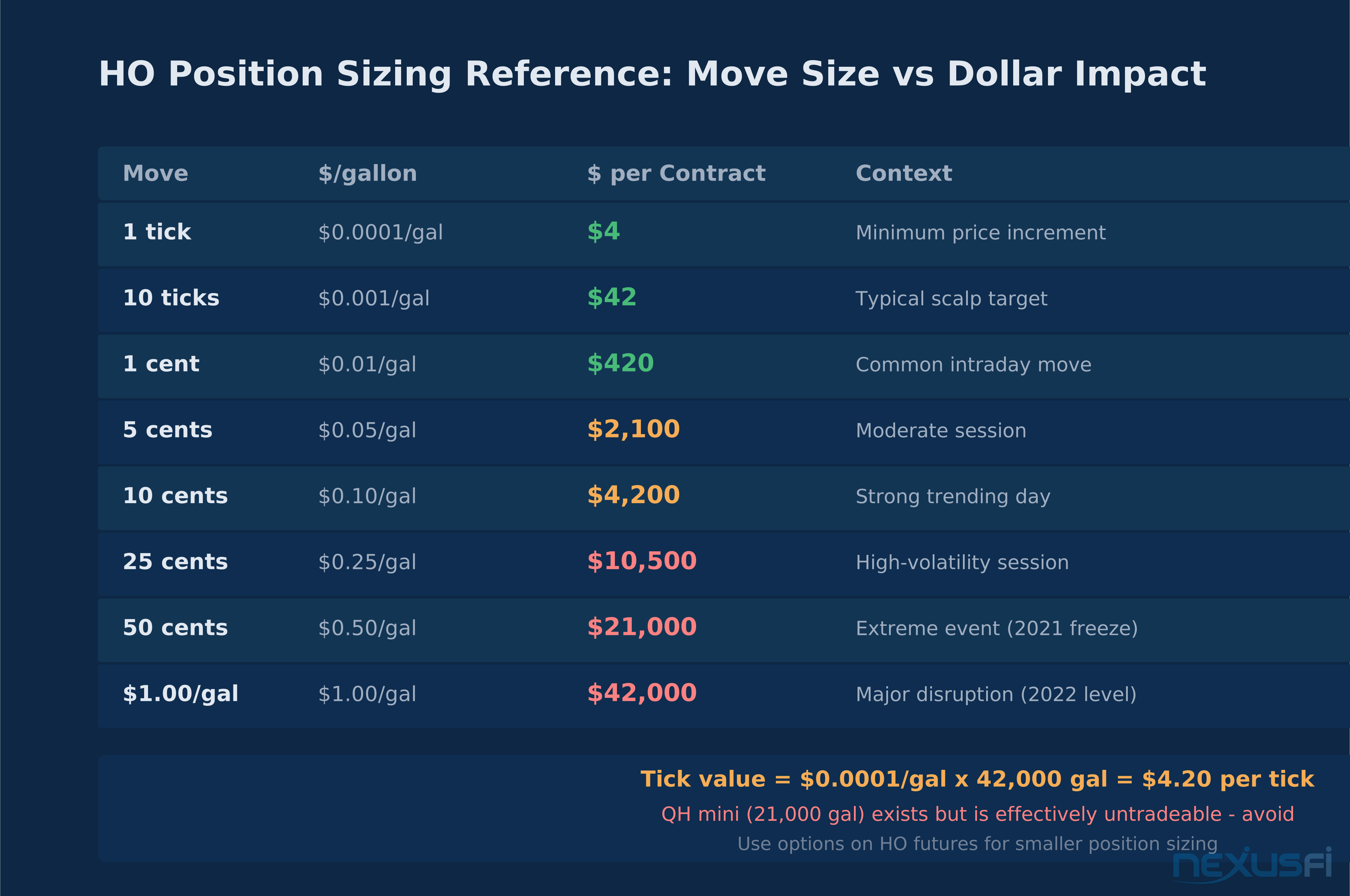
At $4.20/tick, a 50-tick adverse move (which happens routinely in volatile sessions) is $210 per contract. A $1.00/gallon adverse move — which occurred multiple times in 2022 — is $42,000 per contract.
Practical position sizing for active traders:
- Determine maximum dollar risk per trade (e.g., 1-2% of account)
- Calculate the likely stop distance in ticks based on the chart structure
- Divide max risk by (stop ticks × $4.20) to get maximum contracts
For a $100,000 account with 1% risk ($1,000) and a 50-tick stop: 1,000 / (50 × $4.20) = ~4.7 contracts. Round down to 4.
Common Risk Traps #
Storage and delivery proximity: If you're holding front-month HO within 10 days of the last trading day and haven't exited, you're at risk of delivery. CME will liquidate margined positions that aren't capable of taking delivery, often at unfavorable prices.
Crack spread basis risk: Long HO / short CL is not a zero-risk position. If crude and product markets move divergently — a refinery fire cuts product supply without affecting crude, for example — the crack can move violently against the spread trader.
Single-event tail risk: EIA reports, OPEC announcements, cold snaps, and refinery fires can produce moves that exceed multiple days of typical daily range in a single session. Stop placement must account for this volatility.
Correlation regime shifts: During 2020 (COVID demand collapse) and 2022 (Russian supply disruption), HO exhibited correlation breakdowns with crude that were extreme by historical standards. Models built on historical correlations failed badly. Recognizing when a structural regime shift has occurred — rather than a temporary deviation — is an advanced but essential skill.
HO can move $0.10+/gallon ($4,200+ per contract) on a single EIA report or refinery event. If your stop distance doesn't account for event-driven volatility, reduce position size or sit out the release window entirely. The math is simple: know your maximum dollar loss before the event, not after.
Common Pitfalls and Misconceptions #
"HO is just crude with a winter premium" #
This misframes the entire market. HO is a refined product with its own supply chain, its own inventory dynamics, and its own demand base that extends well beyond winter heating. Traders who treat HO as a simple crude leverage play miss the distillate-specific factors that can drive major HO moves independently of crude.
"Seasonality is enough to trade" #
Seasonal patterns in HO are real and historically consistent. But they are well-known, which means they are partially priced in. Trading purely on seasonal tendencies without confirming with current inventory data, weather forecasts, and refinery conditions produces poor risk-adjusted returns.
"The EIA report is about oil" #
The EIA Weekly Petroleum Status Report covers crude oil, gasoline, distillates, and several other products separately. HO traders focus on distillate fuel oil stocks specifically — not crude oil or gasoline inventories, which get most of the media coverage but have limited relevance for HO pricing.
"Mini HO (QH) solves the position sizing problem" #
As @SMCJB makes clear, the QH mini contract is effectively untradeable due to illiquidity: "QH and QU the eMini's have zero volume. Like most of the new Micros they will also be very expensive to trade in relation to the full contract due to the spread."[9] Position sizing in HO requires either accepting the full $4.20/tick exposure per contract or using options on HO futures to create custom risk profiles.
"The crack spread is passive income from refining economics" #
Crack spreads are active trading positions with their own risk factors — basis risk, refinery outage risk, crude-quality risk, and correlation risk. Treating them as a "structural carry trade" ignores the many ways they can move violently against a position.
Knowledge Map
Go Deeper
Build on this knowledgeReferences This Article
Articles that build on this topicCitations
- — QU (mini RBOB) & QH (mini Heating Oil) Position Size Calculations?? (2020) 👍 2“Heating Oil/Ultra Low Sulphur Diesel 'HO' is a 42000 Gallon Contract (~1000 Barrels), quoted in $/Gallon, with tick size $0.0001 which is $4.20”
- — QU (mini RBOB) & QH (mini Heating Oil) Position Size Calculations?? (2020) 👍 1“WTI-Heating Oil/Diesel Crack, trades on NYMEX as an implied spread... Brent-Heating Oil/Diesel Crack, trades on NYMEX or ICE as an implied spread.”
- — Heating Oil (2019) 👍 2“buying June '20 heating oil (N.Y. Harbor ULSD) and selling Jan. '20 heating oil can be entered/exited via a spread order without giving up too much”
- — Seasonal Trades (2016) 👍 4“The next 2 EIA inventory reports for the last 5 years have shown a large gain in distillate stocks every year. That leads to this drop in HO futures.”
- — Heating Oil futures contract on NT (2011) 👍 1“Heating Oil is one of the headache instruments, because the contract month is not identical with the expiry month”
- — Crude Crack Spread and Soybeans Crush Spread Indicators (2023) 👍 4“The five most common crack spreads are WTI-Heating Oil (CL vs HO), WTI-RBOB (CL vs RB), Brent-Heating Oil, Brent-RBOB, and Brent-Gasoil. The 3:2:1 crack approximates 3 crude barrels producing 2 gasoline and 1 heating oil.”
- — The CL Crude-analysis Thread (2023) 👍 2“Distillates includes Diesel, Gasoil, Heating Oil, Kerosene and Jet Fuel. Europe's distillate fuel oil inventories were -35 million barrels (-8% or -1.11 standard deviations) below the prior ten-year seasonal average at end of August.”
- — The CL Crude-analysis Thread (2024) 👍 2“Portfolio investors abandoned hope for an early rally in crude prices after a site-wide electricity failure caused an unexpected shutdown at BP's Whiting refinery in Indiana -- the largest in the U.S. Midwest, processing more than 400,000 barrels per day.”
- — FOUR more NEW MICRO's - Micro Treasury Yield Futures coming 16 Aug'21 (2022) 👍 1“QH and QU the eMini's have zero volume. Like most of the new Micros they will also be very expensive to trade in relation to the full contract due to the spread.”
- — NY Harbor ULSD Futures Contract Specifications
- — Weekly Petroleum Status Report
- — Introduction to Crack Spreads