



Brent Crude (BZ) Futures: The Complete Trading Guide
Overview #
Brent Crude futures (BZ on NYMEX, BRN on ICE) are the world's primary oil price benchmark. When news anchors say "oil is up $2 a barrel," they mean Brent. When a Saudi Aramco tanker captain negotiates a cargo price with a South Korean refiner, that price is set as a differential to Brent. About 65-78% of internationally traded crude is priced against Brent — not against WTI, not against Dubai, not against any other benchmark.
That ubiquity creates trading opportunities. Brent responds to geopolitical events that WTI often shrugs off. It's the first benchmark to gap when a Red Sea shipping disruption hits the wires. It's the market that OPEC+ announcement algorithms hit first. And it sits at the center of the most important relative-value trade in energy markets: the Brent-WTI spread.
This guide covers everything a futures trader needs to know about BZ: contract mechanics, what actually moves the price, how to trade the Brent-WTI spread, when and how to roll positions, and the practical setups that have produced edge in this market.
What Brent Crude Is: North Sea to Global Benchmark #
The name "Brent" comes from a specific North Sea oil field operated by Shell in the 1970s — but "Brent crude" today has almost nothing to do with that original field. Production at the Brent field declined so sharply that ICE had to expand the benchmark's underlying crude streams to maintain relevance.
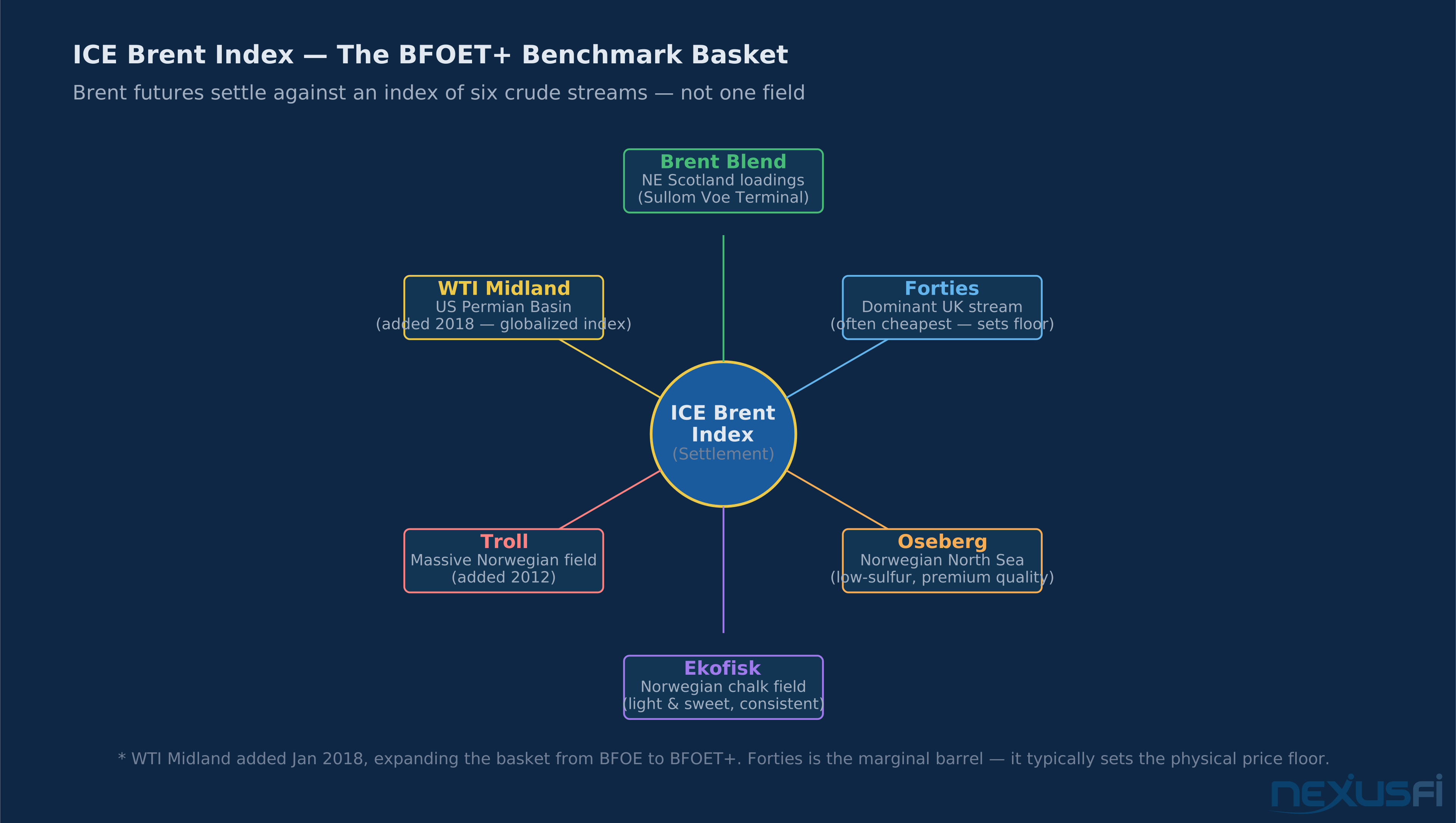
Today, the ICE Brent Crude futures contract settles against the ICE Brent Index — a basket of six North Sea crude streams known as BFOET+: Brent, Forties, Oseberg, Ekofisk, Troll, and (since January 2018) WTI Midland from the US Permian Basin. As @SMCJB, a NexusFi member with a professional background in crude trading on London's North Sea desk, explained: "Brent and the BFOE basket is the largest global benchmark in the world. Nearly all European, African and many middle eastern barrels trade at a differential to (dated) Brent." [1]
Within the basket, Forties crude is typically the cheapest stream and sets the price floor — meaning in most conditions, it's Forties that determines the ICE Brent settlement price. Traders tracking North Sea differentials monitor Forties quality and supply closely because of this.
The 2018 addition of WTI Midland was consequential. Before that, the BFOET basket was purely North Sea European crude. Adding US Permian crude — which had expanded massively due to shale production — globalized the benchmark and much tightened the Brent-WTI premium that had prevailed for years. Traders who missed this structural change got caught on the wrong side of the spread.
The delivery mechanism matters even if you never take physical delivery. ICE Brent is a physically deliverable contract using an Exchange for Physical (EFP) mechanism, with the option to cash settle against the ICE Brent Index on the last trading day. @SMCJB quoted the ICE spec directly: "The ICE Brent Crude futures contract is a deliverable contract based on EFP delivery with an option to cash settle against the ICE Brent Index price for the last trading day." [2] Physical delivery rules anchor the cash and futures prices together — which is why the front-month contract behaves differently near expiry than deferred contracts.
Contract Specifications: What You're Actually Trading #
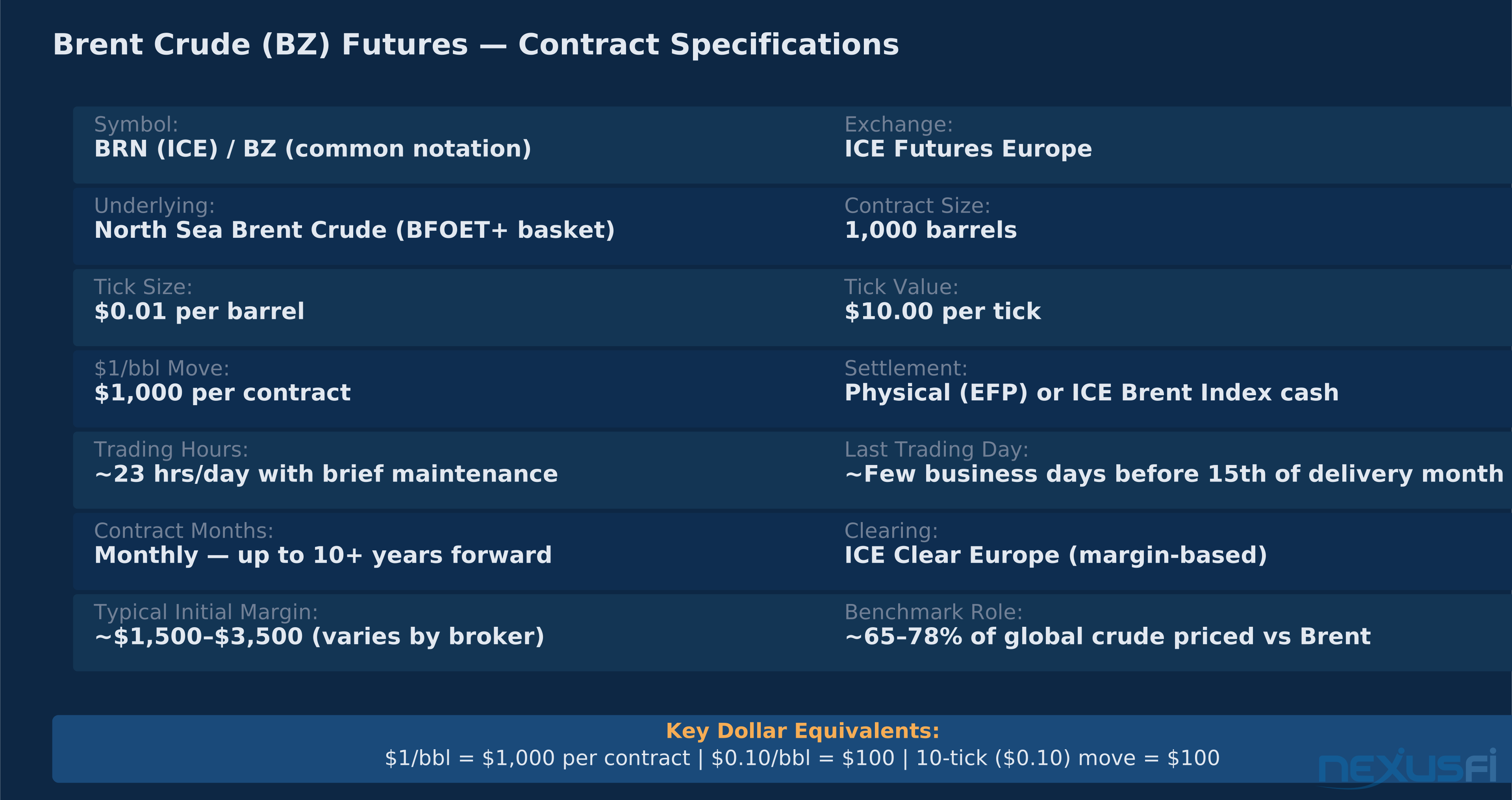
The BZ contract's dollar mechanics are simple but the implications for position sizing are significant.
- Contract size: 1,000 barrels
- Tick size: $0.01 per barrel = $10 per tick
- Dollar-per-point: $1/bbl = $1,000 per contract
- Exchange: ICE Futures Europe (London)
- Settlement: Physical delivery via EFP mechanism, or cash settlement against ICE Brent Index
- Last trading day: Approximately a few business days before the 15th of the delivery month (subject to holiday adjustments -- always verify on ICE)
- Clearing: ICE Clear Europe, margin-based
- Symbol: BRN on ICE native platform, BZ on NYMEX (the NYMEX BZ contract is a financial copy of the ICE BRN), BRN/BZ on most data vendors
The "two BZ contracts" point trips up traders. There's the ICE BRN (the primary, physically linked contract) and the NYMEX BZ (a financially settled copy). As @SMCJB noted: "The NYMEX BZ contract is just an ICE copy cat, just like ICE WTI is a copy cat of NYMEX Light Sweet (CL)." [1] For most retail traders, the NYMEX BZ is more accessible through US brokers; institutional traders and physical participants use ICE BRN directly.
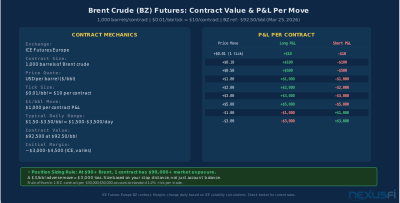
A $1/bbl move is $1,000 per contract. Brent can move $2-5 on a significant OPEC headline — that's $2,000--$5,000 per contract swing. Size BZ positions so. A 5-contract position experiences $50,000 swings on a $10/bbl event. Know your risk before the headline hits.
Initial margin requirements vary by broker and market conditions but typically run $1,500--$3,500 per contract for retail participants. Calendar spread margins are dramatically lower — roughly $100--500 per spread during normal volatility — making spread trading a capital-efficient way to express views on curve structure.
What Moves Brent: Price Driver Hierarchy #
Brent has a clear hierarchy of drivers. Traders who understand which tier is dominating the current regime make better decisions about position size, hold time, and stop placement.
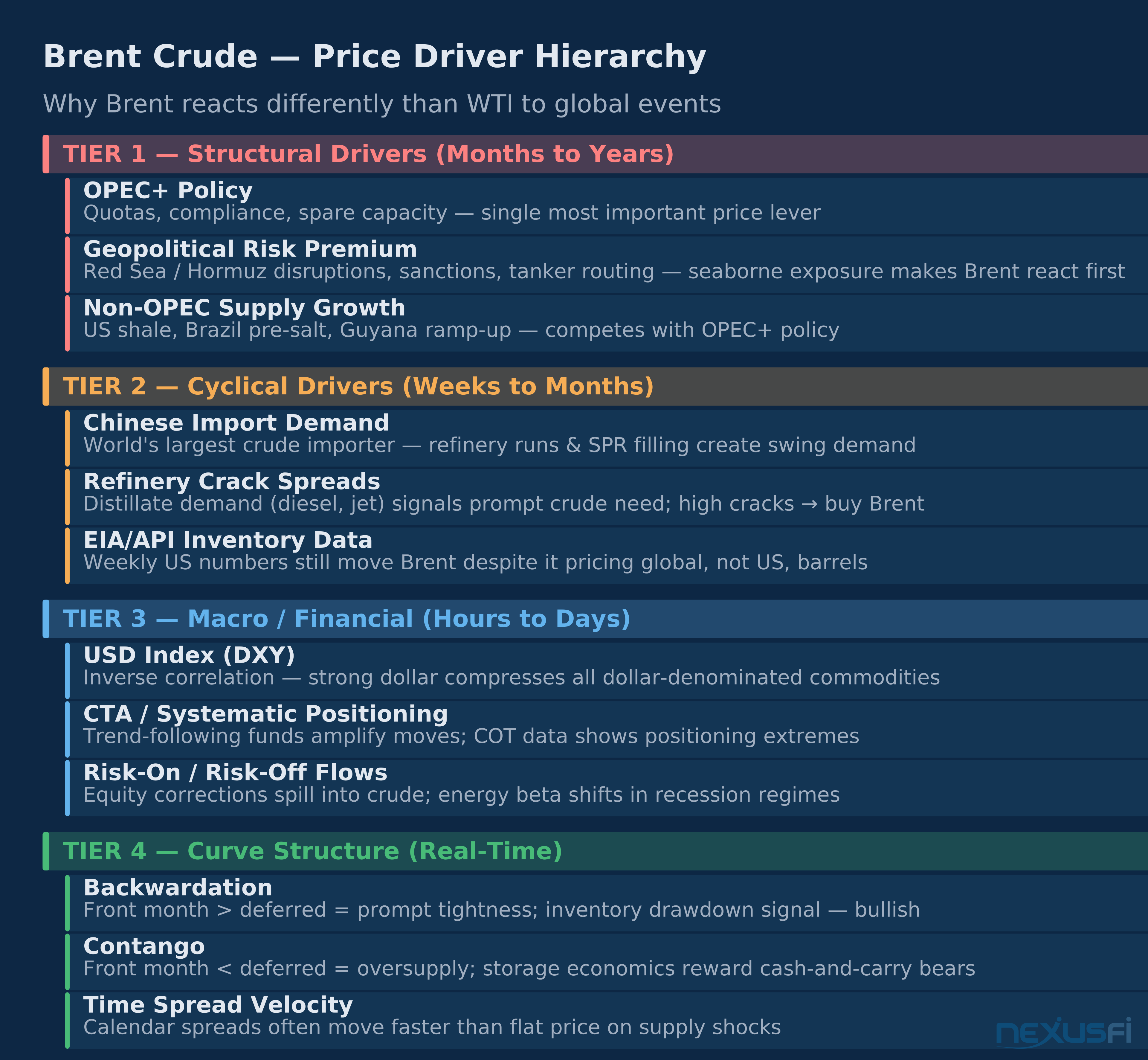
Tier 1 — Structural (months to years): OPEC+ policy is the single most important driver. Announced production quotas, actual compliance, spare capacity signals from Saudi Arabia, and Russia's willingness to cut are the variables that set the regime Brent trades in. Geopolitical risk premium — primarily shipping disruptions (Red Sea, Strait of Hormuz), Iran/Russia sanctions, and regional conflict — can override everything else in the short term. Brent reacts faster to shipping disruptions than WTI because Brent is a seaborne benchmark priced on global waterborne flows.
Tier 2 — Cyclical (weeks to months): Chinese crude import demand is the swing demand factor. China processes ~15 million barrels per day and is the world's largest crude importer. Any signal on Chinese refinery runs, SPR filling, or import policy can move Brent much. Distillate crack spreads (diesel/jet fuel margins) are a leading indicator for prompt crude demand — when refiners are making strong margins on distillates, they want more crude, supporting the front month and steepening backwardation.
Tier 3 — Macro/Financial (hours to days): The US Dollar Index (DXY) has an inverse relationship with crude oil — when the dollar strengthens, oil prices in dollar terms typically face headwinds, all else equal. CTA (commodity trading advisor) positioning amplifies moves: when systematic funds are all long, the unwind can be fast. EIA weekly inventory data moves Brent every Wednesday at 10:30 ET, even though the data is US-centric — the market treats it as a global proxy.
Tier 4 — Curve Structure (real-time): Backwardation (front month priced above deferred months) signals physical tightness. Contango signals oversupply. Calendar spreads often move faster than flat price on supply shocks — a trader watching M1-M2 Brent can sometimes front-run the outright move by seconds. Understanding which structure you're in matters for roll timing and carry strategies.
OPEC+ and Geopolitics: Why Brent Reacts First #
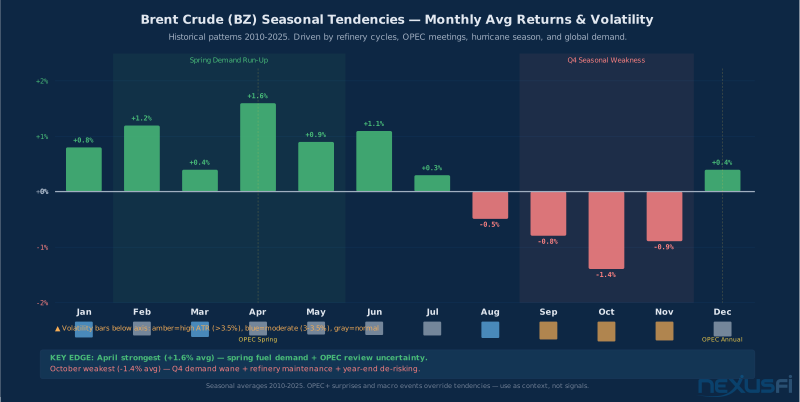
OPEC+ meets formally roughly every quarter (or in emergency sessions when conditions demand it). The pattern of market reaction to OPEC+ decisions is well-established and tradeable — but it requires understanding whether the announced decision was already priced.
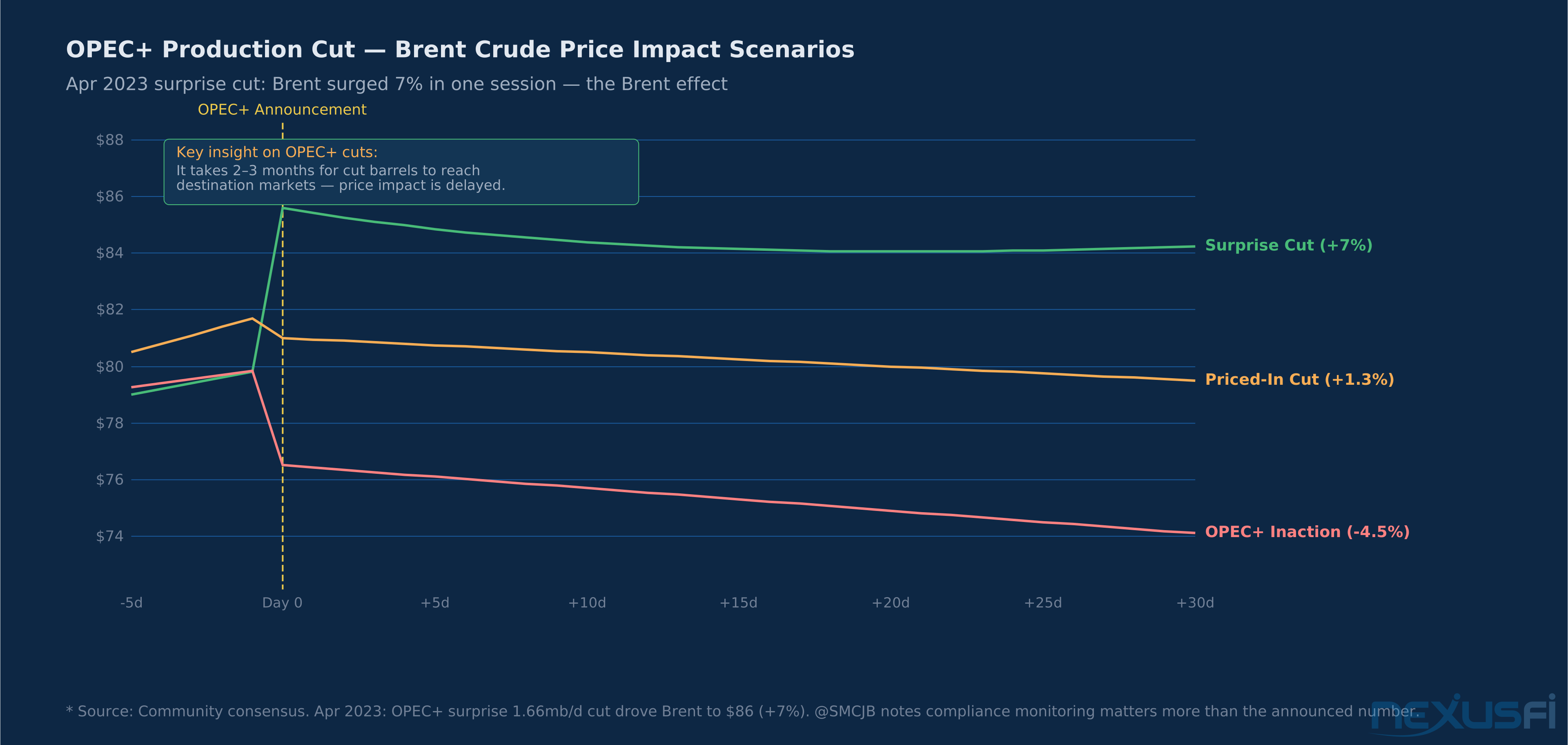
The April 2023 OPEC+ surprise cut is the textbook case. Nine OPEC+ members announced a collective voluntary cut of 1.66mb/d at the start of April 2023. Brent surged from ~$79 to $86 at the futures open — a 7% move in a single session. @Symple captured the moment on NexusFi: "WTI up over 7% near $82 — its highest since late Jan. Nine members of OPEC+ announced today a surprise voluntary collective output cut totaling 1.66mn b/d." [8]
The subsequent fade matters as much as the initial surge. Markets initially price in 100% compliance with the announced cut. Over 2-3 months, actual compliance data emerges and the market reprices. @SMCJB tracked this dynamic carefully: it takes months for cut barrels to reach destination markets, meaning the initial price reaction often overestimates near-term physical impact.
Geopolitics adds asymmetric risk. Shipping disruptions through the Red Sea (Houthi attacks in late 2023-2024), Hormuz closure risks, and tanker sanctions all affect Brent more than WTI because they directly threaten seaborne crude flows. A tanker attack that barely moves CL can send BZ up $2-3. When @SMCJB analyzed the Russia-Ukraine situation in early 2022: "Russia is the 3rd largest oil producer in the world behind the US and Saudi. Removing that much supply from the global supply chain is going to rock the supply chain in a way that's difficult to imagine. This is why crude has rallied 100% from the December lows." [9]
The Brent-WTI Spread: Global vs Domestic Oil #
The Brent-WTI spread is one of the most important relative-value trades in energy markets. It represents the price difference between the global seaborne benchmark (Brent) and the US landlocked benchmark (WTI/CL at Cushing, Oklahoma).
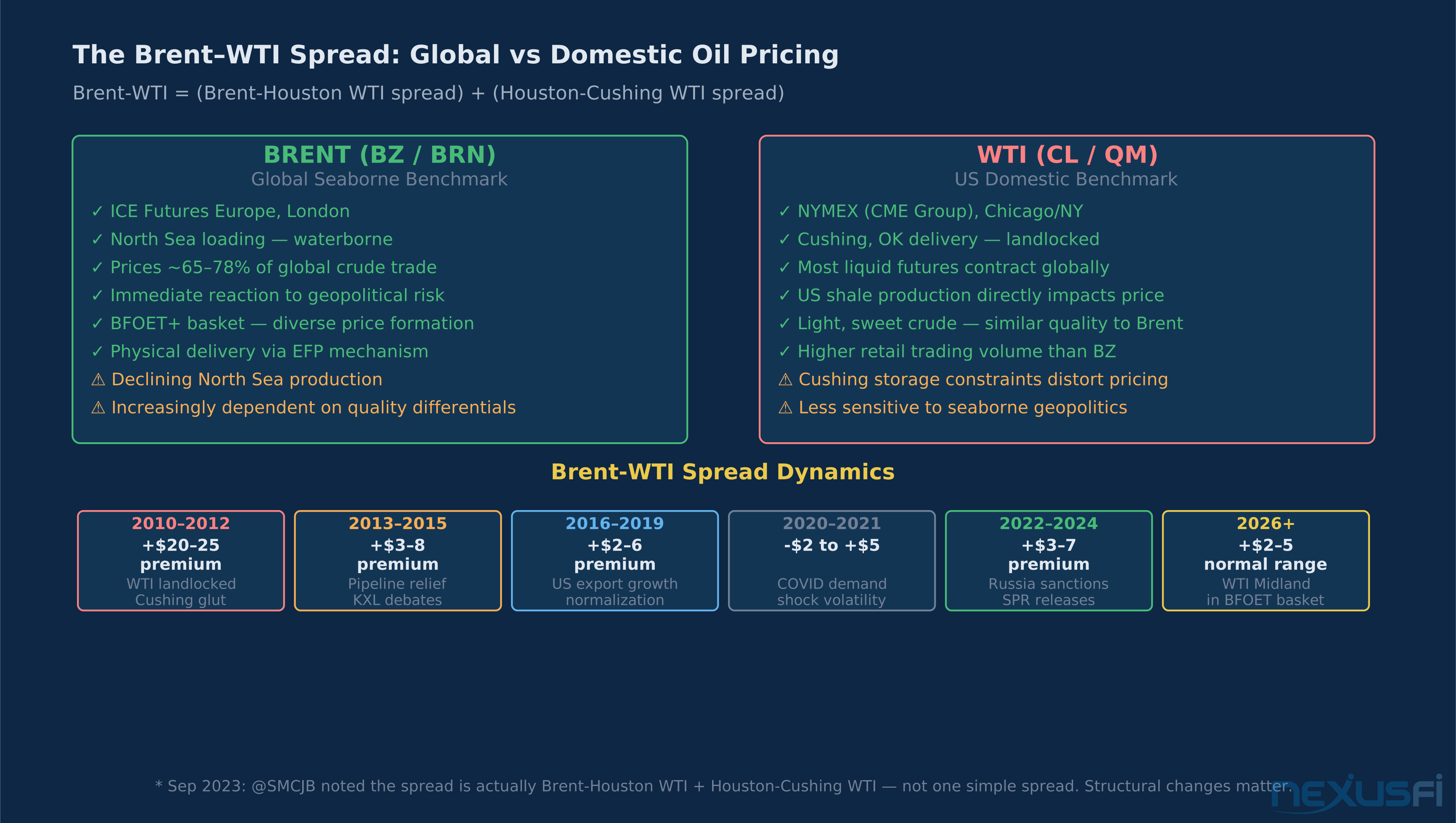
The spread's anatomy is more complex than it appears. @SMCJB articulated this precisely: "When we are looking at Brent-WTI futures what we are really looking at is a combination of two different spreads, the Brent-Houston WTI spread PLUS the Houston-Cushing WTI Spread." [5] This distinction matters because infrastructure changes (new pipelines, Gulf Coast export terminals) affect the Houston-Cushing leg independently of what drives the global Brent-Houston differential.
When is Brent at a premium? The normal state. Brent typically trades $2-8/bbl above WTI because it reflects global seaborne demand and is not constrained by pipeline infrastructure. The premium widens when: OPEC+ cuts tight the global market more than the US, geopolitical disruptions threaten seaborne flows, or Cushing storage builds create localized WTI weakness. The premium narrows (or inverts) when: US shale production surges, WTI export infrastructure expands, or domestic US balances tighten more than global markets. [3]
@"Brent is now the World Benchmark (no matter what the CME marketing literature tells you) and WTI represents a land locked crude that at times doesn't have a home."
Trading the Brent-WTI spread: This is a relative-value trade, not a directional one. You're expressing a view on global vs domestic tightness. @SMCJB noted that on ICE you can trade the Brent-WTI spread directly as an exchange-listed product — though retail traders often have to leg in, which carries basis risk. [4] Mean reversion strategies work but require caution: the spread can stay structurally wide for months when the underlying fundamental drivers (infrastructure, sanctions, OPEC policy) are persistent.
Market Hours and Liquidity: When to Trade #
ICE Brent trades approximately 23 hours per day with a brief daily maintenance window. But those 23 hours are not created equal.
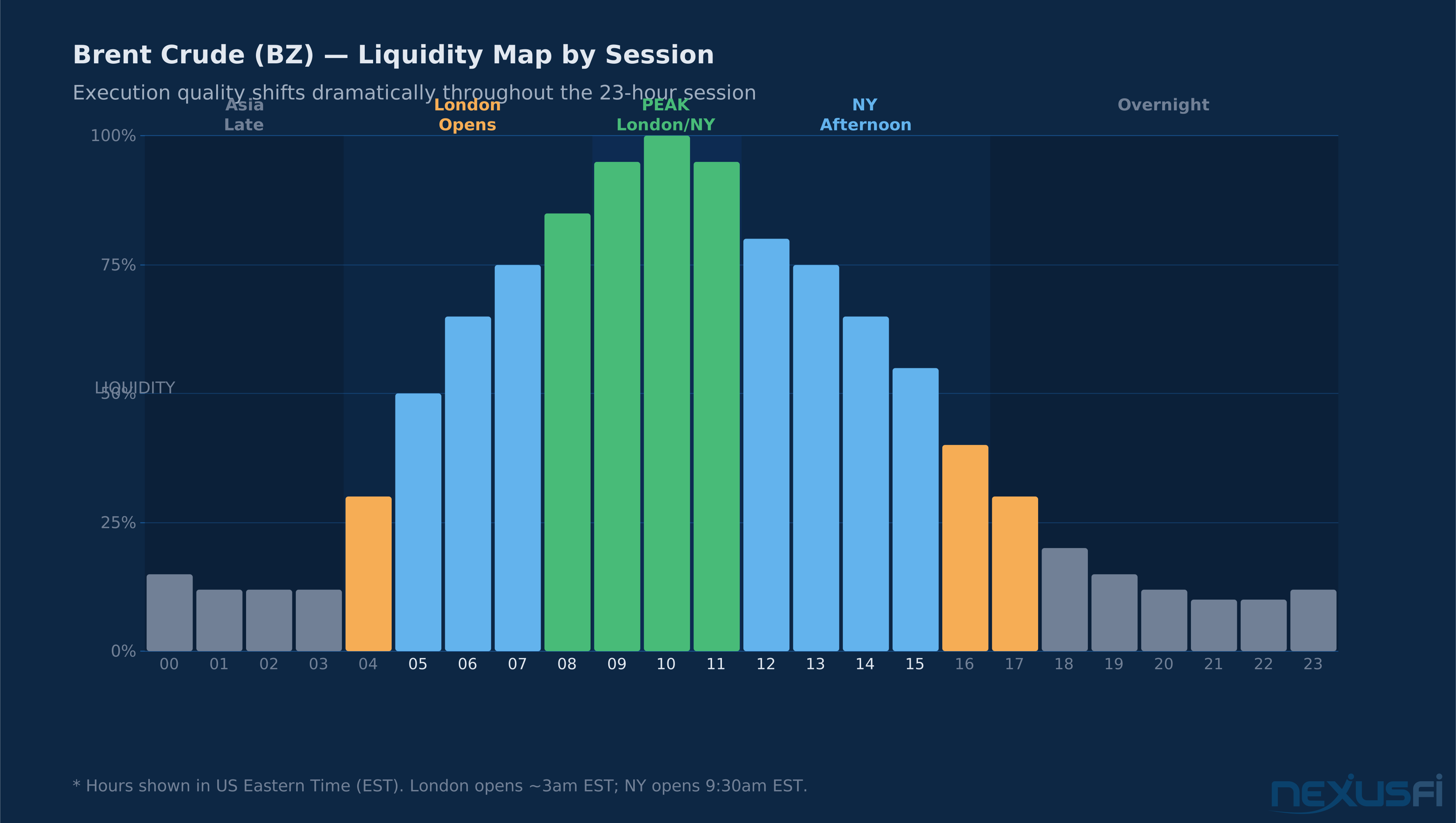
The practical trading schedule for BZ in US Eastern Time:
- 11pm--3am ET: Asia session. Thin book, wide spreads. Headline risk can spike BZ but fills are poor. Avoid unless you have institutional-grade execution infrastructure.
- 3am--9am ET: London opens, liquidity builds. Physical traders, European macro desks, and arbitrage participants arrive. This is the first opportunity for quality execution. OPEC+ news often breaks during this window.
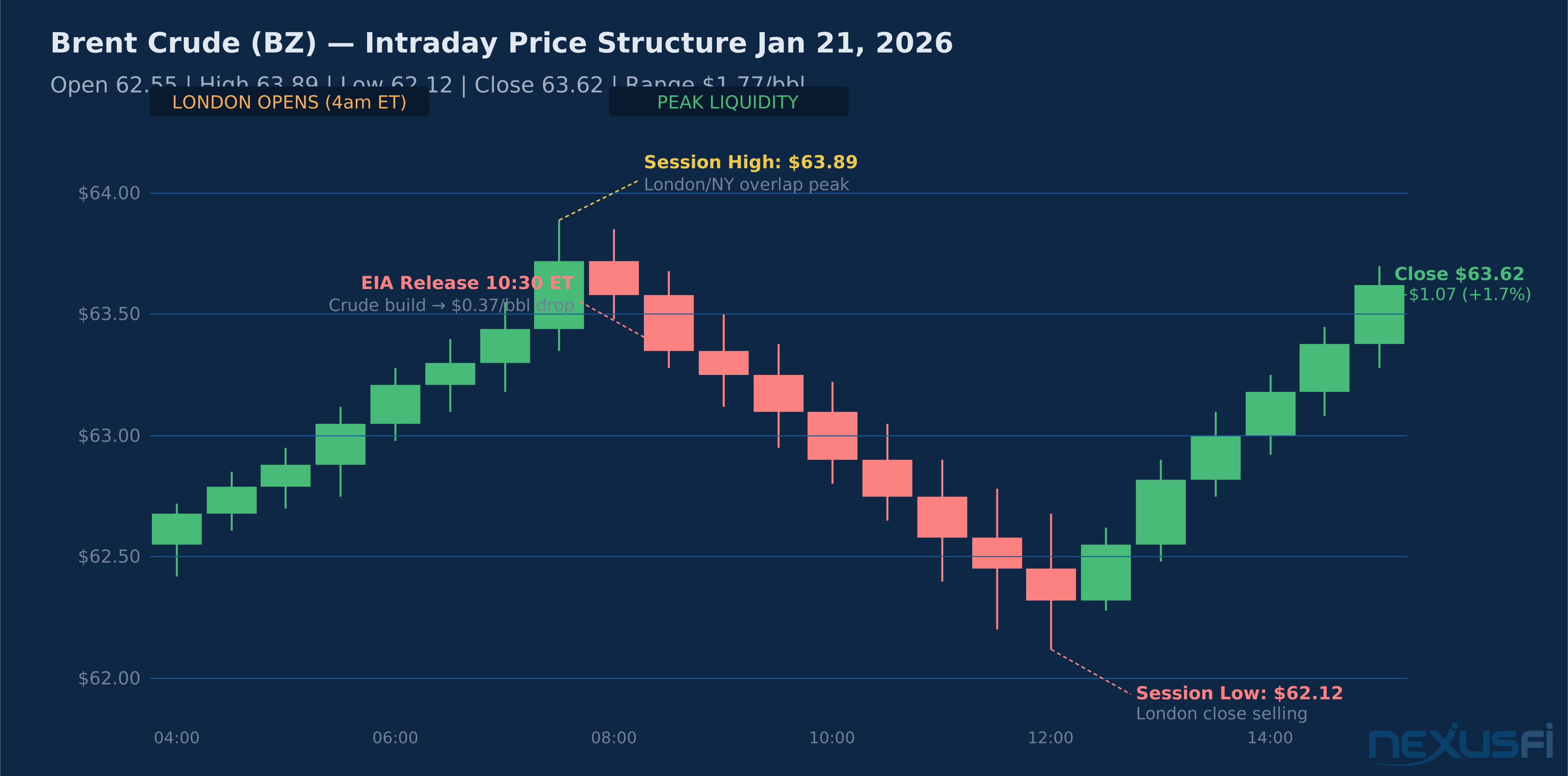
- 9am--11:30am ET: Peak liquidity. London/NY overlap. Fastest price discovery, tightest spreads, best fills. EIA weekly inventories release at 10:30 ET Wednesday -- the most-watched single scheduled event for Brent.
- 11:30am--3pm ET: London closes, liquidity thins. Still tradeable but book depth decreases. Directional moves can run on less volume.
- 3pm--11pm ET: Overnight session builds. Light activity. Geopolitical headline risk exists but execution is poor.
The practical implication: if you're day trading BZ, structure your sessions around the 3am--11:30am ET window. Swing traders holding positions overnight need wider stops and must account for gap risk — Brent gaps on geopolitical headlines more than any other major futures contract.
Curve Structure: Backwardation, Contango, and Roll Yield #
Brent's term structure — the relationship between front-month prices and deferred contracts — is a real-time barometer of physical market tightness. It also determines whether rolling a long position costs or earns money.
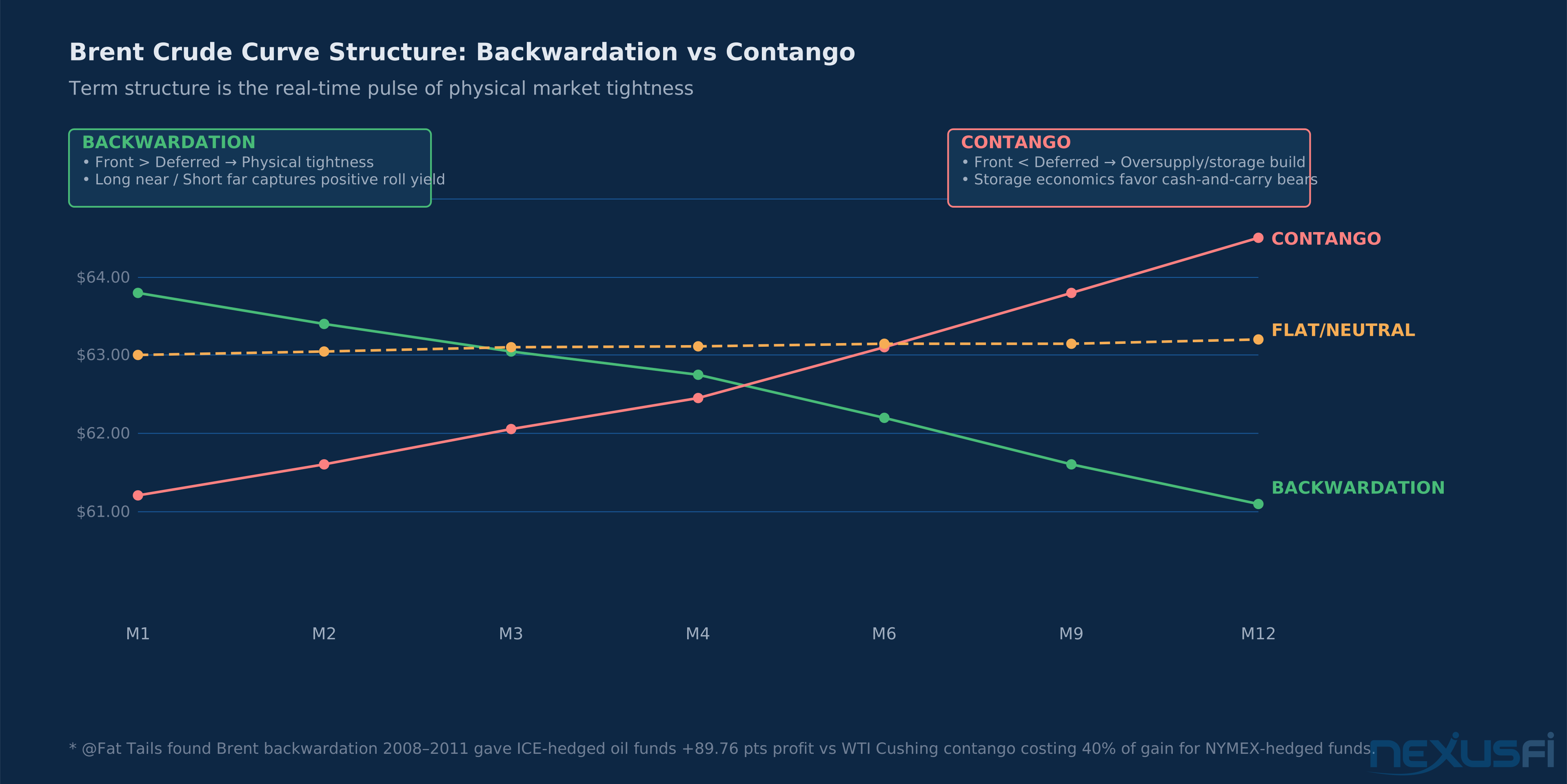
The 2008-2011 roll yield data is stark. @Fat Tails ran the numbers explicitly: a long-only fund buying WTI (NYMEX CL) at the December 2008 lows and rolling monthly to April 2011 would have earned 81.38 points of flat-price gain but lost 26.41 points to Cushing contango roll costs — netting 54.97 points. The same fund using ICE Brent would have earned 88.81 points of flat-price gain plus 1.38 points in roll gains — netting 89.76 points. "This means that the Cushing contango cost the long only funds that hedged via NYMEX about 40% of the total gain for that period." [6]
The practical lesson from @SMCJB's roll yield analysis: "Under/Over performance is all about roll yield which is all a function of backwardation/contango." [7] When Brent is in backwardation and you're long, rolling monthly earns you a small credit each time. When it's in contango, each roll costs money. For multi-month directional trades, the roll yield component is not trivial — it can represent several percent of P&L over a year.
Calendar spread strategies are a direct way to trade curve structure without taking flat-price risk. A long M1/short M2 Brent spread profits when backwardation steepens (M1 price rises relative to M2) — which happens when physical tightness emerges. A short M1/long M2 spread (buying contango) profits when prompt supply is ample. @SMCJB noted that exchange-listed calendar spreads on ICE allow single-order execution with no legging risk and much lower margins than outright contracts — making them capital-efficient for curve structure views. [4]
Roll Mechanics: The Operational Edge #
Rolling Brent futures correctly is an operational discipline that separates professional from retail traders. Done wrong, rolling creates unnecessary costs, delivery risk, and liquidity problems.
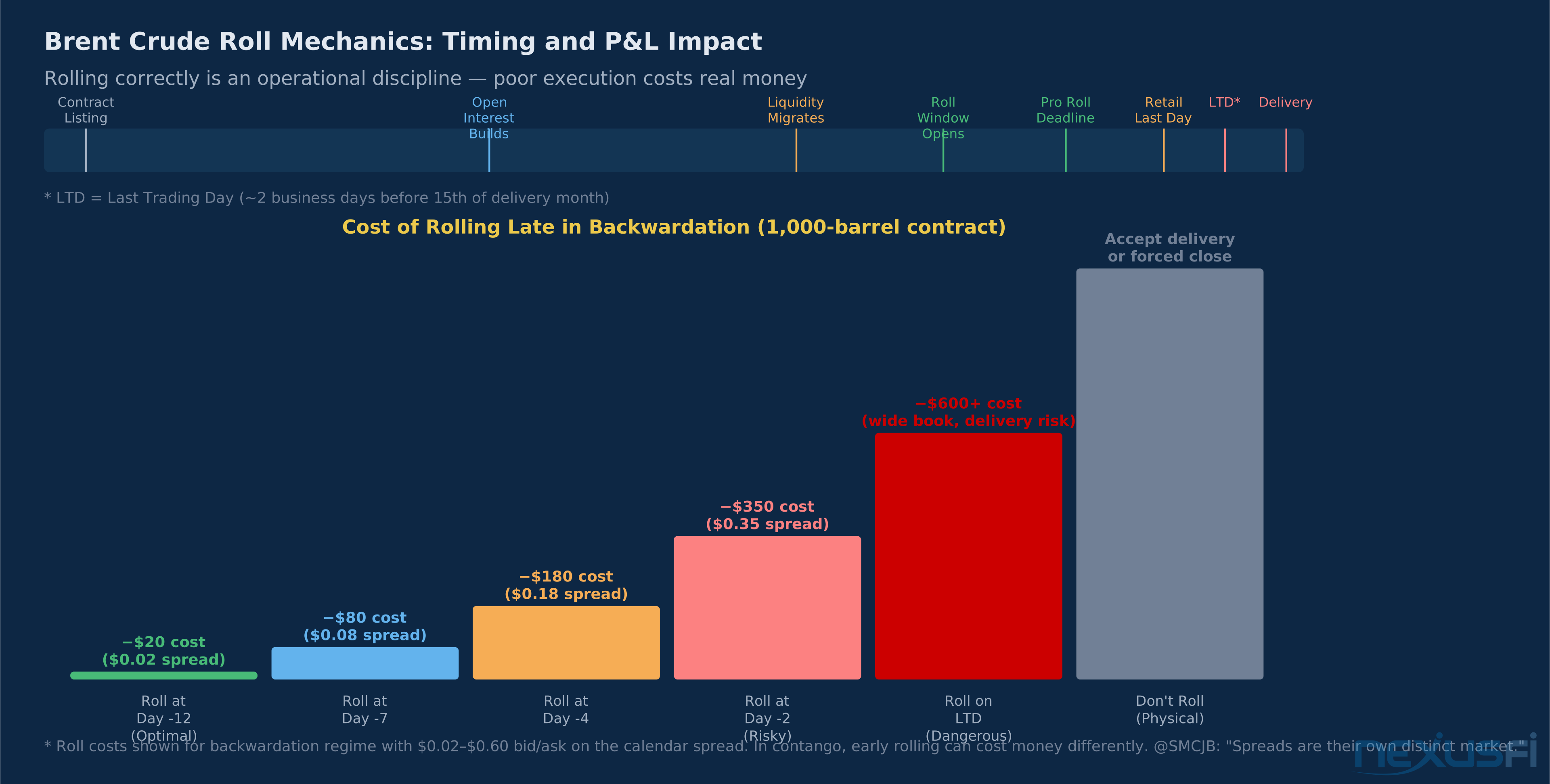
The key principles for BZ roll management:
- Roll by open interest, not calendar date: Liquidity migrates from front to next active month. When open interest in the near month starts declining and the second month surpasses it, it's time to roll. Don't wait for the last trading day.
- Roll during peak liquidity: Execute during the London/NY overlap (9-11am ET) when calendar spread bid-ask is tightest. Rolling at 8pm ET costs measurably more.
- Use exchange-listed calendar spreads when possible: @SMCJB is explicit: "Exchange-listed futures spreads let you enter with a single order and get a fill on the spread with no legging risk, and the bid/ask on the spread is normally a lot tighter than the bid/ask on outrights." [4] Most retail software doesn't provide access to exchange-listed spreads -- if yours doesn't, you're at a structural disadvantage when rolling.
- Never roll on or near the last trading day: Book depth disappears, bid-ask widens, and physical delivery rules create unusual pricing behavior. Professionals roll well before LTD. The front-month contract becomes increasingly risky to hold in the final 2-3 days before expiry.
ICE Brent's last trading day is typically a few business days before the 15th of the delivery month. Always verify on the ICE website for the current contract — holidays and weekends shift the exact date. The NYMEX BZ contract follows the same schedule.
Practical Trading Setups for BZ #
Three setups that have historically produced edge in Brent crude futures:
Setup 1: OPEC+ Event-Driven Entry
OPEC+ announcements create defined-event setups. The key is understanding whether the decision was priced in before the announcement. Approach: Monitor OPEC+ meeting calendars, track pre-meeting price action for positioning signals, and construct option structures (strangles or straddles) around meetings when vol is cheap relative to expected event magnitude. Post-announcement fades are common even on bullish cuts — selling the initial spike on a "priced-in" cut has historically been more profitable than buying the gap.
Setup 2: London Open Range Break
The first 30-60 minutes of London trading (3am--4am ET) often establish the session's directional bias. A clean break above the overnight high with volume confirmation during this window tends to be a reliable setup for a continuation into the London/NY overlap. Rationale: London open brings physical traders and European macro desks who have processed overnight news. Their directional activity sets the tone. Targets: prior day high/low, round numbers ($1/bbl increments). Stop: back below the London open high/low that triggered the entry.
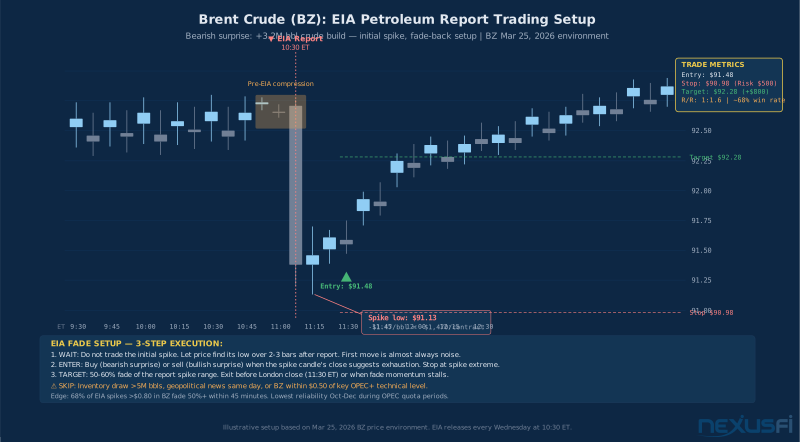
Setup 3: EIA Inventory Fade
The EIA weekly crude inventory release (Wednesday 10:30 ET) almost always generates an initial overreaction. The fade of that initial spike — especially when the data was in-line or close to consensus — has historically been a profitable entry. Rationale: the initial print triggers systematic orders and stop runs. The mean reversion back toward the pre-release level is driven by physical participants who recognize the data didn't change the fundamental picture. The key filter: the fade only works when the data is not a genuine surprise. A genuine bearish build (3-4x consensus) should be respected, not faded.
All three setups carry gap risk. Brent can move $3-5 on a single geopolitical headline with no time to exit. Never hold BZ overnight without a hard stop and position sizing that accounts for a $5+/bbl gap against you ($5,000 per contract). This isn't hypothetical — it has happened repeatedly on Iran/Saudi tension escalation and Red Sea shipping attacks.
Risk Management: What Can Kill a Brent Trade #
Brent's specific risks deserve explicit attention because several are unique to this market:
Gap risk from geopolitics: No other major futures contract gaps as frequently or as severely on headlines as Brent. A drone strike on Saudi Aramco infrastructure or a Hormuz tanker attack can open a $5+ gap before US markets even open. Position sizing must account for this explicitly — a "normal" 1% risk per trade model becomes dangerously large in BZ if your stop is $1/bbl away and the market gaps $4/bbl.
Roll execution risk: Rolling late, rolling in thin markets, or legging into calendar spreads manually all create unnecessary costs. Treat roll timing as a tactical decision, not an afterthought.
OPEC+ tail risk: An emergency OPEC+ meeting can be called with 24 hours' notice. Emergency cuts are typically larger than scheduled cuts and catch more traders positioned incorrectly. Holding large BZ positions through an OPEC+ meeting window requires explicit acceptance of this binary risk.
Basis risk on the Brent-WTI spread: If you're trading BZ as a proxy for CL or vice versa, you're exposed to spread widening that has nothing to do with oil's directional move. The Brent-WTI spread blew out from $2 to $8+ within days during the 2022 Russian supply shock — a trader long CL expecting to participate in the same geopolitical premium as Brent got left behind.
Liquidity risk in deferred months: Beyond the front 3-4 contracts, BZ liquidity drops sharply. Limit orders required. Market orders in deferred Brent months can fill several ticks off. Size so.
Knowledge Map
Prerequisites
Understand these firstGo Deeper
Build on this knowledgeReferences This Article
Articles that build on this topicCitations
- — Oil price negative? (2020) 👍 10“Brent Crude or Brent Blend is a North Sea Crude. Brent Futures USED TO BE based upon Brent but as Brent production declined they switched the underlying crude to the BFOE basket. BFOE stands for Brent, Forties, Oseberg and Ekofisk which are the four major crudes in the North Sea. Brent and the BFOE basket is the largest global benchmark in the world. Nearly all European, African and many middle eastern barrels trade at a differential to (dated) Brent.”
- — The CL Crude-analysis Thread (2015) 👍 1“The ICE Brent Crude futures contract is a deliverable contract based on EFP delivery with an option to cash settle against the ICE Brent Index price for the last trading day of the futures contract.”
- — The CL Crude-analysis Thread (2015) 👍 6“Brent is now the World Benchmark (no matter what the CME marketing literature tells you) and WTI represents a land locked crude that at times doesn't have a home. In theory at least, the Brent-WTI spread will widen when world crude fundamentals become tighter (upward pressure on Brent) or when WTI/mid-American fundamentals weaken (downward pressure on WTI).”
- — The CL Crude-analysis Thread (2016) 👍 10“Exchange-listed futures spreads let you send a single order and get a fill on the spread with no legging risk, and the bid/ask on the spread is normally a lot tighter than the bid/ask on outrights. Current margin requirements for the prompt month crude oil contract are $2900, for the prompt spread $460.”
- — The CL Crude-analysis Thread (2023) 👍 3“When we are looking at Brent-WTI futures what we are really looking at is a combination of two different spreads, the Brent-Houston WTI spread PLUS the Houston-Cushing WTI Spread. There's actually a Houston WTI Future, but its listed on ICE and only trades Over the Counter and not electronically.”
- — Changing rollover dates for CL (2015) 👍 6“A long only fund buying Brent futures via ICE would have purchased the February 2009 contract at the low point of 38.10 -- the Cushing contango cost the long only funds that hedged via NYMEX about 40% of the total gain for that period. Why the hell would any oil fund or hedger go to NYMEX to acquire a long position?”
- — How to play a long term bullish view on oil? (2016) 👍 2“Under/Over performance is all about roll yield which is all a function of backwardation/contango. If Oil now goes up $1/barrel you only make $310 as opposed to the $329 you would have made if it went up 2 months prior. The two month wait/negative roll yield cost you 5.9% of your investment gain.”
- — The CL Crude-analysis Thread (2023) 👍 2“Oil Surges In Early Trading After OPEC+ Surprise 'Unipolar World'-Challenging Production Cut. WTI up over 7% near $82 -- its highest since late January. Nine members of OPEC+ announced today a surprise voluntary collective output cut totaling 1.66mn b/d.”
- — Are CL futures a good buy right now? (2022) 👍 3“Russia is the 3rd largest oil producer in the world behind the US and Saudi. Removing that much supply from the global supply chain is going to rock the supply chain in a way that's difficult to imagine. This is why crude has rallied 100% from the December lows.”
- ICE Futures Europe — Brent Crude Futures Product Specifications (2024)
- FIA / ICE Whitepaper — ICE Brent vs NYMEX WTI Futures -- Key Differences (2020)