



SOFR (SR3) Futures: The Complete Trading Guide
Overview #
Three-Month SOFR futures — ticker SR3 on CME Globex — are the successor to Eurodollar futures and the benchmark contract for trading short-term U.S. interest rate expectations. They're cash-settled against the compounded Secured Overnight Financing Rate over a quarterly reference period, which means you're trading the market's consensus on where overnight secured funding rates will average over the next few months.
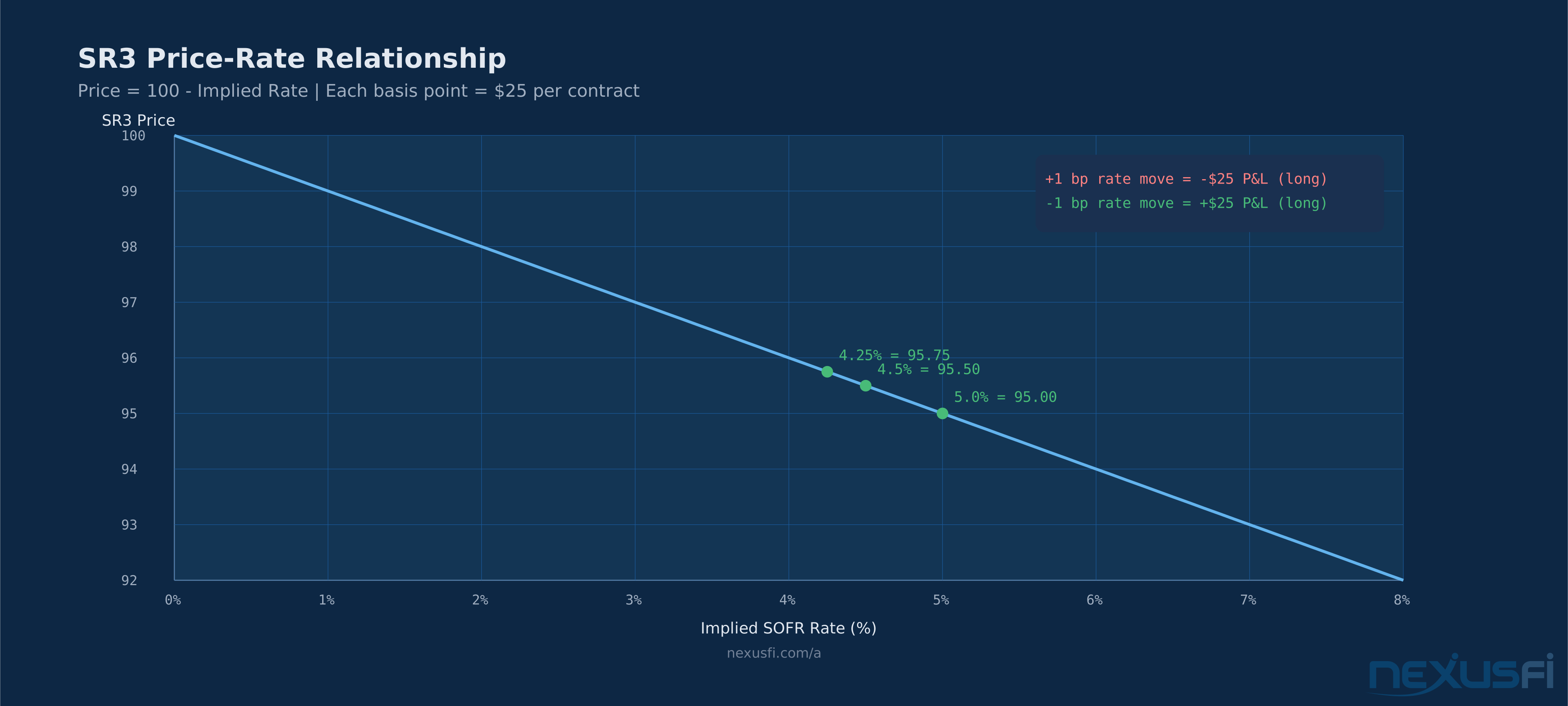
If you traded Eurodollars, the quote convention looks familiar: 100 minus the implied rate. SR3 at 95.75 means the market prices a 4.25% average compounded SOFR for that quarter. But the similarity stops at the quote screen. Under the hood, SR3 behaves differently because SOFR is an overnight secured rate that compounds daily — not a term unsecured bank funding rate set once at the start of a period. That distinction changes everything about how these contracts settle, how they respond to events, and how you manage risk around them.
They're cash-settled against the compounded Secured Overnight Financing Rate over a quarterly reference period, which means you're trading the market's consensus on where overnight secured funding rates will average over the next few months.
SOFR futures have become the dominant short-term interest rate contract globally. Average daily volume exceeded 3.5 million contracts in 2024, surpassing what Eurodollars managed at their peak. As @SMCJB noted on NexusFi, "SOFR futures ADV has jumped to 531K contracts, 26% of Eurodollars" back in early 2022 — and the transition has only accelerated since then. [Post #859136] [1]
Contract Specifications #
Here's what you need to know before placing a single order:
| Specification | Detail |
|---|---|
| Ticker | SR3 (CME Globex) |
| Contract Unit | Interest earned on $1,000,000 notional at compounded daily SOFR for the reference quarter |
| Price Quote | IMM convention: 100 minus implied rate |
| Tick Size (nearest quarterly) | 0.25 of one basis point (0.0025) = $6.25 |
| Tick Size (all other months) | 0.50 of one basis point (0.005) = $12.50 |
| DV01 | $25 per contract per basis point |
| Contract Months | Quarterly (Mar/Jun/Sep/Dec) plus serial months |
| Settlement | Cash-settled via CME SOFR Index |
| Last Trading Day | Third Wednesday of contract month |
| Trading Hours | Sunday-Friday, 5:00 PM - 4:00 PM CT |
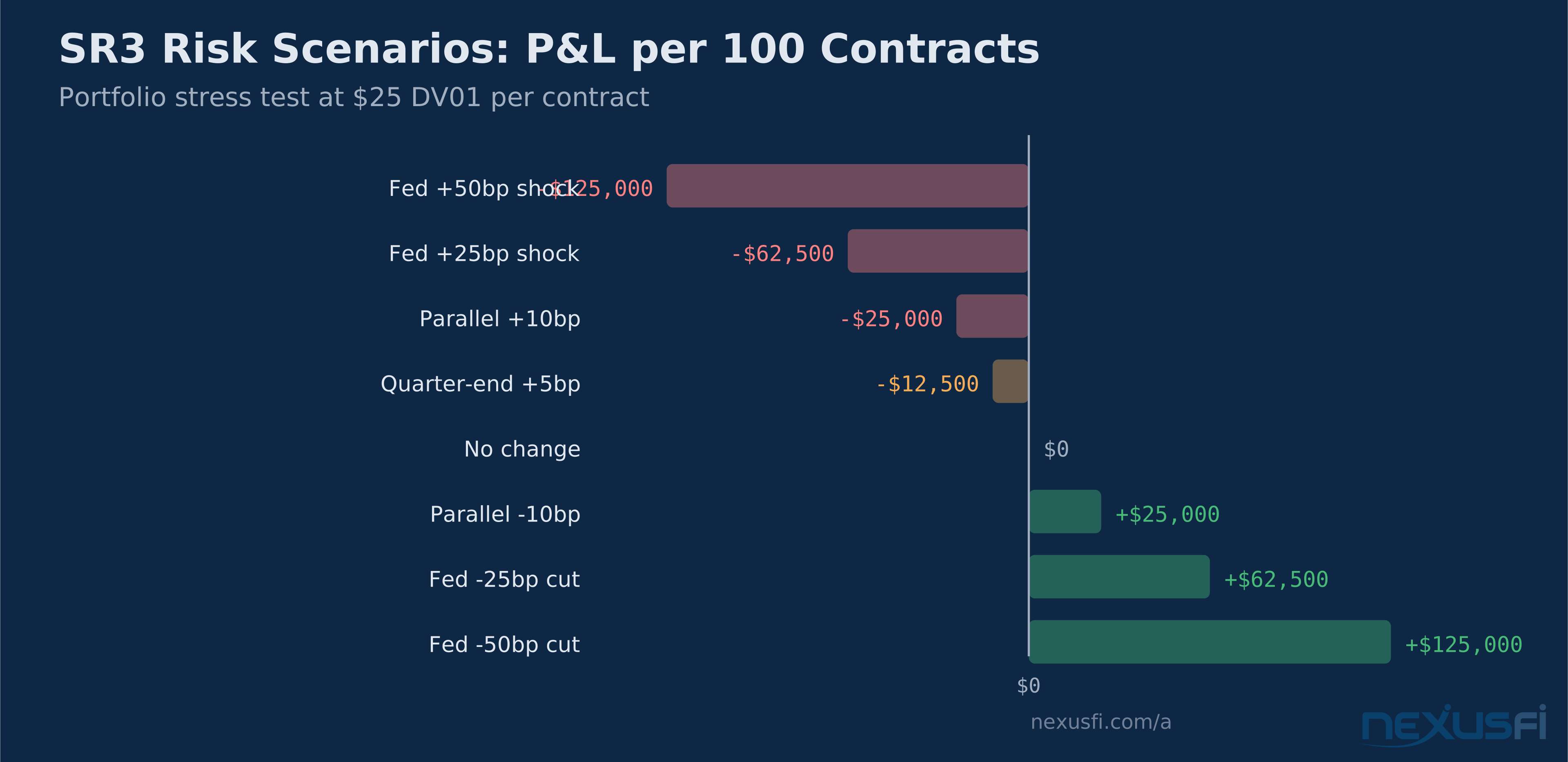
The DV01 of $25 per contract per basis point is the number that drives everything. If you expect SOFR to drop 25 basis points from a Fed cut and you're long 100 contracts, your expected P&L is 25 bp x $25 x 100 = $62,500. Clean math, linear P&L, no duration convexity to worry about at these maturities.
Serial months fill the gaps between quarterlies. If a Fed meeting falls in November and you want to isolate that specific repricing, you trade the November serial rather than awkwardly straddling the September-December quarterly spread.
How SOFR Works #
SOFR is the Secured Overnight Financing Rate — a broad measure of the cost of borrowing cash overnight collateralized by U.S. Treasury securities. The New York Fed publishes it every business day based on transaction data from the Treasury repo market.
Three things make SOFR structurally different from what came before:
1. It's secured. Every transaction backing the rate involves Treasury collateral. No bank credit risk is baked in. When repo markets are calm, SOFR tracks the Fed's target range almost perfectly. When collateral gets scarce — quarter-end, year-end, large Treasury settlements — SOFR can spike independently of any policy signal.
2. It's overnight. There's no native 3-month SOFR the way there was a 3-month LIBOR. The term rate embedded in SR3 futures is constructed by compounding daily overnight fixings across the reference quarter. The CME SOFR Index does this compounding using an Actual/360 day-count convention.
3. It's transaction-based. SOFR reflects roughly $1 trillion in daily repo transactions. Not survey submissions from a panel of banks — actual money changing hands every morning. This makes it basically impossible to manipulate, which is the whole reason regulators pushed the transition.
The compounding formula for the CME SOFR Index over a period is straightforward:
Index = Starting Value x Product of (1 + SOFR_i / 360 x days_i)
Where SOFR_i is the daily rate and days_i accounts for weekends and holidays (Friday's rate applies for 3 days). The settlement rate for SR3 is derived from this index over the full reference quarter.
Known vs. Unknown Days -- The Mechanic That Matters Most #
This is the concept that separates traders who understand SR3 from traders who just think it's "like Eurodollars but with a different name."
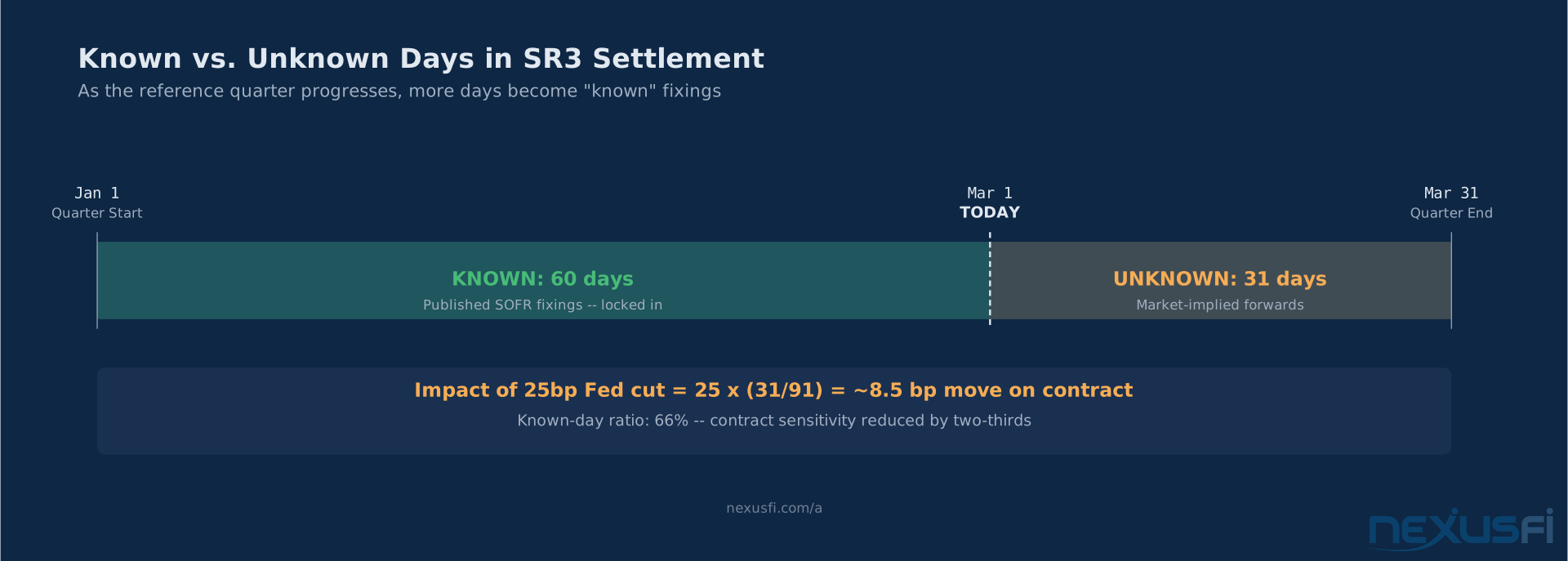
At any point during a contract's life, the reference quarter is split into two parts:
Known days — SOFR fixings already published by the NY Fed. These are locked in. They're not going anywhere regardless of what the Fed does tomorrow.
Unknown days — Future fixings that haven't happened yet. These are what the market is actually pricing.
Here's why this matters in practice: If you're trading the front quarterly contract and 60 of the 90-ish days in the quarter are already known, a 25 bp Fed cut doesn't move the contract by 25 bp. It moves it by approximately 25 x (30/90) = 8.3 bp — because only the unknown portion gets repriced.
This creates a dynamic where front-month SR3 becomes increasingly anchored to realized prints as the quarter progresses. Early in the quarter, it behaves like a policy expectations contract. Late in the quarter, it behaves like a weighted average of what already happened plus a shrinking bet on what's left.
Professional traders track a "known-day ratio" — the percentage of the accrual window that's already fixed. When that ratio exceeds 70-80%, the contract becomes much less responsive to macro surprises and much more sensitive to day-to-day repo conditions.
Pricing, Convexity, and the OIS Connection #
The Basic Mapping #
SR3 price = 100 minus implied compounded SOFR rate for the reference quarter. If the market expects an average compounded rate of 4.50%, the contract trades near 95.50. Rate goes up, price goes down. Rate goes down, price goes up.
Convexity Adjustment #
Futures and OIS swaps reference the same underlying rate, but they're not identical instruments. SR3 futures are margined daily (mark-to-market cash flows), while OIS swaps are discounted instruments. This creates a convexity bias — futures prices are slightly lower (implied rates slightly higher) than equivalent OIS forwards.
For short-dated contracts (the front 1-2 quarterlies), this adjustment is tiny — around 0.1 to 0.5 bp. For contracts 2-3 years out, it can reach 2-5 bp depending on rate volatility. Most traders ignore it for the front strip and account for it explicitly when trading deferred contracts or running basis trades against OIS.
Using SR3 to Map the Policy Path #
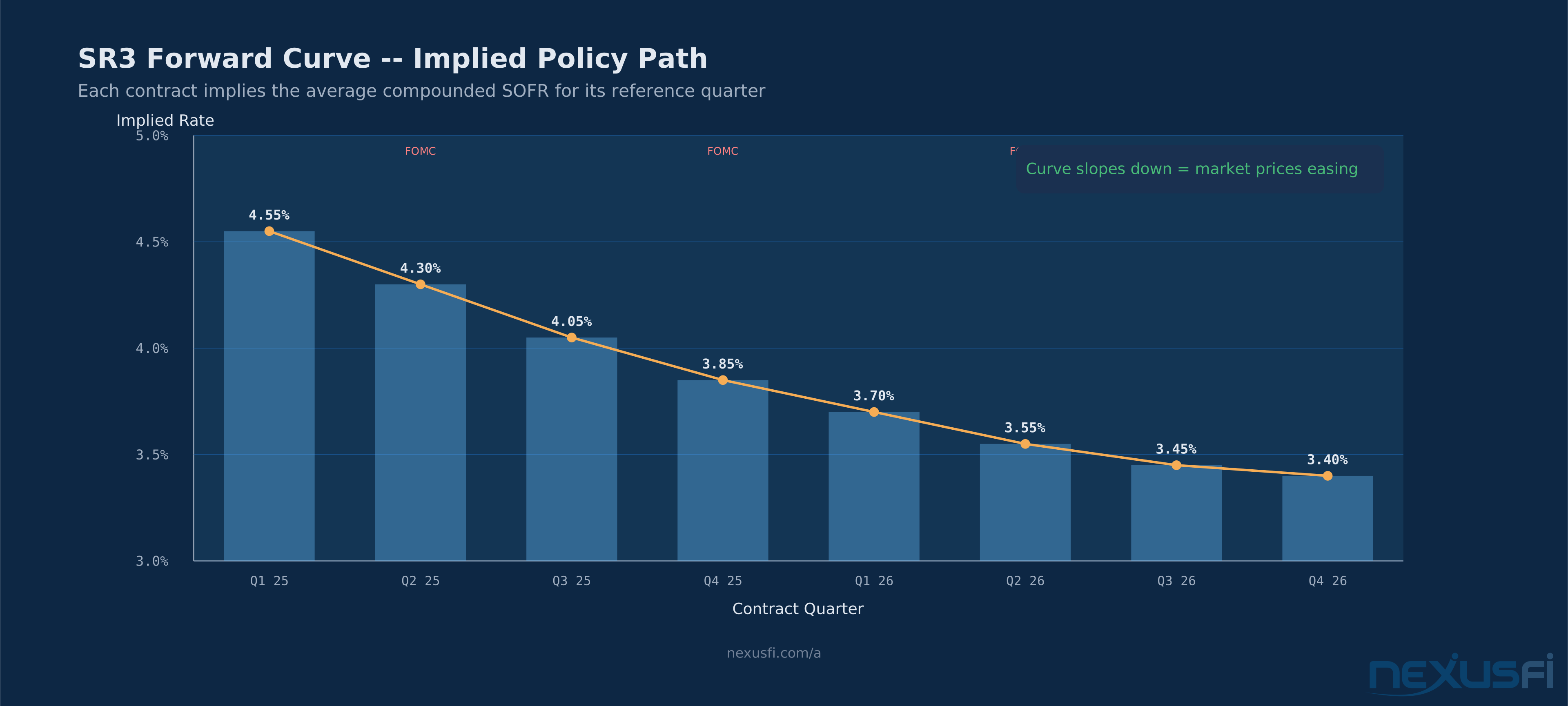
The SR3 strip is the market's best real-time estimate of where overnight rates are heading. Traders extract the implied policy path by:
- Taking each quarterly contract's implied rate
- Comparing sequential contracts to derive forward rates between quarters
- Identifying "step-function" kinks where the market prices a specific FOMC decision
If September SR3 implies 4.50% and December SR3 implies 4.25%, the market is pricing approximately 25 bp of cuts over that period. Whether the cut happens at the November or December FOMC meeting, and in what size, is where the real trading action lives.
Term Structure, Carry, and Seasonality #
Building the Curve #
The SR3 forward curve is built from the strip of quarterly and serial contract prices. Each contract implies the average compounded rate for its reference quarter. Bootstrapping forward rates between quarters reveals the market's expected rate trajectory.
A simple example: If Q1 SR3 implies 4.50% and Q2 SR3 implies 4.25%, the forward rate for Q2 (conditional on Q1 realized as priced) is approximately 4.00%. The curve has a downward slope, consistent with expected easing.
Carry and Roll-Down #
Carry in SR3 is the income from holding a position as time passes and fixings realize. If you're long a contract and realized SOFR prints come in below the implied rate, you're earning positive carry — the contract settles at a higher price than where you bought it.
Roll-down occurs when the curve is steep. As a deferred contract approaches the front of the strip, it "rolls down" the curve toward the higher prices (lower rates) at the front end, generating positive mark-to-market if the curve shape holds.
In a typical easing cycle, both carry and roll-down work in favor of long positions in the belly of the curve — contracts 2-4 quarters out that sit on the steepest part of the forward curve.
Seasonal Patterns #
SR3 exhibits predictable seasonal structure driven by funding markets:
FOMC meetings create step-function kinks in the curve. The contract straddling a meeting prices the probability-weighted outcome. A contract that spans the November meeting might price a 60% chance of a 25 bp cut as approximately 15 bp of easing relative to the prior quarter.
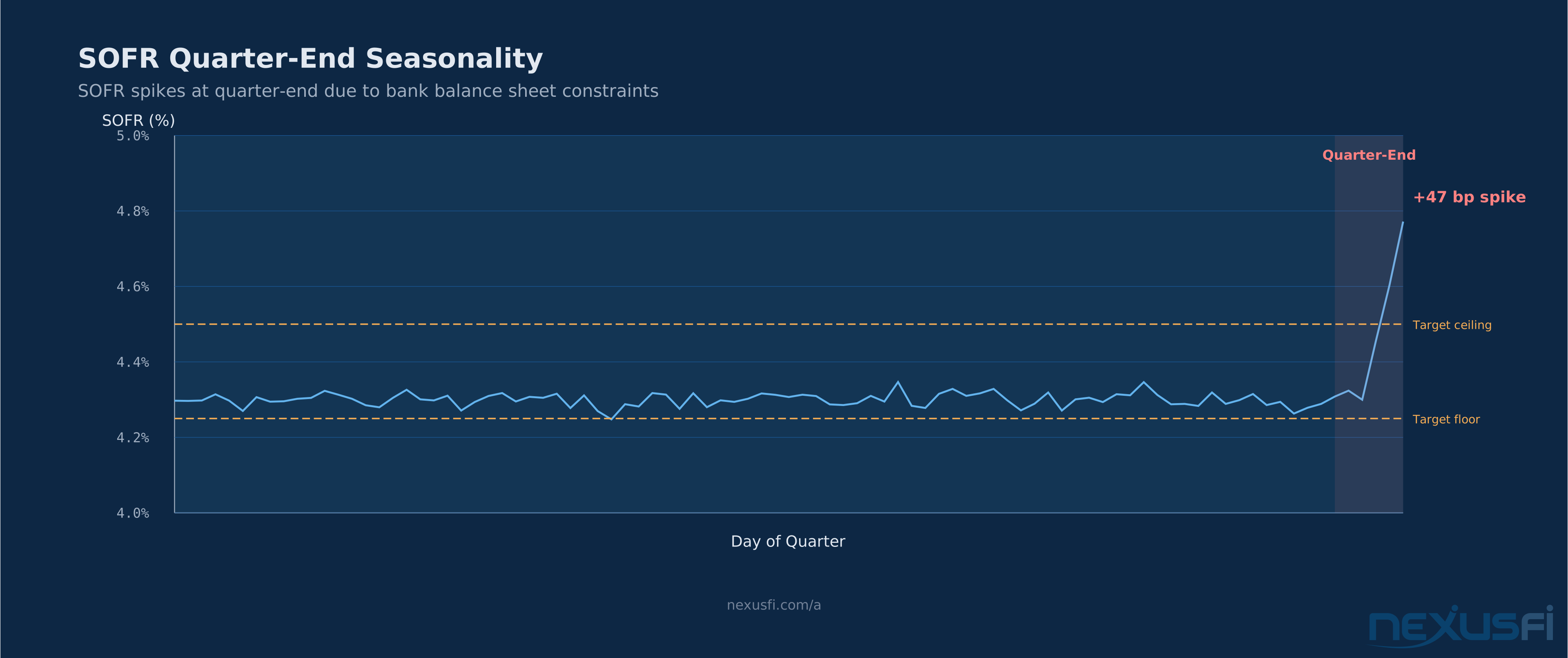
Quarter-end funding pressure is the other reliable pattern. Bank balance sheet constraints tighten repo markets around March 31, June 30, September 30, and December 31. SOFR can spike 5-15 bp above the Fed's target range on these dates. Contracts whose reference quarters include quarter-end days may price a small "funding premium" relative to their neighbors.
Year-end amplifies the quarter-end effect. The December 31 turn can produce SOFR spikes of 10-30+ bp as banks reduce balance sheet exposure for regulatory reporting.
Trading the SR3 Strip #
Directional Trades #
The simplest expression: buy SR3 if you think rates are heading lower (dovish), sell if you think rates are heading higher (hawkish).
Example — Pre-FOMC positioning: The market prices a 50% probability of a 25 bp cut at the upcoming meeting. You believe the probability is closer to 80% based on recent employment data. The contract straddling the meeting should move approximately (0.8 - 0.5) x 25 = 7.5 bp if you're right. At $25 per bp per contract, that's $187.50 per contract.
Calendar Spreads #
Trade one maturity against another to isolate specific time periods.
Meeting spread: Long the contract containing the FOMC meeting, short the prior contract. This captures the repricing of the meeting-specific probability without exposure to the overall rate level.
Quarter-end trade: Short the contract spanning quarter-end (pricing the funding premium), long the adjacent contract. If the funding spike is overpriced, the spread narrows as quarter-end passes uneventfully.
Curve Steepeners and Flatteners #
Steepener (bull steepener): Long front-end, short back-end. Profits when front rates fall faster than deferred rates — typical in the early phase of an easing cycle.
Flattener (bear flattener): Short front-end, long back-end. Profits when front rates rise faster than deferred — typical in a hiking cycle or hawkish repricing.
Critical sizing rule: Always size by DV01, not by contract count. Since each SR3 contract has approximately $25 DV01 regardless of maturity, equal DV01 often means equal contracts. But verify this for serial months with different accrual periods.
Butterfly Strategies #
A butterfly isolates curvature — the "hump" or "dip" in the forward curve relative to its wings.
Structure: Long 1x front + long 1x back, short 2x belly (or the inverse). This is DV01-neutral to parallel shifts and slope changes, isolating pure curvature.
Application: If you think the market is overpricing easing in Q3 relative to Q2 and Q4, you sell the Q3 butterfly belly. If the curve "smooths out" and the kink disappears, you profit.
Basis Trades vs. OIS #
When the futures-OIS basis deviates from its normal range, traders exploit the spread:
Long basis: Buy SR3 futures, pay fixed on equivalent OIS swap. Profits when the basis narrows (futures cheapen relative to swaps).
Short basis: Sell SR3 futures, receive fixed on OIS. Profits when the basis widens.
Typical basis range is plus/minus 2-5 bp. Moves beyond this usually reflect funding dislocations, positioning imbalances, or seasonal effects.
Spread Trading: DV01 Framework and Risk Controls #
Sizing by DV01 #
DV01 is the universal risk metric for SR3 spreads. Each contract has approximately $25 of P&L sensitivity per 1 bp move. When constructing spreads:
- Calculate the net DV01 of each leg
- Weight contracts so net portfolio DV01 is zero (for pure curve trades) or at your desired directional exposure
- Verify the weighting accounts for any accrual-period differences between serial and quarterly months
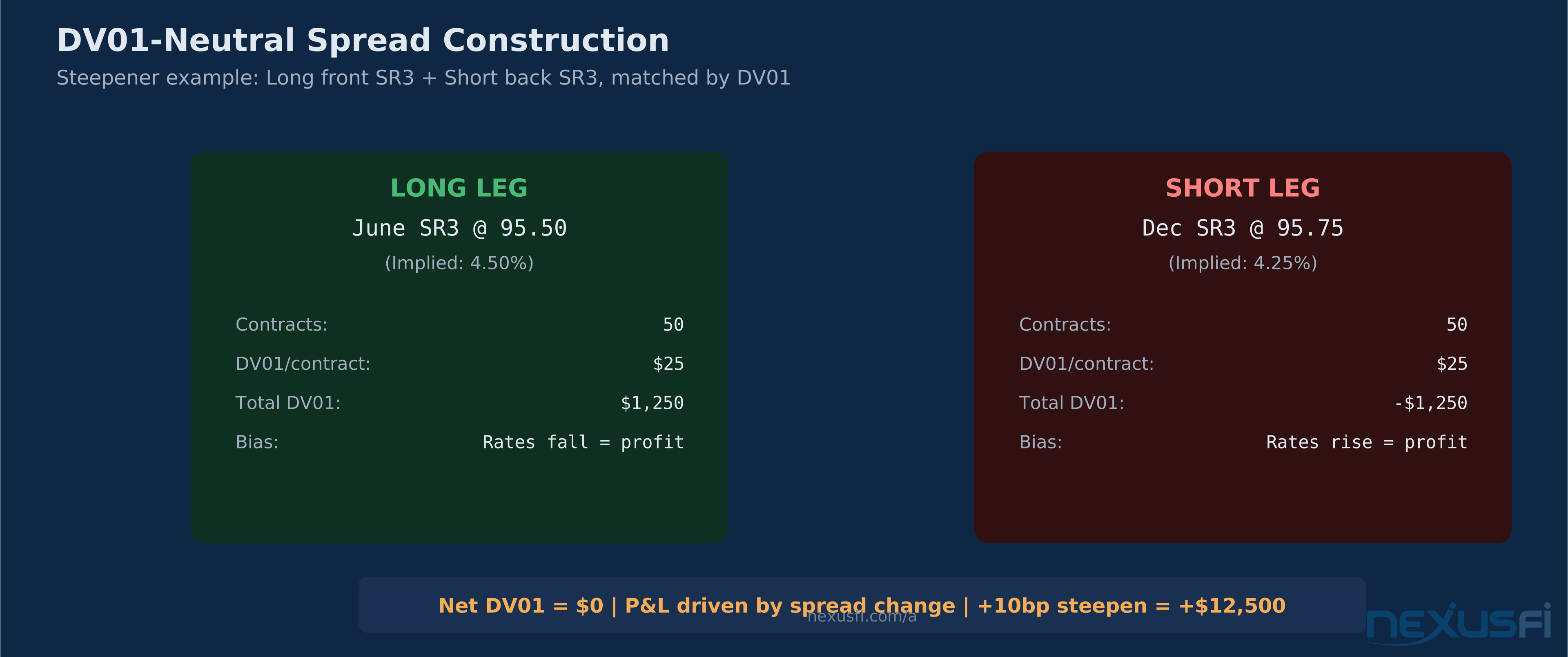
Worked example: A steepener with 50 lots long June SR3 and 50 lots short December SR3 has zero net DV01 (50 x $25 - 50 x $25 = $0). But the P&L is driven by the spread between the two implied rates. If the curve steepens 10 bp, profit = 10 x $25 x 50 = $12,500.
Regime Awareness #
Spreads behave differently depending on the policy regime:
Hiking cycles: Front-end reprices faster than deferred contracts. Flatteners outperform. Spread volatility is high around CPI/NFP releases.
Easing cycles: Front-end rallies as cuts get priced. Steepeners work early; then the whole curve shifts lower and spreads compress.
Pause regimes: Low spread volatility. Carry and roll-down dominate returns. Calendar spreads near their fair value.
Funding stress: Quarter-end and year-end effects can dominate spread movements independently of macro factors. SR3 contracts spanning stress dates may decouple from the rest of the strip.
Risk Controls #
Key limits for spread books:
- Maximum net DV01 — cap overall directional exposure even in "neutral" spread books
- Event stops — reduce position size 24 hours before FOMC, CPI, and NFP
- Spread stop-loss — typically 5-10 bp on calendar spreads, 3-5 bp on butterflies
- Liquidity check — serial months have wider bid-ask and thinner depth; scale size so
Risk Management #
SPAN Margin #
CME's SPAN (Standard Portfolio Analysis of Risk) calculates margin using scenario-based worst-case analysis. Key parameters:
- Outright SR3 initial margin: approximately $800-1,200 per contract depending on current volatility regime (check CME daily)
- Spread margin: much reduced for recognized spread combinations (calendar spreads, butterflies)
- Concentration charges: additional margin for large positions approaching position limits
DV01 Sensitivity Management #
A portfolio of 200 SR3 contracts has approximately $5,000 P&L exposure per 1 bp move. A 50 bp Fed surprise on that book is a $250,000 event. Professionals monitor:
- DV01 by bucket: net exposure per quarterly node, not just total portfolio DV01
- Key-rate DV01: sensitivity to specific parts of the curve (front-end vs. belly vs. back-end)
- Gamma/acceleration: how DV01 changes as rates move, especially relevant for options books
Stress Scenarios #
Standard stress tests for SR3 books:
| Scenario | Description | Typical Impact |
|---|---|---|
| Fed shock | plus/minus 25-50 bp parallel shift | $625-1,250 per contract per 25 bp |
| Twist | Front up 25, back down 25 | Spread-dependent |
| Quarter-end spike | SOFR +15-30 bp for 3-5 days | Front contract moves 1-3 bp |
| Correlation break | SR3 decouples from Treasuries | Basis positions at risk |
| Vol shock | Implied vol +50% | Options books repriced |
Options on SR3 #
Structure #
CME lists American-style options on SR3 futures across the quarterly and serial strip. Strikes are quoted in IMM index points (same as futures). Expiration aligns with the underlying futures contract.
Pricing with Black-76 #
Options on SR3 are priced using the Black-76 model with the futures price as the underlying. Key inputs:
- Forward price (F): Current SR3 futures price
- Strike (K): In IMM index points
- Volatility (sigma): Annualized implied volatility, typically 10-20% for near-term contracts
- Time to expiry (T): In years
Greeks Interpretation for SOFR Futures #
Delta maps directly to rate expectations. A 0.50 delta call on SR3 gains approximately $12.50 per contract per bp move in the underlying (half of the $25 DV01).
Gamma concentrates around event dates. On an FOMC day, front-month options can have gamma 3-5x higher than the same strike two weeks later. This is the "event premium" that makes straddles expensive heading into meetings.
Vega reflects sensitivity to implied volatility. Near-term options have higher absolute vega when meetings are approaching; longer-dated options have vega driven by the broader rate uncertainty outlook.
Volatility Surface #
The SR3 vol surface shows distinct patterns:
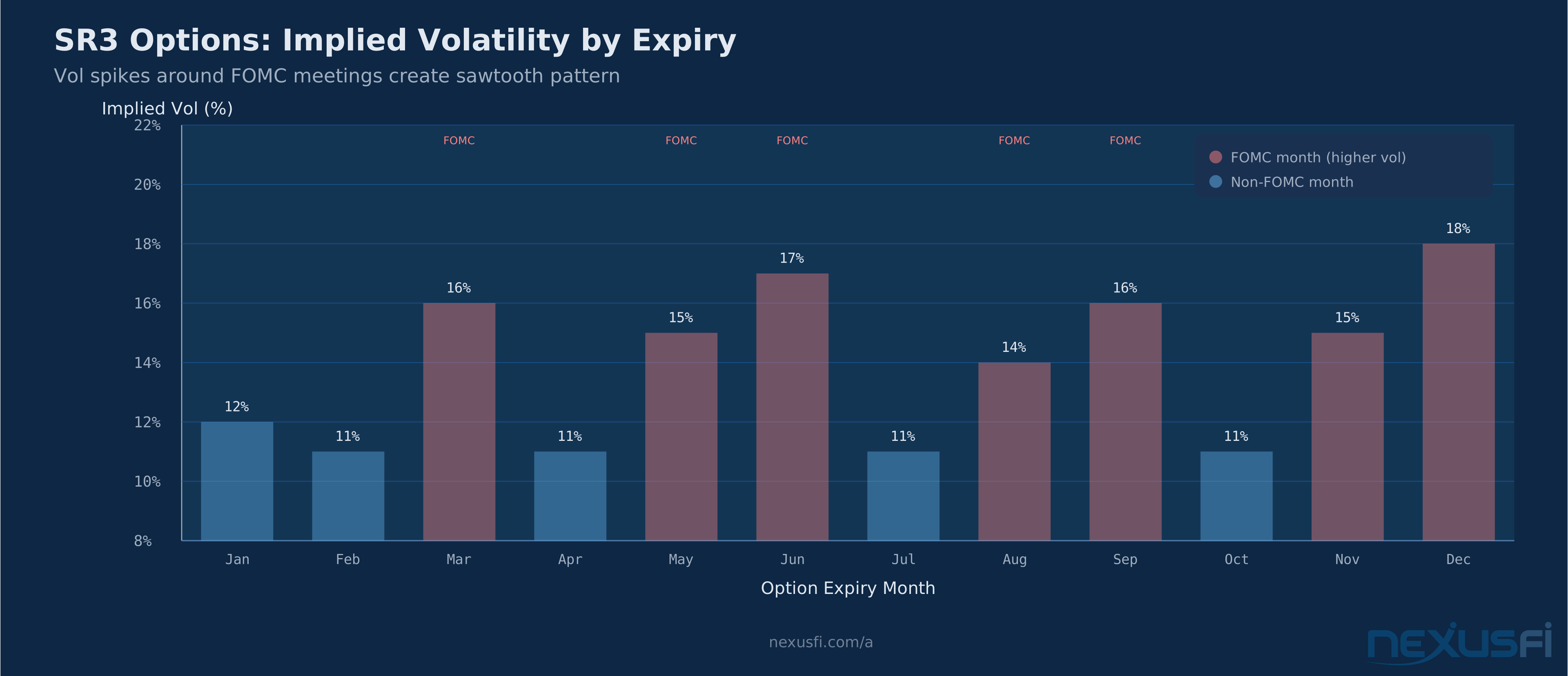
Term structure: Higher implied vol for contracts spanning FOMC meetings, lower for "quiet" periods. The vol curve often has a sawtooth pattern aligned with the Fed calendar.
Skew: Asymmetric pricing based on directional risk. In hiking cycles, puts (lower SR3 prices = higher rates) trade at a premium. In easing cycles, calls (higher prices = lower rates) carry the skew premium.
Common Option Strategies #
FOMC straddle: Buy ATM straddle on the contract containing the meeting. Profit if the realized move exceeds implied. Historical analysis shows Fed days deliver realized moves of 5-15 bp depending on the surprise factor.
Calendar vol spread: Long near-dated options (high event vol), short deferred options (lower vol). Captures the event premium decay after the meeting passes.
Risk reversal: Buy OTM calls, sell OTM puts (or vice versa) for directional exposure with defined downside. Popular for expressing strong views on the next Fed decision at lower premium than outright calls.
The LIBOR Legacy #
SR3 replaced Eurodollar futures (ticker GE), which referenced 3-month USD LIBOR. As @SMCJB explained on NexusFi, "Fed Funds, Eurodollars and SOFR contracts all price as 100 minus the interest rate. Hence an interest rate of 0.5% equals a price of 99.5." [Post #854668] [2] The quote convention survived the transition. Everything else changed.
Structural Differences #
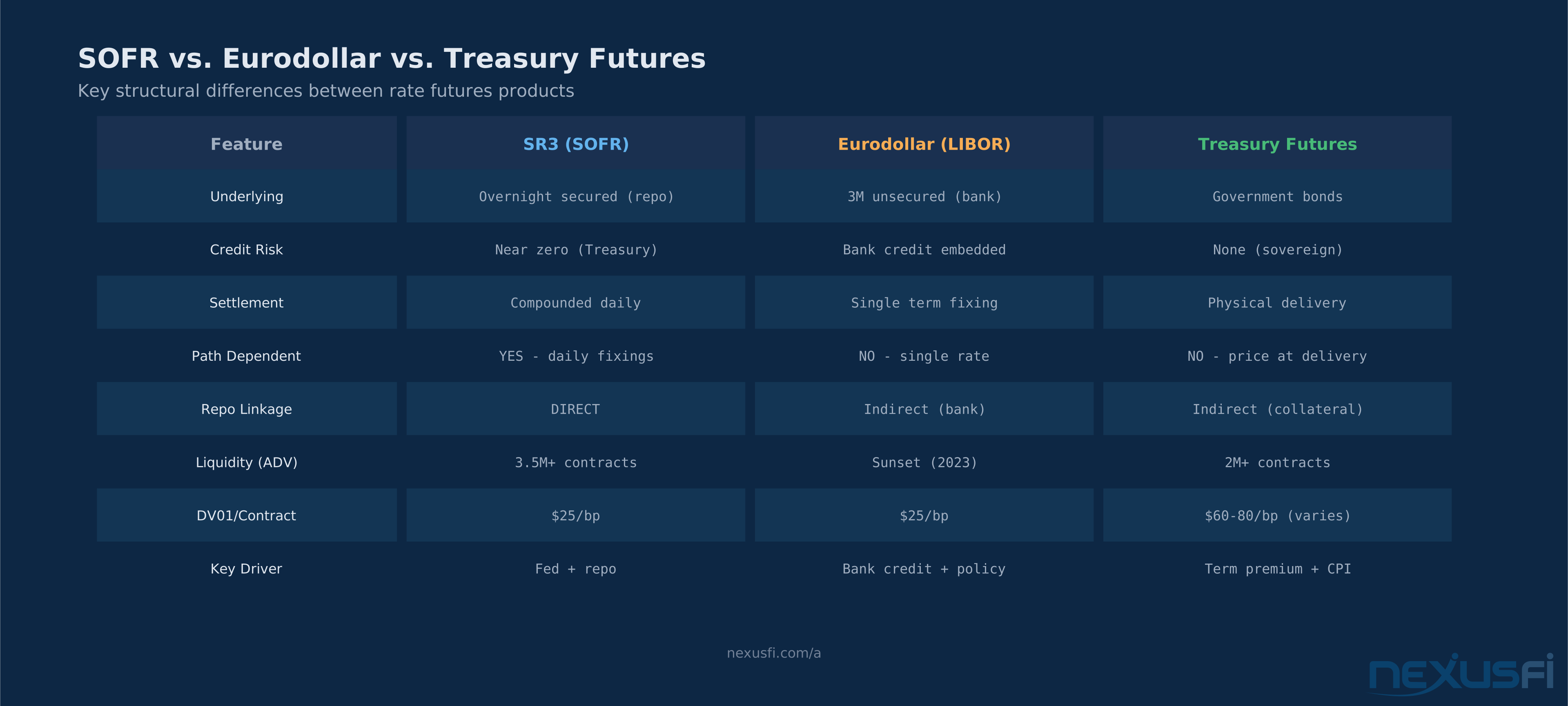
| Feature | Eurodollar (LIBOR) | SR3 (SOFR) |
|---|---|---|
| Underlying | 3-month unsecured bank funding rate | Compounded overnight secured repo rate |
| Credit risk | Embedded bank credit spread | Near-zero (Treasury collateral) |
| Rate determination | Panel survey (once per day, term) | Transaction-based (overnight) |
| Settlement | Single fixing at start of period | Compounded daily fixings over full quarter |
| Path dependence | None — single term rate | High — every daily fixing matters |
Mental Model Adjustments #
Traders who grew up on Eurodollars need to recalibrate:
Don't think in terms of "the 3-month rate." SOFR has no native term rate. What you're trading is a bet on the average overnight rate, compounded daily. This is a at the core different object even though the quote convention looks identical.
Credit events behave differently. During bank stress, LIBOR would spike as unsecured lending froze. SOFR may actually drop during the same event because Treasury collateral becomes more valuable and repo rates fall. The instinct to short rate futures during a credit scare can be exactly wrong for SR3.
Quarter-end effects are real, not residual. LIBOR occasionally reflected bank funding pressure. For SOFR, quarter-end repo dynamics are a first-order driver, not background noise. Trade so.
How SOFR Differs from Everything Else #
vs. Treasury Futures #
Treasury futures (ZN, ZB, ZF) price the level and term premium of government bonds. SR3 prices the expected path of overnight secured funding. They correlate strongly on macro days but can diverge meaningfully:
- Risk-off flight to quality rallies Treasuries (lower yields). SR3 may or may not move — it depends on whether the flight changes the expected Fed path.
- Repo market stress moves SR3 (higher SOFR = lower SR3 price) without necessarily moving Treasury yields.
- Term premium shifts move Treasury futures but have zero direct effect on SR3.
vs. Fed Funds Futures #
Fed Funds futures (ZQ) price the effective federal funds rate. They're closely related to SR3 but not identical:
- SOFR and the effective fed funds rate usually trade within 5-10 bp of each other
- During repo stress, SOFR can spike above fed funds (collateral scarcity premium)
- SR3 has deeper liquidity and tighter bid-ask than equivalent fed funds futures
The Repo Linkage #
This is the defining feature of SOFR that traders must internalize: SR3 is a repo market instrument wrapped in a futures contract. It responds to:
- Collateral supply and demand — large Treasury auctions, TGA movements
- Balance sheet constraints — bank regulatory reporting dates, reserve requirements
- Fed operations — standing repo facility activity, QT pace, reserve management
When macro factors dominate (Fed decisions, inflation data), SR3 moves with the rest of the rate complex. When funding factors dominate (quarter-end, large settlements, reserve stress), SR3 can move independently. Understanding which regime you're in is what separates profitable SR3 trading from guessing.
Practical Implementation #
Getting Started #
- Watch the CME SOFR Index publication each morning at 8:00 AM ET
- Track the Fed calendar — map FOMC dates against your contract expiries
- Monitor the known-day ratio for front contracts — it changes your sensitivity calculations daily
- Start with quarterly contracts — serials have thinner liquidity
- Size by DV01 — never by contract count alone
Key Data Sources #
- NY Fed SOFR data — daily rate and index publication
- CME FedWatch — meeting-by-meeting probability-weighted rate expectations
- CME Daily Settlement — official settlement prices and margin requirements
The 60-Second Check #
Before putting on any SR3 position, answer these three questions:
- What's your expected rate move in basis points? Multiply by $25 x contracts = your P&L target
- What's the known-day ratio on the front contract? If it's above 70%, your directional sensitivity is dampened — adjust expectations
- Are there quarter-end or year-end effects in your position's accrual window? If so, factor in 5-15 bp of potential funding noise
SR3 futures are the most liquid and most efficient way to trade the front end of the U.S. interest rate curve. The contract is simple — 100 minus rate, $25 per bp. The underlying is not. Understanding SOFR's secured, overnight, compounded nature is what gives you an edge. Everything else is just execution.
Knowledge Map
Prerequisites
Understand these firstGo Deeper
Build on this knowledgeReferences This Article
Articles that build on this topicCitations
- — Discussion“SOFR futures ADV has jumped to 531K contracts, 26% of Eurodollars”
- — Discussion“Fed Funds, Eurodollars and SOFR contracts all price as 100 minus the interest rate. Hence an interest rate of 0.5% equals a price of 99.5.”