



Swiss Franc (6S) Futures: The Complete Trading Guide
Overview #
The Swiss Franc is not just a currency. It's a regime barometer — calm in normal markets, explosive in crisis.
The "Swissie" does not behave like the Australian Dollar tracking iron ore or the Canadian Dollar mirroring crude oil. The Swiss Franc (CHF) has a dual personality that experienced traders learn to respect: in quiet markets, it follows interest-rate differentials and carry logic like any other currency. In stressed markets, it becomes something else entirely — a crisis hedge, a safe-haven magnet, a vehicle for global capital preservation. That switch happens fast and without warning.
This creates unique challenges and opportunities. Swiss Franc futures (6S on CME) are not a simple directional vehicle. They are a regime-dependent macro instrument that you need to understand from the inside: what drives the price, when those drivers change, and how the Swiss National Bank's (SNB) unconventional policy history turns routine sessions into gap events.
The Swissie also has a specific trading profile that rewards preparation. Liquidity concentrates in defined windows. The SNB has a track record of shocking markets — including the single most violent currency move in modern history (the 2015 peg removal). And 6S has structural relationships with Gold (GC) and the USD Index (DX) that are useful most of the time and dangerously misleading when regimes shift.
This guide covers everything you need to trade 6S with competence: contract mechanics, P&L math, the two-force driver model, SNB's role as the dominant volatility source, intermarket relationships with their failure conditions, liquidity and session dynamics, a complete trading workflow, and risk controls calibrated to what actually goes wrong in CHF futures trading.
The CME's Swiss Franc futures give you direct, exchange-traded exposure to the CHF/USD rate. No OTC counterparty, no spot broker taking the other side, no currency ETF structural drag. If you're going to trade the Swissie, 6S is the instrument.
Key Specifications #
Experienced traders read specs before anything else. Here they are.
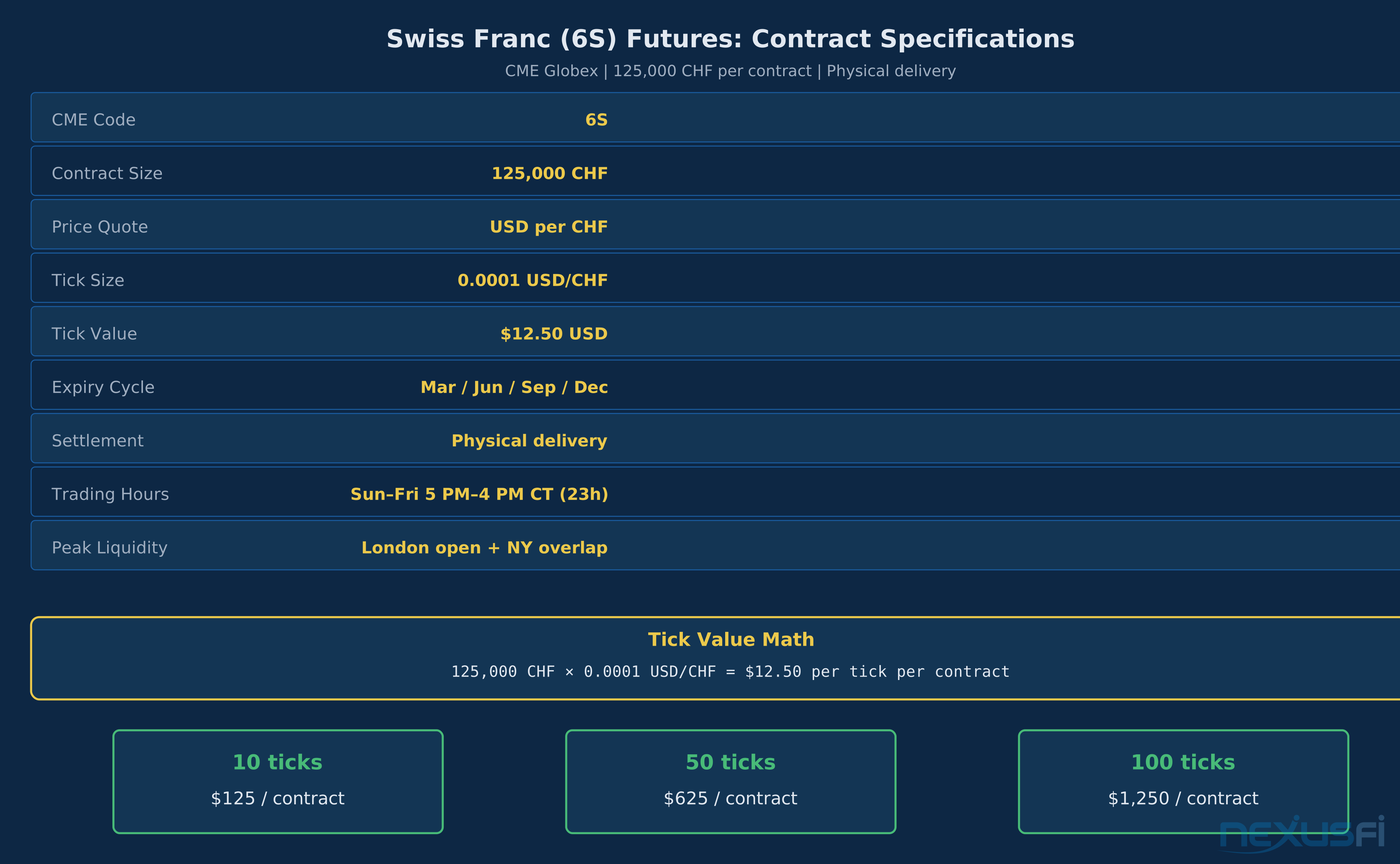
| Specification | Detail |
|---|---|
| CME Product Code | 6S |
| Contract Size | 125,000 Swiss Francs (CHF) |
| Price Quotation | U.S. dollars per Swiss Franc (USD per CHF) |
| Tick Size | 0.0001 USD/CHF |
| Tick Value | $12.50 USD per contract |
| Expiration Cycle | Quarterly: March (H), June (M), September (U), December (Z) |
| Settlement | Physical delivery of 125,000 CHF |
| Globex Trading Hours | Sunday--Friday, 5:00 PM--4:00 PM CT (23-hour session) |
| Core Liquidity Window | 8:00 AM--12:00 PM EST (London/New York overlap) |
| Listed Contracts | Multiple quarterly expirations forward |
Tick value derivation: 125,000 CHF × 0.0001 USD/CHF = $12.50 USD per tick, per contract. Every 0.0001 price move is $12.50. Anchor to this number. Every P&L calculation you ever run on 6S flows from it.
1 tick (0.0001) = $12.50 USD per contract
Risk math: 10 ticks = $125 | 50 ticks = $625 | 100 ticks = $1,250 per contract
Margin is dynamic — set by CME's SPAN system and adjusted for volatility. In quiet regimes it tends to be modest; around major SNB events or geopolitical shocks, it can jump much. The golden rule: size for worst-case margin, not today's margin. Position sizing based on current initial margin requirements is a reliable way to get caught under-capitalized when the SNB speaks.
How It Works #
The Quote Convention — Get This Right First #
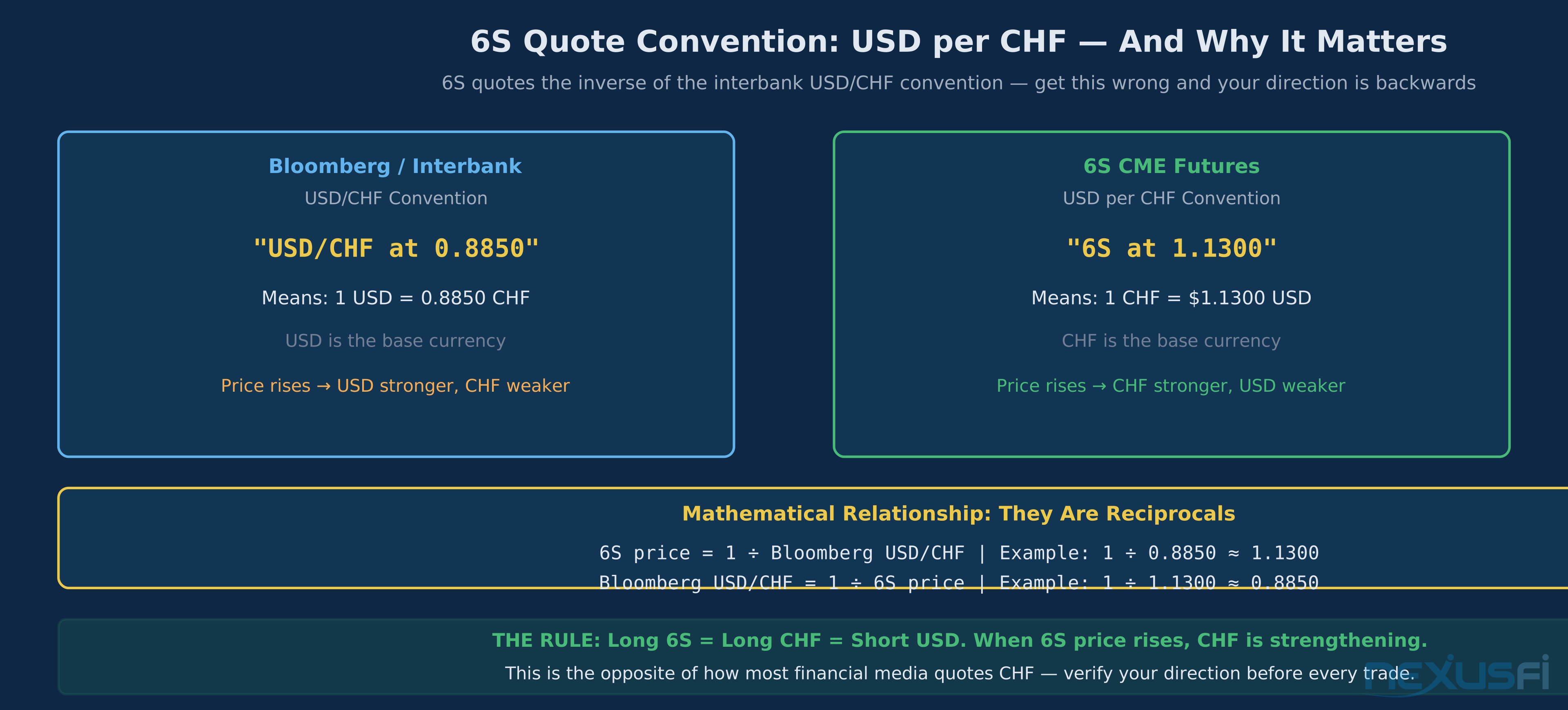
6S is quoted in U.S. dollars per Swiss Franc. If the September 6S contract is trading at 1.1300, that means 1 Swiss Franc = $1.13 U.S. Dollars.
This is the inverse of the interbank spot convention displayed on most financial news sites. When Bloomberg shows "USD/CHF at 0.8850," they mean it takes 0.885 CHF to buy one U.S. dollar. The 6S futures price is the reciprocal: 1 ÷ 0.8850 ≈ 1.130.
The practical rule: When the 6S price rises, CHF is strengthening against USD. When 6S falls, CHF is weakening. A long 6S position profits from CHF appreciation.
P&L Math #
The clean tick math matters for position sizing:
- Move of 0.0050 (50 ticks) × $12.50 = $625 per contract
- Move of 0.0100 (100 ticks) × $12.50 = $1,250 per contract
- Move of 0.0300 (300 ticks) × $12.50 = $3,750 per contract
If you're targeting $500 risk per trade on a 30-tick stop, you can run approximately 1.33 contracts — meaning 1 contract with a 40-tick stop, or 2 contracts with a tighter stop structure.
Physical Delivery #
6S futures involve physical delivery of Swiss Francs. Unlike some futures contracts that cash-settle to an index, if you hold 6S into the delivery period, you will receive or pay actual CHF. For most speculative traders this is irrelevant — they roll or close positions before the last trading day. But it means rollover discipline is essential. Letting a futures position drift into delivery mechanics creates operational complications that have nothing to do with your trading thesis.
Rolling the Position #
The quarterly cycle (March, June, September, December) means active traders must roll positions roughly every three months. Volume shifts from the front-month to the next-quarter contract in the days preceding expiration. The calendar spread — simultaneously closing the expiring contract and opening the next — is the standard mechanism. The spread between contracts reflects interest-rate differentials and any risk premium embedded in the current regime.
Monitor the spread: if it's unusually wide, you may be paying a premium to carry exposure through an event. If it's narrow, rolling is cheap. This is not a detail to handle at the last moment.
What Moves 6S: The Two-Force Framework #
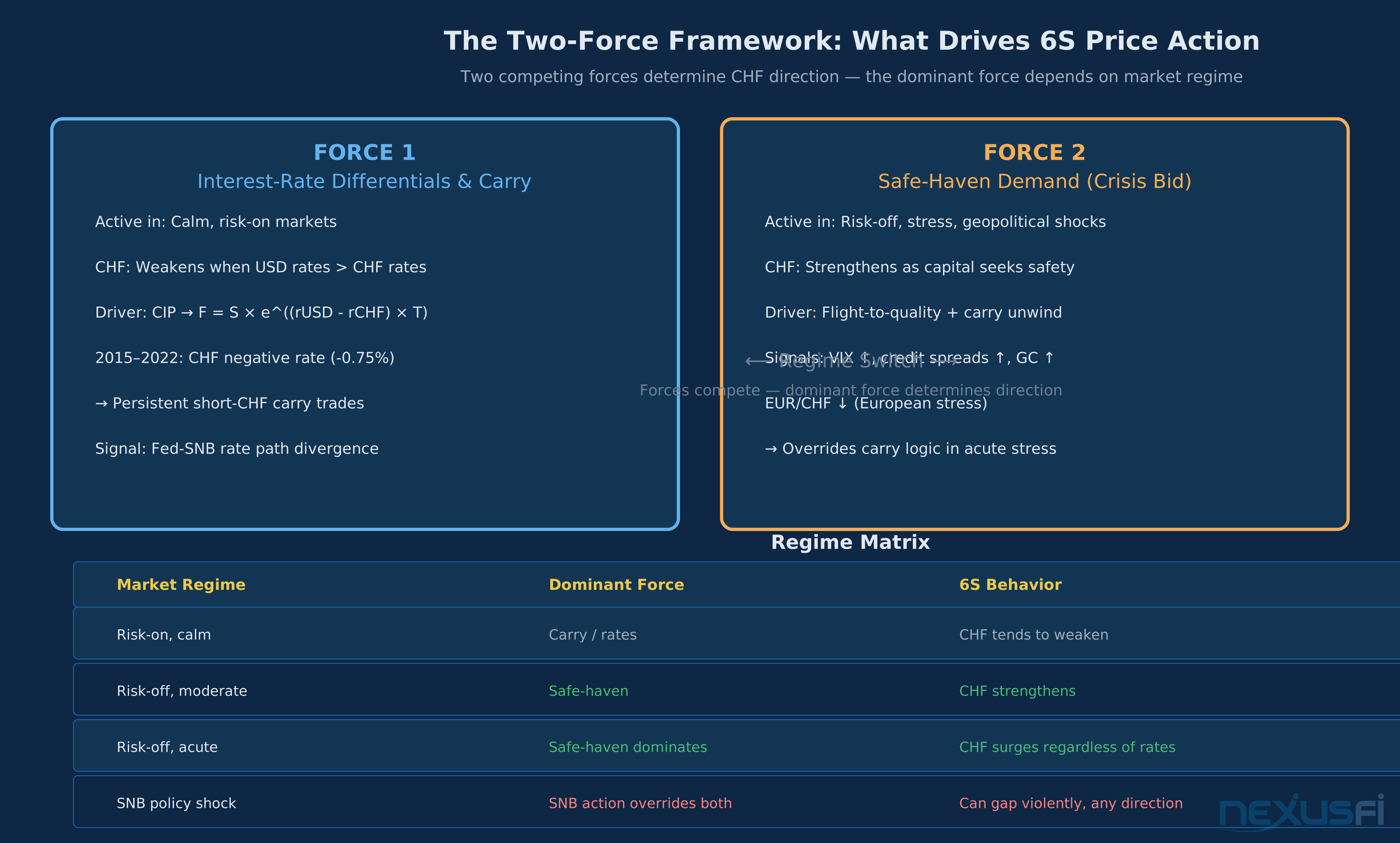
Understanding 6S price action requires understanding that two distinct forces compete for dominance, and the wrong framework in the wrong regime will produce losses even when your macro thesis is correct.
Force 1: Interest-Rate Differentials and Carry #
In normal market conditions, 6S behaves like a standard currency futures contract: it prices the expected difference between U.S. and Swiss interest rates over the contract period.
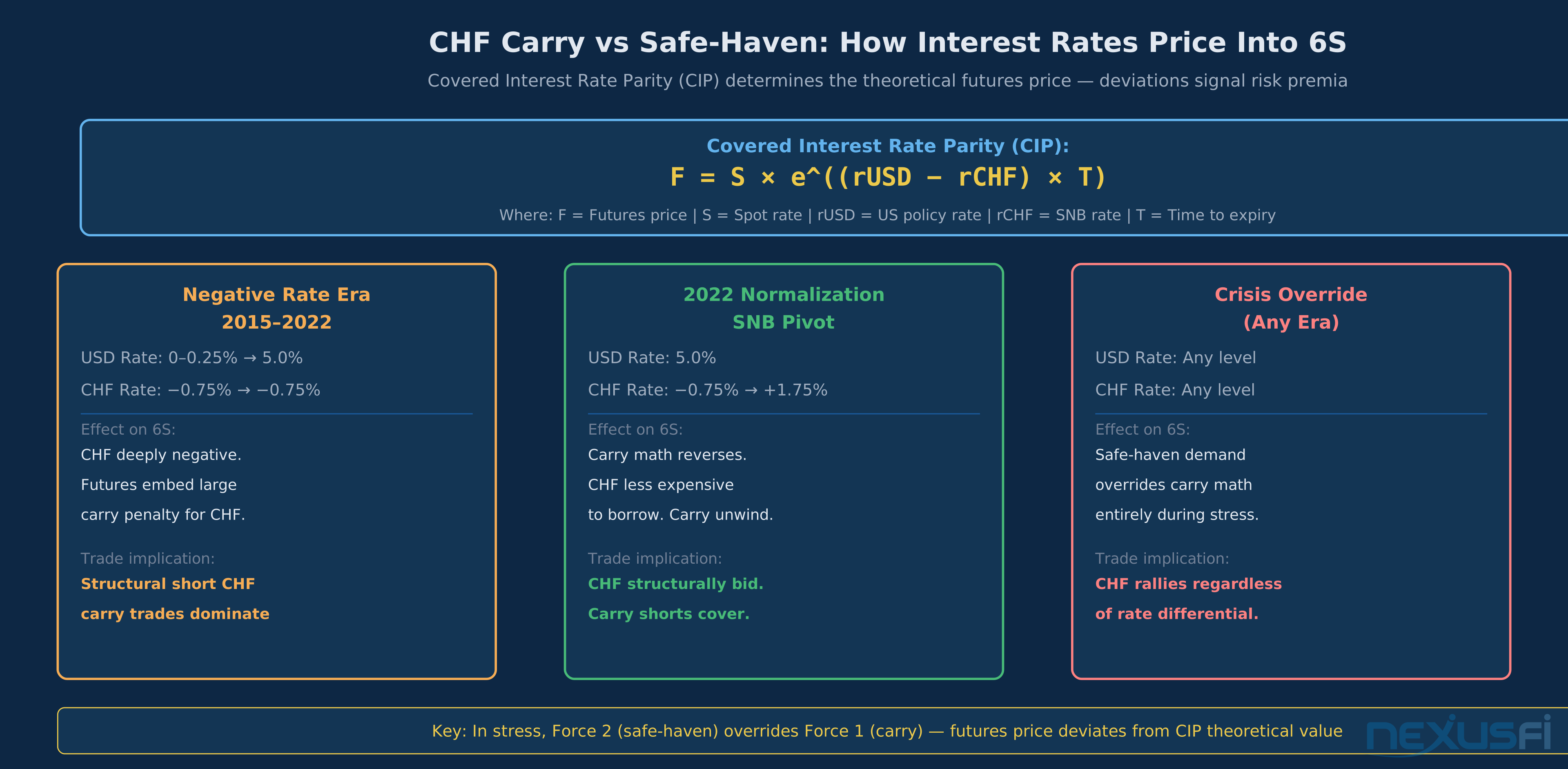
The math underlying this is covered interest rate parity (CIP). In theory, the futures price should equal:
F = S × e^((rUSD - rCHF) × T)
Where S is the spot USD/CHF rate, rUSD is the U.S. short rate, rCHF is the Swiss policy rate, and T is the time to expiration in years. If USD rates are 5% and Swiss rates are 1.75%, the three-month futures will trade at a premium to spot, reflecting the carry advantage of holding USD versus CHF.
The same logic applies to 6S. When CHF rates are much below USD rates, CHF acts as a funding currency in carry trades: traders borrow in CHF (low cost) and invest in higher-yielding assets. This structural carry pressure tends to weaken CHF in calm markets. When CHF rates were deeply negative (2015--2022, as low as -0.75%), this carry disadvantage was extreme — shorting CHF was the default institutional position in normal regimes.
Practical implication: When CHF rates rise relative to USD rates — as occurred during the SNB's post-2022 normalization — the carry math flips. CHF becomes less attractive to borrow against, carry positions unwind, and 6S gets a structural bid even without explicit risk-off sentiment.
Force 2: Safe-Haven Demand #
The second force is where 6S becomes genuinely unique. Switzerland's political stability, current account surplus, strong banking tradition, and geographic neutrality have given CHF a role no other major currency holds: it is a reflexive crisis hedge.
When global risk appetite deteriorates — geopolitical shocks, equity drawdowns, banking stress, liquidity crunches — capital flows toward CHF with a regularity that makes 6S one of the most reliable risk-off expressions in the futures ecosystem. This is not sentiment; it is institutional behavior rooted in decades of observed performance.
The critical insight is regime-dependence:
| Market Regime | Dominant Force | 6S Behavior |
|---|---|---|
| Risk-on, calm | Carry/rate differentials | CHF weakens as high-yield preferred |
| Risk-off, moderate | Safe-haven bid | CHF strengthens despite carry penalty |
| Risk-off, acute | Safe-haven dominates entirely | CHF can surge regardless of rates |
| SNB policy shock | SNB action overrides both | Can move in either direction violently |
The failure mode for 6S traders is applying the carry framework to a risk-off market, or vice versa. A trader who is short CHF because "rates say sell" and then gets hit by a crisis event faces losses from both directions: the position is wrong and the leverage amplifies it.
Regime confirmation tools: Traders typically use observable proxies to determine which force is operating:
- Equity volatility (implied or realized): elevated vol generally activates the safe-haven force
- Credit spreads: widening spreads signal risk-off demand
- EUR/CHF direction: European stress specifically drives CHF demand
- Gold (GC) confirmation: when both 6S and GC move in the same direction, the risk-off force is dominant and high-conviction
The SNB Factor: Why 6S Has Fat Tails #
No discussion of Swiss Franc futures is complete without addressing the Swiss National Bank, which has more direct influence over CHF price action than any central bank equivalent for other major currency futures.
The History You Cannot Ignore #
The SNB's unconventional policy history has permanently reshaped how markets price CHF risk:
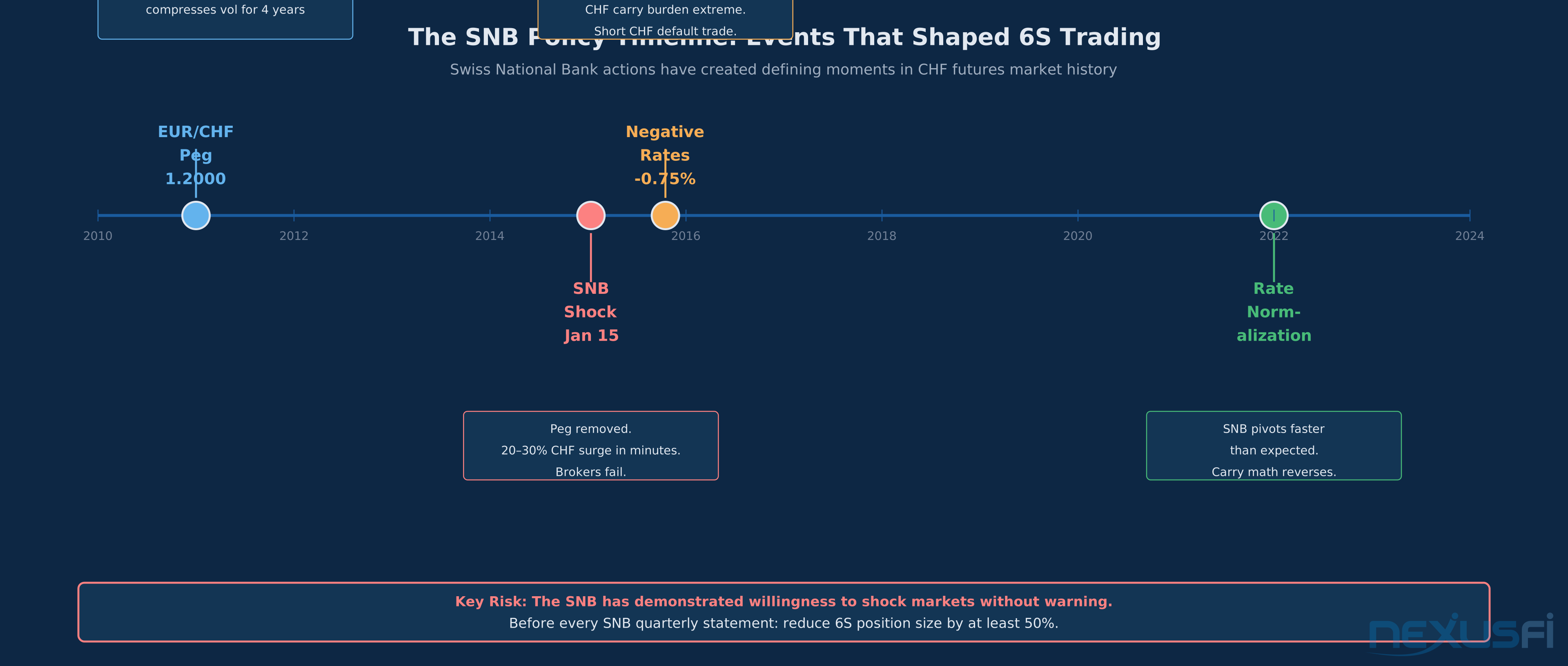
2011: The EUR/CHF Peg. As European debt crisis stress drove massive capital flight into Switzerland, CHF appreciated to the point of threatening Swiss export competitiveness. The SNB announced a floor at 1.2000 EUR/CHF and pledged unlimited intervention to defend it. For three-plus years, this peg compressed CHF volatility to historic lows. Traders became complacent about CHF gap risk.
January 15, 2015: The "SNB Shock." With zero warning during a normal trading session, the SNB abandoned the 1.2000 floor. CHF appreciated approximately 20-30% in minutes. 6S gaps were measured not in ticks but in full figures. Brokers failed. Retail FX accounts were wiped. Large institutions took losses that would define their risk management frameworks for years. The day is now a standard case study in central bank intervention risk.
2015-2022: Negative Rate Policy. The SNB maintained negative policy rates (reaching -0.75%) for the entire period — one of the most extreme monetary policy stances of any developed-world central bank. This made CHF carry extremely expensive and shaped a generation of FX strategies built around "short CHF in normal markets."
2022+: Normalization. As global inflation accelerated, the SNB pivoted more quickly than many anticipated, raising rates and eventually moving into positive territory. The carry math reversed. Strategies built on negative CHF rates required adjustment.
How the SNB Creates Volatility Regimes #
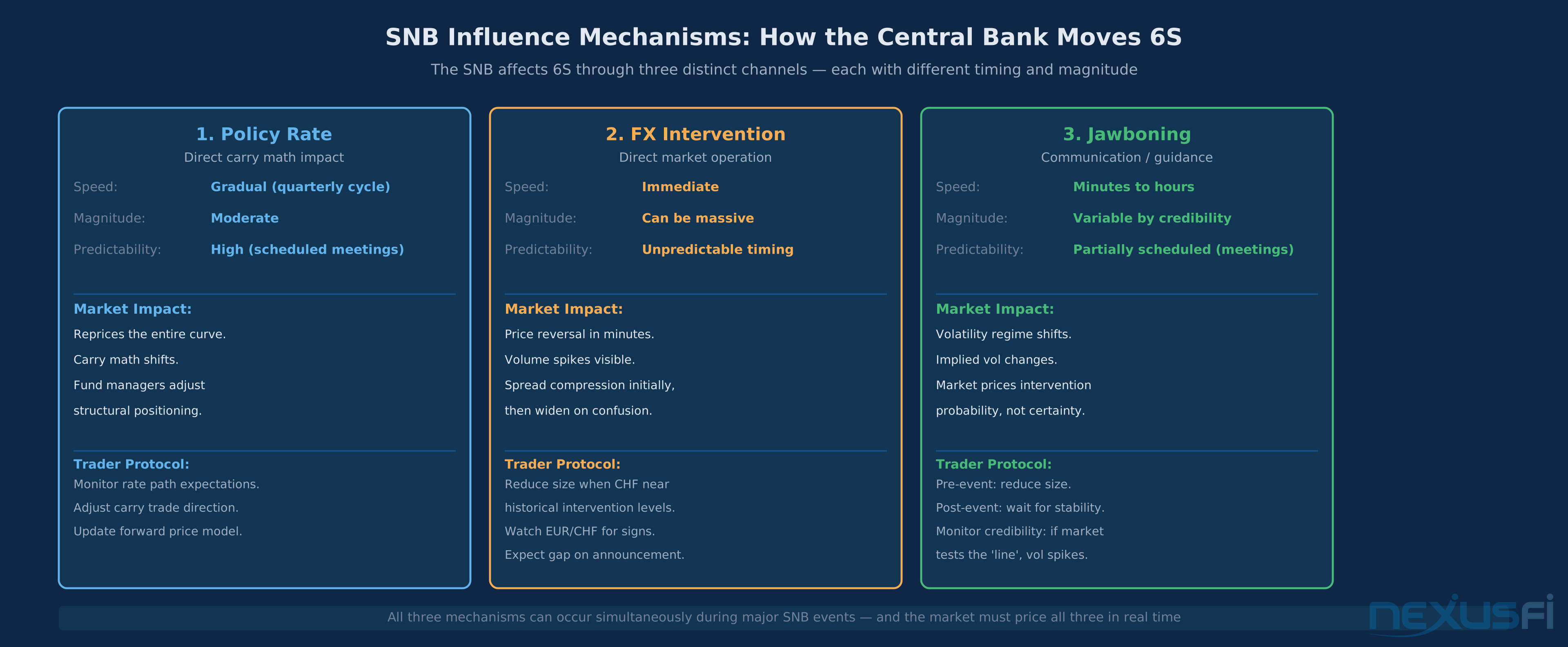
The SNB affects 6S through three mechanisms:
1. Policy rates: The direct effect on the carry math described above. When Swiss rates move relative to USD rates, the futures curve reprices.
2. FX intervention: The SNB has demonstrated willingness to buy foreign currency to prevent excessive CHF appreciation. This creates a "SNB put" on CHF strength — but as 2015 showed, the put can expire without notice.
3. Jawboning: SNB communications about currency valuation, intervention willingness, and policy stance create volatility regime shifts. Traders price not just the current rate but the probability of intervention. When the SNB signals discomfort with CHF strength, implied volatility in options (and realized volatility in futures) tends to compress as the market prices in the intervention backstop. When SNB credibility wanes or signals change, volatility can spike rapidly.
The practical implication: Before every SNB quarterly policy statement, experienced 6S traders make a specific decision about exposure. The gap risk is asymmetric — a surprising hawkish statement or surprise intervention can create overnight moves that exceed normal stop distances. This is not theoretical. The SNB has a documented history of moving markets in ways that invalidate conventional risk management assumptions.
Intermarket Relationships: How They Work -- and When They Fail #
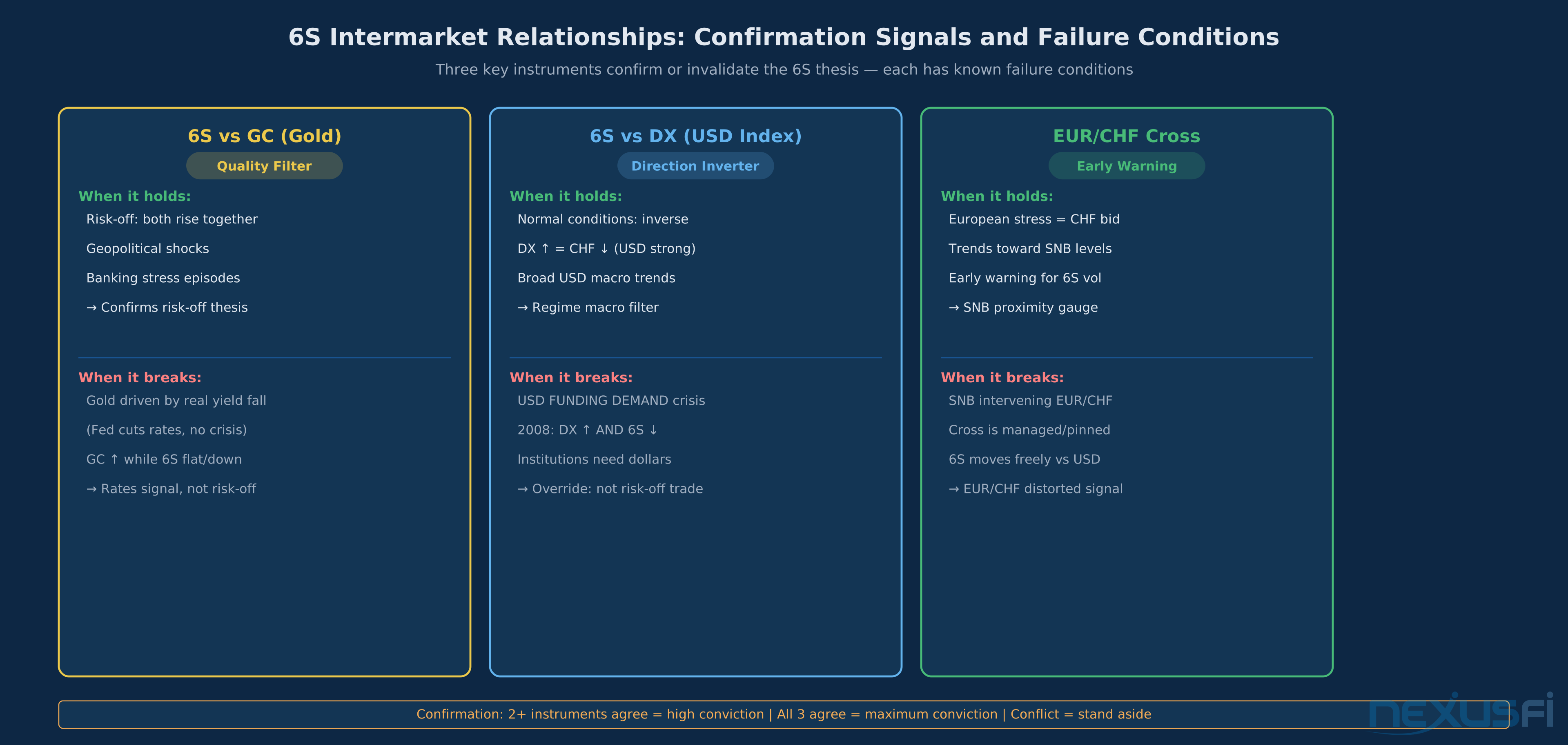
6S does not trade in isolation. Three external relationships provide both confirmation signals and hedging tools — but they have known failure modes that matter.
6S and Gold (GC): The Crisis Basket #
In acute risk-off environments, CHF and Gold frequently strengthen together. Both attract flight-to-safety flows from different channels: Gold from inflation and crisis fears, CHF from geopolitical and banking system concerns. The positive correlation in these regimes is empirically reliable and exploitable.
When it holds: Geopolitical escalations, equity market crashes, banking stress episodes, liquidity crises. When GC rises alongside 6S, the risk-off thesis has "macro quality" — it is being confirmed by multiple instruments simultaneously, which increases confidence.
When it breaks: Gold has a distinct sensitivity to real interest rates (gold tends to rise when real rates fall, regardless of risk sentiment). When the driver is a Fed policy pivot or inflation repricing rather than crisis fear, GC can rally strongly while 6S remains neutral or even weakens. A trader who mechanically uses GC as 6S confirmation will find this decoupling frustrating until they recognize it as information, not noise.
Practical use: The GC-6S relationship is a quality filter, not a mechanical signal. If both are moving in the expected direction, add conviction to a 6S trade. If they diverge, investigate the driver before assuming the thesis is correct.
6S and the USD Index (DX): Inverse — Usually #
CHF vs USD (what 6S prices) is naturally inverse to a broad dollar index. When DX rallies, you would generally expect 6S to fall. In practice this works often but not always.
When it breaks: USD demand can come from different sources. In some risk-off regimes, the dollar strengthens due to USD liquidity demand (institutions need dollars to meet margin calls, redemptions, or collateral requirements). In this scenario, DX rallies AND 6S may fall — even in a classically "risk-off" moment — because USD funding demand overrides the CHF safe-haven bid. The 2008 crisis involved exactly this dynamic for extended periods.
Practical use: If DX is ripping higher and 6S is not following safe-haven expectations, check whether the driver is USD liquidity demand. This veto condition invalidates many simple CHF-safe-haven trades.
EUR/CHF as the "SNB Proximity Gauge" #
The most directly interpretive relationship for 6S is EUR/CHF. Swiss monetary policy has historically been anchored to EUR/CHF dynamics, and European stress specifically drives CHF demand.
When EUR/CHF is trending toward levels that historically triggered SNB intervention or policy concern, it functions as an early warning indicator for 6S volatility — the currency cross tells you that CHF-specific demand is building before broader market indicators necessarily confirm it.
Practical use: A trader watching EUR/CHF trending toward historical stress levels can anticipate 6S volatility before it materializes in the 6S order book directly.
Microstructure and Session Dynamics #
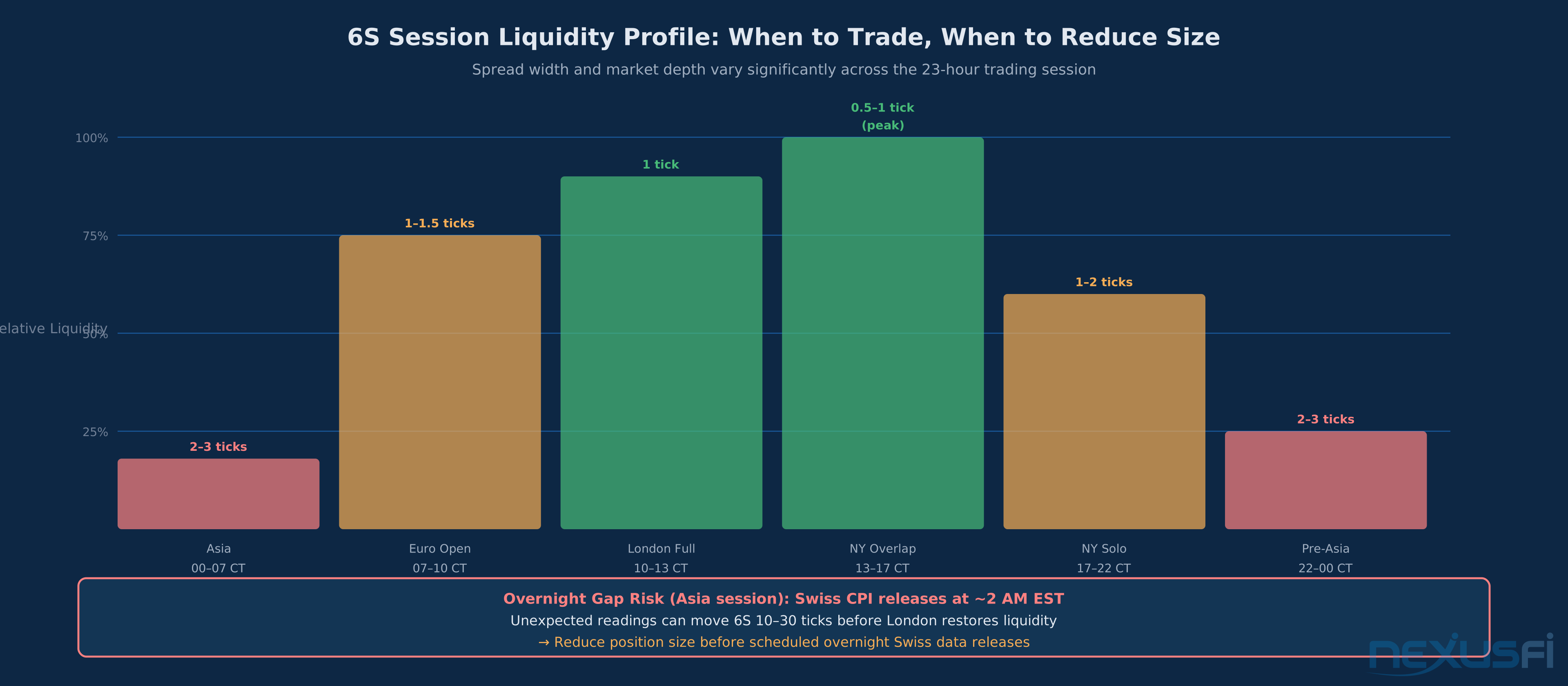
6S trades on CME Globex in an approximately 23-hour session (Sunday through Friday). Liquidity is not uniform across that window.
When to Trade #
| Session Window (CT) | Liquidity | Typical Spread | Characteristics |
|---|---|---|---|
| 17:00--19:00 | Building | 1--2 ticks | European hours beginning; macro themes from Asia digest |
| 19:00--22:00 | High | 1 tick | London fully active; institutional participation strong |
| 07:00--12:00 | Peak | 0.5--1 tick | NY overlap; highest volume; tightest markets |
| 12:00--17:00 | Moderate | 1--2 ticks | NY alone; volume declining through afternoon |
| 17:00--19:00 (next) | Thin | 2--3 ticks | Overnight Asian session; most vulnerable to gaps |
The London/NY overlap (roughly 8:00 AM to 12:00 PM EST) is where serious 6S execution belongs. Spreads are tightest, depth is deepest, and slippage risk is lowest. Entering a large position in the overnight thin session is structurally disadvantageous.
Gap Risk by Session #
Overnight gaps in 6S are not rare. Swiss macro releases (CPI, employment, trade balance) often occur at 2:00 AM--3:00 AM EST — in the middle of the thin trading window. An unexpected reading can reprice 6S by 10--30 ticks before the London session restores liquidity. SNB quarterly policy statements, released during Zurich morning, can create gaps an order of magnitude larger.
Position management protocol: If you're holding a meaningful 6S position overnight and there's a scheduled Swiss macro release or SNB communication event in the early hours, you have three choices: reduce size to absorb a larger gap, hedge with a correlated instrument, or close and re-enter after the market stabilizes. Not managing this risk is the source of a significant proportion of outsized 6S losses.
Institutional Fixing Flows #
FX benchmark fixings create temporary volume concentration and spread behavior at specific times. These are periods where large institutional hedging orders can create short-duration liquidity and volatility bursts. Traders who understand these patterns can either benefit from them (as natural counterparty to fixing flows) or avoid them (to prevent adverse selection during moments of reduced "natural" liquidity).
Trade Setups and Execution #
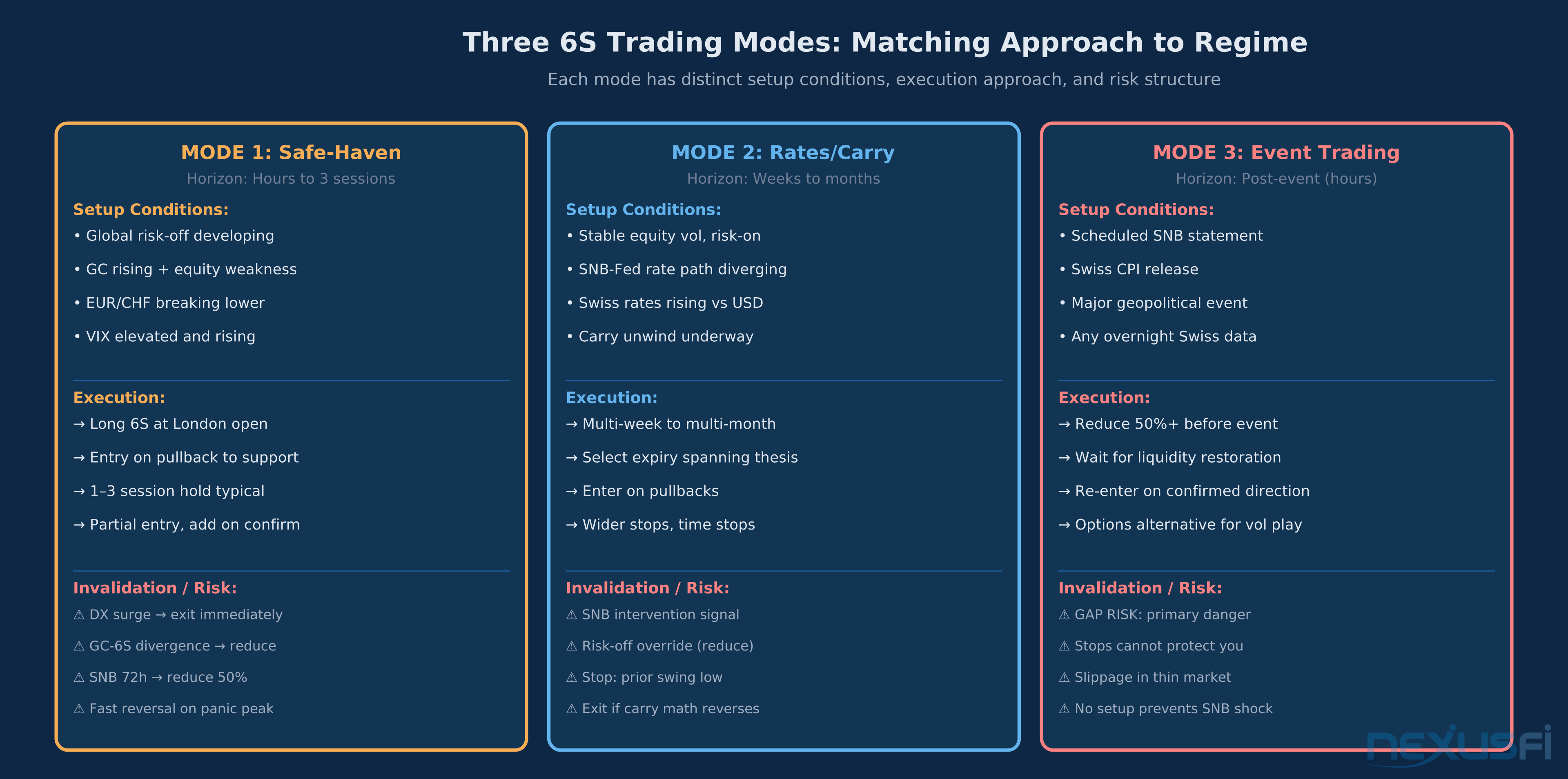
The 6S trading framework operates in three distinct modes depending on which driver is dominant. Matching your approach to the regime is the first discipline.
Mode 1: Safe-Haven Expression #
Setup conditions: Global risk-off developing, GC rising alongside equity weakness, EUR/CHF breaking lower, VIX elevating.
Execution: Long 6S (buying CHF strength) with entry timed to the London open when institutional safe-haven demand typically expresses cleanest.
Invalidation: DX surging due to USD funding demand (overrides CHF safe-haven); GC and 6S diverging (suggests the move is not broad risk-off); SNB jawboning signaling intervention willingness (creates asymmetric downside risk to the CHF bid).
Risk structure: Safe-haven moves can be violent and fast, but they reverse just as quickly when stress peaks. Position sizing that assumes a linear continuation is frequently wrong. Using a partial entry-and-add approach — entering smaller, adding confirmation — reduces the cost of timing errors.
Mode 2: Rates/Carry Expression #
Setup conditions: SNB policy path diverging from Fed path; Swiss rates rising relative to USD rates; carry-trade unwind underway.
Execution: Long 6S for multi-week horizon; select the quarterly contract spanning the expected rate repricing period.
Invalidation: SNB signals intervention willingness; global risk-on resumes and carry compression returns.
Risk structure: Rate-driven moves are slower and more predictable than safe-haven moves but can be interrupted by policy surprises. Use time stops alongside price stops.
Mode 3: Event Trading #
Setup conditions: Scheduled SNB policy statement, Swiss CPI release, or geopolitical event with CHF relevance.
Execution: Reduce existing exposure before the event; re-enter after liquidity restoration. This is the discipline that separates experienced 6S traders from those who experience their first "SNB moment" as a surprise.
Calibration: The principle is appropriate sizing for gap risk, not avoidance of all positions. A hedged 6S position (e.g., 6S long + GC long as crisis basket) held through an SNB meeting at reduced size is different from a naked directional bet.
Position Sizing Framework #
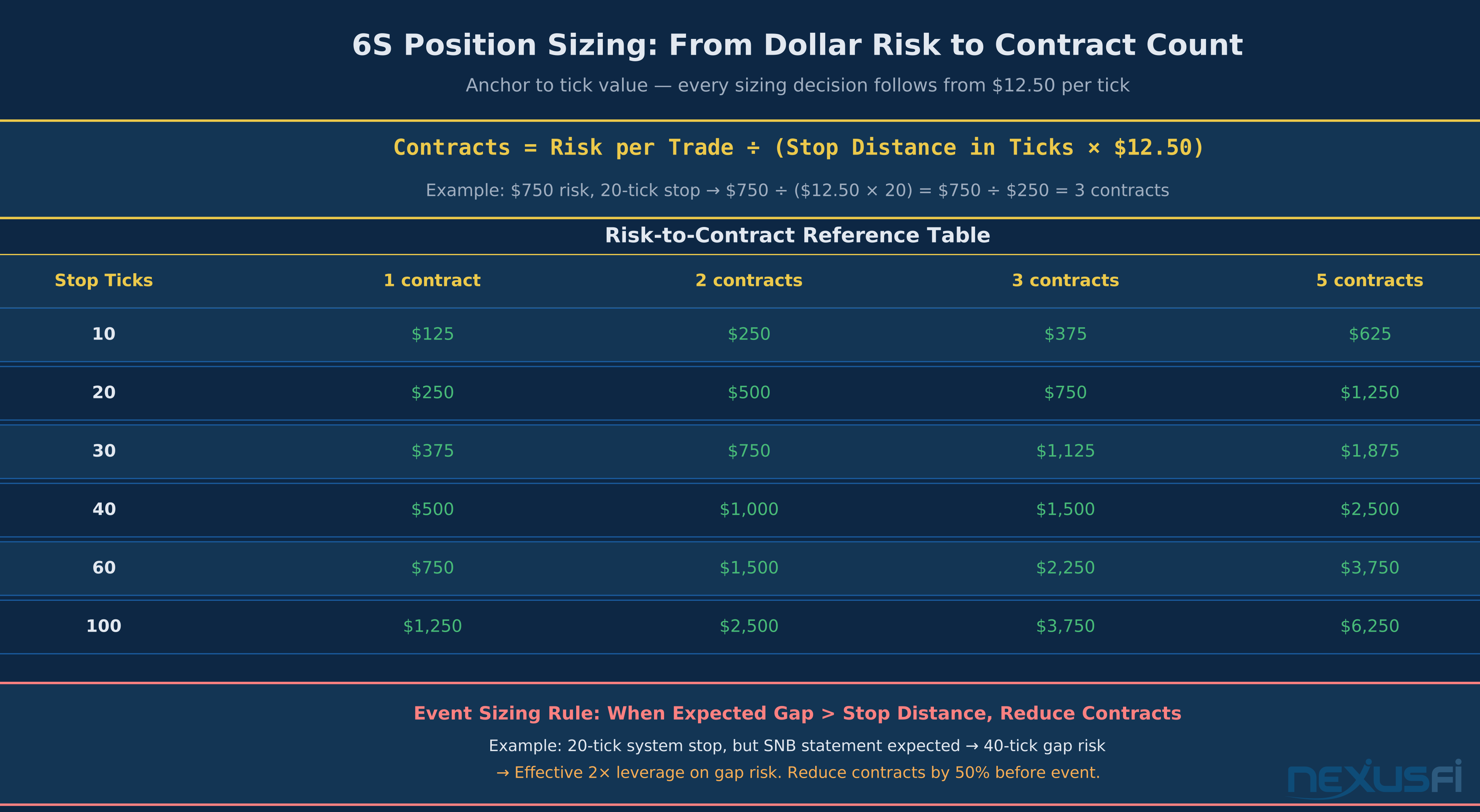
The 6S risk calculation is straightforward once you anchor to tick value:
- Determine your dollar risk per trade
- Identify your stop distance in ticks (based on logical structure — support/resistance, ATR, or event-gap estimate)
- Divide: risk_per_trade ÷ (stop_ticks × $12.50) = contract count
Example: $750 risk per trade, 20-tick stop → $750 ÷ ($12.50 × 20) = $750 ÷ $250 = 3 contracts.
For event-driven trades where gap risk may exceed the stop: reduce contracts proportionally. If the expected gap on a surprise SNB statement is 40 ticks, and your system stop is 20 ticks, you're effectively using 2x leverage on the gap risk — sizing down is the correction.
Practical Considerations #
Futures vs Spot: Why 6S #
The 6S futures contract offers specific advantages over spot FX for CHF exposure: exchange clearing (no OTC counterparty risk), CFTC regulatory protection, transparent central limit order book pricing, and Section 1256 60/40 tax treatment in the U.S.
During the negative-rate era, spot CHF positions carried a cost regardless of direction. The futures structure embeds carry transparently in the price rather than surfacing it as daily swap charges — cleaner accounting and risk management.
Rollover Mechanics #
The calendar spread between consecutive quarterly 6S contracts reflects: interest rate differentials (the forward carry), event risk premiums (an SNB meeting within the expiry period embeds volatility premium), and liquidity transitions (volume migrates to the next quarter in the final 2-3 weeks).
Standard practice: Begin monitoring the roll 3-4 weeks before the last trading day. Use a calendar spread order (simultaneous close + open) rather than legging separately. Legging creates directional exposure during the gap between legs — avoidable slippage.
When 6S Lies to You: Specific Failure Modes #
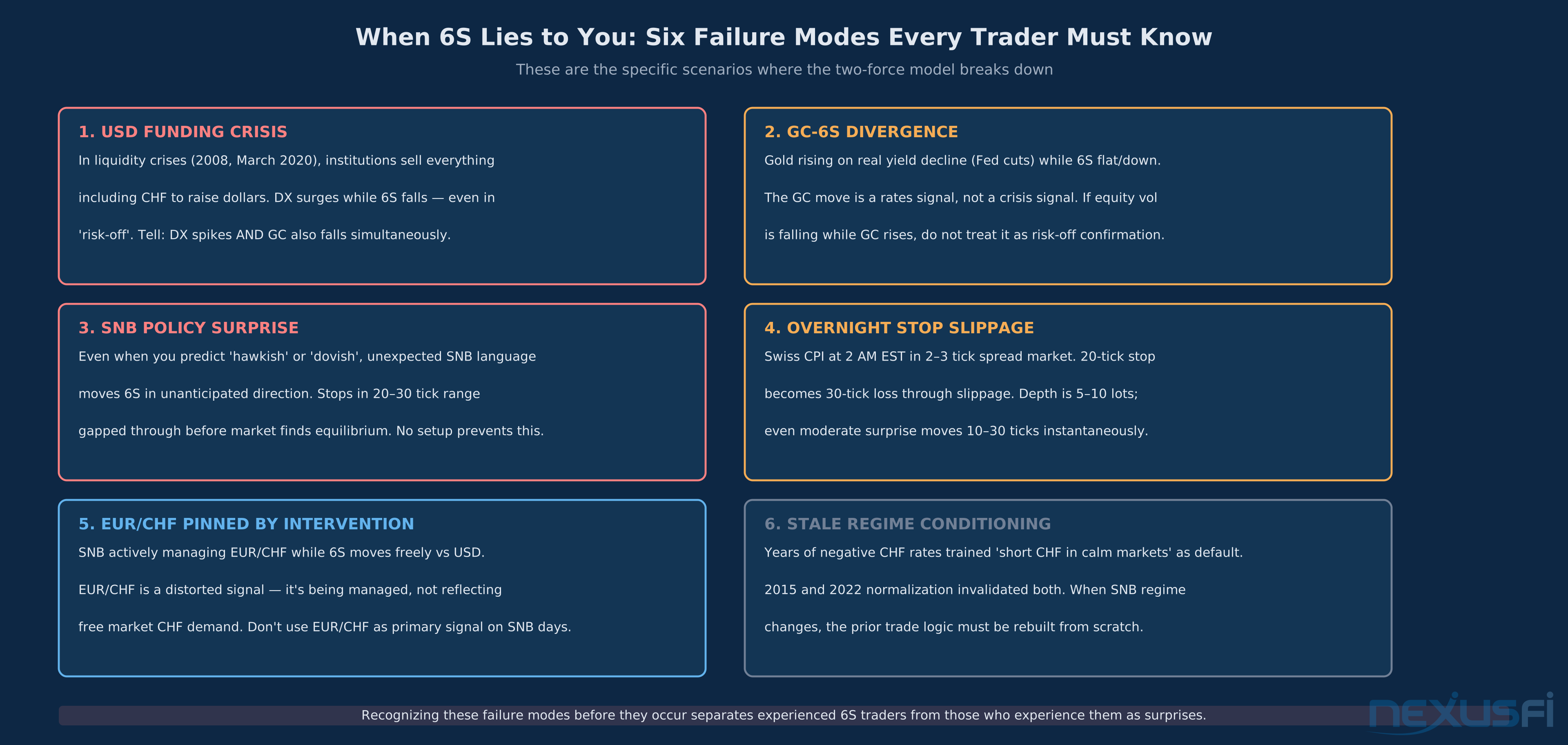
The two-force model is correct most of the time. These are the specific scenarios where it fails — and where underprepared traders lose money:
1. USD funding demand overrides safe-haven demand. In acute liquidity crises (2008, March 2020 initial shock), institutions need dollars urgently. They sell everything, including CHF, to raise USD. 6S can fall while VIX is surging — the opposite of what "risk-off = buy 6S" predicts. The tell: DX spiking sharply while GC also sells off. When both safe-haven instruments decline together, it's a dollar funding event, not a risk-off trade.
2. GC and 6S diverge because gold is driven by real yields. A Fed pivot toward rate cuts can cause GC to surge due to falling real yields while CHF does nothing — because the driver is monetary, not crisis-related. Using GC as safe-haven confirmation fails in this regime. Filter: if equity vol is falling while GC rises, the gold move is rates-driven, not crisis-driven.
3. The SNB statement contains an unexpected element. Even if you correctly predict "hawkish" or "dovish," the SNB can add language about exchange rate tolerance, intervention willingness, or rate path that moves 6S in a direction nobody anticipated. Stops in the 20-30 tick range can be consumed by the initial gap before the market finds equilibrium. There is no technical setup that protects against this.
4. Your stop is in the overnight thin session when Swiss CPI prints. Swiss inflation data releases at approximately 2:00 AM EST in a market where spreads are 2-3 ticks and depth is 5-10 lots. A larger-than-expected reading can reprice 6S by 15-30 ticks with basically no liquidity. A 20-tick stop becomes a 30-tick loss through slippage. Reduce overnight positions before scheduled Swiss data.
5. EUR/CHF is pinned by SNB intervention while 6S moves freely. The SNB may be intervening to stabilize EUR/CHF while broader CHF demand affects 6S vs USD. In this scenario, EUR/CHF is a distorted signal — it's being actively managed while 6S reflects true market forces. Don't use EUR/CHF as your primary signal on days when the SNB has signaled intervention intent.
6. Carry logic is poisoned by policy credibility shifts. In 2015, traders had years of negative-rate conditioning — "short CHF in normal markets" was the default. When the peg was removed, that conditioning was instantly invalidated. The lesson: when market structure shifts (SNB policy change, rate normalization), don't trade the old regime's logic until you've confirmed the new regime is established.
Regime Decision Tree #
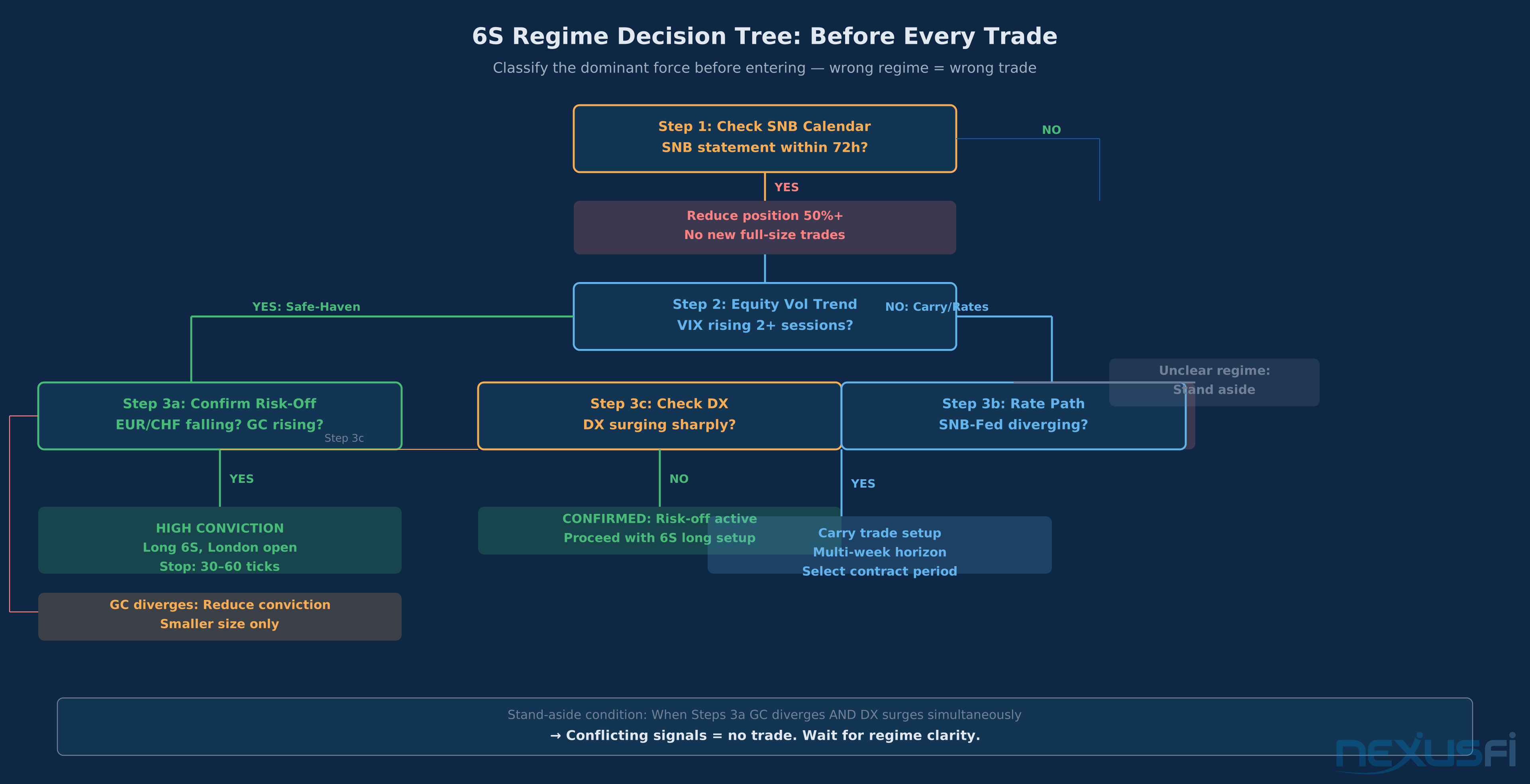
Before any 6S trade, classify the dominant force:
Step 1 — Check Equity Volatility Trend
- Equity vol rising over 2+ sessions + credit spreads widening → Force 2 activated (safe-haven)
- Equity vol stable or falling → Force 1 dominates (carry/rates)
Step 2 — Confirm with EUR/CHF
- EUR/CHF falling → European stress, CHF demand genuine
- EUR/CHF stable → Verify the 6S move is not just USD-specific
Step 3 — Check GC
- GC rising alongside 6S → High-conviction risk-off
- GC rising, 6S flat → Gold is rates-driven, not crisis-driven; lower conviction for 6S long
Step 4 — Check DX
- DX rising sharply → USD funding demand risk; may override CHF safe-haven
- DX flat or falling → Safe-haven bid is genuine vs USD
Step 5 — SNB Calendar
- SNB statement within 72 hours → Reduce size by 50%+, no new full-size positions
- Swiss macro release overnight → Reduce overnight exposure
Stand-aside condition: When Steps 3 and 4 both conflict (GC-6S divergence AND DX surge), avoid the trade entirely. Wait for regime clarity.
Worked Example: Risk-Off Entry #
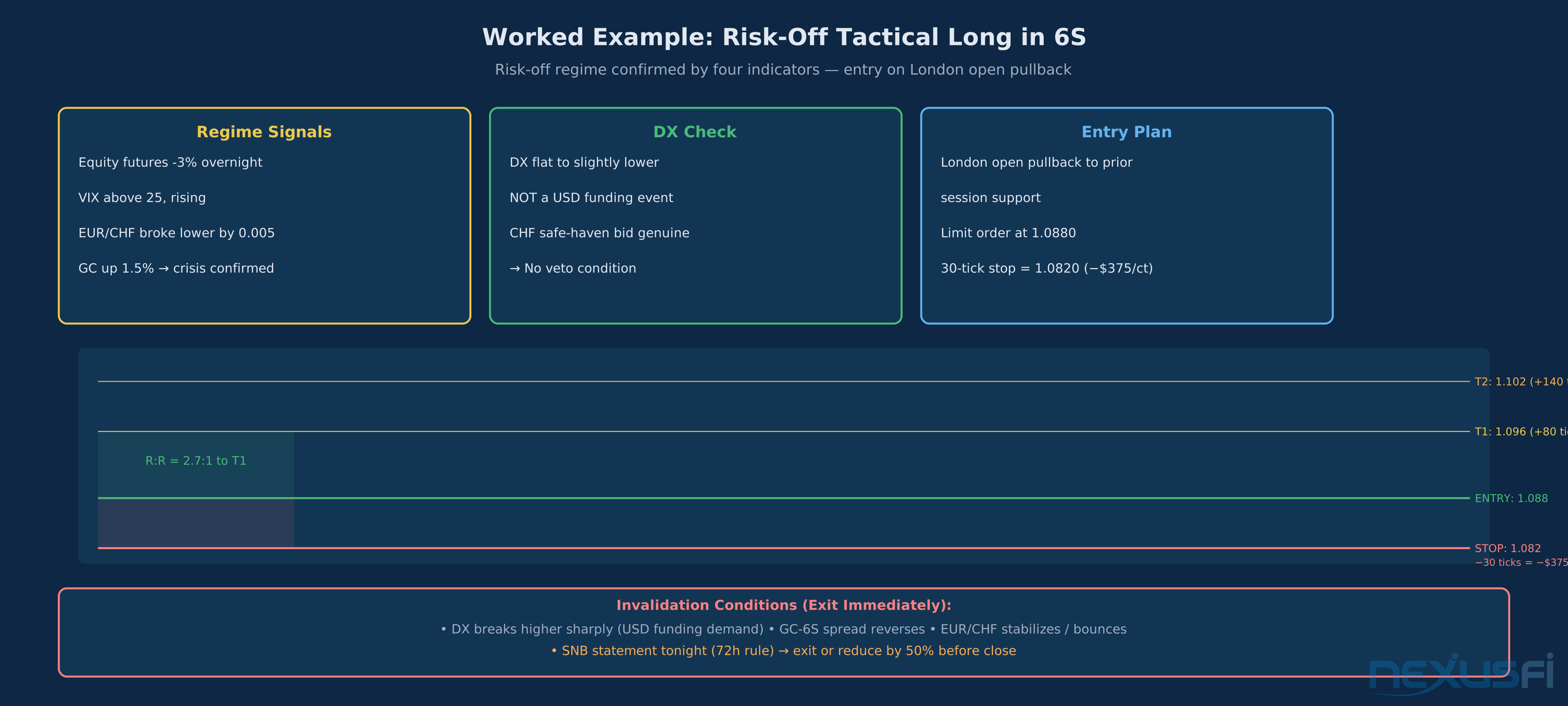
Setup (illustrative — March 2020 style environment):
- Day 1: S&P equity index falls 3%+, VIX spikes above 25, EUR/CHF breaks lower by 0.005
- 6S rises from 1.0800 to 1.0950 intraday — but you don't chase
- Day 2: Overnight, equity futures remain under pressure. London opens with 6S pulling back to 1.0880
Entry: Buy 1 contract 6S at 1.0880 during London open (spreads tight, institutional flow active)
Stop: 1.0820 — 60 ticks below entry = $750 risk per contract at $12.50/tick
Invalidation check before entry: DX flat, GC up 1.5%, EUR/CHF still declining. All four regime signals align.
Thesis: Risk-off force dominant; carry logic irrelevant when equity vol is elevated
Hold period: 3-5 sessions if regime continues; time stop if vol normalizes quickly
Exit trigger: Either DX surges (USD funding demand), GC-6S spread reverses, or equity vol falls below 20 — whichever comes first
What would have happened if wrong: If SNB had announced intervention that night, 6S could have gapped to 1.0700 — 180 ticks — breaking through the 60-tick stop. This is the gap risk that requires overnight size reduction.
When 6S Isn't the Right Choice #
Swiss Franc futures are an instrument with specific use cases. Understanding when a different vehicle better fits the thesis protects against using the right analysis with the wrong instrument.
When EUR/CHF is more precise: If your thesis is specifically about European stress driving CHF demand (ECB policy surprise, European credit event), the EUR/CHF cross more directly captures that dynamic. 6S adds USD considerations that may dilute a purely European thesis.
When DX is the cleaner expression: If your thesis is broad U.S. dollar strength rather than specific CHF weakness, DX captures that cleanly without the CHF safe-haven noise.
When GC is the better instrument: For pure crisis-hedge or real-yield expression without the currency complexity, Gold futures may be more tractable. The safe-haven correlation between 6S and GC means they often move together in risk-off events, but GC has simpler macro drivers in isolation.
When CHF volatility is a tool, not a direction: Options on 6S (available at CME) or options on spot CHF allow expression of volatility views without directional exposure. Around SNB meetings where the outcome is genuinely uncertain, a straddle structure may capture the move regardless of direction — a concept worth exploring for traders comfortable with options mechanics.
Knowledge Map
Go Deeper
Build on this knowledgeCitations
- — Rollover Days - some Quick Facts about (2009) 👍 22“Rollover is 8 days before expiration. Expiration is the third Friday of each quarter month (March, June, September, December). Volume shifts to the new contract at market open on Rollover day.”
- — DX Rollover Day? (2012) 👍 8“CME Currency Futures expire on the second business preceding the third Wednesday of the contract month. The volume crossover for currency futures happens 3 to 4 days after the official roll date.”
- — Spoo-nalysis ES e-mini futures S&P 500 (2014) 👍 21“There are 3 basic strategies or types of markets in trading: momentum, mean reversion, and carry trade. Employing a mean reversion strategy in a momentum driven trending market is foolish -- you have to know which regime you are in.”
- — Concerning risk per trade sizing (2012) 👍 4“Stops are still placed within the context of a volatility-based, position sizing algorithm: 2% of equity risk, based on a 1.5 ATR stop.”
- — PositionSizer for NinjaTrader (2010) 👍 17“If your stop is equal or less than 6 ticks, you can double your position size for equal risk. Position sizing in ticks directly determines your risk per contract.”
- — Starting in FOREX Scalping (2019) 👍 7“Currency futures give you exchange transparency and capital efficiency compared to spot forex. With currency futures you are trading on a regulated exchange with other traders from all over the world.”
- — STOPS are Frustrating (SL) ...to take or not to take (2011) 👍 6“Proper money management begins with proper position sizing which will inevitably aid you in your stop placement.”
- — Fi's Weekly FRED Series - Economic Data for Traders (2025) 👍 1“Fed still cutting = narrowing rate differential = CHF strength pressure. SNB cannot follow = intervention becomes their only lever. Watch the sight deposit data weekly.”
- — Webinar: FulcrumTrader Cumulative Delta Volume Analysis on CME FX Futures (2011) 👍 19“Cumulative delta analysis on CME FX currency futures reveals the pressure of buyers vs sellers in the order book -- especially useful around central bank events when institutional flow dominates.”
- — Killer Instinct and the Home Run Mentality (2011) 👍 8“If you are a swing trader willing to set a double-digit point stop, you will trade smaller size. Fine-tune your risk profile by adjusting your position for the varying levels of risk in different market environments.”
- — Rollover Days - some Quick Facts about (2010) 👍 12“Currency futures expiry is on the second business day preceding the third Wednesday of the contract month. Rollover is 5 business days prior to expiration -- earlier than equity index futures.”