



Fed Funds Futures (ZQ): The Complete Trading Guide to the Market That Prices Fed Policy
Overview #
Most futures traders know the Fed matters. Few trade the instrument that actually prices Fed expectations directly.
Fed Funds Futures (ZQ) are the market's cleanest expression of where the overnight rate will be. Not a proxy, not a derived signal — a direct bet on what the Federal Reserve will have done with the federal funds rate by a specific month. When NexusFi members cite "what the market is pricing in for the next FOMC meeting," they're reading ZQ. When Bloomberg's terminal flashes rate-cut probabilities, those numbers come from ZQ. When @SMCJB analyzed the Z25 contract at 96.35 implying a 3.65% rate in December 2025, that's the ZQ strip doing the work.
This guide covers everything: contract mechanics, the 100-minus pricing convention, how to extract meeting probabilities, strategies professionals actually use, and how ZQ connects to everything else you're already trading — ES, NQ, ZN, ZB, and the currency complex. If you trade rate-sensitive futures and aren't monitoring ZQ, you're missing the instrument that explains much of what you see in your charts.
ZQ is both a trading instrument and an analytical lens. Even if you never place a ZQ trade, learning to read the strip changes how you understand every position in your book.
Contract Specifications #
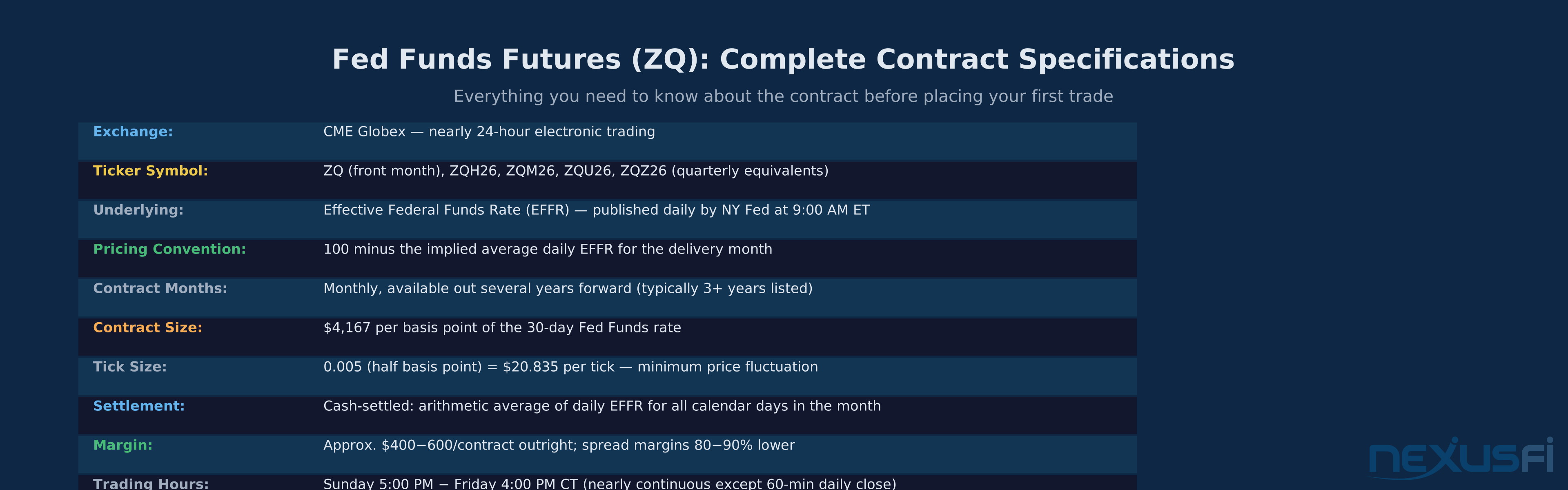
ZQ trades on CME Globex with nearly 24-hour electronic access. The key specs:
- Underlying: Effective Federal Funds Rate (EFFR), published daily by the NY Fed at 9:00 AM ET
- Contract size: $4,167 per basis point (0.01%) of the 30-day Fed Funds rate
- Tick size: 0.005 (half a basis point) = $20.835 per tick
- Settlement: Cash-settled against the arithmetic average of daily EFFR for all calendar days in the delivery month
- Listing cycle: Monthly, extending several years forward (typically 3+ years available)
- Margin: Approximately $400-600 per contract outright; calendar spreads carry 80-90% margin reductions
The P&L math is straightforward once you know the tick value: a full 25bp move (one standard Fed increment) is worth $1,041.75 per contract. A full 100bp move is worth $4,167. ZQ's value comes from precision positioning and the leverage of knowing exactly which FOMC meetings you're targeting.
ZQ is listed monthly, giving you contracts for nearly every month several years into the future. The front two or three months carry the most liquidity and tightest bid-ask spreads. Beyond six months, spreads widen and depth thins.
The 100-Minus Pricing Convention #
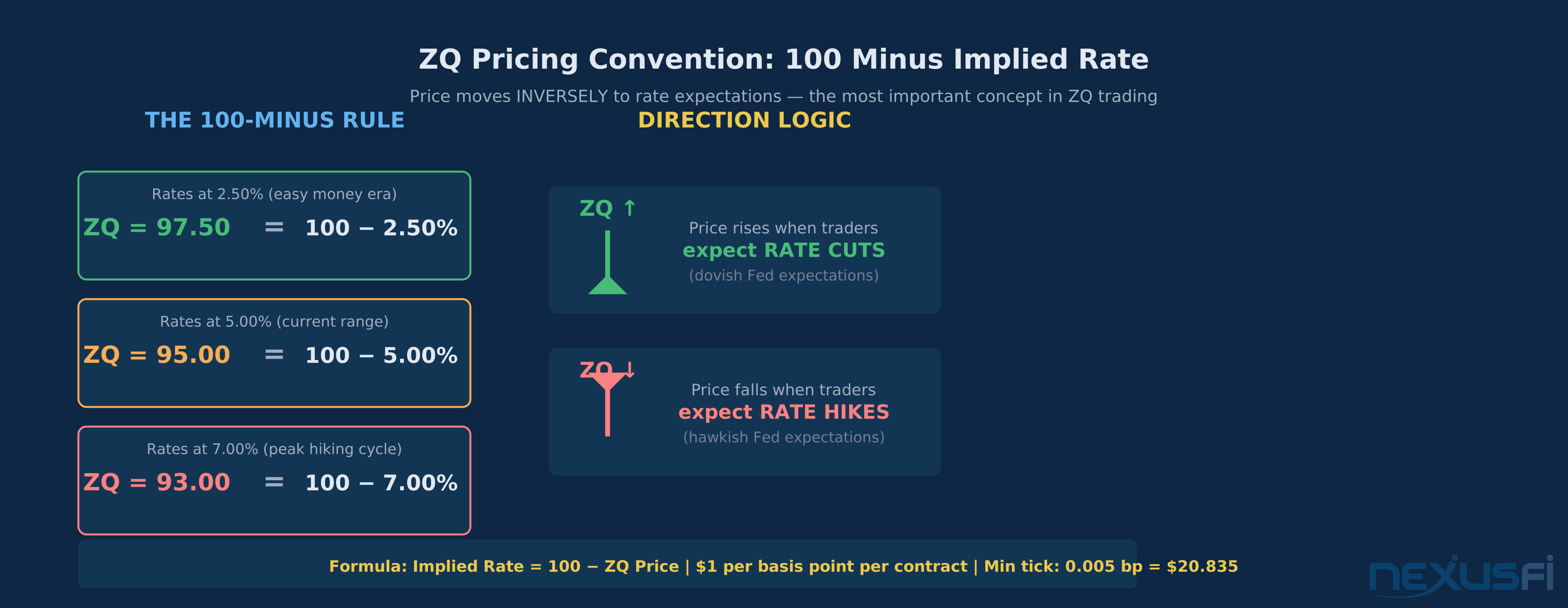
Every newcomer to ZQ gets tripped up by this. The contract is quoted as 100 minus the implied average Fed Funds rate. So:
- ZQ at 95.00 -- implied rate = 5.00%
- ZQ at 94.75 -- implied rate = 5.25%
- ZQ at 97.50 -- implied rate = 2.50%
This means price moves inversely to rate expectations. If you're long ZQ and rates fall (the Fed cuts), your position makes money because the price rises. If you expect rate hikes, you short ZQ. This convention dates to interest rate futures design in the 1970s and is shared with SOFR futures and the older Eurodollar contracts — get it in your muscle memory before you size up.
The directional logic: long ZQ = bullish on rate cuts = dovish bet. Short ZQ = hawkish bet, expecting higher rates or lower-than-expected cuts. When @josh analyzed November Fed Funds futures during the 2022 rate-hike cycle, the price-versus-rate inversion was front and center — rates rising meant ZQ prices collapsing.
@"I looked at the fed funds futures for November. These are priced in 100-{price}, as the average daily rate for the month." — @josh, NexusFi Elite Circle
One practical tip: most trading platforms display ZQ as both the raw futures price (e.g., 95.00) and the derived implied rate (5.00%). Use whichever makes more intuitive sense for your analysis. The math is trivial but the cognitive habit matters.
How Settlement Works #
ZQ settles against the arithmetic average of daily EFFR across every calendar day in the delivery month. This is different from many other futures that settle on a single day or a quarterly rate. The monthly averaging creates distinctive behavior that serious ZQ traders exploit.
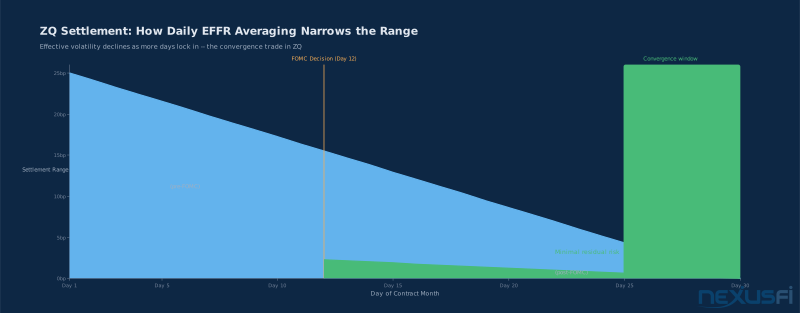
Known vs. unknown days: As the month progresses, each day's EFFR gets published by the NY Fed at 9:00 AM ET and becomes locked in. By mid-month, a significant portion of the settlement value is already determined. A trader entering ZQ in the final week faces far less uncertainty than one entering at month-start.
Convergence trades: Because you can calculate the running average of known EFFR days and back-solve for what the remaining days must print to hit any given settlement value, late-month ZQ trading offers lower-risk positioning toward known outcomes. The range of possible settlements narrows as days accumulate.
Intraday spikes don't matter much: The EFFR can spike temporarily at quarter-end or due to Treasury settlement effects without materially changing the monthly average. The averaging mechanism provides a natural buffer.
The daily EFFR is published by the NY Fed at 9:00 AM ET each business day. Following this print is essential for anyone actively managing a ZQ position in the front contract month, as each day's realized rate updates your settlement estimate.
Weekend and holiday days use the rate from the preceding business day — this matters for EFFR averaging in months with three-day weekends, where Friday's print applies to Saturday, Sunday, and Monday in the monthly arithmetic.
Reading Implied Rate Probabilities #
This is where ZQ becomes a genuinely powerful analytical tool — not just for trading the contract, but for informing every other position you hold.
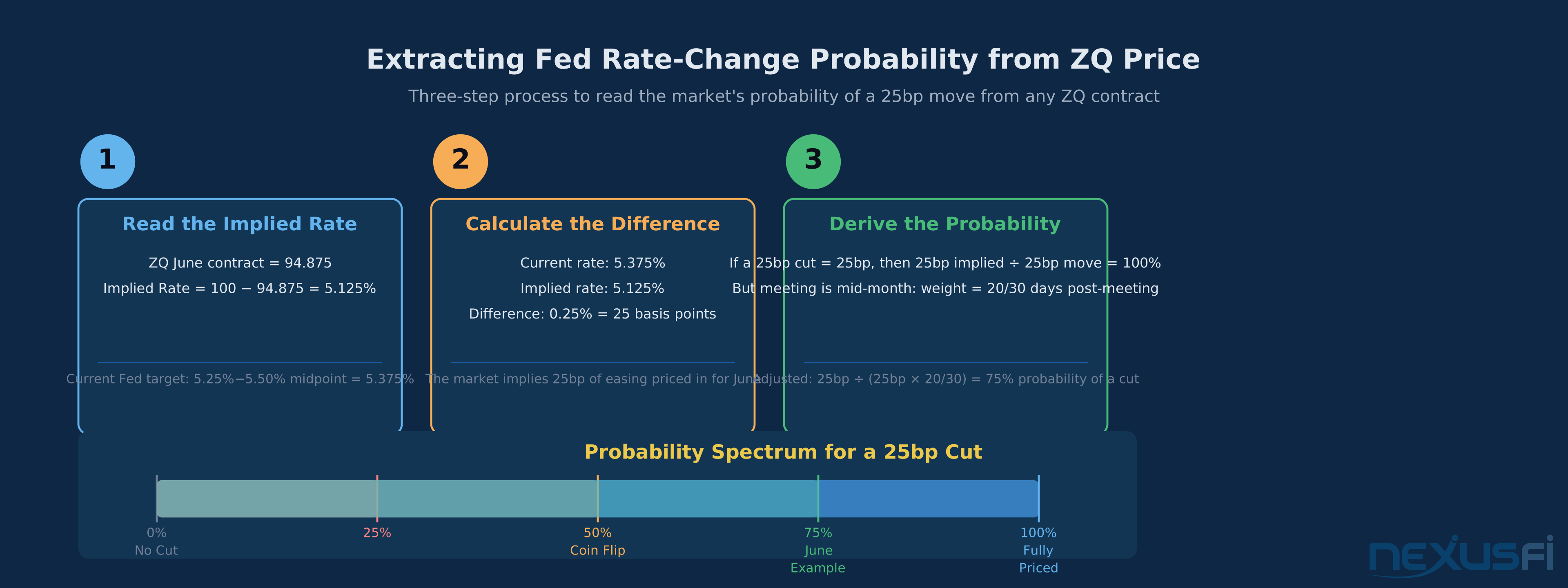
The core calculation for a single meeting:
- Convert ZQ price to implied rate: Implied Rate = 100 -- ZQ Price
- Find the difference from the current target rate: If the current target midpoint is 5.375% and ZQ implies 5.125%, the difference is 0.25% (25bp)
- Divide by the expected move size: 25bp difference / 25bp standard move = 100% probability of a cut
But here's the nuance: when the FOMC meeting falls mid-month, you can't just use the raw ZQ price. The contract's implied rate reflects a calendar-weighted average of pre- and post-meeting rates. You need to adjust.
Calendar-adjusted probability calculation: If the meeting is on June 11 (10 days before meeting, 20 days after in a 30-day month):
- ZQ implied rate = (10/30 x pre-meeting rate) + (20/30 x post-meeting rate)
- Solve for the post-meeting rate
- Compare post-meeting implied rate to current target rate to get the cut probability
The Fi Weekly FRED Series post on December 2025 FOMC showed markets pricing an 87% probability of a 25bp cut using exactly this framework.
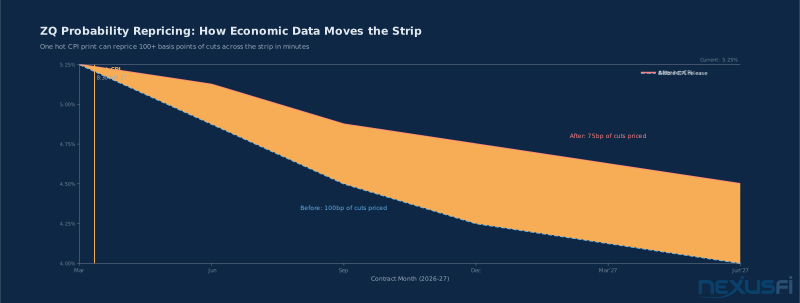
CME FedWatch and Bloomberg WIRP do this calendar-weighting automatically. Cross-validate your manual calculations against these tools. When your number diverges from CME FedWatch by more than 2-3%, check your meeting-day count.
Important caveat: These are risk-neutral probabilities, not subjective forecasts. They embed market risk premia. A 60% probability in ZQ doesn't mean 60% of analysts expect a cut — it means the market's collective risk-adjusted pricing implies that level.
FOMC Calendar Weighting #
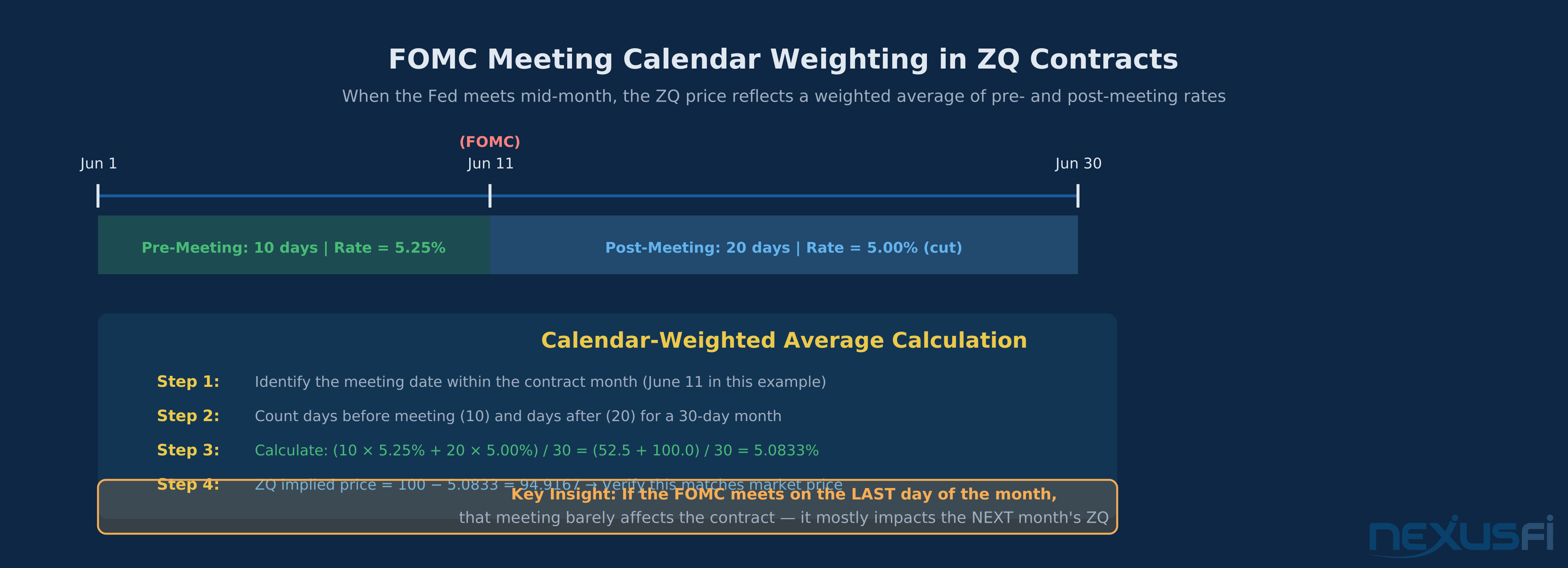
The most practically important concept in ZQ trading: which contract month you're in relative to FOMC meeting dates determines everything.
Meeting mid-month: The ZQ contract for that month reflects a blend of pre-meeting rates (known structure) and post-meeting rates (expected). The formula:
ZQ Implied Rate = (Days Before Meeting x Pre-Meeting Rate + Days After Meeting x Post-Meeting Rate) / Total Days
Rearrange this to isolate the post-meeting implied rate, then compare it to the current target to extract the probability.
Meeting at month-end: Almost no impact on that month's ZQ. The meeting barely shifts the monthly average because there are only a day or two of post-meeting rate to incorporate. The real impact shows up in next month's contract.
No meeting in the month: The ZQ price simply reflects where the market expects the Fed to hold rates.
Map the FOMC calendar before trading any ZQ contract. Print the meeting dates for the next 12 months and overlay them on your contract list. A meeting on June 11 vs. June 28 is a at the core different trading setup for the same contract.
The FOMC meets eight times per year. Most meetings fall mid-month, which means most active ZQ contracts carry the calendar-weighted blend. The exceptions — late-month meetings — create a useful pattern: the current month's contract barely reacts, while the following month's contract reprices aggressively.
The ZQ Strip: Reading the Full Rate Path #
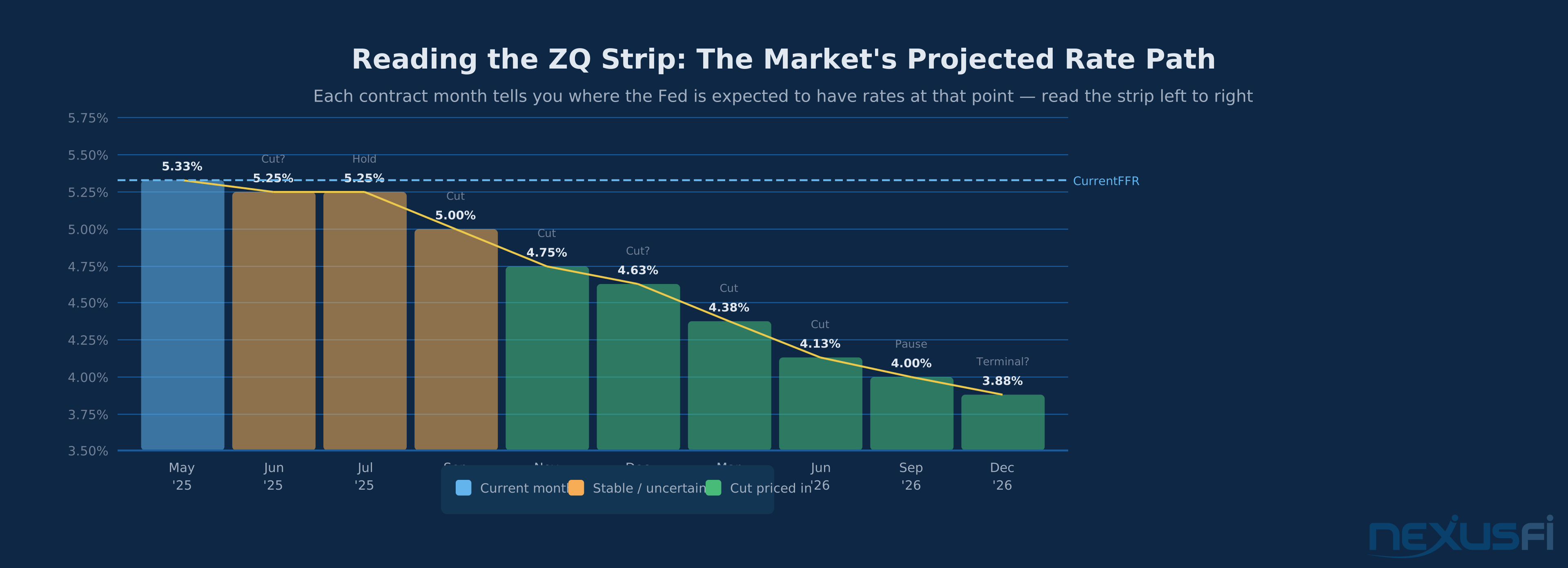
Looking at a single ZQ contract tells you about one meeting or one month. Looking at the ZQ strip — all listed contracts from front month to several years out — tells you the market's complete view of the Fed's policy path.
Read the strip as a timeline: each bar's height represents the implied average rate for that month. The slope from left to right shows the market's expectation of how fast the Fed will move. A steep downward slope from front month to 12 months out means aggressive cuts are priced in. A flat strip means the market expects the Fed on hold.
When @tigertrader analyzed Fed policy divergence in 2015, the ZQ strip was showing hike expectations at the front while long bonds moved in the opposite direction — a classic signal that the market was pricing two conflicting outcomes simultaneously.
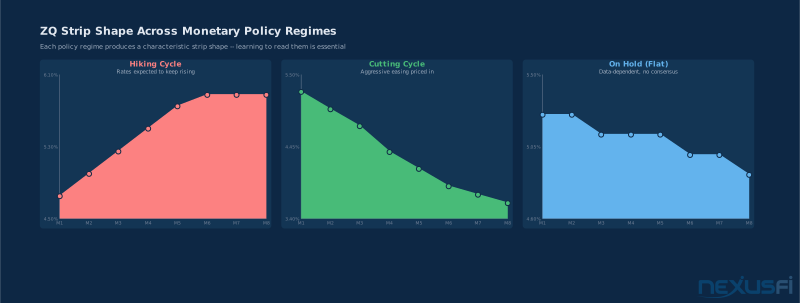
Strip shapes signal policy regime:
- Steep downward slope: Aggressive easing cycle priced in -- typical entering recessions
- Inverted/humped shape: Market expects rate hikes then eventual reversal -- common late in hiking cycles
- Flat strip: Fed on hold, no strong directional consensus -- typical in "data-dependent" periods
- Steep upward slope: Hiking cycle priced in -- clear signal of hawkish expectations
@"September fed funds futures contract is discounting about 4 of 10.5 bp or about a 40% chance of a hike." — @tigertrader, NexusFi Spoo-nalysis thread, 2015
The strip also compresses or expands based on uncertainty. A wide "fan" of calendar spreads indicates high uncertainty about timing. Monitor both the level and the shape of the strip, not just a single contract price.
Trading Strategies #
Five approaches professional traders use in ZQ markets:
1. Directional Bets (Outright)
Long if you expect rate cuts, short if you expect hikes or higher-for-longer. Full directional risk. Best used when you have a high-conviction view on FOMC outcomes that diverges meaningfully from market consensus.
2. Calendar Spreads
The most common professional strategy. Instead of taking outright directional risk, you express a view on the timing of rate changes by going long one month and short another.
- Bull spread (long deferred, short nearby): Expect cuts to come sooner than current pricing implies
- Bear spread (short deferred, long nearby): Expect the Fed to stay higher for longer
- Butterflies across three months: Convexity play on the path, not just direction
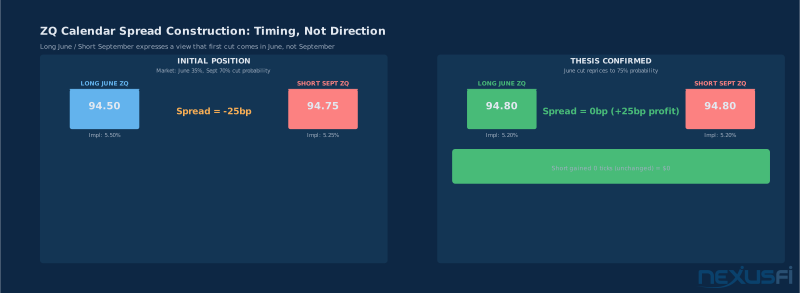
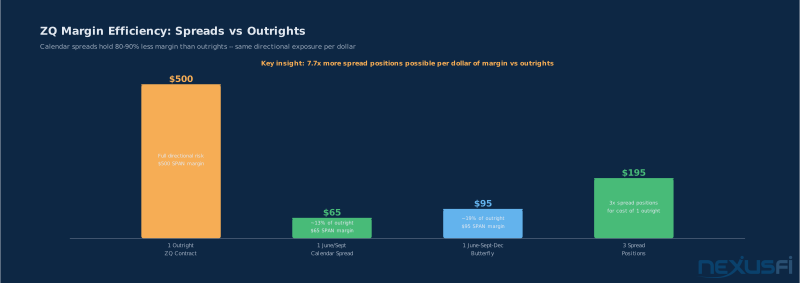
Margin advantages are significant: spread margins run 80-90% below outright positions, allowing much larger notional exposure per dollar of margin committed.
3. FOMC Event Trading
Position 1-2 days before announcements to capture the repricing at the event. Use options on ZQ for defined risk where available. Exit discipline is critical — implied volatility collapses immediately after the announcement.
4. Convergence Trades
Late in the contract month, when most EFFR days are known, the range of possible settlement values narrows dramatically. Back-solve for the remaining days' contribution to the average and trade ZQ toward the calculable settlement value.
5. ZQ vs. SOFR Basis Trades
The spread between ZQ-implied EFFR and SOFR futures-implied rates is normally 5-10bp. When it widens beyond that — as in the 2019 repo market spike or early 2020 COVID stress — the basis dislocation creates a trade.
Beginners should start with calendar spreads rather than outrights. The lower margin requirement, reduced directional risk, and natural expression of timing views make spreads a more forgiving entry point into ZQ trading.
ZQ vs SOFR Futures: When to Use Each #
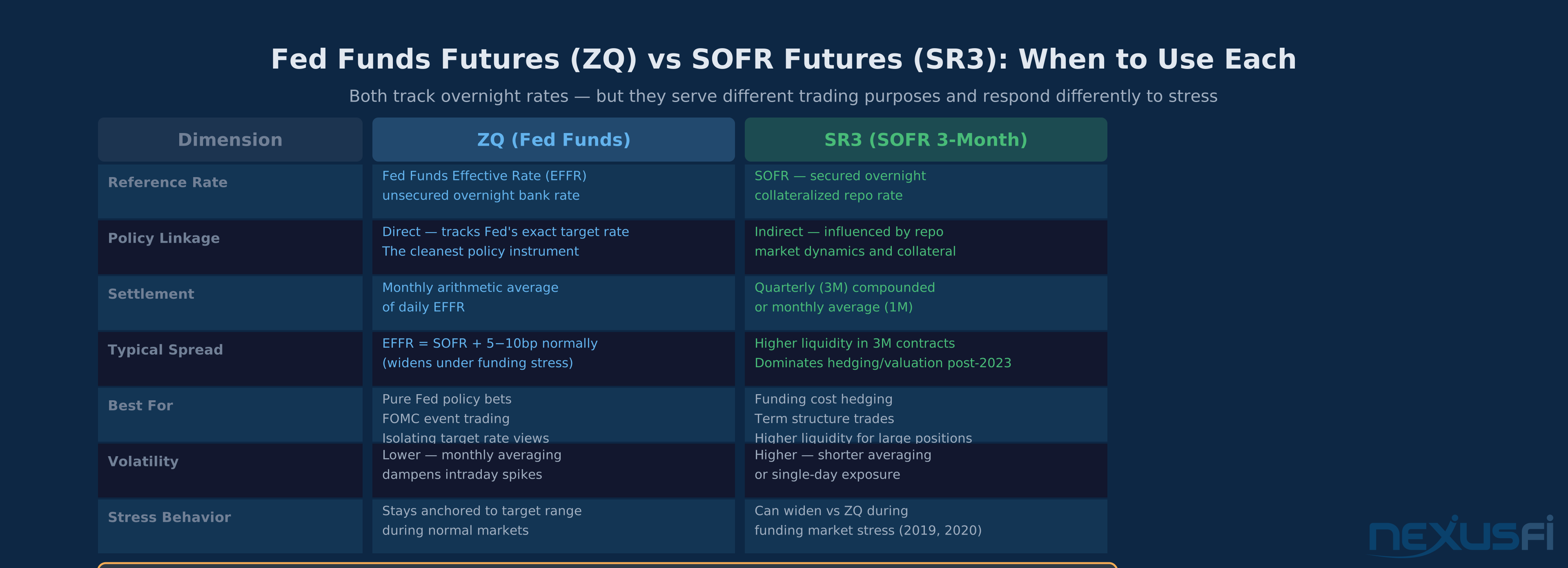
Both ZQ and SOFR futures price short-term rate expectations, but they're measuring different things. ZQ prices the effective federal funds rate — what the Fed actually controls. SOFR futures price the Secured Overnight Financing Rate — a market rate influenced by but not directly equal to the policy rate.
Use ZQ when:
- Trading a direct view on FOMC decisions or the Federal Funds target
- Reading probabilities for specific meeting outcomes
- Hedging a short-term funding position that references EFFR
- Trading the convergence of the front month toward a known EFFR average
Use SOFR when:
- Hedging positions that reference SOFR (mortgages, corporate debt, derivatives indexed to SOFR)
- Trading the EFFR-SOFR spread as a proxy for credit/liquidity stress
- Operating in the 3-month and longer segment where SOFR is more liquid
- Seeking more liquidity in longer deferred months
The practical difference narrows in calm markets: when EFFR and SOFR trade close to each other (normal 5-10bp spread), ZQ and SOFR rate path expectations are nearly interchangeable. The choice matters most in stress periods when the EFFR-SOFR basis widens, and when you need precision on which rate your settlement references.
Practical Applications for Equity Futures Traders #
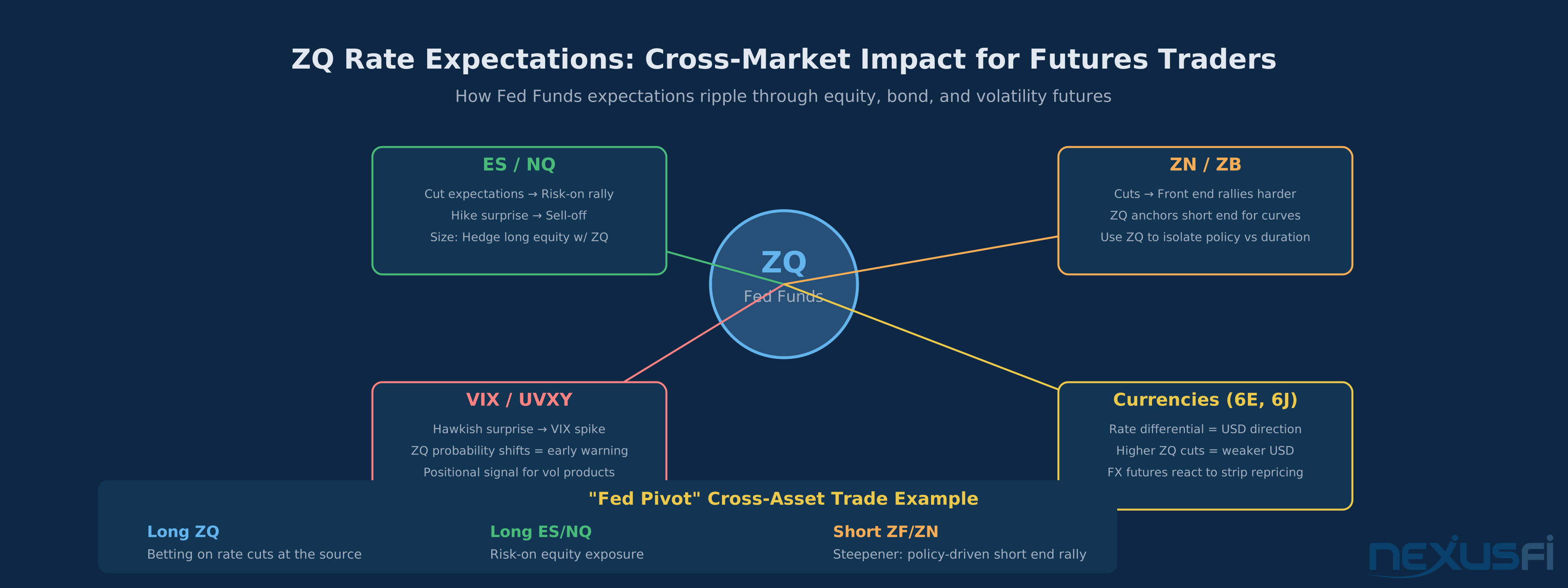
ES and NQ traders who ignore ZQ are flying half-blind. Rate expectations are among the dominant drivers of equity valuations — discount rates determine everything from DCF models to the P/E multiples the market will pay. The connection between Fed policy and E-mini ES futures runs through discount rate dynamics.
Hedging hawkish surprises: If you're long ES or NQ and worried about an unexpectedly hawkish Fed, a short ZQ position profits if rates stay higher than expected. Size the hedge by estimating how many ticks of ZQ movement corresponds to your equity beta.
Divergence warning signals: When ZQ implies aggressive rate cuts but equities are already rallying on that expectation, the risk/reward for new long equity positions deteriorates. Conversely, if ZQ starts pricing in cuts but equities haven't moved yet, that divergence can be an early entry signal.
VIX correlation: Unexpected Fed moves are one of the most reliable VIX spike triggers. Monitoring ZQ probability shifts in the days before FOMC gives early warning of potential volatility events. When ZQ probabilities swing more than 15-20% in a single session, VIX often follows within 24-48 hours.
Practical Applications for Bond Futures Traders #
Bond futures traders are already thinking in rates, so ZQ adds precision rather than a new framework. The key is understanding exactly what ZQ isolates versus what Treasury futures (ZN, ZB) capture.
Treasury futures prices include: policy rate expectations + term premium + inflation expectations + duration risk. ZQ prices only: policy rate expectations for the delivery month. This decomposition is valuable for traders who want to isolate specific components of their rate exposure.
Curve trades: ZQ anchors the short end of your curve position. A steepener trade involves being long ZQ (short end, expecting cuts to land) and short ZN or ZB (long end, expecting duration to underperform as the yield curve renormalizes after inversion). Size the legs by matching DV01 exposure across products, not dollar notional.
As @tigertrader noted in the Spoo-nalysis thread: "short-term treasuries track what the fed does with interest rates, and longer maturities are more influenced by inflation." ZQ is the purest expression of that short-term component.
As @danielk observed in the Scalper's Path thread, "with more than 3x the liquidity of ES, ZN is the big mama calling all the shots." ZQ lets you strip out everything except the Fed's target rate — making it the surgical instrument for pure policy-rate positions.
Policy error trades: When ZQ implies cuts but CPI prints keep coming in hot, there's a contradiction. Positioning for that resolution often means being short intermediate Treasury futures while holding ZQ relatively flat, waiting for the term premium to reprice.
Cross-Asset Trade Examples #
Three setups that synthesize ZQ's cross-market utility:
The "Fed Pivot" Trade
When the market starts pricing in the first rate cuts after a hiking cycle:
- Long ZQ (policy bet: cuts coming)
- Long ES or NQ (risk-on: equity re-rating on lower discount rates)
- Short ZF or ZN (steepener: front end outperforms as cuts hit)
Size legs by volatility contribution, not dollar notional. ZQ is low-vol per contract; ES/NQ carry more P&L per point of move.
The "Hawkish Surprise Hedge"
Ahead of an FOMC meeting where the market prices 80%+ probability of a hold but you're not confident:
- Short ZQ (profits if the Fed is more hawkish than expected)
- Long VIX calls or reduce ES delta slightly (tail hedge on equity volatility)
The "Calendar Spread Timing Bet"
When you believe the market has mispriced the timing of the first cut:
- Long June ZQ
- Short September ZQ
This spread expresses a pure timing view without taking a position on the total number of cuts. Spread margin is a fraction of the outright.
Cross-asset trades using ZQ require understanding how each leg's volatility contributes to the overall position. Size by DV01 or estimated move-per-dollar rather than contract count alone.
Risk Management in ZQ Trading #
ZQ has specific risk characteristics that differ from most futures. See risk management frameworks for position sizing approaches applicable to interest rate instruments.
Basis risk from averaging: The daily EFFR can spike intraday due to quarter-end balance sheet dynamics and Treasury settlement dates. These spikes rarely move the monthly average materially, but if you're trading the front month in the final days, even small average shifts matter.
Meeting timing sensitivity: The biggest risk for less experienced ZQ traders is miscalculating which meetings fall within which contract months. Always map the full FOMC calendar before sizing any position.
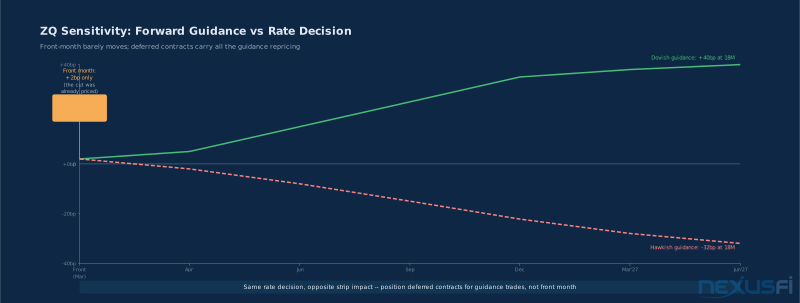
Forward guidance versus the decision itself: The Fed's press conference and statement language often matter more than the actual rate move. A fully-priced 25bp cut with dovish guidance will still move ZQ deferred contracts meaningfully even though the front month barely budges.
Liquidity gradient: Front-month ZQ contracts are liquid with tight bid-ask spreads. Six or more months out, spreads widen and depth thins. This affects not just entry/exit costs but also the reliability of the implied probabilities you're reading.
Margin for spreads: While spread margin is dramatically lower than outright, the correlation assumption in the margin calculation can break down during extreme events. Both legs can move against you if the curve shape changes unexpectedly.
Professional Best Practices #
What experienced ZQ traders actually do:
- Monitor daily EFFR: The NY Fed publishes at 9:00 AM ET. The first print of the new month is especially important for recalibrating your settlement estimate on front-month positions.
- Bookmark the dot plot: The Fed's Summary of Economic Projections gives you the medium-term rate path that longer-dated ZQ contracts are priced against. Major dot plot revisions are the primary driver of multi-month ZQ strip moves.
- Cross-validate with multiple tools: Use CME FedWatch, Bloomberg WIRP, and your own calendar-weighted calculations. When your number diverges from CME FedWatch by more than 2-3%, check your meeting-day count.
- Track the EFFR-SOFR spread daily: Normal is 5-10bp. Widening beyond 15bp signals funding market stress.
- Size by volatility, not conviction: ZQ's low per-contract volatility encourages oversizing. Respect the sizing discipline anyway. Conviction doesn't change math.
The professionals who use ZQ most effectively aren't using it in isolation. They use the ZQ strip as a lens on every other position in their book — how will my ES position behave if this ZQ probability shifts from 60% to 20%? That cross-asset discipline is the edge.
@"Short-term treasuries track what the fed does with interest rates, and longer maturities are more influenced by inflation." — @tigertrader, NexusFi Elite Circle
ZQ is one of those instruments where learning it changes how you see markets. The rate expectations embedded in every equity and bond futures contract are already there — ZQ gives you a way to trade them directly and to price the risk you're already carrying whether you know it or not.
Knowledge Map
Prerequisites
Understand these firstGo Deeper
Build on this knowledgeReferences This Article
Articles that build on this topicCitations
- — Is the WH trying to engineer a recession? This Wall Street pro explains the vision (2025) 👍 3“Funds Futures (ZQ) the Z25 contract closed at 96.35 last night which implies a Fed Funds rate of 3.65% in December.”
- — Spoo-nalysis ES e-mini futures S&P 500 (2026) 👍 5“September fed funds futures contract is discounting about 4 of 10.5 bp or about a 40% chance of a hike.”
- — Spoo-nalysis ES e-mini futures S&P 500 (2023) 👍 4“I looked at the fed funds futures for November. These are priced in 100-{price}, as the average daily rate for the month.”
- — Fi's Weekly FRED Series - Economic Data for Traders (2025) 👍 2“Markets are pricing an 87% probability of a 25bp cut, which would bring the target range to 3.50-3.75%.”
- — Spoo-nalysis ES e-mini futures S&P 500 (2015) 👍 8“The re-emergence of the Fed's failure to control long-term rates.”
- — Spoo-nalysis ES e-mini futures S&P 500 (2014) 👍 12“Short-term treasuries track what the fed does with interest rates, and longer maturities are more influenced by inflation.”
- — The Scalper's Journey (2018) 👍 7“With more than 3x the liquidity of ES, ZN is the big mama calling all the shots.”
- — CME Group: 30-Day Federal Fund Futures Contract Specifications
- — New York Fed: Effective Federal Funds Rate (EFFR)