



Ultra T-Bond (UB) Futures: The Complete Trading Guide
Overview #
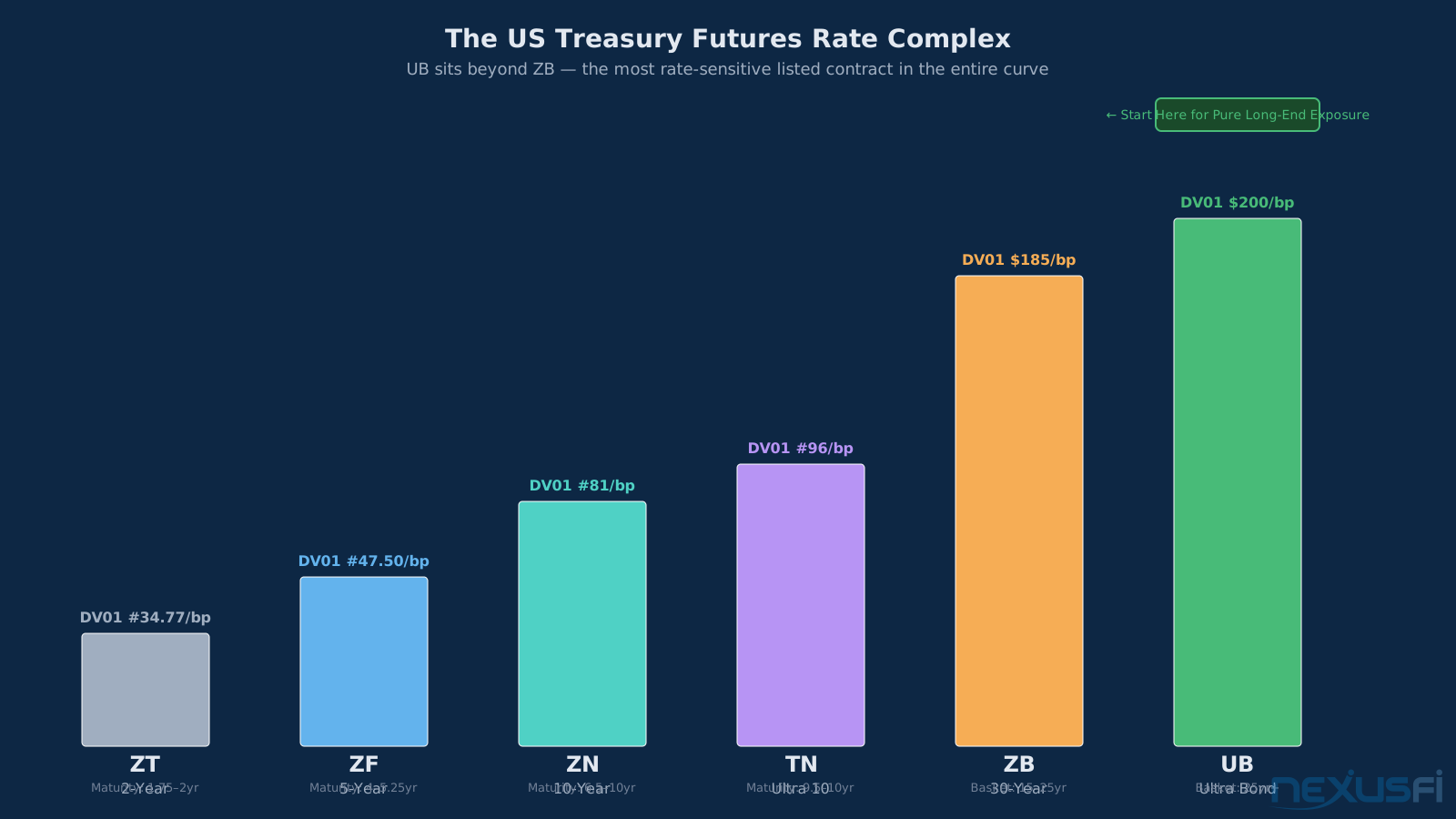
The Ultra T-Bond futures contract (UB) is the most rate-sensitive listed Treasury instrument on the planet. While ZB (30-Year Treasury Bond futures) gets most of the retail attention, UB is what institutional desks use when they want unambiguous long-end exposure. The difference matters: ZB accepts delivery of bonds with 15 to 25 years remaining maturity, meaning the "30-year" futures contract is often backed by bonds that haven't seen true 30-year maturities in a decade. UB solves this. Its deliverable basket is strictly bonds with 25 or more years remaining — making it the clearest available expression of the 30-year point on the US yield curve.
When fiscal deficit concerns spike, when inflation expectations for the next decade shift, when pension funds need to match 30-year liabilities with 30-year assets — that's when UB moves and ZB lags. The DV01 on a single UB contract runs approximately $200 per basis point, versus $185 for ZB. That $15/bp difference sounds small until you're running 50 contracts and a 20bp surprise CPI print happens at 8:30 AM ET.
UB launched in 2010 specifically to fill the gap left by ZB's deliverable basket drift. As the US Treasury began issuing large quantities of genuine 30-year bonds, demand grew for a futures contract that actually tracked them. Today, UB trades approximately 250,000 to 450,000 contracts of open interest, with peak liquidity during US cash market hours alongside ZB, ZN, and the rest of the Treasury complex.
UB is the "true" 30-year: pure exposure to long-end fiscal and inflation dynamics. ZB blends 15-25 year maturity bonds, making UB the more precise instrument for genuine long-duration hedging and rate views.
Key Concepts #
Duration and DV01: UB's effective duration runs approximately 17 to 20 years, depending on which bond is cheapest to deliver at any given time. In practical terms: a 1 basis point (0.01%) move in 30-year yields generates roughly $200 of profit or loss per UB contract. A 25bp adverse move — which can happen in 45 minutes around a CPI print — costs $5,000 per contract. DV01 (dollar value of a basis point) is the unit of measure that matters for sizing. Don't think in contracts; think in DV01 exposure.
The Deliverable Basket: The UB deliverable basket consists of US Treasury bonds with 25 or more years of remaining maturity. The CME publishes a full list of eligible bonds for each delivery month, along with conversion factors that adjust each bond's price to the futures price equivalently. At any given time, six to twelve bonds are typically eligible for delivery into UB.
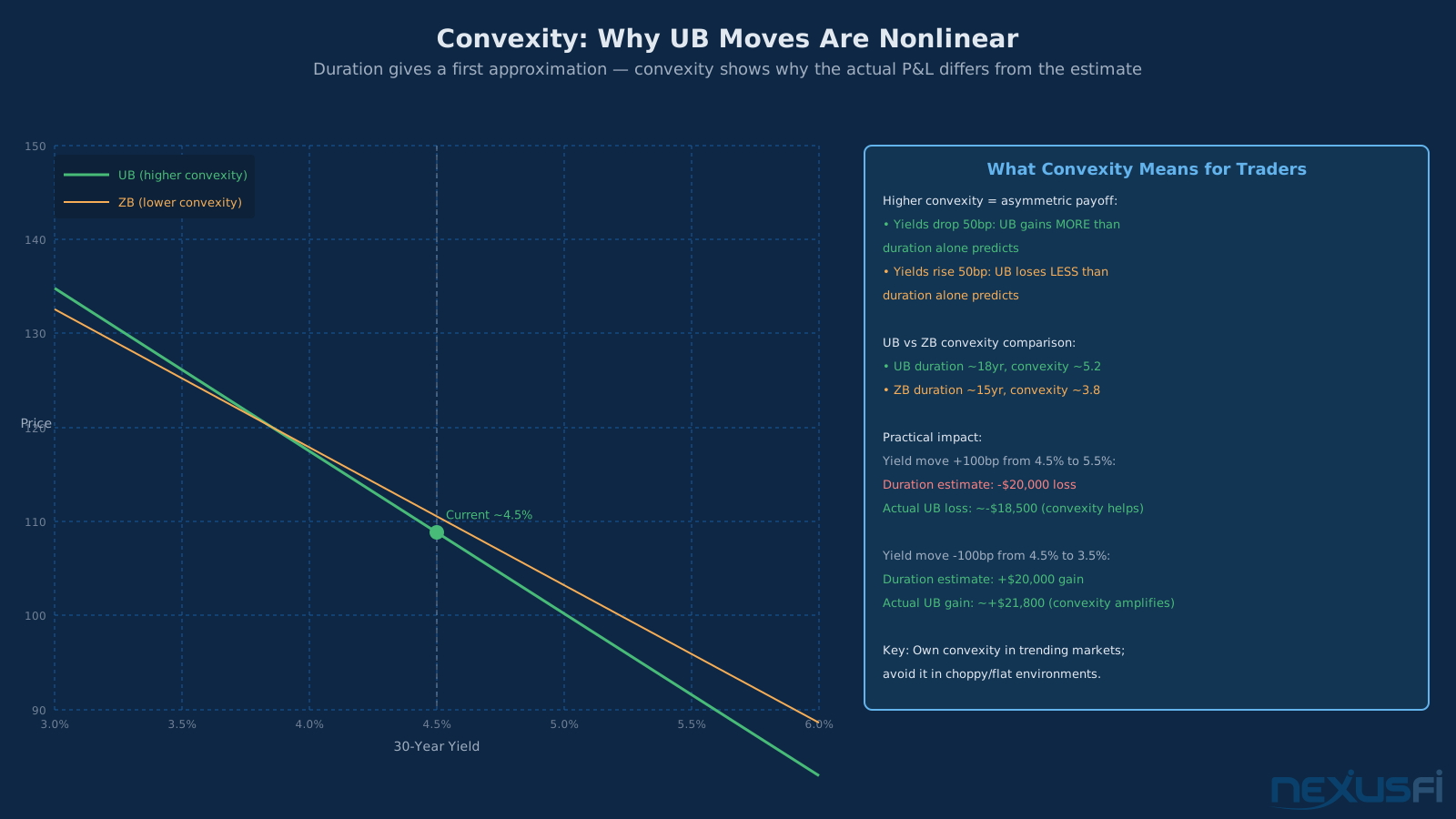
Convexity: Convexity is the reason UB's price-yield relationship is curved, not linear. Duration tells you the first-order price change. Convexity adjusts that estimate for the curvature. For UB, with convexity around 5.2, a 100bp yield decline produces roughly $21,800 of gains per contract — not the $20,000 that duration alone would predict. Conversely, a 100bp yield rise produces roughly $18,500 of losses. The asymmetry works in your favor when long. In trending rate environments, owning convexity pays; in choppy mean-reverting environments, you're paying for optionality that never triggers.
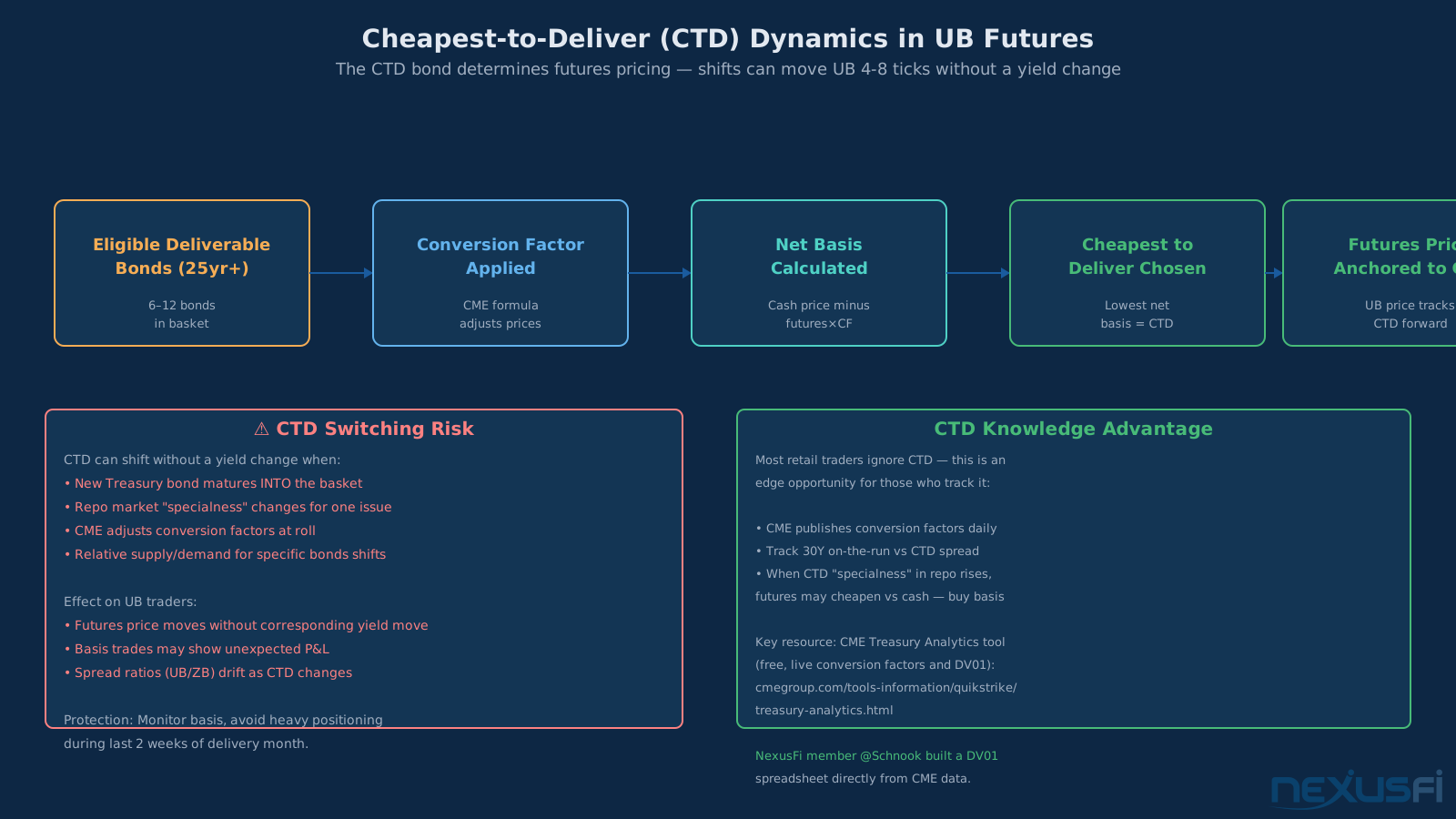
Cheapest-to-Deliver (CTD): The CTD bond is the specific Treasury security that would be most advantageous to deliver into the futures contract at expiration. Futures prices track the CTD forward price, adjusted by its conversion factor. The current CTD determines the effective duration and DV01 of UB at any point in time. When the CTD switches — which happens when relative yields shift enough that a different bond becomes cheapest — UB's effective duration and DV01 change with it, even without an overall yield move.
CTD switching can move UB 4-8 ticks without any change in overall yield levels. Traders who ignore CTD dynamics are routinely surprised by "unexplained" price moves that have a perfectly logical basis.
Contract Specifications #
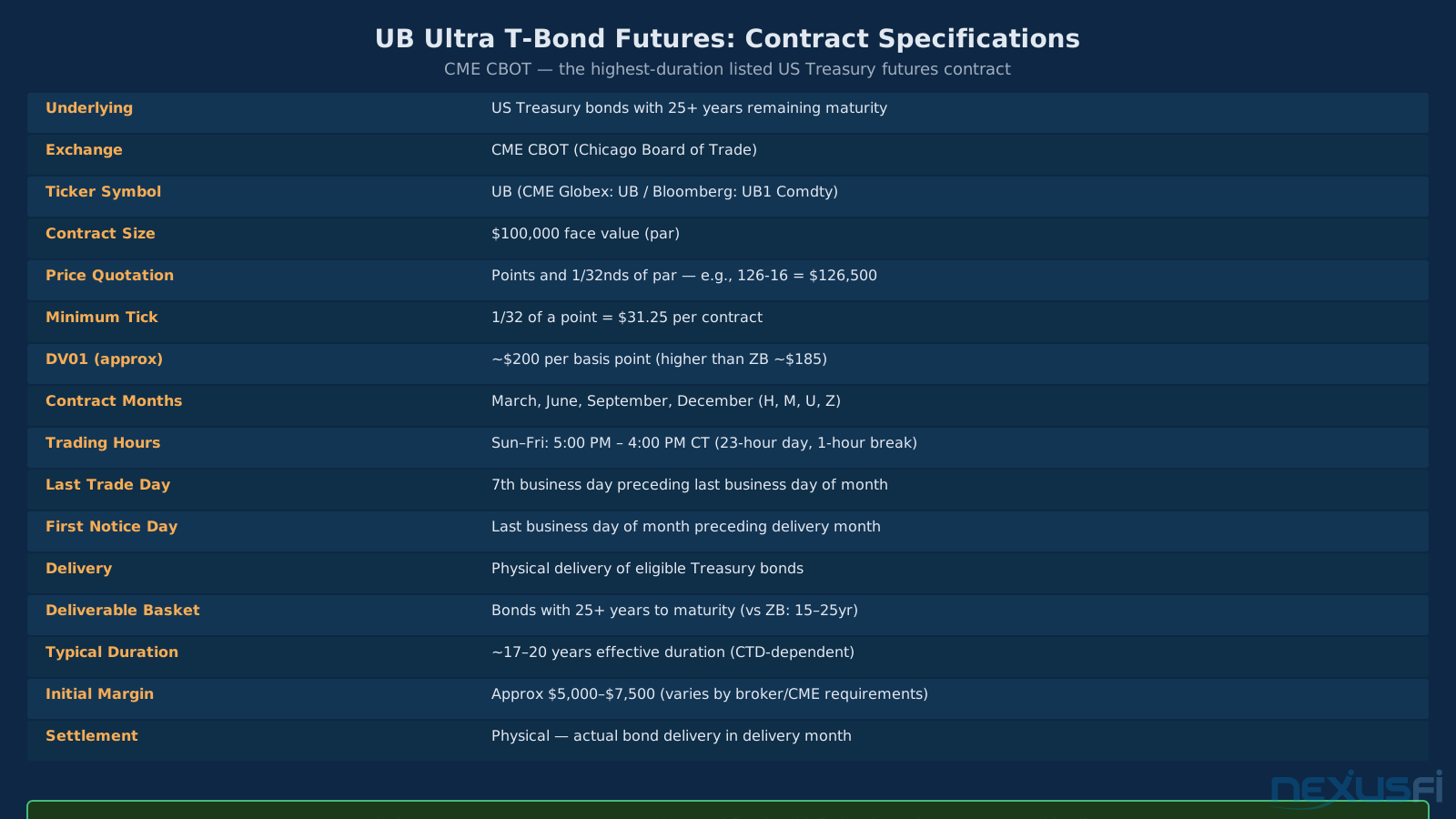
UB trades on CME Globex under the ticker UB. The contract represents $100,000 face value of eligible US Treasury bonds. Prices are quoted in points and 32nds of par — so a quote of 116-16 means 116 and 16/32nds, which equals $116,500 in dollar terms. The minimum tick is 1/32 of a point, worth $31.25 per contract.
Trading hours span nearly 24 hours per day on Globex: Sunday through Friday from 5:00 PM CT to 4:00 PM CT (23 hours per day, with a 1-hour maintenance break from 4-5 PM CT). Peak liquidity concentrates in the US cash session beginning around 8:20 AM CT. Contract months follow the quarterly cycle: March (H), June (M), September (U), and December (Z).
Last Trading Day falls on the 7th business day before the last business day of the delivery month. First Notice Day — when you can be assigned to receive delivery of actual bonds — is the last business day of the month preceding delivery. Traders without delivery infrastructure must exit positions before First Notice Day or risk physical delivery of $100,000 face value of 25+ year Treasury bonds. Initial margin requirements vary by broker and are adjusted by CME based on volatility, typically running $5,000 to $7,500 per contract.
UB vs ZB: Understanding the Relationship #
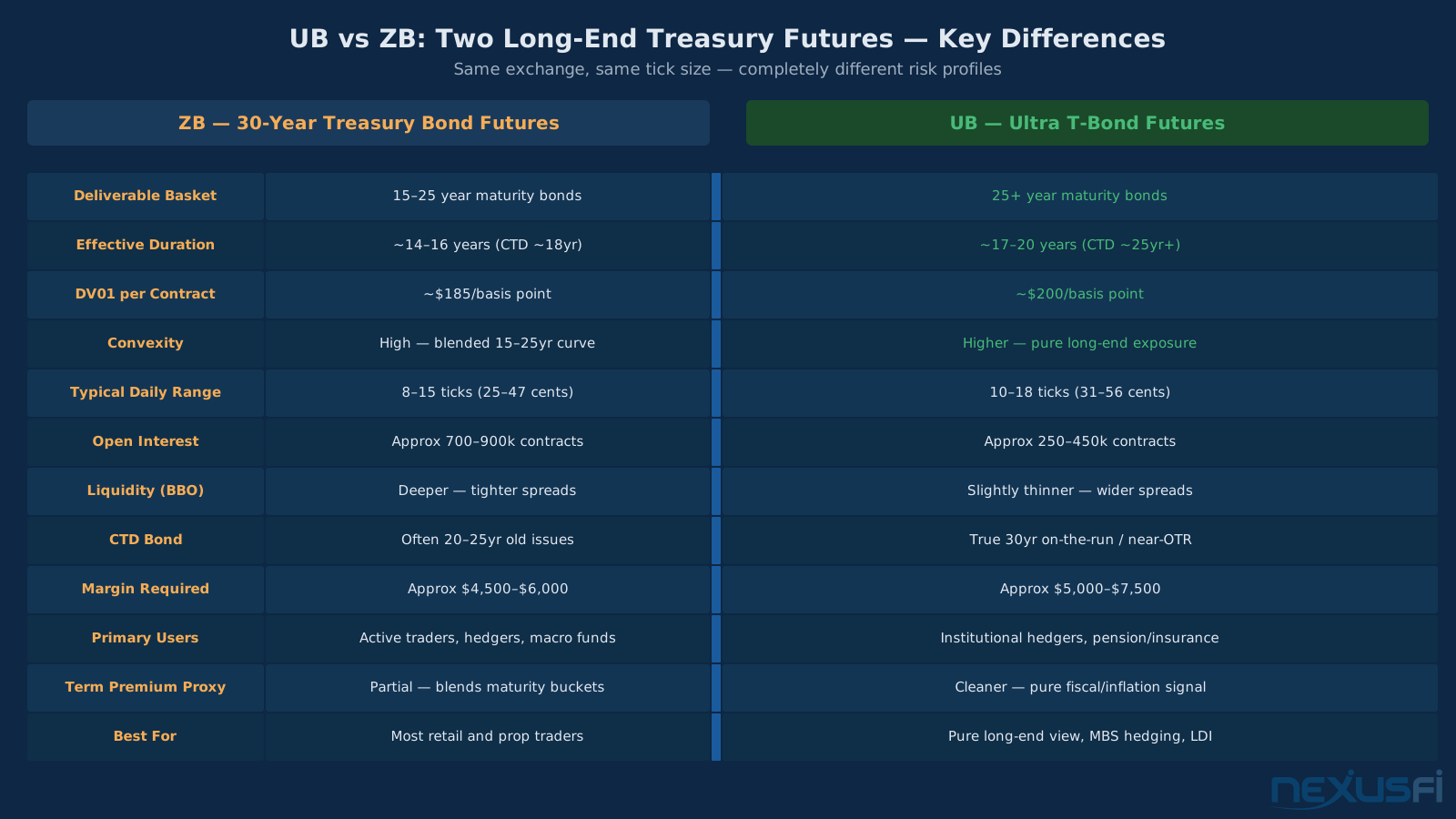
ZB accepts bonds with 15 to 25 years remaining. In practice, the CTD for ZB is often a bond that matures in roughly 18 to 22 years — much shorter than a genuine 30-year duration.
This maturity compression matters for institutional hedgers who have obligations precisely linked to the 30-year point. UB's deliverable basket strips out everything below 25 years, giving it cleaner 30-year exposure — making it the preferred instrument for liability-driven investing (LDI) strategies, where pension funds must match their future payout obligations with duration-equivalent assets.
For most active traders, ZB offers better liquidity — tighter bid/ask spreads, deeper order books, and more volume at price levels. UB's open interest typically runs 250,000 to 450,000 contracts versus ZB's 700,000 to 900,000. Large UB positions require careful execution to avoid moving the market. The UB/ZB spread itself is a primary instrument for expressing views on the shape of the yield curve between the 25-year and 15-25 year maturity buckets.
What Drives UB: The Long-End Playbook #
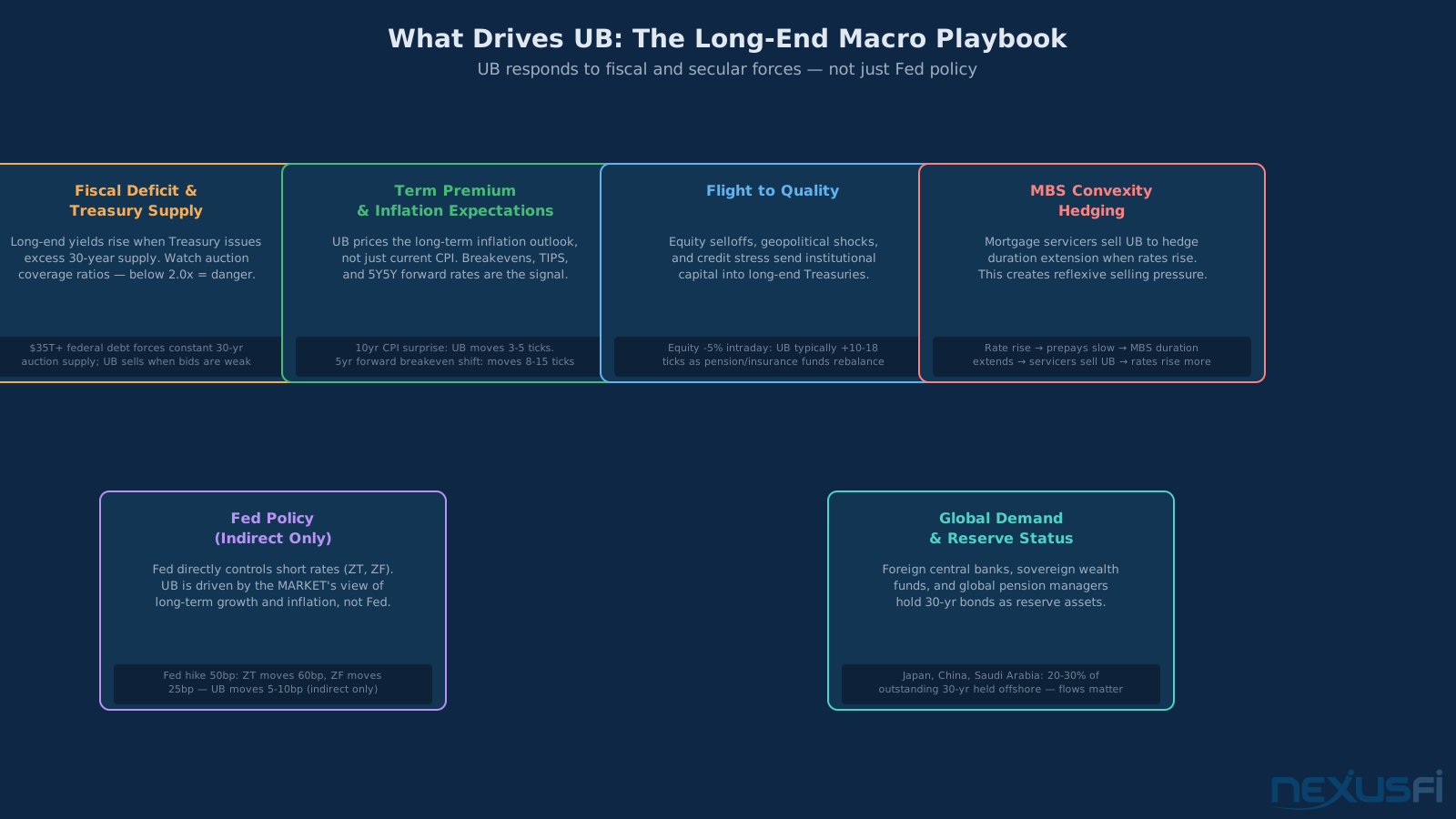
UB responds to a completely different set of forces than short-end Treasury contracts. The 2-year (ZT) is basically a Fed funds expectations instrument. UB is the market's verdict on long-term growth, fiscal sustainability, inflation expectations, and global demand for safe assets — secular forces operating over months and years, not FOMC cycles.
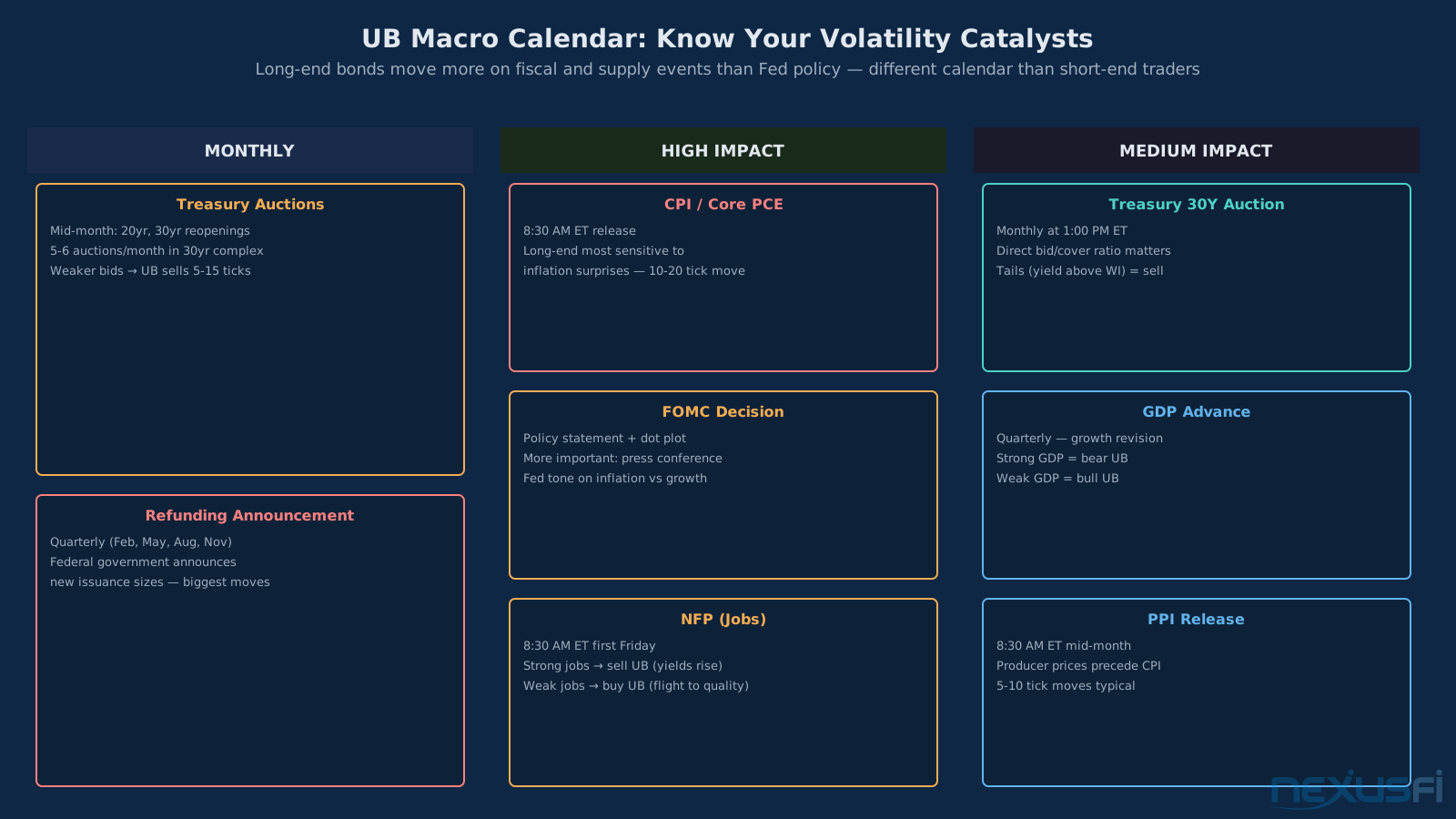
Treasury Supply and Fiscal Deficit: The US federal debt stands north of $35 trillion and growing. Treasury must continuously issue 30-year bonds to fund the deficit and refinance maturing obligations. When supply increases — through larger 30-year auction sizes announced at quarterly refunding — UB tends to sell off. Weak auction results (low bid-to-cover ratios, yields settling above the when-issued level) send UB down 8 to 15 ticks within minutes of the 1:00 PM ET auction result.
Term Premium and Inflation Expectations: The term premium is the extra yield investors demand for holding a long-term bond instead of rolling short-term bonds repeatedly. When term premium expands — because investors are uncertain about long-term inflation or fiscal sustainability — UB yields rise and prices fall. Breakeven inflation rates (derived from TIPS vs nominal Treasury yields) are the best real-time proxy. A 10bp rise in 10-year breakevens typically drags 30-year yields up 6 to 8bp and UB down 12 to 16 ticks.
Flight to Quality: When equities collapse, credit spreads widen, or geopolitical shocks emerge, institutional capital floods into long-term Treasuries. This flight-to-quality bid is most powerful in UB because pension funds and insurance companies need 30-year duration. During a -5% equity day, UB can gain 20 to 35 ticks as rebalancing flows arrive.
MBS Convexity Hedging: Mortgage servicers and agency MBS portfolios are structurally short convexity. When interest rates rise, mortgage prepayments slow, extending the effective duration of MBS portfolios. Servicers must sell duration — primarily via ZB and UB — to maintain their delta-neutral position. This creates a reflexive feedback loop: rates rise → MBS duration extends → servicers sell UB → rates rise further. When UB has fallen sharply and rate rises seem extreme, MBS hedging flows are often nearly complete, creating mean-reversion opportunities.
Trading Strategies #
Directional Duration Trading
The simplest UB strategy: take a directional view on long-end rates and position so. Long UB if you expect 30-year yields to fall; short UB if you expect yields to rise. The critical discipline is knowing what kind of trade you're in — a short-term technical setup (hours to days) or a macro duration position (weeks to months)?
The UB/ZB Spread
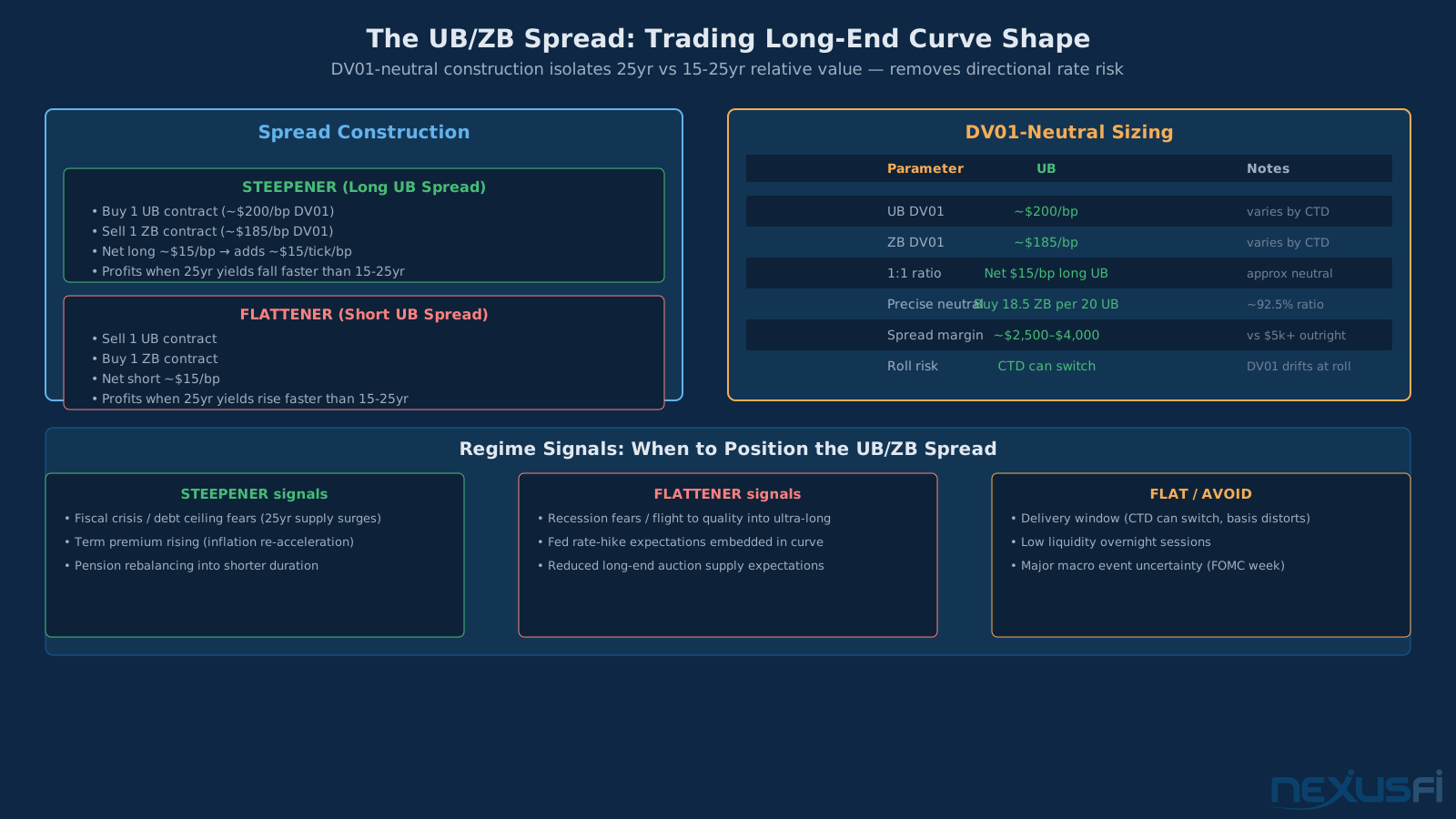
The UB/ZB spread is the primary institutional trade for expressing views on curve shape between the 25-year and 15-25 year maturity sectors. A 1:1 ratio (long 1 UB, short 1 ZB) creates a net long of approximately $15/bp DV01 — not perfectly neutral, but a reasonable starting point for retail traders.
Institutional traders construct DV01-neutral spreads using precise conversion factors from CME's Treasury Analytics tool. The ratio drifts around 1.08 to 1.12 ZB contracts per UB contract for DV01 neutrality, depending on the current CTD bonds. Trade the UB/ZB spread for steepening (long UB relative to ZB) when: fiscal concerns are rising, Treasury is increasing 30-year auction sizes, or pension funds are running short of ultra-long duration. Trade it for flattening when recession fears dominate or supply concerns abate.
Event-Driven Positioning Around Treasury Auctions
Treasury 30-year bond auctions happen monthly at 1:00 PM ET. The market almost always sets up a "concession" trade in the days before — selling UB as dealers lighten inventory — followed by a potential snap-back rally if auction results are strong. Weak results (cover ratio below 2.4, bids below WI yield) can send UB down 10 to 20 ticks rapidly. The quarterly Treasury refunding announcements (February, May, August, November) frequently produce the largest single-day UB moves outside of FOMC and CPI days.
Session Characteristics and Liquidity #
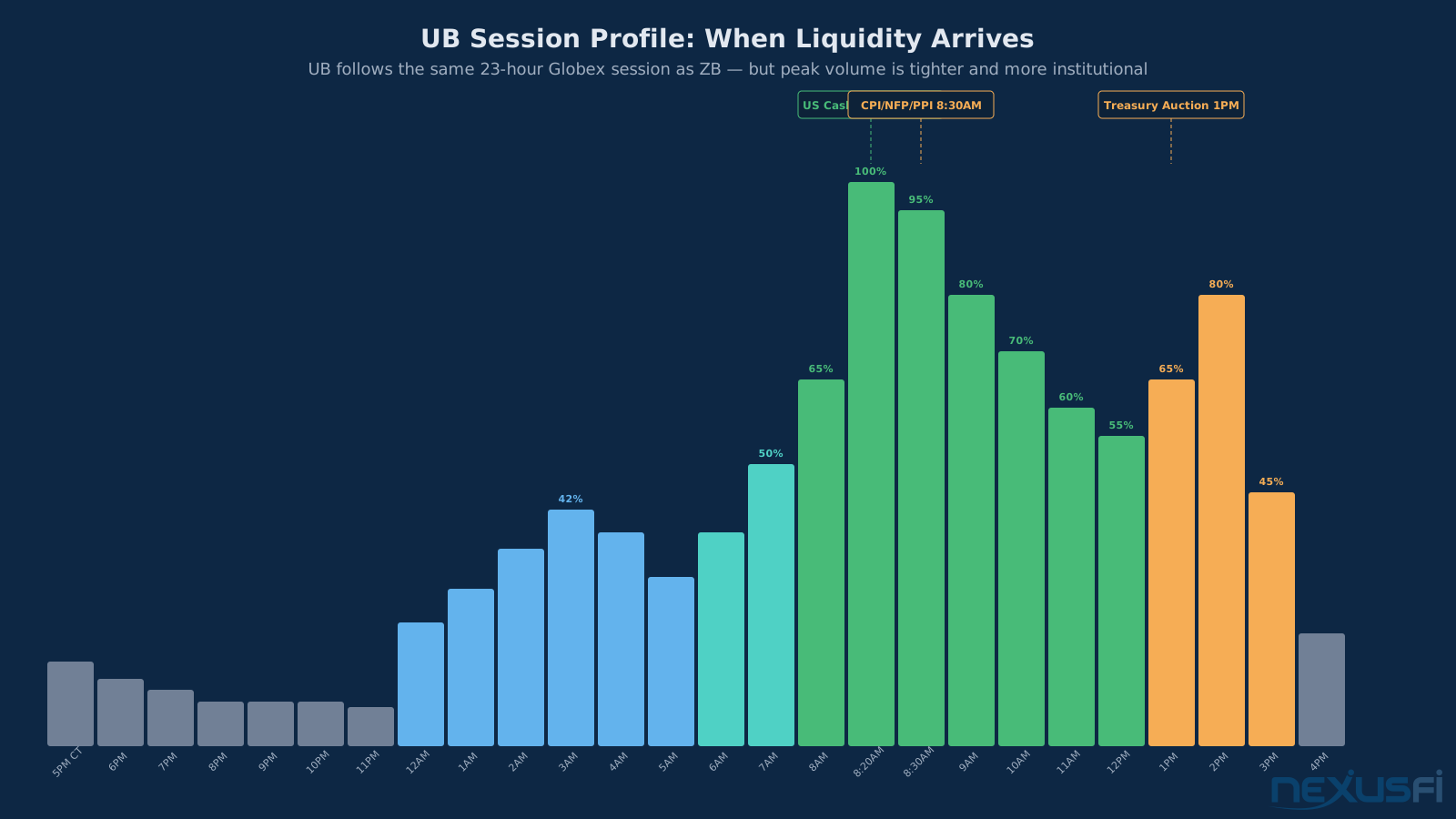
UB trades nearly 24 hours, but liquidity is not evenly distributed. Knowing when the market is liquid is not optional — it's the difference between $31.25 fills and $100+ slippage on unexpected market orders.
The overnight session (5 PM to midnight CT) sees minimal UB activity: 5 to 15% of daily average volume. Algo activity dominates; avoid initiating positions based on overnight signals unless targeting European session setups. European session (midnight to 7 AM CT) brings genuine volume from European rate desks, especially as German Bund futures (FGBL) open around 2 AM CT. The correlation between UB and the Bund is meaningful in this session.
US session (7 AM to 4 PM CT) is when UB comes alive. Key windows: 8:20-8:30 AM CT (US cash bond open — single most liquid daily window); 8:30 AM CT (major economic releases — CPI, NFP, PPI can move UB 10 to 30 ticks in seconds); 1:00 PM CT (monthly Treasury auction results — 30-year auction is most important for UB); 2:00 PM CT on FOMC days (policy statement release).
Do NOT hold open limit orders through major economic data releases in UB. A miss on CPI can move the contract 15 to 30 ticks in seconds — gap fills at your limit price occur in adverse conditions only.
CTD Mechanics and Delivery #
Most UB traders never take delivery — they roll to the next contract or close before First Notice Day. But understanding delivery mechanics is essential because CTD dynamics affect futures prices even for traders who will never see a bond certificate.
The CME conversion factor system adjusts each deliverable bond's price to the futures contract's pricing basis (6% coupon). The formula: Futures Invoice Price = (Futures Settlement Price x Conversion Factor) + Accrued Interest. The bond whose adjusted price makes delivery cheapest for the short is the CTD. CTD selection is driven by yield levels relative to the 6% coupon. When yields are above 6%, low-coupon, long-maturity bonds are typically CTD. In the current rate environment (4.5-5%), the specific CTD tends to be near the maturity boundary of the deliverable basket.
CTD switches happen when yield changes cross thresholds that make a different bond cheapest. When this occurs, futures prices adjust to track the new CTD — producing significant price moves disconnected from overall yield levels. The practical rule: be aware of CTD risk, avoid holding large UB positions through delivery month transitions, and during the two weeks before expiration, stick to smaller positions if your holding period spans the delivery cycle. The CME's free Treasury Analytics tool publishes conversion factors and DV01 data daily.
Roll Mechanics #
UB's quarterly roll follows the same pattern as the rest of the Treasury complex. Transition from front-month to next-month typically begins three to four weeks before the last trading day, accelerating sharply in the final week. The roll can be executed as a calendar spread (buy back month, sell front month) or two separate transactions. Calendar spread execution is usually superior because market makers provide two-sided roll markets with tighter combined spread.
The roll yield — whether the back month trades above or below the front month — reflects financing costs, carry, and CTD expectations for the new delivery period. Key dates to know: First Notice Day (last business day of month preceding delivery) and Last Trading Day (7th business day before last business day of delivery month). Traders who need to maintain exposure should complete the roll by mid-month of the month preceding delivery.
Position Sizing: DV01-Based Risk Management #
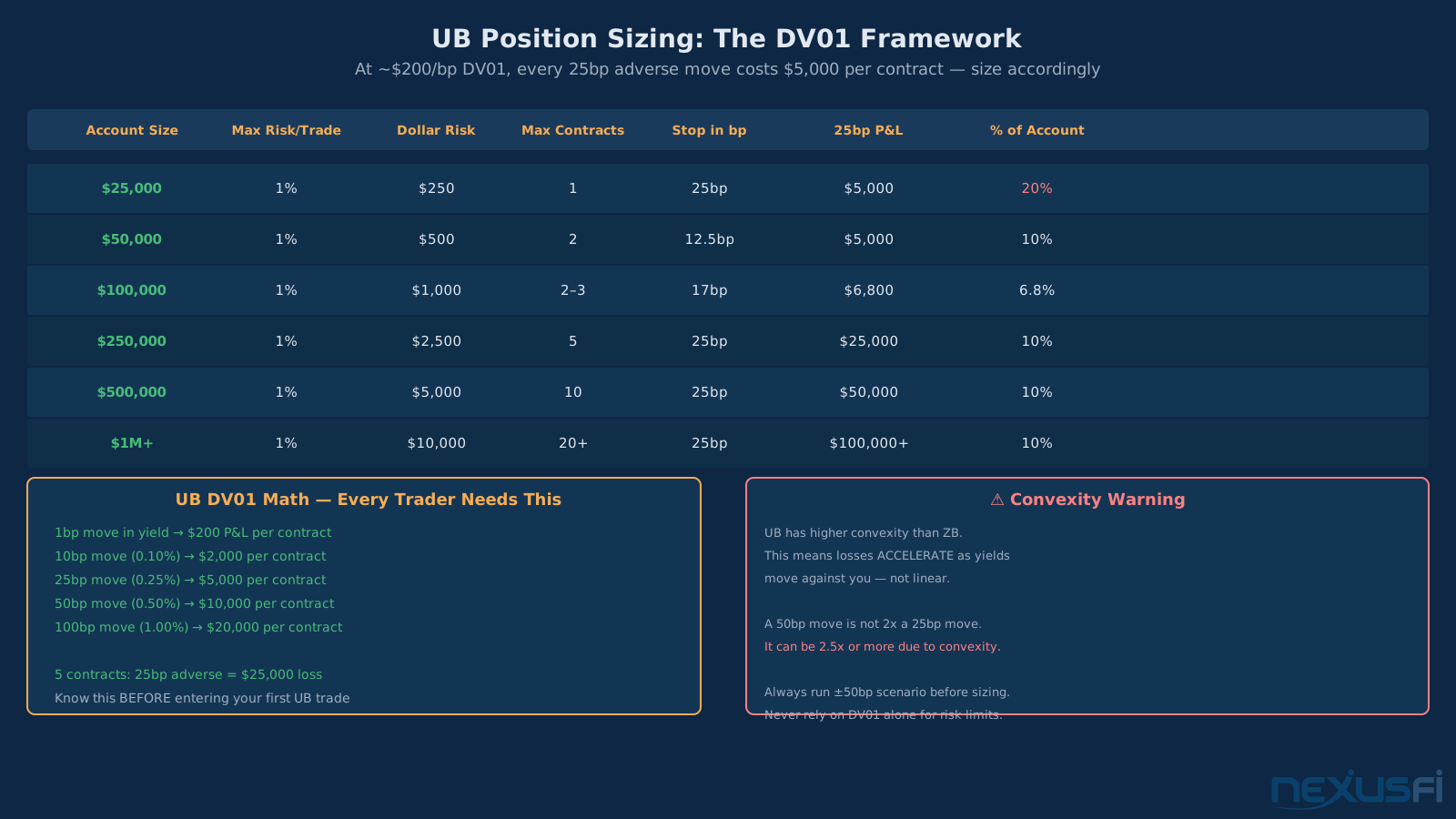
Never size UB positions by contract count. Size them by DV01 exposure relative to your account and risk limits. A single UB contract with $200/bp DV01 exposes you to $5,000 of P&L per 25bp yield move. In a CPI-driven morning, 30bp moves in 15 minutes are not unusual. Five contracts with no stop creates $30,000 of instantaneous risk.
The correct approach: determine your maximum dollar risk per basis point of yield movement, then divide by UB's DV01 to get your maximum contract count. If you're willing to risk $400 per basis point (accepting that a 25bp move costs $10,000), you hold two contracts maximum. For spread trades, the net DV01 of the combined position determines risk — a 1:1 UB/ZB spread has net DV01 of approximately $15/bp, far lower than two outright positions.
Convexity complicates sizing further. The linear DV01 estimate is accurate for small yield moves (1-5bp). For large moves (25-50bp), convexity adds approximately 2-5% to gains on long positions and removes 2-5% from losses. The asymmetry favors longs, but for short positions, always run a +50bp scenario to check whether the actual loss exceeds your DV01 estimate materially.
Technical Analysis for UB #
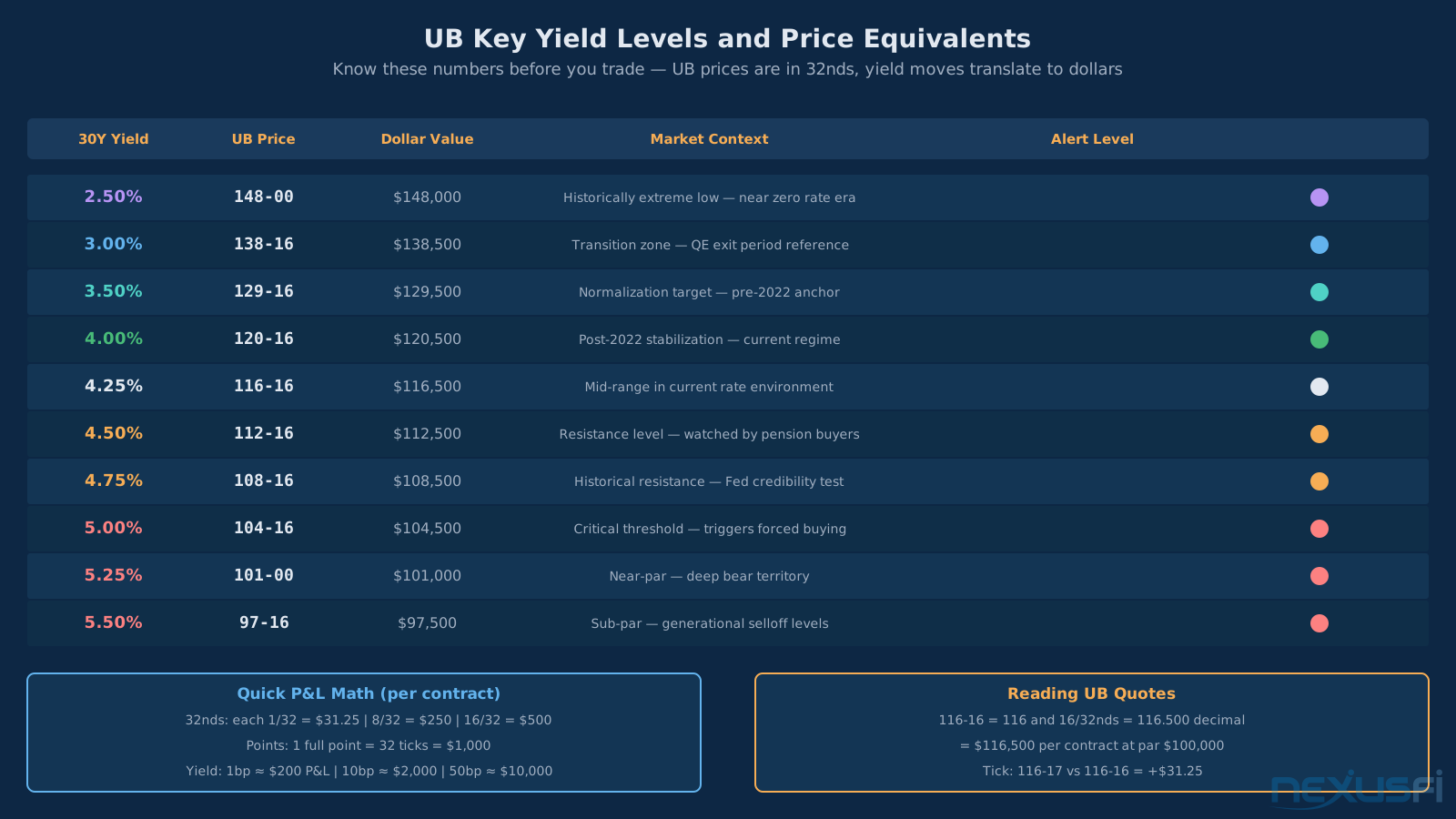
UB lends itself to technical analysis but requires adaptation for its unique characteristics. Price levels carry more weight in UB than in equity futures because they correspond to specific yield levels that have macroeconomic significance. The $120 price level corresponds roughly to 4% yield. The $105 level corresponds roughly to 5% yield. These round psychological yield levels bring in institutional buyers and sellers who have yield-based mandates, creating genuine support and resistance at corresponding price levels.
Volume analysis is especially important.
— the same logic applies to UB vs ZB for 30-year views. [6]
The daily range in UB typically runs 8 to 18 ticks (25 to 56 cents in price) during normal conditions, expanding to 25 to 50 ticks around major macro events. Setting stops inside the normal daily range invites getting shaken out of legitimate positions.
Correlation and Multi-Market Analysis #
The UB/ES (S&P 500 futures) correlation is the most discussed. During 2000-2021, this correlation was reliably negative — stocks up meant bonds down, creating the classic 60/40 hedge. The 2022 rate cycle shattered this relationship: both fell simultaneously as inflation wiped out both asset classes. Understanding which regime you're in — inflationary (positive correlation) or deflationary/normal (negative correlation) — determines whether UB provides portfolio protection or adds to losses during equity drawdowns.
The UB/GC (gold) relationship is more complex. Both serve as flight-to-quality assets, but gold has no duration risk. During deflationary panics, both tend to rally. During inflationary periods, gold often rallies while UB sells off — an important divergence that signals the inflation regime. The UB/DX (dollar index) relationship is normally negative: a strong dollar compresses inflation expectations, which reduces long-end yields and boosts UB.
Micro 30-Year Yield Futures (30Y) #
CME offers micro Treasury yield futures, including a 30-year version (ticker: 30Y). Unlike UB (priced in 32nds, inverse to yield), the micro 30Y is priced directly as the yield, with a fixed $10 DV01 per basis point. You'd need 20 micro contracts to match 1 UB — at much higher transaction costs per dollar of DV01, and with substantially worse liquidity.
Market Participants #
Understanding who is on the other side shapes how you interpret UB price action.
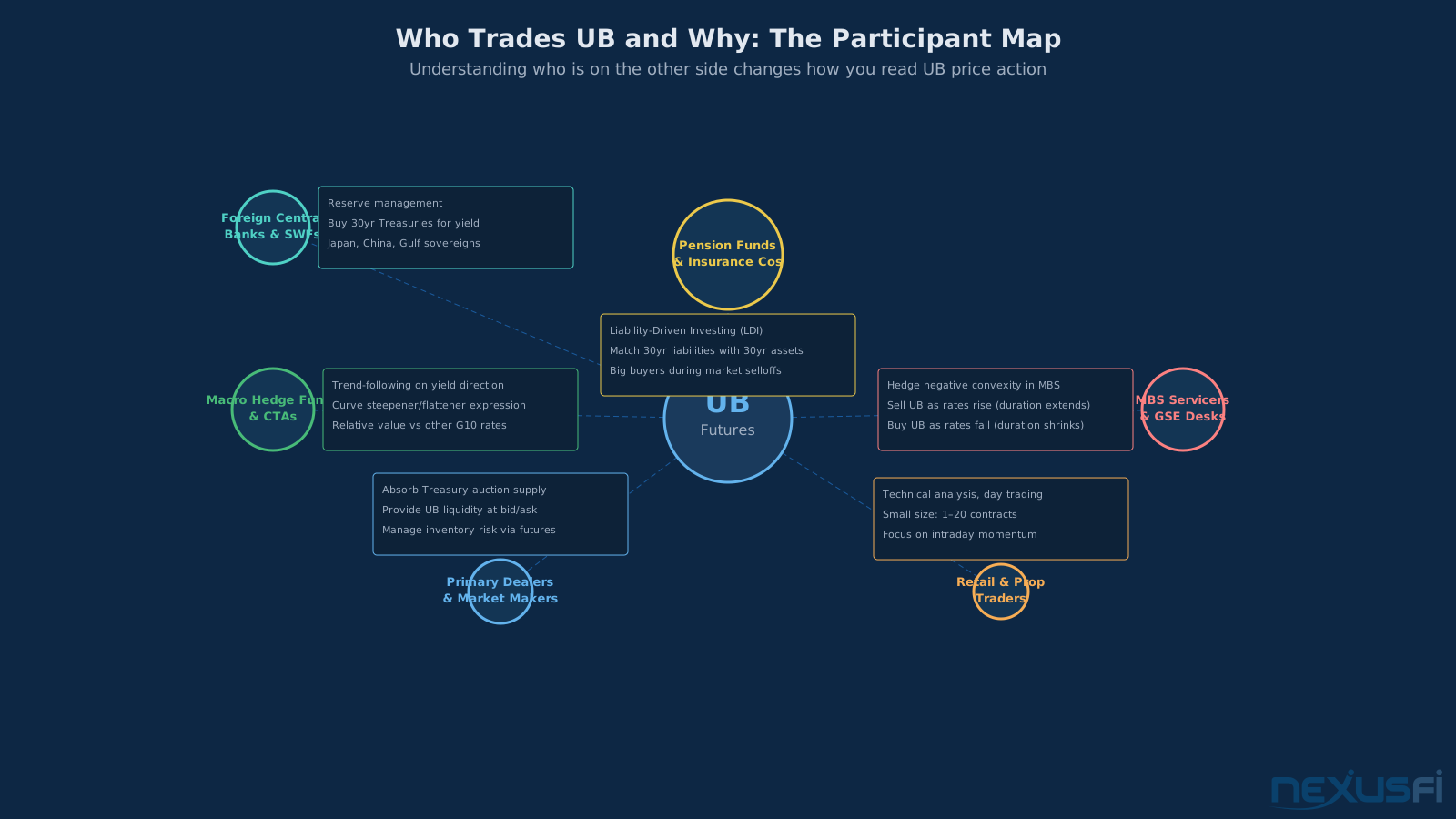
Pension funds and insurance companies are the bedrock institutional presence. They buy duration to match future liabilities — the obligation to pay beneficiaries in 20 to 40 years. When UB yields spike above their internal hurdle rates, these buyers emerge with significant size.
MBS mortgage servicers are consistent sellers of duration into rate spikes. When 30-year mortgage rates rise, homeowners refinance less, prepayments slow, and MBS portfolio duration extends. Servicers must sell futures to rehedge — and UB is a primary vehicle. This creates the reflexive loop that amplifies rate moves.
Macro hedge funds and CTAs (commodity trading advisors running systematic trend-following strategies) add directional momentum. CTAs are pure trend followers — their positions amplify trends and create mean-reversion opportunities when trends exhaust. An overcrowded CTA short is a potential violent squeeze candidate.
Primary dealers absorb Treasury auction supply and provide liquidity at bid/ask. Their book position into auctions skews UB's pre-auction behavior in predictable ways — light positioning before potentially weak auctions, heavier before expected strong results.
Putting It Together #
The traders who do well in UB share a consistent profile: they understand the macro forces driving long-end rates, they manage position size in DV01 terms, they never ignore CTD mechanics, and they concentrate execution in liquid windows.
UB and ZB are different contracts with different risk profiles, even though they look almost identical on a spec sheet. UB offers purer 30-year duration, higher convexity, and cleaner sensitivity to fiscal and inflation forces. Use ZB for day trading and short-term setups where liquidity matters most; shift to UB when expressing a conviction macro view that requires genuine 30-year duration; consider the UB/ZB spread as a lower-risk way to learn long-end curve dynamics before committing to outright directional positions.
The macro event calendar is your best friend: Treasury auction announcements, quarterly refunding dates, CPI and PCE releases, and FOMC meetings are the recurring catalysts producing reliable setups in UB. Trade around these catalysts with a prepared view, defined risk, and execution discipline.
Citations and Community Sources #
This article draws on NexusFi community knowledge from traders with direct long-end Treasury experience.
- @drm7 (2019, 2 thanks) -- Most volatile treasury note: "The futures contract that best maps to the longest duration bond is the Ultrabond (UB)."
- @SMCJB (2021, 3 thanks) -- General bond / interest rate discussion: Authoritative list of all US fixed income futures including UB as "Ultra 30 Year Treasury Bond (newer contract, more the 'true' 30 year than ZB)."
- @JonathanRose (2017, 2 thanks) -- Ultra 10 Year (TN) vs 10 Year (ZN/TY): Key maturity reality check -- "ZB (30yr) is really 18yr, UB is closer to a true 30yr."
- @tigertrader (2020, 6 thanks) -- 30Yr. Bond Futures trading/scalping size ZB: On why short-term timeframes destroy edge in Treasury futures; the right framework for bond duration trading.
- @tigertrader (2020, 5 thanks) -- COVID bond supply effects: "The magnitude of long-end issuance was greater than anticipated, and is the reason why you are seeing a bear steepening in the 5/30."
- @Schnook (2022, 3 thanks) -- 2s vs 10s DV01 spreadsheet: Precision DV01 construction using CME Treasury Analytics; micro yield futures: "costly and inefficient -- poor liquidity, high transaction costs."
- @rleplae (2018, 4 thanks) -- Differences between ZB and ZN?: Bond maturity and rate sensitivity -- "if interest rates move, the bond moves approximately with the interest change multiplied by the maturity."
- @choke35 (2017, 7 thanks) -- When to trade ZB/ZN?: "Average trade sizes are falling deeper and deeper -- ZN ~10 contracts per trade, ZB ~3 con/tr during prime time." [8]
- @Schnook (2021, 5 thanks) -- Micro Treasury Yield Futures: DV01 comparison of micro yield vs standard Treasury futures; DV01 methodology and broker cost analysis.
- @dsheehan87 (2022, 2 thanks) -- 30 Year Treasury Bond Futures /ZB: ZB and ZN execution: "ZB is a bit fast for my liking but with the ZN being predominant, ZB is usually the second choice."
Knowledge Map
Go Deeper
Build on this knowledgeReferences This Article
Articles that build on this topicCitations
- — NexusFi Discussion (2019) 👍 2“The futures contract that best maps to the longest duration bond is the Ultrabond (UB). The T-Bond futures (ZB) is the next longest duration, and slightly less volatile than the Ultra, but it is also more liquid.”
- — NexusFi Discussion (2021) 👍 3“UB | Ultra 30 Year Treasury Bond (newer contract, more the 'true' 30 year than ZB) -- comprehensive list of US fixed income futures”
- — NexusFi Discussion (2017) 👍 2“ZF (5yr) is really a 4yr, ZB (30yr) is really 18yr, UB is closer to a true 30yr”
- — NexusFi Discussion (2020) 👍 6“What you are looking for are departures in value that offer persistence while moving between two points -- increasing your time frame eliminates inefficiencies and allows for greater profitability”
- — NexusFi Discussion (2020) 👍 5“The magnitude of long-end issuance was greater than anticipated, and is the reason why you are seeing a bear steepening in the 5/30.”
- — NexusFi Discussion (2022) 👍 3“Poor liquidity, high transaction costs, and monthly rolls just end up taking way too much out of my positions. I still prefer using regular treasury futures for yield spreads.”
- — NexusFi Discussion (2018) 👍 4“If interest rates move, the bond moves approximately with the interest change multiplied by the maturity -- ZB is a jumbo ocean carrier versus CL as an F16”
- — NexusFi Discussion (2017) 👍 7“Average trade sizes are falling: ZN ~10 contracts per trade, ZB ~3 con/tr during prime time -- result of growing trading automation”
- — NexusFi Discussion (2021) 👍 5“The DV01 on ZN is $81, so you would have to sell 8 micro 10yr yield futures to have the same DV01 as long 1 ZN contract -- liquidity and transaction costs are still much better in the Treasuries”
- — NexusFi Discussion (2022) 👍 2“I trade the ZB and ZN - more recently ZB as ZN is too wild these days. For me, ZB is a bit fast for my liking, but with the ZN being predominant, ZB is usually the second choice.”