



Prediction Market Account Management: Deposits, Withdrawals, and Taxes
Everything you need to know about moving money in and out of Kalshi and Polymarket
Overview #
Opening a prediction market account is easy. Managing it well — that's where most people trip up. You've got to understand deposits, withdrawals, identity verification, tax treatment, and security. Get these fundamentals right and your money moves safely. Get them wrong and you're looking at frozen funds, surprise tax bills, or worse.
This article complements Getting Started on Kalshi and Getting Started on Polymarket with deeper coverage of the financial management aspects.
Key account management concepts: Kalshi requires full U.S. identity verification (KYC) and processes withdrawals in 3--5 business days via ACH. Polymarket requires no KYC--just a Web3 wallet--but withdrawing to a bank account takes 2--4 days through an exchange intermediary. For taxes, there are three possible treatments and the IRS hasn't issued definitive guidance on any of them. Always maintain detailed trade records on both platforms.
Kalshi Account Management #
Kalshi Deposits #
Kalshi is a CFTC-regulated U.S. exchange that accepts only U.S. dollars. Here's how to get money in:
ACH Bank Transfer (Recommended for most traders)
- Link your U.S. checking or savings account via Plaid — it takes about two minutes
- No fee from Kalshi's end
- Processing time: 1-3 business days for your first deposit; after that, subsequent transfers usually clear faster
- Limits: Typically $10,000-25,000 per transfer, though you can request higher limits
- Minimum: There isn't one, but you'll need enough to actually buy contracts
Wire Transfer (Worth it above $10,000)
- Fastest method for large amounts — same or next business day processing on Kalshi's side
- Frankly, it's overkill for anything under $5,000. Your bank's going to charge you $15-35 per wire, and ACH does the same job free in a couple of days
- But once you're moving $10,000+, ACH limits become a bottleneck and wires start making sense
- Kalshi's wire details are in your account funding section
Debit Card
- Limited availability — some accounts have this enabled, some don't
- When it works, your funds show up instantly
- Watch for processing fees (check Kalshi's current terms — these can change)
What Kalshi won't accept:
- Credit cards, cryptocurrency, PayPal, Venmo, or any payment apps
- Cash or checks — it's a regulated exchange, not a pawn shop
Kalshi Withdrawal #
Kalshi sends withdrawals back to your linked bank account only. You can't withdraw to a different account than you deposited from — that's an anti-money-laundering requirement, and every regulated exchange works this way.
Withdrawal process:
- Log into your Kalshi account
- Work through to Account, then Withdraw
- Enter your withdrawal amount (needs to be from your cleared, settled balance)
- Confirm the destination bank account
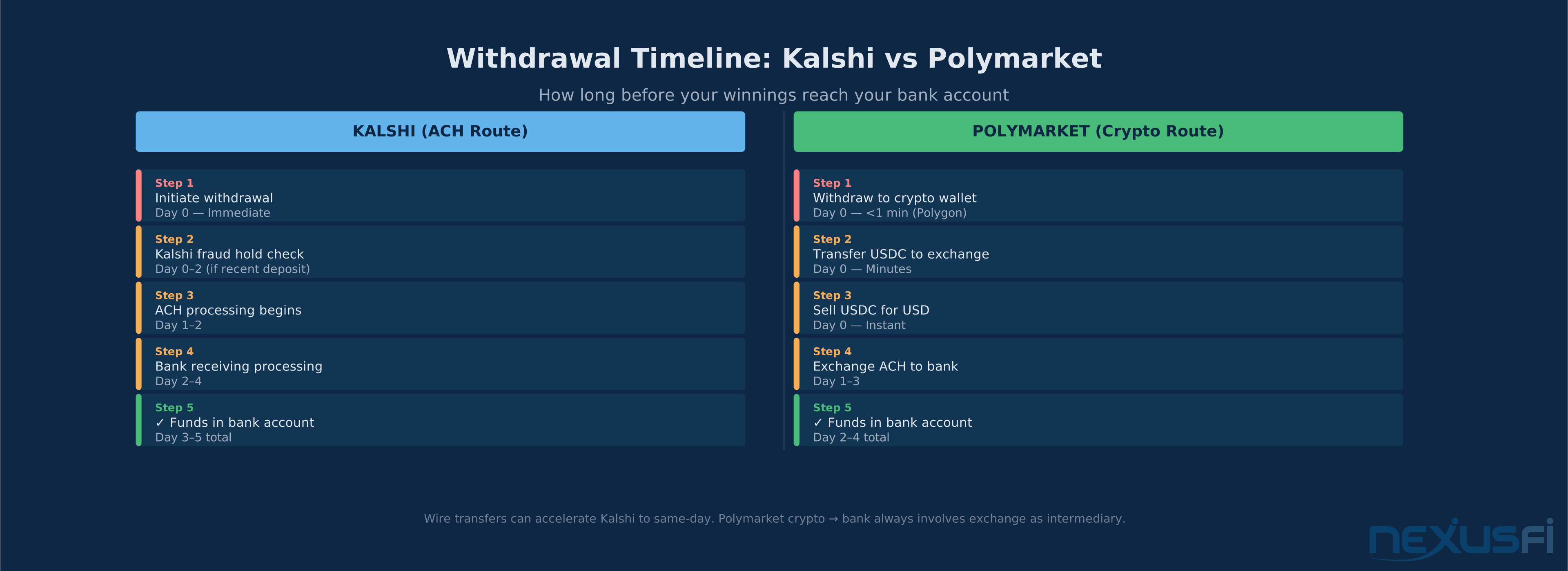
- Processing takes 3-5 business days via ACH
Withdrawal holds: If you've made a recent deposit, Kalshi may hold withdrawal requests for 5-7 business days. This isn't them being difficult — it's standard fraud prevention for regulated exchanges.
Settled vs. unsettled balance: Winnings from recently resolved contracts won't be immediately withdrawable. Kalshi typically settles contract winnings within 24 hours of market resolution, but you might need one more business day before those funds show up as withdrawable.
Large withdrawals: Anything over $10,000 may trigger additional verification steps. Don't panic — this is standard Bank Secrecy Act compliance that applies to every CFTC-regulated exchange. It's not a penalty.
Kalshi Account Verification (KYC) #
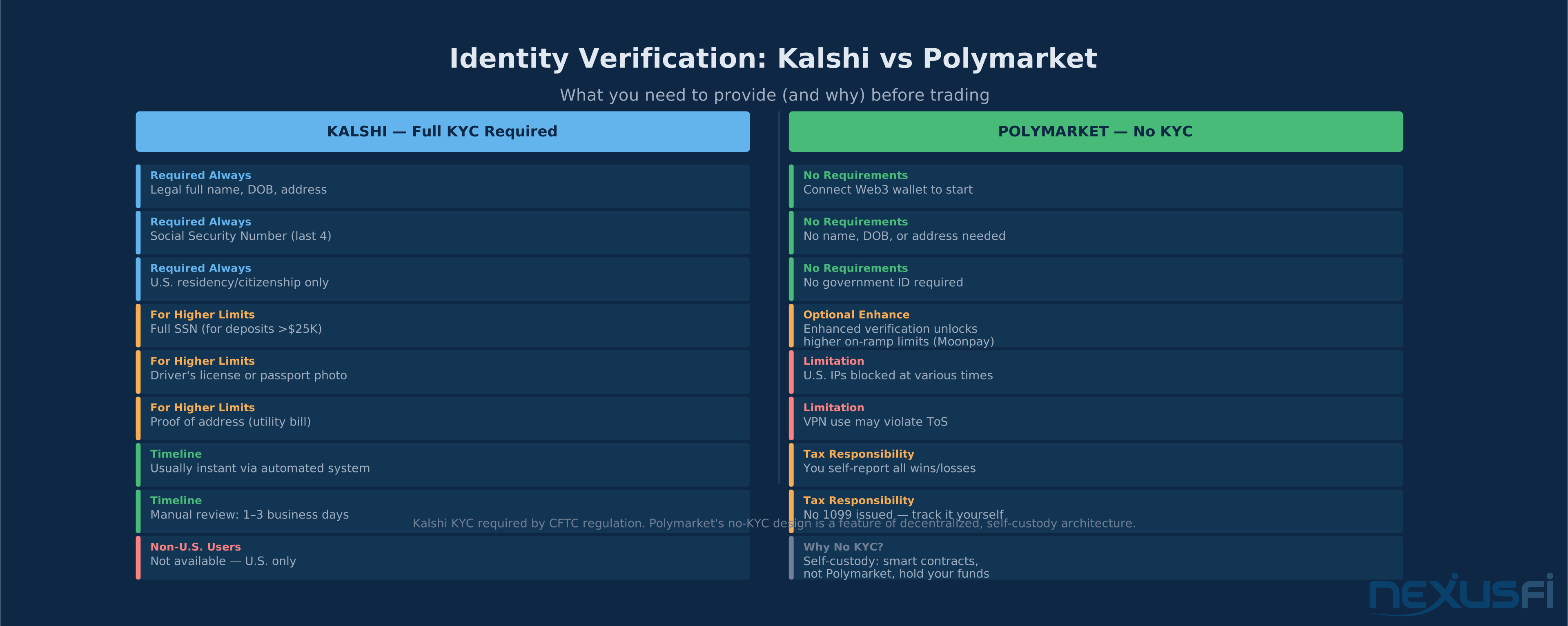
Kalshi is required by CFTC regulations to verify customer identity before you can trade:
- Required information: Legal name, address, date of birth, Social Security Number (last 4 digits initially, full SSN for higher limits)
- Verification time: Usually instant via automated ID verification; sometimes takes 1-3 days if manual review kicks in
- Document uploads: You may need a driver's license or passport photo for higher deposit limits
- U.S. residents only: Kalshi is currently available only to U.S. residents and citizens
Polymarket Account Management #
Polymarket Deposits #
Polymarket doesn't hold traditional bank accounts. All funds enter and leave as USDC cryptocurrency on the Polygon blockchain. There are several ways to get money in:
Method 1: Crypto wallet (most common)
- Buy USDC on Coinbase, Kraken, or any major exchange
- Withdraw USDC to the Polygon network — make sure you select "Polygon" as the withdrawal network in your exchange, not Ethereum
- Your USDC arrives in your Web3 wallet (MetaMask, Coinbase Wallet)
- Deposit from your wallet to Polymarket's trading interface
- Cost: Exchange withdrawal fee ($0 on Coinbase for USDC, $0.25-1.00 on others)
Method 2: Cross-chain bridge
- Already have ETH or other crypto on Ethereum mainnet or another chain? You can bridge it over
- Use Polymarket's integrated bridge (Socket Protocol) to convert and bridge to Polygon USDC
- Bridge fees: Typically $3-15 depending on origin chain and amount
- Processing time: 5-30 minutes (bridge transactions vary — don't panic if it takes a few minutes)
Method 3: Credit/debit card via fiat on-ramp
- Click "Add Funds" in Polymarket's interface
- Select the card payment option (powered by Moonpay or Coinbase Onramp)
- Purchase USDC directly with Visa/Mastercard
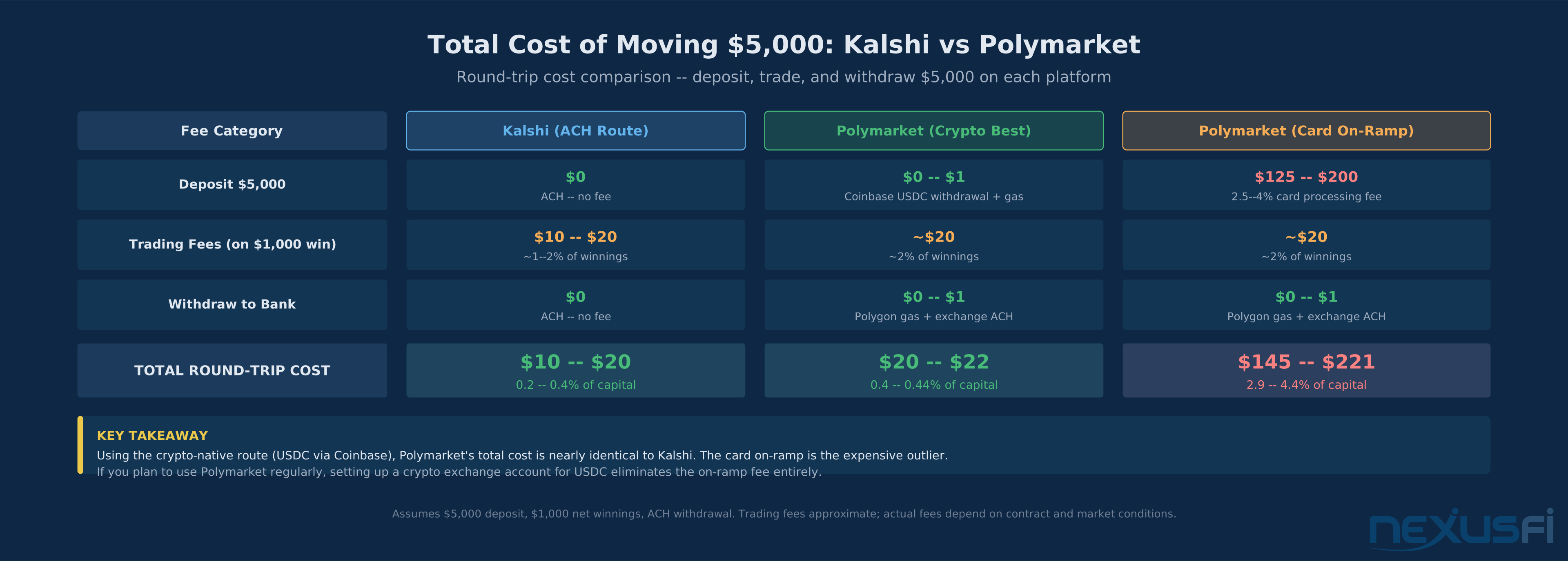
- Fees: 2.5-4% processing fee plus provider margin — not cheap, but it's fast
- Limits: Typically $500-2,000 per transaction without enhanced verification
Method 4: Direct Polygon USDC transfer
- If you've already got USDC on Polygon in another wallet, just transfer directly
- Nearly instantaneous (<5 seconds)
- Cost: Less than $0.01 in Polygon gas fees — basically free
Polymarket Withdrawals #
Getting money out of Polymarket:
- Go to your Polymarket portfolio/wallet page
- Click "Withdraw"
- Enter the amount and destination wallet address
- Confirm the transaction (gas fee is typically <$0.01 on Polygon)
Converting USDC back to dollars:
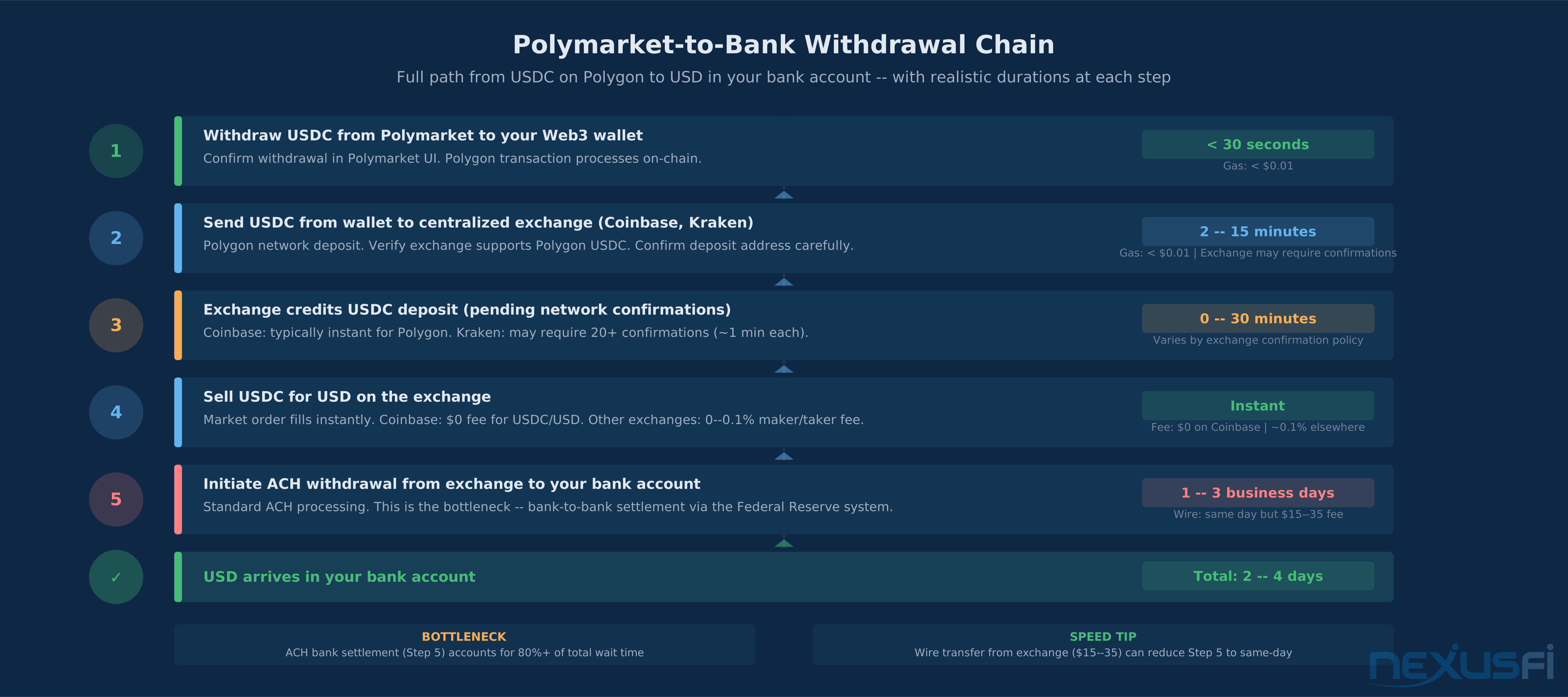
- Withdraw USDC to your exchange wallet (Coinbase, Kraken)
- Sell USDC for USD on the exchange (instant, usually no fee on major exchanges)
- Transfer USD from exchange to your bank account (ACH: 1-3 business days, wire: same day)
- Total process: 2-5 business days from Polymarket withdrawal to bank receipt
Critical — and I can't stress this enough — verify your wallet addresses
Blockchain transactions are irreversible. There's no customer service number to call, no dispute process, no chargeback. You send USDC to the wrong address? It's gone. Forever. The research on crypto transaction errors is brutal — millions of dollars have been permanently lost to simple typos and copy-paste mistakes.
Triple-check before you hit confirm:
- Is this the right destination address, character for character?
- Are you sending USDC on the Polygon network to an address that supports Polygon? Sending Polygon USDC to an Ethereum-only address can result in permanent loss
- If you're sending to an exchange, does that exchange actually support Polygon network deposits for USDC?
If you're moving a large amount for the first time, send a small test transaction first. A $1 test is cheap insurance against a $10,000 mistake.
Polymarket Identity Verification #
Unlike Kalshi, Polymarket doesn't require KYC (Know Your Customer) verification for most users. You connect a Web3 wallet and trade. That's it. This is by design — Polymarket's decentralized architecture means smart contracts, not Polymarket itself, hold your USDC. There's no central custodian to perform identity verification.
Practical implication: U.S. traders can access Polymarket without providing personal information, but you're still legally responsible for reporting and paying taxes on winnings. The IRS doesn't care whether the platform knows who you are — you know who you are.
Geo-restriction note: Polymarket has blocked U.S. IP addresses at various points in its history. U.S. users accessing Polymarket via VPN should be aware this may violate Polymarket's terms of service and potentially U.S. law. Always consult legal counsel regarding your specific jurisdiction's rules.
Fees Comparison #
| Fee Type | Kalshi | Polymarket |
|---|---|---|
| Deposit fee | $0 (ACH) | $0-15 (varies by method) |
| Trading fee | ~1-2% of winnings | ~2% of winnings |
| Withdrawal fee | $0 | $0 (gas < $0.01) |
| USD conversion fee | N/A | Exchange spread ($0) |
| Bank transfer fee | Your bank's ACH fee (often $0) | Exchange wire fee ($0-25) |
Tax Treatment of Prediction Market Winnings #
This is where most new prediction market traders have the biggest knowledge gap — and where the most money is at stake. Here's the reality.
Three Possible Tax Treatments #
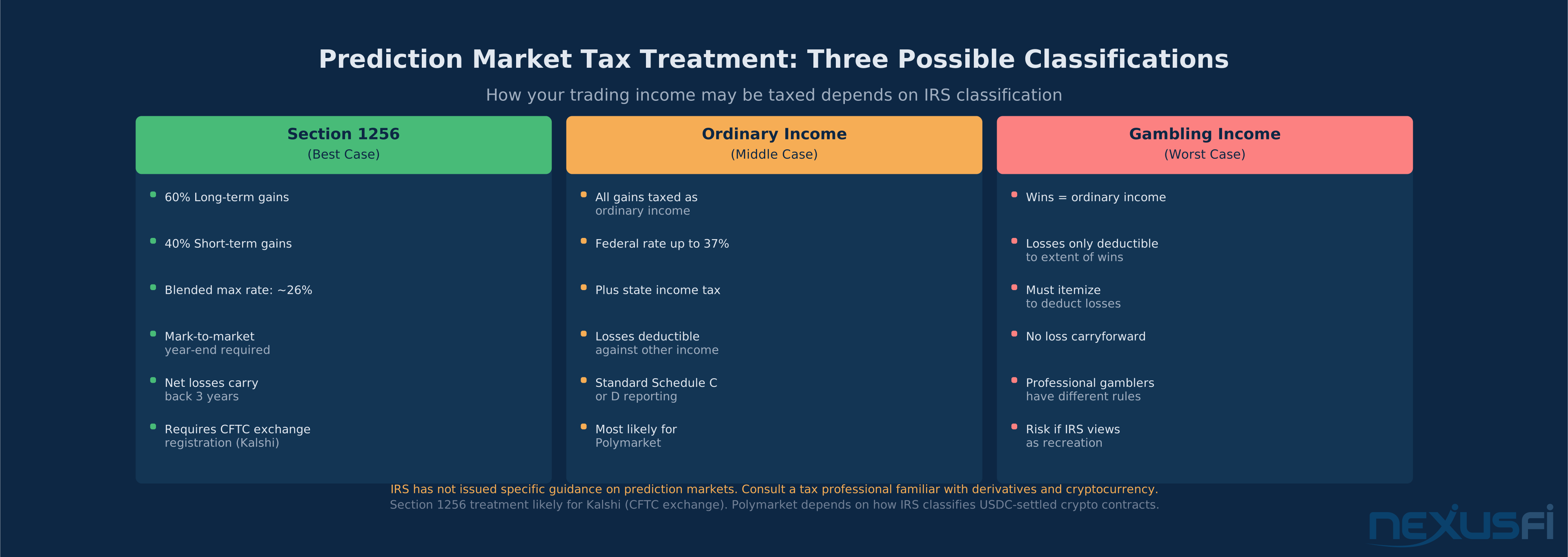
As of 2026, the IRS has issued zero formal guidance on how prediction market income should be classified. No revenue rulings. No notices. No FAQs. Nothing. That means there are three defensible approaches, and they produce very different tax bills:
1. Section 1256 Treatment (most favorable, most aggressive)
If Kalshi event contracts qualify as "regulated futures contracts" under Section 1256 of the IRC, you'd get:
- 60% of gains/losses treated as long-term capital gains
- 40% treated as short-term capital gains
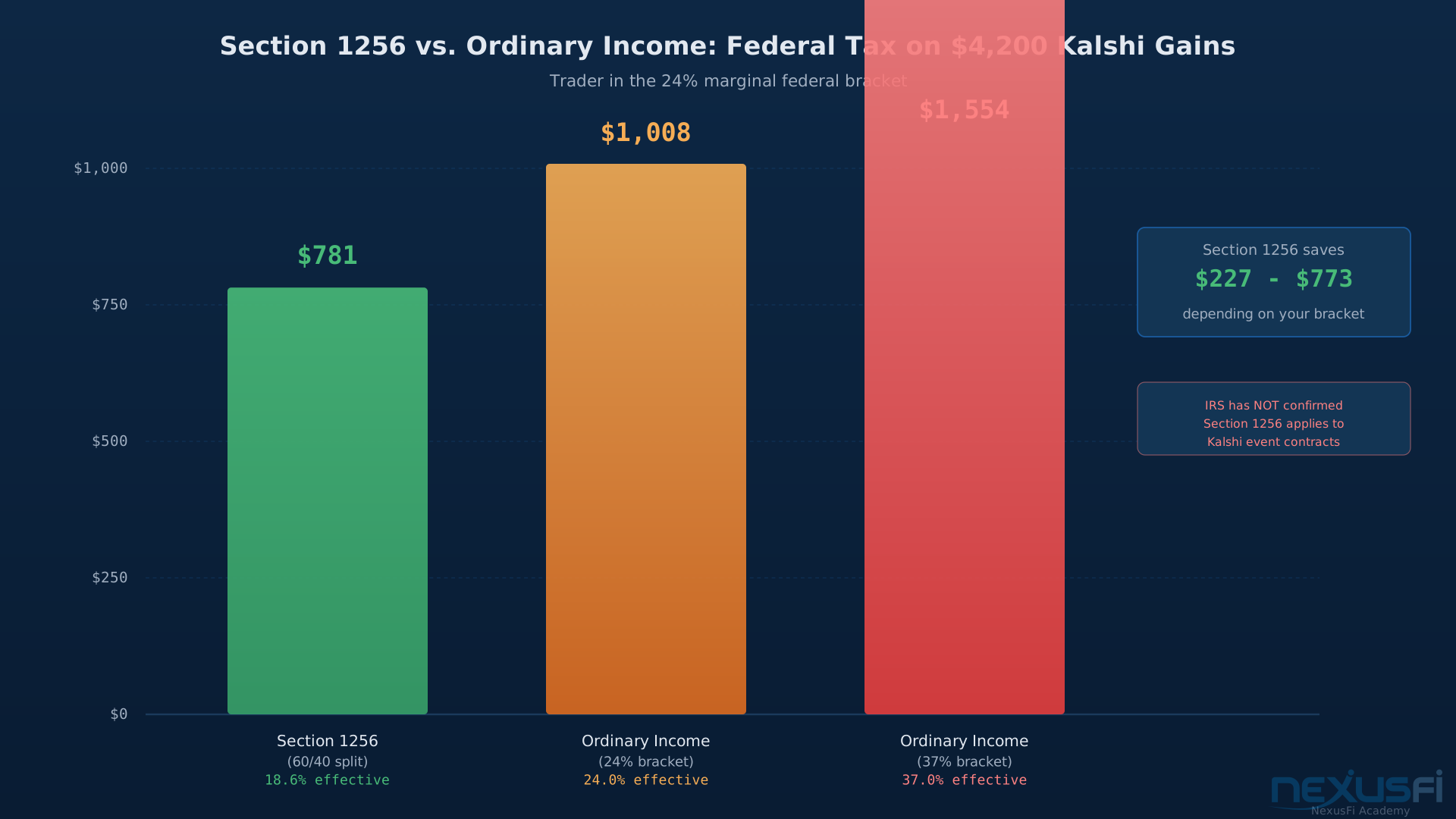
- Maximum blended rate: ~26% vs. ordinary income rate of up to 37%
- Mark-to-market at year-end: open positions treated as if closed on December 31
Section 1256 worked example: Say you earned $4,200 net profit from Kalshi trades in 2025. In the 22% ordinary income bracket (and 15% long-term capital gains bracket), the Section 1256 math runs: 60% of gains treated long-term ($2,520 × 15% = $378) plus 40% short-term ($1,680 × 22% = $370) = $748 total federal tax. Under ordinary income treatment: $4,200 × 22% = $924. Section 1256 saves $176 on this example. Scale to $50,000 in gains and that gap exceeds $2,000 in federal tax savings — which is why the classification question deserves serious professional attention.
Here's the problem: CFTC regulation doesn't automatically mean Section 1256 qualification. They're different legal definitions. Some tax professionals argue Kalshi contracts qualify as "regulated futures contracts" given CFTC oversight. Others point out that event contracts may be classified as swaps, which are specifically excluded under Section 1256(b)(2)(B).
If you're going to claim Section 1256, file Form 8275 (Disclosure Statement) with your return. This won't prevent an audit, but it protects you from accuracy-related penalties if the IRS later disagrees with your position. Your CPA should be writing you a defensible position memo.
2. Ordinary/Capital Gains Treatment (conservative, defensible)
Report net prediction market profits as "Other Income" on Schedule 1 (Form 1040), Line 8z. Profits taxed at your ordinary income rate (10% to 37% depending on bracket). Losses offset gains dollar-for-dollar.
This is the approach least likely to be challenged by the IRS. If the IRS eventually issues guidance that reclassifies your income favorably, you can amend and get money back. Overpaying now beats underpaying and owing penalties later.
3. Gambling Income (worst case, real possibility)
If prediction markets are classified as gambling, income is ordinary, and losses can only be deducted against winnings (and only if you itemize). Worse, the 2025 One Big Beautiful Bill Act caps gambling loss deductions at 90% of winnings — meaning if you won $10,000 and lost $10,000, you'd still owe tax on $1,000 of phantom income.
Kalshi Tax Treatment #
Kalshi is a registered CFTC exchange. Whether their event contracts qualify for Section 1256 treatment is — to put it bluntly — a tax lawyer's dream billable-hours question. Here's where things stand:
The argument for Section 1256: Kalshi is a CFTC-regulated designated contract market (DCM). The contracts settle in USD. They function similarly to binary options on regulated exchanges.
The argument against: event contracts are a new asset class that the IRS hasn't explicitly addressed. The contracts might be classified as swaps rather than futures, which would trigger a specific statutory exclusion. And the IRS has historically been conservative about extending favorable treatment to instruments it hasn't blessed.
Current case law context: No court has ruled directly on whether Kalshi event contracts qualify as Section 1256 contracts. The closest precedent comes from CFTC-regulated binary options litigation and IRS treatment of similarly structured instruments. To qualify as a regulated futures contract under IRC §1256(g)(7), the instrument must be traded on a "qualified board or exchange" and subject to mark-to-market. Kalshi satisfies the exchange prong as a CFTC-designated contract market (DCM). The mark-to-market prong is contested: Kalshi does reflect open position values in your account balance daily, which most practitioners read as satisfying that requirement — but the IRS has not issued a revenue ruling confirming this interpretation for event contracts specifically. Until it does, the legal environment remains unsettled.
The bottom line: Don't just claim Section 1256 because some blog post told you to. Talk to a CPA who actually understands derivatives taxation. If you're going to take the aggressive position, document your reasoning and file Form 8275. If you want the safe play, report as ordinary income and save yourself the audit anxiety.
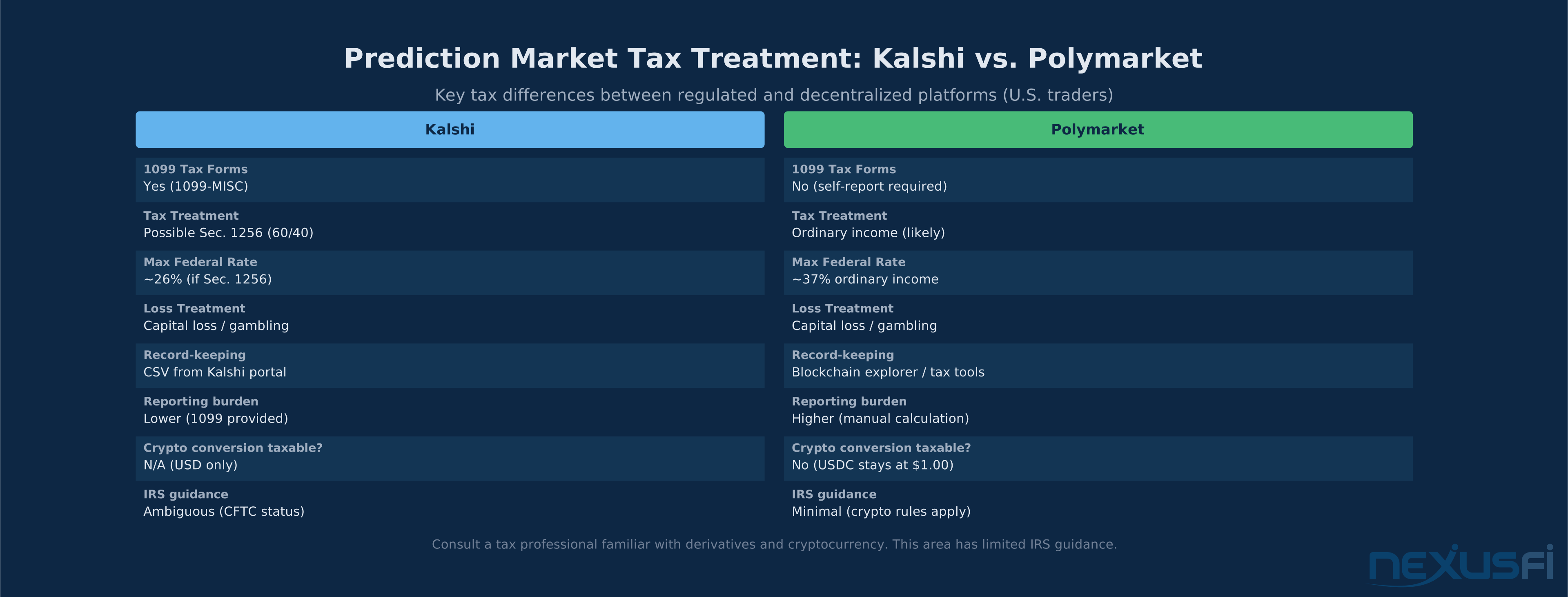
Kalshi 1099 Reporting: Kalshi issues 1099-MISC forms for net winnings above IRS reporting thresholds. Even if you don't get a 1099, you're legally required to report winnings. The IRS knows Kalshi exists.
Polymarket Tax Treatment #
Polymarket doesn't issue any tax forms. You're entirely on your own for tracking and self-reporting.
What's taxable:
- Winning a YES position: Taxable when the USDC is received (net of your original cost basis)
- Selling a position before resolution: Taxable difference between sale proceeds and cost basis
- Losing a position: Capital loss or gambling loss, depending on your chosen treatment
Taxable events timeline:
- Opening a position (buying YES or NO): Not a taxable event
- Closing a position by selling: Taxable event — gain or loss equals the difference between sale proceeds and your original cost basis
- Position resolves YES and you receive $1.00/share: Taxable event — gain equals $1.00 minus your cost basis per share
- Position resolves NO: Capital loss equal to your cost basis
Record-keeping for Polymarket: Polymarket's on-chain nature means all transactions are permanently recorded on the Polygon blockchain. Services like:
- Cointracker.io
- Koinly.io
- Zapper.fi
...can import your Polygon wallet history and generate tax reports. They're helpful but won't perfectly categorize prediction market trades without some manual review.
USDC-to-USD conversion: Generally not a taxable event (USDC maintains $1.00 value; any fractional gain/loss from minor USDC peg deviations is typically negligible).
Important tax context for Polymarket traders: @SMCJB compiled IRS cryptocurrency tax guidance in NexusFi's dedicated Tax Thread, noting a key principle: the IRS treats cryptocurrencies as intangible property, and every exchange between crypto assets is a taxable event. This matters for Polymarket traders who swap between USDC and other tokens — each conversion creates a potential taxable event, even if the net dollar value is unchanged. Staying entirely in USDC avoids this complexity. PredScope's Prediction Market Tax Guide provides a practitioner's overview of self-reporting requirements for on-chain positions, consistent with this property-based treatment.
Gambling vs. Investment Income Distinction #
A critical tax question is whether prediction market activity gets classified as:
- Gambling income: Subject to specific IRS gambling rules (wins taxed as income; losses deductible only to the extent of wins, and only if you itemize). The 2025 One Big Beautiful Bill Act adds a new wrinkle — gambling losses are now capped at 90% of winnings
- Investment/capital gains income: Net gain/loss treatment with more favorable loss carryforward rules
Arguments for investment treatment: Prediction markets involve analytical skill, research, probability assessment, and ongoing position management — all attributes the IRS has associated with investment activity in other contexts, especially in cases distinguishing skilled traders from casual bettors.
Arguments for gambling treatment: The binary outcome structure (you win or lose) and the speculative nature of contract pricing align with gambling in some IRS interpretations.
What to actually do: Work with a tax professional who knows derivatives, cryptocurrency, and prediction markets. This area lacks definitive IRS guidance, and your specific facts (frequency of trading, intent, holding periods) matter enormously.
![account-tax-self-reporting-workflow] Don't guess on this — the difference between treatments can be thousands of dollars on even modest trading profits.
Record-Keeping Best Practices #
Whether you trade on Kalshi, Polymarket, or both, keep careful records. You'll thank yourself at tax time.
For each trade, record:
- Date and time of entry
- Market name and contract description
- Number of contracts/shares purchased
- Price per contract
- Total cost (cost basis)
- Date and price of exit or resolution
- Net gain or loss
For Kalshi: Download your complete trade history as CSV from the Kalshi account portal. Do this at least quarterly — don't wait until April.
Sample filled-in trade log row:
| Date | Market | Side | Contracts | Cost/Share | Total Basis | Exit Date | Exit Price | Net P&L |
|---|---|---|---|---|---|---|---|---|
| 2025-03-14 | Will Fed cut rates in May 2025? | YES | 500 | $0.38 | $190.00 | 2025-05-07 (resolved NO) | $0.00 | -$190.00 |
Populate each row at trade entry time — don't reconstruct from memory at year-end. Losses count too; they're deductions you don't want to miss.
For Polymarket: Export your transaction history from your Web3 wallet. Use blockchain explorer tools (Polygonscan.com) to verify all transactions. Consider using Koinly or Cointracker for automated imports.
Annual reconciliation: Compare your trading records to any 1099s received from Kalshi. Resolve discrepancies before filing your return — not after.
Account Security #
Your prediction market accounts hold real money. Basic security hygiene isn't optional.
Kalshi:
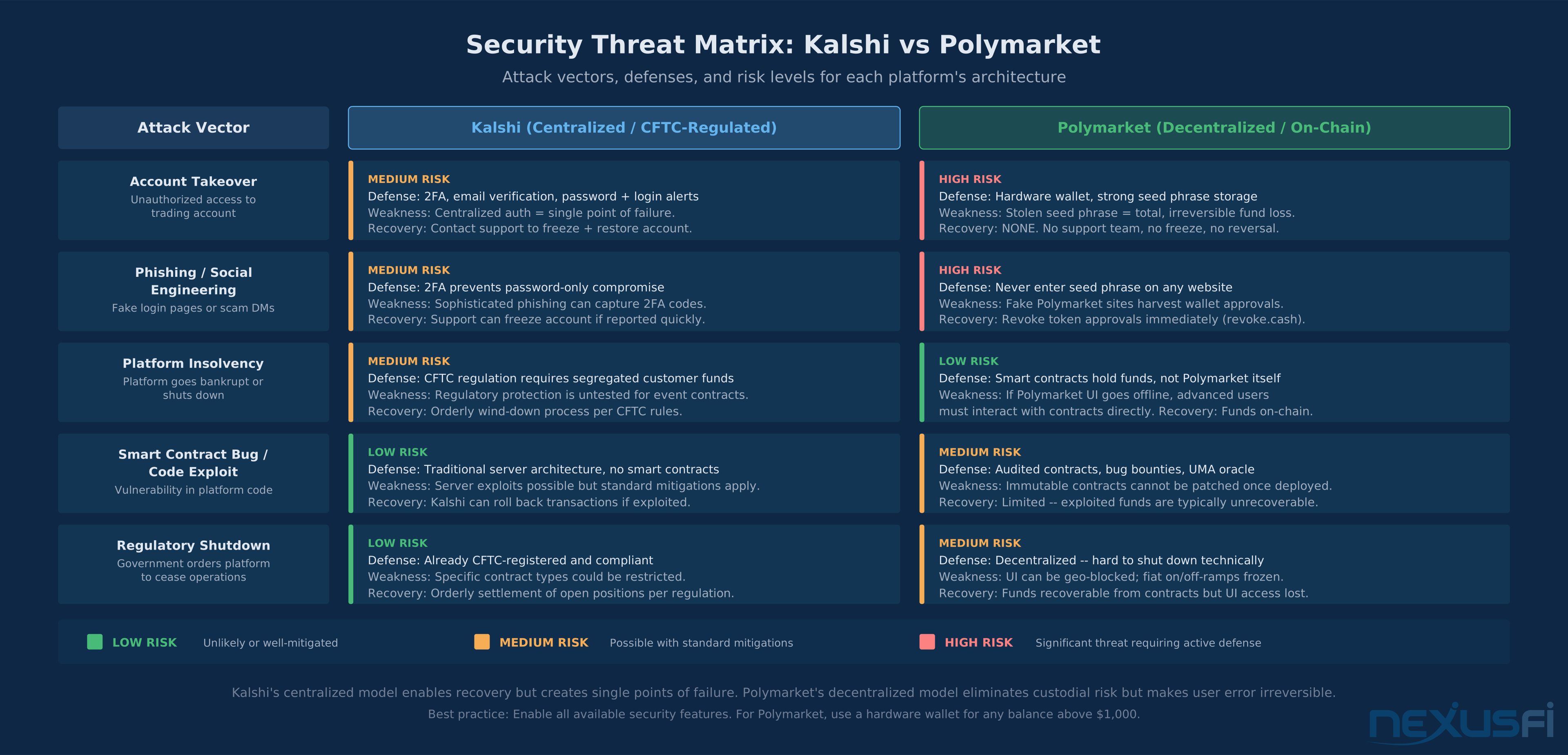
- Enable two-factor authentication (2FA) — this is non-negotiable for any account holding funds
- Use a unique, strong password (at least 16 characters; use a password manager)
- Never share login credentials
- Monitor for unauthorized login alerts
Polymarket (Web3 wallet):
- Store your seed phrase (12 or 24 words) offline in a secure physical location — not on your phone, not in your email, not in a screenshot
- Never enter your seed phrase on any website or app — ever. If a site asks for it, it's a scam. Period.
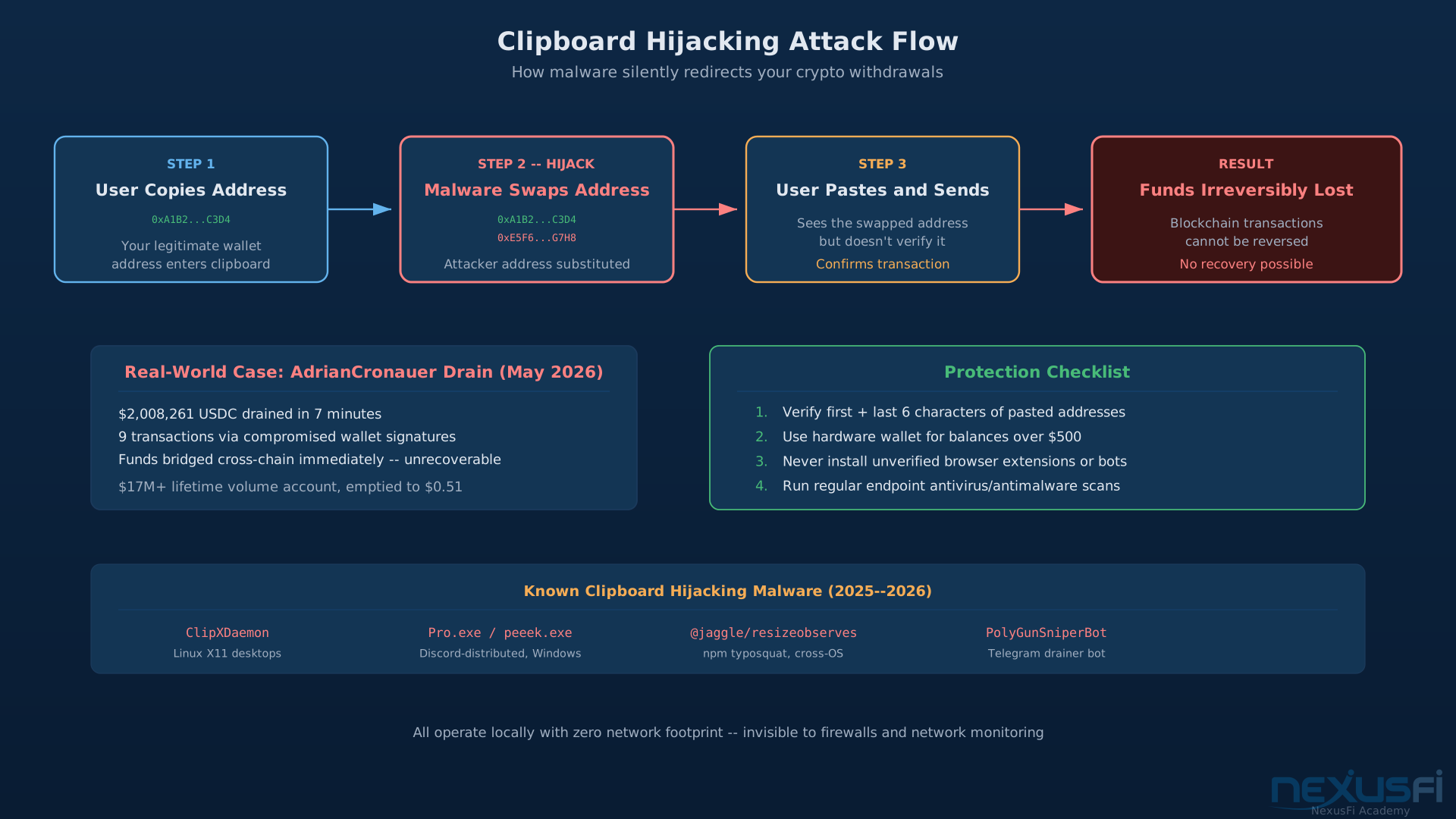
- Clipboard hijacking: Malware monitors your clipboard and silently replaces copied wallet addresses with attacker-controlled addresses. You copy a correct withdrawal address, paste it, and send funds directly to a thief without noticing. Defense: verify the first four and last four characters of every pasted wallet address against the original source before confirming any transaction. Send a $1 test transaction on large transfers — it's cheap insurance
![account-clipboard-hijacking-flow]
- Discord and Telegram scams: Fake "Polymarket Official Support" Discord servers and Telegram bots target users who post about withdrawal problems. They DM first and ask you to "verify your wallet" or share your seed phrase to "restore access." Polymarket does not provide individual account support through Discord or Telegram. Anyone DMing you unprompted claiming to be Polymarket support is a scammer — report and block immediately. Use only polymarket.com for any account-related issues
- Consider a hardware wallet (Ledger, Trezor) for any balance you'd be upset to lose
- Be alert to phishing sites that mimic Polymarket's interface (always work through directly to polymarket.com, never via links in emails or social media)
- Never share your private key
General:
- Use different passwords for each platform
- Enable email alerts for withdrawals and logins
- Review your account activity regularly
Starting Capital and Account Sizing #
There's no magic number — it depends on your goals, risk tolerance, and trading style.
For learning (beginner):
- $100-500 is enough to make 10-20 meaningful trades
- Forces discipline by making every dollar count
- Think of losses as tuition — you're paying to learn
For systematic trading (intermediate):
- $1,000-5,000 lets you size positions using Kelly Criterion or similar frameworks
- You can diversify across multiple markets simultaneously
- Transaction costs become negligible relative to position sizes
@Fat Tails walked through the Kelly Criterion math for optimal position sizing in a highly-thanked NexusFi post: optimal fraction = expectancy ÷ odds, then scaled for risk tolerance (half-Kelly targets roughly 2% risk of ruin; full-Kelly accepts 20%). Applied to prediction markets: a position at 65% probability paying $0.65 on a $0.35 cost suggests risking 5-6% of bankroll at half-Kelly. Most serious prediction market traders run at quarter to half-Kelly to protect against estimation error in their probability assessments.
For professional-level operations:
- $10,000+ unlocks access to larger markets with institutional-grade liquidity
- Tax efficiency matters at this scale — the difference between Section 1256 treatment (if it applies) and ordinary income treatment on $50,000 in gains is roughly $5,000 in tax savings
- At this level, a CPA who understands prediction markets isn't optional — it's a cost of doing business
Community Discussion #
NexusFi traders have weighed in on prediction market account mechanics and regulatory implications.
@jlabtrades observed that unlike traditional futures, event contracts operate peer-to-peer with no margin allowed and are immediately cash settled — which explains why Kalshi doesn't require margin calculations familiar to futures traders. Your deposit is your full collateral, not a down payment.
The account structure that enables even passive information-gathering is part of what makes Kalshi worth understanding.
@SMCJB raised the gambling classification concern — noting that despite the regulatory framework, prediction market activity resembles gambling. That's precisely the tax question this article covers: whether the IRS treats prediction market income as investment income or gambling income has real consequences for your tax bill.
Knowledge Map
Prerequisites
Understand these firstGo Deeper
Build on this knowledgeReferences This Article
Articles that build on this topicCitations
- — Predscope.com
- — Predscope.com
- — Oddsshift.com
- — Predscope.com
- — Predscope.com
- — Kalshi, Polymarket, Prediction Markets etc (2025) 👍 3“Raised concern that despite CFTC regulatory framework, prediction market activity resembles gambling -- directly relevant to tax classification debate”
- — NFA Raises Concerns About Direct Clearing for Retail Derivatives Traders (2026)“Observed that unlike traditional futures, event contracts operate peer-to-peer with no margin allowed and are immediately cash settled”
- — A critical view at Prediction Markets (2026)“Noted prediction markets provide value even for traders who do not place bets -- observing others predictions can inform trading decisions”
- — The Tax Thread (2018)“Compiled key IRS crypto tax guidance noting that cryptocurrencies are treated as intangible property and every exchange between crypto assets is a taxable event”
- — Risk of Ruin (2012) 👍 17“Detailed walkthrough of Kelly Criterion bet sizing -- calculating optimal f from expectancy, adjusting for risk appetite (half-Kelly for 2% risk of ruin, full-Kelly for 20%)”