



Prediction Market Order Types: Limit Orders, Market Orders, and Order Book Mechanics
How to enter and exit prediction market positions efficiently — the mechanics of the order book, order types available, and execution strategies that minimize friction.
Overview #
Prediction market order books function like any electronic exchange: buyers and sellers post bids and asks, and when they cross, a trade executes. But the binary nature of YES/NO contracts creates some unique mechanics worth understanding before you start trading.
This article covers every order type available on Kalshi and Polymarket, how the order book works for binary contracts, and practical execution strategies that reduce transaction costs.
Fi posted about the scale modern prediction markets have achieved in Kalshi Hits $1 Billion in Super Bowl Trading Volume — institutional liquidity has arrived, which means the order book dynamics covered here now matter as much as they do in any professional exchange.
Fi posted about the scale modern prediction markets have achieved in Kalshi Hits $1 Billion in Super Bowl Trading Volume — institutional liquidity has arrived, which means the order book dynamics covered here now matter as much as they do in any professional exchange.
The Binary Order Book: How It Works #
Every prediction market contract has two interconnected order books: one for YES and one for NO. They're economically mirrored — a buyer of YES at 65¢ is the counterparty to a seller of NO at 35¢.
Reading the Order Book #
YES Order Book          NO Order Book
-----------------       -----------------
Ask  65¢ (500)         Ask  36¢ (500)
Ask  64¢ (1,200)       Ask  37¢ (1,200)
----best ask----        ----best ask----
Bid  63¢ (800)         Bid  35¢ (800)
Bid  62¢ (2,000)       Bid  34¢ (2,000)
The best bid is the highest price anyone is willing to pay for YES contracts. The best ask is the lowest price anyone is willing to sell YES contracts. The difference between them is the spread — here, 65¢ ask - 63¢ bid = 2¢ spread.
To buy YES immediately, you pay the ask (65¢). To sell YES immediately, you accept the bid (63¢). Placing a limit order between the spread captures a better price — if someone fills you.
The Mirror Property #
Note that YES bid (63¢) + NO ask (36¢) ≈ 99¢ (not exactly $1.00 due to the 1¢ spread). This isn't an arbitrage opportunity — it's the combined spread creating the round-trip cost. The platform routes your order through whichever side is most efficient.
Market Orders #
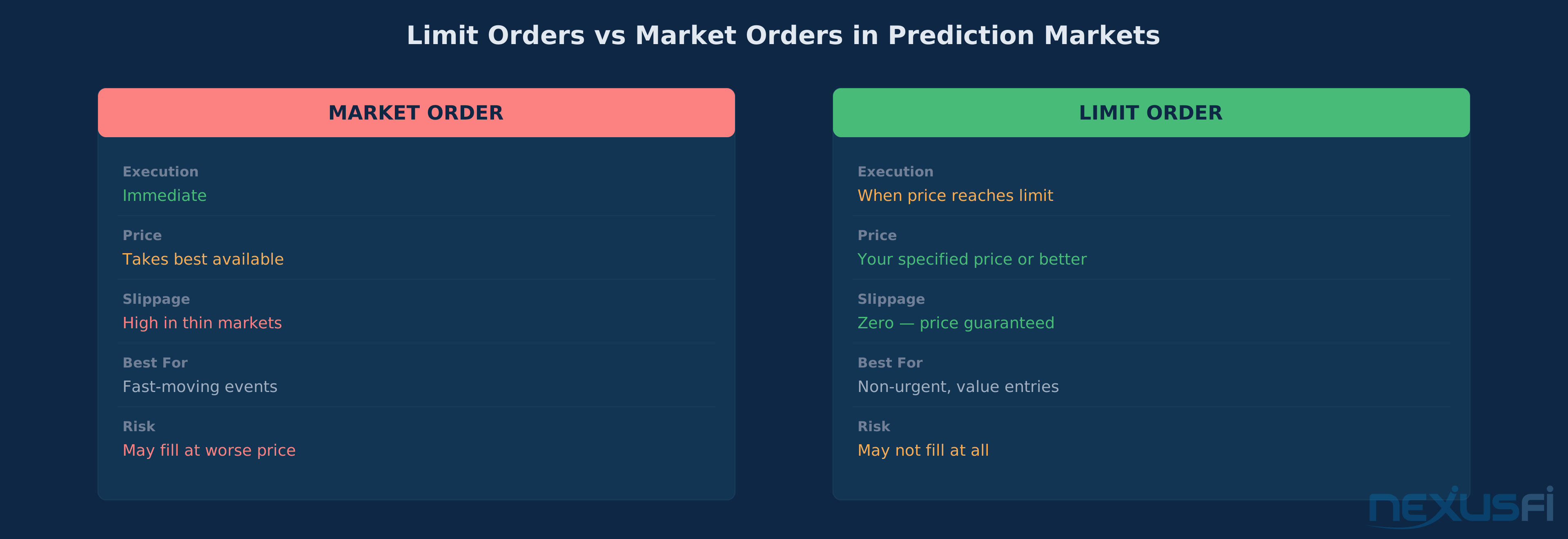
A market order executes immediately at the best available price. You get certainty of execution but no certainty of price.
When to Use Market Orders #
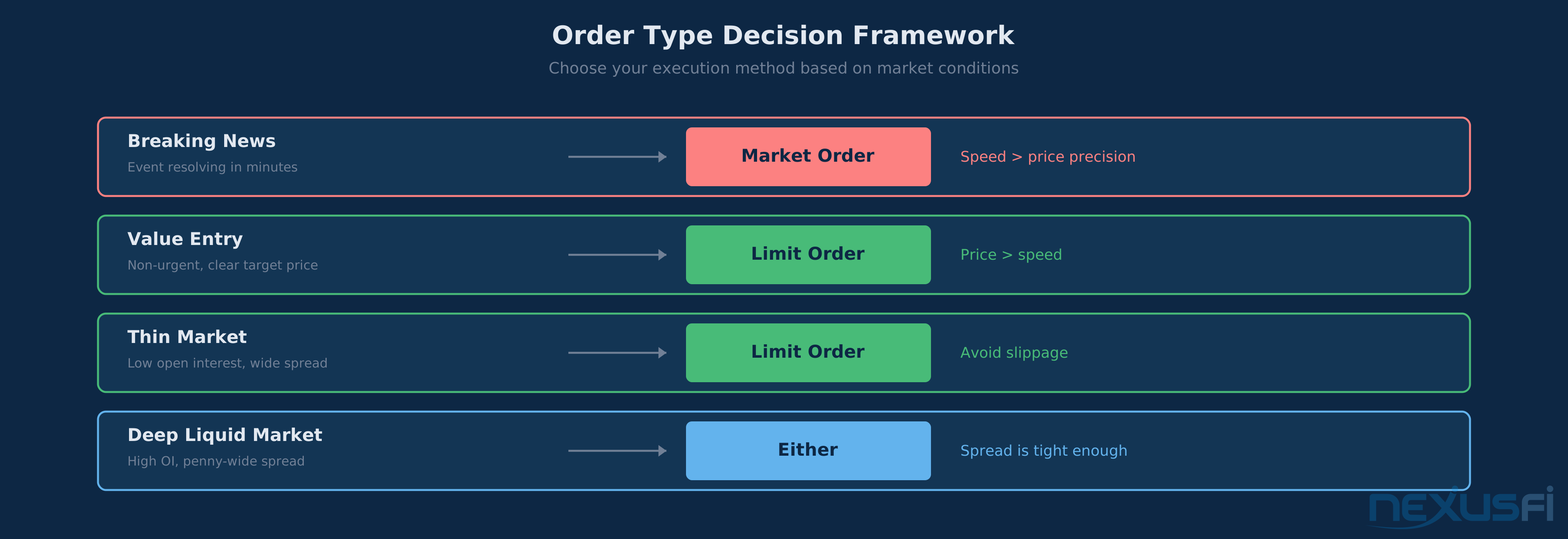
- Time-sensitive information: News just broke and prices are moving. A 65¢ ask might become 72¢ in seconds. Market order gets you filled before the price moves further.
- Small size, liquid contract: If you're buying 100 contracts and there are 500 on the ask, the price won't move against you. Market order is fine.
- Event imminent: If the FOMC decision is in 2 minutes and your contract is about to have a price jump, pay the spread.
When to Avoid Market Orders #
- Thin markets: A market order in a low-liquidity contract can walk up several price points. Check depth before sending.
- Wide spreads: A 5¢ spread on a 50¢ contract is 10% round-trip. Adding market order slippage makes this worse.
- Large size: If you want 10,000 contracts and only 500 are on the ask, a market order will fill the first 500 at the ask, then the next at whatever the next level is, all the way up until your order is complete.
Estimating Market Order Slippage #
Before sending a market order for significant size, manually count the contracts available at each price level on the ask side:
Ask  65¢ (500 contracts)   ← First 500 fill here
Ask  66¢ (800 contracts)   ← Next 800 fill here
Ask  67¢ (1,200 contracts) ← Next 1,200 fill here
For 2,000 contracts: average fill ≈ 66.0¢ vs. the displayed 65¢ ask. That's 1¢ of slippage on top of the fee.
Limit Orders #
A limit order specifies the price you're willing to transact at. You get price certainty but no guarantee of execution.
Limit Buy (YES) #
You want YES at no more than 63¢. You post a limit buy order at 63¢. It sits in the order book at the best bid. If a seller comes along willing to accept 63¢, you get filled. If YES stays offered at 65¢ with no sellers coming down, your order sits unfilled until you cancel it or it expires.
Limit Sell (YES / Buy NO) #
You hold YES at 65¢ and want to exit at 70¢ or better. You post a limit sell at 70¢. It joins the ask side. If buyers push the price up to 70¢, you get filled.
Crossing the Spread With Limit Orders #
The most capital-efficient execution strategy:
- Post your limit order at a price between the current bid and ask (e.g., 64¢ when bid=63¢, ask=65¢)
- If filled, you've captured half the spread vs. taking the market order
- Risk: you may not get filled, and the price moves away
For patience traders with no time urgency, posting at or near the mid-market price routinely saves 0.5-1¢ per contract. On 10,000 contracts, that's $50-100 in saved transaction costs.
GTC, Day, and Expiring Orders #
Good Till Cancelled (GTC) #
Your order sits in the book until filled or manually cancelled. Default on Kalshi. Useful when:
- You're confident in your price but have no time urgency
- You want to passively collect the spread as a pseudo market maker
- The event is days away and you have time to wait for your price
Day Orders #
Cancels at market close if unfilled. Kalshi operates nearly 24/7, so day orders have less relevance than in stock markets.
Time-in-Force for Events #
For contracts with imminent resolution, always check whether your GTC limit order will still be working after the event resolves. Some platforms cancel all open orders at resolution; others require manual cancellation. Leaving a limit buy for an already-resolved contract wastes capital.
Position Limits and Order Size #
Kalshi and other CFTC-regulated platforms impose position limits per contract. As of 2025-2026, Kalshi limits vary by contract type:
- Economic contracts (CPI, Fed rate): Higher limits, often $250,000 notional per market
- Sports and entertainment: Lower limits, typically $25,000 notional per market
- Political elections: Subject to separate regulatory scrutiny; limits may change with new CFTC guidance
Fi documented the regulatory evolution in CFTC Withdraws Prediction Market Ban, Signals New Rulemaking Under Chairman Selig — position limits are tied to the regulatory framework and may increase as the CFTC formalizes rules for event contracts.
For retail traders, these limits are rarely binding. For systematic or quantitative traders deploying larger capital, position limits require planning across multiple contracts and maturities.
Execution Strategy: Minimizing Friction #
The Spread Is Your Enemy (and Sometimes Your Friend) #
Every time you cross the spread (pay the ask or hit the bid), you're paying market makers for the immediacy of execution. In liquid markets, this is worth it for time-sensitive trades. In thin markets, the spread can be a meaningful fraction of your edge.
Strategy 1: Aggressive Entry, Patient Exit Enter at the ask when you have time-sensitive information. Exit with a patient limit order at your target price. This maximizes your edge capture on entry while reducing exit friction.
Strategy 2: Patient Entry, Aggressive Exit Post a limit buy below the current ask. Wait for price to come to you. When you need to exit, hit the bid immediately. This maximizes entry value while ensuring clean exit.
Strategy 3: Passive Both Ways (Market Making) Post on both sides of the book simultaneously, collecting the spread. Only viable in thin markets where your orders don't crowd out existing market makers, and where you have a view on fair value to avoid adverse selection.
The Bid-Ask Bounce Trap #
New traders often confuse buy/sell prices, creating inadvertent round-trips:
- See YES at 65¢, decide to buy → pay 65¢ ask
- Immediately change mind and try to exit → receive 63¢ bid
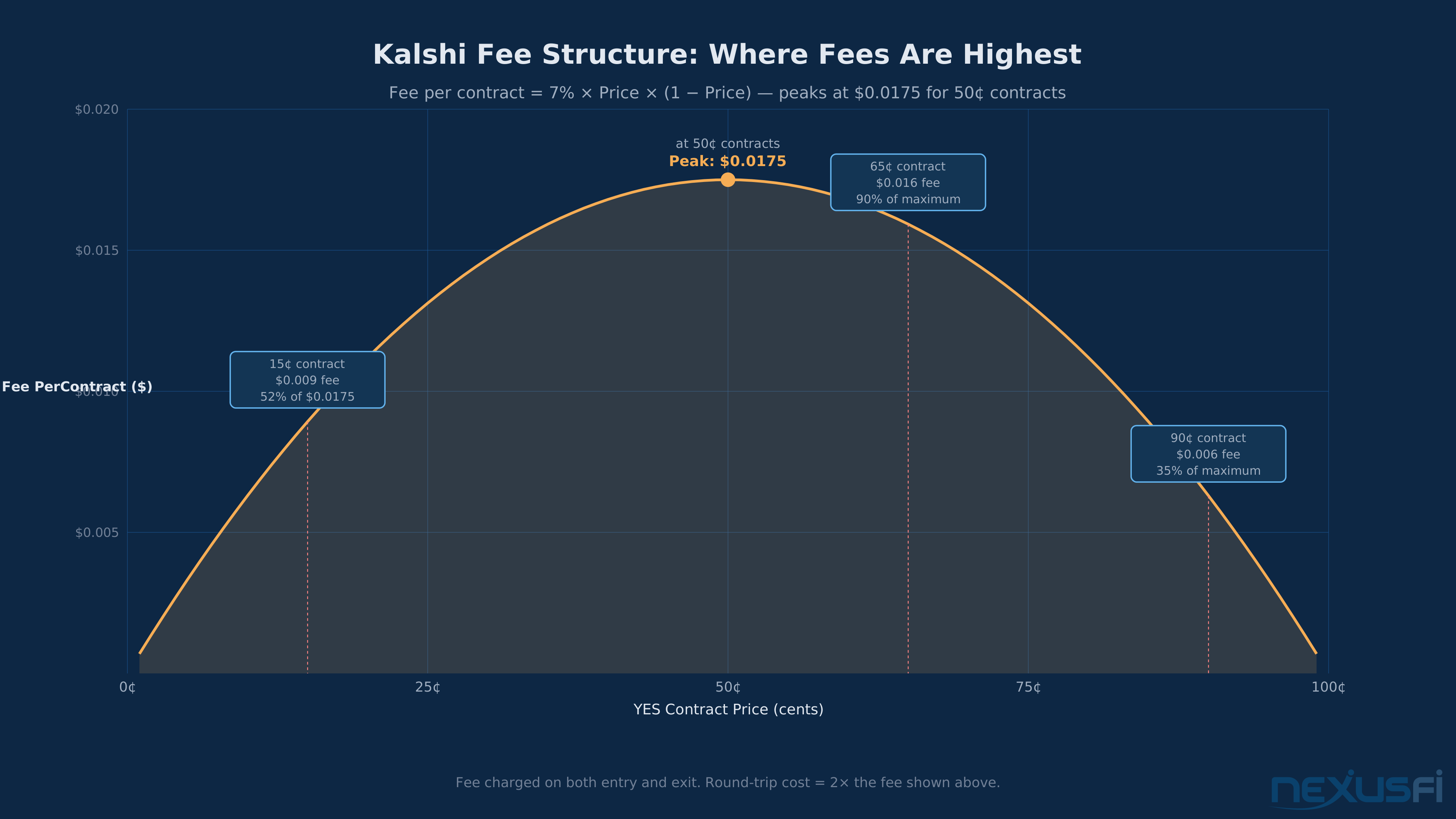
- Round-trip cost: 2¢ spread + 2× fees ≈ 4-5¢
On a 65¢ contract, a 4-5¢ round-trip is 6-8% of your cost basis, evaporated immediately. Always confirm your order before submitting.
Order Types on Polymarket #
Polymarket, being a blockchain-based platform, has different mechanics:
Automated Market Maker (AMM) vs. Order Book #
Polymarket uses a hybrid model:
- CLOB (Central Limit Order Book): Standard limit/market orders for liquid contracts
- AMM liquidity: Pool-based liquidity for less-traded contracts
When you trade on Polymarket's CLOB:
- Limit and market orders function similarly to Kalshi
- Fills settle on-chain in USDC
- Gas costs are generally subsidized by the platform
When you trade via AMM:
- No order book; price is determined algorithmically by the pool ratio
- Slippage is higher for large orders (the pool price moves against you)
- Better for quick entries into illiquid contracts where no counterparty exists
Common Execution Mistakes #
Mistake 1: Using Market Orders in Thin Markets #
A contract with 200 total open interest may show a 63¢ best ask with only 20 contracts available. A market order for 100 contracts walks up to 68¢. The 5¢ slippage destroys your edge before you've started.
Fix: Always check depth before market orders. Use limit orders in thin markets.
Mistake 2: Forgetting GTC Orders Before Events #
You placed a limit buy at 58¢ for a YES contract. The event resolves YES. But your limit order was never filled because the market traded up quickly. No harm — unless you thought you had a position and sized down other trades so.
Fix: Audit all GTC orders before events resolve.
Mistake 3: Confusing YES and NO Direction #
You think the Fed will NOT cut rates (NO is the value play). You accidentally buy YES. The Fed holds rates. Your YES resolves at $0.00. You traded the right fundamental thesis in the wrong direction.
Fix: Always confirm the direction displayed matches your thesis. "I'm buying NO because I think the event won't happen" should always be explicitly stated before hitting confirm.
Mistake 4: Ignoring Time to Resolution #
A limit buy at 55¢ sitting for 2 weeks ties up capital that could compound in other positions. If the event happens and the price never comes down to 55¢, the opportunity cost of unused capital is real.
Fix: Set realistic limit prices. For important positions, it may be worth paying up 1-2¢ to ensure execution.
Platform-Specific Notes #
Kalshi Order Mechanics #
- Orders can be placed 24/7
- Some contracts have trading halts near resolution (final hour or final day)
- Position limits enforced per market, not per account globally
- Settlement happens automatically — no need to manually close winning positions
Robinhood Event Contracts #
Robinhood launched event contracts in 2024 as a regulated alternative. Key mechanics differences:
- No explicit order book displayed to retail users (executes at displayed price)
- Limited contract types vs. Kalshi (focused on sports and major economic events)
- No fees on most contracts (revenue model via spread or float)
- Integration with existing brokerage account (no separate funding required)
The zero-fee model changes the friction calculation much — on Robinhood, your edge only needs to exceed the spread, not fees + spread.
Citations #
- @Fi: Kalshi Hits $1 Billion in Super Bowl Trading Volume — Scale and liquidity of modern prediction market infrastructure
- @Fi: CFTC Withdraws Prediction Market Ban, Signals New Rulemaking Under Chairman Selig — Regulatory context for position limits and platform mechanics
- @Fi: CME Group Event Contracts Blast Past 100 Million Traded — Institutional participation validating order book mechanics
- Kalshi Trading Guide — Kalshi official documentation
- Polymarket CLOB Documentation — Polymarket technical documentation
Knowledge Map
Prerequisites
Understand these firstGo Deeper
Build on this knowledgeReferences This Article
Articles that build on this topicCitations
- — Event Contracts - New Way to trade the CME Futures markets (2022) 👍 6
- — CME Launching Binary Option Trading (2022) 👍 1
- — CME Group Launches 24/7 Futures Trading (2025) 👍 3
- — NADEX Binary Options Cost Breakdown Comparison (2017) 👍 3
- — Nadex AMA - Dan Cook (2019) 👍 5