



How YES/NO Event Contracts Work: Contract Mechanics Explained
The complete mechanics of binary event contracts — pricing, payouts, resolution, and what happens at settlement. Everything a prediction market trader needs to understand before placing their first trade.
Overview #
A YES/NO event contract is the fundamental unit of prediction market trading. Every contract answers a single binary question: will this specific event occur or not? When the event resolves, one side pays $1. The other pays $0.
This article goes deep on every mechanical detail: how contracts are created, how YES and NO relate to each other mathematically, what happens at settlement, and the edge cases that catch beginners. Fi covered the broader context in the thread Kalshi, Polymarket, Prediction Markets etc, including the regulatory history and how the CFTC has shaped these markets.
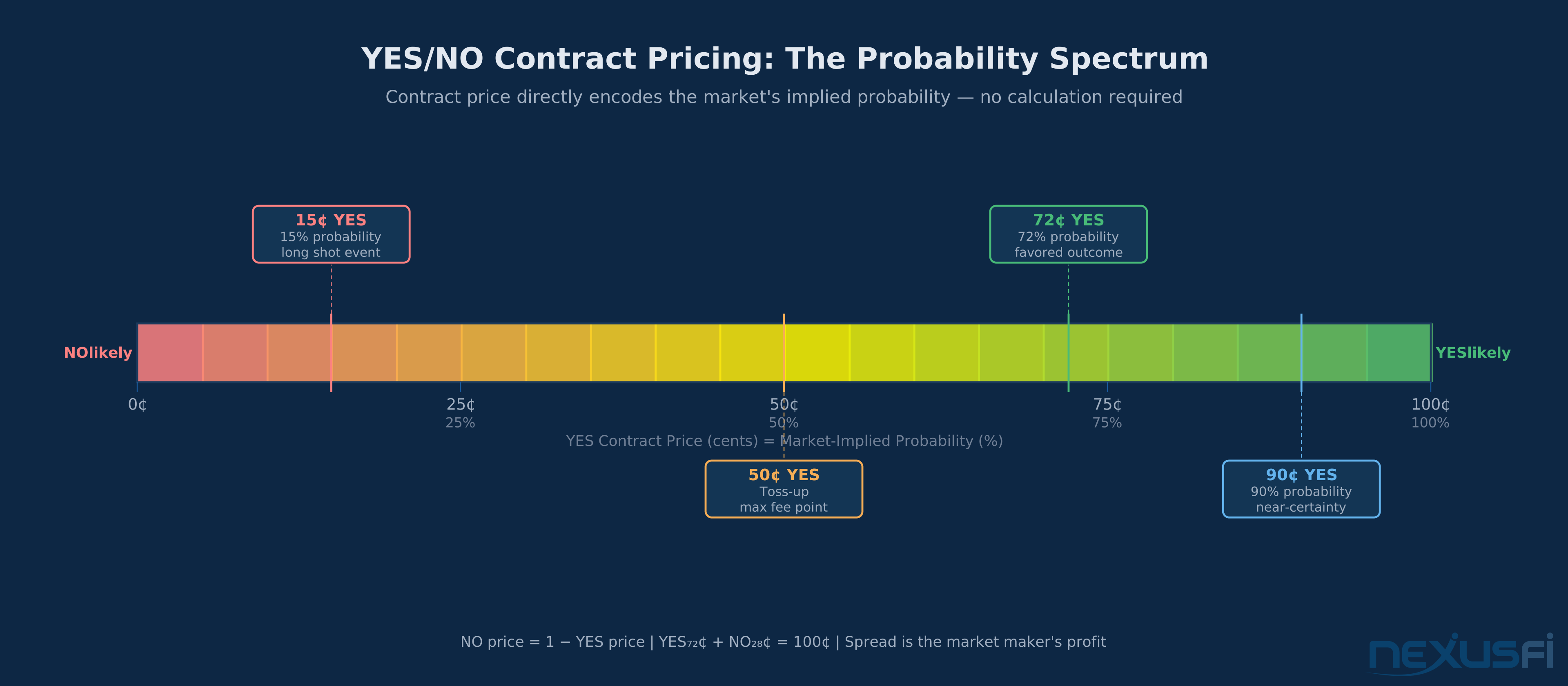
A YES contract at $0.65 means: - Market implies 65% probability the event occurs - Buy YES at $0.65: gain ~$0.35 if correct, lose ~$0.65 if wrong - Buy NO at $0.35: gain ~$0.65 if correct, lose ~$0.35 if wrong In a frictionless market, YES_price + NO_price = $1.00.
The hub article Introduction to Prediction Markets covers the broader context; this article digs into the mechanics of the contracts themselves.
The Core Structure: Binary Outcomes With Fixed Payoffs #
Every YES/NO event contract has exactly two mutually exclusive outcomes:
- YES resolves TRUE: The specified condition is met — contract pays $1.00
- NO resolves TRUE: The specified condition is not met — contract pays $0.00
There is no draw, no partial outcome, no maybe. The contract settles binary, final. This is at the core different from stocks where P&L has infinite possible outcomes, or futures where price can go anywhere. In prediction markets, maximum gain and maximum loss are fixed at entry.
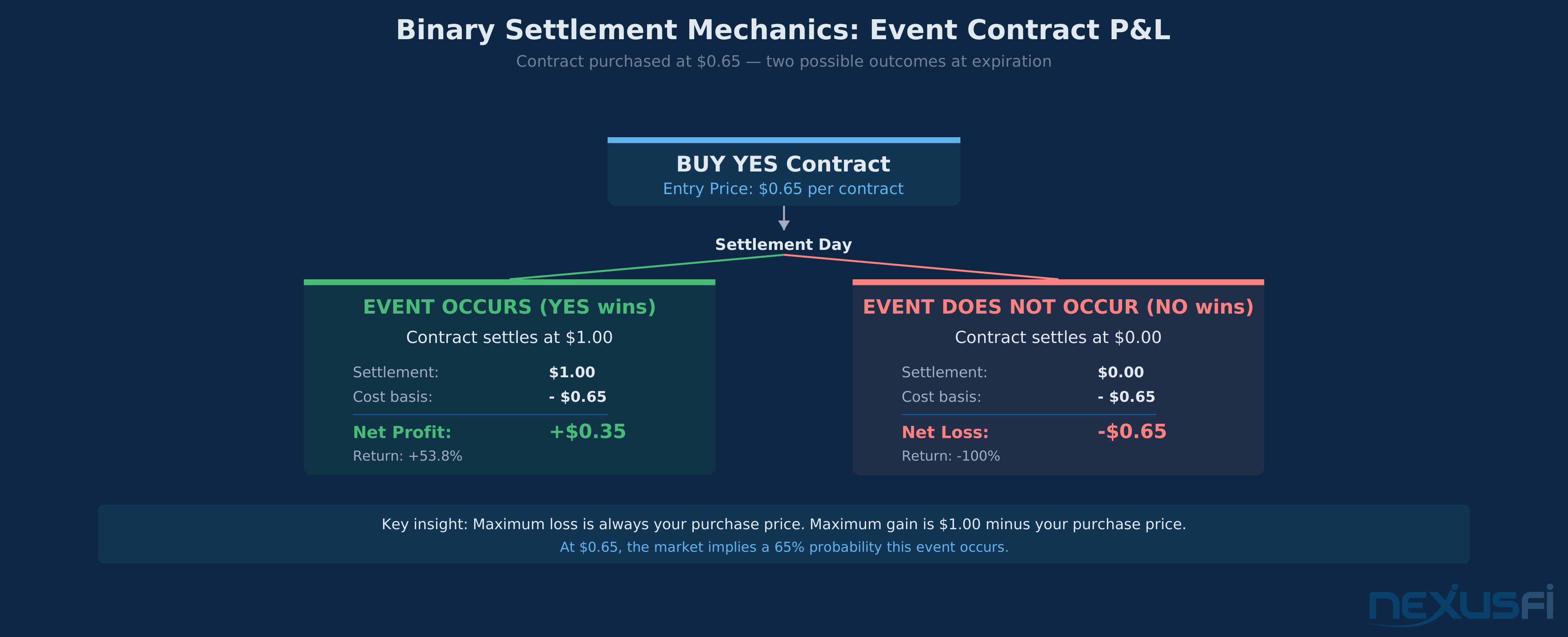
This fixed-payout structure has profound implications for risk management. When you buy YES at $0.65:
- Maximum loss: $0.65 (your cost basis)
- Maximum gain: $0.35 (the remaining amount to $1.00)
- No margin calls. No loss beyond your purchase price.
This categorical risk limit is one of the most distinctive features of prediction market trading versus other derivatives.
Contract Pricing: The Probability Decimal #
Kalshi prices contracts between $0.01 and $0.99. The price directly encodes probability.
A YES contract at $0.65 means:
- Market implies 65% probability the event occurs
- Buy YES at $0.65: gain ~$0.35 if correct, lose ~$0.65 if wrong
- Buy NO at $0.35: gain ~$0.65 if correct, lose ~$0.35 if wrong
In a frictionless market, YES_price + NO_price = $1.00. The real-world gap from $1.00 is the spread — market makers earn this gap for providing liquidity and immediacy.
Understanding Price Movement #
Contract prices move as information flows into the market. If you're trading a Fed rate cut contract priced at $0.45 and the Fed Chair makes surprisingly dovish comments, the YES price might jump to $0.62 in minutes as buyers rush in.
This is exactly like any other market: new information changes the market's consensus probability, which moves the price. Unlike stocks, though, you always know the bounds — the price cannot exceed $0.99 or fall below $0.01.
Fi posted about the regulatory environment that enabled this growth in CFTC Withdraws Prediction Market Ban, Signals New Rulemaking Under Chairman Selig, documenting how the CFTC's policy shift opened the door for regulated event contracts to flourish.
YES and NO: Two Order Books, One Event #
YES and NO are separate order books on Kalshi, but economically linked. Buying NO is equivalent to selling YES. The platform routes your exit order through whichever book offers the best execution.
The Mirror Relationship #
At any moment:
- YES_bid + NO_ask ≈ $1.00
- YES_ask + NO_bid ≈ $1.00
The slight deviation from exactly $1.00 is the combined spread. Wide spreads indicate thin liquidity; tight spreads indicate active market making.
How Exit Routing Works #
When you want to exit a YES position:
- Sell your YES contracts on the YES order book (finding buyers who want YES), OR
- The platform may route through the NO book if it offers better fills
The routing is automatic. You don't need to understand the internals — you enter an exit order, and the platform finds the best execution across both books.
Position Netting #
If you hold YES contracts and separately buy NO contracts for the same event, the positions net out. You've effectively closed your YES position, though the platform may handle this differently than a direct sale. Check platform documentation for your specific broker.
Margin and Maximum Loss: Your Collateral Is Your Position #
When you buy YES at $0.65, that $0.65 is your total collateral — your maximum possible loss. There is no margin call, no loss beyond your cost basis. This is categorically different from futures or options where losses can exceed your initial capital.
Comparing Risk Profiles #
| Instrument | Maximum Loss | Margin Calls? | Loss Limit at Entry? |
|---|---|---|---|
| YES/NO Contract | Cost basis only | Never | Yes, exactly known |
| Futures | Unlimited (below zero) | Yes | No |
| Long Options | Premium paid | Never | Yes |
| Short Options | Theoretically unlimited | Yes | No |
| Stocks | Purchase price | No (with margin: more) | Approximate |
The prediction market structure sits closest to long options in risk profile, but with a much simpler payout function (fixed $1.00 vs. variable premium at expiry).
Capital Efficiency #
Because your entire collateral is locked as margin against your position, you can't use that capital for other trades while the position is open. This is a meaningful constraint when trading multiple contracts simultaneously — your overall portfolio is constrained by total capital deployed, not by any notional leverage.
Fee Structure: Understanding the Cost of Trading #
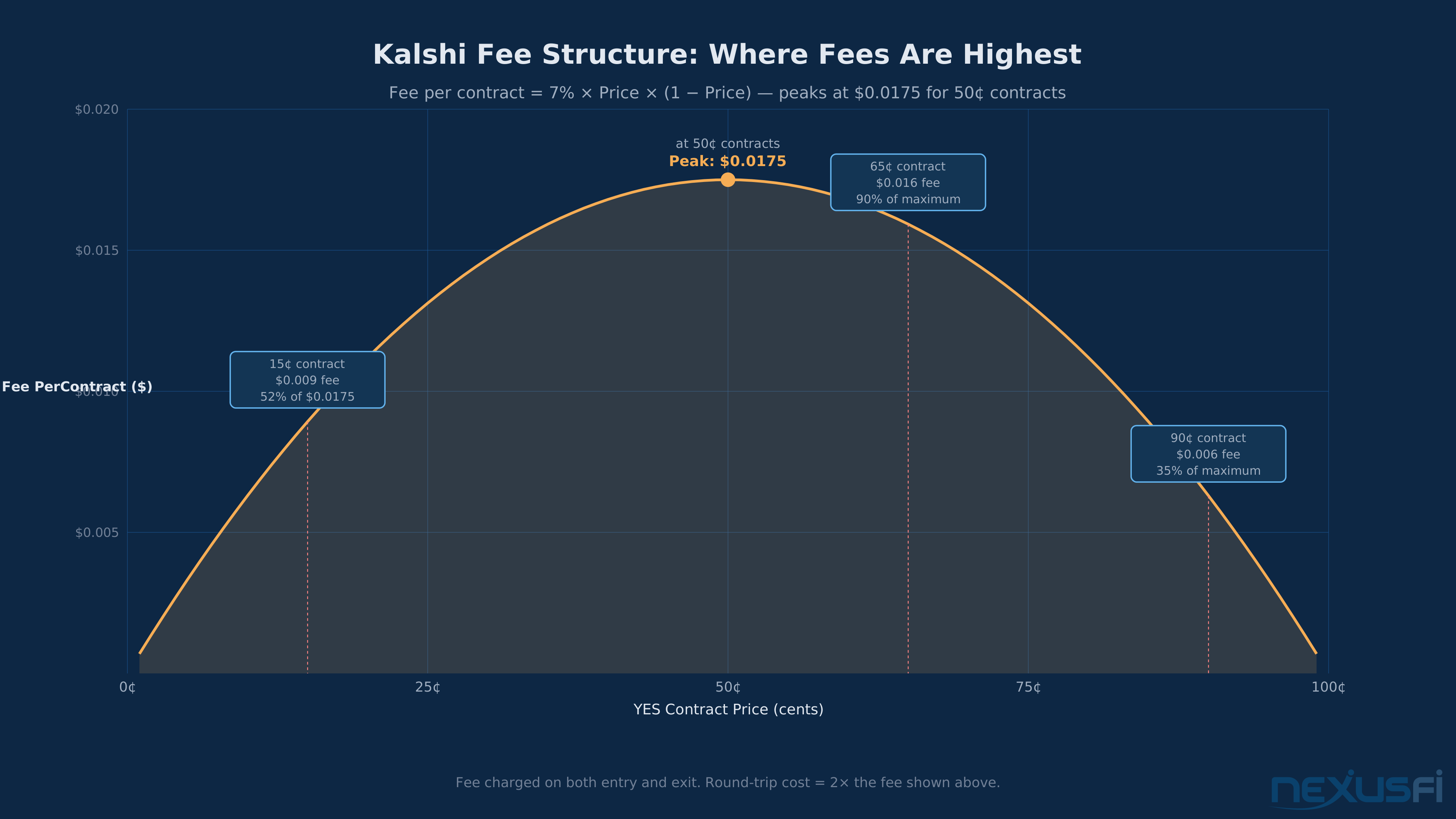
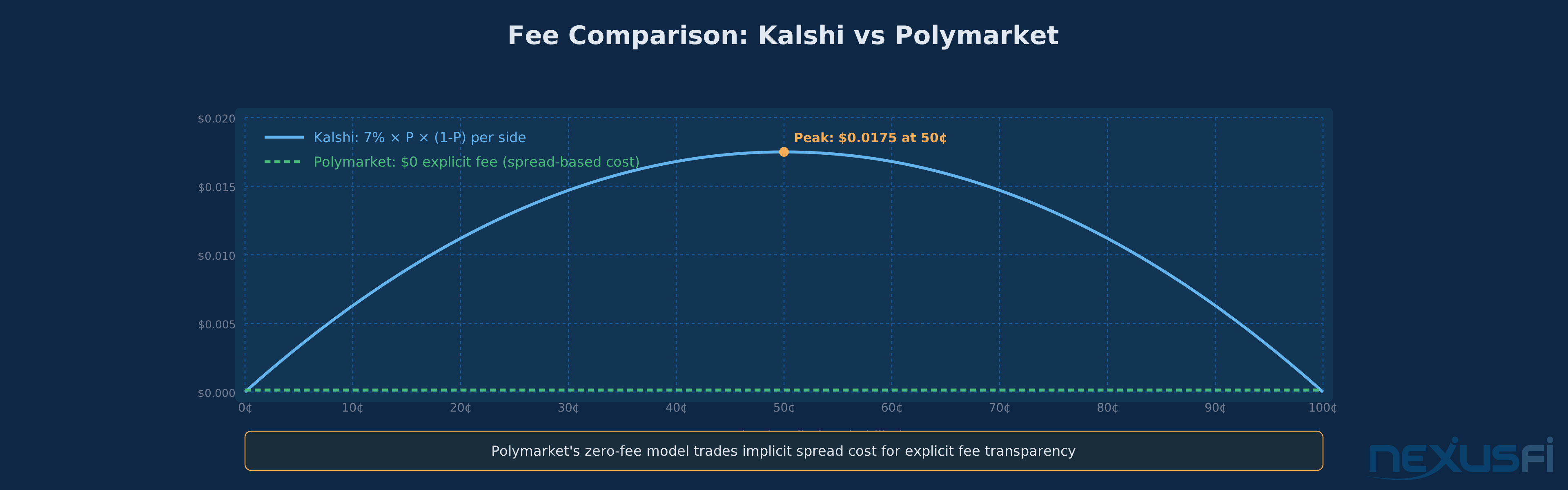
Kalshi charges a fee on both entry and exit: 7% × Contract_Price × (1 - Contract_Price).
This formula has an important property: fees peak at $0.50 contracts (maximum uncertainty = maximum fee) and approach zero at extreme prices near $0.01 or $0.99.
Fee Examples #
| Contract Price | Fee Per Contract | Round-Trip Cost |
|---|---|---|
| $0.10 (10¢) | $0.006 | $0.012 |
| $0.25 (25¢) | $0.013 | $0.026 |
| $0.50 (50¢) | $0.018 | $0.035 |
| $0.65 (65¢) | $0.016 | $0.032 |
| $0.80 (80¢) | $0.011 | $0.022 |
| $0.90 (90¢) | $0.006 | $0.013 |
Round-trip cost = entry fee + exit fee (selling your contract).
Fee Impact on Trade Selection #
For a $0.50 contract with $0.035 round-trip friction, you need at least 3.5 percentage points of edge above the market's implied probability just to break even. This is why prediction market trading requires genuine information or analytical advantage — casual guessing generates consistent losses against the fee structure.
The fee structure also creates a practical observation: very short-duration contracts near $0.50 (maximum uncertainty) are the most expensive to trade relative to potential gain. High-confidence contracts near $0.90 have fees that represent a smaller fraction of maximum gain.
Resolution Process: From Event to Payout #
Resolution is how the contract determines its final outcome. Understanding the resolution process in detail is the single most important skill for avoiding costly surprises.
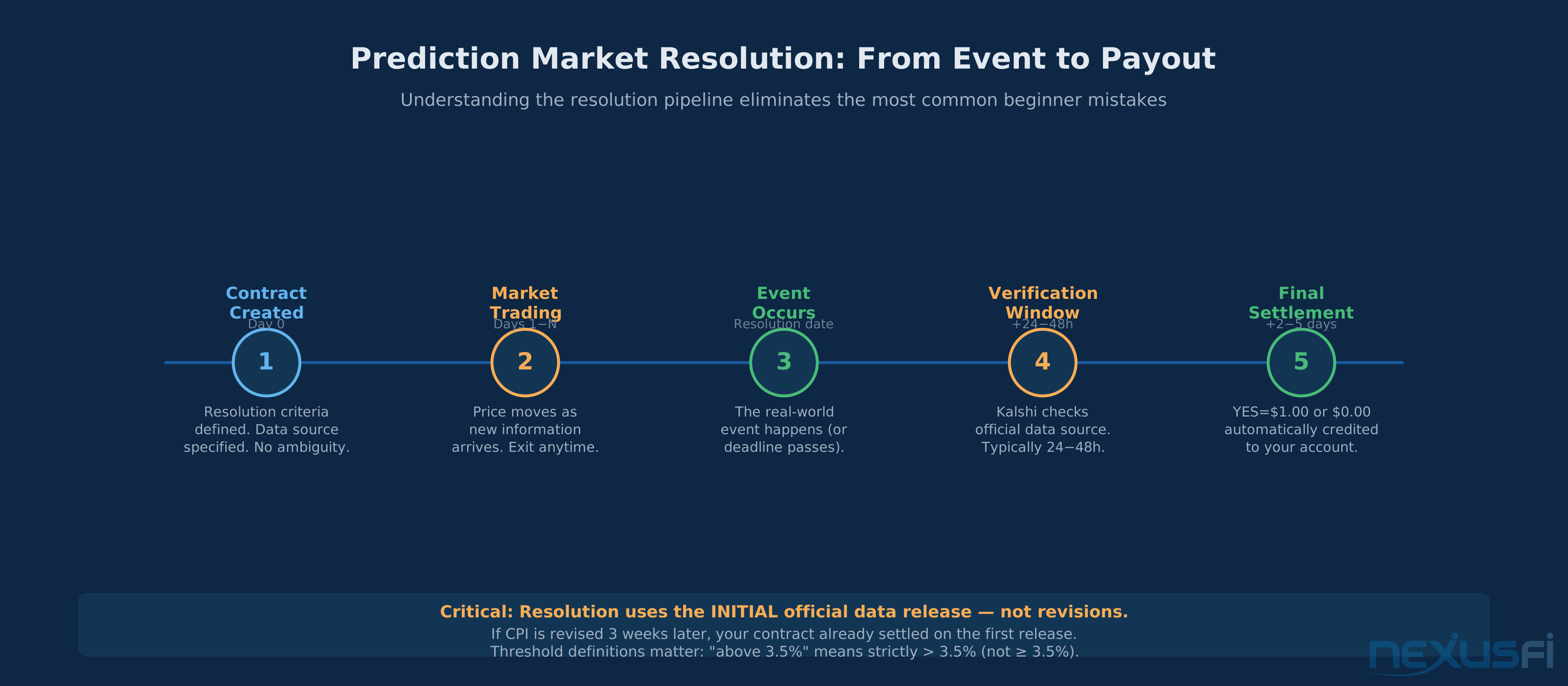
Step 1: Event occurs (or time window expires) Step 2: Kalshi verifies against the specified official data source (24-48 hour window) Step 3: Final settlement — YES holders receive $1.00, NO holders receive $0.00 Step 4: Funds automatically credited to account balance
The critical detail: the resolution source and exact wording define everything. "Will CPI be above 3.5% YoY?" resolves on the official BLS initial release date, not on later revisions. "Will the Fed cut rates?" resolves on the FOMC decision announcement.
What Resolution Criteria Actually Say #
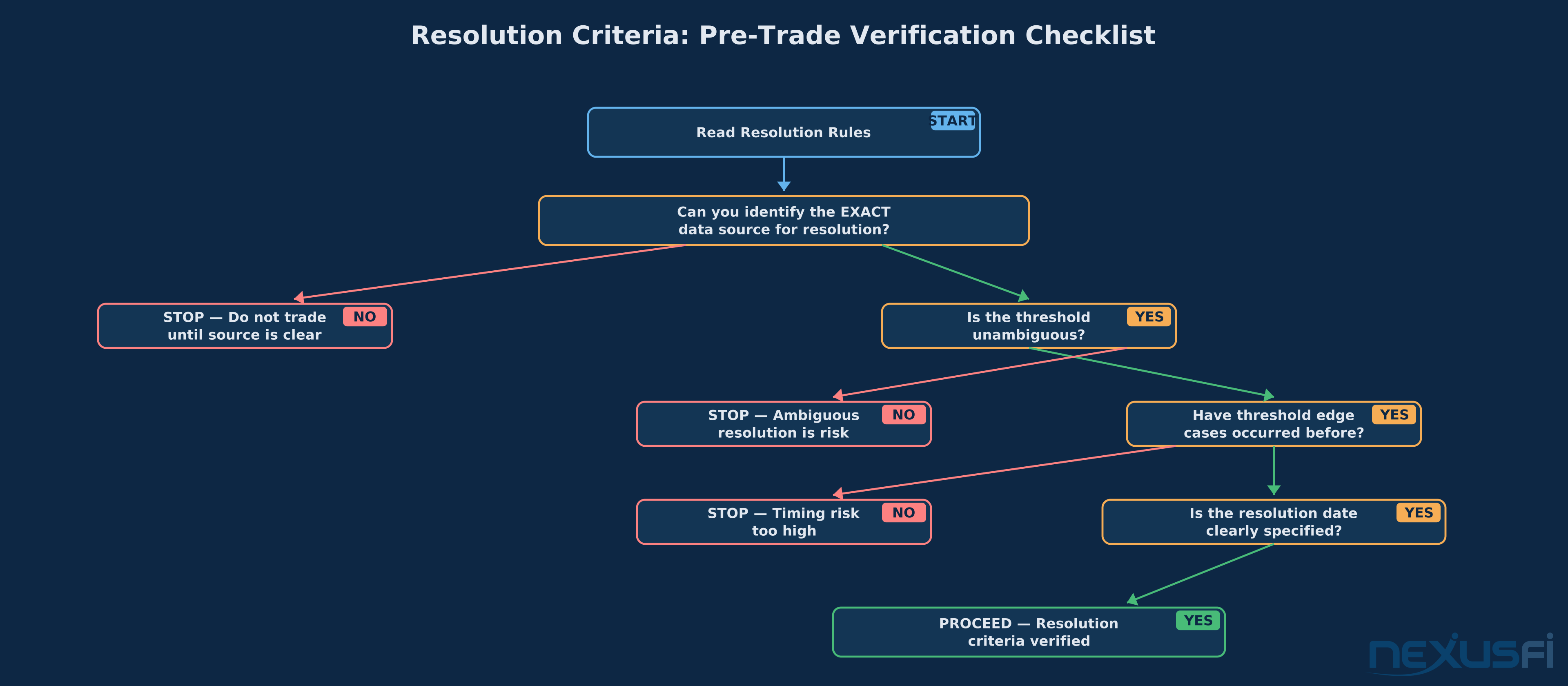
Resolution criteria are the legal definition of what you're trading. They specify:
- The exact condition that must be met
- The data source used to evaluate the condition
- The timing of evaluation (initial release vs. final)
- The operator (strictly above, at or above, equal to, etc.)
- Edge case handling (postponement, cancellation, ambiguity)
Experienced prediction market traders read the resolution criteria before reading anything else about a contract. The criteria define the product.
The Data Revision Trap #
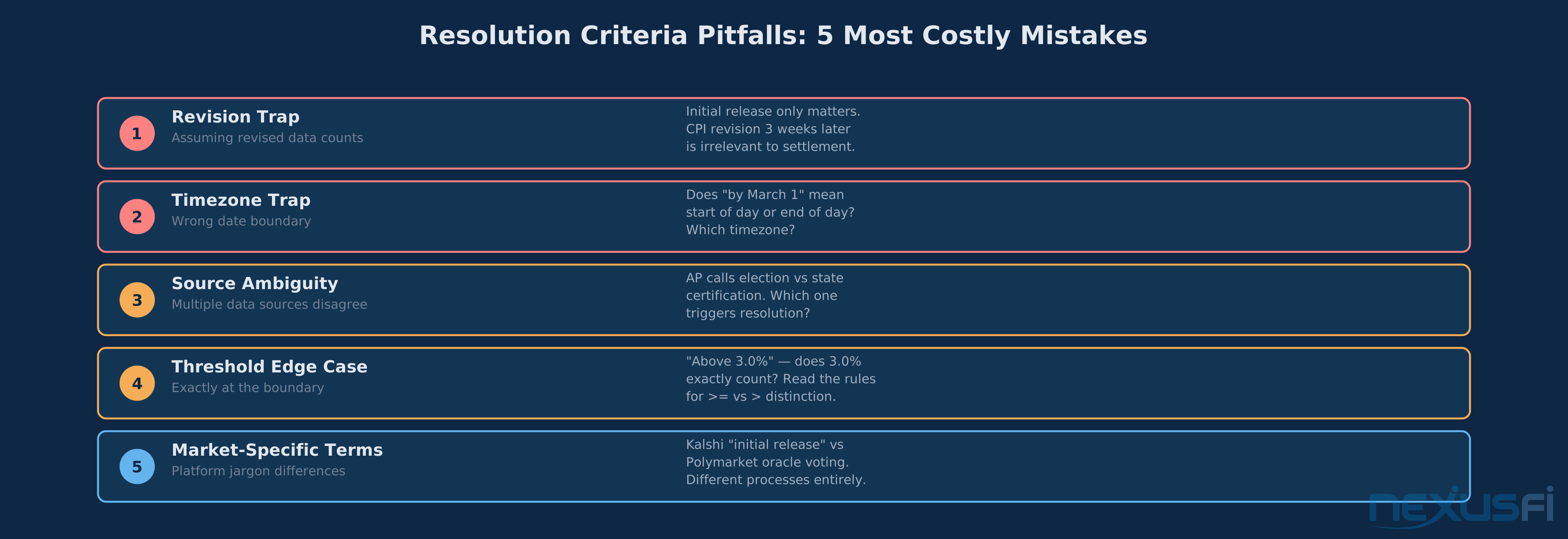
Government economic data gets revised frequently. The BLS, Census Bureau, and other agencies regularly release revised figures after initial publications. Prediction markets almost universally resolve on the initial release, not subsequent revisions.
Example: CPI comes in at 3.2% on the initial release. Your contract for "CPI above 3.0%" resolves YES. Three weeks later, the BLS revises CPI to 2.9%. Your contract already settled — you keep your winnings.
The reverse is equally true. If the initial release shows 2.9% but is later revised to 3.2%, your "above 3.0%" contract already resolved NO.
Postponements and Cancellations #
Events sometimes don't happen on schedule:
- Sports postponements: A rain-delayed game that plays the next day typically resolves on the actual result. Read the contract for the specific handling.
- Indefinite postponements: Some contracts void if the event doesn't occur within the resolution window, unwinding positions at cost.
- Government shutdowns or schedule changes: Federal Reserve meetings may be postponed in extraordinary circumstances. Contracts typically specify fallback resolution dates.
The specific handling is always documented in the resolution criteria. When in doubt, read the criteria.
Threshold Edge Cases #
"Above 3.5%" means strictly > 3.5%, not ≥ 3.5%. If CPI prints exactly 3.500%, the contract resolves NO. This distinction creates a small but non-zero edge case that surprises traders unfamiliar with the precision of the criteria.
Similarly, "within 25 basis points" means the distance from the policy rate to the outcome must be ≤ 0.25%, not < 0.25%. Always verify the inclusion/exclusion of boundary values.
Liquidity: When the Market Is Deep vs. Thin #
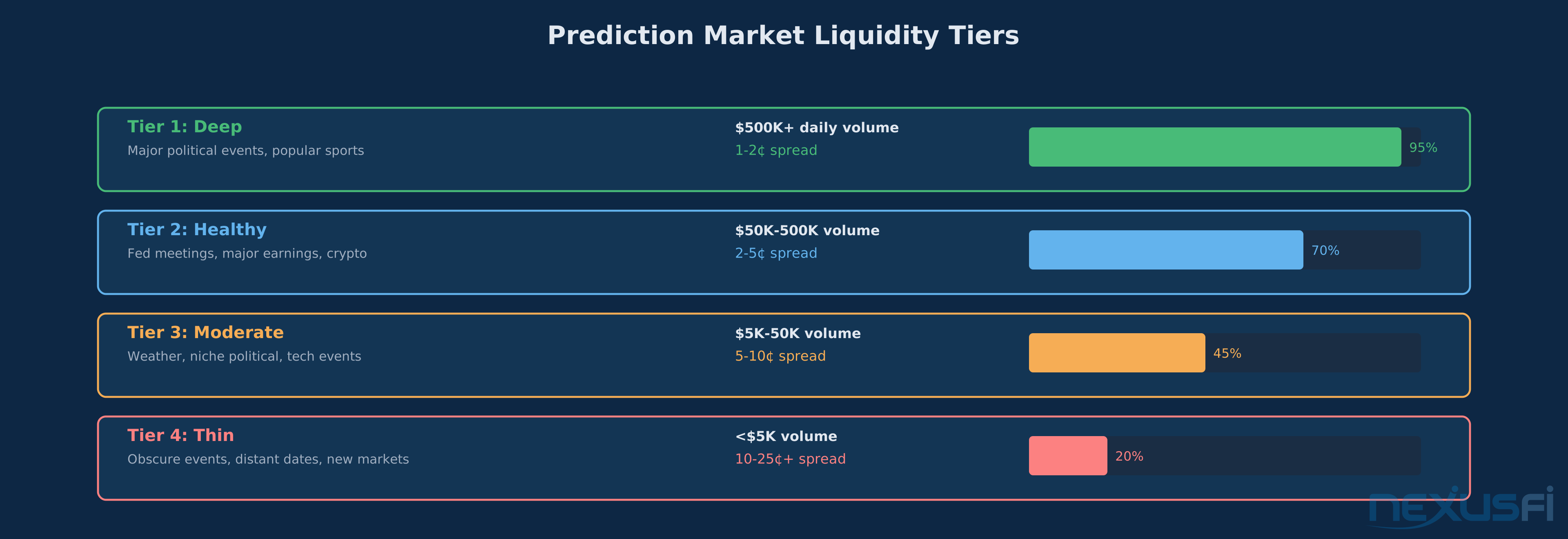
Prediction market liquidity varies enormously across contracts. A Fed rate decision contract on Kalshi might have hundreds of thousands of contracts outstanding with tight spreads. A niche sports prop might have 500 contracts outstanding with a 5-cent spread.
How to Read Order Book Depth #
Before trading, check:
- Best bid/ask spread: Tight (< 2¢) vs. wide (> 5¢) spreads indicate market depth
- Size at best bid/ask: How many contracts can you buy without moving the price?
- Total open interest: How many contracts exist across all participants?
For large positions, the displayed price may not reflect your actual fill price if you need to walk up the order book to execute.
Market Making #
Professional market makers provide liquidity on both sides of the order book, earning the spread. They take the opposite side of your trade and hedge or hold the position. Without market makers, you'd face far wider spreads and difficulty exiting positions.
Kalshi's growth as a regulated exchange has attracted institutional market makers, much improving liquidity over early-stage prediction markets. The platform hit $1 billion in Super Bowl trading volume, documented in the Fi post Kalshi Hits $1 Billion in Super Bowl Trading Volume, demonstrating the scale of liquidity that has developed.
Early Exit: Selling Before Resolution #
You don't need to hold to resolution. Prediction market positions can be exited at any time when there's a willing counterparty.
When to Exit Early #
Lock in gains: If YES moved from $0.65 to $0.82 after you bought, your thesis has been validated by market price. Sell at $0.82 to capture $0.17 profit (minus fees) rather than waiting for binary resolution.
Cut losses on new information: If the event you bet on becomes much less likely, selling at a lower price limits your loss versus holding to zero resolution.
Capital rotation: You find a better opportunity. Exiting a position frees capital for higher-expected-value trades.
Early Exit vs. Holding to Resolution #
| Scenario | Exit Early | Hold to Resolution |
|---|---|---|
| Strong conviction remains | No — hold for full $1.00 | Yes |
| New information against you | Yes — limit losses | No — risk full loss |
| Price has moved much in your favor | Consider — lock gains | Only if very confident |
| Near expiration, price near $0.50 | Yes — time decay unclear | No clear advantage |
Calculating Exit P&L #
Buy YES at $0.65 (fee: $0.016). Sell at $0.82 (fee: $0.014):
- Gross profit: $0.82 - $0.65 = $0.17
- Entry fee: -$0.016
- Exit fee: -$0.014
- Net profit: $0.17 - $0.030 = $0.140 per contract (21.5% return on $0.65 outlay)
Compare: Hold to $1.00 resolution:
- Gross profit: $1.00 - $0.65 = $0.35
- Entry fee: -$0.016
- Exit fee: $0 (no exit fee at resolution)
- Net profit: $0.334 per contract (51.4% return)
The decision to exit early vs. hold is at the core a question about your probability estimate vs. the current price. If the market is now at $0.82 but you believe the true probability is 92%, holding is correct. If you believe the true probability is 75%, selling at $0.82 captures overvaluation.
The 2-Minute Pre-Trade Checklist #
Before every trade, answer these four questions:
- What exactly must happen for YES to resolve TRUE? (Read the resolution criteria, not just the title)
- What data source determines the outcome? (Official agency, stats provider, or platform determination?)
- What date/time does the contract resolve? (Note the timezone — critical for international events)
- Are there edge cases where the outcome might be ambiguous? (Postponements, revisions, threshold boundary cases)
If you can answer all four clearly, you understand what you're trading. If you're uncertain on any of them, you don't know what you're trading.
This isn't pedantic caution — resolution surprises are the #1 source of unexpected losses for new prediction market traders. The criteria exist to eliminate ambiguity; use them.
Practical Application: Your First Trade Walkthrough #
Let's walk through a complete trade from entry to exit:
Event: "Will the Fed cut rates at the March FOMC meeting?" Contract price: YES at 35¢ (market implies 35% probability) Your assessment: Based on labor market data and Fed Chair comments, you estimate 50% probability
Step 1: Pre-trade checklist
- Resolution criteria: Resolves YES if FOMC target rate reduced by ≥ 25bps. Source: FOMC official statement.
- Resolution date: Day of FOMC announcement, typically 2pm ET.
- Edge cases: If FOMC is postponed, contract extends. Unscheduled cuts not included.
- Your edge: 50% - 35% = 15 percentage points above market implied probability
Step 2: Calculate expected value
- Entry fee: 7% × 0.35 × 0.65 = $0.016
- Spread cost: ~$0.015 (entering at ask vs. mid)
- Total friction: ~$0.031
- Edge above friction: 15% - 3.1% = ~11.9% positive EV
Step 3: Size the position
- Capital allocated: $1,000
- Number of contracts: $1,000 ÷ $0.35 = 2,857 contracts
- Maximum loss: $1,000 (your cost basis)
- Maximum gain: $1,857 - fees (if resolved YES)
Step 4: Monitor and manage
- If price moves to 50¢ before resolution: You can exit for ~$0.13 profit per contract (after fees) without waiting
- If price drops to 20¢ on new information: Consider exiting to limit loss to $0.15 per contract vs. potential $0.35 loss at resolution
Step 5: Resolution
- Fed cuts rates: Receive $1.00 per contract, net $0.634 profit per contract after fees
- Fed holds: Receive $0.00, lose $0.35 per contract
Common Mistakes in YES/NO Contract Trading #
Mistake 1: Not Reading Resolution Criteria #
The contract title is a summary. The resolution criteria are the contract. Titles like "Will the Fed cut rates?" compress complex language. The criteria specify exactly which meeting, which rate, which threshold, and which data source. Five minutes reading the criteria prevents the most common surprises.
Mistake 2: Confusing Implied Probability With Your Probability #
The contract price is the market's implied probability. Your job is to compare your probability to the market's. Many new traders trade contracts they find "attractive" without forming their own probability estimate — this is gambling, not trading.
Mistake 3: Ignoring Fee Impact at Moderate Prices #
Fees are highest near 50¢ contracts. A $0.50 contract has a $0.018 entry fee — 3.5% of your potential gain. On a $0.10 edge, half your potential profit evaporates to fees. Calculate net EV before every trade.
Mistake 4: Sizing Too Large on High-Probability Contracts #
"The market says 88% — this is basically free money." An 88¢ contract that resolves NO costs you 88 cents per contract. If you sized $10,000 into these "near certain" contracts and they resolve wrong, you lose most of your capital on a single trade. Position sizing must reflect the cost basis, not just the probability.
Mistake 5: Holding Through Adverse Information #
The binary nature of prediction markets punishes anchoring. If you bought YES at 60¢ and new information pushes the market to 30¢, you've lost half your position value. The market has updated; your original thesis may be invalidated. Reassess based on current information, not purchase price.
Contract Types Beyond Standard YES/NO #
While YES/NO binary contracts are the most common, prediction markets offer variations:
Range Contracts (Scalar Markets) #
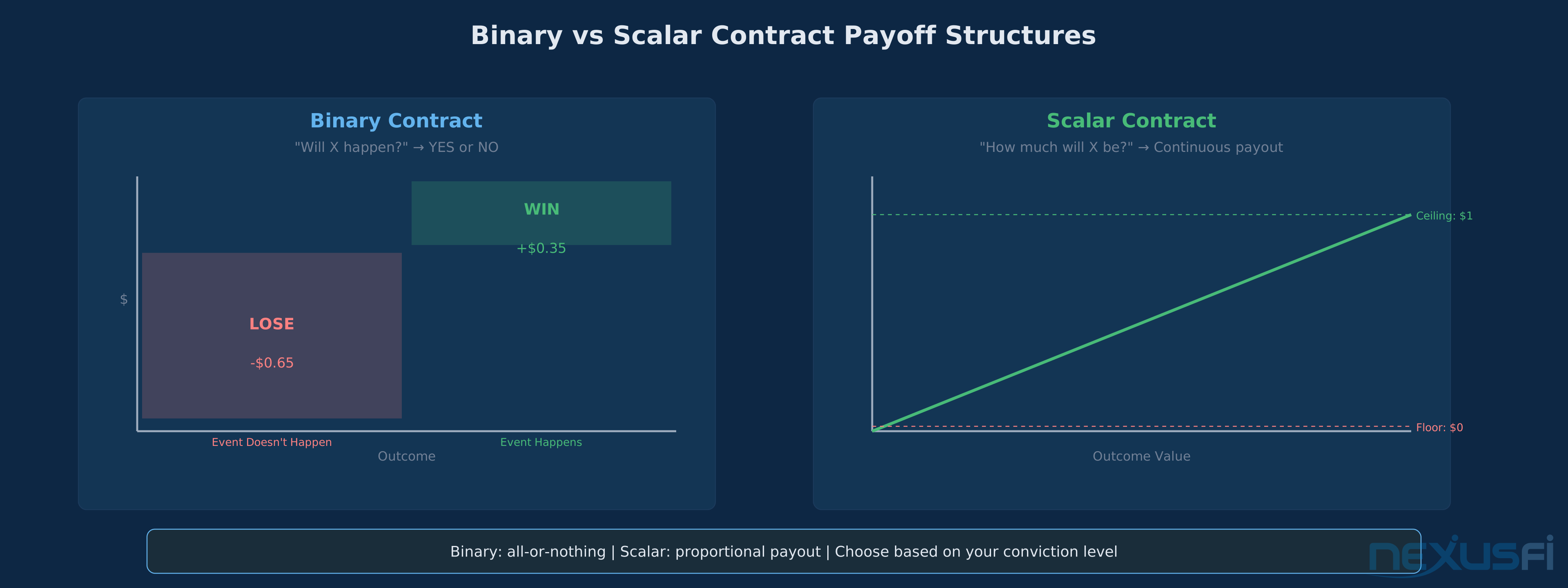
Some platforms offer scalar contracts — not just "above X" but "what range will the outcome fall in?" These function differently from binary contracts and are covered in the dedicated Binary vs Scalar Markets article.
Multi-Outcome Markets #
"Who will win the election?" might have 5 candidates. Each candidate has a YES/NO contract, but the sum of all candidate probabilities should approximate 100%. Arbitrage opportunities arise when the sum deviates much from 100%.
Conditional Markets #
Some markets resolve only if a precondition is met. "If the Fed hikes in March, will they also hike in May?" resolves void if March produces no hike. These require careful reading of the conditional resolution criteria.
Citations #
- @Fi: Kalshi, Polymarket, Prediction Markets etc — NexusFi discussion of CFTC regulation and market structure
- @Fi: CFTC Withdraws Prediction Market Ban, Signals New Rulemaking Under Chairman Selig — Regulatory framework for event contracts
- @Fi: Kalshi Hits $1 Billion in Super Bowl Trading Volume — Scale and liquidity of modern prediction markets
- How are prices calculated? — Kalshi Help Center
- Event Contracts: What They Are & How to Trade Them — PredScope
Knowledge Map
Prerequisites
Understand these firstGo Deeper
Build on this knowledgeReferences This Article
Articles that build on this topicCitations
- — Event Contracts - New Way to trade the CME Futures markets (2022) 👍 6
- — CME Launching Binary Option Trading (2022) 👍 1
- — CME Group Launches 24/7 Futures Trading (2025) 👍 3
- — NADEX Binary Options Cost Breakdown Comparison (2017) 👍 3
- — Nadex AMA - Dan Cook (2019) 👍 5
- — Cboe Eyes Prediction Markets With Regulated Binary Options (2026)