



Introduction to Prediction Markets: Trading Event Contracts on Kalshi
A complete beginner's guide to buying and selling YES/NO event contracts, understanding implied probability, and making your first trade on Kalshi
Overview #
Prediction markets are one of the most intellectually honest financial instruments ever created. Unlike stocks, where you're betting on a company's future earnings, or options, where you're navigating complex volatility mechanics — prediction markets — a category of event contracts — strip everything down to a single question: will this specific event happen, or not?
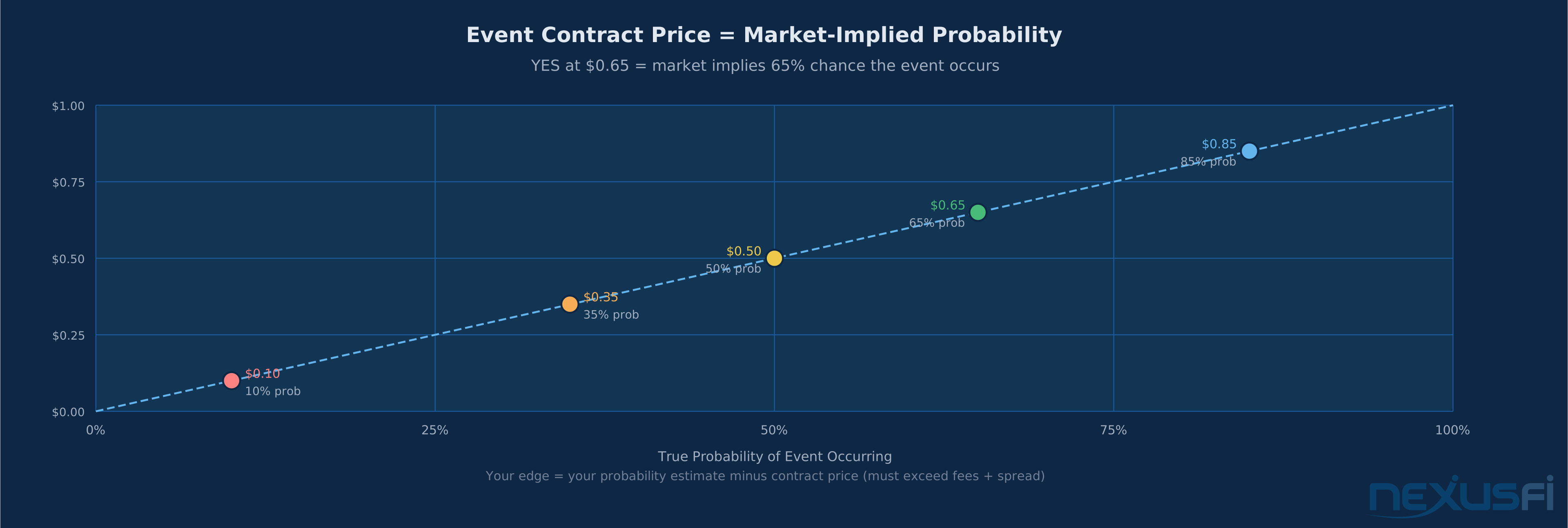
You buy a YES contract. It pays $1 if the event occurs. It pays $0 if it doesn't. You buy a NO contract. Same thing, reversed. The price of that contract — let's say $0.65 — is the market's best estimate of the probability. Sixty-five percent chance it happens. That's it.
It sounds simple. It mostly is. But there's enough nuance in contract mechanics, fees, liquidity, and resolution criteria to cost beginners real money if they skip the fundamentals. This guide covers everything you need to make your first trade on Kalshi — the U.S. CFTC-regulated prediction market that's the best starting point for most traders — and avoid the mistakes that wipe out beginners in the first week.
Prediction markets aren't just for traders. Economists use them to aggregate information. Researchers study them to understand how crowds process information. Corporations use them internally to forecast product launches. But for a trader? They're a liquid, continuously-priced market where your probability estimate is your edge. Get the estimate right more often than the market does, and you make money.
A complete beginner's guide to buying and selling YES/NO event contracts, understanding implied probability, and making your first trade on Kalshi --- Prediction markets are one of the most intellectually honest financial instruments ever created.
The three platforms covered in this Academy series — Kalshi, Polymarket, and Robinhood event contracts — all let retail traders access prediction markets. They differ much in regulation, mechanics, liquidity, and complexity. Kalshi is where you should start.
Key Concepts #
The Contract is the Bet on an Outcome #
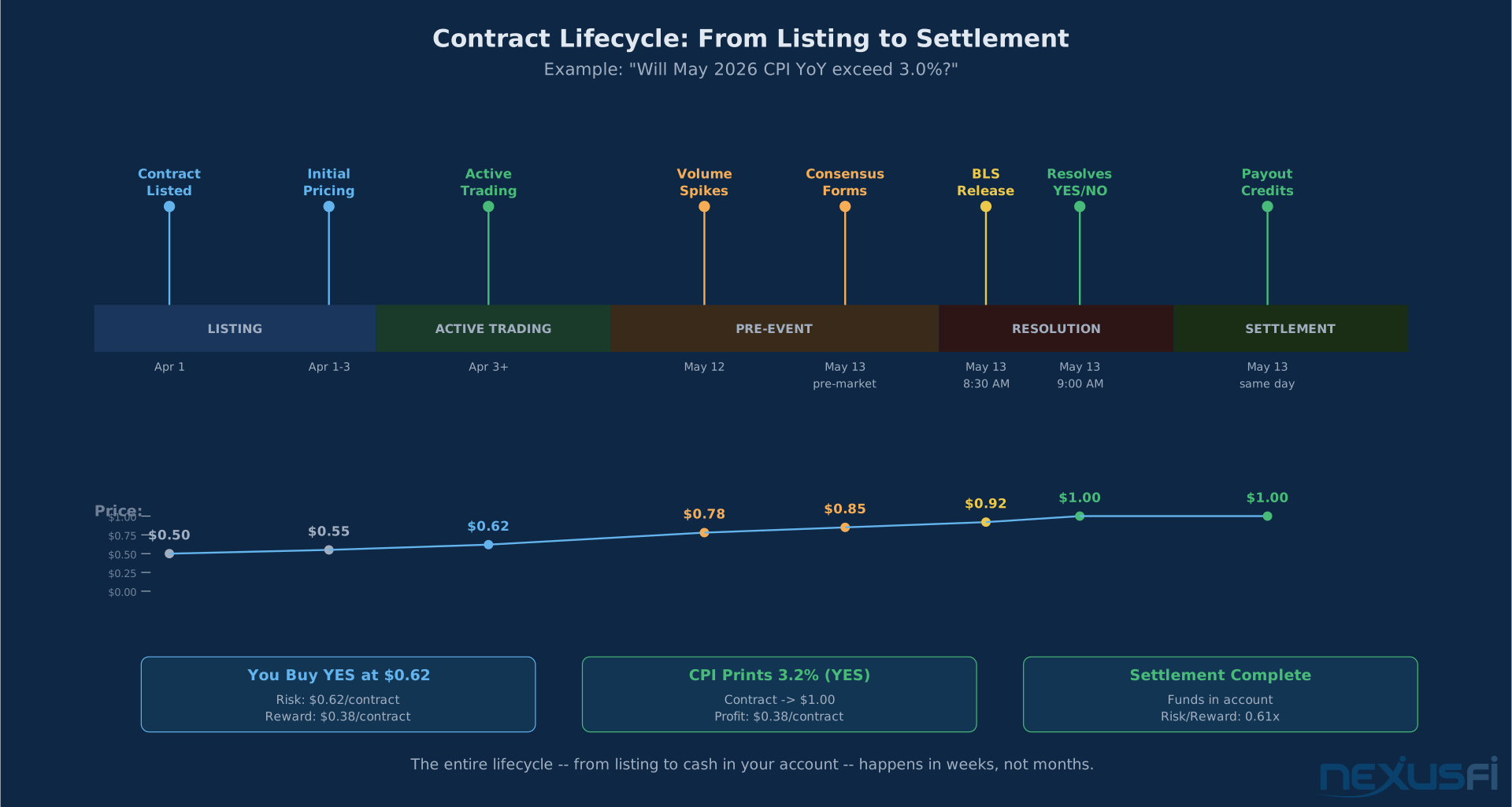
A prediction market contract represents a question with a binary outcome. On Kalshi, contracts take the form: "Will [event] [happen/occur/be X] by [date/time]?"
Examples:
- "Will the Fed cut rates by 25bps at the May meeting?"
- "Will CPI YoY be above 3.5% in April?"
- "Will [Candidate] win the presidential election?"
- "Will Hurricane season produce more than 12 named storms?"
Each contract has exactly two outcomes: YES (event happens) and NO (event doesn't happen). When the event resolves, one side pays $1 per contract. The other pays $0. Simple, clean, binary.
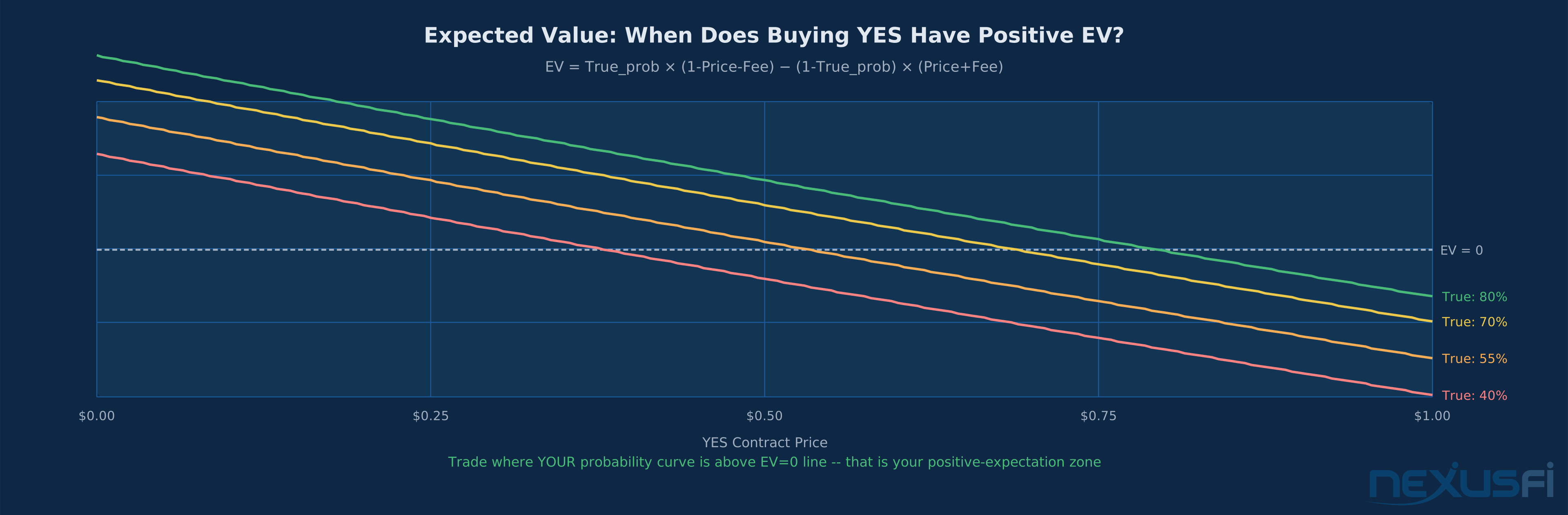
The price at which YES contracts trade reflects the market's current estimate of the probability. If YES is at $0.72, the market implies a 72% probability the event occurs. If you think the probability is higher — say, 85% — buying YES at $0.72 has positive expected value.
That's the entire game. Estimate probabilities better than the market, make bets sized according to your edge, and manage risk so you don't blow up before your edge asserts itself.
Contract Pricing: The Probability Encoding #
Kalshi contracts trade between $0.01 and $0.99. The normalization is intentional: the price directly encodes the implied probability as a decimal.
- YES at $0.35 = market implies 35% probability
- YES at $0.72 = market implies 72% probability
- NO at $0.65 = implies 65% probability the event does NOT occur
YES and NO are complements on the same event, so in a frictionless market, YES price + NO price = $1.00. In practice, they don't sum exactly to $1.00 due to the bid-ask spread — at any moment, you're buying at the ask (slightly above the theoretical fair value) and selling at the bid (slightly below). The difference is real trading cost, not profit.
The pricing formula makes this visually intuitive: a contract at $0.50 is a coin flip. A contract at $0.90 is something the market thinks is nearly certain. A contract at $0.05 is a long shot. If you've ever read prediction market coverage in the news, this is exactly what they mean when they report "the market implies a 78% chance of [outcome]."
Buying YES vs Buying NO — The Payoff Math #
Let's work through both sides with concrete numbers.
Scenario: Fed cut contract, YES trading at $0.65
You buy YES at $0.65 (per contract):
- If Fed cuts: your contract pays $1.00, profit = $0.35 per contract
- If Fed doesn't cut: contract pays $0.00, loss = $0.65 per contract
You buy NO at $0.35 (per contract):
- If Fed doesn't cut: your contract pays $1.00, profit = $0.65 per contract
- If Fed cuts: contract pays $0.00, loss = $0.35 per contract
Notice the asymmetry: YES buyers risk more per contract (the full YES price) but profit less, while NO buyers risk less but profit more if they're right. This isn't a disadvantage to either side — it's just probability encoding. The YES contract at $0.65 has 65% of the probability baked in.
Your expected value calculation:
- EV of buying YES at $0.65 if true probability = 75%: (0.75 × $0.35) − (0.25 × $0.65) = $0.2625 − $0.1625 = $0.10 per contract
- EV of buying YES at $0.65 if true probability = 60%: (0.60 × $0.35) − (0.40 × $0.65) = $0.21 − $0.26 = −$0.05 per contract
Your edge is the difference between your probability estimate and the market's implied probability. Get it right, size it correctly, and you're profitable over time.
Resolution Criteria: Read This Before Every Trade #
This is the section that separates traders who make money from traders who lose to contract technicalities.
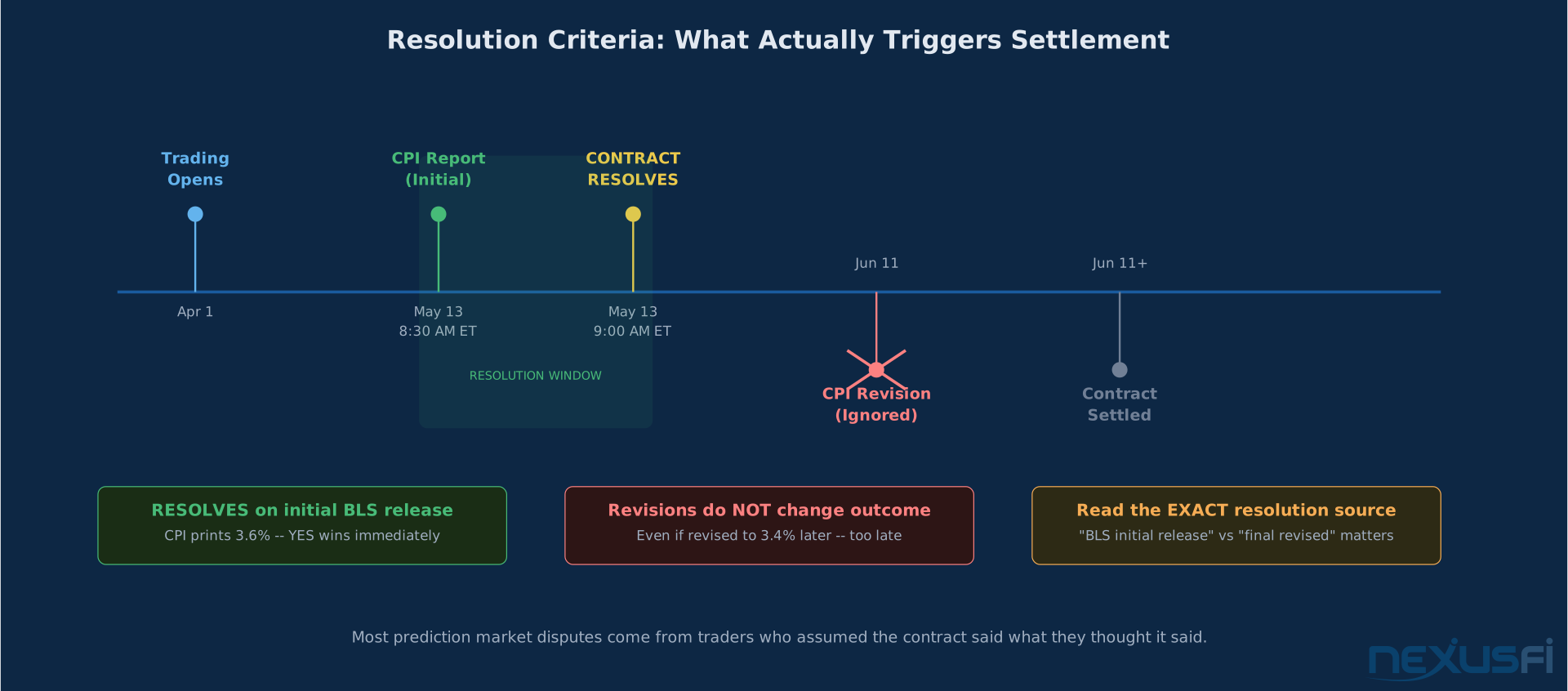
Every Kalshi contract has explicit resolution criteria that define exactly what must happen for YES to resolve TRUE. The wording matters — enormously. "Will the Fed cut rates by 25bps at the May meeting?" resolves based on the Fed's official statement at the May FOMC. "Will CPI be above 3.5% YoY?" resolves based on the BLS release — the initial release, not revisions.
What gets beginners:
- Threshold definitions: "above 3.5%" means > 3.5%, not ≥ 3.5%. If CPI prints exactly 3.500%, does it resolve YES? Read the exact language.
- Timing: Does "by end of year" mean by December 31st 23:59 ET, or by January 1st? Check the resolution timestamp.
- Data revisions: Most economic contracts resolve on the initial release, not on later revisions. If CPI gets revised upward three weeks later, it doesn't change your payout.
- Certification vs announcement: Election contracts often resolve on official certification, not on major media calls. The 2024 election taught prediction market traders this the hard way.
- Cancellations and postponements: Weather events that don't occur because the hurricane changed track. Sports games postponed by rain. Know what happens to your position.
The pattern is consistent: most prediction market disputes come from traders who traded based on what they thought the contract said, rather than what it actually said. Spend two minutes reading the resolution criteria for every contract. It's the most valuable two minutes you'll spend.
How It Works: The Mechanics of Trading #
The Kalshi Order Book #
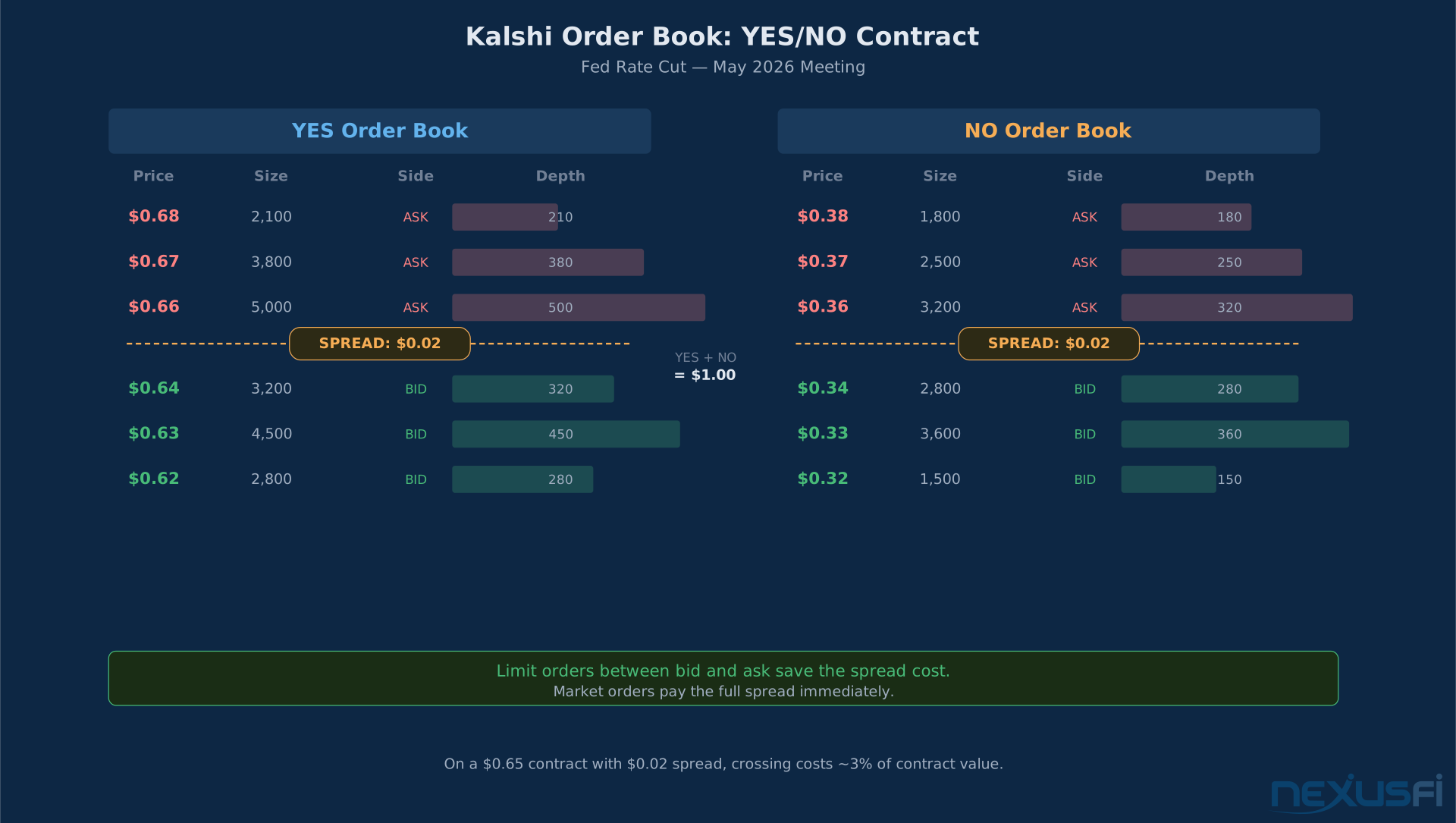
Kalshi runs a central limit order book (CLOB) for each contract. YES and NO are two separate order books for the same event. To trade, you either place a limit order (specify the price you're willing to pay/receive) or a market order (take whatever's available immediately).
For most liquid contracts, the order book looks something like this:
YES Contract (hypothetical)
- Best Ask: $0.66 (5,000 contracts offered)
- Best Bid: $0.64 (3,200 contracts bid)
- Spread: $0.02
If you place a limit buy at $0.65, you're between the bid and ask. Your order sits in the book. If a seller comes in willing to sell at $0.65, you get filled. If NO one comes in at that price before expiration, your order doesn't fill.
If you place a market buy, you pay $0.66 immediately (the ask). You pay the spread as an execution cost.
Spread is a cost. At $0.02 spread on a $0.65 contract, you're paying about 3% of contract value just to enter. On a contract that pays $0.35 if correct, that's nearly 6% of your potential profit gone immediately. This is why limit orders matter for anything but the most liquid contracts.
Kalshi Fees: The Formula You Need to Know #
Kalshi charges a fee per contract that follows this formula:
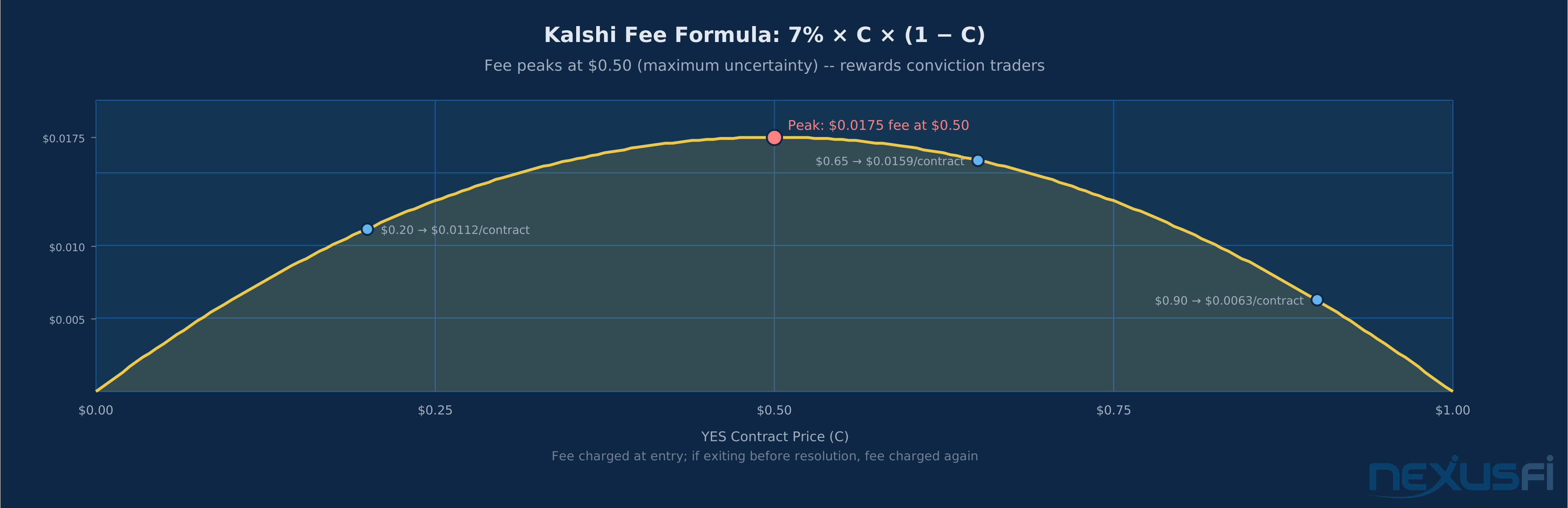
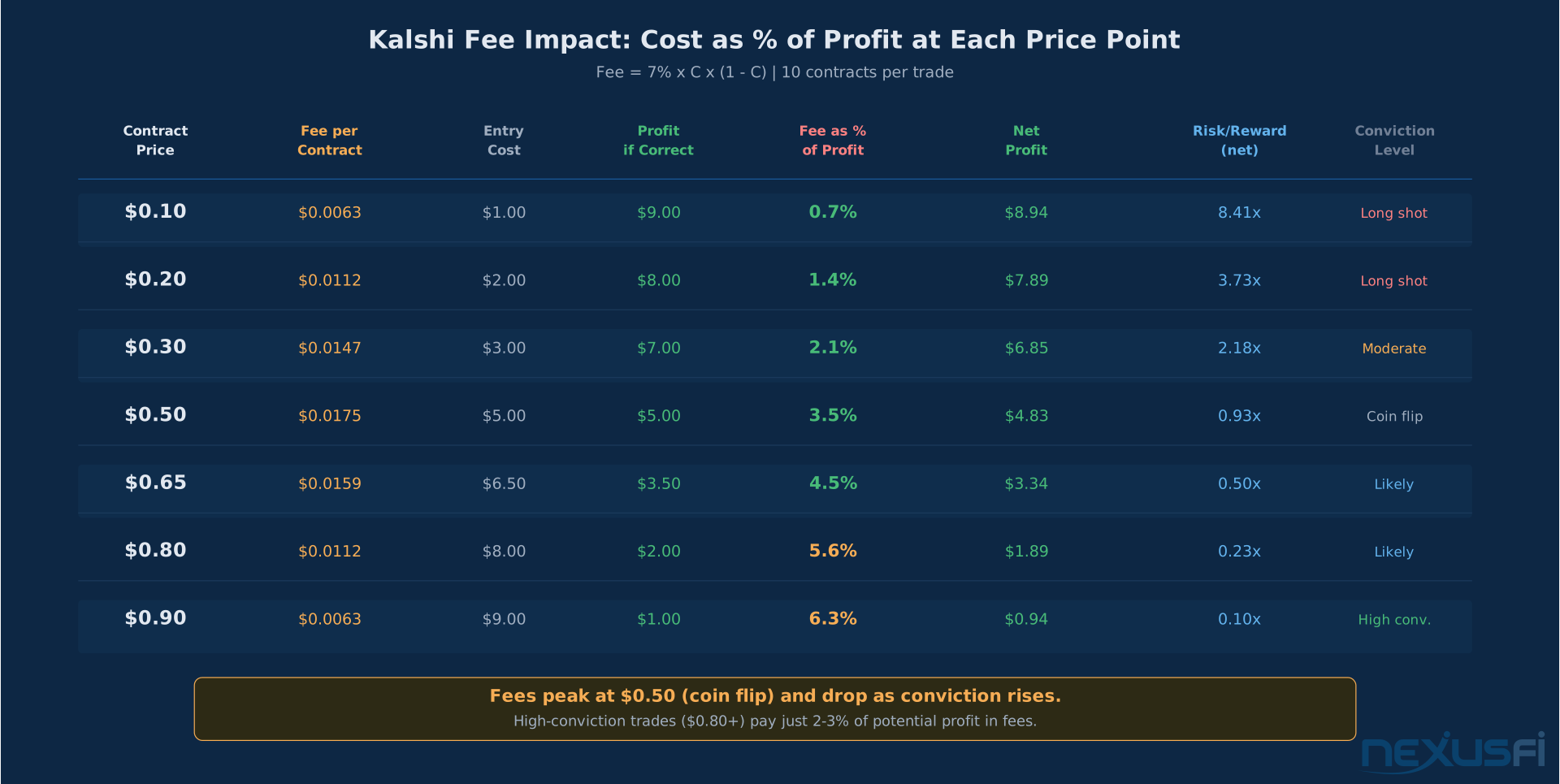
Fee = 7% × C × (1 - C)
Where C is the price per contract.
Let's work through examples:
- C = $0.50 (50/50 event): Fee = 7% × 0.50 × 0.50 = $0.0175 per contract
- C = $0.20 (long shot): Fee = 7% × 0.20 × 0.80 = $0.0112 per contract
- C = $0.80 (heavy favorite): Fee = 7% × 0.80 × 0.20 = $0.0112 per contract
- C = $0.10 (very unlikely): Fee = 7% × 0.10 × 0.90 = $0.0063 per contract
The fee peaks at $0.50 (maximum uncertainty) and decreases as the contract approaches certainty ($0.01 or $0.99). This structure rewards conviction: if you're buying something at $0.90, your fee is lower because you're expressing high confidence.
The fee applies per side — you pay when you buy and when you sell. If you hold to resolution, you only pay once (at entry). If you exit early, you pay twice.
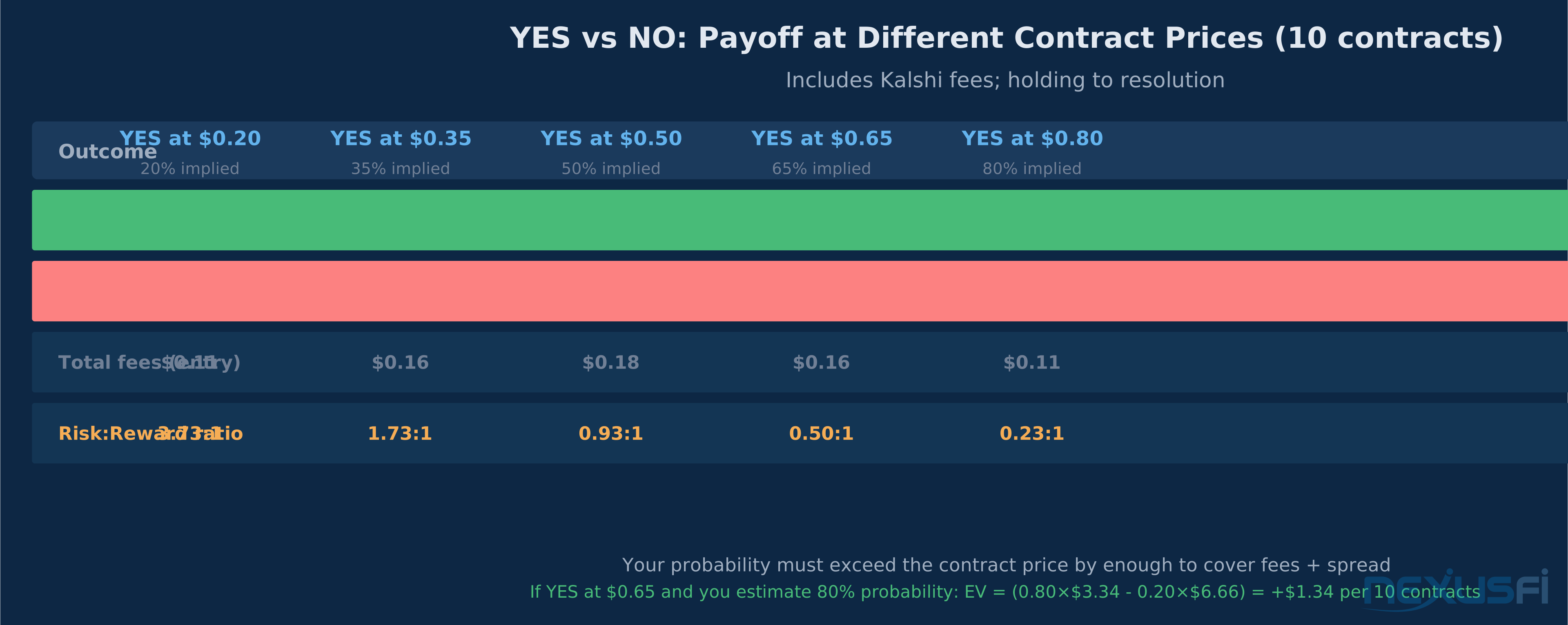
Fee math for a $100 account, 10 contracts at $0.65:
- Entry cost: 10 × $0.65 = $6.50
- Entry fee: 10 × (7% × 0.65 × 0.35) = 10 × $0.01593 = $0.16
- If correct: receive 10 × $1.00 = $10.00, net gain = $10.00 − $6.50 − $0.16 = $3.34
- If wrong: lose $6.50 + $0.16 = $6.66
Sources: pm.wiki: Kalshi Fees 2026, PredScope: Kalshi Fee Guide
Your First Trade: Step by Step #
- Create a Kalshi account: Go to kalshi.com, create an account with email + password. Identity verification (KYC) required — standard for CFTC-regulated entities.
- Fund your account: ACH bank transfer is the primary method. Initial deposits process in 1-2 business days. Instant deposit via debit card is available for smaller amounts. No cryptocurrency needed — Kalshi is entirely USD-based.
- Browse markets: The Kalshi interface shows available event contracts by category. Economics, Politics, Sports, Weather, Crypto/Tech, and more. Start with categories where you have information advantages.
- Read the resolution criteria: Always. Before anything else. Find the "Resolution" section in the contract details.
- Form your probability estimate: What do YOU think the odds are? Be specific. "Fed cuts — I think 80% based on CME FedWatch data showing 78% market probability and hawkish Fed language fading."
- Compare to market price: If YES is at $0.72 and you think 80%, that's a 8-percentage-point edge. That edge needs to clear fees + spread. At $0.02 spread and $0.016 fee, your round-trip cost is about $0.036. Your edge per contract = (0.80 - 0.72) × $1.00 = $0.08. Net edge: $0.08 - $0.036 = $0.044 per contract. Trade.
- Place a limit order: Set your price at or near the ask. Don't cross the entire spread unless you need immediate fill.
- Size it correctly: See position sizing section below.
- Monitor without obsessing: Check near resolution for major news. Don't refresh every 10 minutes.
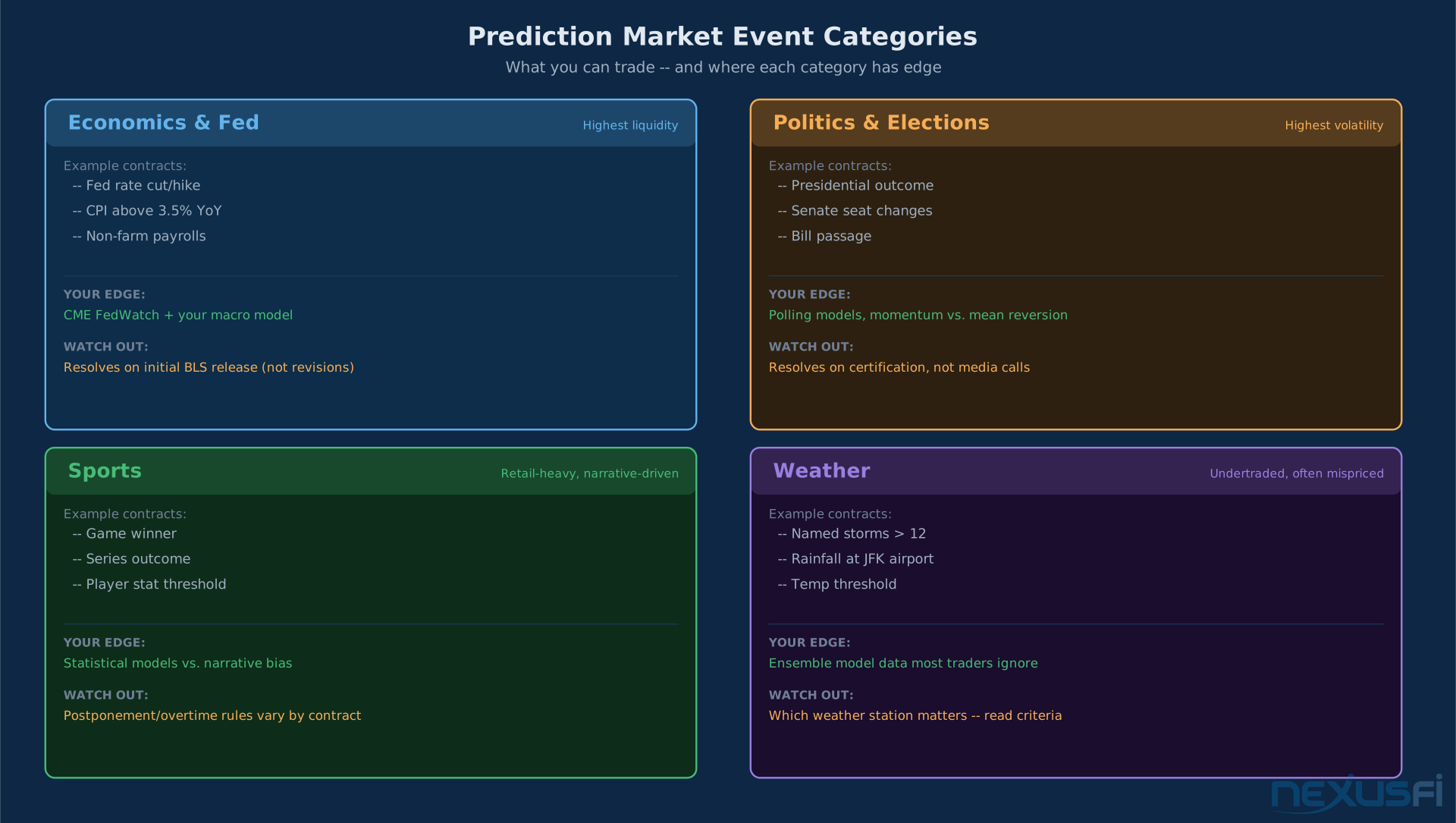
Event Categories: What Moves Markets #
Economics and Fed Decisions #
Economic contracts on Kalshi typically track:
- Federal Reserve decisions: Rate cut/hike probabilities, by specific amount
- Inflation data: CPI, PCE, PPI thresholds
- Employment: Unemployment rate, non-farm payrolls above/below consensus
- GDP growth: Quarterly GDP readings above/below threshold
These contracts see large volume because they're directly connected to the most liquid financial markets in the world. Professional traders use them for hedging and speculation. Retail traders use them to express views on macro outcomes.
Watch out for: the CME FedWatch tool tracks basically the same probabilities via fed funds futures. If Kalshi's Fed rate contract price differs much from FedWatch, understand why — are the contracts measuring the same thing? Different resolution criteria?
The 24/7 nature of prediction markets also fills gaps when traditional exchanges are dark. NexusFi member @SMCJB made this point in real time during a major geopolitical event: when crude oil was reportedly up 10% over a weekend, he asked the obvious question — "I keep seeing this claim. ICEEU (IPE) and CME (NYMEX) are both closed. So where is oil up 10%? Kalshi?" That exchange captures something important: prediction markets have become the only venue providing live commodity price signals on weekends and holidays, whether traders intend to use them that way or not.
NexusFi member @bobwest was among the first to analyze CME event contracts when they launched in 2022, describing them as exchange-listed instruments where "you bet that an instrument will be higher or lower than some level, and it's 100% win or lose." His breakdown — including the product's similarities to binary options and endorsements from brokers like IB, CQG, and NinjaTrader — remains one of the best community primers on how event contracts evolved from traditional futures infrastructure.
Politics and Elections #
Political contracts drove Kalshi's growth in the 2024 election cycle. Volumes exceeded $100M on election night for presidential outcome contracts. The liquidity exists, the price discovery is real, and retail traders can genuinely compete here.
The challenges: resolution timing is uncertain (certification vs announcement), polling models can be systematically wrong in correlated ways, and sentiment trades (price swings based on news flow rather than fundamentals) can create significant intraday volatility.
Best approach for beginners: use political contracts to express conviction on outcomes you've researched, not to trade the noise.
Sports #
Sports contracts are the most "games of skill" because: the event is well-defined, resolution is clear, the data is abundant, and the market often underprices statistical underdogs (narrative bias). If you've done the analytical work on sports outcomes, prediction markets let you trade it.
Resolution is clean — "Team A wins Game 3" resolves the moment the game ends (with standard rules about overtime, postponements, etc.). Read the overtime rules specifically.
Weather #
Weather contracts are undertraded by retail and often mispriced. If you understand meteorology — or have access to ensemble model data that the market isn't pricing — weather contracts can have significant edge. The challenge: the resolution source (specific weather station, official government data) matters enormously. A contract on "rainfall above X at JFK" and "rainfall above X in NYC" are materially different if a storm comes in from an angle.
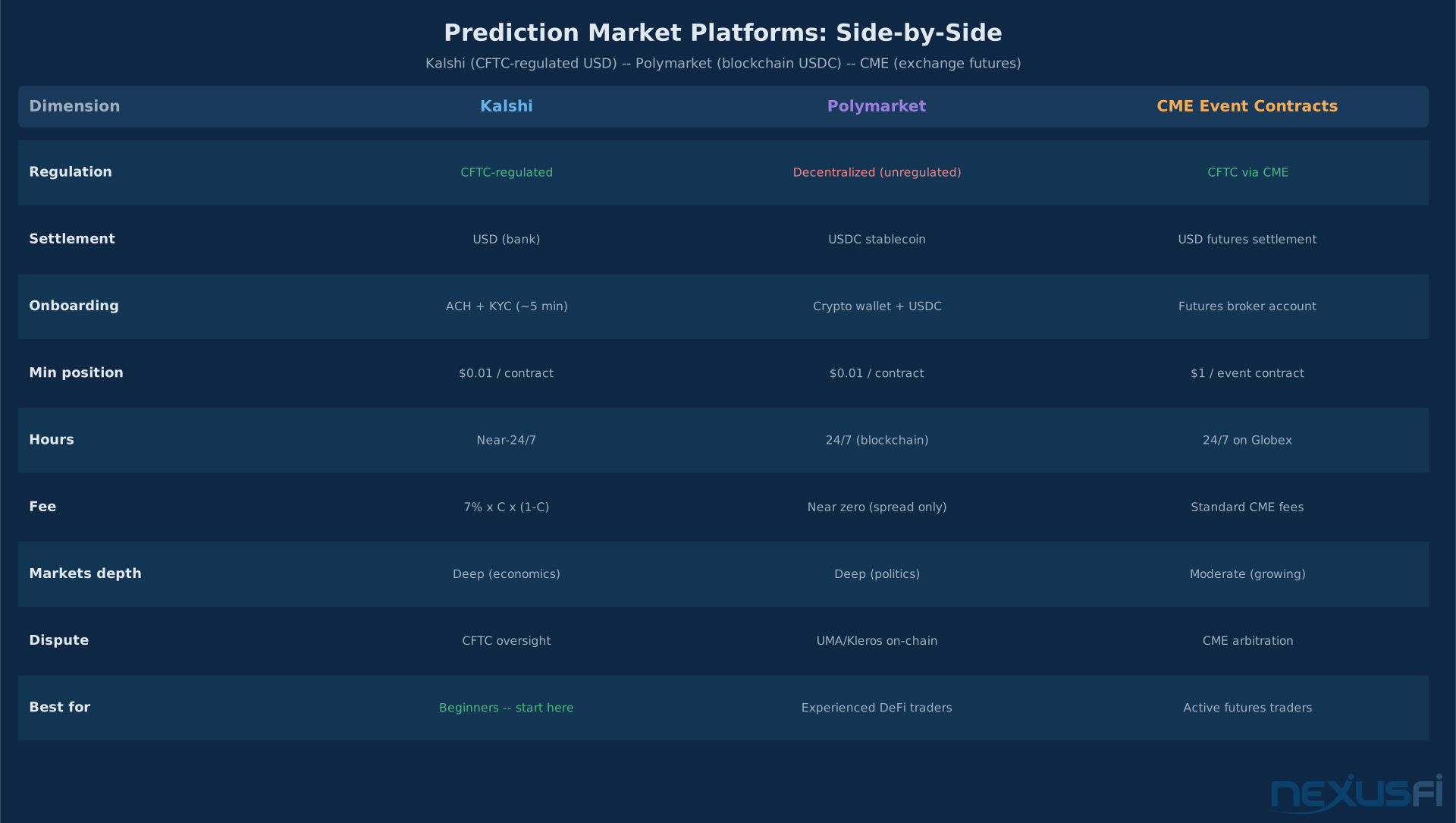
Kalshi vs Polymarket: Two Different Animals #
| Dimension | Kalshi | Polymarket |
|---|---|---|
| Regulation | CFTC-regulated (U.S.) | Decentralized, blockchain-based |
| Settlement currency | USD | USDC (stablecoin) |
| Funding | ACH bank transfer, debit card | Crypto wallet (MetaMask, etc.) |
| Onboarding | Standard KYC (~5 minutes) | Wallet setup + USDC acquisition |
| Resolution | Platform-managed, CFTC-governed | Oracle-based (UMA/Kleros) |
| Dispute process | Platform review | Community governance, on-chain |
| Additional risk | Counterparty risk (platform) | Smart contract risk, crypto volatility |
| Typical fee | 7% × C × (1-C) | ~0% maker / 0% taker (no direct fee, but spread) |
Sources: PredScope: How Polymarket Works, Polymarket Documentation
For a complete beginner: Start with Kalshi. The fiat onboarding, USD settlement, and CFTC regulatory oversight reduce complexity and operational risk. Once you understand how event contracts work, you can explore Polymarket for its deeper liquidity on certain markets.
The third player: CME direct. Kalshi and Polymarket aren't the only game. As NexusFi member @Symple documented, CME launched swap-based event contracts trading 24/7 on Globex in December 2025 — covering economic indicators, hourly Bitcoin/Ether, and sports outcomes with position sizes starting at just $1. These aren't traditional futures. They're binary-style yes/no instruments running on exchange infrastructure that institutional traders already trust. CME hit 100 million event contracts traded within eight weeks of launch.
The regulatory question isn't settled. Despite CFTC oversight, the legal boundaries remain contested. As NexusFi member @SMCJB pointed out, Kalshi faces a class action lawsuit alleging unlicensed sports betting. The line between "regulated prediction market" and "sports gambling" is still being litigated — a real regulatory risk traders should monitor, especially in the sports contract category.
Position Sizing: The Framework That Protects Your Account #
Binary contracts have a specific risk property: you can lose your entire position. Unlike stocks where a losing position might drop 30% and still have recovery potential, a prediction market contract at $0.65 can go to $0.00 if you're wrong.
This makes proper position sizing non-negotiable.
The Risk-Per-Trade Framework #
- Define your risk budget per trade as a percentage of your account: 2-5% for beginners
- Calculate your maximum dollar loss per trade = account × risk %
- Size your position so that maximum loss ≤ risk budget
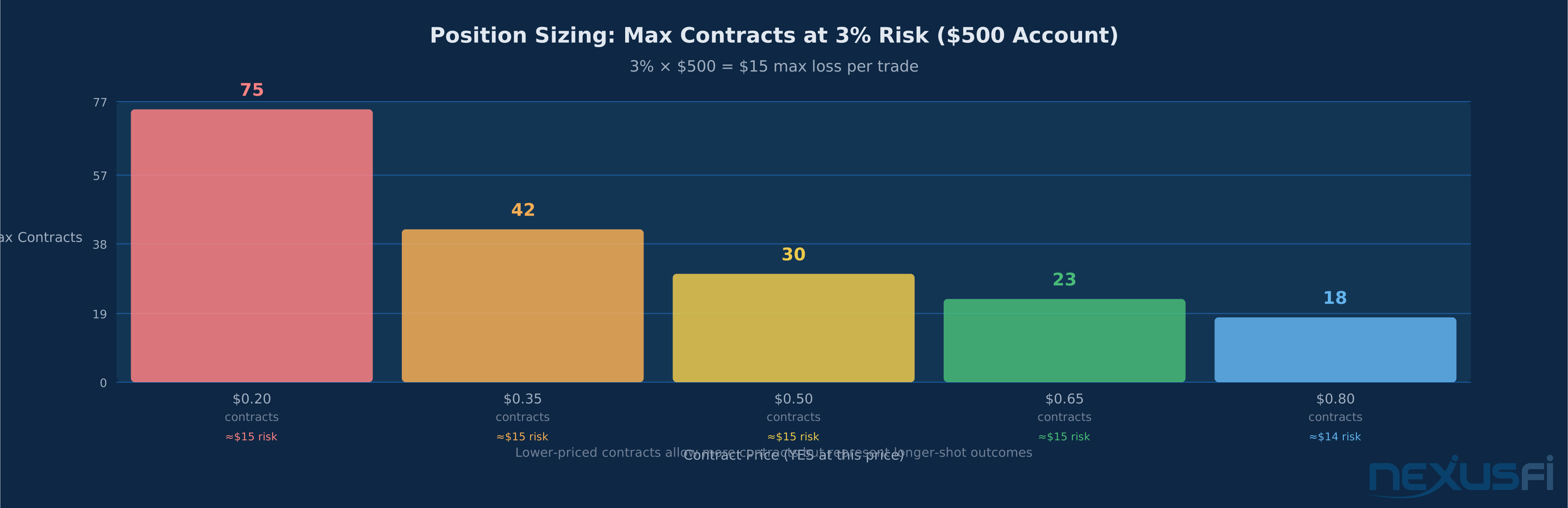
Example ($500 account, 3% risk):
- Risk budget: $500 × 3% = $15 per trade
- Buying YES at $0.60: max loss per contract = $0.60 + fees ≈ $0.62
- Maximum contracts: $15 / $0.62 ≈ 24 contracts
- If wrong: lose ~$14.88 (within budget)
- If right: gain ~(0.40 × 24) - fees ≈ $9.37
For very small accounts ($50-100):
- 5% risk = $2.50-$5.00 per trade
- At $0.60 per contract, that's 4-8 contracts maximum
- Accept that individual trades will be small. Compound over many trades.
Kelly Criterion for Prediction Markets #
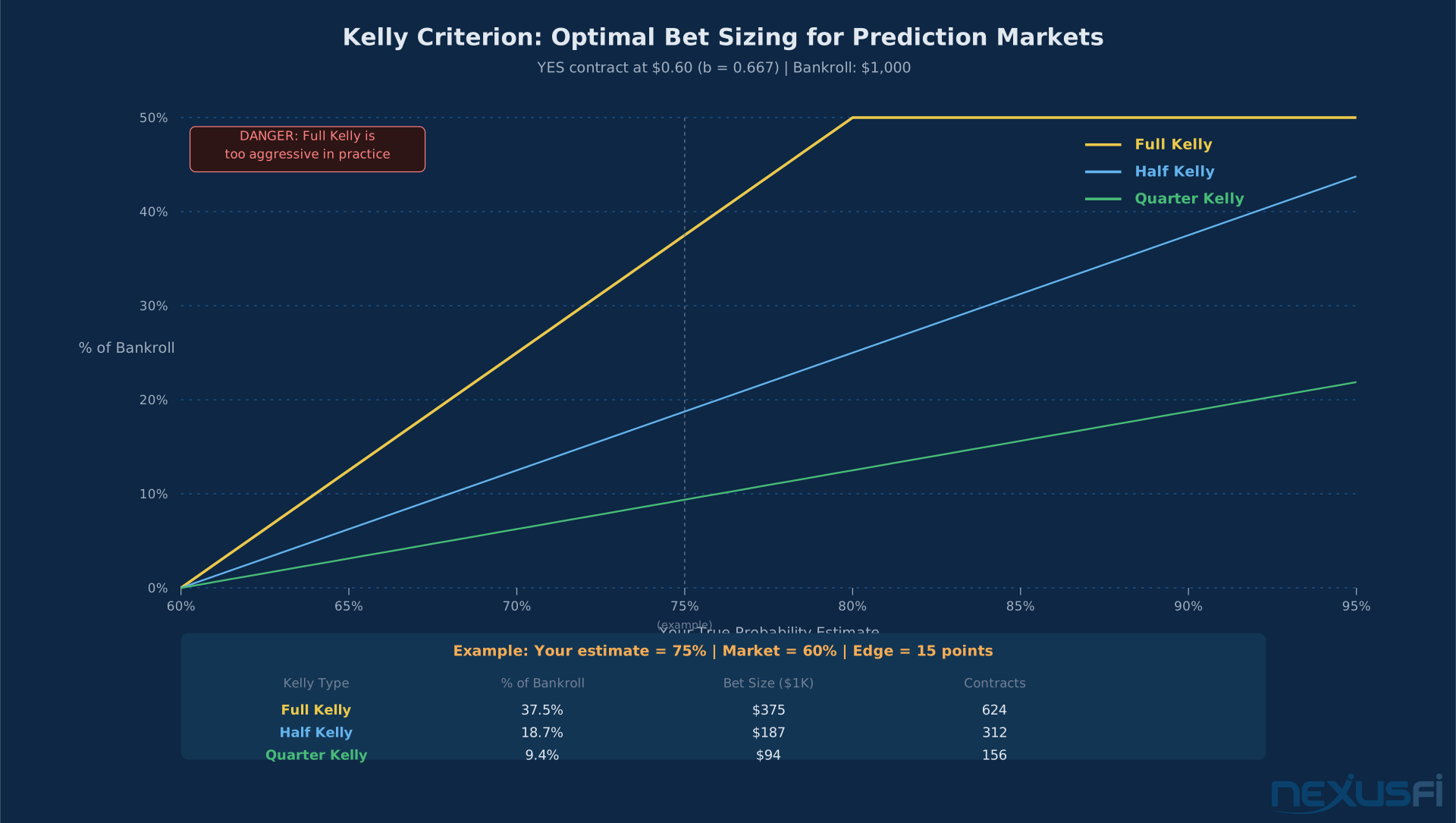
The Kelly Criterion gives the mathematically optimal bet size when you have an edge:
Kelly % = (p × b - q) / b
Where:
- p = your probability of winning (your estimate)
- q = 1 - p (probability of losing)
- b = net profit per unit of risk (for YES at $0.60: b = $0.40 / $0.60 = 0.667)
Example: You think YES at $0.60 has true probability 0.75:
- Kelly % = (0.75 × 0.667 - 0.25) / 0.667
- Kelly % = (0.500 - 0.25) / 0.667
- Kelly % = 0.250 / 0.667 = 37.5% of bankroll
In practice, full Kelly is aggressive and risky — model errors, overconfidence, and execution costs erode Kelly's theoretical advantage. Most experienced traders use half-Kelly or quarter-Kelly to reduce variance. For a deeper look at Kelly-based position sizing in traditional futures markets, see The Kelly Criterion: Growth-Optimal Position Sizing.
Half-Kelly: 18.75% of bankroll. Still significant for a well-researched trade. Quarter-Kelly: 9.4% of bankroll. More conservative, still expressing the edge.
See Position Sizing for Binary Event Contracts for the complete Kelly analysis and practical implementation.
Risk Management: What Actually Protects Your Account #
The Four Risk Layers in Prediction Markets #
1. Market risk: Your probability estimate is wrong. The event resolves against you. Mitigation: Proper sizing, diversification, only trade when your edge clearly exceeds costs. The math behind blowing up is stark — see Risk of Ruin for why even small edge miscalculations compound into account death.
2. Resolution risk: You understood the outcome correctly, but the resolution criteria caught you. Mitigation: Always read resolution criteria. No exceptions.
3. Liquidity risk: You need to exit a position but the spread has widened dramatically near resolution, or the market is illiquid. Mitigation: Trade liquid contracts. Use limit orders. Accept that some positions you hold to resolution.
4. Platform risk: The platform has technical issues, regulatory changes, or insolvency events. Mitigation: Don't keep more than you can afford to lose on any single platform. For Kalshi: regulated by CFTC, client funds segregated. For Polymarket: smart contract audit history matters.
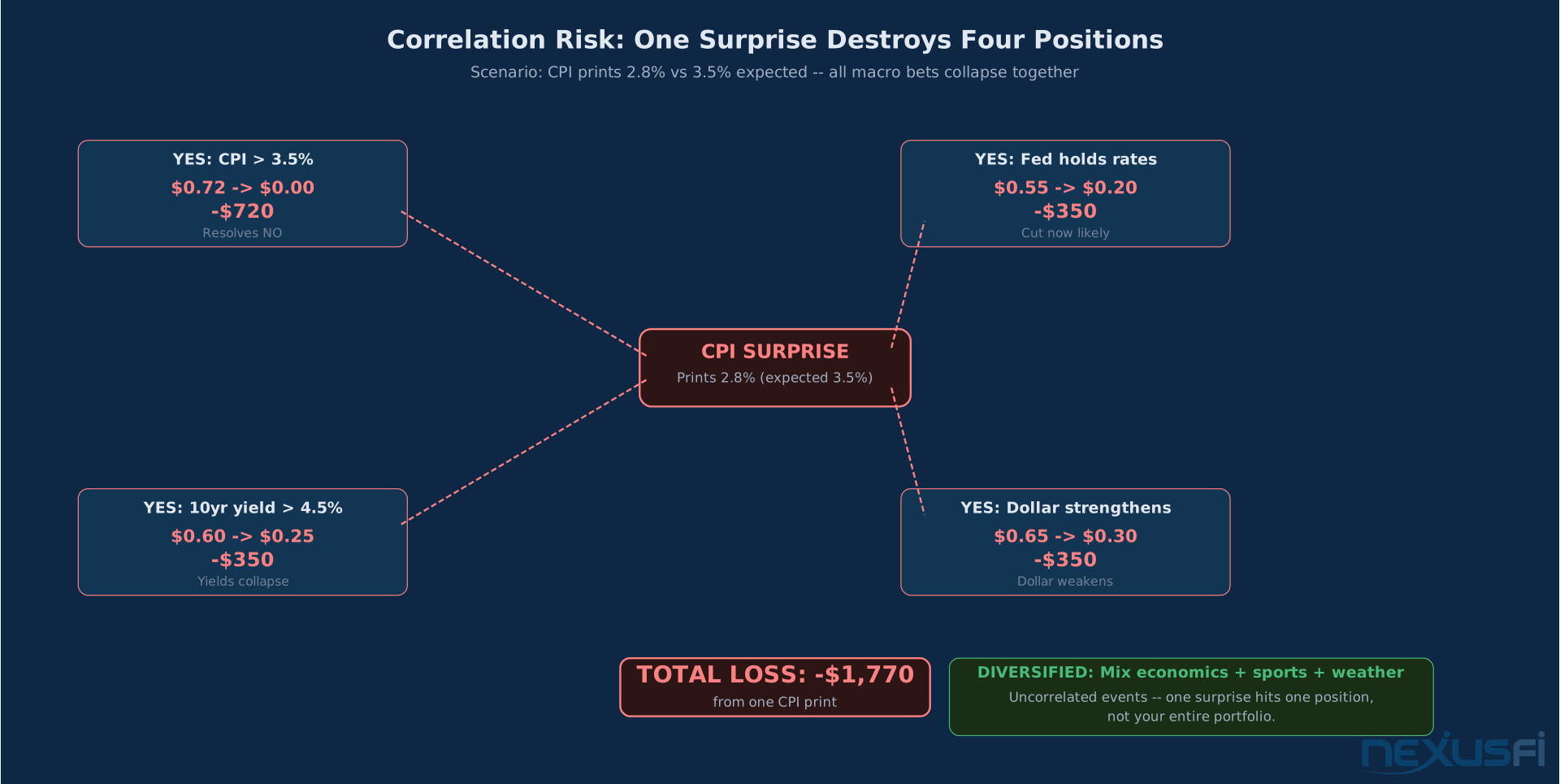
Correlation Management #
Don't trade 15 contracts that all resolve based on the same Fed decision. A single "wrong" call on the FOMC outcome destroys 15 positions simultaneously.
Diversify across:
- Event categories: Mix economics + politics + sports + weather
- Time horizons: Mix near-term (days) and longer-dated (weeks/months)
- Directionality: Don't always buy YES — sometimes the NO side has the edge
The Exit Problem in Binary Markets #
Unlike stocks, prediction market contracts don't have a natural "exit at support level" strategy. You're trading a probability against a binary outcome.
Your exit decision should be:
- New information changes your probability estimate much → exit if it moves against you
- Price moved enough to lock in profit → you can exit early to crystallize gains
- You made a mistake on resolution criteria → exit immediately regardless of price
Don't exit just because the position is losing. If your original analysis was sound and nothing has changed, a contract at $0.40 that you bought at $0.65 is now cheaper — but your thesis hasn't been invalidated.
Common Beginner Mistakes #
These are the failure modes that cost real money. Read them before you trade.
1. Not reading resolution criteria The #1 source of avoidable losses. Takes 2 minutes. Zero excuses.
2. Trading price = certainty A contract at $0.80 is not "almost guaranteed." It's 80% likely. That means 1 in 5 times, you lose everything you paid. This probability miscalibration is one of several cognitive biases that trip up traders — your brain treats high probability as certainty because uncertainty is uncomfortable. Size so.
3. Market orders in thin books On a contract with a $0.05 spread and 200 contracts at the best level, a 1,000-contract market order walks through 5 price levels. Your average fill is $0.025 worse than the displayed best ask. That's a real cost.
4. Overtrading small accounts Trading 50 contracts per day when your account is $200 means fees alone could exceed 5% of account value daily. Prediction markets reward quality over quantity. For a deeper look at why traders overtrade and how to stop it, see Overtrading: Why You're Taking Too Many Trades.
5. Chasing The contract moved from $0.50 to $0.75 because of a news event. The market already priced in the news. Buying at $0.75 because "it's going to $1.00" is chasing — you've lost your informational advantage. This impulse is driven by FOMO — see Fear and FOMO in Trading for strategies to recognize and manage this pattern.
6. Confusing liquidity with safety A contract is liquid because many people trade it, not because the outcome is more predictable. Highly liquid political contracts can still go to zero.
7. Ignoring correlation "I'll buy YES on CPI above 3.5%, YES on Fed not cutting, YES on 10-year yield rising, and YES on dollar strengthening." Those are all the same macro view. If CPI surprises down, all four positions move against you.
First Trade Checklist #
Print this. Use it every time until it's automatic.
- [ ] I have read the resolution criteria for this specific contract
- [ ] I know the exact timestamp and data source for resolution
- [ ] I have formed my own probability estimate (not just "the market says 65%")
- [ ] My estimated probability beats the contract price by more than fees + spread
- [ ] The order book has reasonable depth (not going to get terrible fills)
- [ ] My position size means maximum loss stays within my per-trade risk budget
- [ ] I am placing a limit order (not a market order) unless spread is trivially small
- [ ] I know what new information would cause me to exit early
Article Charts #
Citations #
- How Kalshi Works: Contracts, Odds & Settlement Explained — pm.wiki
- Kalshi Fees 2026: Fee Schedule Explained — pm.wiki
- How to Use Kalshi: Complete Beginner's Guide (2026) — PredScope
- Event Contracts: What They Are & How to Trade Them — PredScope
- How Does Kalshi Work? — PredScope
- Kalshi Fees Explained: Trading Costs and Fee Calculator — Market Math
- How Does Polymarket Work? — PredScope
- Polymarket 101 — Polymarket Documentation
- Complete Beginner's Guide to Kalshi: How to Make Your First Trade — Prevayo
- How to Trade on Kalshi Prediction Market — Lines.com
Knowledge Map
Prerequisites
Understand these firstGo Deeper
Build on this knowledgeReferences This Article
Articles that build on this topicCitations
- — Event Contracts - New Way to trade the CME Futures markets (2022) 👍 6
- — CME Group Launches 24/7 Futures Trading (2025) 👍 3
- — Kalshi, Polymarket, Prediction Markets etc (2025) 👍 4
- — US-Israeli Strikes Kill Iran Supreme Leader -- Oil Surges (2026) 👍 3
- — Event Contracts - New Way to trade the CME Futures markets (2022) 👍 4