



Weather and Climate Event Contracts on Kalshi
Trading temperature thresholds, precipitation events, and hurricane contracts on one of the most data-rich prediction market categories available today.
Overview #
Weather prediction markets are one of Kalshi's most distinctive offerings, giving traders the ability to take positions on objectively verifiable meteorological outcomes using publicly available forecast data.
This article covers how weather event contracts work on Kalshi, the types of markets available, how to use public weather data to assess market pricing, and strategies that systematic weather traders employ. As of early 2026, weather markets on Kalshi generate roughly $3 million in combined daily trading volume across temperature and precipitation contracts, with single-day spikes exceeding $5 million during volatile winter weather patterns. The rapid growth of prediction markets overall — Kalshi hit $1 billion in Super Bowl trading volume alone in early 2026 — signals that weather contracts will likely see increased liquidity and tighter spreads as the platform scales.
This article builds on the foundations in Introduction to Prediction Markets and How YES/NO Contracts Work.
Weather contracts settle against thermometer readings and rain gauges — no referee, no controversy, no manipulation. Free NWS probabilistic forecasts update four times daily, and the gap between what those forecasts say and what the market prices is where your edge lives.
Why Weather Markets Are Different #
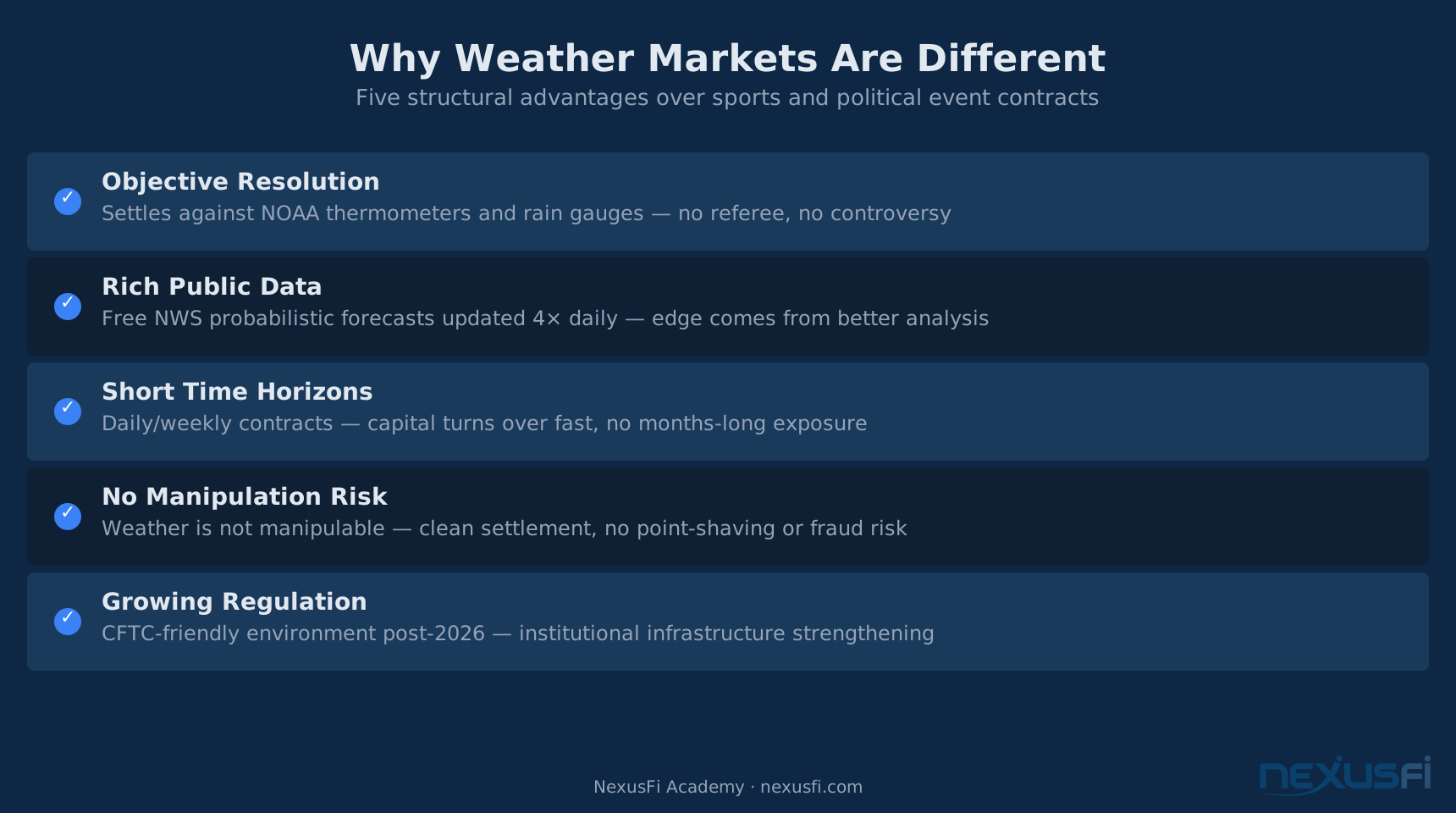
Weather event contracts have characteristics that distinguish them from sports or political markets:
Objective resolution: Weather contracts settle against official, publicly available data sources (typically NOAA/NWS measurement stations). There's no referee's judgment, no officiating error, no scorekeeping controversy. The thermometer reads what it reads.
Rich public data: The National Weather Service (NWS) and NOAA publish free probabilistic forecasts, ensemble models, and historical climatology data. This information is accessible to anyone with an internet connection, which means the edge comes from interpreting data more effectively than the market — not from having exclusive access.
Short time horizons: Most Kalshi weather contracts are daily or weekly, meaning positions resolve quickly and capital doesn't sit tied up for months the way it can with political or seasonal contracts.
Significant automated trading: Weather markets attract algorithmic traders who use meteorological models directly. This makes some markets highly efficient while others (especially niche locations or exotic conditions) may be mispriced.
No result manipulation: Unlike sports (point-shaving risk) or politics (voter suppression, fraud allegations), the weather is not manipulable. This provides a clean, unbiased settlement mechanism.
Growing regulatory support: The regulatory environment for event contracts is becoming more favorable. The CFTC withdrew its Biden-era proposed ban on prediction markets in early 2026, signaling that event contracts are here to stay. As NexusFi member @SMCJB noted when CME announced its own event contract listings, the line between traditional derivatives and prediction markets continues to blur — which means the infrastructure supporting weather contracts is getting more strong, not less. The NexusFi community has been tracking these regulatory shifts closely, and the consensus is that CFTC-regulated weather markets benefit directly from this growing institutional acceptance.
Types of Weather Contracts on Kalshi #
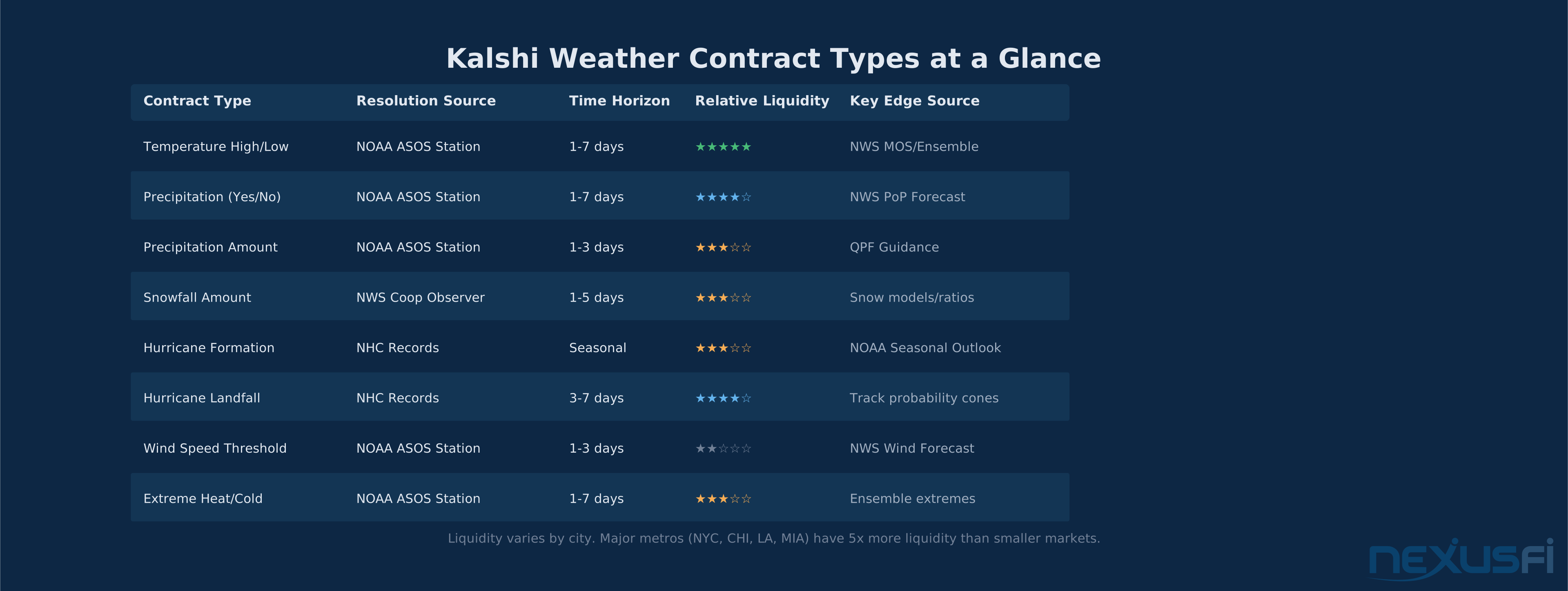
Contract Structure and Payout Mechanics #
Before diving into specific contract types, the underlying mechanics are worth understanding clearly — they apply uniformly to every Kalshi weather market. Each contract settles to exactly $1.00 on YES resolution and $0.00 on NO resolution. You buy contracts at prices between $0.01 and $0.99 per contract, and that price is also the market's implied probability that the event occurs.
How the math works: A temperature contract priced at $0.62 means the market assigns 62% probability to the event resolving YES. Buying 100 contracts costs $62.00. If the event occurs (YES), you receive $100.00 — a $38.00 gross gain. If it doesn't (NO), you lose your $62.00 stake. Kalshi is fully cash-collateralized: no leverage, no margin, no margin calls. You can only lose money you've explicitly risked.
Minimum position: 1 contract (as low as $0.01 on a near-certain event). Maximum positions vary by market depth — major city temperature contracts support thousands of contracts with tight spreads; niche markets or unusual conditions may limit effective position size through thin liquidity rather than hard caps.
Fees: Kalshi charges trading fees on each transaction. At thin edges, these fees matter — a 5-8% edge can be partially or fully consumed by transaction costs on illiquid contracts. Stick to markets with active two-sided order flow where you can execute at or near mid-market.
Temperature Contracts #
The most common weather market. Asks whether the official high or low temperature at a specific NOAA weather station will be above or below a threshold.
Format examples:
- "Will the high temperature at LaGuardia Airport (KLGA) exceed 80°F on April 25, 2026?"
- "Will the low temperature in Chicago (KORD) fall below 32°F on December 15, 2026?"
- "Will the high temperature in Phoenix exceed 110°F at any point this week?"
Settlement: Based on the official Automated Surface Observing System (ASOS) reading at the specified station. Kalshi specifies the exact station code (IATA/ICAO identifier) in the contract resolution criteria. The final observed high or low temperature for the calendar day (midnight to midnight local time) determines settlement.
Key nuance: Weather station selection matters much. Different stations within a city can vary by 3-5°F due to microclimate effects, proximity to water, or urban heat island differences. A contract specifying LaGuardia Airport (coastal exposure, marine influence) will behave differently from one specifying JFK Airport (also coastal) or Central Park (urban core).
Precipitation Contracts #
Will measurable precipitation fall at a specific location? Will total rainfall exceed a specified amount?
Format examples:
- "Will any measurable precipitation fall at KORD (Chicago O'Hare) on April 25, 2026?"
- "Will total rainfall at KSEA (Seattle-Tacoma) exceed 0.50 inches on April 20-21?"
Settlement: Based on NOAA official precipitation measurements. "Measurable precipitation" is typically defined as 0.01 inches or more. Trace amounts (T) do not count as measurable.
Key challenge: Precipitation is more spatially variable than temperature, meaning a rain gauge five miles from the contract station could show a completely different reading. A thunderstorm can drop an inch of rain on one side of a city and leave the other side dry, which introduces genuine randomness that even perfect forecasting cannot fully resolve.
Hurricane and Severe Weather Contracts #
Will a named hurricane form in the Atlantic this season? Will a storm make U.S. landfall at Category 2 or higher?
Format examples:
- "Will there be more than 20 named storms in the 2026 Atlantic hurricane season?"
- "Will a hurricane make Category 3+ landfall in the continental U.S. in 2026?"
- "Will Hurricane [Name] intensify to Category 4 before landfall?"
Settlement: Based on National Hurricane Center (NHC) official records. The NHC's post-season analysis is authoritative and final — if the NHC revises a storm's peak intensity or landfall status in its post-season report, the revised data is what counts for contract settlement.
Seasonal dynamics: Hurricane season contracts have a built-in seasonal structure. NOAA seasonal outlooks (released in May and August) are the primary price-moving events. When NOAA upgrades an "above-normal" season forecast to "extremely active," all related contracts shift materially.
Snowfall Contracts #
Will a specified location receive more than X inches of snowfall within a defined period?
Format examples:
- "Will Denver receive more than 6 inches of snow in April 2026?"
- "Will New York City (Central Park station) receive measurable snowfall in March 2026?"
Settlement: Based on official NOAA cooperative observer (COOP) network measurements or ASOS snowfall observations. Snowfall measurement is notoriously inconsistent because it depends on wind conditions, snow density, observer timing, and whether snow melts between observation periods — all of which introduce measurement noise that doesn't exist with temperature readings.
Data Sources for Weather Trading #
Weather trading is a data advantage game. The traders who consistently outperform are typically those who extract information from public data more effectively than the market does.
National Weather Service (NWS) Probabilistic Forecasts #
The NWS publishes Probability of Precipitation (PoP) and probability of temperature exceedances for hundreds of locations. These are the single most valuable free data sources for weather traders.
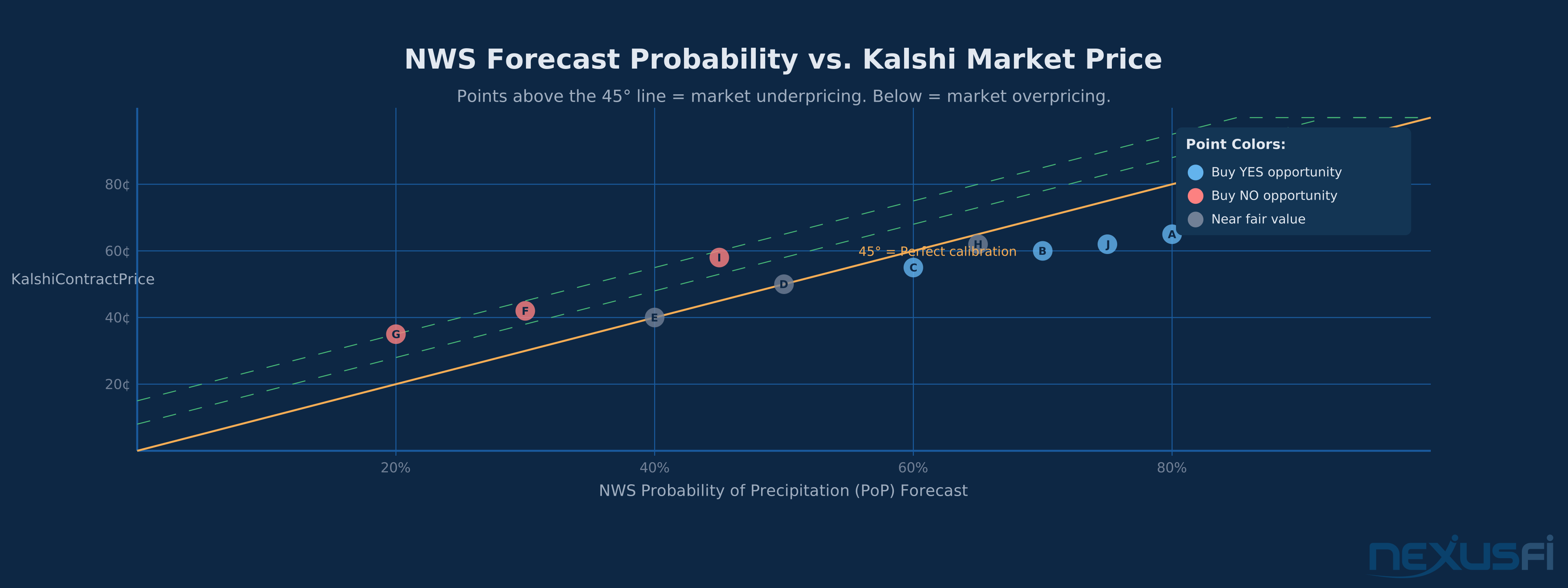
How to use them: Pull weather.gov for any contract location and check the PoP percentage or temperature exceedance probability. If the Kalshi market shows 55% implied probability and NWS shows 72% PoP, that gap is worth investigating. For systematic traders, the NWS Digital Forecast Database (DFD) provides the same data in machine-readable format; weather.gov/graphical/ gives a visual grid view across regions.
Key insight: If the NWS assigns a 70% probability of precipitation and the Kalshi market shows a "Will it rain?" contract at 0.50 (50% implied), that's a potential 20-point edge worth investigating further — though you should always check whether the NWS forecast is for the exact contract station and time window before trading on the discrepancy.
NOAA Ensemble Model Output Statistics (MOS) #
The Model Output Statistics (MOS) system translates numerical weather model output (GFS, NAM) into probabilistic station-specific forecasts. MOS guidance is available for free at weather.gov/mdl/mos_mex_official, covering temperature thresholds, precipitation probabilities, and wind forecasts for hundreds of stations. The key difference from generic forecasts: MOS gives you threshold exceedance probabilities that map directly onto Kalshi contract parameters.
Technical edge: MOS temperature guidance includes probabilities for threshold exceedances (e.g., probability that the high temperature exceeds 85°F), which map directly onto Kalshi contract parameters and can be compared to market-implied probabilities for edge detection.
Historical Climatology (NOAA Climate Normals) #
NOAA publishes Climate Normals — 30-year rolling averages of temperature, precipitation, and other weather variables for thousands of stations across the United States, updated every decade (current normals cover 1991-2020).
Application: A temperature contract asking "Will the high exceed 80°F in Denver on April 20?" can be calibrated against historical April 20 temperature data. If Denver has exceeded 80°F on April 20 in 15 of the last 30 years, the climatological base rate is 50%. Current forecast information then adjusts this up or down.
Ensemble Weather Models #
Professional weather traders often use ensemble model data directly:
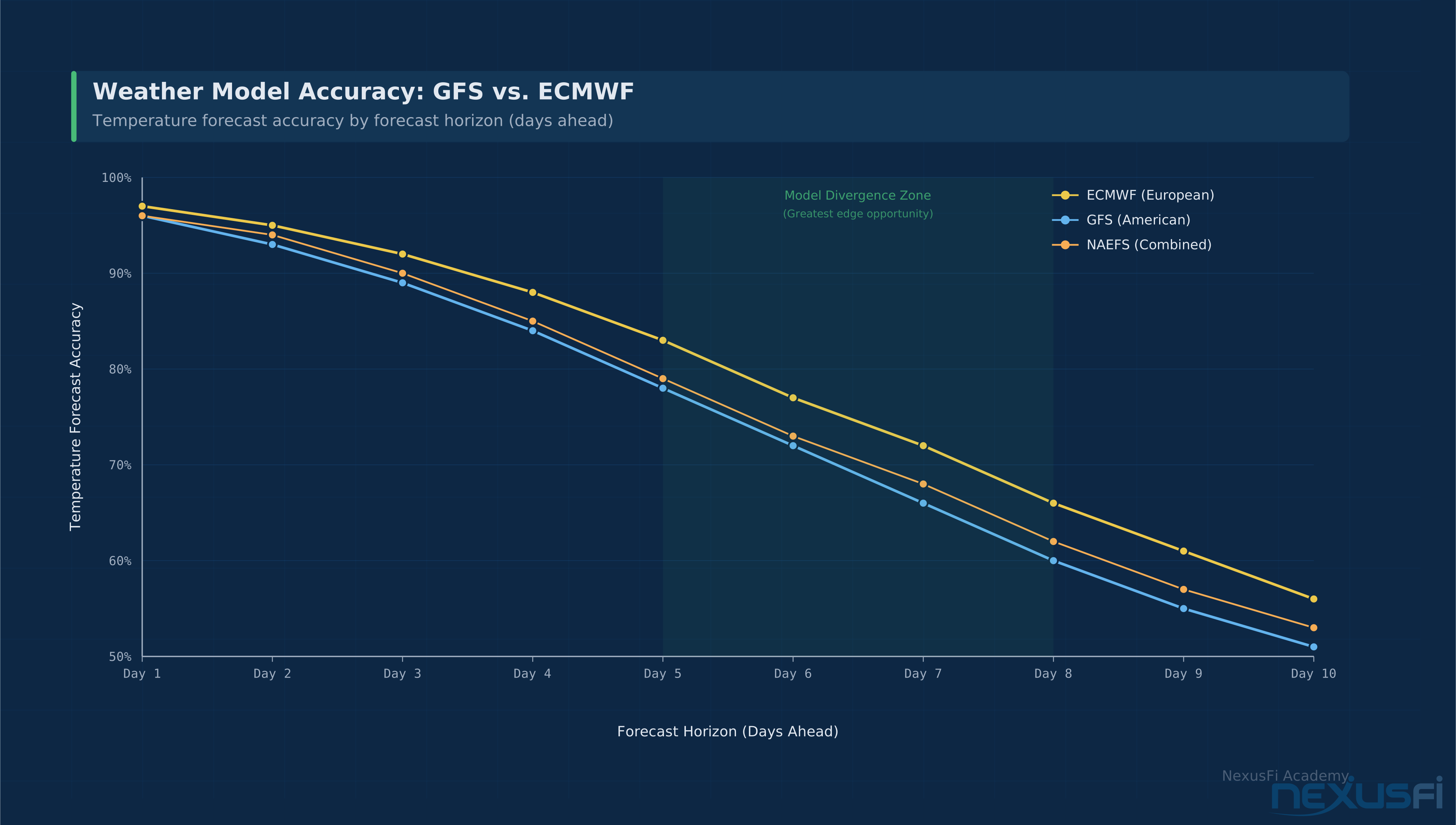
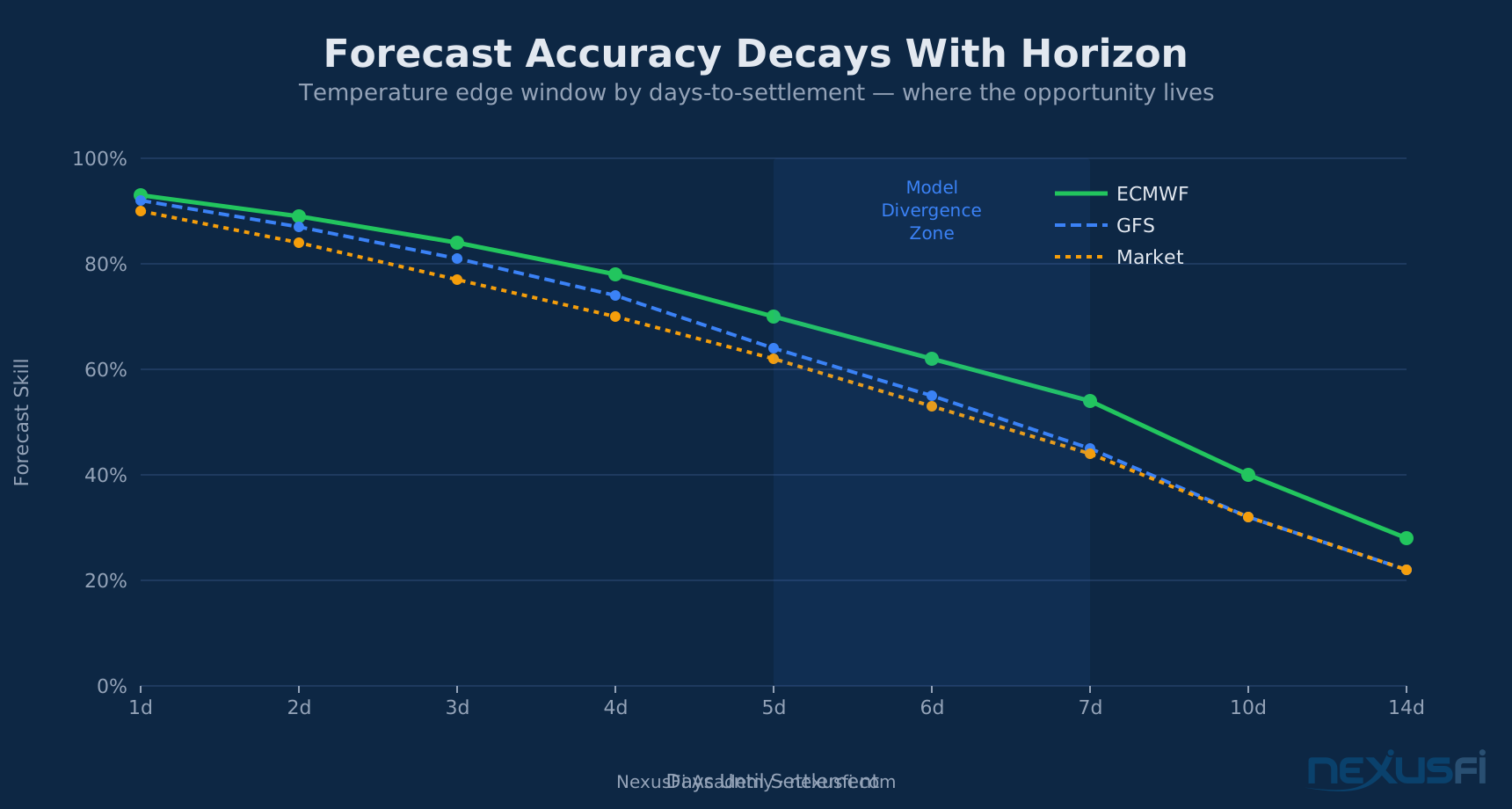
- GFS Ensemble (GEFS): 31-member ensemble from the Global Forecast System, available free from NOAA
- European Centre for Medium-Range Weather Forecasts (ECMWF): The gold standard in medium-range forecasting, paid access but accessible via some third-party providers
- North American Ensemble Forecast System (NAEFS): Combined US-Canadian ensemble
Ensemble models provide a distribution of outcomes rather than a single forecast, making them directly applicable to probability estimation. If 25 of 31 GEFS members show a high temperature exceeding 75°F, that's roughly an 80% ensemble probability — and you can compare this directly to the Kalshi market price to assess whether the contract is over- or under-priced.
How to Find Pricing Edges in Weather Markets #
Step 1: Identify the Market's Implied Probability #
A Kalshi weather contract trading at 0.62 implies 62% probability the event occurs. This is your benchmark.
Step 2: Derive Your Probability Estimate from Data #
Using NWS PoP forecasts, MOS guidance, and/or ensemble model output, form your own probability estimate for the same event.
Combining information sources:
- Climatological base rate: 35%
- NWS forecast adjustment: +20% (active storm pattern)
- Ensemble model support: 60% of models show precipitation
- Composite estimate: ~55-60%
Step 3: Calculate Your Edge #
Edge = Your probability estimate - Market implied probability
If your estimate is 70% and the market shows 62%, your edge is 8 percentage points. This is an attractive edge if your estimate is well-calibrated.
Step 4: Assess Market Efficiency #
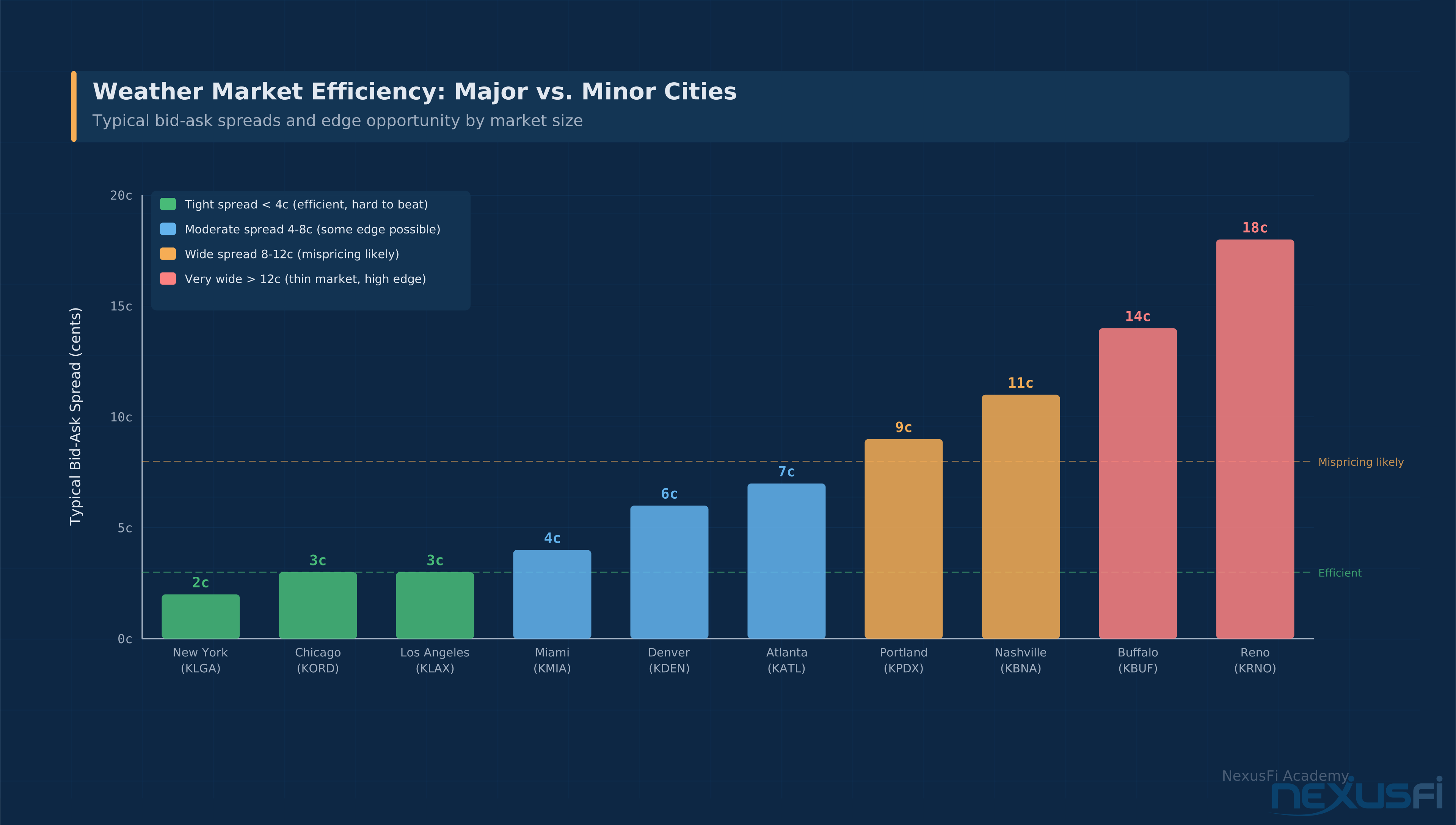
Weather markets on major cities (New York, Chicago, Los Angeles, Miami) are more efficiently priced because more traders focus on them. Weather markets on smaller cities or unusual contract parameters may be less efficient.
Market efficiency indicators:
- Tight bid-ask spread (< 3¢): Active trading, efficient pricing
- Wide bid-ask spread (> 8¢): Thin market, potentially mispriced
- Recent price stability: Market has reached consensus; harder to find edge
- Recent price movement: New information just released; transient edge possible
Step 5: Size Position and Execute #
Use Kelly Criterion or a fixed fractional approach based on your edge estimate and bankroll. NexusFi member @Fat Tails' extensive Risk of Ruin analysis demonstrates why the Kelly fraction matters so much for binary-outcome trading: even with a genuine edge, overbetting relative to your bankroll produces catastrophic drawdowns that wipe out the expected value of your strategy. As @Fat Tails showed, the risk of ruin doesn't directly depend on win/loss ratio alone — the Kelly criterion adjusts for it, but traders who skip this adjustment and "feel" their way into position sizes are playing a losing game long-term.
Use limit orders on weather markets rather than market orders — spreads can be wide, especially on niche contracts, and crossing the spread eats directly into your edge.
Strategies Used by Weather Traders #
The NWS Forecast Arbitrage Strategy #
Systematically compare NWS PoP forecasts to market-implied precipitation probabilities. When NWS shows 80% PoP and the market shows 65%, buy YES. When NWS shows 30% PoP and the market shows 55%, buy NO.
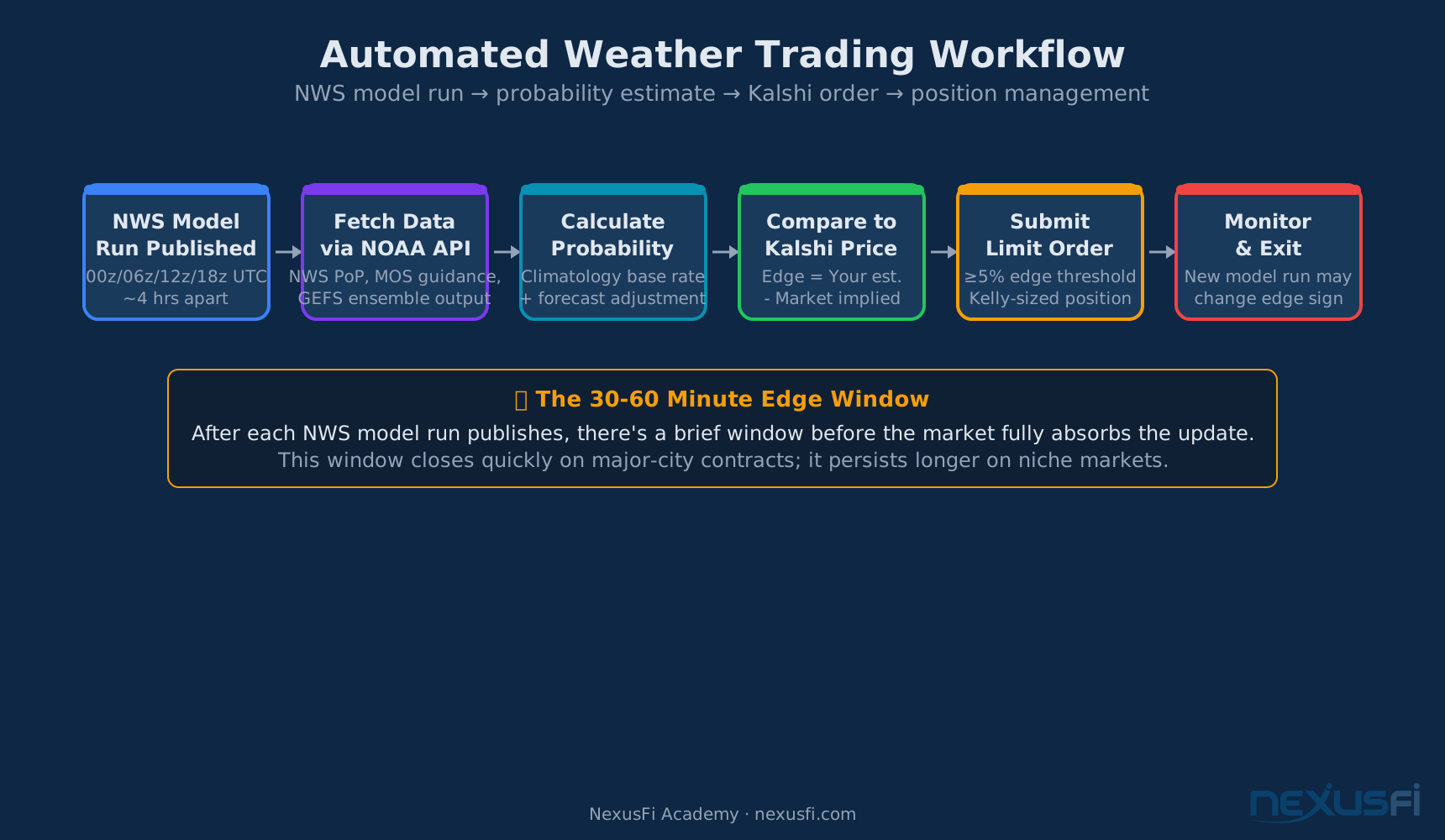
Limitation: NWS forecasts are public and major traders monitor them in real time. The most obvious discrepancies correct quickly. Look for cases where the market hasn't yet absorbed forecast updates from the most recent NWS model runs (issued 4x daily at 00z, 06z, 12z, 18z UTC).
The Climatology Anchor Strategy #
For contracts where the current forecast closely matches climatological averages, the market often over-adjusts to short-term weather patterns. When a heat wave is dominating headlines, markets sometimes overprice hot temperature contracts beyond what the models support.
Application: When media attention focuses on extreme weather, check whether the market's probability has moved beyond the ensemble model's probability. If GEFS shows 75% probability of the high exceeding a threshold, but the market is at 88%, the market may be overpricing the event due to salience bias.
The Seasonal Setup Strategy #
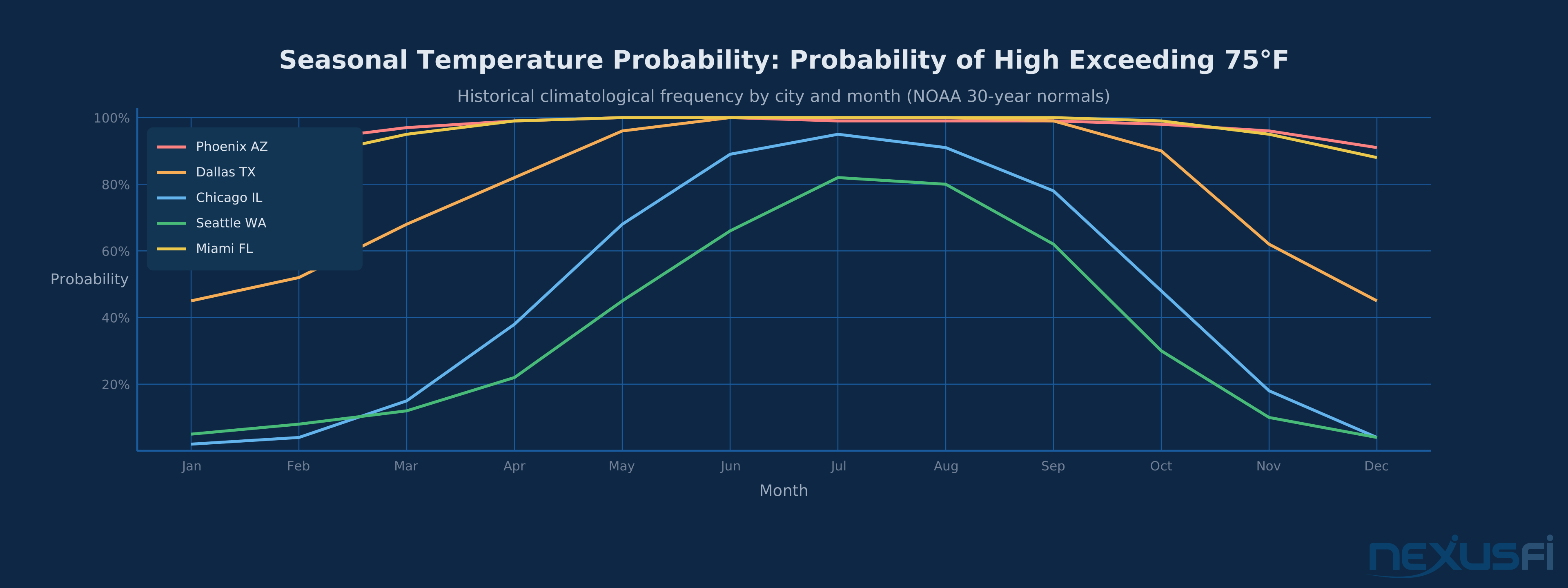
Weather patterns exhibit strong seasonality. Precipitation probability in Seattle peaks in winter; temperature extremes in Phoenix peak in summer. Contracts tied to high-probability seasonal events (Phoenix high above 90°F in July) can be priced cheaply if market liquidity is thin.
Key dates: Look for seasonal contracts when:
- The market has just opened for a new period
- Seasonal norms are clear but haven't fully been priced in
- A major forecast update (NOAA seasonal outlook) is imminent
Weather's impact on commodity prices provides additional context for seasonal weather traders. As @SMCJB explained in the NexusFi community's extensive natural gas futures discussion, short-term natural gas pricing is heavily driven by weather expectations — which means weather prediction market traders often develop skills directly transferable to commodity futures analysis, and vice versa. If you're already tracking weather patterns for energy trading, Kalshi weather contracts offer a way to trade your forecast views directly rather than through the indirect exposure of commodity futures.
The Hurricane Landfall Probability Cascade #
When a tropical system develops in the Atlantic, Kalshi lists contracts on landfall location, intensity, and timing. Prices cascade as the storm's track becomes clearer. Professional traders use the NHC's official probability cones and run their own track model comparisons.
Risk note: Hurricane contracts are highly sensitive to track forecast uncertainty. Even with strong model agreement, sudden track shifts are common. Maintain small position sizes on developing storms and scale up only as the track becomes clearer (within 48-72 hours of potential landfall).
Common Mistakes in Weather Trading #
Ignoring Station-Specific Microclimate Effects #
The contract specifies a particular ASOS station. LaGuardia in New York often reads 2-3°F warmer than surrounding areas due to its waterfront location capturing the urban heat island. JFK reads cooler due to marine influence from the bay. If you use a generic "New York City" forecast, you may systematically misjudge contracts tied to specific stations.
Fix: Download historical ASOS data for the specific contract station from NOAA's Climate Data Online (CDO) portal. Compare the station's historical readings to the NWS forecast for that specific station (weather.gov point forecasts specify the observation station).
Over-relying on Single Model Forecasts #
The GFS model (the backbone of weather.gov forecasts) is useful but not perfect. For high-stakes contracts, compare GFS output to the European model (ECMWF), the NAM, and the GEFS ensemble. Consensus across models is more reliable than any single model run.
Ignoring Model Update Timing #
NOAA NWS issues new model guidance 4 times per day. Between model runs, the market is pricing stale information. The biggest opportunities often appear in the 30-60 minutes after a new model run is published, when weather traders have processed the update but before the broader market has fully responded. The window is 30-60 minutes. That's your edge.
Treating Weather as "Random" #
Weather outcomes are not coin flips — they are deterministic physical processes that we forecast with varying degrees of uncertainty. The key distinction matters because it means systematic analysis of forecast models, station biases, and ensemble spreads can produce genuine, repeatable edge over market pricing.
Automated weather trading systems can execute orders faster than manual traders, but bugs in probability calculations or API handling can lead to rapid, significant losses. Always test extensively with paper trading, set hard position size limits in your code, and implement kill switches that halt trading if positions exceed predetermined thresholds.
Automation and Algorithmic Weather Trading #
Many weather traders on Kalshi operate algorithmic systems that:
- Pull NWS/NOAA API data on new model run publication
- Calculate probability estimates for each tracked contract
- Compare to current market prices
- Submit limit orders when a threshold edge is detected
Kalshi API: Kalshi provides an official API that allows programmatic order submission. Python libraries (kalshi-python) simplify integration. For traders comfortable with programming, a basic NWS data fetch + Kalshi price comparison script can be built in a weekend.
Automation caution: Automated systems can place many orders rapidly. Set strict position size limits in your code. A bug in your probability calculation can result in large unintended positions. Always test with paper trading before deploying real capital.
Risk Management for Weather Contracts #
Weather contracts carry the same binary risk as all event contracts: you either win the full amount or lose everything you risked. Position sizing discipline is critical.
Recommended framework:
- Maximum per-contract position: 3-5% of trading capital
- Maximum weather market exposure: 25-30% of total prediction market portfolio
- Use limit orders: Never accept wide spreads on thin markets
- Scale by confidence: 2% for moderate edge (5-8%), 4-5% for high confidence (>12% edge)
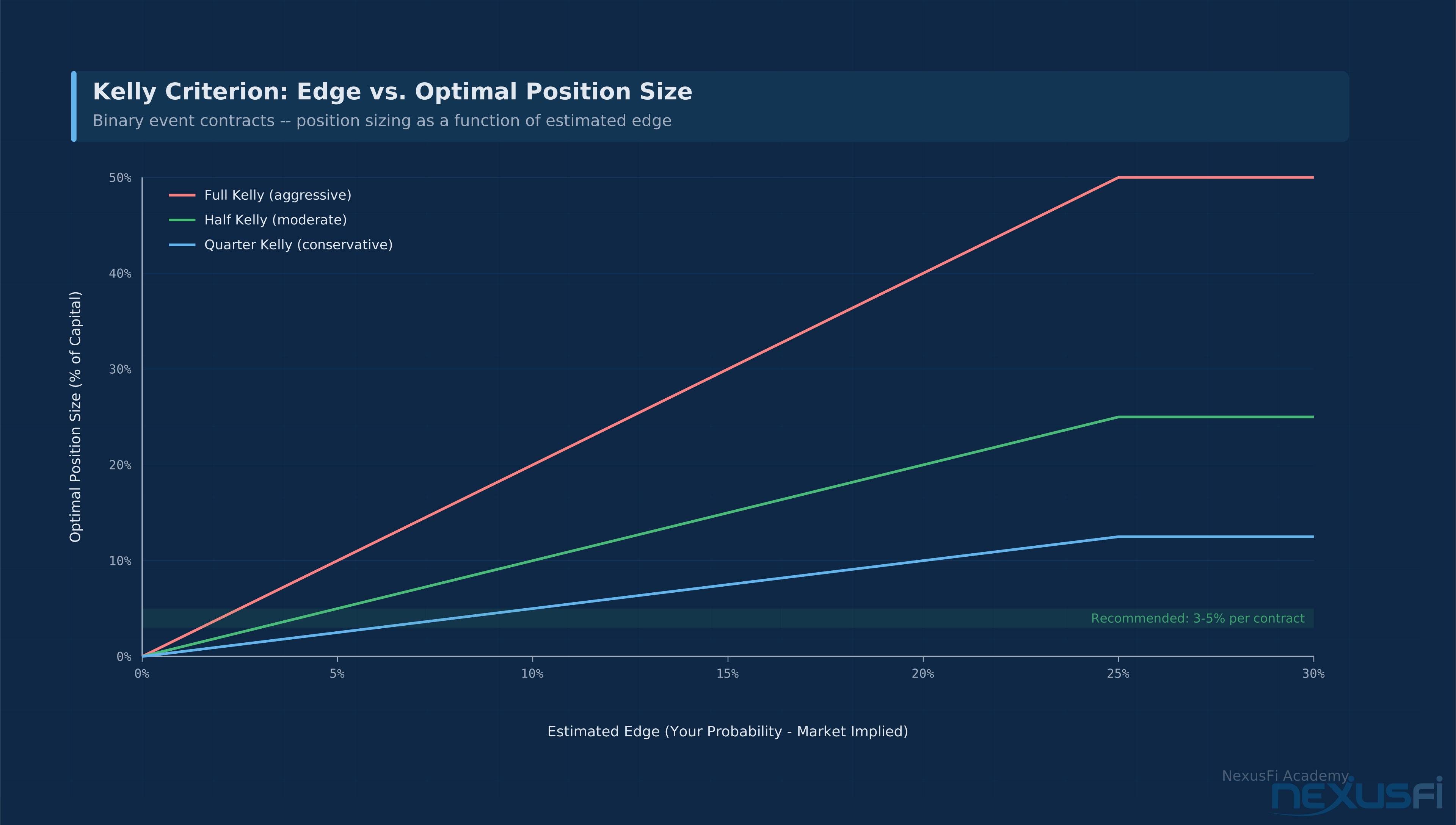
Correlation risk: Multiple weather contracts on the same region in the same time period are correlated. If a major storm hits the Northeast, all Northeast temperature and precipitation contracts may resolve against you simultaneously. Treat correlated contracts as a single exposure for position sizing purposes. This principle is well established in futures trading — @Fat Tails showed in the NexusFi community's analysis of multi-instrument position sizing that even zero-correlation between instruments doesn't eliminate maximum drawdown risk, and @Big Mike's position sizing discussion recommends capping total risk across correlated positions to prevent a single weather event from cascading through your portfolio.
Taxes and Record-Keeping #
Kalshi weather contract income is taxed as ordinary income (not capital gains). Keep records of:
- Contract name and station identifier
- Entry price, quantity, date
- Exit price or resolution outcome
- Net profit/loss per contract
Kalshi provides year-end 1099-MISC forms for accounts meeting reporting thresholds. Consult a tax professional for guidance specific to your situation.
Getting Started with Weather Trading #
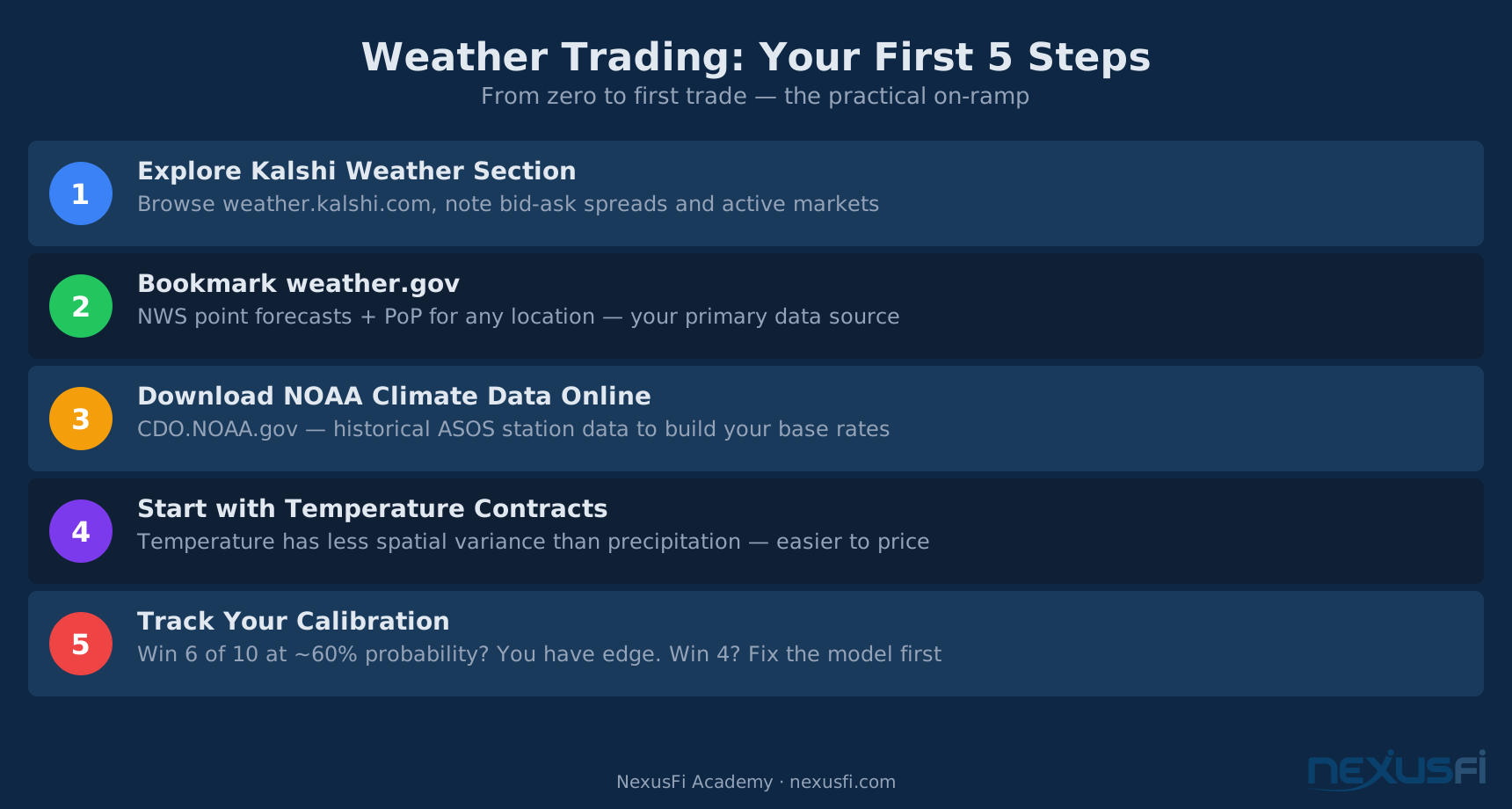
- Explore Kalshi's weather section: Work through to Kalshi.com and browse the "Weather" category. Note the variety of contract types and observe bid-ask spreads to assess liquidity
- Bookmark weather.gov: The NWS point forecast for any location is available at weather.gov. Check PoP values for cities where Kalshi weather contracts are active
- Download NOAA's Climate Data Online: CDO.NOAA.gov provides historical ASOS data for any station, going back decades — this historical record is the foundation for building your own climatological base rates
- Start with temperature, not precipitation: Temperature contracts have more predictable variance. Precipitation is more spatially uncertain and harder to price
- Track your calibration: For every 10 contracts you trade at ~60% implied probability, you should win approximately 6. If you're winning 8, you're finding genuine edge. If you're winning 4, your model needs adjustment — not your position sizing, your probability estimates.
Knowledge Map
Prerequisites
Understand these firstCitations
- — Getaitoolhub.com
- — Masterpredictionmarkets.com
- — Getaitoolhub.com
- — Predscope.com
- — Predscope.com
- — Ncdc.noaa.gov
- — Kalshi Hits $1 Billion in Super Bowl Trading Volume (2026)“Kalshi Hits $1 Billion in Super Bowl Trading Volume”
- — CME to list Sports Event Contracts Dec'25 (2026) 👍 1“CME to list Sports Event Contracts”
- — Risk of Ruin (2012) 👍 30“Risk of Ruin analysis -- binary-outcome position sizing”
- — Trading natural gas futures (2024) 👍 5“Weather and short-term natural gas price drivers”
- — Account size when trading multiple instruments (2010) 👍 5“Multi-instrument position sizing and correlation risk”