



Event Contract Settlement Mechanics: How Kalshi Resolves Markets
Overview #
Event Contract Settlement Mechanics: How Kalshi Resolves Markets
Understanding how your contracts pay out — the complete process from market close to cash in your account — and what happens when outcomes are contested
Why Settlement Mechanics Matter for New Traders #
Most new traders focus entirely on the question "will this event happen?" — the probability side of prediction market trading. They spend hours studying poll data, economic indicators, and news flow, then confidently open a position. But there's a second question that matters just as much: "How exactly will this platform determine whether the event happened?"
This concern surfaced early in the NexusFi community when @trendisyourfriend opened a discussion in the Prediction Markets forum asking whether anyone had started trading CME event contracts. The thread quickly revealed that settlement mechanics — not just directional conviction — were the primary concern for experienced futures traders evaluating these products.
Settlement mechanics — the rules, processes, and timelines by which prediction market platforms resolve contracts and pay winners — have real consequences for your profitability. Markets with ambiguous resolution criteria can resolve against you even when the "obvious" outcome occurred. Resolution delays can lock up your capital for days. Disputed markets can create unexpected volatility just before settlement. And on decentralized platforms like Polymarket, the resolution process itself introduces risks that don't exist in traditional derivatives markets.
The resolution criteria is the contract — not the news, not the consensus, not what "obviously" happened. Platforms settle based on written rules, and understanding those rules is just as important as estimating probability correctly.
Here's what you need to know: how Kalshi's CFTC-regulated system determines outcomes, how Polymarket's decentralized UMA oracle handles disputes, how Robinhood routes your trades to underlying exchanges, and the practical steps that keep your capital protected.
The Kalshi Market Lifecycle: Five Stages from Creation to Settlement #
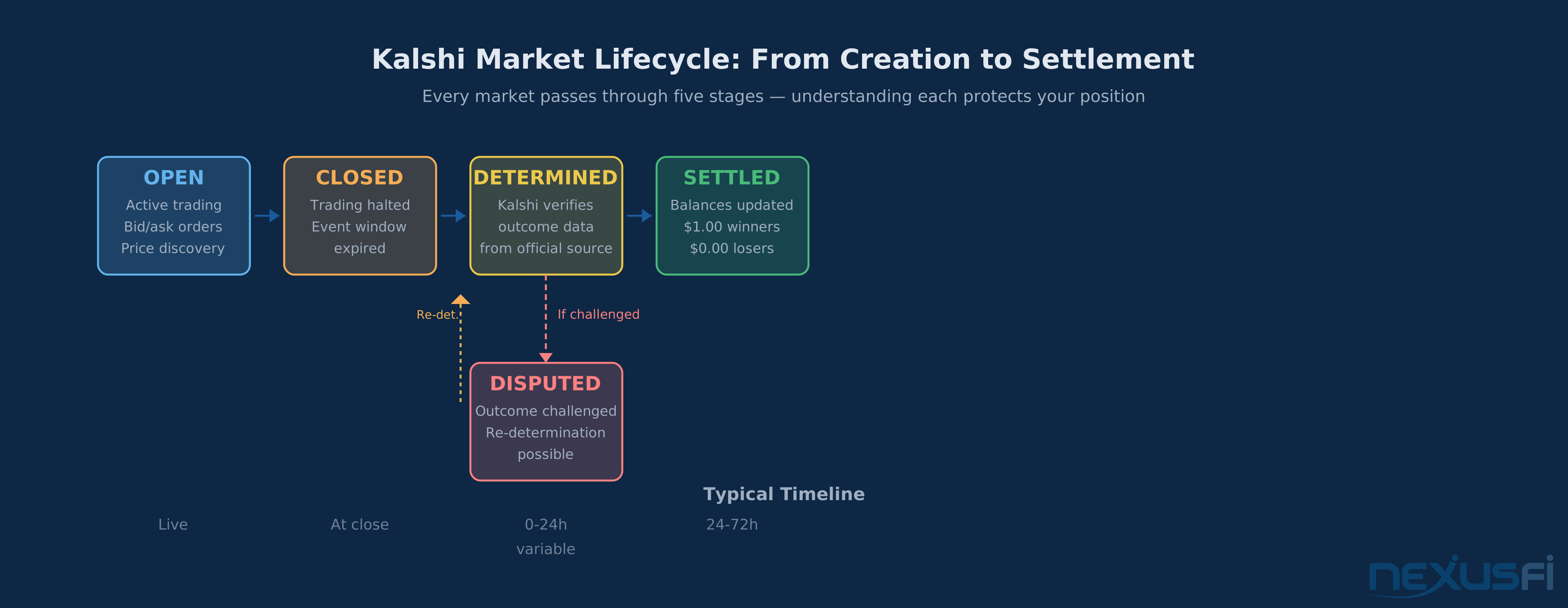
Every market on Kalshi passes through a defined sequence of stages. Understanding where a market is in its lifecycle tells you what you can and cannot do with your position.
Stage 1: Open
The market is live and accepting orders. The bid-ask spread reflects the real-time tension between buyers and sellers. Price moves as new information reaches the market. This is the stage where most of your trading occurs — entering positions, adjusting exposure, and harvesting gains by closing positions before expiration.
The yes and no prices always sum to $1.00 (plus or minus the spread) — one side gets paid, the other doesn't.
Stage 2: Closed
Trading halts. No new orders are accepted. The market is waiting for the real-world event outcome to become determinable. The close time is specified in each market's resolution criteria. Critically, the close time and the resolution time are different — a market might close at midnight but not resolve for another 24-48 hours while Kalshi's operations team verifies the outcome.
If you hold an open position when a market closes, your position remains active. You cannot exit through trading, so you're now fully exposed to the binary resolution outcome.
This is a question @jeffalan raised early in the Prediction Markets forum when CME first launched event contracts: can you trade in and out of these positions, or are you locked in until expiration? The answer depends on the platform — on Kalshi and CME, you can exit during the Open stage, but once the market closes, you're committed to the settlement outcome.
Stage 3: Determined
Kalshi has verified the event outcome against the official data source specified in the market rules and has made its determination. This is the internal decision point — Kalshi knows the answer and is preparing to settle, but balances haven't been updated yet.
The Determined stage can trigger a Disputed status if market participants contest the determination. See the dispute section below for complete details.
Stage 4: Settled
Settlement is complete. Account balances have been updated. YES holders receive $1.00 per share for markets that resolved YES. NO holders receive $1.00 per share for markets that resolved NO. The losing side's contracts expire worthless at $0.00. The market closes permanently.
Kalshi typically settles within 24 hours of the event outcome becoming determinable. Complex markets, those with ambiguous data, or those subject to dispute can take 48-72 hours. Per Kalshi's settlement documentation, most standard contracts settle within 24 hours of the market's close time.
Stage 5: Disputed (Exception Path)
This is not a normal stage that every market passes through — it's an exception. When the initial determination is contested, the market enters Disputed status. Kalshi conducts a re-determination process, reviewing additional evidence and potentially consulting outside experts or official sources. A new determination is issued and settlement proceeds.
The Disputed stage can add anywhere from hours to days to the settlement timeline. For traders, a disputed market means capital remains locked during the review period.
How Kalshi Determines Outcomes: The Official Data Sources #
The most important concept in Kalshi settlement is the resolution source — the specific official data provider or authority that Kalshi will consult to determine the outcome. Every market's resolution criteria specifies this source explicitly.
Understanding resolution sources helps you avoid the most costly mistake new traders make: assuming that an event occurring means the market will resolve YES. The critical question is whether the event occurred according to the specified official source.
Economic Data Markets #
For Fed funds rate markets, CPI, non-farm payrolls, and similar economic contracts, Kalshi typically uses:
- Federal Reserve meeting statements and published rate decisions
- Bureau of Labor Statistics official releases
- Bureau of Economic Analysis releases
If the initial data release is subsequently revised, markets generally resolve based on the data available at the specified time — not the revised figure. This is explicitly stated in most economic data market rules.
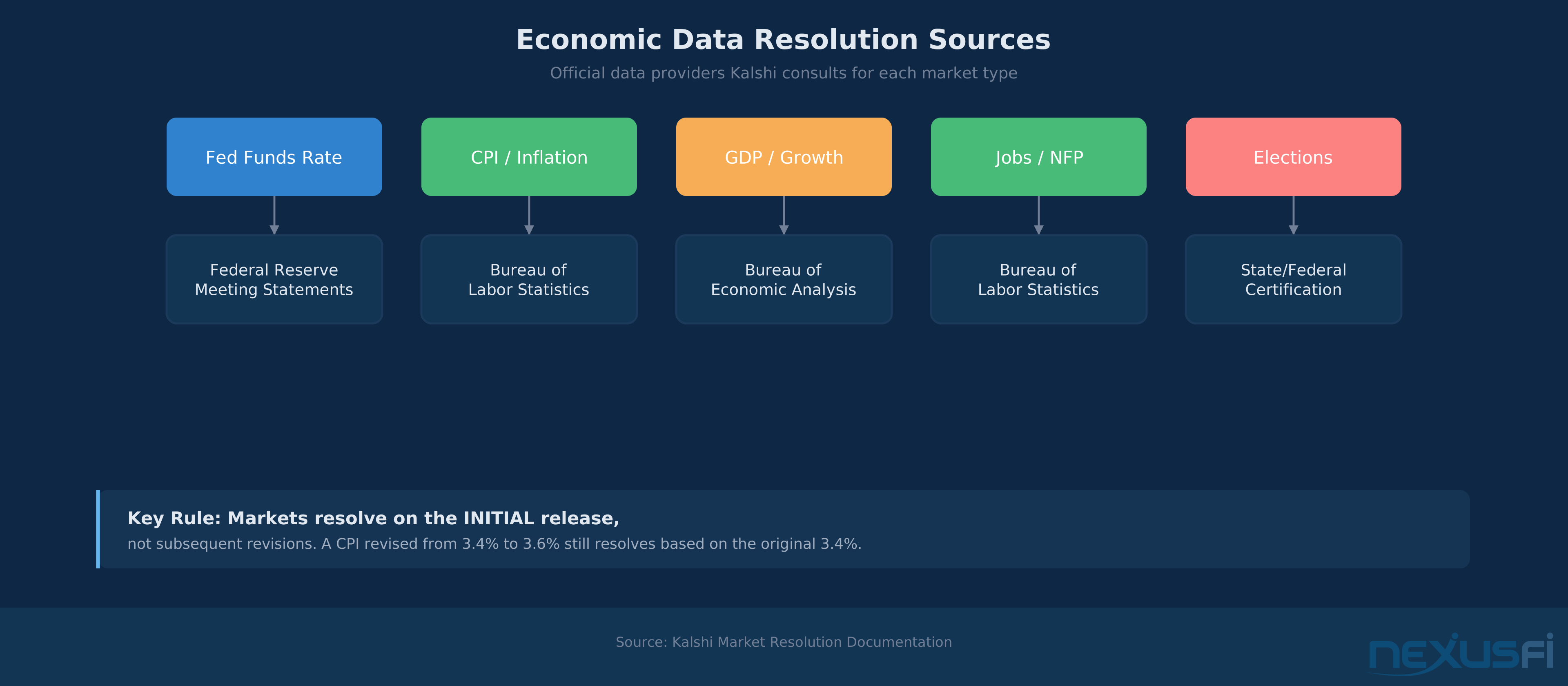
Example: A market asking "Will November CPI exceed 3.5% year-over-year?" resolves based on the BLS's initial release, not any subsequent revision. If the BLS releases a 3.4% figure that is later revised to 3.6%, the market resolves NO.
Political and Electoral Markets #
Electoral market resolution typically relies on:
- Official election results certified by relevant state or federal authorities
- Specific certification timelines vary by market (e.g., "as of January 6th certification")
- Kalshi's own research team verification against official sources
Because electoral certification is a process rather than an instant event, the resolution criteria for political markets are often more complex and time-sensitive than economic data markets.
Sports Markets #
Sports market resolution uses official league or federation records:
- MLB, NBA, NFL, NHL game results from official league sources
- Tournament bracket official results
- Player statistical totals from official league statistics
Sports markets generally resolve within hours of game completion, as official results are immediately available.
Weather and Climate Markets #
Weather markets reference specific official monitoring sources:
- NOAA national weather data
- National Hurricane Center storm classifications
- Specified weather stations or regions
The precision of the measurement source matters. "Will temperature exceed 90°F in New York City?" resolves based on a specific weather station, not citywide averages or news reports.
The Settlement Timeline: When You Get Paid #
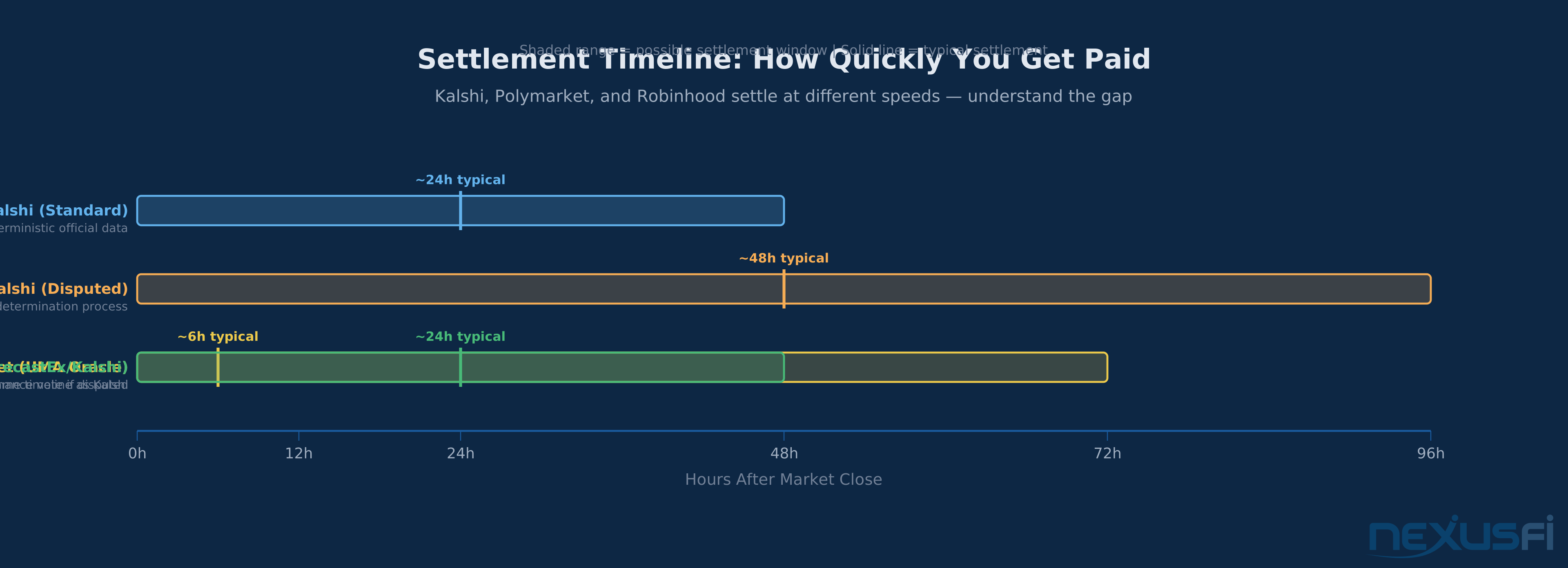
Kalshi's official settlement timeline documentation confirms that standard markets settle within 24 hours of the outcome becoming determinable. For most markets, this means:
- Sports results: typically 2-6 hours after game completion
- Economic data: typically 6-24 hours after data release
- Political events: 24-72 hours depending on certification complexity
- Disputed markets: 48-96 hours or longer
Your settled balance appears as cash available to withdraw or use for new trades. Unlike traditional futures markets where margin requirements create immediate settlement urgency, Kalshi's settlement is sequential — you wait for Kalshi to process, then your balance updates automatically.
What affects settlement speed?
Several factors can delay settlement:
- Ambiguous resolution criteria: When the event outcome is genuine unclear given the written rules, Kalshi's operations team must make a judgment call. This requires internal review and sometimes consultation with the market's original resolution committee.
- Data source delays: If an official data source is slow to publish (e.g., government agencies during holidays), the determination waits.
- Dispute filing: If any participant files a dispute, settlement pauses during the review period.
- Volume and complexity: Very high-volume markets may take longer to process settlement calculations.
- Manual verification: Some market types (especially novel event types) require human review before automatic settlement proceeds.
The impact of settlement delays on profitability is often underestimated. @SMCJB ran the numbers on CME event contracts and showed that after accounting for exchange fees and FCM commissions, you need to win roughly 57.5% of the time just to break even on what looks like a 50/50 bet — and that's before factoring in any settlement delay locking up your capital. As @forgiven noted in the same discussion, the payout structure reinforces this reality: a winning CME event contract pays out a maximum of $20 per contract, but that $20 still needs to clear the cost of the contract itself plus commissions and exchange fees. Understanding the full settlement cost structure — not just the binary win/lose outcome — is essential for sizing positions rationally.
Disputed Markets: When Outcomes Are Contested #
Disputes are rare but consequential. Understanding the dispute process prevents surprises and helps you work through markets where the resolution is genuinely contested.
Who Can File a Dispute? #
On Kalshi, any participant with a position in the market can file a dispute challenging the initial determination. You submit a dispute through Kalshi's support system, explaining why you believe the determination was incorrect based on the market's resolution criteria.
What Constitutes Valid Grounds for Dispute? #
Valid dispute grounds are narrow. The dispute process is not an appeal based on "the obvious outcome was different from what Kalshi determined." Valid disputes must be based on:
- Misapplication of the stated resolution criteria: Kalshi referenced a different data source than specified in the market rules
- Data error: The official source itself contained an error that was subsequently corrected
- Procedural violation: Kalshi did not follow its own settlement process
- Resolution criteria ambiguity: The criteria genuinely support the disputed outcome interpretation
Disputes based on "I think the outcome should be different" or "another reasonable interpretation exists" typically fail unless the resolution criteria text genuinely supports the alternative reading.
The Re-determination Process #
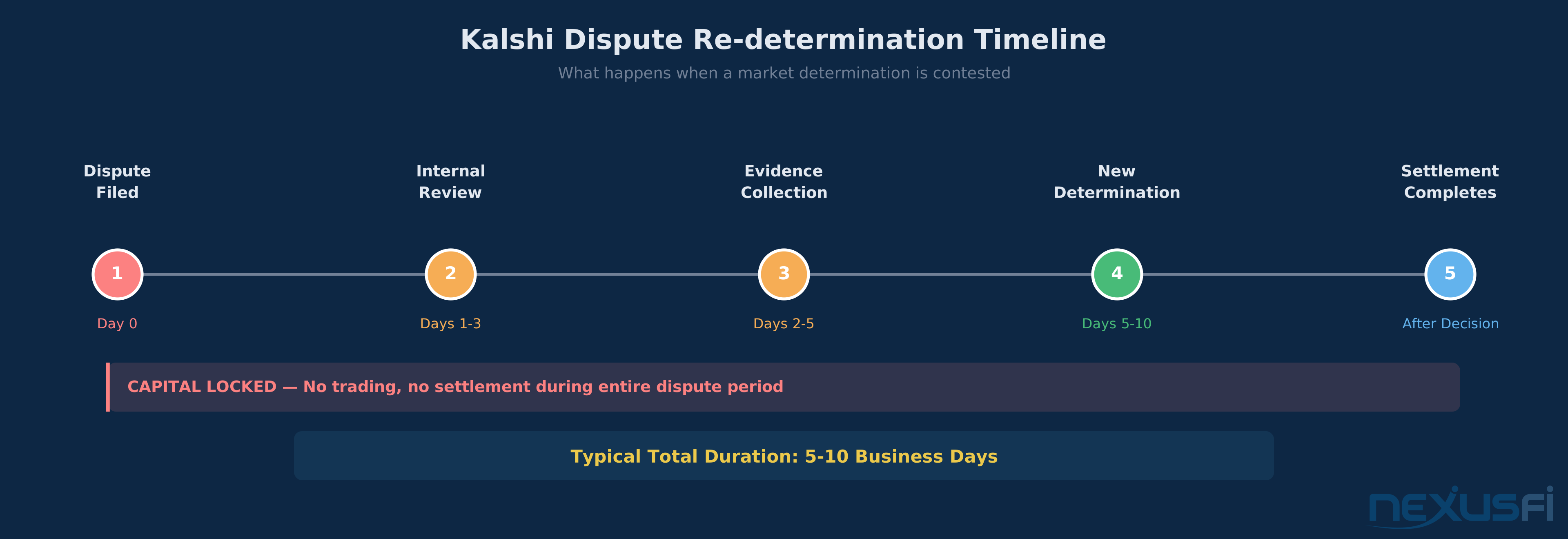
When Kalshi accepts a dispute for review, the process typically involves:
- Review period: Kalshi's operations and legal teams review the original determination against the stated criteria (days 1-3)
- Additional evidence collection: Consulting original data sources, reviewing market documentation (days 2-5)
- Decision: A new determination is issued, either confirming or reversing the original (typically within 5-10 days)
- Settlement: If the determination changes, all positions are settled according to the new outcome
The disputed market remains locked — no trading, no settlement — until the re-determination concludes.
When Dispute Resolution Affects Your Position #
If you hold a position in a disputed market, you experience:
- Capital lock-up during the review period
- Uncertainty about the final outcome
- Potential for the outcome to reverse from the initial determination
Experienced traders factor dispute risk into their position sizing for markets with ambiguous or contested resolution criteria.
Voided Markets and N/A Outcomes: When Markets Are Cancelled #
Not every market resolves YES or NO. Occasionally, markets are voided — cancelled before settlement with positions returned to holders at the original entry price.
When Markets Get Voided #
Kalshi voids markets in several circumstances:
- The triggering event doesn't occur as defined: The market resolves "N/A" and all participants receive their purchase price back
- Data source becomes unavailable: If the specified official source cannot produce the required data
- Force majeure events: Extraordinary circumstances that prevent resolution
- Technical errors: Market creation errors that make fair resolution impossible
The N/A Resolution #
An N/A resolution is neither YES nor NO. Your position is returned at the price you paid. If you bought YES at $0.65, you receive $0.65 back. If you sold NO at $0.30 (implying you received $0.70 in the transaction), you retain whatever position value you held.
Important: N/A resolutions are not free passes out of bad positions. If you bought YES at $0.80 in an N/A resolution, you receive $0.80 back — not $1.00. You neither profit nor lose, which is fortunate if the "true" probability was well below $0.80 when the event didn't meet the resolution criteria.
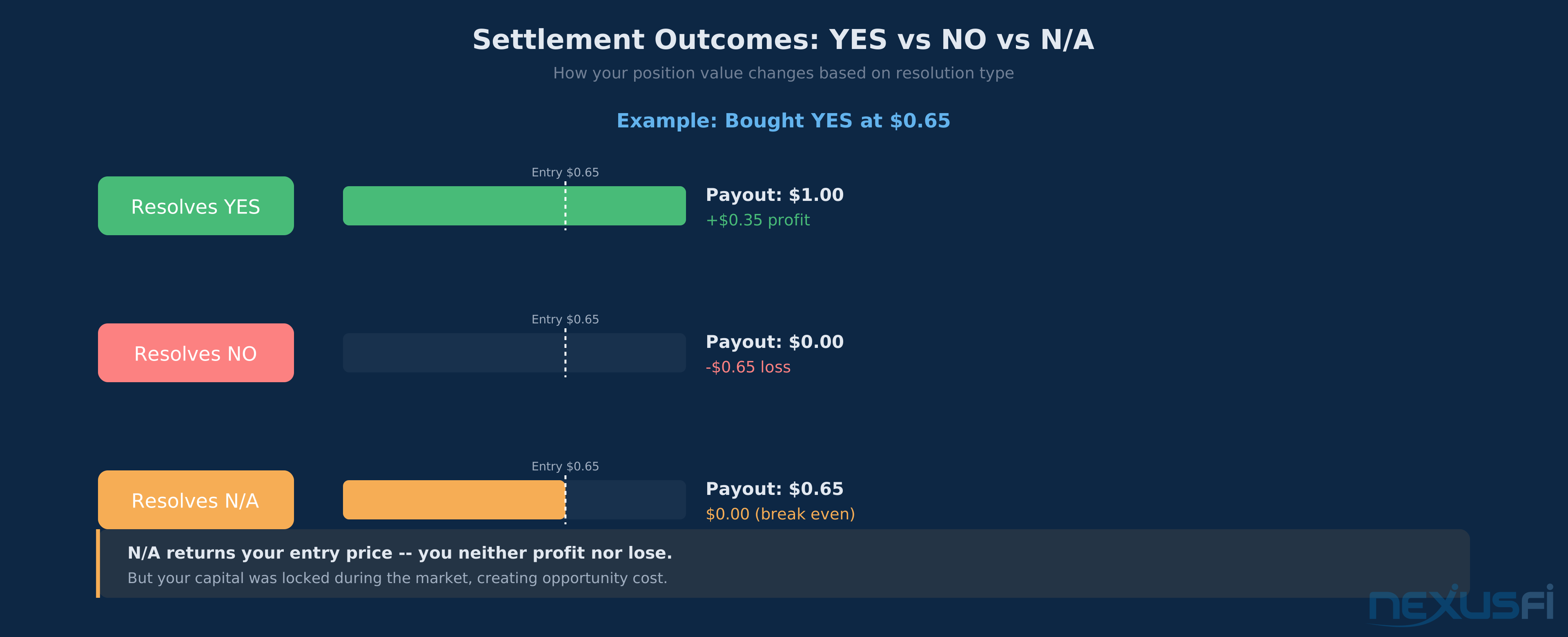
N/A is not a free pass for overvalued long positions. You get back what you paid — not what the contract would have been worth. If you bought YES at $0.85 when fair value was $0.50, N/A saves you from a likely loss. But if you bought at $0.30 expecting a $1.00 payout, N/A means you recover $0.30 while your capital sat locked instead of deployed elsewhere.
A refund. Not a rescue. Every single one.
How to Identify N/A Risk Before Trading #
N/A risk exists whenever:
- The resolution criteria includes conditional language ("if the game is played to completion")
- Natural disasters, cancellations, or schedule changes could prevent the event
- The data source itself could fail to produce results
Read every resolution criteria document before entering a significant position. Look for language that defines what happens if the event is postponed, cancelled, or fails to occur as described.
Polymarket's Decentralized Settlement: The UMA Optimistic Oracle #
Polymarket takes a at the core different approach to settlement. Instead of a centralized organization like Kalshi making determinations, Polymarket uses the UMA Optimistic Oracle — a decentralized dispute resolution system where economic incentives, rather than corporate authority, drive correct resolutions.
How the UMA Oracle Works #
The UMA Optimistic Oracle operates on an "optimistic" assumption: proposed resolutions are assumed correct unless challenged within a defined window. Here's the complete flow:
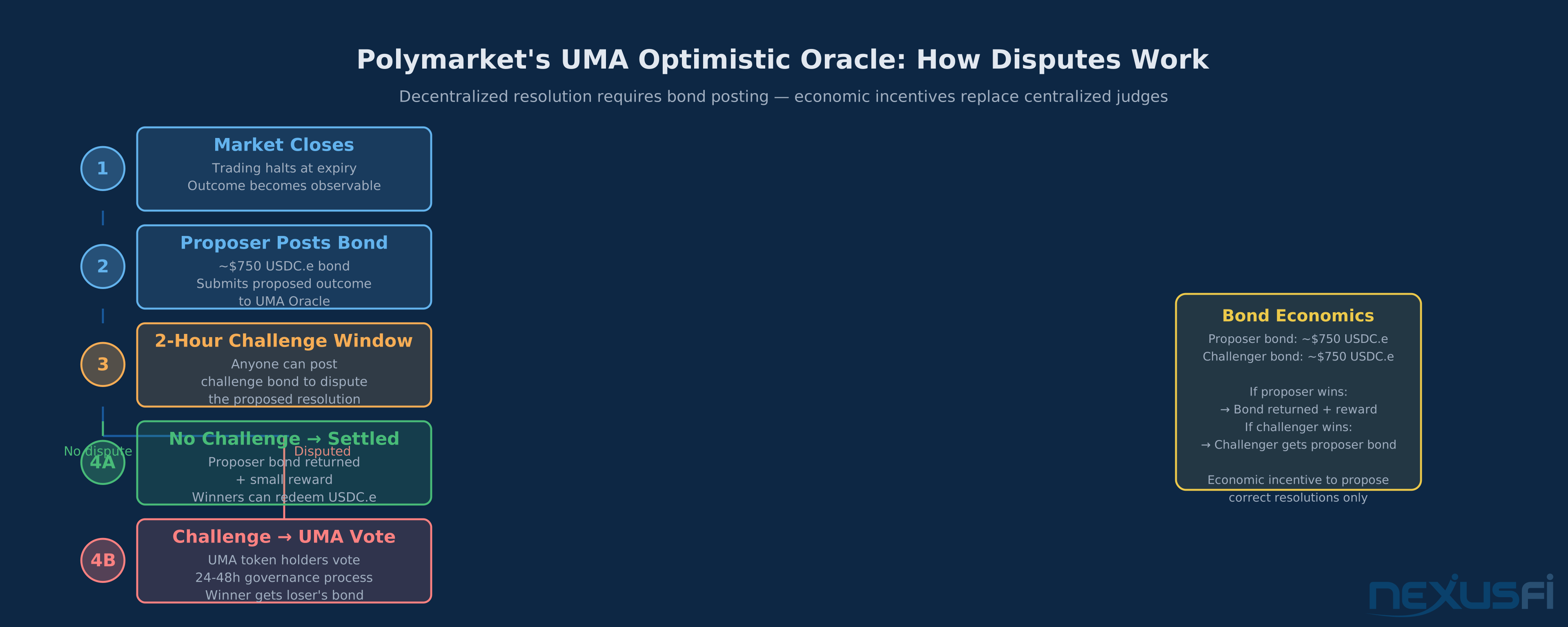
Step 1: Market closes Trading halts when the expiration time arrives. The event's outcome is now observable.
Step 2: Any proposer submits a resolution Anyone — including automated bots or market participants — can propose a resolution by posting a bond of approximately $750 USDC.e (the stablecoin used on Polymarket's Polygon blockchain). The proposer selects the outcome (YES or NO) and submits to the UMA contract.
Step 3: Two-hour challenge window A two-hour period opens during which any participant can challenge the proposed resolution by posting their own bond of approximately $750 USDC.e. This creates an economic penalty for incorrect proposals — a wrongly proposed resolution can be challenged, with the challenger winning the proposer's bond.
The two-hour challenge window is a hard deadline. If the proposed resolution is wrong and nobody challenges within two hours, the incorrect outcome becomes permanent. Set alerts for your active Polymarket positions — missing this window means zero recourse.
Step 4A: No challenge — automatic settlement If no one challenges within two hours, the proposed resolution is accepted. The proposer's bond is returned plus a small incentive reward. Winners can redeem their USDC.e immediately.
Step 4B: Challenge — UMA governance vote If a challenge is filed, the dispute enters UMA's governance process. UMA token holders vote on the correct outcome over a 24-48 hour period. The winning side (either the proposer or challenger) receives the loser's bond as a reward for being correct. The market settles according to the vote outcome.
Settlement Timeline on Polymarket #
Under normal circumstances (no dispute), Polymarket can settle as quickly as 2-6 hours after market close — much faster than Kalshi's 24-hour standard timeline. The optimistic oracle's design optimizes for speed when the outcome is clear.
However, the two-hour challenge window means you can never exit your position immediately after a market closes. Your funds are locked for at least two hours, even in unambiguous situations.
When disputes occur, the 24-48 hour UMA governance vote adds significant time. In rare cases where UMA governance itself is contested, resolution can extend beyond 48 hours.
Settlement Risk on Polymarket #
The decentralized model introduces risks that don't exist in Kalshi's centralized system:
Proposer accuracy risk: The proposer might propose the wrong outcome. If no one challenges (perhaps because the bond size makes challenging economically unattractive for a small market), an incorrect resolution could stick.
Vote manipulation risk: UMA token voting is subject to governance attacks. While the economic design makes successful manipulation expensive, the theoretical risk exists.
Smart contract risk: Polymarket's settlement infrastructure runs on Polygon smart contracts. Contract bugs could theoretically affect settlement, though Polymarket has maintained a clean settlement record since launch.
Liquidity risk at redemption: Since settlement is in USDC.e (a Polygon-native stablecoin), you need to consider the conversion path if you want dollars in your bank account. Polymarket handles USDC.e → USDC bridging, but there are additional steps compared to Kalshi's direct USD settlement.
Why Polymarket's Settlement Record Has Been Strong #
Despite the decentralized design's theoretical risks, Polymarket has maintained a strong settlement record for markets with clear outcomes. The bond economics create powerful incentives: only propose correct resolutions (risking your bond on correctness), and only dispute genuinely incorrect resolutions (same risk). For markets where the outcome is obvious, correct resolutions sail through the two-hour window unchallenged.
The disputes that reach UMA governance are typically those where the outcome is genuinely ambiguous — and these are the same markets that would face re-determination delays on Kalshi.
Robinhood Event Contracts: Brokerage Layer over Exchange Settlement #
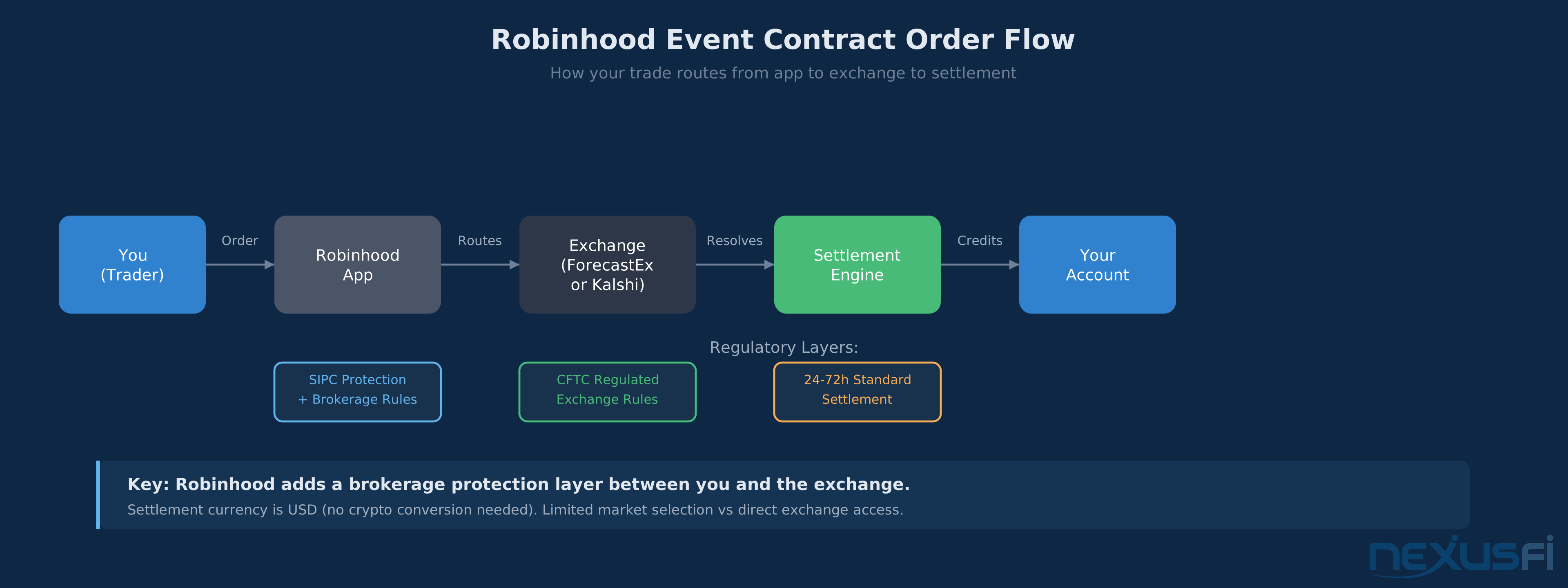
Robinhood's event contracts work differently from both Kalshi (direct exchange access) and Polymarket (decentralized protocol). Robinhood operates as a broker and clearing member, routing your trades to underlying CFTC-registered exchanges — primarily ForecastEx and Kalshi.
How Robinhood Settlement Works #
When you trade an event contract on Robinhood:
- Your order routes to the underlying exchange (ForecastEx or Kalshi, depending on the market)
- The exchange matches and holds your position
- Settlement occurs at the exchange level according to that exchange's standard settlement process
- Robinhood updates your account after receiving confirmation from the exchange
This means Robinhood event contract settlement timelines basically mirror Kalshi's timeline — typically 24-72 hours depending on market type. You're subject to the same determination process, dispute procedures, and N/A resolution outcomes.
Key Differences in the Robinhood Experience #
Regulatory protection: Robinhood holds customer assets under U.S. brokerage regulations, with additional SIPC protection concepts that don't apply to direct exchange accounts. Your funds are protected under U.S. bankruptcy law in a way that Polymarket's USDC.e cannot replicate.
Settlement currency: Robinhood settles in USD directly to your brokerage account. No crypto conversion, no stablecoin bridges, no wallet required.
Limited market selection: Not all Kalshi markets are available through Robinhood. Robinhood curates the available contracts, limiting access to select event categories.
Customer service layer: Disputes with settlement on Robinhood go through Robinhood's customer service layer before reaching the underlying exchange's dispute process. This adds a step that may help or hinder resolution depending on the circumstances.
Platform Settlement Comparison: Key Differences for Traders #
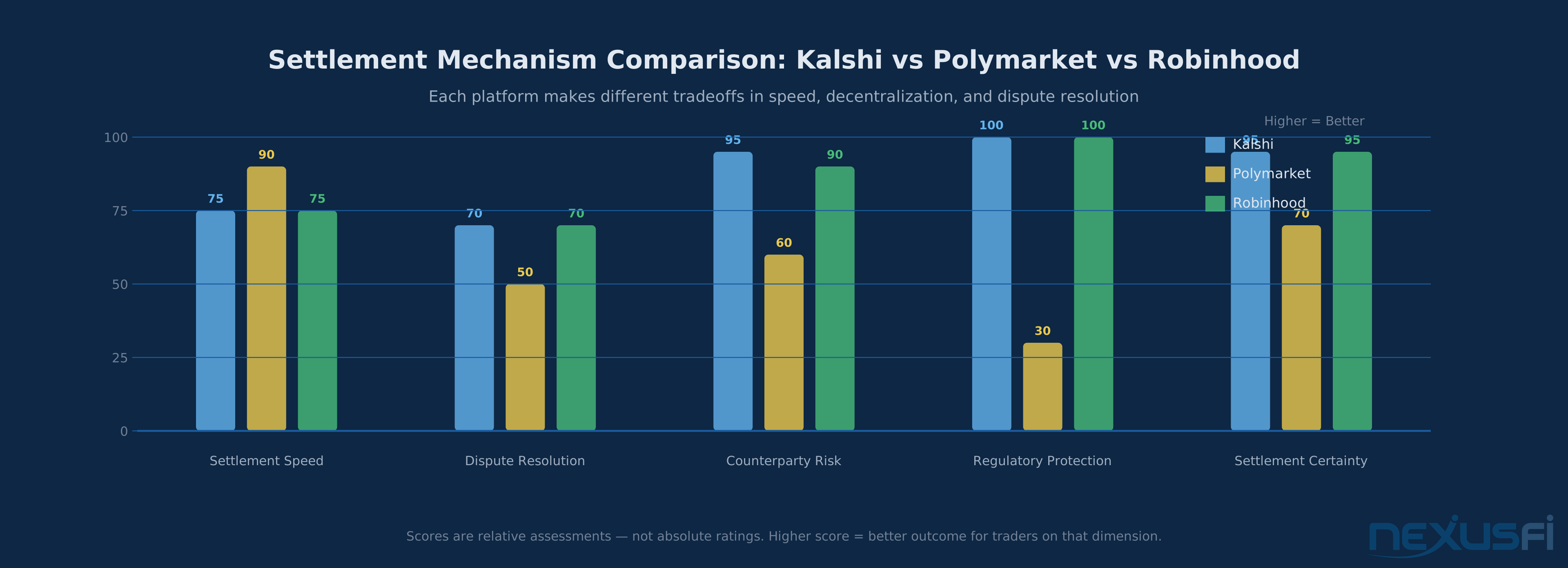
| Feature | Kalshi | Polymarket | Robinhood |
|---|---|---|---|
| Settlement currency | USD | USDC.e (Polygon) | USD |
| Typical settlement time | 24-48h | 2-6h (undisputed) | 24-48h |
| Dispute process | Centralized review | UMA oracle vote | Via Robinhood → exchange |
| Regulatory protection | CFTC (DCO) | Limited (offshore) | CFTC + brokerage layer |
| Settlement certainty | Very high | High (for clear outcomes) | Very high |
| Access requirements | KYC, US residency | Non-US preferred, crypto wallet | US broker account |
| Settlement risk | Determination error | Proposer error, smart contract | Exchange-level risk |
Practical Settlement Rules for New Traders #
Understanding settlement mechanics translates to concrete behaviors that protect your capital and prevent avoidable losses.
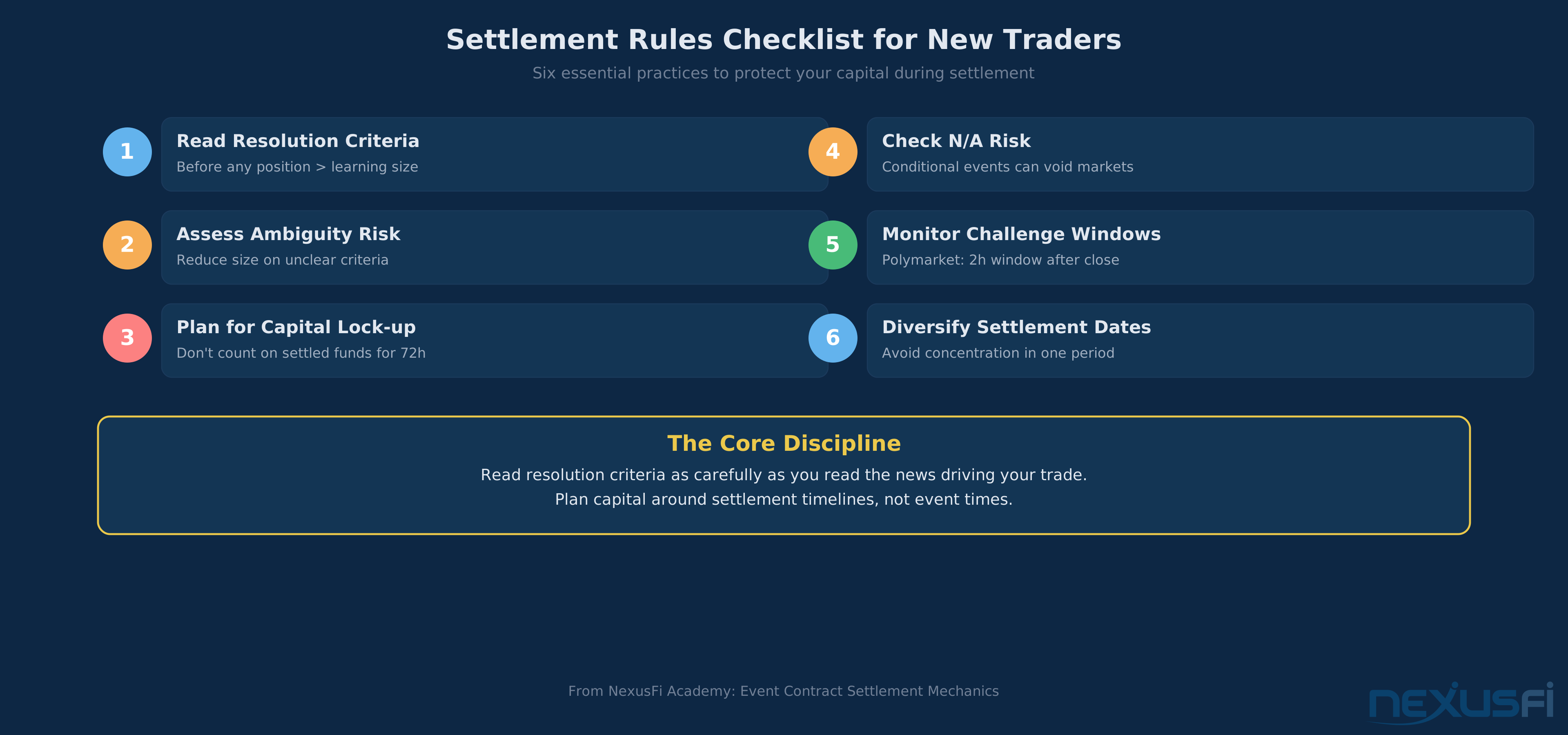
Rule 1: Read the Resolution Criteria Before Opening Any Position #
Every market on every platform has explicit resolution criteria. Before entering a position larger than your educational "learning" allocation, read the criteria fully. Look for:
- The specific official data source Kalshi will consult
- The exact threshold or outcome definition (what exactly qualifies as YES)
- Any conditional language (what happens if the event doesn't occur)
- The close time versus the anticipated resolution time
The resolution criteria is the contract. Everything else — news, forecasts, probabilities — is secondary.
@Laconic made an important observation in the Prediction Markets forum: you can't evaluate settlement economics from a single trade. Over 100 or 1,000 trades, the market maker's edge embedded in pricing, the bid-offer spread, and settlement fees compound. "The purchases with the biggest payouts will be the ones where you are wrong the most often" — so understanding the full settlement cost structure across many trades is just as critical as reading individual resolution criteria.
Rule 2: Don't Trade Markets with Ambiguous Criteria Unless You Understand the Ambiguity #
Some markets have resolution criteria that reasonable people could interpret differently. This is where disputes occur. Before trading these markets, understand:
- What interpretation benefits you
- What interpretation Kalshi is most likely to follow
- What an alternative interpretation means for your position's value
If you can't answer all three clearly, either reduce your position size or avoid the market.
Rule 3: Factor in Settlement Time When Planning Capital Deployment #
Your capital is locked from the time a market closes until settlement completes. For a 72-hour settlement:
- Don't plan to redeploy that capital for 3 days after the event
- Don't enter the position if you'll need the capital within that window
- Build settlement delay into your opportunity cost calculations
This matters especially when multiple events occur close together. Don't count on using Friday's settlement proceeds to fund Tuesday's position.
Rule 4: Understand N/A Risk in Dependent Event Markets #
Any market whose outcome depends on a preceding event — a game being played, a vote occurring as scheduled, a release happening on time — carries N/A risk. This risk is asymmetric for short positions versus long positions.
If you're long YES at $0.75 and the market resolves N/A, you receive $0.75 back. You lose the opportunity but not the capital. However, if you built a complex portfolio assuming the market resolves YES, the N/A disrupts your portfolio construction and you may miss other opportunities while waiting for the N/A settlement.
Rule 5: On Polymarket, Monitor the Two-Hour Challenge Window #
Polymarket's optimistic oracle creates a brief but important window after market close. If you believe the proposed resolution is incorrect, you can challenge it during this two-hour period (with the appropriate bond). Monitoring your active Polymarket positions around market close times is a habit worth developing once you're trading meaningful amounts.
Rule 6: Diversify Across Settlement Times #
Concentration in markets that all close and settle at the same time creates capital lock-up concentration risk. If you have ten positions all settling within 48 hours of each other, a dispute in any one of them creates cascading delays for capital you planned to redeploy. Spread your settlement exposure across different dates and event categories.
Common Settlement Mistakes New Traders Make #
Mistake 1: Assuming "obvious" outcomes resolve automatically
Kalshi and other platforms follow their written resolution criteria, not trader intuition. Cases where a clearly favorable outcome resolves unexpectedly (market resolves N/A, or YES resolves NO due to specific criteria language) are more common than beginners expect. Trust the criteria document, not the "obvious" outcome.
Mistake 2: Counting unrealized gains before settlement
Seeing a winning position before settlement is not the same as having the cash. Don't plan expenditures, subsequent trades, or withdrawals based on unsettled positions. Wait for the settled balance confirmation.
Mistake 3: Not checking settlement status for Polymarket positions
On Polymarket, the two-hour challenge window is easy to miss. If a market closes and the proposed resolution is wrong, you have two hours to file a challenge. If you check your position three hours after market close and the incorrect resolution already settled, you have no recourse. Develop a habit of checking Polymarket positions promptly after close.
Mistake 4: Misunderstanding Polymarket's USDC.e as equivalent to dollars
Your winnings on Polymarket are USDC.e on the Polygon network. Converting to US dollars requires bridging USDC.e to USDC and then off-ramping through an exchange. The conversion is reliable and stable (1:1 with USD) but adds steps, time, and potentially transaction fees that Kalshi and Robinhood settlement don't require.
Mistake 5: Conflating fair value with settlement value
A market might be trading at $0.72 YES when you believe the "fair" probability is $0.85. Even if you're right about the probability, the contract settles at $1.00 or $0.00 — not at your estimated fair value. The settlement mechanics don't care about your probability estimate. Only the binary outcome matters.
Settlement rewards binary accuracy — not directional insight, not "close enough," not the margin of a partial win.
Summary: What Settlement Mechanics Mean for Your Edge #
Settlement mechanics aren't exciting — but they're where edge gets preserved or destroyed. A trader who correctly estimates probability on ten markets but fails to read resolution criteria carefully might find three of those markets resolving differently than expected, wiping out the gains from the other seven.
Four rules. Get them right:
- Read resolution criteria as carefully as you read the probability-driving news
- Plan capital deployment around settlement timelines, not event times
- Understand that Kalshi, Polymarket, and Robinhood each have distinct settlement mechanics and risks
- Treat N/A risk as a real probability, not an edge case
Resolution criteria is the contract — everything else is commentary. Master the settlement rules on each platform before sizing up, and you will avoid the most expensive mistakes new prediction market traders make.
With these mechanics understood, you can build a prediction market trading practice on a solid foundation — one where winning trades actually result in the gains you calculated.
Knowledge Map
References This Article
Articles that build on this topicCitations
- — How Kalshi and Polymarket Settle Markets (and Disputes)
- — Kalshi Market Lifecycle
- — Market Settlement -- API Documentation
- — Timeline and Payout
- — How Long Does Kalshi Take to Pay Out?
- — Kalshi Sports Contract Settlement
- — Resolution -- Polymarket Documentation
- — Polymarket Disputes & UMA Oracle
- — Inside UMA Optimistic Oracle: A Quantitative Guide
- — How Are Markets Disputed?
- — Robinhood Event Contracts Explained
- — How Prediction Markets Are Structured
- — How Prediction Market Contracts Resolve
- — Kalshi Market Rules