



Profit Splits and Withdrawal Mechanics in Prop Firm Funded Accounts: Understanding Your Take-Home Reality
Profit splits are the most advertised feature of funded trading programs, and the least understood. When a prop firm says "80/20 split," traders hear: "I keep 80 cents of every dollar I make." The reality is different. That 80% applies to net realized profit, after commissions and exchange fees are subtracted first. It applies only to the portion of profits earned after all drawdown rules are satisfied. And if it's a tiered split structure, the improved rate only applies to profits earned after the milestone is crossed — not retroactively to everything you made before.
Withdrawal mechanics layer another level of complexity on top. The profit you earned today doesn't become cash in your account today. It becomes part of a payout calculation at the close of a reporting period, subject to a compliance audit, a minimum threshold check, and a bank processing window that typically runs one to five business days. First withdrawals are almost always slower because of identity verification requirements.
Overview #
This guide covers how all of it works: the math of flat and tiered splits, how scale-up programs are structured and what disqualifies you from them, the exact mechanics of trailing and daily drawdown and how they interact with payouts, and what the full withdrawal pipeline looks like from click to cash. The goal is to give you a realistic expectation of what you'll actually take home — not the number on the website.
How Profit Splits Actually Work #
The Baseline: Flat Splits #
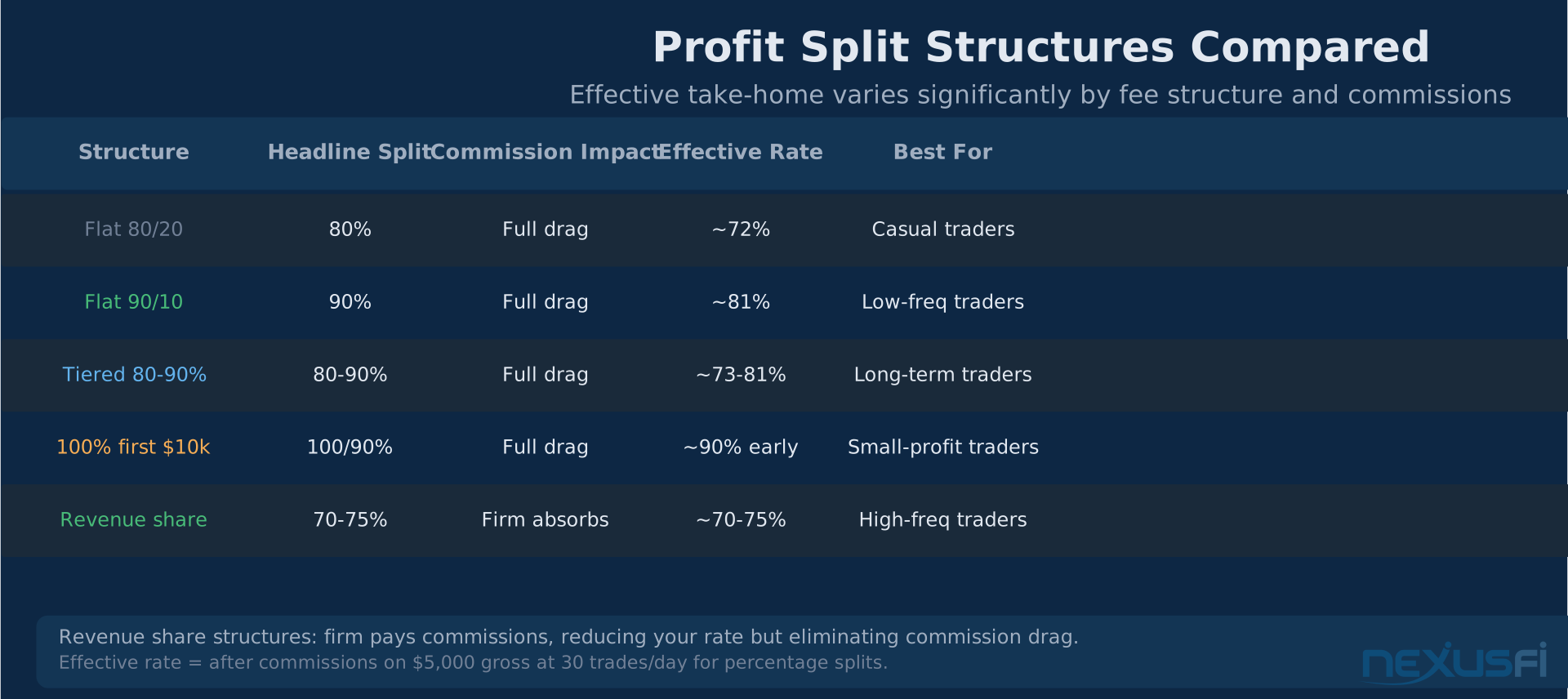
A flat 80/20 or 90/10 split is the simplest structure. You trade the funded account, and once you meet withdrawal eligibility conditions, the firm pays you your percentage of the net realized profit. Critically: commissions and exchange fees come out first.
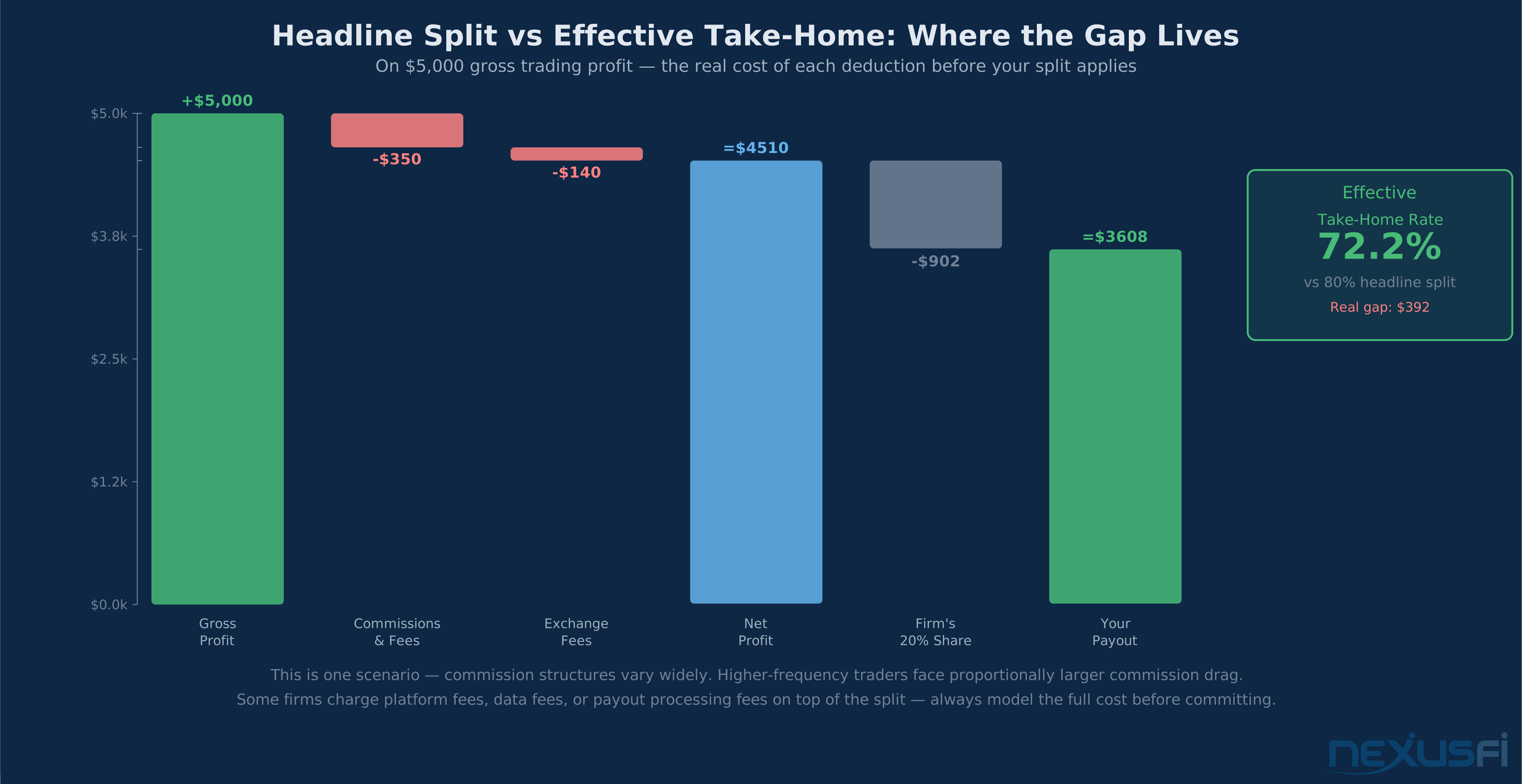
Say you make $5,000 in gross trading profit over a month. If you paid $350 in commissions and $140 in exchange fees, your net realized profit is $4,510. At an 80/20 split, the firm keeps $902. You receive $3,608. That's a 72.2% effective rate on your gross profit — not 80%.
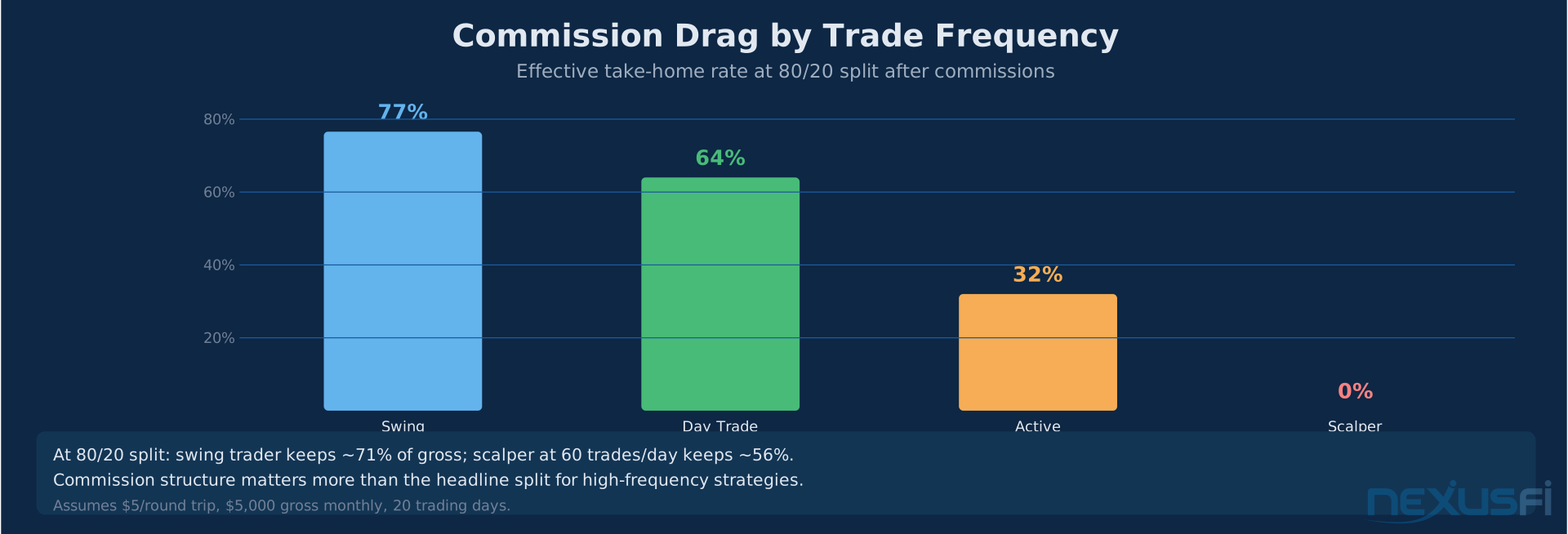
This gap between headline split and effective take-home gets wider as trading frequency increases. A scalper making 50 round-trip trades a day at $5 per round trip pays $1,000 in commissions on 200 trading days — that's $200,000 in annual commission drag before the split is even applied. The headline split percentage matters less than the commission structure for high-frequency traders.
Higher headline splits (90/10) almost always come with tighter constraints. The daily drawdown caps are smaller, the trailing drawdown buffers are tighter, or the profit targets required for withdrawal eligibility are higher. A 90/10 split at a firm with a $1,000 daily drawdown limit creates a different risk profile than 80/20 at a firm with a $1,500 daily limit — and the probability of reaching payout eligibility differs so. Don't evaluate the split in isolation.
Tiered Splits: The Prospective-Only Rule #
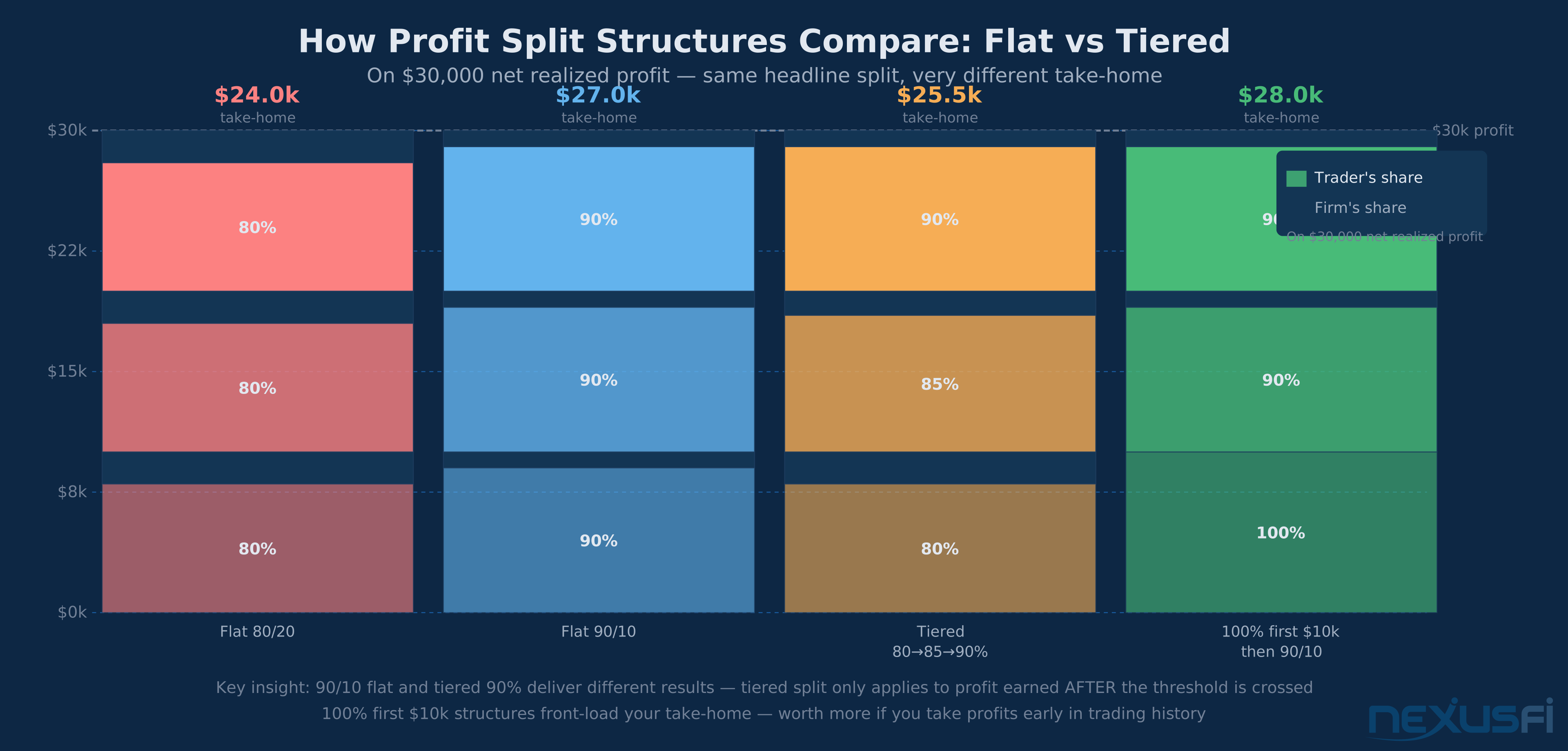
Tiered split structures offer an improving split as cumulative profit milestones are hit. A common structure: 80/20 on the first $10,000 of realized profit, 85/15 on the next $10,000, 90/10 above $20,000. This looks attractive on paper. The catch is that tier upgrades are almost universally prospective only — they apply to profit earned after the milestone is crossed, not to the profit that got you there.
In the example above: if you earn $30,000 in net profit, you might expect 90/10 to apply to all of it. What you actually receive:
- First $10,000 at 80%: $8,000
- Next $10,000 at 85%: $8,500
- Final $10,000 at 90%: $9,000
- Total payout: $25,500 (vs. $27,000 if 90/10 applied throughout)
The tier upgrade also requires a qualifying event — typically a daily-close or end-of-period snapshot where the cumulative profit threshold is confirmed. If you hit $10,000 mid-month, many firms won't apply the better rate until the next reporting period opens. And if your account drops below the threshold before the period ends, the tier upgrade may be reversed.
Some programs use front-loaded structures to benefit the trader. TradeDay, as of late 2025, offered 100% of the first $10,000 in profits, 90% split after that threshold, and 95% split once total withdrawals hit $100,000. For a trader who expects smaller, consistent profits rather than one large payout, the 100% first-$10k structure is worth more in expected value than a flat 90/10 from day one.
Scale-Up Programs #
The Qualification Requirements #
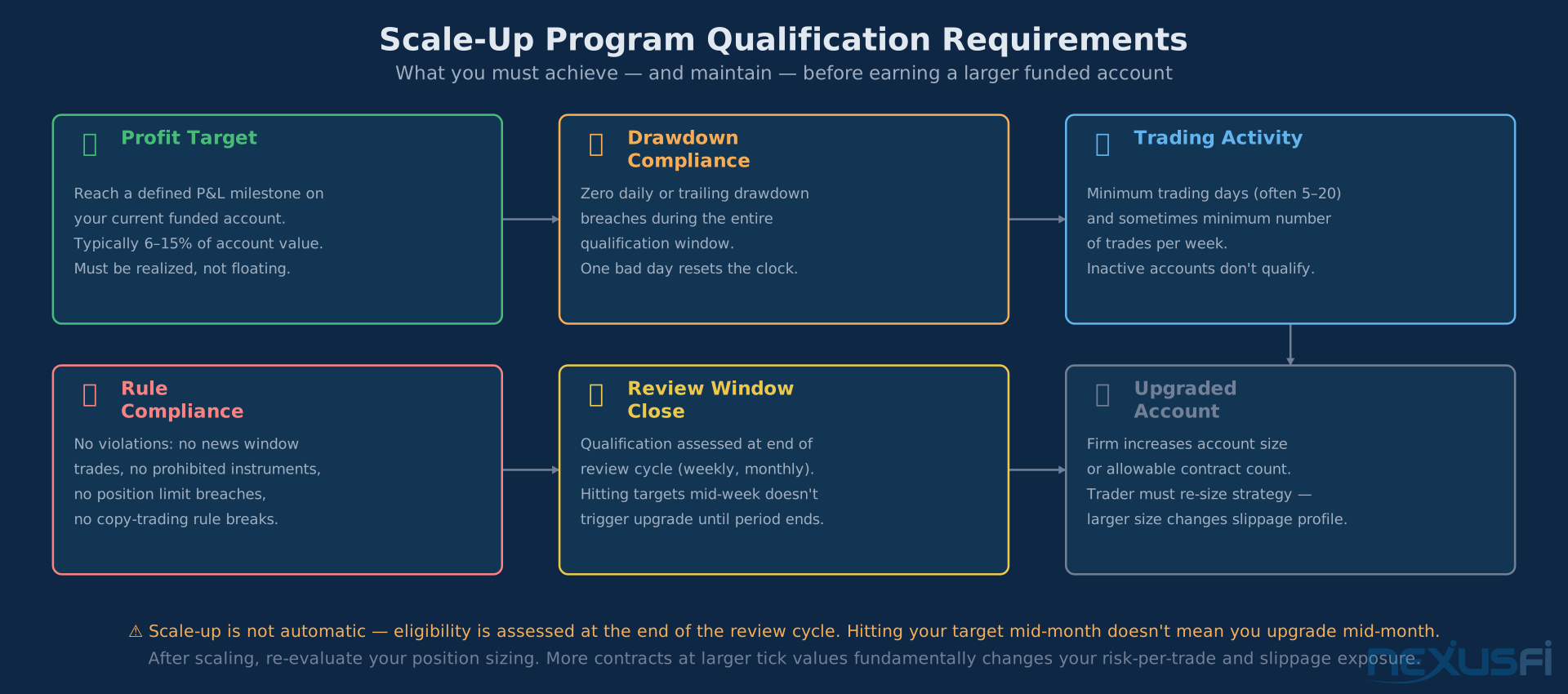
Scale-up programs increase your funded account size (and so your potential earnings) when you demonstrate consistent profitability and risk management. The requirements are typically a combination of all of:
- Profit target: Reach a defined P&L milestone on your current funded account, typically 6-15% of account value. Must be realized profit, not floating.
- Drawdown compliance: Zero daily or trailing drawdown breaches throughout the entire qualification window. One bad day resets the clock at most firms.
- Trading activity: Minimum number of trading days (commonly 5-20) and sometimes minimum trades per session. Inactive accounts don't qualify.
- Rule compliance: No violations of any kind — news trading windows, position limits, prohibited instruments, copy-trading rules.
The timing gate is where traders are often surprised. Even if you hit every qualification metric mid-cycle, the upgrade only triggers at the close of the review window. Some firms review weekly; others monthly. You may have qualified for a scale-up on Day 10 of a 30-day cycle but won't see the larger account until Day 31.
What Changes After Scaling #
Scaling up isn't just a larger balance number — it changes the microstructure of your trading in ways that can invalidate a previously profitable strategy. More contracts mean larger orders in the market. Larger orders face more slippage, especially during thin liquidity periods like pre-market, the lunch hour, and news events. A strategy that produced $2,000/month at 2 contracts may not produce $4,000/month at 4 contracts if those extra contracts start moving the market against you at your entry and exit points.
This is the right framework. Size to the drawdown buffer, not to the account balance. After a scale-up, recalculate how many contracts you can trade while maintaining your drawdown management discipline.
Drawdown Rules #
Daily Drawdown #
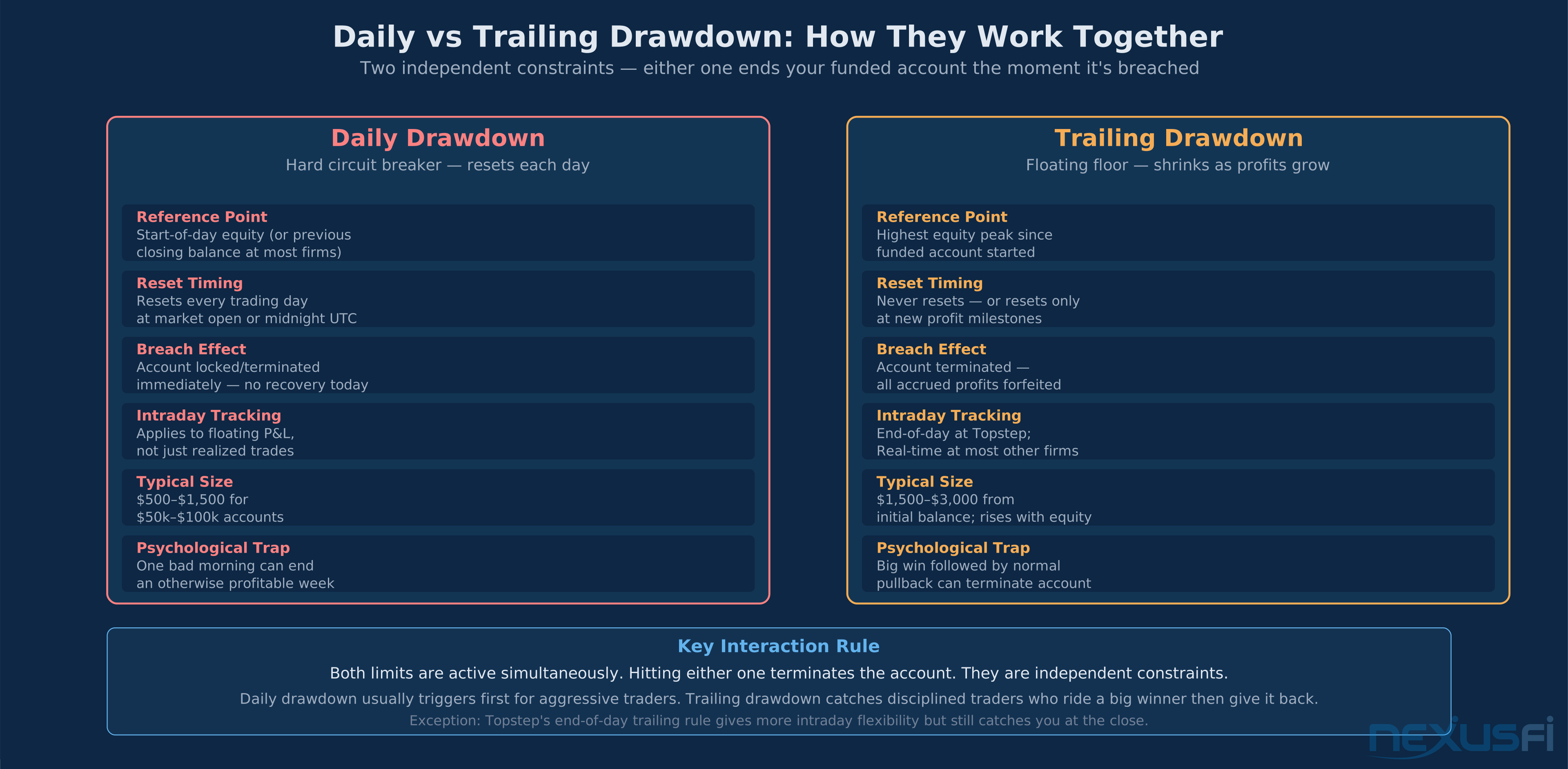
The daily drawdown limit is a hard circuit breaker. It caps the maximum loss from a reference point — usually start-of-day equity — within a single trading session. If the limit is breached at any point during the day, the account is typically locked immediately. This means open positions can be force-liquidated and trading access suspended for the remainder of the session, with the funded account contract potentially terminated.
The reference point for daily drawdown varies by firm. Most use start-of-day equity, which means yesterday's closing balance is today's starting point. Some firms use a rolling intraday reference that updates as your equity changes throughout the day. The distinction matters: if your firm uses start-of-day reference and you make $500 in the morning, then lose $700, your daily drawdown usage is $200 (net from open). If they use a rolling intraday high-water mark, your daily drawdown usage is $700 (the loss from the intraday peak).
This is a real phenomenon. Daily drawdown limits change the character of trading decisions. They force you to be profitable almost immediately each day or face termination. Strategies with wider intraday swings — even if consistently profitable over time — become nearly impossible to execute when daily limits are tight relative to your normal drawdown.
Trailing Drawdown #
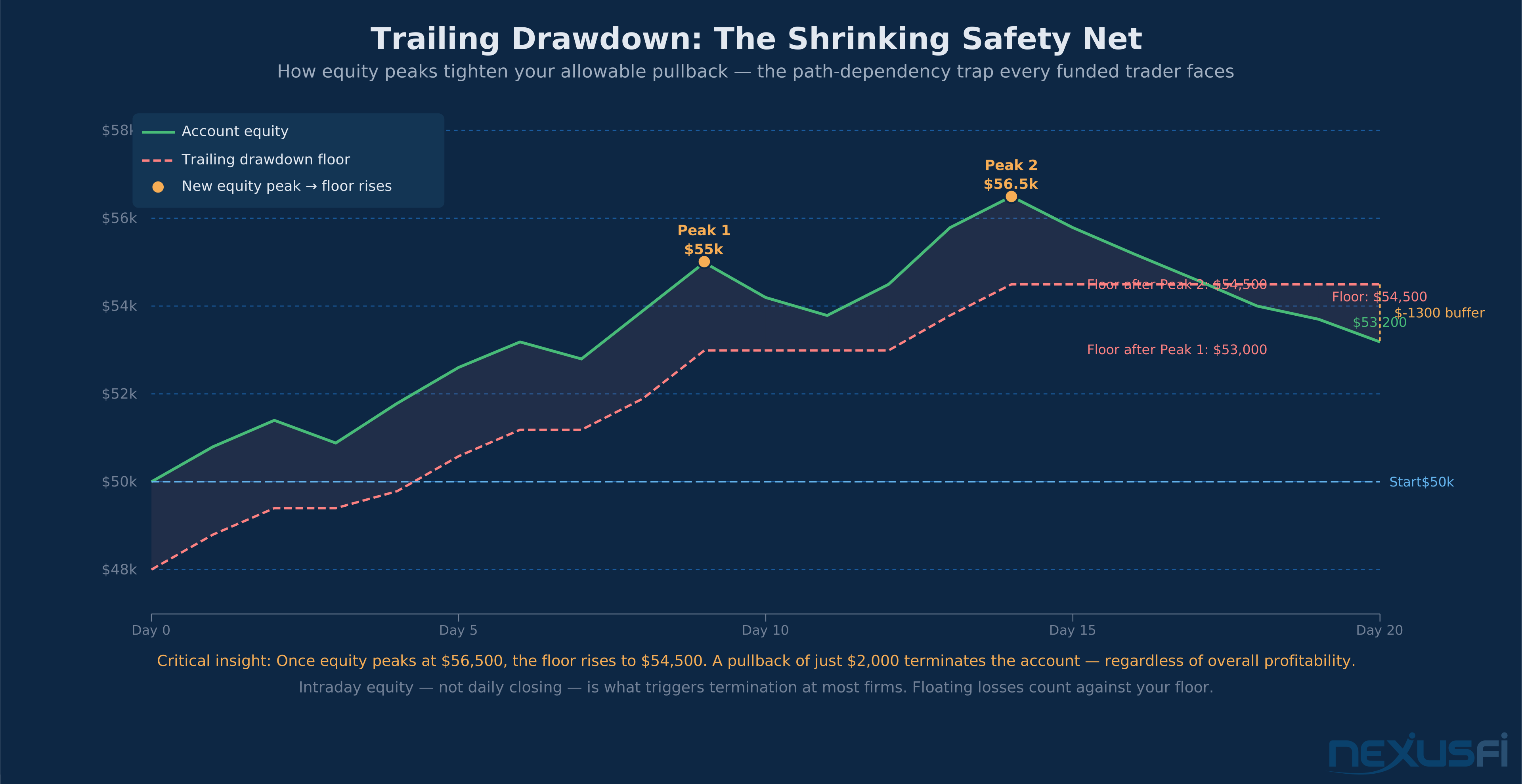
The trailing drawdown is more complex and catches experienced traders off guard. It caps the maximum loss from the highest equity peak the account has ever reached. As your equity grows, the floor rises with it — and never comes back down.
The path-dependency this creates is the core challenge. If your $50,000 account grows to $56,500 and then retraces to $54,400 — a 3.7% pullback — you've hit the trailing drawdown floor (if the limit is $2,000 from peak). The account terminates. You had $4,400 in net profit. None of it gets paid out because the drawdown rule was breached before payout eligibility was established.
The critical variable is whether trailing drawdown is calculated on end-of-day equity or intraday equity. Topstep has historically used end-of-day calculation, which gives more intraday flexibility — a position that dips below the trailing floor during the day but closes above it doesn't count as a breach. Most other firms use real-time intraday tracking, which is strictly tighter.
How They Interact #
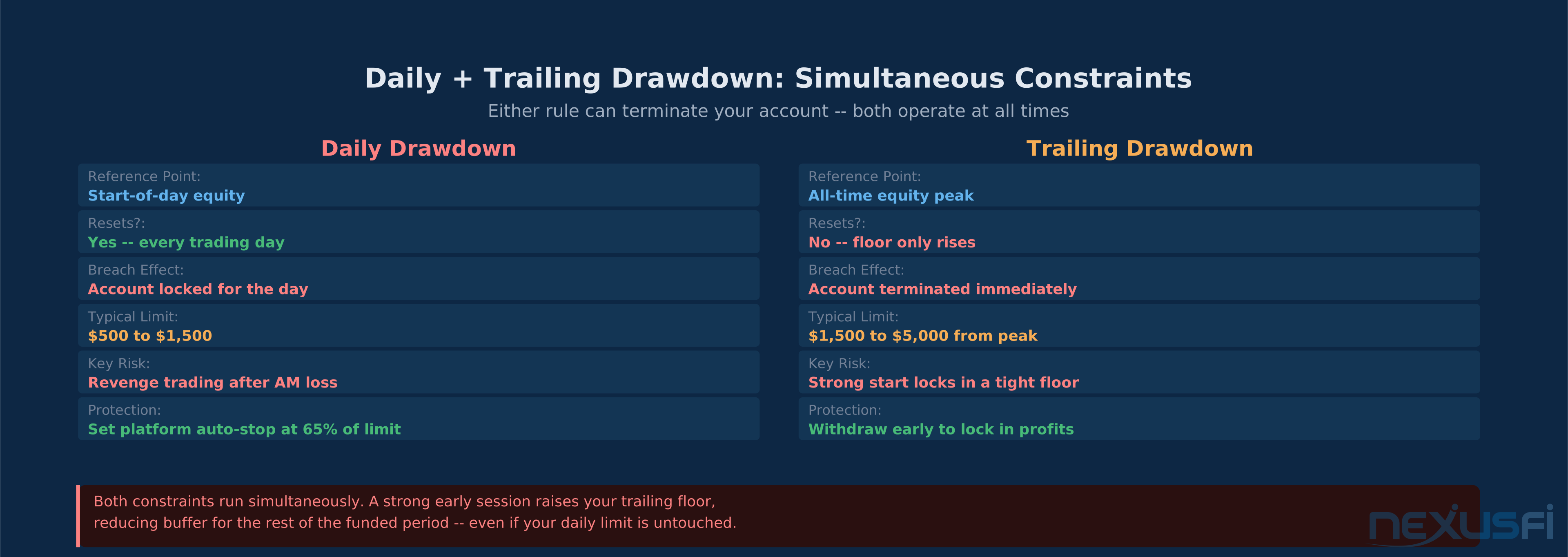
Both drawdown rules operate simultaneously. Either one can terminate your account. The daily limit is typically the binding constraint for aggressive traders; the trailing limit catches disciplined traders who produce a strong stretch of profits and then give back more than their buffer allows.
The interaction between trailing drawdown and payout timing creates a particular trap. If you're approaching a trailing drawdown floor and want to withdraw profits to lock them in, the withdrawal itself may reduce your account equity — which immediately changes your drawdown exposure. Some firms calculate trailing drawdown against total account equity including pending withdrawals; others calculate against the equity after the withdrawal is processed. Know which rule applies before you request a payout near a drawdown limit.
Withdrawal Mechanics #
Payout Windows and Schedules #
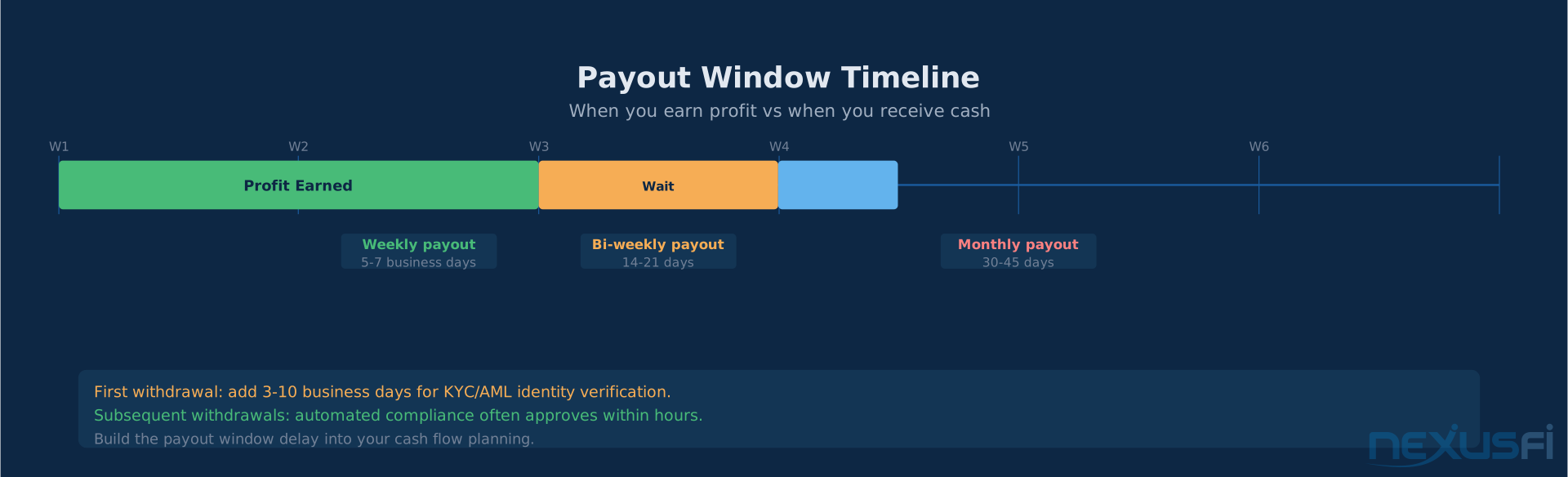
Prop firm payouts are not on-demand. They operate on payout windows — scheduled periods when withdrawal requests are processed. The most common cadences are:
- Weekly: Requests submitted by a cutoff (often Thursday or Friday) are processed the following week. Fast payout programs typically run weekly.
- Bi-weekly: Payouts on the 1st and 15th of the month, or every two weeks on a fixed day. Topstep historically operated on this model.
- Monthly: One payout opportunity per month, usually at calendar month-end. Less common for modern programs but still used by some traditional prop firms.
The implication: profits you make today may not be cashable for two to four weeks depending on where you are in the cycle. Build this into your cash flow expectations if you're planning to rely on funded trading income.
Minimum Withdrawal Thresholds #
Most firms require a minimum profit amount before allowing a withdrawal — typically $100 to $500. If your earned payout in a period falls below the threshold, it rolls over to the next payout window. Some firms also impose a maximum withdrawal per cycle, especially early in a funded account's history.
This is the withdrawal timing paradox: taking profits early feels conservative, but it reduces your trailing drawdown buffer, making it harder to survive subsequent trading. Some firms effectively discourage early withdrawal by tying the drawdown floor to post-withdrawal equity.
The First Withdrawal #
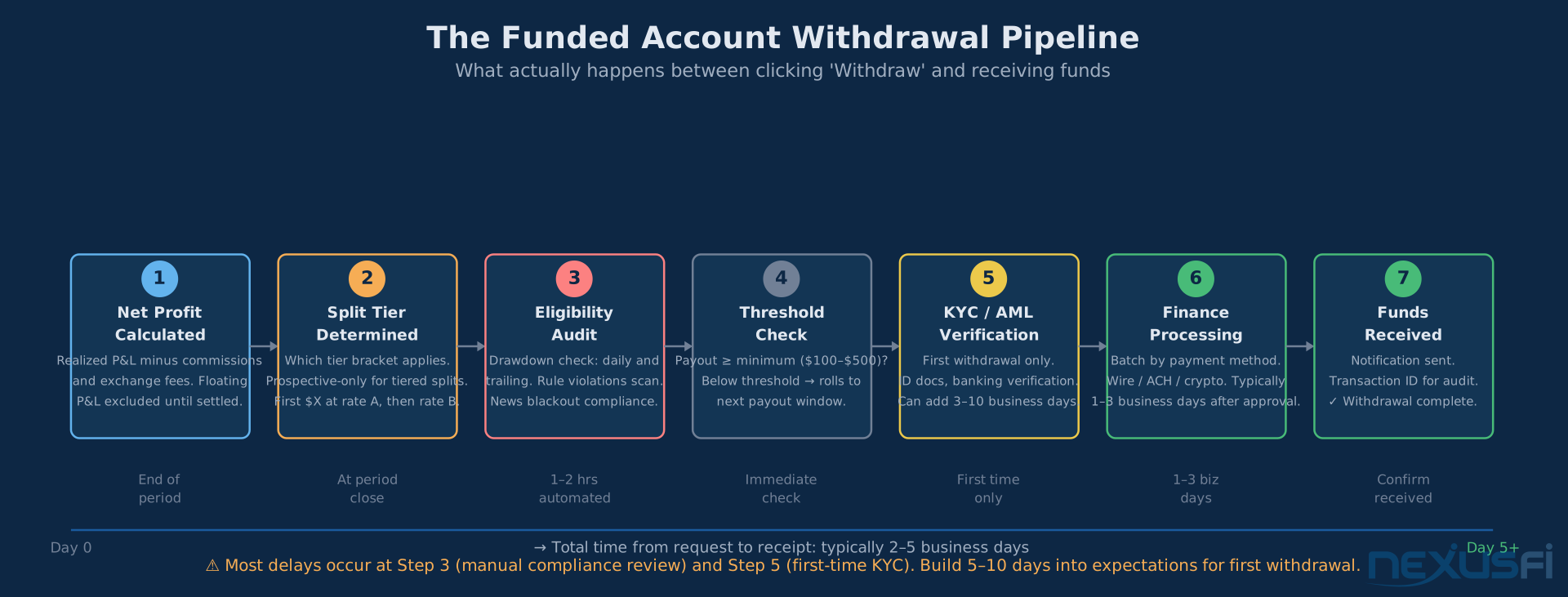
First withdrawals are almost always slower and more friction-heavy than subsequent ones. The firm needs to verify your identity, confirm your banking details, and run an initial compliance audit. KYC (Know Your Customer) and AML (Anti-Money Laundering) processes can add three to ten business days to first payout processing. This is not a sign of a slow or unreliable firm — it's required by financial regulations for firms operating internationally.
For subsequent withdrawals, many firms build automated compliance checks that approve payouts within hours. The status tracking — from Requested to Approved to Processing to Completed — should be visible in your account dashboard. If a firm doesn't provide this transparency, it's worth inquiring before committing to an evaluation.
The Full Payout Calculation #
Step-by-Step Formula #
Here's the complete sequence that determines your payout:
- Gross realized P&L: Sum of all closed trade profits and losses for the period.
- Subtract commissions and fees: Exchange fees, broker commissions, and sometimes data fees. This is the "net realized profit" basis for the split calculation.
- Apply split tier(s): If flat, apply one rate to the full net profit. If tiered, apply the appropriate rate to each bracket (prospective only — earlier profits stay at prior rates).
- Drawdown and rule eligibility check: Were all rules followed? Any violations = no payout, account potentially terminated.
- Minimum threshold check: Is the calculated payout at or above the minimum? If not, rolls to next period.
- Compliance audit: Automated check for news trading violations, position limits, prohibited instruments.
- KYC/AML verification: First withdrawal only. Banking details confirmed.
- Finance processing: Batch grouped by payment method. Wire, ACH, or crypto depending on program.
- Transfer: Funds released, 1-3 business days for settlement depending on method.
Two traders with identical net P&L can receive different payouts. Different tier qualification timing, different commission structures, brief drawdown breaches, or different compliance audit outcomes all change the math.
Tax and Income Treatment #
Trading profits from prop firm funded accounts are typically classified as self-employment income, not capital gains. This is a significant tax distinction. Retail traders trading their own futures accounts benefit from Section 1256 treatment: 60% of gains are taxed as long-term capital gains and 40% as short-term, regardless of holding period. Prop firm traders don't get this benefit.
Your payouts will typically be reported on a 1099-NEC (or equivalent) as non-employee compensation. You're taxed on what you receive, not on the firm's gross profit. If a firm makes $10,000 and pays you $8,000 under an 80/20 split, you receive a 1099 for $8,000. But that $8,000 is subject to self-employment tax (15.3% on net earnings) in addition to ordinary income tax, which can push your effective tax rate much higher than a retail trader paying 60/40 capital gains rates.
For US-based traders, consult a tax professional who understands both futures taxation and contractor income. The difference in effective tax rate between Section 1256 treatment and self-employment income can exceed 10 percentage points depending on your bracket.
Evaluating Programs: A Framework #
Questions to Ask Before Committing #
Before entering any funded account evaluation, verify explicit language on these points:
- Split basis: Is the split on gross or net profit? Are commissions deducted before or after the split calculation?
- Tier mechanics: Is any tier upgrade retroactive or prospective-only? When exactly is the upgrade timestamped?
- Drawdown hierarchy: Which rule triggers first if daily and trailing conflict? Is trailing drawdown calculated end-of-day or intraday?
- Withdrawal eligibility: Can you withdraw before the period ends? Is there a first-withdrawal buffer requirement?
- Payout cadence: Weekly, bi-weekly, or monthly? What's the minimum per request? Is there a maximum per cycle?
- Compliance triggers: What causes a manual review? How long does review take? What happens to your payout during the review?
- Scaling mechanics: Does the platform recalculate margin requirements after scale-up?
The Higher-Split Trap #
The most common mistake traders make when comparing prop firm programs is optimizing for the headline split percentage. A 90/10 split at a firm with a $500 daily drawdown limit is not better than an 80/20 split at a firm with a $1,500 daily limit — not if the tighter limit means you blow up the account before ever reaching payout eligibility.
The right evaluation framework: calculate your expected payout under realistic trading scenarios, factoring in (1) probability of reaching payout eligibility given your typical drawdown patterns, (2) the commission structure's impact on net profit, (3) the withdrawal timing relative to your cash flow needs, and (4) the tax treatment of the income you receive.
The firm is the backer. The split compensates them for the risk they're taking. Understanding the split as a business arrangement — not a tax on your profits — clarifies why the full economics matter more than the headline percentage.
Common Payout Pitfalls #
Beyond the structural mechanics, several operational patterns consistently cause traders to miss payouts they thought they'd earned:
- Withdrawing into a trailing drawdown floor: Taking a payout reduces your equity. If the trailing floor is calculated against equity including the withdrawal, you may breach the floor the moment funds leave the account. Always confirm the calculation basis before requesting a withdrawal near a drawdown limit.
- News window violations: Many funded programs prohibit holding positions through major economic announcements. Violations can invalidate an entire period's profits even if discovered during post-period compliance review.
- Intraday vs end-of-day trailing drawdown confusion: If you're used to Topstep's end-of-day calculation and move to a firm with intraday tracking, your normal trading patterns may start triggering drawdown breaches that wouldn't occur under the previous rules.
- Banking details errors: First payouts are delayed most often by incorrect banking information. Have all ACH or wire details confirmed before your first withdrawal request.
- Counterparty risk: @seattle7 noted the possibility of "the prop-shop's going out of business, resulting in loss of any unpaid profits." Avoid holding large profit balances in funded accounts at unestablished firms. Request withdrawals as soon as eligibility is met.
The Bottom Line #
Funded account profit splits are straightforward in concept and complex in execution. The headline percentage is a starting point, not a final number. Commissions reduce the base. Tiers apply prospectively. Drawdown rules gate eligibility. Payout windows introduce timing gaps. Tax treatment transforms income character. And the first withdrawal is always slower than every subsequent one.
The traders who work through this well approach funded accounts as a business arrangement with specific mechanics to understand and manage, not as a windfall multiplier. They model their expected cash flows under realistic drawdown scenarios, choose programs based on the full economics rather than the split headline, and build their position sizing around drawdown constraints rather than account size.
The profit split percentage tells you how the pie is divided. The drawdown rules, commission structure, and withdrawal timing determine how big the pie is and whether you get to eat it at all.
Knowledge Map
Prerequisites
Understand these firstGo Deeper
Build on this knowledgeCitations
- — Topstep AMA with Nick Dolby (2020) 👍 2“You as a trader would be an independent contractor, and the funded account is not your account, it's the firm's. You just get to trade it.”
- — Topstep AMA with Nick Dolby (2013) 👍 4“If you wanted to withdraw and pay yourself you could request a $1,000 withdraw. With the profit split you would receive $600 and your equity partner would receive $400 for being the backer.”
- — m28 End of Week Journal (2019) 👍 20“I found it hard trading through this TST test as at each stage that is passed the risk limits are screwed down tighter and tighter.”
- — Trade Journal (2016) 👍 9“Daily Loss Limit is $1,000 for the 50K Combine. Trailing Max Drawdown is $2,000 from the highest point reached during the Combine. That Max DD moves up, like a trailing stop, but never moves down.”
- — Earn2Trade Trader Career Path (2022) 👍 3“Withdrawing before you meet the profit target eats into the trailing drawdown. So it is not practical to withdraw early.”
- — Which get-funded program is the best these days? (2020) 👍 6“Top Step is unique in that the drawdown limit is calculated at the end of day where as Earn2Trade is calculated during the day.”
- — Funded Trader platforms (2024) 👍 2“You lose the IRS Section 1256 60/40 long- vs. short-term capital gains tax treatment.”
- — Topstep AMA with Nick Dolby (2014) 👍 2“Historical Topstep payout timing: twice monthly, split progression from 60/40 to 80/20.”
- — TradeDay - anyone using them? (2025)“TradeDay profit split structure: 100% first $10k, then 90/10, escalating to 95/5 after $100k withdrawn.”