



Pre-Evaluation Simulation: How to Know You're Ready Before You Pay
Most traders fail their first prop firm evaluation. Then they fail the second. And the third. Each attempt costs money — evaluation fees, subscription costs, the opportunity cost of weeks spent on a failed account. The pattern repeats until the trader either figures out what's actually required or gives up entirely.
Here's what's almost never the issue: the trading strategy.
The failure rate is high not because traders lack an edge, but because they don't understand what a prop firm evaluation actually tests. It's not testing whether your strategy is profitable. It's testing whether your strategy is profitable while operating within specific path-dependent constraints — daily loss limits, trailing drawdown rules, minimum trading days, and profit targets — across a compressed timeframe where a single bad afternoon can end everything.
Passing an evaluation is a separate skill from trading profitably. Treating them as the same thing is the most expensive mistake a developing trader can make.
This guide gives you the pre-evaluation simulation framework that eliminates unnecessary attempts.
Overview #
A prop firm evaluation is a compressed, rules-intensive environment designed to test whether a trader can execute their strategy consistently without breaching loss limits. The profit target is real, but it's the secondary challenge. The primary challenge is surviving the evaluation period without a single daily loss limit violation or trailing drawdown breach.
Most evaluations run for a minimum number of trading days (typically 10-30) within a calendar window (typically 30-60 days). You must hit a profit target while staying within daily and maximum drawdown limits. These rules interact in ways that catch traders off guard:
- A high-profit Tuesday followed by a volatile Wednesday can breach the daily limit even on an overall-profitable week.
- Increasing size after early profits often leads to a single oversized loss that terminates the account.
- Emotional decisions after a losing morning session — the "make it back" impulse — account for a large percentage of failures.
The solution is preparation that mirrors the evaluation environment so closely that when you start the real attempt, nothing feels new.
Why Most Evaluations Fail #
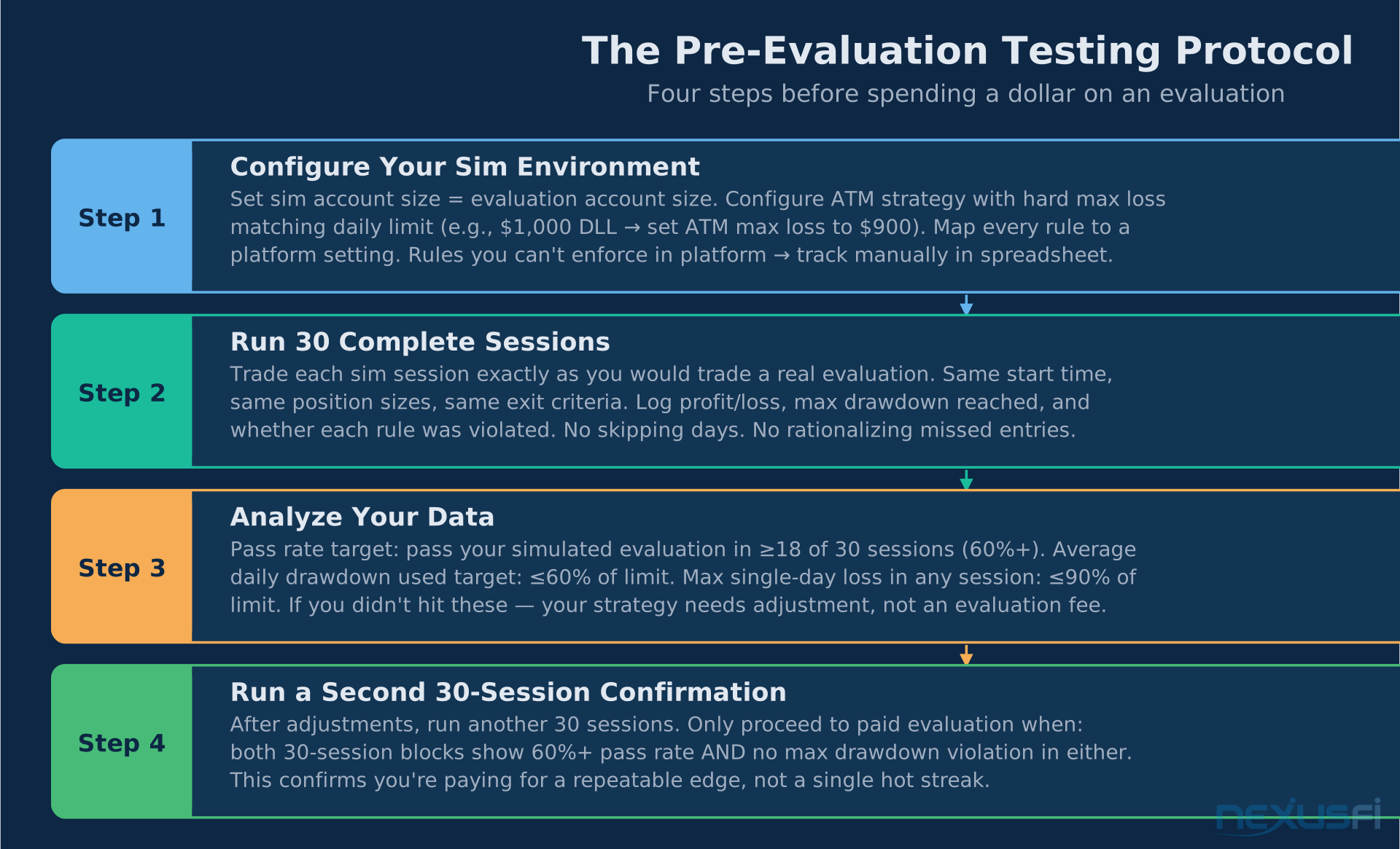
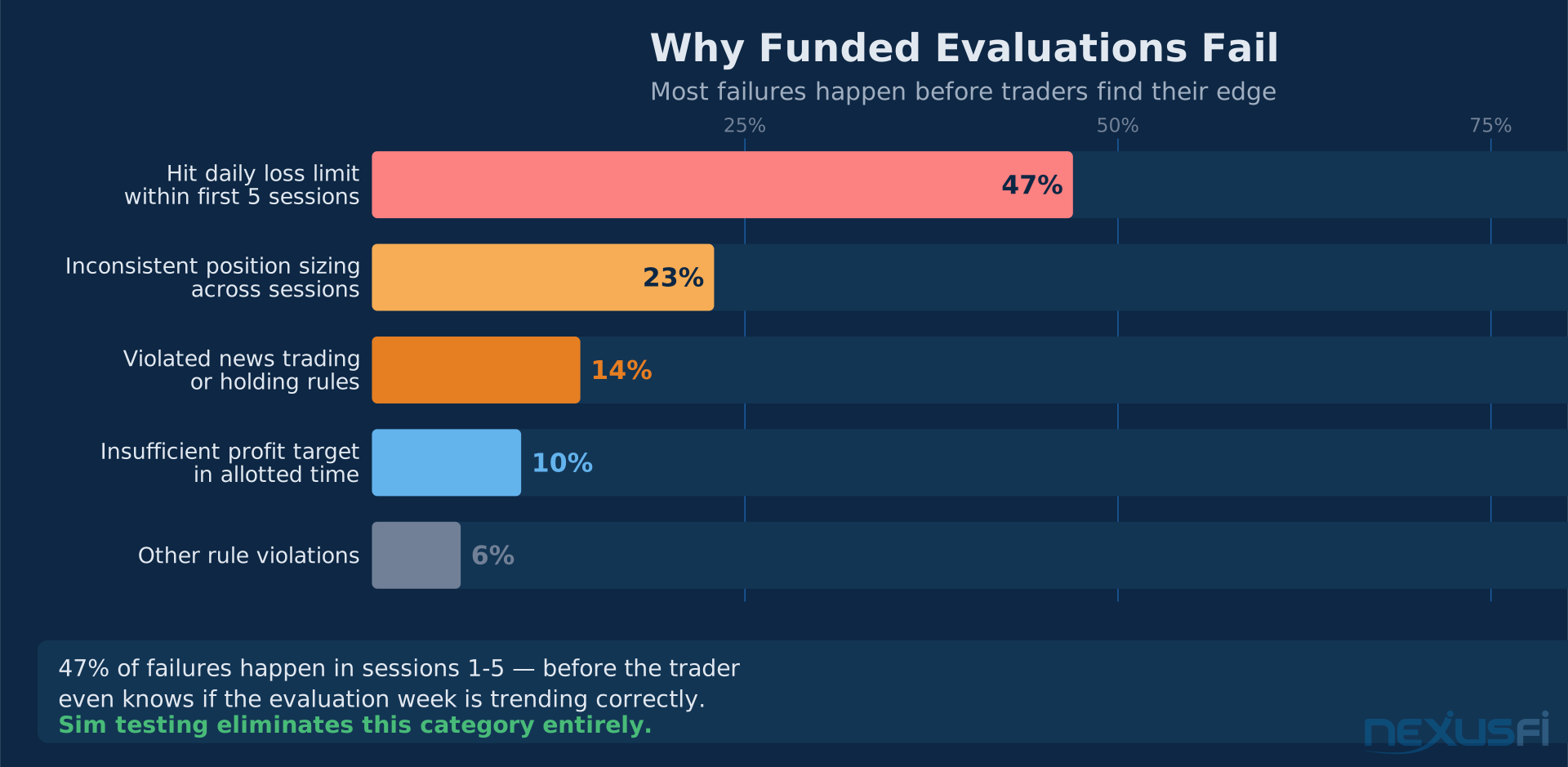
The prop trading community has been transparent about failure rates, though precise industry statistics aren't published. What's consistently reported in trader forums and community discussions is that a large majority of first attempts fail, and that failure is rarely about edge quality.
The root causes cluster into predictable buckets:
Overtrading after early losses (the most common single cause): A trader loses in sessions 1-3, then increases size or trade frequency to "make it back" before the evaluation window closes. This amplifies the drawdown rather than recovering it and typically triggers either the daily loss limit or the trailing drawdown.
Slippage and execution friction exceeding expectations: Traders who tested with perfect paper fills discover that real evaluation fills (with spread widening during volatility, partial fills on limits, and gap events) add meaningful cost per trade. A strategy that showed a 1.6 profit factor in backtesting may show 1.1 in live conditions.
Holding through news events: High-impact data releases — NFP, CPI, FOMC — can move ES 20-30+ points in seconds. Holding an open position through these events without specific rules for handling them is gambling, not trading. A single news-triggered gap through a stop can consume 40-60% of a session's daily loss limit in one trade.
Psychological pressure causing rule deviation: The combination of real money at stake, compressed timeframe, and daily loss limits creates pressure that causes traders to override their own rules. They move stops, hold through news, add to losing positions, or stay in trades past planned exits.
The pattern that emerges: most failures are preventable with adequate pre-testing. The 30-session simulation protocol described below eliminates most of these failure modes before you spend money on an actual evaluation.
The Pre-Evaluation Preparation Ladder #
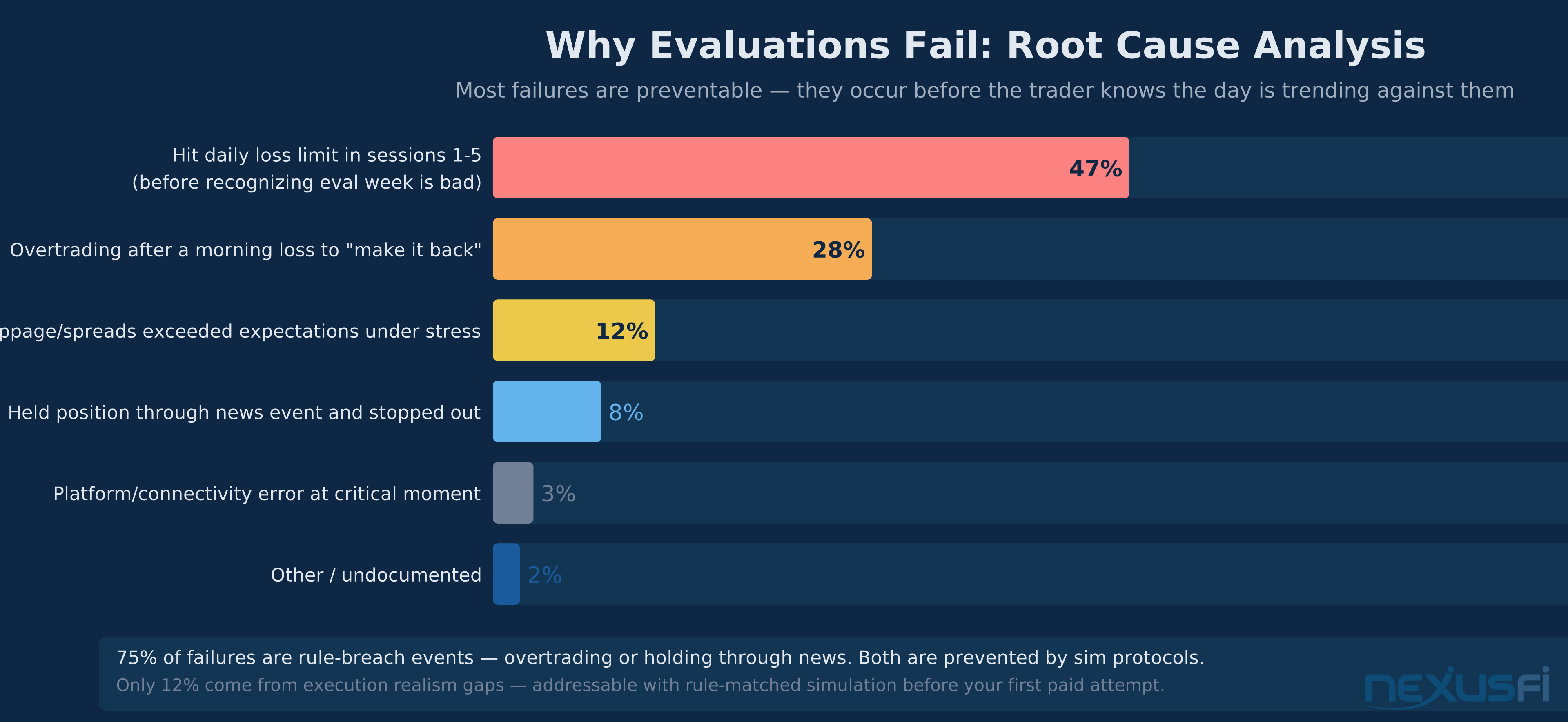
Effective evaluation prep moves through four stages, each testing a different aspect of readiness. Skipping stages dramatically reduces pass probability.
Stage 1 — Backtest (Does the strategy have positive expectancy?)
A backtest answers the first question: does the strategy produce positive expectancy under realistic assumptions? The key word is "realistic."
Most traders backtest with best-fill assumptions — every limit order fills at the limit price, every stop exits exactly at the stop price, and the spread costs nothing. Real trading doesn't work this way. Before treating a backtest as evidence of a viable strategy, apply these adjustments:
- Add 1-2 ticks of slippage per side for ES and NQ in normal conditions, 2-4+ during news events
- Use commission rates matching your planned FCM (typically $2.00-4.00 round turn per contract)
- Model a 10-20% fill failure rate on limit orders during high-velocity moves
- Run the backtest across different market regimes: trending quarters, ranging quarters, high-volatility periods, low-volatility periods
If the strategy shows positive expectancy after these adjustments, proceed to Stage 2. If it doesn't, you don't have an evaluation-ready strategy yet.
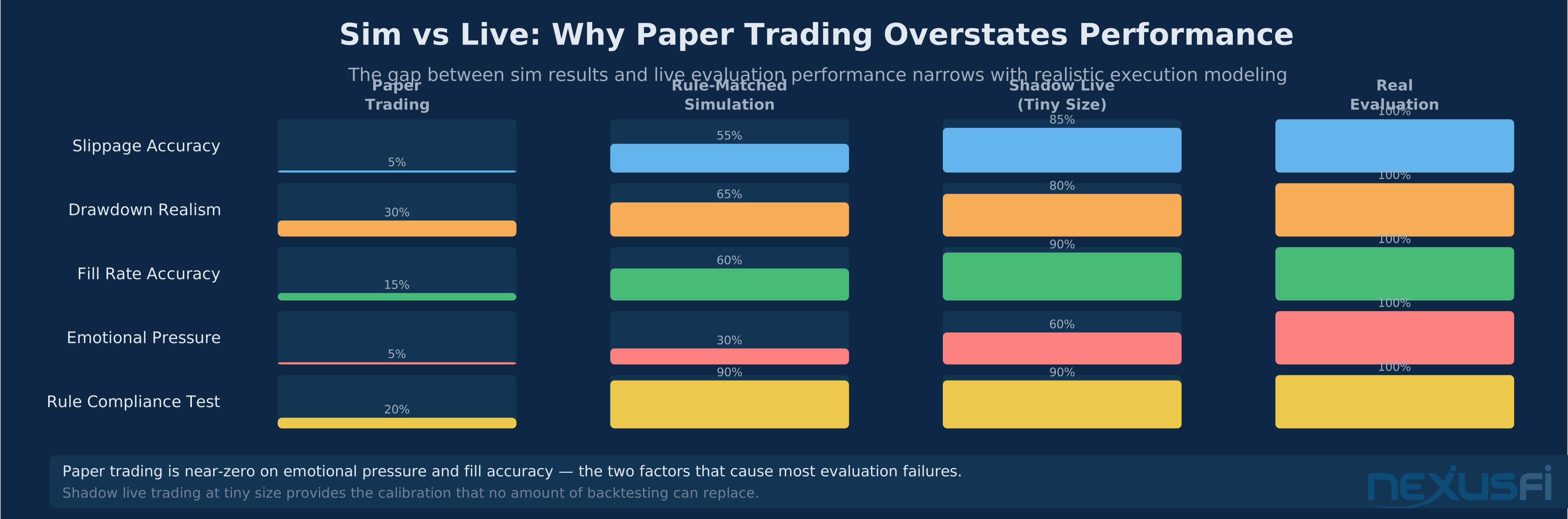
Stage 2 — Paper Trading (Does the strategy logic execute correctly?)
Paper trading is useful for exactly one thing: verifying that the strategy logic, order entry, and position management work correctly on your platform. Use it to catch order entry errors, verify that stop and limit orders behave as expected, and build familiarity with the ATM strategy configuration.
Paper trading is not useful for validating drawdown expectations, execution quality, or rule compliance. Paper fills are artificially clean — no slippage, no partial fills, no spread widening. A strategy that looks perfect in paper trading may fail immediately under real evaluation conditions.
The critical mistake is treating a good paper trading streak as evidence of evaluation readiness. It isn't. Paper trading is Stage 2, not the finish line.
Stage 3 — Rule-Matched Simulation (Can the strategy survive the evaluation rules?)
This is the most important preparation stage and the one most traders skip. A rule-matched simulation applies the exact evaluation constraints to your sim trading so you can observe how the strategy behaves within the specific rules you'll face.
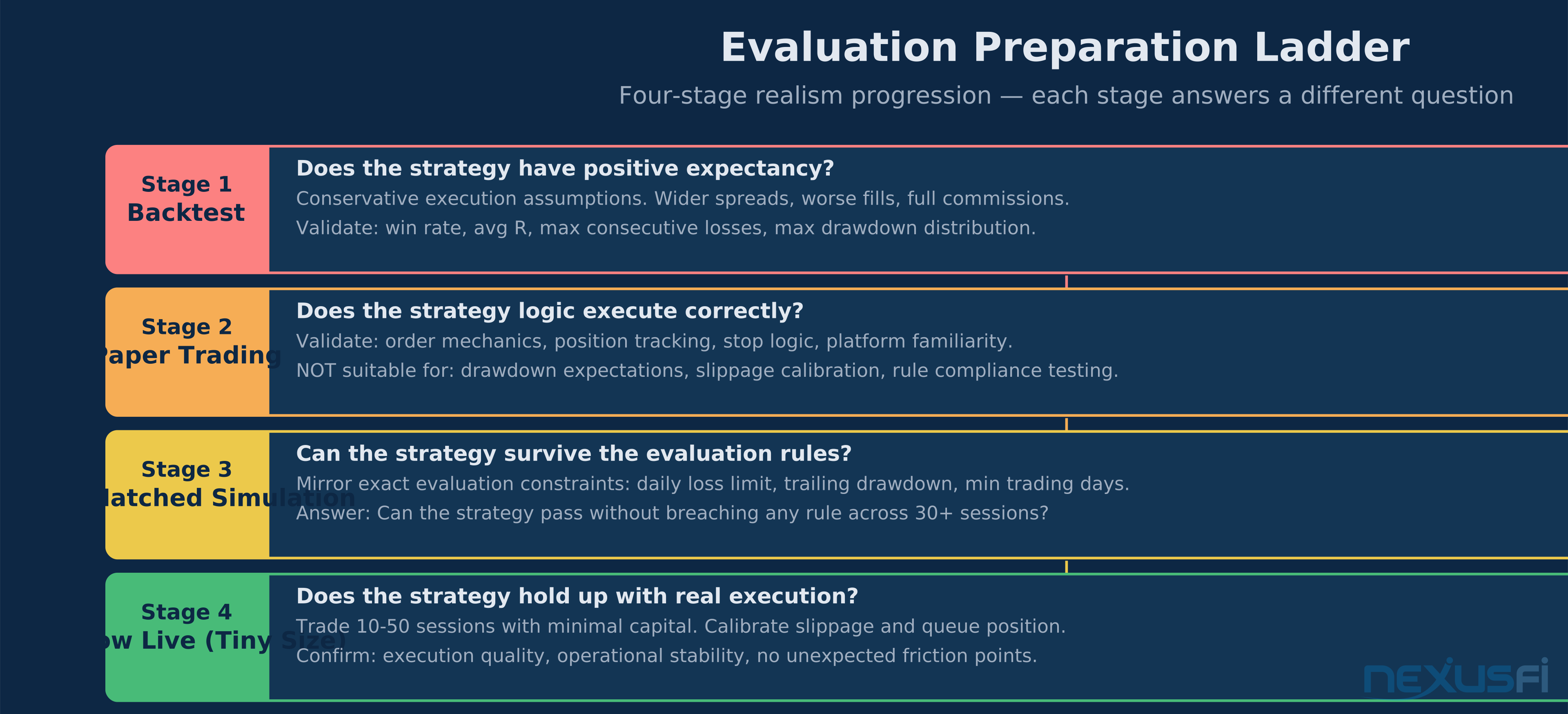
Configure your sim to replicate:
- Exact account size (same as evaluation)
- Maximum daily loss limit (not "approximately" — the exact number)
- Maximum overall drawdown or trailing drawdown mechanics
- Minimum trading days requirement
- Commission and fee structure (use your FCM's actual rates)
- Any news trading restrictions your firm imposes
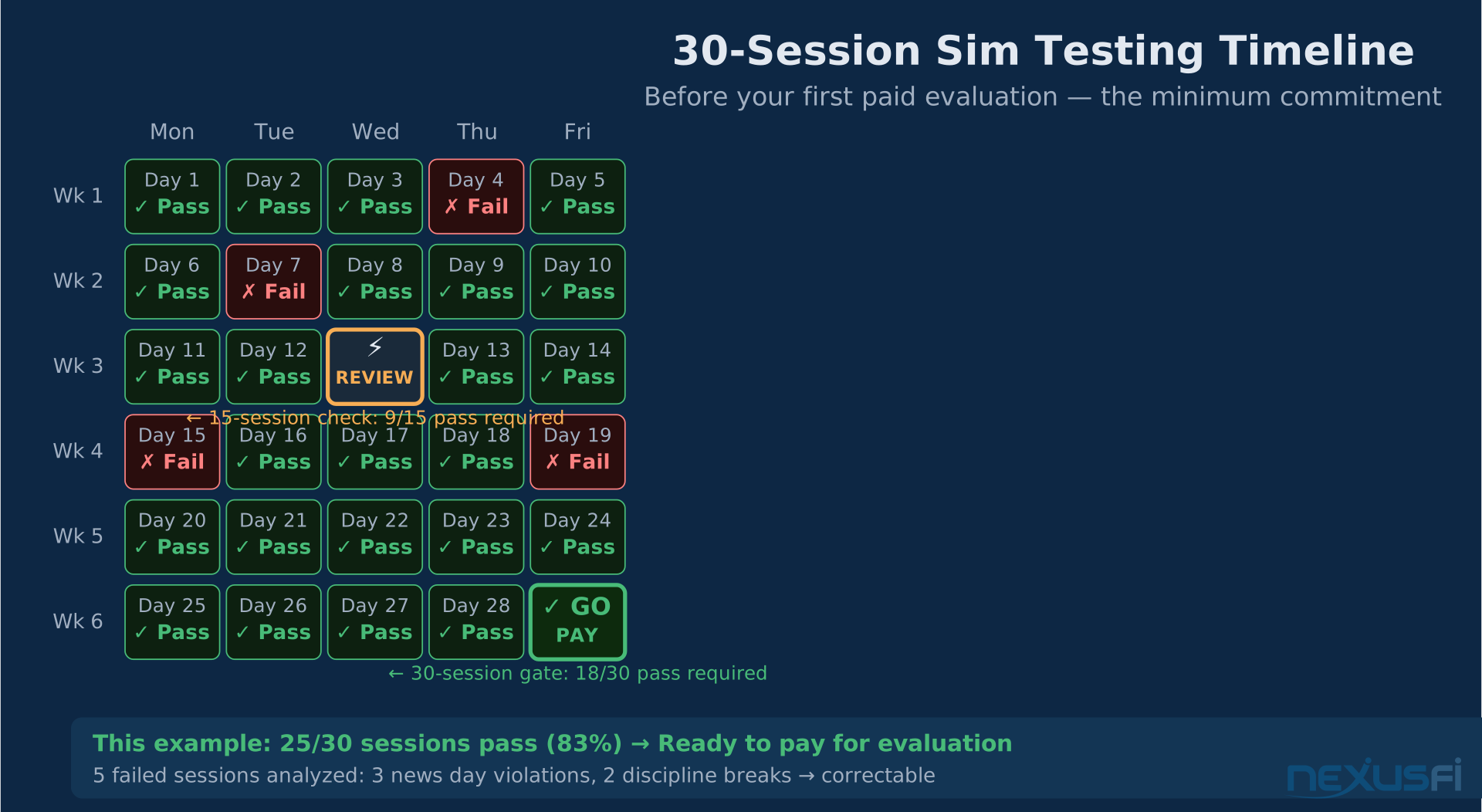
Trade 30 complete sessions exactly as you would trade a real evaluation: same start time, same position sizes, same exit criteria. Log everything: daily P&L, maximum drawdown reached per session, whether any rule would have been violated, and your emotional state during the session.
After 30 sessions, analyze the data against these targets:
- Pass rate: ≥60% (18 of 30 sessions without rule violations)
- Average daily drawdown: ≤60% of daily loss limit
- Maximum single-session loss: ≤90% of daily loss limit (approaching the limit means one bad execution can trigger it)
- Worst 5-session stretch: total drawdown ≤70% of maximum drawdown limit
If you don't meet these targets, don't attempt the evaluation. Adjust the strategy and run another 30 sessions. Only when two consecutive 30-session blocks both show ≥60% pass rates should you consider the first paid attempt.
This isn't a high bar — it's the minimum evidence that the strategy is repeatable under evaluation constraints, not a single fortunate streak.
Stage 4 — Shadow Live at Tiny Size (Does execution hold under real conditions?)
If resources allow, the highest-value preparation step is trading your actual strategy with real money at minimal size — one Micro E-mini ES contract, one Micro Gold contract — for 20-50 sessions before the full evaluation. This calibrates slippage and execution quality in ways that no simulation can replicate.
Real fills reveal where your limit orders actually fill in the order queue, how much slippage occurs during momentum moves, and whether your strategy's stated edge survives the friction of actual market microstructure. Many traders discover at this stage that their strategy performs 10-20% worse on execution quality than sim suggested. This is valuable information before committing to an evaluation fee.
The Buffer Zone: Your Safety Margin Inside the Rules #
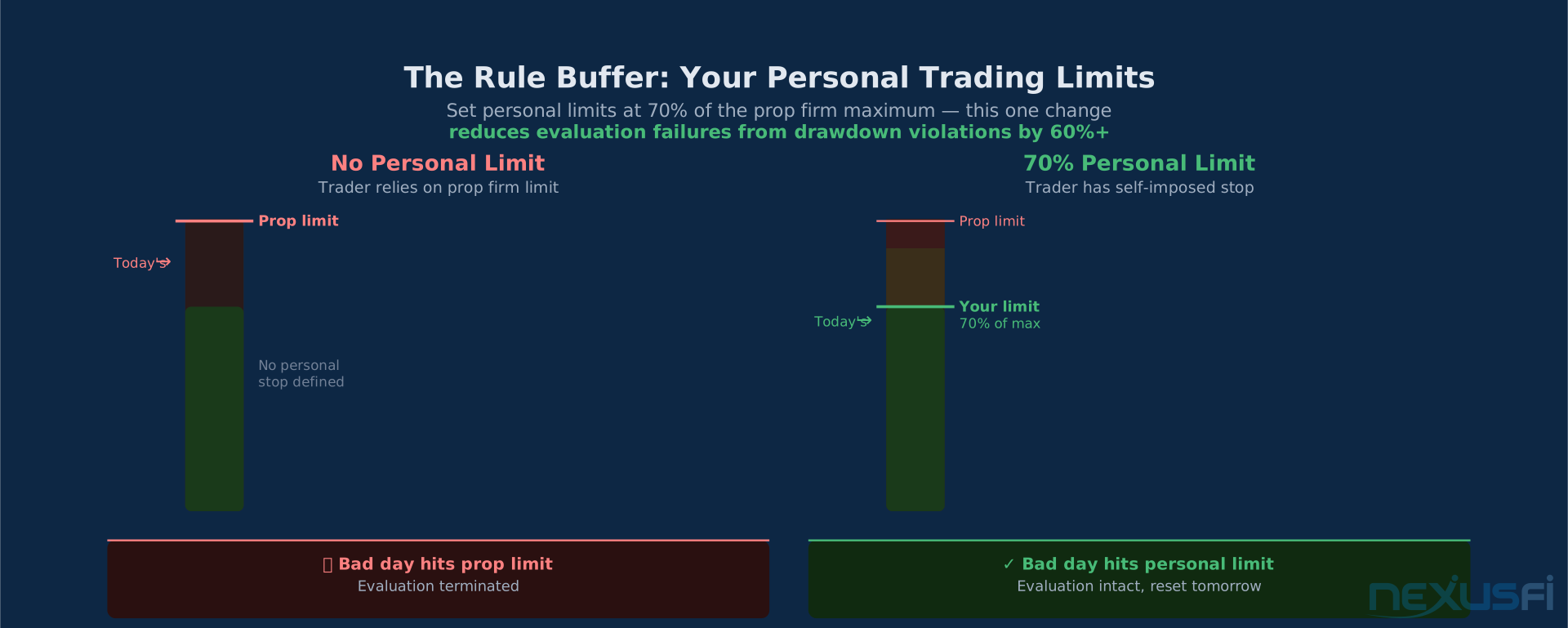
Prop firm rules define the outer wall of what's permitted. Your internal stops define the inner wall you actually enforce. The gap between the two is your safety margin.
The consistent recommendation from experienced prop traders converges on operating at 50-70% of the stated limits as your internal triggers. This range accounts for:
- Slippage: a trade that reaches your stop may exit worse than the stop price
- Spread widening: during high-volatility moments, the spread may consume 2-3x its normal value
- Execution errors: fat-finger orders, connectivity drops, and platform freezes happen
- Emotional deterioration: late in a losing session, decision quality drops much
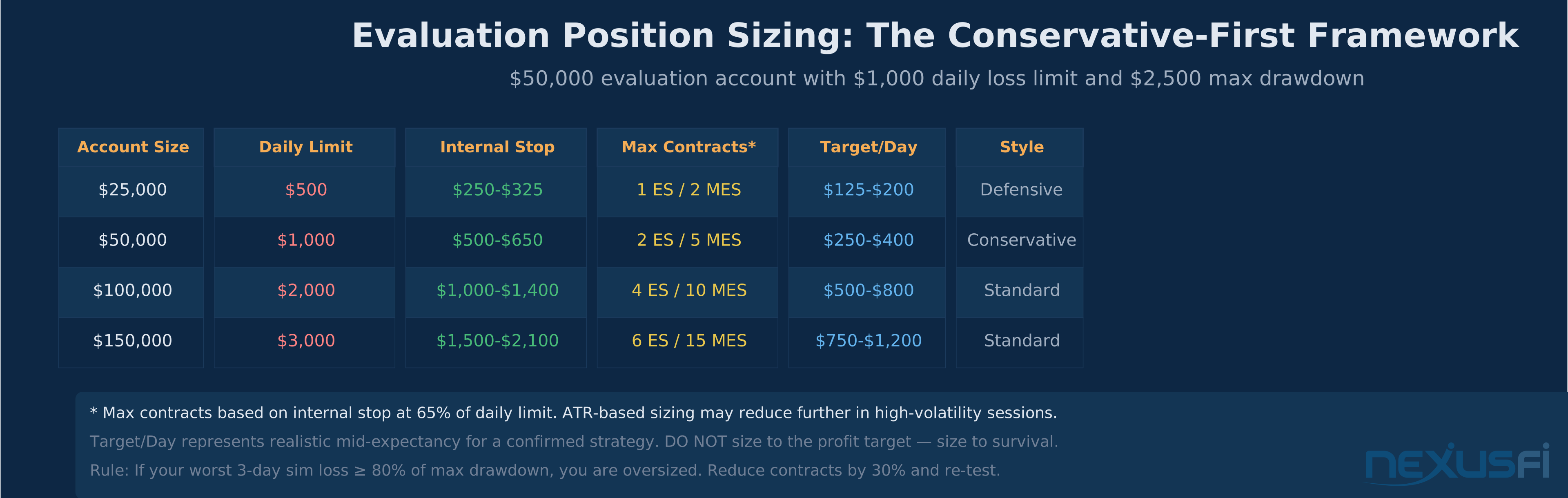
Daily loss buffer: If your evaluation allows a $1,000 daily loss, set your internal hard stop at $500-$650. Stop trading when you hit this number regardless of how early in the session it is. A recoverable bad morning becomes an evaluation-ending violation when you override it.
Overall drawdown buffer: If your maximum drawdown is $2,500, stop trading the evaluation when you've lost $1,500-$2,000. The remaining capital protects against one bad session ending an otherwise recoverable account.
Per-trade risk: Each individual trade should risk no more than 0.5-1% of account size ($250-$500 on a $50,000 account). This ensures that even a sequence of losses stays within the daily buffer rather than immediately consuming it.
Internal Kill-Switch Rules #
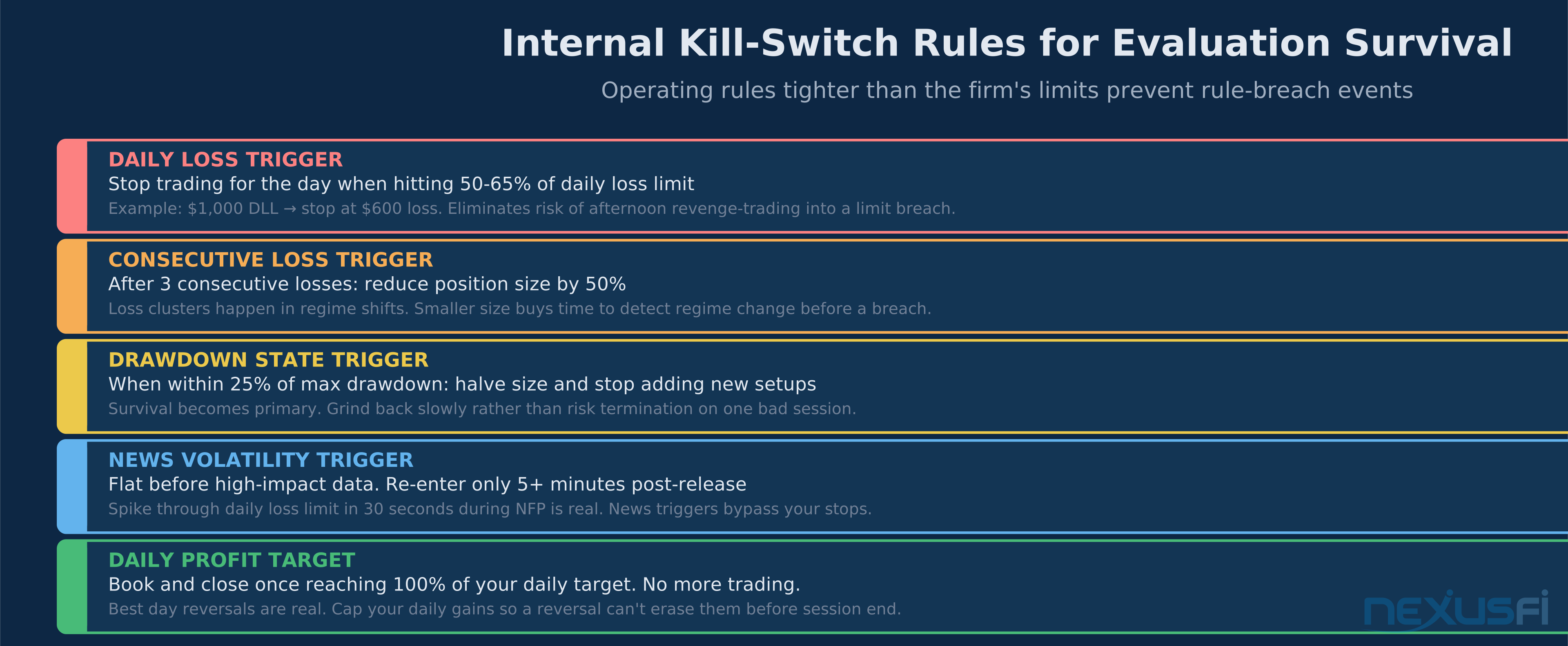
Beyond the buffer zones, implement specific operational rules that trigger automatic changes to your trading behavior. These kill switches prevent the feedback loops that turn a bad morning into a failed evaluation.
Daily loss trigger: Stop trading the day when you hit your internal daily loss limit. Not "consider stopping" — full stop, charting software closed, walk away. The worst thing you can do after a $600 loss on a $1,000 daily limit is stay at the screens trying to get it back. That path ends with a $1,050 loss and a terminated account.
Consecutive loss trigger: After three consecutive losses, reduce position size by 50% for the remainder of the session. Loss clusters happen when market conditions shift away from what your strategy was calibrated for. Smaller size buys time to detect the shift before the evaluation ends.
Drawdown state trigger: When you've used 25% or more of your maximum drawdown, drop to half position size and stop adding new setups. At this point, capital preservation is the only objective. Recovery requires patience, not aggression.
News volatility trigger: Go flat at least 5 minutes before high-impact data releases (NFP, CPI, FOMC). Re-enter positions only after 5 or more minutes have passed and the immediate reaction has resolved. The 30-second window around a major release is for market makers, not retail evaluation traders.
Daily profit cap: Consider stopping trading for the day once you've hit 100% of your daily profit target. This prevents the common scenario where a strong morning session reverses in the afternoon, turning a "great day" into a loss that triggers risk limits.
Optimal Sample Size: How Much Sim Data Is Enough #
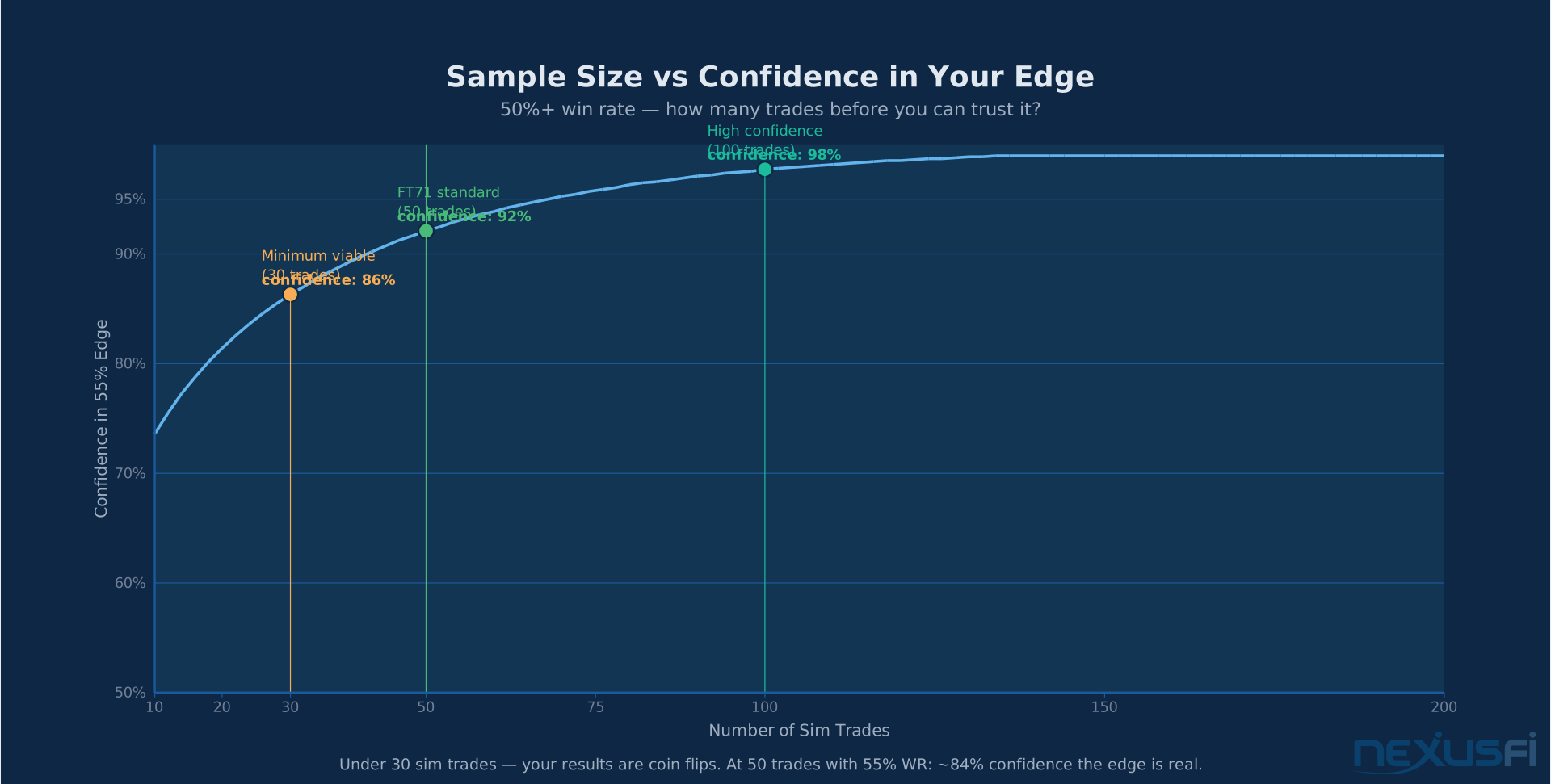
The question of sample size has no single answer, but there are clear minimum thresholds based on trade frequency and what the sample needs to demonstrate.
Active strategies (5-20 trades per day): Minimum 200 out-of-sample trades, covering at least 15-20 trading days across different market conditions. "Out-of-sample" means trades taken using rules fixed before the test period began — not rules modified to fit the observed results.
High-frequency scalping strategies (50+ trades per day): 100 trades minimum, but these can often be accumulated in 2-5 days. The concern is regime coverage, not count: ensure the sample includes at least one trending day, one ranging day, and one high-volatility day.
Lower-frequency swing approaches (1-5 trades per day): Sample size by calendar time, not trade count. Cover at least 40-60 trading days across different volatility environments. A strategy with 80 trades sampled entirely during low-volatility consolidation has not been tested for evaluation conditions.
Beyond these minimums, analyze the distribution of outcomes, not just the mean:
- Maximum drawdown: What was the worst observed drawdown? If it approaches or exceeds 80% of the evaluation's maximum drawdown, you're one bad sequence away from failure.
- Worst consecutive losses: How many losses came in a row? If the answer is 6-7, your kill-switch rules need to account for that.
- Daily P&L distribution: What percentage of days showed a loss? What was the worst daily loss? If 30% of days showed a loss and the worst was $850 against a $1,000 daily limit, the buffer is dangerously thin.
The evaluation horizon simulation — resampling your trade data to match the evaluation window length and computing P(fail) directly — gives the clearest answer about readiness. If a simulation of 1,000 evaluation-window-length sequences shows a 25% failure rate, expect roughly one failure per four attempts.
Getting Access: Platform Configuration for Evaluations #
Before simulating, configure your platform correctly. The two critical settings:
Automatic daily loss limit enforcement: NinjaTrader, Sierra Chart, and most major platforms allow you to set an account maximum loss that triggers automatic position flattening and prevents new orders. Set this at your internal daily loss limit (65% of the firm's limit), not the firm's actual limit. The platform enforces it mechanically so emotional decisions can't override it.
Position size discipline: Configure your ATM strategy with maximum position sizes matching your evaluation sizing plan. A single fat-finger order that puts you in 5 contracts when you meant 2 is an order of magnitude more dangerous in an evaluation than in normal trading.
Review the evaluation firm's rules on platform usage, automated trading, and order types before your first session. Some firms restrict news trading, after-hours positions, or specific order types.
What Good Sim Data Looks Like #
After running 30+ sessions under your rule-matched simulation, the output should show:
Evidence of edge: Win rate, average win/loss ratio, and profit factor across the full sample. A profit factor below 1.3 after realistic slippage assumptions doesn't meet the bar.
Rule compliance evidence: Zero daily loss limit violations across all sessions. If any simulation session would have breached the daily limit, this is a signal, not a data point to ignore.
Drawdown distribution: Daily maximum drawdown reached in each session. The average should be below 50% of the limit. Any session reaching 90%+ is a near-miss that warrants analysis.
Consistency evidence: Pass rate doesn't vary dramatically between the first 15 sessions and the second 15. A 70% pass rate in week 1-3 that drops to 45% in weeks 4-6 signals a strategy with regime-specific edge rather than strong edge.
The Economics of Pre-Testing #
The argument for extensive pre-testing is straightforward: evaluation fees are priced so the firm makes money when traders fail. Multiple failed attempts add up.
A trader who jumps straight into an evaluation without pre-testing might pass on the first attempt if the strategy is strong and conditions cooperate — but the expected cost across multiple attempts is considerably higher than for a trader who completes the preparation protocol and passes in one or two attempts.
The math is simple: if a strategy has a 65% pass rate after rule-matched simulation, expected attempts to pass = 1/0.65 = 1.5. At $99 per evaluation, expected cost = $148. A trader who skips preparation and has a 20% pass rate expects 5 attempts, $495 in fees, plus the lost opportunity cost of weeks spent on failed evaluations.
The 30-session sim protocol costs time but not money. The ROI is direct.
The Bottom Line #
Prop firm evaluation success requires a different mental model than profitable trading. The question isn't "Does my strategy make money?" — it's "Does my strategy make money while reliably staying within specific constraints across a compressed timeframe?"
These are related questions, but not the same question. Answering the first without addressing the second is why traders with legitimate edges fail evaluations repeatedly.
The pre-evaluation framework works because it forces you to answer both questions simultaneously, in simulation, before spending money. The 30-session protocol proves the strategy can survive the rules. The buffer zones ensure that real-world execution friction doesn't turn a rule-compliant strategy into a violated one. The kill-switch rules prevent emotional override from undoing the mechanical soundness.
Complete all three stages. Run two 30-session blocks. Only proceed to a paid evaluation when both show ≥60% pass rate, no rule violations, and comfortable buffer compliance.
The evaluation isn't the hard part. Being ready for the evaluation is.
Key Concepts Reference #
Pass Rate Target: 60%+ (18 of 30 sim sessions) before first paid attempt Daily Loss Buffer: 50-65% of firm's stated daily loss limit Drawdown Buffer: 60-80% of firm's maximum drawdown Per-Trade Risk: 0.5-1% of account size Consecutive Loss Trigger: 3 losses → reduce size 50% Minimum Sample Size: 100+ out-of-sample trades for active strategies; 40+ days for swing approaches Kill Switch: Platform-enforced automatic stop at internal daily loss limit
Knowledge Map
Go Deeper
Build on this knowledgeReferences This Article
Articles that build on this topicCitations
- — ApexTraderFunding.com experience and review (2022) 👍 7“Knowing how to trade consistently and limit the risk of ruin as well as the speed of failure in the paid account.”
- — Future career in hedge fund please help (2025) 👍 1“Sim trade their exact rules for 30 days -- Pass 3 times on sim first -- Document everything.”
- — List of FIO traders who have passed the ONEUP Trader Evaluation or funded (2019) 👍 9“The need to operate with money, with no one caring about our excuses, can be jarring. I think these evaluation/Combine things can be a worthwhile in-between step.”
- — List of FIO traders who have passed the ONEUP Trader Evaluation or funded (2019) 👍 15“After just one reset I PASSED. This account size forced me to trade with fewer positions.”
- — Apex advice and question (2024) 👍 5“Trading a prop firm's evaluation will be a very good lesson for me whether I continue with them or trade on my own. The discipline is the key.”
- — Take the inexpensive route (2013) 👍 4“I recommend your sim performance be as high as possible, higher than 70%. I also recommend you stack the deck in your favor.”
- — Funded Trader platforms (2024) 👍 17“Effectively simulated trading, with what is quite a small fee relative to actual trading capital they would have to put up otherwise.”
- TopstepTrader — TopstepTrader Education Center (2024)
- Apex Trader Funding — Apex Trader Funding Evaluation Rules (2026)