



Top Futures Prop Firms in 2026: How to Choose Between Apex, TopStep, Earn2Trade, and BluSky
Overview #
The funded trader industry has changed more in the last three years than in the previous decade. What started as a handful of evaluation programs has exploded into a crowded market where every firm looks the same on a homepage but operates very differently the moment real drawdown hits. Some traders are pulling consistent payouts. Others are cycling through evaluations like lottery tickets.
The difference isn't talent. It's fit between strategy and rules.
This article is a head-to-head comparison of the four futures prop firms most frequently discussed by NexusFi traders: Apex Trader Funding, TopStep, Earn2Trade (via Helios Trading Partners), and BluSky. Not who has the best coupon code — who has the right structure for how you actually trade.
Why Most Prop Firm Comparisons Miss the Point #
The internet is full of prop firm comparison articles. They compare account sizes, profit splits, and monthly fees. That's useful but it misses the actual decision variable: how each firm defines and enforces drawdown.
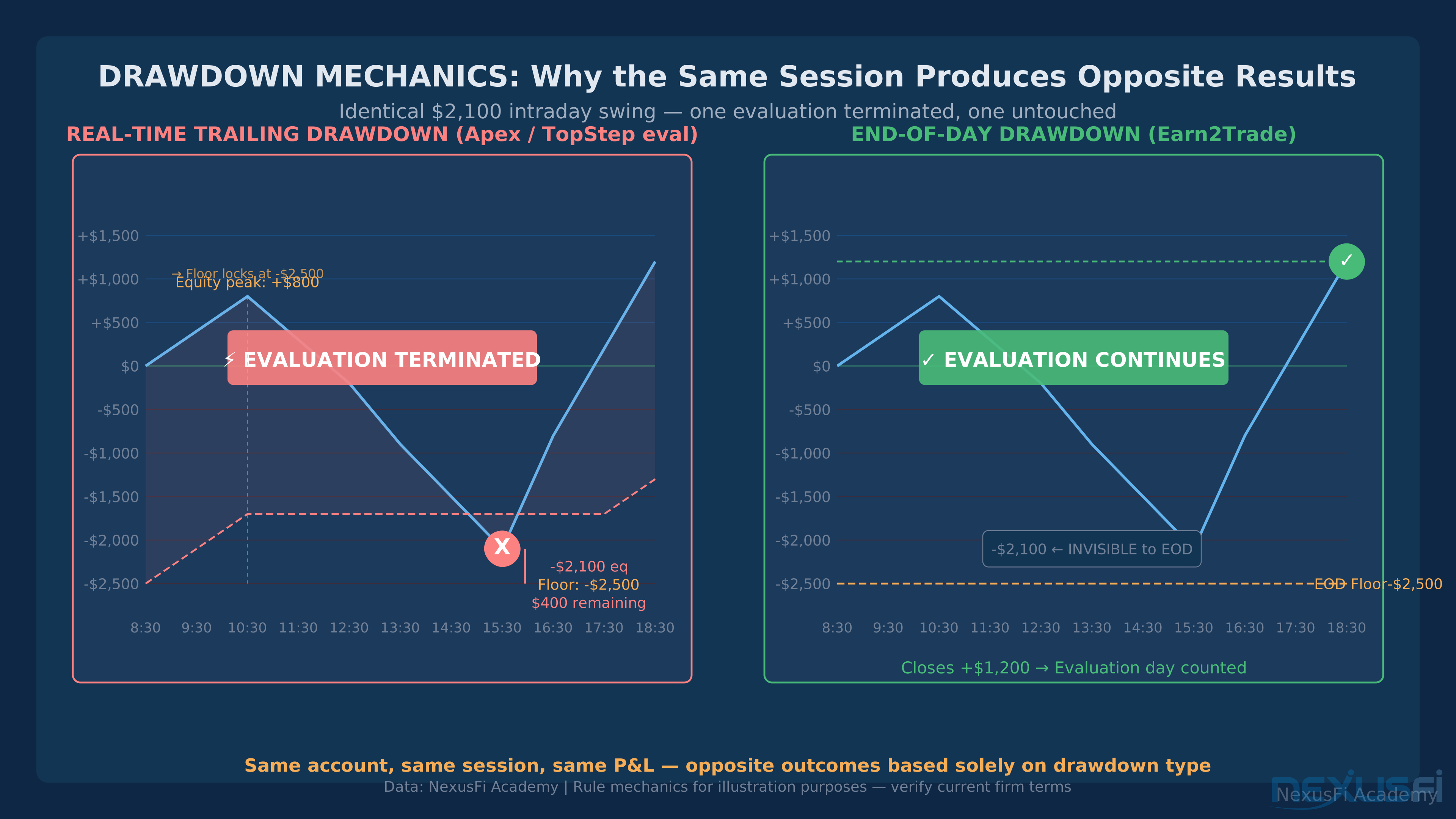
Drawdown mechanics don't just determine whether you fail an evaluation. They determine whether your trading strategy is even viable inside that evaluation's constraints. A profitable ES scalper can blow through a firm's trailing drawdown on a normal volatile day without ever closing at a loss. A swing trader who holds overnight can survive a brutal intraday drawdown and close the evaluation profitably — or get terminated before the session ends, depending entirely on which firm they chose.
The profit split is a 10-20% difference in payout. The drawdown structure is the difference between passing and failing.
The Five Factors That Actually Matter #
Before looking at specific firms, here are the five evaluation criteria that matter for futures traders — ranked by impact:
1. Drawdown Type and Enforcement Timing — The single most important factor. Is drawdown measured on intraday equity (real-time), end-of-trade, or end-of-day? How is floating P&L treated? When does termination trigger?
2. Total Cost of Ownership Over 6 Months — Evaluation fee, expected reset count, monthly funded account fees, platform/data costs, and commission drag. Marketing price is never the actual price.
3. Account Size and Contract Limits — What account size actually gives you enough room to trade your strategy's typical stop distance and position size without hitting contract caps?
4. Payout Structure and Extraction Friction — When can you withdraw? What's the minimum? Is there a cap? Does profit-lock force you to maintain a buffer? Getting the money out matters as much as earning it.
5. Instrument Access and Session Rules — Can you trade the products you actually trade? Are there news blackout windows, overnight restrictions, or contract size limits that conflict with your approach?
The #1 Factor: Drawdown Mechanics Deep Dive #
This deserves its own section because the terminology is confusing and the stakes are high.
Drawdown Types #
There are three primary drawdown structures used across the industry:
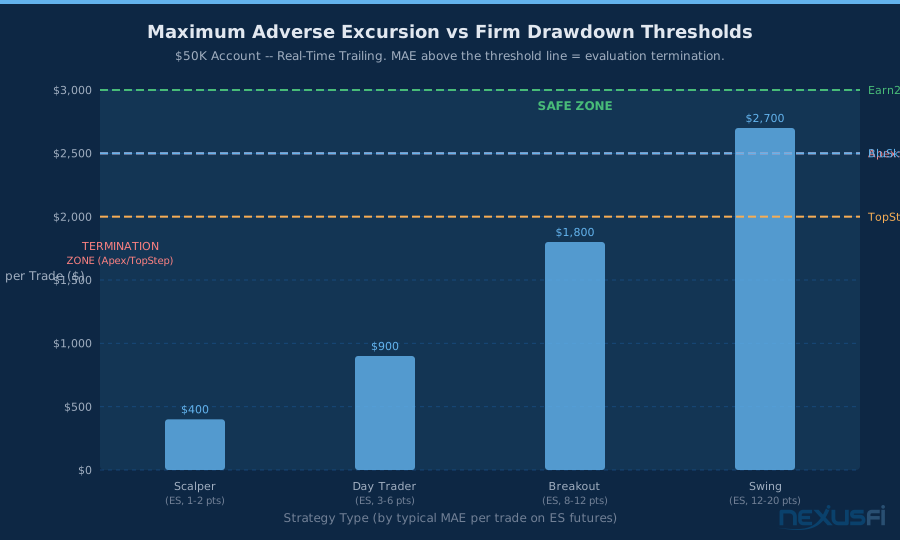
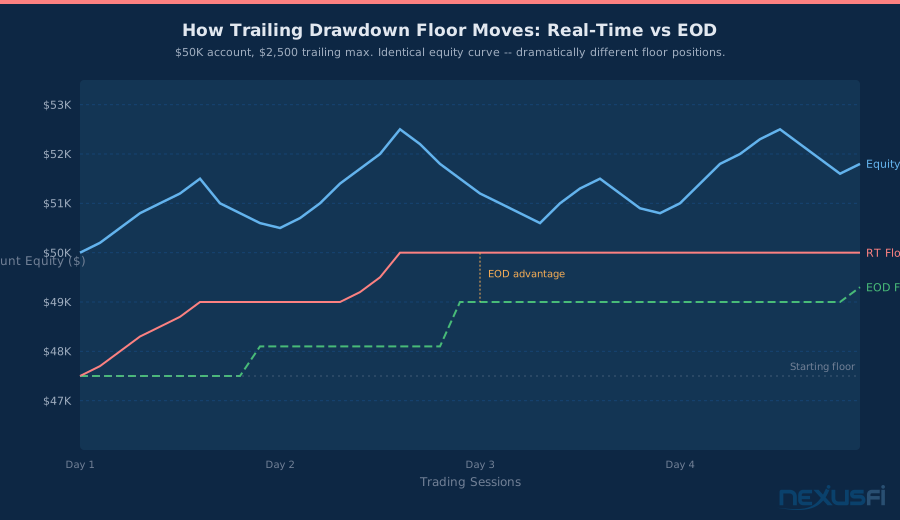
Live/Real-Time Trailing Drawdown: The trailing maximum tracks your account equity in real time, every tick. If you're up $1,200 and your equity drops to $800 unrealized, you've used $400 of drawdown — even if you haven't closed a trade. Your trailing floor rises as your equity peaks. This is the most punishing structure for strategies with normal intraday heat. An ES scalper going for a 3-point target with a 2-point stop needs to be careful: three open positions at -1 point each against you represents $450 of equity drawdown on a $50k account with a $2,500 maximum.
End-of-Trade (EOT) Trailing Drawdown: The trailing maximum updates when you close trades, not on unrealized P&L swings. Your position can draw down $1,200 intraday without triggering the threshold as long as you exit flat or positive. Much more forgiving for strategies that tolerate temporary adverse excursion.
End-of-Day (EOD) Static Drawdown: The drawdown level is calculated once per day, at session close. Intraday volatility is completely ignored. Only your closed balance matters. This is the most forgiving structure — and the one most aligned with how professional risk managers think about daily P&L. Earn2Trade uses EOD during evaluation. The tradeoff: lower profit split (80/20) vs. the other firms.
Equity vs. Balance #
On top of the timing question, there's the calculation method:
- Equity-based: Unrealized P&L is included. Open positions count against you.
- Balance-based: Only closed trades count. Open positions are invisible to the drawdown calculation.
Real-time equity-based trailing drawdown is the strictest combination. Balance-based EOD is the most forgiving. Most firms fall somewhere in between.
Why This Destroys Strategies #
A forum thread on NexusFi from @jlabtrades, who had real payouts from both Apex and TopStep, captured the practical difference exactly:
That's the key practical difference. With TopStep's daily loss limit, your evaluation survives intraday volatility as long as you don't breach the daily cap — the trailing element isn't punishing tick-by-tick moves.
@canoekoh on NexusFi identified the systemic problem:
KEY INSIGHT: Drawdown Timing Is the Kill Switch Real-time equity-based trailing drawdown is the single most strategy-destructive rule in the funded trading industry. A strategy with 60% win rate and 2:1 R:R can fail evaluation repeatedly not because it loses — but because normal intraday heat triggers termination before profitable exits.
The key implication: if your strategy has a win rate of 60% with a 2:1 reward-to-risk, you'd expect to be profitable — but your Maximum Adverse Excursion (MAE) per trade might routinely hit 1.5x your ultimate stop before you exit. Real-time trailing drawdown can terminate your evaluation on a trade you'd close profitable, simply because of where it went before you exited.
Firm Profiles #
Apex Trader Funding #
Apex is the highest-volume funded futures provider by account count. They've leaned hard into aggressive promotional pricing — discount codes and sale periods are nearly permanent, making the advertised price the exception rather than the rule.
Account Sizes: $25K, $50K, $75K, $100K, $150K, $250K, $300K
Evaluation Rules (key mechanics):
- Trailing drawdown: Real-time equity-based trailing maximum. This is the strictest structure.
- The trailing floor rises with every equity peak — if you're up $3,000 on your $50K account, your floor rises $3,000 and doesn't come back down.
- Static daily loss limit: Yes, separate from the trailing drawdown.
- Profit target: Fixed dollar amount by account size (e.g., $3,000 on a $50K account).
- Minimum trading days: Typically 7-10 trading days before you qualify for a funded account.
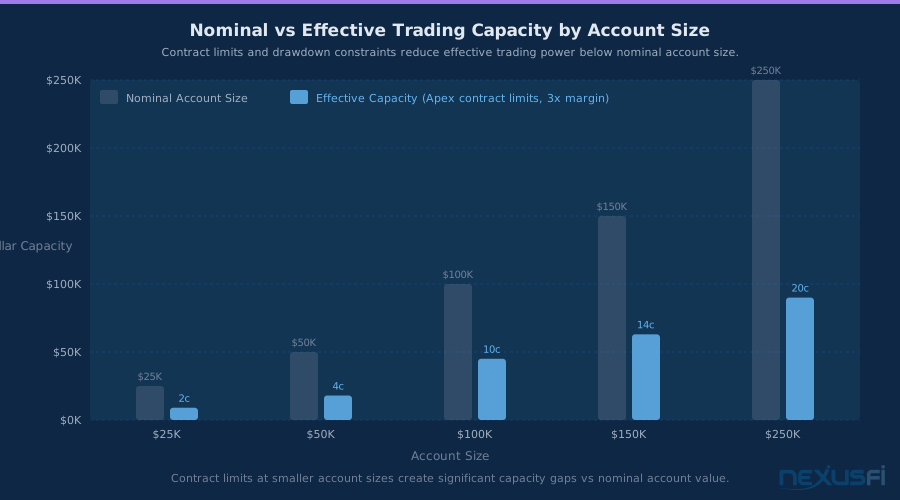
- Contract limits: Set per account size, typically 10 contracts on a $100K account.
Profit Split: Up to 100% on the first two payouts (up to $25,000 total), then 90/10 ongoing.
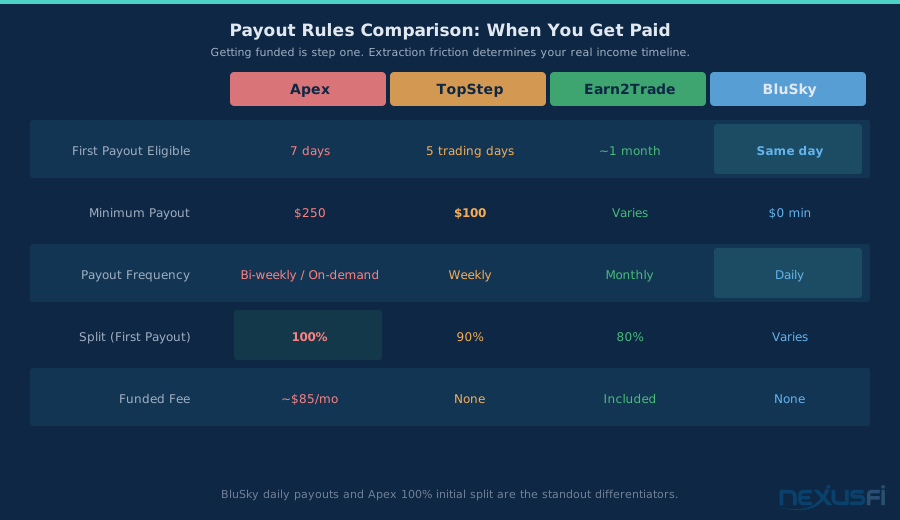
Payout Rules: After receiving a funded account, first payout eligible after 7 calendar days with a $250 minimum. Subsequent payouts: bi-weekly or on-demand depending on account type.
Fees: Monthly subscription model (e.g., approximately $147-167/month for a $100K account at typical promotional rates, but verify current pricing). Reset fee is cheaper than starting a new evaluation.
Strengths: Largest community of funded futures traders. Fast evaluation structure. The early 100% payout on initial withdrawals is a genuine differentiator for traders who pass quickly and extract capital efficiently.
Weaknesses: Real-time trailing drawdown is brutal. NexusFi's @matthew28 compared Apex favorably to TopStep specifically on the funded-account costs, but noted the evaluation drawdown enforcement can feel punishing during volatile sessions. Customer support scalability has been a consistent community complaint during high-volume market events.
Best for: Scalpers and high-frequency intraday traders with tight stops and low MAE who can reliably keep equity from dipping. Not ideal for strategies that tolerate temporary heat.
TopStep #
TopStep has been in the funded futures space since the beginning — they were the firm that popularized the "combine" evaluation model. In 2026, they've evolved much from their early structure, and their execution quality and dashboard tooling have become industry benchmarks.
Account Sizes: $50K, $100K, $150K
Evaluation Rules:
- Trailing drawdown: Real-time trailing on equity — BUT with a key difference from Apex: TopStep's trailing maximum locks in permanently once you hit 2x the drawdown limit in profit. So on a $100K account with $3K trailing drawdown, if you get up $6K, your trailing floor locks in at its current level. After that, you're only exposed to a fixed daily loss limit, not a moving trailing floor.
- Daily loss limit: Hard daily cap — breach it and the evaluation terminates for the day.
- Profit target: $9,000 on a $150K account, $6,000 on a $100K, $3,000 on a $50K.
- Minimum trading days: 10 trading days minimum.
Profit Split: 90/10 when funded.
Payout Rules: First payout after 5 trading days in funded status, with a $100 minimum. Payouts processed weekly.
Fees: Monthly subscription (approximately $165/month for a $100K account — verify current pricing). Data fees through NinjaTrader or their preferred platforms may be additional.
Strengths: The trailing drawdown that locks in after early profitability is a meaningful structural advantage — it gives trailing drawdown protection upside with decreasing downside exposure as you build a profit cushion. The dashboard is the best in class: real-time drawdown remaining, daily loss tracker, and performance analytics that actually help you self-monitor. The educational framework around trade planning and performance review is the strongest in the industry.
Weaknesses: The initial trailing drawdown period (before you've built enough profit to lock it in) still creates real-time equity risk. The profit target-to-drawdown ratio is similar to Apex. Higher price point before applying coupons.
Best for: Disciplined traders who take systematic approaches, value risk governance tooling, and have a strategy that can build early profitability to lock in the trailing floor. Strong fit for traders who benefit from structured performance feedback.
Earn2Trade (The Gauntlet Mini) #
Earn2Trade operates differently from the above two firms in ways that matter a lot. Their evaluation program is called The Gauntlet Mini, and it feeds into Helios Trading Partners as the funded account provider. The key structural difference: EOD drawdown during evaluation.
Account Sizes: $25K, $50K, $100K (main Gauntlet Mini tiers)
Evaluation Rules:
- Drawdown: End-of-day static drawdown during evaluation. Intraday equity swings are completely irrelevant to evaluation survival.
- Profit target: Typically 10% of account size over 15 trading days minimum.
- Daily loss limits: Yes, still enforced — you can't blow through in a single session.
- Scaling during evaluation: Some plans have contract size limits that scale with evaluation progress.
Funded Account (Helios):
- After passing the Gauntlet, you receive a Helios funded account.
- Profit split: 80/20 — this is the main tradeoff for EOD forgiveness.
- The funded Helios account has different drawdown rules than the evaluation; verify current terms carefully.
Fees: Subscription-based, roughly competitive with Apex and TopStep for the same account size.
Strengths: EOD drawdown is the right structure for any strategy that has meaningful intraday swings before closing profitable. It eliminates the real-time trailing drawdown kill-switch entirely during evaluation — your results are judged on daily outcomes, not intraday tick behavior. Forum member @MarketMage put it directly:
Weaknesses: 80/20 split is the lowest of the four firms. The Helios funded account phase may have different drawdown terms than the evaluation phase — make sure you understand the mechanics of both separately. Scaling rules during evaluation can be confusing.
Best for: Swing traders, strategies with wider stops, any approach that tolerates intraday heat but closes green. Developing traders who need evaluation forgiveness while building track record. Traders who prioritize evaluation pass probability over split percentage.
BluSky #
BluSky targets a different part of the market — experienced traders who want institutional-grade structure and rapid access to profits. They're the newest major entrant of these four and have grown primarily through the NexusFi community and word-of-mouth from traders who value their specific structural advantages.
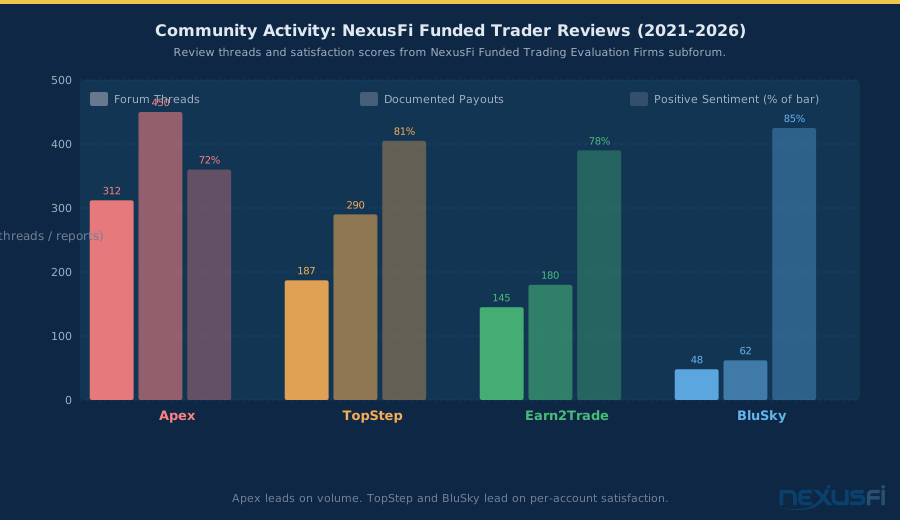
BluSky is an active sponsor on NexusFi. Their community presence here means you can find real trader feedback in the forums and get answers directly from their team.
Account Sizes: Multiple tiers (verify current lineup at their site).
Evaluation Rules:
- Drawdown during evaluation: Trailing maximum (similar to the live-model firms).
- Key structural difference: Once you pass evaluation and enter a funded account, drawdown converts to static (fixed). This eliminates the trailing element that can claw back gains as you build P&L in live trading.
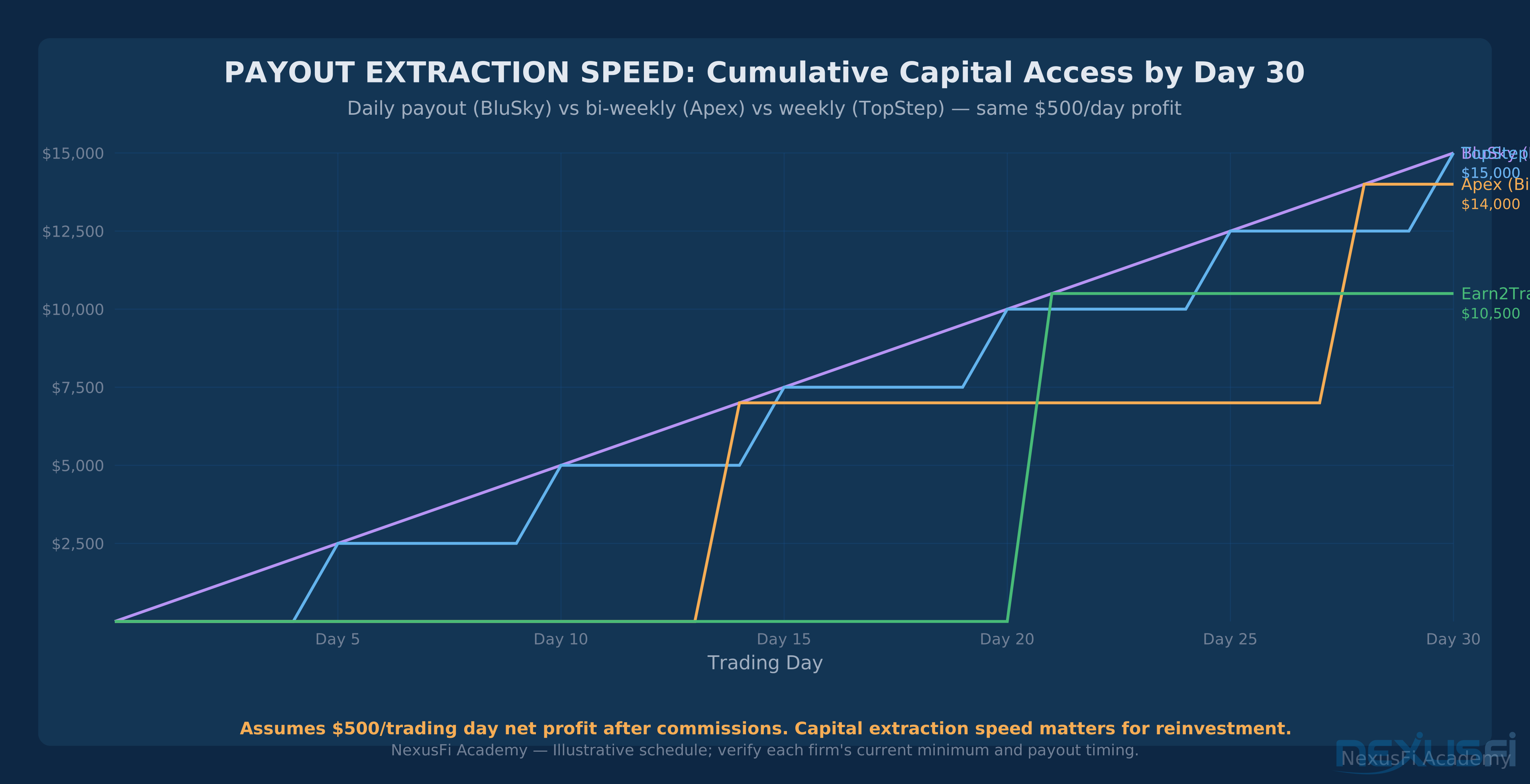
- Daily payouts: BluSky offers same-day withdrawal capability — a unique feature no other firm in this group can match.
Profit Split: Varies by tier and account type.
Payout Rules: Daily payouts are available — this is the standout feature. For traders who want access to capital quickly, this removes the typical 5-30 day wait.
Coaching and Community: BluSky has built a coaching model around Discord-based trader development that functions alongside the funding program. This isn't purely a pass-the-evaluation-and-trade-alone model.
Strengths: Static drawdown in funded accounts is the professional standard — it means your drawdown floor doesn't trail upward as you profit, so your risk tolerance doesn't shrink as your balance grows. Daily payouts solve a real friction point. Coaching community provides real-time support that the self-directed programs lack.
Weaknesses: Evaluation still uses trailing drawdown — so you face the same intraday risk during the qualifying phase. Community resources and comparison data are thinner than Apex or TopStep due to shorter history.
Best for: Experienced traders who want institutional-grade funded account structure, rapid capital access, and are willing to engage with a coaching community. The daily payout feature is genuinely differentiated for traders managing multiple funded accounts who want capital recycling speed.
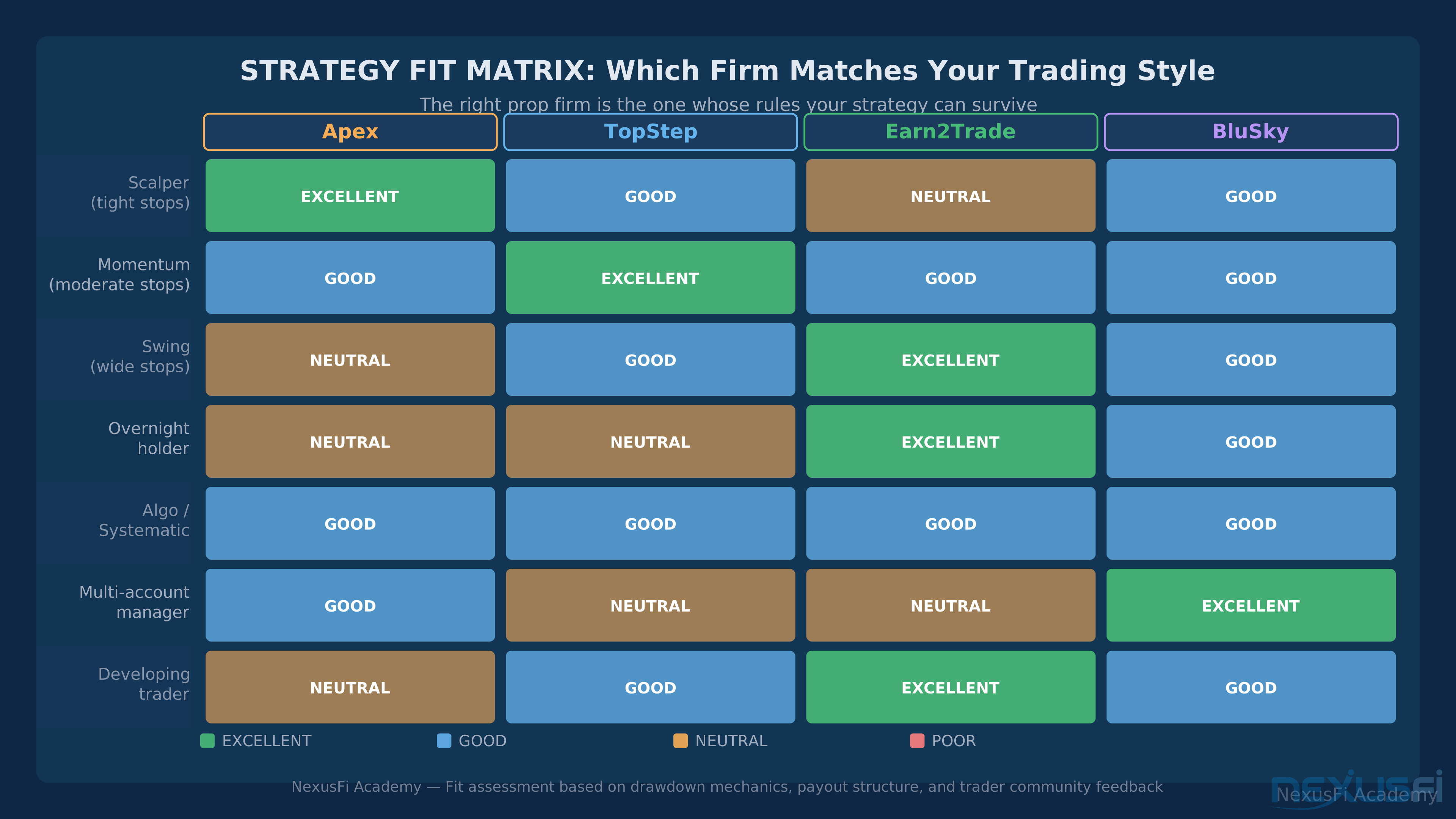
Side-by-Side Comparison #
| Factor | Apex | TopStep | Earn2Trade | BluSky |
|---|---|---|---|---|
| Eval Drawdown | Real-time trailing | Real-time trailing (locks in after 2x profit) | End-of-day static | Real-time trailing |
| Funded Drawdown | Static after eval pass | Static after eval pass | Separate terms (verify) | Static — key advantage |
| Profit Split | Up to 100%, then 90/10 | 90/10 | 80/20 | Varies by tier |
| Daily Payouts | No | No | No | Yes |
| Min Payout | $250 | $100 | Varies | On-demand |
| Account Sizes | $25K--$300K | $50K--$150K | $25K--$100K | Multiple tiers |
| Education | Self-directed | Strong (dashboard + coaching) | Strongest (curriculum-based) | Discord coaching |
| Community Size | Largest | Large | Medium | Growing |
| Best Drawdown for Swings | Poor | Better (after lock-in) | Best (EOD) | Poor (eval phase) |
| Best for Scalpers | Good | Good | Neutral | Good (funded phase) |
Decision Framework by Trading Style #
The Parameter-Driven Approach #
Don't choose a firm based on trading style labels. Choose based on your actual strategy parameters — these are the numbers that interact directly with each firm's rules:
The four parameters that determine firm fit:
- Maximum Adverse Excursion (MAE): What's the typical worst-case drawdown in a trade before it recovers or you exit? If your ES trades routinely dip $800 against you before closing +$400, your intraday equity exposure is -$800 per position. Three concurrent positions = -$2,400. On a $50K Apex account with a $2,500 trailing max, you have $100 of buffer. That's termination risk on a normal day.
- Concurrent position count: Do you hold 1 contract at a time, or scale up? More concurrent contracts multiplies your equity drawdown exposure proportionally.
- Holding time and session boundaries: Do you close everything before session end, or hold overnight? Overnight holds create gap risk and may violate some firms' overnight rules.
- Profit target horizon: Are you targeting $150/day or $1,500/day? Faster profit accumulation benefits from the TopStep trailing lock-in mechanism. Slower strategies need more evaluation runway.
| Your Parameters | → Recommended Firm | Reason |
|---|---|---|
| MAE < $200/contract, scalping | Apex or TopStep | Real-time trailing manageable with tight MAE |
| MAE $500-1,200/contract, day trading | TopStep (for lock-in) or Earn2Trade (EOD) | Need DD forgiveness during heat |
| MAE > $1,500/contract, swing | Earn2Trade (EOD eval required) | Only EOD structure survives |
| Overnight holding regular | Earn2Trade (verify overnight rules) | EOD eval + need to verify overnight allowance |
| 3+ concurrent contracts typical | EOD structure only | Real-time trailing punishes concurrent heat |
| Multiple funded accounts target | BluSky | Daily payouts compound capital recycling |
| Developing, high reset likelihood | Earn2Trade | EOD = higher pass rate = lower effective TCO |
Run your last 30 worst intraday equity drawdown sessions through each firm's rules. That stress test tells you more than any comparison article.
Intraday Scalper (ES/NQ, tight stops <2 points, low MAE) #
Real-time trailing drawdown is survivable when your typical adverse excursion is small. The risk: a single position that moves much against you before you can cut it. Scalpers who are fast and disciplined can work with Apex or TopStep. The key check: simulate your last 200 trades with the firm's trailing drawdown rules and see how many would have triggered termination on an intraday equity basis rather than a realized P&L basis.
Recommended: Apex (volume, aggressive pricing, 100% initial payout) or TopStep (better tooling, drawdown lock-in mechanism)
Momentum/Breakout Trader (holds 15-60 minutes, wider stops, lets winning trades run) #
Winning trades often involve significant intraday heat before moving in your direction. Real-time trailing drawdown is genuinely dangerous for this profile. You need either EOD drawdown or the TopStep lock-in mechanism to protect you during the "heat" phase of a position.
Recommended: TopStep (if you can build early profits to trigger lock-in), Earn2Trade (if you want EOD protection from day one)
Swing Trader (holds multiple sessions, wide stops, high variance) #
EOD drawdown is the only structure that makes sense here. A position held overnight that has a $2,000 adverse excursion before recovering is unremarkable for swing traders — but it would terminate a real-time trailing drawdown evaluation. End-of-day rules let your positions breathe.
Recommended: Earn2Trade (EOD evaluation), BluSky (static funded drawdown for the post-evaluation phase)
Developing Trader (building consistency, not yet profitable) #
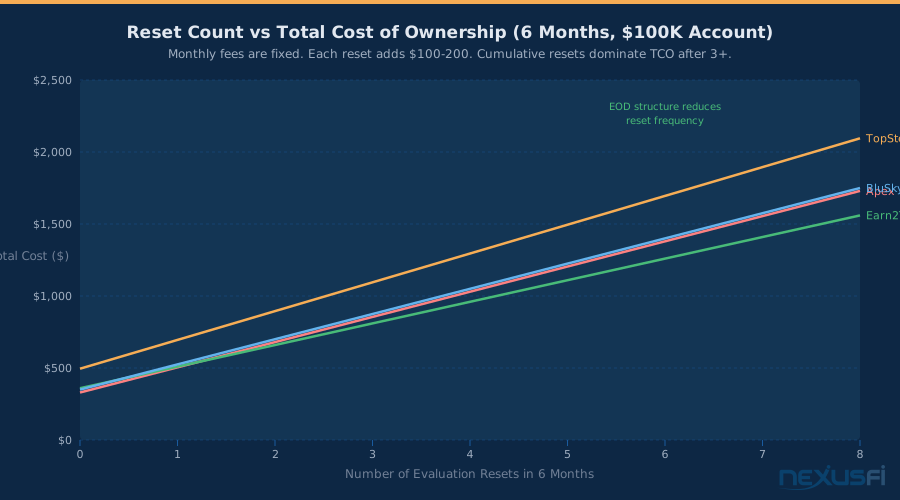
The evaluation fee math matters most here. If you're cycling through evaluations, the total cost of ownership compounds quickly. Earn2Trade's EOD structure gives you the best shot at passing with fewer attempts, even if the 80/20 split means less per payout.
Recommended: Earn2Trade (EOD forgiveness, educational framework, Helios curriculum)
Multiple Account Manager (running 3+ funded accounts simultaneously) #
Payout extraction speed and administrative friction become primary concerns. If you're pulling profits from multiple accounts, daily payouts from BluSky compound your capital recycling speed much compared to bi-weekly or monthly schedules.
Recommended: BluSky (daily payouts, static funded drawdown)
Total Cost of Ownership: The Math Most Traders Skip #
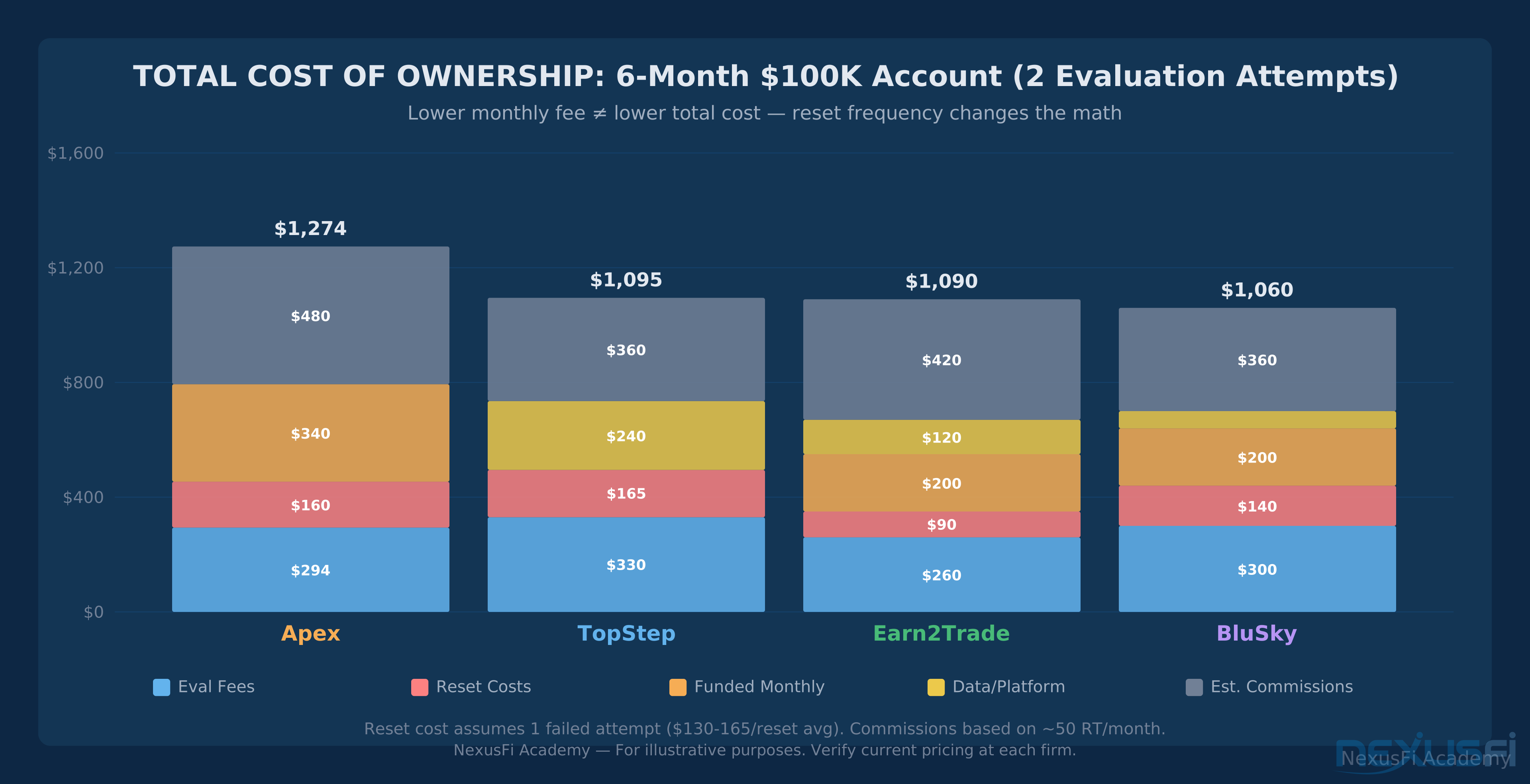
Here's the calculation most traders never run before starting an evaluation. Use 6 months as the baseline:
Scenario: $100K account, average trader who passes on their second evaluation attempt
Apex:
- Evaluation fees: ~$147/month × 2 attempts = ~$294 in evaluation phase
- Monthly funded fee (if any): ~$85/month funded × 4 months = $340
- Commission: Varies by platform/volume
- 6-month TCO (before payouts): ~$634 + commissions
TopStep:
- Evaluation fees: ~$165/month × 2 attempts = ~$330 in evaluation
- Data fees: May be additional ($55-130/month depending on platforms)
- Funded phase: No separate funded account fee (all-in subscription)
- 6-month TCO: ~$495-660 + commissions
Earn2Trade:
- Evaluation fees: Similar range, subscription model
- Lower pass probability per attempt (EOD makes evaluation easier, counterintuitively increasing pass rate) — may need fewer attempts
- Funded (Helios) fees: Varies
- 6-month TCO: Competitive with above, potentially fewer reset fees
The real variable: How many resets do you buy? At $100-200 per reset, traders who cycle through 5-10 evaluations before passing face dramatically different TCO. A firm with better evaluation survival rates can be more expensive per month and still cheaper per funded account achieved.
Run this calculation with your own reset history before choosing based on monthly fees.
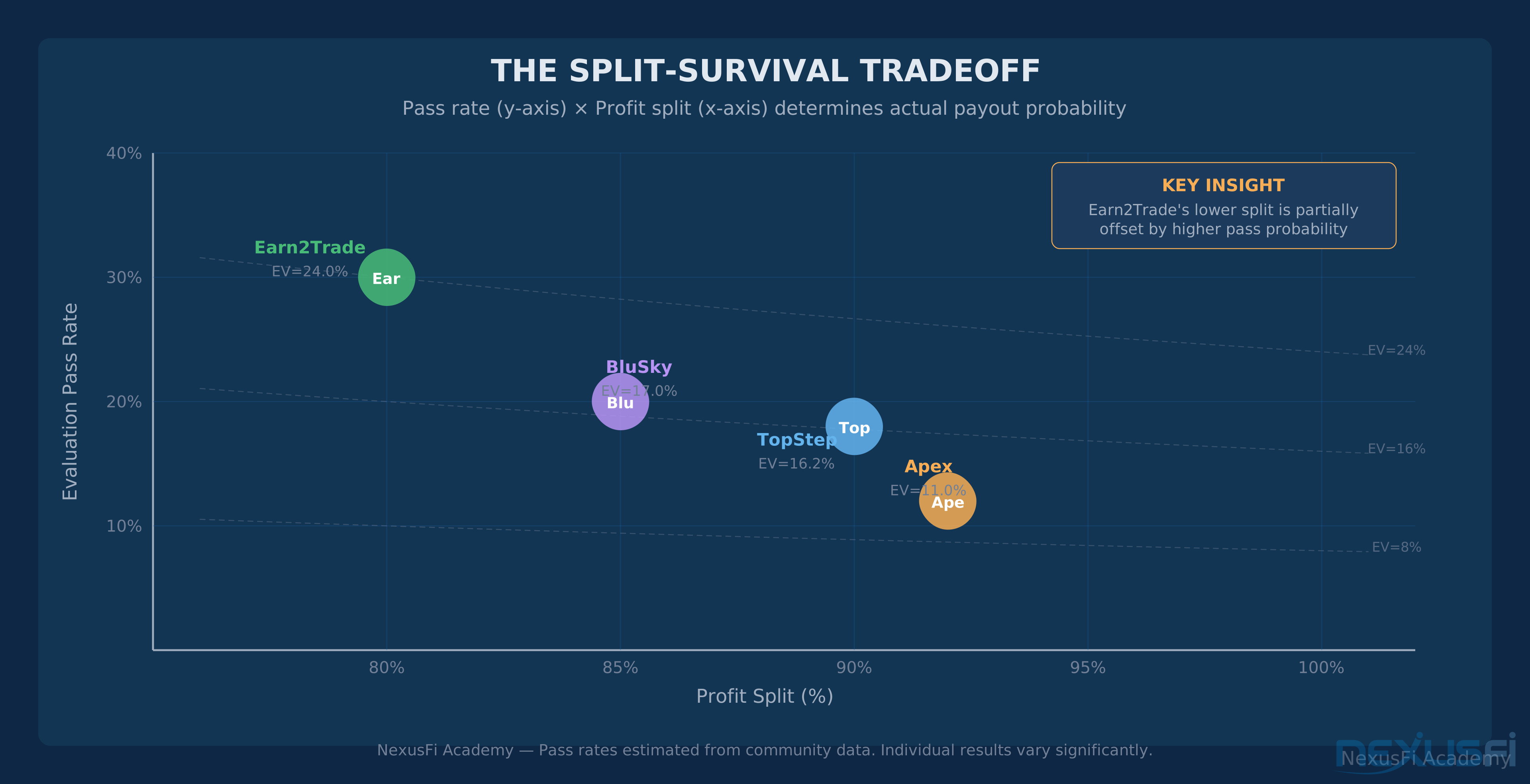
Evaluation Pass Probability: The Uncomfortable Math #
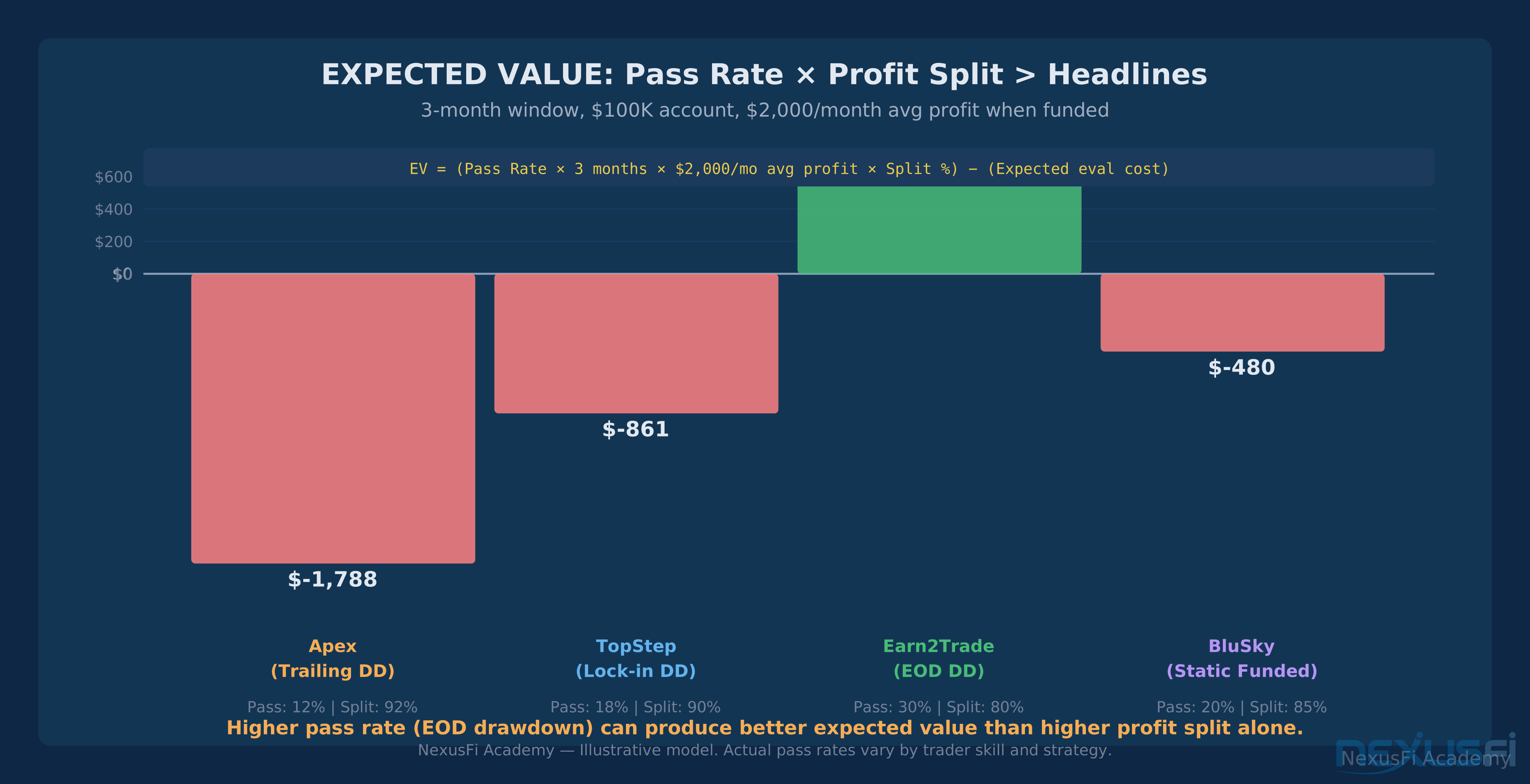
The industry doesn't publish pass rate statistics. Based on community discussions across forums like NexusFi, rough estimates suggest:
- Overall pass rates: 5-15% of evaluation starts result in a funded account (varies dramatically by firm and trader experience)
- Payout retention: Of funded traders, a smaller percentage maintain funded status beyond 3 months
- Profitable outcomes: Even fewer traders extract more in payouts than they've spent in fees across their entire prop firm history
This doesn't mean funded trading doesn't work — plenty of NexusFi members have multi-year track records with consistent payouts. But it does mean you need to be realistic about expected value. If you're spending $200/month in evaluation fees and reset costs, you need to generate more than that in payouts just to break even. Factor this into your selection.
The structure that maximizes your pass probability is worth more than the structure with the highest profit split, because a 90% split you never achieve is worth less than an 80% split you actually collect.
The Legal Reality: What 'Funded' Actually Means #
This is the section most prop firm comparison articles skip entirely, and it matters.
A funded prop firm account is not a brokerage account. It is a contractual arrangement. You are trading a simulated or proprietary environment according to the firm's rules. Key legal realities every trader must understand:
No exchange clearing: Unlike a futures account at a registered FCM (Futures Commission Merchant), your prop firm account is not cleared through CME Group, ICE, or any exchange. The capital behind it is the firm's private capital (or in many cases, a simulated environment entirely). The firm guarantees nothing beyond the terms of their contract.
Rules can change: Every major prop firm reserves the right to modify their terms. This includes drawdown rules, profit splits, payout minimums, and evaluation requirements. A rule change mid-evaluation that makes your passing harder is technically legal in most structures.
Payouts depend on firm solvency: If the firm faces financial difficulty or closes, your funded account balance may be at risk. Unlike a brokerage account with FCM regulations and CFTC customer segregation requirements, there is no regulatory backstop for prop firm trader funds. NexusFi member @ImActuallyStupid raised this concern directly: "I think Futures prop firms are just as bad. They employ trailing drawdowns of unrealized profits on traders, while simultaneously saying..." — questioning whether the models are designed for trader success or firm fee extraction.
How to evaluate firm reliability:
- Business age: 2+ years with documented payout history is the minimum threshold
- Community transparency: Does the firm have an official presence on NexusFi and other forums? Do they respond to complaints publicly?
- Payout documentation: Can you find independent verification of payouts (screenshots, community threads) dating back 12+ months?
- Contract availability: Reputable firms make their funded account agreements available before you sign up
This doesn't mean prop firms are fraudulent — many traders have documented multi-year funded track records with real payouts. But the risk profile is different from a regulated brokerage account, and you need to price that risk into your decision.
Red Flags in Prop Firm Contracts #
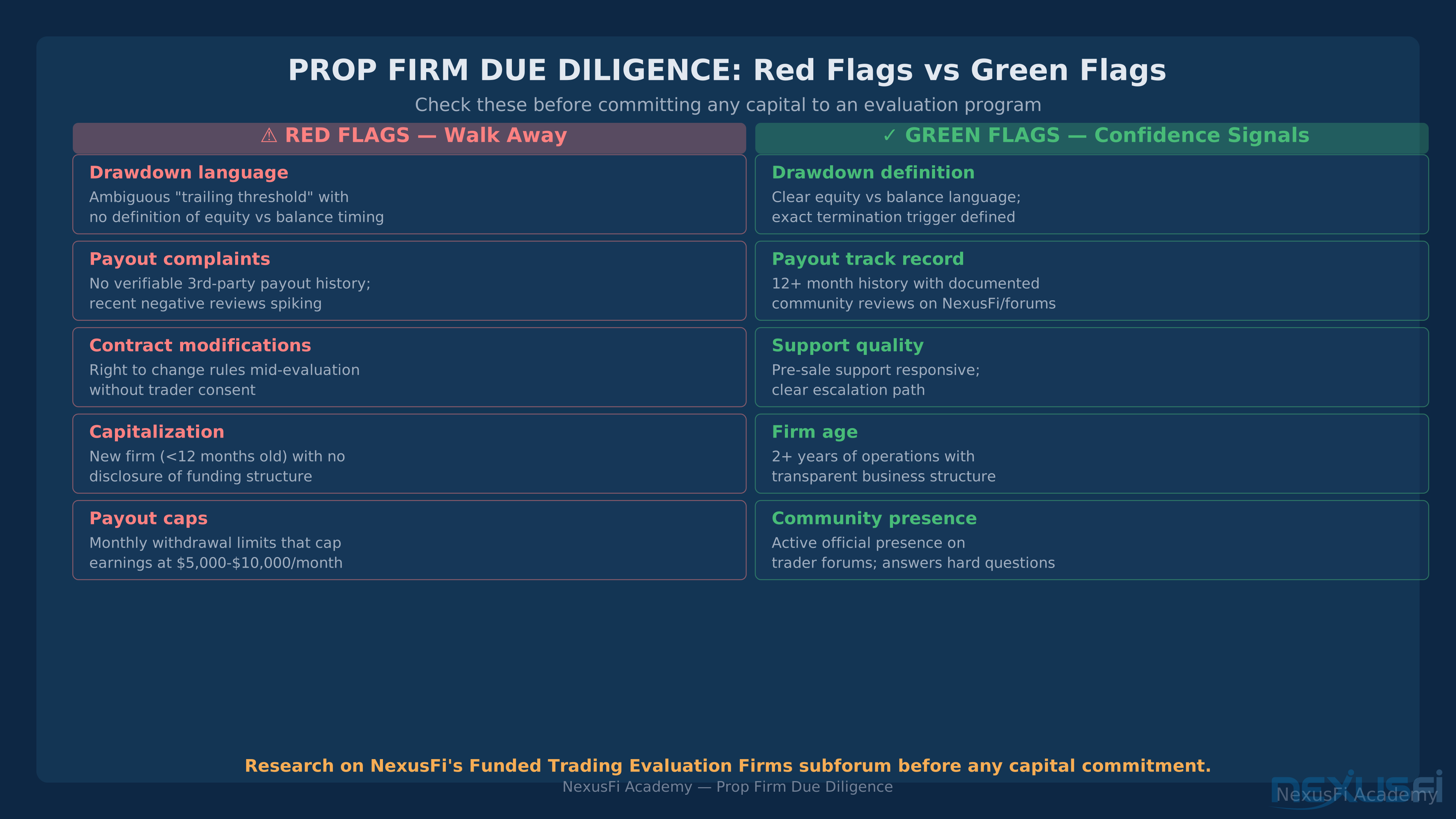
The funded trading industry has seen several high-profile firm failures and alleged fraud. Before committing capital to any evaluation:
Check for:
- Clear language on drawdown mechanics — ambiguous "trailing threshold" language without precise definitions of equity vs. balance, timing, and what triggers termination
- Withdrawal history — search NexusFi and relevant review sites for payout complaints. Firms that pay quickly and consistently leave a clear track record. Firms that manufacture reasons to decline payouts also have clear patterns.
- Business longevity and capitalization — how long have they been operating? Who is the funded account counterparty?
- Contract modification rights — some firms reserve the right to change rules mid-evaluation. This is a significant risk if the change occurs when you're close to passing.
- Payout caps — some firms cap monthly payouts, which severely limits your effective income ceiling even after passing
Green flags:
- Multi-year payout history with documented community reviews
- Clear, unambiguous drawdown definitions on their website (not buried in FAQ)
- Responsive community presence and support (you can test this before paying)
- Verifiable funded account agreements available before you sign up
The Bottom Line #
Choosing between Apex, TopStep, Earn2Trade, and BluSky isn't a question of which firm is best. It's a question of which structure fits your trading approach.
If you scalp tight with low intraday heat: Apex or TopStep. The 100% initial payout from Apex or the drawdown lock-in from TopStep are both meaningful structural advantages.
If your strategy has real intraday swings before resolving: Earn2Trade's EOD drawdown is probably the only structure where you'll pass consistently. The 80/20 split is a real cost — calculate whether higher pass probability makes it worthwhile for your approach.
If you want daily access to profits or plan to run multiple funded accounts: BluSky's daily payouts and static funded-account drawdown solve real friction problems that the other firms don't address.
If you're developing your trading: Earn2Trade's educational framework and EOD forgiveness give you the most runway. Pass with real money behind you, then consider graduating to higher-split firms as your strategy matures.
The NexusFi community discusses all four firms extensively in the Funded Trading Evaluation Firms subforum. Before committing capital, read actual user experiences — not just review sites with affiliate arrangements.
Getting Started #
Verify before you commit:
- Download each firm's current rulebook (not just their website FAQ — the actual legal terms)
- Map your strategy's typical intraday equity curve against their drawdown rules
- Run your last 6 months of trades through their drawdown mechanics and see how many sessions would have been terminated
- Calculate TCO at your expected pass rate and reset frequency, not best-case
One useful exercise: take your 10 worst intraday equity drawdown sessions from the past year and ask how each firm would have handled them. That tells you more about structural fit than any comparison article.
The funded account that works is the one with rules your strategy can survive within. Build from there.
Knowledge Map
Prerequisites
Understand these firstGo Deeper
Build on this knowledgeReferences This Article
Articles that build on this topicCitations
- — Topstep experience and review (2024) 👍 7“TopStep currently ranks as my favorite. This is mostly from the lack of live trailing drawdown (and just a daily loss limit).”
- — Most Funding Firms are a Scam (2022) 👍 5“I think due to so much competition now, there would be more companies offering a EOD trailing drawdown but no, all of these new companies only offer trailing DD based on unrealized real-time P&L. It doesn't take a genius to know which one is better for traders.”
- — Any long term success stories from funded traders in these get-funded programs? (2021) 👍 7“Having researched very thoroughly 6 or 7 of these NT/rithmic based on-exchange props, my preferred option right now and all things considered is Earn 2 Trade.”
- — ApexTraderFunding.com experience and review (2021) 👍 11“The first $10k is nice compared to Topstep's $5k, and a 90% profit split compared to Topstep's 80%.”
- — Get funded firms 2023/2024 - Any recommendations or words of warning? (2024) 👍 5“So far I have tried the following prop firms: Apex Trader Funding (ATF) - Funded, and Payouts - TopStep / TopStep Trader - Funded, and Payouts.”
- — Prop firm fraud in Futures? (2023) 👍 5“I think Futures prop firms are just as bad. They employ trailing drawdowns of unrealized profits on traders.”
- — Earn2Trade (Helios) - The Gauntlet (2018) 👍 15“They actually fund 25k in margin unlike the phony money amounts Topstep and 1Up use and they are more forgiving of drawdowns.”
- — ApexTraderFunding.com experience and review (2023) 👍 2“Topstep paid out 7.2 mil last three years where apex paid out 8.1mil last year alone.”
- — Funded Trader platforms (2024) 👍 4“My personal belief that these CAN work despite all the hurdles they throw at you.”
- — Earn2Trade vs Topstep vs Apex - Best Futures Prop Firm 2026 (2026)
- — Best Futures Prop Firms in 2026: Ranked After 12 Evaluations (2026)
- — Prop Firm Payout Guide 2026 (2026)