



Eligible Contract Participant (ECP) Status: The $10 Million Threshold That Separates Retail From Institutional Derivatives Access
Overview #
Most retail futures traders have never encountered the term "Eligible Contract Participant." They trade ES, NQ, or CL on CME, post margin, take risk, and close out. ECP status never comes up — and for exchange-traded products, it shouldn't. You don't need it.
But step outside exchange-traded products and ECP status becomes the gate. Want to trade bilateral OTC swaps directly with a dealer? ECP required. Want unlimited leverage on off-exchange forex beyond the CFTC's 50:1 cap? ECP is the key. Run a commodity fund that trades bilateral derivatives? The fund itself needs ECP status. The CFTC has prosecuted dozens of entities for dealing with non-ECPs in markets that required ECP counterparties — the line is enforced.
The Eligible Contract Participant designation is the CFTC's primary mechanism for separating sophisticated institutional participants from retail traders who need regulatory protection. It determines who can access bilateral OTC derivatives markets and who is restricted to exchange-traded infrastructure. Understanding where the line falls — and whether you're on either side of it — is foundational regulatory knowledge for anyone who trades futures or plans to access derivatives beyond the standard CME product suite.
This article covers the complete ECP framework: the qualification thresholds, what they unlock, what counts toward qualification, how trading entities achieve ECP status, and how ECP compares to QEP and Accredited Investor status.
The ECP definition is codified at 7 U.S.C. § 1a(18) of the Commodity Exchange Act (CEA), with regulatory implementation in CFTC Regulation 17 CFR § 1.3. The statute defines ECP as a person who, "acting for its own account," falls into one of the enumerated categories. The "acting for its own account" language is critical — you must be the beneficial principal, not an agent acting for non-qualifying parties.
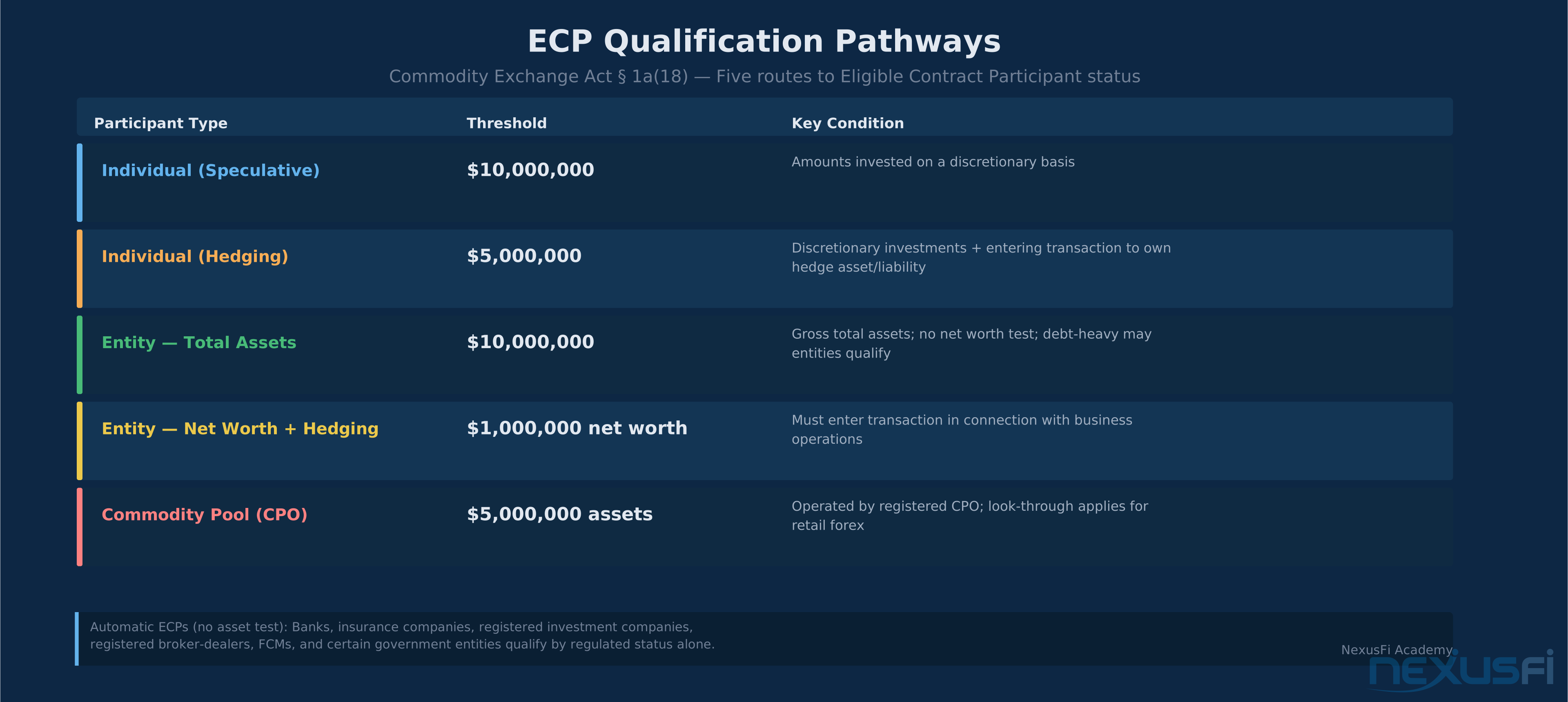
ECP Qualification Thresholds #
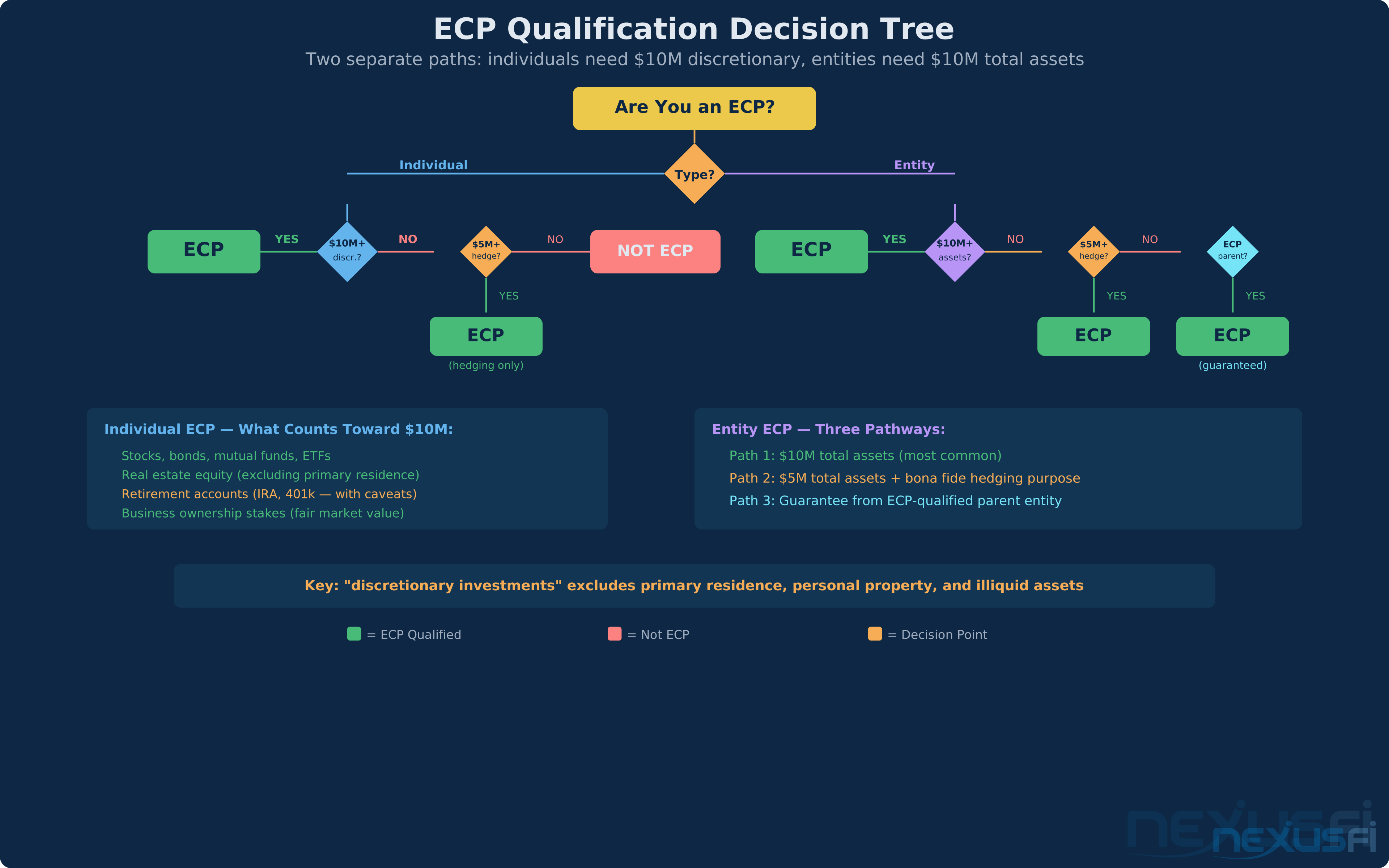
Individual Thresholds
An individual qualifies as an ECP with amounts invested on a discretionary basis exceeding $10,000,000. Not total net worth. Not total assets. Specifically: amounts the individual personally manages and controls with their own investment discretion — no third-party approval needed to make the investment decision.
The $5,000,000 hedging variant: an individual with more than $5M discretionary qualifies if they're entering the transaction to manage risk on an asset or liability they actually own or expect to own. Speculative trading doesn't qualify at the lower threshold.
Entity Thresholds
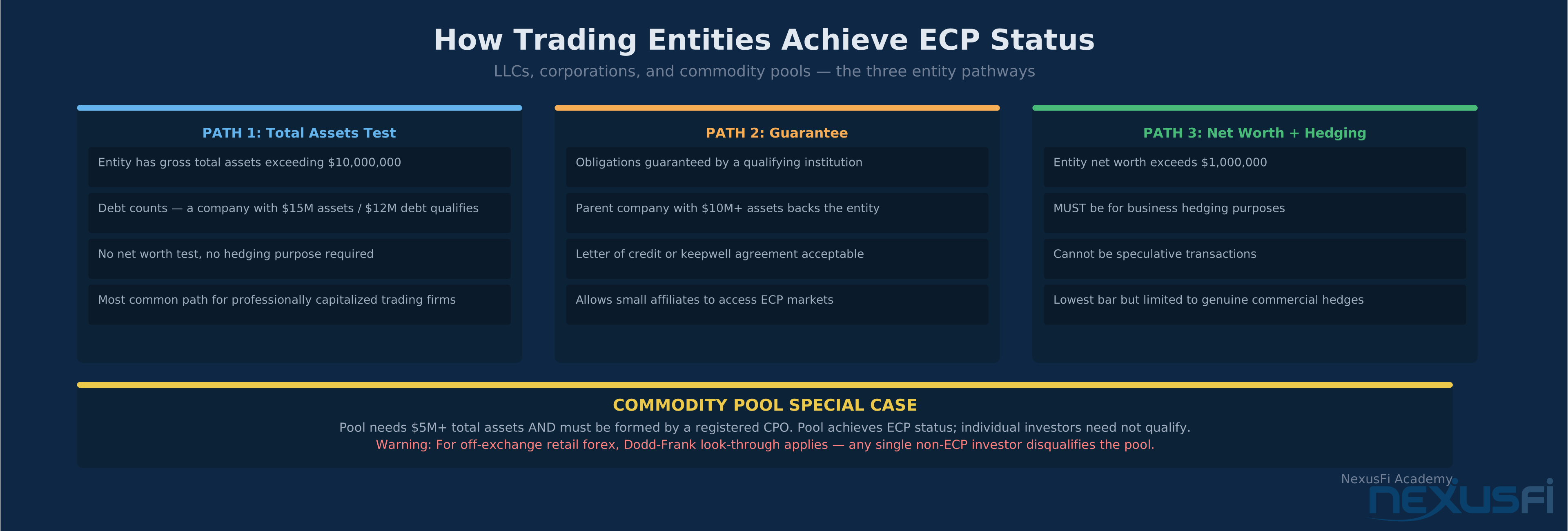
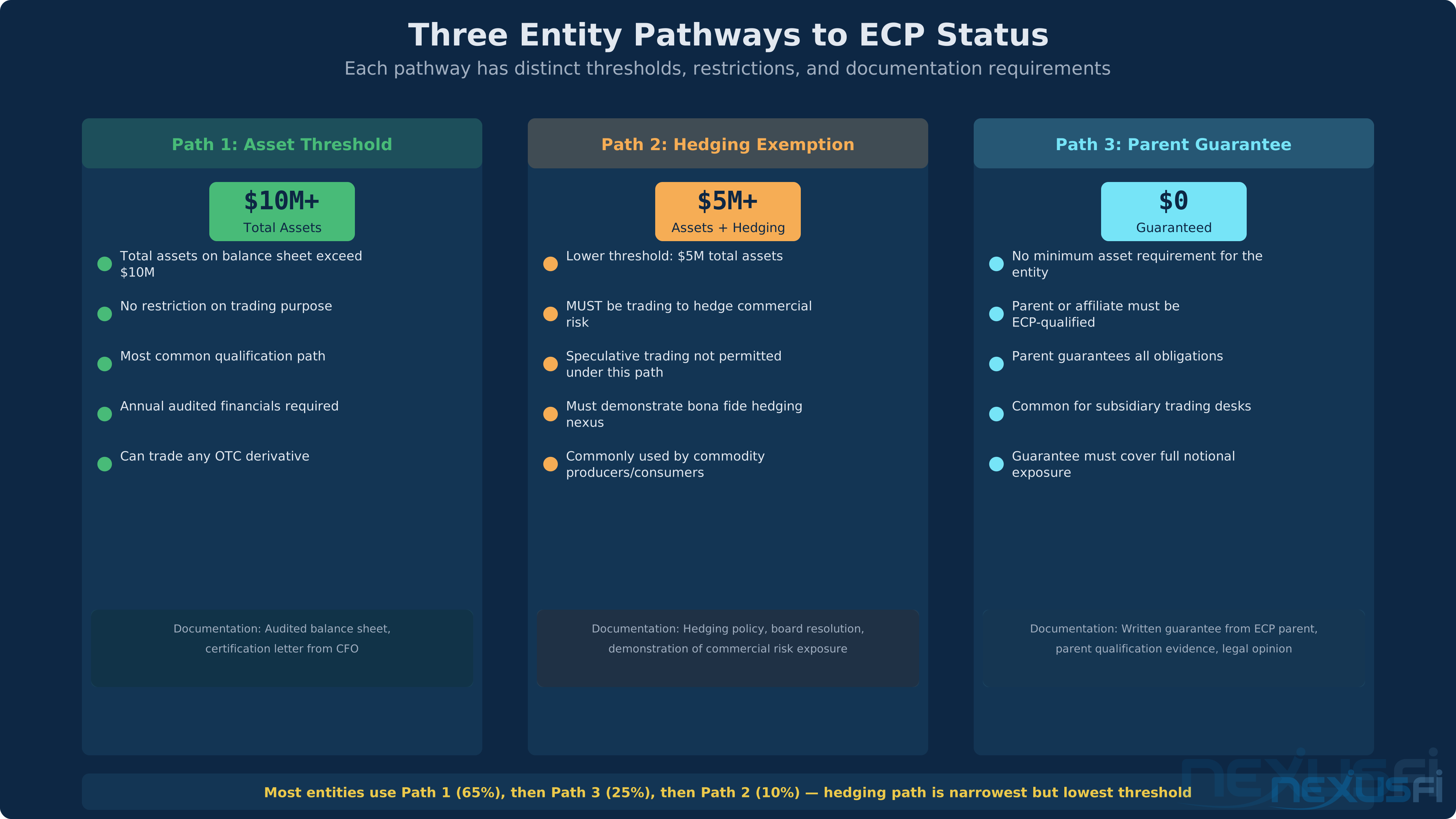
For corporations, LLCs, partnerships, trusts, and other entities, three paths exist:
- Total Assets Test ($10M): Gross total assets exceeding $10,000,000. Debt counts in your favor -- a company with $15M assets and $12M liabilities qualifies. No net worth test, no hedging purpose required.
- Guarantee Path: Entity obligations are guaranteed by a qualifying institution (parent company with $10M+ assets, a bank via letter of credit, or similar creditworthy affiliate).
- Net Worth + Hedging ($1M): Entity net worth above $1,000,000 for transactions in connection with conducting the entity's actual business. Commercial hedges qualify, pure speculation does not.
Automatic ECPs and Commodity Pools
Banks, insurance companies, registered investment companies (mutual funds, ETFs), registered broker-dealers, and FCMs are automatically ECPs by regulated status — no asset threshold required. ERISA plans with total assets above $5M or directed by registered investment professionals also qualify.
Commodity pools operated by registered CPOs qualify with total assets exceeding $5M. It's the pool that achieves ECP status, not the individual investors. Dodd-Frank's look-through provision creates one exception: for off-exchange retail forex specifically, a pool containing any single non-ECP investor loses ECP status for those transactions.
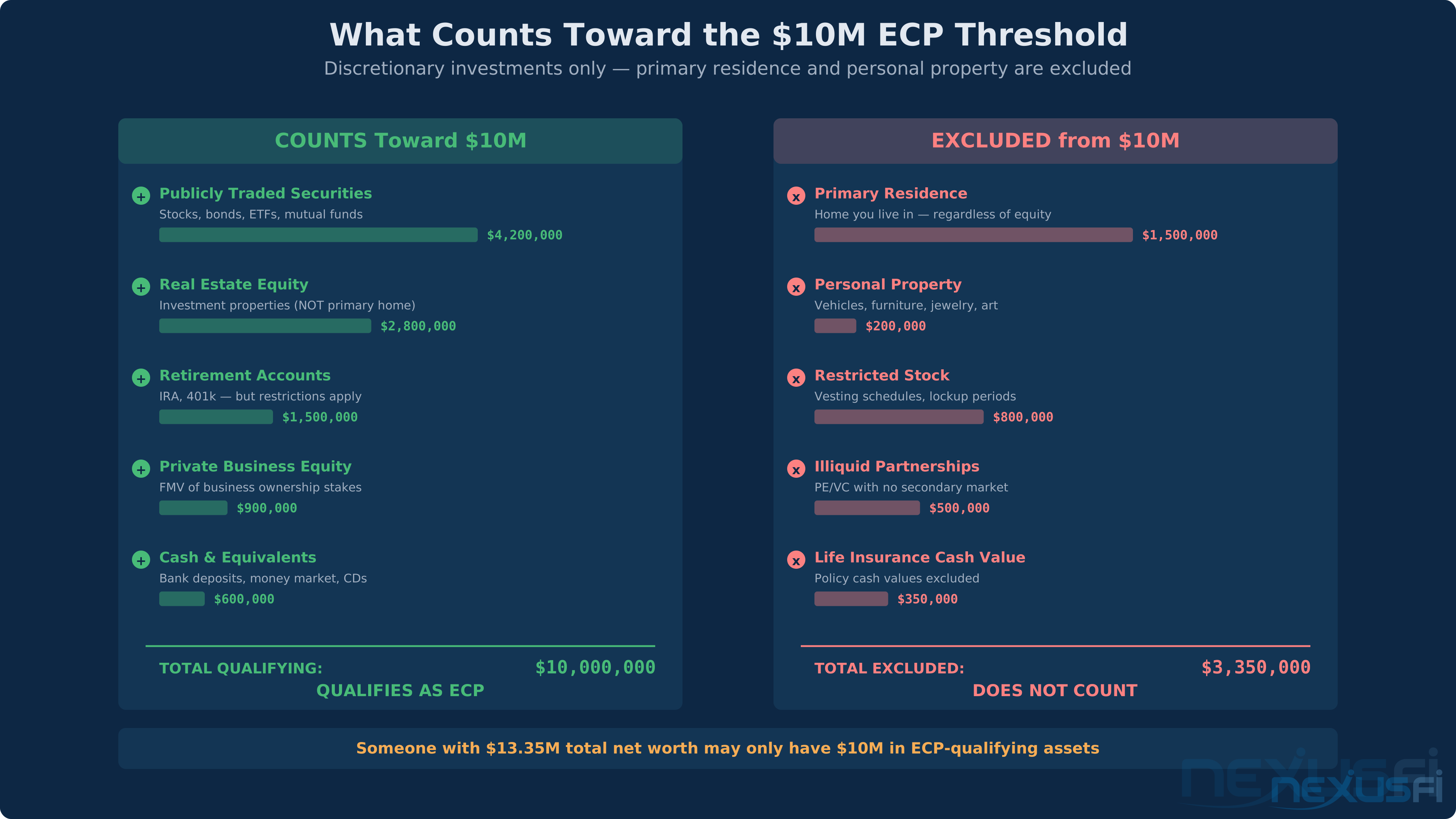
The $10M threshold trips up sophisticated investors more often than expected. The critical phrase: "amounts invested on a discretionary basis." Not net worth, not total assets — specifically amounts the individual personally deploys with their own investment discretion, without needing anyone else's permission to make the decision.
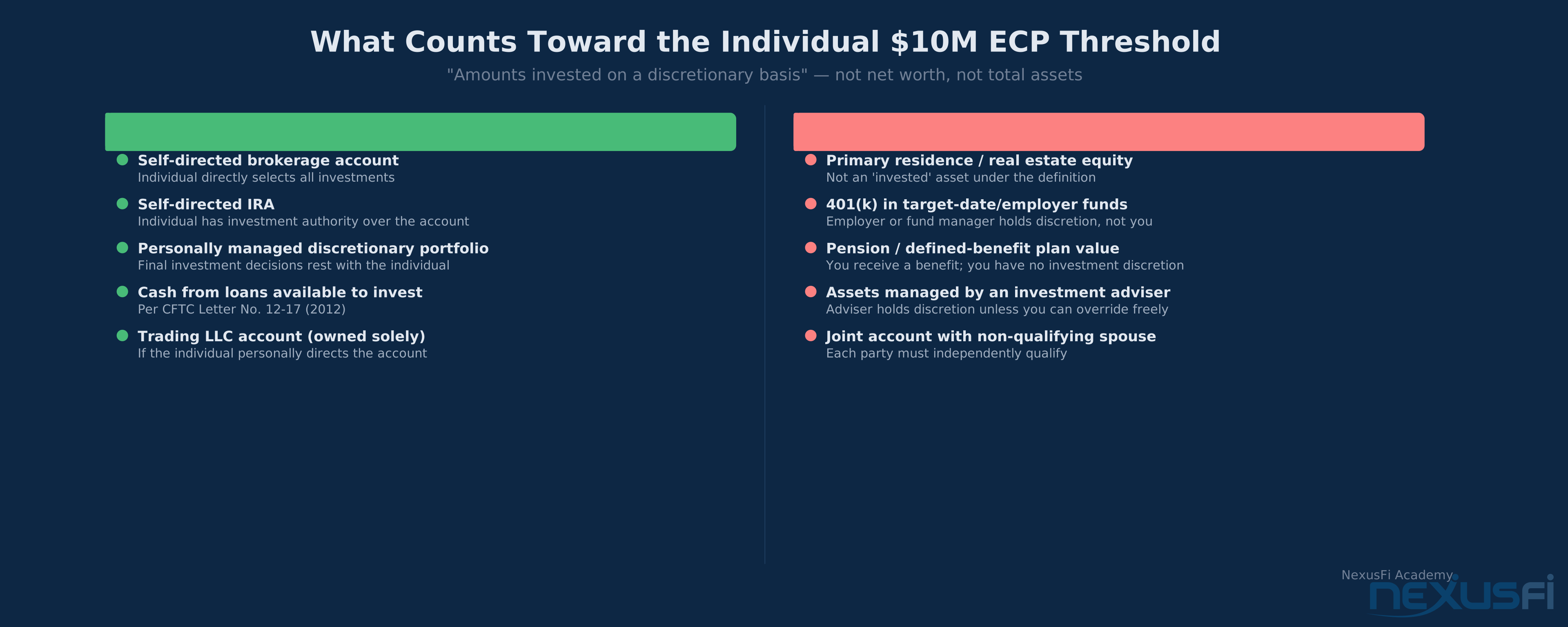
What COUNTS
- Self-directed brokerage accounts: If you personally select investments, those assets count. A $12M personal brokerage account at Interactive Brokers where you make all the calls -- that counts.
- Self-directed IRAs: If you personally direct investments in your IRA, those assets count.
- Personally managed portfolios: Any account where you retain final authority over investment decisions.
- Cash from loans available to invest: Per CFTC Staff Letter No. 12-17 (2012), cash proceeds from a loan available to invest on a discretionary basis can count.
What DOES NOT COUNT
- Primary residence and real estate equity: Real estate equity isn't an "invested" asset under the CFTC framework.
- 401(k) in employer-selected target-date funds: The plan holds investment discretion, not you. Undirected employer plan assets generally don't count.
- Pension / defined-benefit plan benefits: You receive a formula benefit with zero investment discretion over underlying assets.
- Assets fully delegated to an investment adviser: If you've delegated complete discretion and can't override specific investment decisions, those assets don't count. The authority to fire the adviser isn't sufficient -- you need authority over the actual investment decisions.
- Joint accounts with a non-qualifying co-holder: Each individual must qualify independently.
The Practical Reality
An individual with $3M in a self-directed brokerage account, $2M in home equity, $3M in a pension, and $1.5M in a 401(k) has $10.5M in total wealth but only $3M "invested on a discretionary basis." Not an ECP. The person who qualifies has $10M+ in assets they personally and directly control — the right type of assets, under the right type of control.
ECP status is a key that unlocks specific markets. For most retail traders, those markets are either irrelevant or already accessible through better-regulated alternatives. But understanding what ECP unlocks explains why the designation exists.
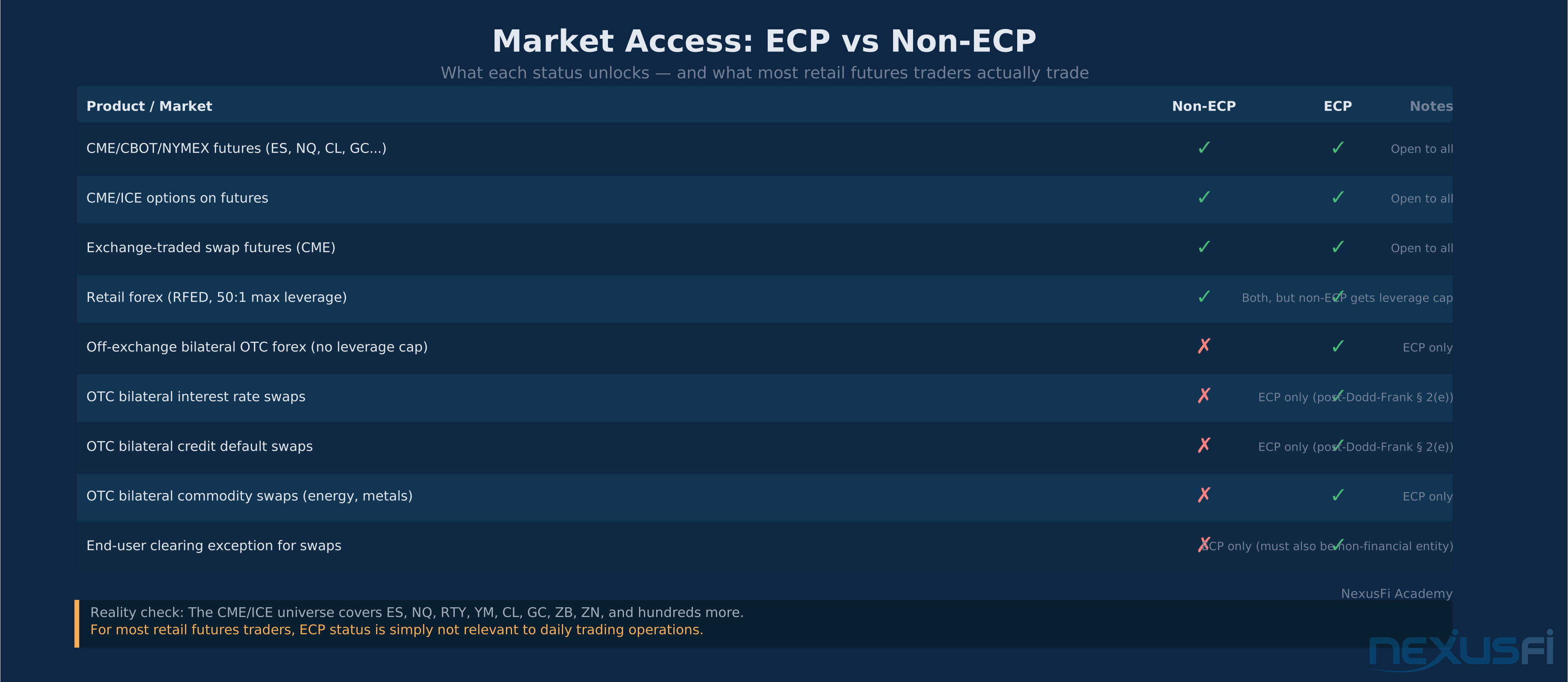
What ECP Status Unlocks #
Off-Exchange Bilateral Forex (CEA § 2(c)(2)(B))
The most visible consequence of non-ECP status: the retail forex leverage cap. CEA § 2(c)(2)(B) permits bilateral forex transactions "between eligible contract participants" without exchange-trading requirements — no leverage limits between two ECPs. The non-ECP tier under CEA § 2(c)(2)(C) requires counterparties to be registered RFEDs or FCMs and imposes maximum leverage of 50:1 on major pairs and 20:1 on all others per CFTC Regulation 17 CFR § 5.9.
OTC Bilateral Swaps (CEA § 2(e))
Dodd-Frank's biggest structural consequence. CEA § 2(e): "It shall be unlawful for any person, other than an eligible contract participant, to enter into a swap unless the swap is entered into on, or subject to the rules of, a board of trade designated as a contract market."
Non-ECPs can only participate in swaps on regulated exchanges. Want to trade a bilateral interest rate swap with a dealer? ECP required. Want to enter a bilateral credit default swap for portfolio protection? ECP required. The OTC bilateral derivatives market — where institutional participants negotiate customized risk transfers — requires both parties to be ECPs. As @SMCJB explained in a NexusFi futures vs swaps thread, Dodd-Frank "wanted to achieve greater transparency of what deals were out there between companies" — and the ECP gating was a direct tool for that goal.
Bilateral OTC Commodity Derivatives and the End-User Clearing Exception
Post-Dodd-Frank, OTC commodity swaps between ECPs continue to be permissible (subject to clearing and reporting requirements), while non-ECPs are restricted to standardized exchange-traded products. ECP-qualified non-financial entities with genuine commercial hedging needs can also invoke the end-user clearing exception (CEA § 2(h)(7)) to elect out of mandatory central clearing for customized bilateral hedges — retaining customized bilateral structure without clearing costs. This path is only available to ECPs.
Here's the core structural insight: ECP status is about OTC markets, not exchange-traded markets. ES, NQ, CL, GC, ZB, ZN — the entire CME/ICE product suite — are available to everyone, retail or institutional, ECP or not. The exchange-trading infrastructure exists precisely to make these products accessible without ECP gating.
The divide:
- On-exchange futures and options: Open to all. Centrally cleared. Regulatory oversight from CFTC and exchange rules. Price transparency. Daily mark-to-market. No ECP requirement.
- OTC bilateral derivatives: ECP required post-Dodd-Frank. Customizable terms. Negotiated documentation. Bilateral clearing in some cases. Built for institutional scale.
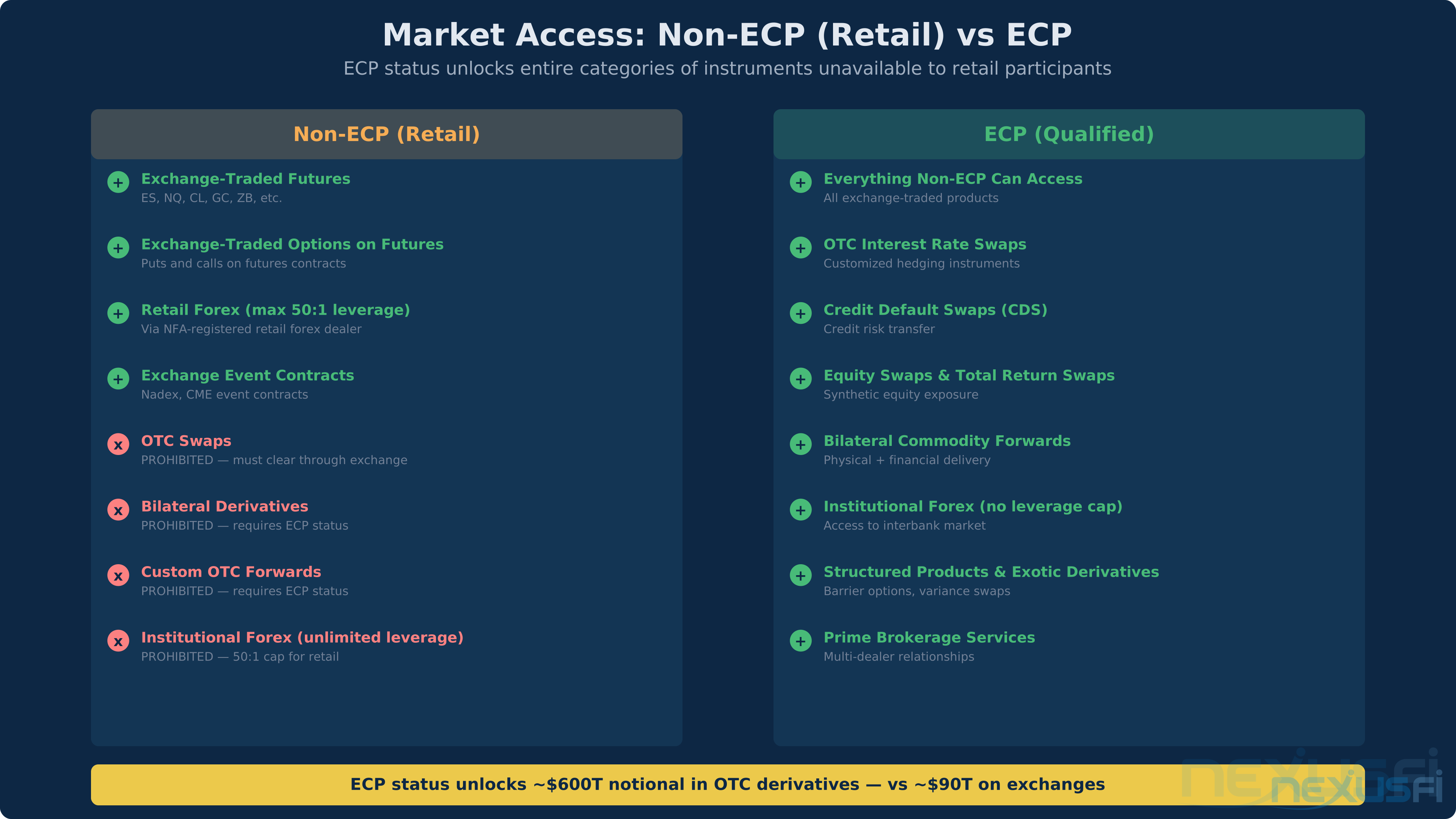
The practical consequence for a retail futures trader: the full CME/ICE product suite requires no ECP status. ECP gating doesn't touch any of it. Where ECP becomes relevant for retail-adjacent participants: leveraged metals or energy contracts sold off-exchange, high-leverage forex outside the RFED framework, or any product structured as a bilateral OTC contract rather than a standardized exchange-listed product. The moment a counterparty is offering a leveraged derivative that isn't traded on a CFTC-registered exchange, ECP status starts to matter.
The ECP framework is built on protecting non-ECPs from markets they can't adequately evaluate. Those protections are specific, enforced, and have real operational consequences.
Retail Forex Leverage Limits (CFTC Regulation 5.9)
Under 17 CFR § 5.9:
- Major currency pairs (EUR/USD, GBP/USD, USD/JPY, USD/CHF, USD/CAD, AUD/USD): Maximum 50:1 leverage (2% margin)
- All other currency pairs: Maximum 20:1 leverage (5% margin)
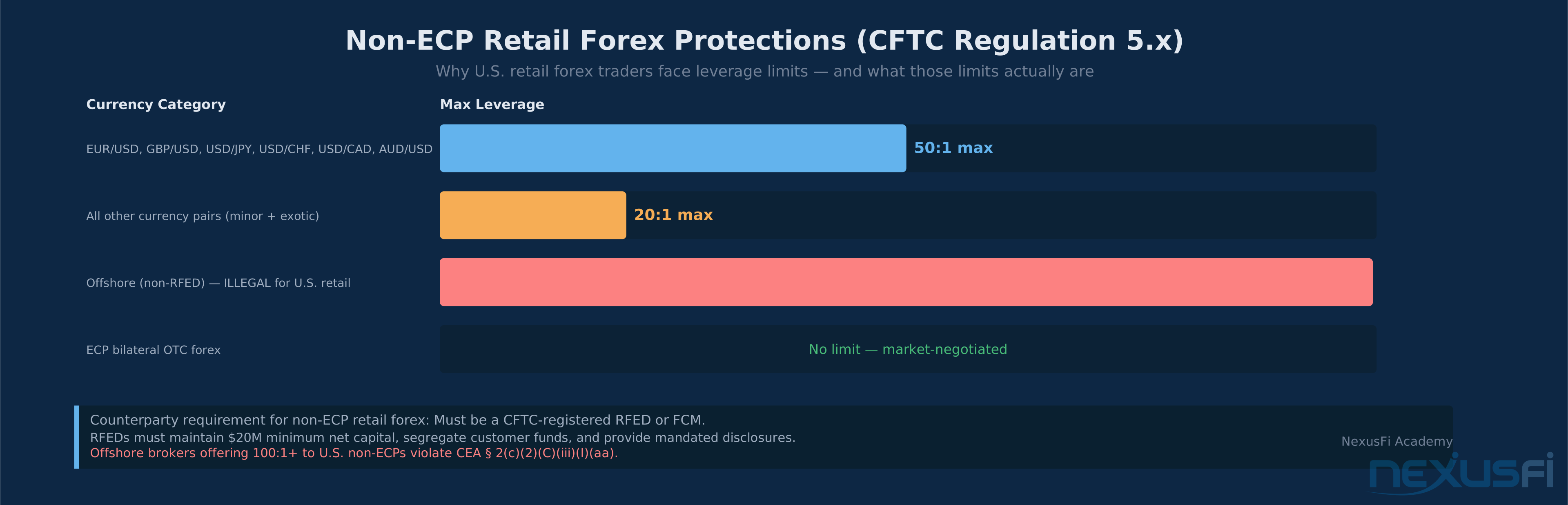
RFED Registration Requirement
Any entity acting as counterparty to non-ECP U.S. retail customers in off-exchange forex must be a registered RFED or FCM with the CFTC and an NFA member. RFED requirements include $20M minimum net capital, customer fund segregation, mandated risk disclosures, and NFA examination authority.
Foreign domicile doesn't provide an exemption. A UK-regulated entity dealing with U.S. non-ECP retail forex customers without RFED registration violates CEA § 2(c)(2)(C)(iii)(I)(aa) — FXCM's UK entity was sanctioned for exactly this during a brief 11-day period in 2010. The CFTC enforces this jurisdiction regardless of where the dealer is incorporated.
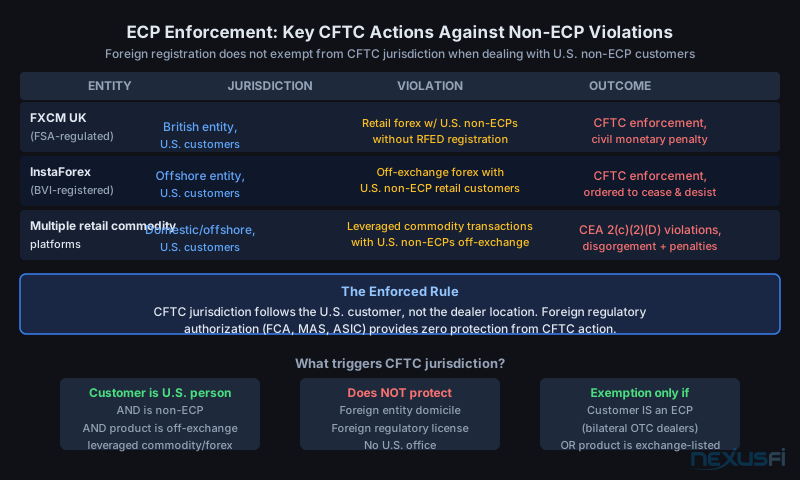
The Retail Commodity Transaction Framework (CEA § 2(c)(2)(D))
Beyond forex, CEA § 2(c)(2)(D) protects non-ECPs from leveraged off-exchange commodity transactions broadly. Any leveraged commodity transaction with a non-ECP customer must be exchange-traded or it violates the CEA — this is why "leveraged gold trading platforms" and similar bilateral OTC commodity products targeting retail customers outside regulated exchanges are illegal. As NexusFi community member @jlabtrades documented in a thread analyzing a CFTC enforcement action, entities were found to have "provided leveraged, margined, or financed retail commodity transactions in violation of the Commodity Exchange Act."
Individual traders who don't personally qualify as ECPs can achieve ECP access through properly structured trading entities. This is the practical path for professional traders and fund operators who need OTC market access without meeting the individual $10M discretionary threshold.
Trading Entities and ECP Access #
Trading LLC as ECP Vehicle
A trading LLC with gross total assets exceeding $10,000,000 qualifies as an ECP under the entity total assets test. The LLC's assets matter — not the personal assets of the manager held outside the entity. Gross total assets are used, meaning debt-heavy capitalization structures still qualify. Unlike the individual threshold, there's no hedging purpose requirement for the $10M total assets entity path — a speculative trading LLC qualifies.
Many professional traders form trading entities for legal and tax reasons, and entity ECP status is an additional benefit where applicable. NexusFi discussions on LLC trading structures note that entity formation changes margin guarantee structures and legal liability exposure — ECP qualification is one more variable in that analysis.
Commodity Pool as ECP Access Vehicle
A CPO-operated fund with $5M+ in total assets achieves ECP status as a pool — individual investors don't need to meet ECP thresholds independently. The pool is the ECP counterparty. The critical Dodd-Frank carve-out: for off-exchange retail forex specifically, the pool loses ECP status if any single investor is not an ECP. For most other OTC products, the look-through rule doesn't apply — the pool qualifies based on its own assets and CPO registration status regardless of individual investor ECP status.
The $1M Net Worth + Hedging Path
The lowest entity ECP threshold requires only $1M in net worth, but the hedging purpose requirement is genuine: transactions must be in connection with the entity's actual commercial operations. A manufacturer using an interest rate swap to hedge floating-rate debt qualifies at $1M net worth. A speculative trading LLC at $1M net worth does not qualify via this path — but might qualify via the $10M total assets test if appropriately capitalized.
ECP qualification is regularly misunderstood — including by sophisticated participants who are near the threshold but not over it.
Common Misconceptions #
"I have $10M in assets so I qualify"
The most frequent confusion. Total assets and "amounts invested on a discretionary basis" are different numbers for most high-net-worth individuals. Someone with a $4M home, $3M in a managed account (adviser holds full discretion), $2M in a pension, and $1.5M in a self-directed brokerage account has $10.5M in total assets but only $1.5M "invested on a discretionary basis." Not an ECP. The threshold is discretionary investment authority, not wealth.
"ECP is required for all futures trading"
No — and this is the most important misconception to correct. Exchange-traded futures on CME, CBOT, NYMEX, COMEX, ICE require zero ECP status. ECP gating applies to OTC bilateral derivatives, not standardized exchange-traded contracts. The vast majority of retail futures traders never encounter an ECP requirement in their normal trading operations.
"Exactly $10M qualifies"
The statutory language is "in excess of" — amounts exceeding $10,000,000. Exactly $10M does not qualify for the individual standard. The commodity pool threshold uses "exceeding $5,000,000" — exactly $5M does not qualify. These are strict greater-than thresholds.
"Non-US brokers can ignore ECP rules for US customers"
Foreign domicile doesn't exempt entities from CFTC requirements when dealing with U.S. non-ECP retail customers. FXCM's UK-regulated entity, licensed by the FSA, was still sanctioned by the CFTC for dealing with U.S. retail non-ECP forex customers without RFED registration. InstaForex (British Virgin Islands) faced identical enforcement. The critical fact is the customer's location and ECP status, not the dealer's.
"My LLC qualifies because I trade $15M notional per year"
Trading volume is irrelevant to ECP qualification. What matters for an entity is gross total assets on the balance sheet, not annual trading volume, notional exposure, or P&L history. A trader running $100M notional through an undercapitalized LLC doesn't have an ECP-qualified LLC unless the LLC's gross assets exceed $10M.
Three regulatory designations — ECP, QEP, and Accredited Investor — serve different purposes under different regulatory regimes. They're often conflated by traders and even fund professionals who haven't studied the distinctions carefully.
ECP vs QEP vs Accredited Investor #
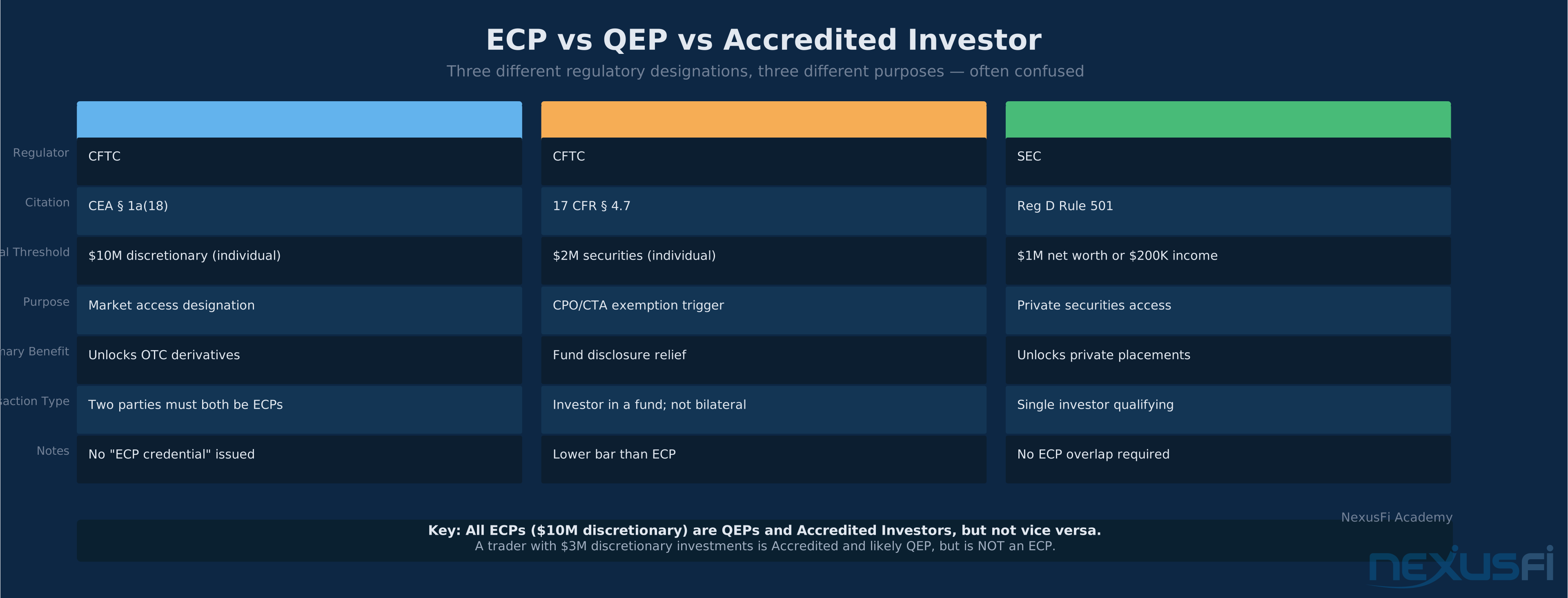
ECP (Eligible Contract Participant) -- CFTC, CEA § 1a(18)
Purpose: Determines who can enter into OTC bilateral derivatives transactions and who is subject to retail protections (leverage limits, RFED requirements, CEA § 2(e) swap restriction). Market access designation. Individual threshold: $10M discretionary investments. Bilateral in nature — both parties typically need ECP status for OTC swap transactions.
QEP (Qualified Eligible Person) -- CFTC, 17 CFR § 4.7
Purpose: Allows CPOs and CTAs to claim exemption from certain disclosure and reporting requirements under CFTC Part 4 rules when a fund operates exclusively for QEPs. Individual threshold: approximately $2M in qualifying securities (after 2024 rule updates) — substantially lower than ECP's $10M. This is a compliance exemption for fund operators, not a market access right for investors. A QEP-restricted fund is exempt from certain disclosure requirements. That's different from ECP-level market access.
Accredited Investor -- SEC, Regulation D Rule 501
Purpose: Determines who can buy unregistered securities — private placements, hedge fund interests, VC funds. Individual threshold: $1M net worth (excluding primary residence) OR $200K individual income ($300K joint). Operated under the Securities Act, not the CEA — it's entirely unrelated to OTC derivatives access.
The Hierarchy
Almost every individual with ECP status ($10M+ discretionary) is also an Accredited Investor (net worth way above $1M) and likely a QEP ($2M+ in qualifying securities). The reverse doesn't hold: most Accredited Investors and QEPs don't have $10M in discretionary investments and are not ECPs. The three designations operate under different statutes — CEA, Securities Act, Investment Company Act — and serve at the core different purposes. Understanding all three matters for fund operators: QEP for CFTC compliance relief on the fund structure, Accredited Investor for securities offering compliance, and ECP to determine whether the fund can access bilateral OTC derivatives markets.
The ECP framework emerged through legislative responses to market structure changes and financial crises. Understanding the history explains why the rules are structured as they are.
Regulatory History #
Pre-CFMA: Regulatory Fragmentation
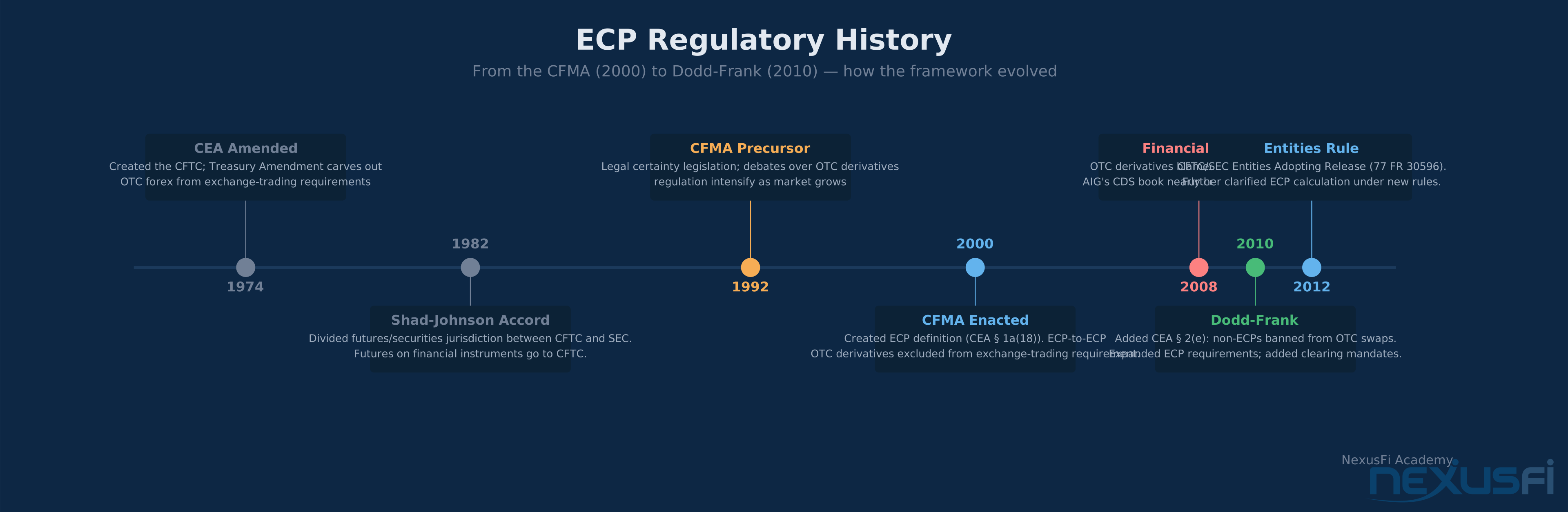
The original Commodity Exchange Act of 1936 assumed all commodity trading occurred on designated exchanges — it didn't contemplate the OTC derivatives market that emerged in the 1980s and 1990s. Through the 1990s, rapid OTC derivatives market growth created legal uncertainty about CFTC jurisdiction. Some instruments clearly required exchange-trading; others appeared to qualify as swaps or forwards exempt from exchange requirements. The result: a growing market operating in uncertain regulatory space.
CFMA 2000: Creating the ECP Framework
The Commodity Futures Modernization Act of 2000 (Public Law 106-554, December 21, 2000) resolved this uncertainty by creating the ECP designation. The CFMA added ECP to CEA § 1a and excluded ECP-to-ECP transactions in "excluded commodities" (financial instruments) from exchange-trading requirements. The CFMA's philosophy: sophisticated institutional participants don't need the regulatory infrastructure designed for retail investors — they can protect themselves through due diligence and contractual protections.
The CFMA also contained the so-called "Enron loophole," exempting bilateral OTC energy transactions between ECPs from CFTC oversight. When Enron collapsed in 2001 and revealed energy market manipulation via unregulated OTC contracts, this exemption became a major policy target and was eventually closed in 2008.
Dodd-Frank 2010: Post-Crisis Restructuring
The 2008 financial crisis exposed the systemic risk the CFMA's hands-off approach had enabled. AIG's near-collapse from CDS exposure, the opacity of the bilateral OTC market, and the absence of central clearing created conditions for cascading failures. Title VII of the Dodd-Frank Wall Street Reform and Consumer Protection Act (Public Law 111-203, July 21, 2010) at the core restructured the OTC swap market: added CEA § 2(e) barring non-ECPs from OTC swaps, expanded the ECP definition, created swap dealer registration requirements, imposed clearing mandates for standardized swap categories, and required real-time reporting to swap data repositories.
The CFTC/SEC "Entities Adopting Release" (77 FR 30596, May 23, 2012) further clarified the ECP definition under the new framework. CFTC Staff Letter No. 12-17 (October 12, 2012) provided important guidance on what counts as "amounts invested on a discretionary basis" for individual qualification — addressing the specific definitional questions that practitioners most frequently faced.
The NexusFi community discussed CFTC's ongoing swap market rules modernization in September 2025, with @SMCJB noting that ECP status "typically refers to an Eligible Contract Participant, a designation under the Commodity Exchange Act" and @Fi clarifying that "For most traders here (including you trading ES, NQ, CL), ECP status is completely irrelevant. You're already trading regulated futures on CME/ICE exchanges."
The ECP framework defines the boundary between the retail-protected exchange-traded world and the institutional OTC world. Whether you need to think about it depends entirely on what markets you access.
Practical Applications #
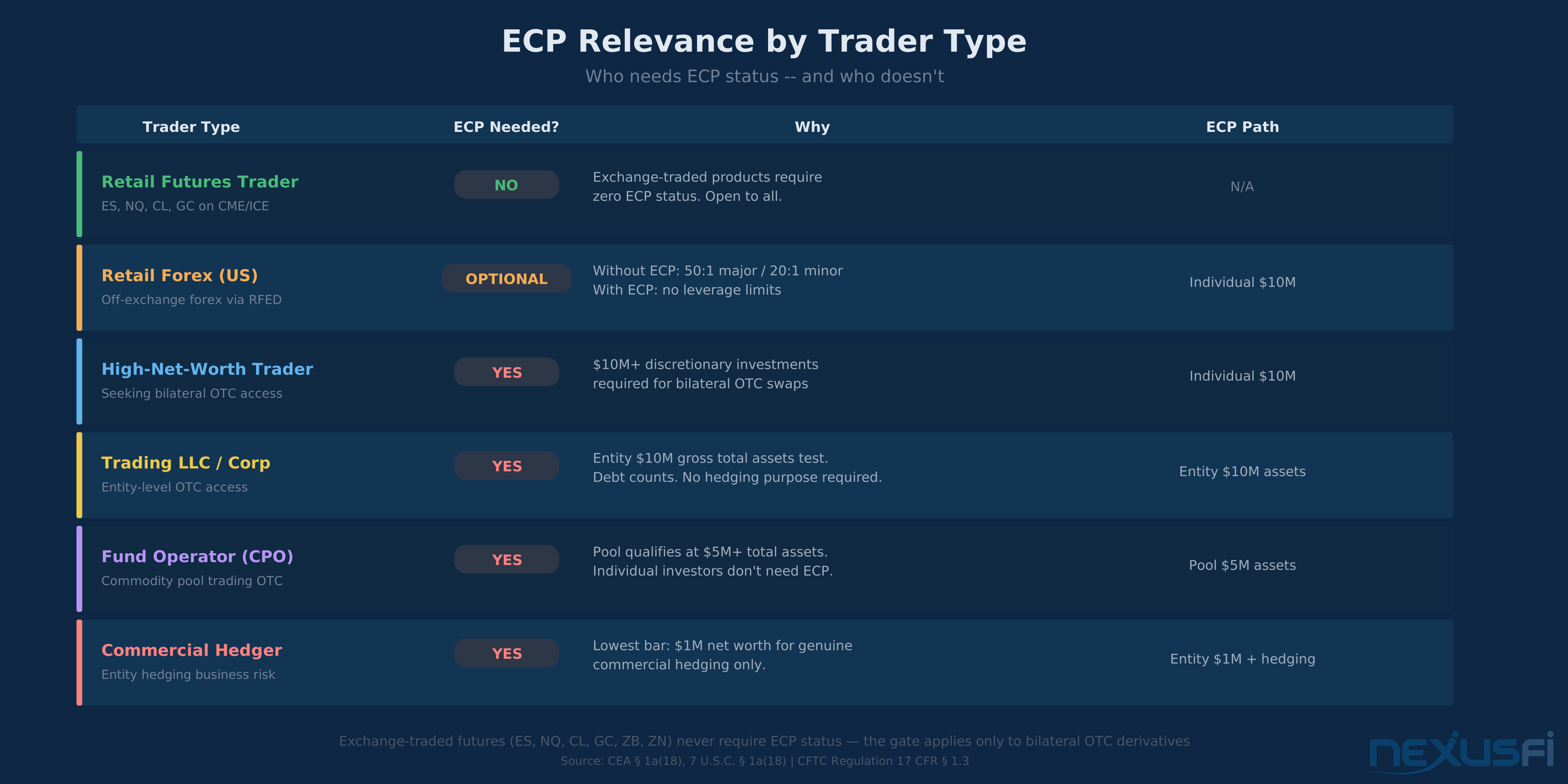
For Retail Futures Traders
ECP status is irrelevant to your daily operations. ES, NQ, CL, GC, ZB, ZN, crude oil options, equity index futures — all of this trades on regulated exchanges open to all. The protections that exist for non-ECP retail traders (RFED requirements, leverage limits for forex, CEA § 2(c)(2)(D) protections) are protections, not restrictions.
For High-Net-Worth Traders Near the Threshold
Focus on assets you personally control investment decisions for — self-directed brokerage accounts, personally managed portfolios. Real estate equity, pension benefits, and adviser-managed accounts without personal override rights don't count. ECP qualification happens at the transaction level — there's no formal CFTC certification process. When in doubt, qualified legal counsel familiar with CEA interpretation is the right resource.
For Professional Traders and Fund Operators
Trading entities are the practical path to ECP access. A well-capitalized trading LLC with $10M+ in gross assets qualifies under the entity total assets test. CPO-operated commodity pools with $5M+ in total assets qualify as pools, giving investors in the pool access to ECP-level markets through the entity. The Dodd-Frank look-through provision for retail forex transactions requires careful attention if the fund strategy involves bilateral OTC forex.
For Compliance and Operations
Dealing with U.S. customers in off-exchange retail forex, leveraged commodity products, or bilateral OTC derivatives — ECP status of counterparties determines whether operations are legal under the CEA. CFTC enforcement in this space is active. Foreign regulatory registration doesn't exempt from CFTC requirements when dealing with U.S. non-ECPs. The enforcement record is clear and consistent.
ECP status is about OTC markets, not exchange-traded markets. ES, NQ, CL, GC — the entire CME/ICE product suite — is open to all traders without any ECP requirement. The $10M threshold gates only bilateral OTC derivatives: interest rate swaps, credit default swaps, and off-exchange leveraged instruments. Most retail futures traders will never encounter a situation where ECP status matters.
Knowledge Map
Go Deeper
Build on this knowledgeCitations
- — CFTC Modernizes Swap Market Rules for Enhanced Transparency (2025)“For most traders here (including you trading ES, NQ, CL), ECP status is completely irrelevant. You're already trading regulated futures on CME/ICE exchanges -- no ECP status required.”
- — CFTC Modernizes Swap Market Rules for Enhanced Transparency (2025) 👍 3“ECP in trading typically refers to an Eligible Contract Participant, a designation under the Commodity Exchange Act.”
- — Does the market know your positions? (2022) 👍 3“the CFTC heavily regulates the maximum leverage Forex and Crypto brokers are allowed to offer at 50:1.”
- — futures vs swaps (2018) 👍 2“One of things Dodd-Frank wanted to achieve was greater transparency of what deals were out there between companies.”
- — Prop firm fraud in Futures? (2023) 👍 4“they provided leveraged, margined, or financed retail commodity transactions in violation of the Commodity Exchange Act”
- — Futures Broker Due Diligence Notes post PFG (2012) 👍 1“Congress amended the Commodity Exchange Act and customer funds are legally segregated from creditors.”
- CFTC Staff Letter No. 12-17 — CFTC Staff Letter 12-17: Interpretation of Eligible Contract Participant Definition (2012)
- U.S. Commodity Exchange Act — 7 U.S.C. § 2(c)(2)(C) -- Retail Forex Requirements (2010)
- — Personal or LLC? (2018) 👍 5“Most CPAs, even very bright CPAs, are unaware of futures tax treatment like the Section 1256 contracts 60/40 capital gains split.”
- Federal Register — Entities Adopting Release -- ECP Definition (77 FR 30596) (2012)
- CFTC.gov — Commodity Exchange Act § 1a(18) -- ECP Definition (2010)
- eCFR — 17 CFR § 5.9 -- Retail Forex Leverage Requirements (2010)