



Becoming a Registered Futures Professional: CTA, CPO, IB, FCM, and AP Registration Explained
Overview #
The Five Registration Categories #
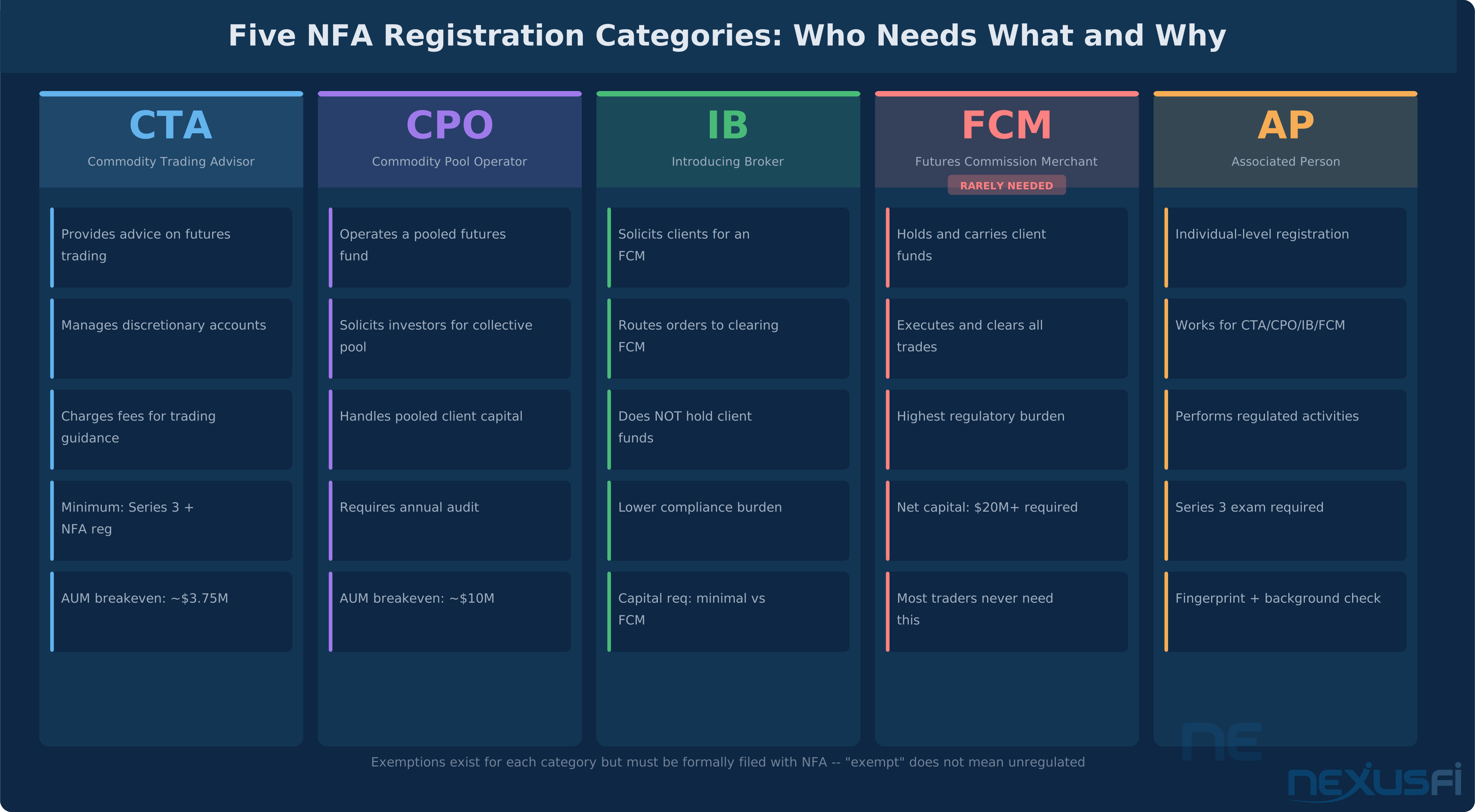
The NFA administers five distinct registration categories for futures professionals. Each one covers a different type of activity. The key word is "activity" — what triggers registration is what you're actually doing, not what you call yourself or how you've structured your entity.
CTA: Commodity Trading Advisor #
A CTA provides trading advice on futures, options on futures, or swaps — for compensation. That's the shortest accurate definition. In practice, it covers:
- Discretionary managed account programs where you make trading decisions in client accounts
- Signal services where clients pay a fee and you send them specific entry and exit instructions
- Advisory subscriptions with personalized recommendations tied to individual accounts
- Any arrangement where you direct or control client futures positions for a fee
The scope is broader than most new registrants expect. "Advice" under CFTC rules doesn't require full discretionary authority. If you're telling someone exactly when to buy and sell specific contracts, and they're paying you for it, that's CTA territory.
The registration threshold: if you've advised fewer than 15 clients in the past 12 months AND you don't hold yourself out publicly as a CTA, you may qualify for an exemption. That exemption must be formally filed with NFA — you don't get it automatically by staying small. And anti-fraud rules, recordkeeping requirements, and disclosure obligations still apply to exempt CTAs. Exempt status is not a free pass; it's a scaled-down version of the same regulatory framework.
The 15-client exemption threshold must be formally filed with NFA — it is not automatic. Once you exceed 15 clients or begin holding yourself out publicly as a CTA, registration is mandatory regardless of AUM. Anti-fraud provisions and recordkeeping obligations apply even to exempt CTAs.
CPO: Commodity Pool Operator #
A CPO operates a "commodity pool" — an investment vehicle where multiple investors pool their capital and the operator manages the trading. Think of it as a private fund structure focused on futures. The CPO structure looks most like a hedge fund:
- You form an LLC, limited partnership, or similar entity
- Multiple investors contribute capital to the pool
- You (the CPO) make all trading decisions for the pool
- Investors receive their proportionate share of profits and losses
The compliance burden for a CPO is substantially heavier than for a CTA. Because pooled capital creates collective risk exposure, the NFA requires annual audited financial statements from an independent CPA firm, quarterly Form PQR filings reporting pool performance, and more extensive disclosure documents. That audit alone can run $15,000-$50,000 per year, which is why CPO structures rarely make economic sense below $10M in assets under management.
The distinction between CTA and CPO isn't about trading strategy — it's about fund structure. If each client has their own separately-maintained account at an FCM, and you're directing those accounts, that's CTA territory. If clients' capital is pooled together in a single entity, that's CPO territory. The structure determines the regulatory category.
IB: Introducing Broker #
An IB solicits clients and introduces them to an FCM, but does not hold customer funds. The IB is the intermediary in the distribution chain — they find traders, explain products, help clients open accounts, and in some cases provide ongoing support, but the actual execution and custody function sits with the FCM.
IBs can be either "guaranteed" (backed by an FCM's financial resources) or "independent" (maintaining their own minimum financial requirements). Guaranteed IBs have a formal arrangement with a sponsoring FCM that covers their financial obligations; independent IBs must meet their own capital requirements.
The IB category has lower compliance overhead than CTA or CPO registration, and no audit requirement comparable to CPO annual audits. But it's not unregulated — IBs still require NFA membership, Series 3 qualification for principals and APs, written supervisory procedures, and ongoing regulatory reporting. And the key constraint remains: an IB does not touch client money. The moment you start holding, receiving, or controlling customer funds, you've crossed into FCM territory.
FCM: Futures Commission Merchant #
An FCM is the entity that actually holds customer funds and carries customer accounts. Every futures account you've ever funded is held by an FCM, whether you know it or not — even if you opened it through a broker who appears to be a standalone firm. The FCM is where the money actually lives.
FCM registration carries the heaviest regulatory burden of any category. The minimum adjusted net capital requirement is $1 million or a computed amount under CFTC Regulation 1.17 — whichever is higher — and for major FCMs the actual capital requirements run well above $20 million. Beyond capital, FCMs face continuous compliance requirements: daily segregation calculations, customer fund protection rules, extensive reporting to the CFTC, NFA, and designated self-regulatory organizations, and complete risk management program obligations.
For the vast majority of individual traders and even small investment managers, FCM registration is not relevant. You're not going to become an FCM. What you need to know about FCMs is how to evaluate them as counterparties — their financial health, their segregation practices, and what happens to your money if they fail. That's covered in the Customer Funds Segregation article.
AP: Associated Person #
AP registration is individual-level rather than firm-level. While CTAs, CPOs, IBs, and FCMs register as entities, APs are the individuals who work for those registered firms and perform regulated activities — soliciting accounts, directing trading, or otherwise engaging in activities covered by the firm's registration.
If you're the sole principal of a CTA that you've registered, you'll need both the firm registration and your own AP registration. If you're bringing on staff who will be involved in soliciting clients or managing accounts, they'll need AP registrations too. AP registration requires:
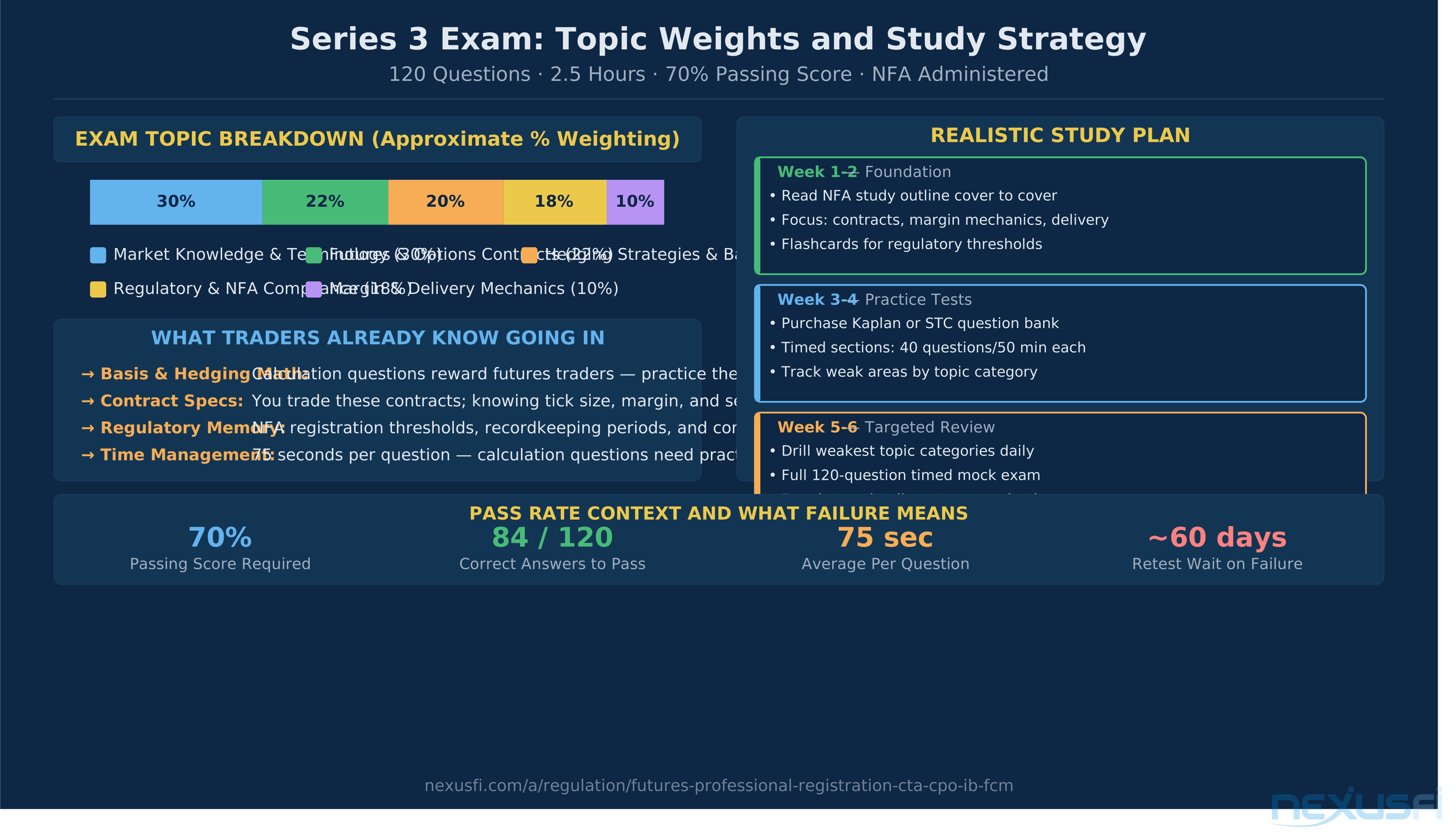
- Series 3 exam (National Commodity Futures Exam) — 120 questions, 2.5-hour time limit, 70% passing score
- FBI fingerprint submission and background check
- Registration through NFA's Online Registration System
The Series 3 exam covers commodity futures regulation, margin mechanics, basic trading terminology, and the regulatory framework.
When Registration Becomes Mandatory #
The triggers for registration aren't always obvious. The key question isn't "what am I called?" but "what am I actually doing?"
Compensation changes everything. Trading your own account is entirely unregulated regardless of size. The moment you receive any form of compensation tied to managing futures positions for someone else — performance fees, management fees, advisory fees, profit sharing — you've crossed into regulated territory.
Holding out publicly. Advertising services as a CTA, posting about your managed account program on social media, running a paid newsletter with specific trade recommendations, maintaining a website that solicits clients for futures advisory services — these all constitute "holding out" and generally require registration even before you have a single paying client.
Discretionary authority. If you have a limited power of attorney to make trades in someone else's account, you're exercising discretionary authority. This is one of the clearest CTA triggers.
Pooling funds. If multiple people contribute capital to an entity you operate, and that entity trades futures, CPO registration is very likely required regardless of how you structure the legal entity.
As @mattz at Optimus Futures summarized the professional designation threshold: once you manage capital for anyone besides yourself — especially when profit-sharing is involved — you are legally a professional across all your accounts and must update your status with your FCM. [6]
What doesn't trigger registration: trading your own capital, regardless of how much. Sharing trade ideas informally with no compensation. Subscribing to someone else's signal service. Being a passive investor in a fund. The regulatory framework targets those who manage or advise on others' futures trading for profit — not participants who are merely trading their own money.
As @mattz from Optimus Futures observed in a NexusFi discussion about starting a fund: "When the time is right for you, you can contact me and I will tell you who you should use in order to create a legitimate and compliant disclosure document." The infrastructure of compliance — disclosure documents, NFA registration, recordkeeping systems — exists specifically to formalize the professional-client relationship that compensation creates.
The NFA Registration Process #
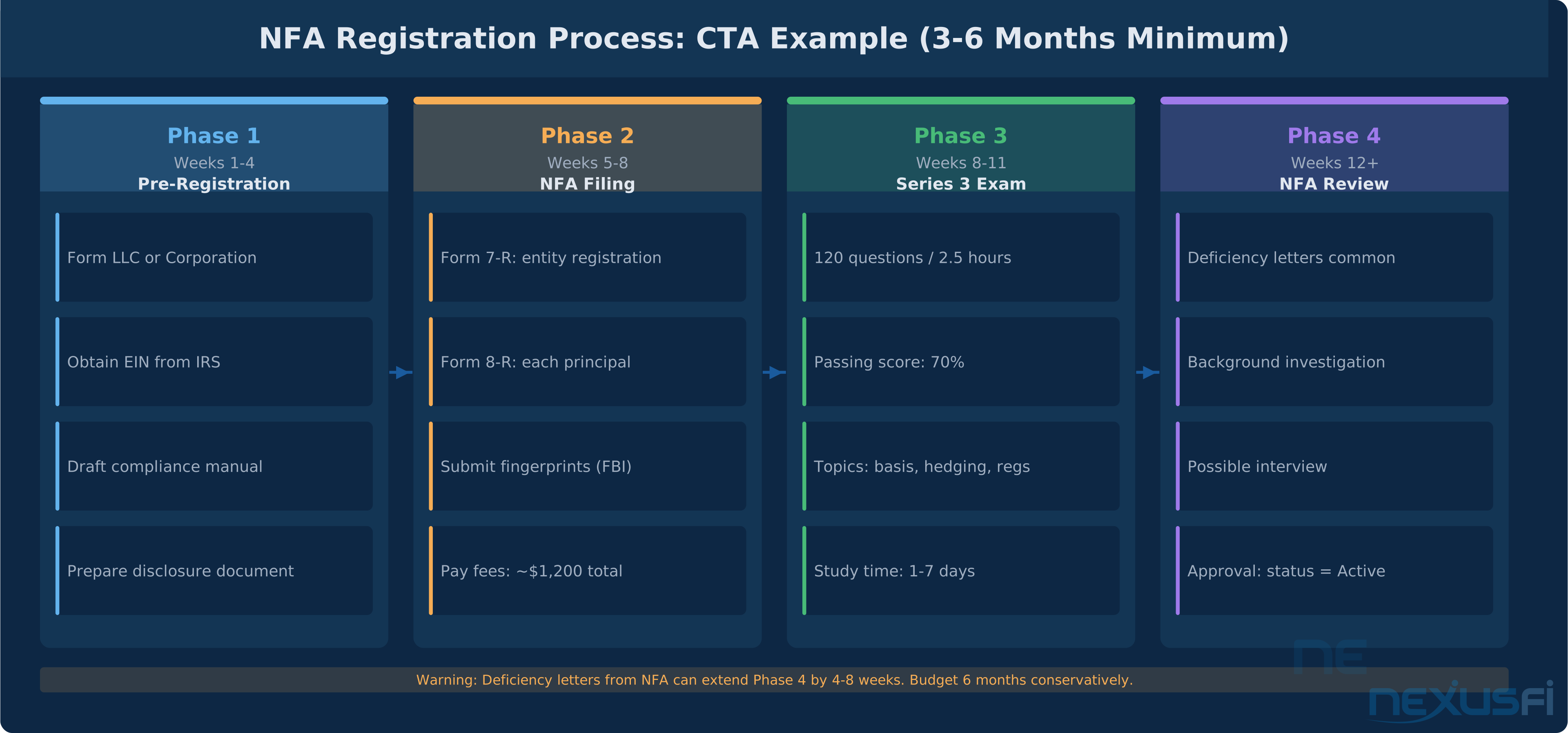
Getting registered takes longer and costs more than most first-time registrants expect. A realistic timeline for a CTA runs 3-6 months from decision to active status.
Phase 1 — Pre-Registration (Weeks 1-4): Before filing anything with NFA, you need the legal and operational foundation in place. This means forming a business entity (LLC or corporation, typically), obtaining an employer identification number, developing a compliance manual, and drafting your disclosure document. The disclosure document is not a formality — it's a substantive document that describes your trading program, your track record (if any), your fees, your conflicts of interest, and the material risks of trading with you. NFA will review it, and deficiencies are common.
Phase 2 — NFA Filing (Weeks 5-8): NFA registration is handled through their Online Registration System. The firm files Form 7-R; each principal files Form 8-R individually. FBI fingerprint submissions are required for background checks. Total filing fees run approximately $200 for the initial registration plus $750-$1,000 in annual NFA dues. These costs are trivial compared to legal and compliance costs.
Phase 3 — Series 3 Exam (Weeks 8-11): Every AP and principal in a regulated capacity needs to pass the Series 3 exam. The exam covers futures contract basics, margin mechanics, commodity terminology, and regulatory knowledge. It's not technically difficult if you have trading experience, but time management is a real challenge — 120 questions in 2.5 hours means you have roughly 75 seconds per question, and some calculation questions take longer. Study materials from Kaplan or STC work; NFA also publishes a free study outline.
Phase 4 — NFA Review (Weeks 12 and beyond): After filing, NFA reviews your application. Deficiency letters are standard — NFA will identify items in your disclosure document or compliance program that need correction or clarification. Each back-and-forth can add weeks. Background investigations for principals take additional time. Plan for the process to take longer than you want it to.
Exemptions: Real but Conditional #
Both CTA and CPO categories have exemptions available for small or limited operators. Understanding them correctly matters because treating an exemption as "no regulations apply" is a mistake that can end careers.
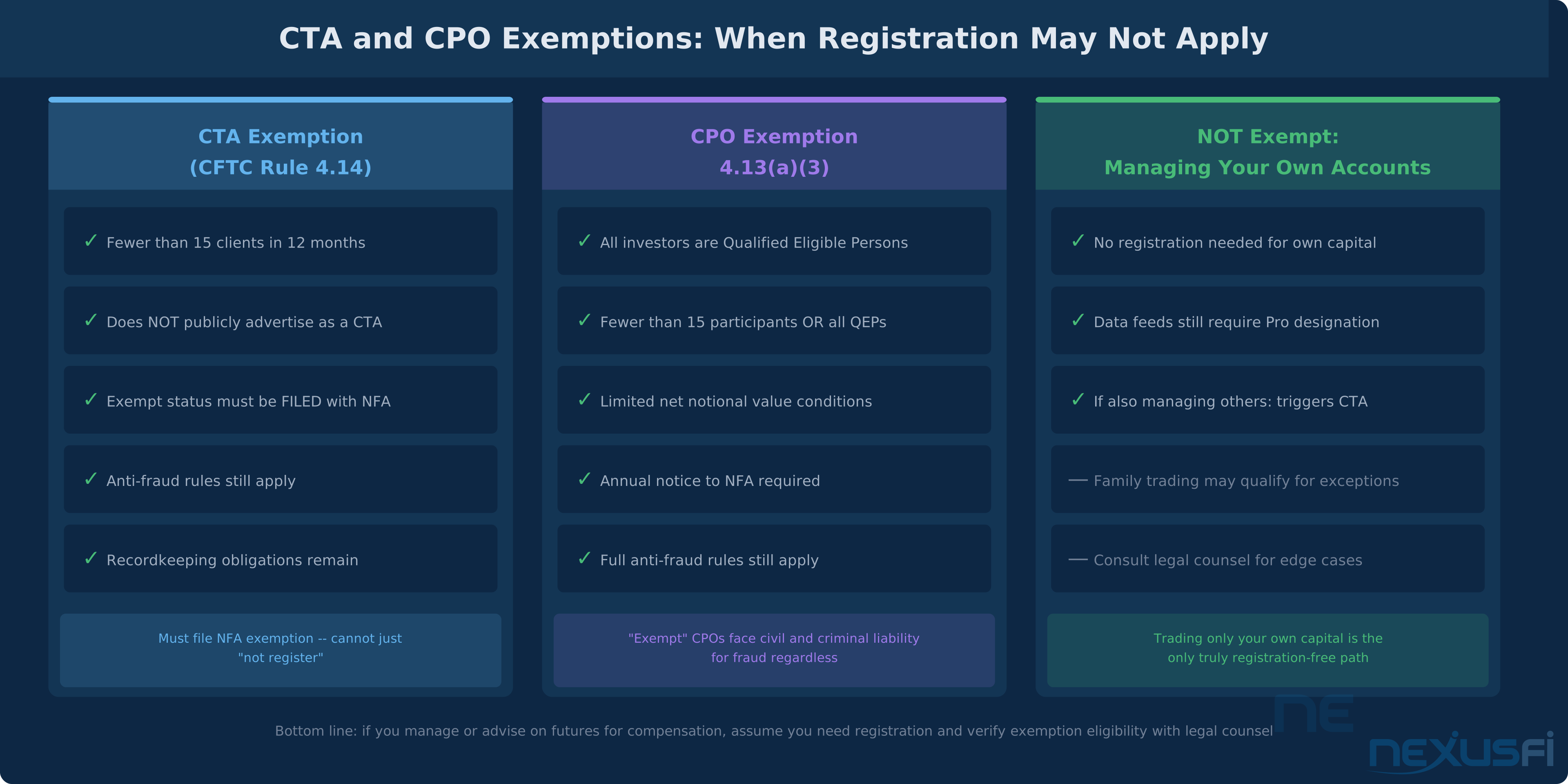
CTA Exemption: If you've advised 15 or fewer clients in the past 12 months and you don't hold yourself out to the public as a CTA, you can claim a CTA exemption. "Holding out" includes advertising in any medium, maintaining a public-facing website about your advisory services, or using the CTA designation in any public context.
Important: this exemption must be formally claimed with NFA. You don't get it by default just because you have a small operation. And anti-fraud provisions of the Commodity Exchange Act still apply — meaning you cannot make false statements, misrepresent your track record, or engage in any deceptive practices even if you're exempt from registration.
An exemption is not immunity. The anti-fraud provisions of the Commodity Exchange Act apply to exempt operators without exception. You cannot make false statements, misrepresent your performance record, or use deceptive practices — even if you have never filed a single NFA registration document. Regulators have pursued enforcement actions against exempt operators for fraud with the same tools they use against fully registered firms.
CPO Exemptions (Rule 4.13): Rule 4.13(a)(3) is the most commonly used CPO exemption. It applies to pools where all participants are "qualified eligible persons" — generally sophisticated investors with significant assets and trading experience — and where total net notional value is below certain thresholds. Like the CTA exemption, this must be affirmatively claimed with NFA via annual notice filings.
There are also exemptions for pools trading limited amounts of commodity interests relative to their overall investment activity, and for family office structures, though the latter can be complex and fact-specific.
The bottom-line test on exemptions: if you're managing other people's futures for profit, start from the assumption that you need registration and work backward to determine whether an exemption applies. Don't start from the assumption that you're exempt and look for reasons to confirm it.
Ongoing Compliance: Where Most People Underestimate #
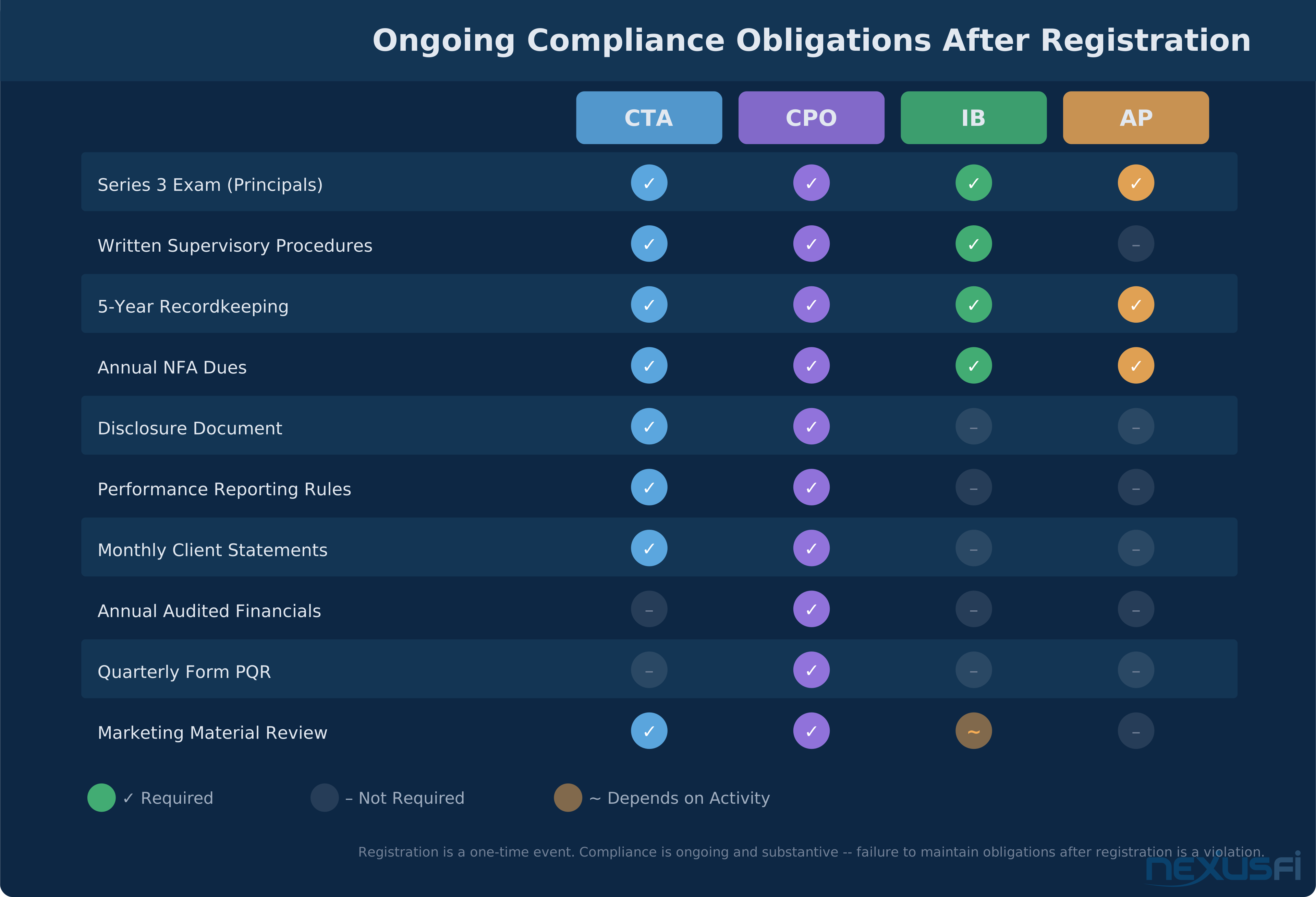
Registration is a one-time event. Compliance is continuous, and it's more demanding than most people expect before they're in it.
Written Supervisory Procedures. Every registered firm needs a written compliance manual that documents how the firm will supervise the activities of its principals and APs. This isn't a box-ticking exercise — NFA examines firms and looks at whether the procedures in the manual actually match the firm's real operations. If there's a gap between what's written and what's happening, that's an examination finding.
Recordkeeping. Everything gets kept for five-plus years: all trading records, customer account statements, correspondence about trading, marketing materials, order tickets, complaint records. The "correspondence about trading" requirement catches more firms than you'd expect — it includes emails, texts, and any other written communication related to trading activity or advisory services.
Performance Reporting. CTA performance reporting follows strict CFTC formulas. You must report the performance of your worst-performing account (you can't cherry-pick your best account and show only that). You cannot show only profitable periods and exclude drawdown periods. Rate of return calculations must follow specific methodologies that may differ from how you mentally track your own performance. Getting this wrong — even accidentally — is a serious violation.
Marketing Material Review. NFA reviews certain marketing materials. Testimonials face specific restrictions. Hypothetical performance — simulated or backtested results — requires prominent disclosure. Performance claims in advertising must follow strict formatting requirements. This catches operators who present hypothetical results as if they represent actual live trading.
NFA Compliance Rule 2-29 governs all marketing materials for registered CTAs and CPOs. Testimonials, hypothetical performance, and backtested results face strict formatting and disclosure requirements. Performance claims must use NFA-mandated calculation methodologies, not your own definition of returns.
Monthly Client Statements. CTAs and CPOs are generally required to provide monthly account statements to clients, even during periods where no trades are executed. This creates an ongoing operational burden that needs systems and processes in place, not just a spreadsheet.
Annual Audited Financials (CPOs). Every CPO operating a commodity pool must obtain an annual audit of the pool's financial statements by an independent CFTC-registered public accounting firm. This is a non-trivial expense — typical fees run $15,000-$50,000 depending on pool size and complexity.
The True Cost of Going Registered #
The financial reality of NFA registration isn't the filing fees — it's the infrastructure you need to build and maintain to be genuinely compliant.
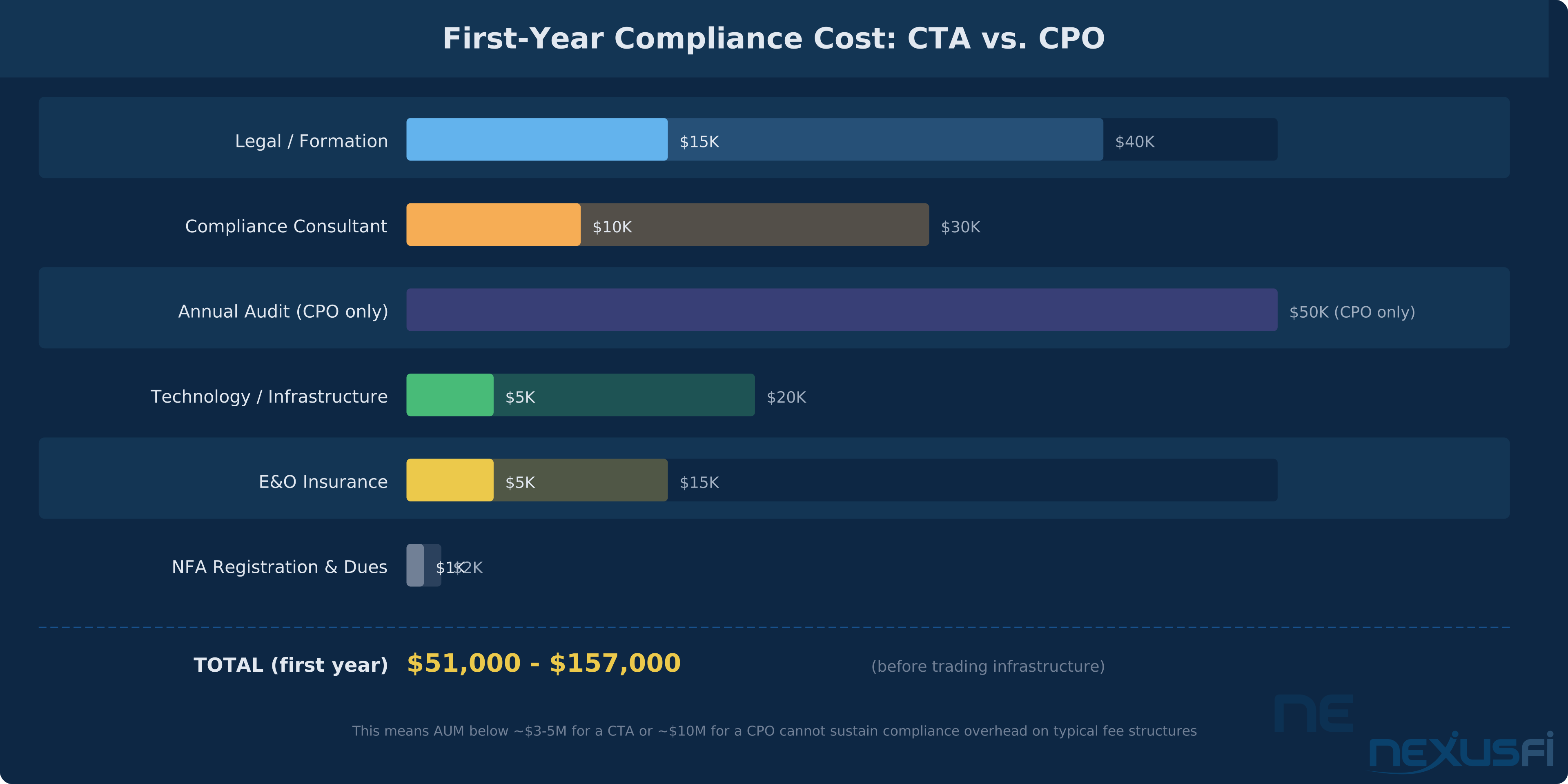
Legal formation: $15,000-$40,000 for entity formation, disclosure document drafting, and legal review of compliance manual. If you use a derivatives-specialized attorney, you're at the higher end of that range, but using a generalist to save money on the front end often costs more in corrections and revisions.
Compliance consultant: $10,000-$30,000 for the first year, ongoing annual costs for compliance program maintenance, training, and NFA examination preparation. Some operators handle compliance in-house once established, but the initial build almost always requires outside expertise.
Annual audit (CPO structures): $15,000-$50,000 annually. This is non-negotiable — you can shop for auditors, but you can't eliminate this cost for a CPO.
The compliance cost structure creates a minimum viable scale problem that many aspiring fund managers underestimate. As experienced NexusFi members who have researched this transition have noted, simply drafting the fund legal documents can run $50,000--$100,000 — before any ongoing operational expense. [8] The infrastructure is not optional; it is the price of being trusted with other people's capital.
Technology and infrastructure: $5,000-$20,000 for order management systems, reporting tools, and the operational infrastructure needed to maintain audit-ready records. Spreadsheets aren't sufficient at institutional scale.
Errors and omissions insurance: $5,000-$15,000 annually. Not technically required, but any attorney will tell you it's necessary.
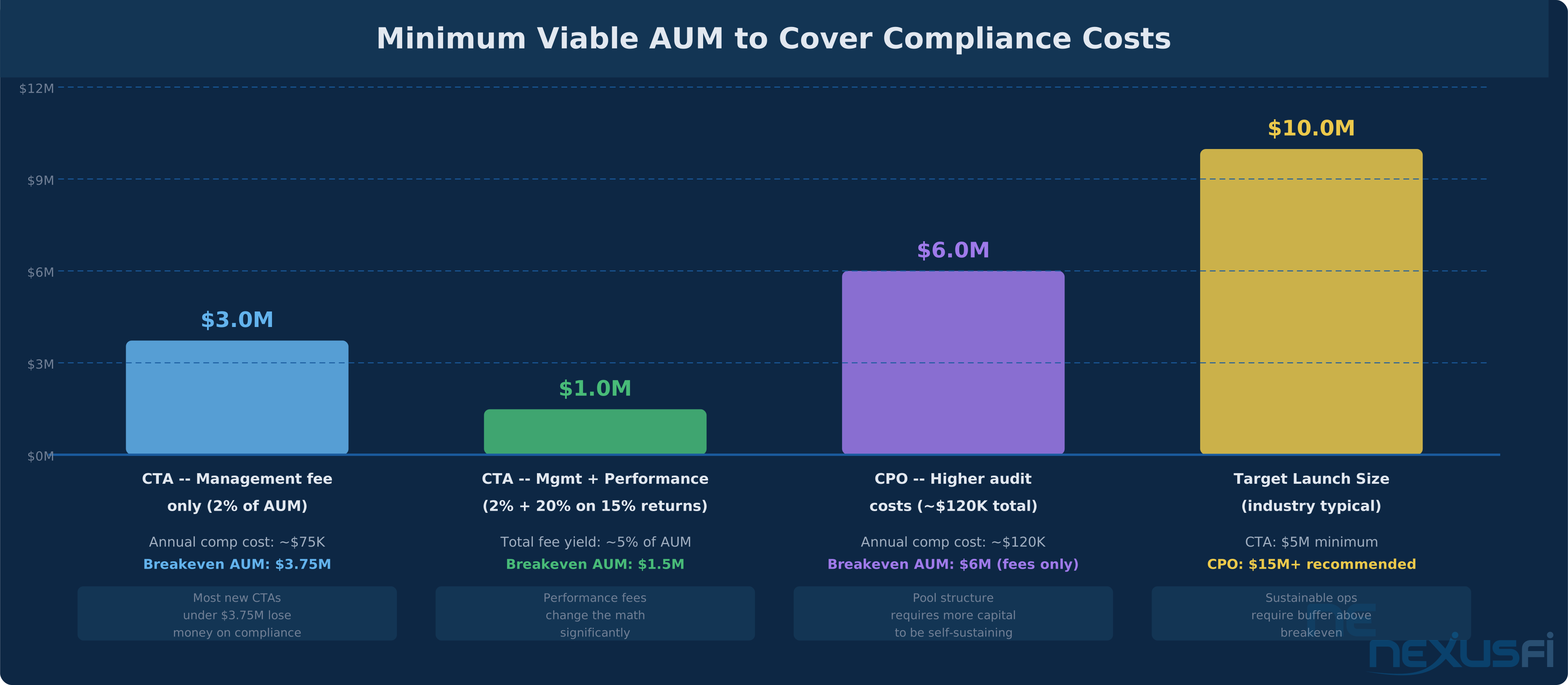
Total first-year costs: $51,000-$157,000 — before any trading infrastructure, before marketing, and before your own compensation. This is why the industry rule of thumb is that a CTA needs a minimum of $3-5 million in AUM to generate enough management fees to cover compliance overhead on a 2% management fee structure. With performance fees, the math improves — at 2% management plus 20% performance on a 15% return, you're generating roughly 5% of AUM in annual fees, which puts breakeven closer to $1.5 million.
CPOs face higher compliance costs because of the audit requirement, which is why the conventional guidance is $10M+ AUM before the CPO structure becomes economically viable.
CTA compliance costs $51,000--$157,000 in year one — not counting trading infrastructure. Management fees alone require approximately $3.75M AUM to break even; performance fees lower this to roughly $1.5M. CPO structures add a non-negotiable annual audit ($15,000--$50,000), making them economically viable only above $10M in AUM. Budget this before accepting the first client dollar.
The Transition: What Actually Changes #
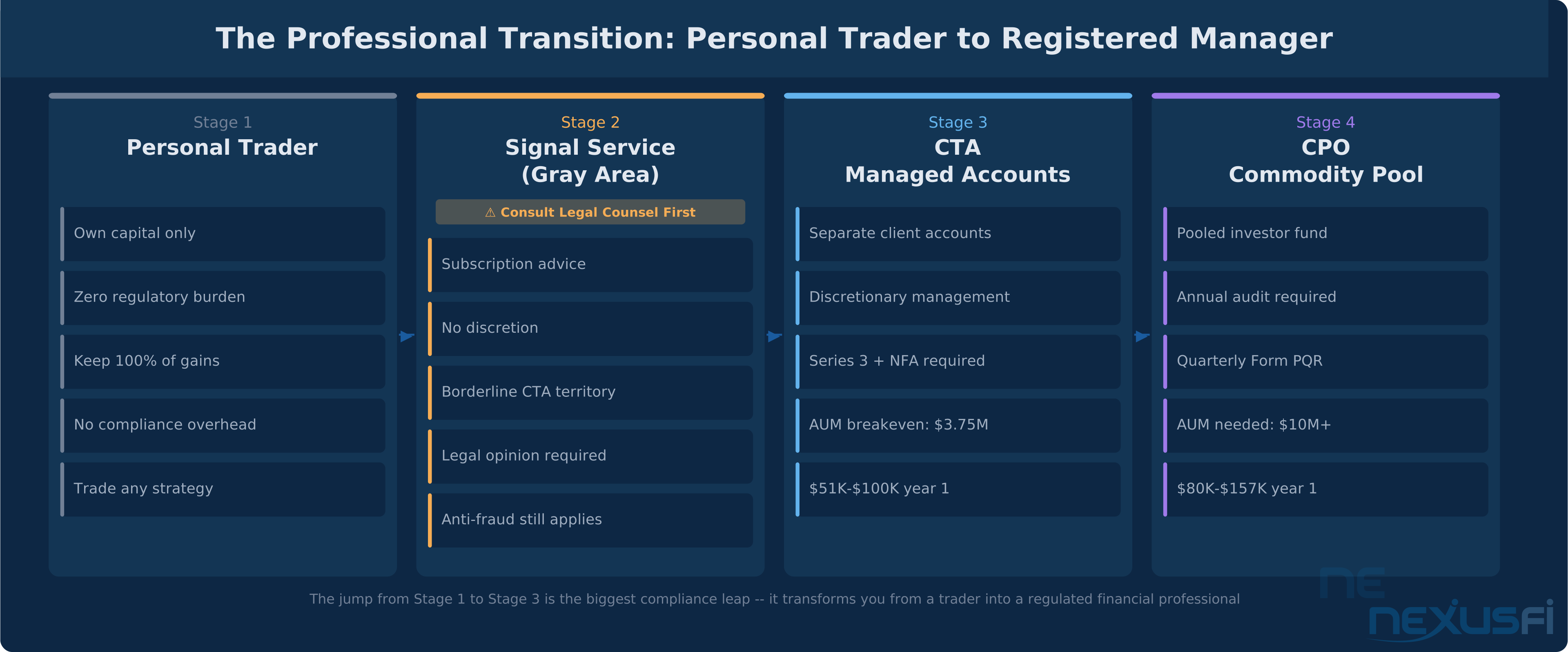
Moving from personal trading to managing others' money isn't just a regulatory change — it's a fundamental shift in what you owe and to whom.
When you trade your own account, the only person whose money is at risk is you. You can run strategies as aggressively or conservatively as you choose. You can take a month off. You can change your approach entirely mid-year. There's no one to report to and no one to answer to.
When you manage other people's money, all of that changes:
You owe fiduciary-like duties. The CFTC framework doesn't use the word "fiduciary" in every context, but regulators expect fair dealing, honest disclosure, and prioritization of client interests. Cherry-picking profitable trades for your own account while allocating losing trades to clients is not just unethical — it's a criminal violation. As @Inletcap observed, sharing in the returns of a client account has strict legal constraints that differ from the hedge fund structure available to operators working exclusively with sophisticated investors. [7]
Trade allocation becomes a documented process. If you're running multiple client accounts, you need written allocation procedures that govern how orders are distributed, how partial fills are handled, and how any priority decisions are made. This isn't optional or informal — it's part of your written supervisory procedures that NFA will review.
Disclosure accuracy is non-negotiable. The performance you show potential clients, the trading program description in your disclosure document, the fees you charge, the conflicts of interest you disclose — all of it is the subject of regulatory scrutiny. Misrepresentations, even unintentional ones, can lead to civil and criminal liability.
Your marketing is regulated. You cannot say whatever you want to attract clients. Every performance claim, every description of your trading program, every testimonial from a satisfied client has to comply with NFA Compliance Rule 2-29. This surprises a lot of operators who are used to thinking of marketing as their own domain.
@londonkid, an experienced NexusFi member who had navigated this transition in UK markets, offered a practical perspective on the path: "As a stepping stone to starting a fund many traders in Europe/UK use the 'managed account' route. This is becoming much more popular for people managing £100k to £10m. The regulatory burden is much much lower and also its easier to attract investors as they retain custody of their funds and you simply have limited power of attorney to trade their account."
The managed account route — corresponding to CTA registration in the U.S. context — is the typical first step precisely because it keeps client funds at an FCM rather than pooling them under your control, which limits your custodial responsibility while still requiring full CTA compliance.
Building Your Track Record Before You Register #
One thing that often gets overlooked: your track record matters enormously when you start soliciting clients, and you can build it before you're registered.
Trading your own account builds a personal track record. Using an audited account through a service that provides independent verification of your results is the gold standard. This is distinct from, say, screenshots of brokerage statements — which can be manipulated. An independently verified track record is an asset when you approach potential clients or institutional allocators.
The sequence that experienced operators typically follow: trade your own capital to build a demonstrable track record (ideally with third-party verification), reach out to friends and family for small managed accounts under the CTA exemption to gain operational experience, then register once the compliance costs are justified by AUM.
What you can't do: start soliciting clients or holding yourself out publicly as a CTA while building your track record and claiming the exemption. Once you're marketing, you need the registration. This is a common area of confusion — the exemption is about size and client count, not about the status of your registration application.
[9]
@Private Banker, a long-time NexusFi member with a background in money management, laid out the environment around professional designations and registration: "Having FINRA licenses can be a plus and minus and it really comes down to what you're looking to benefit out of them. If you want to manage other people's money (OPM), this is just a requirement for entry but it comes with a lot of red tape."
That red tape isn't punishment — it's the price of being trusted with other people's capital. The framework exists because MF Global, Peregrine Financial, and other broker failures demonstrated what happens when operators treat client funds carelessly. Registration doesn't prevent failure, but it builds the framework of accountability that gives clients recourse and regulators the ability to identify problems before they become collapses.
Practical Decision Framework #
Before you take any step toward managing outside capital, answer these five questions:
1. What are you actually doing? Map your activity to a regulatory category. If you're giving trade advice for compensation or managing accounts with discretion, that's CTA. If you're pooling investor capital, that's CPO. If you're introducing clients to an FCM, that's IB. The category determines the compliance framework.
2. Does an exemption apply? If you're a small operator with fewer than 15 clients and no public advertising, the CTA exemption may be available. For pooled structures with all-qualified-investor groups below certain size thresholds, Rule 4.13(a)(3) may apply. Verify with legal counsel — don't self-diagnose on exemption eligibility.
3. Can you afford the compliance infrastructure? Add up the realistic first-year costs: legal, compliance consulting, possible audit, technology, insurance. If that number isn't recoverable from the fees your AUM would generate, you're not ready yet.
4. Do you have a compliant track record? What you can show potential clients has to comply with NFA performance reporting rules before you use it in marketing. If your track record is from your personal account, you need to understand how to present it correctly.
5. Do you have a compliance expert? Derivatives-specific legal counsel is not optional for this transition. A generalist attorney who has never worked with NFA or the CFTC will miss things that matter. This is a specialized regulatory environment.
The professional futures management industry exists because some traders are good enough and disciplined enough to generate returns for outside capital, and because some investors prefer to delegate their futures exposure to specialists. The regulatory framework is the infrastructure that makes that relationship possible. Getting it right from the start is cheaper than getting it wrong.

[8]
Key Takeaways #
- Registration category is determined by what you're actually doing, not how you've structured your entity or what you call yourself
- CTA covers advice and managed accounts, CPO covers pooled fund structures, IB covers introduction without custody, FCM covers actual fund custody and clearing, AP covers individuals performing regulated activities
- Exemptions are real but must be formally filed and don't eliminate anti-fraud or recordkeeping obligations
- First-year compliance costs run $51,000-$157,000 depending on category — budget so
- AUM breakeven for a CTA on management fees alone is approximately $3.75M — performance fees much improve the economics
- The Series 3 exam is straightforward for traders with experience — time management is the primary challenge
- Ongoing compliance is the real challenge after registration, not the initial filing process
- Build your track record before you need it, verify it independently, and present it in compliance with NFA performance reporting rules
Knowledge Map
Go Deeper
Build on this knowledgeReferences This Article
Articles that build on this topicCitations
- — CTA - Series 3, Series 7, Series 9, Series 10, Series 56 NASD exams certifications (2012) 👍 14“The series 3 and 7 are required if you would like to become a broker for clients. These licenses should only be obtained if you're looking to manage money for other people -- it comes with a lot of red tape.”
- — Starting a fund (2017) 👍 3“As a stepping stone to starting a fund many traders in Europe/UK use the 'managed account' route. The regulatory burden is much much lower and it's easier to attract investors as they retain custody of their funds.”
- — Starting a fund (2017) 👍 4“If you hold all the right licenses you have the ability to solicit US based customers and institutions. One of the challenges of money managers in any asset class is scalability.”
- — Prep for Series 3 Exam? (2019) 👍 1“Understanding basis and hedging calculations and having rote memory of regulations will get you 80% of the way there. Access to practice test questions is very helpful to prepare for the actual exam.”
- — PROFESSIONAL or NON-PROFESSIONAL (2016) 👍 5“When you are allocated capital and trade for others, you are a Pro. The CME states: Non-Professional use must be limited to managing the Subscriber's own assets and not be used in connection with the management of any assets of any third party.”
- — CTA - Series 3, Series 7, Series 9, Series 10, Series 56 NASD exams certifications (2010) 👍 7“Having held these licenses, I can tell you that once you have them, anything you say can AND will be held against you. I would take the courses for the knowledge, but unless you are serious about trading other peoples money, I would not get the license.”
- — CTA - Series 3, Series 7, Series 9, Series 10, Series 56 NASD exams certifications (2011) 👍 3“The limit of 15 clients or 400K dollars is the reason most people will look to get series III registered. You simply cannot make any money managing assets within those limits. Being registered is an important confidence builder for potential clients.”
- — Starting a fund (2017) 👍 10“Starting a fund is an interesting and worthwhile topic. This can be a very constructive discussion -- a great opportunity for many of us to learn more about the laws, logistics, advantages and disadvantages of running a fund.”
- — PROFESSIONAL or NON-PROFESSIONAL (2016) 👍 7“The CME rule says that if you manage actual capital for anyone besides your own, you are considered a pro. Especially when you share a potential for profit. Once you are a pro, you are one across all your accounts and you have to update your status with your FCM.”
- — Spoo-nalysis ES e-mini futures S&P 500 (2016) 👍 6“Its illegal to share in the returns of a client account. Hedge funds can share in returns as they work only with sophisticated investors pursuant to FINRA regulations and have a different organizational structure than an RIA or Broker Dealer.”
- — Starting a fund (2017) 👍 10“The moment you agree to manage other people's money, you need to devote significant legal and accounting resources to ensure compliance with securities laws, tax legislation, etc. Simply drafting your fund docs can easily cost $50,000-$100,000 and that doesn't cover one bit of the ongoing expense.”
- — Starting a fund (2017) 👍 5“The biggest question you need to ask yourself is when things are going well why change anything? Why do you even want to start a fund? On base value, it makes sense if you do not have the money to trade -- but there are other options before launching a fund.”