



Dodd-Frank Act and Futures Trading: How the 2010 Law Reshaped Markets for Every Trader
The Dodd-Frank Wall Street Reform and Consumer Protection Act, signed into law on July 21, 2010, represents the most sweeping overhaul of American financial regulation since the Great Depression. If you trade futures, you're operating in a market that Dodd-Frank at the core reshaped — even if you've never read a single page of the 848-page law.
Overview #
The Dodd-Frank Wall Street Reform and Consumer Protection Act (2010) represents the most sweeping overhaul of American financial regulation since the Great Depression. If you trade futures, you operate in a market this law at the core reshaped — even if you've never read a single page of the 848-page statute.
Understanding Dodd-Frank isn't academic exercise. The regulation directly determines how your margin works, how your broker handles your money, what position limits apply to you, and why you pay more in commissions today than traders paid before 2010. Stronger fund protection came with real costs — both sides of that trade-off deserve honest examination.
The core Dodd-Frank trade-off for retail futures traders: meaningfully stronger fund protection and market transparency, at the cost of higher commissions, more conservative broker policies, and fewer FCM choices. Both sides of this equation are real.
The Crisis That Made Dodd-Frank Inevitable #
The 2008 financial crisis didn't just destroy market value — it exposed a catastrophic regulatory blind spot. While exchange-traded futures operated within a well-established CFTC framework, the over-the-counter (OTC) derivatives market — a multi-trillion dollar shadow system of bilateral contracts between banks and institutions — existed in near-complete regulatory darkness.
When Lehman Brothers collapsed in September 2008, the cascade revealed that major financial institutions had been operating interlocking networks of credit default swaps (CDS) and other OTC derivatives with no central clearing, no transparency, and no margin requirements that could absorb the shock. AIG alone had written $440 billion in CDS contracts — enough to nearly bring down the global financial system when it couldn't meet its obligations.
Futures traders had mostly avoided this particular disaster. Exchange-traded futures already operated through central clearing, maintained margin requirements, and faced CFTC oversight. But the crisis demonstrated that the OTC derivatives market — which directly influenced the pricing and liquidity of futures markets — needed immediate and sweeping reform.
Dodd-Frank was Congress's response. Its impact on futures markets operates through several interconnected channels that every trader needs to understand.
What Exchange-Traded Futures Traders Need to Know #
The first important clarification: Dodd-Frank did not rewrite the rulebook for exchange-traded futures. CME Group corn contracts, E-mini S&P 500 futures, crude oil — these products were already operating under the Commodity Exchange Act (CEA) with CFTC oversight. The law didn't change the fundamental mechanics of how futures work.
What Dodd-Frank changed was everything around those futures. The regulatory ecosystem — the brokers, the clearing infrastructure, the institutional participants who provide liquidity, the market structure that determines your execution quality — all of this transformed much between 2010 and 2017.
Understanding this distinction matters because it explains why you can't point to a single "new rule" that directly changed your futures trading. The impact arrived through second-order effects: your FCM's risk management posture changed, the institutional traders providing liquidity changed their behavior, and the competitive environment for brokers contracted.
Futures Commission Merchants: The Most Direct Retail Impact #
If you ask a retail futures trader where they felt Dodd-Frank most, the answer is almost universally their futures commission merchant (FCM). The law imposed significant new obligations on these firms — and those obligations translated directly into higher costs and more conservative treatment of retail accounts.
Enhanced Segregation Requirements #
The failures of MF Global (2011) and Peregrine Financial Group/PFGBest (2012) — where customer funds were misappropriated — accelerated CFTC rulemaking on customer fund protection. These collapses happened after Dodd-Frank's passage but accelerated implementation of provisions the law had already enabled.
Post-Dodd-Frank FCM requirements include:
Daily segregation calculations: FCMs must calculate and confirm segregated fund balances daily — previously a weekly process. Your broker knows every day whether your funds are properly held separate from the firm's own assets.
Residual interest requirement: FCMs must maintain their own funds in segregated accounts, creating direct financial accountability if customer funds are ever misused.
Separate account categories: Three distinct categories now exist — futures customer funds (original CEA framework), cleared swaps customer funds (new Dodd-Frank category), and secured amounts (for foreign futures). Your broker can't commingle these pools.
Enhanced daily CFTC reporting: FCMs report segregated fund levels to regulators every business day, creating an audit trail that makes MF Global-style misappropriation substantially harder.
The practical result: if your FCM encounters financial distress today, your funds have stronger legal protections and priority claims in bankruptcy than retail traders had before 2010. This isn't theoretical — it's the regulatory architecture that prevents the next MF Global.
NexusFi members have discussed these protections in detail. @djkiwi cut to the heart of it in the broker due diligence discussion following PFGBest's collapse:
That sentiment — focusing on segregation verification over other metrics — reflects exactly the regulatory framework Dodd-Frank reinforced.
Capital Requirements and the FCM Exodus #
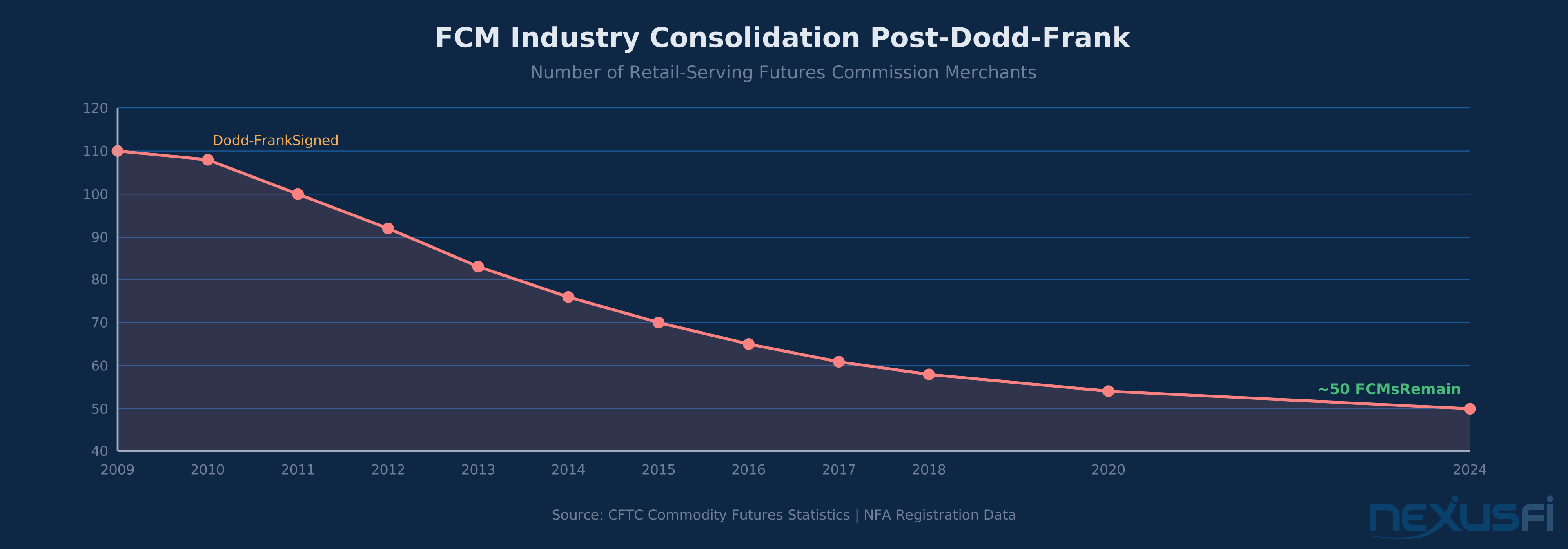
Higher capital requirements for FCMs meant smaller firms couldn't justify the compliance investment. CFTC Rule 1.17 already required minimum adjusted net capital, but Dodd-Frank and subsequent CFTC rulemaking raised the floor and introduced risk-based capital calculations.
The result: the number of FCMs serving retail futures customers dropped from approximately 110 in 2009 to roughly 50 today. Every firm that closed either exited the business or was absorbed by a larger entity.
This consolidation had predictable consequences:
Reduced competition: With fewer FCMs competing for retail business, the market pricing power shifted. Traders have fewer options for negotiating commission rates or receiving solid service.
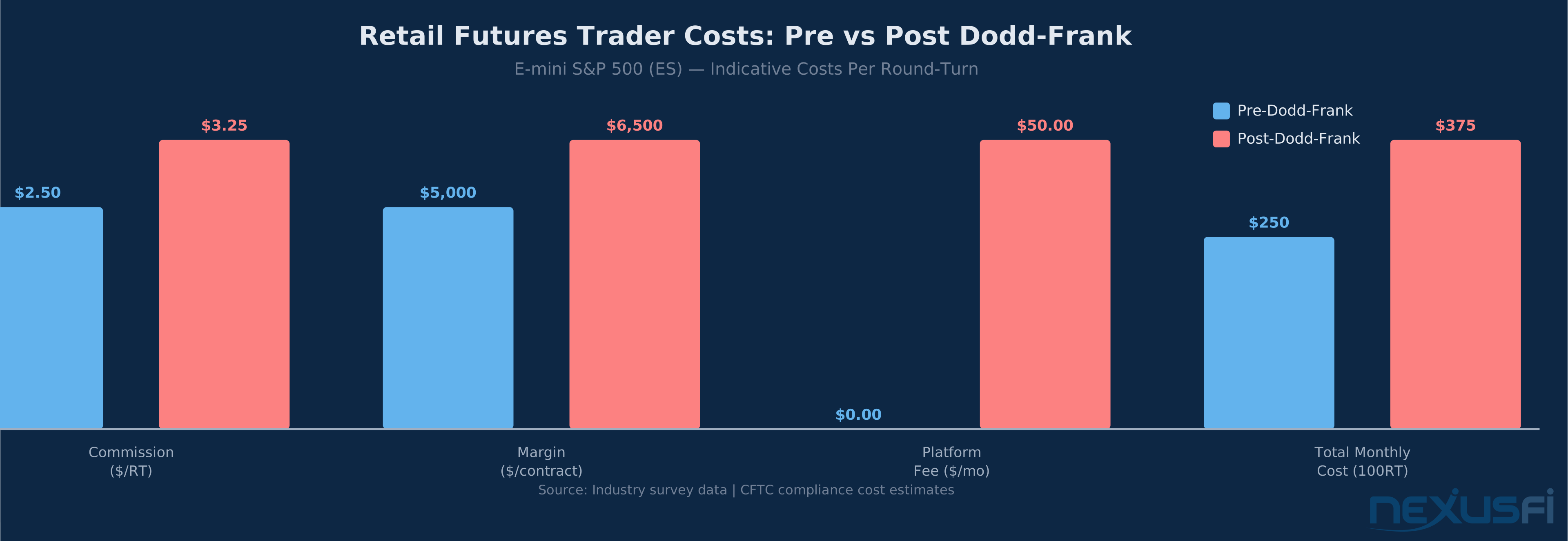
Cost pass-through: Surviving FCMs passed compliance costs to customers through higher commissions, new platform fees, reduced interest on credit balances, and tighter margin policies.
More conservative risk management: Larger, compliance-focused FCMs implemented stricter risk controls — faster margin calls, less flexibility on exception requests, and more rigorous account monitoring.
For NexusFi's community, this played out visibly. @Big Mike's thread on CFTC Capital Requirements for FCMs provided an overview of what FCMs are required to maintain and how to read the public CFTC financial data reports. The NinjaTrader Clearing Risks discussion shows how traders evaluate FCM capital requirements in practical terms.
What This Means for Your Account Today #
Three practical implications follow from enhanced FCM obligations:
Verify your FCM's registration and financial strength: The CFTC maintains a public database of registered FCMs with their financial statements. Before depositing funds, confirm your broker is registered, in good standing, and maintaining required capital levels. This takes five minutes and can prevent significant losses.
Understand your segregation protections: Segregated funds are not insured like bank deposits — there's no futures equivalent of FDIC insurance. Your protection comes from the segregation rules themselves: the legal requirement that your money stays separate and has priority in bankruptcy. Strong FCMs take this obligation seriously; verify your broker's practices before committing capital.
Budget for higher costs: The days of sub-$3 round-turn commissions with no platform fees are largely gone for standard retail futures accounts. Factor current commission structures — typically $3.00-$4.00+ per round-turn plus platform fees — into your trading plan's performance expectations.
Position Limits and the Aggregation Rules #
Dodd-Frank's Section 737 directed the CFTC to implement position limits on physically-settled commodity futures to prevent excessive speculation. The CFTC gained authority to impose both spot-month and non-spot-month limits across exchanges.
How Position Limits Work #
Position limits operate at two levels:
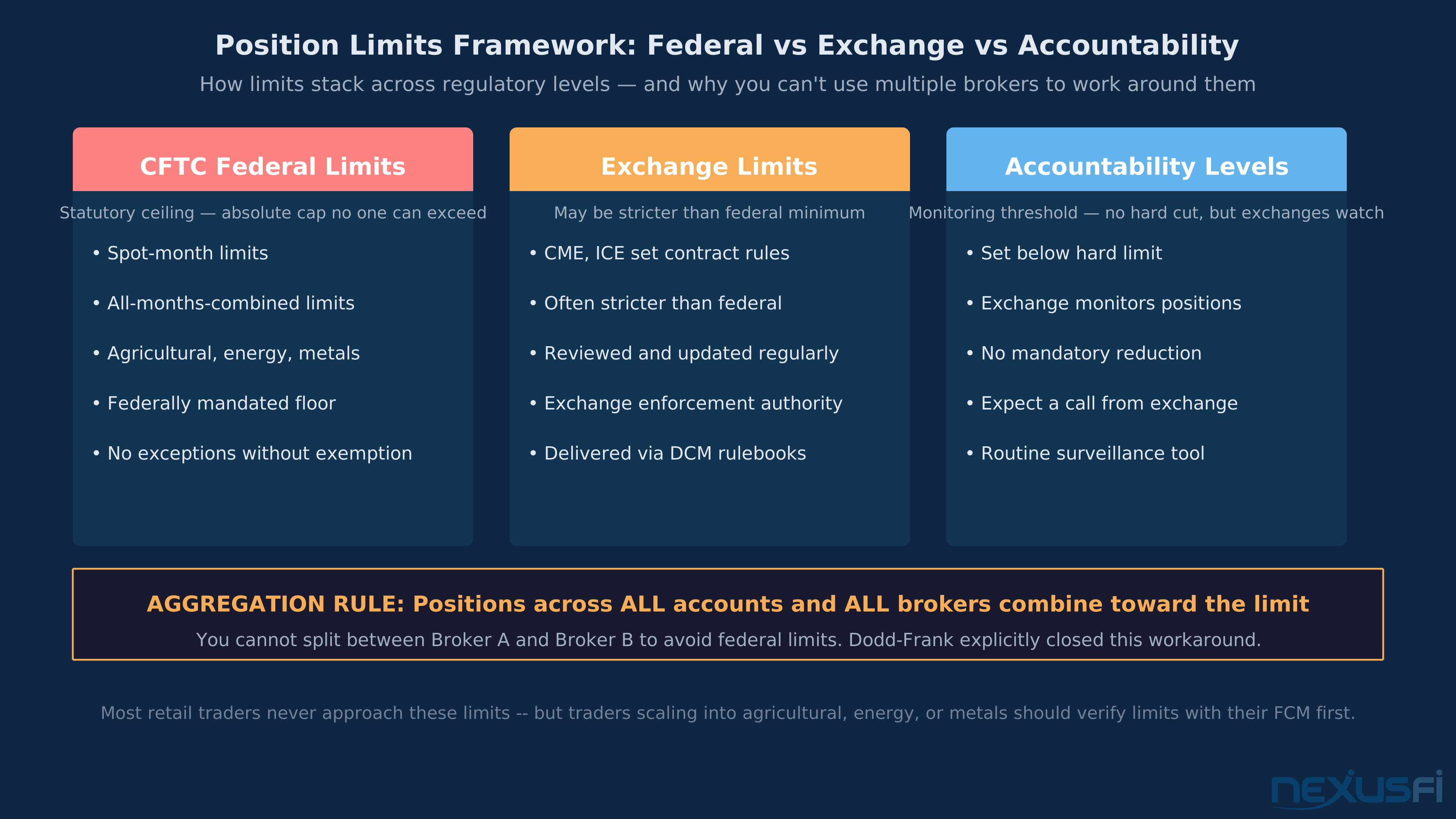
Federal limits: Set by CFTC for specific commodities — especially agricultural products, energy, and metals. These represent absolute caps that no market participant can exceed without qualifying for specific exemptions.
Exchange limits: Individual exchanges (CME Group, ICE) may impose stricter limits than federal minimums for their specific contracts.
Accountability levels: A separate threshold below hard limits where exchanges monitor positions more closely without triggering mandatory reduction. Hitting an accountability level typically means a call from the exchange asking about your position rationale.
The Aggregation Rule: The Most Misunderstood Provision #
For retail traders, the most practically significant aspect of position limits isn't the limits themselves — it's the aggregation rule. Under post-Dodd-Frank regulations, positions across all your accounts and all brokers combine toward a single limit.
Before Dodd-Frank: If you held 200 corn contracts at Broker A and 150 at Broker B, each broker relationship was evaluated separately.
After Dodd-Frank: Those 350 contracts combine. If the position limit for corn is 600 contracts all-months-combined (approximate; CFTC specifies exact figures), you're already past the halfway point.
Most retail traders never approach position limits. But traders scaling up — especially in smaller, less liquid commodity markets — need to understand they cannot distribute positions across brokers as a workaround. Aggregation rules cover controlled accounts, immediate family members trading coordinated strategies, and entities trading on behalf of the same beneficial owner.
If you approach reportable thresholds, your FCM will typically require Large Trader Report (Form 40) filing. Your FCM assists with this process, but the responsibility for accurate information ultimately belongs to you.
The End-User Exemption #
Dodd-Frank recognized that mandatory clearing would harm commercial participants who use derivatives to hedge genuine business risk. Under the end-user exemption:
- Non-financial entities can avoid mandatory clearing for swaps that hedge commercial risk
- One counterparty must qualify as a non-financial end user
- The entity must report how it meets financial obligations on the swap
- All uncleared swaps now face margin requirements regardless
Retail futures traders do not qualify for this exemption. It exists for farmers, energy companies, manufacturers, and other businesses using derivatives to hedge physical commodity exposure. The exemption allows these participants to continue customized bilateral arrangements that fit their specific hedging needs.
The practical consequence: commercial hedgers maintain bilateral flexibility while financial participants (hedge funds, CTAs, retail traders) face standardized clearing for applicable products. This matters for futures traders because commercial hedger behavior influences basis and liquidity patterns in physical commodity contracts.
Mandatory Clearing: The Central Counterparty Revolution #
The most structurally significant Dodd-Frank provision for the broader derivatives market was mandatory central clearing for standardized swaps. This requirement didn't directly affect exchange-traded futures (which were already cleared), but it at the core changed the derivatives ecosystem that futures markets operate within.
The Bilateral Problem Dodd-Frank Solved #
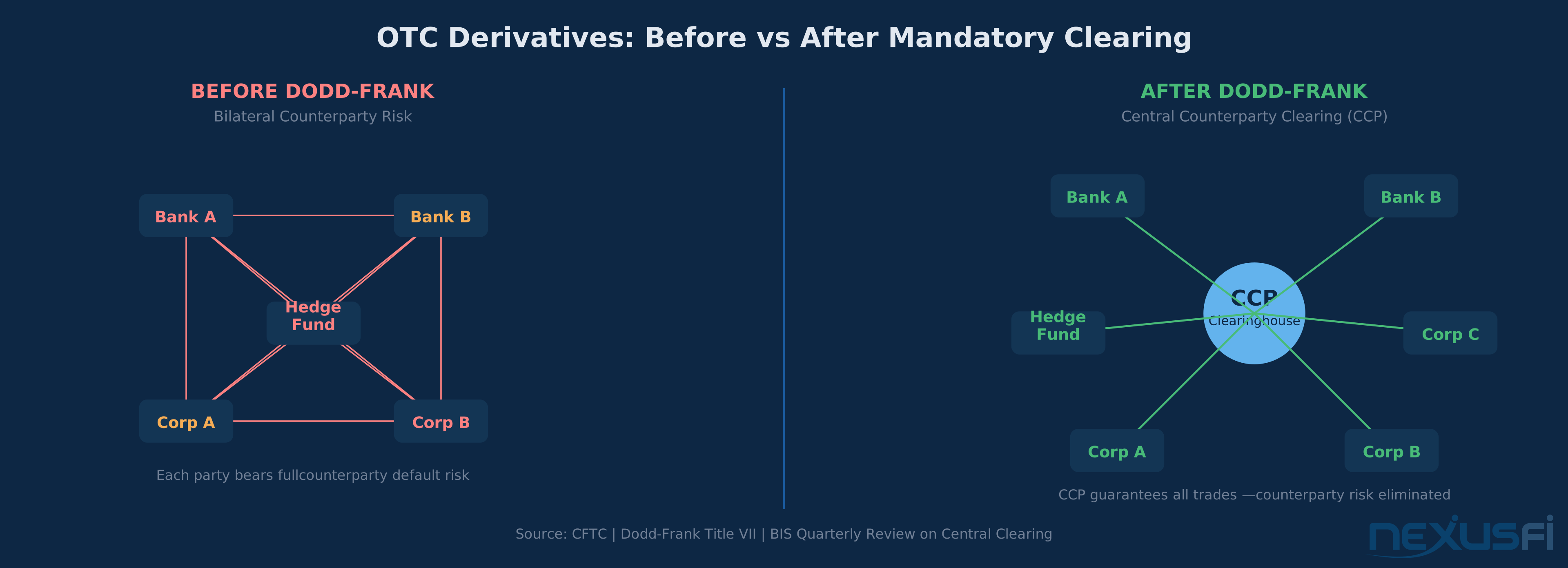
Before mandatory clearing, OTC swaps operated through bilateral agreements: Party A and Party B negotiated directly, and each bore the risk that the other might default. In a market with hundreds of interconnected participants, this created a web of counterparty risk where no single entity understood the full exposure picture.
When Lehman defaulted, it wasn't just Lehman's direct counterparties that suffered — it was everyone who had any exposure to entities exposed to Lehman. The cascade of uncertainty froze credit markets globally.
Central clearing eliminates this problem. Under mandatory clearing:
CCP as universal counterparty: When Party A and Party B agree to a trade, the CCP interposes itself — becoming the buyer to every seller and the seller to every buyer. Neither party has direct exposure to the other; both have exposure only to the CCP.
Margin standardization: CCPs maintain rigorous margin models (SPAN, VaR-based) that calculate required collateral consistently across all positions. No bilateral negotiation over margin terms.
Default fund mutualization: Clearing members contribute to a default fund that provides additional protection if a member defaults. Risk is distributed across the system rather than concentrated in bilateral relationships.
How This Affects Futures Market Dynamics #
Retail futures traders don't clear swaps directly. But mandatory clearing changed the behavior of the institutional participants who do — and those behavioral changes affect futures markets.
Hedging flow shifts: Institutional traders who previously hedged with bilateral swaps now use cleared instruments that more closely resemble futures. This brought additional institutional order flow into futures and cleared swap markets.
Basis relationships changed: The price relationship between futures and economically equivalent swaps shifted when clearing costs changed for one side of the relationship. Futures traders who trade spreads or basis should understand that post-Dodd-Frank basis dynamics differ from pre-crisis patterns.
Cross-margining opportunities: Institutions can now offset cleared swaps against futures positions for margin purposes, reducing capital requirements. This changed how institutions deploy capital across related products.
Margin regime correlation: During stress events, CCP margin increases propagate across correlated products. If cleared swap margin rises, related futures often see similar dynamics as participants manage interconnected portfolios.
Practical implication: During volatility spikes, you may see futures margin increases that seem disproportionate to the move in futures prices alone. This is partly driven by the interconnected CCP margin system that Dodd-Frank created.
The Volcker Rule: Proprietary Trading Restriction #
Section 619 of Dodd-Frank — the Volcker Rule — prohibits banking entities from engaging in proprietary trading: using their own capital to speculate in financial markets for profit.
The rule's exemptions are significant. Banks can still trade for:
- Market-making (providing liquidity to clients)
- Underwriting
- Risk-hedging
- Government securities
- Certain foreign activities
The Liquidity Consequence for Futures Markets #
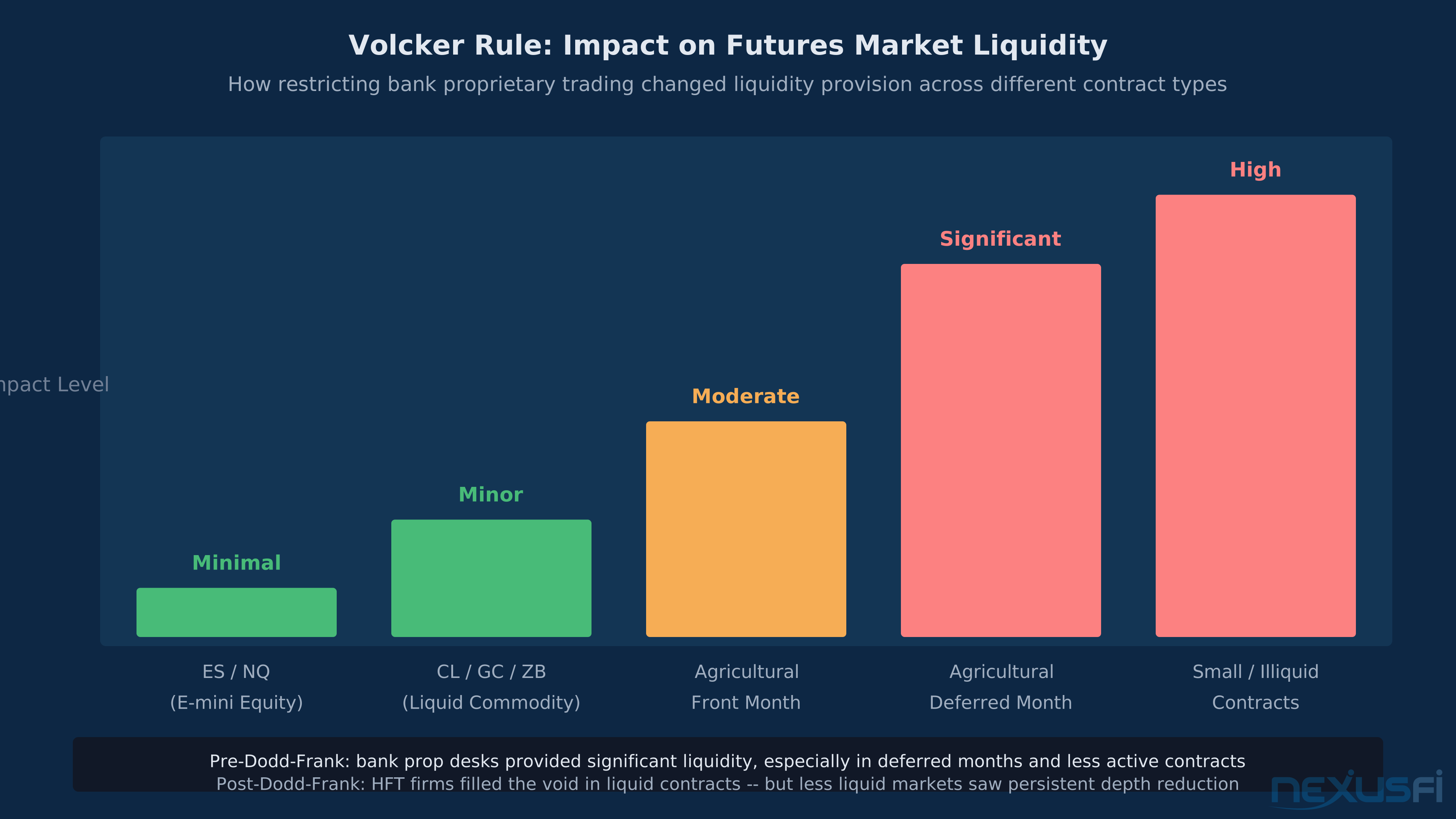
Major bank proprietary trading desks had been significant liquidity providers in futures markets, especially in commodity derivatives and less liquid contract months. When these desks either closed or reorganized under market-making exemptions with strict compliance requirements, the nature of liquidity provision changed.
Liquid, high-volume contracts (ES, CL, GC, ZB): Minimal visible impact for retail traders. High-frequency trading firms and other non-bank market makers partially filled the vacuum. Bid-ask spreads in these markets remained tight.
Less liquid contracts and deferred months: More noticeable impact. Depth reduced, bid-ask spreads widened modestly, and price impact on larger orders increased. Traders in smaller commodity contracts felt this more acutely.
Stress period dynamics: During volatility events, the remaining liquidity providers — now dominated by HFT firms with different balance sheet constraints than banks — behave differently. They can withdraw more quickly during extreme events, creating more pronounced liquidity gaps.
What This Means Practically #
For day traders in highly liquid contracts, Volcker Rule impact is largely irrelevant — the market adapted. For swing traders in agricultural commodities, metals, or energy who regularly trade deferred month contracts, be aware that:
- Position impact (slippage) is somewhat higher than pre-Dodd-Frank norms
- Depth at best bid/offer is less deep in non-front-month contracts
- During news events, liquidity can become more asymmetric
@SMCJB captured this market evolution in the NexusFi community:
CFTC Expanded Jurisdiction: What Got Brought Under Oversight #
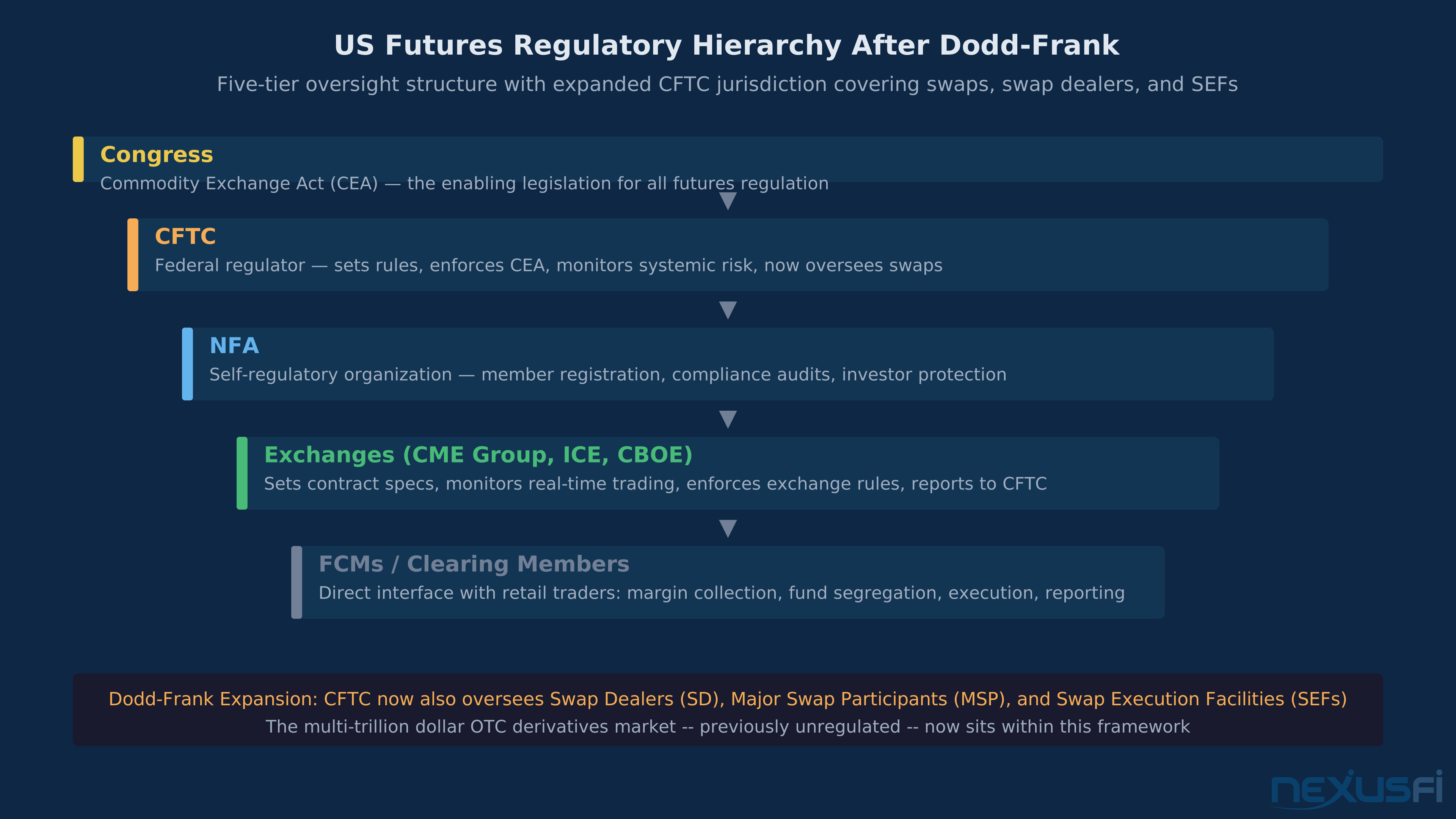
Dodd-Frank dramatically expanded CFTC regulatory authority. Before the law, the Commission primarily oversaw exchange-traded futures and options. After Dodd-Frank, the CFTC gained jurisdiction over:
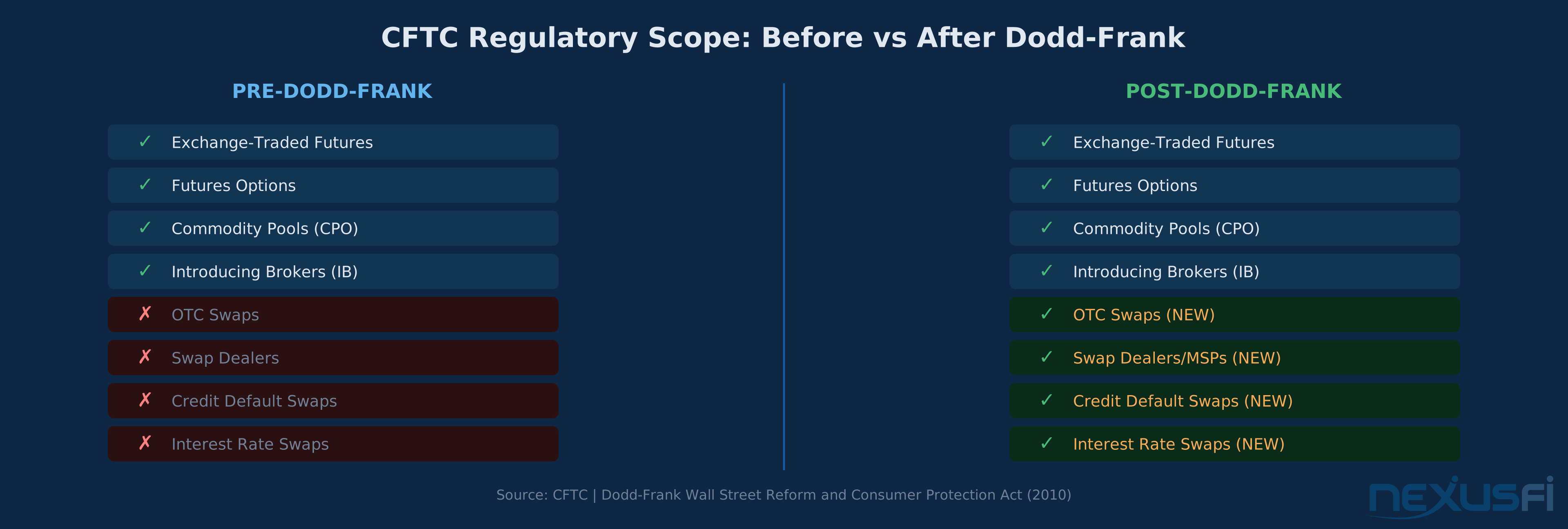
OTC Swaps (Title VII): The sweeping new framework for the multi-trillion dollar swap market. Includes interest rate swaps, credit default swaps, commodity swaps, and foreign currency swaps.
Swap Dealers (SD): Financial entities dealing in swaps above specified thresholds must register with the CFTC, maintain capital, post margin, implement business conduct standards, and report all transactions.
Major Swap Participants (MSP): Entities whose swap positions create significant systemic risk — even if they don't function as dealers — face a parallel registration regime.
Swap Execution Facilities (SEFs): New regulated trading venues for swaps, analogous to futures exchanges. Certain swaps must execute on SEFs or designated contract markets.
Section 4r: The SEF Mandate #
Section 4r of the Commodity Exchange Act (as amended by Dodd-Frank) created the legal framework for Swap Execution Facilities and established that certain swaps must execute on regulated venues.
For retail futures traders, SEFs matter because they changed how institutional hedgers execute. The requirement to trade on regulated venues with audit trails and pre-trade transparency shifted swap trading from opaque bilateral phone calls to transparent electronic execution.
This mattered for futures markets through the hedging and basis channel: as institutional participants adapted their swap execution, the timing, size, and venue of hedging activity changed. Understanding that institutional hedging behavior shifted post-Dodd-Frank helps explain some of the basis and liquidity pattern changes that experienced traders noticed.
Enhanced COT Reports: A Silver Lining #
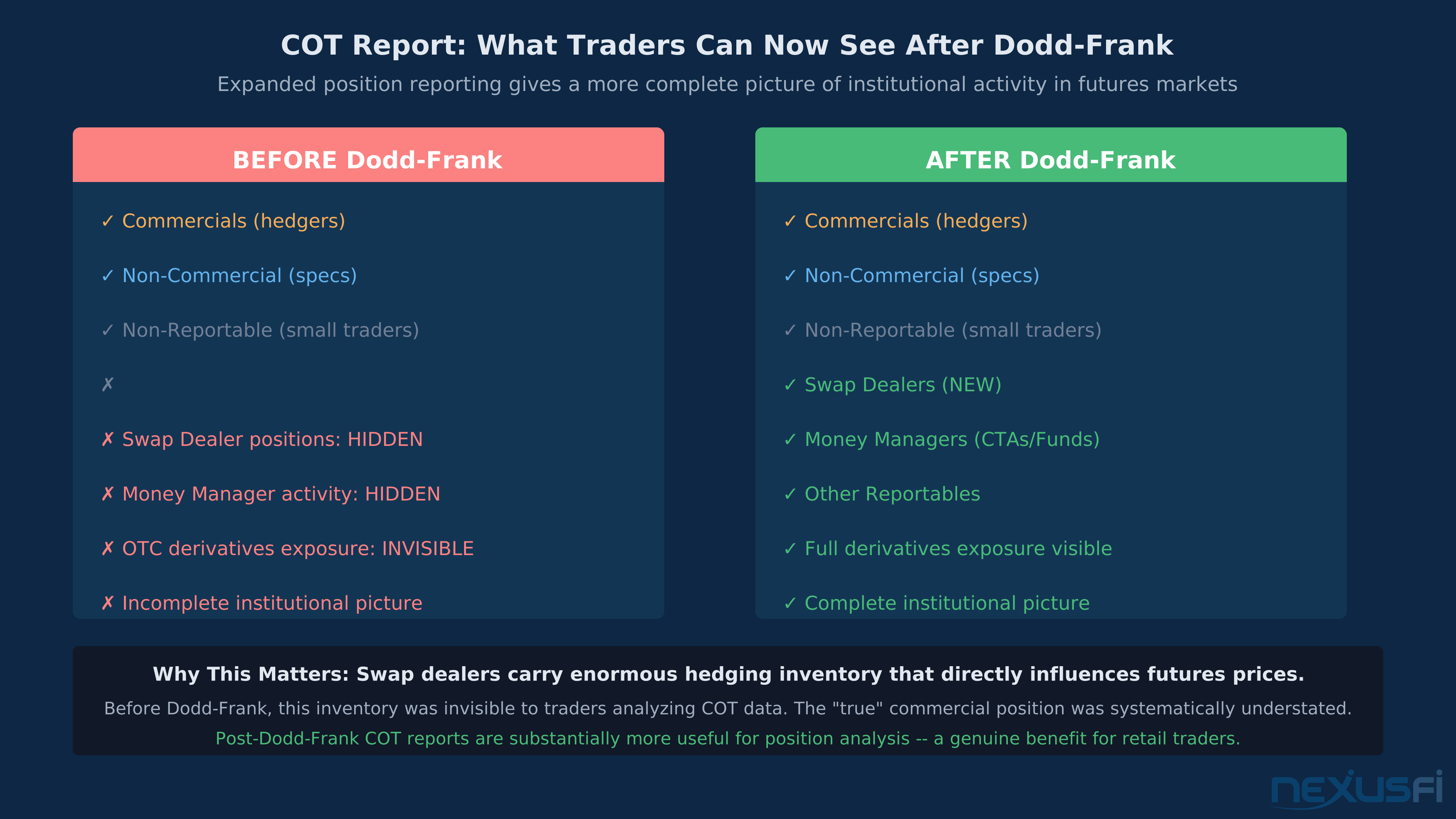
One clear benefit for retail traders from expanded CFTC jurisdiction: the Commitments of Traders (COT) report now includes swap dealer positions.
Before Dodd-Frank, COT reports showed futures and options positions but missed the swap dealer inventory, which represented enormous additional exposure. A COT report showing commercial hedgers heavily short in a commodity might have been misleading if swap dealers were simultaneously holding large positions in the opposite direction.
Post-Dodd-Frank, traders analyzing COT reports have access to:
- Traditional commercial hedger positions
- Non-commercial (speculative) futures positions
- Swap dealer positions (hedging inventory and client facilitation)
- Money manager positions (CTAs and hedge funds)
This more complete picture helps retail traders interpret institutional positioning more accurately. Traders who built market intelligence strategies around COT reports should understand both the enhanced information available and the methodological implications of the expanded categories.
Reporting and Recordkeeping: The Documentation Revolution #
Dodd-Frank imposed sweeping reporting and recordkeeping requirements across the derivatives industry. While much of this applies directly to swap dealers and clearing members rather than retail traders, the cultural and operational impact extends throughout the industry.
Swap Data Repositories #
All swap transactions must be reported to registered Swap Data Repositories (SDRs) within 15 minutes of execution. This creates an historic real-time regulatory window into OTC derivative activity.
Public transparency: Aggregate swap position data is publicly available, giving market participants better intelligence about institutional derivative activity.
Regulatory surveillance: Real-time transaction reporting enables CFTC surveillance for manipulation, unusual concentration, and potential systemic risk building before it becomes a crisis.
Recordkeeping Requirements #
CFTC Rule 1.35 and related provisions require sweeping record retention across the industry:
For FCMs and Introducing Brokers:
- Five-year retention of all electronic records
- Communications related to trading activity (emails, phone calls)
- Pre-trade analysis and decision documentation
- Complete audit trail capability for all transactions
- Customer communication retention
For retail traders: The most visible impact is in your account statements and trade confirmations. Post-Dodd-Frank documentation is substantially more detailed:
- Itemized commission and fee breakdowns
- Exchange and NFA fees listed separately
- Daily margin requirements with excess/deficit calculations
- Year-to-date realized and unrealized P&L with tax reporting codes
This enhanced documentation benefits organized traders who maintain proper records for tax purposes and strategy analysis.
Retail vs. Institutional: Who Bore the Burden? #
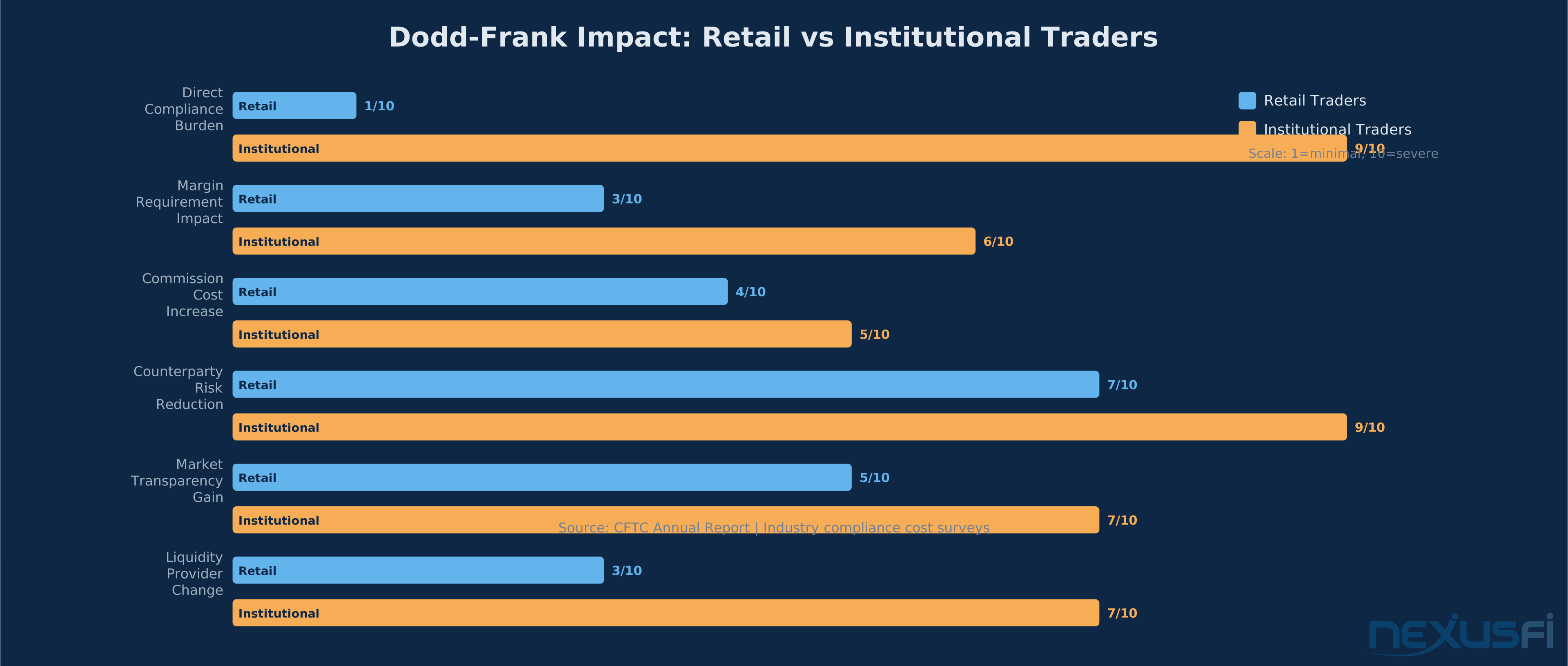
Dodd-Frank's impact differed much between retail and institutional participants.
Retail Traders: Indirect but Real Effects #
What retail traders did NOT face directly:
- Swap dealer or MSP registration requirements
- Mandatory clearing obligations for swaps
- SEF execution requirements
- Sweeping SDR reporting
What retail traders DID experience:
Safety improvements (genuine benefits):
- Stronger FCM capital requirements reducing broker failure risk
- Daily segregation verification protecting customer funds
- Reduced systemic risk through mandatory clearing
- Enhanced disclosure and suitability standards
- Better market data through expanded COT reporting
Cost increases (genuine costs):
- Commission rate increases of 10-30% typical
- New platform fees ($25-$75/month common)
- Higher margin requirements (10-30% increase)
- Reduced FCM competition limiting negotiating leverage
- Tighter exception policies on margin extensions
Market quality changes (mixed effects):
- Liquid contract quality largely preserved
- Less liquid markets saw reduced depth
- Enhanced transparency improved market intelligence
- Stress period dynamics became more pronounced
Institutional Traders: Heavier Direct Burden #
For institutional participants, Dodd-Frank created significant operational overhead:
Commodity Pool Operators (CPOs) and CTAs: Enhanced reporting and disclosure requirements, stricter investor communication standards, and more rigorous compliance infrastructure. The NFA estimated compliance cost increases of $500,000-$1 million annually for mid-sized firms.
Proprietary trading firms: Volcker Rule forced bank-affiliated prop desks to restructure or close. Independent prop firms gained market share but faced enhanced compliance expectations.
Hedge funds and family offices: Potential swap dealer registration for large participants, mandatory clearing for standardized positions, sweeping reporting requirements, and internal surveillance obligations.
Commercial hedgers: End-user exemption preserved flexibility, but enhanced reporting requirements and new margin requirements for uncleared swaps increased operational complexity.
The asymmetry is clear: institutional participants bore the heaviest direct compliance burden, while retail traders experienced Dodd-Frank primarily through the upstream effects on FCMs, market makers, and institutional participants.
What Changed Day-to-Day in US Futures Markets #
The theoretical provisions of Dodd-Frank translate into specific operational changes that experienced traders observed in practice.
Phase Two: Consolidation and Stabilization (2014--2017) #
Rules finalized, compliance costs normalized. The FCM count continued declining. Non-bank market makers expanded their role in liquid contracts as bank proprietary desks restructured under Volcker.
What retail traders see today: Higher but stable commissions, enhanced account documentation, and strong fund segregation protections. Market access in liquid contracts (ES, CL, GC, ZB) remains excellent.
Specific Rules Every Futures Trader Must Understand #
Regardless of how actively you trade, understanding the regulatory framework your broker operates within helps you make better decisions about account setup, risk management, and broker selection.
Customer Fund Segregation: Your Most Important Protection #
Futures customer funds are legally required to be segregated from FCM proprietary assets. This is not optional. An FCM that misappropriates customer funds is committing a federal crime — but as MF Global and PFGBest demonstrated, the crime still occurs. Your protections include:
- Daily verification: Your FCM must verify segregation daily and report to the CFTC
- Bankruptcy priority: Your funds have priority claims in FCM bankruptcy proceedings
- CFTC oversight: The Commission monitors FCM financial statements and conducts examinations
- NFA audits: The National Futures Association performs additional regulatory audits
What you can do: Request your FCM's most recent segregated fund statement. Verify they're current on CFTC filings. Understand that larger, better-capitalized FCMs have more strong segregation practices. For accounts over $500,000, consider distributing across multiple FCMs.
Position Limits and Large Trader Reporting #
If you're building positions in commodity futures — especially agricultural products — understand the position limit framework:
- Federal limits cover spot month and all-months-combined positions
- Your positions aggregate across all accounts and brokers
- Approaching 25-50 contracts in agricultural products can trigger Large Trader Reporting
- Your FCM handles filing but you're responsible for accurate information
Most retail traders will never hit these thresholds. But traders scaling into larger positions should verify current limits with their FCM before building exposure.
Understanding Your FCM's Capital Requirements #
CFTC-regulated FCMs must maintain minimum adjusted net capital. For a trader selecting a broker, this means:
- CFTC publishes monthly capital reports for all registered FCMs
- Falling below minimum net capital triggers regulatory intervention
- Higher capitalization provides additional buffer above regulatory minimums
- FCM financial strength matters more than commission rate differences for large accounts
The NinjaTrader Clearing Risks discussion at NexusFi, featuring @SMCJB's detailed breakdown of the 8% risk-based capital requirement, helps contextualize how to evaluate your broker's financial health under CFTC Regulation 1.17.
Dodd-Frank's Legacy: A Safer, More Expensive Marketplace #
Twelve years after implementation, the Dodd-Frank legacy for futures traders comes into clearer focus.
The safety improvements are real and significant. Enhanced FCM capital requirements, daily segregation verification, mandatory central clearing for standardized derivatives, and expanded regulatory oversight create a meaningfully safer trading environment than existed in 2008. The probability of another MF Global-scale retail customer loss event is substantially reduced — not eliminated, but reduced.
The cost increases are also real. Retail traders today pay more per round-turn, maintain higher margin requirements, and operate with fewer broker choices than their counterparts before Dodd-Frank. These aren't illusory costs; they're the price of the enhanced safety and market transparency the law created.
The market quality changes are context-dependent. In highly liquid products, the trading experience for retail participants is roughly comparable to pre-Dodd-Frank. In less liquid markets, deferred contract months, and during stress events, the behavioral changes in institutional liquidity providers create a somewhat different trading environment. Experienced traders adapted; newer traders should understand these dynamics.
Knowledge Map
Go Deeper
Build on this knowledgeReferences This Article
Articles that build on this topicCitations
- — Futures Broker Due Diligence Notes post PFG (2012) 👍 1“The issue is not applying fancy formulas but whether the funds are segregated. If AMP went bankrupt tomorrow it is irrelevant to me provided the funds have been segregated and constantly and accurately monitored by the regulator.”
- — CFTC Capital Requirements for FCM's (2020) 👍 11“Check your FCM's CFTC capital requirements report. Adjusted Net Capital: the amount of regulatory capital available to meet the FCM's minimum net capital requirement under CFTC Regulation 1.17.”
- — NinjaTrader Clearing Risks (2024)“There are lots of FCMs out there, many of which are a good fit for one customer, but not for another. The larger the FCM the larger the risk margin requirement and hence the larger the risk-based capital requirement.”
- — CFTC Financial Data for FCMs (2024)
- — Dodd-Frank Act Overview (2024)
- — NFA Registration Requirements (2024)
- — CME Rulebook: Position Limits (2024)
- — FCM and IB Minimum Net Capital Requirements (2024)
- — Dodd-Frank Wall Street Reform and Consumer Protection Act (H.R. 4173) (2010)
- — The Volcker Rule: Federal Reserve Overview (2024)