



Series 3 Exam: The National Commodity Futures Exam -- Complete Guide for Futures Traders
Overview #
Most futures traders who decide to launch a CTA, take a solicitation role, or work in managed futures hit the same wall: the Series 3 exam. You can trade ES profitably for years, run a clean P&L, and still fail this test if you walk in thinking trading knowledge is enough. It isn't.
The Series 3, formally called the National Commodity Futures Examination, is the gateway exam for anyone who plans to solicit orders, advise clients, or manage commodity futures business in a registered capacity. It's administered by NFA — not FINRA, a critical distinction we'll correct right up front — and it tests two things: whether you understand how futures and options on futures work mechanically, and whether you understand the regulatory framework governing how those markets can be sold, advised on, and supervised.
The second half is where experienced traders get surprised. You already know what a margin call is. You know the difference between hedging and speculation. But can you explain which NFA registration category requires the Series 3? What happens when a call on futures is exercised? What distinguishes intrinsic value from time value on an exam question framed as a compliance scenario? That's where the test lives, and that's what this guide is for.
What the Series 3 Actually Is -- and Who Administers It #
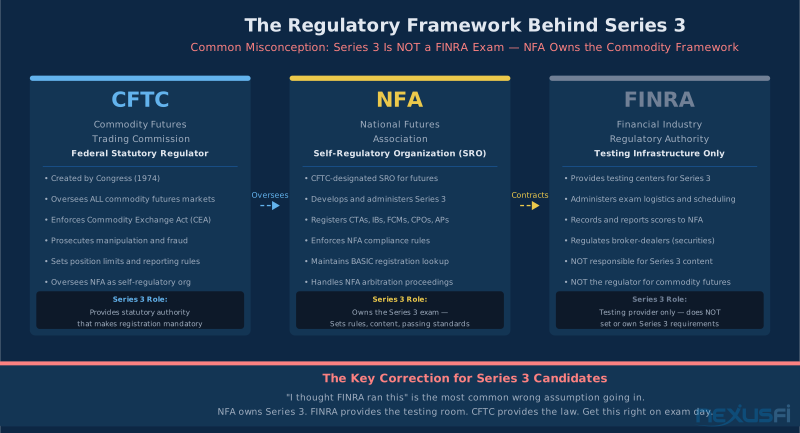
The National Commodity Futures Examination is the qualification test required for individuals who want to be registered as Associated Persons (APs) at futures industry firms — Futures Commission Merchants (FCMs), Introducing Brokers (IBs), Commodity Trading Advisors (CTAs), or Commodity Pool Operators (CPOs). If you're planning to solicit futures accounts, advise clients on commodity positions, or work in a client-facing role at a regulated commodity firm, the Series 3 is almost certainly in your path. For the full regulatory framework context, see Futures Market Regulation: CFTC, NFA, and the Rules Every Trader Must Understand.
Here's the first correction most candidates need: the Series 3 is an NFA exam, not a FINRA exam. The National Futures Association is the CFTC-designated self-regulatory organization for the futures industry. NFA develops the exam content, sets the passing standards, owns the registration framework, and makes the rules. FINRA provides the testing infrastructure — the testing centers where you sit for the exam — but FINRA doesn't write the questions, set the rules, or register you when you pass. If you've done securities licensing exams (Series 7, 63, 65), you've used FINRA testing centers before, which is probably where the confusion comes from. The building is FINRA's. The exam is NFA's.
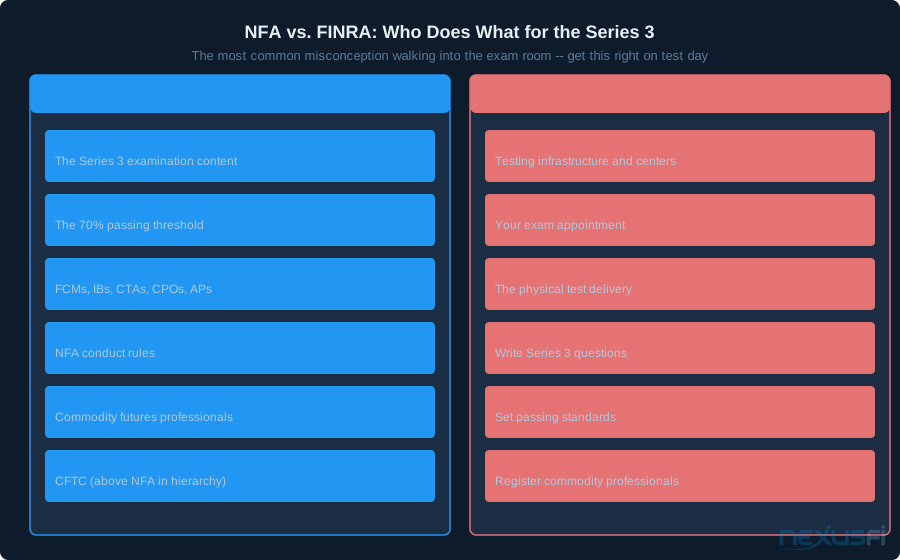
The CFTC sits above NFA in the regulatory hierarchy. The Commodity Exchange Act, enforced by the CFTC, is the federal statute that makes registration mandatory for commodity futures professionals. NFA operates under CFTC oversight and translates that statutory authority into the actual registration requirements, examination content, and conduct rules.
Who Needs the Series 3 #
The Series 3 is required for individuals performing covered functions at NFA-member firms. Practically, that means:
Commodity Trading Advisors (CTAs): If you want to manage client money in commodity futures — running a managed futures program, advising on position management, making trading decisions for others — you'll need CTA registration, and Series 3 is the exam that qualifies you for it.
Associated Persons (APs) of FCMs and IBs: If you're working at a futures commission merchant or introducing broker in a solicitation or advisory capacity — meaning you interact with customers, solicit orders, or provide recommendations — you need AP registration, which requires Series 3.
CPO personnel: Commodity Pool Operators running pooled investment vehicles in futures need appropriate registration, which may include Series 3 depending on your role.
Who doesn't need it: If you're trading your own account, you don't need the Series 3. Registration and licensing requirements apply to people doing business with other people's money or soliciting others to trade. Self-directed retail traders are outside the registration framework entirely, regardless of how active they are. For the laws governing futures markets, see The Commodity Exchange Act: The Law That Governs Every Futures Trade. The line that matters: trading your own account vs. soliciting/advising on others' accounts.
Exam Structure: 120 Questions, Both Parts Must Pass #
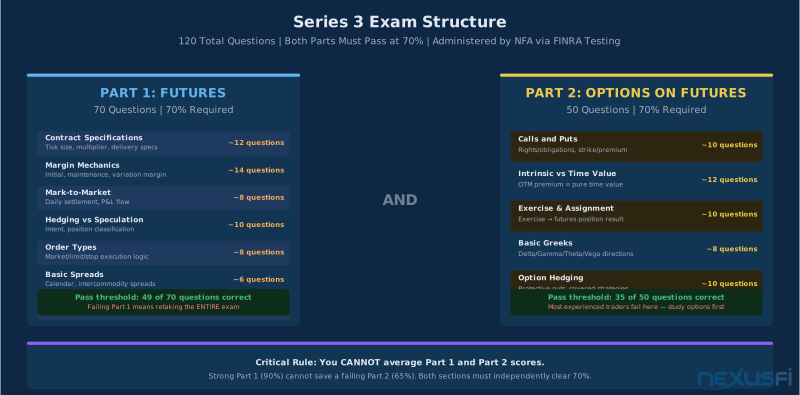
The Series 3 is 120 multiple-choice questions split into two parts that must independently pass at 70% in the same sitting. There's no averaging across sections. A strong Part 1 doesn't save a failing Part 2.
Part 1: Futures — 70 questions covering futures contract mechanics, margin, mark-to-market, hedging, order types, spreads, and NFA/CFTC regulation. To pass Part 1, you need 49 of 70 questions correct.
Part 2: Options on Futures — 50 questions covering calls and puts, intrinsic vs time value, exercise and assignment mechanics, the Greeks at a conceptual level, and option hedging strategies. To pass Part 2, you need 35 of 50 questions correct.
The exam is computer-based, administered at FINRA testing centers. You can schedule via the FINRA website. There's no prerequisite sponsorship required to take the exam — you can sit for it before being associated with a firm, though you'll need firm sponsorship and NFA registration before you can practice in a covered capacity.
If you fail one part, you must retake the entire exam after a waiting period. Partial credit from the passing section doesn't carry over. This is another reason to take Part 2 seriously even if you're confident in your futures knowledge.
Part 1: What the Futures Section Actually Tests #
If you've been trading futures for any length of time, Part 1 is familiar territory — but familiar territory with unfamiliar framing. The exam doesn't ask "what's an ES tick worth?" It asks that question embedded in a scenario about proper client disclosure, or margin call mechanics, or order handling requirements. You know the answer, but the question can still trip you if you're reading it as a trading question when it's actually a compliance question.
Contract Specifications
The exam expects you to understand how standardized futures contracts are specified: contract size, tick size and tick value, delivery months, last trading day, and delivery procedures. It may ask you to interpret notional exposure, determine which contract fits a hedger's needs, or identify what happens when a contract approaches expiration. Know the distinction between cash settlement vs physical delivery, and how those specs affect economic exposure. The full mechanics are in Futures Contract Specifications: Understanding the Instrument You're Trading.
Margin Mechanics: Three Distinct Terms the Exam Tests Separately
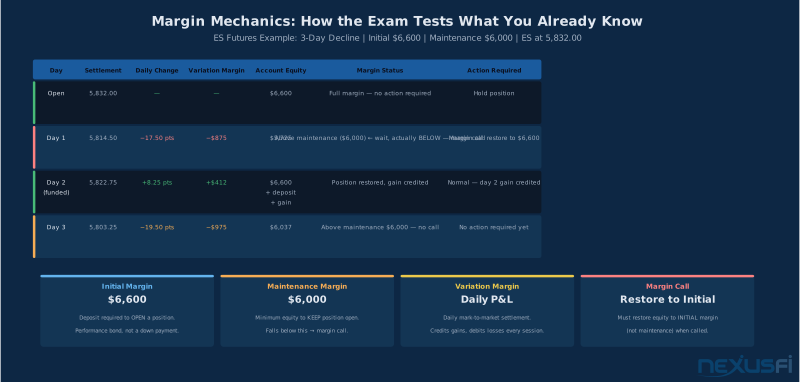
You know how margin works in practice. But the exam has three specific terms that it tests as separate, precise concepts — and mixing them up costs points.
Initial margin is the deposit required to establish a position. It's a performance bond, not a down payment on the commodity.
Maintenance margin is the minimum equity level required to keep an open position. When equity falls below maintenance, you get a margin call. The margin call requires restoring equity to initial margin — not just to maintenance. This specific detail appears on the exam.
Variation margin is the daily settlement of gains and losses — the mark-to-market. Every business day, futures positions are settled to the closing price. Profits are credited; losses are debited. This daily flow is variation margin. It's automatic, not a deposit you make.
Hedging vs. Speculation and Order Types
The exam tests hedging and speculation as defined regulatory categories. A hedger has an underlying commercial exposure that the futures position mitigates — a grain elevator selling futures against physical inventory. A speculator takes directional risk for profit without an offsetting commercial position. Intent and underlying exposure matter more than position direction.
Order types are tested at the conceptual level: market orders (execution certainty, uncertain price), limit orders (price certainty, uncertain execution), stop orders (trigger a market order at a price level), stop-limit orders (trigger a limit order — may not fill in fast markets). The exam asks about tradeoffs and what happens in gaps or fast markets.
NFA/CFTC Regulation in Part 1
About 17% of Part 1 questions (roughly 12 questions) test regulatory and compliance content — this is where most experienced traders leave points on the table. You need to know the registration categories (FCM, IB, CTA, CPO, AP) and their obligations; supervisory responsibilities for principals vs. APs; anti-fraud prohibitions (false statements, misleading performance claims, omission of material facts); anti-manipulation rules (wash trading, fictitious transactions, corners); disclosure requirements; and recordkeeping obligations.
The exam asks these as scenario questions. "A CTA shows only its best 6 months of performance in a promotional piece — which rule is violated?" You don't need to cite NFA rule numbers. You need to know that selective performance reporting is prohibited as misleading.
Part 2: Options on Futures -- The Section That Decides Most Exams #
Part 2 is where the Series 3 gets earned or lost. Most experienced traders can work through Part 1 with focused prep. Part 2 requires learning a new vocabulary — not new concepts, but the specific terminology the exam uses to describe options mechanics. If you learned options on equities, you've started with a handicap: the underlying is different, exercise mechanics are different, and the exam expects futures-specific framing throughout.
Calls, Puts, and the Futures Underlying
A call option on futures gives the buyer the right, but not the obligation, to buy the underlying futures contract at the strike price. A put option gives the buyer the right to sell the underlying futures contract at the strike price. The option writer takes the corresponding obligation.
The critical distinction from equity options: the underlying is a futures contract, not a commodity or a stock. When you exercise an ES call option, you receive a long ES futures position — not shares of the S&P 500, not physical delivery of anything, a futures position. This is the #1 Part 2 terminology trap, and it's where equity-options traders consistently lose points.
Intrinsic Value vs. Time Value: The Exam Trap
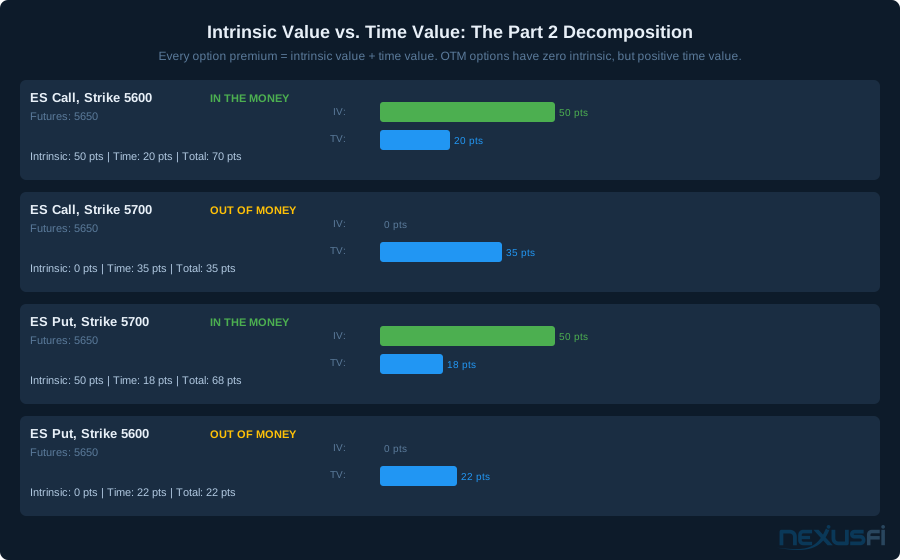
An option's premium has two components: intrinsic value and time value.
Intrinsic value is the exercise value right now. For a call, it's how far the futures price exceeds the strike (if at all). For a put, it's how far the strike exceeds the futures price. An out-of-the-money option has zero intrinsic value.
Time value is everything else — the premium above intrinsic value, reflecting the probability that the option will move in-the-money before expiration and the time remaining for that to happen. An OTM option's entire premium is time value. An ITM option has intrinsic value plus time value.
The exam trap: candidates see an OTM option with a premium of $3.50 and conclude it has no value. It does — time value is real, reflecting probability and volatility. OTM options with positive premium appear regularly in exam questions. The correct answer acknowledges the time value component.
Exercise and Assignment: The Most Common Part 2 Failure Mode
When a call option on futures is exercised by the holder, the result is a long futures position for the holder at the strike price. The call writer receives the corresponding short futures position — they've been assigned.
When a put option on futures is exercised, the holder receives a short futures position at the strike price. The put writer gets the long futures position.
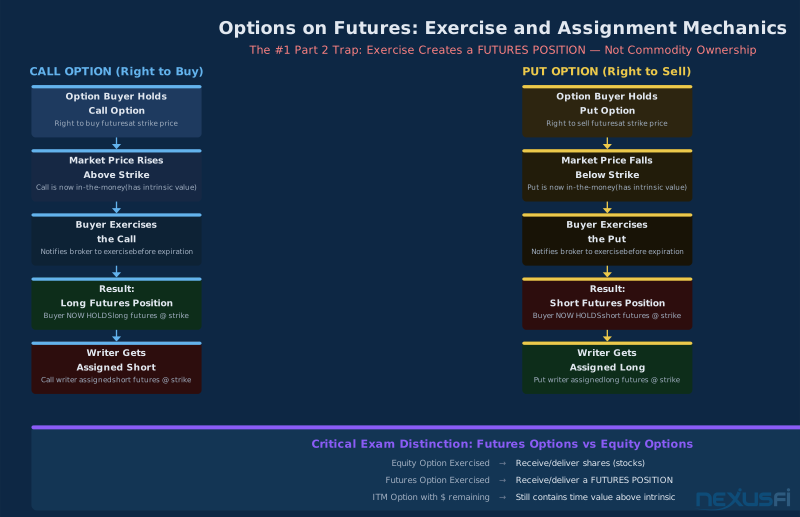
If you're used to equity options, you expect exercise of a call to mean receiving shares. With futures options, you receive the futures contract. Same economic exposure, different instrument — and the exam requires the precise vocabulary.
The Greeks at a Conceptual Level
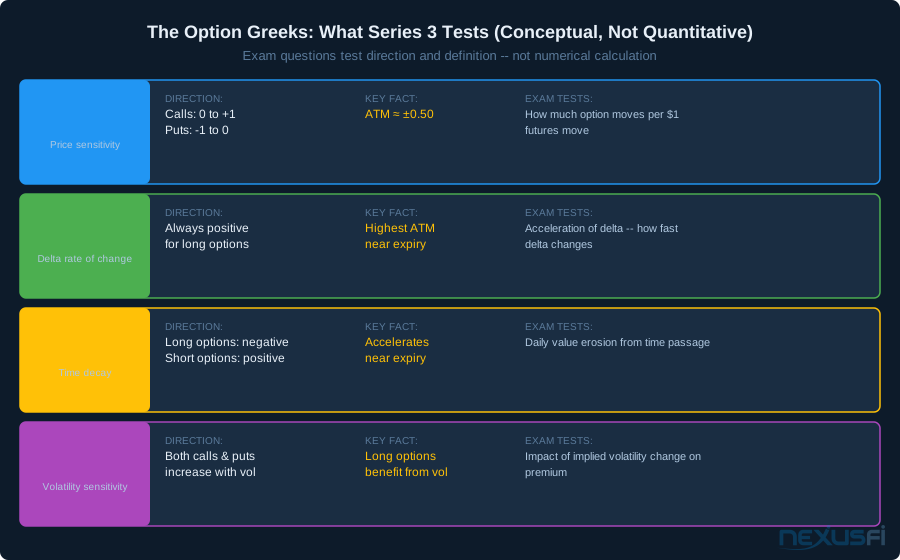
The Series 3 doesn't test pricing models or quantitative Greeks calculations. What it tests is whether you understand what each Greek measures and which direction it moves under common conditions.
Delta: Sensitivity of option value to changes in the underlying futures price. Calls have positive delta, puts have negative delta. ATM options have delta near ±0.50.
Gamma: Rate of change of delta. How fast delta changes as the underlying moves. Highest for ATM options near expiration.
Theta: Time decay. Options lose value as time passes, all else equal. Accelerates as expiration approaches.
Vega: Sensitivity to implied volatility. When volatility increases, option premiums increase (both calls and puts). Long options benefit from volatility expansion; short options are hurt by it.
Exam questions ask: "Which Greek measures the rate at which an option loses value as time passes?" (Theta) or "If implied volatility increases, how does this affect both call and put premiums?" (Both increase — Vega effect).
[4] For options mechanics on futures, see @ron99's thread on practical options strategies.[5]
The Regulatory Framework You Need to Know Cold #
The regulatory section of Series 3 is not about memorizing rule numbers. It's about understanding the structure of the commodity futures regulatory system and the conduct principles that govern everyone operating within it.
The Registration Categories: Who Is What
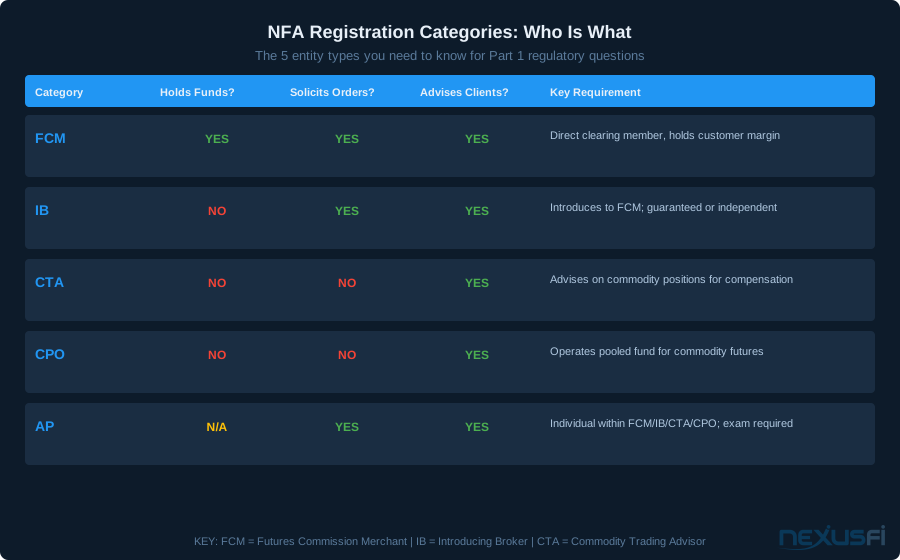
The exam tests your ability to distinguish between the major registration categories and map them to specific activities.
FCM (Futures Commission Merchant): A firm that accepts orders for futures and options on futures and accepts money in connection with those orders. FCMs hold customer margin and have direct relationships with clearing organizations.
IB (Introducing Broker): Solicits orders but doesn't hold customer funds — introduces clients to FCMs for clearing. Guaranteed IBs are financially guaranteed by an FCM; Independent IBs maintain their own capital requirements.
CTA (Commodity Trading Advisor): Advises others on commodity futures trading for compensation. If you're managing client money or providing specific trading recommendations for compensation, you may be a CTA.
CPO (Commodity Pool Operator): Operates a pooled investment vehicle where participant funds are combined for commodity futures trading.
AP (Associated Person): An individual who solicits orders or customer accounts, or supervises persons doing so, for an FCM, IB, CTA, or CPO. APs are the people — FCMs, IBs, CTAs, CPOs are firms (or individuals in those registered roles).
Supervisory Responsibilities and Anti-Fraud
Registered firms and their principals have explicit supervisory obligations over their APs. This means establishing compliance policies, reviewing customer communications, supervising solicitation, and ensuring proper disclosures. When an AP violates conduct rules, both the AP and the supervising principal may be held responsible for failure to supervise.
Anti-fraud includes: false statements to customers, misleading performance records, omitting material facts, and unauthorized trades. Anti-manipulation covers wash trading (artificial volume with no economic position change), fictitious trading, corners, and squeezes. The NFA enforcement action against Spartan Asset Group illustrates exactly the kind of real-world fraud the exam's regulatory content maps to — the firm was banned for cherry-picked performance data, exactly what the anti-fraud rules prohibit.[2]
From Exam to Registered Practice: The 5-Gate Process #
Here's what causes the most confusion after passing: the Series 3 is a qualification, not a license. Passing doesn't authorize you to do anything. You need to complete the full registration process before acting in a covered capacity.
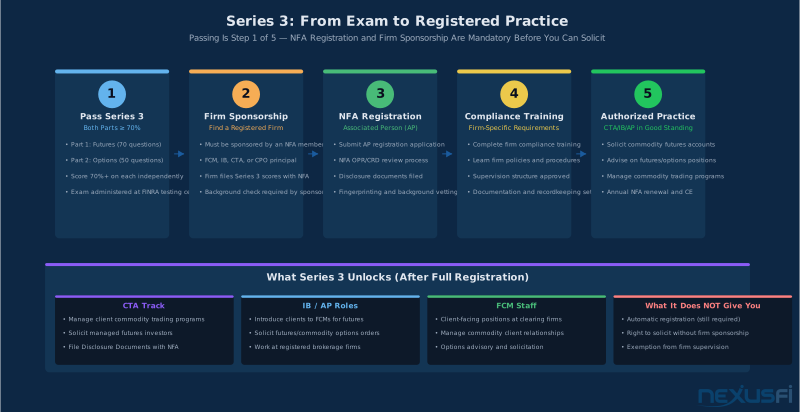
After passing the Series 3, the path to AP registration includes: finding a firm sponsor (an NFA member firm to employ and supervise you), having that firm file registration paperwork with NFA, completing background checks and disclosure filings, and completing firm-specific compliance training. NFA reviews and approves the application.
If you're forming your own CTA firm, the process is more involved: NFA membership, CTA registration, Disclosure Document preparation (describing your trading program, performance history, fees, and conflicts of interest), and a compliance program. The Series 3 qualifies you for the exam requirement of that process — it doesn't complete the process for you.
For the community context on what the CTA path looks like from a self-directed trading background, @Private Banker's detailed breakdown of the licensing environment covers the gap between trading well and running a registered CTA operation: "The licenses mentioned here of series 3 are the entry point — what comes after is the business structure."[3] The transition from self-directed to CTA is covered further in the CFTC and NFA regulation guide.
Study Strategy: What Works for Experienced Traders #
The worst study mistake experienced futures traders make is proportional: they spend 70% of their time reviewing futures mechanics they already know and 30% on the regulatory and options content that will actually determine their score. Invert that ratio.
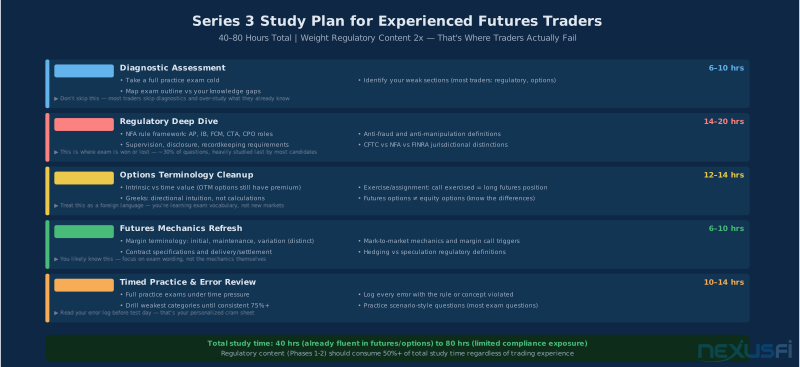
Phase 1: Diagnostic (6-10 hrs) — Take a cold practice exam before studying anything. Identify which sections need work. Most experienced traders discover strong Part 1 market knowledge, weak Part 1 regulatory knowledge, and weak Part 2 options terminology.
Phase 2: Regulatory Deep Dive (14-20 hrs) — This should consume the largest share of study time. Work through the NFA study outline systematically. Build a reference document with registration categories, their obligations, prohibited conduct rules, and disclosure requirements. Test yourself with scenario questions: "This CTA is doing X — which rule does it violate, and who's responsible?"
Phase 3: Options Terminology (12-14 hrs) — Treat Part 2 like a vocabulary course. Create flashcards: intrinsic value definition, time value definition, what happens when a call is exercised, what happens when a put is assigned, what Theta measures, what Vega measures. Specifically drill the exercise/assignment scenarios until they're automatic: "Long call, ITM, exercised → Long futures at strike."
Phase 4: Futures Mechanics Refresh (6-10 hrs) — For experienced traders, this phase is about terminology precision, not concept learning. Focus on the specific exam vocabulary: "variation margin" vs "initial margin," the exact margin call restoration requirement (initial, not maintenance). Take practice sections and flag every question missed due to terminology vs. actual conceptual misunderstanding.
Phase 5: Timed Practice Exams (10-14 hrs) — Full timed practice exams under exam conditions. Keep an error log — every question you miss, note the concept and section. Review your error log the day before the exam. That personalized list is more valuable than any generic study guide.
The fastest way to diagnose your Series 3 readiness: take a cold practice exam before studying. Most experienced traders score 75-85% on Part 1 and 55-65% on Part 2. That gap tells you where to spend your time.
How Experienced Traders Still Fail #
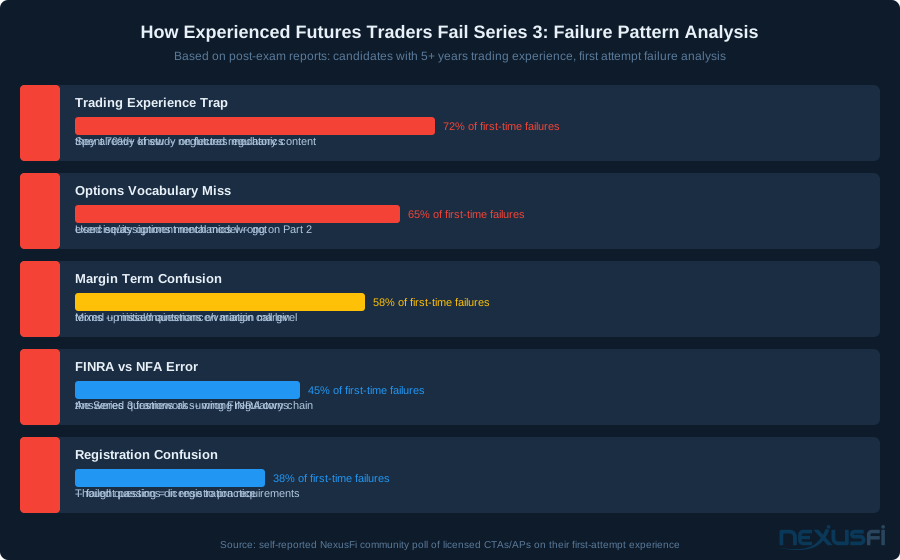
These patterns appear consistently in Series 3 failures from candidates who know futures trading well:
The trading experience trap: "I trade futures every day, I'll be fine" leads to neglecting the regulatory content and options vocabulary that account for 50%+ of exam difficulty for experienced traders. The exam is not a P&L test.
Options terminology by analogy: Equity options background creates the wrong mental model. Exercise of a futures call delivers a futures position, not shares. The exam won't give credit for right intuition in wrong vocabulary.
Margin term confusion: Traders use "margin" as a catch-all. The exam distinguishes initial, maintenance, and variation as separate concepts with separate exam answers. "Margin call requires restoration to which level?" — initial, not maintenance.
The FINRA misconception: Questions testing whether you know NFA (not FINRA) administers the commodity futures registration framework get missed by candidates who walk in with the wrong assumption about who runs this exam.
Registration vs. exam confusion: Some candidates think passing creates a registration. It doesn't. Questions about what a candidate is authorized to do before completing NFA registration get missed by candidates who conflate the exam with the license.
Career Use Cases: What Passing Enables #
Once you've passed the Series 3 and completed NFA registration, the career paths it enables are meaningful for experienced traders looking to move beyond self-directed trading:
CTA track: The primary path for traders who want to manage others' capital in commodity futures. A registered CTA can solicit managed accounts, operate as a discretionary manager, or provide advisory services. The exam and AP registration are the gateway credentials.
IB/AP roles: Client-facing positions at commodity brokerage firms — account solicitation, advisory services, managed account work — typically require AP registration. Experienced traders transitioning from prop trading or self-directed accounts into industry roles at FCMs or IBs will encounter this requirement.
Managed futures infrastructure: Sales roles at managed futures funds, commodity advisory services, or CPO structures may require AP registration depending on the specific function.
What it does not give you: Automatic registration (still required). Independent solicitation authority before completing registration. Exemption from firm supervision and compliance obligations. Passing is step one of five — the exam is the gate, not the destination.
Key Takeaways #
- Series 3 is an NFA exam (not FINRA) -- FINRA provides the testing room, NFA owns the framework
- 120 questions: 70 in Part 1 (Futures), 50 in Part 2 (Options) -- both must independently pass at 70%
- Experienced traders typically fail Part 2, not Part 1 -- options terminology, specifically exercise/assignment mechanics, is the gating section
- Regulatory content accounts for ~30% of questions -- allocate study time so, even if you don't want to
- Three margin terms tested separately: initial (to open), maintenance (the floor), variation (daily settlement)
- Exercise of a futures call = long futures position; exercise of a futures put = short futures position
- Passing does not equal registration -- NFA registration, firm sponsorship, and compliance approval are all still required
- Plan for 40-80 hours of study, weighted heavily toward regulatory content and Part 2 options vocabulary
Knowledge Map
Go Deeper
Build on this knowledgeCitations
- — Trading rooms - regulations? (2020) 👍 13“The only regulation would be NFA wanting you to be able to prove what you are saying, if you are a member. Then standard CFTC regulation that prohibits misleading performance records.”
- — NFA Bans Spartan Asset Group for Misleading Performance Claims (2026)“On February 11, 2026, the National Futures Association ordered Spartan Asset Group LLC, a Michigan-based commodity trading firm, to withdraw from NFA membership for cherry-picking performance data.”
- — CTA - Series 3, Series 7, Series 9, Series 10, Series 56 NASD exams certifications (2012) 👍 14“Here are my thoughts on obtaining FINRA licenses and other designations with regards to the importance of trading and your overall goal with learning, improving your trading and the potential career outcomes.”
- — Question about intraday margins (2021) 👍 6“Why do some brokers only have a $40 intraday margin for MES? The margin call requires restoration to initial margin -- not just to maintenance. This is a common confusion that costs traders real money.”
- — Selling Options on Futures? (2013) 👍 7“With the big drop in crude this week, I thought it would be interesting to calculate my possible exit point. The option premium has both intrinsic and time value components you need to separate.”
- — How to grow a trading business? (2013) 👍 5“The thing is, I found a trading style that I am comfortable with. But moving from personal trading to managing others requires a completely different mindset and regulatory approach.”
- NFA — NFA Registration Requirements (2025)
- FINRA — Series 3 Exam Overview (2025)
- CFTC — CFTC Overview: About the Commodity Futures Trading Commission (2024)