



Trading FOMC Rate Decisions with Futures: The Complete Playbook for Fed Day
Overview #
Trading FOMC Rate Decisions with Futures: The Complete Playbook for Fed Day
Eight times a year, the Federal Open Market Committee announces its interest rate decision at 2:00 PM Eastern. For futures traders, these events are the highest-volatility scheduled moments in the calendar — more violent than earnings, more directional than payroll reports, more capable of triggering account-wrecking moves in minutes than any other recurring event. The ES (E-mini S&P 500) and NQ (E-mini Nasdaq-100) can move 50 to 150 points within seconds of the statement release. Spreads blow out. Stops get hunted. Accounts that were fine at 1:59 PM are underwater at 2:01 PM.
The instinct is to participate. High volatility looks like high opportunity. That instinct is wrong for most traders most of the time — and understanding why, precisely, is the foundation of a workable FOMC strategy.
This article covers everything: the mechanics of FOMC reactions, how Fed Funds futures price the decision, the two-phase model that separates noise from signal, positioning strategies for different market conditions, risk management rules that have to be stricter than any other day, and how to read the press conference to find the actual tradeable edge. The goal is a complete framework you can apply to every FOMC, not a pattern that worked twice in 2024.
What FOMC Actually Is (and Why It Matters So Much) #
The Federal Open Market Committee sets the federal funds rate — the rate at which banks lend to each other overnight. This rate is the foundation of virtually every other borrowing cost in the US economy. When the Fed raises it, money gets more expensive; asset prices that depend on cheap financing (equities, real estate, commodities) typically reprice lower. When the Fed cuts, money gets cheaper; risk assets typically rally.
Futures traders care for several interconnected reasons:
Equity futures are rate-sensitive instruments. ES and NQ track equity indices whose components are constantly discounted by the current rate environment. A 25-basis-point move in the funds rate changes the theoretical present value of every cash flow those companies produce. In practice, the effect shows up immediately in ES and NQ prices.
NQ is more sensitive than ES per basis point. The Nasdaq-100 is dominated by growth and technology companies whose valuations depend heavily on long-dated earnings. When real yields move, the discount rate for those earnings changes more dramatically. This is why NQ tends to lead ES when rate expectations shift.
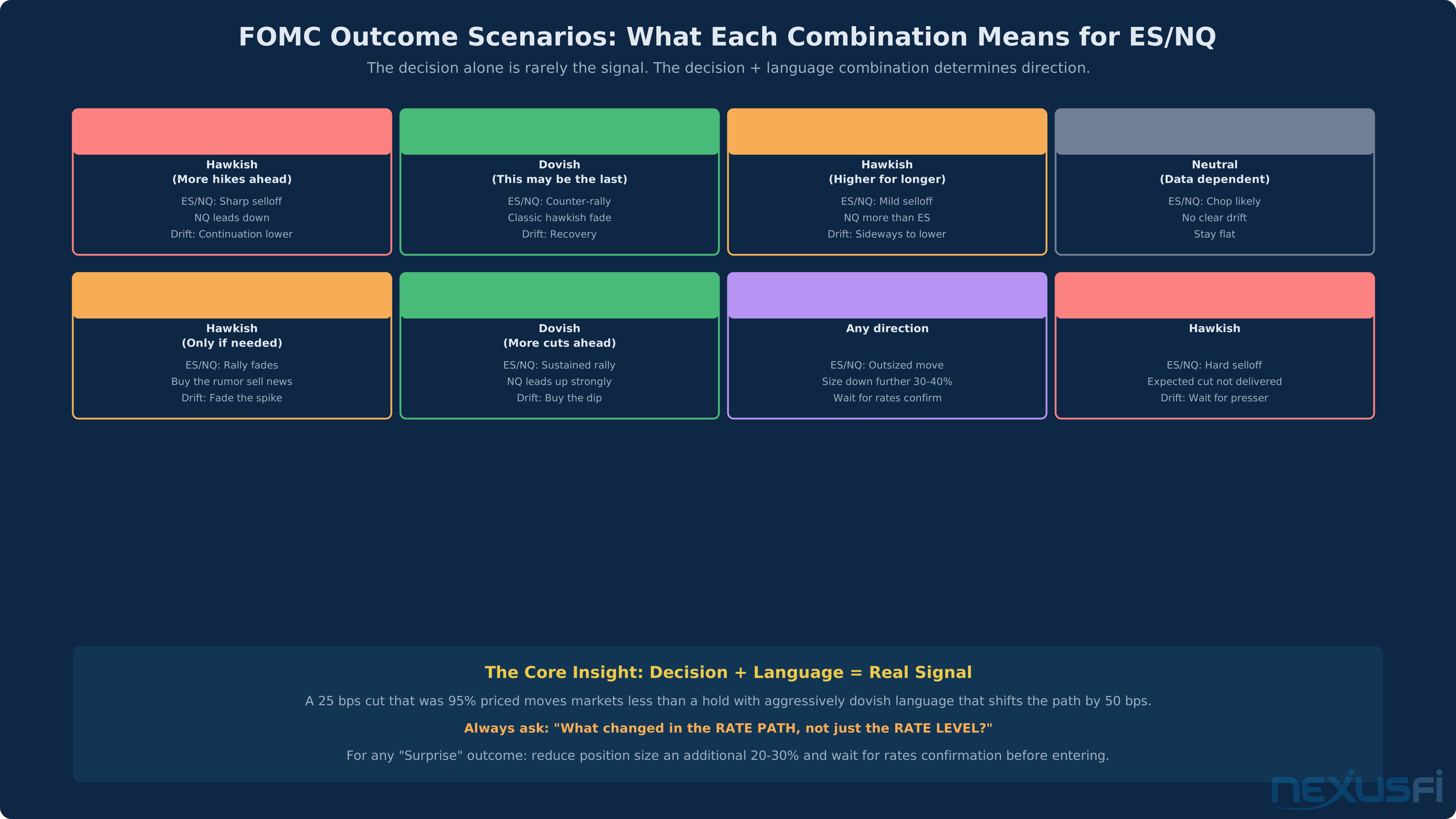
The decision is almost always priced in. This is the most important point for traders. By the time the FOMC announcement hits, the fed funds futures market has typically incorporated 90-95% of the rate decision probability into prices. The market has been trading the expected outcome for weeks. This means the first reaction to the statement is rarely about the rate change itself.
What isn't priced in is the guidance. The statement's language about future rate paths, the updated dot plot (if released), and the Chair's press conference all carry information the market couldn't perfectly anticipate. This is where the real volatility originates.
The Two-Phase Reaction Model #
Understanding FOMC volatility requires separating two distinct market phases that behave completely differently.
Phase 1: The Impulse (2:00 PM, First 60-90 Seconds) #
At 2:00 PM Eastern, the FOMC statement drops simultaneously to all market participants. In the first 60 to 90 seconds, you are watching algorithmic systems parse the text, compare the language to prior statements, run the rate decision against Fed Funds futures curves, and send orders to the exchange faster than any human can read the first paragraph.
During this window:
- Bid-ask spreads blow out — ES can go from 0.25 points wide to 2-5 points wide instantly
- Order book depth collapses — displayed liquidity evaporates as market makers pull quotes
- Both sides get swept — algorithms hunt stops on both sides to clear resting order imbalances before the real directional move begins
- Price action is algorithmically dominated — the first candle's range is frequently larger than the next 10 candles combined
This phase is untradeable for non-HFT participants. You are not competing with other retail traders during this window. You are competing with co-located systems that have faster connections, better parsing logic, and no emotional overhead. The bid-ask spread alone will consume any edge you think you have. The stop-hunting liquidity sweeps will fill you at the worst possible price if you're trading on instinct.
The correct action during Phase 1: observe.
Watch the price move. Watch the Fed Funds futures curve reprice. Do not click anything.
Phase 2: The Interpretation (2:30 PM Onward, Press Conference) #
At 2:30 PM Eastern, Chair Powell begins the press conference. This is where the market shifts from algorithmic text parsing to human interpretation of nuance, intent, and policy direction.
During Phase 2:
- Spreads normalize — liquidity begins to return to the order book
- Rate expectations realign — the market processes implications for future meetings
- A durable directional bias often emerges — this is the tradeable move
- Second-order effects appear — implications for earnings, economic growth, credit markets
The press conference Q&A is where you learn what the rate decision actually means for future policy. A "hawkish hold" (no rate change but aggressive language about future hikes) can hit ES harder than an actual rate cut. A "dovish hike" (increase but dovish language about future moves) can spark a rally. The mechanics of what the statement says matter less than what the Chair implies about the path forward.
The correct action during Phase 2: evaluate, then enter selectively.
Fed Funds Futures: The Essential Confirmation Layer #
The single most important analytical tool for FOMC trading is not a chart indicator. It is the Fed Funds futures (ZQ) curve.
How Fed Funds Futures Work #
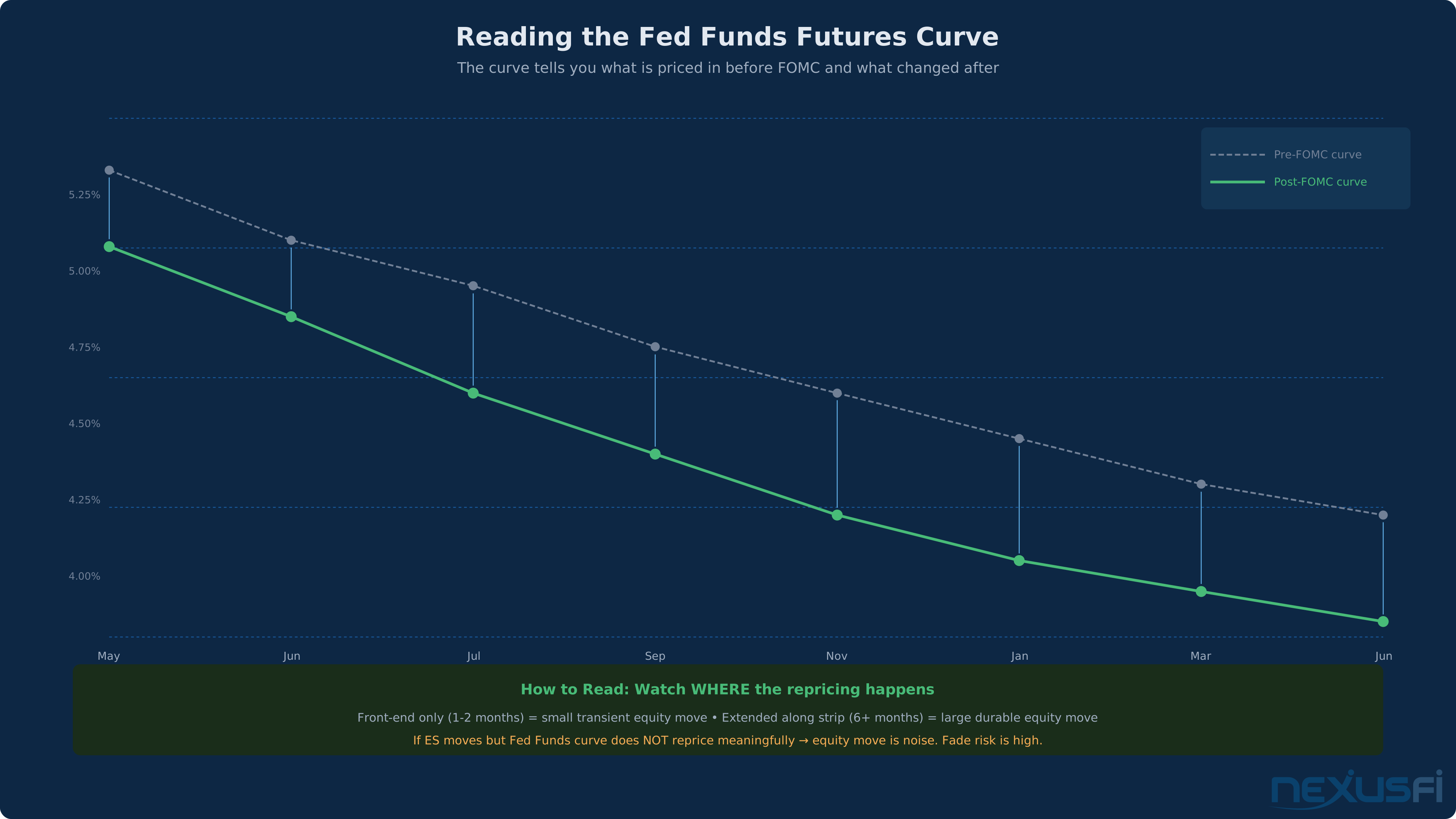
Fed Funds futures contracts reflect the expected average federal funds effective rate for a specific calendar month. The price is quoted as 100 minus the implied rate. If the December contract trades at 95.50, the market expects an average December funds rate of 4.50%.
By stringing together contracts across months, you can read the market's implied rate path: when the first cut is expected, how many cuts are priced for the year, where the terminal rate sits.
Reading the Pre-Event Curve #
Before every FOMC, your first analytical step is to record the current implied rate path:
- What is the probability of a rate change at this meeting? (Derived from the front contract)
- How many moves are priced for the next 12 months? (Reading along the strip)
- Where does the market expect the terminal rate? (The end of the strip)
These numbers give you the market's prior. The FOMC statement will update these numbers. The size of the update — and its location on the curve (front-end only vs. extended along the strip) — tells you how significant the surprise was.
Interpreting Post-Event Repricing #
After the statement drops, watch how the Fed Funds curve changes:
Front-end only repricing: The current meeting was slightly different than expected, but the path forward is unchanged. This is a smaller, more transient ES/NQ move.
Extended repricing along the strip: The market is reassessing the entire rate path — multiple meetings repriced simultaneously. This is a bigger, more durable equity move.
ES/NQ versus rates divergence: If ES rallies but Fed Funds futures don't reprice meaningfully in the dovish direction, the equity move is positioning-driven or noise-driven. It has higher reversion risk. If ES rallies and the Fed Funds curve simultaneously shifts dovish, the two are confirming each other. The move is more likely to continue.
This correlation check is the foundation of every entry decision on FOMC day.
ES vs. NQ Sensitivity: Knowing Which to Trade #
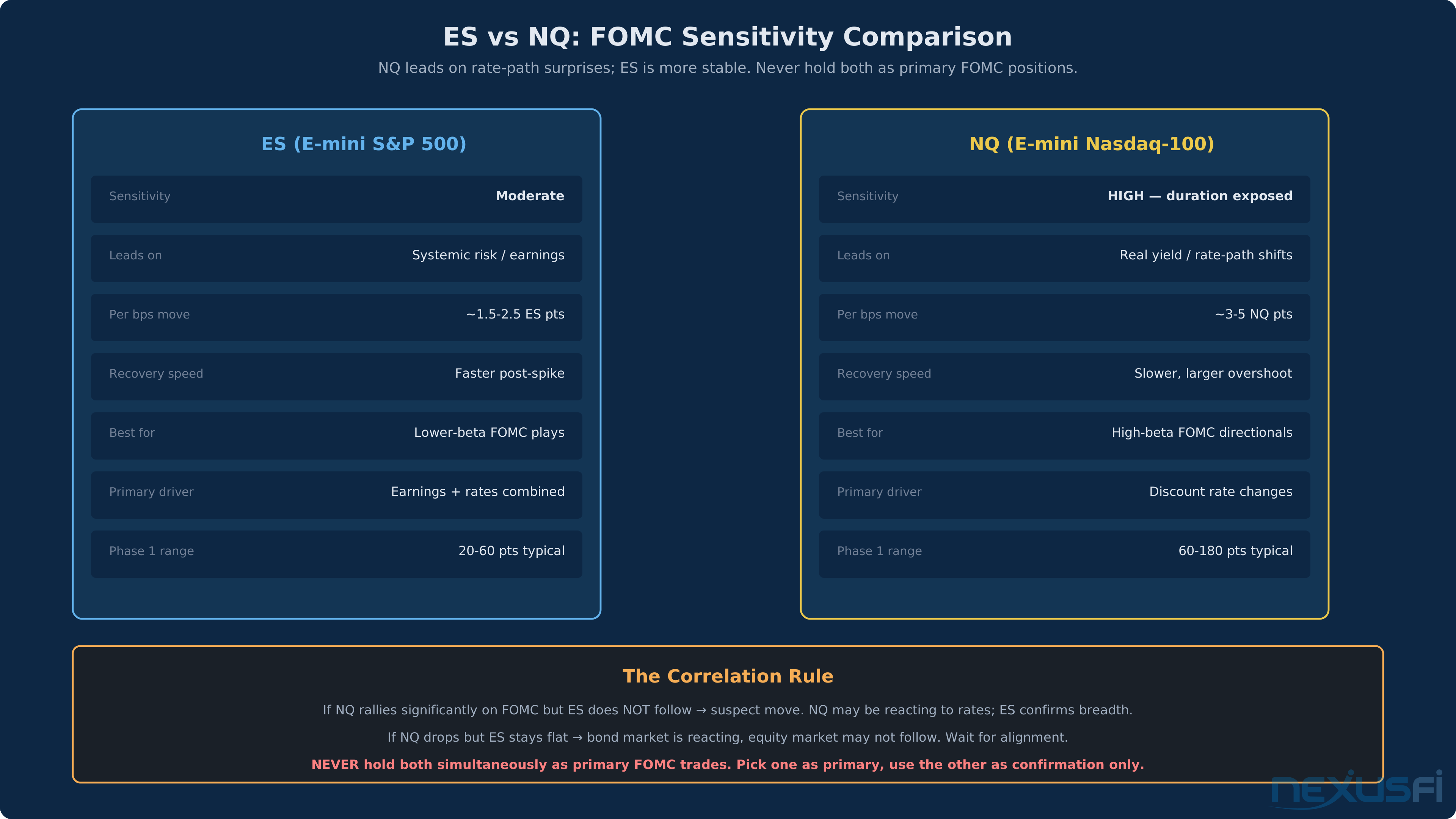
ES and NQ react to FOMC outcomes differently, and understanding the difference helps you size and time your trades.
ES (E-mini S&P 500):
- Tracks a broader, more economically balanced index
- Absorbs more positioning and hedging flows
- Moves on both rate path and economic growth signals
- Less sensitive per basis point of front-end repricing
- More stable intraday following the initial volatility
NQ (E-mini Nasdaq-100):
- Dominated by growth and technology companies with high duration sensitivity
- More sensitive to real yield changes and discount rate shifts
- Typically leads in magnitude during rate-path surprises
- Can move 2-3x more than ES per basis point of front-end repricing
- More volatile in both directions during the press conference
Practical implications:
- When rate path surprises are your thesis, NQ is the higher-beta vehicle
- When you're less certain and want more stable exposure, ES is the primary vehicle
- Never hold both simultaneously as primary directional trades — they're correlated, and your risk compounds without diversification benefit
- Use the other as a confirmation tool: if ES rallies but NQ doesn't follow, the move is suspect
Positioning Strategies #
There are three main strategic approaches to FOMC, each suited to different market conditions and trader profiles.
Strategy A: Event Surprise (Directional) #
Premise: Trade the gap between what Fed Funds futures implied before the announcement and what actually happened.
Setup:
- Calculate the implied probability of each outcome (hold, cut, hike) from Fed Funds futures before the meeting
- Identify which outcome is a surprise relative to the 80-85% probability outcome
- If the surprise is significant enough (more than 10-15 basis points of front-end repricing), take a directional trade in the confirmed direction
- Wait for Phase 1 to complete before entering — let the sweep finish
Entry trigger: Fed Funds curve reprices meaningfully in one direction, and ES/NQ price action confirms (not leading) the rates move.
Best when: There is genuine uncertainty about the meeting outcome OR the language is much different from prior statements.
Avoid when: The decision was 95%+ priced in and the language is boilerplate — there's no surprise to trade.
Strategy B: Fade vs. Follow-Through (Microstructure) #
Premise: Trade the second move, not the first. Watch whether Phase 1's initial impulse holds or reverses.
Setup:
- Observe Phase 1 completely — note the direction and magnitude of the initial sweep
- After 2-3 minutes, assess whether the order book is rebuilding on the side of the initial move (follow-through) or the opposite side (reversal)
- Check Fed Funds confirmation: does the curve agree with where ES/NQ moved?
- If rates confirm the move and liquidity improves in the direction of the trend, consider a follow-through entry
- If rates don't confirm and liquidity rebuilds on the reversal side, consider a fade
The fade setup specifics:
- Initial impulse takes price well beyond pre-announcement key levels
- Fed Funds curve moves minimally or not at all
- DOM rebuilds against the move direction
- Volume fades rapidly after the initial burst
Best when: Phase 1 produces an obvious over-reaction relative to the rates repricing.
Danger: Fading the first move of a genuine surprise is the worst possible trade. Size appropriately.
Strategy C: Press Conference Drift #
Premise: Trade the sustained directional move that establishes itself during and after the press conference.
Setup:
- Skip Phase 1 entirely — don't trade the statement
- During the press conference, listen for the Chair's language on data dependency, specific thresholds, and forward guidance
- Wait for the market to confirm a direction after the press conference volatility settles (typically 30-45 minutes after the start)
- Enter in the confirmed direction with the VWAP as your key reference
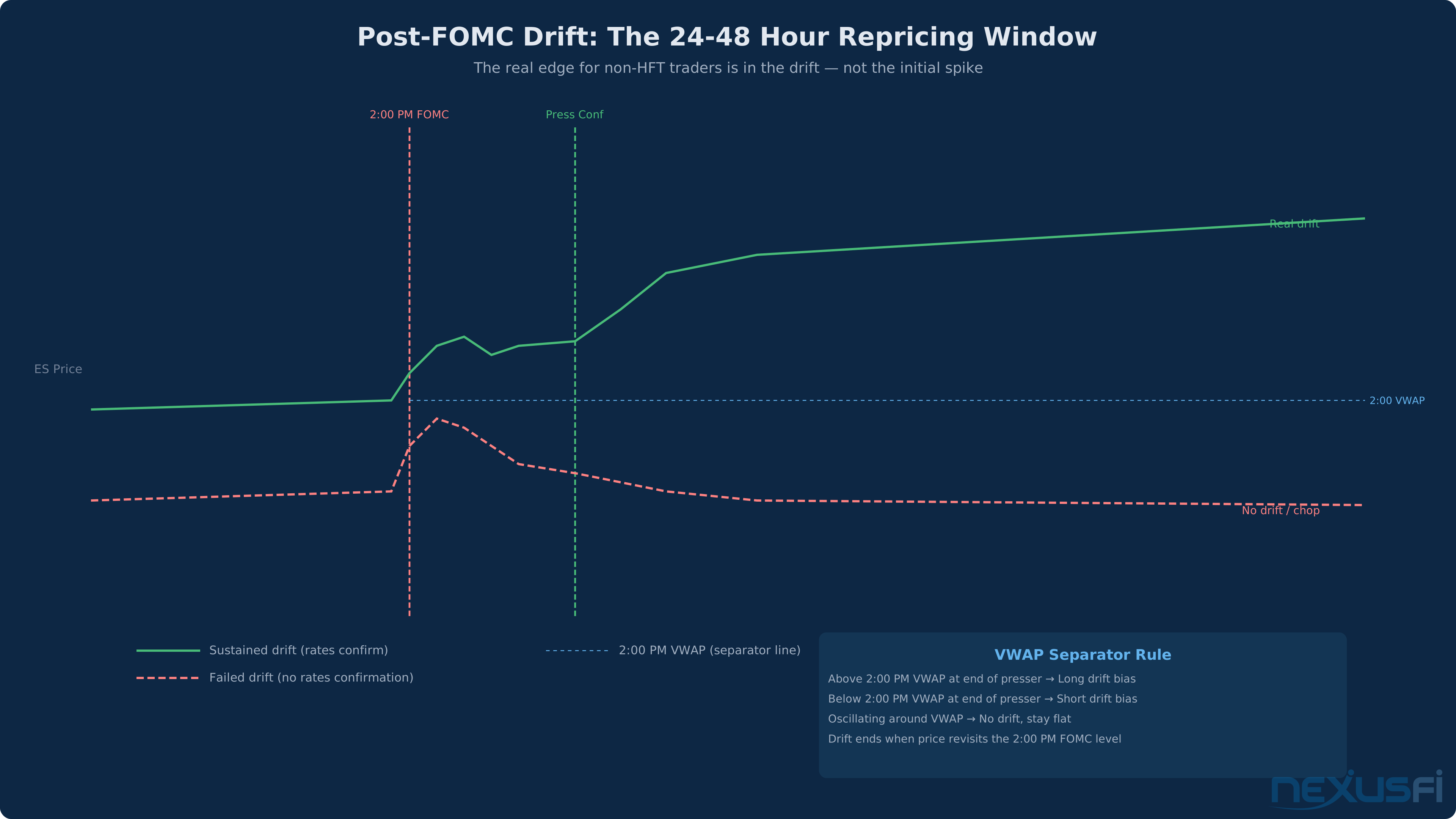
- Use the 2:00 PM VWAP as your separator: closing above it suggests follow-through bias, being pinned to it suggests chop
The VWAP separator rule:
- If ES closes the press conference hour above the 2:00 PM VWAP: long bias for the drift
- If ES closes the press conference hour below the 2:00 PM VWAP: short bias for the drift
- If ES is oscillating around the 2:00 PM VWAP: no clear drift, stay flat
Best when: Press conference language clearly confirms or contradicts the statement, creating durable positioning.
Hold duration: Drift trades can extend 24-48 hours beyond FOMC day. The full repricing often takes more than one session.
Risk Management: Stricter Than Any Other Day #
Every experienced FOMC trader agrees on one thing: your standard risk management rules are insufficient for Fed day. The volatility regimes are categorically different.
The 50-70% Position Size Rule #
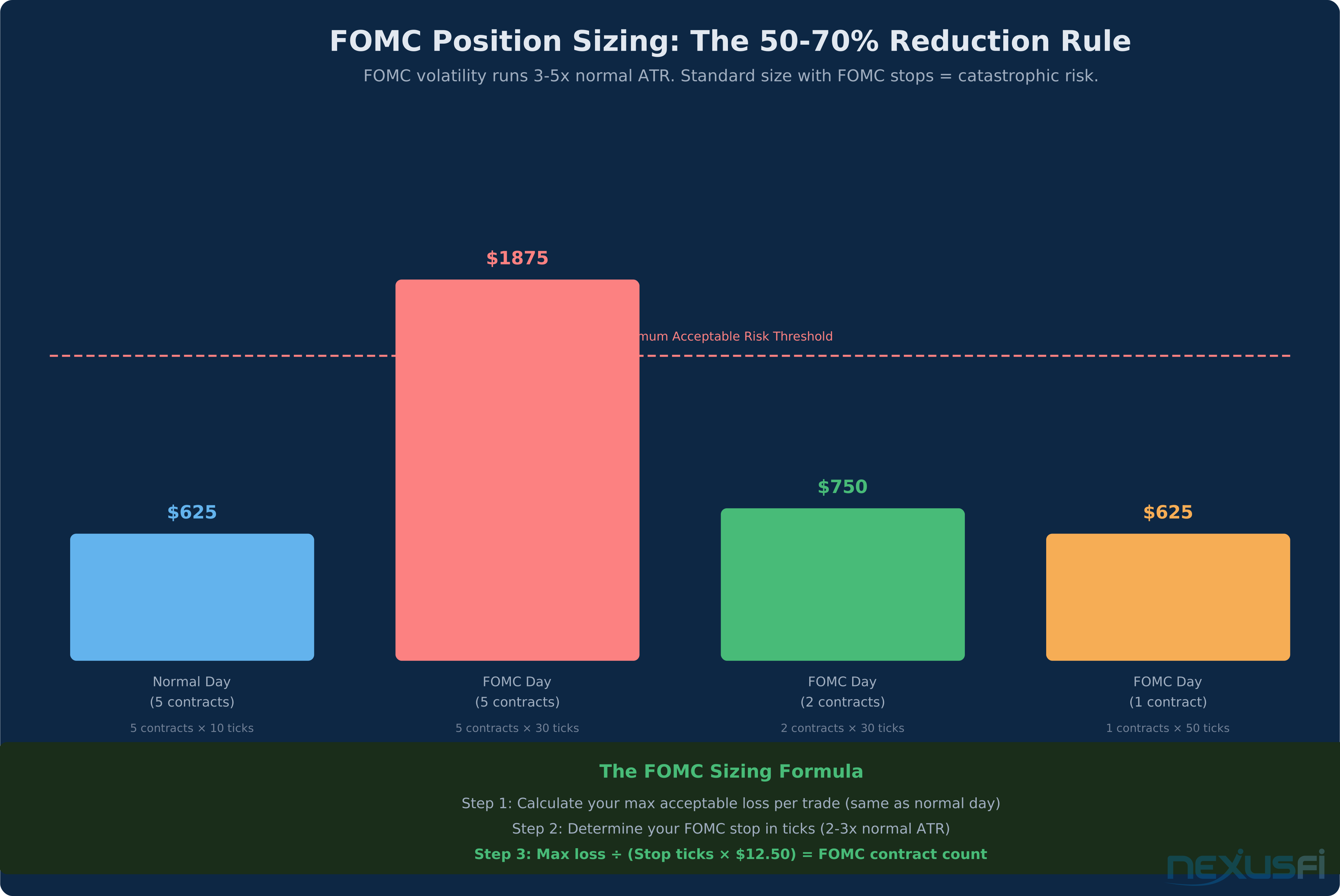
Reduce your nominal position size by 50% to 70% from your standard session baseline. This isn't optional or aspirational — it's the rule that keeps you in the game across the inevitable FOMC losses.
The logic: volatility on FOMC days routinely runs 3-5x normal intraday ATR. A stop that would be 10 ticks in a normal session might need to be 40-50 ticks on FOMC day to avoid being swept by the liquidity hunts. With standard position size and FOMC-appropriate stops, your per-trade risk exposure becomes 3-5x higher. The 50-70% size reduction restores your dollar risk to acceptable levels.
Example: If you normally trade 5 ES contracts with a 10-tick stop ($625 risk), on FOMC day:
- Use 2 contracts with a 30-tick stop ($750 risk) — approximately equivalent dollar risk at 3x normal volatility
- Use 1 contract with a 50-tick stop ($625 risk) — equivalent dollar risk at 5x normal volatility
Stop Placement: ATR-Based, Not Technically-Based #
On FOMC days, technical stops fail. The market sweeps through "obvious" support/resistance, double bottoms, swing lows, and VWAP with no hesitation because the algorithms are specifically designed to clear resting liquidity at these levels before the real move begins.
Use ATR-based stops instead:
- Calculate the 14-day ATR on your execution timeframe before the event
- On FOMC day, multiply your standard ATR stop by 2-3x
- Place stops beyond obvious noise levels, not at them
This keeps you from being stopped out on a Phase 1 sweep that ultimately resolves in your favor.
Hard stops vs. mental stops:
- Hard stops are still necessary — FOMC days include scenarios where price doesn't come back
- But consider setting hard stops at extreme levels (3x ATR or beyond) to avoid whipsaw fills
- Use mental stops or OCO orders as your primary exit mechanism, with the hard stop as catastrophic protection only
The Pre-Defined Kill Switch #
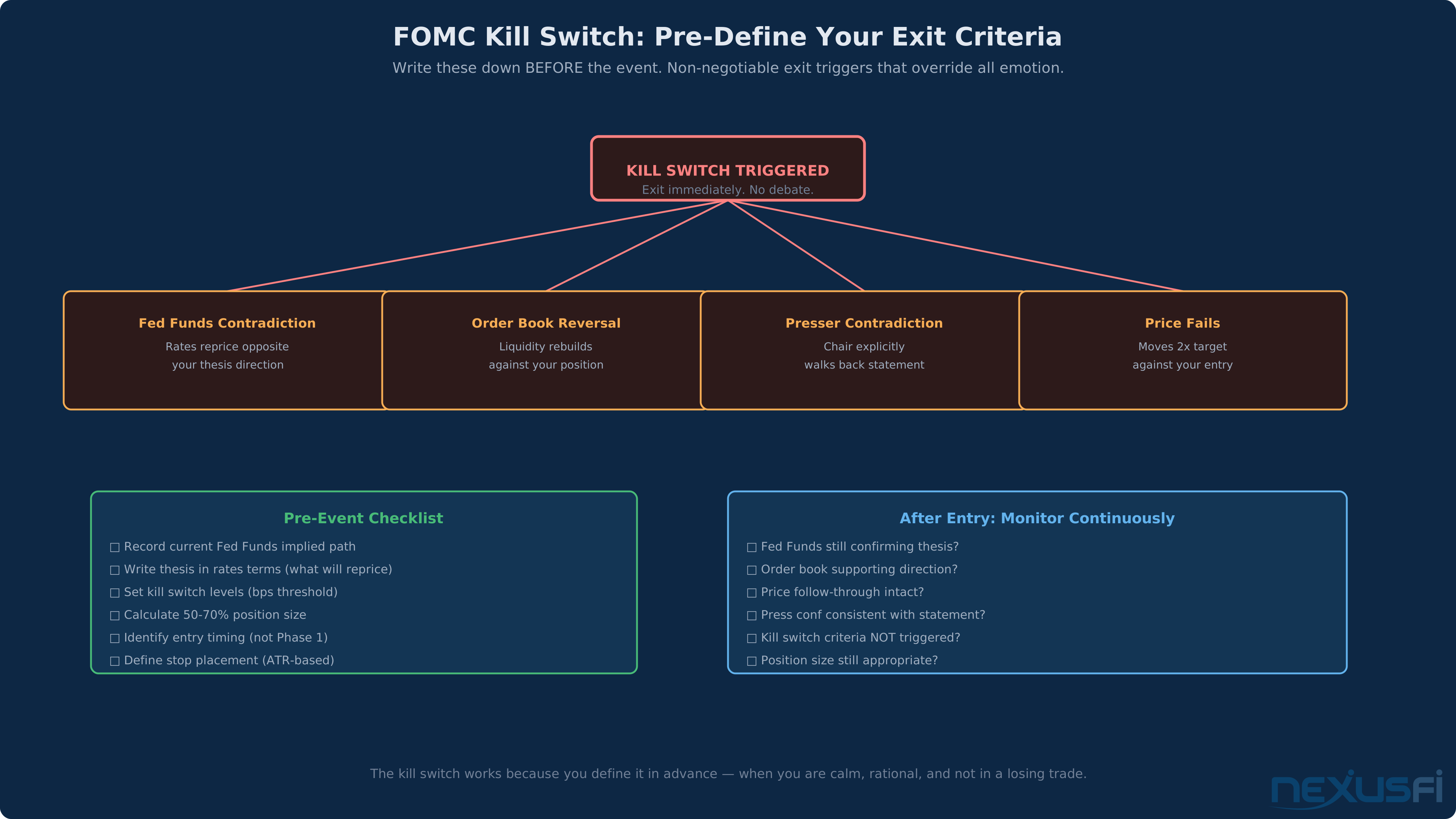
Before every FOMC, write down your kill switch criteria. If these conditions are met, you exit immediately without deliberation:
- Rates contradiction: Fed Funds repricing moves against your thesis by more than X basis points (define X before the event based on current volatility)
- Order book reversal: Liquidity rebuilds against your position direction with no sign of support
- Price fails to follow through: After entering, price moves against you more than 2x your initial move target
- Press conference contradiction: Chair explicitly walks back the tone you were trading
The kill switch discipline is non-negotiable. FOMC trades that "almost worked" are the most dangerous — they encourage you to hold longer, add to losers, and eventually take a catastrophic loss. If the thesis is invalidated, exit. Rebuild for the next trade.
The Zero-DTE Warning #
If you trade options on futures (or zero-days-to-expiration equity options as a supplementary read), be extremely cautious with gamma-heavy positions entering the 2:00 PM window.
Implied volatility in options typically runs elevated going into FOMC, then collapses sharply ("volatility crush") after the announcement. If you're long gamma (straddles, strangles), the crush can destroy the position even if price moves much. If you're short gamma, the initial spike can cause catastrophic losses before the crush.
For futures traders: if you use options to hedge or confirm ES/NQ trades, adjust your option positions BEFORE 2:00 PM. Don't be holding uncovered gamma through the release.
Reading the Press Conference #
The press conference is a separate event that often determines whether the statement-driven move holds or reverses. Developing fluency in reading the Chair's language is a genuine edge.
Language Patterns That Matter #
Data-dependent language: When the Chair emphasizes specific economic thresholds (e.g., "we need to see more months of inflation data"), the market interprets this as a higher bar for future action. Generally dovish (fewer hikes) or a signal that cuts need more evidence.
Balance of risks: Listen for whether the Chair frames risks as "two-sided" (inflation AND recession risk balanced) vs. "primarily" one direction. Two-sided framing is more neutral; one-directional framing is a policy signal.
Labor market vs. inflation weighting: Which does the Chair discuss more? Greater focus on labor market weakness signals more openness to cuts. Greater focus on inflation persistence signals a hold-for-longer stance.
"No preconceived notion" language: When the Chair explicitly says they're not pre-committed to a path, markets typically interpret this as dovish (fewer future hikes).
Financial conditions language: If the Chair mentions concerns about too-loose financial conditions, this is a hawkish signal even during a hold or cut.
The Classic Reversal Setup #
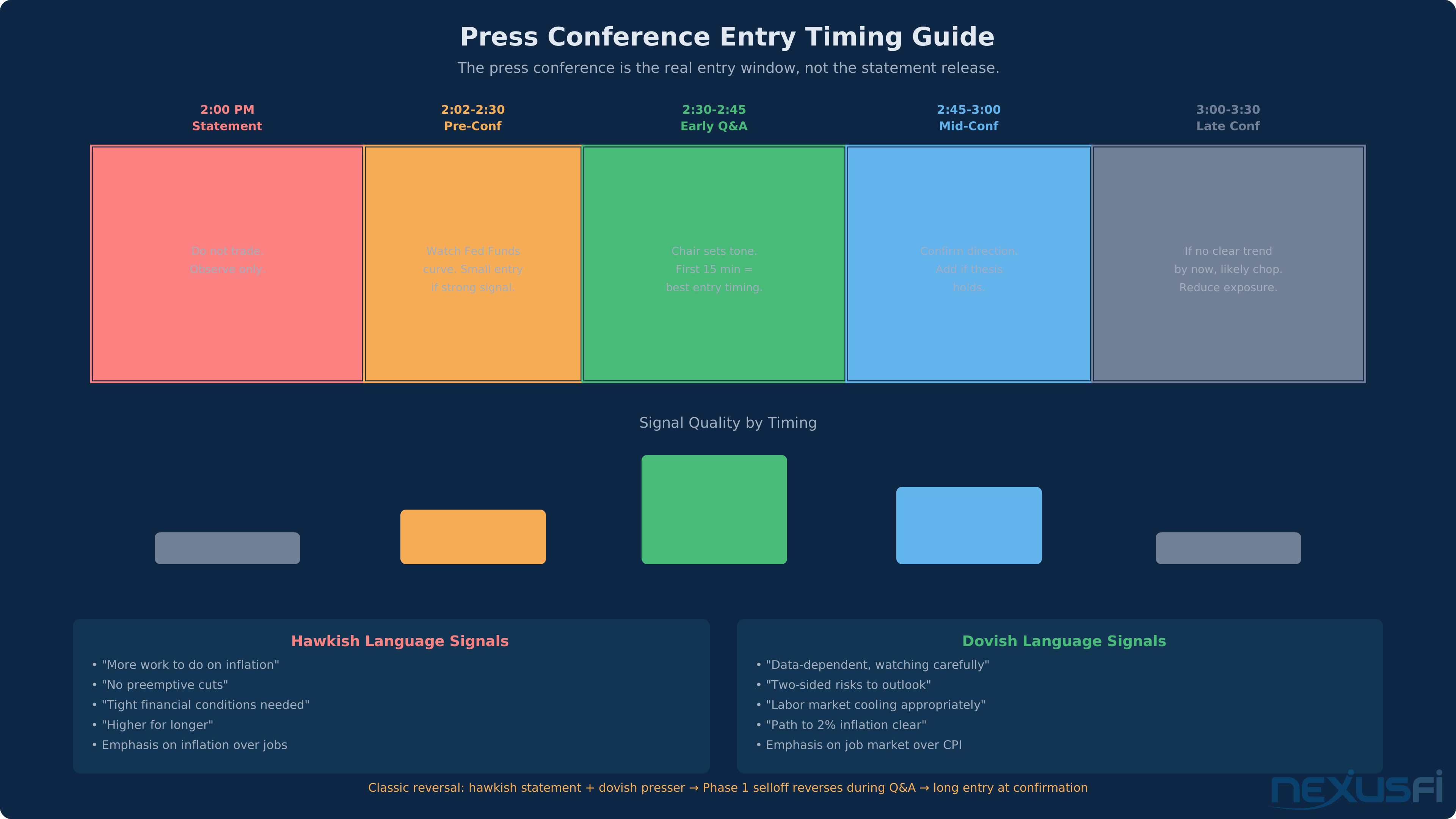
Hawkish statement + dovish press conference:
- Statement drops with language that reads hawkish (mentions of more hikes, concern about inflation)
- ES/NQ sells off sharply in Phase 1
- Press conference begins and Chair softens the message, emphasizes two-sided risks
- ES/NQ reverses — the Phase 1 move is fully faded by end of press conference
This setup is one of the most reliable recurring patterns in FOMC trading. It happens when the statement is written by committee and contains consensus hawkish language, but the Chair (who has more flexibility in real-time Q&A) reveals a more subtle or dovish view.
The reverse: Dovish decision + "but inflation isn't solved" press conference. Market rallies on the headline, Chair walks it back, rally fades. Common when the rate cut was widely expected but the Chair refuses to commit to further cuts.
Timing Your Entry Around the Press Conference #
The press conference typically runs 45-60 minutes. The directional signal usually clarifies in two windows:
Early Q&A (first 15 minutes): The first questioners typically ask the most direct policy questions. The Chair's initial answers often set the tone.
Mid-conference (20-35 minutes): If the early Q&A established a clear tone, the market usually commits to a direction during this window. This is often the best entry timing.
Late press conference (40+ minutes): By this point, if a clear trend hasn't emerged, it probably won't. Chop or range-bound price action in this window signals no clear drift opportunity.
The Post-FOMC Drift #
Many FOMC trading opportunities don't occur on FOMC day at all. They occur in the 24-48 hours afterward, as the market continues digesting the new rate environment.
Why Drift Happens #
After FOMC:
- Positioning unwinds: Hedges placed before the event are lifted
- Model recalibration: Quantitative funds update their models to reflect the new rate path; portfolio rebalancing follows
- Information reaches full consensus: Analysts interpret the statement, press conference, and dot plot over hours and days — their conclusions move markets
- Second-order effects appear: The rate path change affects sector rotation, credit spreads, currency markets, commodity prices, and eventually flows back into equity futures
Trading the Drift #
The drift is best approached as a separate, independent trade from the FOMC-day entry:
- Confirm direction from Day 1: The next morning, is the market trading in the same direction as the post-press conference move? Or has it reversed overnight?
- Session open check: Does the RTH open confirm the Globex move? A Globex continuation that fades at the RTH open suggests the drift is exhausting.
- Fed Funds futures: Are they still repricing in the same direction the next morning?
- VWAP from the 2:00 PM announcement: Is the ES/NQ price above or below this level the next morning? If still above, the drift is ongoing.
Exit rule for drift trades: The drift ends when ES/NQ revisits the 2:00 PM announcement level. If you hold a drift trade and it retraces back to the exact price it was at 2:00 PM, the drift has failed. Exit.
Common Drift Mistakes #
Assuming the first move equals the drift: The initial Phase 1 spike is often entirely reversed. What ultimately determines the drift direction is the press conference's message, not the first 90-second move.
Over-staying a drift: Drift trades are not trend trades. They're digestion moves. Once the market has fully absorbed the FOMC implications (typically 1-2 sessions), the normal range/momentum dynamics resume.
Trading drift with FOMC-day position sizing: Once you're past the high-volatility window (after the press conference settles), you can gradually normalize your position size back toward standard. Don't keep trading 50% size for three days after FOMC.
The Pre-Event Setup Routine #
FOMC preparation is as important as FOMC execution. Here is the complete pre-event checklist:
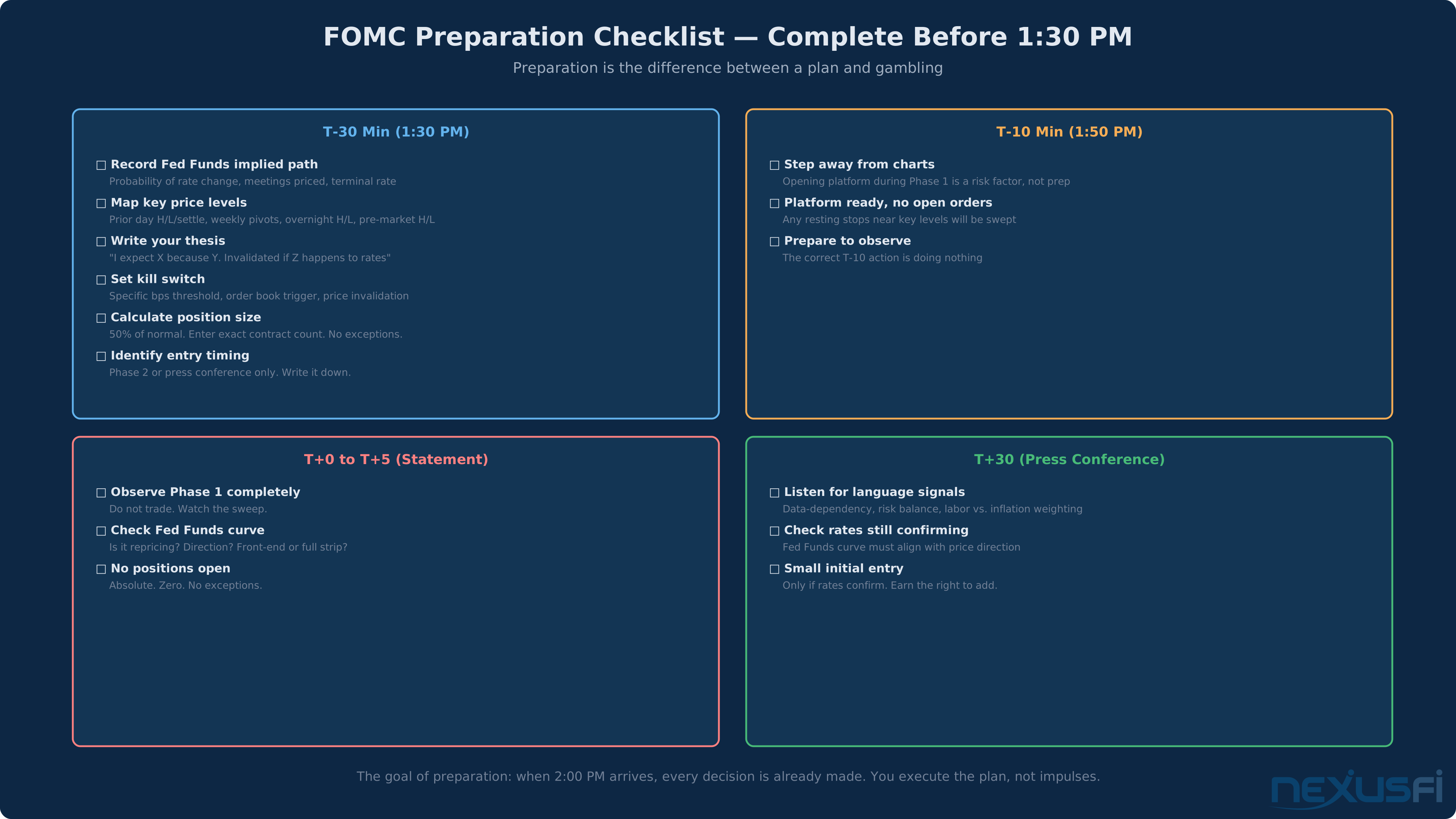
T-30 minutes (1:30 PM Eastern):
- Record current Fed Funds implied path:
- Probability of current meeting outcome (cut/hold/hike)
- Number of moves priced for the next 12 months
- Terminal rate expectation from the strip
- Map key price levels:
- Prior day high, low, settlement
- Weekly pivot levels
- VWAP from prior day's close
- Pre-market high and low
- Overnight session high and low
- Write your thesis: "I expect [outcome] because [reasoning]. If [this] happens to the Fed Funds curve, I'll see it as confirmation. If [alternative outcome], my thesis is wrong."
- Set kill switch criteria: Write down exactly what would invalidate your thesis.
- Calculate position size: 50% of standard. Enter the exact contract count.
- Identify entry timing: Are you trading Phase 1 (don't), Phase 2 (cautiously), or press conference (preferred)?
T-10 minutes (1:50 PM Eastern):
- Step away from the charts. Opening the trading platform during Phase 1 is a risk factor, not a preparation step. If you've done your pre-event work, there's nothing to do now.
- Have your trading platform ready but no open orders. Any resting stops near key levels will be swept.
- Prepare to watch, not act.
T+0 to T+5 (Statement drop):
- Observe Phase 1 completely.
- Check Fed Funds curve — is it repricing? Direction? Magnitude?
- Do not open any positions.
T+5 to T+30 (Pre-conference window):
- Are rates confirming price? (Essential check before any entry.)
- Is the order book normalizing?
- Any initial position can be taken here with very small size if thesis confirms — but only if rates confirm.
T+30 to T+90 (Press conference window):
- Listen and watch simultaneously.
- Enter with small size if thesis confirms during press conference.
- Add if direction is established and market microstructure is stable.
NexusFi Community Insights #
The NexusFi Spoo-nalysis thread — the longest-running ES futures analysis thread on the platform — has documented FOMC reactions for over a decade, and the collective wisdom aligns closely with what the institutional framework suggests.
@tigertrader has repeatedly noted that markets "heavily hedged have less of a chance of an outsized move" — a direct reference to the reality that when the options market has pre-loaded protection, the vol-of-vol crush after the announcement can actually stabilize prices rather than amplify them.
— describing how the initial read of the statement drove a sharp move that only made sense in context of what the market had positioned for beforehand. Understanding the prior positioning explains a reaction that would otherwise seem random.
@cogito's pre-FOMC analyses from the Elite Circle demonstrate the level of preparation sophisticated traders apply: key levels mapped, overnight analysis completed, and a clear framework for interpreting multiple possible outcomes before the statement ever drops. The analysis isn't a prediction — it's a map of contingencies.
@michaelroth noted that "conventional wisdom seems to be not to trade FOMC days" while simultaneously acknowledging that some periods of FOMC volatility are "tradeable half the time" — which is precisely the nuance this framework addresses. Not trading the statement itself, but trading the aftermath when the market has established a direction.
@Miesto's journal documented a textbook FOMC structure: price establishing a range with double bottom and swing high, liquidity building below and above, and the announcement acting as the trigger that resolved the range. The patience to wait for the range to resolve — rather than to anticipate the direction beforehand — is exactly the institutional approach that works.
Common Failure Modes #
Every experienced FOMC trader has a list of mistakes they've made. These are the most expensive:
Trading the decision instead of the path. By the time the announcement hits, the rate change is priced. You're not getting paid for correctly guessing "25 bps cut." You're getting paid (or punished) for correctly anticipating how the language changes the rate path expectations.
Oversizing because "ES usually rallies on cuts." Survivorship bias: you remember the times it worked. The times it didn't, ES went the other direction for hundreds of points and took accounts with it.
Holding through the press conference with thesis anchored to the statement. The statement is 200 words of committee compromise. The press conference is 45 minutes of the Chair's actual views. They frequently diverge.
Ignoring Fed Funds confirmation. If ES/NQ moves but Fed Funds futures don't reprice meaningfully, the equity move is fragile. It's either noise or positioning-driven. Treat it so.
Assuming drift is directional. Around genuine uncertainty, chop is the norm. Many FOMC days produce high volatility in Phase 1, mean-reversion in Phase 2, and then a choppy range for the rest of the week. The drift only appears when the surprise is real.
Confusing high volatility with high probability. The ES can move 80 points in 90 seconds. That tells you nothing about which direction the move will sustain. Volatility is not edge.
FOMC Trading in a Neutral Environment #
Special considerations apply when the market genuinely doesn't know what the Fed will do — when the Fed Funds probability for a rate change is in the 40-60% range rather than the typical 85-95%.
In this environment:
- Phase 1 is even more untradeable. Both algorithmic scenarios get pre-programmed, and the first move may represent whichever algorithm fires first rather than market consensus.
- Fed Funds repricing after the announcement is more meaningful. A genuine surprise generates a larger curve shift.
- The press conference carries more weight. In uncertain environments, the Chair's forward guidance matters more than the actual decision.
- Size should be reduced further. 30-40% of normal, not 50%.
- Target the drift, not the statement reaction. The eventual sustained move in a genuinely uncertain FOMC is more predictable after the press conference than during Phase 1.
A Final Principle #
FOMC trading is at the core about selectivity, not participation. The market offers you eight opportunities per year to trade the most volatile scheduled event in futures trading. The correct response to that opportunity is not to trade all eight aggressively. It's to identify the two or three where you have genuine edge based on the specific conditions — surprising outcome, durable direction from the press conference, rates confirmation aligned with price — and sit out the rest.
The traders who consistently profit from FOMC events aren't the ones who have the best guess about what the Fed will do. They're the ones who have the discipline to wait until the market has shown them what the sustainable move is, and then execute precisely within a risk framework that keeps them solvent through the events that go against them.
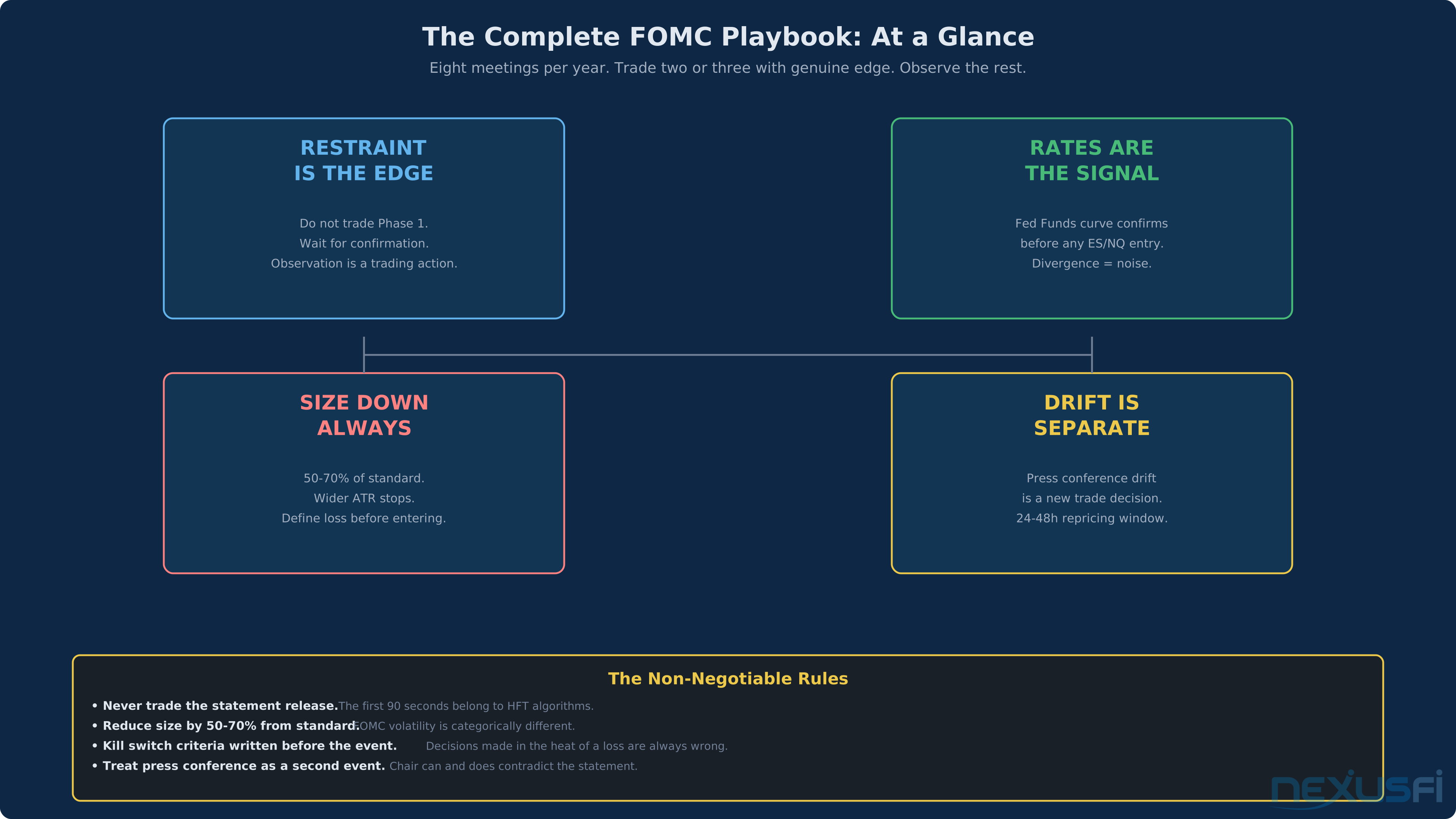
Observation is a trading action. Waiting is a position. The restraint to miss the first move and capture the confirmed second move is a genuine edge that compounds across eight meetings per year.
Knowledge Map
References This Article
Articles that build on this topicCitations
- — Trading FOMC announcements - ES futures approach (2022) 👍 12“The 2-minute window after statement release is basically untradeable for most retail traders. The spreads blow out, the fills are terrible, and you're competing against algos that have co-located servers. Wait for the dust to settle.”
- — How I trade Fed days - method and results (2021) 👍 19“Fed Funds futures are showing you the probability distribution before the announcement. If the market is pricing an 85% chance of a 25bp cut, a 25bp cut is essentially priced in. The surprise element is what matters, not the decision itself.”
- — NQ vs ES sensitivity to rate surprises (2023) 👍 8“NQ consistently shows more sensitivity to dovish surprises than ES. The tech weighting makes NQ a better vehicle when you expect a rate-cut surprise or dovish language shift.”
- — Position sizing on event days - my rules (2020) 👍 31“The biggest mistake I made early on was holding my normal position size into the FOMC announcement. Now it's a hard rule: half size going into the event, no exceptions. The volatility expansion makes a normal position behave like a doubled position in terms of risk.”
- — Press conference as the real trade - FOMC strategy (2022) 👍 16“The first 90 seconds of Powell's statement are usually just reading prepared text. The real information comes when he takes questions. The questions you watch for are the ones from hawk-leaning reporters or the WSJ Fed correspondent - those usually get the most direct answers about the rate path.”