



Price Action Patterns for Futures Trading: The Bar-by-Bar Reading Framework
Overview #
Every bar on your futures chart is a completed auction. The moment it closes, it tells you exactly what buyers and sellers did — who showed up, who had conviction, and who ran. Most traders see patterns. The best traders read stories. The bar-by-bar methodology gives you a systematic grammar for reading those stories in real time, and that grammar forms the foundation for some of the most effective futures trading techniques in active use on NexusFi today.
This article covers the core price action patterns used by discretionary futures traders: how to read individual bars, how to use the 20 EMA as a regime identifier rather than a signal generator, how to distinguish trending markets from trading ranges, and how to execute the specific patterns — two-legged pullbacks, bull and bear flags, channel entries, and exhaustion signals — that consistently appear across ES, NQ, CL, and ZN.
Prerequisites: This article assumes you already understand futures contract specifications (tick size, point value, margin), can read candlestick charts, know what moving averages are, and have a working grasp of basic support and resistance. If you're new to futures, start with Futures Contract: The Standardized Agreement That Moves Global Markets and Futures Order Types first.
The Bar-by-Bar Grammar: Reading Every Candle as a Discrete Auction #
The starting point of this methodology is treating each bar as a self-contained auction record. When a bar closes, it encodes exactly four pieces of information: where the auction opened, where it went, and where participants ultimately agreed to leave it. The O/H/L/C relationships are not decorative — they're the auction's balance sheet.
Signal Bars and Entry Bars #
Every trade in this methodology involves two bars working in sequence:
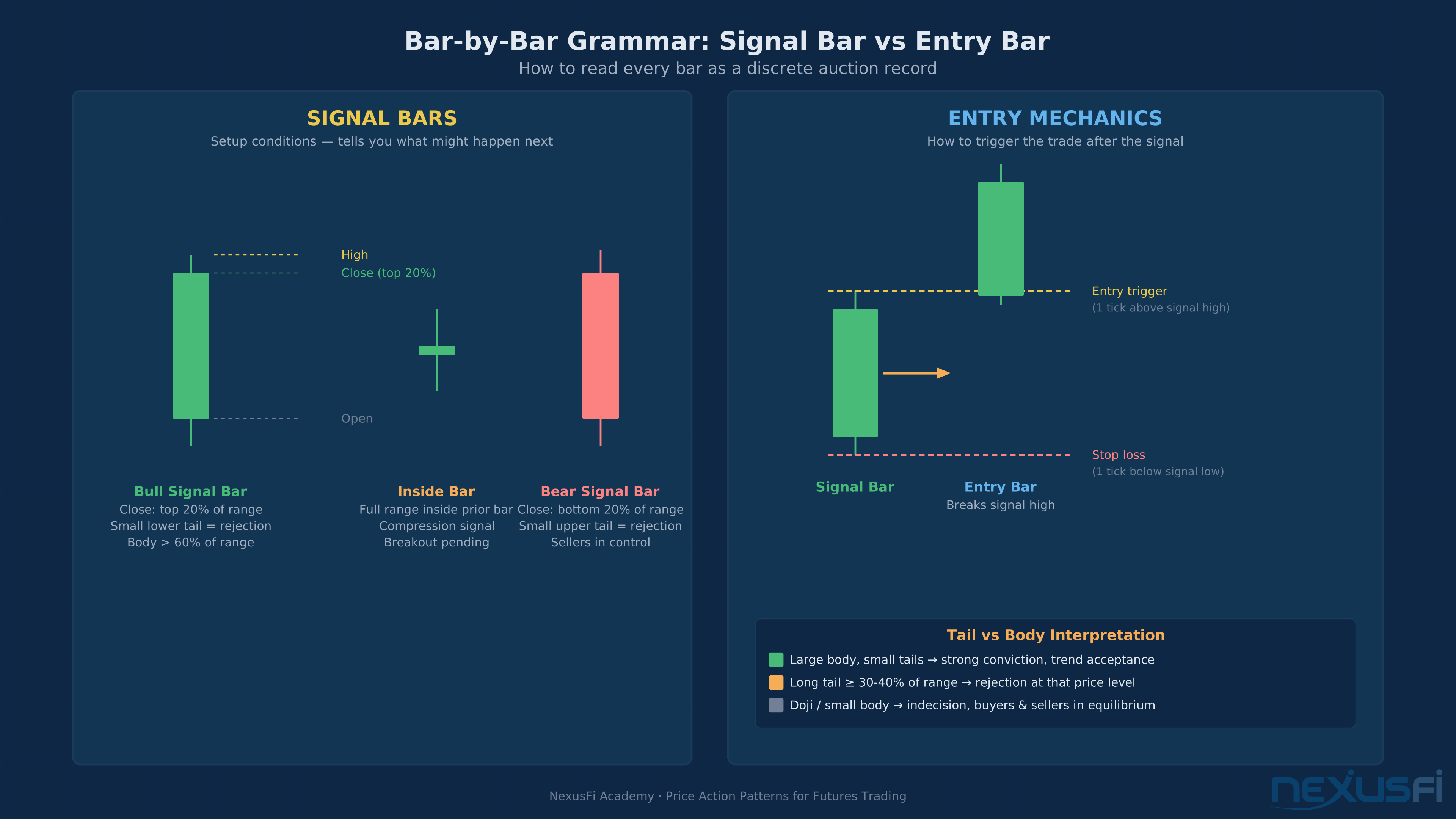
The signal bar proves conviction. It's the bar that creates a potential setup condition — it shows a decisive close, rejection of a price level through a tail, or a specific structural pattern. You don't trade the signal bar; you use it to identify that a trade might be forming.
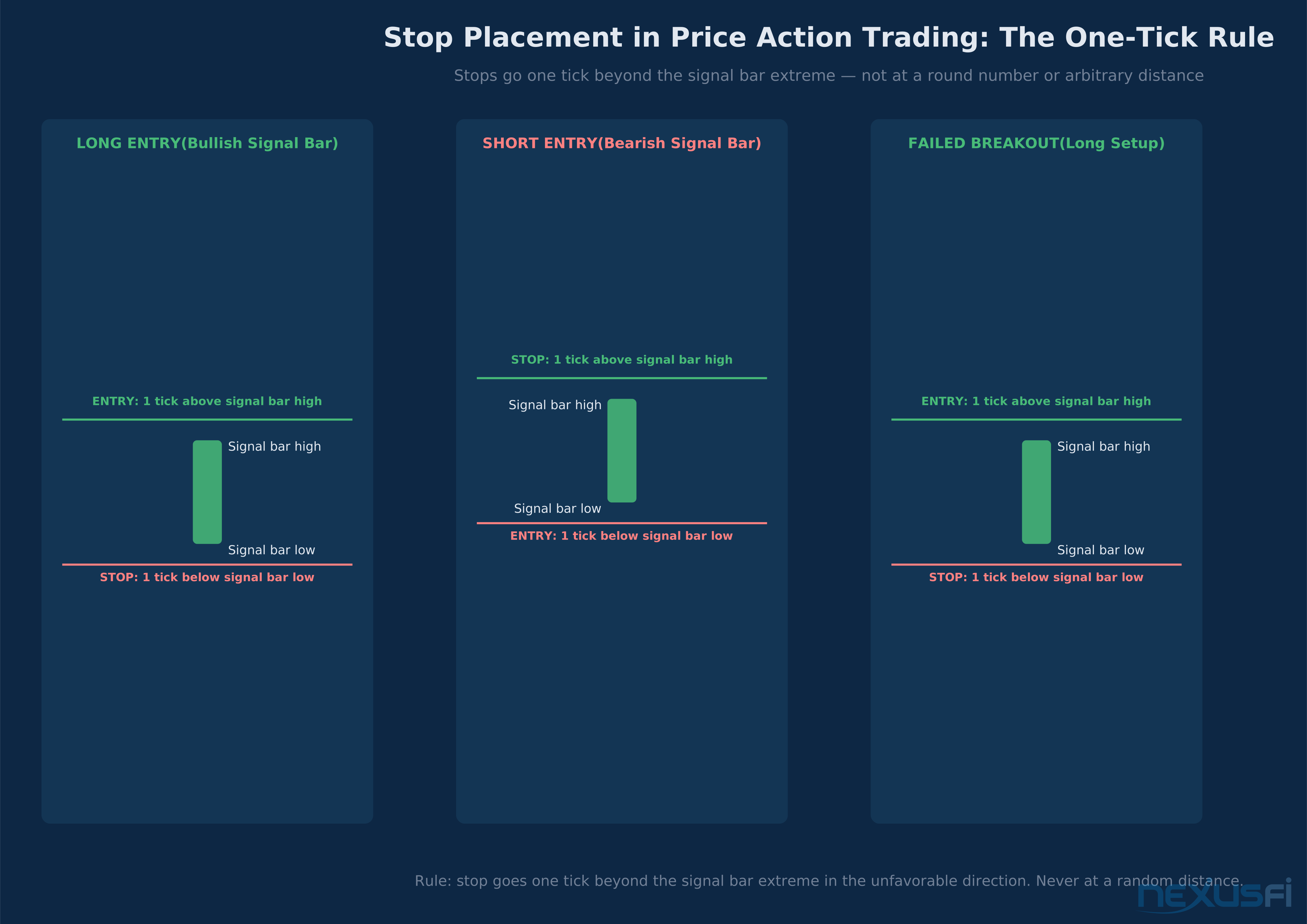
The entry bar confirms the move. It's the bar after the signal bar that breaks the signal bar's extreme in the anticipated direction. For a long trade, the entry bar breaks above the signal bar's high by one tick. For a short, it breaks below the signal bar's low by one tick. The entry bar's behavior — whether it commits and extends or fades back — is your immediate feedback on whether the trade thesis is sound.
This two-bar sequence is the foundation of every setup in this approach. You never place a market order into a signal bar hoping it continues; you wait for the market to prove continuation by breaking the signal bar's extreme.
Interpreting Tails and Bodies #
The relative size of a bar's body versus its tails tells you who controlled the auction:
Large body with small tails — the opening side maintained control through the session. Buyers (for a bull bar) or sellers (for a bear bar) held conviction from open to close without significant challenge. This is an "acceptance" bar.
Long tail with small body — the market probed in one direction but was rejected. The tail represents real buying or selling that pushed price into an area where the other side overwhelmed them. A tail of 30--40% or more of the total bar range is a meaningful rejection signal.
Doji or small body near the midrange — genuine indecision. Both sides tried and neither won decisively. These bars often appear at inflection points and at the boundary of trading ranges.
Inside and Outside Bars #
Inside bars — where the current bar's high is below the prior bar's high AND the current low is above the prior bar's low — signal compression. The market is pausing within the prior bar's range, unable to make new extremes in either direction. Inside bars are setup conditions: a compression that often precedes a breakout, though they can also appear as noise in a trending sequence.
Outside bars — where the current bar's high exceeds the prior bar's high AND the current low undercuts the prior bar's low — signal range expansion. The market probed both directions aggressively. Outside bars often appear at inflection points (sudden news, session transitions), and their direction is determined by where they close. A bull outside bar closes in its upper third; a bear outside bar closes in its lower third. A close near the midrange after an outside bar is indecision, not resolution.
The NexusFi community's long-running "Tape is my shape" thread, one of the most-read discussions on the site with over 1.3K replies, demonstrates how experienced traders apply this bar-by-bar grammar to read real-time tape — not just end-of-bar patterns.
Close location is the most important single piece of bar data. A bar's close is the market's final verdict. A bull trend bar that closes in the upper 20--30% of its range signals strong acceptance in that direction. A bar that probes to a new high but closes near its midrange tells a different story — buyers attempted but didn't commit.
The 20 EMA: Your Regime Identifier, Not Your Signal #
The 20-period exponential moving average is the one indicator used in this methodology, and it's used in a very specific way: as a context tool, not a signal generator. You never buy because price is at the 20 EMA. You use the 20 EMA to determine what kind of market you're in — and that determines which patterns to look for.
What the EMA Tells You #
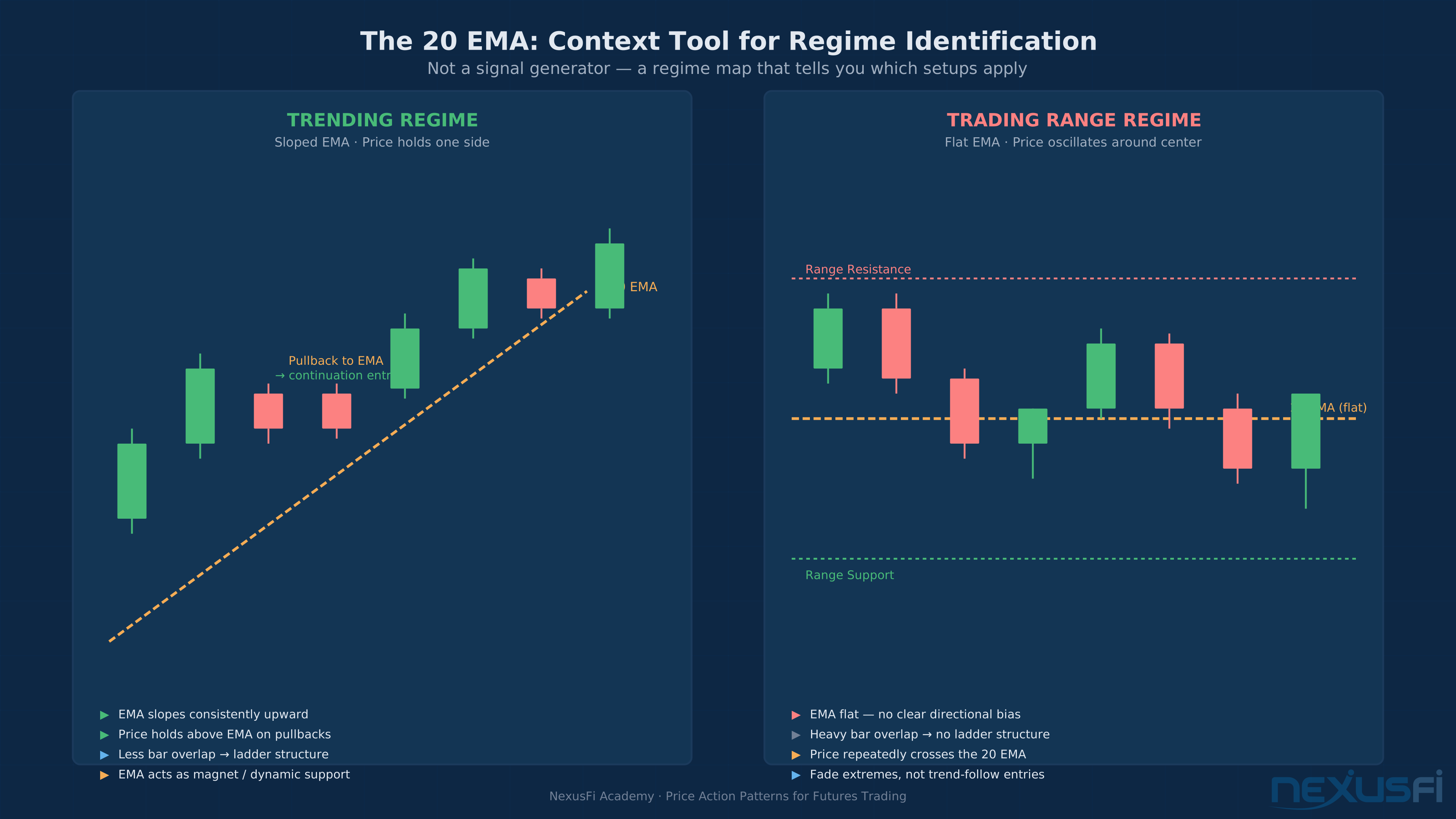
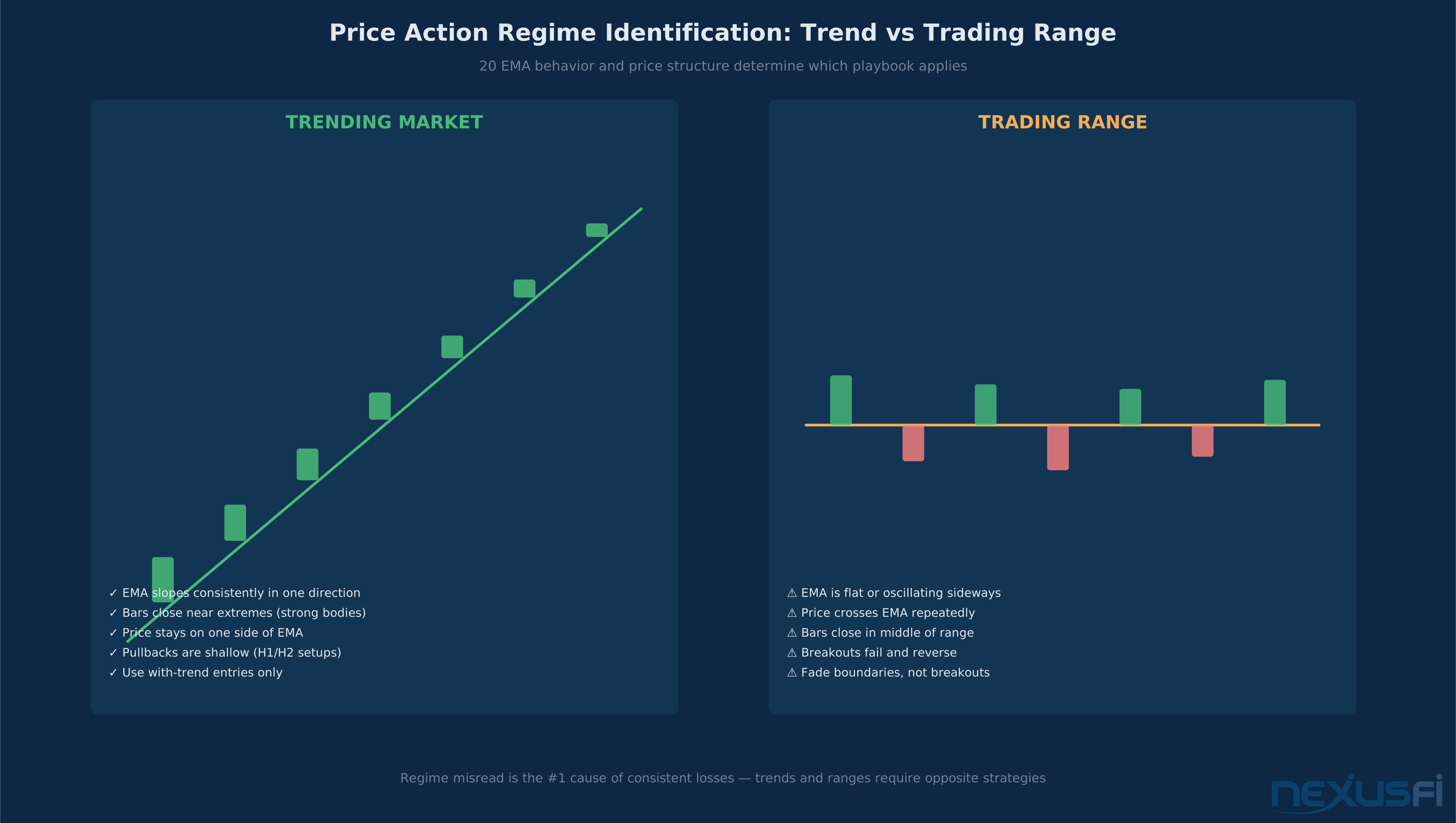
Slope is the primary input. A consistently sloping 20 EMA — upward in a bull trend, downward in a bear trend — tells you the market is in a trending regime. The slope doesn't need to be steep; it needs to be consistent. A flat or zigzagging EMA tells you the market is in a range.
Distance tells you how extended the trend is. In a healthy trend, price periodically pulls back toward the 20 EMA before resuming. When price has moved many bars away from the EMA without a return, the trend is stretched — not necessarily ending, but at increased risk of a pullback. A pullback to the EMA in a healthy trend is expected and provides one of the highest-probability entries in the methodology.
Price position relative to the EMA tells you directional pressure. In a bull trend, price consistently holds above the EMA on pullbacks; closes below the EMA are temporary and quickly reclaimed. When you see repeated bars closing below a previously rising EMA, that's a structural warning — the trend is weakening.
The EMA as a magnet: In a clear trend, the 20 EMA functions as a magnet. Price pulls back toward it, accepts it as support or resistance, and then resumes trend direction. You often see bars that tag the EMA with a tail and then close away from it, confirming the acceptance. NexusFi members trading CL frequently note how the 20 EMA on a 5-minute chart acts as a consistent pivot during trending sessions, with pullbacks to the EMA providing reliable entries in the direction of the larger trend.
How the EMA Changes in a Range #
When the market enters a trading range, the 20 EMA flattens. Price begins crossing it repeatedly — first above, then below, then above again — without any consistent directional bias. In this environment, the EMA loses its trend-filtering function entirely. It becomes a midline that price oscillates around, not a support or resistance level.
This is the critical behavioral shift that tells you to change your approach. When the EMA is flat and price is crossing it frequently, you don't look for continuation entries at the EMA — you look to fade extremes of the range.
Identifying Market Regime: The Foundation of Every Decision #
Before applying any specific pattern, you need to know what kind of market you're in. The regime determines everything: which patterns work, which setups to take, which to avoid.
Three-Factor Regime Test #
1. Bar overlap: In a trending market, bars generally move in one direction with minimal overlap between them. Consecutive bars create a ladder structure — each bar's body begins near where the prior bar ended. In a trading range, bars heavily overlap each other, with the range of each bar covering much of the prior bar's territory.
2. EMA slope and position: Trending regime = consistently sloped EMA, price holding one side for multiple bars. Range regime = flat EMA, price frequently crossing through it.
3. Close location quality: In a bull trend, bars generally close in their upper portion. In a bear trend, bars close in their lower portion. In a trading range, closes scatter across the full range of bars — some high, some low, some middle.
Trending Market Characteristics #
Trending markets reward continuation entries. Pullbacks tend to be shallow (often 50% of the prior leg or less) and to the 20 EMA region. Bull bars outnumber bear bars. When sellers push price down, they generate less follow-through than buyers do when price moves up. The market has a directional "lean."
In ES, a trending session often starts with an open above the prior day's high (or a gap open that holds), and early bars close consistently near their highs. Subsequent pullbacks hold the 20 EMA, and new highs are made on strong bull bars with small lower tails. This is the environment where two-legged pullbacks and bull flag entries work best.
Trading Range Characteristics #
Trading ranges reward fading extremes. The market repeatedly approaches a resistance level, shows a reversal signal bar, and pulls back toward the range center. Then it approaches support, shows another reversal signal, and bounces. Neither side can generate sustained follow-through.
Identifying a trading range early saves you from the most common pattern of trading losses: buying breakouts that fail, or selling breakdowns that immediately reverse. In a range, the 80% rule from Market Profile applies broadly: once price returns to a range from beyond its boundary, it tends to traverse to the opposite side. Price action traders note the same phenomenon through a different lens: repeated breakout failures are diagnostic of a range, not evidence that a trend is imminent.
The Transition: When Regime Changes #
Regime transitions are the most dangerous environment. You see a trending market begin to produce overlapping bars, bars that close in the wrong portion of their range, and the 20 EMA starting to flatten. These are early warning signs. Reduce size. Tighten stops. Don't add continuation positions until the new regime is clear.
Two-Legged Pullbacks: The Workhorse Pattern #
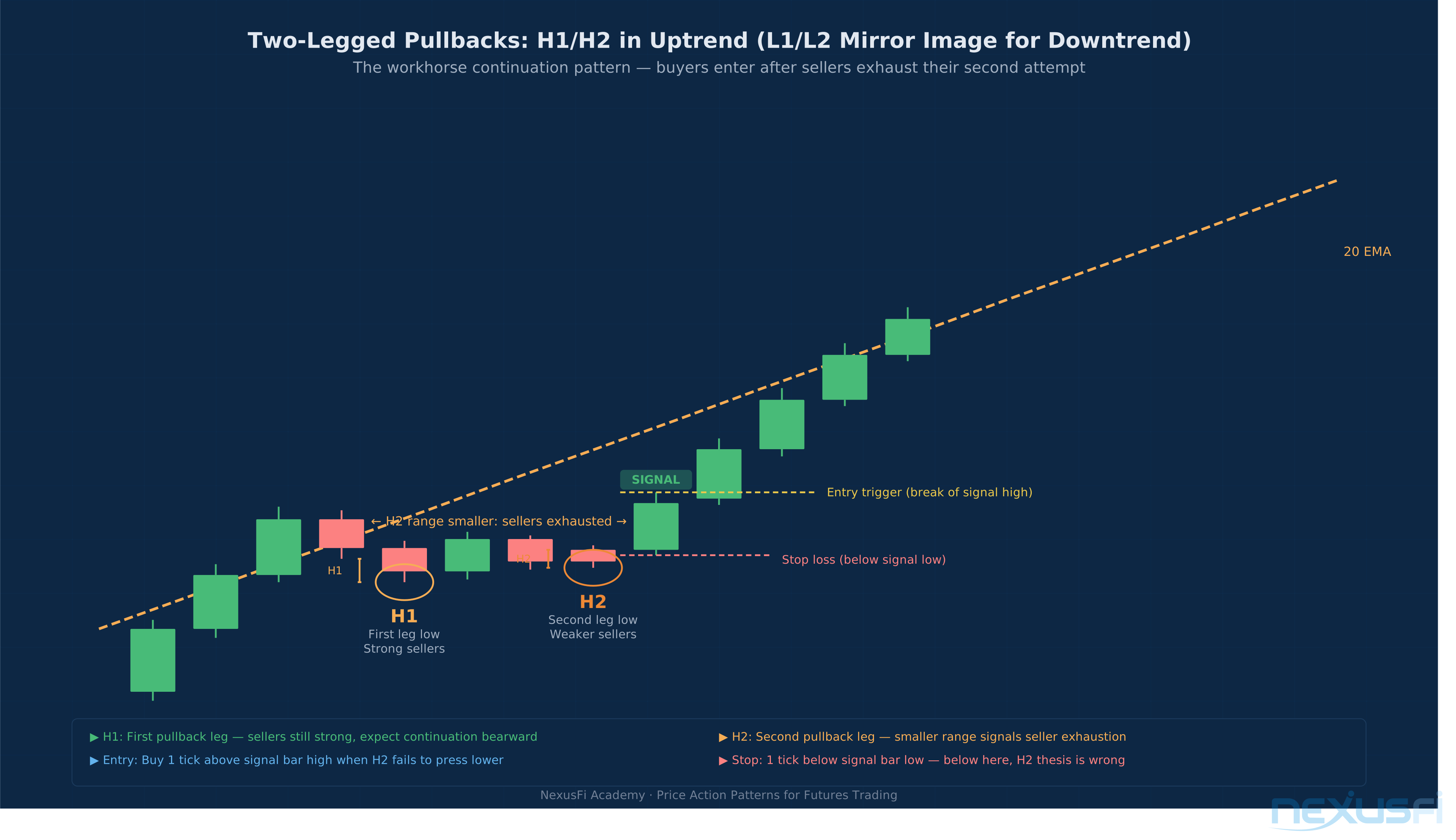
The two-legged pullback is the primary continuation entry in a trending market. It works in both bull and bear trends. Understand this pattern deeply and you have a reliable, high-probability trade setup available multiple times per session.
The Logic Behind Two Legs #
After a strong impulse move, some traders who missed the initial move sell into the advance (in a bull trend), hoping the trend is over. Price pulls back — this is the first leg. But the pullback stalls before reaching a major support level, because the buyers who drove the initial impulse are still present. A second group of sellers enters, thinking the first pullback was just a pause — this is the second leg.
If the sellers on the second leg cannot push price much below the first leg's low (in a bull trend), they've exhausted themselves. They've committed capital to a position that isn't working. When they finally give up and cover, and the original buyers resume their activity, you get a continuation move that traps late sellers in a losing position, accelerating the move in the trend direction.
This is the psychological engine of the H1/H2 pattern. It's not just a chart formation — it's the market working through a specific sequence of buyer-seller interactions.
H1 and H2 Mechanics #
In a bull trend, the pullback creates a sequence of lower swing points. H1 is the first low in the pullback — where the market makes its initial dip below the prior bar's low and then attempts to recover. The "H" stands for "Higher," referring to the direction you're anticipating when the pattern resolves.
H2 is the second low — a second dip that fails to press meaningfully below H1. The critical quality marker for H2 is reduced momentum: the bars in the H2 leg should have smaller ranges than the H1 leg bars, more overlap between them, and tails pointing toward the direction of the anticipated continuation. If H2 matches or extends H1, the pullback may be a trend reversal rather than a continuation opportunity.
For bear trends, the mirror applies: L1 is the first bounce attempt from a sell-off; L2 is a second, weaker bounce. When L2 fails to extend above L1, sellers resume control.
Entry, Stop, and Invalidation #
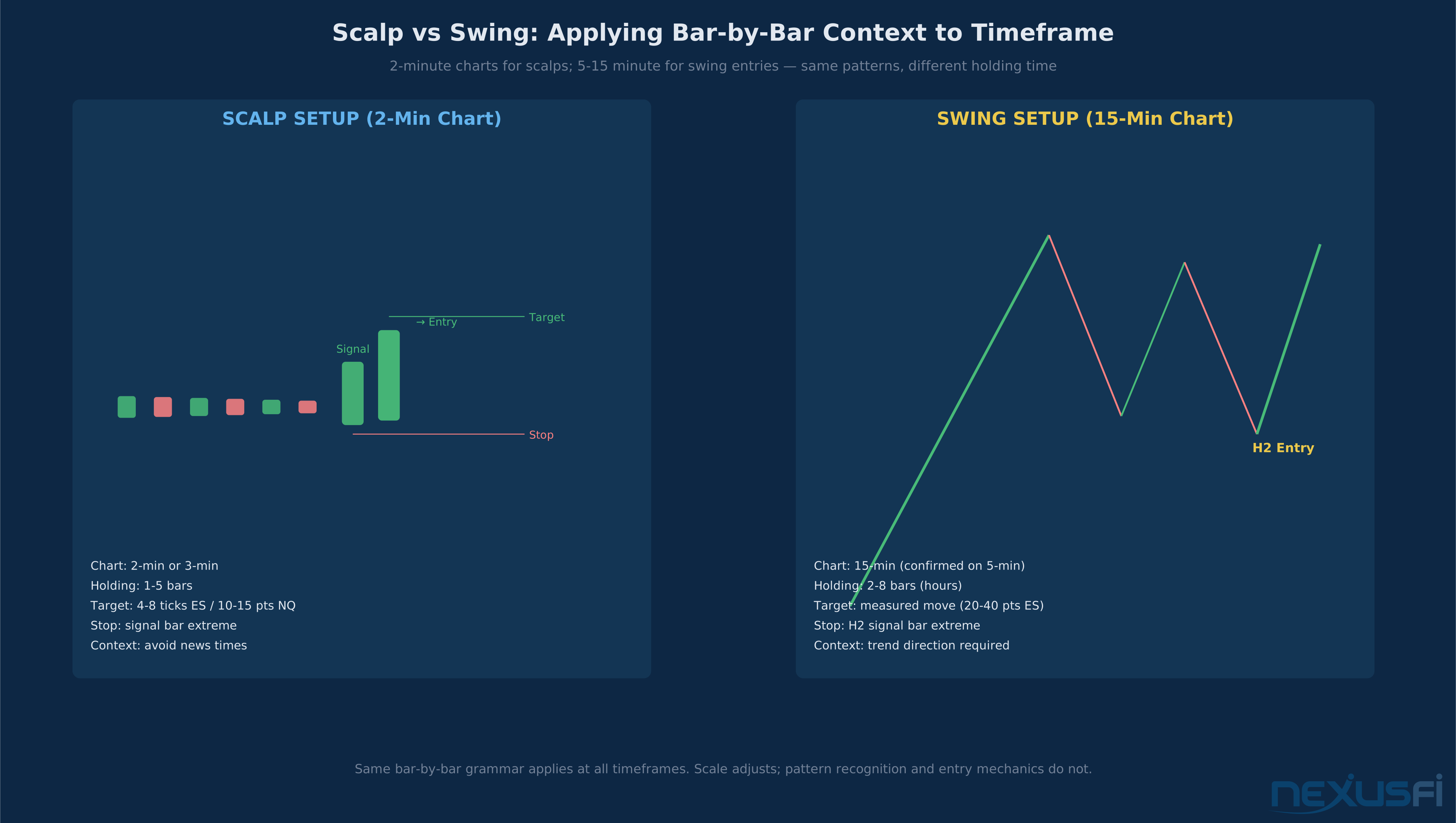
Entry trigger: When the H2 forms a signal bar (a bar showing rejection of the pullback direction with a strong close toward the trend direction), the entry is triggered on the next bar by breaking the signal bar's extreme. For a bull continuation after H2, buy 1 tick above the signal bar's high. For a bear continuation after L2, sell 1 tick below the signal bar's low.
Stop placement: The stop goes beyond the signal bar's extreme in the opposite direction. For a long after H2: stop 1 tick below the signal bar's low. For a short after L2: stop 1 tick above the signal bar's high. Some traders add a small buffer of 1-3 ticks depending on the instrument's typical noise level (NQ is noisier than ZN and may warrant a slightly wider buffer).
Invalidation: If price extends below the H2 signal bar's low before triggering the entry, the setup has failed. The second leg of the pullback has extended, and the trade thesis — that sellers are exhausted — is no longer supported by the evidence.
Practical Application in ES #
A common ES scenario on a strong bull day: the market opens with a gap up and trending bars. The first pullback (H1) occurs around 9:50 AM, when early momentum fades and latecomers to the initial move try to fade the advance. The H1 low forms on a 5-minute bar that makes a new low but has a tail at the bottom — sellers tried and were absorbed.
The second leg (H2) comes when additional sellers enter, but by 10:05 AM the second dip produces a bull reversal bar — a bar that makes a lower low but closes near its high. The range of this bar is smaller than the H1 pullback bars. Entry is 1 tick above this bar's high. Stop is 1 tick below this bar's low (or 1 tick below the H2 low if the signal bar isn't the actual low). The target is a return to the H1 area at minimum, and often a measured move equal to the prior impulse.
On @tturner86's "Price Action Ripper's Journal," the author notes: "A pullback to the EMA in a strong trend/leg is an excellent opportunity to enter." This is the essence of the two-legged pullback — the EMA and the H2 setup often coincide precisely, providing a structural and momentum-based confirmation simultaneously.
Bull Flags and Bear Flags: Continuation After a Pause #
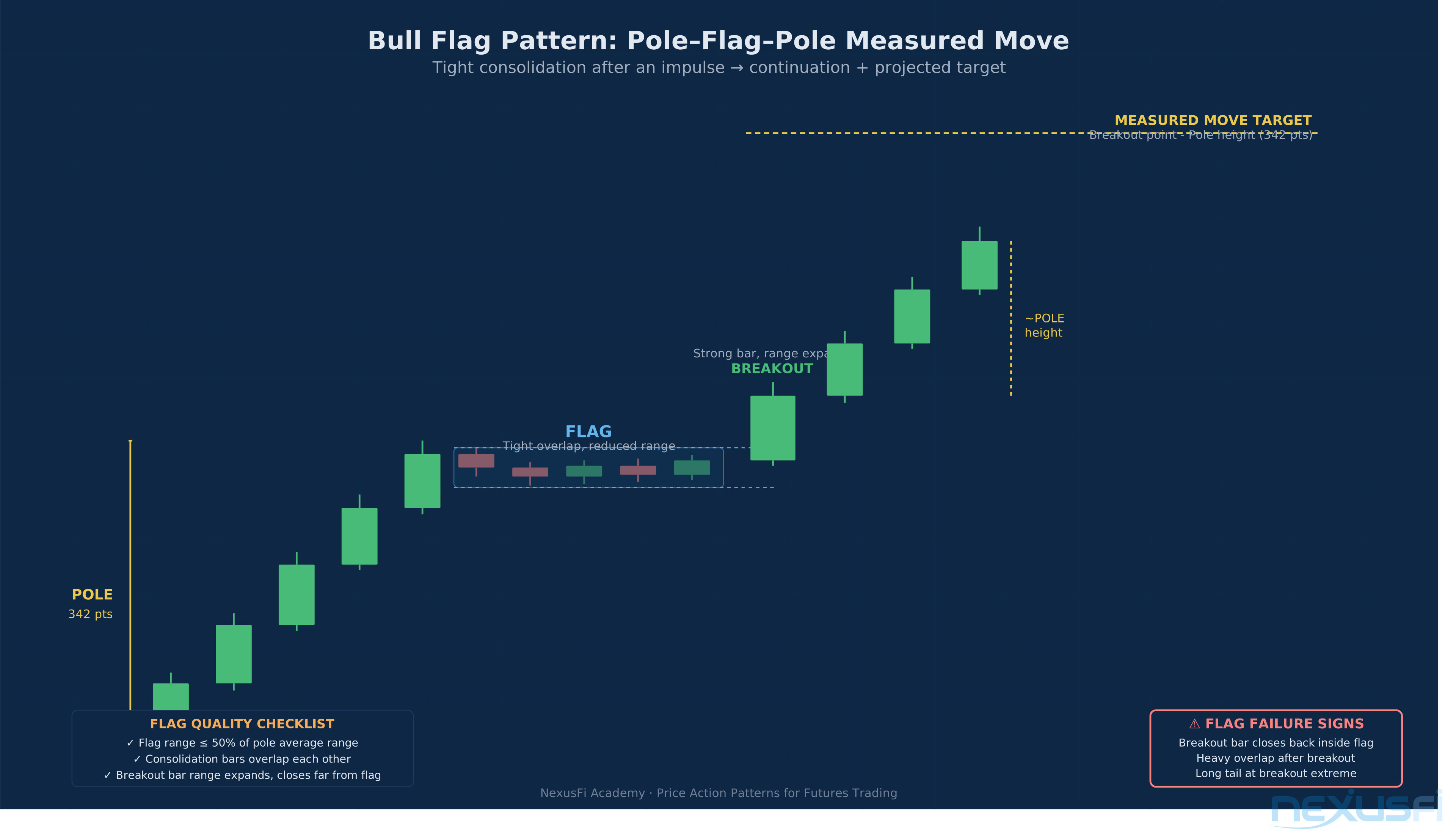
The bull flag (and its mirror, the bear flag) is a consolidation pattern that forms when a strong impulse move is followed by a brief period of tight, controlled trading before the move continues. The pattern is visually distinct: a pole of directional momentum, followed by a flag of sideways-to-slightly-retracing action, followed by a breakout that targets the pole's height projected from the breakout.
Defining the Flag by Bar Behavior #
A bull flag is defined by what bars do, not by their arrangement on a chart template. The distinguishing characteristics:
Tight, overlapping bars: Flag bars should overlap each other much. The market is consolidating, not continuing to press. This overlapping behavior demonstrates that neither side is aggressively pushing — sellers are not following through to the downside, and buyers are not anxious to push higher yet.
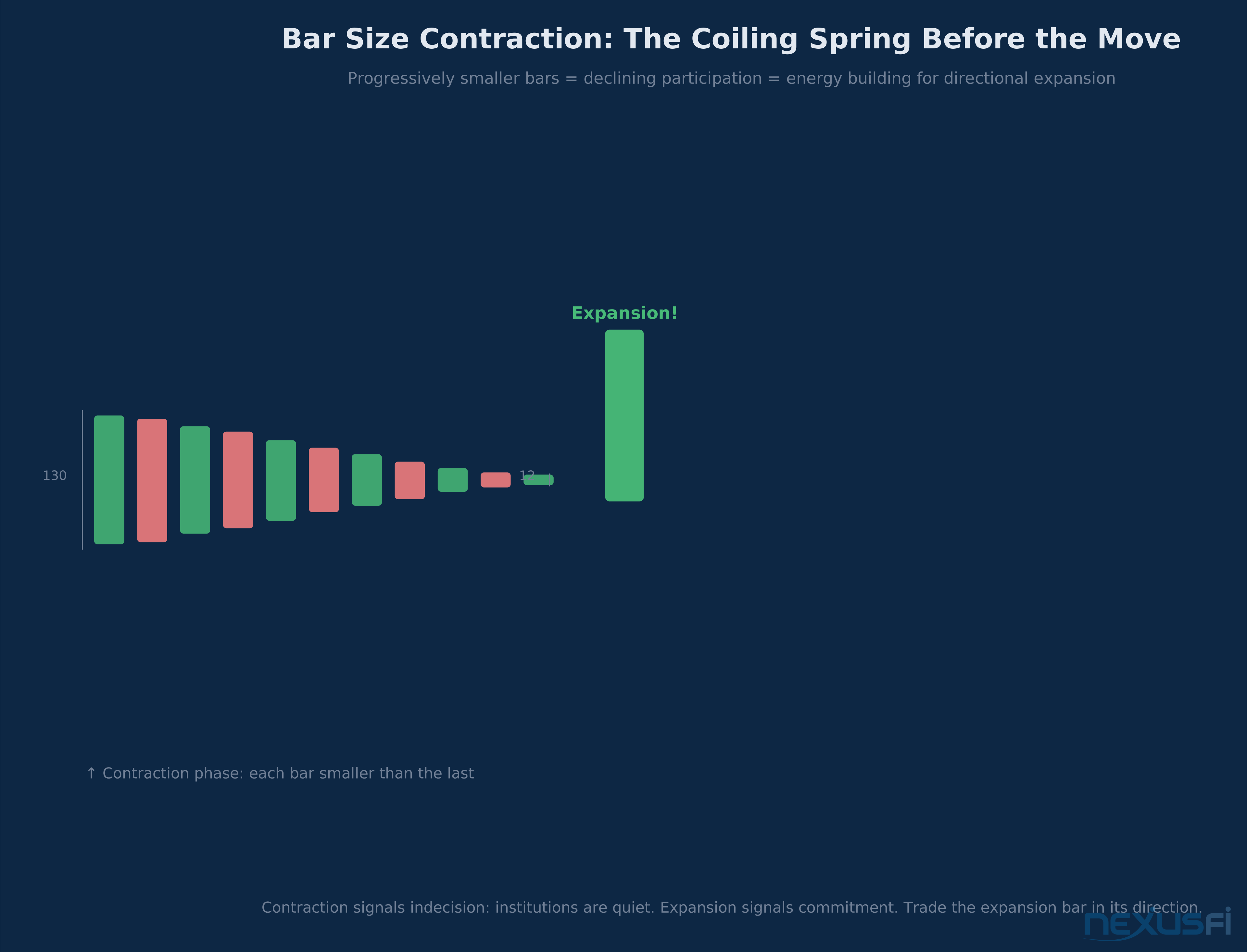
Reduced range: Flag bars should have materially smaller average range than the pole bars. As a practical benchmark, if pole bars are averaging 8--10 ticks of range in CL, flag bars averaging 3--4 ticks indicate healthy compression. The flag's consolidation tightening is what creates the energy for the subsequent breakout.
Close location neutral or slightly against the trend: In a bull flag, bars may have slightly more bear closes (the flag is "leaning" slightly against the bull trend), which is fine. The critical point is that sellers are not gaining momentum — they're fighting for small ground, not making progress.
The Pole-Flag-Pole Measured Move #
When price breaks out of a flag, the initial target is calculated from the pole: measure the height of the initial impulse (from the swing low where the pole began to the high where the flag started), then project that same height above the breakout point.
This measured move works because the market is often algorithmic in its behavior. Systematic traders following similar momentum rules enter at similar points, creating a self-reinforcing dynamic. The pole-flag-pole structure is one of the clearest expressions of this algorithmic tendency.
For ES: if the morning session produced a 20-point pole (say from 5280 to 5300), followed by a flag consolidating between 5294 and 5300, a breakout above 5300 targets 5320 — the full pole height above the breakout.
Breakout Bar Requirements #
The breakout bar matters. A quality breakout bar has:
- Range expansion: the breakout bar's range much exceeds the typical flag bar's range
- Strong close direction: bull breakout closes in the upper 20--30% of its range; bear breakout closes in the lower 20--30%
- Clean follow-through: the bars immediately after the breakout bar continue in the breakout direction without immediately overlapping back into the flag
When you see these characteristics, the breakout is likely real. When you see a breakout bar that pokes above the flag but closes back near the middle or bottom of its range — that's a warning.
Recognizing Flag Failure #
Flag failure occurs when the breakout bar breaks the flag boundary but the move doesn't follow through. The specific signature:
- The bar breaks the flag's extreme (above for a bull flag, below for a bear flag)
- But the bar closes back inside the flag area, or close to the flag boundary
- The next 1--3 bars show heavy overlap with the flag zone again
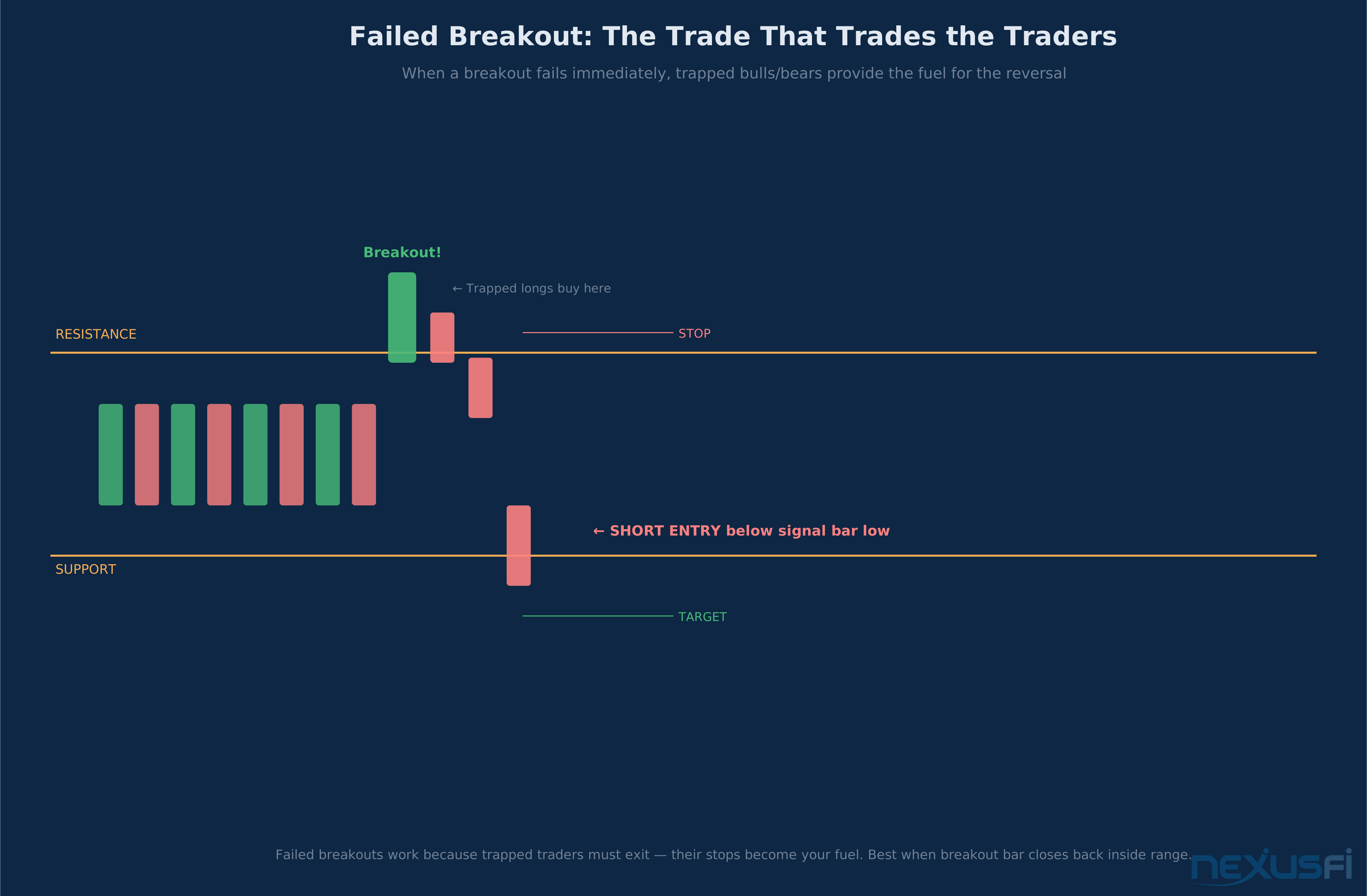
Flag failure is not just a missed trade — it's a potential trade in the opposite direction. A bull flag that fails to break out may reverse into a test of the flag's support. A bear flag that fails to break down may reverse into a test of resistance. The failed breakout is itself a signal bar for the opposing trade.
Practical Application in NQ #
NQ frequently prints tight bull flags during trending sessions. The high volatility of the Nasdaq-100 contract means flag bars can have meaningful range even when "tight" relative to pole bars. NexusFi traders note that NQ flags "often micro-tickle the boundary" — a single bar pokes outside the flag zone, then reverses. The more conservative approach on NQ: wait for a breakout bar that closes decisively outside the flag zone (not just pokes), and then an inside or follow-through bar confirming before full entry.
Channel Patterns: Structure for the Larger Move #
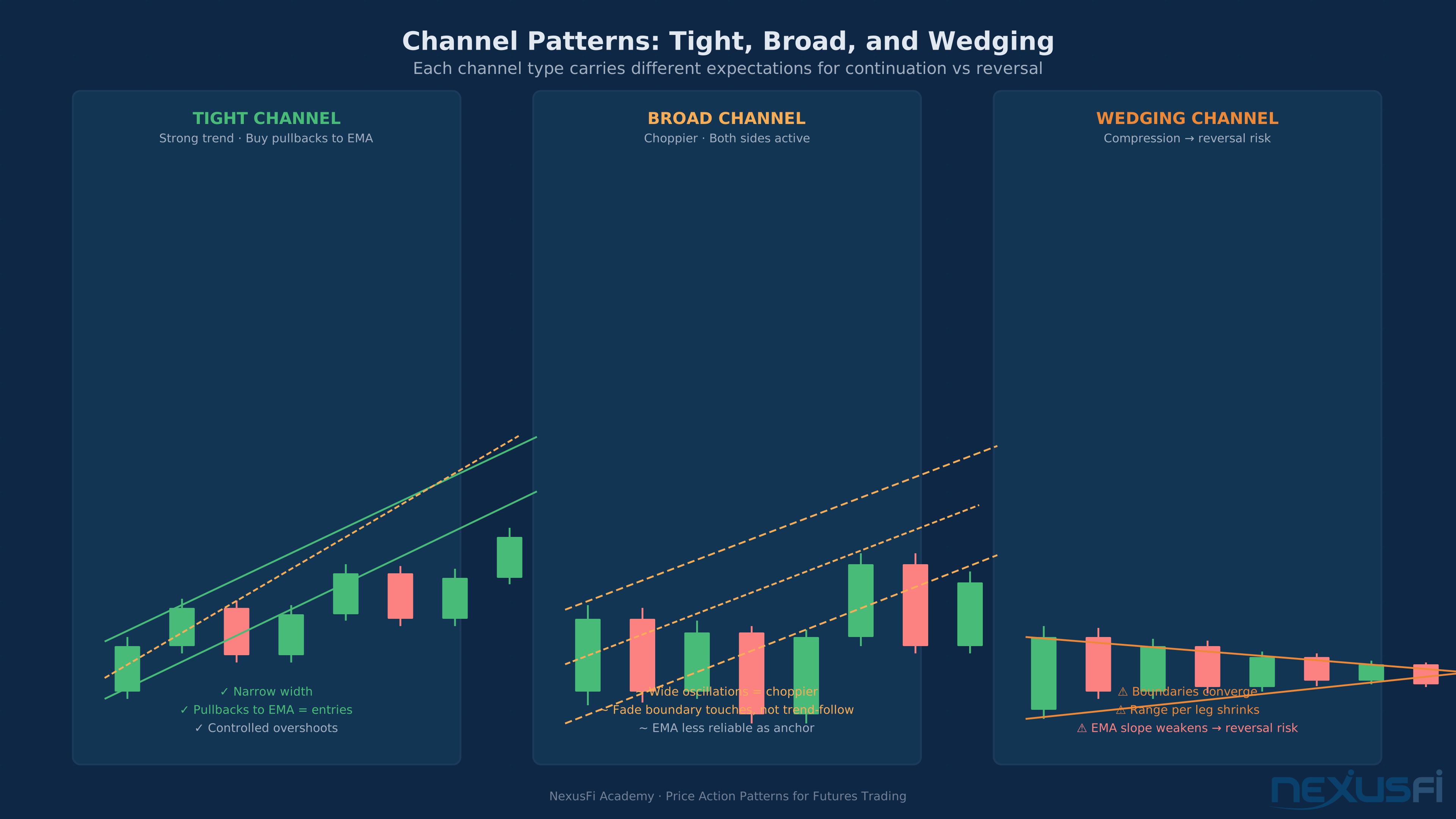
Beyond individual patterns, the bar-by-bar methodology places individual setups within a structural context. Channels describe the larger behavior of a trending move — how orderly it is, how wide the oscillations are, and whether momentum is building or fading.
Tight Channels: The Highest-Conviction Trend Environment #
A tight channel is a sequence where price advances (or declines) within a consistently narrow band. The channel's boundaries — an upper line connecting swing highs and a lower line connecting swing lows — remain roughly parallel and close together. Individual bars rarely overshoot the channel boundaries by more than a tick or two before reversing.
In a tight bull channel, the methodology for entries is simple: buy pullbacks to the lower channel boundary or the 20 EMA. The channel's consistency tells you that sellers are not mounting any serious challenge. Every dip to support is a buying opportunity, and shorts who try to hold through a tight channel get squeezed out systematically.
Tight channels tend to resolve eventually into either: (a) a flag consolidation that breaks out and continues the channel from a higher level, or (b) a wedging channel that signals momentum loss.
ES practical note: Morning sessions on trending days often produce tight bull channels that last 30--60 minutes. The EMA typically runs through the lower third of the channel. Entries near the lower channel line or EMA are the cleanest, with stops below the channel line.
Broad Channels: The Mixed Trend Environment #
A broad channel has wider oscillations. Price travels farther from the 20 EMA on both sides, creating larger pullbacks and more aggressive countertrend moves. The channel boundaries exist but bars frequently overshoot them — the outer boundaries are less reliable stopping points.
In a broad channel, the methodology changes: don't blindly buy dips. Instead, look for signal bars at the lower channel boundary before entering. The broader oscillations mean you need more confirmation — a reversal bar with a tail, or a two-bar sequence showing sellers being absorbed — before committing to the continuation trade.
Broad channels are more common when fundamental uncertainty is high: before major data releases, during news-driven sessions, or at potential trend reversal points. CL frequently trades in broad channels when inventory data creates competing narratives.
Wedging Channels: When Momentum Fades #
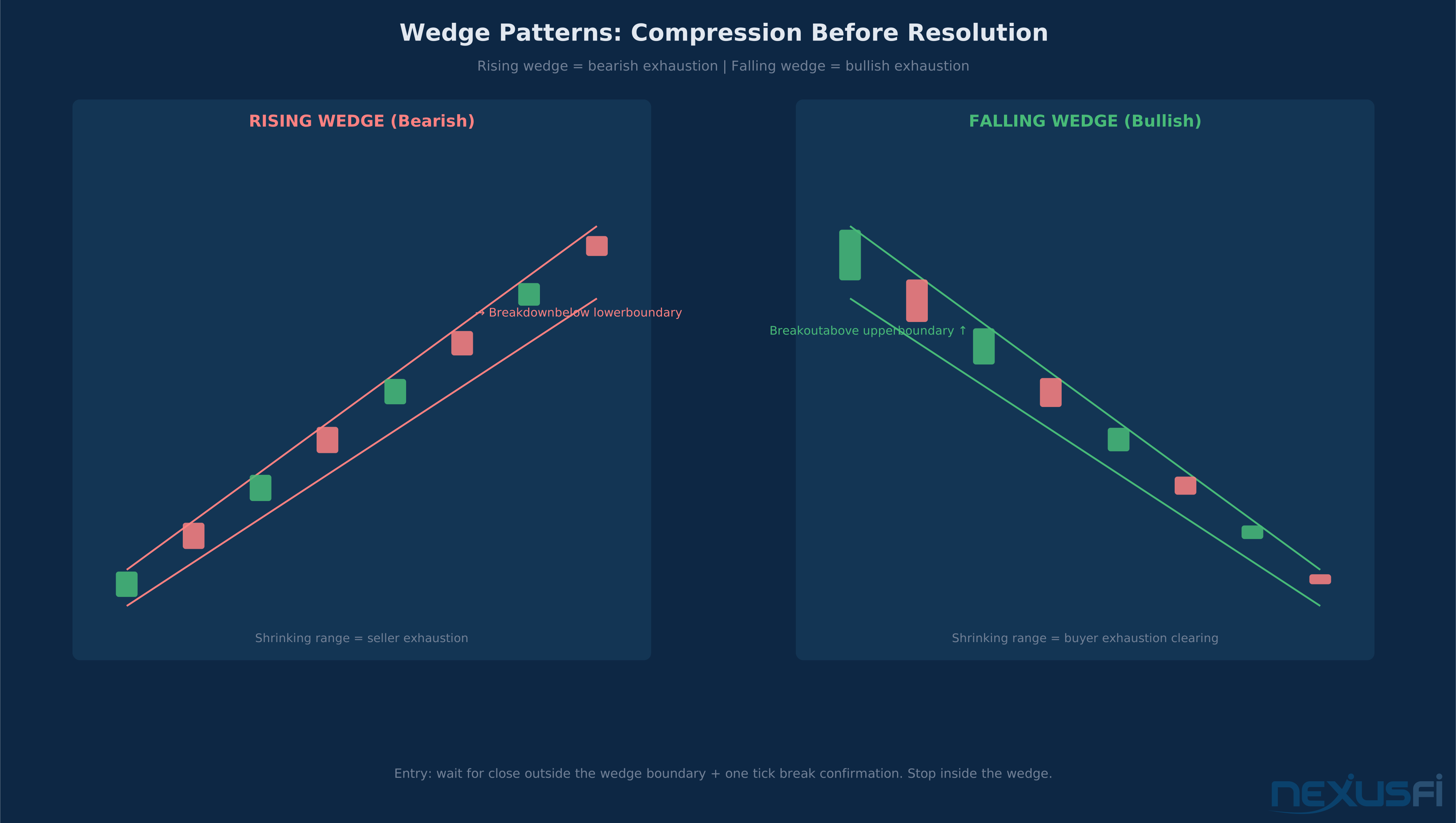
A wedging channel (also called a "shrinking channel" or "contracting channel") is the most significant warning sign that a trend's momentum is deteriorating. As the name implies, the channel boundaries converge: in a bull wedge, the upper boundary rises more slowly than the lower boundary rises, creating a narrowing band. In a bear wedge, the lower boundary falls more slowly than the upper boundary falls.
The mechanical consequence: each successive leg of the trend is shorter than the prior leg. The market is technically still making new highs (in a bull wedge) but doing so with less energy each time. The 20 EMA slope typically flattens during a wedge.
This convergence often culminates in one of two ways:
- A breakout that fails quickly (final flag scenario), followed by a reversal
- A break of the lower wedge boundary that confirms the trend is ending
NQ practical note: NQ wedges commonly appear into resistance levels — prior session highs, major round numbers, or measured move targets. When the price action shows a wedge into resistance combined with diminishing momentum bars, traders look for reversal signal bars rather than continuation entries.
Final Flags and Exhaustion: Recognizing When the Move Is Done #
The final flag is the most important pattern for avoiding the most costly mistake in trend following: buying the top or selling the bottom after a long run.
What Makes a Flag "Final" #
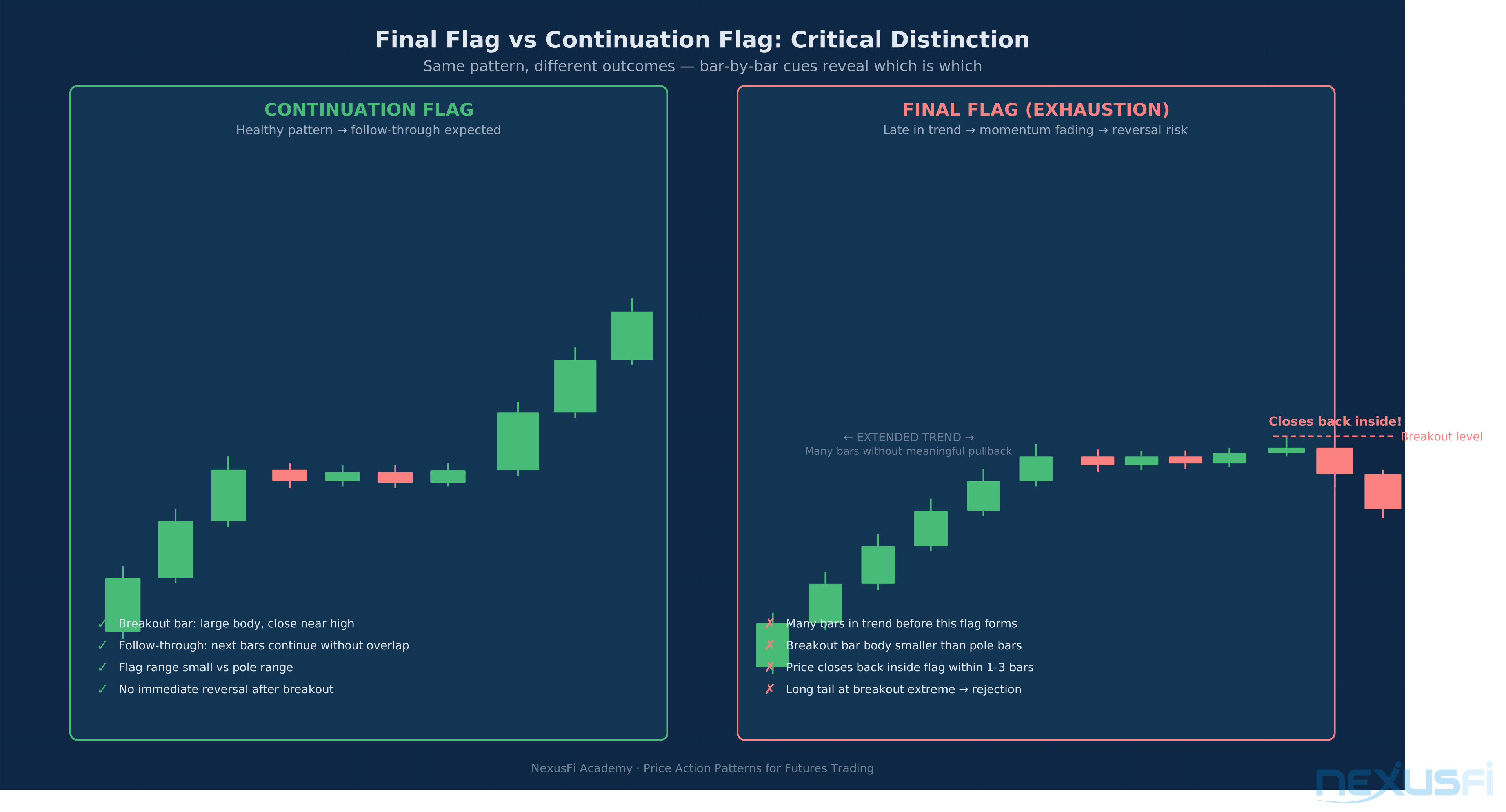
Every flag could theoretically be a continuation flag. The bar-by-bar methodology distinguishes continuation flags from final flags through specific behavioral cues:
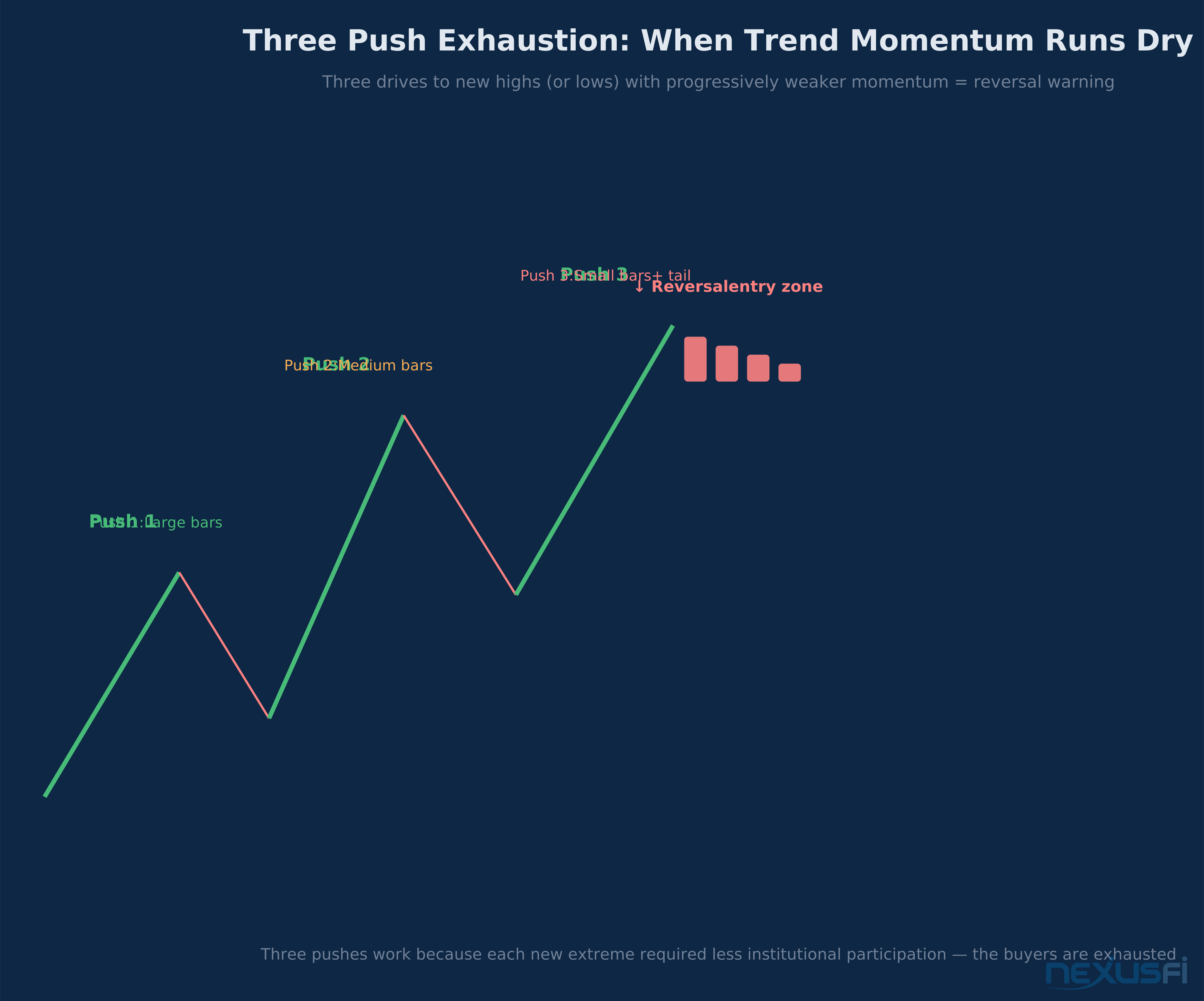
Location in the move: A final flag forms late — after the trend has been running for many bars, often into a measured move target or a major resistance level. The pole preceding a final flag is often the longest or most extended in the sequence. If you've been tracking the trend and this is the 5th or 6th flag, the probability of continuation decreases with each one.
Pole quality: The pole bars leading into a final flag often show diminishing range compared to earlier poles. The bars are making new extremes, but without the same conviction. Close location may be weaker — bull bars closing in the upper third rather than the upper fifth.
Post-breakout behavior: This is the definitive diagnostic. When a bull flag breaks out:
- Continuation flag: The breakout bar has strong range and closes firmly above the flag. The following 2--3 bars continue to advance without significant overlap with the flag zone.
- Final flag: The breakout bar has decent range initially, but within 1--3 bars, price is closing back inside the flag area. A long tail appears at the breakout extreme. The follow-through that was expected simply does not arrive.
Specific Exhaustion Bar Cues #
Diminishing follow-through: Breakout bars produce progressively less progress. The first breakout attempt from the flag produces a large bar; the next 1-2 bars produce small bodies, inside bars, or overlapping bars. The market is trying to continue but cannot sustain the effort.
Increasing overlap: After the breakout, bars begin to heavily overlap with the flag zone. Price advances, retreats into the flag, advances again, retreats further. This accordion behavior is a warning.
Quick reversal: The most definitive signal: a bar breaks the flag boundary in the continuation direction, but before that bar closes, price reverses and closes back inside the flag. The bar is a rejection at the breakout level. This bar often has a long tail pointing in the breakout direction — sellers (for a bull breakout) came in aggressively above the flag high.
Trading the Exhaustion #
When you identify a final flag, two approaches apply:
- Exit existing positions: If you're already in the trending position, a final flag breakout that fails is an excellent exit signal. Don't wait for your stop to be hit — the market is showing you that the move is done.
- Fade the failed breakout: When the breakout bar closes back inside the flag, you have a signal bar in the opposite direction. The trade: sell below the signal bar's low (for a failed bull breakout), with a stop above the signal bar's high (which is the high of the failed breakout). This is a high-probability fade when the other contextual factors — location, EMA weakening, many prior bars — confirm exhaustion.
@Xav1029's "XavPriceActionTrend Discussion" thread captures this dynamic: experienced traders identify the specific bar behavior that proves a move is done and use it to enter in the opposite direction rather than continuing to press a tired trade.
The 20 EMA and Pattern Interaction: A Unified System #
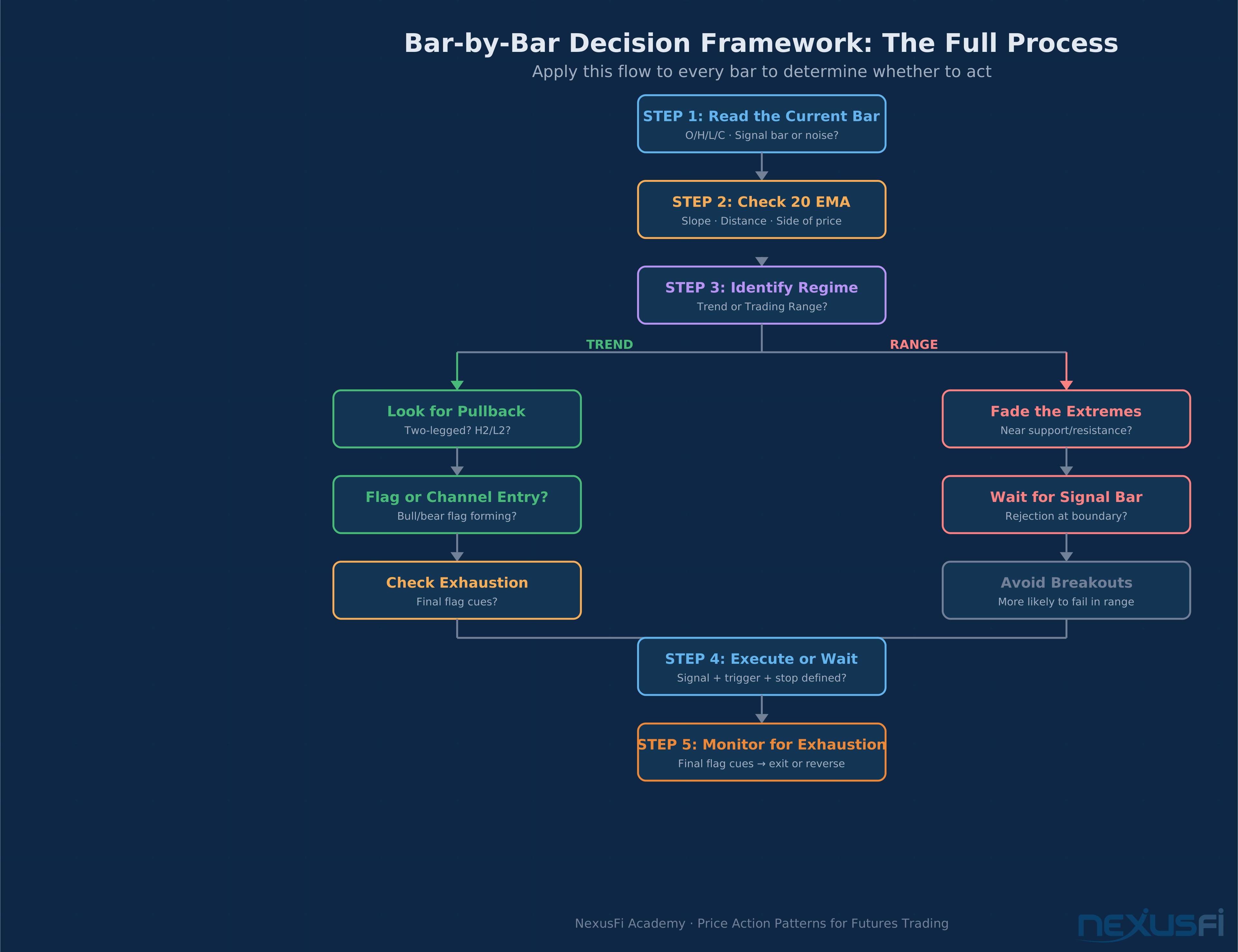
The patterns described above don't operate independently — they interact with the 20 EMA and each other to create a unified decision framework. The regime identification covered earlier (EMA slope, price position, bar overlap) is your first filter. What follows is how that filter gates specific pattern entries.
Trending regime — which patterns to take:
- H2/L2 pullbacks: Primary entry. The pullback often bottoms or tops precisely at the EMA, giving you a structural and momentum-based confirmation simultaneously.
- Bull/bear flags: Form above (bull) or below (bear) the EMA. As the flag consolidates, the EMA rises or falls toward it — when flag and EMA converge, the breakout has maximum structural support.
- Channel entries: In tight channels, the lower boundary and the EMA often overlap, making the entry zone unambiguous. In broad channels, the EMA marks the midline — entries require signal bar confirmation at the channel boundary.
- Exhaustion signals: Watch for final flags forming far from the EMA. The greater the distance between price and the EMA when a flag forms, the higher the probability that it's a final flag rather than a continuation.
Range regime — which patterns to avoid and which to favor:
- H1/H2 continuation entries: Unreliable. The pattern structure still appears, but follow-through fails because there's no directional momentum behind it.
- Channel boundary fades: Primary entry. Sell signal bars at range resistance; buy signal bars at range support. The target is the opposite boundary, not a trend continuation.
- Failed breakouts: The highest-conviction range trade. When price breaks a range boundary and immediately fails, the trapped traders' stops fuel the reversal back inside.
The EMA doesn't generate trades; it tells you which of these pattern entries to take and which to skip.
Putting It Together: A Session Framework for ES #
To make this concrete, here's how these elements flow together during a typical ES session:
Pre-market: Identify the prior day's high, low, and close. Note the direction of the weekly trend. Know your key levels.
At the open (8:30--9:00 AM EST): The first 5-minute bars establish directional bias. Strong bull bars closing near their highs with small lower tails, opening above the prior day's close = bullish bias. Look for 20 EMA slope to confirm.
First 45--90 minutes: The initial trend often establishes. Watch for a pole followed by the first flag or first H2 setup. This is the cleanest entry of the day — trend fresh, EMA sloping, signal bars high-quality.
Mid-session (10:30--12:00 PM): Trading ranges are common during this period, especially on lower-volume days. Reduce position size. Fade extremes rather than buying breakouts. Watch for the 20 EMA to flatten as confirmation.
Afternoon (1:00--3:00 PM): Trends can resume after a lunch-range period. Look for breakouts from the midday range that create new poles and flags. Check whether the resumed move is creating fresh high-quality bull/bear bars or whether exhaustion cues (diminishing range bars, overlapping bodies) are appearing.
Into the close: Volume often picks up. Final flags and exhaustion patterns become more common as position managers exit. Be cautious about continuation entries in the last 30 minutes unless momentum is exceptionally clean.
Risk Management Considerations for Each Pattern #
Bar-by-bar patterns define the trade through their signal and entry bars. The stop placement is inherent to the pattern:
| Pattern | Entry | Stop | Target Approach |
|---|---|---|---|
| H2 in uptrend | 1 tick above signal bar high | 1 tick below signal bar low | Return to prior high; measured move from impulse |
| L2 in downtrend | 1 tick below signal bar low | 1 tick above signal bar high | Return to prior low; measured move from impulse |
| Bull flag breakout | 1 tick above flag high | 1 tick below flag low | Pole height projected above breakout |
| Bear flag breakdown | 1 tick below flag low | 1 tick above flag high | Pole height projected below breakdown |
| Channel boundary fade | 1 tick past signal bar extreme | Signal bar opposite extreme | Opposite channel boundary; 20 EMA |
| Failed breakout fade | 1 tick past failed breakout signal bar | Failed breakout extreme | Flag center; opposite flag boundary |
The stop placement follows directly from the pattern. If the signal bar's low is taken out (for a long entry), the thesis is proven wrong — price has gone where it shouldn't go if the setup is valid. This is pattern invalidation, not just a stop. The pattern failed.
Instrument-specific considerations: NQ carries a higher tick value ($5/tick vs ES's $12.50/tick per mini contract) and is more volatile intraday. Two-legged pullbacks in NQ can penetrate the signal bar's extreme by 1--2 ticks and still resolve as valid setups — requiring slightly wider stops or more bar-by-bar confirmation before entry. ZN moves more deliberately, and signal bars tend to be cleaner and more definitive.
For detailed position sizing methodology, see Position Sizing Methods for Futures Trading.
What This Methodology Is Not #
Understanding the boundaries of this approach prevents the most common misapplications:
Not indicator-based: Aside from the 20 EMA, this methodology uses no indicators. Adding RSI, MACD, or other oscillators to confirm price action setups is a category error — price action signals are already the most current expression of market dynamics; no indicator derived from price can be more current than price itself.
Not about predicting: This methodology doesn't predict where the market will go. It identifies the highest-probability setup given what the market has already done and enters when the market shows it's beginning to move in that direction.
Not the full trade management story: When to exit, how to scale out, when to trail a stop, how to handle a reversal bar while in a winning trade — these post-entry decisions involve their own discipline. The patterns in this article define the entry; exit management is a separate (and equally important) subject.
Not a replacement for order flow: Many experienced NexusFi traders combine bar-by-bar pattern recognition with Order Flow Analysis and Volume Profile. The patterns here can coexist with those tools — the pattern identifies the setup; order flow confirms the aggressor; volume profile identifies the structural level. But this article's methodology stands on its own without them.
Community Context: How NexusFi Traders Apply These Concepts #
The bar-by-bar methodology has generated some of the most active and sustained discussion on NexusFi. Al Brooks' foundational Reading Price Charts Bar by Bar (Wiley, 2009) formalized the bar-by-bar methodology discussed throughout this article. The NexusFi community's thread discussing that work has accumulated over 550 replies and more than 560,000 views — one of the site's most-read discussions — with traders working through the concepts in real time with actual chart examples.
@Pa Dax's "PA Dax CL, ES and Bund Price Action Trading Log" journal thread provides ongoing examples of regime identification in action: distinguishing trending from ranging days is the primary daily decision, with the H1/H2 identification following directly from that regime read. As one member noted in that thread: "It was early on visible that the day was going to be a trading range day. Bar 1 opened within yesterday's range and hit the bear stop... so for sure Trading Range."
@tturner86's "Price Action Ripper's Journal" reinforces the multi-entry discipline that the H2 methodology requires: after a strong breakout or reversal, the author documents waiting for price to consolidate near the EMA before re-entering — often finding multiple opportunities across a single trending session rather than a single all-in commitment. The journal entries show the pattern in real time: identify the trend leg, wait for consolidation at the EMA, confirm with a signal bar, and execute.
Further Study #
The patterns in this article operate within larger structural contexts. For deeper exploration:
- Price Action Trading for Futures — the conceptual foundation for reading markets without indicators
- Order Flow Analysis — how DOM and footprint data complements bar-reading
- Volume Profile Trading — structural levels that give bar setups meaningful context
- Market Profile (TPO Charts) — session structure analysis that identifies range boundaries before they form
- Wyckoff Method in Futures Trading — the original bar-by-bar demand and supply analysis framework
- Support and Resistance Levels in Futures Trading — how structural levels define the context for all bar patterns
- Trade Management for Futures — the post-entry decisions that determine actual outcomes
- Trading Price Action Trends by Al Brooks (Wiley, 2012) — the definitive reference expanding bar-by-bar analysis into a complete trend trading system
The bar-by-bar methodology is a complete system for reading what the market is doing in real time. Master the grammar, identify the regime, recognize the pattern, execute with defined parameters, and monitor for exhaustion. That loop — applied consistently across every session — is what systematic price action trading looks like in practice.
Knowledge Map
References This Article
Articles that build on this topicCitations
- Book Discussion: Reading Price Charts Bar by Bar by Al Brooks
- Book Discussion: Trading Price Action Trends, Reversals, Ranges by Al Brooks
- PA Dax CL, ES and Bund Price Action Trading Log
- Price Action Ripper's Journal
- XavPriceActionTrend Discussion
- Tape is my shape (tape reading, time and sales)
- — Bar-by-Bar Analysis -- Study Guide