



Candlestick Patterns for Futures Trading: Structure, Context, and the Reliability Question
Overview #
Candlestick Patterns for Futures Trading: How Price Action Reveals Auction Intent in ES, NQ, and CL
Candlestick patterns have been used by traders since 18th-century Japanese rice markets. In modern electronic futures, they remain one of the most widely watched visual frameworks — appearing on every charting platform, referenced in every trading manual, and discussed in thousands of NexusFi journal threads. The problem is that most traders use them wrong.
A candlestick pattern is not a prediction. It is a compression: a single visual summary of the entire auction process that occurred during that time interval. Every open, high, low, and close encodes information about the battle between buyers and sellers — who had initiative, who absorbed, who ran stops, and who gave up. Read that way, candlestick patterns become genuinely useful in futures markets. Read as standalone buy or sell signals, they produce the whipsaw losses that define most retail trading accounts.
This article covers the five most important candlestick pattern families for futures traders — doji, engulfing, hammer and pin bar, morning and evening star, and inside bars — with the order flow context that separates genuine setups from chart decoration. Market-specific calibration for ES, NQ, and CL is included throughout, because the same pattern behaves differently in these three liquid markets.
Anatomy of a Candlestick: What You Are Actually Looking At #
Before diving into patterns, understand what each element represents:
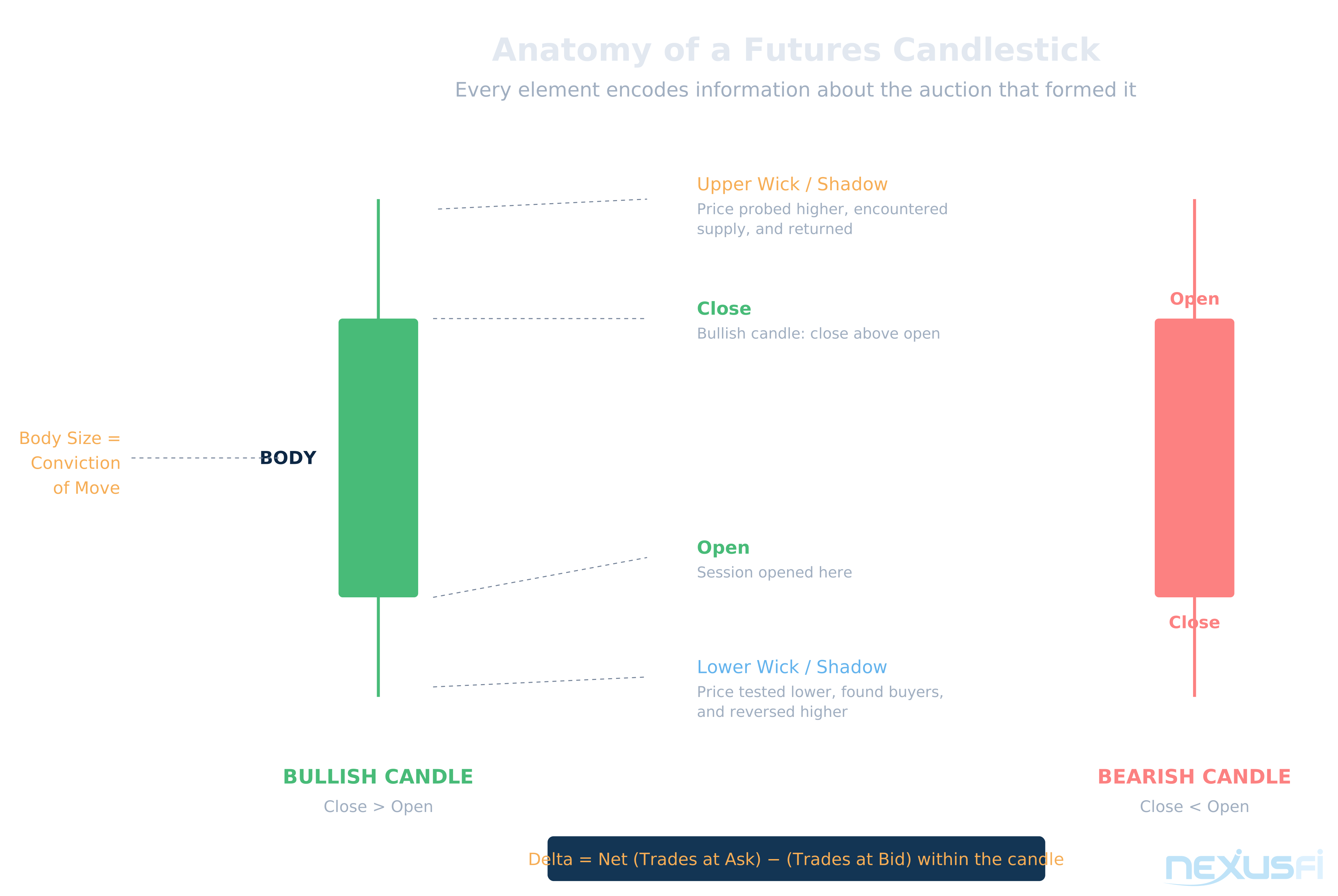
The body (the wide rectangle) shows the range between the open and close. A large body means one side dominated — buyers pushed price well above the open (bullish body) or sellers drove it well below (bearish body). A small body means neither side controlled the period. Both closes are meaningful. The color conventionally marks direction, but the body size is the more important signal.
The wicks (also called shadows or tails) show where price traveled but failed to sustain. A long lower wick means price probed lower, encountered buying pressure, and returned. A long upper wick means price probed higher, hit supply, and reversed. The length of a wick is a measure of rejection intensity — but only at meaningful locations.
Volume sits below, invisible in the candle itself but essential context. A large-bodied candle on thin volume is different from the same candle on three times the daily average. The candle shows the outcome; volume shows how many participants created it.
In modern electronic futures, they remain one of the most widely watched visual frameworks — appearing on every charting platform, referenced in every trading manual, and discussed in thousands of NexusFi journal threads.
Delta (if your platform provides it) shows the net difference between contracts traded on the bid vs. the ask within that candle. Positive delta means more transactions occurred at the ask (aggressive buying); negative delta means more occurred at the bid (aggressive selling). A bullish-looking candle with strongly negative delta tells a different story than a bullish candle with matching positive delta.
The key insight: candlestick patterns describe what happened in the auction. Order flow context reveals why and who.
Why Candlesticks Alone Fail in Electronic Futures #
In 1700s Japanese rice markets, candlestick patterns emerged from analog, relationship-driven auction dynamics. Modern ES, NQ, and CL trade on Globex — a fully electronic, algorithmic environment where high-frequency market makers, index arbitrageurs, and institutional algorithms react in milliseconds. The patterns that formed in slower human markets still appear in electronic futures, but their causation is different and their failure rate without context is high.
Three structural realities make standalone pattern trading unreliable in futures:
1. Algorithmic stop-hunting is real. Market structure participants routinely probe beyond obvious levels — previous day highs/lows, round numbers, overnight highs — to trigger retail stop orders. This creates patterns (hammers, pins, fakeouts) that look like reversals but are engineered liquidity grabs. The pattern appears genuine; the follow-through never comes.
2. Patterns occur in balance as often as at turning points. ES in a tight range prints dozens of doji, inside bars, and small-bodied candles daily. None of them mean anything without a structural reason to be at that specific price level. The pattern matters only when context gives it meaning.
3. Timeframe matters more than pattern. A bullish engulfing candle on a 1-minute chart during the pre-market session is noise. The same pattern on a daily chart at a weekly value area boundary after a sustained downtrend is a different beast entirely. The pattern is the same; the context is not.
The practical implication: treat every pattern as a question, not an answer. The question is: "Does the order flow at this location confirm what this pattern is suggesting?" If yes, trade it. If not, pass.
The Validation Framework: Six Questions Before Acting #
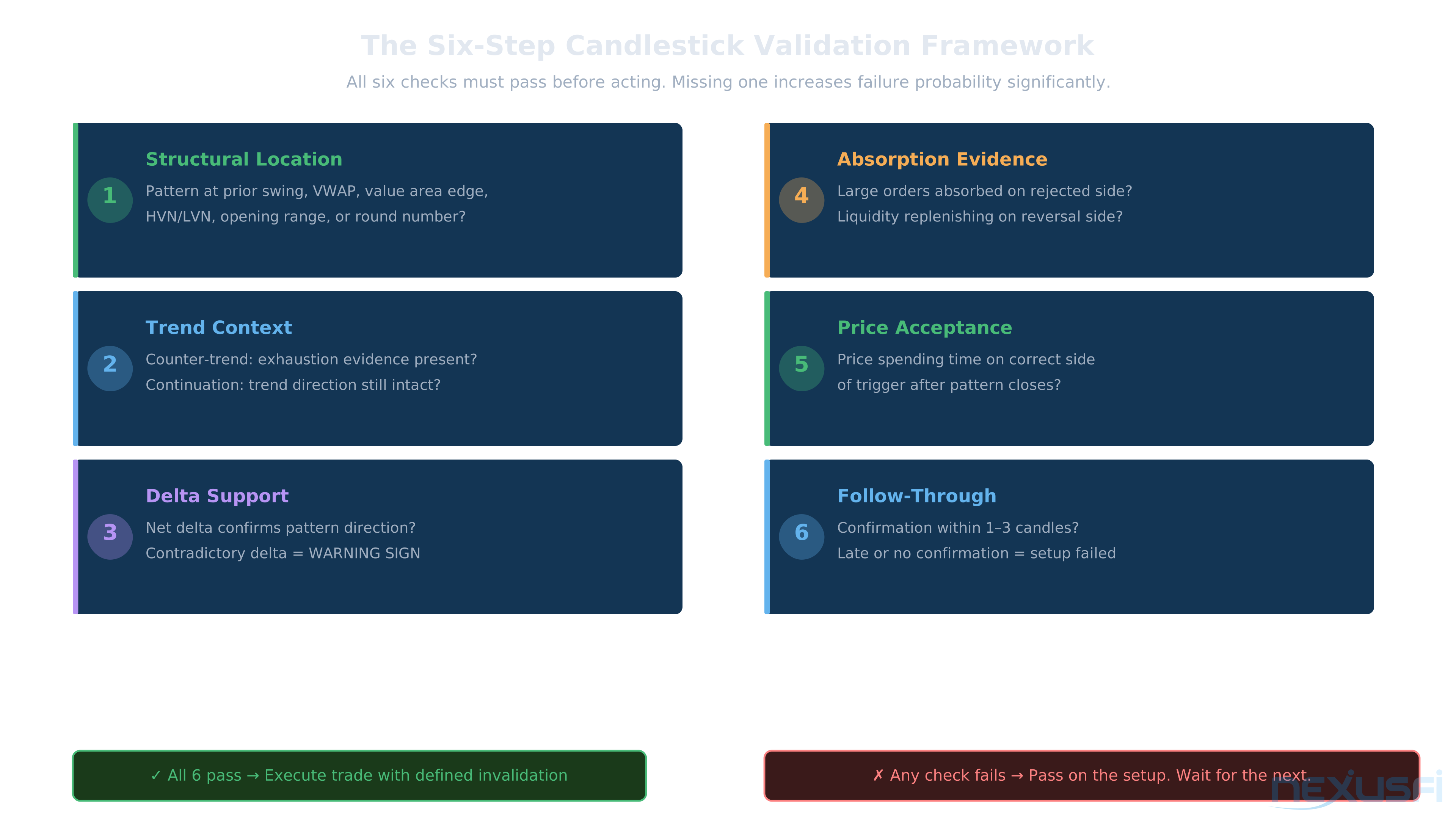
Before acting on any candlestick pattern in futures, work through this checklist. Missing even one question increases failure probability much:
1. Where is it? The pattern must occur at a meaningful market structure location: prior swing high or low, VWAP or anchored VWAP level, value area high or low (from Volume Profile or Market Profile), high-volume node (HVN), opening range boundary, or a significant round number. Patterns at mid-range without anchor are usually noise.
2. What is the trend context? Is this a counter-trend pattern or a continuation pattern? Counter-trend setups (reversal patterns at extremes) require evidence of exhaustion in the prior move — slowing momentum, declining delta per unit time, or thinning liquidity at new extremes. Continuation patterns (e.g., a bullish inside bar in an uptrend) need confirmation that the trend remains intact.
3. Does the delta support it? This is the single most powerful filter. A bullish pattern should show buying delta expansion as it forms or in the confirmation candle. A bearish pattern needs selling delta. Contradictory delta is a warning sign — price is going where the candle says, but the who is wrong.
4. Is there absorption evidence? For reversal patterns specifically, look for signs that the aggressive sellers (for bullish setups) or buyers (for bearish setups) are being absorbed. On the DOM, this appears as large resting orders being hit without price moving through them. On footprint charts, it shows as heavy volume at the extreme with price holding or reversing.
5. Does price accept on the right side? After the pattern closes, does price spend time above the trigger level (bullish pattern) or below it (bearish pattern)? Acceptance — the market's willingness to trade at a price level — is confirmation. Immediate rejection suggests the pattern was a failed signal.
6. Does follow-through arrive within 1-3 candles? Candlestick setups are time-sensitive. If the anticipated move does not materialize within the next candle or two, conditions have changed. Holding a pattern-based position through multiple rotations suggests the setup has failed.
Doji: The Market at Maximum Indecision #
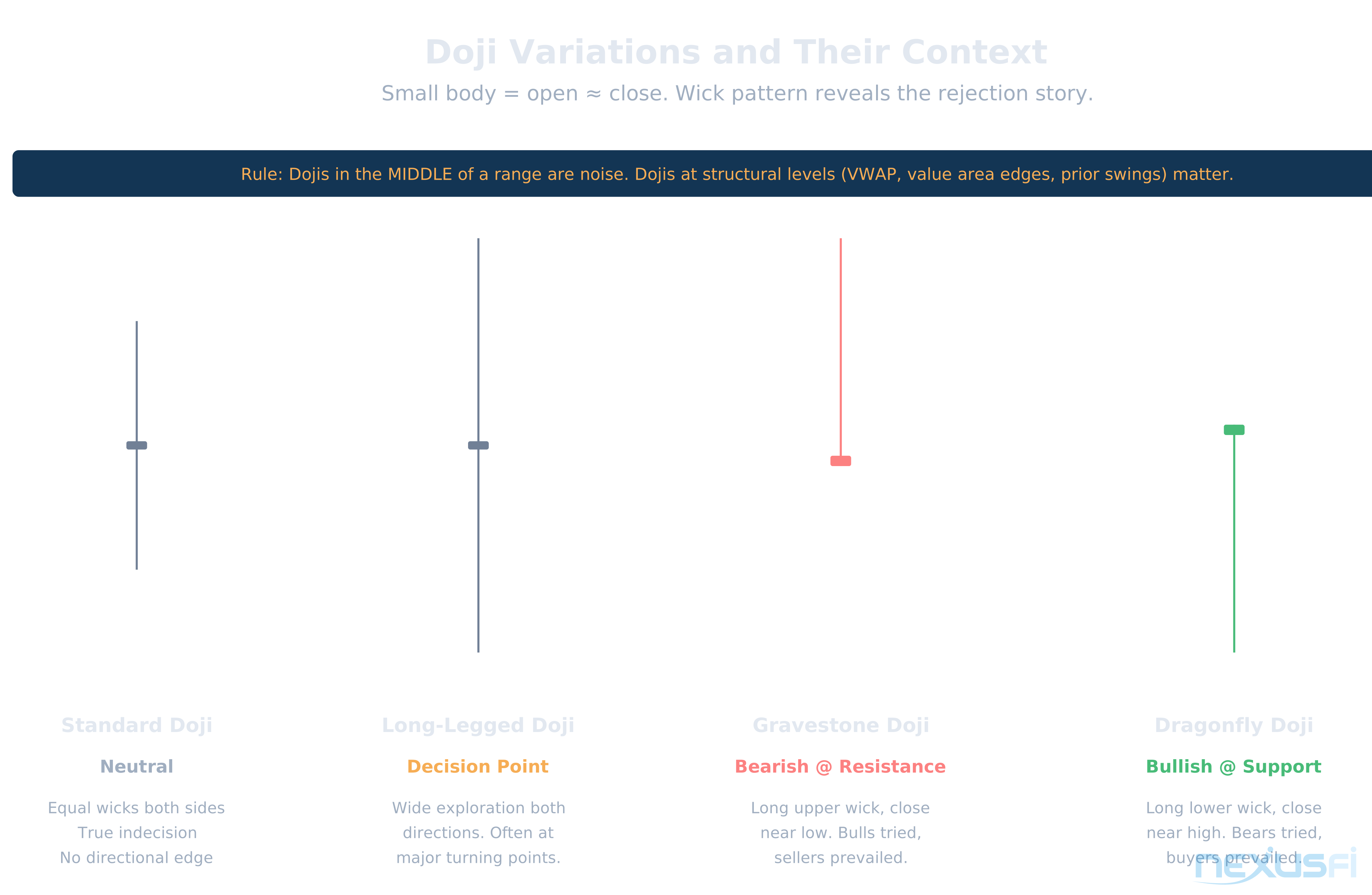
A doji occurs when the open and close are approximately equal, leaving a candle with little or no body. The market opened, tested both higher and lower, and returned to approximately where it started. The two sides fought to a draw.
What it signals: Dojis mark decision points — moments where the prior auction temporarily exhausted itself. They are most meaningful after a sustained directional move, at the edges of a trading range, or at known structural levels. In the middle of a balanced range, dojis are simply the market's normal state and carry no predictive value.
Order flow context for doji:
A standard doji at a support level with positive delta (aggressive buyers stepped in during the lower wick exploration) and a strong close near the high of the range is meaningfully different from a doji with balanced delta and no conviction. The wick structure matters: a doji with a long lower wick and almost no upper wick shows that lower prices were probed and rejected — sellers ran out of aggression. This is absorption. A symmetric doji (equal wicks in both directions) shows genuine balance with no clear directional bias.
Common doji variations:
- Long-legged doji: Wide exploration both directions, closes near open. Maximum indecision, often seen at major turning points or before large moves.
- Gravestone doji: Long upper wick, no lower wick, close near the low. Bullish attempted but was sold back down — bearish signal at resistance.
- Dragonfly doji: Long lower wick, no upper wick, close near the high. Bearish attempted but bought back — bullish signal at support.
ES-specific note: At the value area low or high in ES, a dragonfly or gravestone doji with supporting delta often marks the exact turning point of the day. NexusFi traders have documented this consistently in journals tracking TPO structure.
Failure mode: In a trending ES market, dojis will appear throughout the pullbacks. Trading each one as a reversal signal is a losing strategy. Dojis in trending conditions are pauses, not reversals.
Engulfing Patterns: The Control Shift Signal #
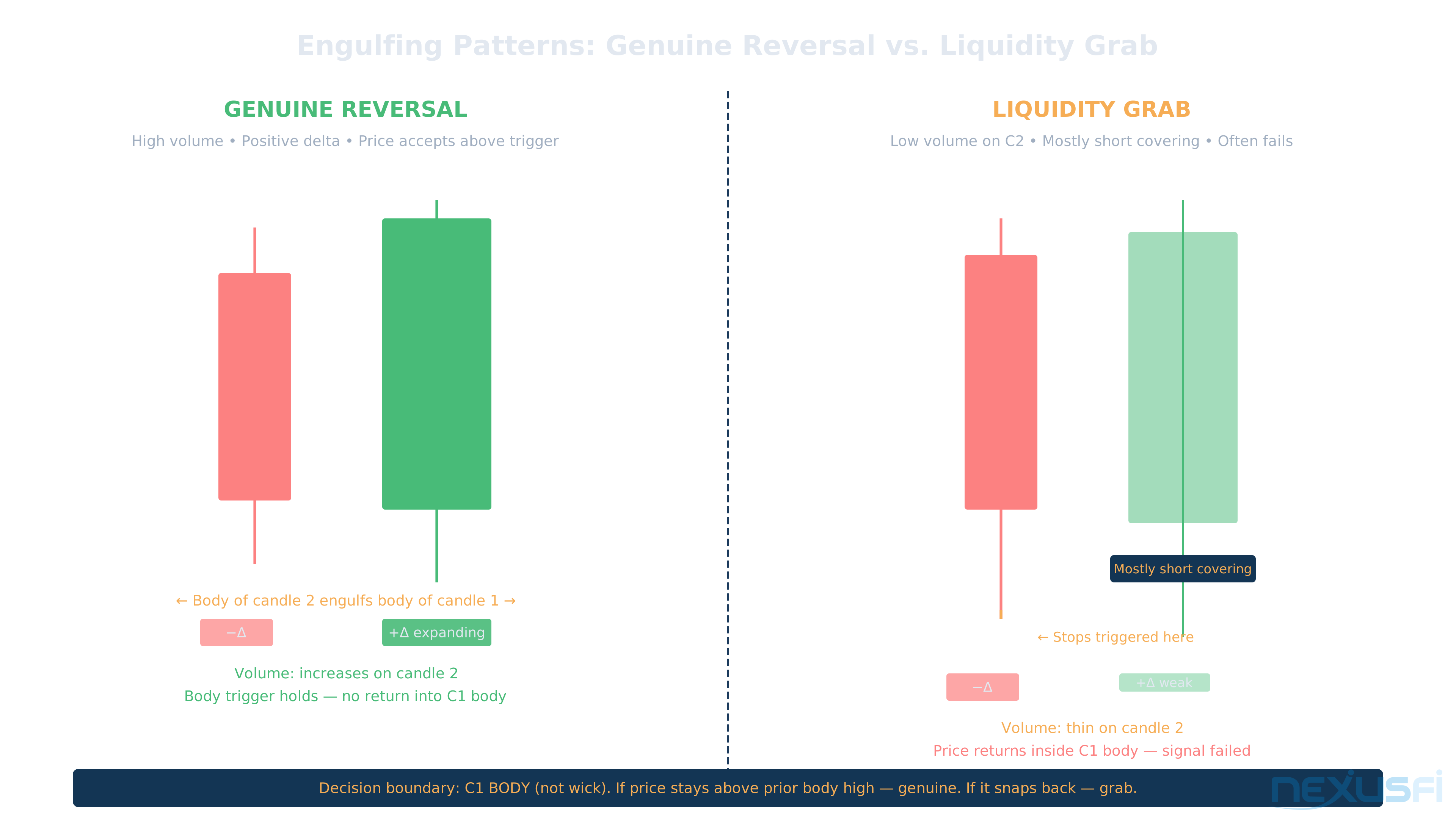
A bullish engulfing pattern occurs when a bearish candle is followed by a bullish candle whose body completely contains the prior body. A bearish engulfing is the mirror: a bullish candle followed by a bearish candle that engulfs the prior body. The pattern suggests a decisive transfer of control from one side to the other.
What it signals: Engulfing patterns represent moments where one side absorbed the other's aggression and took over. The key word is absorbed — genuine engulfing patterns are not just bigger candles, they reflect a shift in who is initiating trades vs. who is accepting them.
Order flow context for engulfing:
The critical distinction the NexusFi community has learned to make: genuine reversal vs. liquidity grab return to fair value.
In a genuine reversal engulfing:
- The engulfing candle shows volume expansion relative to the prior candle
- Delta matches the direction (bullish engulf with positive delta)
- Aggressive buyers or sellers are lifting or hitting through multiple price levels — visible as a sequence of directional transactions in time and sales
- Price accepts beyond the prior candle's body extreme and holds there
In a liquidity grab pattern that looks like an engulfing:
- The prior bearish candle drove into a cluster of sell stops below a key level
- The "engulfing" bullish candle is simply price returning to its fair value after the stops were cleared
- Volume on the engulfing candle is often light — it's short covering and passive bids, not aggressive buyers
- Price frequently returns back inside the prior body after the initial move
The body boundary rule: The prior body (not wick) is the decision boundary. For a bullish engulf, the trigger is a close above the prior bearish body high. For a bearish engulf, the trigger is a close below the prior bullish body low. If price rallies through the wick but not the body, the engulfing is not confirmed.
NQ-specific note: NQ is especially prone to false engulfing patterns on 1-minute and 3-minute charts due to its higher velocity and sensitivity to order flow imbalance. In NQ, require the second candle to show actual displacement — price moving away from the trigger level — not just momentary extension.
@famed documented this exact dynamic in the NexusFi thread "THREE SET UPS" (thread 4183): engulfing patterns on ES 10-minute charts require a prior significant directional move, strong follow-through, and structural location. Without all three, the pattern rate is poor.
Hammer and Pin Bar: The Rejection Candle #
A hammer is a candle with a small body at the upper portion of its range and a long lower wick — the market probed lower, encountered buying, and rejected back up. A hanging man has the same shape but appears after an uptrend — same candle, potentially bearish context. An inverted hammer has the small body at the bottom with a long upper wick. A pin bar is the trader's generic term for any candle with a small body and a long wick in one direction, often used when the exact open/close location varies slightly from the classical definition.
What it signals: The long wick is proof that price explored a level and was rejected. But the wick alone tells you only that sellers (for a lower wick) couldn't sustain price lower. It does not tell you whether buyers are going to drive price meaningfully higher.
Order flow context for hammer and pin bar:
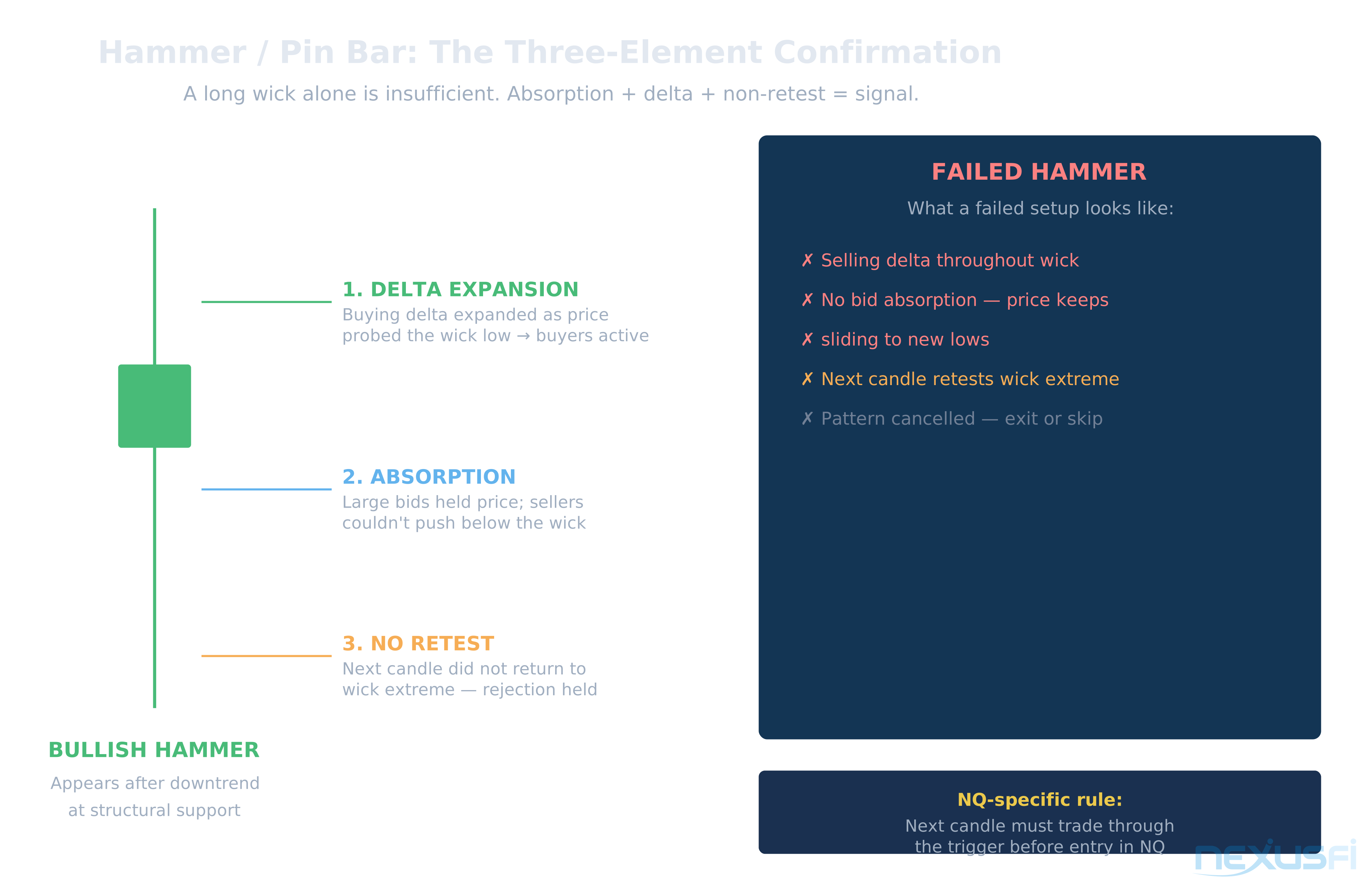
Three elements transform a hammer from a pretty wick into a tradeable signal:
Absorption at the wick low: As price probed lower, aggressive sellers were hitting the market. If buyers absorbed this selling — took the other side of large sell orders without letting price fall further — the wick represents genuine demand. On the DOM, absorption appears as large resting buy orders at a level that don't move despite repeated attempts to trade through them. On the footprint, it appears as high volume at the extreme with the delta turning from negative to positive.
Buying delta expansion during the wick: If the lower wick formed on selling delta (more trades hit the bid than the ask), buyers had not yet stepped in. If buying delta began expanding as the wick formed, buyers were actively participating in the rejection. The delta at the wick extreme is the most important signal.
Reduced propensity to retest the wick low: After the pattern closes, legitimate hammer signals typically do not immediately retest the wick low. If price quickly rotates back to the extreme, the "rejection" was temporary noise, not a genuine supply/demand interaction.
CL-specific application: In crude oil, hammer patterns at overnight settlement prices or the prior day's range extreme often work well because these levels have clear structural significance and tend to attract institutional participation. Around EIA inventory reports, pin bars at the initial spike extreme frequently mark the reversal point — but only when the delta confirms exhaustion of the move's initial direction.
NX-specific warning: In NQ, waiting for the next candle to trade above the hammer's close — or at minimum above the midpoint of the wick — is generally required before entering. "Perfect hammers" without immediate displacement into the anticipated direction tend to get faded back in NQ's faster environment.
Morning Star and Evening Star: The Three-Candle Reversal #
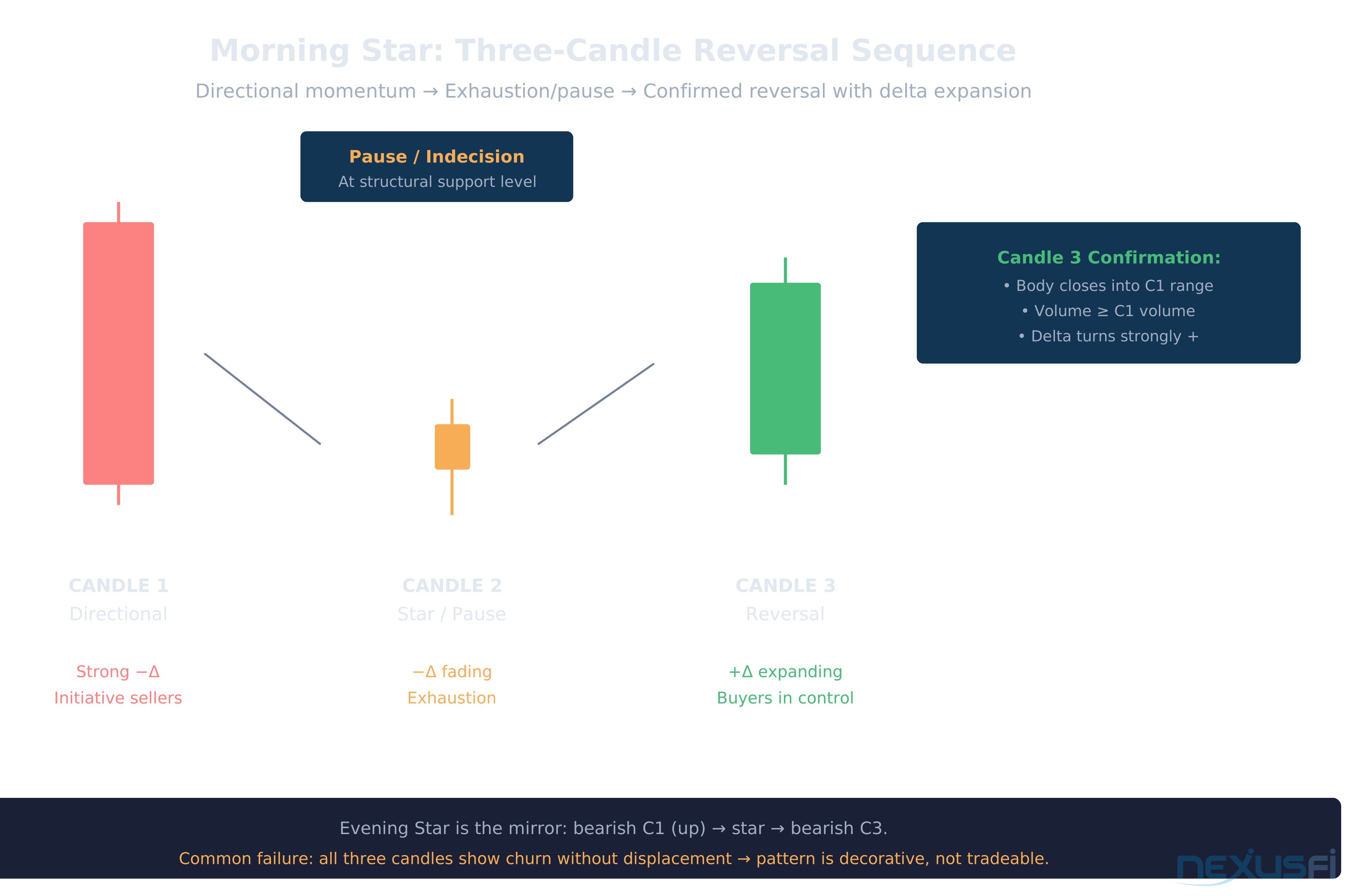
The morning star is a three-candle bullish reversal pattern: (1) a bearish candle showing directional momentum lower, (2) a small-bodied or doji candle showing pause/indecision, and (3) a bullish candle that reverses the first candle's move. The evening star is the mirror: directional move higher, pause, reversal lower.
These are the most reliable single-instrument candlestick patterns because they represent a complete narrative arc: conviction in one direction, exhaustion, and shift of control. In futures specifically, genuine morning and evening stars mark moments where the auction process has fully transferred.
What it signals: The three-candle sequence describes: (1) an imbalanced auction, (2) the arrival of uncertainty and opposing flow, and (3) confirmed transfer to the other side. Each candle adds evidence; the third candle confirms it.
Order flow context for morning/evening star:
In futures, the classic pattern does not require gaps between the candles (unlike stock markets). What it requires is the underlying auction dynamic:
Candle 1 (directional): Strong delta in the direction of the move. High volume. Price accepting in the direction of the move. This is genuine momentum.
Candle 2 (pause/star): Delta shrinks much. Volume may remain elevated but with balanced buying and selling — churn rather than directed flow. Wicks may appear on both sides as both buyers and sellers test the level. This is exhaustion — the auction is failing to find new participants in the original direction.
Candle 3 (reversal): Delta expands in the opposite direction. Price moves decisively back through the star candle's body and ideally into Candle 1's body. Volume picks up. This is acceptance of the new direction.
Common failure mode: Three candles that look like a morning star but all have balanced, low-volume churn with no clear directional delta on any candle. This is not a morning star; it's a balanced market printing random candles. The pattern is decorative, not meaningful.
How the NexusFi community trades this: Members in the "Price Action Ripper's Journal" (thread 30151) and similar journals describe looking for the star candle specifically at established value area boundaries — if the second candle forms exactly at the VAL (value area low) or VAH (value area high) and the third candle's open shows buying delta expanding immediately, that's an above-average setup.
ES-specific timing: The morning star pattern at the European open (8:00 AM ET) after an overnight decline is one of the more consistent setups in ES. The overnight session often sets up the structural level; the first 15 minutes of European hours create Candle 1 (retest of the extreme); Candle 2 appears as price stabilizes; the first US data or news trigger creates Candle 3.
Inside Bars: Compression Before Expansion #
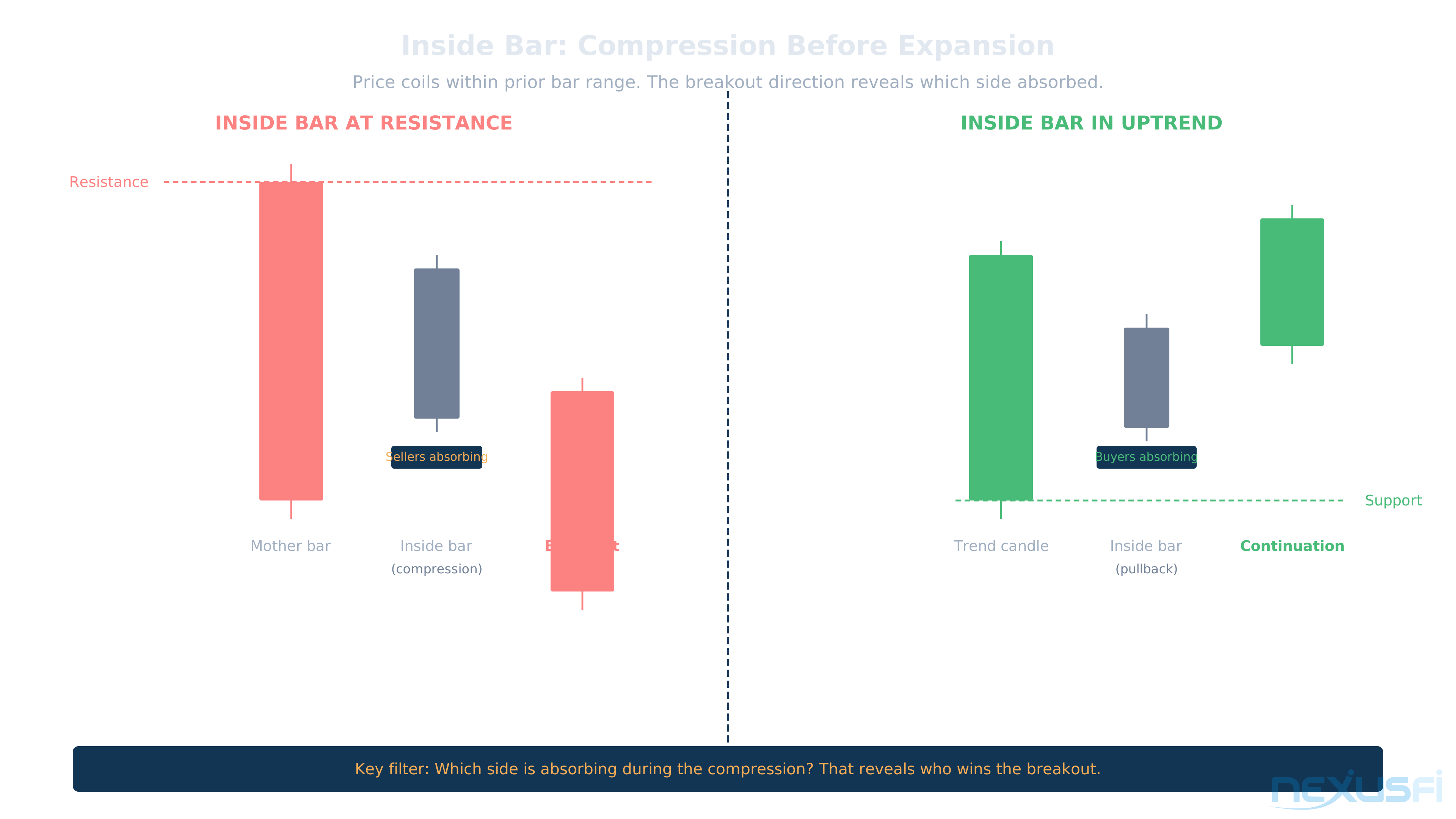
An inside bar occurs when the current candle's high and low are both within the prior candle's range — a lower high and higher low. Price compressed. This pattern signals that the market has entered balance, with neither buyers nor sellers willing to extend the prior move. Traders who use inside bars look for the breakout that follows as an entry trigger.
What it signals: Inside bars mark compression points where volatility has temporarily contracted. After compression, expansion tends to follow — either continuing the prior trend or reversing it. The direction of the expansion is not predictable from the inside bar alone.
Order flow context for inside bars:
The critical piece of information from order flow: is the compression happening with buying pressure or selling pressure being absorbed?
If price is compressing against a resistance level and the inside bar is forming with selling delta (sellers are active but can't push price lower, because buyers are absorbing) — that's a bullish inside bar. The compression is being caused by buyers stepping in. When buyers finally overwhelm the remaining sellers, the expansion will be bullish.
If price is compressing against support with buying delta (buyers are active but can't push price higher, because sellers are absorbing) — that's a bearish inside bar regardless of the candle's color.
Application in trending markets: Inside bars in the direction of a trend are pullback entries. ES trending higher on strong delta all morning may consolidate for one candle into an inside bar; the breakout of the inside bar high is an entry that continues the trend. The filter: the inside bar should form on declining delta in the counter-trend direction (sellers trying and failing to push back) before the breakout continuation.
Market-Specific Calibration #
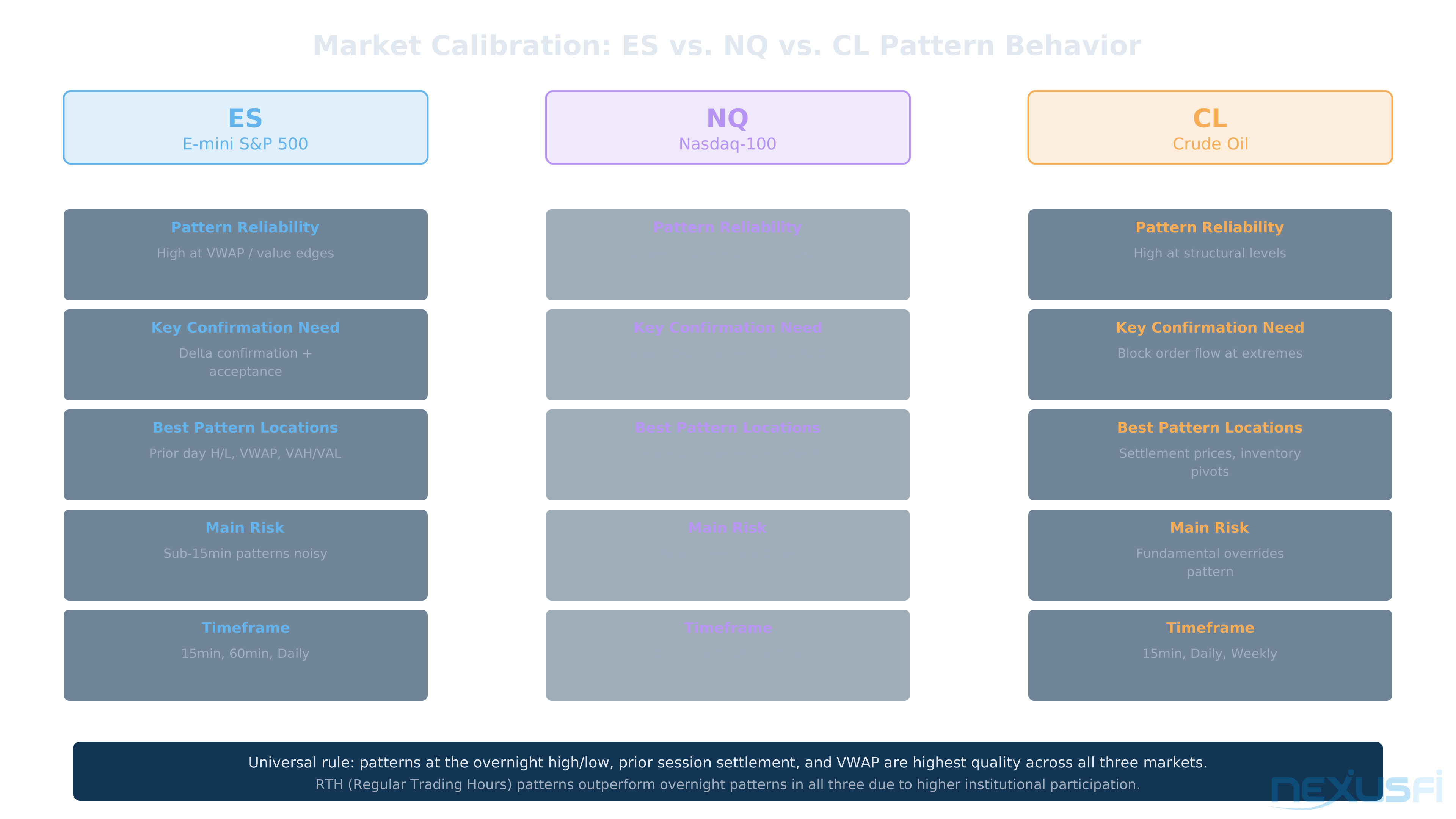
ES (E-mini S&P 500): The most liquid US futures contract trades with relatively smooth institutional flow. Patterns at VWAP, the value area edges, and the overnight high/low are the most reliable locations. Confirmation is sometimes slightly slower than in NQ — give ES patterns 1-2 candles to develop rather than requiring immediate displacement. Round numbers (50-point increments on the index) and previous day settlement are key reference levels that candlestick patterns cluster around.
NQ (Nasdaq-100 E-mini): NQ is faster, more volatile, and more prone to micro-fakes and mean-reversion traps than ES. A pattern that would be a high-probability setup in ES requires additional confirmation in NQ: stronger delta, more obvious displacement, and faster acceptance. Hammers and pins specifically require the next candle to immediately trade through the trigger before entry — NQ will "reset" failed setups faster than any other liquid US futures market. The NexusFi community's NQ-specialized journals consistently document this: wait for displacement, not just the pattern.
CL (Crude Oil): CL trends more cleanly than equity indices and is driven by fundamental supply/demand shifts more than microstructure dynamics. Patterns work well when they form at overnight settlement prices, weekly/monthly pivots, or immediately following major inventory reports. The key context for CL is: what is the fundamental backdrop? A bearish evening star pattern the day after a bullish EIA report is trading against the prevailing fundamental, which requires additional confirmation. A bearish evening star as an oil supply surplus builds technically is different — the pattern aligns with fundamental flow.
Overnight vs. Regular Trading Hours: All three markets behave differently in overnight (GLOBEX) sessions vs. regular trading hours (RTH). Patterns forming during RTH have more volume and more reliable signals because institutional participation is highest. Overnight patterns, especially in ES and NQ, can set up the reference levels for RTH without themselves being reliable reversal signals.
Common Failure Modes #
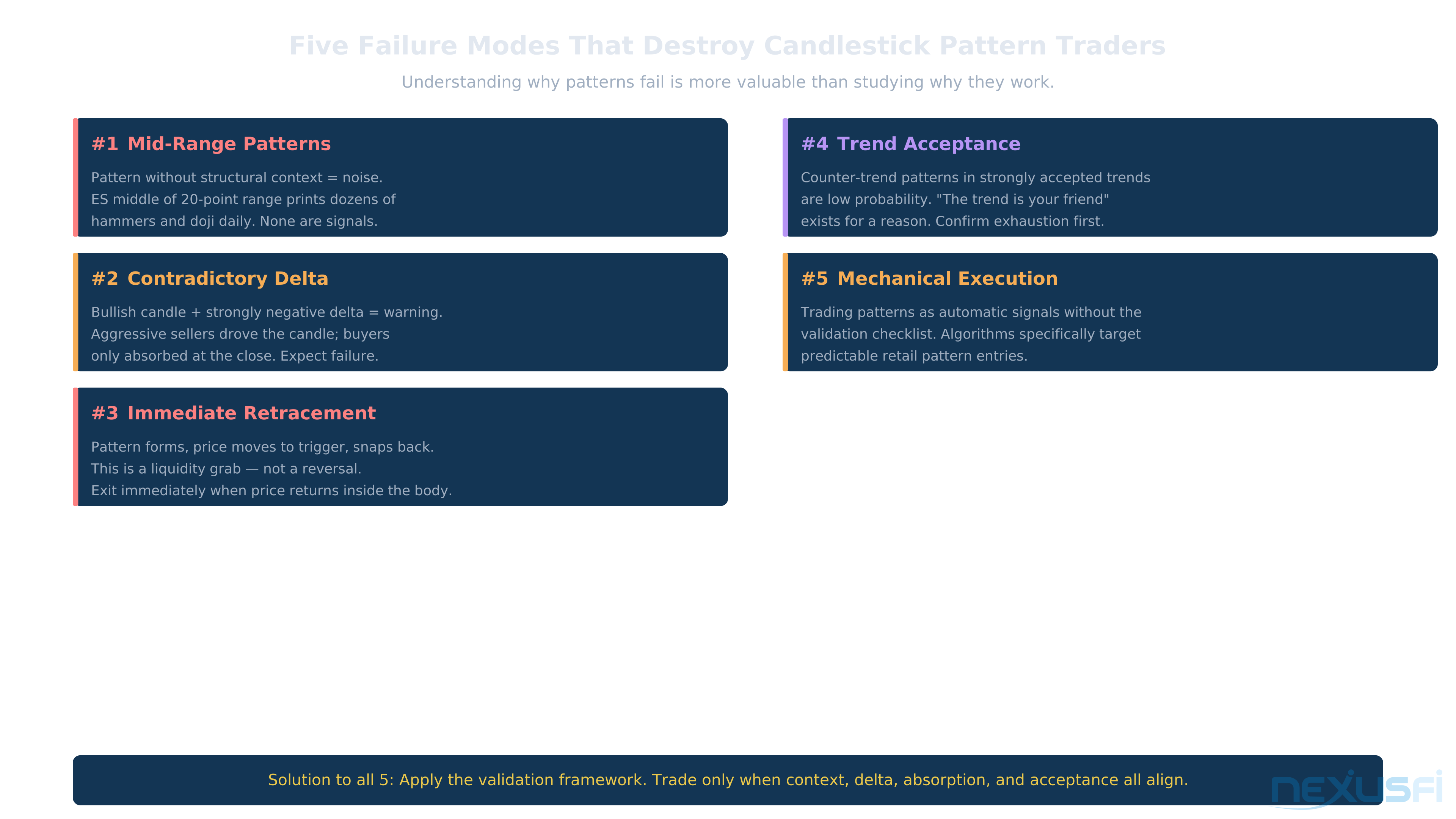
Trading mid-range patterns without structural context. The most common error. A hammer in the middle of a 20-point ES range with no nearby reference level is just noise. The pattern looks the same as a hammer at the value area low, but the context is entirely different.
Ignoring contradictory delta. A bullish-looking engulfing candle with strongly negative delta is a warning: aggressive sellers were in control of that candle despite its bullish appearance. This often occurs in algorithmic stop-hunting sequences. The candle closed bullish because buyers absorbed at the close; the sellers had control throughout. Trust the delta.
Requiring the pattern to fit the textbook definition exactly. Markets don't produce perfect patterns. A "bullish engulfing" where the body doesn't quite engulf the full prior body but the close is much higher and delta is strongly positive is more meaningful than a textbook-perfect engulfing on low volume with balanced delta. Trade the context, not the visual perfection.
Holding through multiple failed confirmation candles. Patterns that don't follow through within 1-3 candles have failed. Holding a position "because the pattern was valid" while price rotates against it is a bias maintenance error. The pattern was a hypothesis; the market rejected it. Move on.
Size mismatch between pattern timeframe and expected trade. A 1-minute pattern in ES has a very different size expectation than a daily pattern. The pattern's timeframe determines the appropriate target range. Many traders use 1-minute patterns but expect daily-chart-sized moves — a fundamental mismatch.
Implementation Framework #
Integrating candlestick patterns into a futures trading process requires a hierarchy of context:
Step 1: Identify the structure. Before the session opens, mark the key levels — VWAP (previous day's), value area high and low, overnight high and low, and any obvious prior swing points. These are the locations where patterns have meaning.
Step 2: Identify the trend and context. Is the market in a trend or balance? What is the day type developing as? Trending days have different pattern dynamics than range days.
Step 3: Watch for pattern development at structure. When price approaches a marked level, watch for pattern formation. Don't anticipate the pattern — wait for it to close.
Step 4: Run the validation checklist. Apply the six questions before acting. If the delta, location, and follow-through all align, take the trade. If they don't, pass.
Step 5: Define invalidation before entry. Every pattern has an invalidation level — the price at which the setup is no longer valid. For a bullish hammer, the invalidation is typically a close below the wick low. Know this level before entering. If the market trades there, exit without debate.
Step 6: Manage the trade by delta, not by pattern. Once in a trade, delta continuation is the key signal. If delta turns against your position while price is still on your side, the market is telling you something before price confirms it. Reduce exposure or exit.
Citations and Sources #
- @famed, "THREE SET UPS" (NexusFi thread 4183, post 47910) — ES 10-minute engulfing pattern criteria and structural location requirements
- @tturner86, "Price Action Ripper's Journal" (NexusFi thread 30151, post 391564) — NQ candlestick reversal entries with market context
- @Balanar/@BTR411, "Trading Futures with Context" (NexusFi thread 17308) — Doji and hammer patterns interpreted within structural framework
- QuantStrategy.io, "Decoding Candlestick Patterns for Futures" (2026) — Pattern mechanics and order flow integration methodology
- RushTrading, "Rush Trading Journal" (NexusFi thread 57974, post 868638) — ES pattern follow-through analysis and context requirements
Knowledge Map
Go Deeper
Build on this knowledgeCitations
- — THREE SET UPS“These are well known Japanese Candlestick Patterns. The three setups are INSIDE BAR, OUTSIDE (ENGULFING) BAR, and REVERSAL BAR -- the win rate for these trades is over 90% in the last 30 days trading CL on a 15-minute chart.”
- — THREE SET UPS“When an inside bar occurs in the middle of a trading range, it does not tell you much -- most inside bars are meaningless in that they do not show significant price action.”
- — Are candlesticks patterns statistically significant?“One candlestick pattern that is easy to test is a hammer or shooting star. Statistical testing of their predictive value in futures markets reveals results that challenge conventional wisdom.”
- — Are candlesticks patterns statistically significant?“Patterns of any sort are largely a matter of human discretion and judgment in identifying them. The classification is somewhat arbitrary.”
- — Spoo-nalysis ES e-mini futures S&P 500“I am not a huge fan of candlestick patterns. When I did statistical analysis on them, the outcome is often the opposite of conventional wisdom.”
- — Favorite High Probability Setup“When price is not moving anywhere for 6 candles and then an engulfing bar fires, that is in my opinion a pretty strong signal.”
- — Are candlesticks patterns statistically significant?“Candlestick patterns tend to be comparatively rare and isolated events, making them susceptible to curve-fitting.”
- — Want your NinjaTrader indicator created, free?“I have a candlestick pattern indicator under development that detects 18 different patterns, with context showing whether each pattern occurred at support/resistance.”