



Wyckoff Method in Futures Trading
Overview #
Wyckoff Method in Futures Trading
ES breaks below yesterday's low on heavy volume. The sellside liquidity sweep looks decisive — most traders call it a breakdown and start shorting. But 45 minutes later, price is 20 points higher and accelerating. The shorts are trapped, the longs who bought the sweep are in profit, and the move isn't slowing down. What just happened? In Wyckoff terms, that was a spring — and the traders who recognized it had a structural edge before the first tick of the reversal printed.
The Wyckoff Method is an auction-based framework for reading price and volume behavior to identify where large participants are accumulating or distributing inventory. Developed by Richard D. Wyckoff in the early 1900s, the method remains one of the most actionable structural approaches to futures trading — not because markets haven't changed, but because the underlying auction dynamics haven't. Professional participants still need to build positions without moving price against themselves, and that process leaves footprints that experienced traders can read.
This is not pattern matching. Wyckoff provides a structural narrative — a way to interpret what the market is doing and why — that directly informs trade location, direction, and timing. When combined with modern order flow tools available to futures traders, the method becomes much more precise than Wyckoff himself could have imagined.
What this article covers: The core Wyckoff framework adapted specifically for futures markets (ES, NQ, CL), with practical trade setups, entry/exit logic, and modern order flow confirmation methods. This is a methodology hub — component concepts like Volume Spread Analysis, order flow mechanics, and multi-timeframe analysis are summarized here and covered in depth in their dedicated Academy articles.
Prerequisites: This article assumes familiarity with futures contract mechanics (tick sizes, sessions, margin), basic market structure (support/resistance, trend/range identification), auction market concepts (acceptance vs. rejection, value areas), and foundational order flow literacy (delta, footprint charts, bid/ask imbalance).
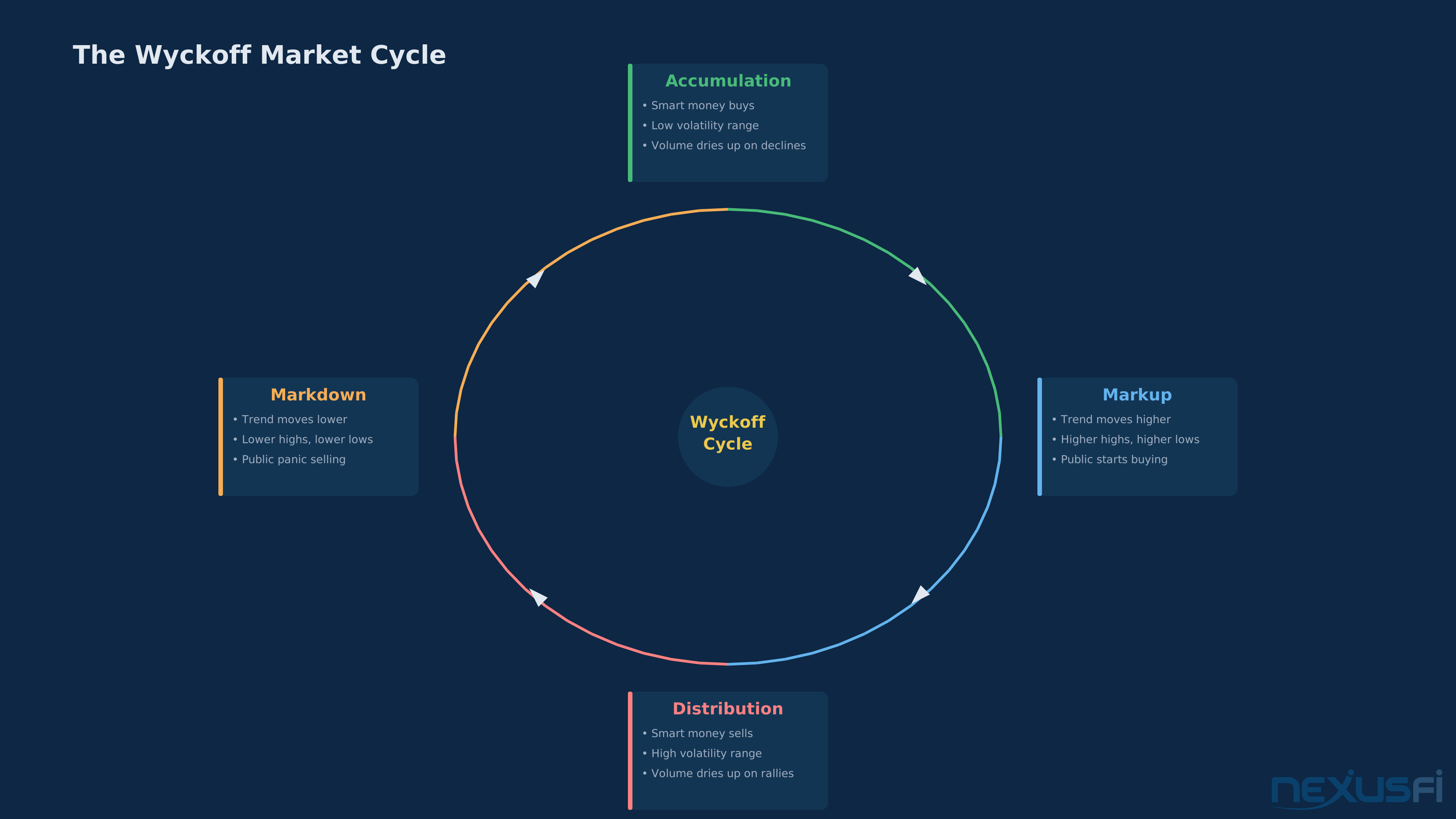
The Three Wyckoff Laws #
Every Wyckoff analysis begins with three laws that govern price behavior. These aren't abstract principles — they're diagnostic tools that experienced futures traders use to assess the current market state.
Law of Supply and Demand #
Price moves when supply and demand are out of balance. When demand exceeds supply at a given price level, price rises to find sellers willing to transact. When supply exceeds demand, price falls to find willing buyers.
In futures markets, this imbalance manifests as acceptance or rejection at key price levels. A price level where the market spends time building volume indicates acceptance — supply and demand are relatively balanced there. A price level where the market moves through quickly with minimal volume indicates rejection — one side overwhelmed the other.
The practical application: when price tests a prior support level and volume diminishes on each successive test, supply is drying up. When price pushes into new highs but volume fails to expand, demand is thinning. These observations directly inform Wyckoff phase identification.
As @DrGary explains in the NexusFi Wyckoff thread: the method focuses on "reading the market by its own actions" [1] — observing what price does at critical levels, not predicting what it should do based on indicators.
Law of Cause and Effect #
Every significant price move (the effect) requires a preceding period of preparation (the cause). In Wyckoff terms, the cause is built during accumulation or distribution — the sideways range where positions are being assembled or liquidated. The longer and wider the cause, the larger the expected effect.
For futures traders, this translates directly to measured moves. An accumulation zone that spans 50 ES points over three weeks builds a larger cause than a narrow 15-point, two-day range. The resulting markup should be proportionally larger.
The practical limitation: cause-and-effect projections are estimates, not guarantees. Volatility regimes, macro catalysts, and session-specific liquidity all affect how cleanly the effect unfolds. Use cause projections as targets within a broader trade management framework, not as rigid price objectives.
Law of Effort versus Result #
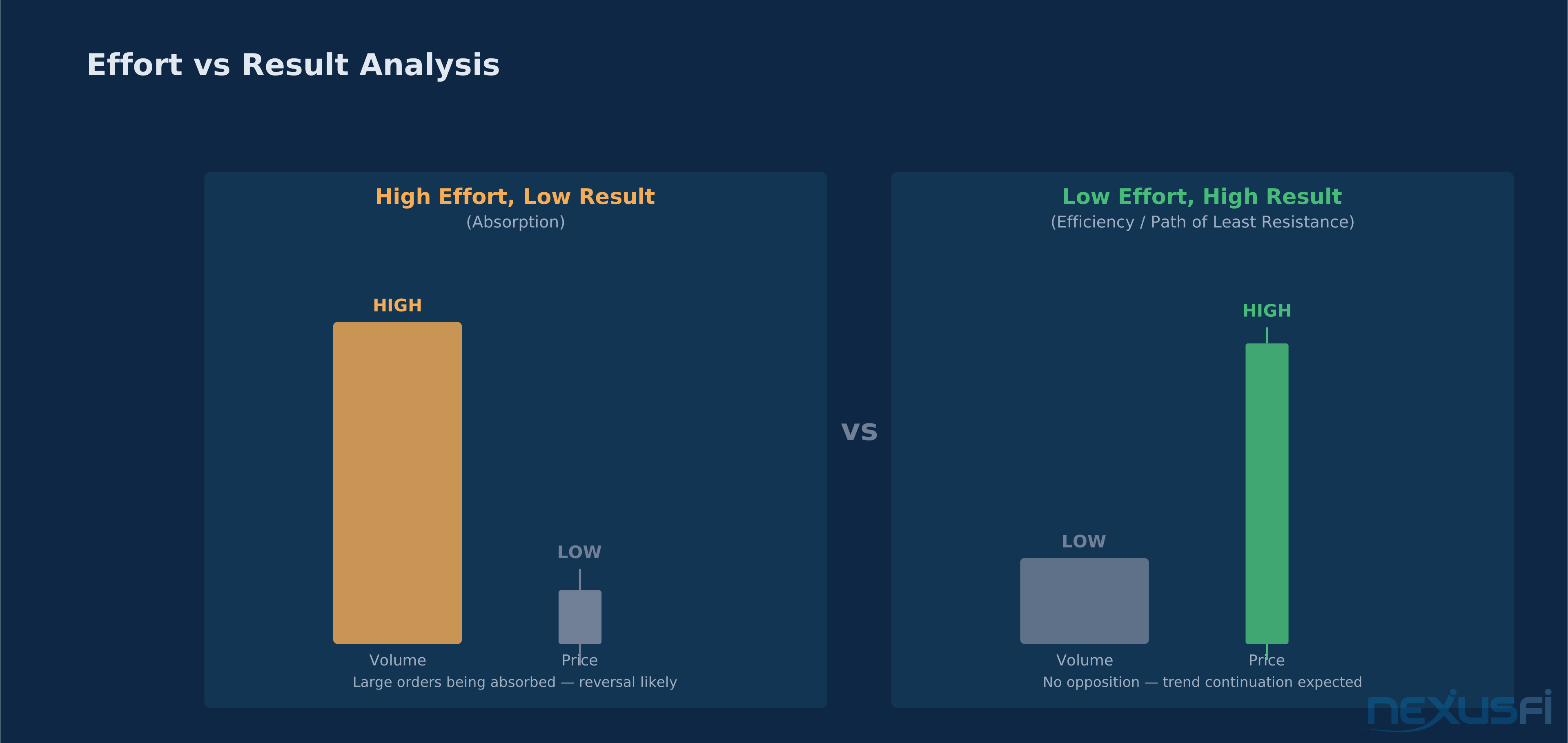
This is the most immediately useful Wyckoff law for modern futures traders. Effort refers to participation — primarily volume and aggressive order flow. Result refers to price displacement. When effort and result align (high volume produces significant price movement), the move is healthy. When they diverge, something important is happening.
High effort with low result means absorption or exhaustion. A large volume spike at a range boundary that fails to push price through indicates that one side is absorbing the other's aggression. This is how springs and upthrusts form — aggressive selling into support gets absorbed by patient buyers, or aggressive buying into resistance gets absorbed by patient sellers.
Low effort with high result means efficiency. Price traveling quickly on light volume indicates one-sided control with no opposing interest. This signature often appears during markup and markdown phases.
Effort vs. Result — the single most actionable Wyckoff law. High volume with no price progress = absorption. Someone is soaking up the aggression without letting price move. Low volume with large price movement = efficiency. One side controls completely. Learn to spot this divergence and you can read springs, upthrusts, and phase transitions in real time.
Accumulation and Distribution #
Accumulation and distribution are the two range-building phases where large participants assemble or liquidate positions. Understanding which phase the market is in — and where within that phase — is the central skill of Wyckoff analysis.
Accumulation: Building a Long Position #
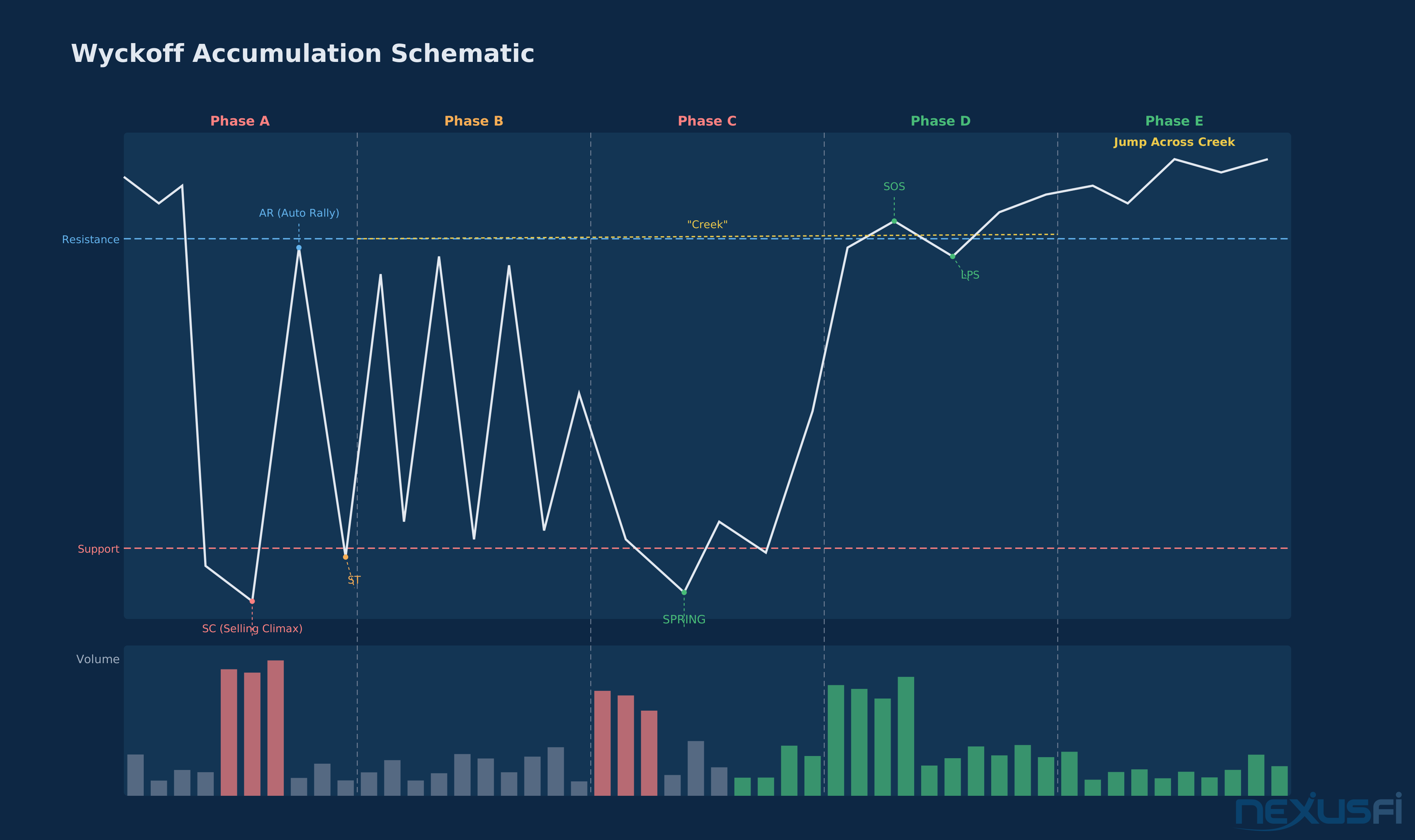
Accumulation occurs after a decline. Large participants absorb selling pressure at depressed prices, building long positions before the next markup phase. The process unfolds across five sub-phases:
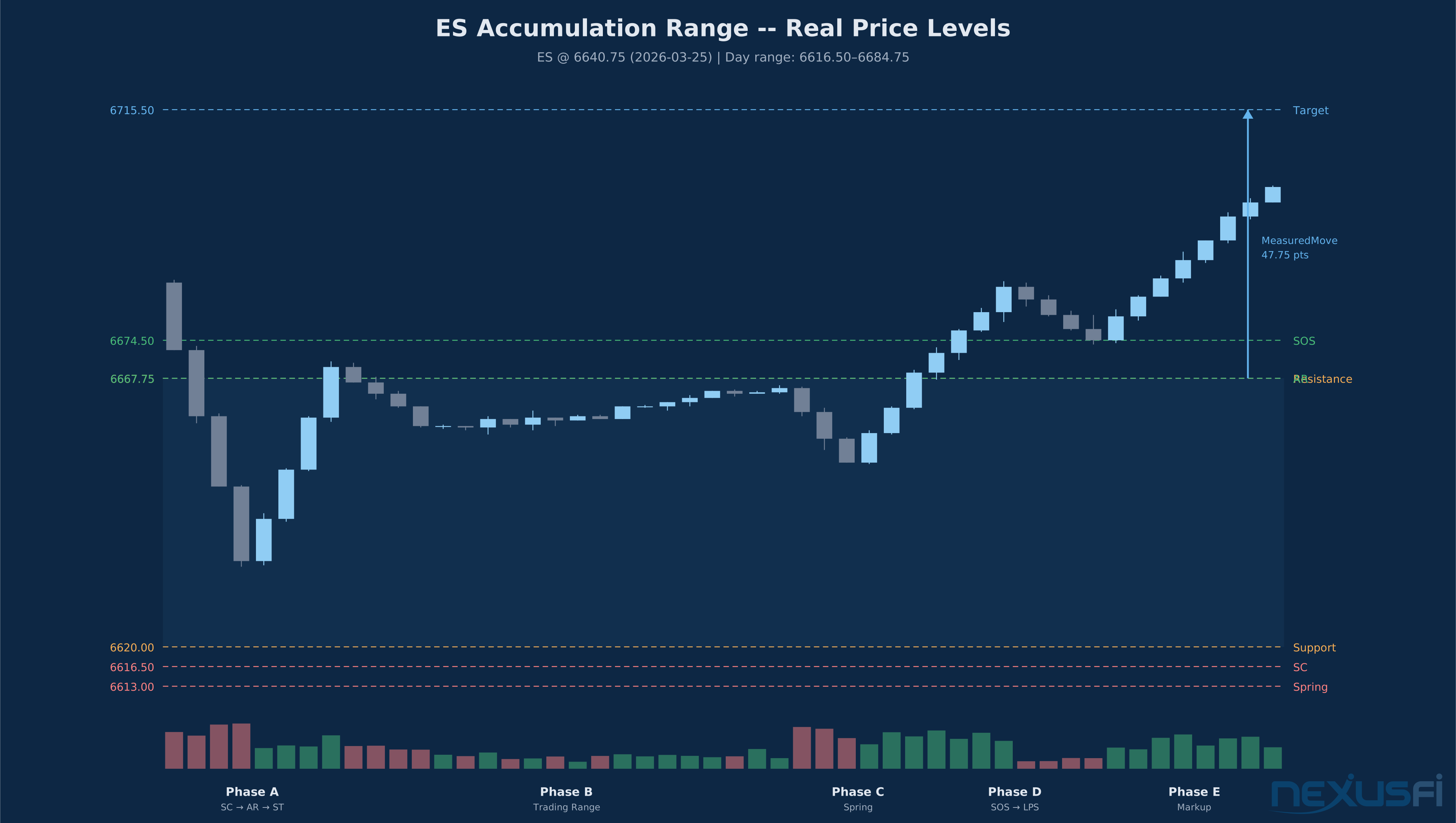
Phase A — Stopping the Decline: Selling pressure reaches a climax. The Selling Climax (SC) marks the point of maximum panic selling, typically accompanied by the highest volume in the decline. An Automatic Rally (AR) follows as selling pressure exhausts. The range between SC and AR defines the initial trading range.
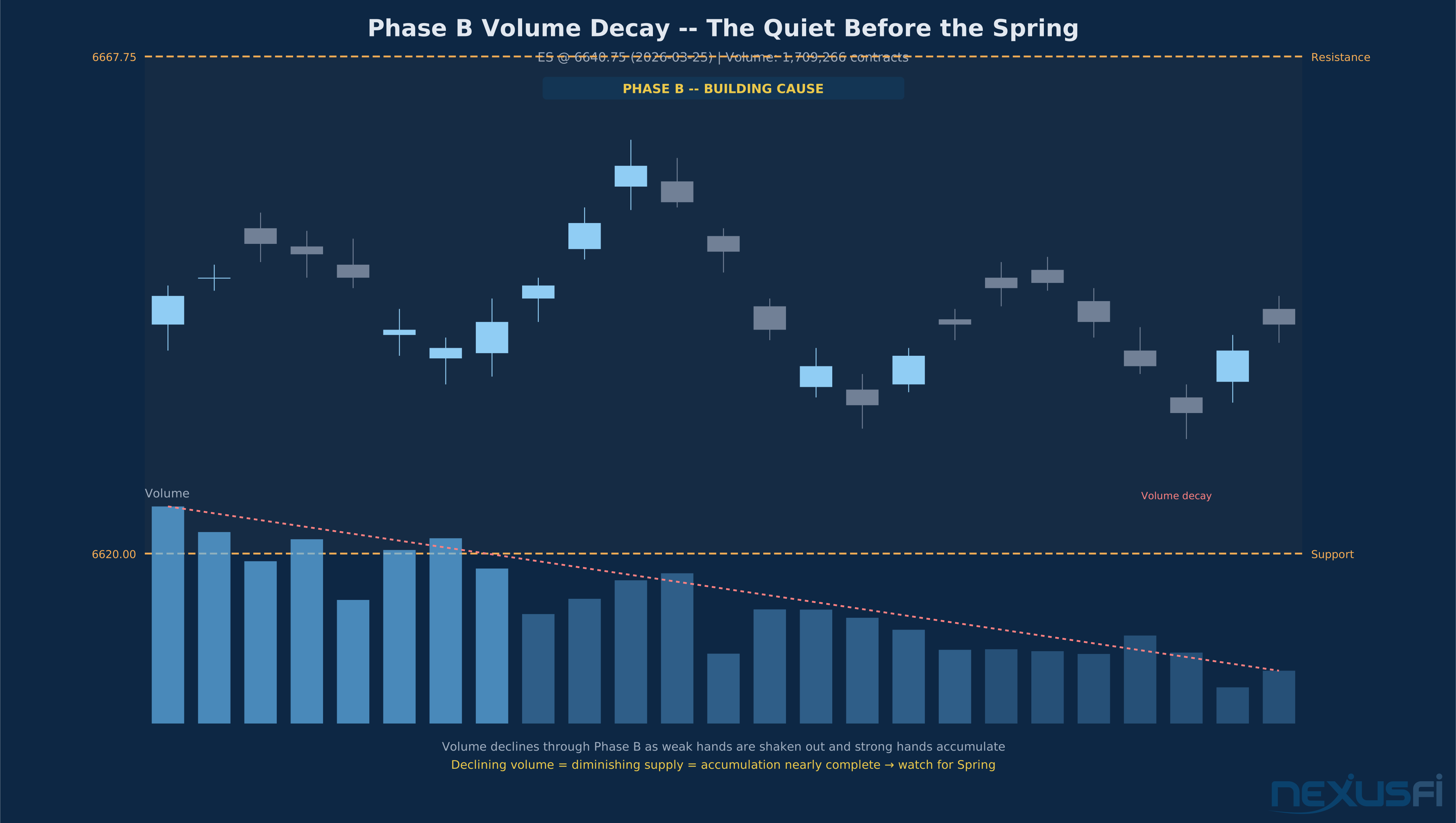
Phase B — Building the Cause: The longest phase. Price oscillates within the range established in Phase A, with the composite operator absorbing supply on each dip toward support. Volume patterns shift: early tests of support show strong volume (supply still present), while later tests show diminishing volume (supply drying up). This phase can last weeks in daily ES charts or hours on intraday timeframes.
Phase C — The Spring: The most tradeable event in accumulation. Price breaks below the established support level (the bottom of the range), triggering stop-loss selling and creating the appearance of a breakdown. If this breakdown fails to gain acceptance — price quickly reclaims back above support — it becomes a spring: a false breakdown that trapped sellers and provided the composite operator a final opportunity to accumulate at favorable prices.
Not all accumulation phases produce a spring. Some transition directly from Phase B to Phase D through a Sign of Strength that breaks above resistance. But when a spring does occur, it represents one of the highest-probability entry points in all of trading.
Phase D — Sign of Strength: The first clear indication that demand has taken control. Price breaks above the midpoint of the trading range with expanding volume, often creating a higher high that exceeds the Automatic Rally from Phase A. This is called the Sign of Strength (SOS) or "Jump Across the Creek" — price definitively leaving the accumulation zone.
Phase E — Markup: The payoff. Price trends higher from the accumulation zone. The Last Point of Support (LPS) is the final pullback within or near the accumulation zone before the sustained advance. Experienced traders who missed the spring often look for the LPS as a secondary entry.
In futures, accumulation frequently forms around prior session lows, value area lows, composite Points of Control, and major higher-timeframe support levels. ES often builds clean accumulation structures during Globex sessions that resolve during the RTH open.
Distribution: Unwinding a Long Position #
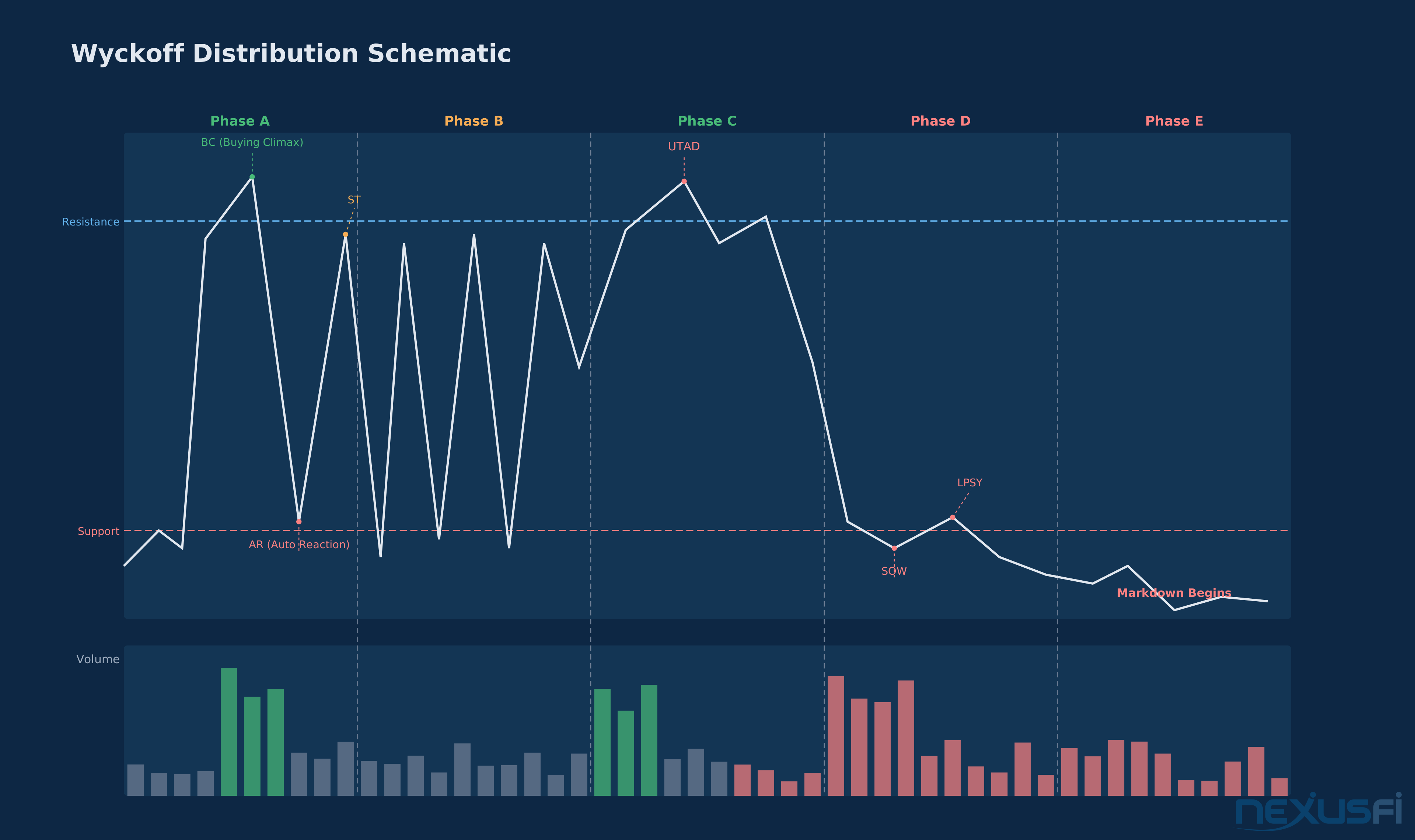
Distribution is accumulation's mirror. After a sustained advance, large participants distribute long inventory to eager buyers before the next markdown phase. The structure contains the same five sub-phases with inverted events:
Phase A — Stopping the Advance: A Buying Climax (BC) marks peak euphoric buying on heavy volume, followed by an Automatic Reaction (AR) as buying pressure fades. The range is established.
Phase B — Building the Cause: Price oscillates within the range. Early tests of resistance show buying enthusiasm (demand still strong), while later tests show diminishing follow-through (demand weakening). The composite operator distributes inventory on each rally toward resistance.
Phase C — The Upthrust: The mirror of the spring. Price breaks above resistance, triggering breakout buying and the appearance of a continuation. If this breakout fails — price quickly reclaims below resistance — it becomes an upthrust: a false breakout that trapped buyers and provided a final distribution opportunity.
The Upthrust After Distribution (UTAD) is especially powerful when it occurs after extended distribution. The false breakout above an established range attracts maximum breakout buying, providing the composite operator with ideal liquidity to complete distribution.
Phase D — Sign of Weakness: Demand fails. Price breaks below the midpoint of the range with expanding volume, creating a lower low that undercuts the Automatic Reaction. This Sign of Weakness (SOW) confirms that supply has overwhelmed demand.
Phase E — Markdown: The decline. The Last Point of Supply (LPSY) is the final rally within or near the distribution zone before the sustained decline.
In futures, distribution often forms near prior highs, weekly value area highs, major resistance levels, and at the top of extended trend moves. NQ is especially prone to sharp upthrusts that fail rapidly due to its higher volatility profile.
The Composite Operator #
The Composite Operator (CO) is Wyckoff's conceptual model for understanding institutional behavior. Rather than tracking individual firms, Wyckoff suggested imagining a single large operator orchestrating the market's movements. This isn't conspiracy theory — it's a useful mental model for understanding how the combined actions of institutional participants create predictable patterns.
In modern futures markets, the composite operator represents the aggregate behavior of:
- Market makers managing inventory across sessions
- Institutional traders building and unwinding positions over multiple days
- Algorithmic systems responding to order flow patterns
- Dealers hedging options exposure through delta management
The composite operator's goal is always the same: accumulate or distribute large positions without moving price unfavorably. This requires patience, deception (springs and upthrusts create the appearance of breakdowns and breakouts), and the exploitation of retail traders' predictable behavior at obvious chart levels.
For futures traders, the practical takeaway: when the market moves to an obvious level and the expected follow-through doesn't materialize, ask "who benefits from this failure?" The answer usually points toward the composite operator completing a phase transition.
Volume Spread Analysis Integration #
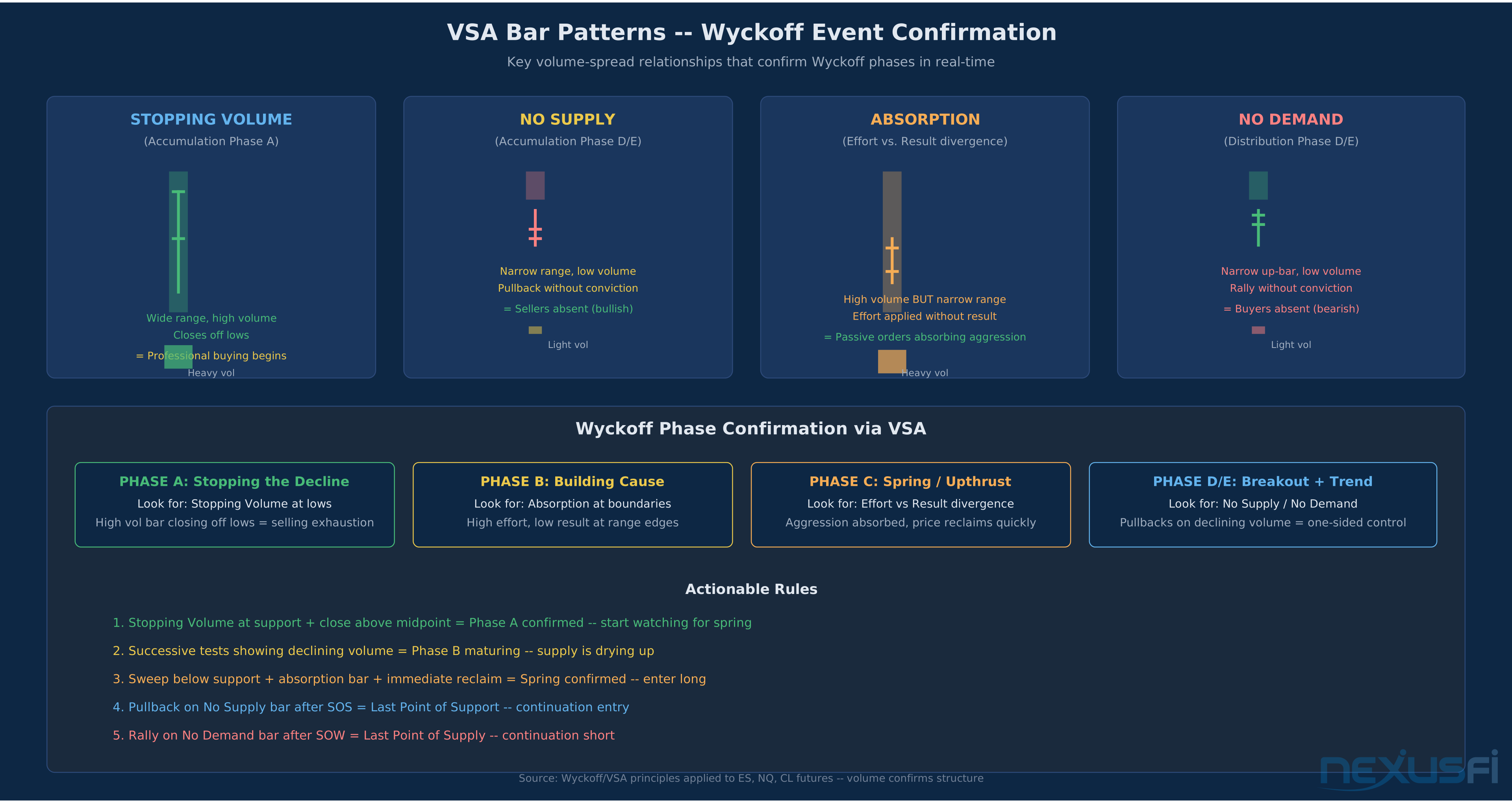
Volume Spread Analysis (VSA) provides the bar-by-bar confirmation layer for Wyckoff phase analysis. Where Wyckoff identifies the structural context (which phase, which event), VSA answers the micro question: "what does this individual bar's behavior tell us about supply and demand right now?"
Key VSA Concepts Within Wyckoff #
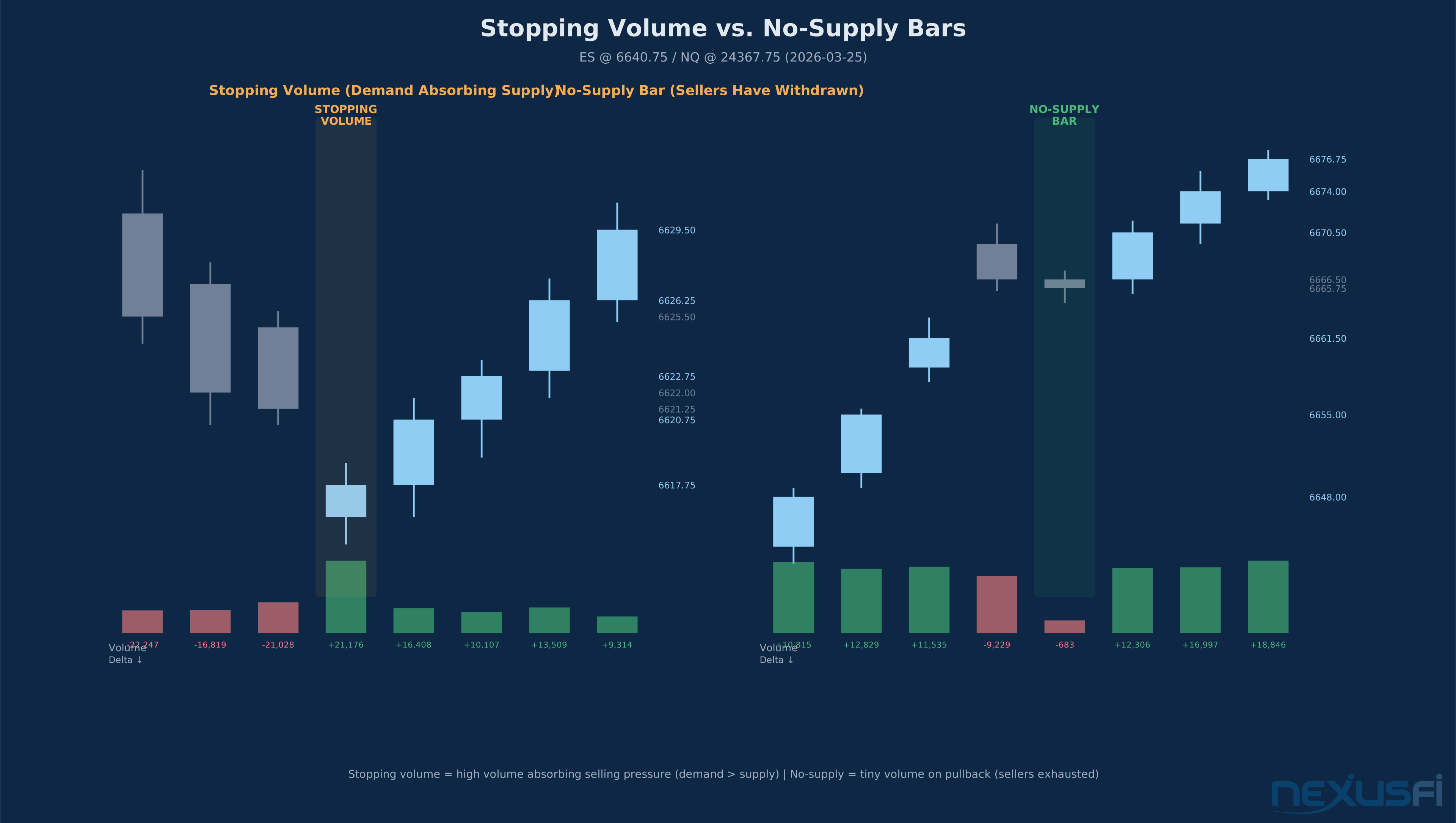
Stopping Volume: An abnormally high-volume bar near the bottom of a decline that closes off its lows. This marks the point where professional buying begins to overwhelm panicked selling. In accumulation Phase A, this forms the Selling Climax.
No Supply / No Demand: Low-volume bars that fail to make progress in the direction of the recent move. A low-volume pullback after a Sign of Strength (no supply) confirms that sellers are absent — an ideal entry condition. A low-volume rally after a Sign of Weakness (no demand) confirms buyers have stepped aside.
Effort versus Result on Individual Bars: A wide-spread, high-volume bar that closes near its low suggests effort was applied to the downside and succeeded (bearish). The same bar closing near its high suggests the effort was absorbed by buyers (bullish absorption). This nuance is critical for evaluating springs and upthrusts: the bar that creates the spring should show high effort (volume) but poor downside result (closing near its high).
For a complete guide to VSA mechanics and all bar patterns, see the dedicated Volume Spread Analysis article.
Futures-Specific Application #
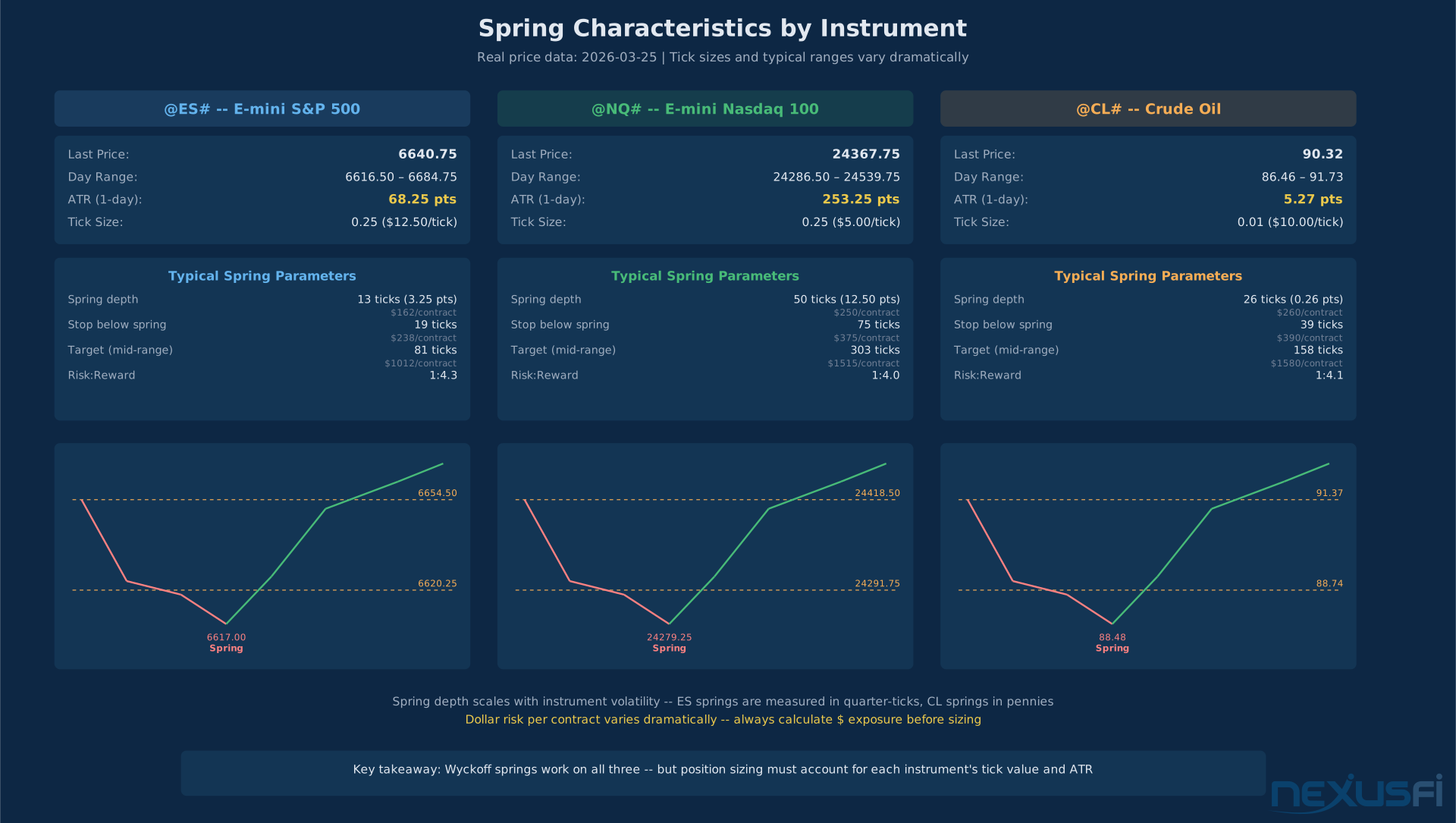
Wyckoff was developed for stock markets, but the method translates naturally to futures — and in many ways works better, thanks to centralized volume data, defined trading sessions, and cleaner auction dynamics. However, each futures instrument has distinct characteristics that affect how Wyckoff patterns manifest.
E-mini S&P 500 (ES) #
ES produces the cleanest Wyckoff structures among major futures contracts. Its deep liquidity creates smooth auction behavior, and its strong respect for value areas provides natural range boundaries for accumulation and distribution.
Typical Wyckoff behavior: Accumulation frequently forms around prior day lows, developing value area lows, and composite POC levels. Springs below well-defined support tend to produce quick, decisive reclaims — ES's mean-reverting nature makes failed breakdowns high-probability reversal signals.
Session dynamics: Globex often builds the cause (accumulation or distribution), while RTH resolves it. A common pattern: overnight accumulation near the prior day's low resolves with a strong RTH open that confirms the Sign of Strength.
Key adaptation: ES is more forgiving than other instruments for Wyckoff analysis. The reclaim-and-hold logic works well — when price springs below support and quickly returns above it, the reclaim itself provides strong confirmation.
E-mini Nasdaq 100 (NQ) #
NQ is faster and more volatile than ES, producing sharper but less structurally clean Wyckoff patterns. The higher beta means springs and upthrusts can be more violent, and false signals are more frequent.
Typical Wyckoff behavior: Ranges form and resolve more quickly. Upthrusts above resistance tend to be dramatic — sharp spikes that trap breakout buyers before rapid reversals. NQ's momentum character means that when a spring or upthrust confirms, the resulting move is often larger than in ES.
Key adaptation: Require stricter evidence thresholds. In ES, a wick rejection may suffice as spring confirmation. In NQ, demand confirmed acceptance — price must hold above the reclaimed level for a meaningful duration, with order flow confirming the shift. Without that stricter filter, NQ's frequent whipsaws will generate excessive false signals.
Time filter: If NQ hasn't rotated away from a spring or upthrust within a typical rebound window (minutes on intraday, sessions on swing timeframes), treat the setup as failed.
Crude Oil (CL) #
CL is the most challenging instrument for Wyckoff analysis due to its event-driven nature and erratic session behavior. However, when Wyckoff patterns do form cleanly, the resulting moves can be extraordinary.
Typical Wyckoff behavior: Accumulation and distribution can look "jagged" with broader swings and faster phase transitions. Springs and upthrusts frequently coincide with headline risk windows — inventory reports, geopolitical events, and OPEC announcements can create violent sweeps that either confirm or invalidate a Wyckoff thesis.
Key adaptation: After an apparent spring or upthrust, require post-event stabilization before entering. CL's first bounce off a spring is often just a reflex — wait for acceptance to form within the developing range before committing. Position sizing must account for CL's fat-tail behavior; stops need wider breathing room relative to the instrument's typical ATR.
Event awareness: CL is unique among major futures in how dramatically external catalysts interact with Wyckoff phases. A distribution phase can resolve abruptly on a headline, accelerating the markdown. An accumulation spring can be triggered by an inventory surprise. Factor the event calendar into your Wyckoff analysis.
Modern Order Flow Confirmation #
Wyckoff provides the structural narrative — which phase, which event, what the expected behavior should be. Modern order flow tools provide the real-time evidence that confirms or rejects that narrative. The combination is much more powerful than either approach alone.
How Order Flow Enhances Wyckoff #
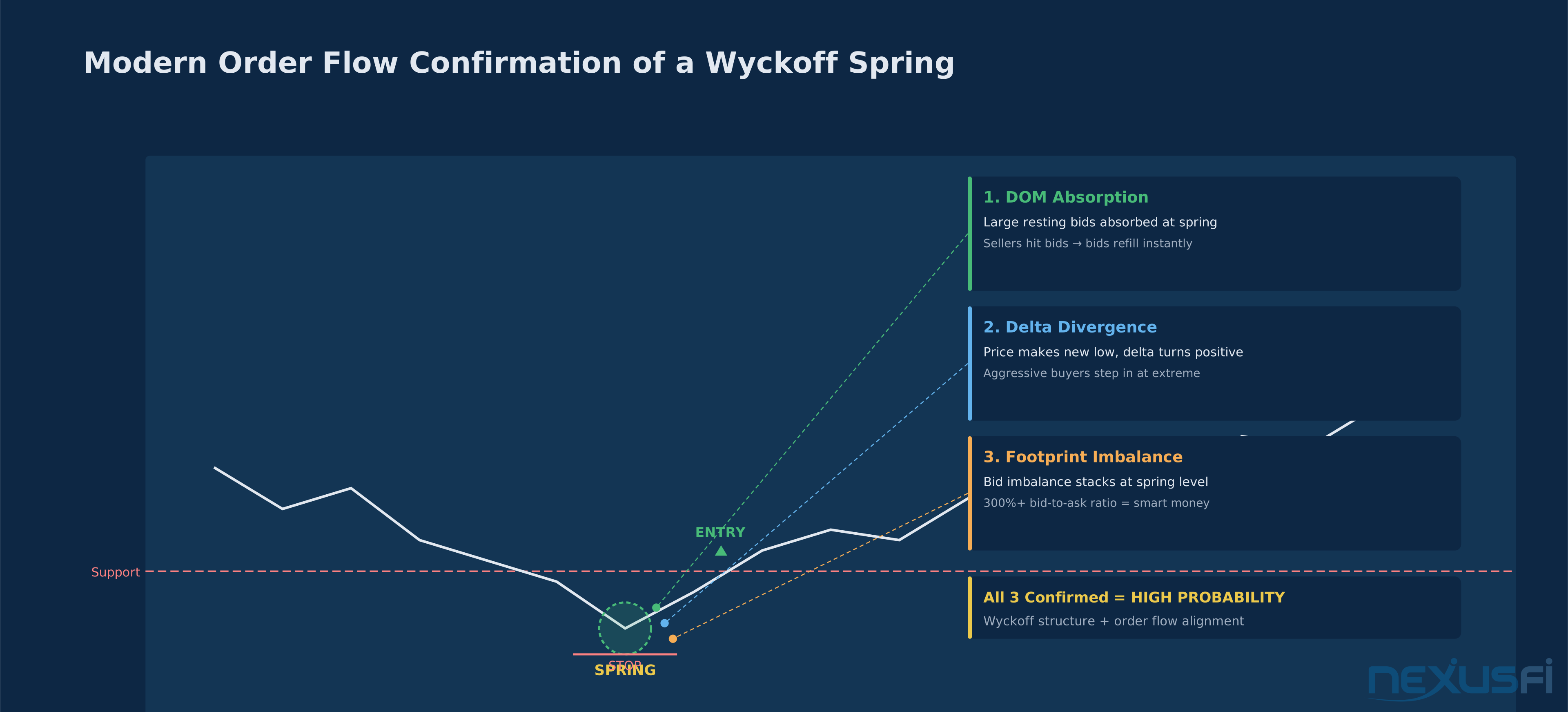
Footprint charts reveal whether aggressive order flow is being accepted or absorbed. During a spring, the footprint should show: heavy sell-side aggression at the low (the sweep), followed by absorption (buy-side orders absorbing the selling without price continuing lower), followed by a shift in aggression (buy-side becomes dominant). If you see the sell sweep but no absorption — just continued selling acceptance — the "spring" is actually a breakdown.
Volume delta helps detect divergence between aggression and result. During a valid spring: delta may remain negative (more sell-side aggression) while price stops declining. This divergence — effort applied downward without downward result — is the footprint signature of absorption. When delta then flips positive on the reclaim, it confirms the phase transition.
Depth of Market (DOM) provides short-term liquidity and response clues. After a spring sweep, watch for replenishing passive buy liquidity at the reclaimed support level. Persistent bid support that absorbs repeated sell attempts confirms that the composite operator is defending the spring level.
Volume Profile provides location context. Springs are highest probability when they occur at high-volume nodes (where significant previous acceptance built value) or at the low-volume boundary between two high-volume zones. The profile tells you whether the spring location is structurally significant.
The Confirmation Sequence #
- Identify the Wyckoff structure on the higher timeframe (daily, 60-minute): Is this accumulation or distribution? Which phase?
- Wait for price to test a key level: Spring at support, upthrust at resistance, test of prior breakout
- Assess the order flow response: Is aggressive flow being absorbed? Is there effort without result? Is acceptance forming back inside the range?
- Enter only when evidence aligns: Structure + location + order flow confirmation
The 4-step confirmation sequence in practice: Structure (which Wyckoff phase?) + Location (is price at a significant level?) + Order flow (is aggression being absorbed?) + Entry (all three align = go). Skip any step and you're guessing. All four aligned = high-probability setup.
Order flow should confirm the Wyckoff hypothesis, not replace it. A footprint chart without structural context is just noise. A Wyckoff pattern without order flow confirmation can be too subjective. Use both.
Practical Trade Setups #
Spring invalidation rule: If the spring low is violated with acceptance — not just a wick, but price spending time and building volume below the spring extreme — the accumulation thesis is dead. Close the position. A valid spring reclaims immediately and decisively. A failed spring that accepts lower is a genuine breakdown, and holding long through it is how accounts get damaged.
| Setup | Context | Trigger | Stop | Primary Target |
|---|---|---|---|---|
| Spring Long | Accumulation range after decline, support tested multiple times, diminishing volume on tests | Price sweeps below support, footprint shows absorption, price reclaims above support | Below spring extreme | Range midpoint (1st), range resistance (2nd), measured move (final) |
| Upthrust Short | Distribution range after advance, resistance tested multiple times, waning buying enthusiasm | Price breaks above resistance, breakout fails, price reclaims below resistance | Above upthrust extreme | Range midpoint (1st), range lows (2nd), measured move (final) |
| LPS/LPSY Continuation | Accumulation complete, SOS confirmed, price pulls back to retest breakout zone | Pullback on diminishing volume, support at prior resistance-turned-support | Below pullback low | Measured move target, interim resistance via volume profile |
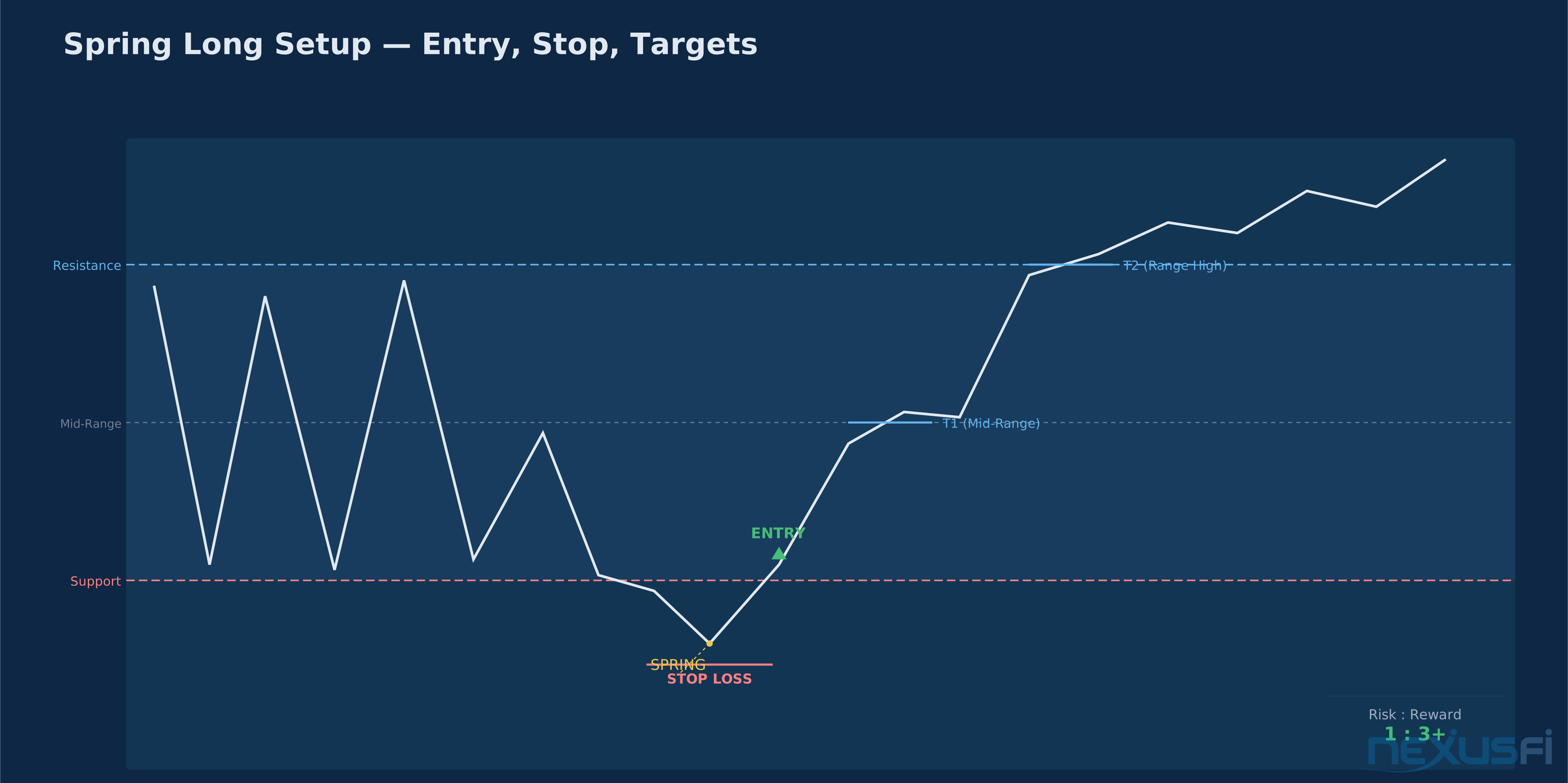
Setup 1: Spring Long #
Context: Accumulation range has formed after a decline. Support is well-defined with multiple tests. Downside momentum is weakening (successive tests show diminishing volume).
Trigger: Price sweeps below established support. Footprint shows a sell climax or absorption signature — aggressive selling is met with passive buying that prevents further decline. Price begins to reclaim back above the support level.
Entry options:
- Conservative: Enter when price closes back above the support level and holds on a retest. This reduces false signals but may sacrifice some of the move.
- Aggressive: Enter on the initial reclaim above support, using the spring's extreme low as the stop. Higher reward potential but more vulnerable to a second test.
Stop placement: Below the spring extreme. If the spring's low is violated with acceptance (not just a wick), the thesis is invalidated.
Targets: Midpoint of the accumulation range (first partial), prior swing highs or range resistance (second partial), measured move projection from the cause (final target). Trail remaining position using acceptance/rejection at value areas.
Order flow confirmation: Absorption at the spring low (persistent bid support absorbing sell aggression), decreasing sell delta on new lows (effort fading while price stays supported), and improving buy delta on the reclaim.
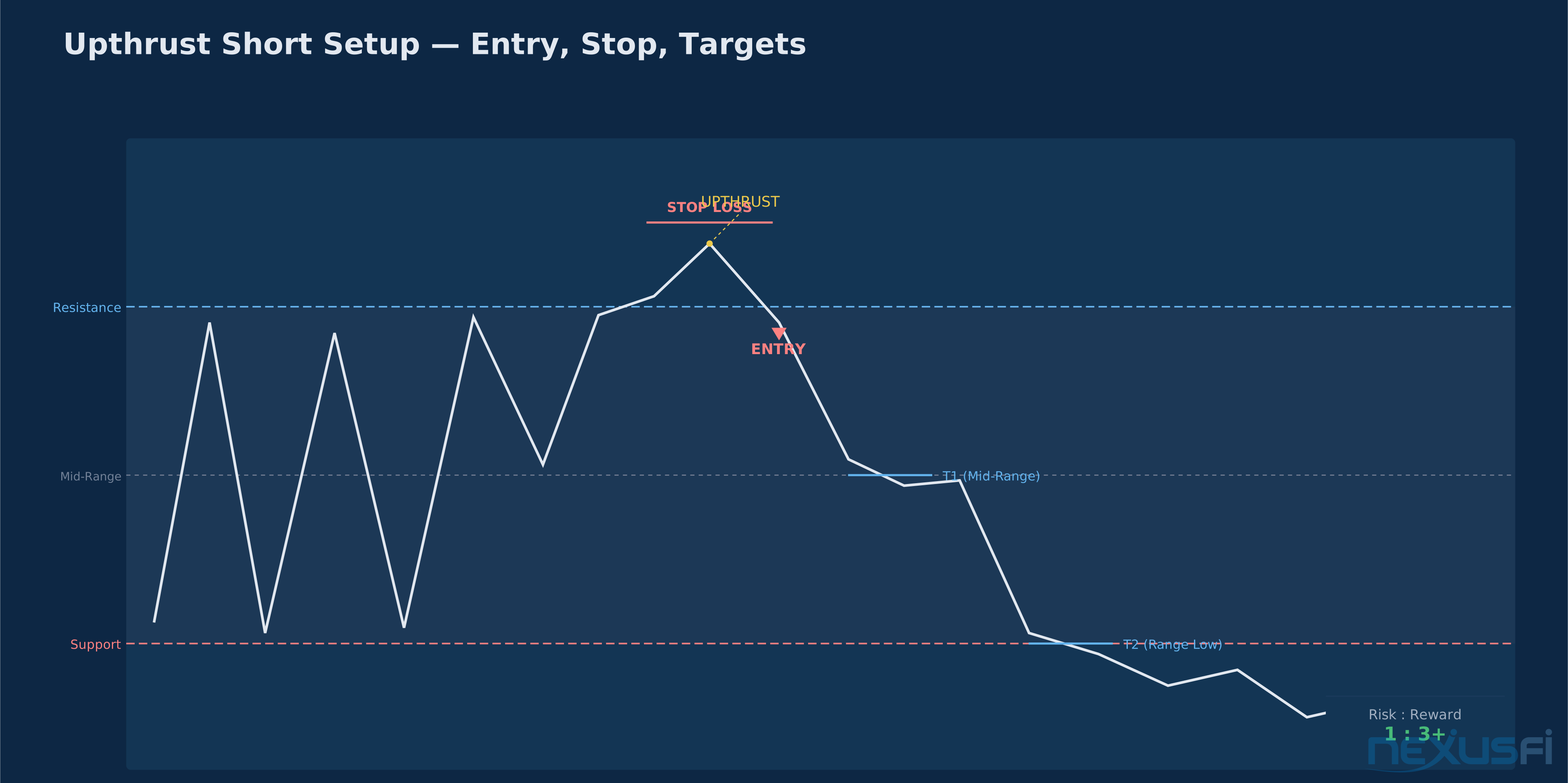
Setup 2: Upthrust Short #
Context: Distribution range has formed after an advance. Resistance is well-defined with multiple tests. Buying enthusiasm is waning (successive tests show diminishing upside continuation).
Trigger: Price breaks above established resistance, triggering breakout buying. The breakout fails to gain acceptance — aggressive buying is met with absorption, and price reverses back below the resistance level.
Entry options:
- Conservative: Enter when price closes back below resistance and holds. Wait for a lower high to form within the range.
- Aggressive: Enter on the reclaim below resistance, using the upthrust's extreme high as the stop.
Stop placement: Above the upthrust extreme. If the high is exceeded with genuine acceptance (expanding volume, sustained follow-through), the distribution thesis may be wrong.
Targets: Midpoint of the distribution range (first partial), range lows or prior support (second partial), measured move projection (final target).
Order flow confirmation: Positive delta with no progress at the highs (buyers aggressive but price stalls — absorption), iceberg-like selling activity (large passive sell orders absorbing buy aggression), and imbalance exhaustion as the breakout fails.
Setup 3: Breakout Continuation (Last Point of Support/Supply) #
Wyckoff is commonly associated with reversal trading, but continuation setups within markup and markdown phases are equally valuable.
Context: Accumulation is complete. A Sign of Strength has broken above the trading range. Price pulls back to retest the breakout zone — this pullback is the Last Point of Support (LPS).
Trigger: The pullback occurs on diminishing volume (no supply). Price finds support at or near the prior resistance-turned-support level. The pullback is orderly, not panicked.
Entry: Buy on the completion of the pullback when price shows acceptance at the support level. Look for a low-volume test followed by a resumption of buying interest.
Stop: Below the pullback low, which should be above the upper boundary of the prior accumulation range.
Targets: Continuation toward the measured move target. Use value area acceptance and volume profile structure to identify interim resistance levels for scaling.
Common Mistakes #
Over-labeling every range as Wyckoff: Not every sideways market is accumulation or distribution. Wyckoff phases require specific volume and price behavior sequences — random consolidation doesn't qualify.
Forcing schematic labels onto noisy intraday action: Wyckoff schematics are idealized models. Real markets are messier. Look for the behavioral signatures (absorption, effort vs. result, failed tests) rather than trying to match every bar to a textbook label.
Ignoring session context: In futures, the time of day and session (Globex vs. RTH) dramatically affect how patterns develop and resolve. A spring during low-liquidity Globex carries different implications than one during active RTH trading.
Trading the first impulse: After a spring or upthrust, many traders enter immediately on the reversal bar. Wait for confirmation — the reclaim back into the range, the acceptance at the reclaimed level, the order flow shift. The second entry is often better than the first.
Applying equity-style Wyckoff literally to futures: Futures have no earnings catalysts, different session structures, and more centralized liquidity. The principles transfer, but the execution timing and confirmation methods must be adapted.
Treating the composite operator as a conspiracy: The CO is a mental model, not proof that "someone" is manipulating price. It represents the aggregate institutional flow, not a single actor. Use it to understand positioning behavior, not to justify paranoid market narratives.
What to Study Next #
The Wyckoff Method provides the structural framework. These related topics provide the execution precision and deeper understanding that experienced futures traders need:
- Order Flow Analysis — Detailed guide to reading footprint charts, delta, and DOM for confirming Wyckoff setups
- Volume Profile Trading — Using value areas, POC, and volume nodes to identify high-probability Wyckoff trade locations
- Auction Market Theory — The theoretical foundation underlying both Wyckoff and modern market structure analysis
- Market Profile (TPO Charts) — Session-based analysis that complements Wyckoff's time and price framework
- Delta Analysis and CVD — Understanding cumulative delta and its role in confirming effort versus result
- Initial Balance — How the first hour's range interacts with Wyckoff phases during RTH sessions
- Volume Ladder and Footprint Charts — Bar-by-bar order flow analysis for entry timing within Wyckoff setups
Knowledge Map
Go Deeper
Build on this knowledgeReferences This Article
Articles that build on this topicCitations
- — Wyckoff Trading Method (2011) 👍 19“VSA was coined by Tom Williams, a British gentleman who learned the Wyckoff Method in the 1970s and has computerized many of the concepts. The Method is all about reading the market by its own actions.”
- — The S&P Chronicles - An Amalgamation of Wyckoff, VSA and Price Action (2017) 👍 17“With the Wyckoff and VSA method the trader gains his edge by reading the whole chart. We focus to the left of the screen and work our way to the right.”
- — The S&P Chronicles - An Amalgamation of Wyckoff, VSA and Price Action (2018) 👍 7“Wyckoff and VA principles at play: Spring (setup), Upthrust (setup), Accumulation/buying zone, Bar by Bar Analysis, Shakeouts, No supply (setup), Overbought and oversold conditions.”
- — The S&P Chronicles - An Amalgamation of Wyckoff, VSA and Price Action (2017) 👍 7“It is the left of the chart that sets the tone for the proceeding price action for potential setups. Think of a jigsaw puzzle - all the edges have been completed and in the middle is the blank canvas.”
- — The S&P Chronicles - An Amalgamation of Wyckoff, VSA and Price Action (2018) 👍 11“Wyckoff and VSA principles at play: Spring (setup), Test (setup), Upthrust, Multiple time frames, No Supply (setup).”
- — Wyckoff Trading Method (2011) 👍 12“We now have a shelf of buying, which often is a strong sign of accumulation. The market is driven down, the high volume shows lots of activity. There is still supply here.”
- — Wyckoff 2.0 (Trade Journal) (2013) 👍 37“Price then breaks through the bottom of the range and finds temporary support near yesterday's low, has a weak rebound and then falls below.”
- — The S&P Chronicles - An Amalgamation of Wyckoff, VSA and Price Action (2017) 👍 8“This is literally how Wyckoff would describe distribution from the early 1900s and uses the term 'automatic rally' for both phases (Accumulation and Distribution).”
- — The S&P Chronicles - An Amalgamation of Wyckoff, VSA and Price Action (2017) 👍 14“Today's trading showcases pure Wyckoff at its finest: Accumulation, Absorption, Springs x 2, Shortening of the thrust.”
- — Diary of a simple price action trader (2023)“Supply overcame demand which led to a markdown followed by an accumulation phase. After making a double bottom price printed the 1st higher high followed by a spring where buyers stepped in.”
- — Archive.org (1910)
- — Wiley.com (2013)
- — Stockmarketinstitute.com