



Balance vs Imbalance
How to classify market regimes using Volume Profile — and why the classification determines your entire trade plan
Overview #
Every Volume Profile decision starts with one question: is this market balanced or imbalanced? The answer determines whether you fade the edges or follow the direction — and getting it wrong is how traders get run over fading a breakout or chasing into a rotation.
Balance and imbalance aren't opinions. They're measurable states defined by three VP metrics: POC stability, value area overlap, and profile shape. This article breaks down each metric with concrete thresholds, shows how to resolve conflicts when metrics disagree, and maps each regime to specific entry, stop, and target logic. For the broader methodology that ties these concepts into a complete trading framework, see Volume Profile Trading.
What Balance and Imbalance Mean #
@Private Banker defines it cleanly: balance is two-sided trade where no participant dominates, and imbalance is a dominant force driving price directionally. [1] That's the core binary, but "balanced" and "imbalanced" need operational definitions traders can apply in real time.
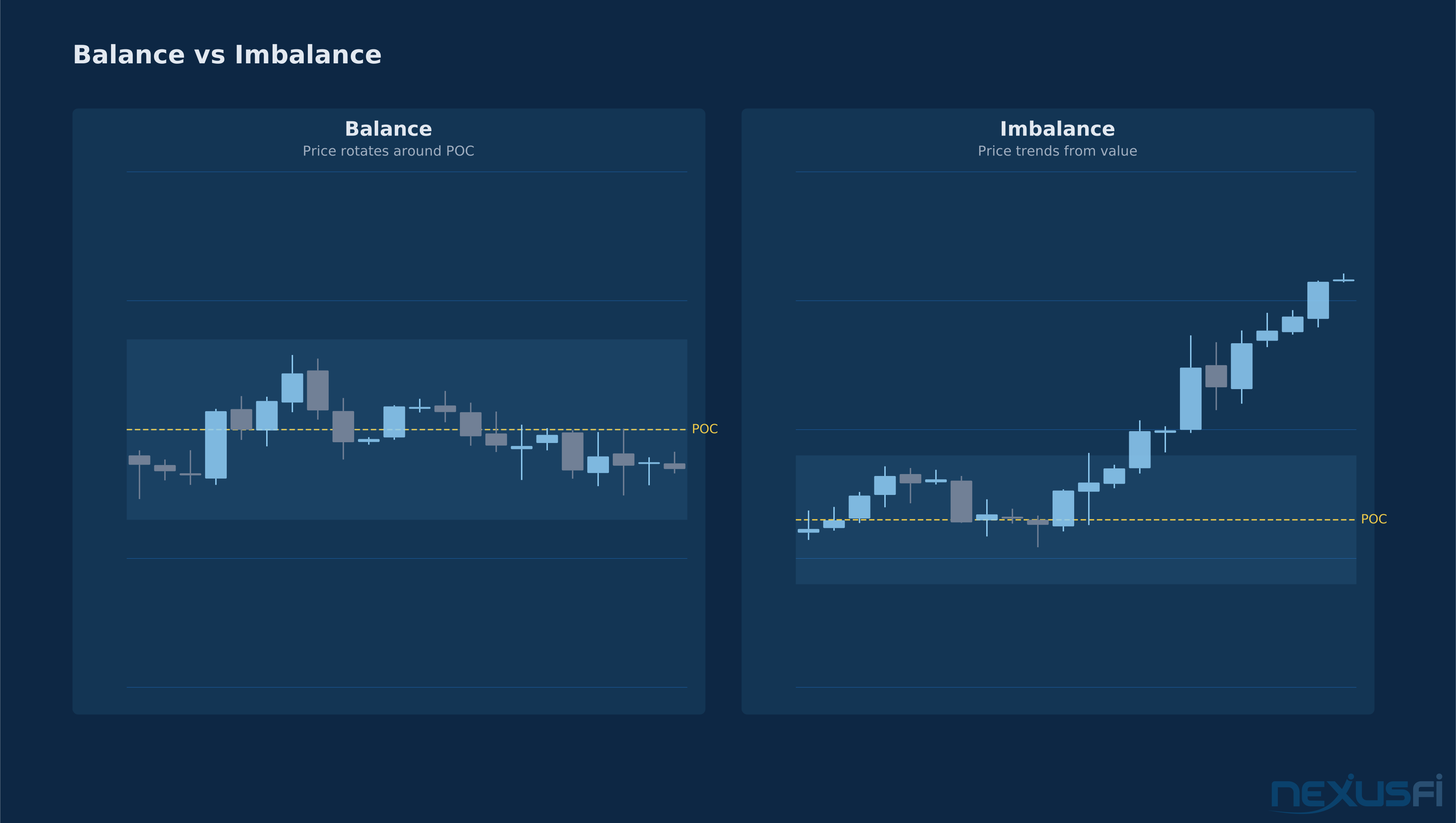
Balance means the market is rotating within a value range. Price visits both edges and returns to center. The auction is efficient — buyers step in at the low, sellers step in at the high, and the POC sits in the middle like a magnet. Value areas overlap across sessions.
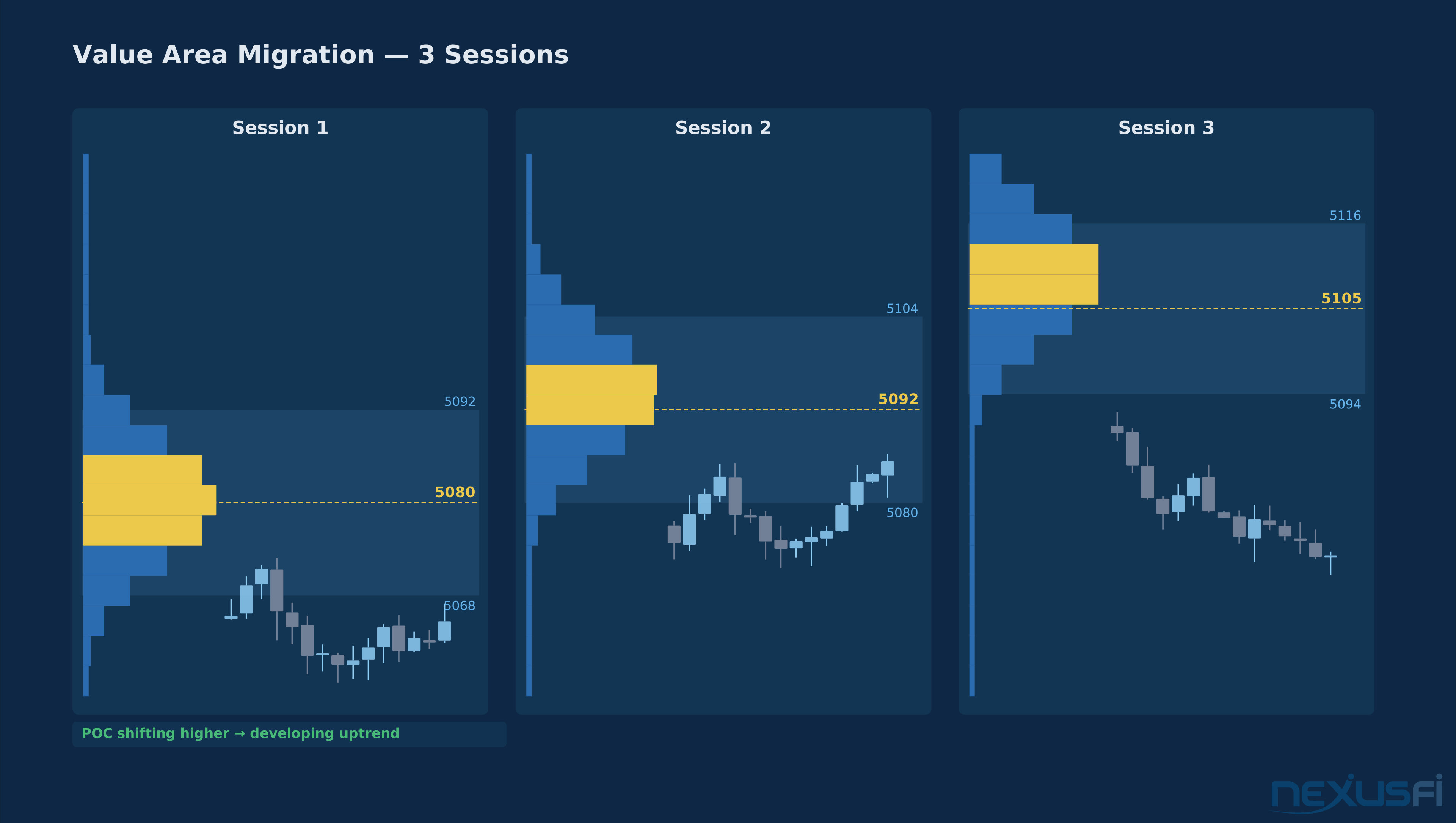
Imbalance means the market has directional conviction. Price moves away from prior value and doesn't come back. The POC migrates. Value areas shift rather than overlap. One side has taken control and the other has stepped away.
@Private Banker describes the visual difference: in balance, the value area wraps around most of the day's activity. In imbalance, price leads value — it runs ahead while value chases behind until the auction finally stabilizes. [2]
The Three-Metric Classification System #
Don't classify the market on vibes. Use three quantitative metrics together, with a clear priority order when they conflict.
Metric 1: Value Area Overlap (Primary) #
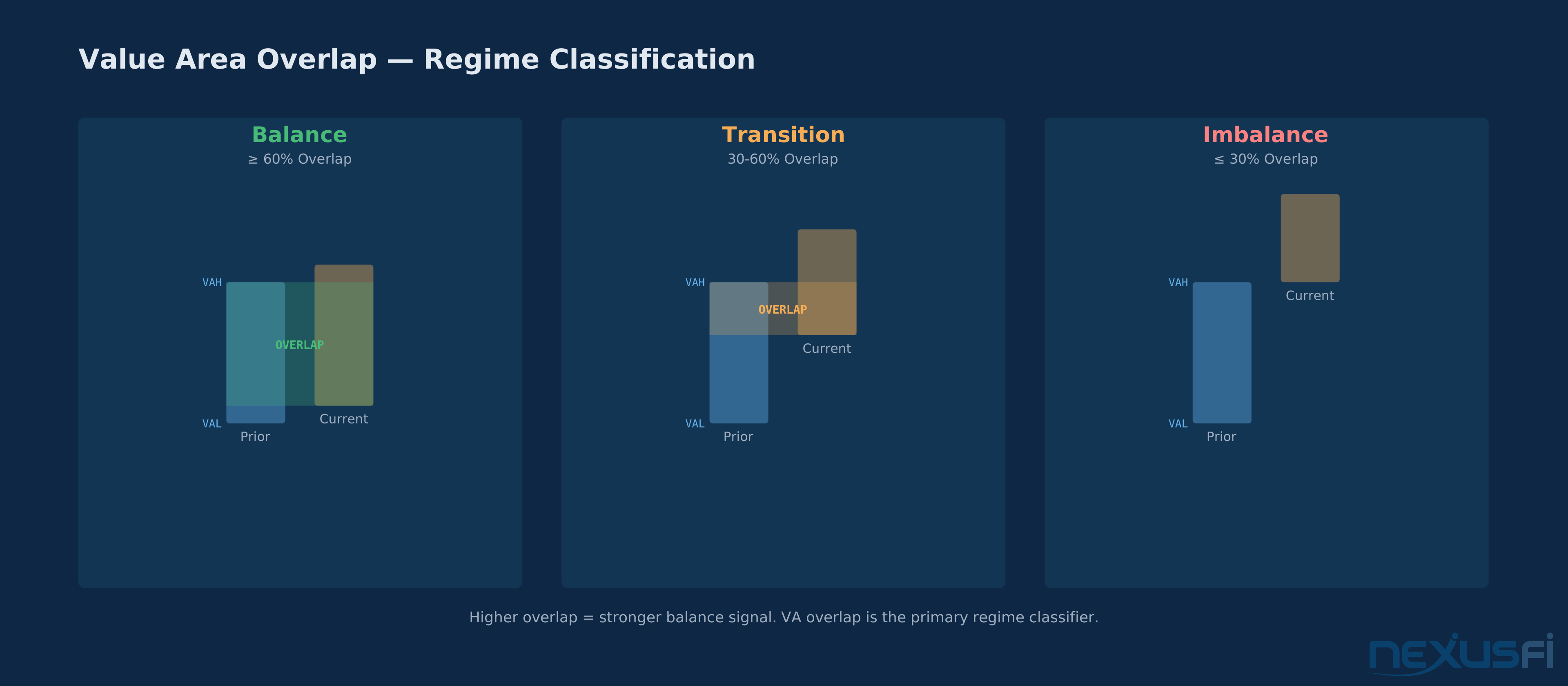
Value area overlap is the primary regime classifier because it directly measures whether the market is accepting or rejecting prior value. High overlap means the market is staying in the same neighborhood. Low overlap means value is migrating.
Calculation (RTH-to-RTH, volume-based 70% VA):
Overlap = max(0, min(VAH_current, VAH_prior) - max(VAL_current, VAL_prior))
Overlap% = Overlap / min(VA_width_current, VA_width_prior)
Use the smaller VA width as the denominator — this asks "did the market preserve the accepted range?" rather than diluting the percentage with a wider union.
Regime thresholds:
| Regime | VA Overlap |
|---|---|
| Balance | ≥ 60-70% |
| Transition | 30-60% |
| Imbalance | ≤ 30-40% |
Three ES sessions with 70%+ overlap? That's a bracket — fade the edges. Three sessions where each VA barely touches the prior one? Value is repricing. Don't stand in front of it.
Critical note: overlap must be computed on the same session definition. Comparing an RTH value area to an ETH value area produces garbage. Pick RTH-to-RTH and stick with it. These thresholds assume standard volatility conditions — in compressed-volatility environments (VIX below 14), tighten the balance threshold to ≥ 75%. In elevated volatility (VIX above 25), widen it to ≥ 50%.
Metric 2: POC Stability (Secondary) #
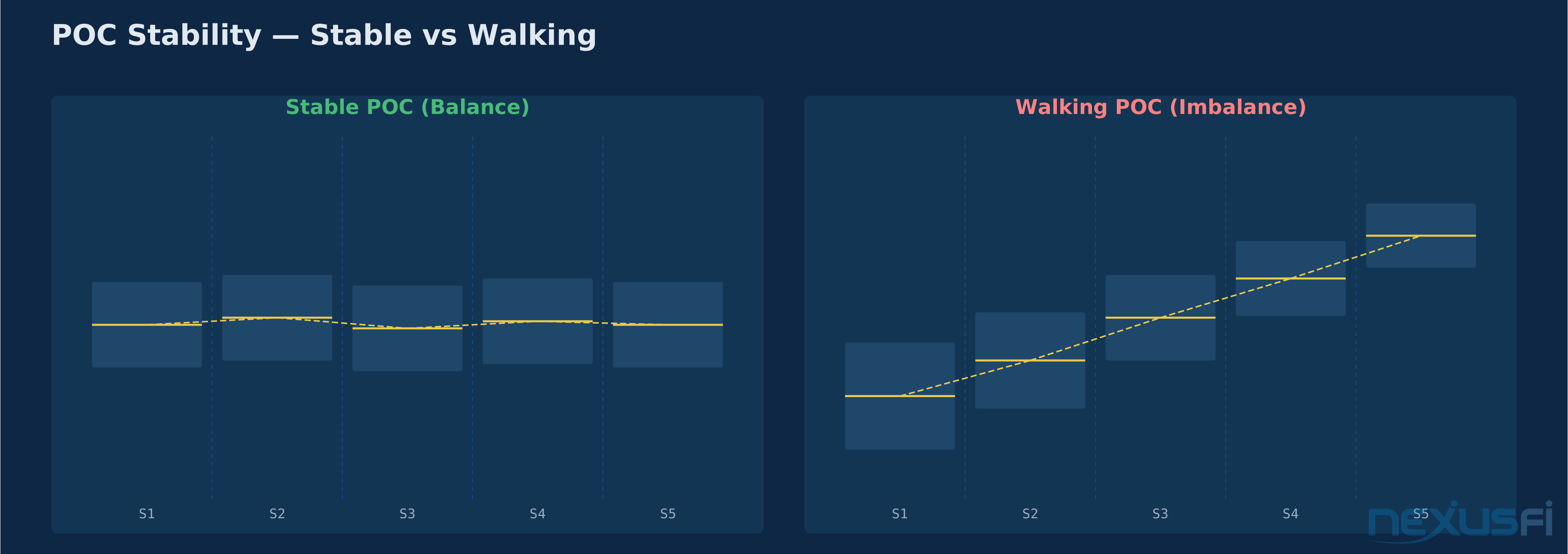
The POC is the price where the most volume traded. In balance, the POC stays put. In imbalance, the POC walks — each session's acceptance center steps in the direction of travel.
How to measure it:
Stability Ratio = |POC_current - POC_prior| / (VA_width / 2)Thresholds by instrument (RTH profiles, average ATR conditions):
| Instrument | Stable (Balance) | Unstable (Imbalance) |
|---|---|---|
| ES | Drift ≤ 10-12 ticks, ratio ≤ 0.25 | Ratio ≥ 0.50 |
| NQ | Drift ≤ 20-30 ticks, ratio ≤ 0.25 | Ratio ≥ 0.50 |
| CL | Drift ≤ $0.20-$0.40, ratio ≤ 0.30 | Ratio ≥ 0.50 |
These thresholds are observed ranges from experienced practitioners, not backtested absolutes. They assume average ATR conditions for each instrument. When ATR expands much (news week, earnings, geopolitical events), scale the tick thresholds proportionally — a 10-tick POC drift on a 40-point ATR day is very different from a 10-tick drift on a 15-point ATR day. The ratio-based approach (stability ratio ≤ 0.25) handles this normalization automatically, which is why it's the preferred metric.
@tturner86 demonstrates the operational difference: in balance, a VPOC shift signals a reversal — the market is pivoting from one edge back to the other. In imbalance, the VPOC shift becomes support or resistance that pushes price further in the trend direction. Same signal, opposite interpretation, entirely dependent on regime. [3]
Metric 3: Profile Shape (Tertiary) #
Profile shape provides nuance but never overrides the first two metrics.
D-shape is the hallmark of balance — a roughly symmetric distribution with the POC near the center and volume tapering to both sides. D-shape doesn't mean "flat day" — it means repeated re-acceptance around the mean. You can see D-shapes during pauses within trends. Frame it as balance local to a timeframe.
b-shape and P-shape can exist within balance if overlap is high and POC is stable. A P-shape with 65% VA overlap and stable POC? Compact balance. A P-shape with 25% overlap and walking POC? Imbalance — the skew confirms the direction.
When Metrics Conflict: The Decision Hierarchy #
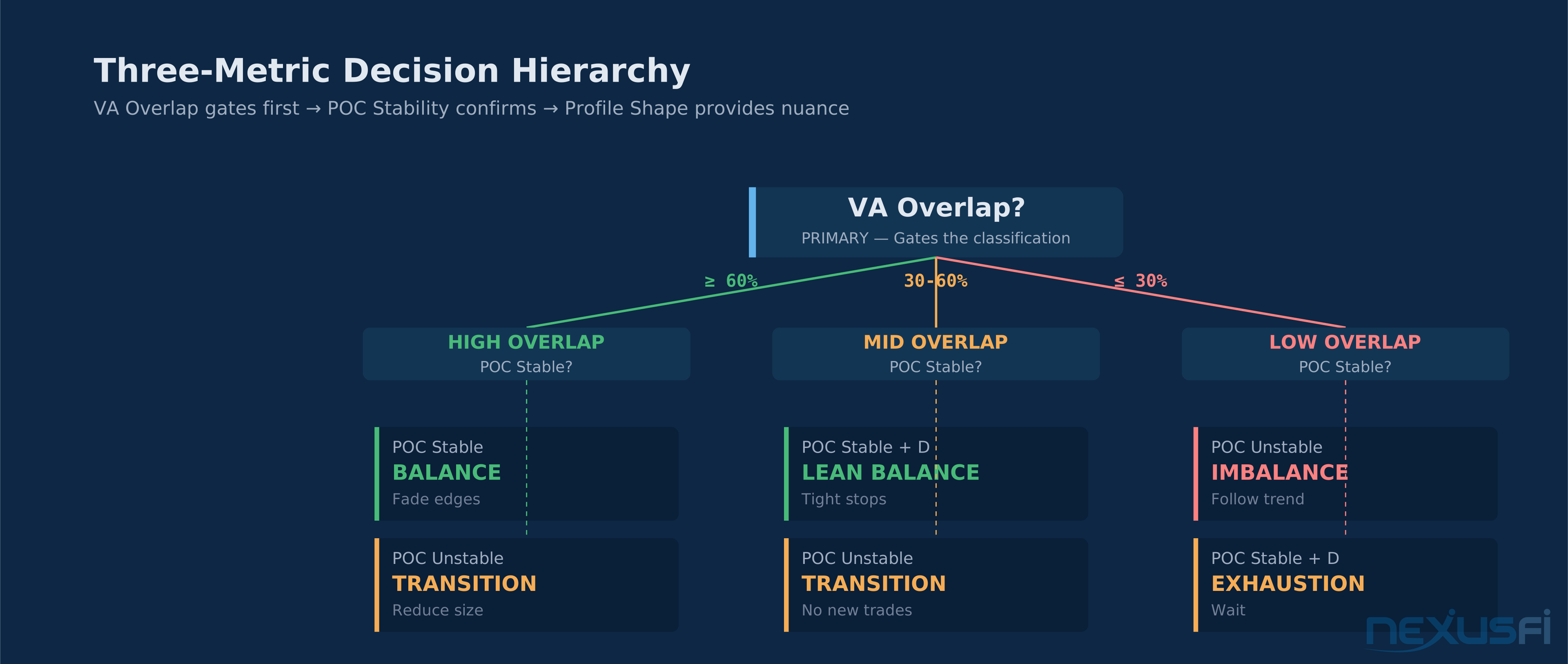
In live markets, the three metrics disagree constantly. Here's the resolution logic — value area overlap gates first, POC stability confirms, shape provides nuance:
| VA Overlap | POC Stable? | Shape | Classification | Action |
|---|---|---|---|---|
| High (≥60%) | Yes | D/b/P | Balance | Fade edges |
| High (≥60%) | No | Any | Transition | Reduce size, watch for breakout |
| Mid (30-60%) | Yes | D | Lean balance | Fade with tight stops |
| Mid (30-60%) | No | Any | Transition | No new positions |
| Low (≤30%) | No | Any | Imbalance | Follow direction |
| Low (≤30%) | Yes | D | Exhaustion pause | Wait for resolution |
The key insight: VA overlap below 40% is the strongest imbalance signal regardless of what the other metrics say. If value has shifted and isn't coming back, the market has made its decision. Conversely, POC instability with high overlap means the auction is testing but hasn't committed — that's a transition, not confirmed imbalance.
Rotational vs Directional Structure #
@tturner86 captures it: in balance, the market builds even distribution by rotating edge to edge, approaching a bell curve. [3] In imbalance, the distribution stretches in one direction with volume concentrated at the leading edge.
Rotational (balanced) structure:
- Multiple trips from edge to edge (VAH to VAL and back)
- Price revisits the POC repeatedly during the session
- Volume builds relatively symmetrically
- Responsive activity dominates at the edges
Directional (imbalanced) structure:
- One-sided acceptance. Volume concentrates toward the extreme the market traveled to
- The POC sits near the leading edge, not the center
- Single prints or thin volume behind the move
- Initiative activity dominates — price keeps pushing into new territory
@Private Banker adds an important structural observation: in multi-day balance, the big moves originate from the edges of the bracket, not the middle. Price at the center = tight range. Price at the extreme = fireworks. [4]
Initiative vs Responsive Activity #
@Private Banker defines the distinction relative to prior value: initiative pushes price into or beyond prior value in the direction of travel, responsive pushes it back toward prior value. [5]
In balance: Responsive activity dominates. Selling appears at VAH, buying at VAL, price rotates to the POC. Initiative probes get absorbed. The VP confirmation: rebounds into the value area rebuild the profile bins (thick volume on the retracement), showing two-sided acceptance.
In imbalance: Initiative dominates. Acceptance builds in the direction of travel, returns to old value weaken. The VP confirmation: retracements into old value show thin developing profile bins — price touches the zone but doesn't build volume there before resuming the trend.
Order flow confirmation layer: If you have delta or CVD tools, they confirm what the profile suggests. In balance, look for neutral or mean-reverting CVD at VA edges — delta absorption (large volume, small price movement) confirms responsive activity. In imbalance, look for directional CVD aligned with price movement and persistent delta imbalance on pullbacks. When CVD diverges from price (price holds above VA but CVD is declining), treat it as an early warning of transition.
Recognizing the Transition #
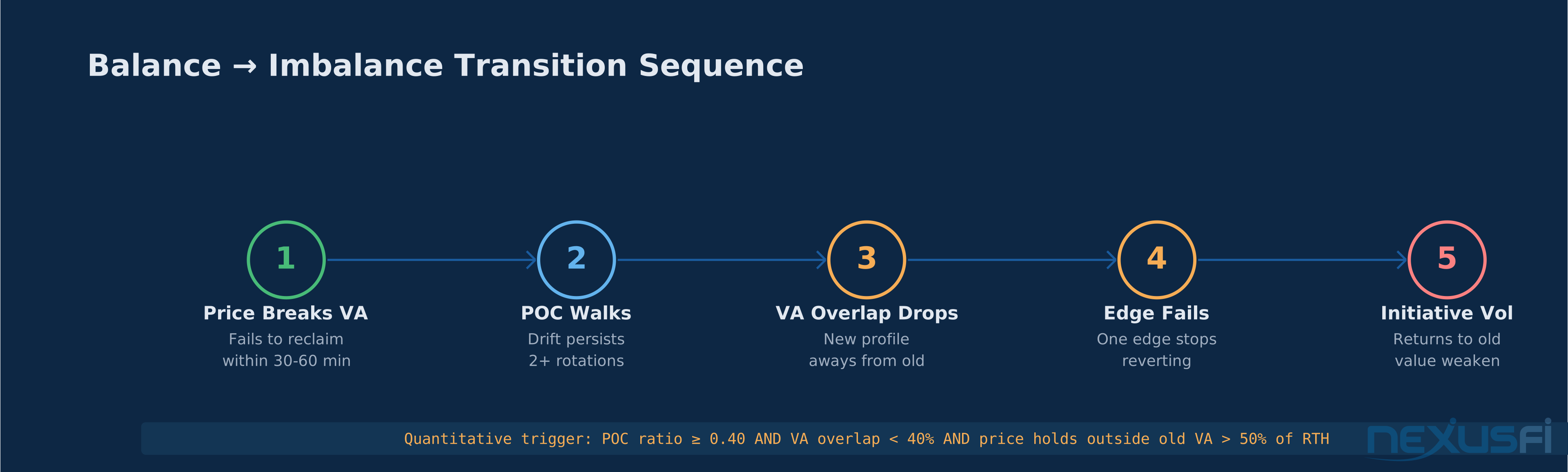
Balance doesn't flip to imbalance in one candle. It's a sequence:
- Price breaks outside prior VA and fails to reclaim it within 30-60 minutes
- POC begins walking — drift persists for 2+ rotations without returning to center
- VA overlap drops as the new profile develops away from the old one
- Edge behavior changes — one edge stops reverting, acceptance expands instead of rejecting
- Initiative volume dominates — returns to old value become weaker and shorter
Quantitative trigger: Transition is likely when POC drift ratio reaches ≥ 0.40 AND developing VA overlap drops below 40% AND price holds outside old VA for more than half the elapsed RTH session.
@Private Banker describes the flip side — a failed breakout. When the market breaks out of balance and can't sustain it, price targets the opposite extreme of the balance range. [6] Failed breakouts from balance often produce the strongest mean-reversion moves because the breakout traders are now trapped.
Trading by Regime #
Balance: Fade the Edges #
When the decision hierarchy confirms balance (high overlap, stable POC), the trade plan is mean reversion.
Entry: Limit order at VAH or VAL after acceptance failure. Specifically: price probes beyond the VA boundary, holds outside for 1-2 30-minute bars, but the developing profile shows thin volume at the probe extreme (the bins don't thicken). When price closes back inside the VA within 30-60 minutes, that's the entry signal. Enter on the re-entry candle close.
Stop: 2-4 ticks beyond the session's probe extreme. In ES, that's 1-2 points past the high/low wick. If price returns to the probe level and builds volume there (bins thicken on the developing profile), close immediately — acceptance is replacing rejection.
Targets: First target is the developing VPOC (take half). Second target is the opposite VA edge (trail the rest). In a multi-day bracket, the composite POC is the primary magnet.
Invalidation: POC starts walking (stability ratio exceeds 0.30) OR developing VA overlap drops below 50%. When either metric breaks, close regardless of P&L.
Imbalance: Follow the Direction #
When metrics confirm imbalance (low overlap, walking POC, skewed profile), the trade plan is trend continuation.
Entry: Pullback to the prior balance boundary — the old VAH becomes support for longs, the old VAL becomes resistance for shorts. The entry trigger: price tests back to the boundary, holds for 1-2 30-minute bars without building acceptance beyond it (no new volume accumulation past the boundary on the developing profile), then resumes in the trend direction. Enter when the developing VPOC starts migrating away from the pullback level.
Stop: Beyond the pullback extreme. If price reclaims the old VA and the developing profile starts building thick bins inside old value, the imbalance thesis is dead.
Targets: Trail the stop below each developing HVN as the trend progresses. Take partials at the next composite LVN or prior naked POC. Don't use fixed targets — imbalanced moves can extend further than any predetermined level.
Invalidation: Re-acceptance into prior value — price returns to the old VA, developing VA overlap increases above 50%, and POC stability returns. That's the regime shift back to balance.
Transition: Reduce Size or Wait #
When the decision hierarchy shows transition (metrics disagree), don't force a classification. Reduce to half size if already positioned. Don't enter new trades. Wait for 2 of 3 metrics to align before committing.
Instrument-Specific Parameters #
These are practical starting ranges for RTH profiles under average ATR conditions. Calibrate to current volatility.
| Parameter | ES | NQ | CL |
|---|---|---|---|
| Typical balanced VA width | 15-25 points | 60-100 points | $0.40-$0.80 |
| POC stability threshold | ≤ 10-12 ticks (ratio ≤ 0.25) | ≤ 20-30 ticks (ratio ≤ 0.25) | ≤ $0.20-$0.40 (ratio ≤ 0.30) |
| Significant single-print tail | > 6-8 ticks | > 20-25 ticks | > $0.30 |
CL runs hotter than ES. The same absolute POC drift threshold that works on ES triggers false imbalance signals on crude because crude overshoots more aggressively before reverting. Use the ratio-based stability metric (normalized to VA width) for cross-instrument consistency.
When This Framework Fails #
Scheduled events. CPI, FOMC, NFP — these override any classification. A balanced market can gap into imbalance in seconds on a surprise print. Wait for the post-event profile to build before reclassifying.
Low-liquidity sessions. Overnight profiles on thinner contracts produce unreliable POC locations and noisy VA boundaries. The three-metric system works on liquid RTH data. Apply it to Globex-only profiles with skepticism.
False imbalance (liquidity grabs). A sharp move outside the VA that immediately reverses — often a stop hunt or news spike. The three-metric system catches this: if the POC doesn't migrate and the developing VA doesn't shift, the move is a probe, not imbalance. The 30-60 minute acceptance filter in the transition sequence is specifically designed to avoid these traps.
Balance as delay. A temporary balanced pause within a larger impulse move. The daily profile may show D-shape and stable POC, but the weekly composite shows clear directional migration. When daily and weekly regimes conflict, the weekly timeframe wins for directional bias. A balanced daily session within a weekly imbalance is a pullback — trade continuation, not mean reversion.
Computation sensitivity. POC drift and overlap thresholds change depending on bin size (1-tick vs 2-tick), session definition, and whether you use volume-based or TPO-based profiles. The thresholds in this article assume 1-tick bins and volume-based 70% VA on RTH sessions. If your platform uses different settings, recalibrate the absolute tick values. The ratio-based metrics (stability ratio, overlap percentage) are less sensitive to these settings, which is why they're preferred.
Knowledge Map
Prerequisites
Understand these firstGo Deeper
Build on this knowledgeReferences This Article
Articles that build on this topicCitations
- — Volume Profile and Footprint discussion“The term "Balance" in its simplest form means what it says...”
- — Spoo-nalysis ES e-mini futures S&P 500“During a rotational day, the value area should encompass a majority of the day's activity...”
- — Price Action Ripper's Journal“In a balanced market VPOC shifts will signal the end of a leg and the pending reversal...”
- — Volume Profile and Footprint discussion“When the market is within a balance area for a few days, you'll notice that the big move days typically come from one of the extreme ends...”
- — Volume Profile and Footprint discussion“Initiative and responsive activity is simply in reference to the previous session...”
- — Volume Profile and Footprint discussion“If a market breaks out of a balance area and fails and moves back within the balance area, my expectation is that the market will test the low...”