



Signal Bars and Entry Bars in Price Action: Al Brooks' Framework for Individual Bar Analysis
Overview #
Signal bars and entry bars are the two most important individual bars in Al Brooks' price action trading system. Understanding the distinction between them — and mastering what makes each one strong or weak — is the foundation of every trade decision in the Brooks methodology. This is not candlestick pattern trading. The signal bar is not a "hammer" or a "shooting star" you apply mechanically. It is a probabilistic hypothesis about the next bar's behavior, evaluated in the context of everything that preceded it.
This article covers the complete framework: what signal bars and entry bars are, how to evaluate their strength, the one-tick-beyond entry rule, the H1/H2/L1/L2 counting system, entry bar confirmation, follow-through analysis, and the cardinal principle that context determines quality. All concepts apply directly to futures markets — ES, NQ, CL, GC — where the 5-minute chart is the primary instrument for intraday traders following the Brooks approach.
The Trade Sequence: Setup → Signal Bar → Entry Bar → Follow-Through #
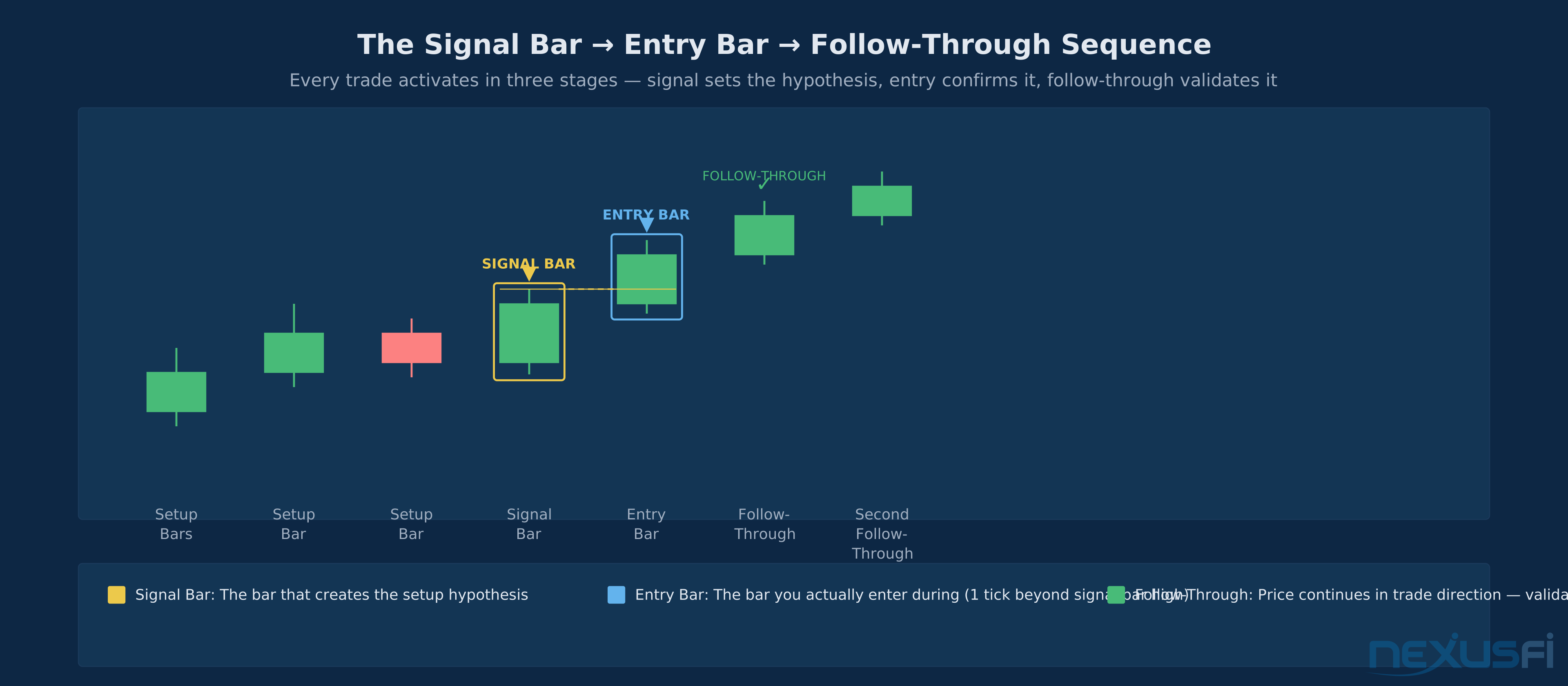
Every trade in the Brooks framework unfolds in four stages. Understanding this sequence is essential because it reveals that the signal bar is not identified in real time — it is always labeled in hindsight, after the entry bar has formed.
The Setup Bar is any bar (or series of bars) that creates conditions favorable for a trade. A pullback in an uptrend is a setup. A test of a prior swing low is a setup. A measured move completion is a setup. Most of the chart, at any given moment, is a potential setup — but most setups are low probability.
The Signal Bar is the bar that forms immediately before your entry order triggers. As Al Brooks writes in Trading Price Action Trends: "A signal bar is always labeled in hindsight, after the bar has closed and after a trade is entered." The moment your buy stop above the signal bar fires, that bar is retroactively named the signal bar. Before the entry triggers, it is just a setup bar with an order waiting.
The Entry Bar is the bar during which your entry order fills. If you place a buy stop one tick above the signal bar's high, and the next bar trades through that level, you are in the trade — the entry bar is the bar that filled you. What happens during this bar reveals whether the trade is working.
The Follow-Through Bar is the bar after the entry bar. Strong follow-through — the bar continues in the trade direction with meaningful range and a close away from the signal bar — validates the read. Weak follow-through (small bar, overlapping the entry bar, or reversing) is an early warning to tighten the stop or exit.
The four-bar sequence is the basic unit of analysis: every trade you take can be evaluated against this template, regardless of timeframe, instrument, or direction.
What Is a Signal Bar? #
The signal bar is the bar that preceded your fill. Its job is to be a credible hypothesis. When you look at a signal bar after closing a position, you are asking: "Did this bar tell a coherent story about where price was likely to go next?"
Signal bars exist for both entries and exits. A bull signal bar at support suggests the next bar will trade above it — your buy stop is placed one tick above the signal bar's high. A bear signal bar at resistance suggests the next bar will trade below it — your sell stop goes one tick below the signal bar's low.
Timing: The signal bar is identified only after it closes. You cannot declare a bar a signal bar while it is still forming, because the bar's final close determines its quality. The close of the bar is the most important piece of information — it shows who won the last 5 minutes.
Retroactive labeling: This retroactive nature is one of the most misunderstood aspects of the Brooks system. New traders see a beautiful reversal bar forming and call it a "signal bar" before it closes. Brooks' framework explicitly rejects this — the bar is a "potential signal bar" until it closes, and even then it only becomes a signal bar once an entry order triggers.
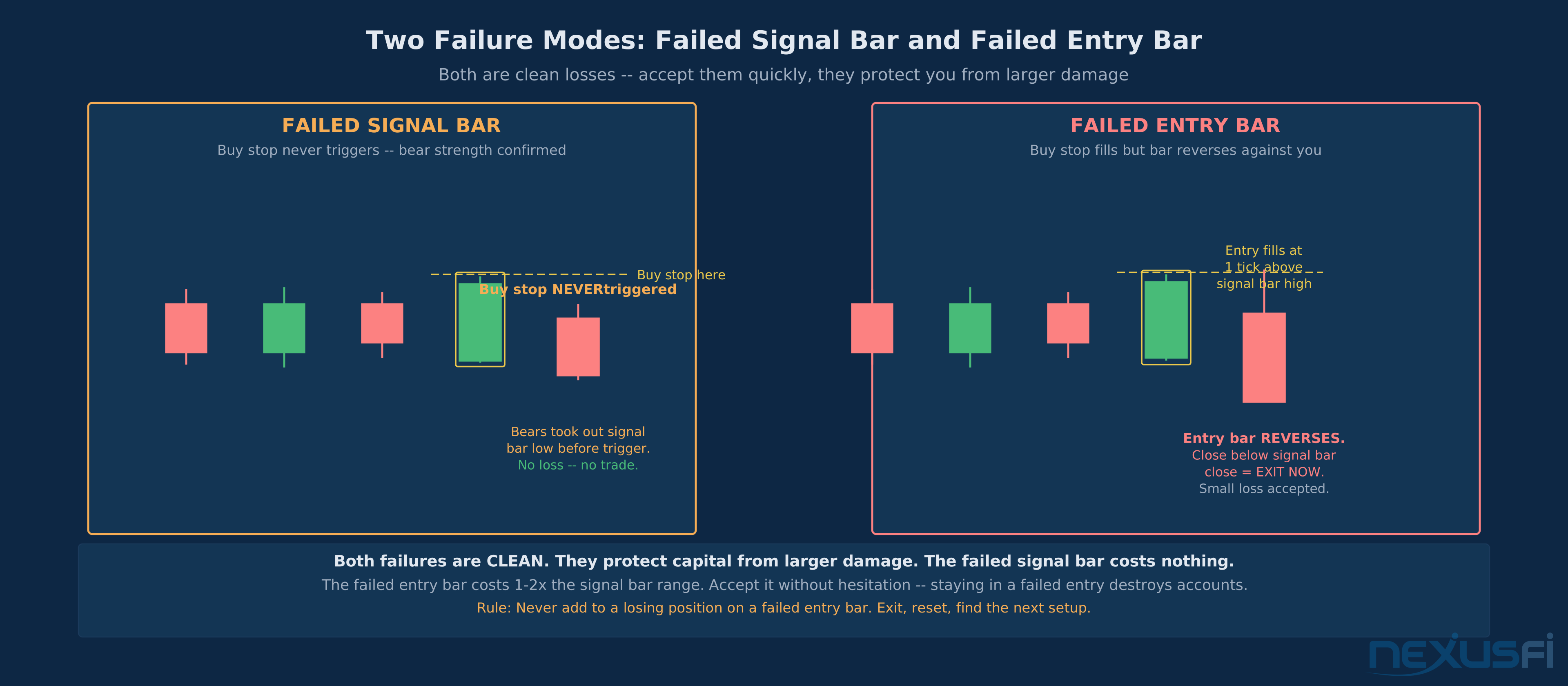
Nullification: A signal bar can be nullified. If price trades through the signal bar in the wrong direction before triggering the entry, the setup has failed. If a bull signal bar at support has its low taken out one tick before triggering the buy stop, the setup is void — the bears won, and the appropriate response is to exit any existing longs, not to add.
The signal bar's role is probabilistic, not deterministic. No signal bar is a guarantee. The entire Brooks methodology is built around finding situations where the probability of the next bar moving a certain way is meaningfully better than 50/50 — and sizing so.
Strong Signal Bar Characteristics #
Not all signal bars are equal. A strong signal bar dramatically improves trade probability; a weak signal bar requires additional context and setup confirmation to be tradeable.
For a bull (long) signal bar, the characteristics of strength are:
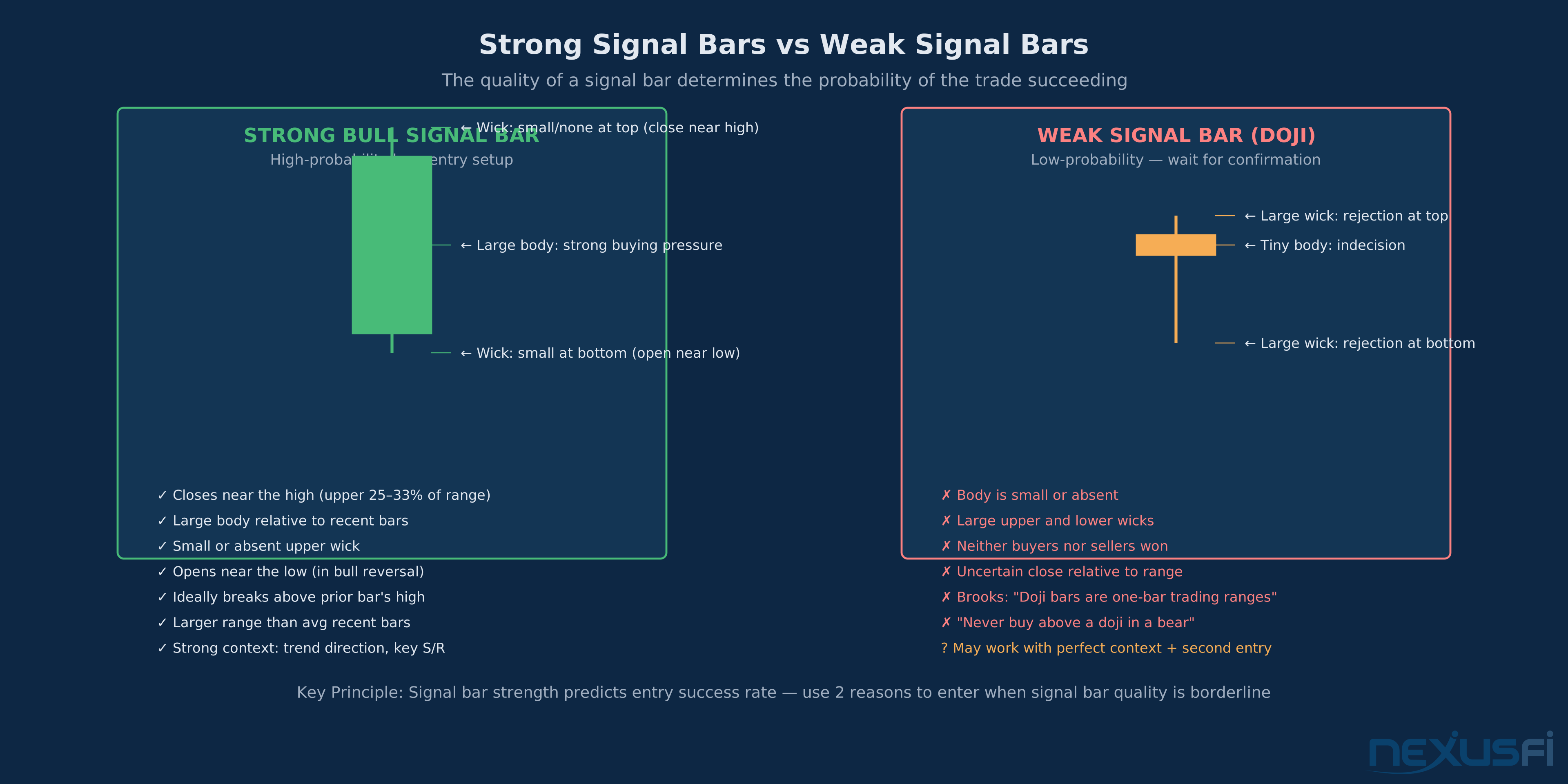
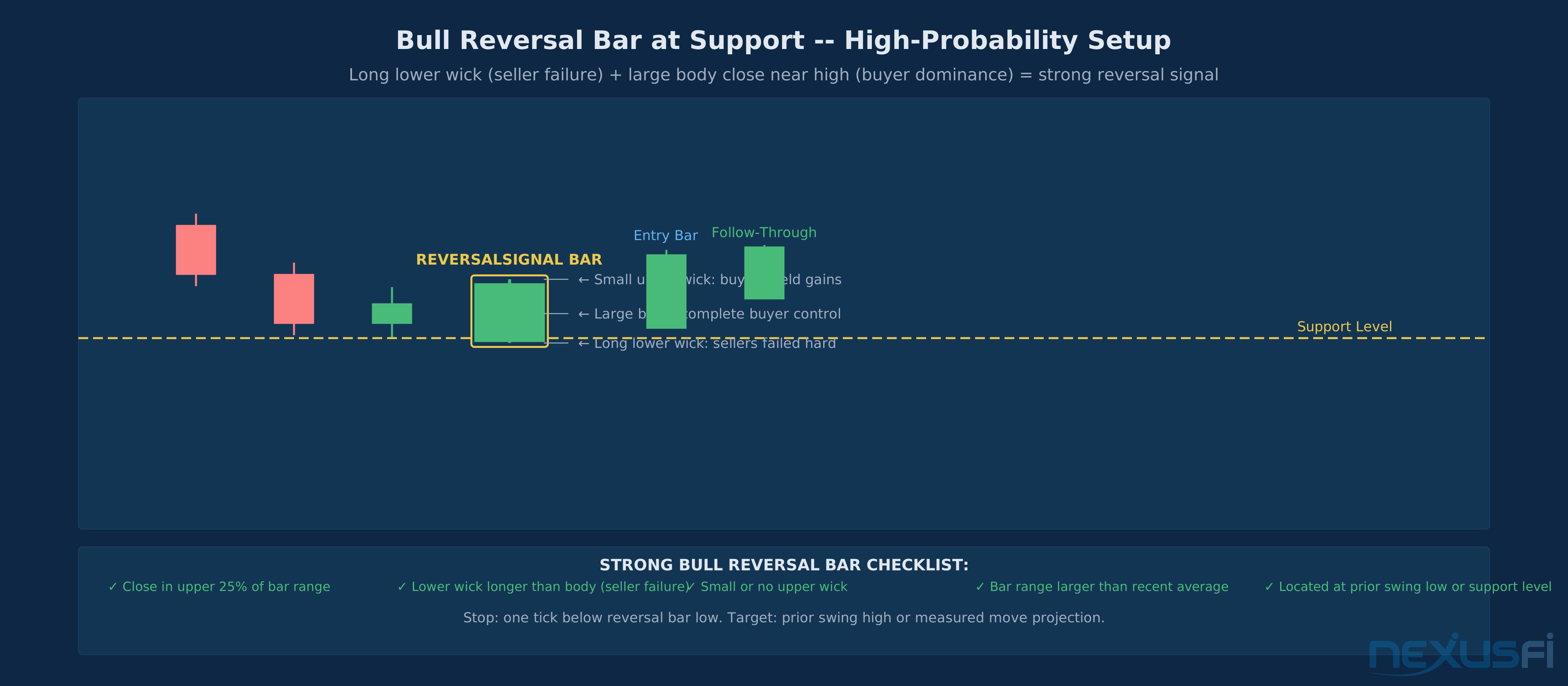
Large body, close near the high: The single most important attribute. When a bull bar closes near its high — in the upper 25--33% of the bar's range — it means buyers were in control at the close. The bears had the entire bar to fight back and failed. A bull bar closing in the bottom third of its range is actually a weak signal bar despite having a green body.
Small upper wick: The wick above the close represents rejection of higher prices during the bar. A small upper wick means buyers held their gains. A large upper wick means sellers pushed back much — even if the bar is nominally bullish, it signals bear presence.
Small lower wick: For a reversal signal bar (one reversing a downtrend), a small lower wick means the signal bar's low held. Buyers came in early and price never looked back. A large lower wick means sellers dominated the beginning of the bar — the subsequent buyer rally is less convincing.
Opens near the low: In a bullish reversal context, a bar that opens near its low means bears were in control at the open, and then buyers overwhelmed them completely by the close. This is the pattern that becomes a "pin bar" or "reversal bar" in candlestick terminology, but in Brooks' framework what matters is not the pattern name but the strength of the buyer victory.
Larger range than average recent bars: A signal bar with notable range is a "strong bar" — it represents unusual commitment from one side. In quiet markets, a strong signal bar can be 2--3x the size of surrounding bars. This size differential matters: small bars in a calm market carry less conviction than large bars in the same market.
Breaks above the prior bar's high: If the signal bar's high is above the prior bar's high (a breakout, even if small), it shows early momentum. Buyers are already taking out prior resistance. This is stronger than a signal bar that merely closes up but doesn't exceed the prior bar's high.
For a bear (short) signal bar, all characteristics mirror the above: close near the low, large body, small lower wick, opens near the high, larger range than recent bars, breaks below the prior bar's low.
The NexusFi forum's 553-reply discussion of Brooks' first book contains this practitioner distillation from user GarryM: "Enter on a stop at one tick beyond the signal bar. You want to be swept into the trade by the market going your way." This captures the essential intent — the strong signal bar positions you for a favorable entry, but the market must prove you right by triggering the stop.
Weak Signal Bar Characteristics #
A weak signal bar is one where neither buyers nor sellers clearly won the bar. These setups can still be traded, but they require additional confirmation, smaller size, or a second entry after an initial failure.
The doji trap A doji signal bar after a long series of bear bars may look like a reversal setup. In Brooks' framework it is almost always a trap. The rule is clear: "Doji bars are one-bar trading ranges. Never buy above one in a bear or sell below one in a bull." A doji after 10 bear bars is not a reversal signal — it is a pause before continuation. Wait for a strong follow-through bull bar before treating it as a reversal.
Doji bars: Brooks has a precise and unambiguous definition of a doji as a one-bar trading range. Both buyers and sellers fought, and neither won. The key rule from the NexusFi forum archives: "Doji bars are one bar trading ranges. Never buy above one in a bear or sell below one in a bull." The doji by itself says nothing about direction — it is a pause, not a signal. In a strong trend, doji pullback bars can be traded as with-trend entries, but the doji itself is not the reason — the trend is.
Small body with large wicks on both sides: A bar with a tiny body and large upper and lower wicks is not only weak — it is explicitly dangerous. The large wicks mean both buyers and sellers had significant presence. Price tested both extremes and rejected both. Trading above or below such a bar is basically random — you are entering into a fight that ended in a draw.
Close in the middle of the bar: A bar that opens at one end and closes in the middle — regardless of how it moved during the bar — shows indecision at the close. The close is the final vote. A bar that travels 10 points but closes at the midpoint says "buyers and sellers both fought hard and nobody won." This is a 50/50 bar.
Opposite-direction wick larger than body: If a bull bar has a lower wick larger than the body, the bears showed meaningful presence. The bar may be technically bullish (green close), but the failure to hold gains is concerning. Similarly, a bear bar with an upper wick larger than the body shows buyers fighting back.
Following a string of opposite-direction bars: Even a strong-looking signal bar is degraded when it appears at the end of a long opposing trend without a clear trigger for reversal. A bullish reversal bar after 15 consecutive bear bars, in the middle of a session with no prior swing low support, is fighting a powerful opposing force. The signal bar's shape may be good; its context is terrible.
The NexusFi community's rk142 notes on Brooks' Trading Price Action series (thread 23651, post 270686) document this principle directly: "Chapter 4: Bar Basics: Signal Bars, Entry Bars, Setups, and Candle Patterns — Setup bar: a bar that makes you think that you should enter."
The One-Tick-Beyond Entry Rule #
The one-tick-beyond rule is the execution mechanic that separates the Brooks system from most technical analysis approaches. Instead of entering at market or at the close, traders place stop orders one tick beyond the signal bar's extreme.
For long entries: Place a buy stop order one tick above the signal bar's high. The order fills only if the next bar (the entry bar) trades one tick above the signal bar's high. If it doesn't, the order remains unfilled and you either cancel it or leave it for subsequent bars.
For short entries: Place a sell stop order one tick below the signal bar's low. The order fills only if the next bar (the entry bar) trades one tick below the signal bar's low. Same principle, opposite direction.
Why one tick beyond? The one-tick-beyond rule ensures that the market proves you right before you commit capital. If you buy at market after seeing a bullish signal bar close, you are betting that price will continue — but you have not seen any evidence of it. The stop order is a filter: the market must take your price before you give it money.
From a practical standpoint, placing the buy stop one tick above the signal bar's high means you are filled on momentum in your direction. The entry bar, at its open or early in its range, must print at least one tick above the signal bar — this is the smallest possible confirmation that buyers remain in control.
The gap-open consideration: In futures markets like ES, the market can gap above the signal bar at the open of the entry bar. When the entry bar opens above your buy stop, you are immediately filled at or above your stop price. This is actually bullish — a gap above the signal bar means strong demand carried overnight. The risk is that gap-and-run entries often have wider initial stops.
Aggressive vs. conservative entries: Some traders use a more aggressive version — entering at the close of the signal bar rather than waiting for the one-tick-beyond trigger. Brooks describes this as a "more aggressive entry" that captures better pricing but sacrifices confirmation. The aggressive entry can be used when the signal bar is extremely strong (large body, perfect context, strong trend alignment), but new traders should default to the standard one-tick-beyond approach until they develop strong contextual reading skills.
The stop order as intent verification: There is a subtle but important principle here. When you place a buy stop above a signal bar, you are saying: "I believe buyers are in control and this bar will be taken out to the upside." If your stop does not trigger, the market is telling you that bears held that level. In Brooks' "always-in" framework, this is information — not a failure of your analysis, but a signal that the market context may not be what you thought.
NexusFi forum post from user Blz17 in the Brooks discussion thread captures this in practical terms: discussing a setup that looked right but "the better entry was a few bars later" — the one-tick-beyond rule naturally protects you from entering on signal bars that never actually trigger because price never confirms.

Entry Bar Analysis: What to Look For #
After your buy stop triggers and you are long, the entry bar is now forming. What happens during this bar tells you whether the trade is working, marginal, or failing.
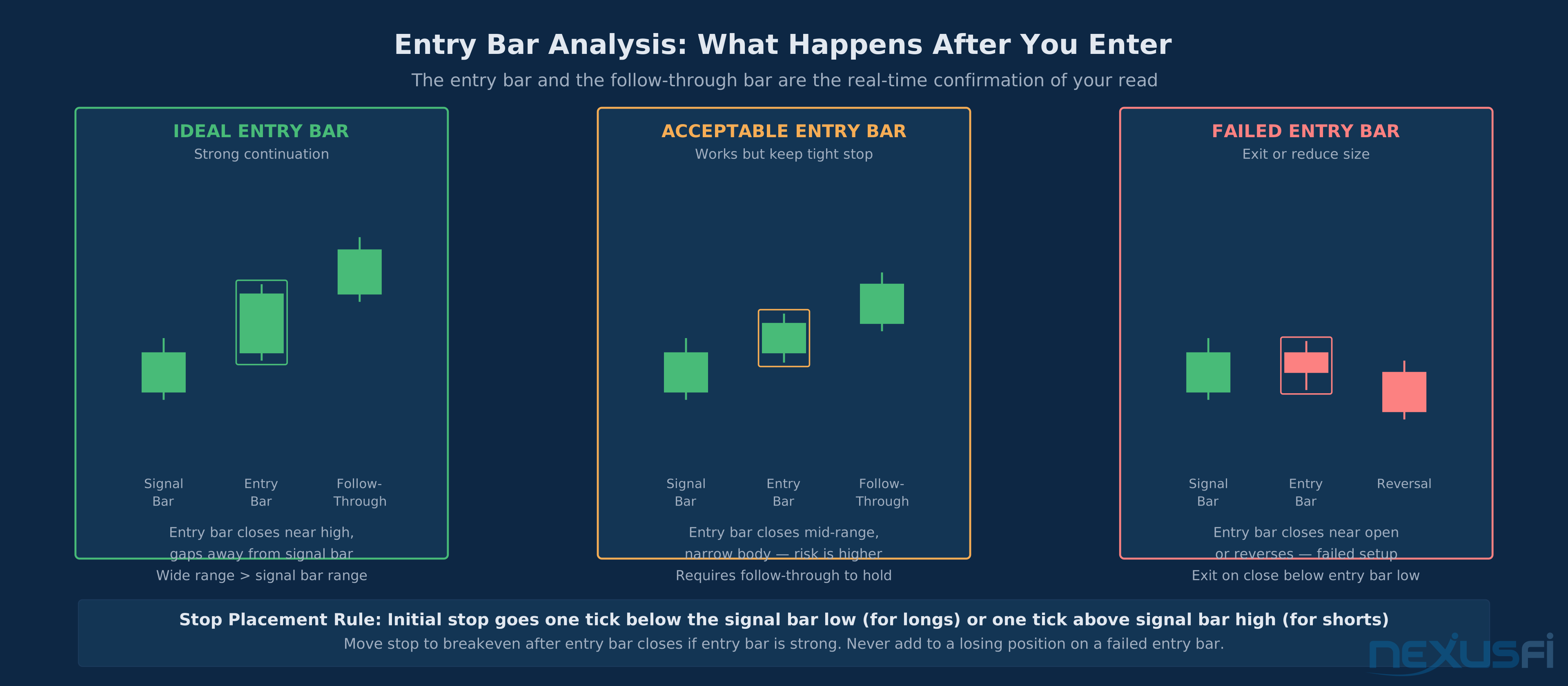
Ideal entry bar characteristics for a long trade:
The entry bar closes near its high, above the midpoint, with meaningful range. The body should be at least 30--40% of the bar's total range. If the entry bar closes strongly, the trade setup is working as expected — the hypothesis that buyers were ready to extend has been validated. The strongest entry bars are large, close near their highs, and show no upper wick rejection.
Acceptable entry bar:
The entry bar trades above the signal bar high (triggering your buy stop) but closes in the middle of its range — not a strong close, but not a failure either. The trade is open but requires the next bar (follow-through) to show strength. In this case, consider keeping the initial stop at one tick below the signal bar's low (rather than the entry bar's low), giving the position more room.
Failed entry bar:
The entry bar trades above the signal bar high (triggering your fill), then reverses and closes near the signal bar's high or below it. This is the textbook failed breakout. The entry bar has basically said: "Yes, buyers pushed above the signal bar, but then sellers overwhelmed them completely." In this case, the trade should be exited or the stop moved to breakeven immediately. The failed entry bar is not a mistake — it is a signal that the original read was wrong. Accept the small loss and look for the next setup.
The "50% rule" for entry bars: An entry bar that closes below the midpoint of its range is showing bear strength. If you entered long and the entry bar's close is in the lower half of its range, the bears are fighting effectively. This is when Brooks' two-legged approach becomes relevant — you may need to see two legs of follow-through before the trend is established.
The follow-through bar: The bar after the entry bar is the earliest indicator of whether the trade has legs. Strong follow-through — the bar continues higher with meaningful range, closes near its high, and does not overlap the entry bar by more than 50% — confirms the trade. Weak follow-through (inside bar, doji, reversal) is a warning. Two consecutive bars of strong follow-through materially increase the probability that the trade will be profitable.
The H1/H2 and L1/L2 Counting System #
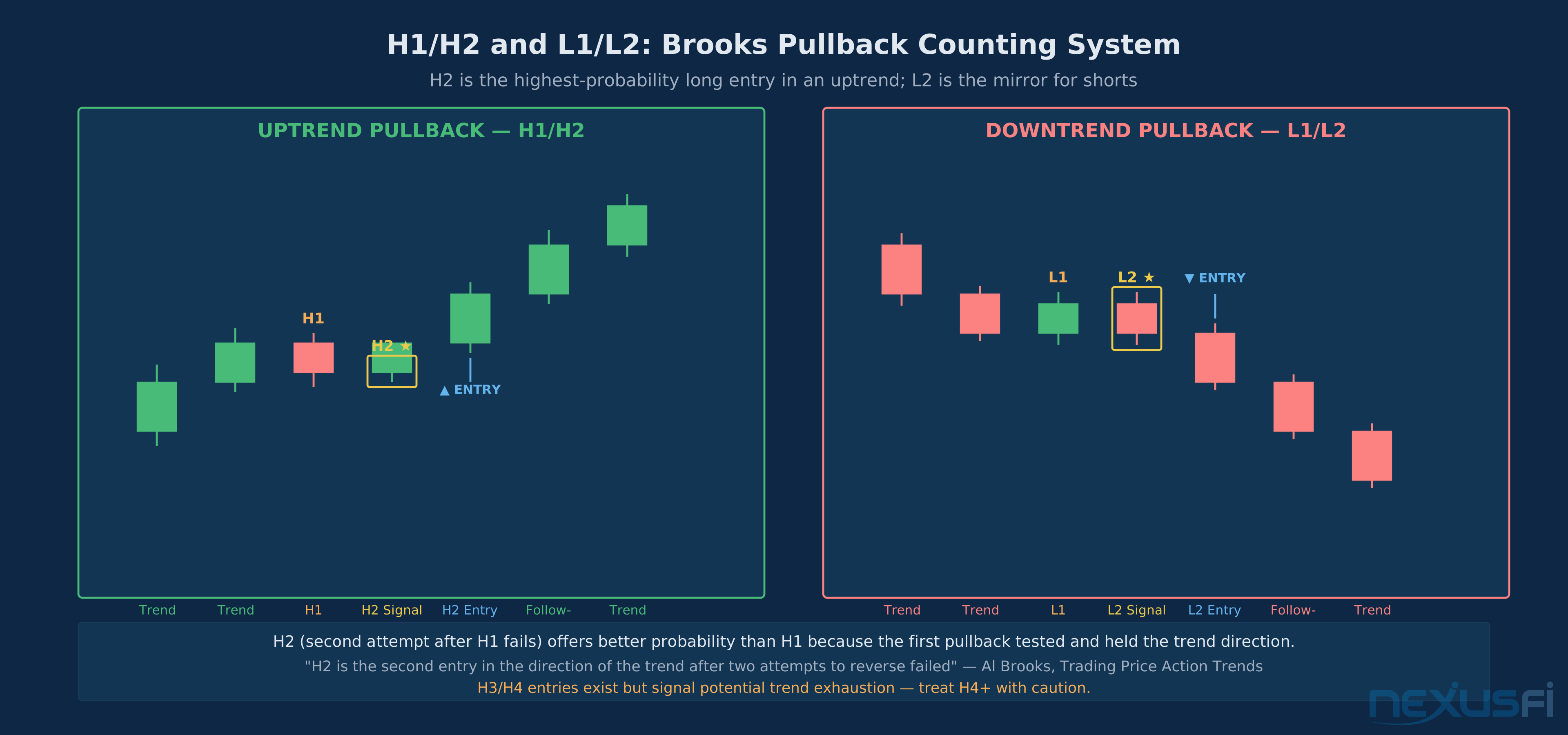
Brooks assigns letter-number designations to pullback entries in trends: H1, H2, H3, H4 for bullish pullbacks (Higher), and L1, L2, L3, L4 for bearish pullbacks (Lower). This counting system identifies where in a pullback sequence a signal bar appears, which directly affects its probability.
H1 — First Higher Close: In an uptrend pullback, the first bar that has a close above the prior bar's close is the H1. This is the first attempt by bulls to end the pullback and resume the uptrend. H1 entries are lower probability than H2 because they represent a single attempt — bears can easily push back for another leg lower.
H2 — Second Higher Close After Pullback: The H2 is the second bull signal bar after a pullback in an uptrend. By the time an H2 appears, the pullback has made two attempts to go lower and the bulls have responded twice. The second attempt at reversal, especially if it comes after an H1 failure, is much higher probability because:
- Two legs of selling have occurred — the normal structure for a two-legged correction
- Bears who entered on the H1 failure are now in losing trades and may cover
- Bulls who missed the H1 are ready to commit on the second signal
NexusFi forum traders consistently emphasize waiting for the H2 rather than the H1, especially when the pullback is steep or the market is choppy.
H3 and H4: The third and fourth bull signals after a pullback indicate that the reversal from trend is taking more effort than expected. H3 entries are lower probability and should be traded smaller. An H4 is a warning signal — four attempts to find buyers in an uptrend pullback suggests the pullback may be transitioning into a trend reversal, not just a correction.
L1 and L2 are the exact mirror for downtrend entries:
- L1: First lower close — first bear signal bar in an uptrend pullback (against trend, short setup)
- L2: Second lower close — the high-probability short entry after two legs of correction in a downtrend
- L3/L4: Same exhaustion warning applies to short setups
The TradingView community's implementation of a Brooks H1/H2 indicator (with 255 stars as of April 2026) documents the signal logic precisely: "H1 is the first bull signal bar after bear pressure — often the highest-probability long entry in a bull trend pullback. H2 is a second attempt after H1 failed, typically stronger."
H2 is the bread-and-butter trade In a trending session, H2 pullbacks to the 20-period EMA represent the single highest-probability entry pattern in the Brooks methodology. When the trend is defined (consecutive higher highs, price above EMA) and you get a two-legged pullback that forms an H2 signal bar at the EMA, you have three confirming factors: trend direction, structural support, and counted pullback. This is when you trade full size.
Practical application in ES futures: On the 5-minute ES chart, H2 entries are bread-and-butter trades for traders following the Brooks framework. During a bull trend session (above the 20-period EMA, consecutive higher highs), any two-legged pullback that finds an H2 signal bar with good characteristics — large body, close near high, at the EMA or prior swing high support — is a high-probability trade. The stop goes one tick below the H2 signal bar's low; the target is the prior swing high or a measured move projection.
Bull and Bear Signal Bar Types: A Practical Taxonomy #
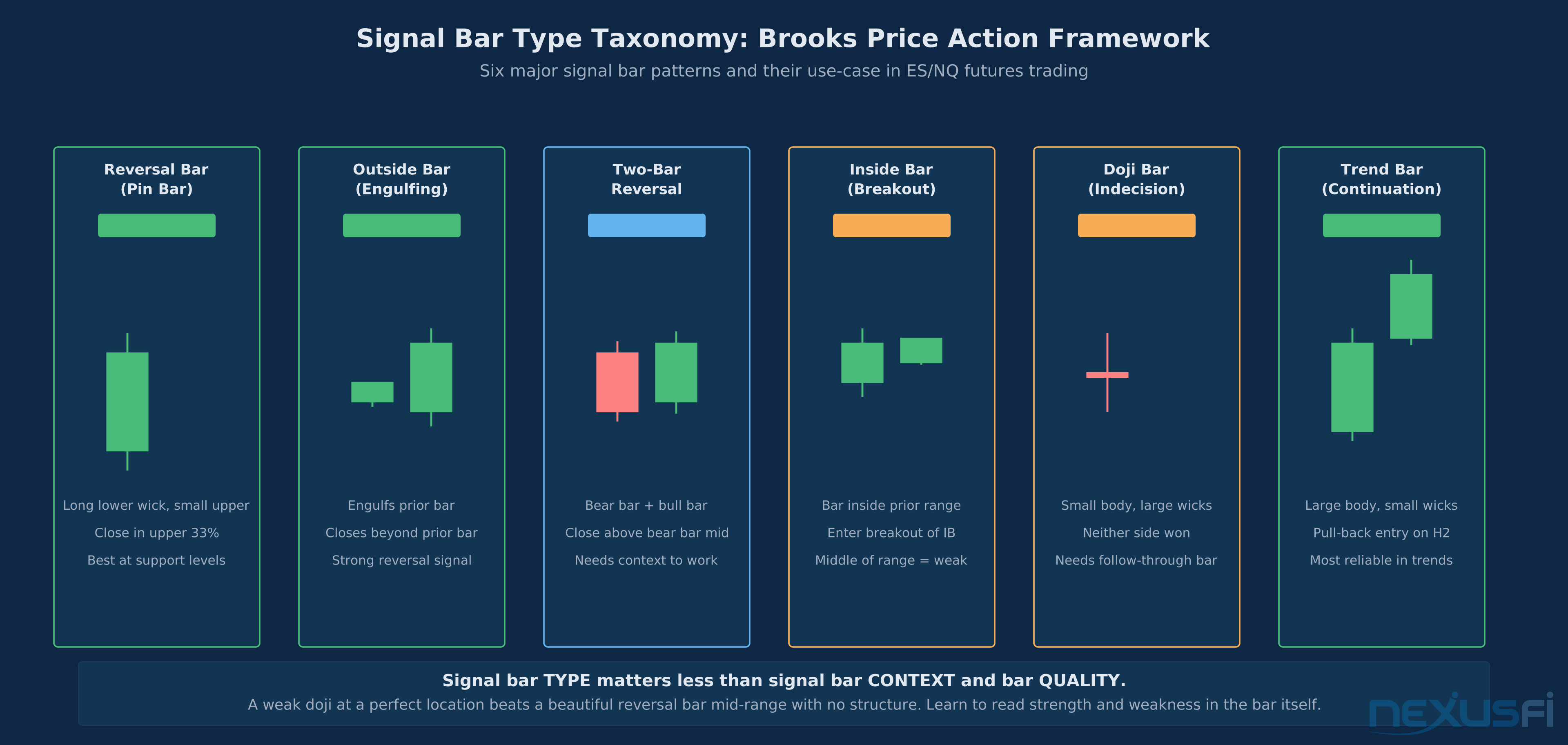
Reversal Bars (Pin Bars): The reversal bar has a long wick in one direction and a body that "reverses" back the other way. In the Brooks context, the strong bull reversal bar has a long lower wick (sellers failed), small upper wick (buyers maintained control at the close), and a close in the upper portion of the range. The location of this bar matters enormously — at support, at a measured move target, at a prior swing low, these bars carry very high probability. In the middle of a trading range, the same visual pattern is much less reliable.
Outside Bars: An outside bar is a bar whose range encompasses the prior bar's range entirely. Outside bars are two-sided signals — both buyers and sellers were active. The direction of resolution (which side the next bar breaks toward) is the key. An outside bar that breaks bullishly from a support level is a strong signal bar for a long. An outside bar in the middle of a trading range is indeterminate — wait for the breakout direction.
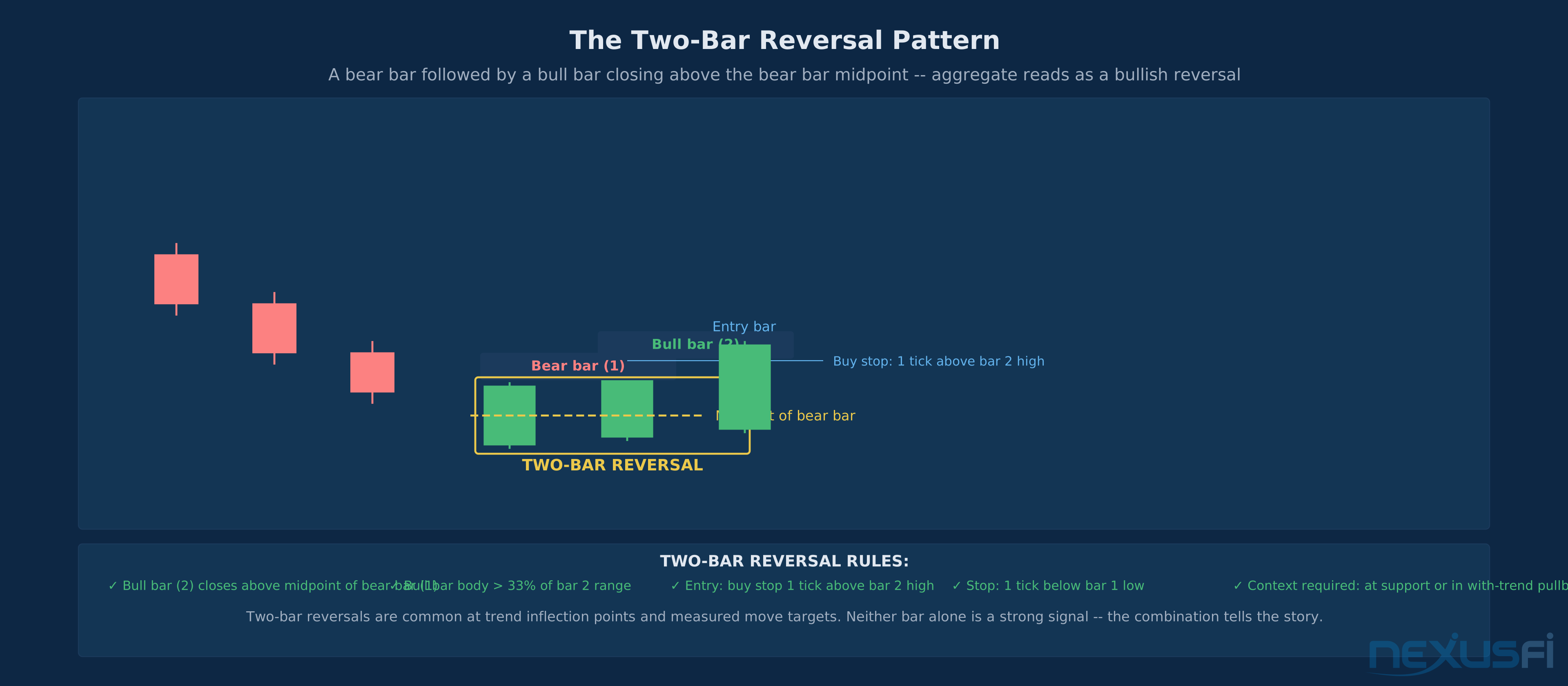
Two-Bar Reversals: A bear bar followed immediately by a bull bar of equal or greater range, where the bull bar closes above the midpoint of the bear bar, constitutes a two-bar reversal. This is a signal bar in itself — the aggregate of the two bars tells a bullish story even if neither individual bar is a perfect reversal. The entry is placed above the high of the bull bar (the second bar). Two-bar reversals are especially common at trend inflection points.
Inside Bars: An inside bar is completely contained within the prior bar's range. It represents a pause or compression in the market. Inside bars can be bullish signal bars when they occur at support in an uptrend (the market compressed at a key level before breaking higher), or bearish signal bars at resistance (compression before breakdown). The critical distinction is context: inside bars in the middle of a trading range are almost always noise. Inside bars at structural extremes — after a strong trend bar at support — are meaningful setups.
Doji-Based Signals: As discussed, standalone doji bars are weak signal bars. However, a doji in a specific context can be a valid signal: a doji at the EMA following a two-legged pullback in a strong uptrend (as an H2 signal bar) may still be tradeable, provided the entry bar confirms with strength. The Brooks rule is "two reasons to enter" — if the signal bar is weak, you need the broader context to be especially strong.
Strong Trend Bars as Continuation Signals: In a strong trend, a large trend bar in the trend direction can itself be a signal bar for a continuation trade. After the trend bar closes, placing a buy stop one tick above it treats the trend bar as a signal bar for follow-through momentum. This is the "enter above a strong bar" pattern — valid in early-session trend developments or after breakouts from trading ranges.
Context: Why Location Beats Pattern #
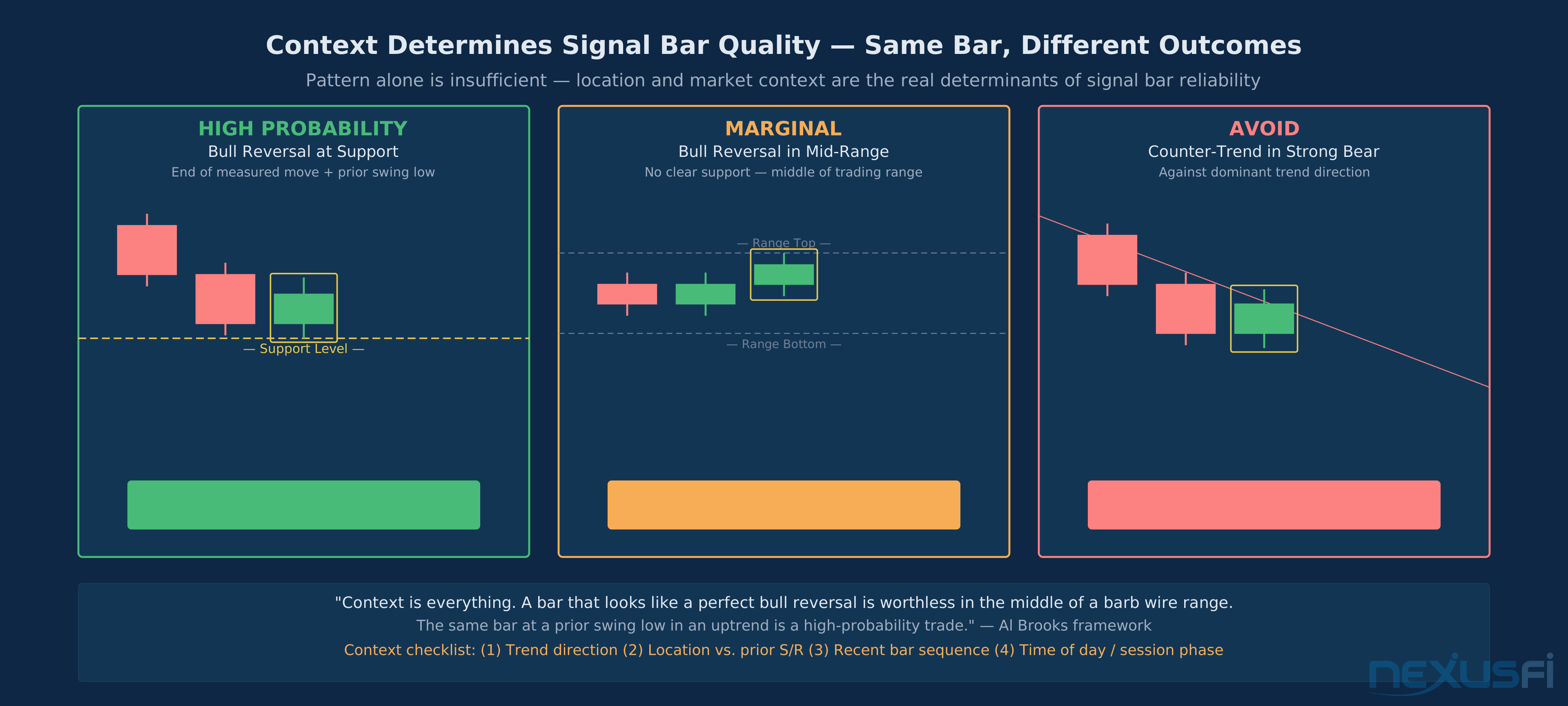
Context is everything The same bar pattern that is a high-probability trade at a prior swing low in an uptrend is a meaningless noise bar in the middle of barb wire. Pattern recognition without context is gambling. The systematic trader learns to ask before every potential trade: "Why is this location special?" If you cannot answer that question clearly, the signal bar's quality is irrelevant.
The most dangerous misconception in pattern-based trading is that a pattern has meaning independent of context. In the Brooks methodology, context is primary — the bar's shape is secondary evidence.
Context in the Brooks framework means:
1. Trend direction: Is the trade with or against the dominant trend? With-trend signal bars carry a higher base probability than counter-trend setups, even when the counter-trend bar looks better on a standalone basis.
2. Location relative to prior structure: The most powerful signal bars occur at points where prior price structure provides context: prior swing highs and lows, the 20-period EMA, measured move targets, breakout pullbacks. A signal bar at a prior swing low that held three times in the past is a much stronger setup than an identical-looking bar with no structural reference.
3. The sequence of bars before the signal bar: How many bars were in the pullback? Was the pullback orderly (two legs) or chaotic (multiple overlapping bars, barb wire)? The bar-by-bar sequence sets up the signal bar's credibility.
4. Trading range context: Brooks is explicit: "Any time three or more consecutive bars mostly overlap and one or more is a doji, stop trading and treat it like a trading range." In barb wire conditions, almost every signal bar is low probability because the market is in equilibrium. Both sides have equal representation. The appropriate response is to stand aside until the range breaks or trade smaller size.
5. Time of day: The first 30-60 minutes of the ES session (8:30--9:30 AM Central for US equities) typically see the highest volatility and most decisive moves. Signal bars in this window carry more momentum behind them — but also more risk. The 10:30 AM--12:00 PM window is often choppier and produces more failed signals. Understanding session phase is part of context.
The NexusFi thread "The Elusive Price Action: How to Trade" (thread 3506, post 34676) captures this principle from user Bacon: "Candle patterns such as the three-bar-reversal, inside-bar, outside-bar — their meaning is entirely dependent on context, location relative to prior swing structure, and what happened in the bars immediately before."
The short version: a signal bar is a frame, and the frame's meaning comes from what's around it.
Common Mistakes in Signal Bar and Entry Bar Reading #
Trading every signal bar: Inexperienced traders identify a "good signal bar" and trade it in isolation. The Brooks framework explicitly requires context validation before every trade. Waiting for the right combination of signal bar + location + trend alignment filters out the majority of low-probability setups.
Confusing signal bar quality with trade quality: A beautiful reversal bar at a terrible location is a low-probability trade. An unremarkable bar at a perfect structural support with two-legged pullback in a strong uptrend is a high-probability trade. Shape and quality of the signal bar is one variable; location and context are separate, equally important variables.
Ignoring the entry bar: Many traders focus entirely on the signal bar and ignore what happens during the entry bar itself. A strong signal bar followed by a weak entry bar is still a weak trade — the entry bar is the first data point in real time. The failed entry bar (reversal below signal bar close) is an immediate tell to exit or reduce.
Moving the stop before follow-through: The most common error is moving the stop to breakeven before the entry bar has even closed. In the Brooks framework, the initial stop belongs at one tick below the signal bar's low (for longs) until at least the entry bar closes with strength. Premature stop movement sacrifices the trade's natural breathing room and leads to being stopped out on normal volatility before the trade develops.
Overconfidence in H2: H2 is high probability, not certainty. H3 and H4 entries fail at higher rates. In choppy markets, even H2 entries fail regularly. The solution is to adjust size: trade full size when everything aligns (trend, location, bar quality), half size when one element is marginal, and quarter size or no trade when context is poor.
Not accounting for the always-in position: Brooks' "always-in" concept means the market is always either more likely bullish or more likely bearish. A signal bar that would be a valid short setup in isolation may be overridden by a strongly bullish always-in position — the short signal is real, but it's a low-probability counter-trend trade. Understanding the always-in direction (Always-In Trading Concept) prevents trading against a dominant momentum.
Applying Signal Bar and Entry Bar Analysis in ES/NQ Futures #
For ES and NQ futures traders on the 5-minute chart:
Pre-market preparation: Identify the prior session's swing highs and lows, the overnight range, and any major horizontal levels. These are your candidate locations for high-probability signal bar setups.
First hour: Look for breakouts from the overnight range. The signal bar that establishes the breakout direction — a strong trend bar above the overnight high, for example — is often the highest-probability signal of the day. Use the one-tick-beyond rule, enter on the breakout bar, stop below the breakout signal bar's low.
Mid-session: After the opening trend establishes, the strongest trades are H2 pullbacks to the 20-period EMA in the trend direction. Wait for the pullback to form, count the legs (one leg, two legs), identify the H2 signal bar, and enter above it. These trades match the dominant session direction and come at a structural point (EMA or prior support).
Two-legged pullback standard: After two legs of pullback, the H2 signal bar ends the correction. The first leg shakes weak longs; the second creates the buying opportunity. Strong bull reversal bars ending the second leg are the clearest entry points.
Always confirm the entry bar: After filling, watch the entry bar. Strong close near high → hold, stop stays at signal bar low. Weak close, mid-range → hold with tighter stop, need follow-through. Reversal close, below signal bar → exit at close, take the small loss.
NexusFi forum user Pa Dax documents live bar-by-bar ES reading from the Brooks framework in the Salao's Journal thread: "As per Brooks, bulls get in on bullish signal bars and bears get in at bearish signal bars. In ES, that would almost always be a bar ending at the high/low of the bar, with a large body..." — exactly the strong signal bar characteristics described in this article.
Summary: The Signal Bar Decision Framework #
Every trade decision using Brooks' signal and entry bar methodology can be reduced to a structured evaluation:
Step 1 — Identify the setup: Is there a structural reason to be looking at this area? (Prior S/R, measured move, EMA, trend pullback)
Step 2 — Evaluate the signal bar at close: Is the body large relative to recent bars? Does the close support the trade direction (upper 33% for longs, lower 33% for shorts)? Are the wicks appropriate (small upper for longs, small lower for shorts)?
Step 3 — Place the stop order: One tick beyond the signal bar's extreme. For longs: buy stop one tick above the signal bar's high. For shorts: sell stop one tick below the signal bar's low.
Step 4 — Evaluate the entry bar as it forms: Is it moving in the trade direction with strength? Is it closing favorably? If the entry bar is showing reversal characteristics, prepare to exit at close.
Step 5 — Confirm or exit after the entry bar closes: Strong entry bar → hold with stop at signal bar extreme. Weak entry bar → tighten stop to breakeven. Failed entry bar → exit, accept the loss.
Step 6 — Monitor follow-through: Two strong follow-through bars → consider adding to the position. One follow-through bar, one reversal → move stop to entry bar's low and protect profit.
This framework is mechanical enough to be consistently applied, yet flexible enough to handle the infinite variety of market conditions. The signal bar is not a mechanical trigger — it is the first piece of evidence in an ongoing probabilistic argument about what the market is doing right now, and where the next bar is most likely to go.
Summary #
Signal bars and entry bars are the operational core of Brooks price action. The signal bar forms the hypothesis; the entry bar confirms or denies it. Master the H2/L2 pullback count, the one-tick-beyond entry rule, and entry bar evaluation — these three skills cover the majority of high-probability setups on the 5-minute futures chart.
Knowledge Map
Prerequisites
Understand these firstCitations
- — Book Discussion: Reading Price Charts Bar by Bar by Al Brooks (2009) 👍 33“Enter on a stop at one tick beyond the signal bar. You want to be swept into the trade by the market going your way.”
- — Salao's Journal (2019) 👍 5“As per Brooks, bulls get in on bullish signal bars and bears get in at bearish signal bars. In ES, that would almost always be a bar ending at the high/low of the bar.”
- — Book Discussion: Reading Price Charts Bar by Bar by Al Brooks (2009) 👍 11“Always have two reasons to enter a trade: reversal bar, good signal bar pattern, EMA pullback in a trend, breakout pullback, breakout test, H/L 2 or 4, failure of anything, any second entry.”
- — RK's Notes: Brooks, Trading Price Action (2012) 👍 4“Chapter 4: Bar Basics: Signal Bars, Entry Bars, Setups, and Candle Patterns. Setup bar: a bar that makes you think that you should enter the trade. Signal bar: the bar before entry. Entry bar: the bar you entered on.”
- — Al Brooks Automated Strategy? Is it Possible? (2011) 👍 2“Yes, we only know if a bar is a trend bar only after the bar has closed. Al Brooks mentioned about using a trend bar as a signal bar to enter trades.”
- — Book Discussion: Reading Price Charts Bar by Bar by Al Brooks (2009) 👍 12“The setup was right but the better entry was a few bars later (right about the time I was fuming over getting stopped out). Now enter signal bars.”
- — The Elusive Price Action: How to Trade (2010) 👍 8“Candle patterns such as the three-bar-reversal, inside-bar, outside-bar -- their meaning is entirely dependent on context, location relative to prior swing structure, and what happened in the bars immediately before.”
- — Book Discussion: Reading Price Charts Bar by Bar by Al Brooks (2009) 👍 553
- — Book Discussion: Reading Price Charts Bar by Bar by Al Brooks (2009) 👍 16“When you get that first breakout you want to enter a sell stop 1 tick below the low of the signal bar.”
- — THREE SET UPS: Inside Bar, Outside Bar, Reversal Bar (2010) 👍 96“Inside bar setups: If the current bar closes within the previous bar, set a buy or sell stop 1 tick beyond the prior bar's high or low for the breakout entry.”
- — THREE SET UPS: Inside Bar Anatomy (2010) 👍 40“Inside bars: If an inside bar occurs in the middle of a trading range, it does not tell me much. Most inside bars are meaningless -- they do not show any significant price behavior.”
- — Book Discussion: Reading Price Charts Bar by Bar by Al Brooks (2012) 👍 19“Doji bars are one bar trading ranges. Never buy above one in a bear or sell below one in a bull.”