



Trading Range Price Action Strategies
Al Brooks' methodology starts with a simple observation: sideways markets leave patterns that repeat with enough reliability to be traded systematically — and nowhere is the structure more dependable than in a confirmed trading range.
Overview #
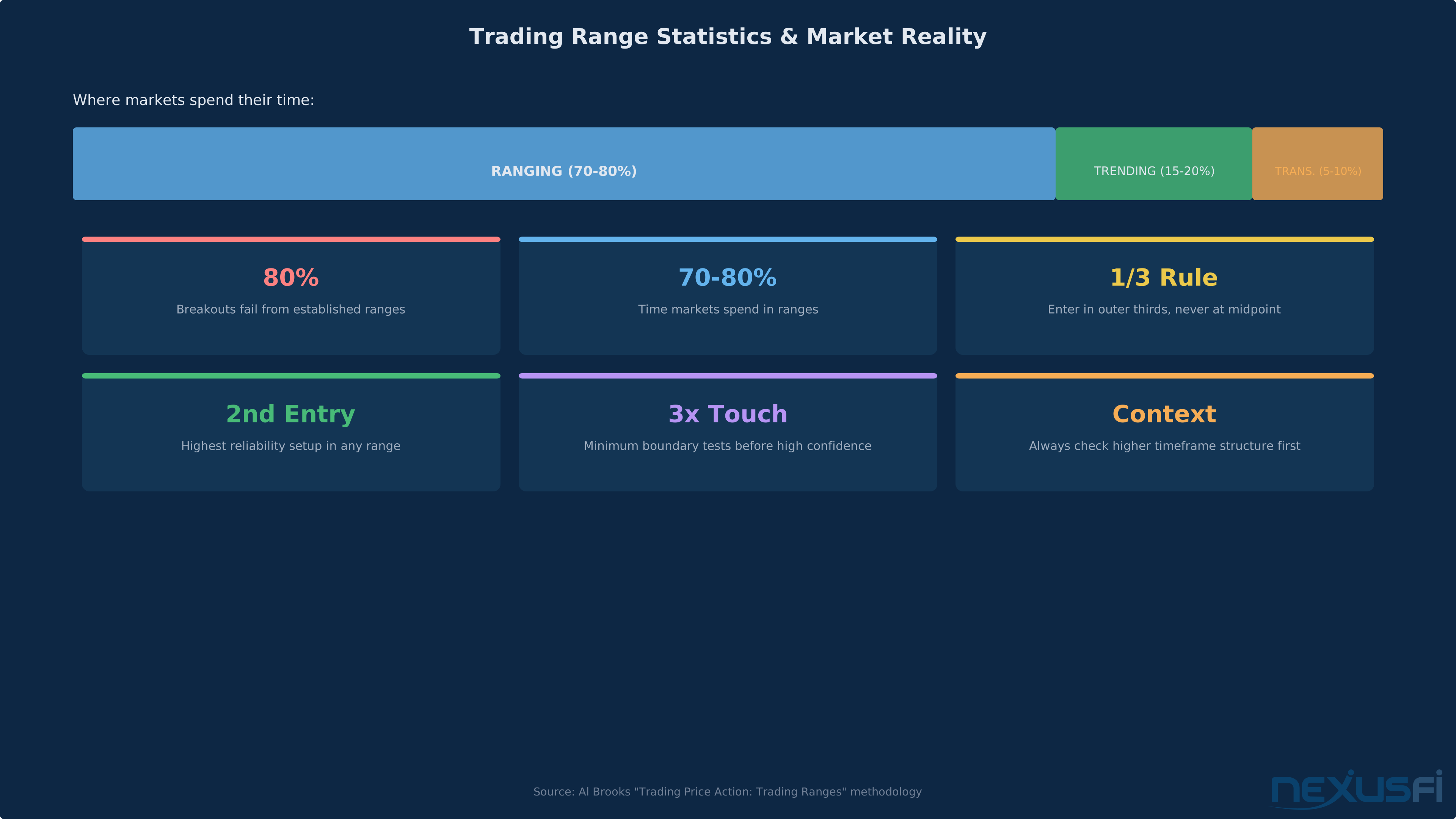
Trading ranges are the dominant market condition, yet most traders spend the majority of their educational time studying trends. Al Brooks estimates that markets spend 70-80% of their time in some form of range — oscillating between support and resistance rather than trending cleanly. This article covers Brooks' complete framework for identifying ranges, executing buy-low/sell-high entries, trading failed breakouts (the highest-probability range setup), and recognizing when a range transitions into a trend.
Key concepts covered: Range identification checklist, the 80% breakout failure rule, buy/sell zone positioning (the 1/3 rule), failed breakout entries, tight vs. broad ranges (barb wire), breakout mode recognition, range-to-trend transitions, and ES futures application.
Prerequisites: Familiarity with basic price action candlestick patterns and support and resistance levels will help you apply these concepts immediately. This article is a spoke of the Al Brooks Price Action Method hub.
What Is a Trading Range? #
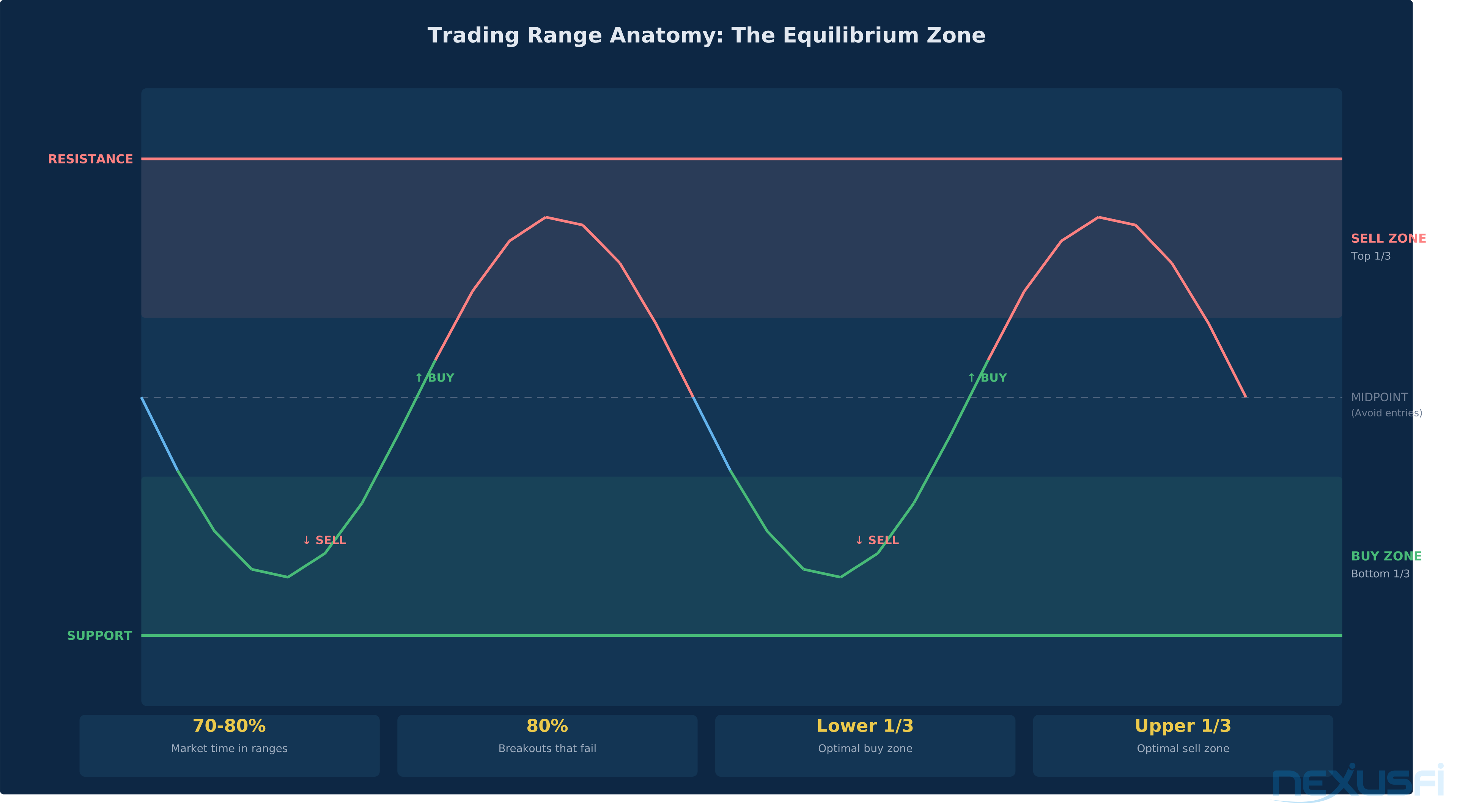
A trading range exists when buyers and sellers have reached approximate equilibrium. Price oscillates between a ceiling (resistance) and a floor (support) because both sides of the market have roughly equal conviction and roughly equal power. Bulls buy near the bottom, bears sell near the top, and neither side can maintain control long enough to establish a sustained directional move.
Brooks defines a trading range functionally: any market condition where the probability of a reversal from the current price is greater than the probability of continuation. This is a subtle but important distinction. A market doesn't have to be perfectly flat to be a range — it simply needs to have enough two-sided behavior that fading extremes is more profitable than following momentum.
The essential characteristics of a trading range include:
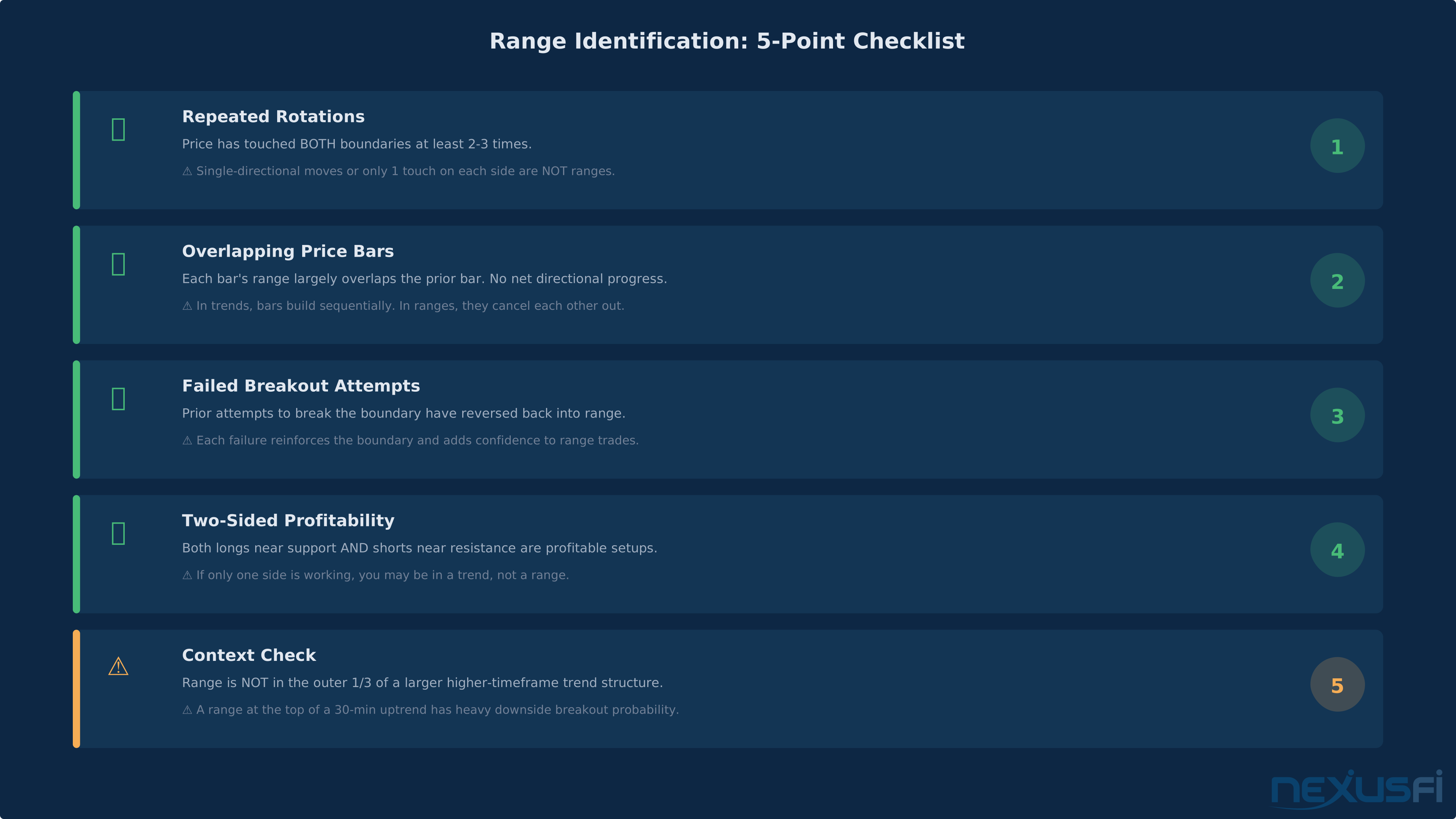
Overlapping price bars: In a trend, consecutive bars build on each other — each high is higher than the last in an uptrend, each low is lower in a downtrend. In a range, bars overlap extensively. The close of bar N falls within the body of bar N-5, and the high of bar N-3 is below the high of bar N-8. There's no net progress in either direction.
Failed breakout attempts: A defining feature of ranges is that every apparent breakout gets pulled back. The market probes above resistance, finds sellers, and returns to the middle. It probes below support, finds buyers, and reverses. These failures reinforce the range boundaries and create the buy-low/sell-high opportunity.
Two-sided trading: In a genuine range, both bulls and bears can be right at different times. A long trade near support can reach a 2:1 reward-to-risk target. A short trade near resistance can do the same. This two-sided profitability is the defining characteristic that makes ranges feel "trappy" — you can win from either direction if you time entries correctly.
Prominent wicks and tails: Ranges produce bars with significant rejection. Price probes above resistance and gets pushed back, leaving a long upper wick. Price dips below support and bounces, leaving a long lower wick. These wicks are the market showing its hand — buyers and sellers defending their positions at extremes.
The Auction Theory Foundation #
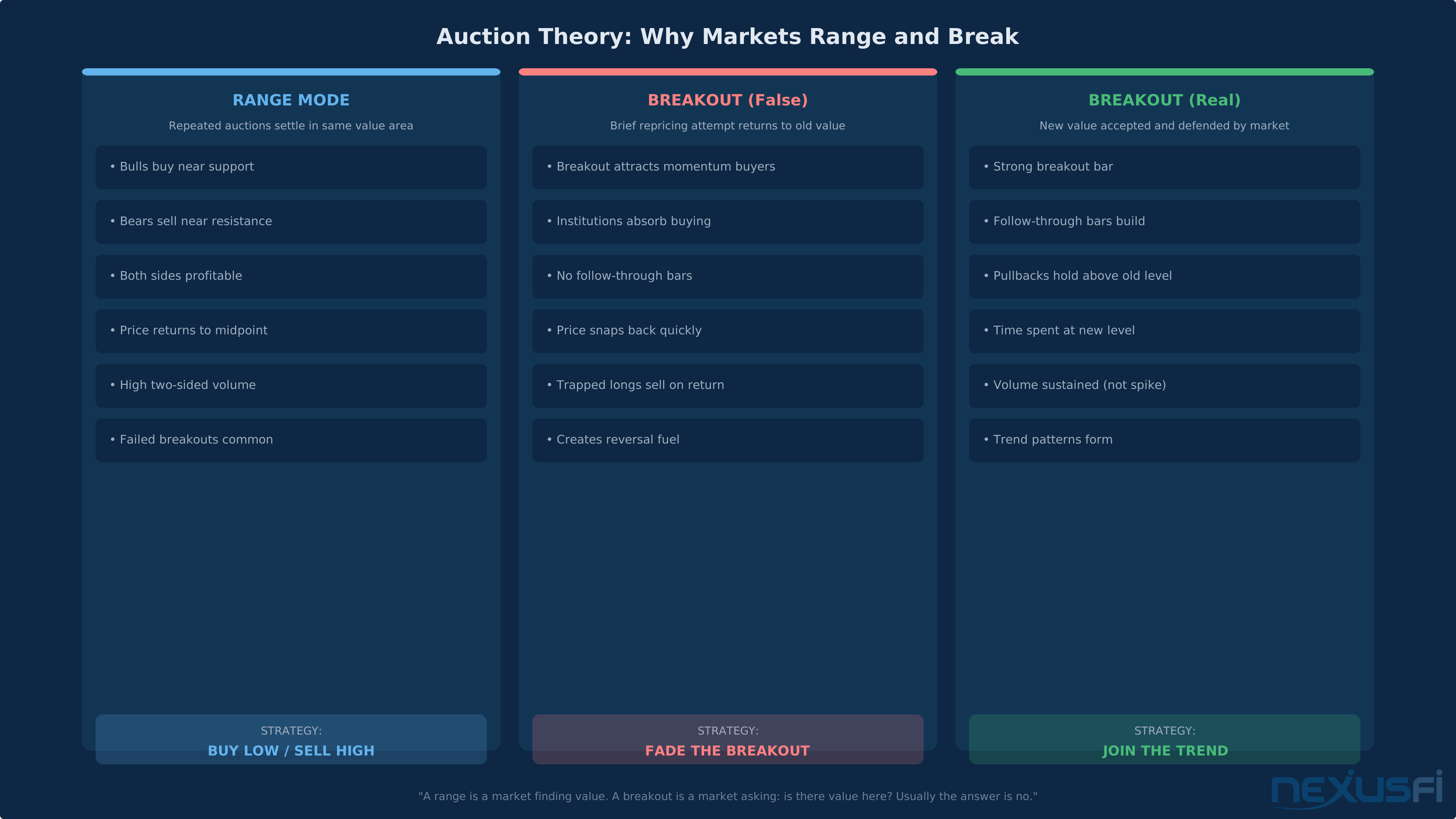
Trading ranges exist because buyers and sellers temporarily agree on value. The market has found a price level where supply and demand are roughly balanced — neither side can push price much in either direction. This balance manifests as the oscillation between support and resistance that defines a range.
Auction market theory provides the deepest explanation of why ranges form and when they end: a range ends when one side becomes aggressive enough to advertise a new price level and the other side accepts it. Until that acceptance occurs, the range continues regardless of how many breakout attempts occur. James Dalton, in Mind Over Markets — one of the foundational practitioner texts on auction theory — describes this process as the market "facilitating trade" within a value area until new information disrupts the equilibrium. CME Group's own educational framework describes this same auction dynamic: in futures markets, price discovery is the result of buyers and sellers interacting continuously, with all available information assimilated into the current price [11].
Identifying Trading Ranges: Visual and Structural Signals #
Correctly identifying a range — and distinguishing it from a trend pause — is the most critical skill in range trading. A "trend pause" looks similar to a range but is actually a continuation pattern within a larger trend. Trading it as a range (selling into an uptrend retracement) can be costly.
Visual Identification Criteria #
A genuine trading range shows:
Repeated rotations: Price makes at least 2-3 touches of both the upper and lower boundary. A single test of support followed by a new high is not a range — it's a trend. You need multiple bounces between defined levels to confirm equilibrium.
Decreasing volatility with better overlap: In a mature range, bars become progressively more inside-ish. The range of each bar shrinks compared to the establishing bars. Overlapping becomes extreme. This "compression" signal appears in mature ranges before they resolve.
Roughly equal bull and bear bars: Ranges produce a mix of bullish and bearish closes throughout the day, with neither color dominating for more than a few consecutive bars. If you see 5-6 consecutive green bars in what you're calling a range, you may be in a trend.
No net directional progress: Zoom out to a higher timeframe. Over the period in question, has price moved meaningfully in one direction? If the 5-minute chart "range" resolves higher on the 15-minute chart, you're inside an uptrend pullback, not a neutral range.
What a Range Is NOT #
Not all sideways movement is a range. Brooks identifies several conditions that look like ranges but behave differently:
Trend flags and pennants: When an uptrend pauses to consolidate before continuing, the consolidation looks like a small range. But the context (preceding trend) makes the upside breakout highly probable. These are not "neutral" ranges where you fade extremes — they're compression patterns within trends.
Tight trading ranges (barb wire): An extremely narrow range where bars overlap almost completely, often called "barb wire" by Brooks, is a range within a range. It typically forms at the midpoint of a larger range and represents extreme indecision. Trading from within barb wire is very difficult — the signals are unclear and false breakouts are common. The best approach is to wait for it to resolve before committing.
Opening ranges: The first 30-60 minutes of a futures session often form a range as the market establishes initial fair value. This range has different characteristics from a midday range — it's defining the day's auction boundaries rather than representing sustained equilibrium.
The 80% Rule: Why Most Breakouts Fail #
This is perhaps the most counterintuitive principle in Brooks' methodology, and the one that creates the most profitable opportunities for range traders. Brooks observed that approximately 80% of breakout attempts from trading ranges fail — price breaks out, extends for a few bars, then reverses back into the range.
Understanding why this happens is essential to trading it profitably.
The Mechanism of Failed Breakouts #
When price approaches the upper boundary of a range, multiple types of market participants converge:
Range sellers: These are traders who have been selling every test of resistance. They're adding to short positions, confident in the range structure. They see the breakout attempt as another opportunity to sell.
Breakout buyers: These are trend-following traders who see the potential range break and initiate longs above resistance. They want to catch the next trend move and are buying on the breakout.
Stop loss triggers: Every trader who's been short from within the range has stop losses above the resistance level. As price breaks out, these stops trigger — creating temporary buying pressure that pushes price even further above resistance.
The initial breakout bar often looks strong precisely because of these competing forces. Shorts covering, breakout buyers entering, and trend followers jumping in all create a brief surge. But then:
The absorption effect: The surge in price attracts institutional sellers who had been waiting for a liquidity spike to fill large short positions. They sell into the breakout rally, absorbing the buying pressure.
No follow-through: If the breakout were genuine — if institutions were buying, not selling — price would continue expanding above resistance with follow-through bars. Instead, the bars begin to overlap. The momentum stalls.
The reversal: Range traders who have been waiting for exactly this signal begin entering shorts. The breakout buyers who haven't hit their profit targets start to panic as price fails to continue. Their stop losses — placed below the breakout point — now trigger as price falls, adding selling pressure.
The result: a failed breakout that often moves all the way back to the opposite end of the range, or beyond.
The 80% Number in Context #
Brooks' 80% figure is a directional truth, not a precise statistic. The actual failure rate depends on:
- Market regime: In strong trending markets with fundamental drivers (earnings season, Fed meetings, geopolitical events), breakout success rates increase. The 80% applies to balanced, mean-reverting sessions.
- Range structure: A range with 2-3 tests of each boundary has stronger breakout failure probability than a range with only 1 test on each side.
- Breakout bar characteristics: A large, closed-on-high bull bar breaking above resistance is more likely to succeed than a small, doji-type bar. Bar strength during the breakout carries information.
- Context on higher timeframes: A breakout that aligns with the higher timeframe trend is more likely to succeed than one that goes against it.
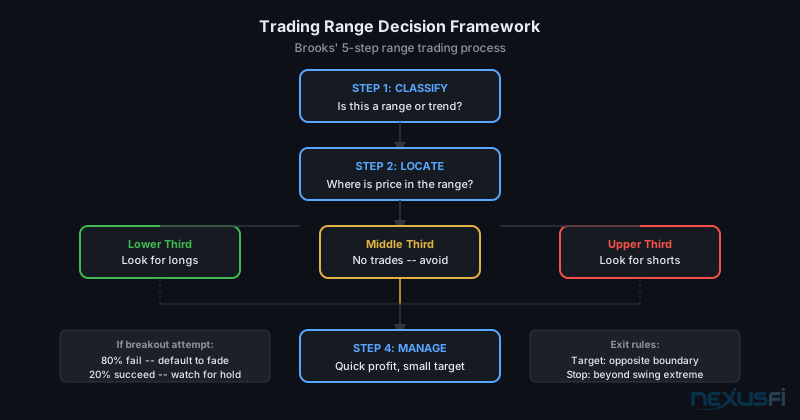
The key insight isn't the precise number — it's the bias. In a confirmed range, your default assumption should be: this breakout will fail. Trade so, but always maintain alertness for the 20% of cases that succeed.
Buy Low, Sell High: Core Range Strategy #
The foundational range trade is simple in concept: buy near the bottom of the range and sell near the top. But execution requires understanding where exactly to enter, how to manage risk, and which signals confirm a high-probability entry.
Locating High-Probability Buy Zones #
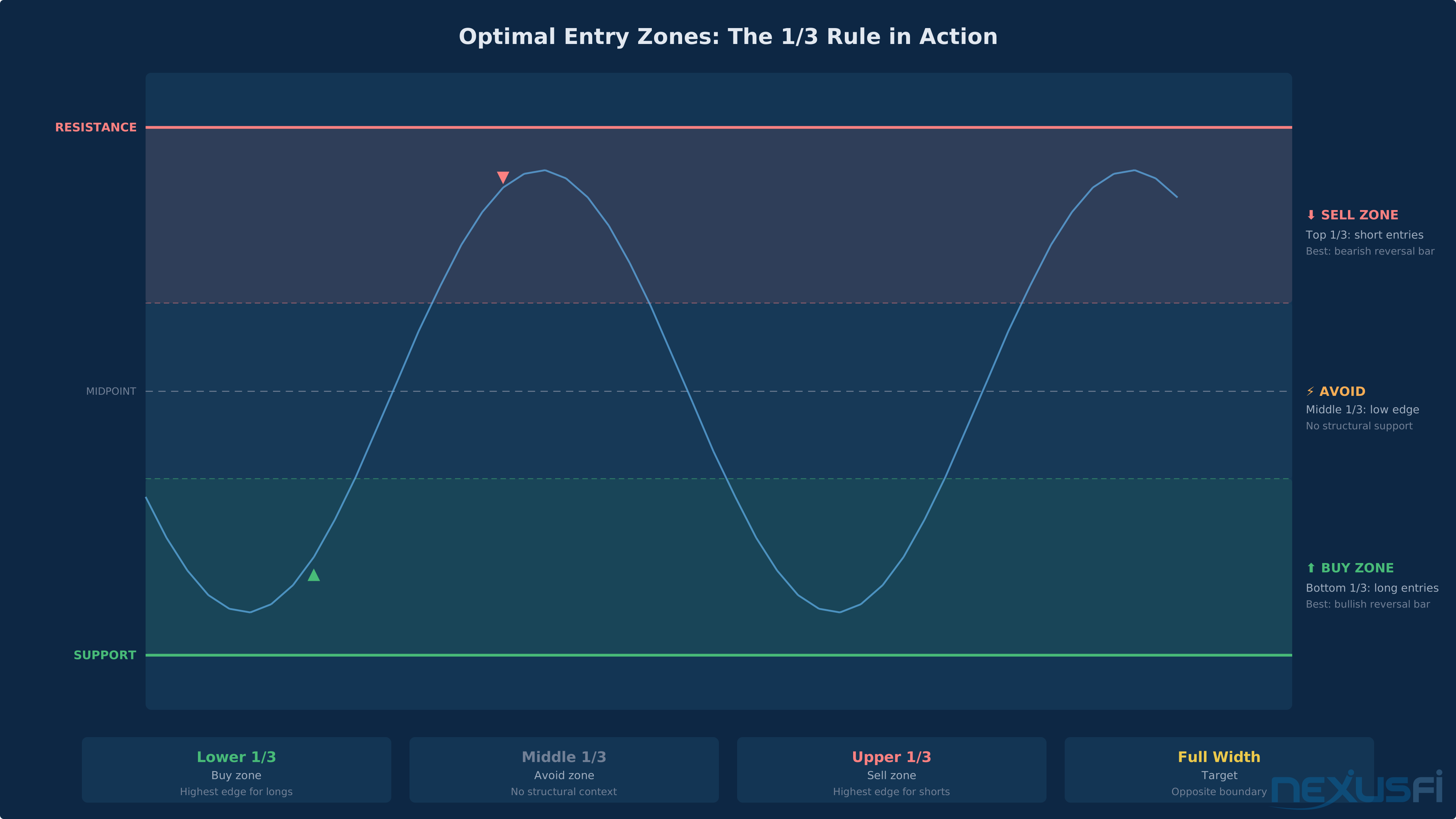
Within a range, the optimal buy zone is the lower third of the range, not just "near the bottom." This distinction matters for risk management. If you buy at exactly the support level, your stop must go below support, giving you 1 tick of buffer before being wrong. If you buy at the lower third — slightly above support — your stop can be placed below the most recent swing low, giving you more breathing room while still capturing most of the range move.
An ideal range buy setup requires:
A bullish reversal signal bar: A bar that opens near its low, trades down, then closes near its high. The body should be predominantly bullish (close above midpoint). Long lower wicks show rejection of lower prices.
Double bottom or wedge structure: Two or three touches of the same support level with higher lows in between creates an even more reliable base. The third push down in a wedge — which often slightly undercuts the second — is Brooks' preferred buy location.
Context alignment: The entry is within the lower third of the defined range, below the midpoint but above prior support levels. If you're buying in the upper half of the range, you're buying into resistance — a lower-probability trade.
Previous failed bear breakout: If price has already probed below support and reversed (the "trap" we discussed), and you missed that reversal, the subsequent pullback to the low area gives a second chance. The failed breakout already tested the support's validity.
Short Entries Within Ranges #
Short entries mirror the long setup in reverse. From the upper third of the range, look for bearish reversal signal bars (opens near high, closes near low with upper wick rejection), double tops or wedge structures with lower highs, and failed bull breakout reversals. Once price crosses below the range midpoint on a confirmed short, probability increases as it moves toward range support.
The 1/3 Rule in Practice Enter in the lower third of the range for longs (close to support, far from resistance). Enter in the upper third for shorts. Avoid entries near the midpoint — there is no structural context to support the trade and your reward-to-risk ratio collapses. If you can't enter in the outer thirds, wait for the next oscillation.
Profit Targets and Trade Management #
In a confirmed range, the target is the opposite boundary. If you buy at range support (call it 4800 on ES), your target is near range resistance (say, 4835). If the range is 35 points, you're targeting a 35-point move.
Key trade management rules:
Take partial profits at the midpoint: When price crosses through the middle of the range, you've confirmed the trade is working. Consider taking 1/2 to 2/3 of your position off and moving the stop to breakeven or slightly above your entry.
Reduce target near the opposite boundary: Don't expect to exit at exactly the opposite boundary. Prices often stall and reverse before reaching the extreme. Taking profits at the upper third of the range (not the very top) allows you to exit before the next resistance cluster creates a reversal.
Failed Breakout Entries: The Highest-Probability Range Setup #
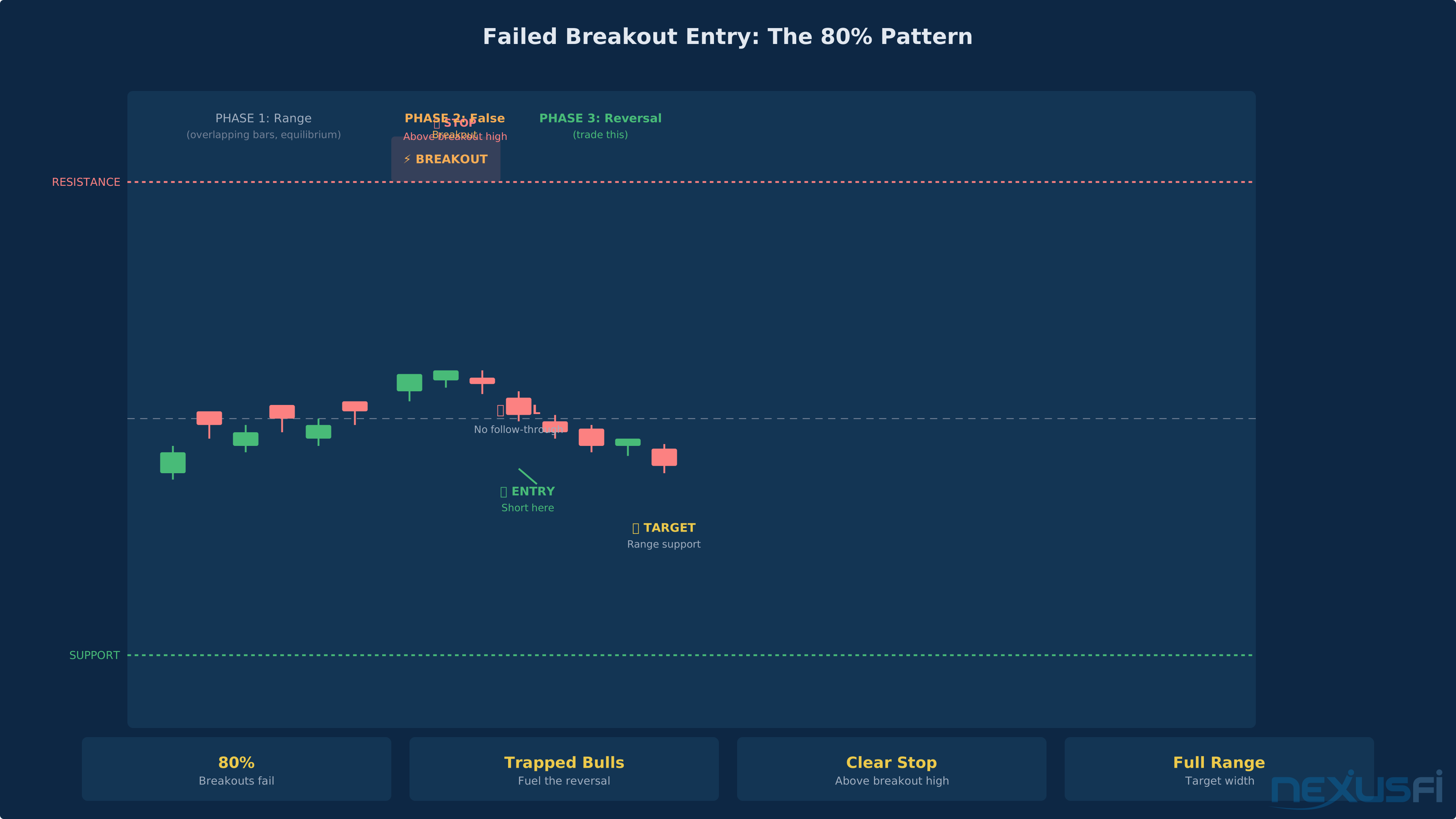
Of all the range trading setups, the failed breakout entry is the one Brooks considers most powerful. When a breakout attempt fails — and price reverses back into the range — it creates a setup with three favorable characteristics simultaneously:
- Evidence of support/resistance: The failure proves the boundary held
- Trapped breakout traders: Bulls who bought the bull breakout are now losing money and will soon add selling pressure as they exit
- Clear invalidation level: Your stop is simple — above the breakout high
How to Trade the Failed Breakout #
The specific setup:
Setup: Price has been in a confirmed range for 5+ bars. Price breaks above the upper boundary with a strong-looking bull bar (or series of 2-3 bull bars).
Wait: Don't chase the breakout. Let the initial excitement resolve. You're waiting to see if the breakout can sustain.
Failure signal: Price stalls above resistance. The bars become smaller, overlap increases, or a strong bear bar appears above resistance. The key is that the move lacks follow-through.
Entry signal: Price drops below the high of the last bar that was still above resistance, or — for a cleaner setup — drops back below the resistance level itself. This "back-inside" bar is your entry trigger.
Position: Short (if failed bull breakout) with stop above the breakout high.
Target: The opposite end of the range (support area).
The beauty of this setup is that the stop is well-defined and relatively small (just above the breakout high), while the target is the entire width of the range. Reward-to-risk ratios of 2:1 or 3:1 are common.
Reading Failed Breakout Strength #
Not all failed breakouts are equal. Higher-probability setups include:
Multiple trapped traders: If the breakout rally lasted 3-5 bars before failing, more traders bought the breakout. More trapped participants means more selling pressure as they exit.
Strong failure bar: A large bear bar that closes near its low on the reversal — not a small doji or inside bar — shows conviction from sellers.
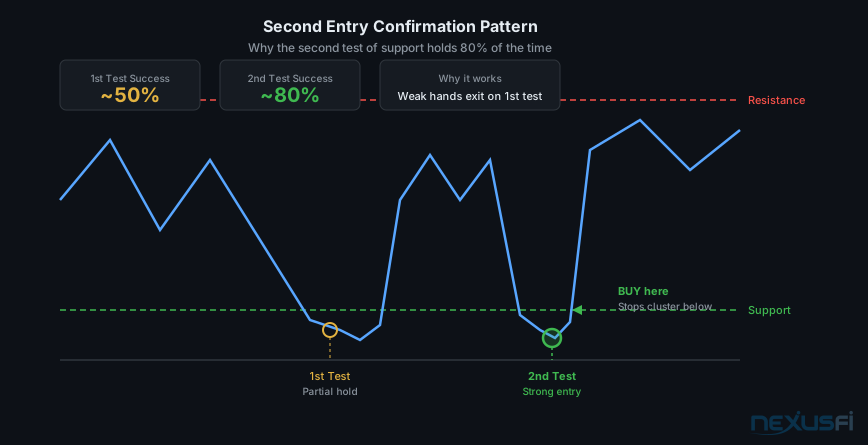
Second entry: If you missed the initial failure reversal, price will often give you a second opportunity to enter short as it pulls back up toward the failed breakout area. This "second entry" is Brooks' most reliable pattern — the market gave clear confirmation once, and the second test validates it.
Failed breakout of a failed breakout: When price breaks above resistance, fails, reverses, then attempts to break below support but also fails — and then rallies — you have a double-failed breakout. The eventual move (usually the final breakout from the range) tends to be strong and sustained.
Reading Range Quality: Tight vs. Broad Ranges #
Not all ranges are created equal. Understanding the structure of the specific range you're trading tells you how to adjust your tactics.
Tight Trading Ranges (Barb Wire) #
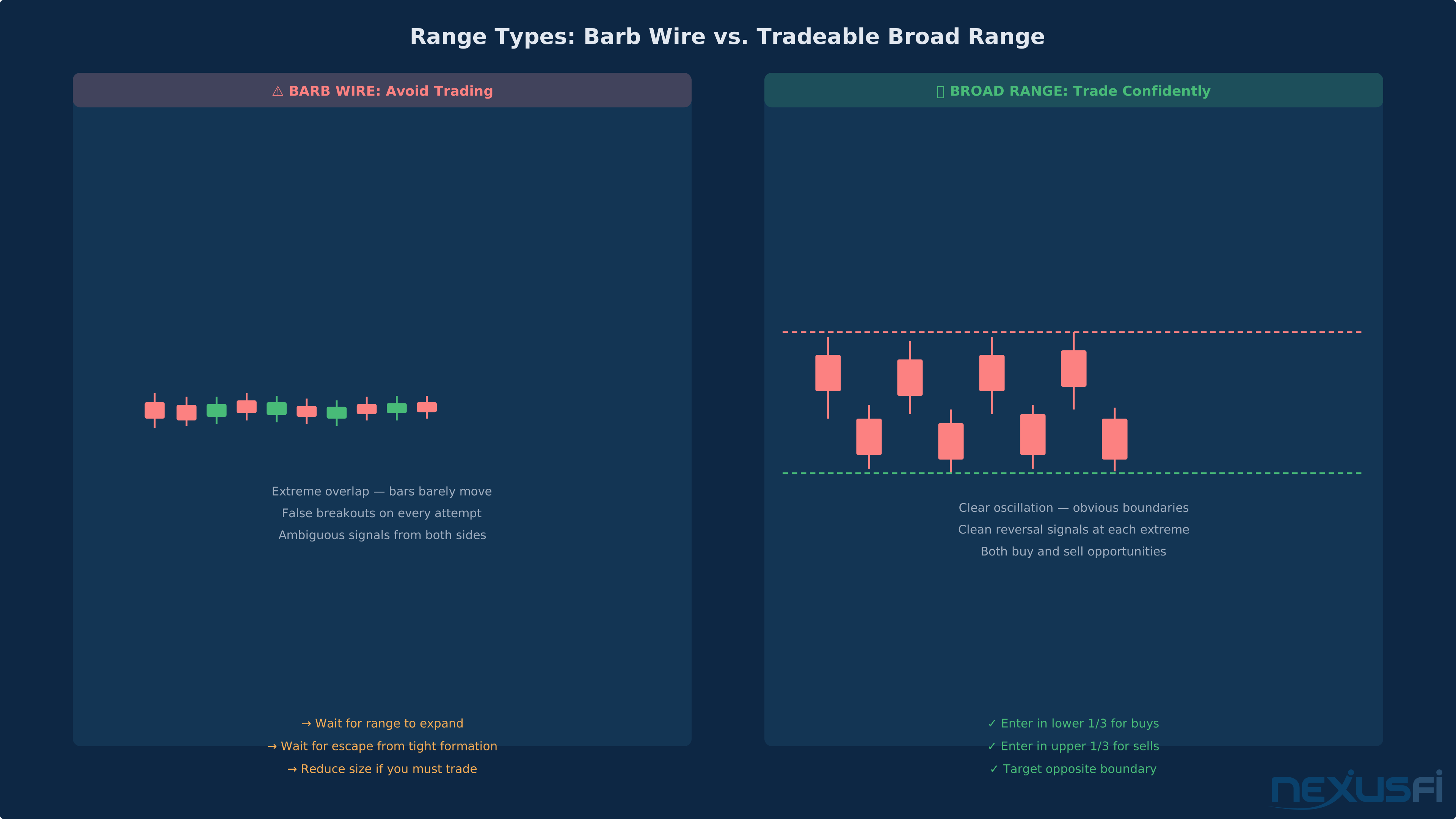
Brooks uses the term "barb wire" to describe extremely tight ranges where bars overlap almost completely. The bars are small relative to the day's ATR, close near their midpoints, and produce no net directional movement over many bars.
Characteristics of barb wire:
- Bars overlap by 75-90% or more
- Most bars are inside bars or near-inside bars
- The range of each bar is small (under 0.25-0.5 × ATR)
- The pattern occurs frequently at the midpoint of larger ranges
Trading barb wire: The honest assessment is that barb wire is extremely difficult to trade profitably. The entries look good on both sides, the signals are ambiguous, and the false breakouts are frequent and small. Brooks advises against initiating new positions inside barb wire — instead, wait for the range to expand or for price to escape the tight formation.
If you must trade barb wire, limit yourself to second entries (the first entry failed, now the market is giving a second chance on the other side) and keep position sizes small.
Broad Trading Ranges #
A broad range — one that spans 10-20 or more ATRs in height — gives you much more room to work with. The buy low/sell high strategy works well in these conditions because:
- Entry and exit points are well-defined
- Failed breakouts are large enough to profit from meaningfully
- The range has enough structure that support and resistance are obvious
In broad ranges, you can also trade range-within-range setups: smaller ranges that form within the broader range boundaries. If the large range spans 4800-4860, and price oscillates between 4810-4830 for 2 hours, you can trade that smaller range on its own merits while keeping the larger structure in mind.
Range Midpoints: The Gravitational Center #
Every trading range has a midpoint — the exact middle of the range height. This midpoint acts as a gravitational center and has specific trading implications:
Two-sided trade territory: Within 1-2 ATRs of the midpoint, both longs and shorts are reasonable (buying slightly below midpoint, selling slightly above). The midpoint itself is the least favorable entry — too far from the support or resistance where the real edge lies.
Profit-taking zone: As a trade moves through the midpoint, consider lightening up. Price often pauses or briefly reverses at the midpoint before continuing.
Broken support becomes resistance: If price was previously bouncing off 4815, and it breaks through 4815 to the downside, that level now becomes resistance on rallies. The midpoint of the new range (after the breakdown) may be at the old support level.
Breakout Mode Recognition: When Ranges End #
Every trading range eventually resolves. Price breaks out and enters a new trend — or at least a sustained directional move. The skill of recognizing when breakout mode is truly beginning separates range traders who grind profits from those who get caught in failed breakout after failed breakout.
Characteristics of Genuine Breakouts #
A genuine breakout from a range shows several distinguishing features:
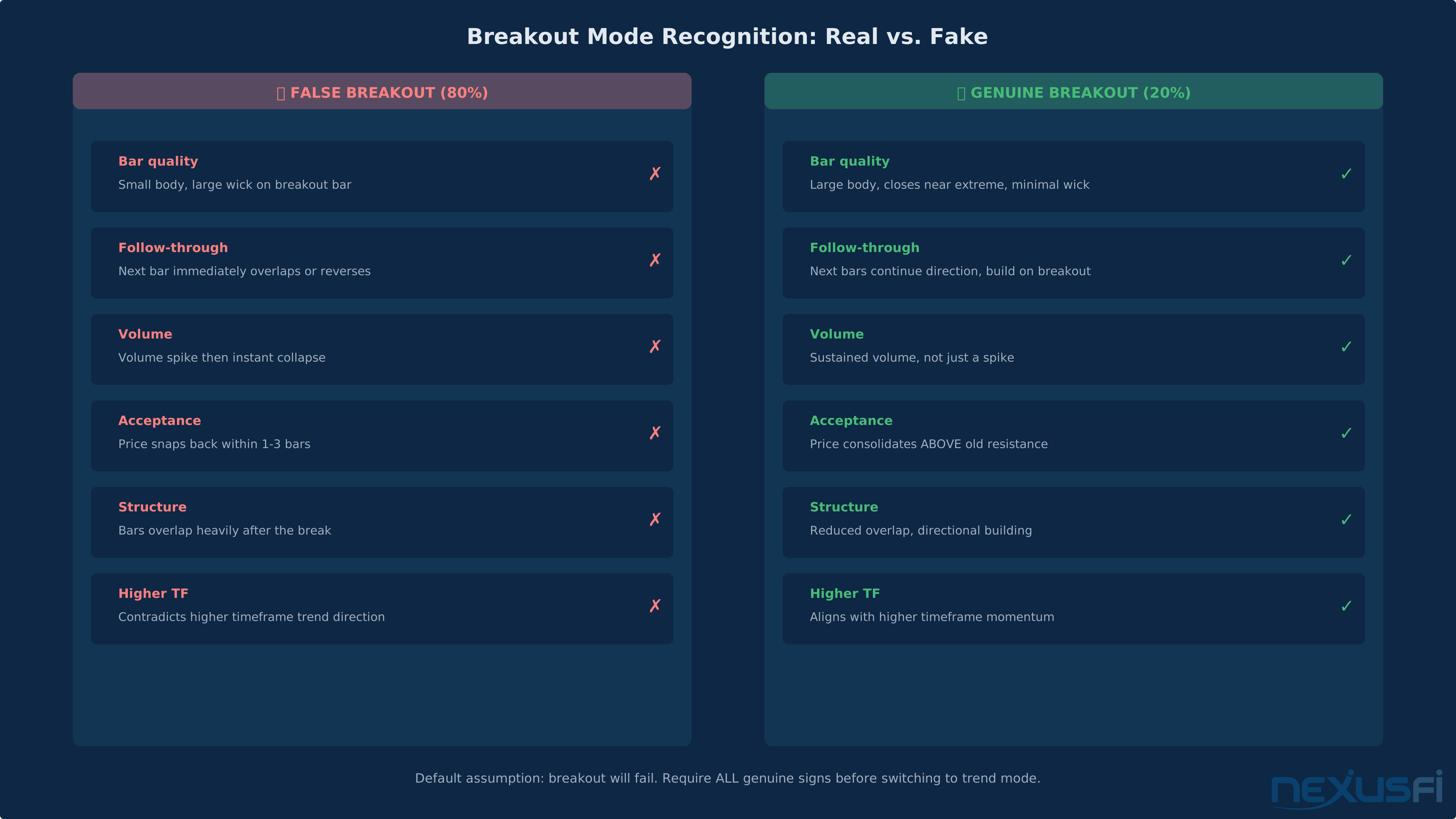
Strong breakout bar: The bar that breaks through the range boundary should be large, close on or near its extreme, and show clear direction. A strong bull breakout bar has a large body with minimal upper wick, closes near the high, and has above-average volume. Compare this to the typical failed breakout bar — which often looks strong initially but then produces smaller follow-through bars.
Follow-through bars: After the initial breakout bar, the next 1-3 bars should continue in the same direction without significant pullbacks. If the bar immediately following a bull breakout is a bear bar that closes below the midpoint of the breakout bar, that's a warning sign.
Reduced overlap: In a genuine breakout, subsequent bars don't retrace deeply into the previous bar's range. They build on the breakout bar, establishing a new floor above the old resistance. In a failed breakout, bars overlap immediately.
Acceptance behavior: Brooks describes successful breakouts as showing "acceptance" — the market spending time above the old resistance (in a bull breakout) rather than snapping back immediately. When price breaks above 4835 and then consolidates between 4835-4845 for 5-10 bars instead of reversing, the market is "accepting" the new higher value.
Higher timeframe alignment: A breakout from a 5-minute range that aligns with the 30-minute or 60-minute trend direction has a much higher success probability than one that contradicts the higher timeframe structure.
Warning Signs That a Breakout Will Fail #
Immediately overlapping bars: The bar following the breakout bar trades back into the breakout bar's body. This shows that price couldn't sustain the new level even for one bar.
Strong follow-through in the wrong direction: The bar following the breakout bar is a strong bar — but in the opposite direction. A strong bear bar that immediately follows a bull breakout bar is often the beginning of a powerful failed-breakout reversal.
Climactic volume on the breakout bar: A huge spike in volume during the breakout bar itself can signal exhaustion rather than strength. The move attracted participation — but most of that participation may be the "last push" of the existing move rather than the beginning of a new trend.
No pullback-and-hold: After a genuine breakout, when price briefly pulls back toward the old resistance (which is now support), the market should hold above it. If price drops back below the old resistance level on the first pullback, the breakout has failed.
Managing Range-to-Trend Transitions #
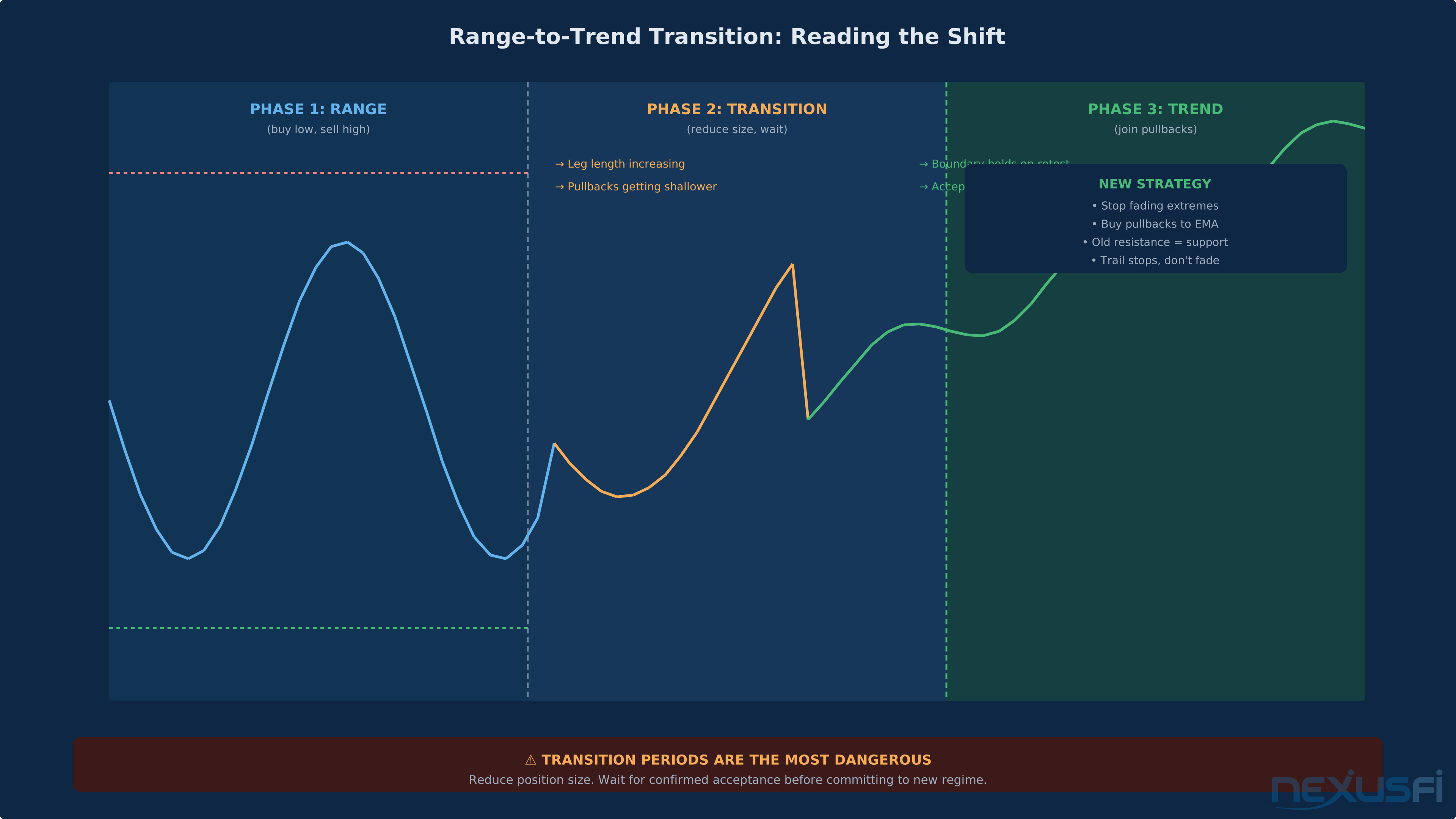
The most dangerous moment in range trading is when the range transitions to a trend. This happens in predictable ways: a breakout that holds for more than 5 bars above resistance, a pullback that stops well above the prior range high, and consecutive bars that do not overlap the range boundary. When these signals appear, switch from sell-the-top to buy-the-pullback immediately.
Transition signals to watch:
- First pullback after breakout: The first pullback following a genuine breakout offers the lowest-risk trend entry. If price holds above the prior range high, the range is over.
- Failed re-entry: When price breaks out and bulls try to re-enter the range but fail (price can't get back below resistance), this confirms trend mode.
- Two consecutive closes above resistance: Two closes above the prior range high on the 5-minute chart signals shift to trend management.
During the transition itself, reduce position size by 50% until the trend is confirmed. Many traders make their largest losses by aggressively shorting into what becomes a genuine breakout.
When unsure whether a breakout is real or false, wait for the first pullback. If the pullback holds above resistance (which was prior range top), the breakout is confirmed and the pullback is your entry. If price collapses back into the range, the breakout failed and you fade it.
Risk Management in Range Markets #
Range trading has specific risk management challenges that differ from trend trading.
Stop Loss Placement #
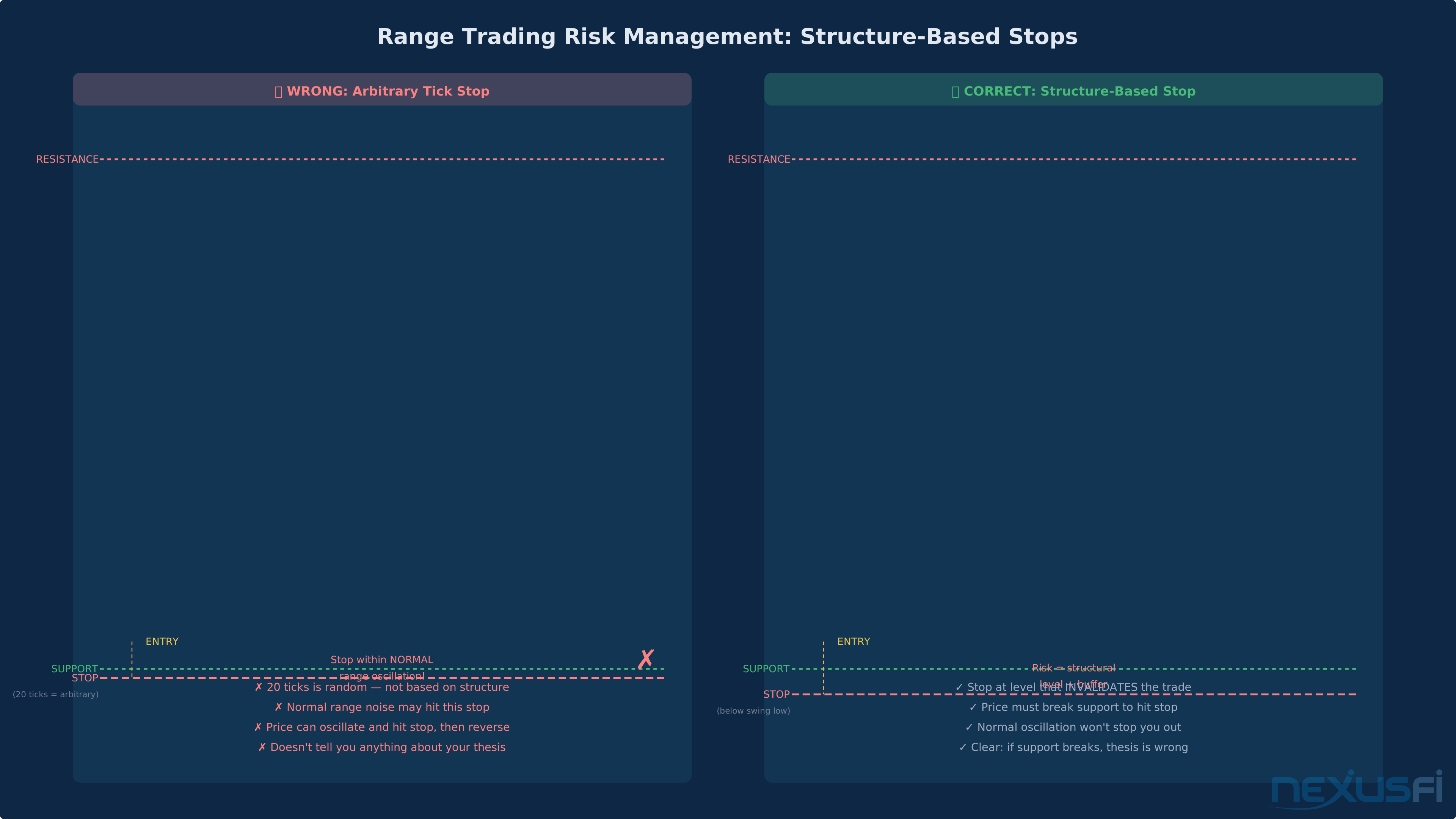
The critical principle: stops must be beyond the structural level that defined the trade, not beyond an arbitrary number of ticks.
For a buy at range support, your stop goes below the lowest point of the swing that defines support. Not "20 ticks below entry" — below the specific swing low that told you "this is support." If support is at 4800, and the swing low that defined it was at 4799.75, your stop goes at 4799.50 or lower.
Why structure-based stops matter: arbitrary stops get taken out by normal price action within the range. A stop based on structure is at the level where the trade thesis is invalidated — the range boundary has been genuinely broken.
Position Sizing in Ranges #
Range trades typically have better defined risk (smaller stop in ticks) than trend trades, but the profit targets are constrained (maximum range height). Adjust position size so:
Full position: When buying at the range bottom with ideal confirmation — reversal bar, second entry, prior failed breakout of the low Reduced position: When entering at the range midpoint or with weaker confirmation No position: In barb wire or during transition periods
Avoid Averaging Down in Ranges #
A tempting but dangerous approach is "averaging into" a range trade that's going against you. You buy at support, price drops through support, you buy more expecting the range to hold. If you're wrong about the range structure — if this is actually a trending breakdown — you've added to a losing position at the worst possible time.
Brooks' rule: if a trade requires you to add to a loser to make it work, the original analysis was flawed. One entry, one stop. If the stop hits, reassess from scratch.
The Opportunity Cost Problem #
Range trading has a psychological trap: you're often right about the direction but wrong about the timing. Price approaches support, you buy, it goes against you for 10 bars before rallying to your target. The trade eventually works — but was it the best use of capital for those 10 bars?
The solution is patience. Wait for the setup to come to you — don't pre-empt it. If support is at 4800, don't buy at 4810 "anticipating" the support test. Wait for price to reach 4800, show a reversal signal, and enter at that point. Your stop is smaller, your edge is clearer, and your capital isn't tied up waiting.
Multiple Timeframe Range Analysis #
Trading ranges rarely exist in isolation. A range on the 5-minute chart may be a pullback within a 30-minute uptrend, a daily range may sit inside a weekly trend channel, and a Globex range may be establishing the boundaries for an RTH breakout. Ignoring the higher timeframe context is one of the most common and expensive mistakes range traders make.
The Dominant Timeframe Rule #
The rule is straightforward: always trade WITH the dominant trend on the next-higher timeframe when taking range entries on your execution timeframe. This single principle filters out a large percentage of losing range trades.
Suppose the 15-minute ES chart shows a clear uptrend — higher highs and higher lows throughout the morning. On the 5-minute chart, price is consolidating in a 10-point range between 5780 and 5790. Both longs from the bottom and shorts from the top look reasonable on the 5-minute chart alone. But the 15-minute uptrend tells you the odds strongly favor the buy side. Here is the specific decision framework:
Trading WITH higher timeframe direction: Buy setups from the lower third of the 5-minute range get full position size, full target (opposite boundary), and a wider stop because the higher timeframe trend provides a tailwind. If the range breaks out upward, you're already positioned correctly.
Trading AGAINST higher timeframe direction: Short setups from the upper third of the 5-minute range require reduced position size (50%), tighter stops, and a reduced target — take profit at the midpoint rather than the opposite boundary. You're fading a range extreme, but the higher timeframe trend will likely reassert itself. These counter-trend range trades work, but they need to be managed more aggressively.
A Concrete ES Example #
Consider this scenario: the ES 15-minute chart has been trending higher since the 9:30 AM open, making three consecutive higher lows. By 11:00 AM, the 5-minute chart shows a clear trading range between 5820 (support) and 5835 (resistance) — price has tested each boundary twice.
Long setup (WITH 15-min trend): Price drops to 5822 at 11:15 AM and prints a bull reversal bar with a long lower wick. You buy at 5823, stop at 5818 (below the swing low that established 5820 support), target 5833 (upper third of range). Risk: 5 points. Reward: 10 points. The 15-minute uptrend gives this trade a strong probability edge — even if the range breaks, it's likely to break upward.
Short setup (AGAINST 15-min trend): Price reaches 5834 at 11:45 AM and prints a bear reversal bar. You short at 5833, stop at 5837 (above resistance), but target only 5827 (midpoint) — NOT 5822 (full range target). Risk: 4 points. Reward: 6 points. You take a smaller bite because the 15-minute trend is fighting you. If the trade works quickly, take it. If it stalls at the midpoint, exit.
When Timeframes Conflict #
The trickiest scenarios arise when the execution timeframe shows a clear range but the higher timeframe is ambiguous — itself in a range or at a decision point. When the 15-minute chart is also ranging, neither the long nor the short side of the 5-minute range has a structural advantage. In this case, trade both sides equally but reduce position size on all entries, and prioritize failed breakout setups over anticipatory entries at range boundaries.
See Auction Market Theory for the complete theoretical framework on multi-timeframe value area analysis and how institutional participants use nested auction levels to determine fair value across timeframes.
Common Range Patterns and Special Setups #
Beyond the standard trading range, price action traders encounter several recurring range variants. Each has distinct characteristics that affect how you position entries, manage stops, and set targets.
Nested Ranges #
A nested range is a smaller range forming inside a larger one. The ES commonly produces this pattern: a broad morning range of 5800-5840 establishes the session boundaries, and then between 11:00 AM and 1:00 PM, price oscillates in a tighter nested range of 5815-5830.
Nested ranges create layered trading opportunities. You can trade the inner range on its own merits (buy 5816, sell 5829), but the outer range provides the structural context. When the inner range breaks out — say, price drops below 5815 — the outer range's support at 5800 becomes your next target. The breakout from a nested range that stays within the outer range is a high-probability trade because you have two reference points: the inner range boundary (which just broke) as your stop, and the outer range boundary as your target.
The key rule for nested ranges: the breakout direction from the inner range usually moves toward the outer range boundary, not beyond it. If the inner range sits in the upper half of the outer range, expect the inner breakout to resolve downward toward the outer range midpoint or support.
Expanding Ranges (Broadening Formations) #
An expanding range — sometimes called a broadening formation or megaphone pattern — occurs when each successive swing exceeds the prior one. The high of swing 2 is above the high of swing 1, and the low of swing 3 is below the low of swing 2. The range is getting wider, not narrower.
Expanding ranges are dangerous because the standard buy-low/sell-high approach gets you stopped out repeatedly. You sell the "top" at 5840, and the next swing carries to 5845 before reversing. You buy the "bottom" at 5810, and the next swing drops to 5805.
Brooks' approach to expanding ranges is defensive: reduce position size by 50%, widen stops to accommodate the expanding swings, and enter only on second entries — not first touches of the boundary. A second entry in an expanding range means the market pushed beyond the prior swing extreme, reversed, pulled back, and then reversed again. The second reversal confirms that the boundary area — though wider than before — is still generating rejections.
Expanding ranges often precede strong breakouts. The increasing volatility reflects a tug-of-war that one side will eventually win decisively. When the breakout comes, it tends to be powerful because the widening swings have built up energy and trapped traders on both sides.
Measured Move Ranges #
A measured move range is one where the eventual breakout target equals the height of the range itself. If a range spans 30 points on ES (5800-5830), the measured move target after a breakout is 30 points from the breakout point — 5860 for a bull breakout, 5770 for a bear breakout.
This is one of Brooks' most practical tools for setting profit targets after a range resolves. The logic is rooted in market symmetry: the energy that built up during the range (all those failed breakouts, trapped traders, accumulation and distribution) creates fuel for a move of roughly equal magnitude once the range breaks.
Not every breakout reaches its measured move target, but the target gives you a framework for managing the trade after the breakout occurs. If you entered long on a failed bear breakout at 5805, and the range eventually breaks out above 5830, your measured move target is 5860. You can scale out in thirds: 1/3 at the breakout point (5830), 1/3 at the midpoint of the measured move (5845), and the final 1/3 at the full target (5860) with a trailing stop.
Double Tops and Double Bottoms Within Ranges #
Double tops and double bottoms are among the most common range patterns. They occur when the market tests a prior swing extreme and fails to break through. A double top at range resistance (two tests of 5835, both rejected) strengthens the resistance level and makes the next short entry at that level higher probability. A double bottom at range support (two tests of 5800, both holding) does the same for longs.
Brooks notes that the second test often slightly overshoots the first — price might reach 5836 on the second test of 5835 resistance. This overshoot traps breakout buyers before reversing, making the subsequent move more powerful because the trapped longs add selling pressure as they exit.
Application to ES Futures (5-Minute Chart) #
The ES 5-minute chart spends the majority of Globex and early cash session time in trading ranges. The 8:30 AM economic release often creates a sharp directional move that resolves into a range by 9:30 AM open. The first hour (9:30-10:30 AM) frequently defines the range boundaries for the session — the high and low established during this period become the reference points for buy-low/sell-high entries throughout the day. Midpoint awareness is critical: the ES respects the range midpoint as both support and resistance, making it the worst entry location. Range traders should monitor RTH volume patterns; thin volume at boundaries with heavy volume near midpoint confirms a healthy range.
Psychological Challenges of Range Trading #
Range trading requires patience and discipline that most traders struggle to maintain. The constant oscillation between boundaries triggers boredom and the urge to overtrade. Meanwhile, every consolidation looks like it will break out, making traders second-guess their range thesis. The hardest psychological skill is accepting small profits quickly — range trades typically yield 1-2 points on ES versus trend trades that can run 5-10 points. Traders who struggle with range psychology should review Trader Identity and Self-Worth Separation for frameworks on managing the emotional impact of a choppy environment.
Summary: The Range Trading Framework #
Trading ranges dominate the market — Brooks estimates 70-80% of all price action occurs in some form of range. The seven principles that govern professional range trading:
- Identify first: Confirm the range exists (repeated rotations, overlapping bars, clear boundaries) before applying range tactics
- Default to 80% failure: Most breakouts fail — trade with this bias while staying alert for the 20% that succeed
- Enter in the outer thirds: Buy lower third, sell upper third, avoid the midpoint entirely
- Prioritize failed breakouts: The highest-probability setup in any range — trapped traders create the fuel for reversal moves
- Know your regime: Range tactics destroy accounts in trending markets. Classify first, trade second
- Use structure-based stops: Stops belong beyond the swing extreme that defines the trade, not at arbitrary distances
- Wait for second entries: First tests of support/resistance hold 50% of the time; second tests hold 80%
Mastering range conditions isn't a secondary skill. Given that markets range most of the time, it is the primary skill.
Knowledge Map
Prerequisites
Understand these firstGo Deeper
Build on this knowledgeReferences This Article
Articles that build on this topicCitations
- — Just another trading journal: PA, Wyckoff & Trends (2022) 👍 4“Because in trading ranges: most breakouts fail - bulls and bears can make money if they manage their trades correctly.”
- — PA Dax CL, ES and Bund Price Action Trading Log (2019) 👍 4“The easiest thing to do is to establish early on that the day is a trading range day. Once you know that, you adjust your entries, targets, and stops accordingly.”
- — Price Action Trading - A Mack Acolyte (2013) 👍 16“Today was a classic range day. These are the most predictable days. These are the lowest risk days there are.”
- — Price Action Ripper's Journal (2014) 👍 3“Failed second entries in either direction create an excellent high probability setup in the opposite direction.”
- — Trading Ranges -- Brooks Trading Course (2020)
- — Mind Over Markets -- James Dalton, Eric Jones, Robert Dalton (1993)
- — Salao's Journal (2019) 👍 3“It's good to look to short after that failed breakout on a trading range day. Brooks teaching would tell you to take a 2nd entry short there.”
- — Salao's Journal (2023) 👍 7“Last night the globexers traded a small breakout lower, beyond y-Low, but in the 2-3 hours before the open it was absorbed and reversed. Classic failed breakout setting up the buy.”
- — PA Dax CL, ES and Bund Price Action Trading Log (2020) 👍 5“Based on bar 1 you think, which range is it breaking out of. Once you know which range it's breaking from, you know the target and the probability.”
- — Book Discussion: Reading Price Charts Bar by Bar by Al Brooks (2009) 👍 16“In essence it is a second entry into a failed breakout of a tight trading range. So, in the attached example the 6B got into a tight range (Barb Wire as per Brooks) and gave a nice fakeout pop.”
- CME Group — Price Discovery -- CME Group (2024)
- — Wyckoff 2.0 (Trade Journal) (2013) 👍 37“Price then breaks through the bottom of the range and finds temporary support near yesterday's low, has a weak rebound and then falls below the red line again. This is the Effort vs. Result principle -- all of this buying effort comes in but the result is an anemic rally. This gives more weight to short trades.”
- — InletCap's Random Collections (2016) 👍 9“I thought we were going to chop (range day) but with a great entry I always leave some on for a breakout. I say to a fault because I miss a lot of good range day trades since I only trade in one direction and always think it's going to break out even when I shouldn't. RVOL was saying we'd blast off -- that's when you know.”