



Bar-by-Bar Price Action Reading: The Real-Time Skill Behind Al Brooks' Method
Most traders encounter Al Brooks through his books or video courses and come away with a catalog of patterns. They learn what a "signal bar" looks like, what makes a "measuring bar," how an "inside bar" resolves. What they often miss is the underlying skill that makes the system work: the ability to read each bar as it forms, in real time, and update your market hypothesis within seconds of the bar's close.
Bar-by-bar reading isn't about memorizing shapes. It's about asking three questions for every bar that forms on your chart, answering them in five to fifteen seconds, and then watching the next bar to see if your hypothesis holds. Do that consistently across a thousand bars, and you develop the pattern recognition that makes Brooks-style trading executable in live markets.
This article covers the mechanics of real-time bar reading as applied to futures markets--specifically ES, NQ, and CL--with the complete taxonomy, decision framework, and the four highest-probability setups that emerge from bar-by-bar analysis.
Overview #
Bar-by-bar reading is a real-time analytical skill developed by Al Brooks and documented extensively in his three-volume series on price action trading. Unlike indicator-based approaches that calculate averages after the fact, bar-by-bar reading interprets each candlestick's anatomy--open, high, low, close, and relative size--as it forms, updating your directional hypothesis within seconds of each bar's close.
This approach treats every bar as a vote in a continuous auction. Strong bull bars represent buyers dominating the period; strong bear bars represent sellers winning. Inside bars mean the auction compressed; outside bars mean it expanded violently. The skill is reading these votes fast enough to act on them — and then waiting for the next bar to confirm your read before entering.
Key principle: Bar-by-bar reading is about asking three questions per bar — What is the market state? What does this bar say? What does the next bar confirm? — and completing that analysis within 5--15 seconds of each close. Speed and discipline are both required.
The Three Questions Every Bar Must Answer #
Before you can classify a bar, you need a framework for what you're looking for. Brooks reduced the entire complexity of price action to three questions that govern every bar you read:
1. What is the current market state?
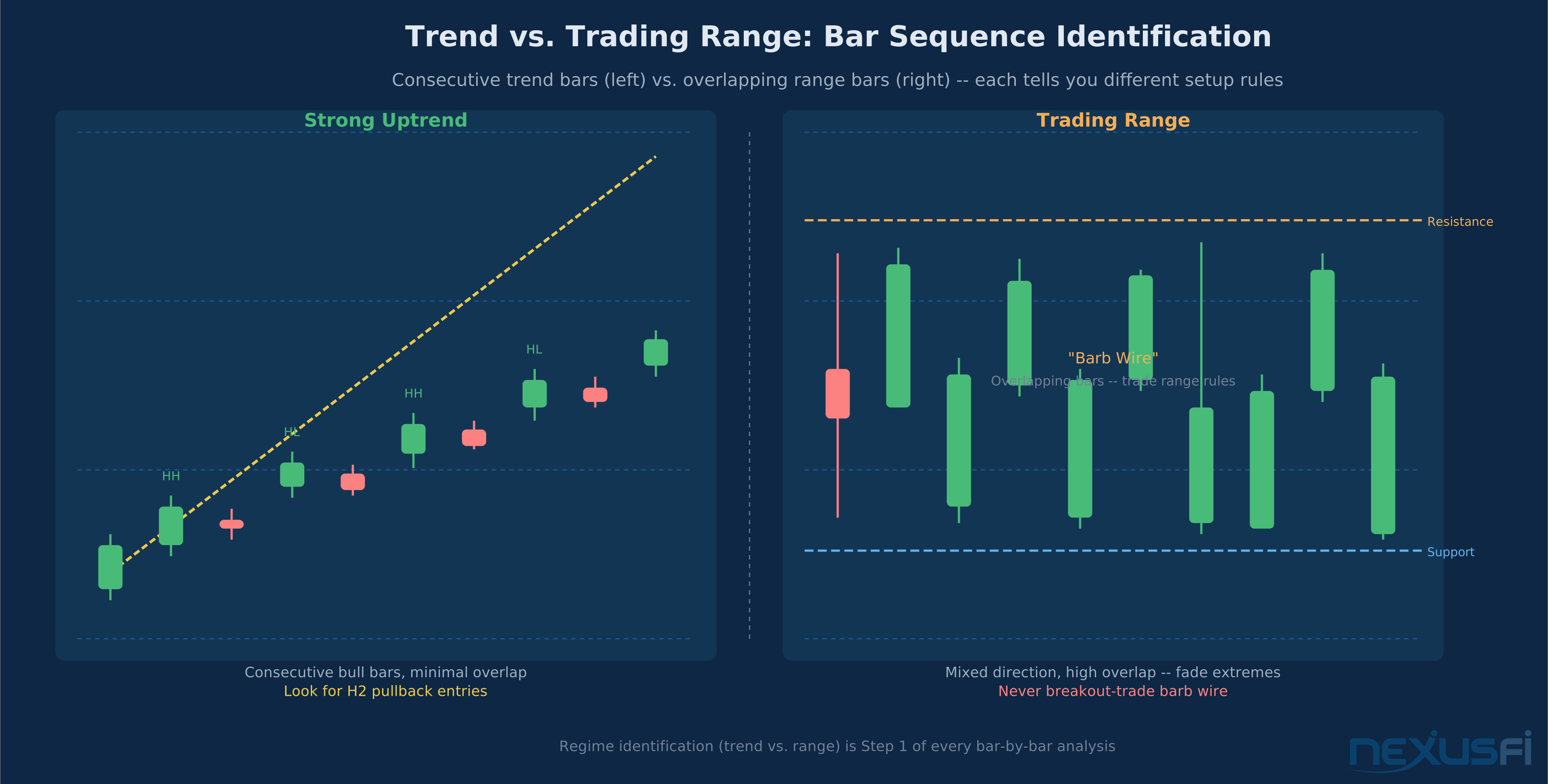
Is the market trending (making higher highs and higher lows, or lower highs and lower lows)? Is it in a trading range (overlapping bars, price oscillating between two levels)? Or is it transitioning between states--coming out of a range via a breakout, or topping out after a trend?
The market state determines which bar patterns are meaningful and which are noise. An inside bar in the middle of a tight range is unremarkable. The same inside bar at the top of a mature trend, after a series of climactic bars, carries significant weight.
2. What story does this specific bar tell?
Once you know the state, you classify the bar's anatomy: the relationship between open, high, low, and close; the size of the body relative to the wicks; the bar's range relative to the recent average. Each bar type tells you something specific about the balance between buyers and sellers during that period.
3. What does the next bar confirm or deny?
This is the most important question, and the one most traders skip. A bar type is a hypothesis, not a signal. The trade becomes valid--or invalid--based on what the next bar does. A strong bull outside bar that's immediately followed by a bar closing below its midpoint is telling you the initial read was wrong. The market rejected the breakout.
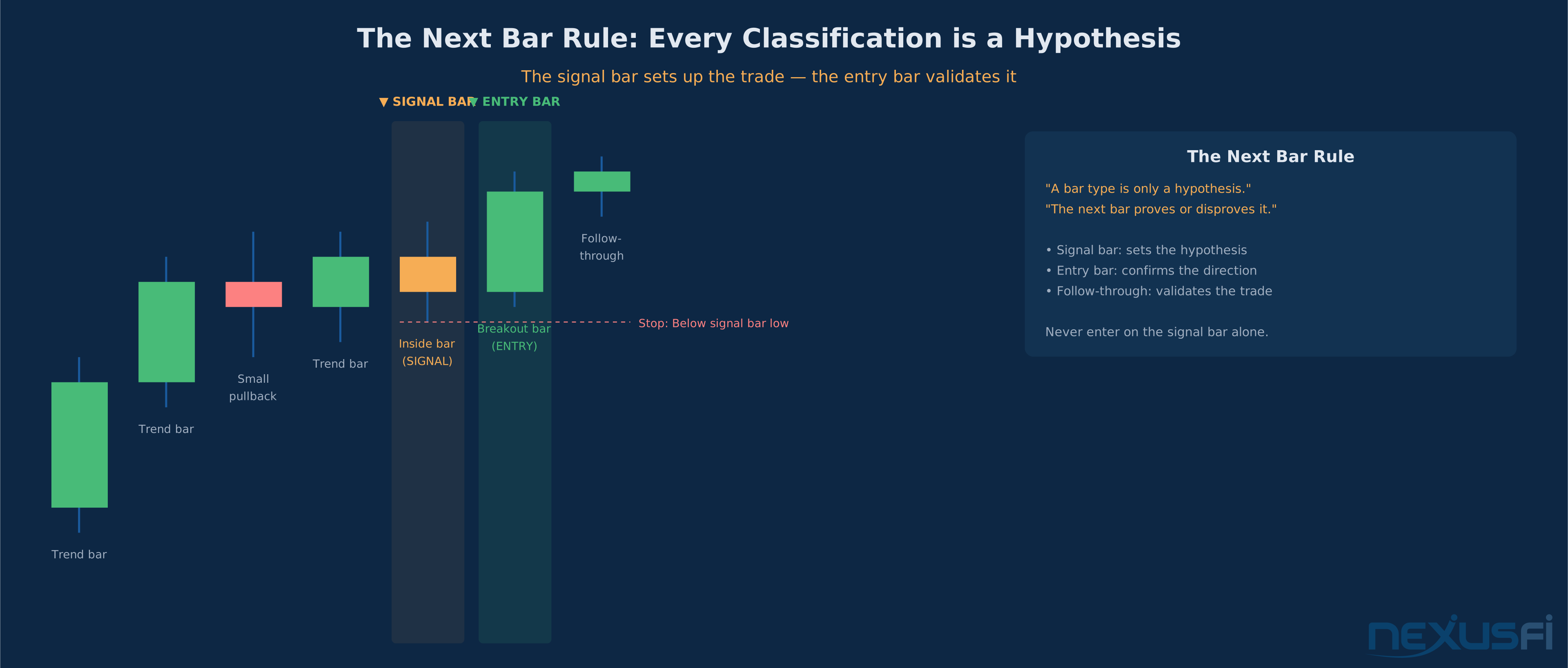
The "Next Bar Rule" is what distinguishes Brooks-style trading from pattern bingo. You're not entering because you see a pattern. You're entering because a pattern appeared AND the subsequent bar confirmed it.
Bar Anatomy: The Building Blocks #
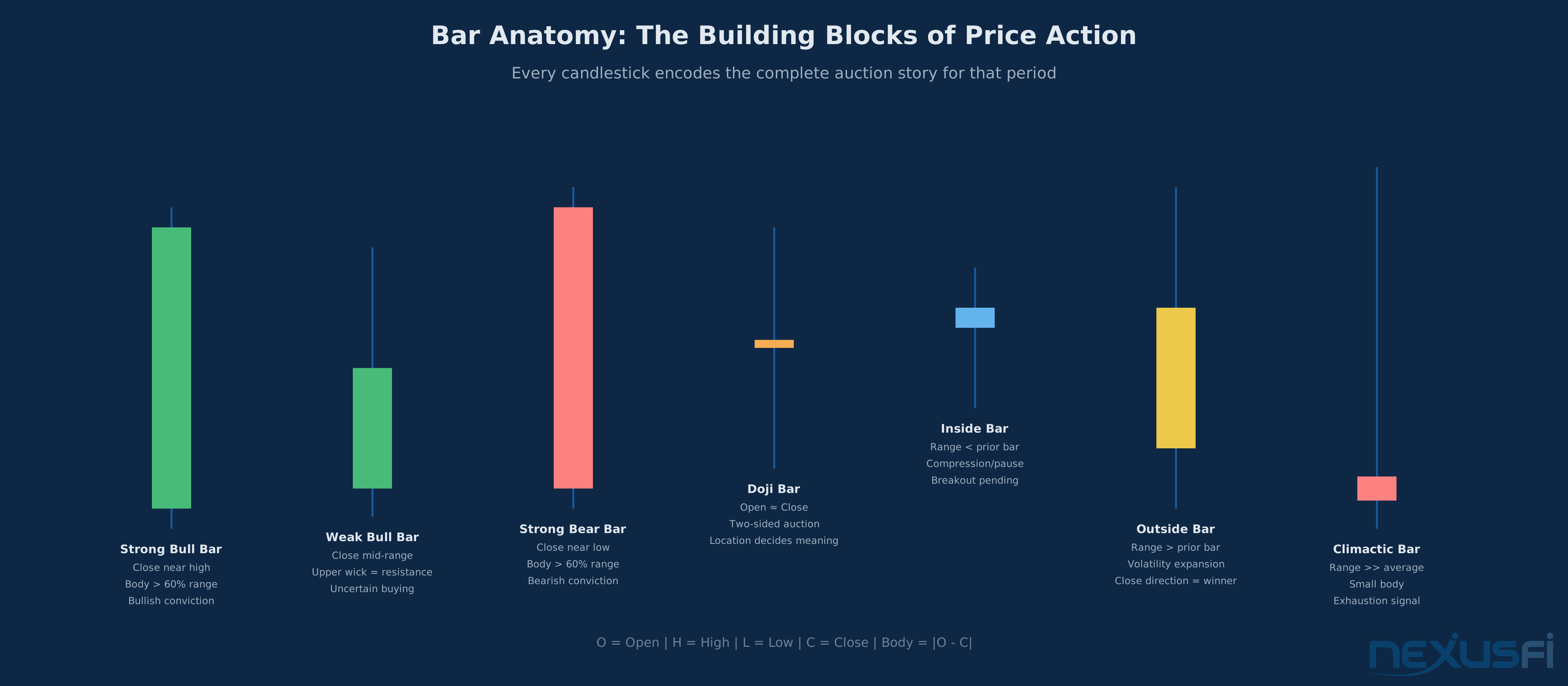
The foundation of bar-by-bar reading is understanding what each bar's anatomy tells you about buyer and seller behavior during that period.
Bull Bars and Bear Bars #
A bull bar has a close above its open. A bear bar has a close below its open. That's the starting classification, but the strength qualifier is what matters for trading decisions.
A strong bull bar closes near its high with a small or absent upper wick. The close near the high means buyers were still in control when the bar ended--there was no late-period selling pressure that could push price back down. The body typically represents more than 60% of the bar's total range.
A weak bull bar has a close somewhere in the middle of its range, often with a significant upper wick. This means price pushed higher during the bar but encountered selling pressure that drove the close lower. A large upper wick on a "bull" bar is actually telling you something bearish--sellers showed up and defended a level.
The same logic applies to bear bars in reverse. A strong bear bar closes near its low. A weak bear bar has a large lower wick, indicating buyers absorbed the selling and pushed price back up from the low--potentially signaling support.
Inside Bars: Compression Before the Move #
An inside bar is defined by a high below the prior bar's high and a low above the prior bar's low. The entire range fits within the prior bar's range.
Inside bars represent compression--a pause in the auction where neither buyers nor sellers are willing to push beyond the prior bar's extremes. This is a pending breakout. The market is coiling.
The critical mistake beginners make with inside bars is trading the breakout prematurely. When a bar closes inside the prior bar, you don't know yet which direction will resolve. You wait for the next bar to attempt a breakout, and then you watch whether that breakout closes convincingly outside the inside bar's range or fails and reverses.
In a strong uptrend, an inside bar near the top is typically a brief pause before continuation. In a mature trend with signs of exhaustion--wide climactic bars, diminishing momentum--the same inside bar might signal that the trend is losing steam.
Thread 734 at NexusFi (see Price Action Trading for Futures), one of the longest-running discussions of Al Brooks' methodology with over 550 posts, documents how Brooks himself approaches inside bars: "Any time three or more consecutive bars mostly overlap and one or more is a doji, stop trading and treat it like a trading range." That quote captures the key insight--when inside bars cluster, you're in a range, and range-trading rules apply.
Multiple consecutive inside bars are often "barb wire" in Brooks' terminology--a trap for breakout traders who enter too aggressively.
Outside Bars: Expansion and the Bar That Decides Direction #
An outside bar has a high above the prior bar's high and a low below the prior bar's low. The range expands beyond the prior bar on both sides.
Outside bars represent volatility expansion--the market aggressively tested both directions within a single bar. The decisive factor is where the bar closes.
An outside bar that closes near its high (a bull outside bar) tells you buyers won the tug-of-war. They absorbed the selling to new lows and then drove price to new highs. This is bullish continuation in an uptrend, or a potential reversal signal at the bottom of a downtrend.
An outside bar that closes near its low (a bear outside bar) tells you sellers won. They were initially rejected higher but then overwhelmed buyers to close near the bottom of the expanded range.
The outside bar's strength as a setup is that it defines clear invalidation levels. If you enter long on a bull outside bar, your stop goes below the outside bar's low. That level was tested and held--if it breaks, your thesis is wrong.
@rk142's detailed notes on the Brooks Trading Price Action series, documented in thread 23651 of The Elite Circle, captures the outside bar's role precisely: "Outside bars, and double outside bars (oo)" are listed specifically as reversal signal patterns in Brooks' taxonomy. The double outside bar--two consecutive outside bars--represents especially powerful momentum in whichever direction they close.
Doji Bars: Balance and Location #
A doji bar has an open approximately equal to its close, resulting in a very small body with wicks on both sides. The body is typically less than 10% of the total range.
Dojis represent two-sided auction action--buyers and sellers were active, price explored a range, and the period ended without either side claiming a decisive victory.
The critical point about dojis: they're only meaningful in context of location. A doji in the middle of a trading range is noise--the market is already in balance, and more balance tells you nothing. A doji after a long trend, near a prior swing high, following a series of climactic-looking bars, is a significant signal. The balance at that location suggests the trend is losing momentum.
That rule reflects the context principle--in a bear trend, buying the break of a doji bar's high is fighting the trend, because the doji tells you the market hasn't committed to reversing yet.
Measuring Bars: Conviction and the Continuation Trade #
A measuring bar is a strong trend bar where the body is close to one extreme of the range (high for bull, low for bear) and the total range is much larger than the recent 20-bar average--typically 1.5 times or more.
The "measuring" name comes from how Brooks uses these bars for price projections. Because a measuring bar represents strong directional conviction, you can use its length to project where the next move might reach: take the full height of the bar and add it to the high (for a bull measuring bar) to get a potential target.
More practically for entries: a measuring bar followed by a shallow one-to-two bar pullback that doesn't challenge the measuring bar's midpoint, and then a continuation bar that closes above the measuring bar's high, is one of the cleanest continuation setups in Brooks' methodology. The measuring bar defined the conviction; the shallow pullback confirmed that buyers didn't abandon the position; the new bar confirmed the trend is resuming.
Climactic Bars: Exhaustion and the Wait #
A climactic bar has a much larger range than recent bars--typically two times or more the 20-bar average--often with a relatively small body. The large range represents aggressive participation in one direction, but the small body shows that participants on the other side pushed back.
The key mistake with climactic bars is treating them as immediate reversal signals. They're not. A climactic bar is a warning, not an entry signal.
What you're watching for after a climactic bar is the next few bars' behavior. If they overlap heavily--each bar closing near the prior bar's midpoint, price not extending beyond the climactic bar's close--that accumulating evidence suggests the move is exhausted. Multiple bars of overlap after a climactic bar is the confirmation pattern.
A single reversal bar after a climactic bar is suggestive but not sufficient for many traders. A second bar that confirms--the "two legs" completing a reversal pattern--is the signal that's more consistently reliable.
For ES and NQ specifically, climactic bars frequently appear in the final fifteen to thirty minutes of the US session (the "power hour" from 3:00-4:00 PM CT). The morning high or low on a trending day is often established with a climactic-looking bar.
Signal Bars and Entry Bars: The Trade Triggers #
Brooks distinguishes between the setup bar (a bar that makes you think a trade might be forming), the signal bar (the bar before your entry), and the entry bar (the bar during which you enter).
Signal bars are bars with specific characteristics that suggest a change in initiative or a continuation of the current move. They appear near key levels--prior swing highs and lows, the 20 EMA, opening range extremes--and often have anatomy that tells you the initiative is shifting.
For a bullish signal bar, you typically want to see:
- The bar closes above its midpoint (buyers in control at bar close)
- A lower wick suggesting buying at the low (absorption of selling)
- The bar forms at or near a defined support level
For a bearish signal bar, the mirror applies: closes below midpoint, upper wick rejecting higher prices, forms near resistance.
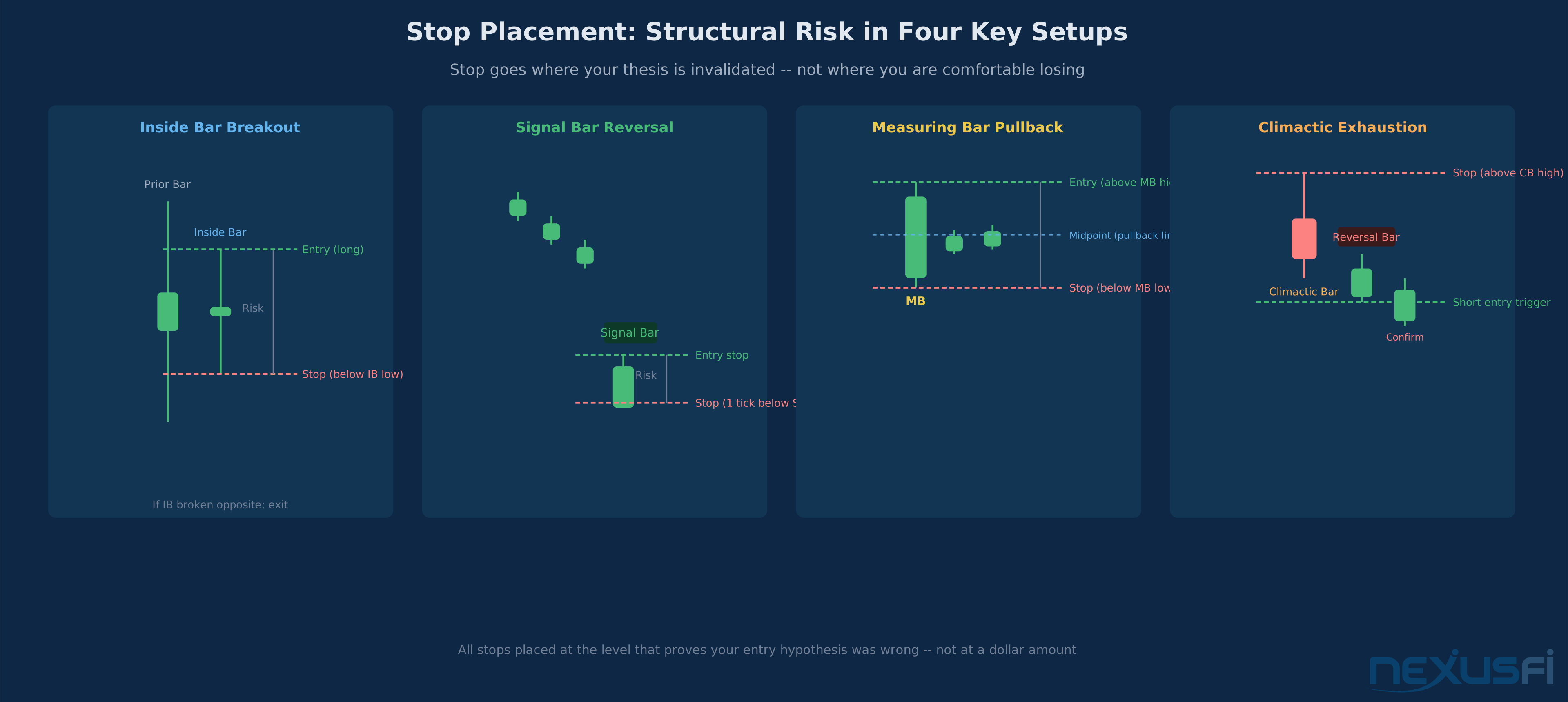
Entry bars are what trigger the actual trade. The entry is typically taken on a stop, positioned one tick beyond the signal bar's extreme: one tick above the high for a long entry, one tick below the low for a short entry. When price hits that level, you're in. Your stop is usually placed one tick beyond the opposite extreme of the signal bar.
@rk142's notes from the Elite Circle document Brooks' complete list of signal bar types: "Reversal bar (pin bar), two-bar reversal, three-bar reversal, small bars (inside bar, double inside bar, small bar near the high or low of a big bar or trading range), outside bars, double outside bars, double tops and bottoms, failed reversals including failed pin bars."
The failed reversal is especially important. When a reversal pattern forms but the entry bar fails--the breakout attempt stops and reverses--that failure itself becomes a signal in the opposite direction. Brooks specifically notes that "the strongest trends have bad looking signal bars, even though the trades are still good." Counter-intuitively, in a strong uptrend, the pullback signal bars often look weak, almost like you'd be buying weakness. But the trend's strength is precisely why the setup works.
As @FR5050 observed in Thread 734 after spending time in Brooks' own trading room:
The discipline isn't in finding setups constantly--it's in distinguishing which setups are genuinely high probability and which are noise.
The Real-Time Decision Flow #
Bringing the bar taxonomy together into an executable framework:
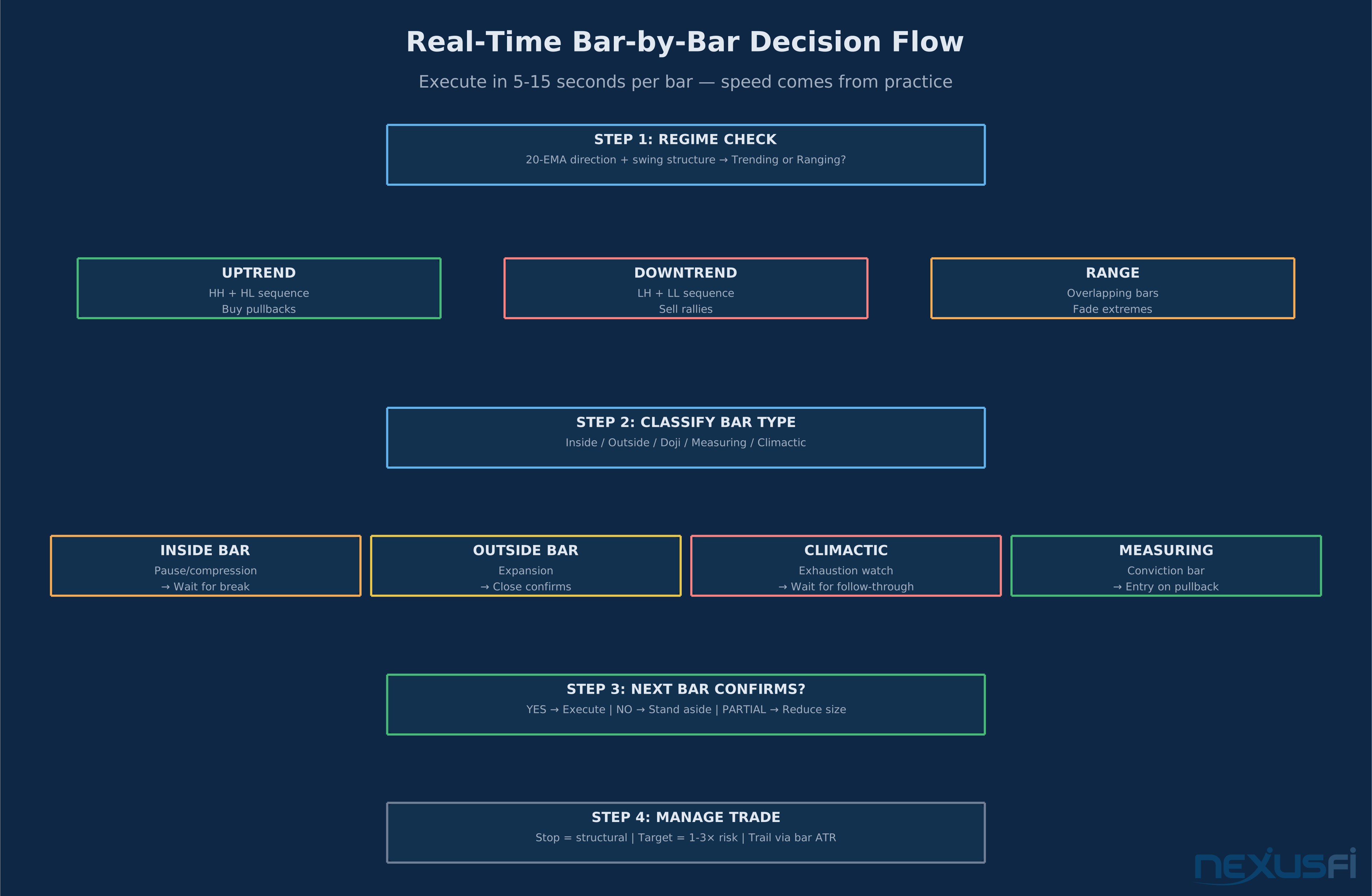
Within five to fifteen seconds of each bar's close:
Step 1 — Regime check: What's the 20-EMA doing? Are swing highs and lows progressing in a trend direction, or are they overlapping? Trend means you're looking for with-trend entries on pullbacks. Range means you're looking to fade extremes.
Step 2 — Classify the bar: Inside, outside, doji, measuring, or climactic? This classification narrows your response options. A climactic bar means you're watching for reversal evidence. An inside bar means you're waiting for the breakout. A measuring bar means you're looking for the pullback entry.
Step 3 — Apply the Next Bar Rule: Your classification is a hypothesis. Does the current bar's successor confirm it? Does the breakout of the inside bar close convincingly outside its range, or does it immediately reverse? Does the bar after the climactic bar show overlapping closes (confirming exhaustion) or immediate extension (negating the climactic read)?
Step 4 — Execute with structural risk: If the next bar confirms, enter with a stop positioned at the point that would invalidate your thesis--below the signal bar low for longs, above the signal bar high for shorts. The target is a function of the setup: typically one to two times risk for scalps, two to three times risk for swing entries.
The entire flow should take under fifteen seconds per bar. Longer than that and you're overthinking--a sign that you're pattern-matching rather than reading the auction.
Market-Specific Application: ES, NQ, and CL #
The bar taxonomy is universal, but each market has characteristics that affect how you apply it.
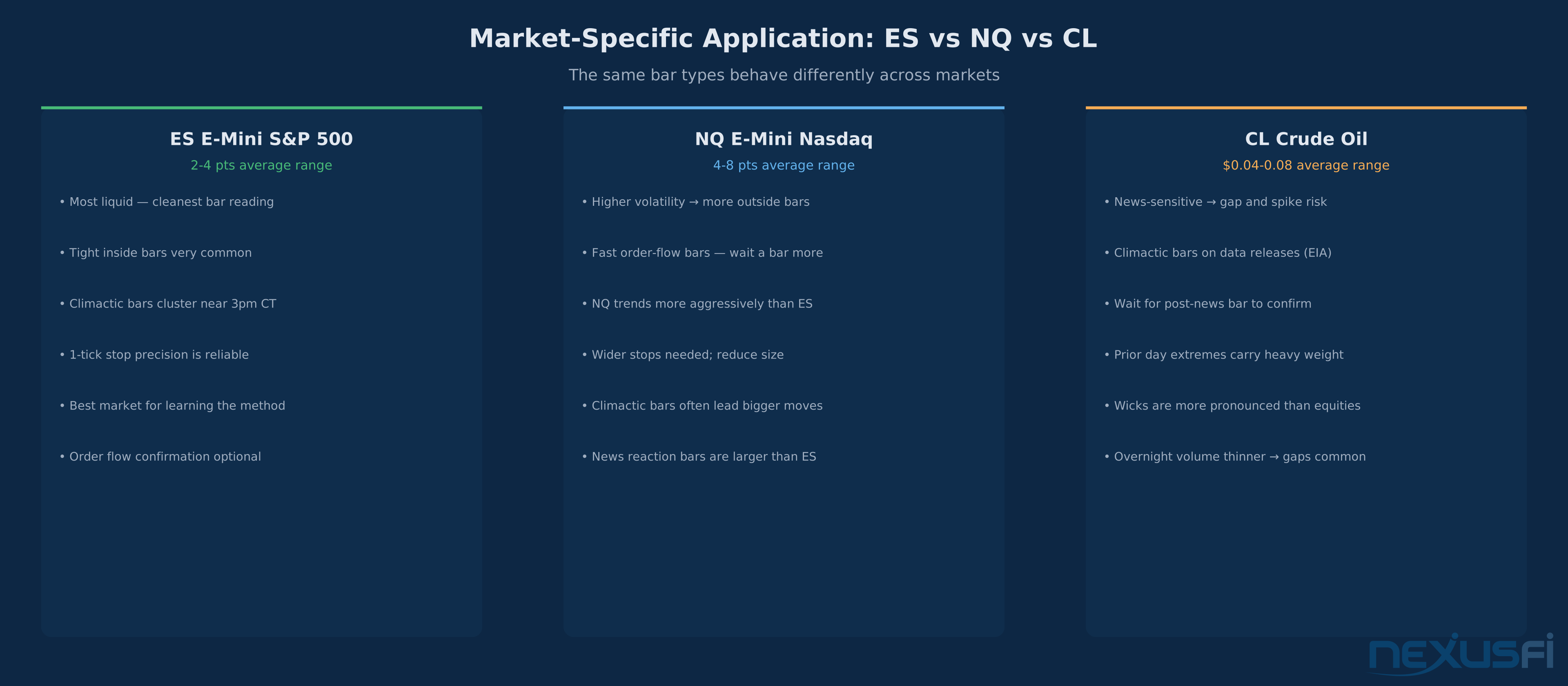
ES (E-Mini S&P 500) #
ES is the cleanest market for learning bar-by-bar reading. It's the most liquid futures contract in the world--the bid-ask spread rarely exceeds one tick (0.25 points), and the order flow is smooth enough that bar anatomy is meaningful rather than gap-distorted.
Inside bars are especially common on ES. The market tends to compress before moves, and 1-minute charts often show clusters of inside bars in the middle of trading ranges. The 20-EMA acts as a reliable bias indicator on the 5-minute chart, with EMA pullbacks in strong trends being high-probability entry signals.
ES climactic bars frequently appear during the final thirty minutes of the regular session (3:30-4:00 PM ET). A large trending bar near the session close, followed by overlapping small bars, often sets up the next morning's opening range direction.
For ES, a one-tick stop (0.25 points) is often appropriate for signal bar entries on 1-minute charts during the regular session. Adjust to the ATR of the last twenty bars during volatile periods.
NQ (E-Mini Nasdaq) #
NQ shares the same exchange and settlement mechanism as ES but trades with higher volatility. The typical 1-minute bar range of four to eight points (compared to ES's two to four points) means outside bars appear more frequently, and climactic bars can be dramatic.
The most important NQ-specific adjustment: because the bars move faster and more aggressively, the "next bar confirmation" step is especially critical. A bullish outside bar on NQ that immediately stalls with a small inside bar might be continuing--or it might be showing you that the move is already exhausted at the bar's high. Waiting for actual confirmation rather than entering the instant you see a pattern is more important on NQ than on the smoother ES.
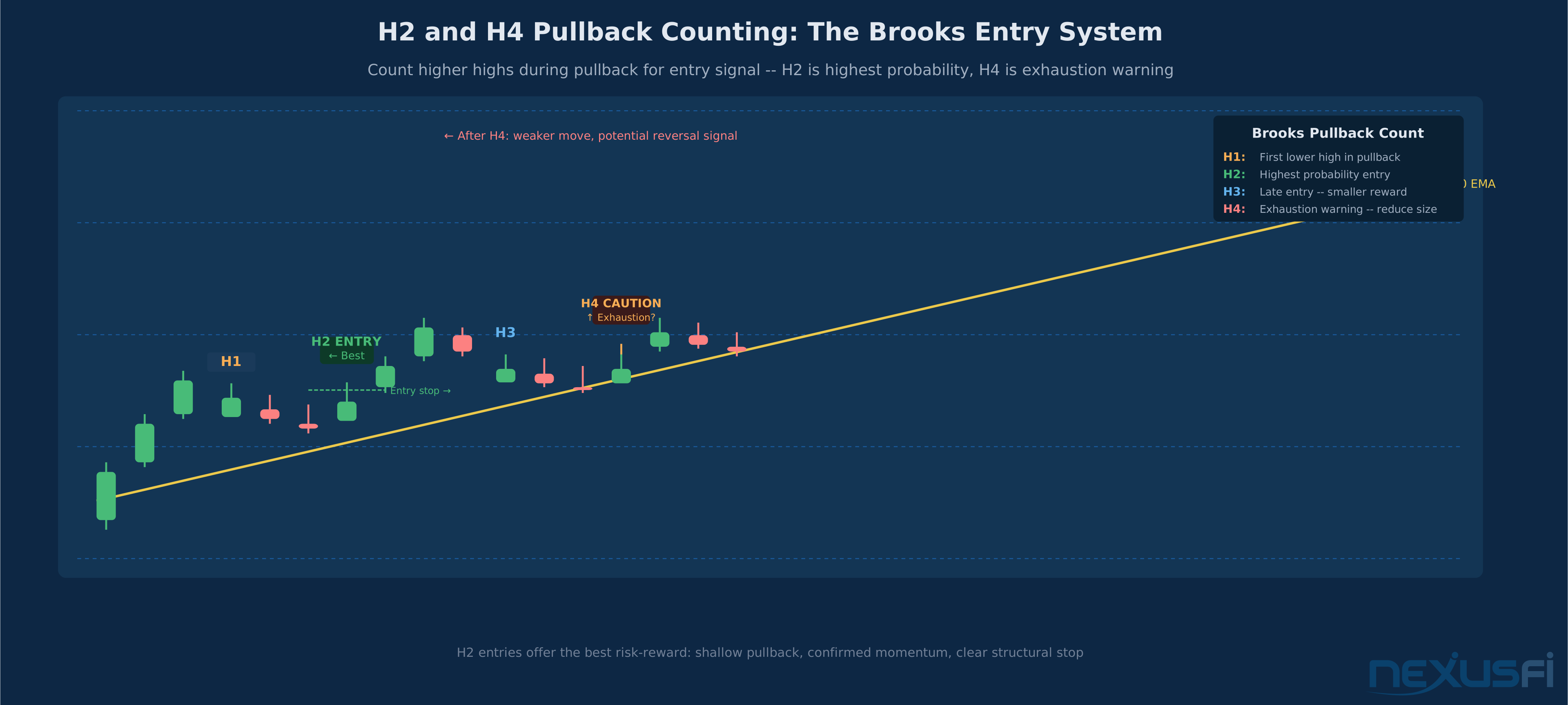
NQ also trends more persistently than ES during strong market-moving sessions. When NQ is in a clear trend with consecutive trend bars and very shallow pullbacks, the H2 and H4 patterns (second and fourth higher highs in Brooks' pullback counting system) can produce entries with very minimal risk.
CL (Crude Oil) #
Crude oil introduces a layer of complexity that equity index futures don't have: external sensitivity to news events. EIA inventory reports (Wednesday 10:30 AM ET), OPEC announcements, and geopolitical developments can create violent bar movement that has nothing to do with the chart pattern in place.
The most important CL-specific rule: never enter on a climactic bar that forms during a scheduled news release. The climactic bar might look like exhaustion, but it's actually just reacting to information. Wait for the post-news price action to establish a new bar pattern before reading the market.
CL's prior-day highs and lows also carry more weight than in equity futures. Crude oil respects key technical levels more explicitly, so bar patterns near prior-day extremes--especially reversal bars or inside bars at those levels--have higher probability than the same patterns in the middle of a session.
The overnight session in CL (5:00 PM - 8:00 PM CT and 6:00 AM - 8:00 AM CT) has much lower volume and can produce unreliable bar patterns. The most reliable bar-by-bar reading in CL happens during the regular US session overlap (8:00 AM - 2:30 PM CT).
Four High-Probability Setups #
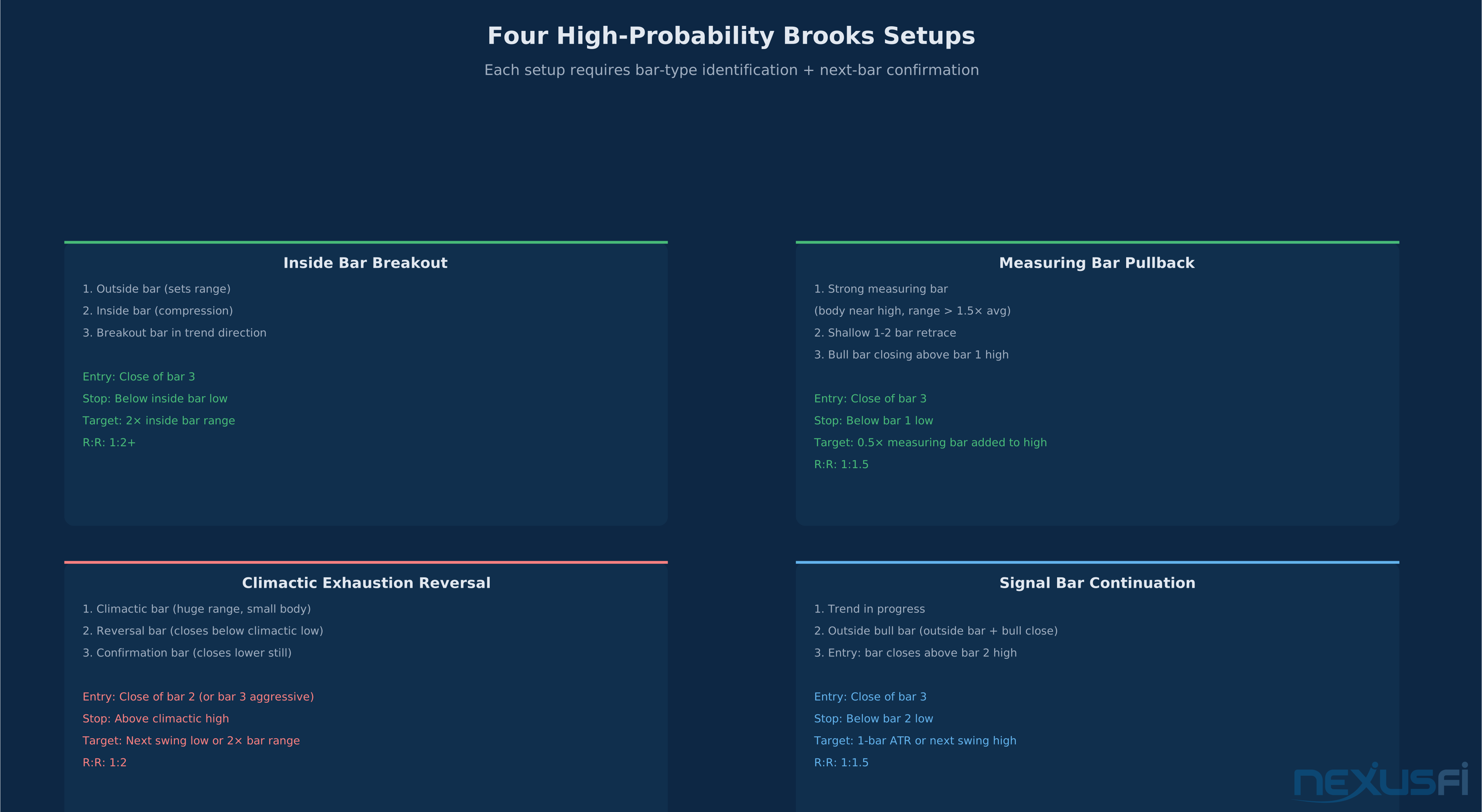
These four setups emerge directly from the bar taxonomy and represent the most consistently reliable bar-by-bar entries in futures trading.
Setup 1: The Inside Bar Breakout #
Bar sequence: Trend bar → Inside bar (signal) → Breakout bar in trend direction (entry)
The logic is straightforward: the market compressed into an inside bar within the trend, and the breakout bar shows the trend resuming. The entry is placed as a stop order one tick above the inside bar's high (for longs) or below the inside bar's low (for shorts). The stop goes one tick on the other side of the inside bar.
The power of this setup is the clearly defined risk. The inside bar is a known range. If price breaks out in the expected direction and then immediately reverses back into the inside bar, that's a clear failure--you exit with a small, defined loss.
In strong trends, you can expect the breakout to be confirmed within one to two bars. Extended failure to break out is itself information: the market is building more compression, which often precedes a larger move.
Setup 2: The Measuring Bar Pullback #
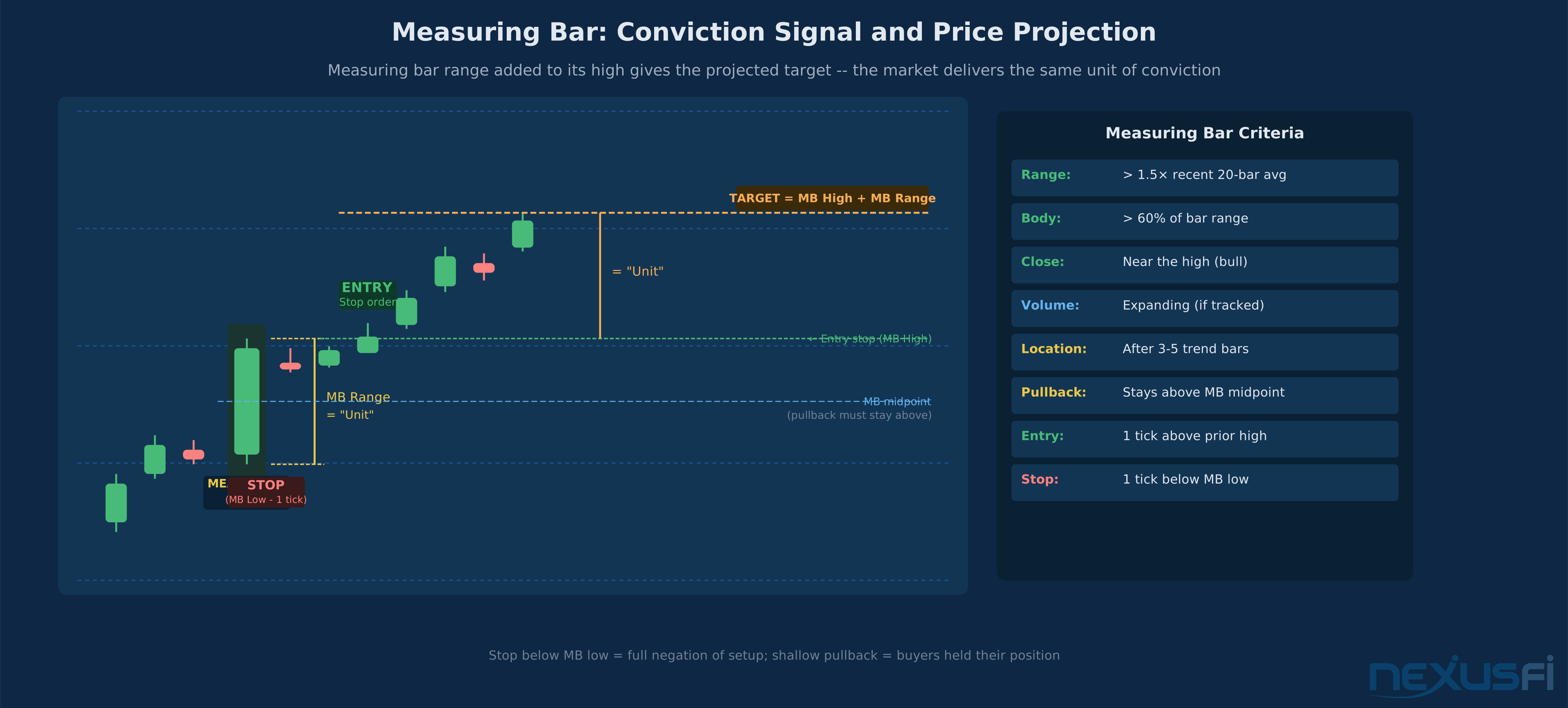
Bar sequence: Strong measuring bar → 1-2 bar shallow pullback → Continuation bar (entry)
A measuring bar represents the market's conviction. The shallow pullback--typically just one or two bars that don't challenge the measuring bar's midpoint--shows that buyers aren't abandoning their positions, just pausing. The continuation bar that closes beyond the measuring bar's high is your entry signal.
The price target is specific: take the measuring bar's full range (high minus low) and add it to the high. This projection often works because the measuring bar defined a unit of conviction, and the market frequently delivers another unit of the same magnitude.
The stop goes below the measuring bar's low. That level represents the full negation of the setup--if price can get back to the bottom of the measuring bar, the conviction represented by that bar has been erased.
Setup 3: Climactic Exhaustion Reversal #
Bar sequence: Climactic bar (large range, small body) → Reversal bar (closes beyond climactic bar's low for a bull-to-bear reversal) → Confirmation bar
This is the most sophisticated setup because climactic bars frequently appear in the middle of strong trends, not just at tops and bottoms. The pattern is only meaningful if it appears after an extended move--at minimum six to eight consecutive trend bars, or at a significant prior resistance level.
The entry is at the close of the reversal bar, or on a stop below the reversal bar's low for a more conservative approach. The stop goes above the climactic bar's high. The target is the next swing low or two times the bar range below the entry.
Many traders require a second confirming bar before entering--waiting for a "two-bar confirmation" that price is genuinely reversing and not just pausing before continuation.
Setup 4: Signal Bar Continuation #
Bar sequence: Trend in progress → Outside bull bar (in an uptrend) → Entry bar closes above the outside bar's high
An outside bar in the direction of the trend is showing you that buyers were aggressive enough to expand the range on both sides and still close near the top. The follow-on bar that takes out the outside bar's high confirms that buying momentum is continuing.
This is a pure trend continuation entry. It's strongest when: the trend has been in place for multiple hours, the outside bar forms after a shallow pullback (not after the trend has been running hard for many bars), and volume (if you track it) expands on the outside bar.
The stop goes below the outside bar's low. The target is the next swing high or one to one-and-a-half times the outside bar's range.
Building Real-Time Fluency: The Practice Protocol #
Understanding the framework intellectually is not the same as being able to execute it in real time at one-minute chart speed. The gap between intellectual understanding and executable skill is closed by deliberate practice.
The practice method that produces the fastest improvement:
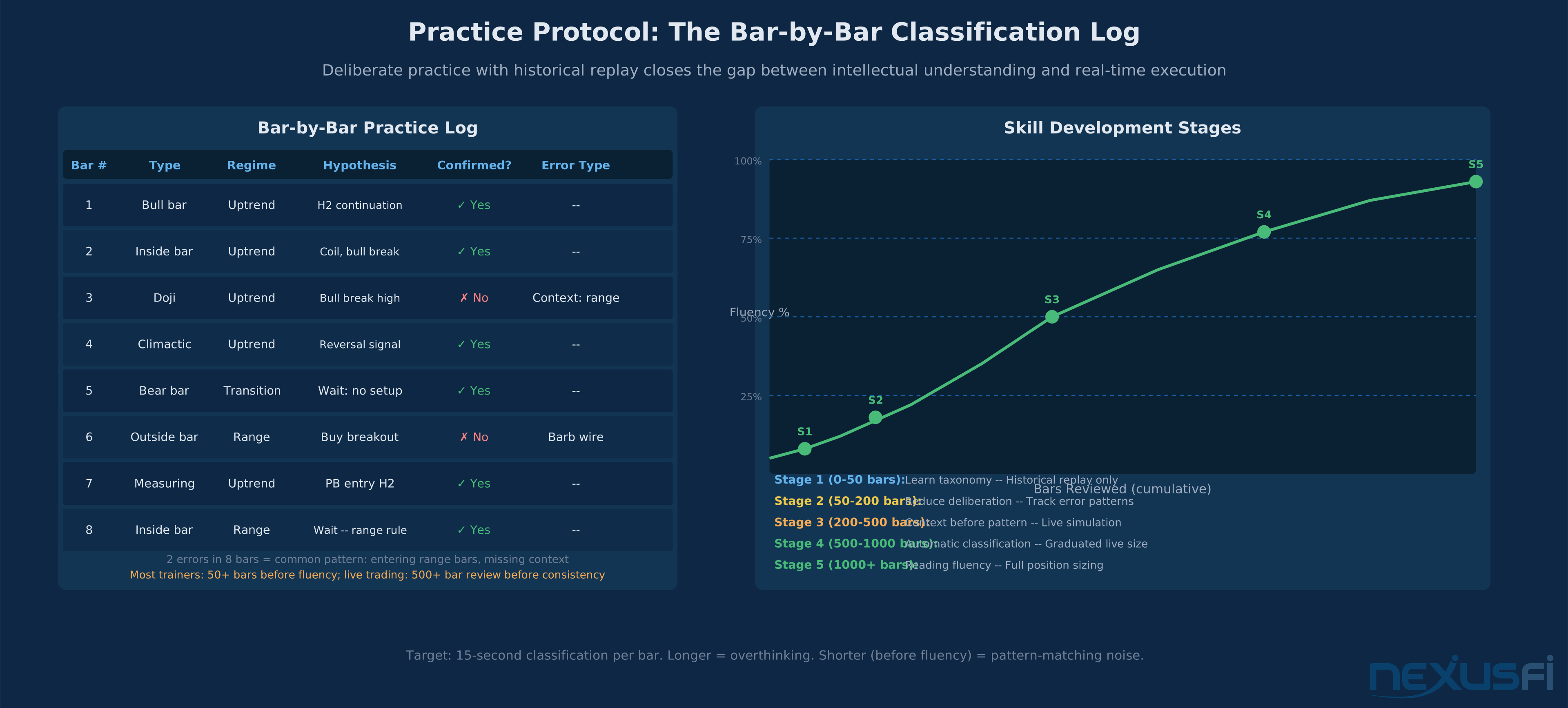
Choose a single timeframe and stay there until you're fluent. For most traders starting with Brooks, the ES 5-minute chart is the right choice. It's liquid, patterns are clear, and bars form slowly enough that you can practice classification without feeling rushed.
Use historical replay, not live markets. Replay old sessions bar by bar, pausing after each bar closes. Before advancing to the next bar, force yourself to: classify the bar (inside, outside, doji, measuring, climactic, or plain trend bar), note the market state, state your hypothesis, and then advance to see whether the next bar confirms it.
Track your results in a simple log:
- Bar type identified
- Regime context (trend or range)
- Hypothesis stated
- What the next bar actually did
- Whether your hypothesis was correct
After fifty to one hundred bars, you'll start to see patterns in your errors. Common mistakes: treating climactic bars as immediate reversal signals, entering on the signal bar rather than waiting for the entry bar, overweighting bar anatomy without checking location.
Graduate to live markets only when classification feels automatic--when you can see a bar close and instantly know its type without deliberating. At that point, the cognitive load of classification drops enough that you can focus on the higher-order decisions: is this setup worth taking, and how much risk makes sense given the current context?
The Two Failure Modes #
Two mistakes consistently derail traders who are learning the Brooks approach.
Failure mode one: Pattern recognition without context. You see an inside bar and immediately think "breakout trade." But inside bars in the middle of a quiet trading range have no edge--the range is compressing further because there's no conviction on either side, not because the market is coiling for a directional move. Every bar pattern has a context in which it's high probability and a context in which it's noise. Checking the market state before classifying the bar is not optional.
Failure mode two: Waiting for the perfect bar. Brooks' methodology rewards pattern recognition followed by quick action on the next-bar confirmation. It's not designed for extended analysis. When you spend twenty seconds deliberating after a bar closes, you've already missed the entry bar. The next bar that would have validated your hypothesis is already forming. Bar-by-bar reading is a skill developed under time pressure--fifteen seconds per bar, not fifteen minutes.
Connection to the Broader Brooks Framework #
Bar-by-bar reading is the execution layer of a larger methodology. The higher-level decisions--which trend phase is the market in, where are the significant support and resistance levels, what is the session's structure--all feed into which bars you pay attention to and which you ignore.
The hub article on the Al Brooks Price Action Method covers the three market states (trend, trading range, transition), the H1-H4 pullback counting system, and the key reversal patterns. Bar-by-bar reading, covered here, is the tool you use to execute the ideas from that framework in real time.
For deeper study, thread 734 at NexusFi--the "Book Discussion: Reading Price Charts Bar by Bar by Al Brooks" thread with over 550 replies--represents years of traders working through Brooks' methodology with practical examples, chart screenshots, and detailed discussion of edge cases.
The related spoke articles in this Academy section (see Price Action Patterns for Futures) cover the two most reliable Brooks entry patterns in dedicated depth: the two-legged pullback (H2 and L2) and the breakout pullback, each of which builds on the bar-by-bar foundation covered here.
Summary #
Bar-by-bar price action reading is the skill that makes Al Brooks' methodology executable. The framework is:
- Three questions per bar: What is the market state? What does this bar tell me? What does the next bar confirm?
- Seven bar types: Bull bar (strong/weak), bear bar (strong/weak), inside bar (compression), outside bar (expansion), doji (balance), measuring bar (conviction), climactic bar (exhaustion warning).
- The Next Bar Rule: Every classification is a hypothesis. The entry bar validates it. Never enter on the signal bar alone.
- Market-specific nuances: ES for learning (cleanest), NQ for more volatility (outside bars more common), CL for news sensitivity (climactic bars on data releases--wait for resolution).
- Four high-probability setups: Inside bar breakout, measuring bar pullback, climactic exhaustion reversal, signal bar continuation.
- Practice protocol: Historical replay, one timeframe, fifty to one hundred bars before live trading.
The method looks simple from the outside--just price bars and a 20-EMA. The depth is in the reading. That reading is a skill, and like any skill, it's acquired through deliberate repetition until the classification becomes automatic and your attention can shift to the higher-order decisions.
Knowledge Map
Go Deeper
Build on this knowledgeReferences This Article
Articles that build on this topicCitations
- — Book Discussion: Reading Price Charts Bar by Bar by Al Brooks (2011) 👍 45“Any time three or more consecutive bars mostly overlap and one or more is a doji, stop trading and treat it like a trading range.”
- — Book Discussion: Reading Price Charts Bar by Bar by Al Brooks (2011) 👍 38“A tight trading range (largely overlapping bars) is like barb wire and acts like a magnet, drawing breakouts back towards its middle.”
- — RK's Notes: Brooks, Trading Price Action - Chapter 4: Bar Basics (2015) 👍 62“Reversal bar (pin bar), two-bar reversal, three-bar reversal, small bars (inside bar, double inside bar, small bar near the high or low of a big bar or trading range), outside bars, double outside bars, double tops and bottoms, failed reversals including failed pin bars.”
- — Book Discussion: Reading Price Charts Bar by Bar by Al Brooks (2012) 👍 28“Al sometimes waits a long time before he takes a high probability trade.”
- — Book Discussion: Reading Price Charts Bar by Bar by Al Brooks (2012) 👍 19“Doji bars are one bar trading ranges. Never buy above one in a bear or sell below one in a bull.”
- — THREE SET UPS: Inside Bar, Outside Bar, Reversal Bar (2010) 👍 96“Inside bar setups: If the current bar closes within the previous bar, set a buy or sell stop 1 tick beyond the prior bar's high or low for the breakout entry.”
- — THREE SET UPS: Inside Bar Anatomy (2010) 👍 40“Inside bars: If an inside bar occurs in the middle of a trading range, it does not tell me much. Most of the inside bars are meaningless - they do not show any significant price behavior.”
- — PA Dax CL, ES and Bund Price Action Trading Log (2019) 👍 8“Reading the globex session: ES opening around 2930. If the ES doesn't get quickly back into yesterday's range then I'm looking for another leg down -- bar by bar confirmation required before committing.”
- — The Elusive Price Action: How to Trade (2010) 👍 18“Candle patterns such as the three-bar-reversal, inside-bar, outside-bar -- their meaning is entirely dependent on context, location relative to prior swing structure, and what happened in the bars immediately before.”
- — Book Discussion: Reading Price Charts Bar by Bar by Al Brooks (2011) 👍 250
- — RK's Notes: Brooks, Trading Price Action Series (2015) 👍 180