



Al Brooks Price Action Method: Bar-by-Bar Reading for Futures Traders
Overview #
Most traders approach futures with indicators. They add an RSI, maybe a MACD, overlay a few moving averages, and wait for signals. Al Brooks spent decades stripping that away. His conclusion, developed from trading the ES on 5-minute charts every day for years: price itself contains everything you need, if you learn to read it bar by bar.
The result is a methodology that looks deceptively simple from the outside — just candlestick charts with a 20-period EMA — but contains a complete framework for understanding market structure, reading intent, and executing with precision. Over 550 posts and 560,000 views in the NexusFi community's dedicated Al Brooks discussion thread testify to how seriously traders take this approach.
This article covers the full Brooks methodology as applied to futures: the three market states, the bar taxonomy, the entry frameworks, the key patterns, and how to think about risk when you're reading markets this way.
The Core Premise: Markets Tell You Their Story #
Brooks starts with a premise that sounds obvious but has radical implications: every bar on your chart shows you what buyers and sellers did during that period. The open, high, low, and close together describe a complete auction process. Bars in sequence tell you the story of that auction's evolution.
This means indicators are derived — they're summaries of what price already showed you. If you can read the price bars directly, you're reading the source, not a lagging derivative. The bar-by-bar reading approach is the foundation of Price Action Trading for Futures, which covers how to read the auction process without indicators.
The skill is learning the language. Once you internalize it, the chart becomes a running narrative: who's in control, where they entered, where they're defending, and where the next likely move will go.
Three questions govern every bar-by-bar read:
- What is the current market state (trend, range, or transition)?
- What story does this specific bar tell?
- What does the next bar's behavior confirm or deny?
The third question is critical. Brooks insists on confirmation. Reacting to a single bar before the next bar tells you whether it held is one of the most common and expensive mistakes new traders make.
The Three Market States #
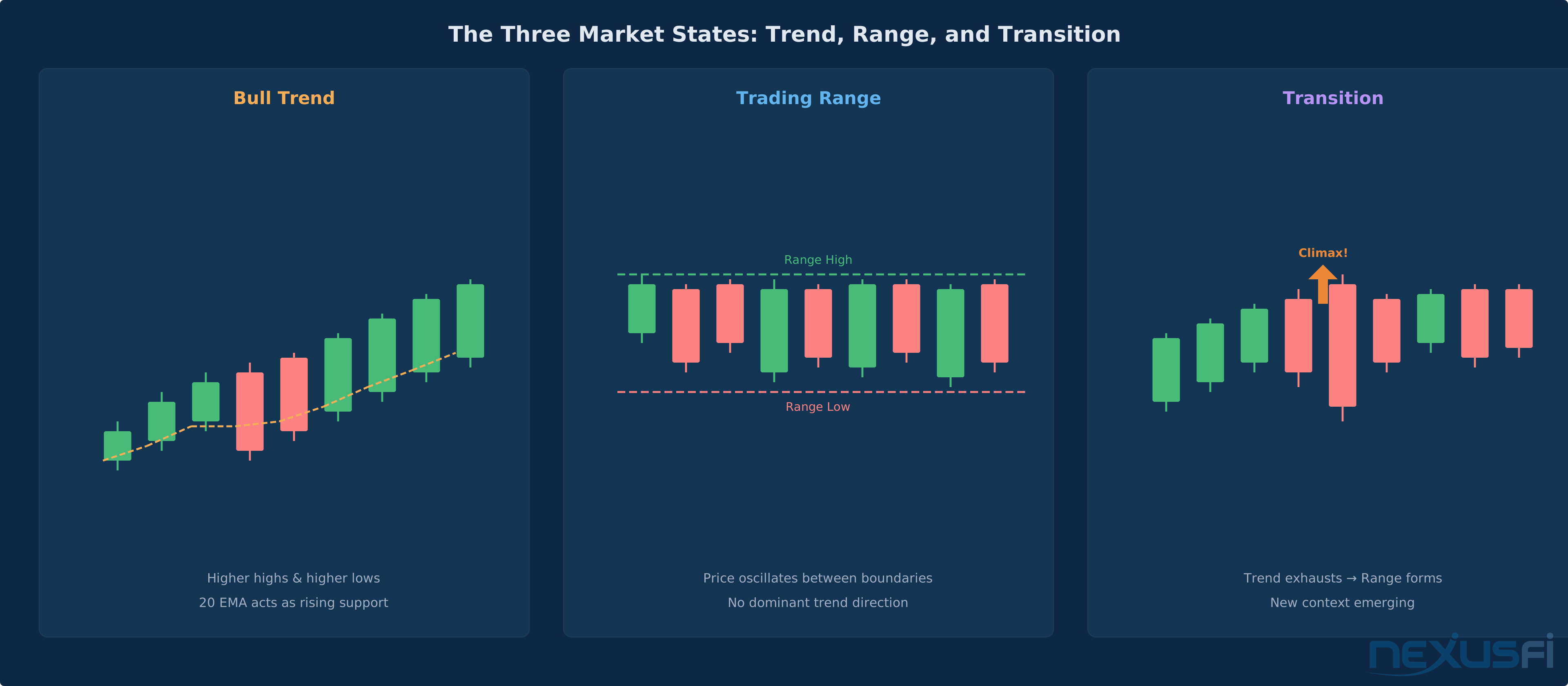
Before reading any bar, you need to know where you are in the larger context. Brooks uses three states, and traders often use Market Profile and TPO Charts as an additional framework for identifying which state the market is in.
1. Trending Market
The hallmark of a trend is a dominant directional bias with most bars closing toward their extremes in the trend direction. Bull trends show higher highs and higher lows. Bear trends show lower highs and lower lows. In a true trend, pullbacks are shallow, trend bars outnumber dojis, and the 20-period EMA stays well below price (in a bull trend) or well above it (in a bear trend).
The characteristic move of a trending market is an impulsive leg followed by a two-legged pullback that doesn't break the prior low (in a bull trend), then a resumption to new highs.
Trading ranges (also called balance or chop) are periods where neither buyers nor sellers can sustain control. Price oscillates between a range high and a range low, with frequent reversals at both boundaries. Inside bars and doji bars dominate. The 20 EMA sits in the middle of price action rather than holding it from below or above.
Ranges are dangerous for trend followers and profitable for range traders. The most common error is trying to trend-trade inside a range.
3. Transition
Transitions are the often-brief periods where a trend exhausts and a range develops, or where a range breaks out into a new trend. These are the hardest market states to read in real time because they look like the end of the old state and the beginning of the new one simultaneously. Brooks identifies specific signals for each transition type — especially climactic exhaustion signals that mark the end of trends.
The critical habit: identify the current state before looking for entries. The same pattern (a doji bar, for example) signals completely different things in different states.
Bar Taxonomy: The Building Blocks #
Brooks defines four primary bar types that form the vocabulary of bar-by-bar reading — covered in depth in Candlestick Patterns for Futures Trading and Price Action Trading for Futures, each of which is analyzed in depth in the Signal Bars and Entry Bars in Price Action article:
Trend Bars #
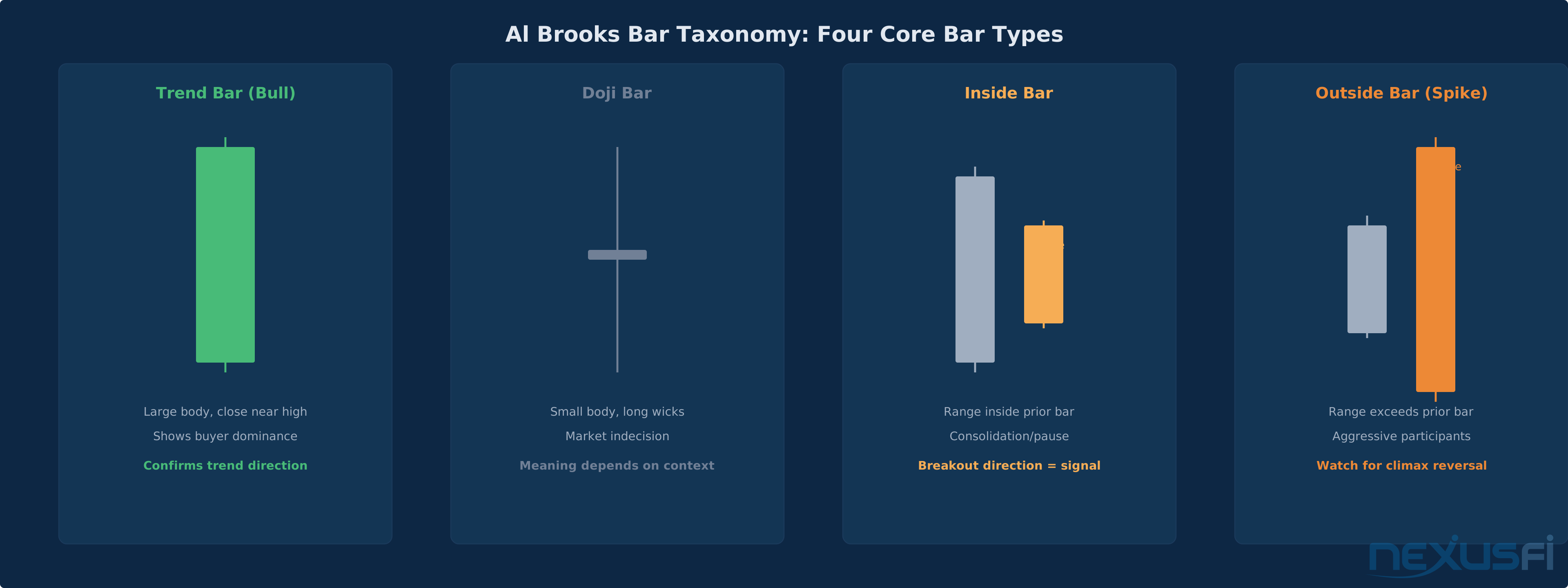
A trend bar has a large body, minimal wicks, and closes near its extreme (high for a bull trend bar, low for a bear trend bar). It shows that buyers (or sellers) controlled the entire period — they bought the open, kept buying through the bar, and held it near the close. This is unambiguous directional pressure.
In trending markets, trend bars in the trend direction are the norm. When they start appearing in the opposite direction during a pullback, that's a warning.
The key distinction: a trend bar shows acceptance of the move. The market isn't hesitating. It's agreeing.
Doji Bars (Indecision Bars) #
A doji has a small body with significant wicks on both sides (or no body at all, where open equals close). It shows that the market couldn't decide — buyers took it higher, sellers pushed it back, and the session ended roughly where it started.
Context transforms the meaning of a doji. In a strong trend, a doji during a pullback is just a pause — the trend may resume immediately. At the end of a trend, after many trend bars in one direction, a doji can signal the first hesitation that precedes a reversal.
Brooks' rule: never assume a doji is a reversal signal by itself. Wait for the next bar to confirm what direction the market resolves.
Inside Bars #
An inside bar has both its high and low within the range of the prior bar. This is pure consolidation — neither side gained ground. Inside bars in trending markets often represent a pause before continuation. Inside bars in ranges represent the market sitting still, gathering energy for the next move.
The breakout from an inside bar (the next bar that trades beyond the inside bar's high or low) is often a signal bar. Brooks treats inside bars as potential setups for the direction they break.
Outside Bars (Spikes) #
An outside bar exceeds the prior bar's range on both sides. It shows dramatic two-way movement within a single period — often driven by a news event or aggressive institutional participation. Outside bars that close strongly in one direction after engulfing the prior bar are powerful signals. Outside bars with both-sided close (closing in the middle) after a strong trend suggest exhaustion.
A spike is a single, aggressive outside bar that signals sudden imbalance. When followed by a strong reversal bar, it can mark a climactic turn.
The H1/H2 and L1/L2 Entry Framework #
One of Brooks' most practical contributions is a systematic way to count pullbacks and find entry points within them. The H/L notation tracks the structure of corrections:
In a bull trend:
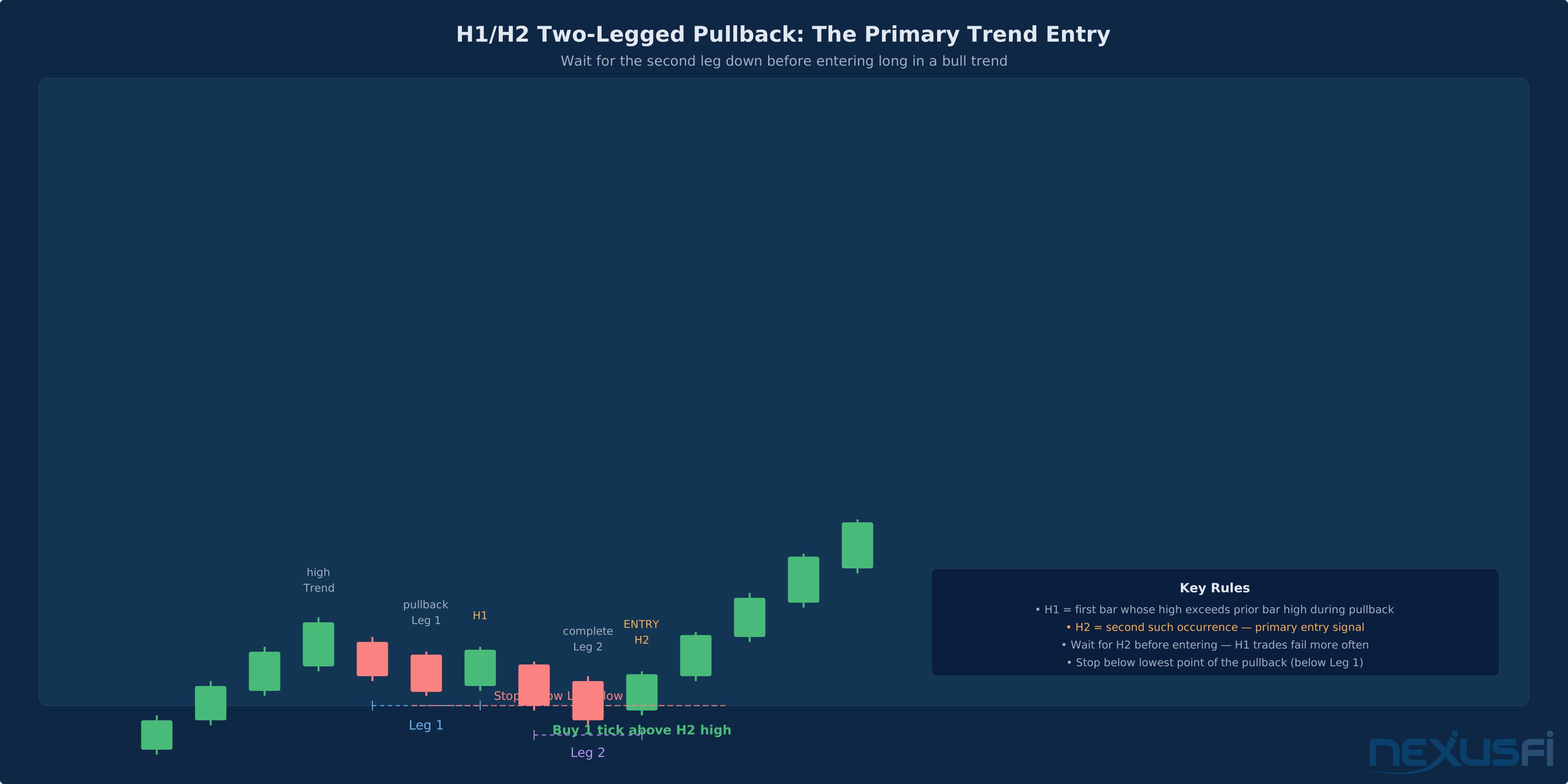
- H1 (High 1): The first bar in a pullback that has a high above the prior bar's high. This is the first signal that the pullback may be ending — but it's not necessarily tradeable yet.
- H2 (High 2): The second such signal, after the pullback made another low. The H2 is the primary entry signal in a bull trend pullback — it represents the second leg down completing, similar to Brooks' "two-legged pullback" concept.
In a bear trend:
- L1 (Low 1): The first bar in a rally that has a low below the prior bar's low.
- L2 (Low 2): The second such signal, offering the primary short entry in bear trend rallies.
As NexusFi member @Slipknot511 explained in the community's book discussion thread:
"When the high of the lowest bar at A is broken to the top, that is an H1. When the high of the lowest bar at C is broken upwards, that is an H2. If you want safety, wait for H2."
The H2/L2 framework is important because it gives traders a systematic way to wait for the pullback to complete before entering in the trend direction. H1 trades exist — Brooks discusses them — but they carry higher failure risk because the pullback may not be finished.
NexusFi member @Pa Dax noted from years of journaling the method:
"Some of the recent confusion on when to take a H1/H2 is partly caused by the (mis)perception whether a day is a trading range..."
This points to the critical context dependency: H1/H2 signals are most reliable in trending markets. In a trading range, every pushup is a potential H1/H2 that never follows through.
Entry mechanics:
- The entry is placed at one tick above the H2 bar's high (for longs) or one tick below the L2 bar's low (for shorts).
- The stop goes below the lowest point of the pullback (for longs) or above the highest point (for shorts).
- This creates a defined risk/reward setup tied to a specific structural level.
The 20-Gap EMA: The Dynamic Reference #
Brooks uses a 20-period exponential moving average (EMA) as the primary dynamic support and resistance reference. For a full treatment of EMA mechanics and parameter selection, see the Exponential Moving Average (EMA) article. The "gap" in the name refers to using gap-adjusted close prices, though most practitioners simply use a standard 20 EMA on their charting platform.
The 20 EMA serves three functions:
1. Trend Quality Gauge
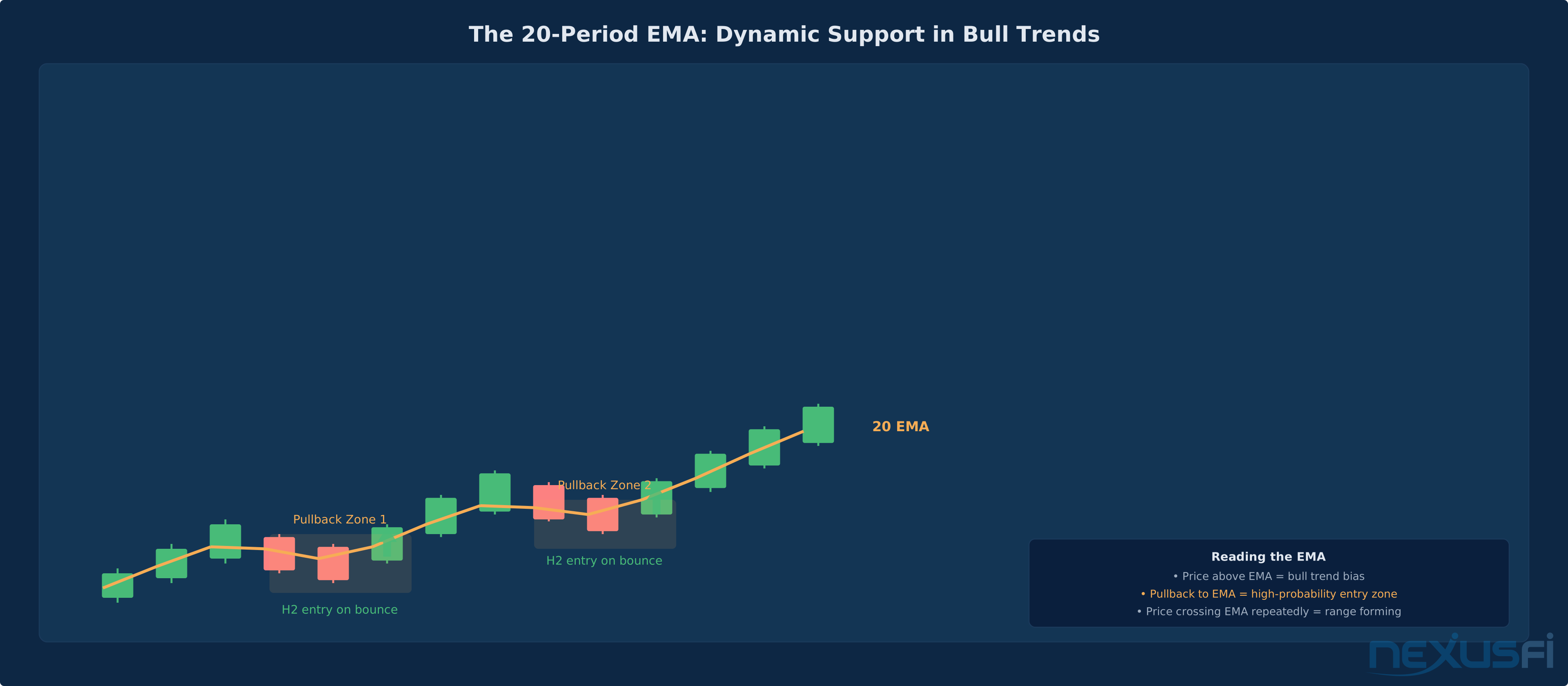
In a strong bull trend, price stays above the 20 EMA and barely touches it on pullbacks. The EMA acts as a floor, and the distance between price and the EMA indicates trend strength. When price repeatedly comes back to test the EMA, the trend is weakening.
2. Pullback Entry Zone
When a trend is healthy and the market pulls back toward the 20 EMA, the EMA zone becomes the high-probability entry area for trend continuation trades. A trend bar closing away from the EMA at this zone is the signal bar.
3. Transition Warning
When price crosses the 20 EMA multiple times in short succession — suggesting the EMA is acting as a midpoint rather than a support/resistance level — the market is transitioning from a trend to a range. This is Brooks' signal to stop looking for trend entries and shift to range-reading mode.
As NexusFi member @qqqqqiang discussed in the book discussion thread:
"A H2 happens after the price traded below the EMA which also makes it a EMA gap bar and even though..."
This "EMA gap bar" concept captures the pullback-to-EMA setup in Brooks' terminology. When the pullback takes price below the EMA (creating a "gap" between where price should be in a trend and where it is), the H2 setup forming there carries extra weight.
Practical note: In choppy, low-volatility periods, the 20 EMA becomes noisy and unreliable as a reference. When price is oscillating through the EMA repeatedly without trend bars developing, that's a range — and range-trading rules apply.
Bull and Bear Traps #
Traps are one of Brooks' most powerful concepts. The market is constantly setting them up, and learning to recognize them — and support and resistance levels where traps most commonly form — is a significant edge.
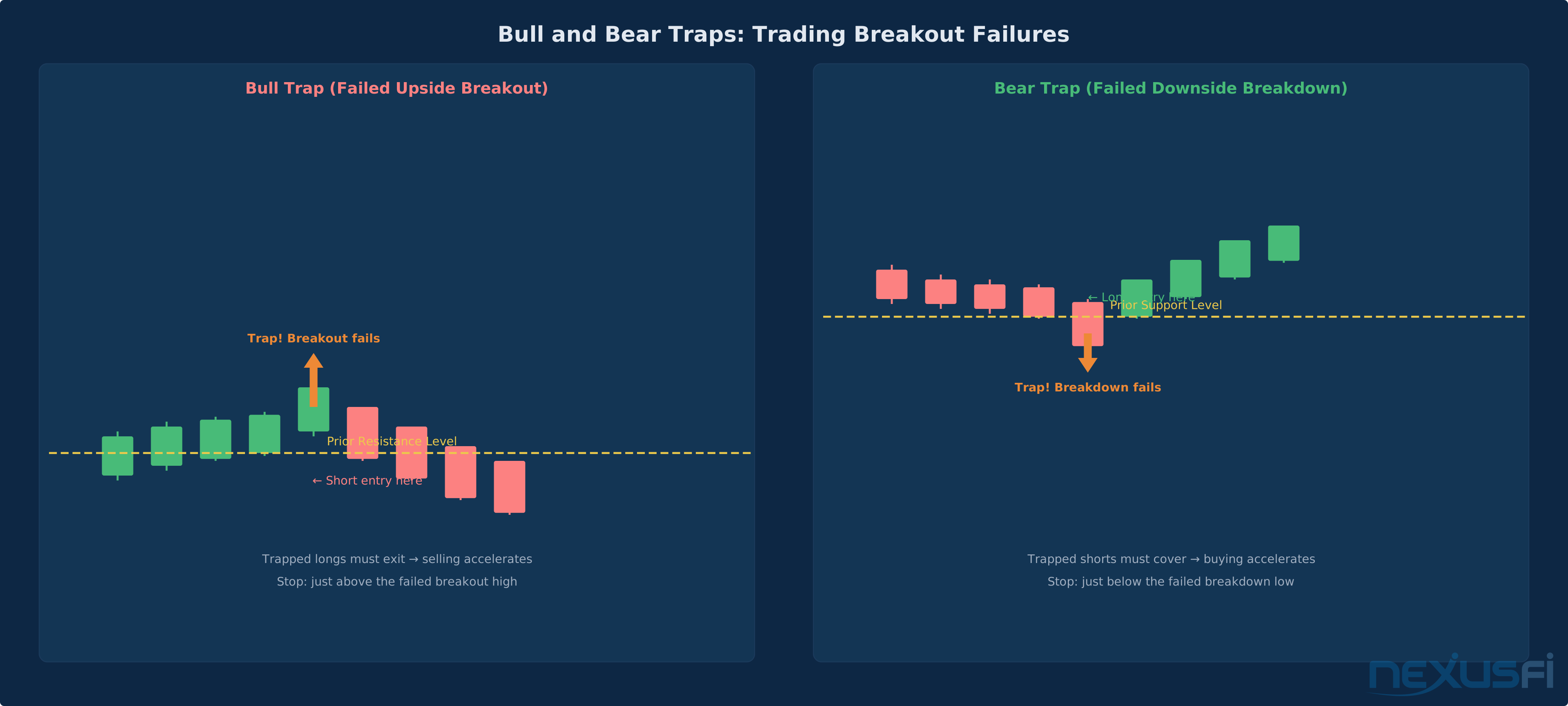
The anatomy of a bull trap:
- Price breaks above a significant prior high or range boundary with a trend bar (the "trap")
- Traders buy the breakout, expecting continuation
- Within 2-6 bars, price reverses back below the breakout point
- Those breakout buyers are now trapped — they're long in a losing position, and when they exit, their selling accelerates the move down
The anatomy of a bear trap: The mirror image — a breakdown below support that immediately reverses, trapping short sellers.
As NexusFi member @Blz17 described from watching the Brooks methodology in practice:
"The 6B got into a tight range (Barb Wire as per Brooks) and gave a nice fakeout pop. When you get that first breakout you want to enter a sell stop 1 tick below..."
The "Barb Wire" reference is key — Brooks uses this term for a tight trading range where bars heavily overlap. Breakouts from Barb Wire have a high failure rate, making them prime trap territory.
Trading the trap:
- Enter on the reversal confirmation bar (the bar that closes back through the breakout point)
- Stop goes just beyond the trap's extreme (above the failed breakout high for a bull trap trade, below the failed breakdown low for a bear trap trade)
- The target is typically the opposite side of the recent range or a measured move projection
The psychological edge of trap trading is significant: you're entering when the losing side is being forced to exit, which provides natural momentum in your direction.
Two-Legged Pullbacks: The Core Entry Framework #
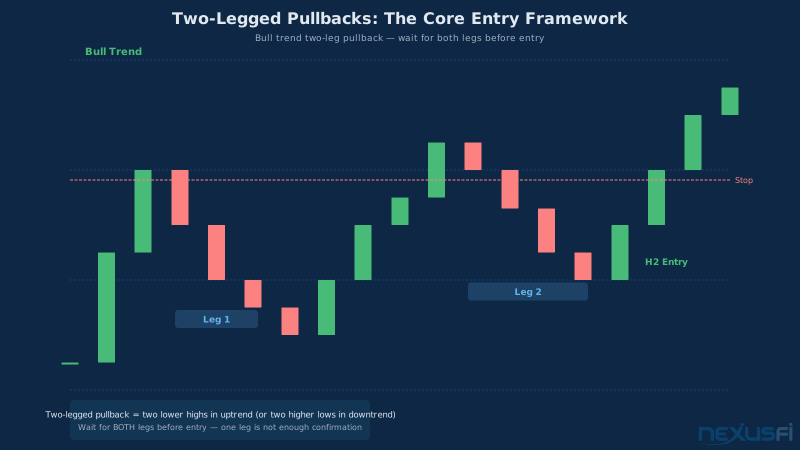
The two-legged pullback is the primary trend entry mechanism in Brooks' method. It appears constantly in trending markets and provides a systematic way to enter after a correction completes.
The structure:
- Leg 1: A pullback from the trend high (in a bull trend). Often an inside bar or a single bar against the trend.
- Brief pause or micro-rally: The market stabilizes momentarily.
- Leg 2: A second leg down (in a bull trend) that may or may not take out the Leg 1 low.
- Entry signal: An H2 bar (described above) that suggests the second leg is complete.
Why two legs? Because markets don't typically exhaust corrections on the first attempt. The first pullback often draws sellers who think they're catching a trend reversal. The second leg down shakes out any longs who entered on the first leg while giving those sellers false confidence — then the trend resumes, trapping both groups.
As NexusFi member @perryg explained from practical experience:
"Regarding types of trades, I use trendlines, channels, H2, L2, 2 legged moves - take the second move. All I am looking for is..."
The practitioner consensus is clear: wait for the second leg. The first leg is tempting but carries much higher failure risk.
Measuring a two-legged pullback: Brooks notes that the two legs are often roughly equal in size. If Leg 1 was 4 points, looking for Leg 2 to reach approximately 4 points provides a price target for the entry area — though don't rely on this mechanically since market structure takes priority.
The entry:
- Place a buy stop (for long entry) one tick above the H2 bar's high
- If the market runs your stop in, you're in the trade and the pullback is likely over
- If the market doesn't trigger your stop, no harm done — the pattern didn't confirm
Measured Moves: Projecting Probable Targets #
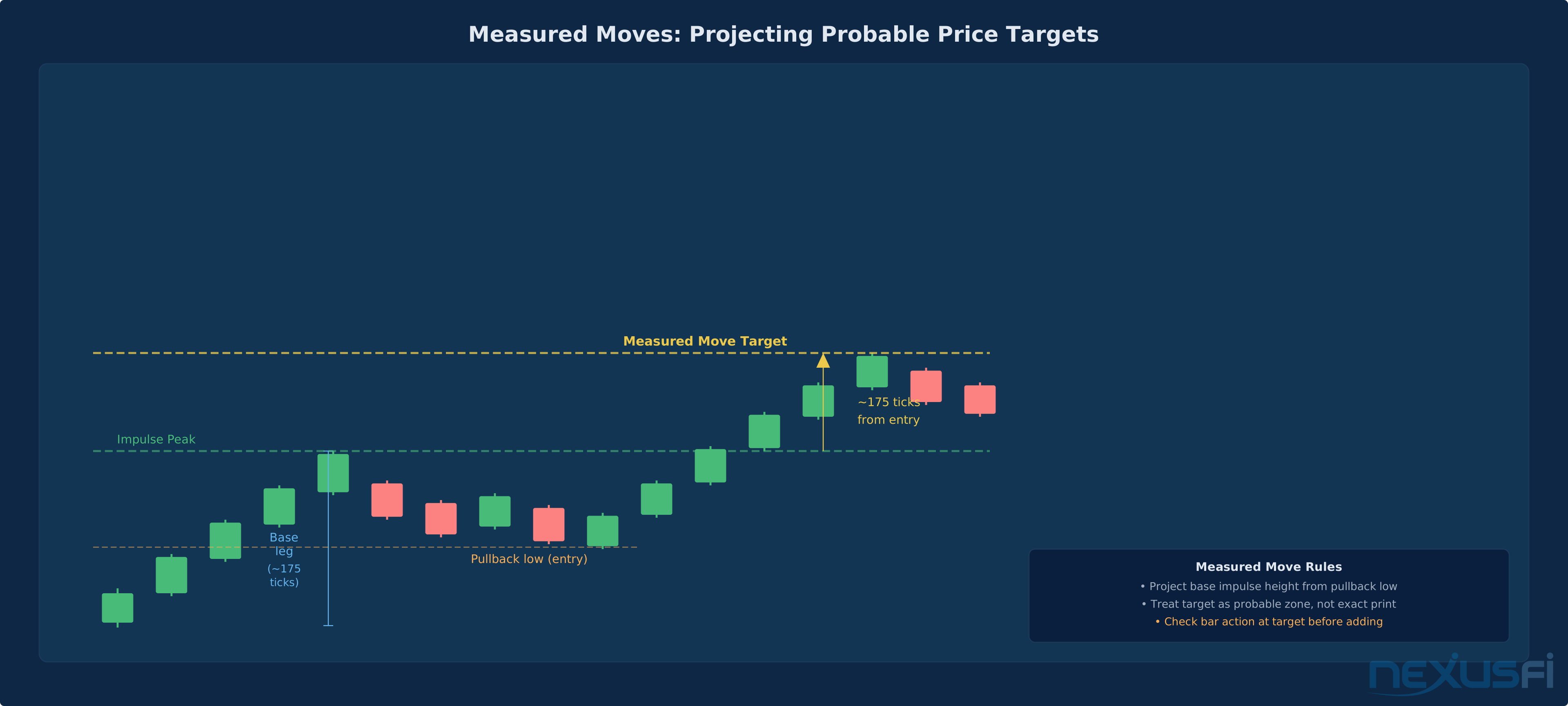
Brooks uses measured moves throughout his methodology to identify probable price targets. The concept is simple: the distance of an initial impulse often predicts the distance of a subsequent move.
The basic calculation:
- Identify a clear impulse move (a trend leg with a defined start and end)
- Measure its height (in points or ticks)
- Project that height from the breakout point that follows the corrective phase
Example in a bull trend:
- ES rallies 10 points from a low (the base)
- It pulls back two legs and holds above the low
- The measured move target from the pullback low is the prior high plus 10 points
As NexusFi member @cbratton noted in the discussion thread:
"Nobody truly knows if the double top/bottom will hold, or where price will end up being for sure. The market might breakout and do another leg down."
This captures the essential caveat: measured moves are probable targets, not certainties. The market may reach them exactly, overshoot, or reverse before arriving. The value is in having an objective price level to scale out profits and assess bar action at potential stopping points.
What to do at a measured move target:
- If you see doji bars, climactic outside bars, or a pause in momentum: consider scaling out or exiting
- If you see continued strong trend bars with no hesitation: the move may extend beyond the target
- The measured move level becomes a reference point, not a guaranteed exit
Measured moves appear in ranges too. When a trading range breaks out, the height of the range projected from the breakout point gives the first measured move target for the breakout move.
Trading Ranges: Reading Balance #
Brooks devotes significant attention to trading ranges because most markets spend a significant portion of their time in them. Recognizing a range early — before you've taken multiple failed trend trades — is a critical skill.
Range characteristics:
- Heavy bar overlap between sessions
- Doji and inside bars dominate
- The 20 EMA sits in the middle of price action with price repeatedly crossing it
- No sustained trend bars developing in either direction
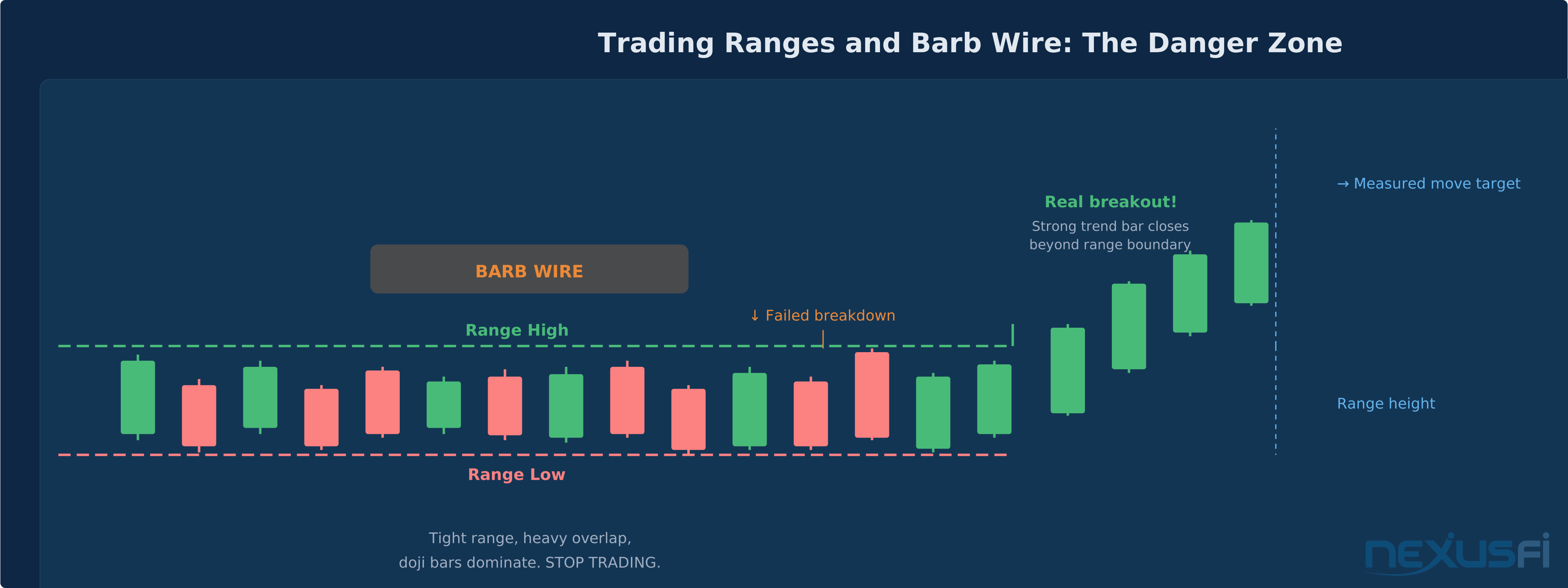
Barb Wire: Brooks uses "Barb Wire" to describe especially tight ranges with heavy overlap and doji bars — basically price oscillating back and forth within a point or two. Barb Wire is extremely dangerous for directional traders. Breakouts from Barb Wire fail at a very high rate.
NexusFi member @websouth captured this in the book discussion:
"Any time three or more consecutive bars mostly overlap and one or more is a doji stop trading and treat it like a trading range. A big move in one direction that is..."
This is practical advice for recognizing the transition from trend to range. Three consecutive overlapping bars with a doji is a range warning — stop trading the trend and shift to range-reading mode.
Range trading mechanics:
- Sell near the top of the range (the prior high), buy near the bottom (the prior low)
- Target the opposite boundary with a stop just beyond the boundary you're fading
- Expect roughly 50% of range breakout attempts to fail
Breakouts from ranges: When a range finally breaks out — confirmed by a strong trend bar closing beyond the boundary and the next bar holding the breakout — the range height measured move becomes the initial target. The strongest breakouts close near their extreme and don't immediately return inside the range.
Spike and Channel Patterns #
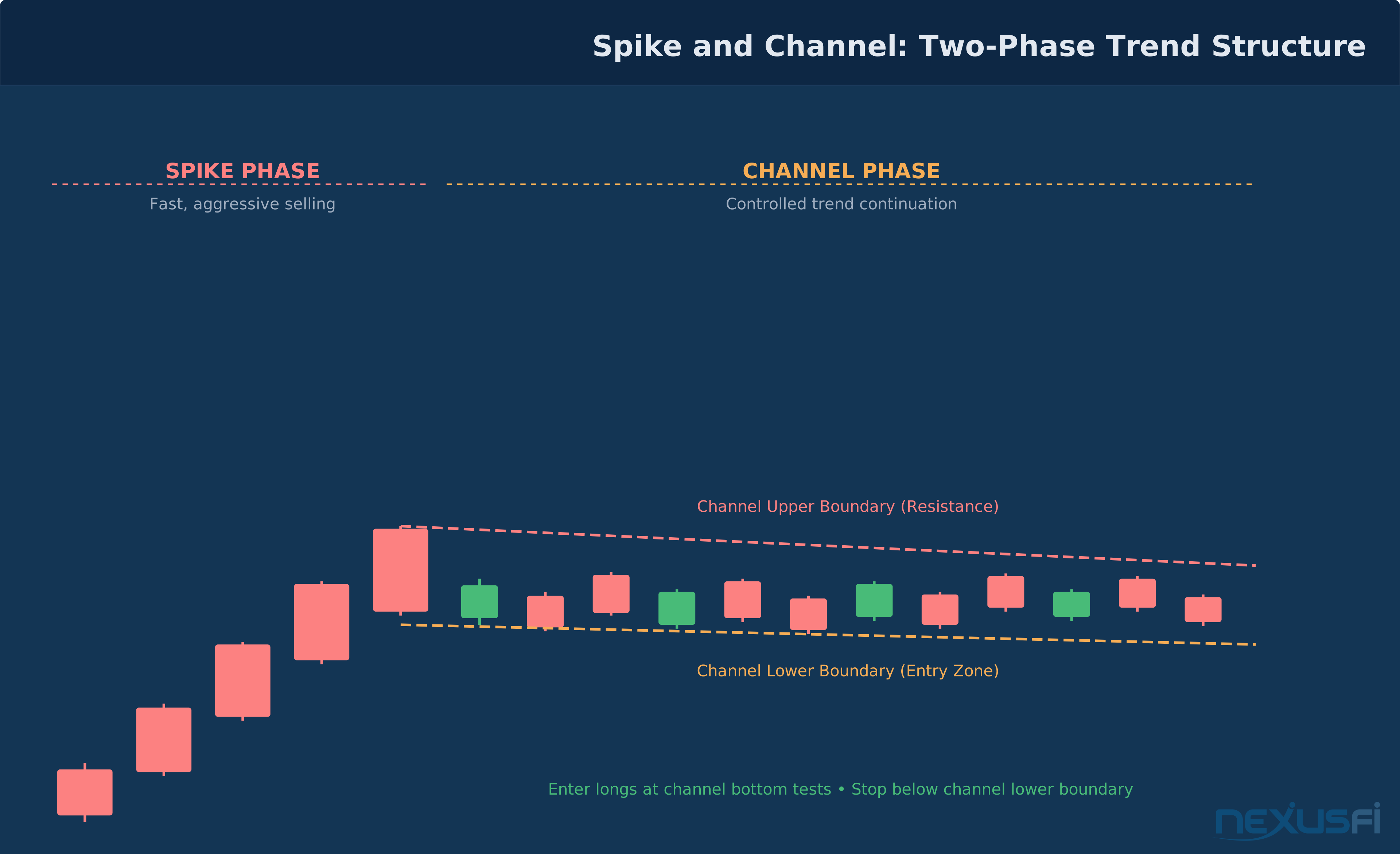
The spike-and-channel pattern appears at the beginning of new trends and describes a two-phase move that Brooks considers especially reliable. This two-phase structure is analyzed in detail in Spike and Channel Price Action.
The spike: A sudden, aggressive move driven by institutional orders — often 3-5 consecutive trend bars with minimal overlap, sometimes triggered by news. The spike establishes a new directional bias dramatically.
The channel: After the spike, price enters a more controlled directional movement — a channel. The channel bars are smaller than the spike bars, with more overlap and some two-way movement. The channel maintains the direction of the spike but at a sustainable pace.
Trading the pattern:
- Don't try to enter during the spike — it's too fast and too late
- Wait for the channel phase to develop
- Enter on pullbacks within the channel to the channel boundary
- Target the far end of the channel or a measured move from the spike's base
The channel boundary test: When price reaches the bottom of a bull channel (or top of a bear channel) and produces an H2 bar, that's the primary entry. The tight stop below the channel's lower boundary makes this a high-quality setup.
Breakout of the channel: Eventually the channel will break. In bull trends, if price breaks below the channel bottom with a strong trend bar, that's a potential reversal signal. But first breakouts from channels fail about 50% of the time — wait for a second signal before committing to a reversal trade.
Climactic Reversals #
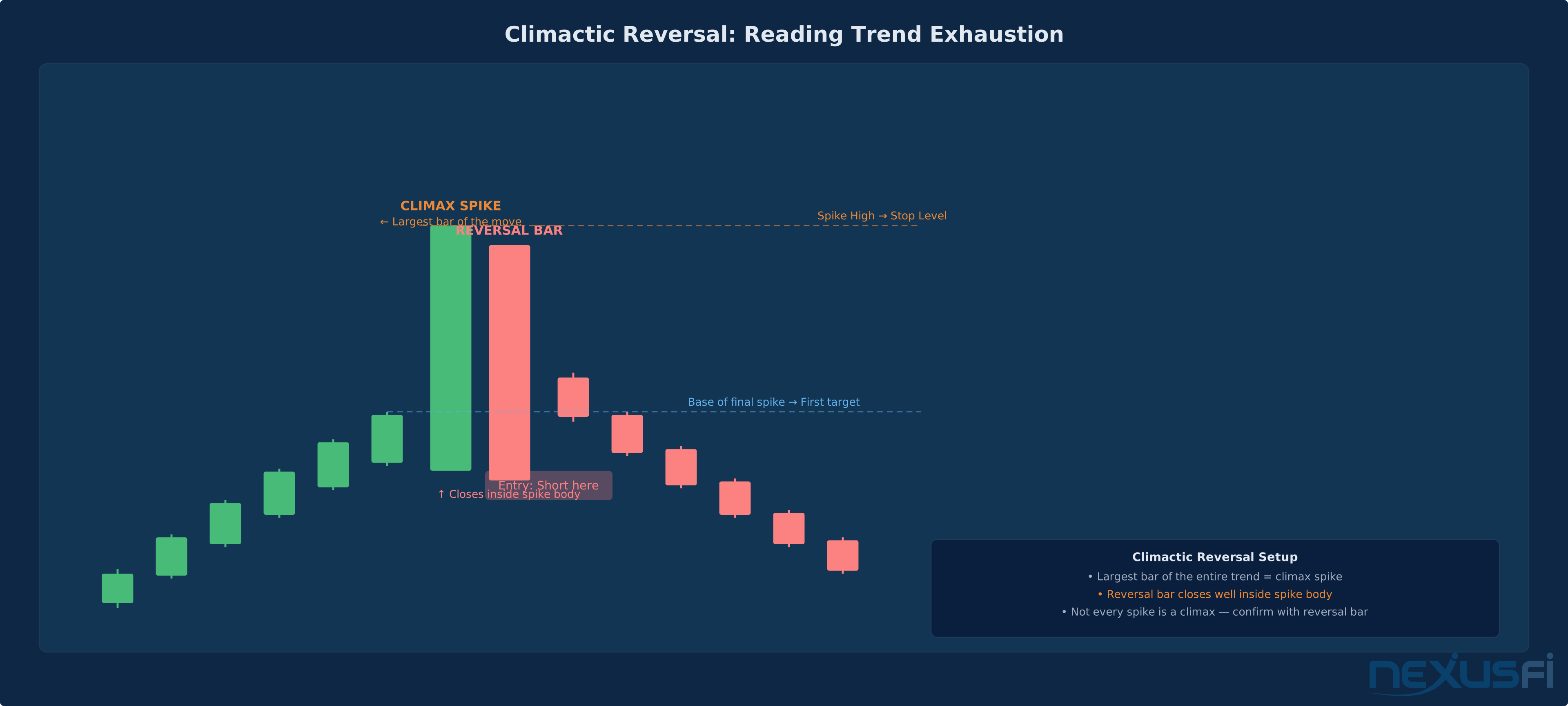
Climactic reversals mark the end of strong trends and are among the highest-drama events in Brooks' methodology. The setup is dramatic and the entry requires discipline because it goes against a strong move.
What a climax looks like:
- An extended trend with multiple trend bars in one direction
- Increasing volatility and range in the terminal bars (the bars get larger)
- A spike bar that pushes dramatically beyond the prior trend structure — often the largest trend bar of the entire move
- An immediate, strong reversal bar that closes well inside the spike bar's body
Why climaxes happen: Trends attract momentum chasers in their late stages. When the final spike bar occurs, it's often driven by the last wave of these chasers entering and any remaining holdouts capitulating. Once that final wave exhausts, there's nobody left to push prices further — and the reversal comes with force.
As NexusFi member @FR5050 noted in the community discussion:
"By bar 11 he mentioned that it could develop to an outside bar and trapping the bulls but he wouldn't short it if it happened. He did not elude strongly to any shorting opportunity from bar..."
This illustrates the discipline required: even Brooks himself, with decades of experience, is cautious about trading climaxes in real time. The recognition happens in hindsight more clearly than in the moment.
Trading a climactic reversal:
- The reversal bar (the big bar closing in the opposite direction after the spike) is the signal bar
- Enter in the reversal direction as the next bar opens (or on a stop one tick beyond the signal bar's high for shorts, one tick below its low for longs)
- Stop goes just beyond the spike's extreme
- Target is typically the start of the final spike (a measured move back)
The caution: Not every spike is a climax. Strong trends can have multiple spike bars that don't reverse — they're just acceleration within the trend. The confirmation that a spike is climactic comes from the subsequent reversal bar. Without that reversal bar, it's just a fast trend bar.
The Always-In-Position Mindset #
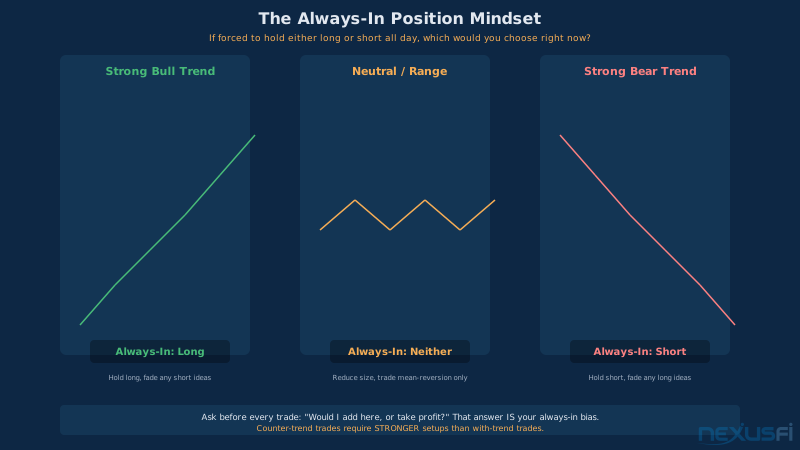
"Always in position" (AIP) is one of Brooks' most misunderstood concepts. It sounds like a mandate to always hold a trade, but that's wrong. AIP is about mental readiness.
Trading psychology — the mental discipline that separates consistent traders from those who blow up their accounts — plays a foundational role in Brooks methodology. The AIP question to ask yourself is: if you had to be in the market right now, which direction would you choose? This keeps you aligned with the dominant force rather than being caught flat-footed when the next move starts.
AIP means:
- In a strong bull trend: you're bullish unless a clear reversal signal appears
- In a trading range: you're aware of both boundaries and ready to trade either fade
- In a transition: you're watching for confirmation of which state is emerging
What AIP is NOT:
- An instruction to hold trades through adverse moves
- A mandate to always have an open position
- Permission to trade every bar
As @GarryM summarized Brooks' key principles from the community's book discussion:
"Enter on a stop at one tick beyond the signal bar. You want to be swept into the trade by the market going your way."
This entry discipline — letting the market confirm your direction before you're in — is fundamental to AIP. You're not forcing trades. You're positioning for what the market is already showing you.
Practical AIP implementation: Keep a running mental note of the current state and bias: "Bull trend, pullback developing, looking for H2 to form near the 20 EMA." When your setup appears, the entry is ready. When conditions are ambiguous, you stay flat — but you're not disengaged. You're watching for the next signal.
Risk Management in the Brooks Framework #
Brooks is unambiguous about risk discipline. The methodology generates many setups, which means you'll also have many losses. The edge comes from:
- Taking valid setups consistently
- Keeping losses small when patterns fail
- Holding winners when the structure confirms continuation
Position sizing: Futures are high-leverage instruments. Brooks-style trading generates frequent small trades. A full position sizing formula tailored to futures is covered in Position Sizing for Futures Trading. A practical sizing approach is 1-2% of account equity per trade, which means a single loss won't much damage your account. The setups work often enough that smaller sizing compounds over many trades.
Stop placement: Stops go just beyond the structural level that would invalidate the setup:
- Below the Leg 1 low for two-legged pullback entries
- Below the 20 EMA for EMA pullback entries
- Just beyond the trap's extreme for trap reversal entries
- Beyond the spike's high or low for climactic reversal entries
The principle: if the structure that justified the entry breaks, the thesis is invalid. Exit immediately. Don't wait to see if the market comes back — a discipline covered in Stop Loss Strategies for Futures Trading.
Daily loss limits: Cap losses at a defined amount — typically a Daily Loss Limit — before stopping for the day. Brooks recommends this because his method's entries follow patterns that sometimes don't work for extended periods — markets change character and the patterns temporarily stop paying. A hard daily stop prevents one bad day from becoming a catastrophic loss.
Entry confirmation discipline: As @Salao noted in their trading journal from years of applying the method:
"As per Brooks, bulls get in on bullish signal bars and bears get in at bearish signal bars. In ES, that would almost always be a bar ending..."
The confirmation requirement — waiting for the signal bar to close properly before entering — prevents many false entries. It's tempting to front-run a developing bar. Brooks is emphatic: don't. The confirmation bar defines the trade.
Learning the Method: The Realistic Timeline #
Brooks' method is powerful, but it's not fast to learn. The skill of reading bars in context requires pattern recognition developed over hundreds of hours of chart study. Here's a realistic framework:
Phase 1: Bar Reading Foundation (Weeks 1-4) Work with historical charts exclusively. Mark every bar as you go: trend bar, doji, inside bar, outside bar. Identify the current state (trend/range/transition) at every point. Don't look for entries yet — build the vocabulary.
Phase 2: Pattern Recognition (Weeks 5-10) Begin identifying H1/H2 and L1/L2 patterns, two-legged pullbacks, traps, and range boundaries on historical charts. Mark every pattern you see. Don't trade yet. You're building the pattern library.
Phase 3: Simulated Trading (Weeks 11-18) Apply the method in a paper trading environment in real time. The goal is to discover how differently the method feels live versus historical review. You'll miss setups, enter late, and hesitate — all of which are valuable learning.
Phase 4: Live Trading, Minimal Size (Month 5+) Trade one contract with a strict daily loss limit. Keep a detailed journal: setup, entry, stop, target, outcome, what the next bar confirmed or denied. The journal is how you compress learning.
The essential insight from the NexusFi community: The learning is non-linear. The method clicks at some point — the state identification, bar reading, and pattern recognition all integrate into a coherent picture. Before that integration happens, the method feels arbitrary. After it happens, the chart tells a clear story. Patience through the early stages is the real differentiator between those who eventually get it and those who walk away.
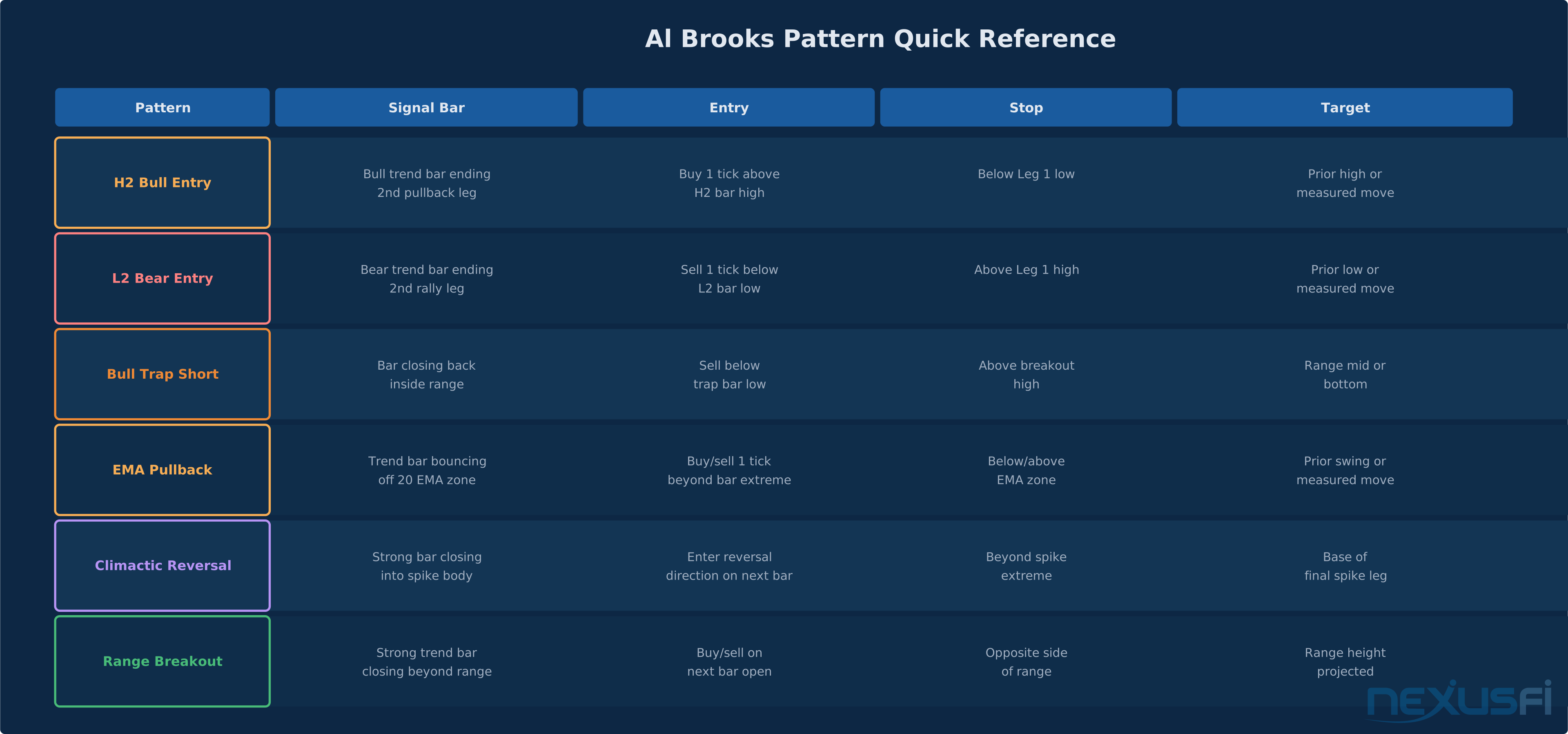
Quick Reference: Al Brooks Pattern Cheat Sheet #
| Situation | Pattern | Signal Bar | Entry | Stop | Target |
|---|---|---|---|---|---|
| Bull trend pullback | H2 setup | Trend bar ending second leg | Buy 1 tick above H2 high | Below Leg 1 low | Prior high or measured move |
| Bear trend rally | L2 setup | Trend bar ending second leg | Sell 1 tick below L2 low | Above Leg 1 high | Prior low or measured move |
| Range top | Bull trap | Doji or bar closing back inside range | Sell 1 tick below trap bar low | Above breakout high | Range mid or bottom |
| Range bottom | Bear trap | Doji or bar closing back inside range | Buy 1 tick above trap bar high | Below breakout low | Range mid or top |
| Channel bottom test | H2 at boundary | Trend bar closing above channel bottom | Buy 1 tick above bar high | Below channel bottom | Channel top |
| Trend exhaustion | Climactic reversal | Strong bar closing well inside spike body | Enter reversal direction on next bar | Beyond spike extreme | Base of final spike leg |
| EMA pullback | H2 near EMA | Trend bar closing away from EMA | Buy/sell 1 tick beyond bar extreme | Below/above EMA zone | Prior swing or measured move |
Conclusion: Reading the Market's Story #
Al Brooks built his methodology on a simple discipline: watch what price does, read what it means, and respond to what the market is actually showing you rather than what you hope it's doing.
The bar-by-bar method is demanding because it requires you to stay present with the market's story as it unfolds. There's no indicator to automate the decision, no algorithm to generate signals. It's you, the chart, and the discipline to wait for valid setups and exit immediately when they fail.
The NexusFi community has spent years working through this methodology together — the book discussion threads with their hundreds of posts and annotated chart examples represent collective practitioner intelligence that makes the learning curve much shorter.
The always-in-position mindset, when properly understood, keeps you aligned with dominant market forces. The H1/H2 and L1/L2 frameworks give you systematic entry points. The pattern taxonomy — traps, two-legged pullbacks, measured moves, spike-and-channel, climactic reversals — gives you a complete vocabulary for every market situation.
Learning it properly takes months. Applying it consistently takes discipline. But traders who stick with it long enough develop something rare: the ability to read the market's own language, without translation.
For traders who want a deeper dive into bar-by-bar reading as its own discipline, the Bar-by-Bar Price Action Reading article covers Brooks' approach as a standalone methodology.
Knowledge Map
Prerequisites
Understand these firstReferences This Article
Articles that build on this topicCitations
- — Book Discussion: Reading Price Charts Bar by Bar by Al Brooks (2009) 👍 33“Enter on a stop at one tick beyond the signal bar. You want to be swept into the trade by the market going your way.”
- — Book Discussion: Reading Price Charts Bar by Bar by Al Brooks (2009) 👍 11“Any time three or more consecutive bars mostly overlap and one or more is a doji stop trading and treat it like a trading range.”
- — Book Discussion: Reading Price Charts Bar by Bar by Al Brooks (2010) 👍 11“When the high of the lowest bar at A is broken to the top, that is an H1. When the high of the lowest bar at C is broken upwards, that is an H2. If you want safety, wait for H2.”
- — Book Discussion: Reading Price Charts Bar by Bar by Al Brooks (2009) 👍 16“The 6B got into a tight range (Barb Wire as per Brooks) and gave a nice fakeout pop.”
- — Book Discussion: Reading Price Charts Bar by Bar by Al Brooks (2010) 👍 5“Regarding types of trades, I use trendlines, channels, H2, L2, 2 legged moves - take the second move.”
- — Book Discussion: Reading Price Charts Bar by Bar by Al Brooks (2010) 👍 7“Nobody truly knows if the double top/bottom will hold, or where price will end up being for sure.”
- — Book Discussion: Trading Price Action Trends, Reversals, Ranges by Al Brooks (2012) 👍 11“A H2 happens after the price traded below the EMA which also makes it a EMA gap bar.”
- — Book Discussion: Reading Price Charts Bar by Bar by Al Brooks (2009) 👍 6“By bar 11 he mentioned that it could develop to an outside bar and trapping the bulls but he wouldn't short it if it happened.”
- — PA Dax CL, ES and Bund Price Action Trading Log (2020) 👍 11“Some of the recent confusion on when to take a H1/H2 is partly caused by the (mis)perception whether a day is a trading range.”
- — Salao's Journal (2019) 👍 5“As per Brooks, bulls get in on bullish signal bars and bears get in at bearish signal bars.”