



Always-In Trading Concept: Al Brooks' Framework for Determining Dominant Direction
Overview #
Most traders watch the market and ask "is this a good setup?" Al Brooks asks a harder question: "If I had to be in a trade right now — long or short, no choice — which side would I pick?"
That forced choice is the Always-In concept. It sounds simple. It isn't. Getting it right is the difference between trading with the market's dominant force and fighting it, and nothing in Brooks' methodology matters more than correctly reading which side is currently dominant.
What "Always In" Actually Means #
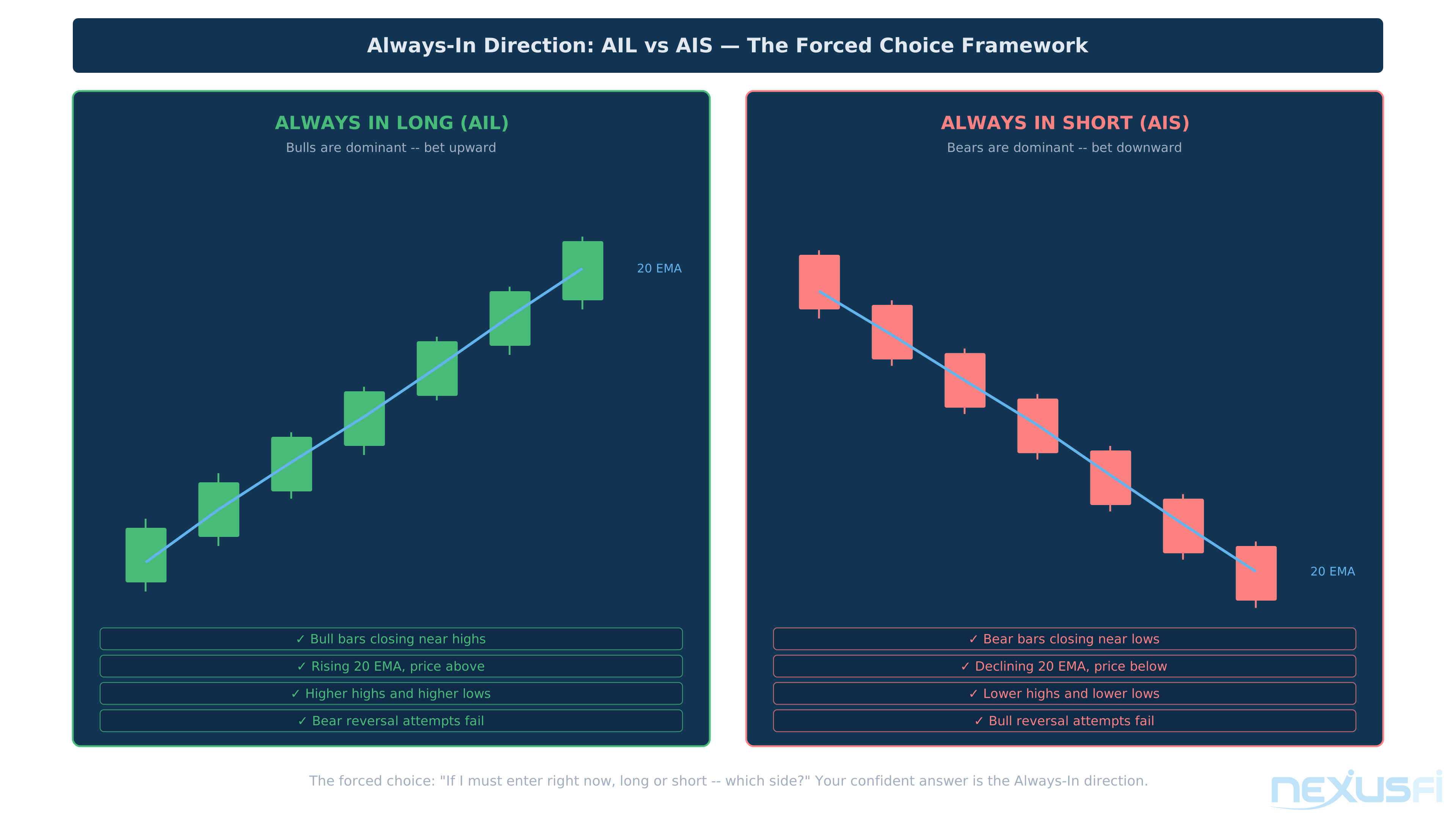
The Always-In direction is the side that, at any given moment, has the higher probability of a profitable trade if you entered immediately with no filter, no signal bar, no confirmation. If the chart is "Always In Long" (AIL), that means the bulls are controlling price and a long position entered right now — even at an imperfect location — has an edge. If it's "Always In Short" (AIS), the bears control and a short entered now has the edge.
This differs from "the trend is up" — a market can be in an obvious uptrend but have its Always-In direction flip temporarily. Always-In is a bias about the current moment — not an entry method, not a prediction about the next 10 bars.
The Brooks mental exercise: if you absolutely had to enter right now with a market order — long or short, no choice — which side? If you answer instantly and confidently, that's your Always-In direction. If you're uncertain, the market is balanced and the AI direction is ambiguous.
This framework determines which setups to take, how to manage stops, and whether a reversal bar deserves attention or should be ignored as counter-trend noise.
Key Concepts #
Before going further, a few terms as Brooks uses them:
Always-In Long (AIL): The bulls are dominant. Most price movement is upward, pullbacks are shallow, and with-trend long entries are higher probability than counter-trend shorts. A market is AIL when the evidence overwhelmingly favors a higher close than current price.
Always-In Short (AIS): The bears are dominant. Most price movement is downward, bounces are shallow, and with-trend short entries are higher probability than counter-trend longs.
Always-In Neutral / Uncertain: Neither side is clearly dominant — trading range or transition. Force a choice even here, but conviction is low and position size should reflect that.
Flip: When the Always-In direction changes. A flip from AIL to AIS or vice versa is one of the most significant signals on the chart.
Strong trend bars: Bars with large bodies and small wicks, closing near their extreme. The presence of multiple consecutive strong trend bars in one direction is one of the primary inputs for determining Always-In direction.
Closing on lows/highs: A bar that closes in the lower third of its range (bear-leaning) versus one that closes in the upper third (bull-leaning). Track which side is consistently winning the bar closes.
Market inertia: Brooks' principle that roughly 80% of the time, the market will keep doing what it's currently doing. Always-In direction leverages this — once you correctly identify the dominant side, that bias persists until the evidence changes it.
Determining Always-In Direction: The Evidence #
Identifying Always-In direction is not a formula. It's a weight-of-evidence judgment across multiple inputs. Here are the five primary signals, roughly in order of importance.
1. Bar Quality and Sequence #
The most direct evidence. Look at the last 5-10 bars. Who's winning the individual bar battles?
AIL evidence: Multiple consecutive bull trend bars (large bull bodies, close near high, small or no wicks above). Even when there are pullback bars, they're doji-ish — indecisive rather than strong bear bars.
AIS evidence: The opposite. Strong bear bars closing near lows, pullback bars failing to produce convincing bull closes.
When you see four consecutive strong bull trend bars with virtually no wicks, that's the market screaming AIL. When you see that same pattern in the opposite direction — four consecutive bear bars, each closing on or near its low — the market is screaming AIS, and fighting that with longs is account-destroying.
The bar-count check is the fastest Always-In read. Four consecutive strong bull bars closing near their highs? AIL. Four consecutive strong bear bars closing near their lows? AIS. Start there, then confirm with EMA relationship and swing structure.
2. The EMA Relationship #
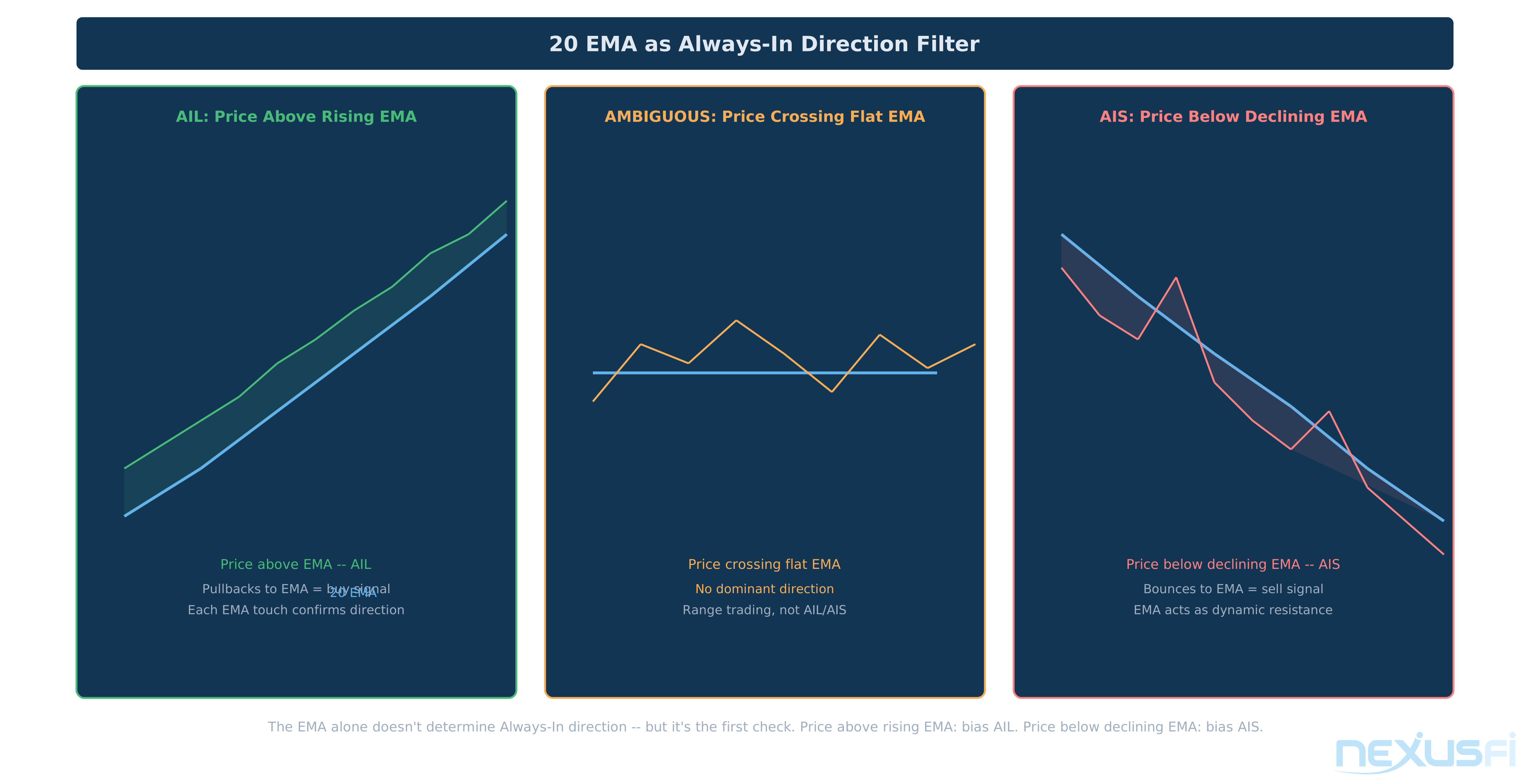
The 20-bar exponential moving average (EMA) tells you where the average participant's price is. Brooks uses it as a single visual reference for trend direction.
AIL evidence: Price is above a rising EMA. Pullbacks touch or approach the EMA but bounce. The EMA itself is sloping upward at a meaningful angle.
AIS evidence: Price is below a declining EMA. Bounces reach toward the EMA but fail. The EMA slopes downward.
When price is far above a steeply rising EMA, you're almost certainly AIL. When price is far below a steeply declining EMA, you're almost certainly AIS. The EMA's position, slope, and price's relationship to it together give you a quick directional read.
The nuance: Price can be above the EMA in a trading range. EMA direction matters. A flat or slowly-rising EMA with price oscillating above and below suggests balance, not a strong AIL bias.
As @Bacon of The Elite Circle puts it: "When PA is above the 20 EMA (up trend) I take long signals, when PA is below the 20 EMA (down trend) I take short signals, if it's straddling (channel/chop) I sit on my hands and wait for the breakout." That single relationship maps to Always-In: AIL above, AIS below, neutral straddling.
3. Overall Chart Context #
Zoom out to at least two prior swings. Look at the character of the last 20-40 bars:
AIL evidence: Higher highs and higher lows. Each swing low is higher than the previous one. When the market bounces, it makes a new high or comes close. The legs up are longer than the legs down.
AIS evidence: Lower highs and lower lows. Swing highs are systematically being rejected. The legs down are longer than the legs up. Bounces look like corrections, not challenges to the downtrend.
A single data point doesn't determine Always-In direction. But when the swing structure, EMA relationship, and bar sequence all point the same way, that convergence is strong evidence.
4. Who's Winning the Opens and Closes #
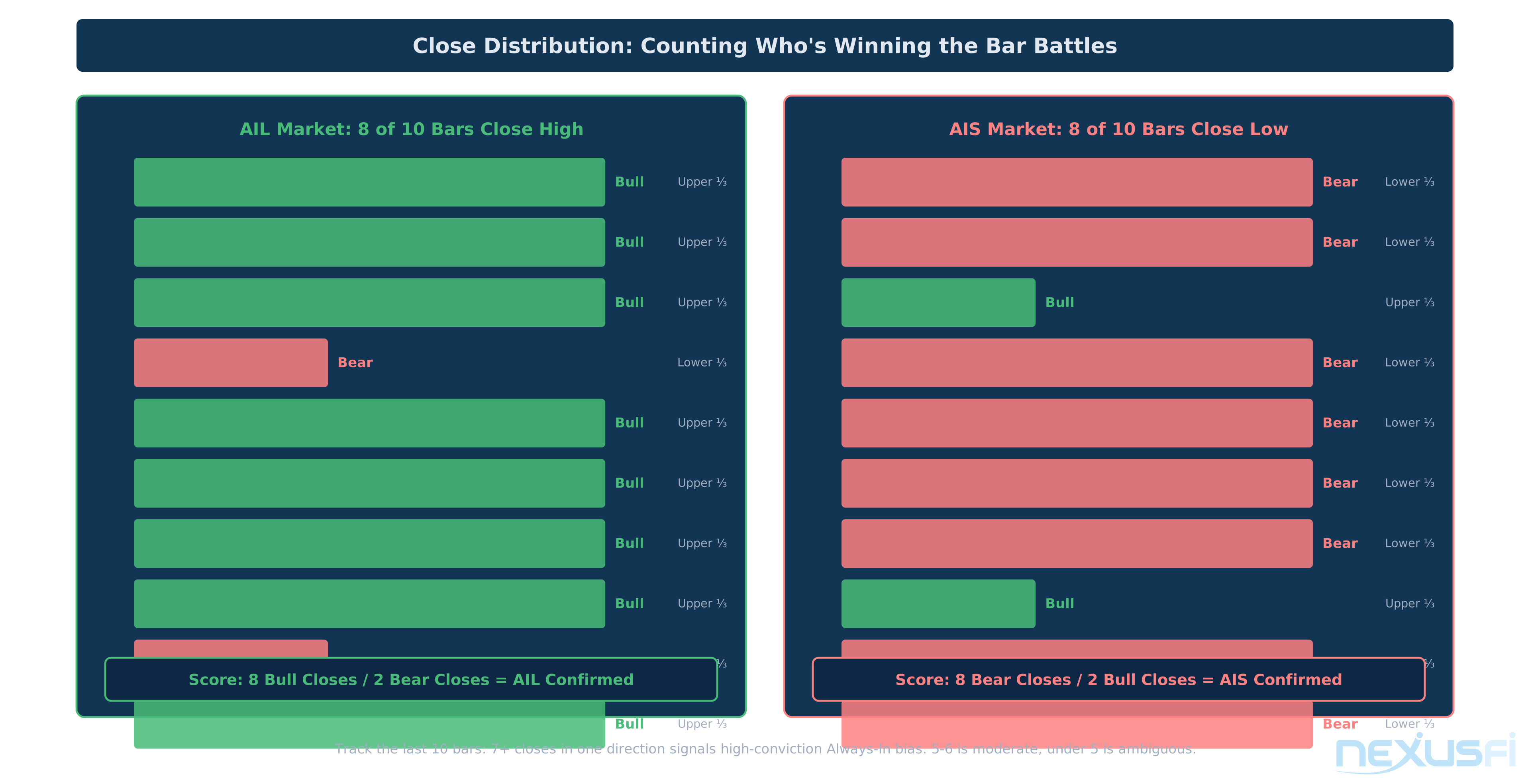
In a bull session, most bars should open near the low and close near the high — bulls buying aggressively as each bar forms. In a bear session, the reverse.
Track the distribution of "bull closes" (upper third) versus "bear closes" (lower third) over the last 10-15 bars. If 8 of the last 10 bars closed in the upper third of their range, that's AIL. If 8 of the last 10 bars closed in the lower third, that's AIS.
This is especially useful when the bars are overlapping (less clear) — the close-distribution gives you a directional signal even when the price structure is messy.
5. Failed Reversals and Rejected Countertrend Moves #
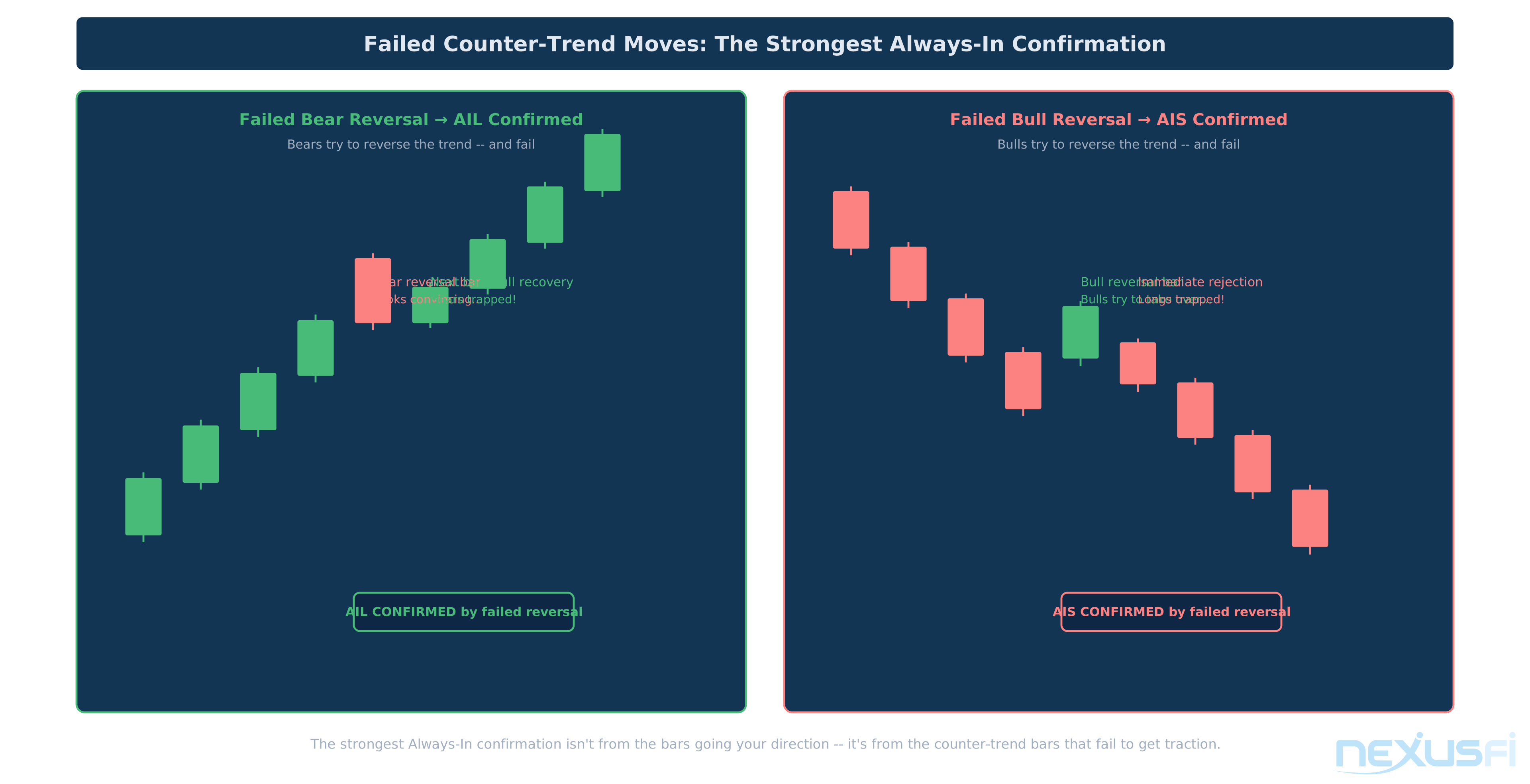
Perhaps the most convincing evidence: when the counter-trend side tries to take over and fails.
AIL evidence: A bear reversal bar forms after a bull run, looks convincing on formation — then the market doesn't follow through. The next bar is a bull bar. The potential reversal is ignored. Short sellers get trapped. This failed reversal is strong confirmation that AIL is intact.
AIS evidence: Same logic in reverse. A bull reversal bar at a swing low, then nothing — the market continues down. Trapped longs add selling pressure.
When you see a pattern where the counter-trend side consistently fails to get traction — where every bear bar is immediately bought, or every bull bounce gets sold — that's market behavior confirming the Always-In direction more powerfully than any single signal.
Always-In Long: The Complete Criteria #
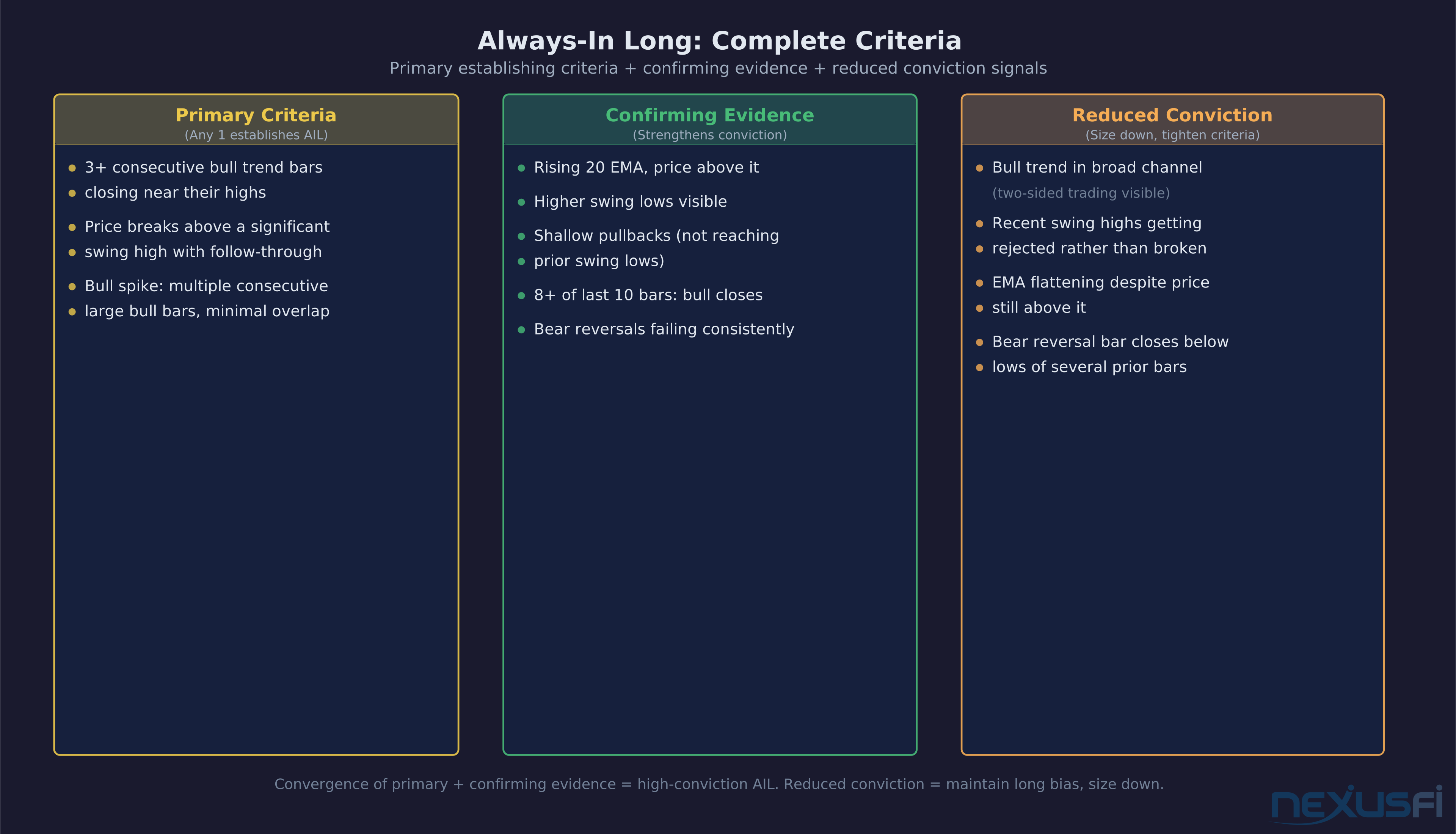
These are the conditions that establish and confirm AIL status:
Primary establishing criteria:
- Three or more consecutive bull trend bars (each closing near its high)
- Price breaks above a significant swing high with follow-through on the next bar
- A strong bull spike with multiple consecutive bull trend bars and minimal overlap
Confirming criteria (strengthens conviction):
- Rising 20-bar EMA with price cleanly above it
- Higher swing lows visible on the chart
- Pullbacks are shallow (not reaching prior swing lows)
- Bull closes dominating the close distribution (8+ of last 10 bars)
- Bear reversal setups are failing — bears try, bulls immediately reassert
High-conviction AIL context: When the market has been in a prolonged uptrend, has broken out of a range, or has formed a spike that has clear follow-through, AIL conviction is highest. These are conditions where Brooks says you should trade large, scale out partially on strength, and use pullbacks aggressively.
Reduced AIL conviction:
- The bull trend is in a late-stage broad channel (two-sided trading visible)
- Recent swing highs are getting rejected rather than broken
- The EMA is flattening even though price is above it
- A bear reversal bar has closed below the low of several prior bars
Reduced conviction means you still bias toward longs, but you size down and tighten your criteria.
Always-In Short: The Complete Criteria #
Mirror image of AIL:
Primary establishing criteria:
- Three or more consecutive bear trend bars, each closing near its low
- Price breaks below a significant swing low with immediate follow-through
- A bear spike — multiple consecutive bear trend bars, large bodies, closing on lows
Confirming criteria:
- Declining 20-bar EMA with price cleanly below it
- Lower swing highs visible on the chart (each bounce gets sold)
- Bounces are shallow — bulls can't mount a sustained counter-attack
- Bear closes dominating close distribution
- Bull reversal attempts immediately fail — bulls try, bears quickly regain control
High-conviction AIS:
- Opening gap down that is immediately extended (no attempt to fill the gap)
- A waterfall pattern — one strong bear bar after another, each bar's open near the prior bar's close
- Failed bull breakout followed by a strong reversal bar breaking decisively below the trading range
Reduced AIS conviction:
- Bars starting to overlap more (less directional momentum)
- Bounces getting more aggressive, reaching higher
- The bear trend is in late stages with climactic moves (very large bear bars — exhaustion risk)
- Bull reversal bars are appearing with strong closes in the upper half of their range
Late-stage bear trends often produce climactic moves — extremely large bear bars with high volume suggesting exhaustion. When you see a massive bear bar that's noticeably bigger than any recent bars, the AIS bias weakens. The next bull reversal bar deserves respect, not automatic rejection. Climactic moves into AIS can trap late shorts just as cleanly as climactic moves into AIL trap late longs.
How Always-In Direction Flips #
The flip is critical. Missing it keeps you in wrong-direction trades. Catching it early gives you the highest probability entries available.
The Three-Bar Flip Rule #
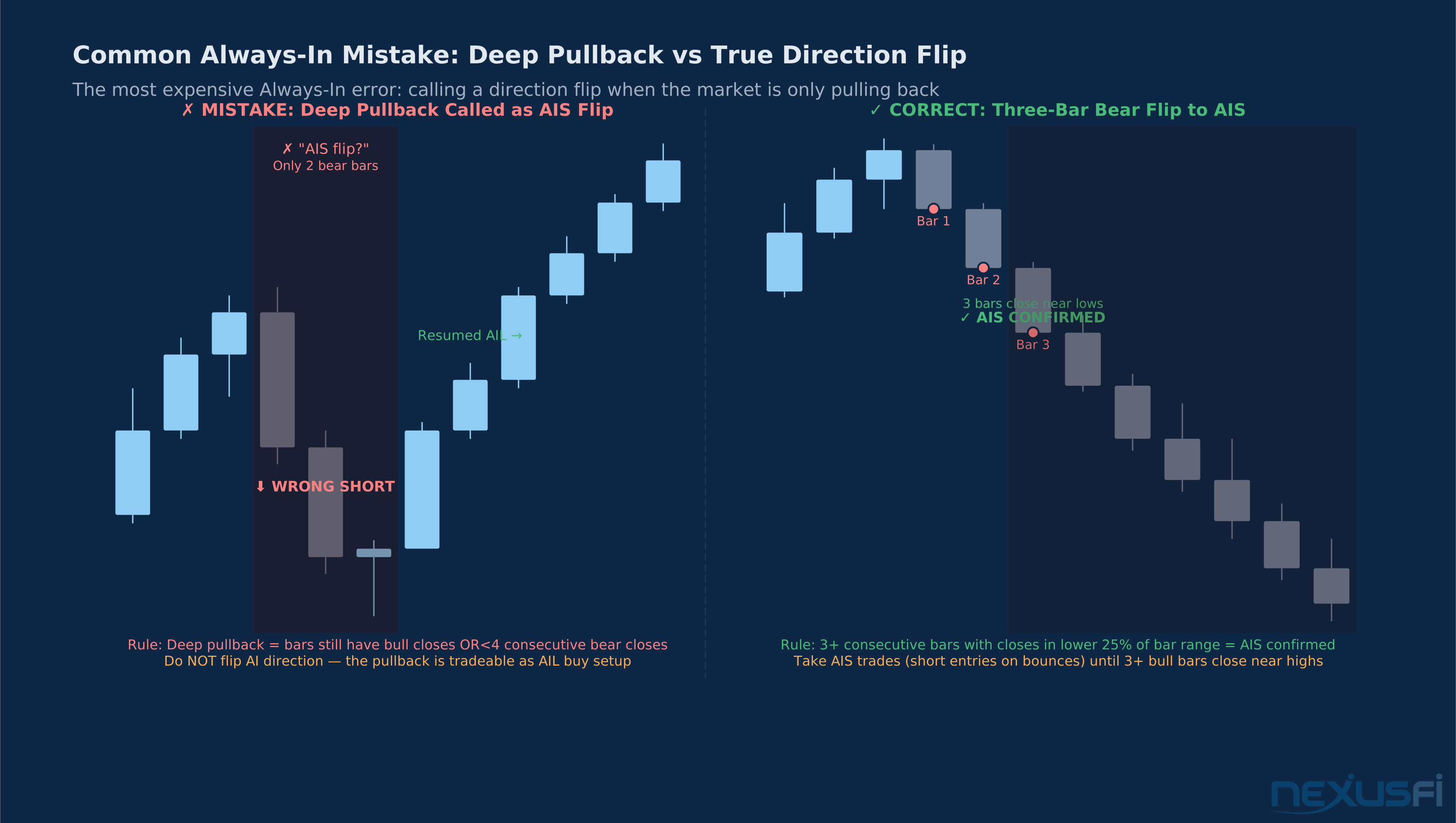
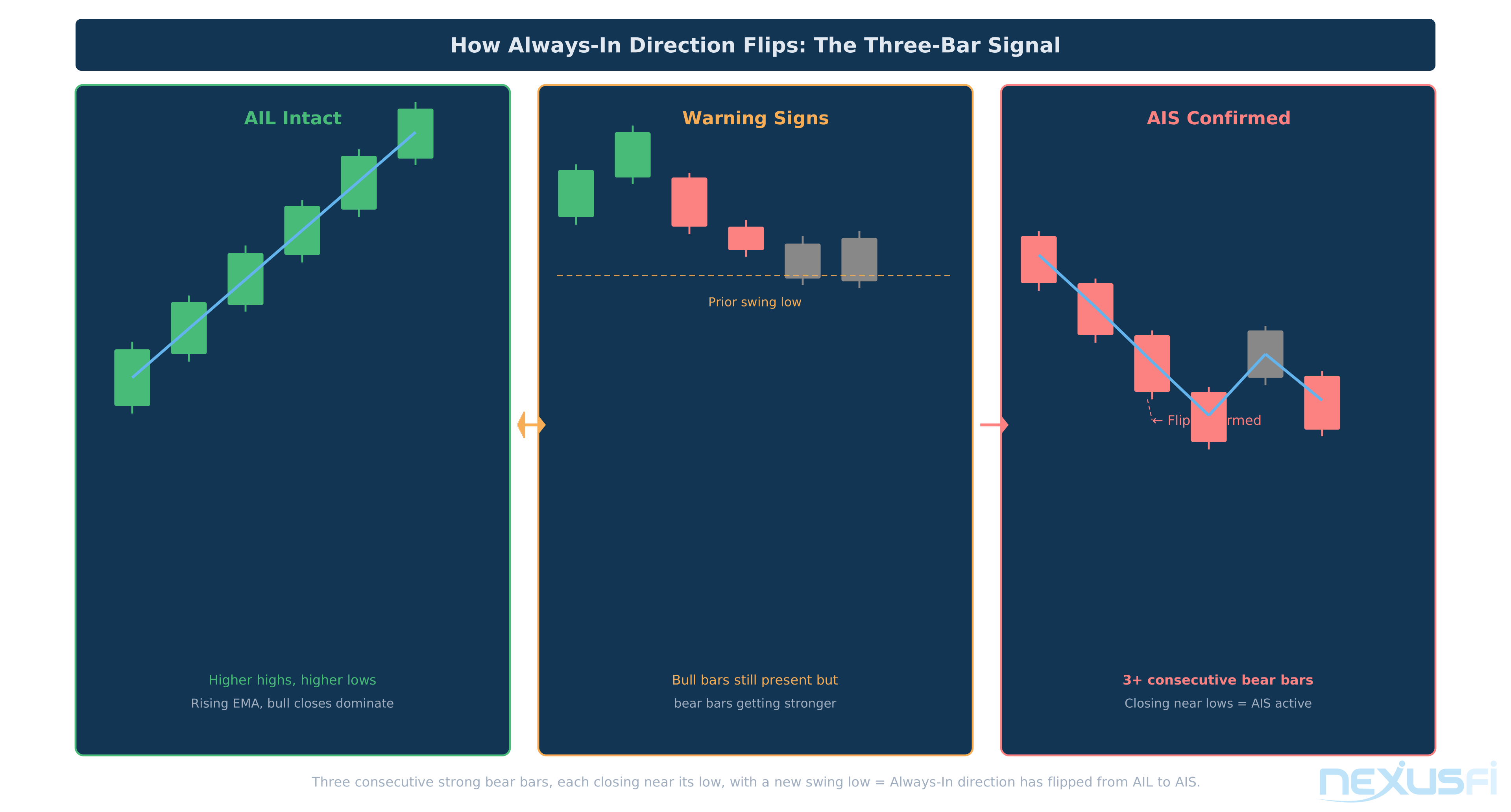
A rough practical guideline: when you see three or more consecutive bars closing against the current Always-In direction — and those bars are strong (not doji/overlap bars but genuine trend bars in the opposite direction) — consider the Always-In direction flipped.
Three consecutive strong bear bars in an AIL market, each closing near its low: that's not a pullback, that's the beginnings of AIS. The third bar closing below the lows of the prior two is the confirmation moment for many experienced Brooks traders.
This is a guideline, not a rule. A single massive reversal bar (a bar that closes near its opposite extreme, swallows multiple prior bars, and closes at a significant level) can trigger a flip in one bar. Context matters.
The Structural Flip #
Beyond bar count, a structural flip requires:
- Trend line break: Price crosses decisively through the trend line of the current move (typically a trend channel line). This alone is a warning, not a flip.
- Swing structure violation: In AIL, a lower low — the market makes a swing low lower than the prior swing low. This is the first structural signal that bulls are losing control.
- Failed breakout: Price attempts to continue the current Always-In direction, fails, and reverses strongly. A failed breakout to the upside in an AIL market is high-probability evidence the flip is coming.
- Momentum change: The legs against the trend become longer and stronger while the legs with the trend become shorter and weaker. The market is redistributing energy to the other side.
None of these alone triggers a definitive flip. When you see trend line break + lower low (or lower high) + failed breakout in the prior direction, the flip is probably complete or very close.
The Transition Zone #
Between AIL and AIS there's often a trading range — a period where neither side clearly controls. During this transition:
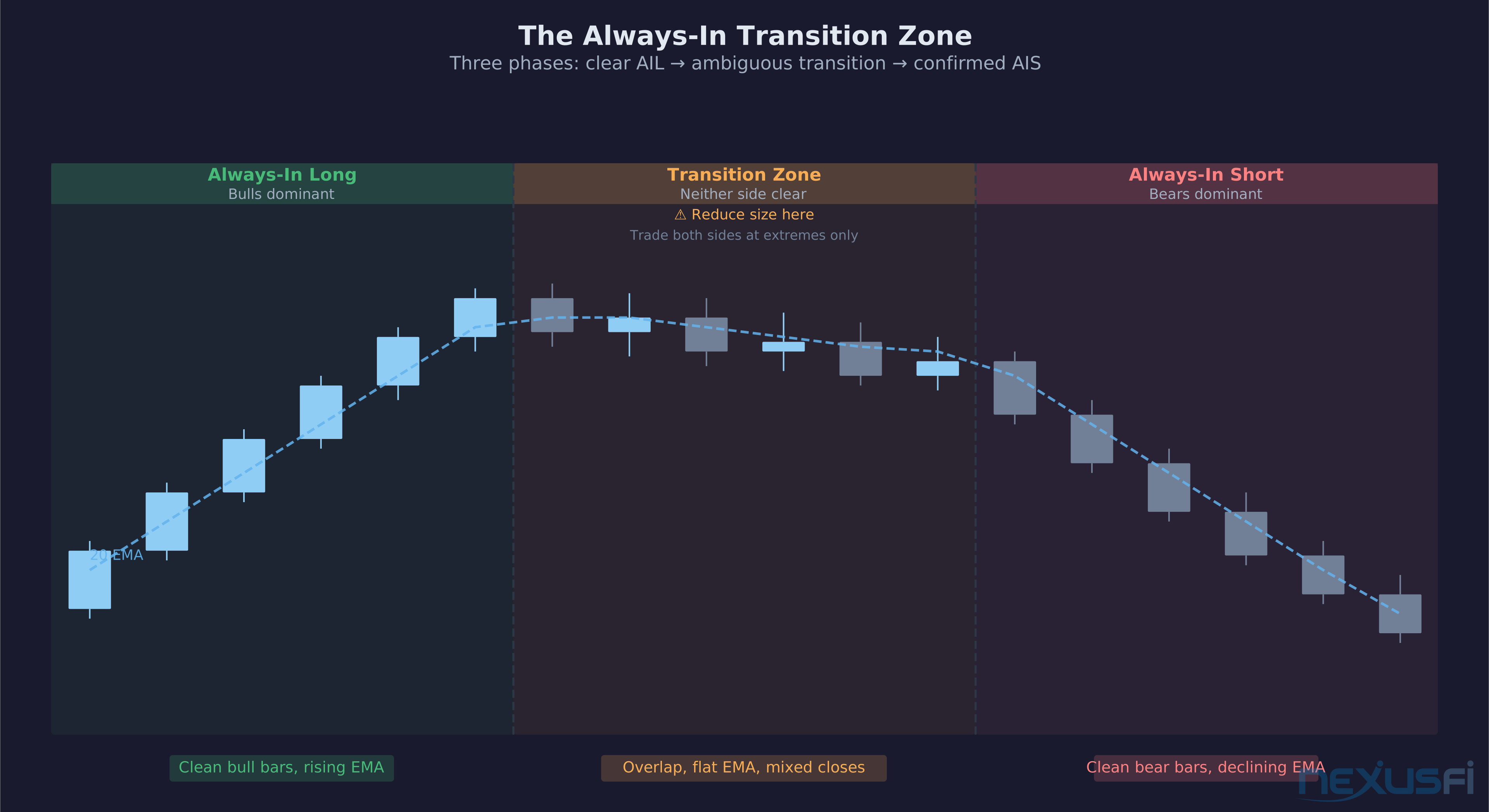
- Both sides are getting trapped with failed moves
- Bar overlap is heavy (bars don't show clean directional momentum)
- The EMA is flat or hooking
- Swing highs and lows are mixed (lower high but higher low, for example)
During transitions, Brooks recommends reducing size and being willing to trade both sides at extremes, rather than insisting on directional bias. The transition becomes clear in hindsight, but in real-time it's often uncertain. That uncertainty itself is information: when you can't easily identify Always-In direction, you're probably in a range.
Always-In vs. "Trending": The Critical Distinction #
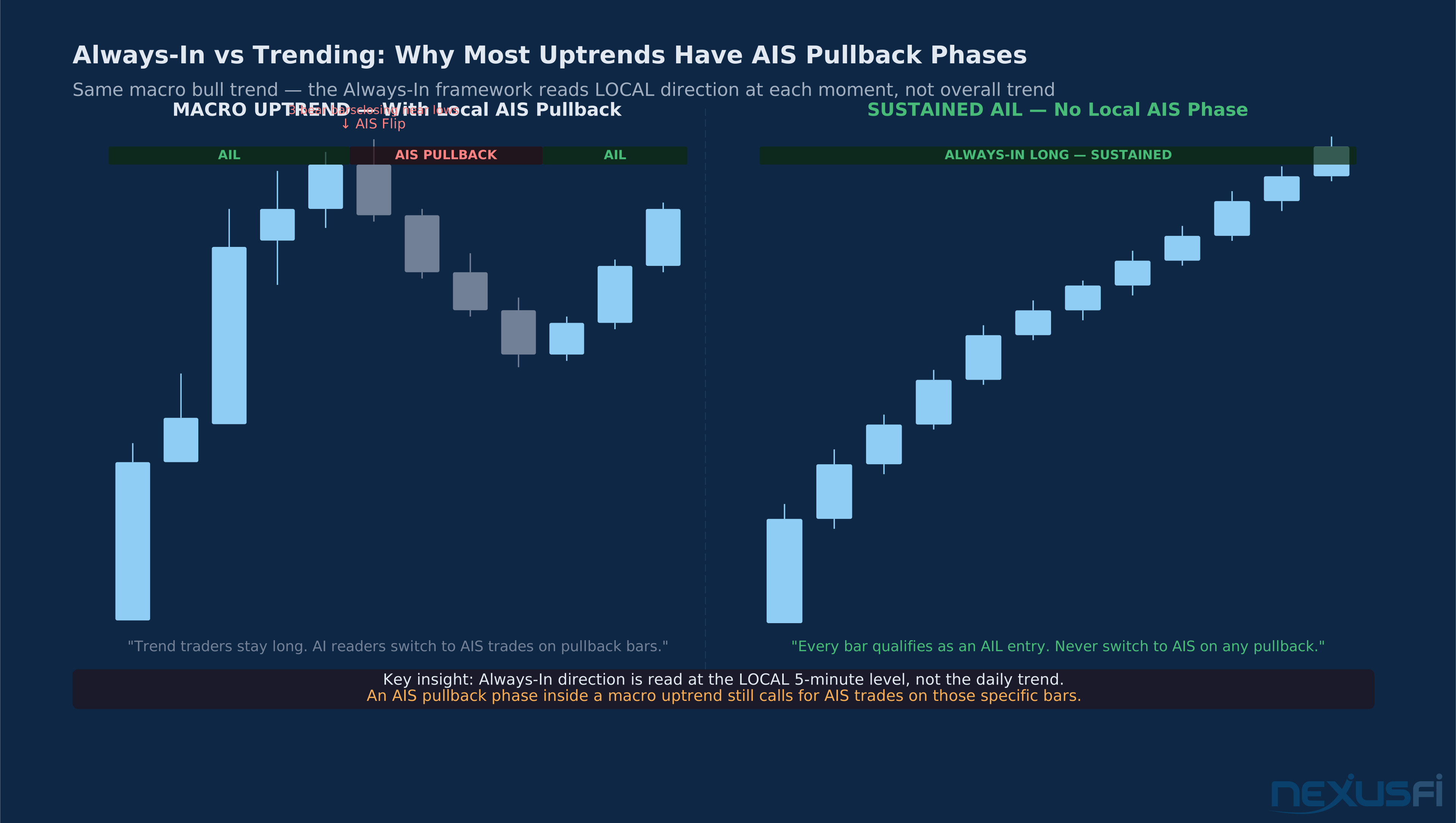
Many traders conflate Always-In with "the trend is up/down." They're related but distinct, and the distinction determines whether you use a particular pullback entry.
A trend is a structural assessment of a series of swing highs and lows. It can persist through extended periods of balanced trading. A market can be in a multi-day uptrend (making higher highs and higher lows on the daily chart) but have its 5-minute chart in a trading range — AIL is not active right now even though the uptrend exists.
Always-In is an assessment of the current moment on the timeframe you're trading. It answers: "Right now, which side has the edge?"
Where this matters:
In a strong uptrend, AIL is almost always active on the trend timeframe. Pullbacks are counter-trend (bear bars in an AIL context) and should be faded with H2 setups.
In an uptrending market that's entered a broad trading range, AIL may not apply in the near term. The market may be balanced, and both long-at-support and short-at-resistance are valid.
In a market that's been trending up but has just had a strong reversal, the trend is still "up" (swing structure) but Always-In direction may have flipped to neutral or AIS. The correct read: the trend is weakening, the current moment favors shorts or neutrality.
Brooks uses this distinction constantly. He won't buy a pullback in an uptrend if the current Always-In direction is neutral or AIS — even if the overall swing structure is bullish. The local directional evidence overrules the broader trend context.
The short version: trend is the map, Always-In is where you are on it right now.
Always-In Across Market Phases #
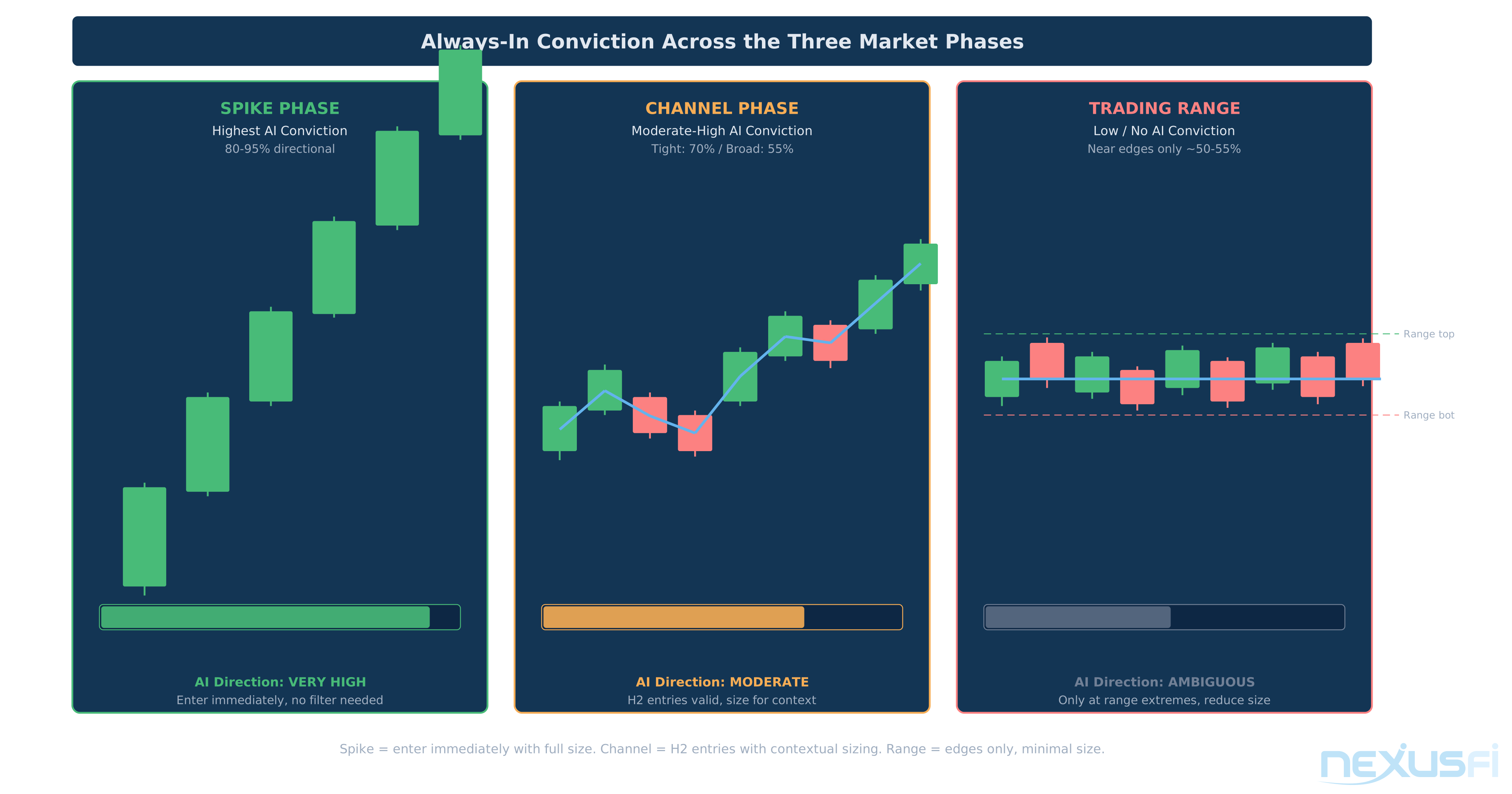
Always-In direction varies in clarity and conviction across the three market phases Brooks identifies.
In a Spike (Breakout Phase) #
A spike is where Always-In conviction is highest. Four or more consecutive bull trend bars closing near their highs = unambiguously AIL. Brooks explicitly says: don't wait for a pullback, don't scale in. Get in and let the spike carry. After the spike ends and a pullback follows, the AIL direction may soften but doesn't necessarily flip — the pullback is correction, not a flip signal.
Trading rule: Enter immediately during a spike. The spike IS the trade.
In a Channel (Trend Phase) #
Channels come in two flavors: tight and broad.
Tight channel (bull or bear): Always-In direction is clear and consistent. The pullbacks are shallow, the bars are mostly directional, and the EMA is sloping cleanly. In a tight bull channel, AIL is in effect throughout. The EMA typically acts as support. H1 and H2 pullback entries are high probability.
Broad channel (bull or bear): Two-sided trading is visible; pullbacks are deep. AIL is still the bias in a broad bull channel, but conviction is lower. Short-sellers can profit from channel-top to channel-bottom moves. Manage longs with smaller size, tighter stops, quicker profit-taking rather than holding for large targets.
In a Trading Range #
This is where Always-In direction is weakest or non-existent. A trading range is by definition two-sided — bulls are buying support, bears are selling resistance, and neither side is dominant.
In a trading range: respect the boundaries. Near support = AIL bias. Near resistance = AIS bias. In the middle (Barb Wire) = no strong AI direction, low probability for either side. The frequent directional flips are exactly what makes trading ranges the hardest environment. Recognizing range context prevents applying AIL/AIS rules meant for trending markets to balanced ones.
ES 5-Minute Application #
The ES 5-minute chart is where Brooks developed and refined this framework. Here's how it applies in real trading sessions.
Reading the Opening #
The first few bars often establish the day's initial Always-In direction. A gap up that extends (doesn't fill in 30 minutes) is typically AIL. A gap down with continuation is typically AIS.
Opening 5-bar pattern: five consecutive bull bars in 25 minutes = early AIL confirmation. Strong bear bar reversing a bull gap up = potential early AIS signal.
Brooks cautions against over-trading the open. The first 15-30 minutes are often choppy as institutions establish positions. Wait for AI direction to clarify before committing.
The 20 EMA as Real-Time Reference #
On a live ES chart, watch the 20 EMA throughout the day. In an AIL environment:
- Pullbacks to the EMA are buying opportunities
- The EMA should be rising
- Each time price touches the EMA and produces a bull bar, AIL is confirmed
The moment the EMA starts to flatten or curve down, AIL conviction drops. When price cleanly crosses below a declining EMA and the first subsequent bounce fails, that's often the AIL-to-AIS transition.
Counting Consecutive Bars #
Keep a mental count during the session. Three consecutive bear bars in what's been an AIL context: watch carefully. A fourth consecutive bear bar, each closing near its low: consider flipping your bias to AIS. The fifth consecutive bear bar closing near its low with no interruption: high probability AIS, and previous longs should be out or reversed.
NexusFi trader
That's Always-In thinking in practice — committing to a side until the evidence changes it.
The Two-Legged Pullback as AI Confirmation #
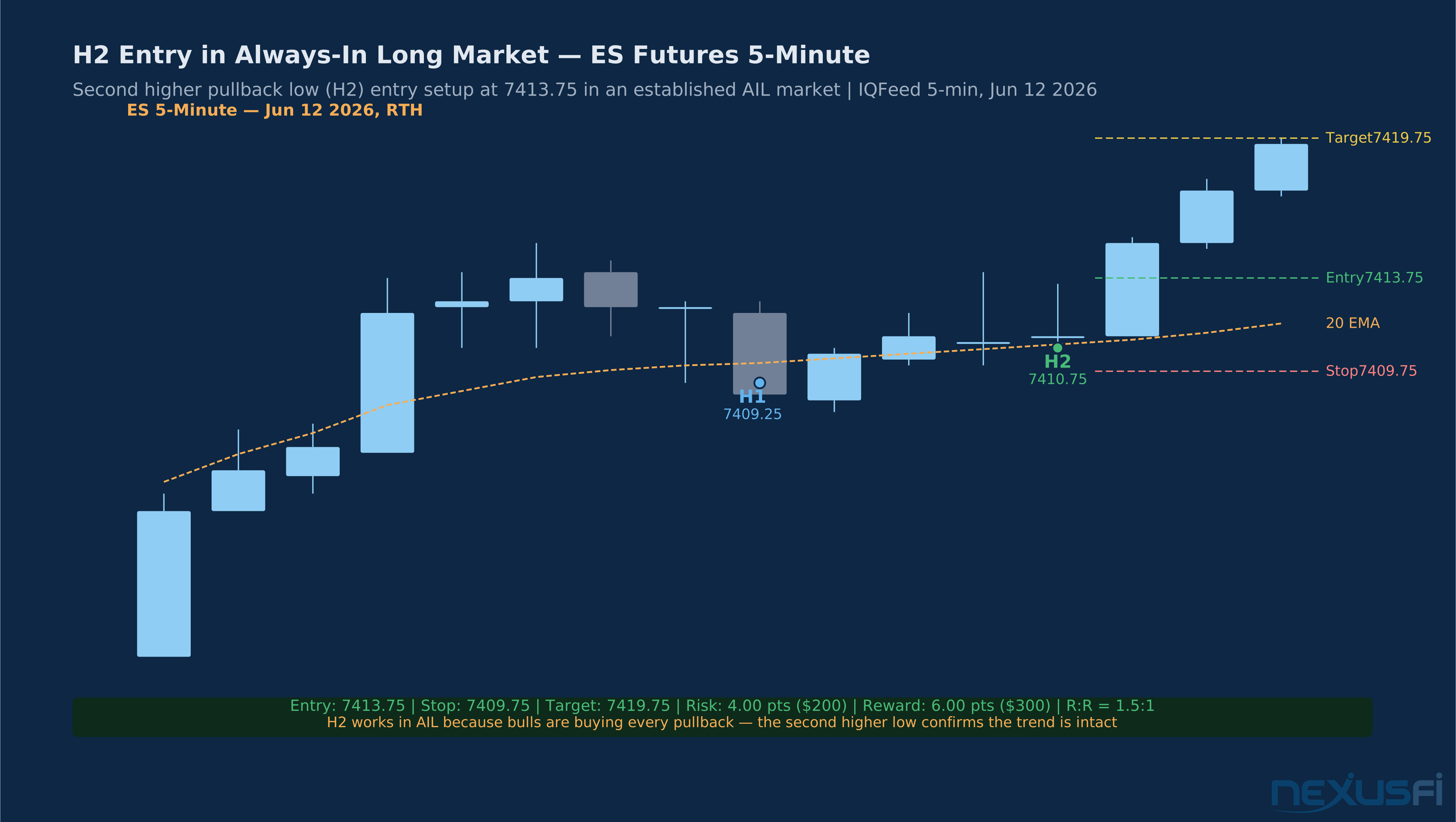
In an AIL market, after a pullback produces an H2 setup, the entry trigger confirms the Always-In direction. When you enter long on an H2 and the trade immediately works — price moves in your favor without hesitation — that's the market confirming AIL. The bulls had been waiting for exactly that retracement.
When an H2 entry triggers and immediately stalls or reverses, that's a warning. The setup triggered, but the bulls aren't there in force. It may indicate the Always-In direction is weaker than it appeared, or that you're in a range rather than a trend.
Session Transitions #
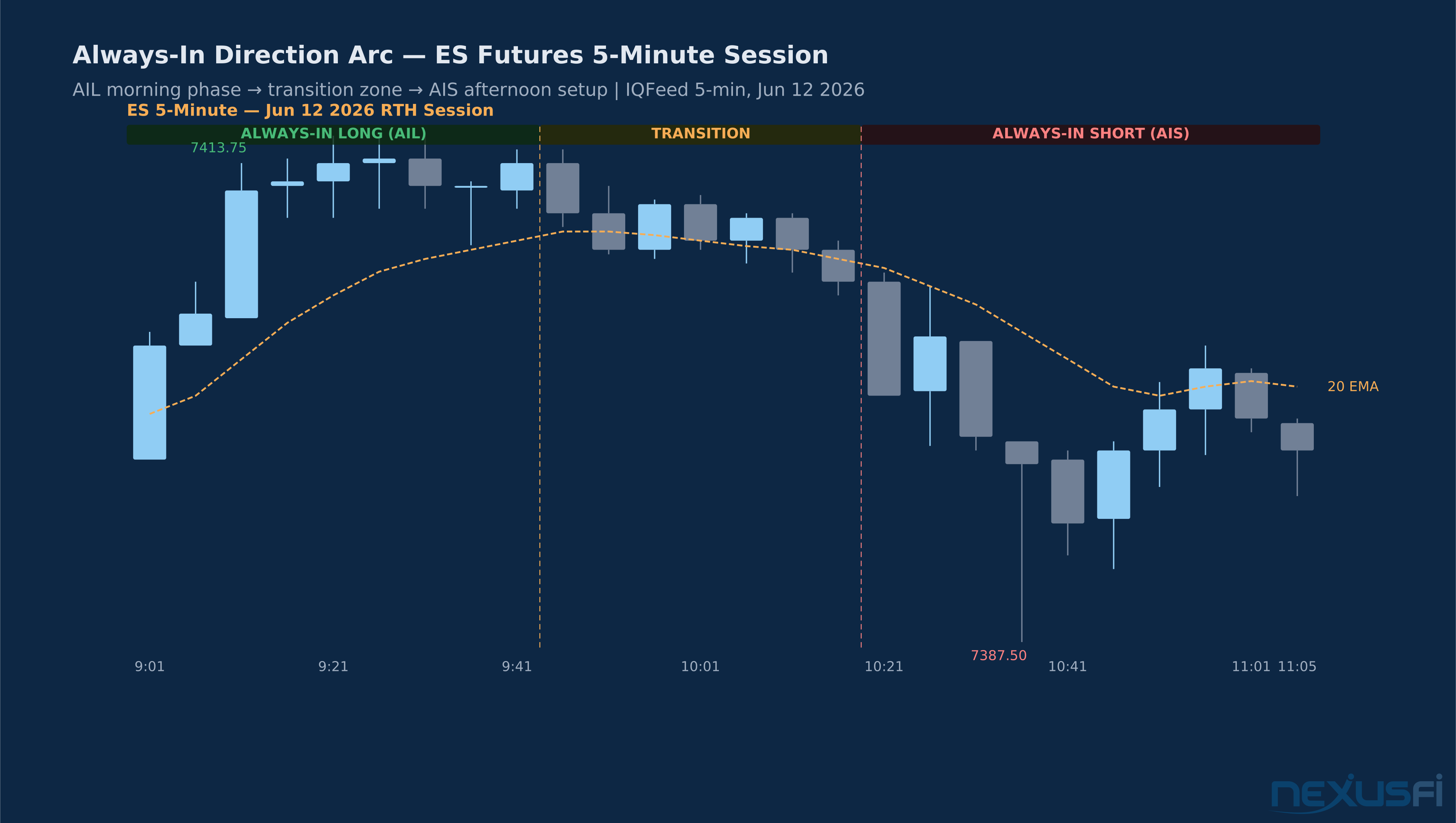
Be aware that Always-In direction can shift at regular times: the open (9:30 ET), the European close (~11:30 ET), and the afternoon FOMC/economic data windows. These aren't rules — they're times to reassess the directional evidence rather than assuming the morning's AIL/AIS direction carries through.
Trade Management When You're Wrong About AI Direction #
You will misread Always-In direction. The question is how to manage it.
The Worst Case: Wrong Direction in a Strong Trend #
You enter long (believing AIL) and you're wrong — the market blows through your stop. Take it. Don't let it become a disaster by not having a stop or moving your stop down. The bears have now shown you, with real money, that AIS is in control.
The Classic Recovery #
After a wrong-direction loss in a strong trend, consider reversing. If you were long and got stopped out with a strong bear bar closing near its low, that bar is a sell signal. Enter short one tick below it.
Brooks makes this explicit: the stop that takes you out of a wrong-direction trade is simultaneously an entry signal in the correct direction. Reversing immediately captures the same move that stopped you out.
Calibrating After a Flip #
After a flip occurs, recalibrate — not revenge trade. A genuine flip shows: new swing low below the prior swing low, failed bull breakout, multiple consecutive bear bars. A mere AIL pullback shows: weaker overlapping bars, EMA not broken, no lower swing low. Check which pattern you're seeing before committing to the new AIS direction.
The management rule: treat apparent flips as real until the evidence suggests they're not. The cost of assuming "it's just a pullback" when it's actually a flip is far higher than the cost of exiting a valid long trade early.
The bar that stops you out is directional data. A strong bear bar that rips through your long stop and closes on its low didn't just end a trade — it confirmed AIS. Many experienced Brooks traders treat their first stop-out of a session as the market's way of showing them the real direction. The recovery move is to reverse, not to wait and re-enter long.
Always-In in Practice: Four Scenarios #
Scenario 1: Clean AIL Day #
The ES opens and immediately produces a bull bar, then another, then another. The first three 5-minute bars are all bull trend bars closing near their highs. The 20 EMA starts rising immediately. The first pullback produces an H1 at bar 6 — a weak bear bar followed by a bull bar. The H1 triggers, price moves up. Another pullback produces an H2 at bar 10. H2 triggers, price continues higher.
Throughout the morning, every pullback produces an H1 or H2 entry that works. Bears attempt a reversal at bar 15 with a strong bear bar — but the next bar is a bull bar that takes out the bear bar's high. Bears trapped. AIL confirmed by failed reversal.
Management: Use H2 entries aggressively. Size up. Hold runners with trailing stops. Don't short.
Scenario 2: AIL That Transitions to Trading Range #
Strong bull start, AIL confirmed. But at bar 20, a bull breakout above the prior high fails — price breaks above, then immediately reverses and closes below. Three overlapping bars follow. The EMA starts to flatten. A lower high forms.
This is a warning. Reduce long exposure. The next pullback may not hold at the EMA. If price makes a new swing low, exit remaining longs. Watch for whether the range resolves back to AIL or transitions to AIS.
Management: Smaller size. Buy support, not aggressive new highs.
Scenario 3: Flip Mid-Session #
AIL morning, then at 11:00 ET a strong data release causes a sharp sell. Three consecutive strong bear bars, the second making a lower swing low. Always-In flips to AIS. All long positions should be out. The next bounce (a bull bar as traders buy the drop) is likely to fail — shorting it near the prior support, now resistance, is the correct AIS trade.
Management: Reverse or go flat. Bias is now downward unless bar-quality evidence changes.
Scenario 4: True Range Day (No Strong AI Direction) #
Opening produces two bull bars, then two bear bars, then a bull bar. The EMA is flat. Bars heavily overlap. No clean directional structure.
Always-In direction is ambiguous — the market is balanced. This is a range day. Trading strategy shifts from "enter in the direction of AI" to "buy the low end, sell the high end." At the range low, brief AIL is likely. At the range high, brief AIS is likely.
Management: Size down much. Quick profits. Both directions valid at extremes.
Common Mistakes and Misapplications #
Declaring AIL from one or two bars. For a meaningful Always-In call, you need the full convergence of signals — bar sequence, EMA, swing structure, close distribution, and failed counter-trend moves. Two consecutive bull bars is a short-term observation, not an Always-In determination.
Confusing a deep AIL pullback for a flip. Strong AIL markets routinely pull back 10-15 bars with 40-50% retracements. A four-bar pullback is normal correction. A flip requires structural evidence: lower swing low, EMA breakdown, failed bull continuation.
Holding the wrong bias after clear flip evidence. If the market has shown consecutive strong bear bars, a lower swing low, and a failed bull attempt — exit longs regardless of what the daily chart shows. AIL/AIS is specific to the timeframe you're trading.
Trading without knowing the current AI direction. Before any trade, consciously state whether the market is AIL, AIS, or ambiguous. If you can't answer, trade smaller or skip.
Forcing a directional bias when the market is balanced. When AIL/AIS is genuinely ambiguous, the correct response is range trading at extremes — not inventing a direction that isn't there.
Relationship to Other Brooks Concepts #
Always-In direction is the backbone of the entire Brooks methodology. Every other concept connects to it:
H1/H2 and L1/L2 entries: H2 entries are valid in AIL contexts. L2 entries are valid in AIS contexts. In ambiguous/range AI direction, both H2 and L2 are lower probability.
Spike and channel: The spike establishes a strong initial Always-In direction. The channel sustains it (in modified form). The end of the channel and transition to trading range weakens the Always-In direction.
Measured moves: Measured move targets assume the current AI direction will persist long enough to reach the projection. Strong AI direction = higher confidence in the measured move. Weakening AI direction = reduce target expectations.
Trapped traders: The trapped-trader dynamic works precisely because the market has a clear Always-In direction. Longs are trapped when AI is AIS (they entered against the dominant force). Shorts are trapped when AI is AIL. The squeeze from trapped traders adds to the directional move.
Barb Wire: The multiple overlapping bars of Barb Wire indicate that Always-In direction is unclear or absent. Brooks specifically says to avoid Barb Wire entries — there's no dominant direction to trade with.
Quick Reference: Always-In Direction Checklist #
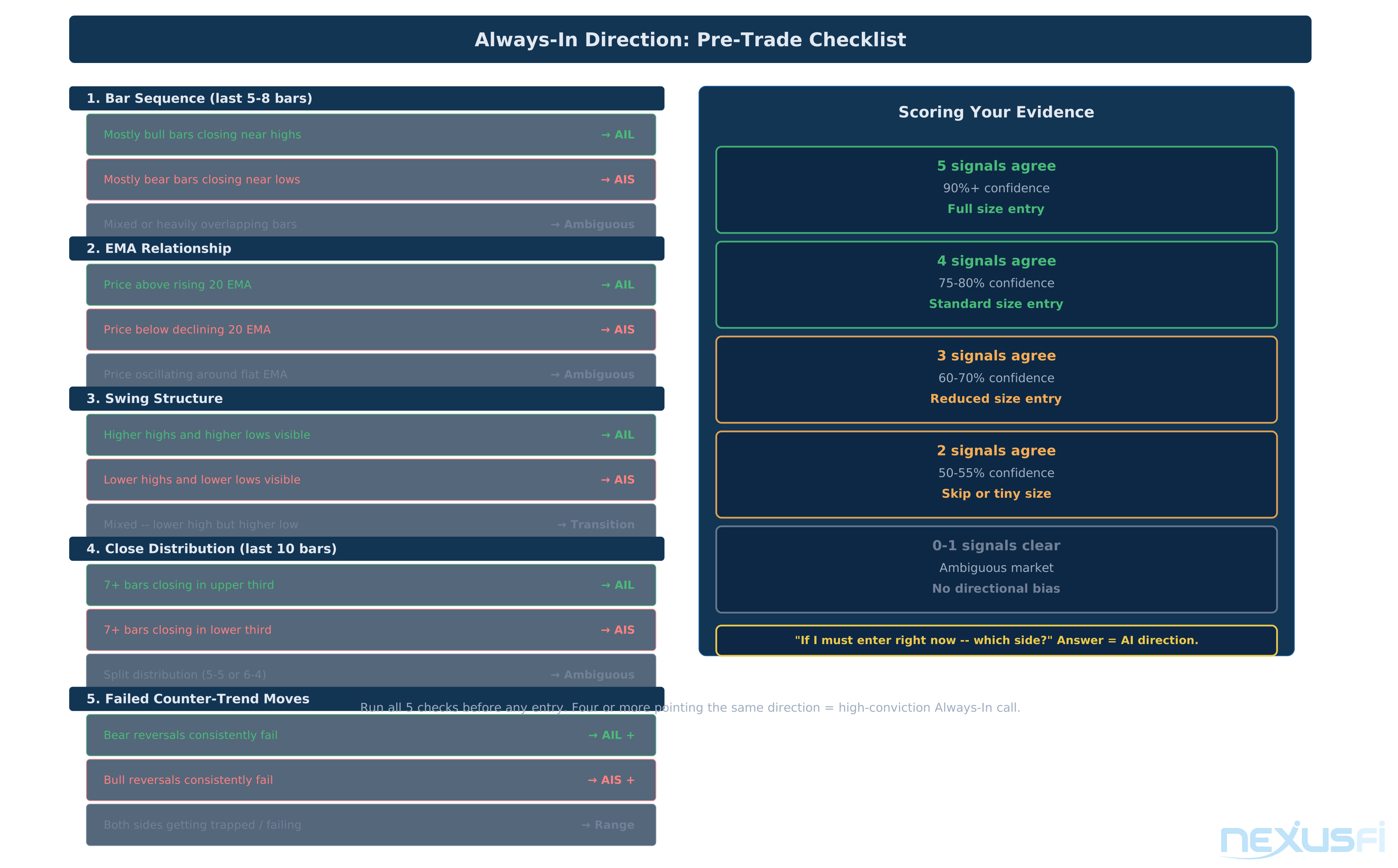
Before any trade, check all five signals and count how many point in the same direction:
Bar sequence (last 5-8 bars): Bull bars closing near highs = AIL. Bear bars closing near lows = AIS. Mixed/overlapping = ambiguous.
EMA relationship: Price above rising EMA = AIL. Price below declining EMA = AIS. Oscillating around flat EMA = ambiguous.
Swing structure: Higher highs and higher lows = AIL. Lower highs and lower lows = AIS. Mixed = transitional.
Close distribution (last 10 bars): Seven or more closing in the upper third = AIL. Seven or more in the lower third = AIS. Spread = ambiguous.
Failed counter-trend moves: Bear reversals consistently failing = AIL confirmed. Bull reversals consistently failing = AIS confirmed. Both sides failing = range.
Score your evidence: 4-5 signals aligned = high conviction. 3 signals = moderate. 2 or fewer = ambiguous, trade smaller or skip.
Always-In direction is weight of evidence, not a single signal. Four or more signals aligned = high conviction. Two or fewer = ambiguous, trade smaller or skip. When you genuinely can't choose AIL or AIS, the market is balanced — that's the correct read, not a failure.
Connecting to the Al Brooks Hub #
This concept is a spoke of the Al Brooks Price Action Method hub. For context on other core concepts that interact with Always-In direction, see:
- Two-Legged Pullback Trading — the primary entry pattern in AIL and AIS environments
- Bar-by-Bar Price Action Reading — the real-time reading skill that determines AI direction bar by bar
- Breakout Trading Strategies — how failed breakouts signal AI direction flips
The Always-In concept is the most fundamental read in Brooks' framework. Get this right, and every other concept falls into place. Get it wrong, and even technically perfect setups will fail because you're trading against the market's current dominant force.
Knowledge Map
Go Deeper
Build on this knowledgeReferences This Article
Articles that build on this topicCitations
- — Making a Living with the Micros (2021) 👍 3“LONG is the better default direction. Only looking for one side of the trade either long or short all the time has helped me tremendously to understand the markets.”
- — Blackgrey45 Journal (2023) 👍 2“Committing to a direction first simplifies decision-making -- it is highly advanced to switch long/short throughout the day.”
- — The Elusive Price Action: How to Trade (2011) 👍 13“When PA is above the 20 EMA (up trend) I take long signals, when PA is below the 20 EMA (down trend) I take short signals, if it's straddling (channel/chop) I sit on my hands and wait for the breakout.”
- — Price Action Ripper's Journal (2014) 👍 4“Buying Pressure: More bull bars than bear bars, consecutive bull bars, bull bodies bigger than bear bodies, bars closing near high, bull micro channels with no pullbacks.”
- — Always In Swing Trading -- Brooks Trading Course (2014)
- — Questions on Always-In Direction Flipping -- Brooks Trading Course (2021)
- — Book Discussion: Reading Price Charts Bar by Bar by Al Brooks (2009) 👍 11“Number one question: is the market trending or not? A big move in one direction that is followed by one that retraces the entire move often means the market will move into a trading range.”
- — Pull back vs Trend reversal (2019) 👍 10“The only way I truly have confirmation is when price breaks above or below the previous correction (LH/HL). Up until I get that close above or below, I trade every signal as a pullback.”
- — Day Trading the ES PATS style- 1 point at a time (2014) 👍 19“The most important thing is to get the right bias. I look at every candle and when I look at it I ask myself: is this a bull candle or a bear candle? Over time this builds a directional picture.”
- — Spoo-nalysis ES e-mini futures S&P 500 (2015) 👍 19“A focus on probabilities is great when the potential outcomes are symmetrical, but is completely inappropriate when payoffs are skewed. A low probability trade may be the better choice on an expected-value basis.”
- — HumbleTrader's next chapter (2022) 👍 3“My directional bias never faltered. I took 14 short trades and 6 long trades. Win ratio for shorts 40%, for longs 100%. All the profits came from longs -- the side the market was actually on.”
- — PA Dax CL, ES and Bund Price Action Trading Log (2019) 👍 9“That's the problem with trends -- the continuation signals look weak and scary and the pullbacks are really strong and seem logical. But context is everything: when you have three plunges in a row with comparable sizes, the dominant direction is clear even when individual bars look weak.”