



Swing Trading Strategies for Futures
Overview #
Swing trading futures means holding a directional position for 2 to 15 trading days — long enough to capture multi-session price moves, short enough to avoid the capital drag and thesis decay of position trading. It sits between the intraday grind and the multi-week commitment, targeting the "meat" of a swing leg rather than the noise.
What makes futures swing trading different from equities? Three things: leverage, overnight gaps, and contract expiration. You're trading a leveraged derivative that marks to market daily, trades nearly 24 hours, and expires on a schedule you can't ignore. As @Big Mike puts it, "you should only hold overnight from a position of strength. For example, being long or short near the extremes of the day." [1] That single principle — overnight holds require justification, not default assumption — separates futures swing traders from equity swing traders who simply click "hold" and check back in a week.
The framework here covers five specific setup families across ES, NQ, CL, GC, and Treasury futures (ZB/ZN), with concrete parameters for entry, stops, targets, and the overnight risk management that makes or breaks futures swing trading.
The Swing Trading Framework #
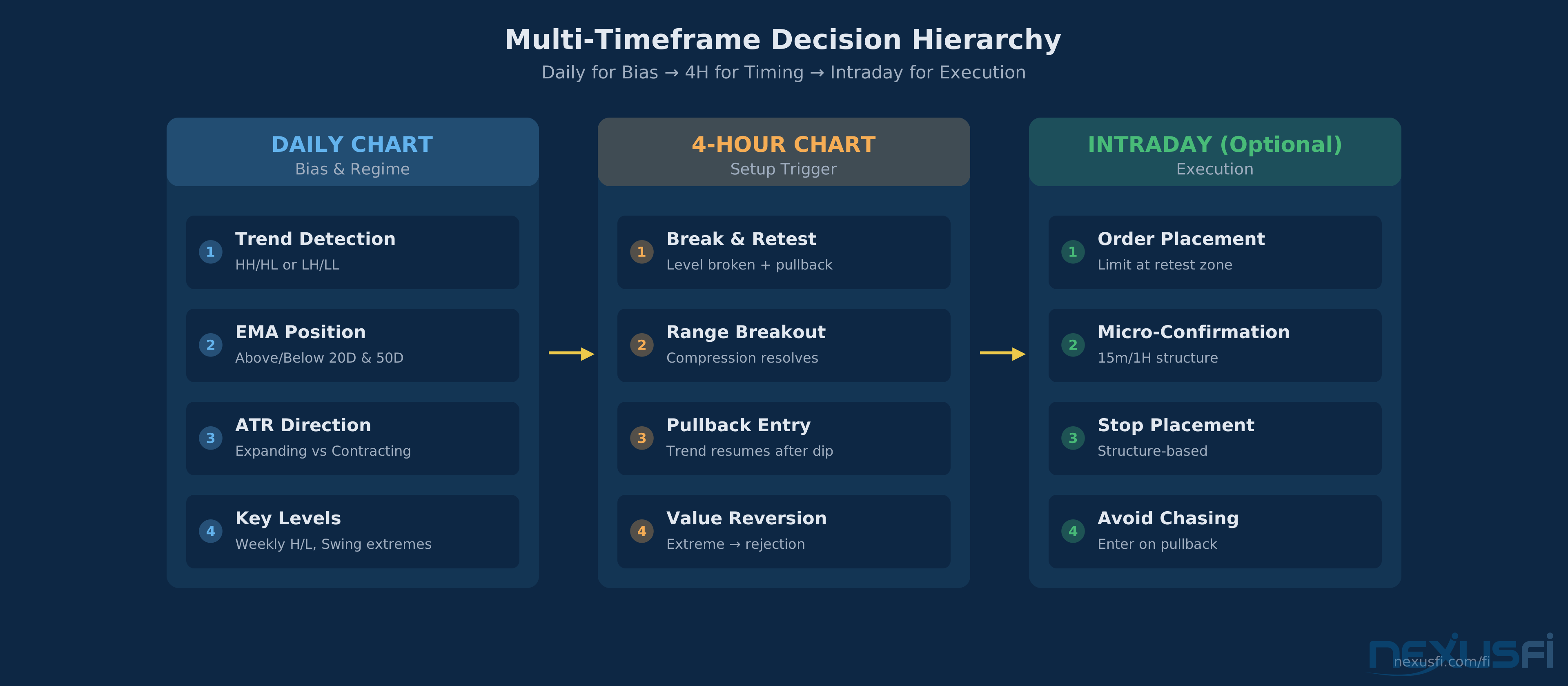
Every swing trade in futures follows the same decision hierarchy: Daily for bias, 4H for timing, intraday for execution. The daily chart tells you what kind of market you're in — trending, ranging, compressing, or expanding. The 4-hour chart tells you when to act. And an optional intraday chart (15m or 1H) helps you place the order without chasing.
The critical mental model: your entry is a trigger, not the thesis. The thesis comes from the daily chart. The 4H provides confirmation. If you find yourself building your entire thesis on a 4H pattern without daily context, you're not swing trading — you're guessing with a wider stop.
Bias Selection (Daily) #
Before anything else, determine the regime:
- Trend: Higher highs and higher lows (or the inverse). Price consistently above/below the 20-day and 50-day EMA. ATR(14) trending upward.
- Range/Balance: Overlapping swings. 20-day EMA flat. Price rotating between established boundaries.
- Compression: ATR contracting. Daily ranges narrowing for 3+ sessions. Energy building for expansion.
Map 3-5 key reference levels: prior week high/low, last significant swing extreme, weekly VWAP, and any major profile levels (POC, value area edges) that sit within range.
Setup Trigger (4H) #
Once daily bias is established, the 4H identifies the specific event that confirms the trade:
- Break and retest: Price breaks a daily level, then pulls back to test it from the other side
- Range breakout with continuation: Compression resolves with a close outside the range, followed by 4H follow-through
- Pullback completion: In a trend, price pulls back and then resumes direction
- Value reversion trigger: In range markets, price reaches an extreme and prints a rejection
The standard here is a 4H close beyond the relevant level — not an intrabar wick or a single tick probe. Closes carry conviction. Wicks carry noise.
Invalidation #
Define where the market proves you wrong before you enter. This should be structure-based (below the retest low, beyond the pullback extreme, outside the value zone) — not an arbitrary tick distance. Your invalidation determines your stop, which determines your position size, which determines whether you survive overnight.
Target Logic #
Targets should come from market structure, not round numbers or hope:
- Prior daily swing extreme
- Measured move (range width or impulse projection)
- Value area boundary or weekly VWAP
- R-multiple framework: partial at 1.5R, trail remainder to 2-3R
Trade Management #
After entry, the rules are simple:
- Take partial profit at first structural target (often 1.5R)
- Trail the remainder behind 4H swing structure (higher lows for longs, lower highs for shorts)
- Exit or reduce before major scheduled events if the thesis is short-term
- Don't over-manage. As one expert trader put it: set the target, define the stop, and let the market play out. Frequent micro-adjustments lead to premature exits before the primary swing target is reached.
Instrument-Specific Realities #
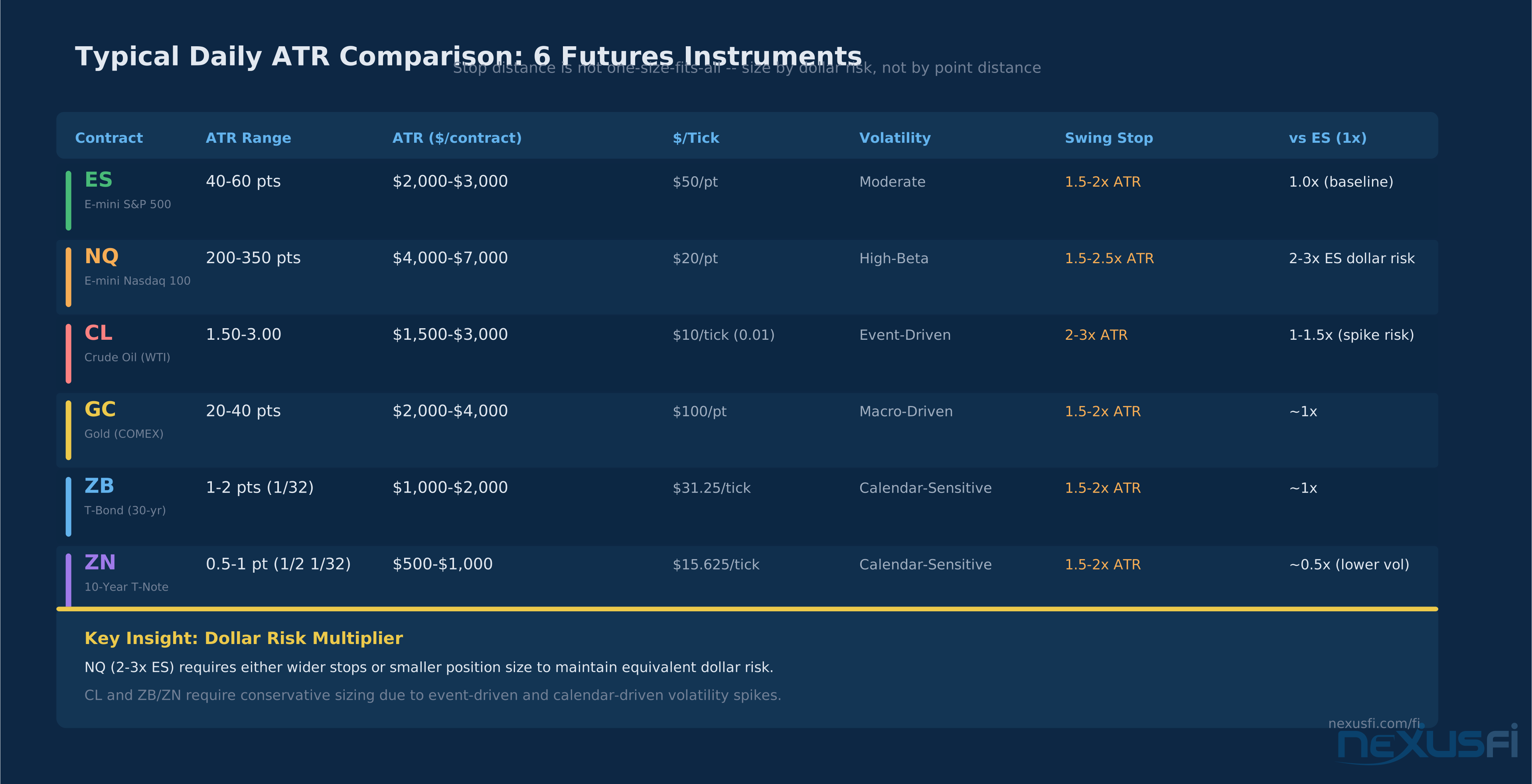
Each futures contract has a distinct personality. Using identical stop multiples and sizing across ES, NQ, CL, GC, and ZB is a systematic error.
ES (E-mini S&P 500) #
ES respects higher-timeframe structure well. Retests of daily levels tend to be clean, and the 4H timeframe provides reliable setups. Liquidity is deep, execution slippage is generally manageable, and overnight gaps — while they happen — are less violent than CL or NQ.
Best swing approaches: Structure break retests, momentum continuation in established trends, range fading during balanced weeks.
Watch out for: Extended chop near options expiration, false breakouts around FOMC and CPI, and month-end rebalancing flows that override technical levels.
NQ (E-mini Nasdaq 100) #
NQ is ES's high-beta cousin. Swings are faster, pullbacks are deeper, and stops get clipped more often. If you're using the same stop distance on NQ as you would on ES, you're going to get stopped out of perfectly valid trades.
Adjustment: Either widen stops using ATR-based calibration or reduce position size. Many swing traders use micro NQ contracts (MNQ) specifically because the wider stops required for valid swing setups create unacceptable dollar risk on a full-size contract.
CL (Crude Oil) #
Crude is the most event-sensitive major futures contract. EIA inventory reports, OPEC decisions, geopolitical headlines — any of these can blow through your stop before you blink. As @PandaWarrior noted, "Certain instruments have very large swings overnight that would take a tight trail stop out. I trade crude oil which can have 300-500 tick intra-day swings." [2]
Best swing approaches: Breakout plays around compression before inventory/OPEC, momentum continuation when supply/demand narrative is clear.
Critical rule: Weekend holds in CL without a strong fundamental edge are expensive in risk terms. Position size must be conservative.
GC (Gold) #
Gold trades on macro narratives — real yields, USD strength, central bank expectations, and risk sentiment. When these narratives shift, GC can trend cleanly for days or weeks. When they don't, gold chops.
Best swing approaches: Mean reversion to value areas in range regimes, trend continuation when real yield shifts drive directional movement.
ZB/ZN (Treasury Futures) #
Treasury bonds are the most calendar-sensitive instrument on this list. FOMC, CPI, PPI, NFP, Treasury auctions — these events don't just move bonds, they define the entire multi-day trajectory. Structure breaks in treasuries can be "sticky" once the rates narrative shifts.
Critical warning: Don't hold a bond swing position through a major data release unless your thesis explicitly accounts for the event.
Five Swing Trading Setups #
Setup 1: HTF Structure Break → 4H Retest #
Hold time: 2-10 days
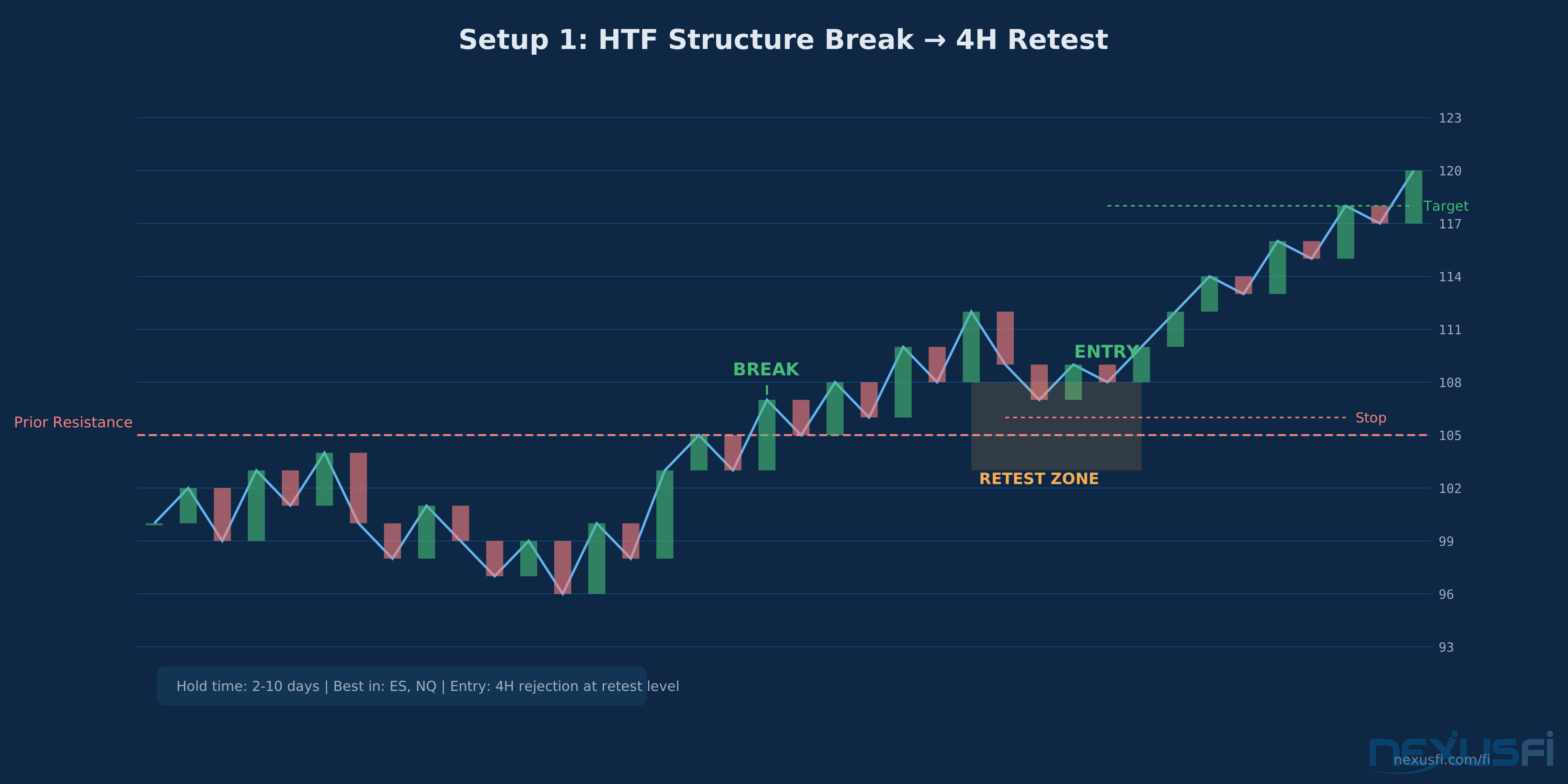
The institutional standard. A daily swing high or low gets taken out with a close (not just a wick), then price pulls back to test the broken level from the other side.
Entry: Wait for the 4H pullback into the broken level zone (within 0.25-0.50x daily ATR of the level). Enter when a 4H candle rejects and closes back in the breakout direction.
Stop: Below the retest low (longs) or above the retest high (shorts), plus a small buffer.
Target: Prior daily swing extreme for the first target. Measured move (previous impulse length projected from breakout) for the runner.
Example in ES: Daily closes above the prior 2-week high. Price pulls back over 1-2 sessions to test the broken level. A 4H candle prints a higher low with a rejection wick, then closes firmly above the level. Long entry. Stop below the retest low. Target the next weekly resistance.
When it fails: False breakouts — the level gets taken but price never accepts above it. Also fails when the retest is too deep and effectively erases the breakout structure. On trend days with strong momentum, the retest may never come, and you miss the move entirely.
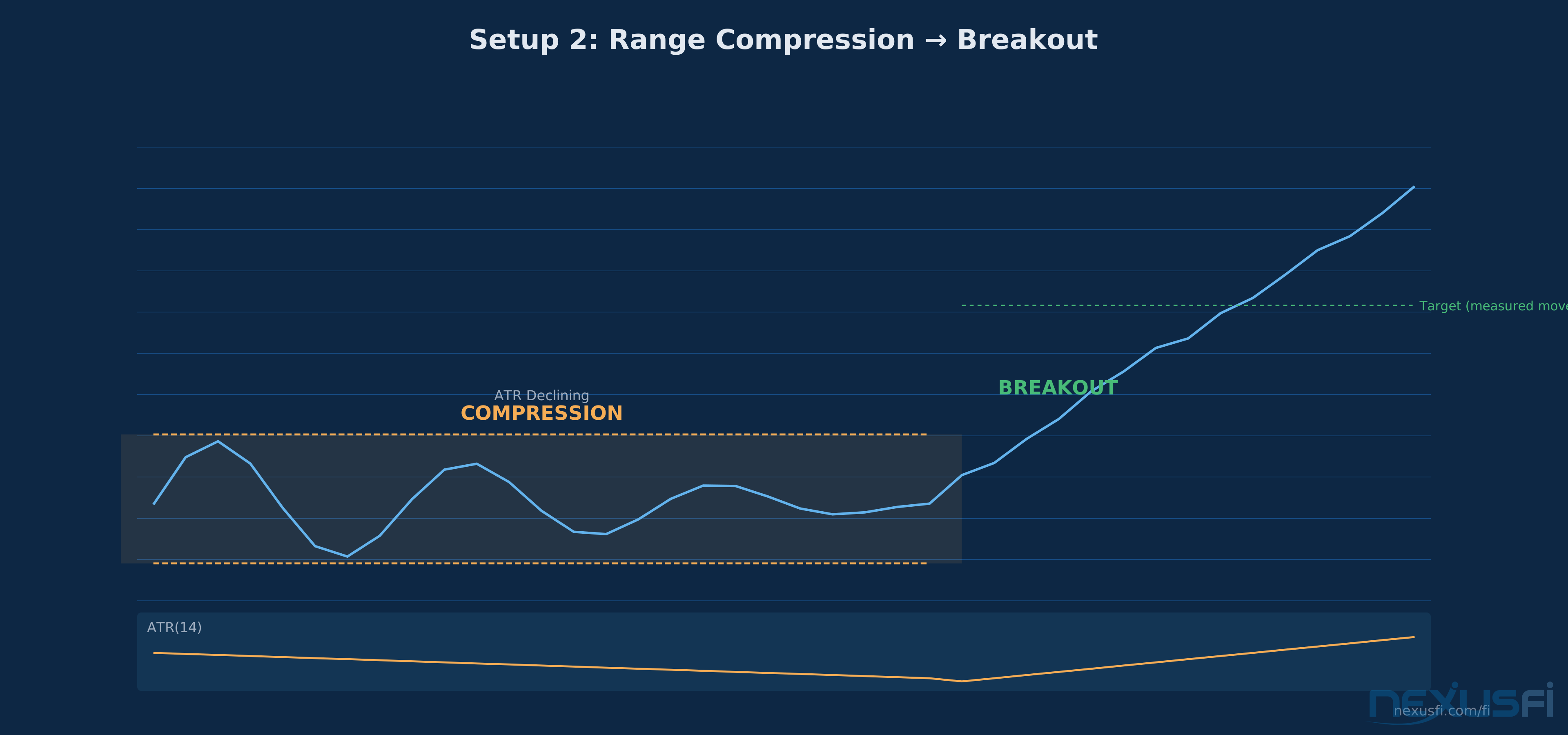
Setup 2: Daily Range Compression → Breakout + 4H Continuation #
Hold time: 3-7 days
Volatility contracts, then expands. The setup identifies the compression and trades the expansion. Research on managed futures confirms this dynamic: range compression following major market moves can persist for extended periods, and the subsequent expansion is what generates outsized returns for trend-following strategies. [8]
Compression identification: ATR(14) declining for 3-7 sessions, or the last 5-10 day range is below 70-80% of the prior 10-20 day average. Define the range boundaries (highest high and lowest low of the compression window).
Entry: Daily close outside the range boundary. Then require 4H continuation — a subsequent 4H close further in the breakout direction, or at minimum a 4H higher low (for longs) that holds above the breakout level.
Stop: Back inside the compression range.
Target: Measured move equal to the compression range width. Second target at the next daily swing extreme.
Example in CL: Crude compresses for 5 sessions ahead of an EIA report. Daily range narrows to half the typical ATR. After the report, price breaks above the range high and the 4H follows through with a continuation close. Long entry. Target: range height projected above the breakout level.
When it fails: Classic fakeout — breakout occurs, then immediate reversal back inside the range. Especially dangerous around events where the initial reaction reverses. Solution: require 4H confirmation before entering, and accept that you'll miss the first leg of some real breakouts.
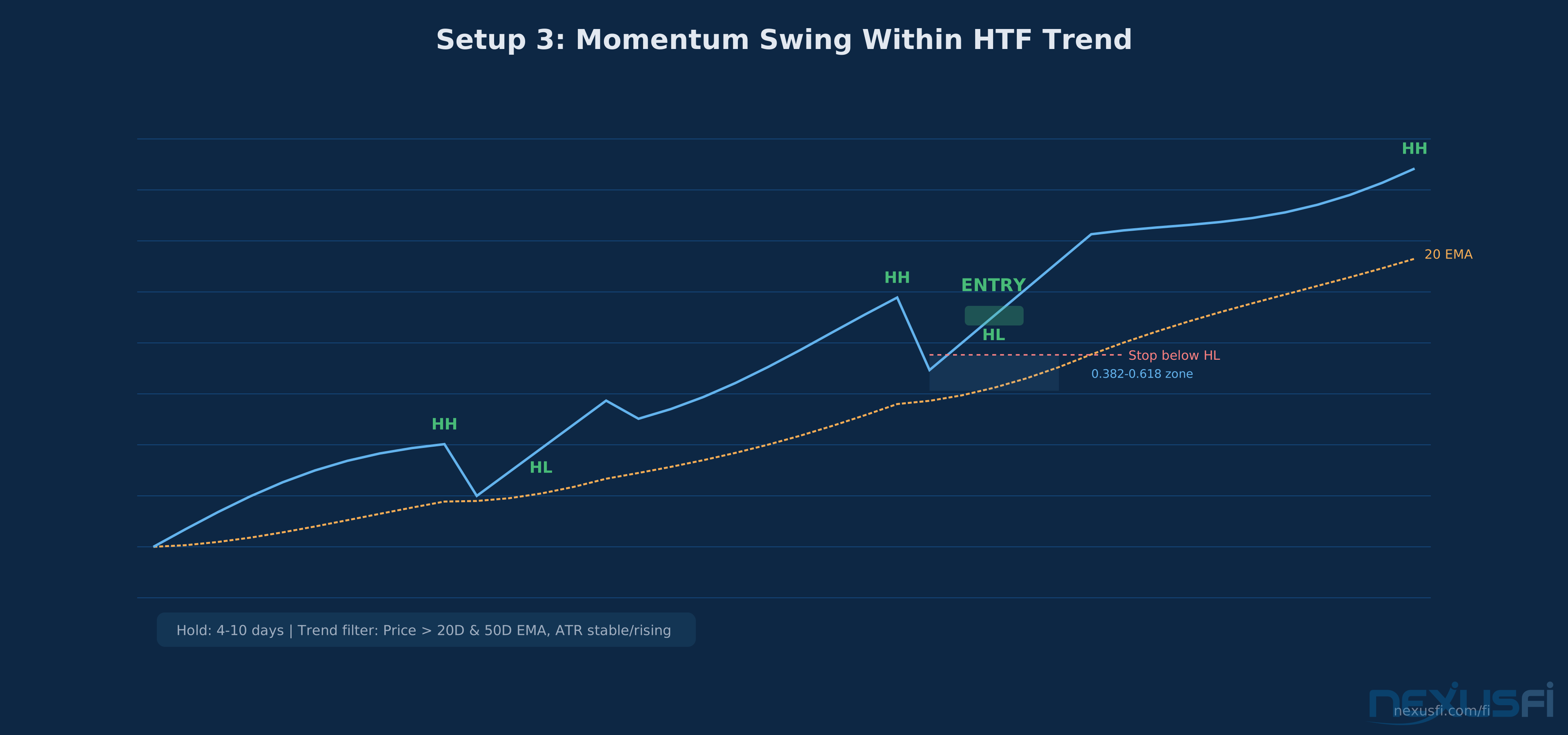
Setup 3: 4H Momentum Swing Within HTF Trend #
Hold time: 4-10 days
The workhorse setup for trending markets. The daily trend is intact, and you're buying the pullback.
Trend filter: Daily making higher highs and higher lows. Price above both 20D and 50D EMA. ATR(14) stable or rising.
Entry: 4H pullback to structural support — prior swing low, broken resistance now acting as support, or a zone near the 0.382-0.618 retracement of the last 4H impulse. Enter when 4H prints a momentum candle that closes back in the trend direction after the pullback.
Stop: Below the pullback low (longs) or above the pullback high (shorts).
Target: Prior daily swing high for the first target. Let the runner trail behind 4H higher lows.
Scaling approach: Start with 1/2 to 1/3 position. Add the rest only after price holds above entry through the next session. This protects against pullbacks that become reversals.
When it fails: Trend exhaustion. The third pullback in a trend often fails as momentum wanes. If the pullback retraces deeper than prior pullbacks in the same trend, that's a warning sign. Also fails when you enter too late — after momentum has already moved much from the pullback low.
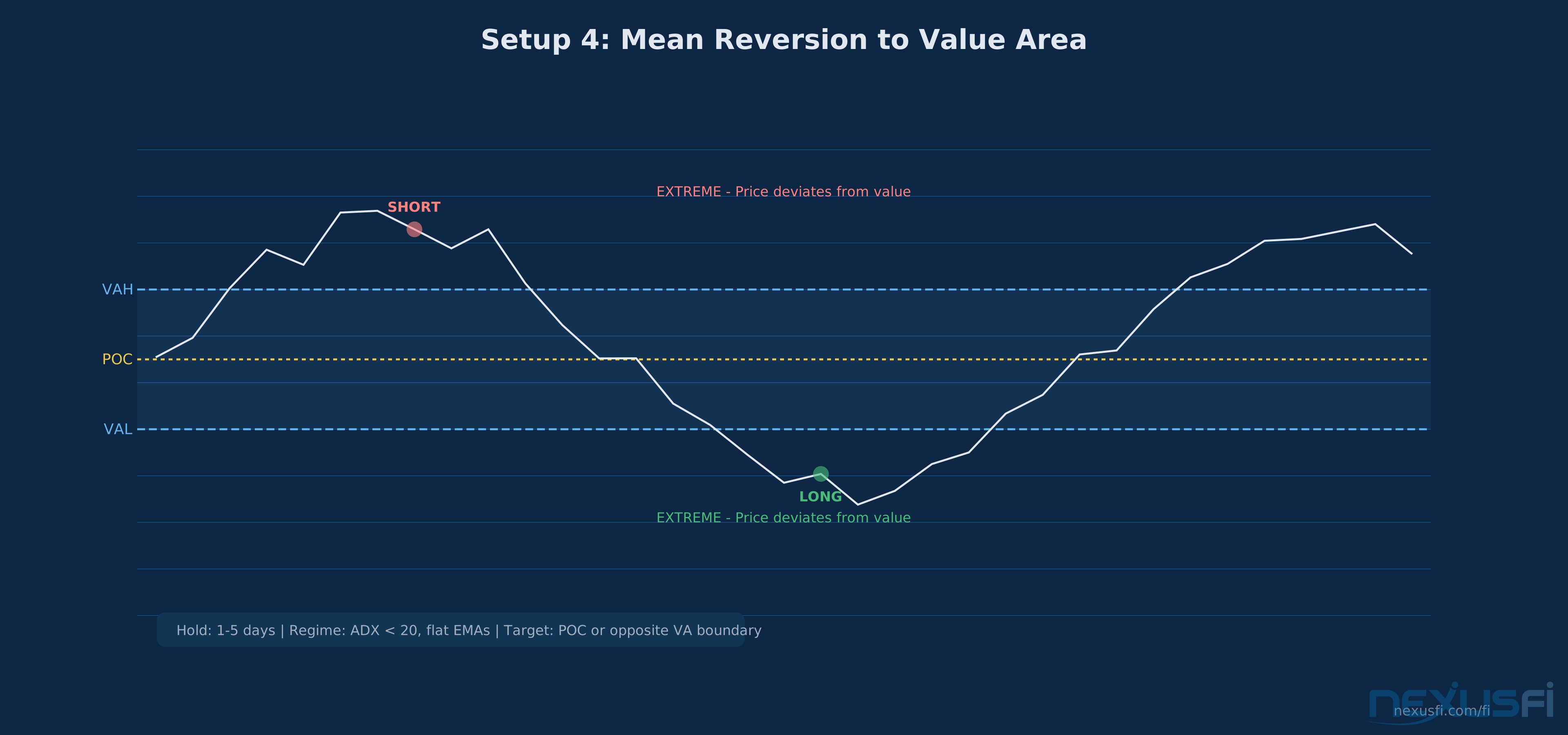
Setup 4: Mean Reversion to Daily VWAP/Value Area #
Hold time: 1-5 days
A mean reversion strategy for range-bound markets. Only works when the market is balanced — no clear daily trend structure.
Regime filter: Daily ADX below 20 or flat 20D EMA. Overlapping swings. Price rotating within established boundaries.
Entry: Price extends beyond the value area (VAH/VAL) or deviates more than 1x ATR from daily VWAP. Wait for a 4H rejection candle — wick into the extreme with close back toward value. Enter on the close or on the next 4H open.
Stop: Beyond the deviation extreme (e.g., more than 1.5x ATR from VWAP).
Target: VWAP, point of control, or the opposite value area boundary.
When it fails: The range converts to a trend. This is the most dangerous failure mode — what looks like a mean reversion opportunity is actually the start of a directional move. The regime filter is non-negotiable. If daily structure breaks while you're in the trade, exit immediately regardless of P&L.
Setup 5: Macro-Event-Aware Swing Window #
Hold time: 1-7 days (event-dependent)
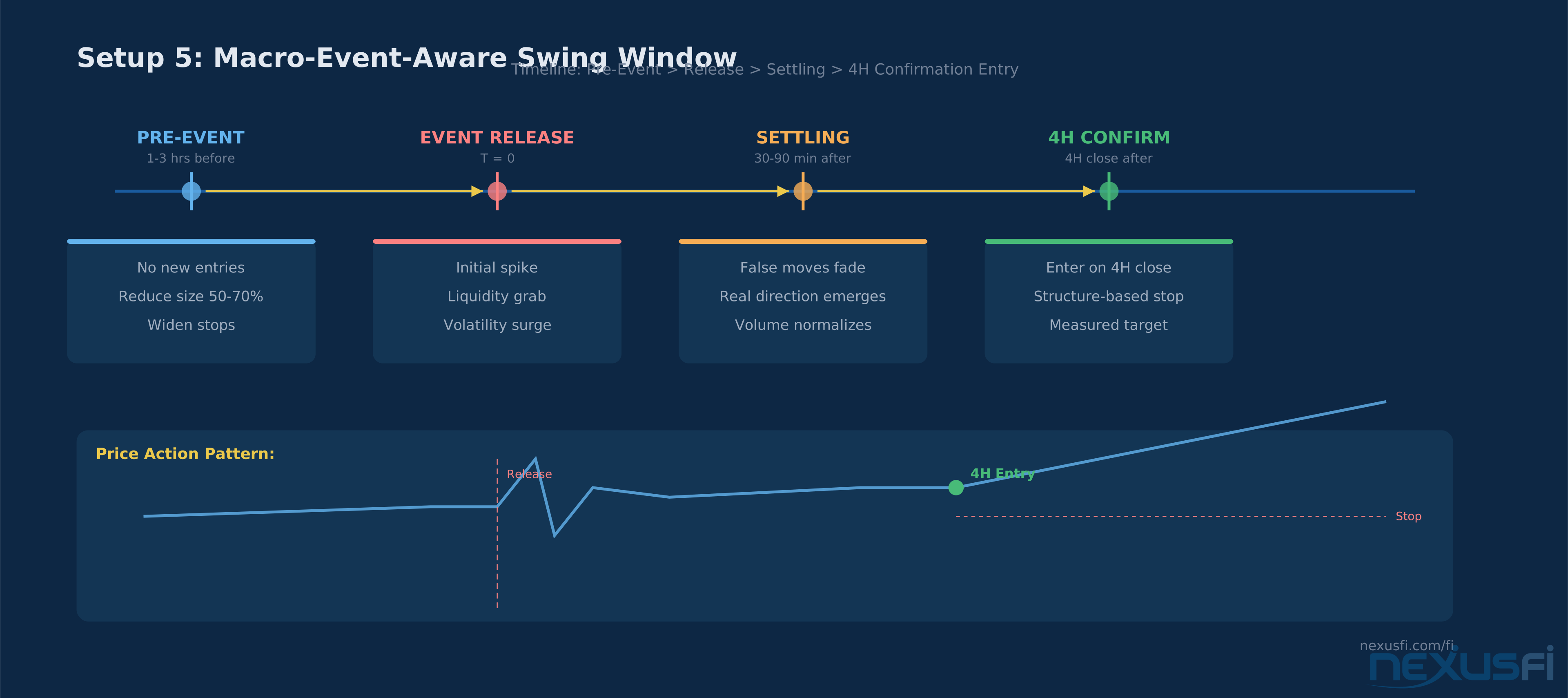
This isn't a chart pattern — it's a risk management overlay that modifies how you apply the other four setups around scheduled macro events.
Key events by instrument:
- ES/NQ: CPI, NFP, FOMC, major earnings clusters
- CL: EIA inventory, OPEC decisions, geopolitical flashpoints
- GC: CPI, real yield shifts, central bank communications
- ZB: CPI, PPI, NFP, FOMC, Treasury auctions
Pre-event protocol: No new entries within 1-3 hours of the release. If holding an existing position, reduce size by 50-70% or widen your stop to account for event volatility. Never add to a position pre-event.
Post-event protocol: Wait for the initial reaction to settle. Require 4H close confirmation before entering the technical swing. The first move on a release is often a liquidity grab — the real move comes after.
When it fails: Trading the prediction instead of the reaction. Also fails when the event produces a spike-and-reversal that triggers your stop via slippage before the real move develops.
Risk Management: The Swing Trader's Edge #
Risk management isn't a section you read once — it's the reason you survive long enough to profit from the setups above.
Overnight Gap Management #
@Big Mike's guidance is worth repeating: "Holding just one day is really difficult to make a profitable trade out of. You need to hold the same position for 3 days or more, because of the mean reverting nature of the market." [1] The implication: swing trades need room to breathe, which means your overnight risk management can't be so tight that normal market noise stops you out.
Rules:
- Size positions so that a gap-through-stop scenario doesn't exceed 2% of account equity
The 3-Day Rule: @Big Mike's guidance on mean reversion isn't just observation — it's the mathematical case for giving swing trades room to breathe. Overnight holds need wider stops and smaller size than intraday trades precisely because normal market noise can trigger tight stops before the thesis plays out.
- Use wider structure-based stops rather than tight arbitrary levels
- Reduce or exit before binary events if the thesis doesn't specifically account for the outcome
- On Fridays, decide before the close whether you're carrying into the weekend — don't let it happen by default
Margin and Position Sizing #
[3] In other words, if overnight maintenance margin on ES is $6,000, you need at minimum $30,000-$40,000 per contract.
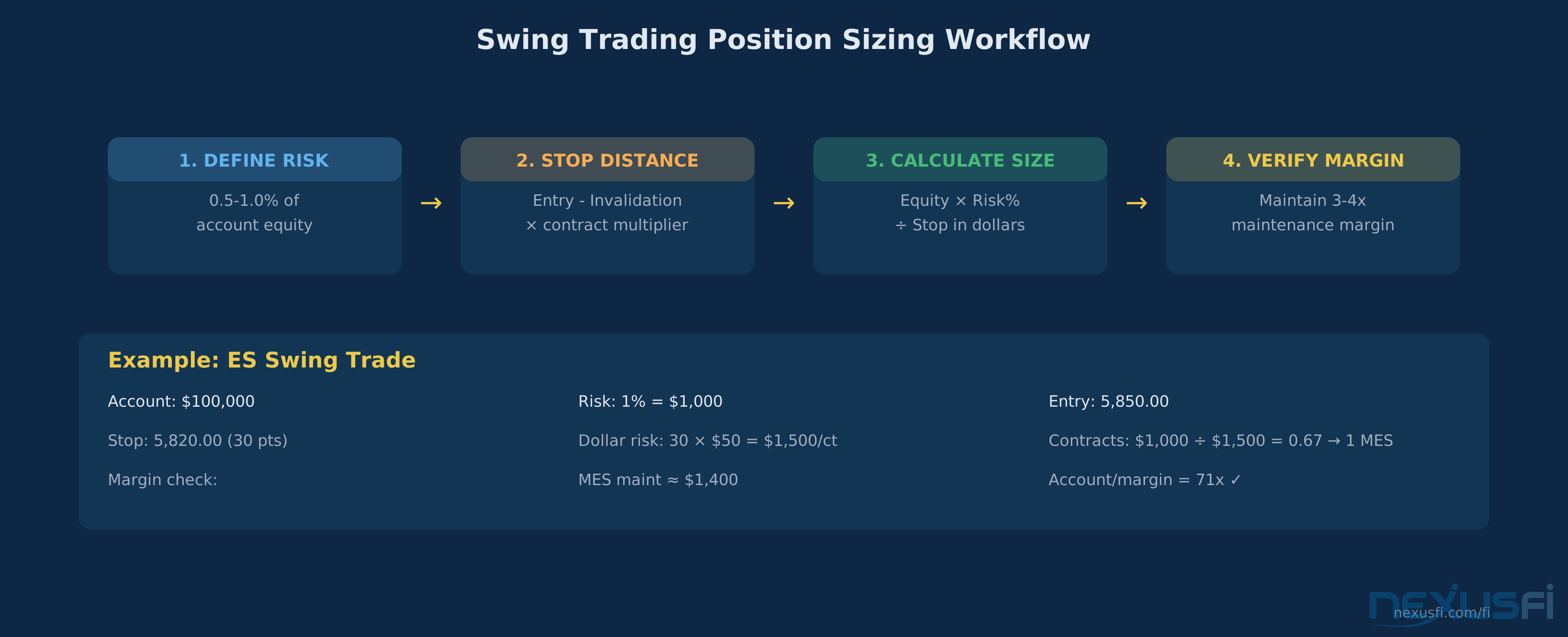
The sizing workflow:
- Define risk: 0.5-1.0% of account equity per trade
- Calculate stop distance: Entry minus invalidation, converted to dollars using the contract multiplier
- Determine contracts: Account equity × risk% ÷ stop in dollars
- Verify margin headroom: Ensure you maintain 3-4x the maintenance margin requirement. CME Group defines maintenance margin as the minimum balance that must be maintained in a trading account — if equity falls below this threshold, a margin call is issued to restore the account to the initial margin level. [7]
Margin is not a risk tool. You can be fully margin-compliant and still catastrophically overleveraged. Size by risk, not by what your broker allows.
Contract Rollover #
For swings lasting more than a few days, rollover can occur mid-position. As @max-td explains in a widely-referenced guide: "New swing positions might be better opened using the new contract if opened within a few days of rollover day." [4]
Practical rollover rules for swing traders:
- Track volume and open interest migration — roll when the next contract becomes more liquid
- Avoid initiating new positions within 5 days of roll
- If holding through roll, map your stops and targets to the new contract (adjust for the spread)
- Use rollover-adjusted charts for analysis but execute in the live front-month contract
- For commodity futures (CL, GC), roll timing is more critical due to delivery constraints
Practical Application #
Daily Pre-Session Checklist #
Before every session, answer these questions:
- What's the daily regime? Trend up, trend down, range, or compression?
- Where are the key levels? Prior week high/low, last swing extreme, major profile levels
- Is there an event today or tomorrow? Check the macro calendar
- What contract am I trading? Verify it's the liquid front month
- What's my maximum exposure? Based on stop distance and position sizing rules
The Execution Sequence #
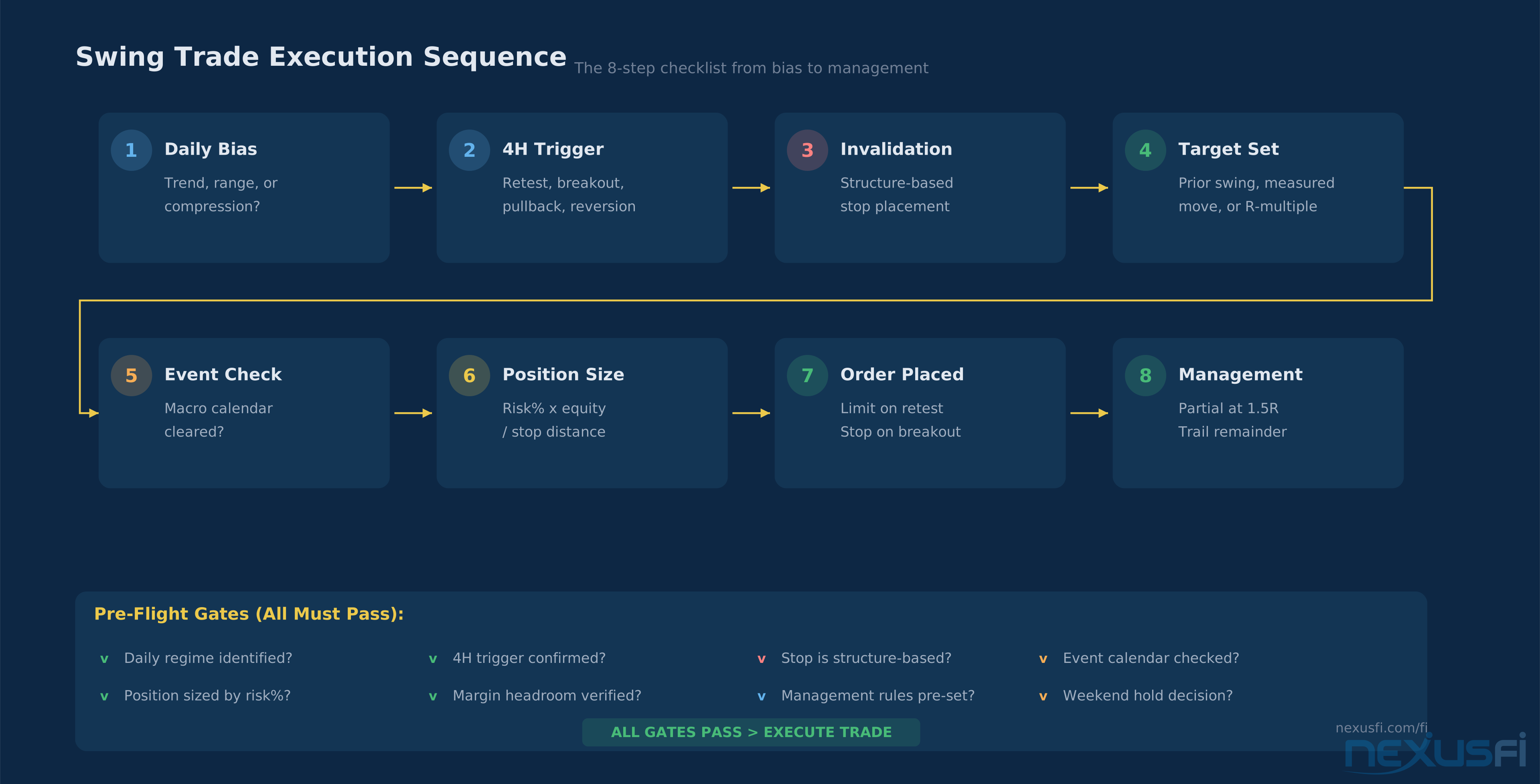
- Daily bias confirmed (trend or range regime identified)
- 4H trigger present (retest, breakout, pullback, or reversion signal)
- Invalidation defined (structure-based, not arbitrary)
- Target structured (prior swing, measured move, or R-multiple)
- Event calendar checked (no upcoming binary releases without a plan)
- Position size calculated (risk%, stop distance, contract value)
- Order placed at the appropriate level (limit on retest, stop on breakout)
- Management rules pre-defined (partial profit level, trailing method, event exit)
What Swing Trading Is Not #
The overnight gaps didn't mean swing trading was broken — they meant the risk management approach needed work. Swing trading futures isn't about ignoring overnight risk. It's about sizing for it, planning for it, and only accepting it when the thesis justifies the exposure.
Knowledge Map
Prerequisites
Understand these firstGo Deeper
Build on this knowledgeReferences This Article
Articles that build on this topicCitations
- — Spoo-nalysis ES e-mini futures S&P 500 (2015) 👍 14“You should only hold overnight from a position of strength. For example, being long or short near the extremes of the day.”
- — The PandaWarrior Chronicles (2012) 👍 9“Crude regularly has 150-300 and even larger tick days. Certain instruments have very large swings overnight that would take a tight trail stop out.”
- — Correct margin level for ES (2013) 👍 11“A good practice that I see in use at hedge funds is to never let margin requirement exceed 15% to 20% of total capital.”
- — Rollover Days - some Quick Facts about (2009) 👍 22“New swing positions might be better opened using the new contract if opened within a few days of rollover day.”
- — Rollover Days - some Quick Facts about (2012) 👍 6“Volume shifted to the new contract on Friday, while open interest of the new contract exceeded the open interest of the old contract for the first time on Tuesday.”
- — Why Day Trade instead of Swing Trade? (2012) 👍 3“I started as a swing trader holding stock index futures for several days (12 days being max ever). The overnight gaps eventually sent me to daytrading.”
- CME Group — Cmegroup.com (2026)
- The Hedge Fund Journal — Thehedgefundjournal.com (2018)