



Futures Clearing and Settlement: What Actually Happens After You Click the Button
Overview #
Every futures trader clicks buy or sell and watches their P&L move. But between that click and the cash hitting your account, there's a massive piece of financial infrastructure doing the heavy lifting — the clearing and settlement system. This is the plumbing that makes futures markets work, and understanding it changes how you think about margin, risk, and where your money actually sits.
Here's the short version: when you execute a futures trade, a clearinghouse steps in between you and whoever took the other side. It guarantees both sides of the trade, settles profits and losses in cash every single day, and maintains a multi-layered defense system in case someone can't pay. The result is a market where counterparty risk — the chance that the person on the other side of your trade can't honor the contract — is effectively eliminated for individual traders.
The result is a market where counterparty risk — the chance that the person on the other side of your trade can't honor the contract — is effectively eliminated for individual traders.
That daily cash settlement is the key. Unlike stocks where you can hold a position for years without any cash changing hands, futures positions are marked to market every day. Your profits are real cash credited to your account. Your losses are real cash debited. This isn't a bookkeeping exercise — it's the fundamental mechanism that keeps the entire system solvent.
Key Concepts #
Central Counterparty (CCP): The entity that interposes itself between every buyer and every seller. In US futures, this is typically CME Clearing, ICE Clear US, or OCC. After a trade executes, the CCP becomes the buyer to every seller and the seller to every buyer. You don't have a contract with the other trader — you have a contract with the clearinghouse.
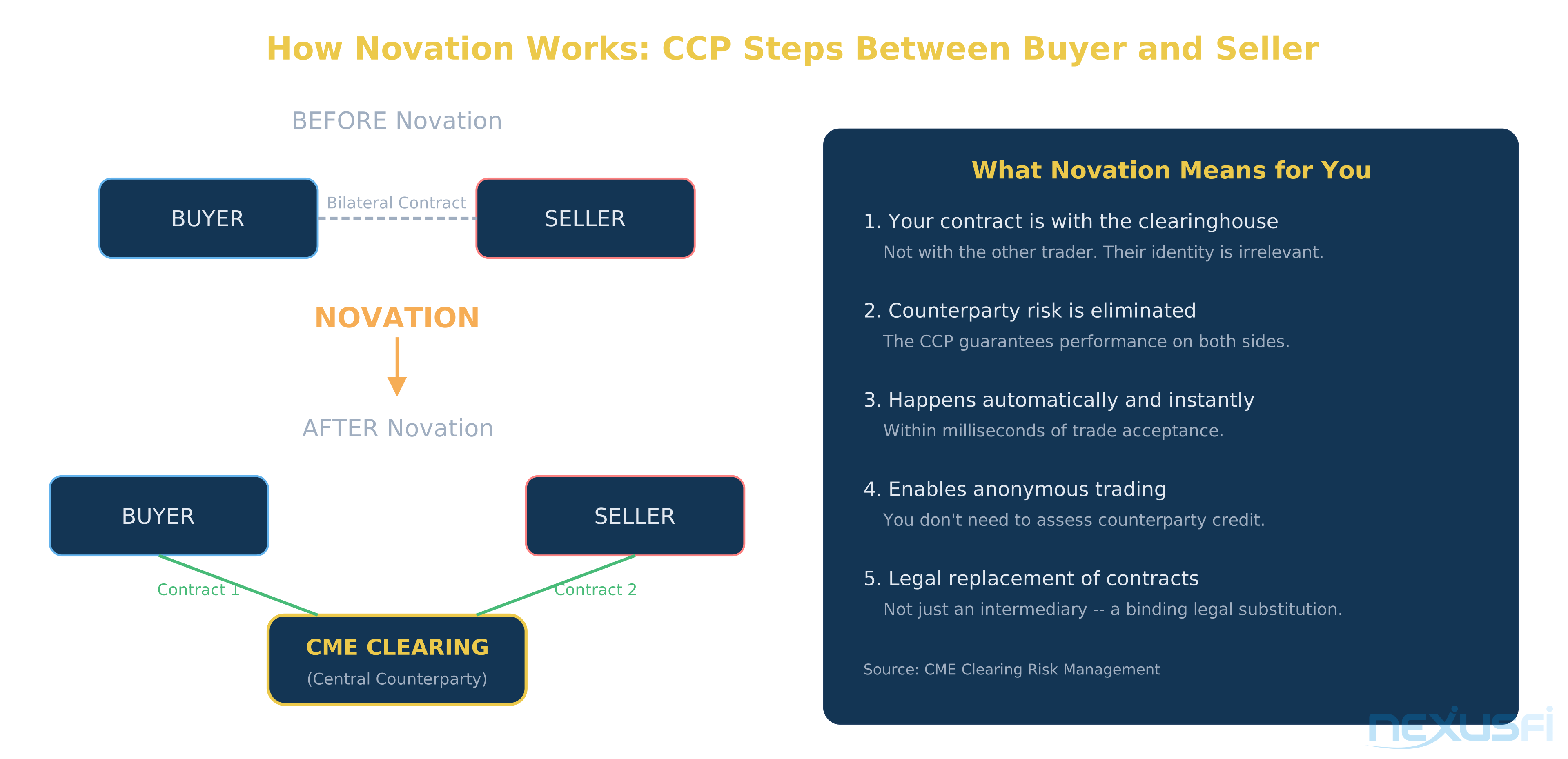
Novation: The legal process where the original bilateral trade agreement is replaced by two new contracts — one between the buyer and the CCP, and one between the seller and the CCP. This happens automatically and instantly upon trade acceptance.
Futures Commission Merchant (FCM): Your broker's clearing entity. The FCM sits between you and the clearinghouse, posting margin on your behalf and passing settlement flows back and forth. As @bobwest explained on NexusFi, "Every FCM has a clearing broker and a few also are clearing brokers themselves. The clearing brokers are part of the basic infrastructure of the futures market."
Initial Margin: The collateral you post upfront to open a position. This isn't a down payment — it's a performance bond guaranteeing you can cover potential losses. The exchange sets minimums using the SPAN risk model, but your FCM can (and usually does) require more.
Variation Margin: The daily cash flow reflecting your position's mark-to-market profit or loss. If your position gained $500 today, you receive $500 in cash. If it lost $500, $500 leaves your account. No exceptions, no delays.
SPAN (Standard Portfolio Analysis of Risk): CME's risk-based margin calculation system. Rather than setting margin as a flat percentage, SPAN runs 16 different price and volatility scenarios to determine the maximum reasonable one-day loss for a portfolio. The margin requirement is set to cover that worst-case scenario.
Mark-to-Market: The process of revaluing every open position to the official daily settlement price. The exchange calculates this price — typically a volume-weighted average of trades in the closing period — and uses it to determine who owes what.
Default Waterfall: The layered system of financial resources that absorb losses when a clearing member can't meet its obligations. Think of it as a series of progressively larger shock absorbers.
How the Clearing Process Works #
Step 1: Trade Execution and Acceptance #
You submit an order on CME Globex. The exchange matches it with a counterparty. At this point, you have a brief moment where the trade is bilateral — but only for milliseconds.
The clearinghouse validates the trade details: instrument, side, quantity, price, account. If everything checks out, it accepts the trade and triggers novation. The original contract between buyer and seller is replaced by two new contracts with CME Clearing in the middle.
After novation, the identity of the original counterparty is irrelevant. Your contract is with the clearinghouse. Period.
Step 2: Margin Collection #
Once the trade is novated, margin requirements kick in. The flow moves through three layers:
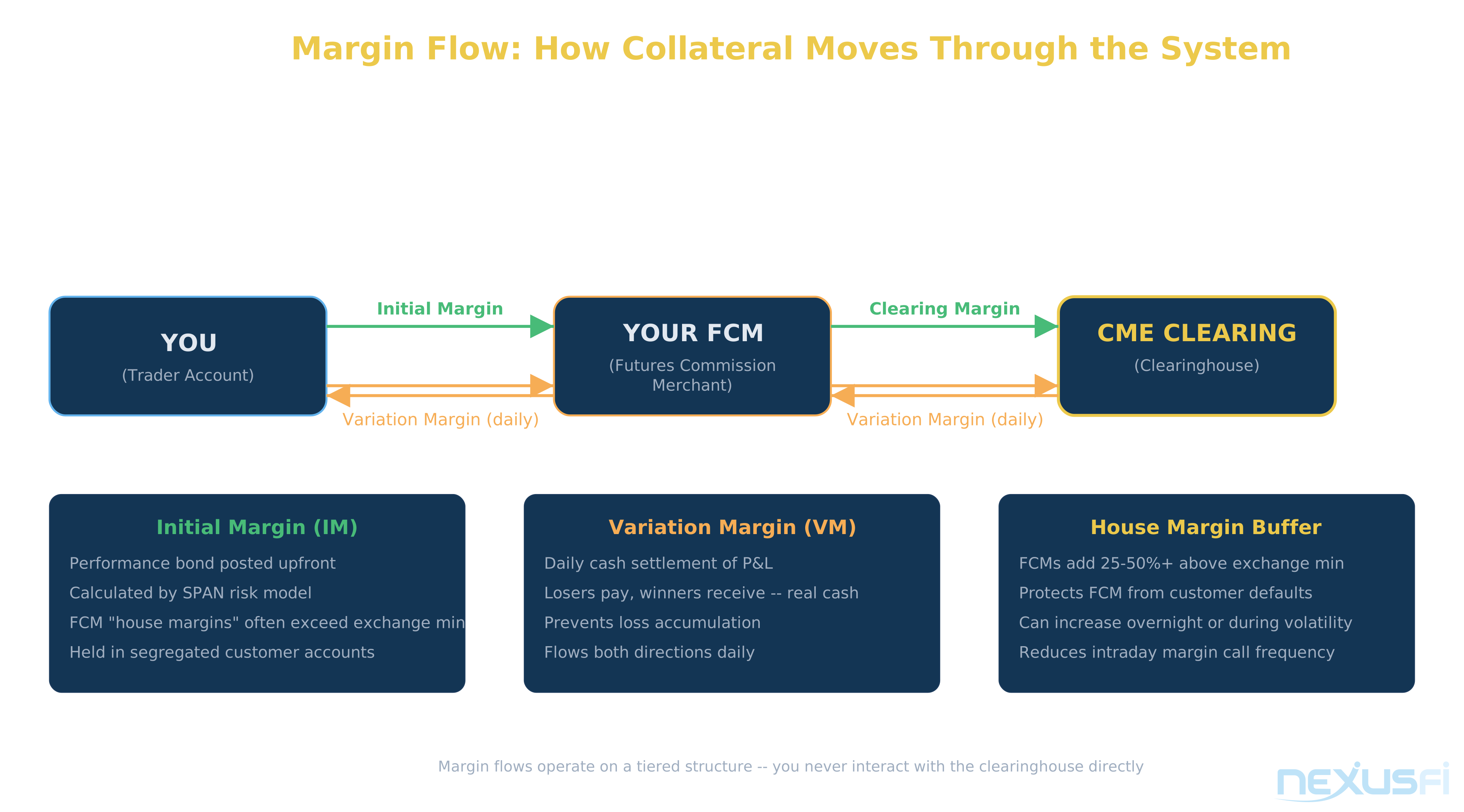
You → Your FCM: You post initial margin to your brokerage account. Your FCM may require more than the exchange minimum — these "house margins" provide an additional buffer for the broker's risk management.
Your FCM → Clearinghouse: Your FCM aggregates all its customers' positions and posts clearing margin with the CCP. The clearinghouse calculates this using SPAN, taking into account the net risk of the entire portfolio — not just individual positions.
The clearinghouse holds these funds in highly liquid, low-risk investments (primarily Treasuries) and can call for additional margin intraday if markets move sharply.
As @NinjaTrader explained in their margin breakdown, "Margins are 'good faith deposits' that a trader must maintain in order to trade a particular product." There are distinct levels: intraday initial, intraday maintenance, overnight initial, and overnight maintenance. Each serves a different purpose in the risk management chain.
Step 3: Daily Mark-to-Market Settlement #
This is the heartbeat of the futures market. Every trading day, after the close:
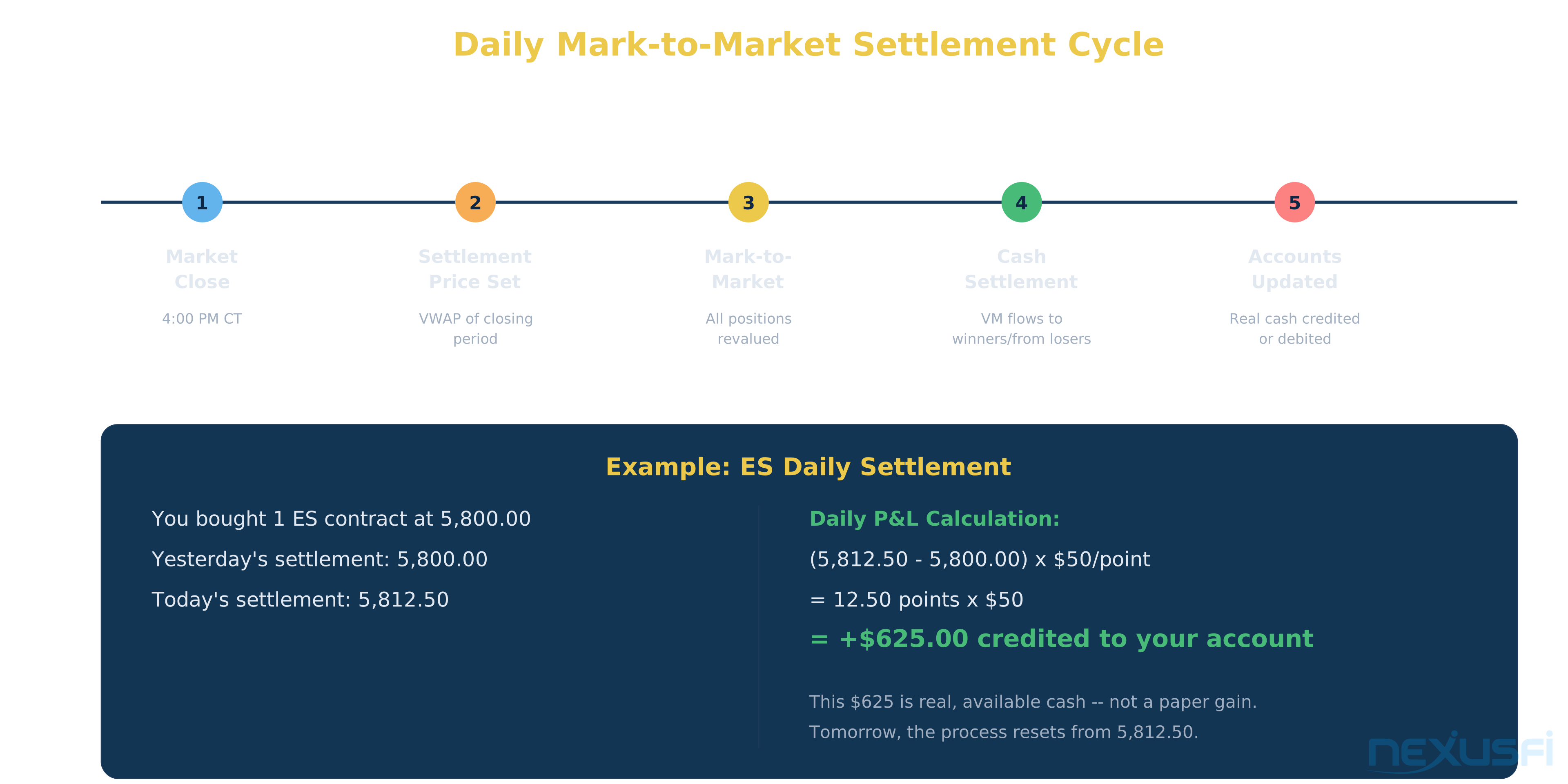
- The exchange calculates the official settlement price for every contract. For actively traded contracts like ES, this is a volume-weighted average of trades during the settlement window.
- Every open position is revalued at this new price. The difference between today's settlement and yesterday's settlement (or your entry price if the trade is new) becomes your daily P&L.
- Cash moves. Losing positions generate variation margin calls — actual cash leaves those accounts, flows through the FCMs, into the clearinghouse, and out to the FCMs holding winning positions, who credit their customers' accounts.
This daily settlement is the single most important concept in futures clearing. As @bobwest noted, "Price changes in futures positions are reflected in daily marking to market." The practical effect: your account balance reflects real, available cash — not paper gains. If ES moves 10 points in your favor on a single contract ($500), that $500 is yours to withdraw, use as margin for other trades, or do whatever you want with.
The flip side is equally real. A $500 loss means $500 leaves your account that day. If the loss drops you below maintenance margin, you'll get a margin call — and if you can't meet it, your positions get liquidated. As @bobwest warned in the Commodities forum, "If for some reason neither is done in time, you can lose more than 100% of your margin deposit, and you are liable for it."
Step 4: Netting #
Netting is the efficiency engine that keeps capital requirements manageable.
Position netting: If you're long 10 ES contracts and short 7, the clearinghouse only margins your net 3-long position. This drastically reduces the collateral required compared to margining each side independently.
Payment netting: Only the net variation margin amount moves between counterparties each day. If your FCM has customers who collectively made $2 million and lost $1.8 million, only the net $200,000 flows to the clearinghouse rather than $3.8 million in gross payments.
Cross-product netting: SPAN recognizes offsetting risk across related products. A long ES position partially offsets a short NQ position because the two indices are correlated. The margin for the combined position is less than the sum of individual margins.
Step 5: Final Settlement #
Most futures positions never reach final settlement — traders close them by entering an offsetting trade. But for positions held to expiration:
Cash-settled contracts (ES, NQ, most financial futures): The exchange calculates a final settlement price — for ES, this is the Special Opening Quotation (SOQ) based on the opening prices of all S&P 500 component stocks on expiration Friday. The final variation margin payment is calculated against this price, cash moves, and the contract ceases to exist.
Physically-settled contracts (crude oil, grain, Treasury bonds): The clearinghouse manages a delivery process. Short position holders submit delivery notices, long position holders accept delivery, and the physical commodity or financial instrument changes hands through exchange-defined procedures. The clearinghouse guarantees both sides perform.
The Default Waterfall: What Happens When Someone Can't Pay #
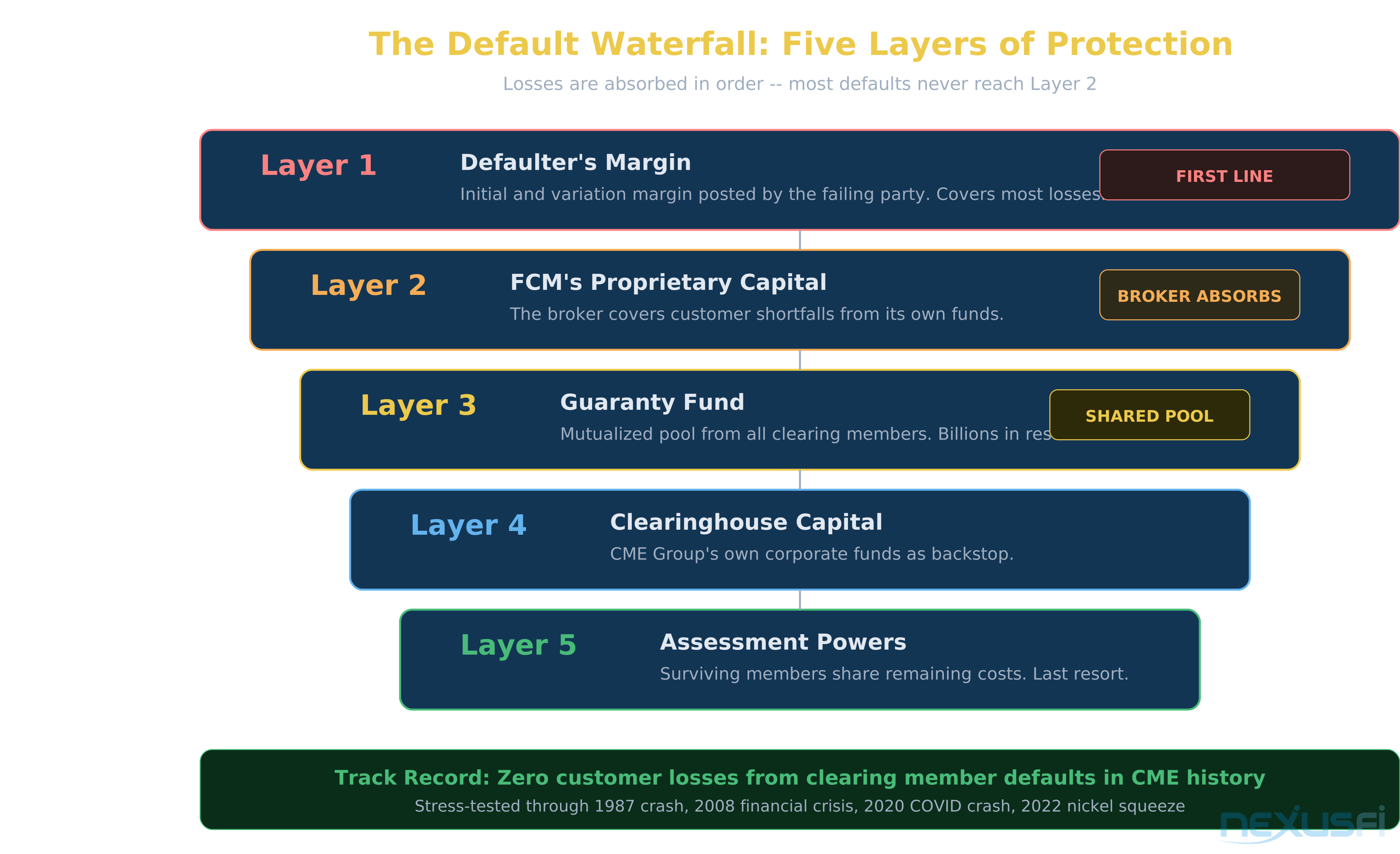
The clearing system's resilience comes from its layered defense architecture. If a clearing member fails to meet its obligations, losses are absorbed in a specific order:
Layer 1 — Defaulter's margin. The initial and variation margin posted by the defaulting party is the first line of defense. In most cases, this covers the loss entirely.
Layer 2 — FCM's proprietary capital. If a customer's loss exceeds their margin, the FCM must cover the shortfall from its own funds. This is why FCMs set house margins above exchange minimums — they're protecting their own balance sheet.
Layer 3 — Clearinghouse guaranty fund. All clearing members contribute to a mutualized pool of capital. If the defaulting member's resources are exhausted, this fund absorbs the remaining loss. CME's IRS clearing guaranty fund alone holds billions in member contributions.
Layer 4 — Clearinghouse capital. CME Group's own corporate funds provide an additional backstop beyond the guaranty fund.
Layer 5 — Assessment powers. As a final resort, the clearinghouse can levy additional charges on surviving clearing members. This "loss allocation" mechanism has regulatory limits but provides an ultimate safety net.
This waterfall structure was stress-tested during the 2008 financial crisis. While bilateral OTC derivative markets saw cascading failures (Lehman Brothers, AIG), centrally cleared futures markets continued operating without a single customer losing money due to counterparty default. The CME clearinghouse processed record volumes throughout the crisis with zero clearing member defaults.
Customer Fund Protection #
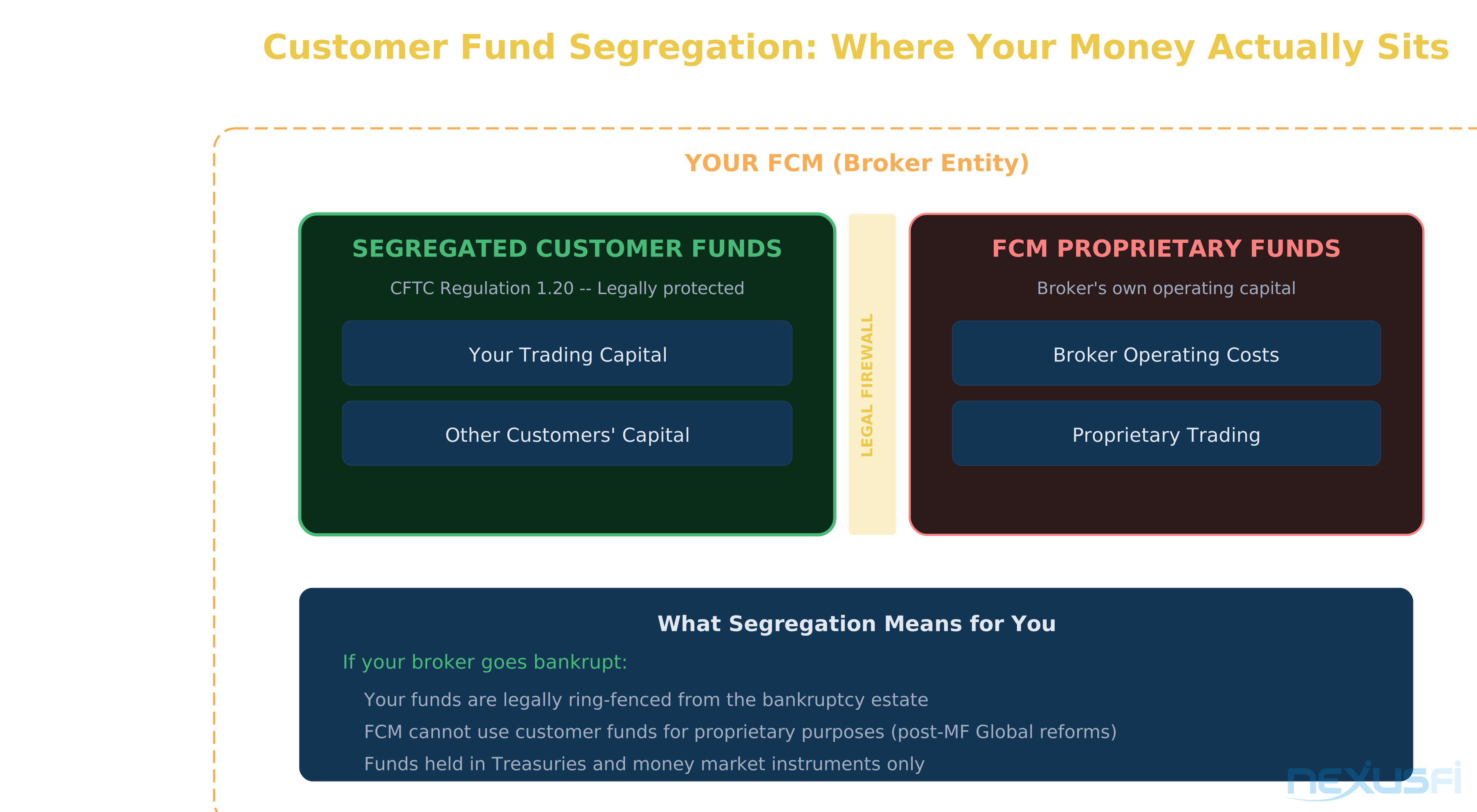
Your money sits in segregated accounts, separated from your broker's operating funds. This protection, mandated by CFTC regulations, means that if your FCM goes bankrupt, your trading capital is legally ring-fenced from the bankruptcy estate.
There are three segregation models:
Customer Segregated (for exchange-traded US futures): Funds are held in accounts titled in the FCM's name "for the benefit of customers." The FCM can invest these funds in limited, low-risk instruments (Treasuries, money market funds) but cannot commingle them with proprietary capital. As @bobwest explains, your account is with the FCM — "they hold your money" — but segregation rules protect it.
Secured Amount (for foreign futures cleared through US FCMs): Similar protection but for positions on non-US exchanges.
Cleared Swaps Customer Account: For OTC derivatives cleared through the same infrastructure.
The MF Global collapse in 2011 revealed weaknesses in the segregation enforcement system — the firm improperly used customer funds to cover proprietary losses. Post-MF Global reforms strengthened regulatory oversight, including more frequent fund reconciliation, enhanced reporting requirements, and new protections under the CFTC's "residual interest" rules.
SPAN Margin: How the Exchange Calculates Risk #
SPAN doesn't set margins based on a simple percentage of contract value. Instead, it simulates 16 different scenarios combining price moves and volatility shifts to estimate the maximum reasonable one-day loss for a portfolio.
The calculation considers:
- Price scan range: The maximum expected price change over one day (or the relevant margin period of risk). For ES, this might represent a move of roughly 3-5% depending on current volatility.
- Volatility scan range: How much implied volatility could shift, affecting options positions.
- Intra-commodity spreads: The risk of calendar spreads (long one month, short another in the same product).
- Inter-commodity credits: The risk-reducing effect of correlated positions across different products.
The margin requirement is set to the worst-case loss across all 16 scenarios, minus any inter-commodity credits. This portfolio-based approach is why adding a correlated hedge to your position can actually reduce your total margin requirement.
As @SMCJB discussed in the Options forum regarding SPAN calculations, exchange margins are minimums that brokers can (and do) increase based on their own risk assessments. When volatility spikes, both exchange and broker margins can increase rapidly — sometimes overnight.
Intraday Risk Management #
The clearinghouse doesn't just wait until end-of-day to manage risk. Modern clearing systems run continuous risk calculations throughout the trading session:
Real-time position monitoring: The CCP tracks every clearing member's exposure in real-time, watching for concentration risk, unusual position changes, and margin deficiency.
Intraday margin calls: When markets move sharply, the clearinghouse can issue intraday margin calls requiring immediate payment. As @SMCJB noted, there have been "very rare days in the past where they did have intra-day margin calls (to the FCMs) as well."
Circuit breakers and velocity limits: Exchanges implement price limits and volatility controls that give the clearing system time to process margin calls during extreme moves.
Stress testing: The clearinghouse runs regular stress tests against historical scenarios (1987 crash, 2008 crisis, 2020 COVID crash, 2022 nickel squeeze) and hypothetical extreme scenarios to ensure the default waterfall can absorb potential losses.
Why This Matters for Your Trading #
Understanding clearing and settlement isn't just academic. It has practical implications:
Your cash is real. Unlike stock trading where unrealized gains are just numbers on a screen, futures variation margin is actual cash. A $2,000 profit today means $2,000 more in available funds tomorrow. A $2,000 loss means $2,000 less. Plan your position sizing so.
Margin calls aren't negotiable. When the clearing system determines you owe money, the cash must appear. Your FCM will liquidate your positions if you can't meet a margin call — they're not going to absorb the loss themselves. As @bobwest emphasized, "You can lose more than 100% of your margin deposit, and you are liable for it."
Your broker's financial health matters. The segregation rules protect your funds in theory, but MF Global proved that enforcement gaps exist. Check your FCM's financial statements, look at their excess segregated funds, and understand their regulatory history.
SPAN rewards hedged portfolios. If you trade multiple correlated products, SPAN's inter-commodity credits can reduce your total margin requirement. A trader with offsetting ES and NQ positions pays less margin than the sum of the individual requirements.
Settlement prices drive your P&L. The official daily settlement price — not the last traded price or the bid/ask at the close — determines your mark-to-market. For illiquid contracts, this can create a difference between what you think your position is worth and what the clearinghouse says it's worth.
The Bigger Picture #
The futures clearing system processes trillions of dollars in notional value daily with solid reliability. Since the CME clearing house was established, no customer has ever lost money due to a clearing member default in CME-cleared products. That track record reflects the power of daily margining, centralized counterparty clearing, and a strong default waterfall.
For individual traders, the clearing system is invisible infrastructure — you trade, your account updates, life goes on. But that invisible infrastructure is what makes futures the most capital-efficient and counterparty-risk-free trading vehicle available to retail traders. The daily mark-to-market, the segregated funds, the multi-layered default protection — it all works together to create a market where you can trade with enormous leverage and sleep at night knowing the system behind it has been stress-tested through every crisis the financial markets have thrown at it.