



Institutional-Grade Futures Brokerage: Multi-Asset Access, Margin Models, and Professional Infrastructure
Overview #
Interactive Brokers is the institutional-grade brokerage that retail futures traders either love for its economics or hate for its complexity. Founded in 1978 by Thomas Peterffy — a pioneer in electronic trading who built one of the first handheld trading computers — IBKR has grown into one of the largest electronic brokers in the world. Publicly traded on NASDAQ (ticker: IBKR), the company maintains a market cap in the tens of billions and reports client equity exceeding $500 billion across more than 3 million accounts. Those numbers translate directly into the financial stability that matters when you're trusting a firm with your trading capital.
IBKR's competitive moat isn't ease-of-use. It's the combination of low costs + global access + automation capability that no single competitor matches. Experienced traders treat Trader Workstation (TWS) as backend clearing and routing infrastructure, often bypassing the GUI entirely to connect through the IB API to third-party platforms like Sierra Chart, NinjaTrader, or MultiCharts. For futures traders doing 100+ round turns per month, the commission savings alone can justify the learning investment. For casual traders under 20 contracts per month, the complexity tax probably isn't worth paying.
The regulatory footprint is massive. IBKR is regulated by the SEC, CFTC, FINRA, FCA (UK), ASIC (Australia), MAS (Singapore), HKMA (Hong Kong), and numerous other global regulatory bodies. Client funds are segregated, and IBKR maintains excess regulatory capital well beyond requirements — approximately $10 billion in excess of regulatory minimums according to recent filings. From a safety-of-funds perspective, it doesn't get much more secure than this in the retail brokerage space.
Company Financial Strength #
Understanding your broker's financial health isn't academic — PFG Best and MF Global taught the futures industry hard lessons about counterparty risk.
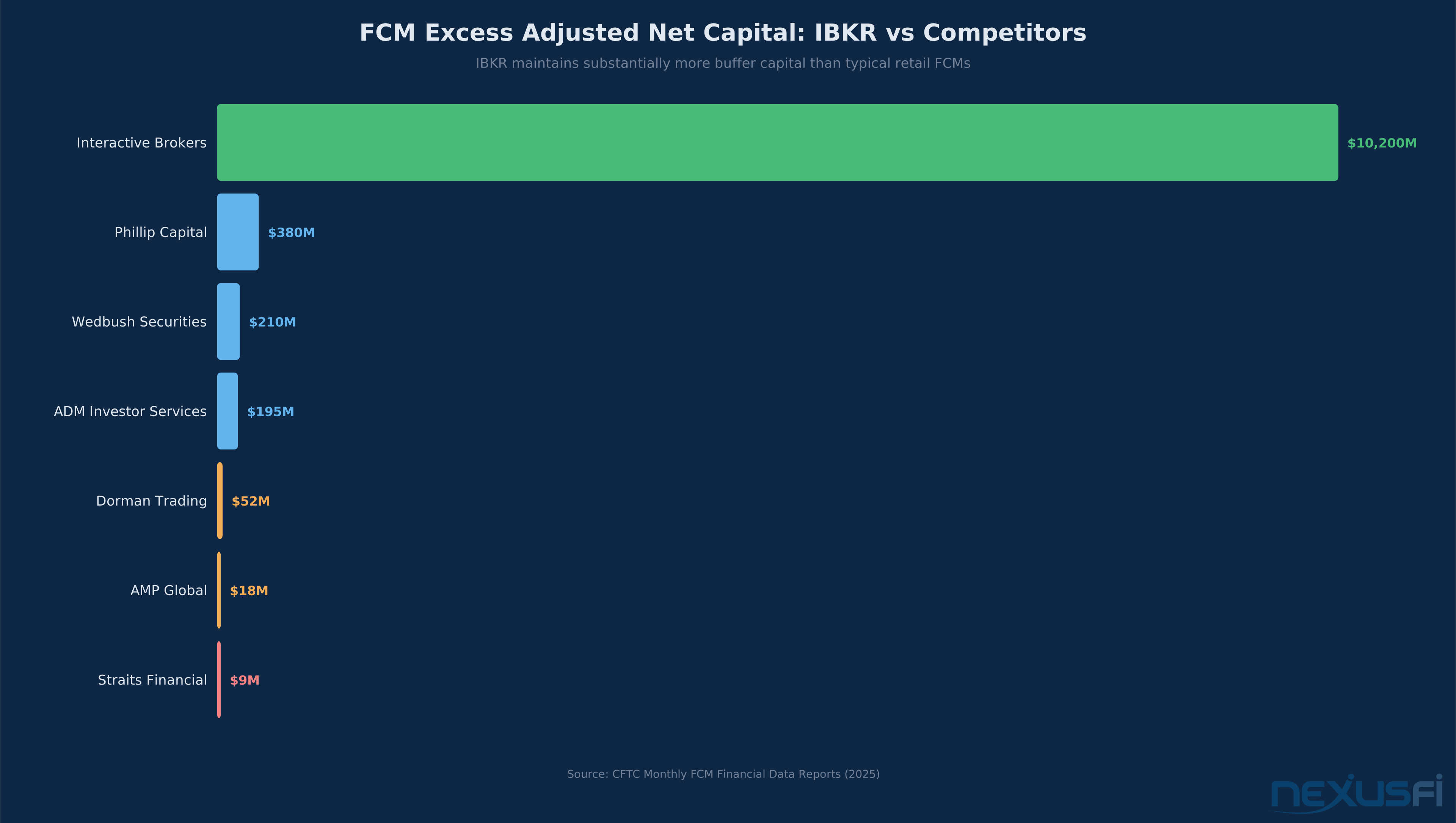
IBKR's financial position is among the strongest in the brokerage industry. As NexusFi founder Big Mike noted when discussing FCM safety: "One particular reason I personally like Interactive Brokers is their option that allows me to sweep funds to a SIPC account, which currently is providing $2.75M in per-account protection. Plus, IB has excess capital of $4 billion according to the latest CFTC FCM report. By comparison, AMP has $5 million" ([source][6]). That excess capital figure has only grown since.
The CFTC publishes monthly FCM financial data reports that anyone can verify. IBKR consistently ranks at or near the top for excess adjusted net capital among all registered FCMs. This matters because in a worst-case scenario — a rogue trader, a market dislocation, a clearing failure — your broker's excess capital is the buffer between a problem and your money.
IBKR is also publicly traded, meaning quarterly SEC filings, audited financials, and institutional analyst coverage. You can read their 10-K and verify their claims — try doing that with a privately held introducing broker.
Account Safety and Fund Protection #
IBKR offers a layered protection structure that's more thorough than most retail brokers:
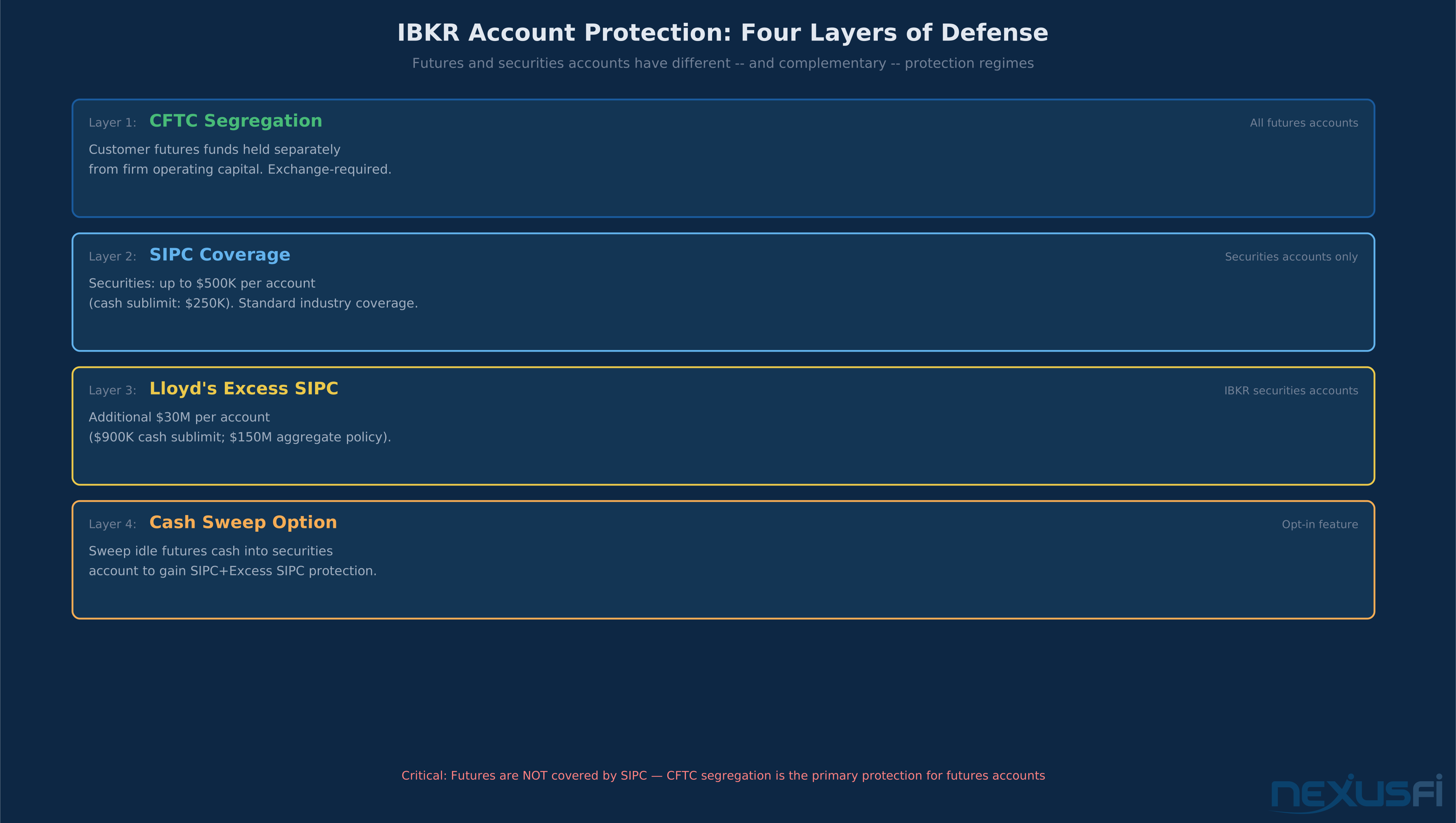
SIPC Coverage: Securities accounts at Interactive Brokers LLC are protected by the Securities Investor Protection Corporation for a maximum of $500,000 (with a cash sublimit of $250,000). As NexusFi member @Pa Dax documented: IBKR also carries "excess SIPC policy with certain underwriters at Lloyd's of London for up to an additional $30 million (with a cash sublimit of $900,000) subject to an aggregate limit of $150 million" ([source][7]).
Important caveat: Futures and options on futures are NOT covered by SIPC. This is an industry-wide limitation, not IBKR-specific. Futures accounts are protected by segregation requirements under CFTC rules, where customer funds must be held separately from the broker's operating capital.
Excess Funds Sweep: IBKR offers a unique feature that lets you sweep excess cash from your futures/commodities account to your securities account, where it gets SIPC and excess SIPC coverage. This is a meaningful safety advantage for traders holding significant cash balances. As noted in NexusFi's broker due diligence discussion ([source] [4]), this commingling of accounts under one umbrella with sweep capability is one of IBKR's structural safety advantages.
Customer Fund Segregation: IBKR segregates customer funds in compliance with SEC Rule 15c3-3 and CFTC regulations. The firm undergoes regular audits and publishes its financial condition to the CFTC monthly.
Account Types and Requirements #
IBKR Pro vs. IBKR Lite: IBKR offers two account tiers. For futures trading, this distinction barely matters — Lite accounts don't support futures. You need IBKR Pro for futures, options on futures, and most international products. IBKR Lite is designed for casual stock and ETF investors wanting commission-free equity trades (with payment for order flow), and it's basically irrelevant for the futures trading audience.
Account Minimums: No minimum deposit to open an account (previously $10,000). Portfolio Margin still requires $100,000+ equity. You'll need enough capital to meet initial margin requirements for whatever futures contracts you want to trade.
Account Types Supported: Individual, Joint, IRA (Traditional, Roth, SEP, SIMPLE), Trust, Corporate, Partnership, LLC, Fund, Advisor, and Institutional accounts. If you're trading futures through an LLC or a small fund, IBKR likely supports your structure without requiring a prime brokerage relationship.
IRA Restrictions: Futures trading is permitted in IRA accounts, but margin requirements are much higher — often 2x the standard overnight requirement. You also cannot short stock or use Portfolio Margin in an IRA.
Commission Structure #
IBKR offers two commission models for futures, and the choice matters more than most traders realize:
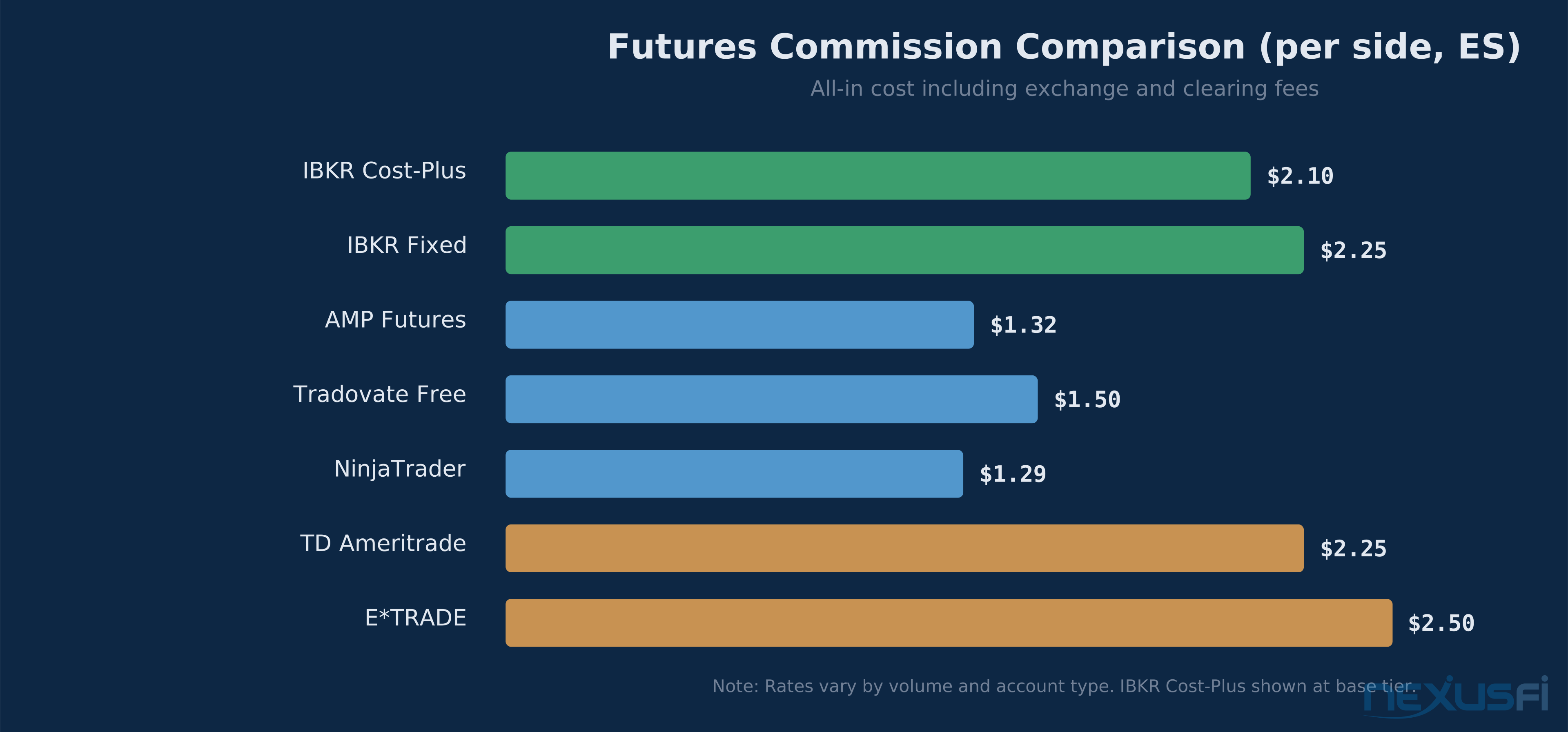
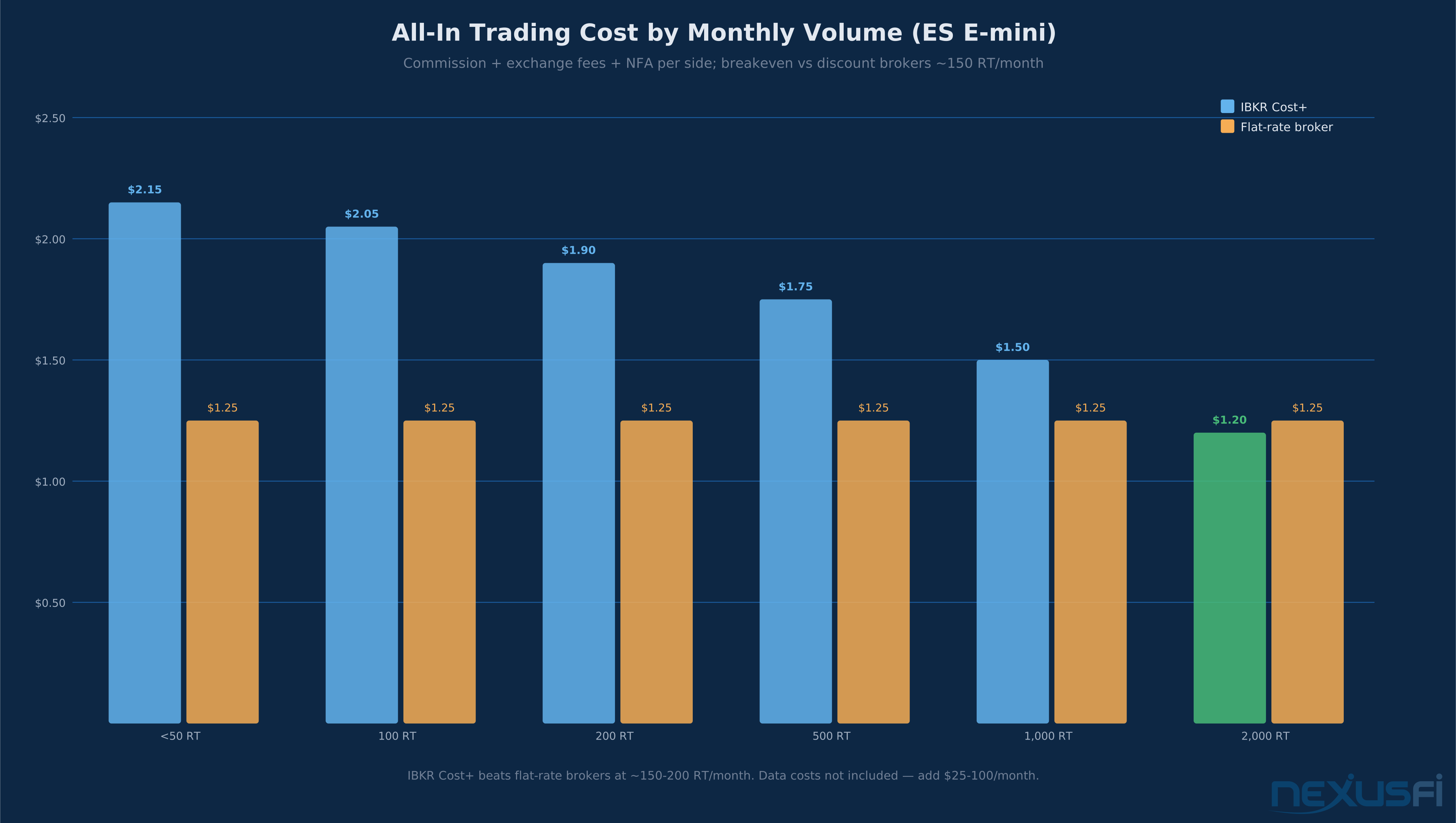
Cost-Plus (Tiered): IBKR's base commission starts at $0.85 per US futures contract per side, plus exchange, regulatory, and clearing fees. E-mini FX futures drop to $0.50, and e-micro FX futures are just $0.15 per contract. This is the transparent model — you see exactly what you're paying and to whom. At higher volumes, the IBKR commission component drops: $0.65 at 1,000+ contracts/month, $0.45 at 10,000+, and $0.25 at 20,000+. Exchange and clearing fees are passed through at cost.
For a typical ES E-mini contract on Cost-Plus Tiered:
- IBKR Commission: $0.85 per side (base tier)
- Exchange fees: ~$1.28 per side (fixed by CME)
- NFA fee: $0.02 per side
- All-in: ~$2.15 per side at base tier
Fixed: A simple all-in rate per contract that bundles IBKR's commission with exchange and clearing fees. For most US futures contracts, the all-in fixed rate runs around $2.25 per contract per side. Less transparent, but simpler to calculate. No volume discounts apply.
For context, compare that to the typical $1.29-$2.09 per side at competitors like AMP Futures, the $1.50 per side at Tradovate's free tier, or NinjaTrader's commission-free trading on micro contracts (with their own platform lock-in). Where IBKR pulls ahead is at volume — the more you trade, the more the cost-plus model rewards you, because exchange rebates and volume discounts flow through to your account.
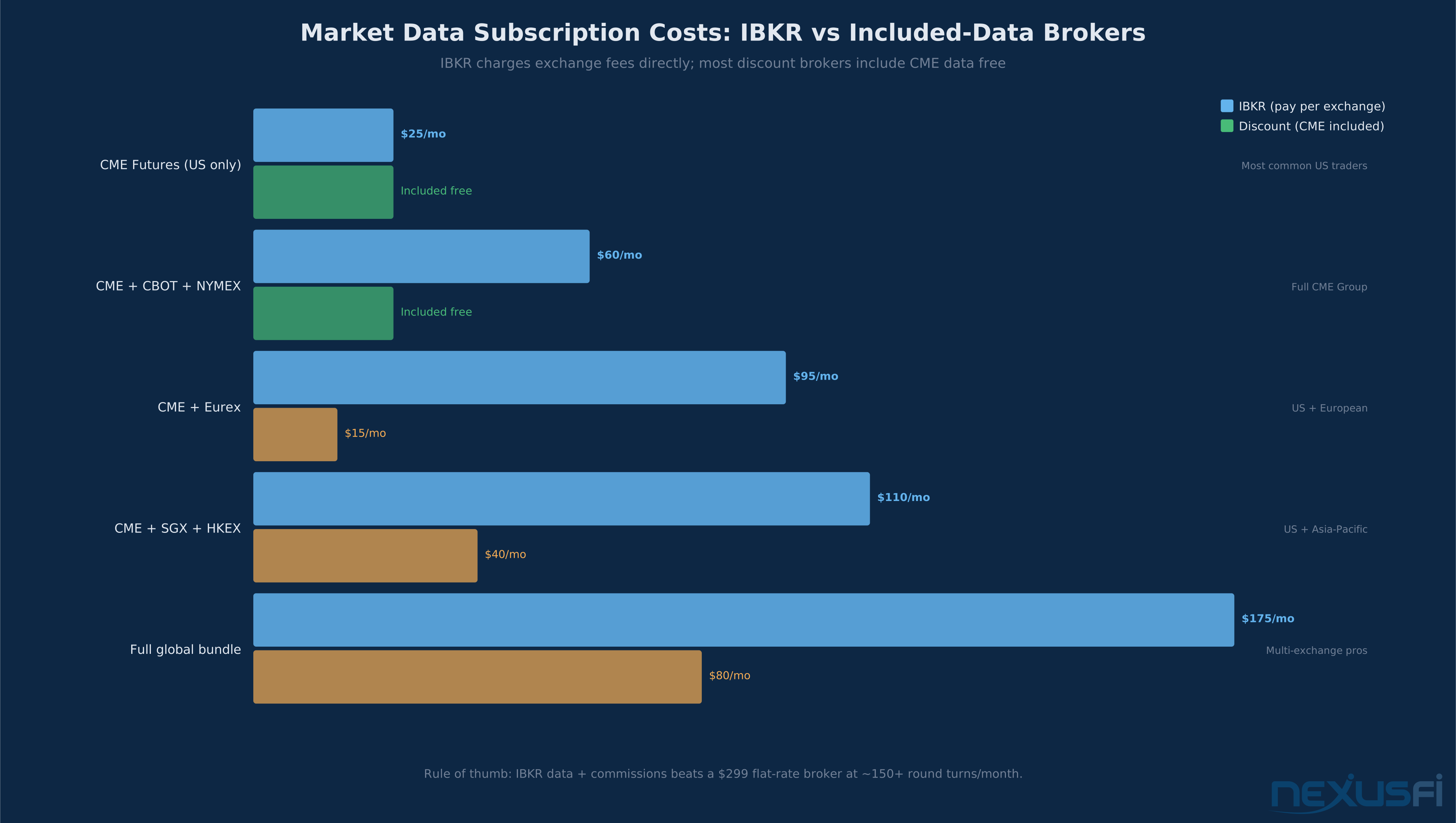
The real cost calculation: Don't compare headline commission rates in isolation. Compute your total monthly cost including commissions + exchange fees + NFA fees + market data subscriptions. A broker charging $1.50/side but requiring $95/month in data fees is more expensive than IBKR at $2.15/side if you're doing fewer than ~75 round turns per month.
There's no overnight carry fee for futures positions held past the session close. No inactivity fees either — IBKR eliminated the $10/month minimum commission requirement in 2021.
Interest on Cash Balances #
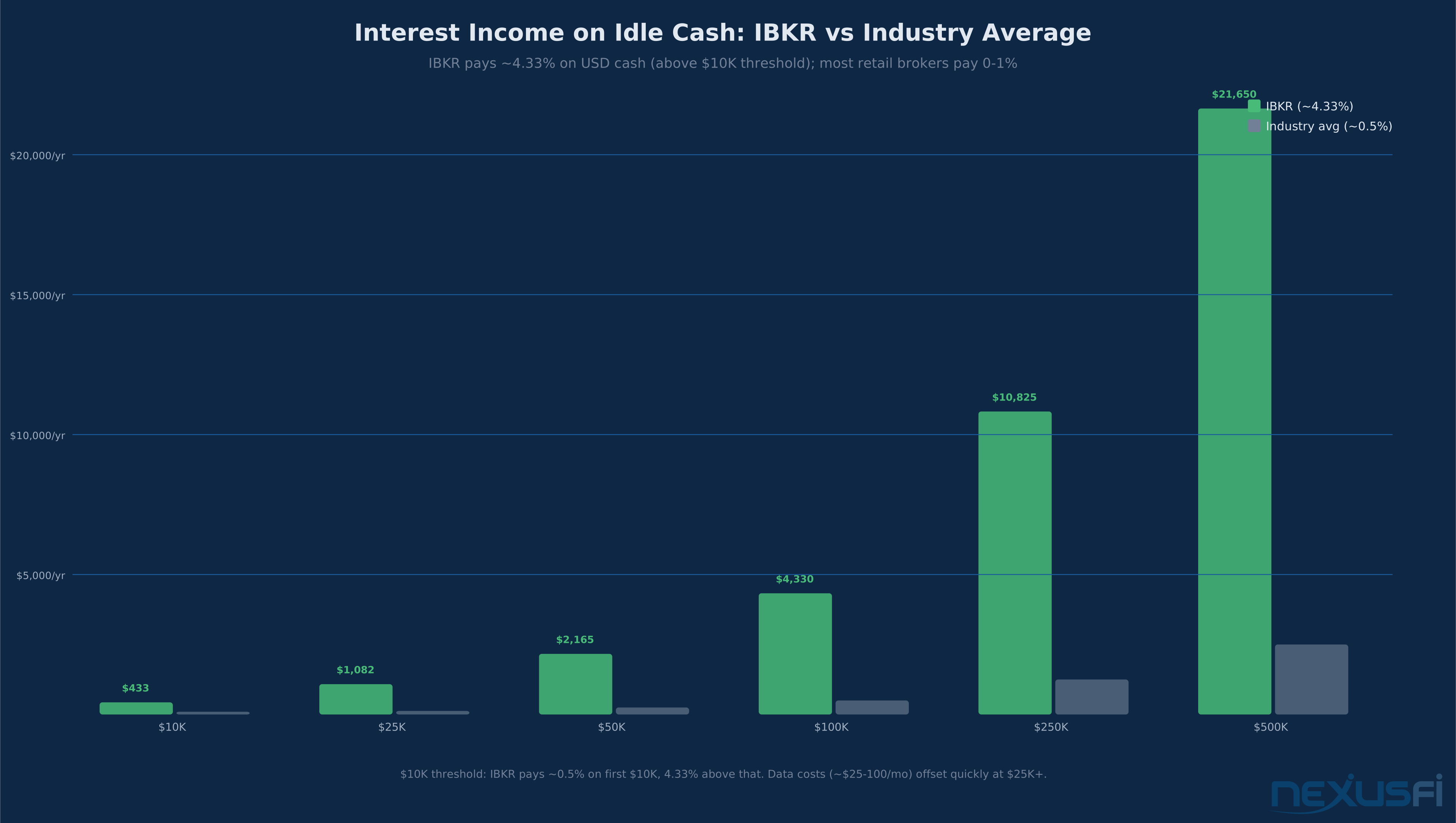
One of IBKR's underappreciated advantages is that they pay competitive interest on idle cash balances. Unlike many futures brokers that keep the interest earned on your segregated funds, IBKR shares it.
The current program pays interest on settled cash balances above $10,000 (USD). Rates track the Federal Funds rate closely, minus a spread. At current interest rate levels, this can mean earning 4%+ on idle cash. For a trader maintaining $50,000 in their account with an average idle cash balance of $30,000, that's potentially $1,200+/year in interest income — more than enough to offset market data costs.
This is a genuine competitive advantage. Most futures-focused brokers (especially introducing brokers and smaller FCMs) either pay no interest on cash or pay well below market rates. For traders with larger accounts, the interest income can meaningfully reduce their effective all-in trading costs.
Margin Treatment #
IBKR uses risk-based margin algorithms set by the clearing houses, with their own house requirements layered on top. For futures, there are two distinct margin tiers:
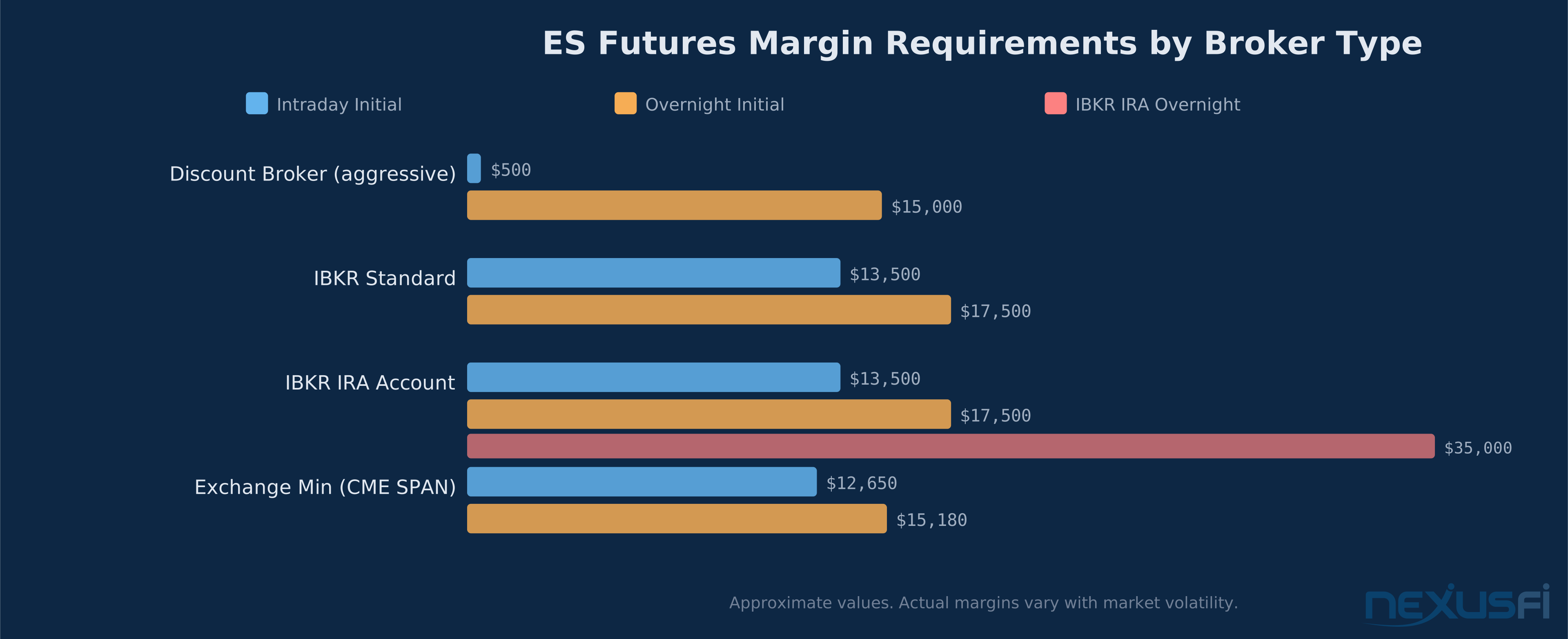
Intraday Margin: Lower margin requirements available during regular trading hours (RTH). For ES, intraday initial margin is roughly $13,000-$15,000 per contract depending on current volatility conditions. This is not a fixed number — it changes based on the exchange's SPAN calculations and can spike during high-volatility periods.
Overnight Margin: Higher requirements kick in before the session close. If you're holding through the close, you need the full overnight initial margin — typically 50-100% higher than intraday. For ES, this runs around $15,000-$18,000+ per contract.
The catch: IBKR's margin requirements are often higher than exchange minimums. Unlike some discount brokers that offer aggressive day-trading margins of $500-$1,000 per ES contract, IBKR sticks close to exchange requirements. If you're a scalper who depends on ultra-low margins to leverage up, IBKR isn't your broker.
Portfolio Margin #
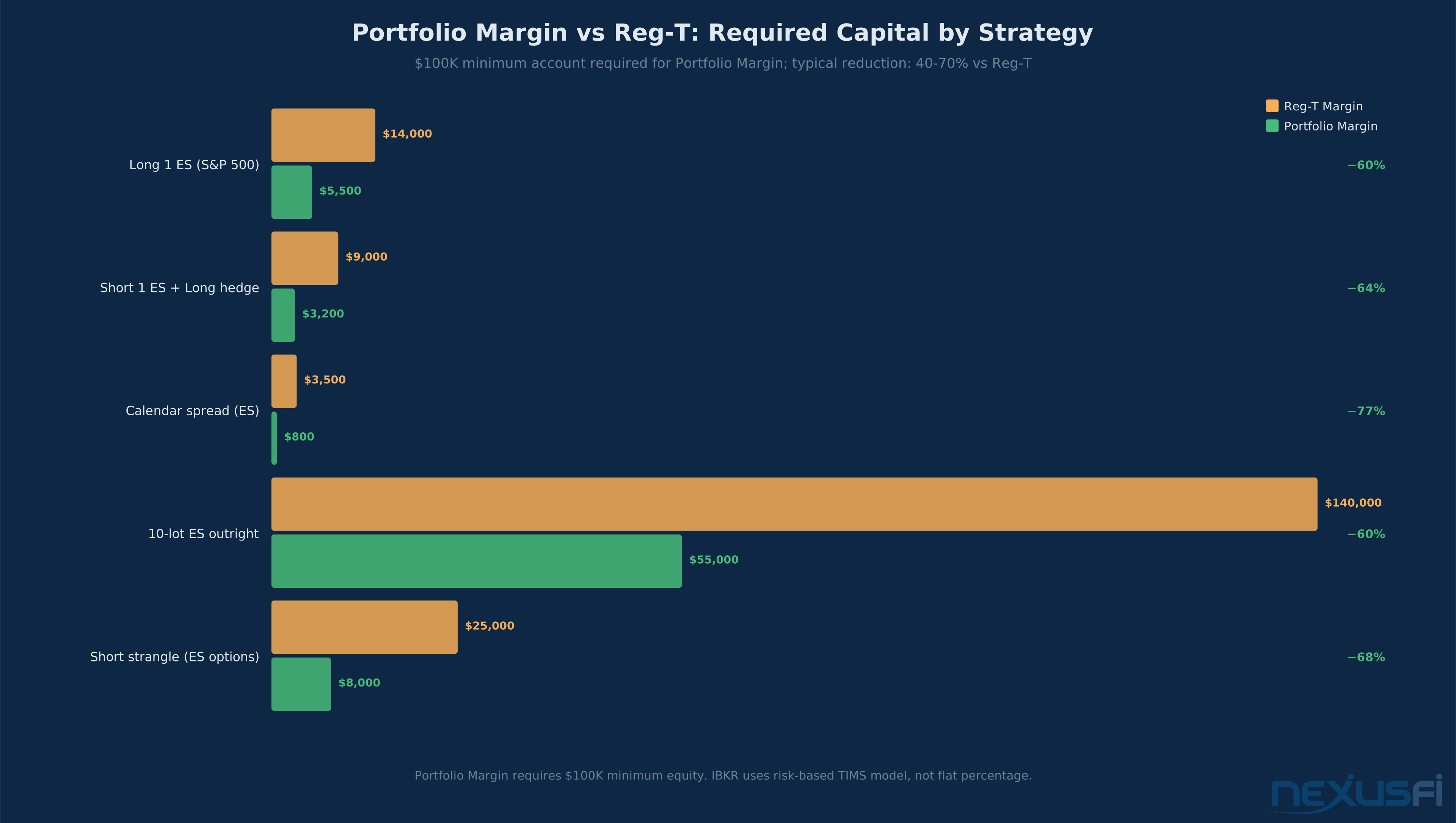
For accounts with $100,000+ equity, Portfolio Margin evaluates your entire position set as a unified risk portfolio rather than calculating margin on each position independently. Correlated hedges — long ES / short NQ as a relative value trade, for example — receive margin credit that standard Reg T doesn't provide. This can free up 30-50% more buying power for sophisticated multi-leg strategies.
Portfolio Margin uses a risk-based model that stress-tests your portfolio across multiple scenarios (typically +/- 15% market moves with varying volatility assumptions). The result is margin requirements that reflect actual portfolio risk rather than the sum of individual position risks.
Practical considerations: Test margin for your exact portfolio composition. Verify correlated position treatment — margin reduction isn't always as generous as expected. Account for currency effects on non-USD contracts. IRA accounts do NOT qualify for Portfolio Margin.
The Liquidation Engine #
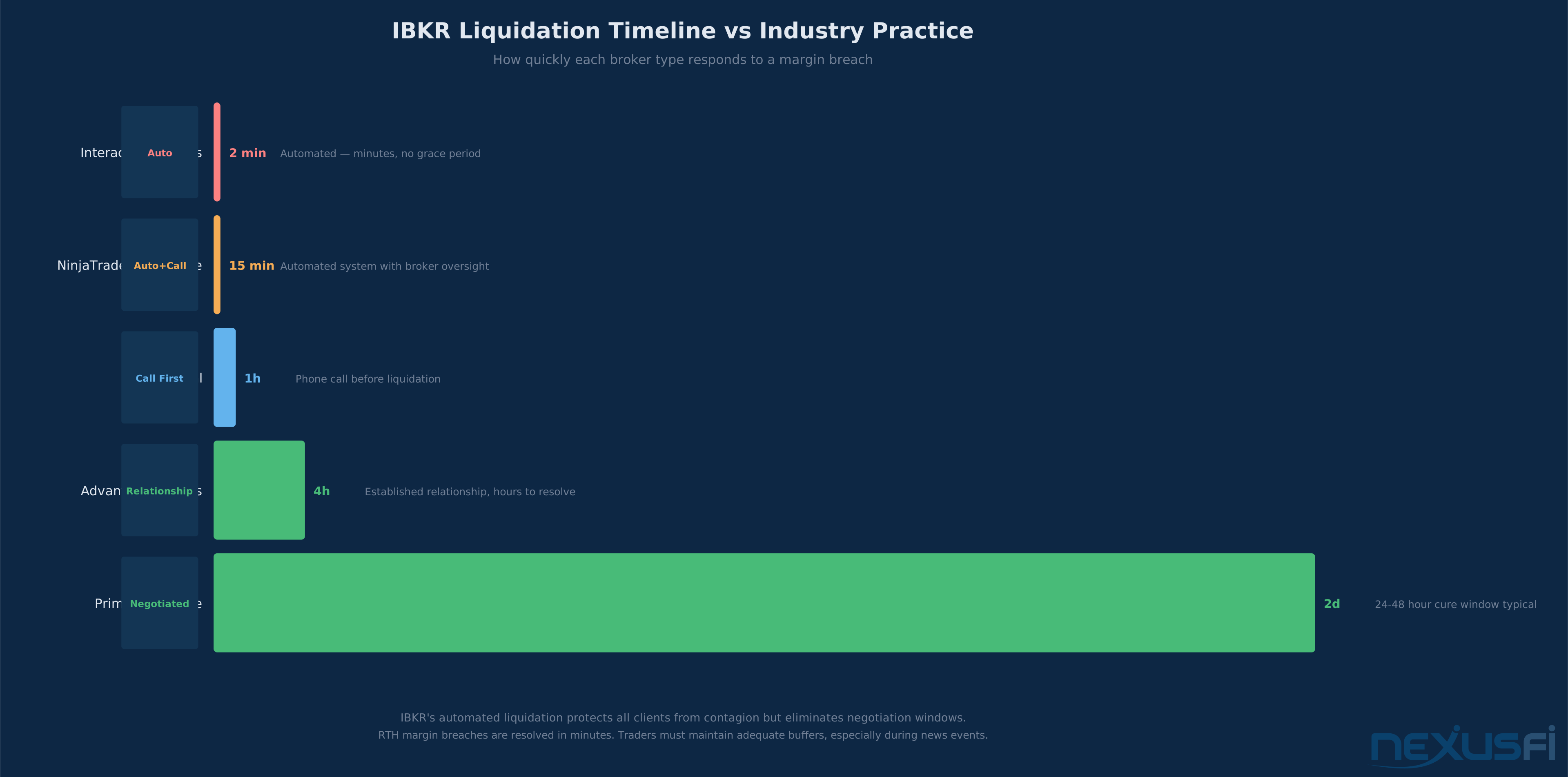
IBKR's automated liquidation system is aggressive by industry standards. If your account drops below maintenance margin requirements, the system begins liquidating positions automatically — often within minutes, not hours. There's no margin call phone call, no grace period, no negotiation. The algorithm closes positions to bring the account back to compliance, and it doesn't care whether it's liquidating your best trade or your worst.
This is by design. IBKR's philosophy is that automated risk management protects both the firm and other clients from contagion. But it means traders must manage their own margin buffer carefully. Running at 90% margin utilization during a volatile session is a recipe for forced liquidation at the worst possible time.
([source][10]).
Global Market Access #
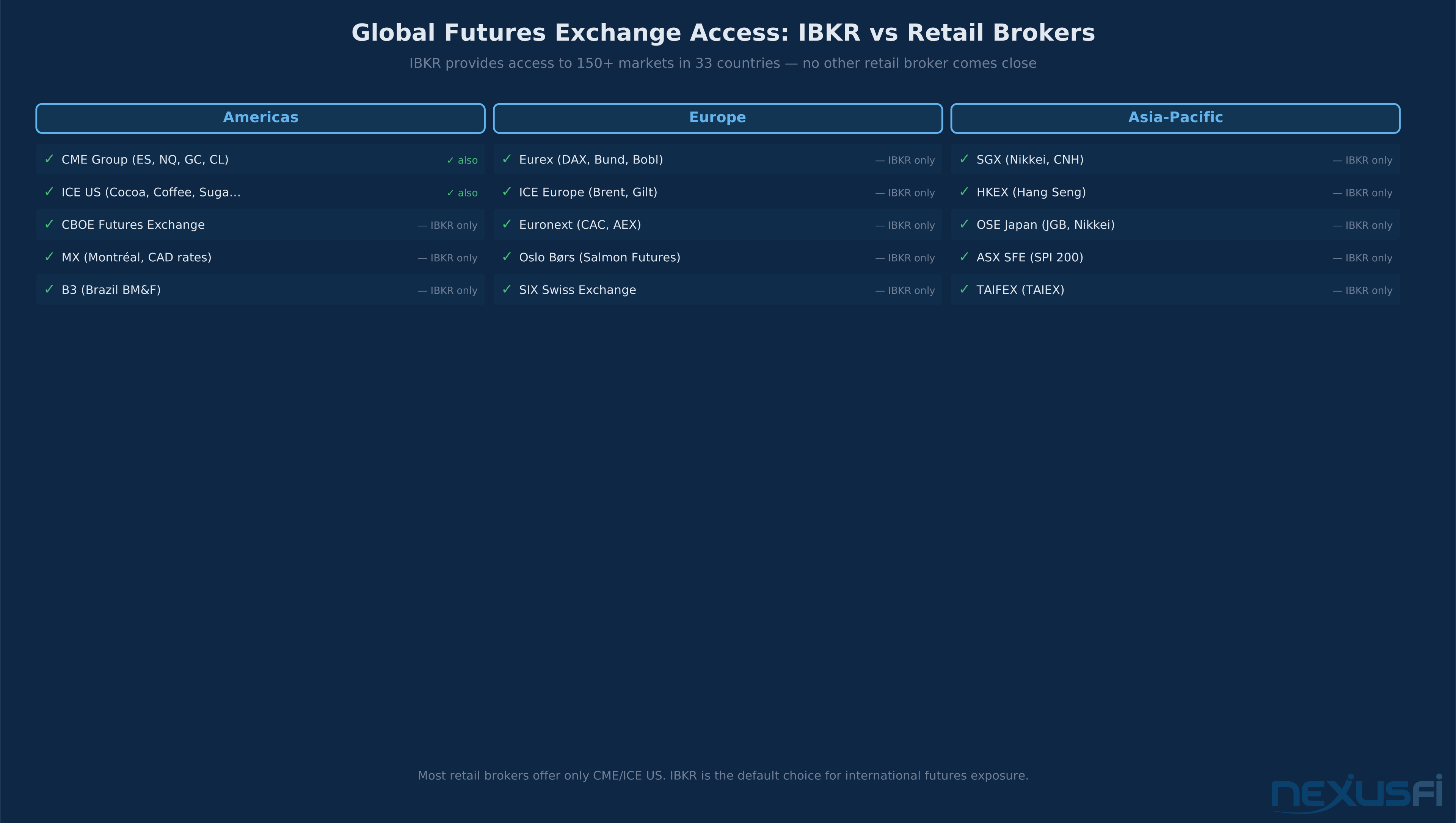
150+ exchanges across 34 countries. That's not marketing fluff — it's the real number. You can trade CME, CBOT, NYMEX, and COMEX in the US, then flip to Eurex for Bund futures, SGX for Asian exposure, or ICE for energy and soft commodities. All from a single unified account with a single margin pool.
Key global exchanges accessible through IBKR:
- CME Group (ES, NQ, CL, GC, ZB, ZN — the core US futures complex)
- Eurex (Euro Stoxx 50, DAX, Bund, Bobl, Schatz)
- ICE (Brent crude, sugar, coffee, cocoa)
- HKEX (Hang Seng, H-shares)
- SGX (Nikkei 225, FTSE China)
- ASX (SPI 200)
- OSE (Nikkei 225 Yen-denominated)
- IDEM, MEFF, Borsa Istanbul and dozens more
This matters for spread traders and macro players who need to express views across multiple geographies. Trading the Bund-Treasury spread? The Euro-Dollar basis? Cross-exchange calendar spreads? IBKR is one of the few retail brokers where this is even possible, let alone practical.
Currency conversion happens automatically at interbank rates (with a small markup of roughly 0.2 basis points), so you're not getting destroyed on FX conversions like you would at some competitors. You can also hold balances in multiple currencies simultaneously, avoiding unnecessary conversion costs.
The operational complexity is real though. Managing trading hours, session states, exchange holidays, and contract specifications across venues requires careful automation. Most "IB futures issues" reported in forums trace back to contract-month mapping and session-state errors, not execution technology.
Platform Architecture #
Trader Workstation (TWS) #
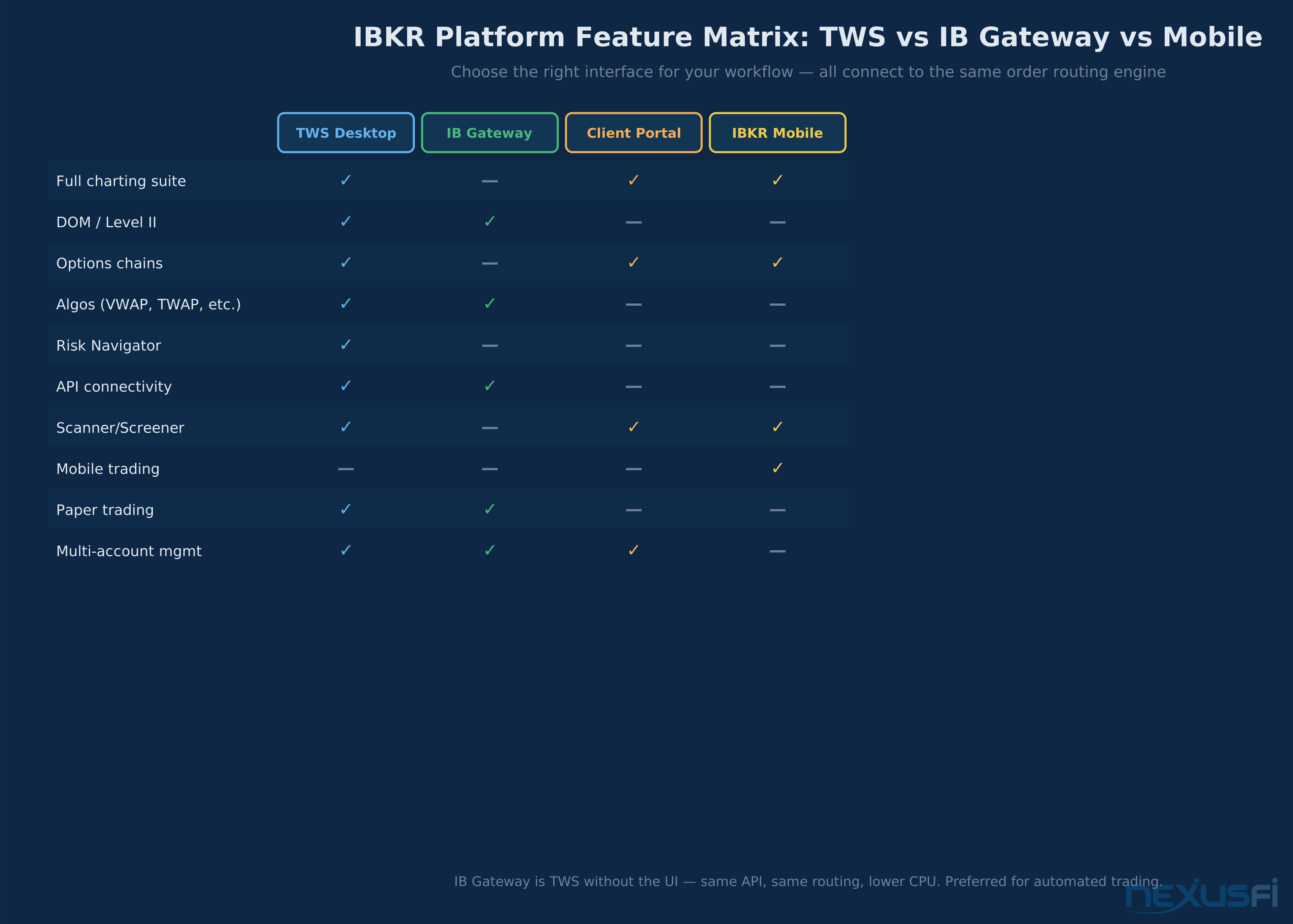
TWS is IBKR's flagship desktop platform, and it's a beast. Java-based, feature-dense, and visually cluttered — it looks like it was designed by engineers for engineers. Because it was.
The power is real: advanced order types (bracket, trailing, adaptive, TWAP, VWAP, iceberg, relative, pegged), built-in risk analytics, option strategy builders, real-time margin impact calculations, and fully customizable layouts. TWS supports over 100 order types — more than most traders will ever use. The BookTrader (DOM) module provides price-ladder trading with one-click order entry. The SpreadTrader handles multi-leg futures spread construction.
The pain is also real. TWS auto-updates can restart the application during trading hours. The Java runtime consumes significant memory (1-3 GB is normal). And the forced daily restart policy (originally at the same time every day, now configurable but still mandatory) has frustrated algo traders for years. The restart window typically lasts 5-15 minutes and is non-negotiable.
As NexusFi member
([source] [1]). The same user later noted that TWS "is less than ideal when it comes to scalping combo spreads" and had to adapt strategy from scalping to swing-style execution ([source] [2]).
The professional workaround: Don't use TWS as your primary trading interface. Connect via IB API to your preferred execution platform (Sierra Chart, MultiCharts, NinjaTrader, or a custom system) and use TWS only for account management and monitoring.
IB Gateway #
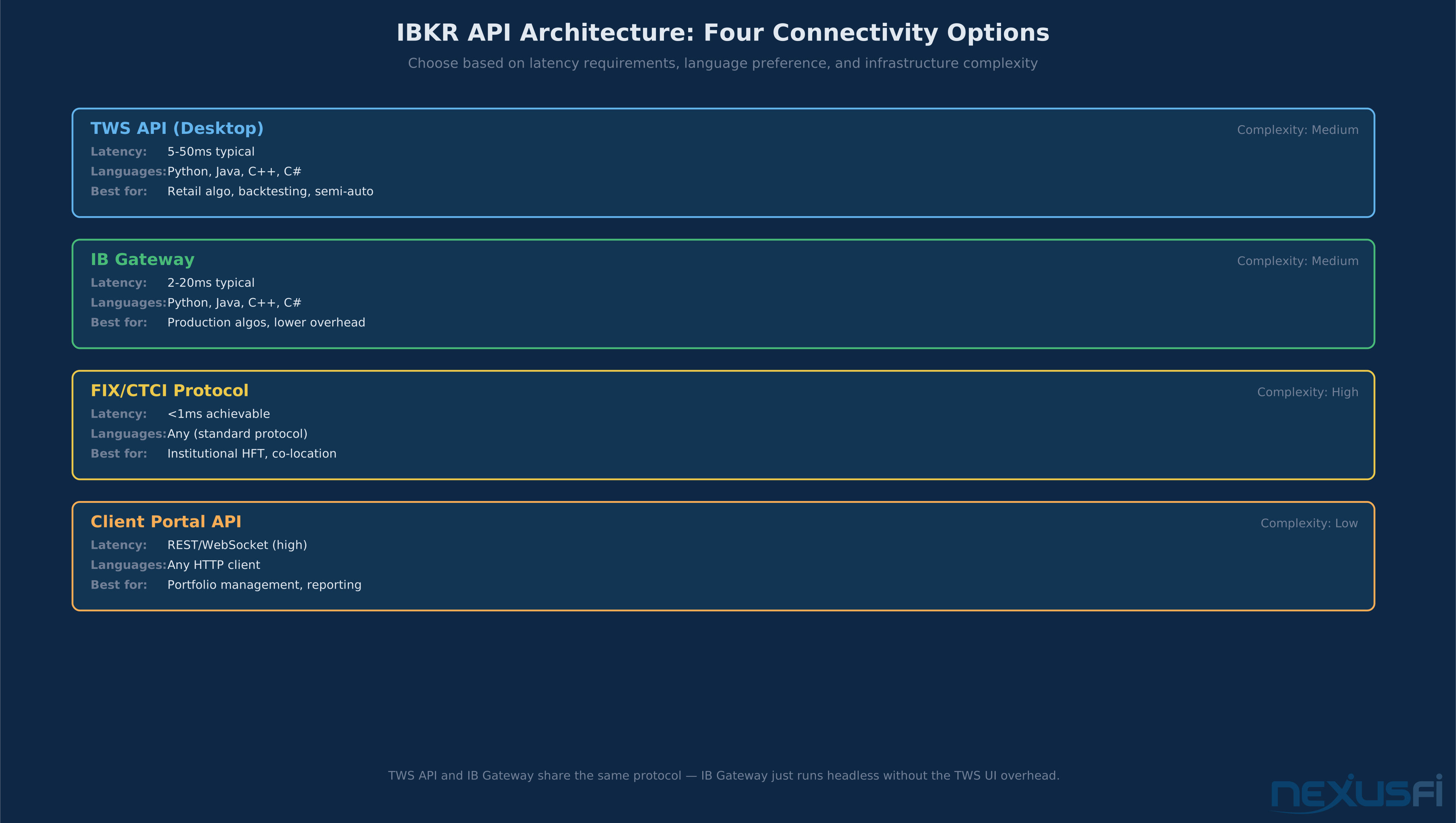
For automated traders, IB Gateway is the lighter-weight alternative to TWS. It's headless (no GUI), consumes fewer resources (typically 200-500 MB RAM vs TWS's 1-3 GB), and provides the same API access. Most serious algo traders run Gateway instead of TWS in production. Same ports, same API, fewer crashes — though it still requires the daily restart.
IB Gateway connects on port 4001 (live) or 4002 (paper trading), while TWS uses 7496 (live) or 7497 (paper). Gateway is the recommended choice for any automated system that doesn't need TWS's visual interface.
Client Portal and Client Portal API #
The web-based Client Portal provides a modern interface for account management, basic trading, decent charting, and reporting. It's cleaner than TWS and suitable for position monitoring, account configuration, and running performance reports. Not where you'd execute a complex futures strategy, but increasingly capable for basic order management.
The Client Portal API is IBKR's newer REST-based alternative, easier to get started with but limited compared to the TWS API for streaming data and advanced order types.
([source][11]). Most serious algo traders still prefer the TWS API.
IBKR Mobile #
Functional mobile app for iOS and Android covering order entry, position monitoring, alerts, and basic charting. Improved substantially in recent years. Not a primary trading platform for serious futures work, but solid for monitoring and emergency exits.

The API Ecosystem #
Here's where IBKR separates from every other retail broker: the API is real infrastructure, not a toy.
The TWS API is TCP socket-based — not REST. This matters because socket connections provide persistent, bidirectional communication. You don't poll for updates; you subscribe to streams. Market data, order status, position updates, account values — they push to you in real time. The connection model is event-driven with callbacks, which is powerful but requires careful programming.
Supported languages: Python, Java, C++, C#, and Visual Basic. Python dominates the community thanks to ib_insync (now succeeded by ib_async), a third-party library that wraps the callback-heavy official client into something actually usable with async/await patterns. The official Python client works but requires manual callback management that gets messy fast. For production systems, Java and C++ remain preferred for performance-critical applications.
@rediar shared a complete Java-based algo trading system built on the IB API on NexusFi ([source] [3]), demonstrating what a full automated system looks like in practice. @ZB23 documented his learning path through the API, recommending resources including the Groups.io TWSAPI group and specific Udemy courses for getting started ([source][9]).
What you can do via API:
- Stream real-time and historical market data (with subscription limits)
- Place, modify, and cancel orders (all 100+ order types supported)
- Monitor positions, P&L, and margin in real time
- Request option chains and compute greeks
- Execute multi-leg strategies programmatically
- Access account management and reporting functions
- Subscribe to market scanners and news feeds
- Run IBKR's built-in algorithms (Adaptive, TWAP, VWAP, etc.)
What you can't do (easily):
- Run without TWS or IB Gateway as a middleware layer — there's no direct-to-server API
- Avoid the daily forced restart window (plan for it in your automation)
- Get reliable reconnection without careful error handling and state management
- Handle more than ~50 simultaneous market data subscriptions on a single connection (this limit is real and impacts multi-instrument strategies)
- Access raw tick data at latencies competitive with co-located direct market access
Critical Implementation Requirements #
Building a production system on the IB API requires engineering discipline in five areas:
- Logging: Log every order, fill, rejection, and state change. This is your audit trail and debugging lifeline.
- Reconnection: Build strong connection management with automatic recovery. Connections drop, TWS/Gateway restarts daily, and your system must handle this without duplicating orders.
- Idempotency: Use unique client order IDs and verify state before retransmitting — disconnects during order placement can cause duplicate fills.
- Rate Limits: IBKR throttles API messages. Bursty cancel/modify patterns hit limits quickly. Implement backoff logic.
- Contract Month Mapping: The number one source of API errors. Verify your automation correctly identifies the front-month contract, handles roll dates, and never trades an expired contract.
Order Types and Execution Quality #
IBKR supports an extraordinary range of order types — over 100 — though most futures traders use a handful regularly:
Commonly used: Market, Limit, Stop, Stop-Limit, Trailing Stop, Bracket (parent + take-profit + stop-loss), Market-on-Close Advanced: Adaptive Algo (IBKR's intelligent liquidity-seeking algorithm), TWAP, VWAP, Relative/Pegged, Iceberg, Good-After-Time, One-Cancels-All (OCA groups)
The Adaptive Algo deserves special mention. It's IBKR's Price Management Algorithm that adjusts limit order pricing based on market conditions. For less liquid futures contracts or during wider-spread periods, it can meaningfully improve execution quality compared to a simple limit order. It's basically a built-in execution algorithm that's free to use.
Execution quality on liquid futures (ES, NQ, CL) is generally excellent — IBKR routes directly to the exchange, and for standardized futures there's no payment-for-order-flow concern. Fill speeds are competitive with other retail platforms, though not comparable to co-located institutional setups.
One important consideration flagged by NexusFi member @Futures Operator: "By default, IB will NOT execute your stops in futures outside 'their' per instrument RTH hours" ([source][2]). This means if you set a stop and expect it to trigger during the overnight session, you need to explicitly configure the order as active outside RTH. This default behavior has caught traders off guard, especially in overnight gap scenarios.
Tax Reporting and Account Administration #
IBKR generates complete tax documents including 1099-B for securities and detailed futures trading reports for Schedule D / Form 6781 (Section 1256 contracts, which get the favorable 60/40 long-term/short-term capital gains split). Activity Statements provide daily, monthly, and annual breakdowns of every trade, fee, interest payment, and corporate action — exportable in CSV, PDF, and third-party tax software formats. For tax professionals and accountants, IBKR's reporting is among the best in the industry.
Customer Service: The Weak Point #
This is IBKR's Achilles heel. Customer service is slow, often impersonal, and frequently staffed by representatives who lack futures-specific expertise. Phone wait times can extend to 30+ minutes. Chat support is faster but often scripted. Complex issues may require escalation that takes days.
The self-service documentation is extensive and quite good, which partially compensates. IBKR's Knowledge Base, API docs, and tutorials cover most common issues. The platform is designed for self-sufficient users. For futures traders who need responsive support, specialists like AMP Futures or NinjaTrader Brokerage tend to have faster, more knowledgeable service.
The pragmatic approach: Plan to be self-sufficient. For critical trading issues, the phone line is available, but manage your expectations.
Practical Application #
Commission Math for Active Traders #
Run the numbers on 200 round turns per month trading ES on the Cost-Plus Tiered model:
At IBKR Cost-Plus (base tier): ~$0.85 IB commission + $1.28 exchange + $0.02 NFA = $2.15 per side. That's $2.15 x 2 sides x 200 = $860/month in commissions. Add ~$25/month for CME data = $885/month all-in.
At a typical competitor ($2.00/side flat): $2.00 x 2 x 200 = $800/month in commissions. Data may be included or $10-20/month extra = $810-820/month all-in.
At 200 RT/month, the difference is marginal. But scale to 500+ RT/month and IBKR's tiered pricing compounds. At 1,000+ contracts/month, IBKR's commission drops to $0.65, bringing all-in cost to ~$1.95/side. At very high volume, all-in costs can drop below $1.60/side, saving $400-800+/month versus fixed-rate competitors.
The crossover point: IBKR's total cost (commissions + data) becomes cheaper than most competitors at roughly 150-200+ round turns per month. Below that volume, simpler brokers with included data may be more economical. NexusFi members have tracked these comparisons for years — @danielk's broker evaluation checklist highlights the key variables to include ([source][5]).
Commission Break-Even Rule Run the numbers before switching: calculate your current total monthly cost (commission + data + platform fees), then estimate your IBKR Cost-Plus equivalent at your actual volume tier. The crossover where IBKR wins is typically 150-200+ round turns/month for US futures traders who need exchange data they don't currently get free elsewhere.
The TWS Learning Investment #
Budget 2-4 weeks of active exploration to become productive in TWS. The platform rewards customization — once you build your layouts, hotkeys, and order presets, it becomes efficient. But the out-of-box experience is overwhelming.
Start with paper trading, build one workspace layout at a time, configure hotkeys for your most common order types, and learn BookTrader (DOM) for price-ladder order entry. Resist the urge to use every feature — most traders use 10% of TWS's capabilities.
When to Choose IBKR Over Alternatives #
Choose IBKR when:
- You trade 100+ round turns per month and want cost optimization at scale
- You need global market access (non-US exchanges, cross-exchange spreads)
- You're building or running algorithmic strategies via API
- You trade multiple asset classes (futures + options + stocks + forex) and want one account with unified margin
- You want Portfolio Margin for capital-efficient spread strategies
- You maintain large cash balances and want competitive interest income
- Account safety and financial stability are top priorities
Choose a specialist broker when:
- You trade fewer than 50 RT/month (the complexity isn't worth the marginal savings)
- You need aggressive day-trading margins ($500/ES) for scalping
- You want a platform that's ready to trade out of the box with minimal configuration
- Customer service response time matters to you (IBKR support is notoriously slow)
- You prefer platforms like NinjaTrader or Sierra Chart as your primary interface and want a broker that specializes in those integrations
- You want included market data without managing separate subscriptions
The API Development Decision #
If you're considering IBKR for automated trading, here's the honest assessment: budget 1-3 months of development time to build a production-ready system. Use ib_insync (or its successor ib_async) for Python prototyping. Run IB Gateway instead of TWS for production. Implement strong reconnection logic. Handle the daily restart gracefully. Test extensively in paper trading before going live.
The reward is a system that can execute sophisticated strategies across global markets with institutional-grade order routing. The cost is real engineering effort — this isn't plug-and-play.
([source] [2]).

Who IBKR Isn't For #
Beginners. The platform assumes you know what a futures contract is, how margin works, and what you're doing with order types beyond market and limit. There's no hand-holding, no simplified mode that actually simplifies anything meaningful, and the learning curve is genuine. The auto-liquidation system is unforgiving of margin miscalculations.
Traders who need phone support in a crisis. IBKR's customer service consistently ranks below competitors in responsiveness. You'll wait. When you get through, the representative may not have futures-specific expertise. Plan to be self-sufficient. If you need a broker who picks up the phone in 30 seconds, look elsewhere.
Small account scalpers who rely on $500 margins. IBKR's margin policy is conservative by retail broker standards. If your strategy depends on 30:1 intraday leverage on ES, IBKR won't give it to you. Period. Brokers like NinjaTrader Brokerage and AMP Futures offer far more aggressive day-trading margins.
Traders who want simplicity. If you just want to place a few ES trades per week with straightforward order entry, IBKR is overkill. Platforms like Tradovate or NinjaTrader provide a more streamlined experience.
Ultra-low-latency requirements. IBKR's API latency is competitive for retail but not institutional. Sub-millisecond execution requires direct market access and co-location, not a retail platform.
The Bottom Line #
Interactive Brokers is professional infrastructure, not a consumer product. It's the brokerage equivalent of running your own server versus using a managed hosting service. More capable, more economical at scale, more work to configure, and less forgiving when something goes wrong.
The platform's value proposition increases with trader sophistication and volume. The more you know, the more IBKR rewards you. The less you know, the more frustrating it gets. The success formula: accept the complexity investment, leverage the API for automation, validate everything with controlled live tests, and capture the cost and access advantages that no competitor matches at scale.
For futures traders doing serious volume, running automated strategies, or trading across multiple global exchanges — IBKR is the default choice for good reason. For everyone else, there are simpler options that get the job done without the overhead.
For futures-specific broker comparisons, NexusFi's Choosing a Futures Broker guide covers the full decision framework across commission structure, margin treatment, platform integration, and regulatory protections. The NexusFi broker due diligence thread started by @djkiwi after the PFG Best collapse includes important discussion about IBKR's SIPC coverage and account safety structure ([source] [4]).
See Also #
- Choosing a Futures Broker — Full decision framework across commission structures, margin treatment, platform selection, and regulatory protections
- Futures Broker API Access — Technical guide to broker API connectivity, supported languages, and building automated execution systems
- Futures Exchange Fees — CME Group, ICE, and Eurex exchange fee structures and how exchange costs flow through to your all-in trading cost
- Futures Commissions and Fees — Per-contract commission comparison across retail FCMs and introducing brokers
Knowledge Map
Go Deeper
Build on this knowledgeReferences This Article
Articles that build on this topicCitations
- — Feasibility to create alerts in TWS Charts using APIs (2022)“Most of the functionality I use is outside of IB's API. As far as signal generation, I use Python's Pandas library to process price data. For technical indicators, I use Python's TALib.”
- — Interactive Brokers: please, please, just stay away (2023) 👍 3“After putting in a lot of work into an algo trader, I learned that TWS is less than ideal when it comes to scalping combo spreads.”
- — IB Algo Example (2018) 👍 8“Hi All, Wanted to share the Interactive Brokers Java API I've been using for my algo trading: github.com/rediar/InteractiveBrokers-Algo-System This works for all asset classes IB offers. There seems to be a lack of fully functional examples online.”
- — Futures Broker Due Diligence Notes post PFG (2012) 👍 82“After the PFG collapse I've been evaluating my futures brokers to determine whether my capital is adequately protected.”
- — Commission shopping w/brokerages (2014) 👍 7“All good and valid checkpoints, you could add minimum required deposits and intraday margins if relevant to your trading style. More importantly i would do a background check on the company.”
- — Class Action Lawsuit: AMP Global Clearing LLC (2020) 👍 21
- — Avoiding Broker Insolvency (2020) 👍 6
- — Again problems with Zenfire today - 09/20-2010 (2010) 👍 5
- — ZB23's Algo Trading Journey (2021) 👍 3
- — Futures Margin Leniency (2023) 👍 3“The consensus opinion is that IB have some of the highest margin requirements and some of the most aggressive liquidation policies.”
- — Automated trading integration Tradingview to Interactive Brokers (2023) 👍 2“The biggest problem in all this is actually maintaining a valid session with IB on the back-end side. They are behind current standards when it comes to web technologies.”