



Evaluating Futures Broker Financial Health: How to Read the Numbers That Actually Tell You Whether Your Money Is Safe
Overview #
Every futures trader trusts a broker with their capital. Most never check whether that trust is justified.
The CFTC publishes detailed financial data on every registered Futures Commission Merchant (FCM) in the country — adjusted net capital, excess capital, customer segregated funds, the whole picture. It's publicly available and updated monthly. Yet the vast majority of retail traders never look at it. They pick a broker based on commissions, platform support, or a recommendation on a forum, then deposit their money and forget about it.
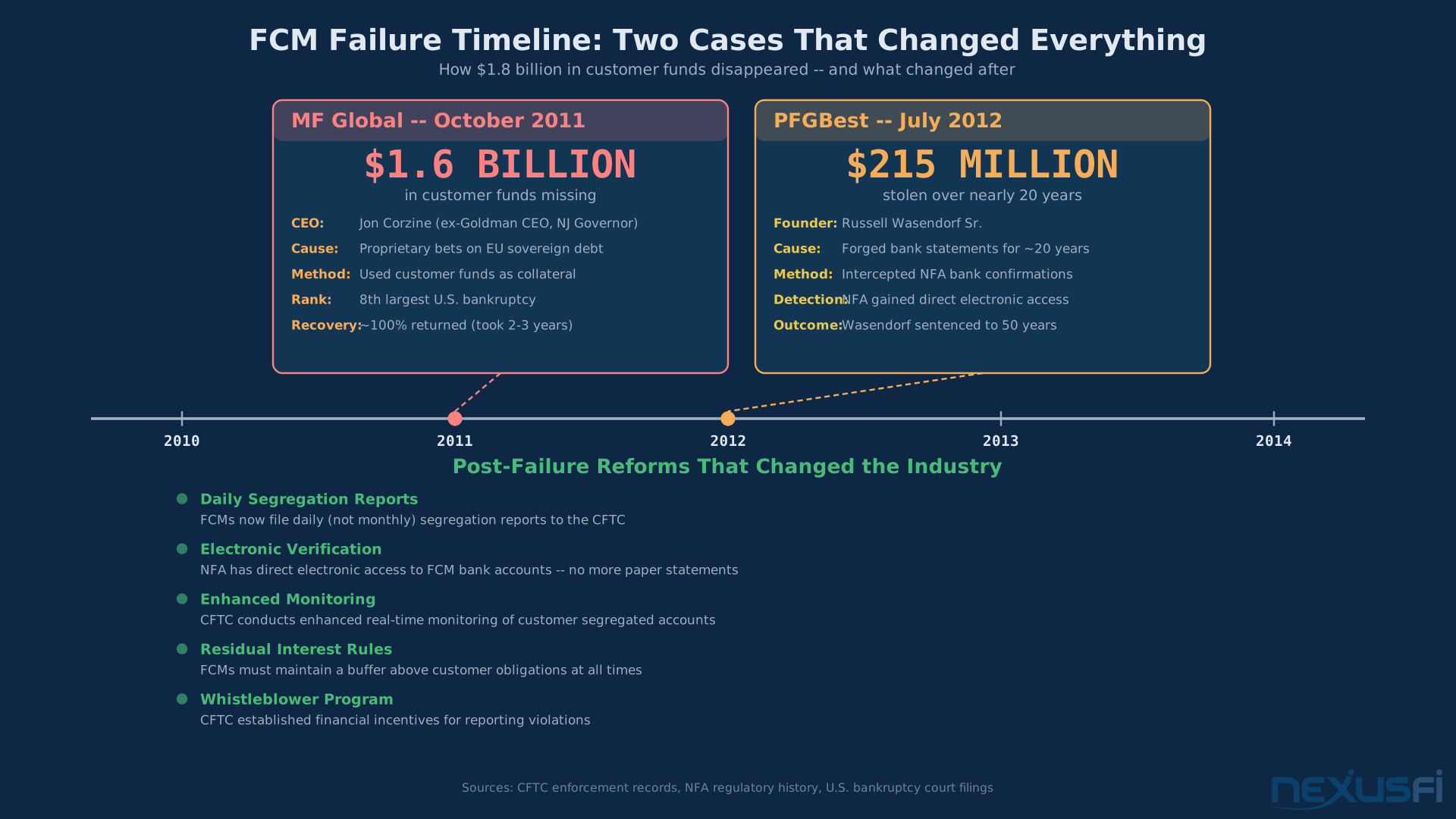
That worked fine until it didn't. MF Global collapsed in 2011 and $1.6 billion in customer funds went missing. PFGBest's founder was caught forging bank statements for nearly 20 years, stealing $215 million from customers. Both firms were CFTC-registered, NFA-member FCMs with clean compliance records right up until they weren't.
As [Big Mike posted on NexusFi] [1], the CFTC maintains a public Financial Data for FCMs report that shows "the amount of regulatory capital available to meet the FCM's minimum net capital requirement" along with customer segregation figures for every registered firm. This data exists specifically so traders can evaluate their broker's financial position. The problem is that most traders don't know it exists, and those who find it don't know how to read it.
This article walks through exactly what to look at, what the numbers mean, and what the warning signs of trouble look like before things go sideways.
Key Concepts #
Futures Commission Merchant (FCM) — The entity that actually holds your money. If you trade through an Introducing Broker (IB), your funds are custodied at the FCM that clears your trades. Your IB handles the relationship — the FCM handles the risk and the cash. When evaluating broker safety, the FCM is what matters.
Adjusted Net Capital — The amount of regulatory capital available to meet the FCM's minimum net capital requirement. This figure accounts for liquid assets, liabilities, and haircuts on securities positions. Think of it as the firm's financial cushion after adjusting for market risk on their own positions.
Net Capital Requirement — The minimum net capital each FCM must maintain under CFTC Regulation 1.17. This is calculated based on the firm's activity level — more customer funds and open positions mean a higher minimum. It's the floor the firm cannot drop below.
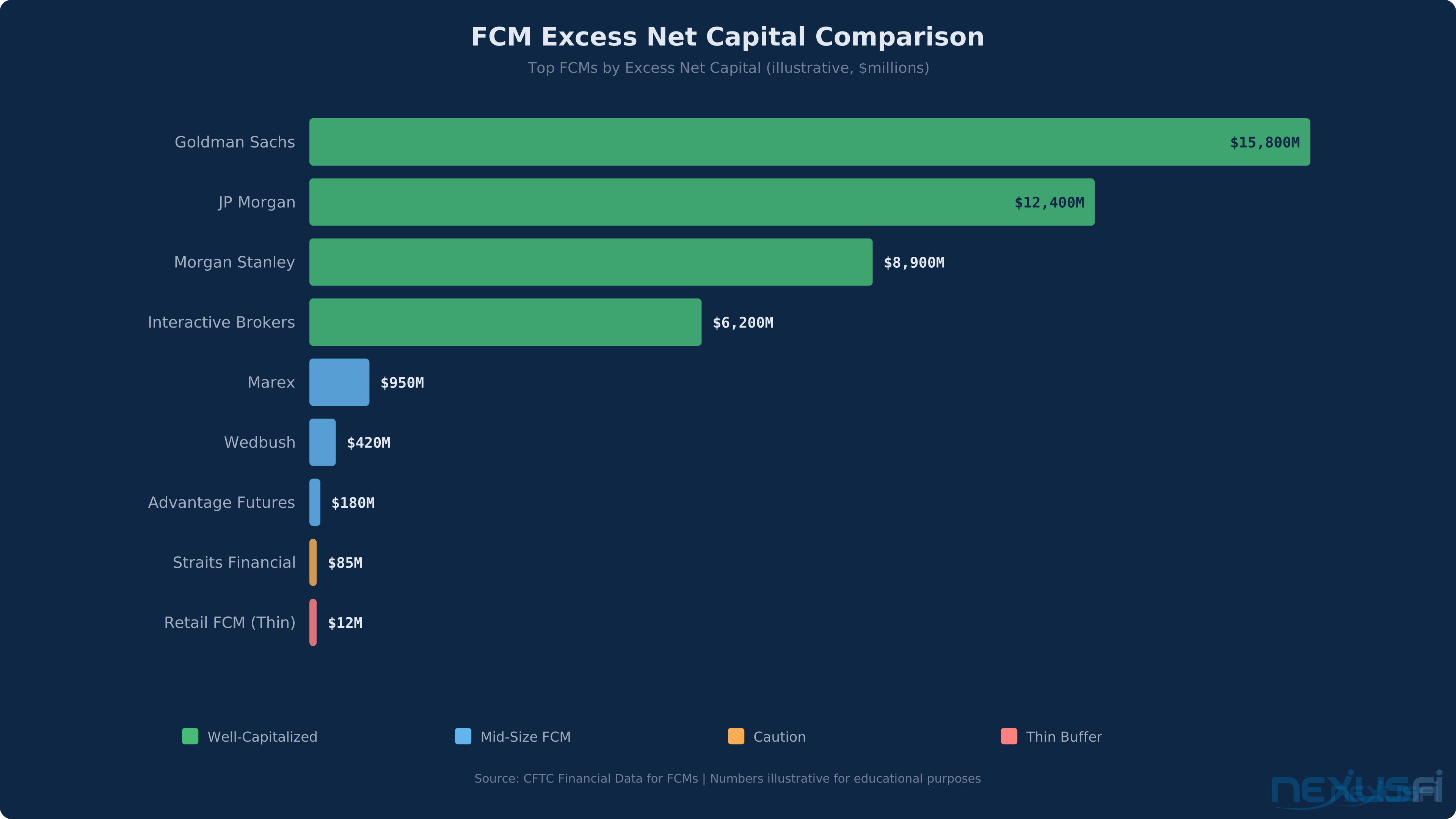
Excess Net Capital — The buffer. Adjusted net capital minus net capital requirement. This is the single most important number for evaluating broker safety. A firm with $50 million in adjusted net capital and a $5 million requirement has $45 million in excess. That's a thick cushion. A firm with $6 million against a $5 million requirement has $1 million of breathing room. One bad day could wipe that out.
Customer Segregated Funds (4d(a)(2)) — Money that customers have deposited for trading on domestic exchanges (DCMs). CFTC rules require FCMs to hold these funds in segregated accounts, completely separate from the firm's own assets. The segregation requirement represents the total obligation the FCM owes to its domestic futures customers.
Part 30 Secured Amount — Similar to domestic segregation, but for customers trading on foreign exchanges. This money must be set aside in secured accounts.
NFA BASIC — The National Futures Association's Background Affiliation Status Information Center. A free public tool that shows registration status, regulatory history, disciplinary actions, and compliance events for every registered futures professional and firm.
DSRO (Designated Self-Regulatory Organization) — The organization primarily responsible for auditing and conducting ongoing financial surveillance of an FCM. Usually either a designated contract market (like CME Group) or the NFA itself.
SPAN Margin — Standard Portfolio Analysis of Risk. The exchange's scenario-based model for calculating margin requirements. It stress-tests positions across multiple price and volatility scenarios to generate exchange-level margin numbers.
How the CFTC Reporting System Works #
Where to Find the Data #
The CFTC publishes FCM financial data at cftc.gov/MarketReports/financialfcmdata [8]. As Big Mike noted in his [sticky post on NexusFi] [1], this report shows the capital requirements and excess net capital for each FCM, and the data is downloadable in spreadsheet format for detailed analysis.
Every FCM files financial reports with their DSRO on a regular schedule — monthly or quarterly depending on the firm's size and classification. These reports feed into the public summary that the CFTC publishes.
What Each Column Tells You #
The CFTC summary table contains several key columns:
Reg As shows the firm's registration type — FCM (Futures Commission Merchant), BD (also registered as a broker-dealer with the SEC), RFED (Retail Foreign Exchange Dealer), or combinations.
A/O Date is the "as of" date for the financial data. This tells you how fresh the numbers are. If a firm's most recent data is several months old, that's worth noting — it could indicate reporting delays.
Adjusted Net Capital and Net Capital Requirement together tell you whether the firm meets its regulatory minimum. But the real information is in the next column.
Excess Net Capital is the number that matters most. This is the firm's financial buffer above the regulatory minimum. A large and stable excess net capital means the firm has significant resources to absorb losses, margin call spikes, and operational disruptions without threatening customer funds.
Customer Segregated Funds Required shows the total amount the firm must segregate on behalf of domestic futures customers. This figure represents the aggregate obligations to all customers trading on U.S. exchanges.
Doing Your Own Analysis #
As [one NexusFi member explained] [4] when comparing FCMs: "I would strongly advise to keep an eye on the CFTC website and especially the page about Financial Data for FCMs. You can download the data as an Excel file and do some basic calculations on the ratios."
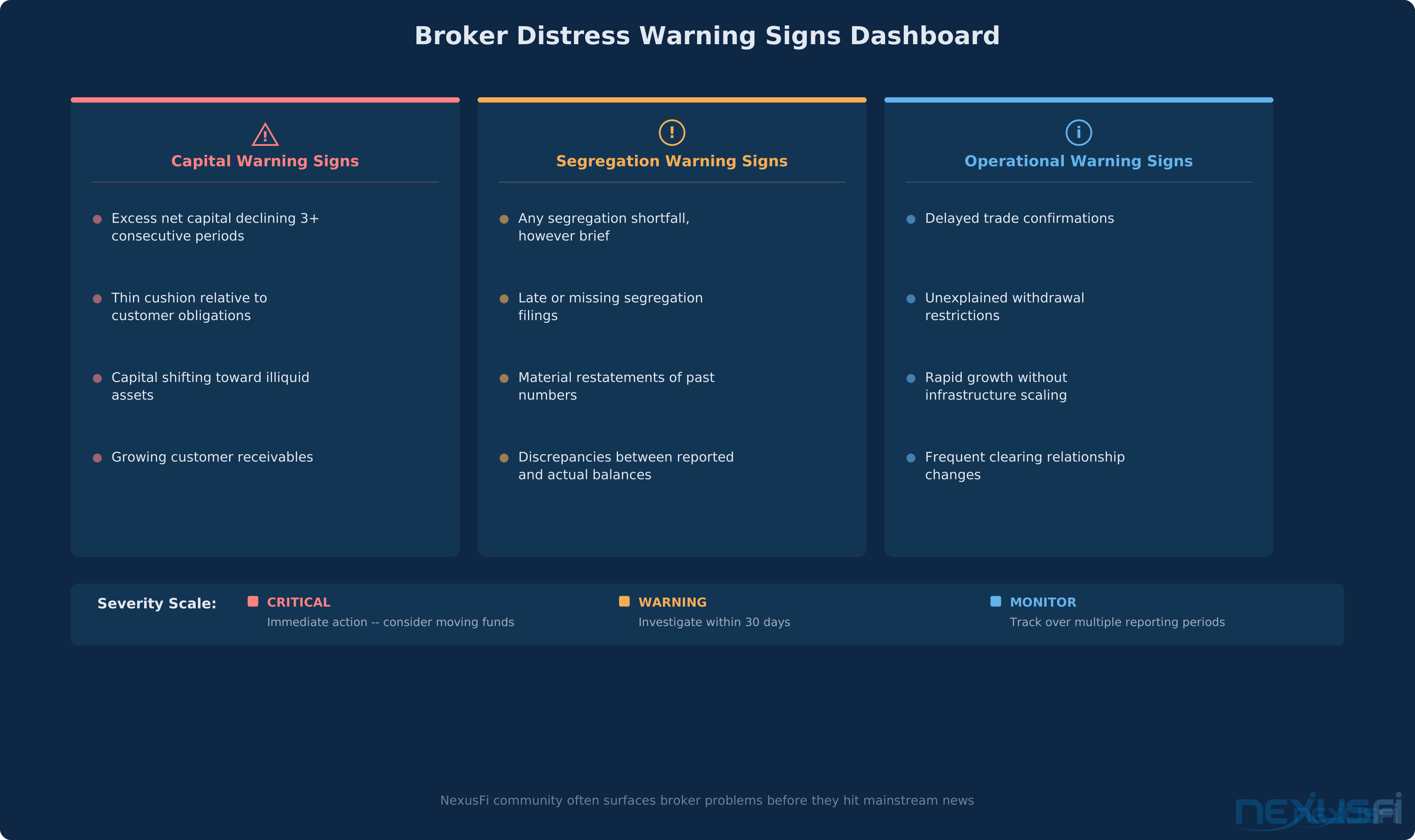
The most useful calculation is the excess capital ratio — excess net capital divided by the net capital requirement. A ratio of 10:1 or higher indicates a well-capitalized firm. A ratio under 2:1 should raise questions. A ratio approaching 1:1 means the firm is skating close to its regulatory minimum with minimal buffer.
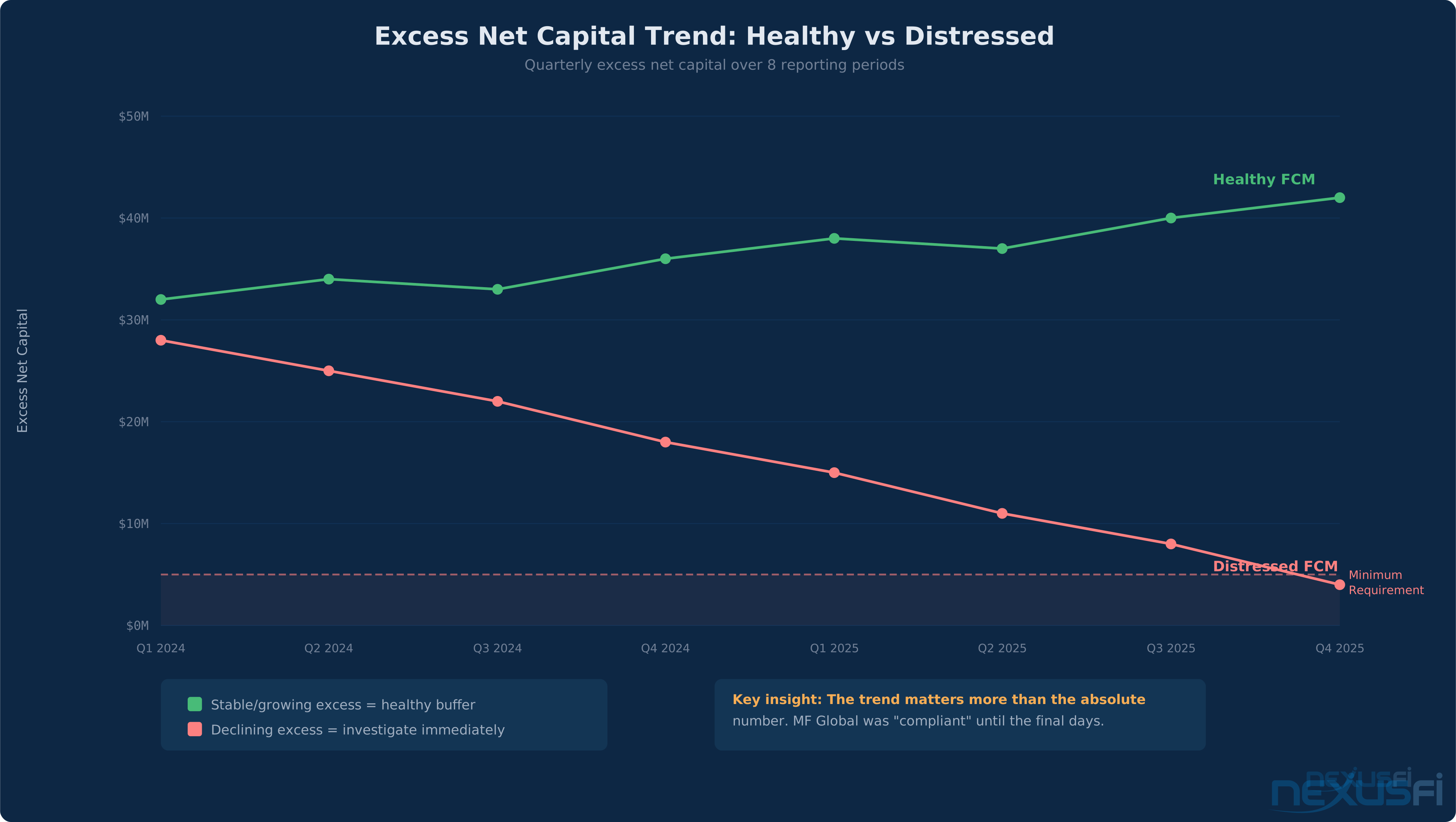
Track this ratio over multiple reporting periods. A stable or growing ratio is healthy. A steadily declining ratio — even if the absolute number is still above the minimum — is a leading indicator of trouble.
The Two Pillars of Broker Safety #
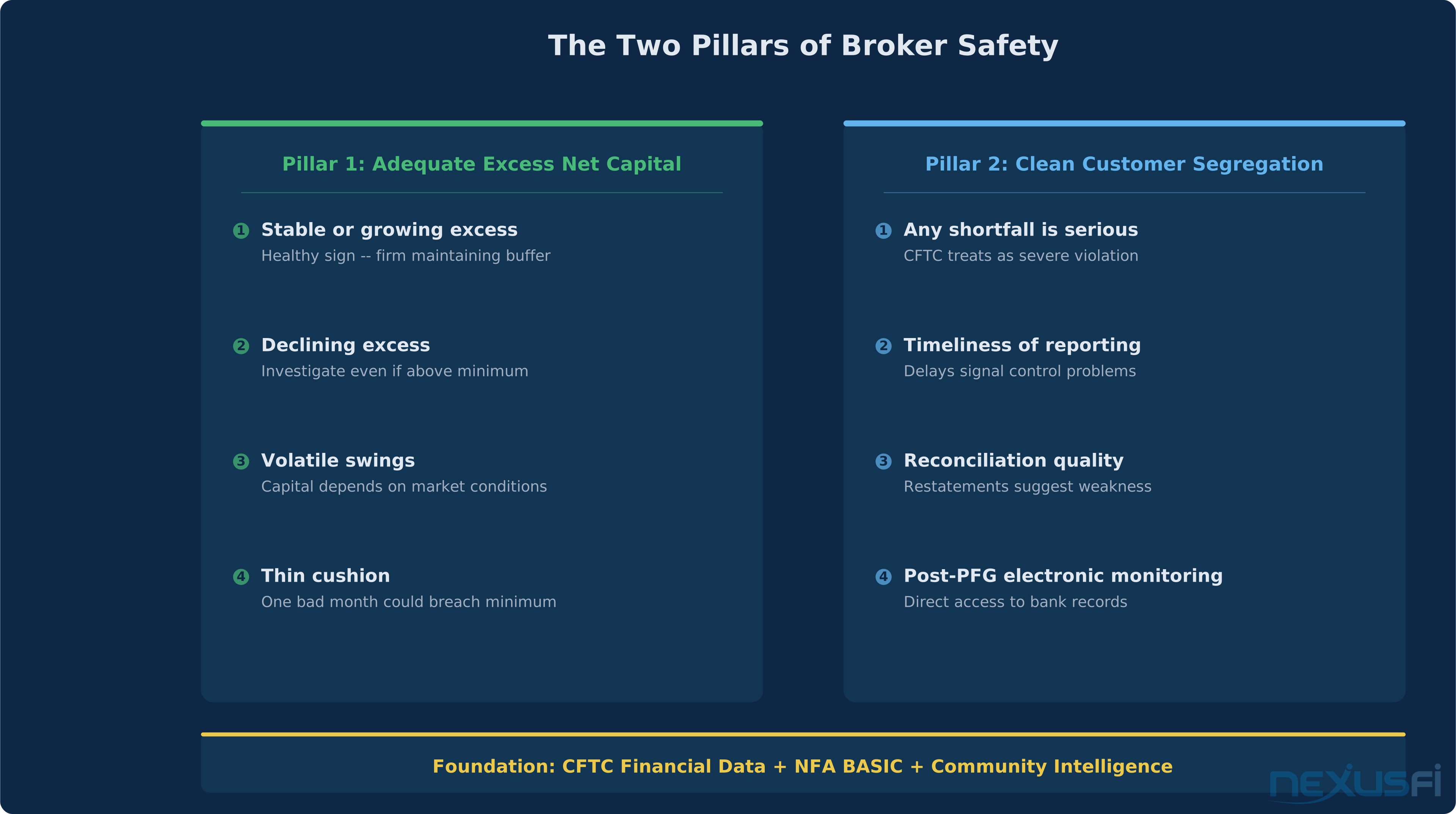
Pillar 1: Adequate Excess Net Capital #
The adjusted net capital number tells you the firm's total regulatory capital. But "adequate" depends on context. An FCM with $50 million in excess net capital that handles $5 billion in customer funds is proportionally different from one with $50 million in excess against $100 million in customer activity.
What matters is the trend. Pull three or four consecutive reporting periods and look for:
- Stable or growing excess — healthy sign, firm is maintaining its buffer
- Declining excess — even if above minimum, investigate why
- Volatile swings — suggests the firm's capital base depends on market conditions
- Thin cushion — excess barely above requirement means one bad month could push the firm below minimum
A firm can be technically compliant at a point in time and still be fragile. As multiple NexusFi discussions have highlighted, MF Global was "compliant" right up until it wasn't.
Pillar 2: Clean Customer Segregation #
Customer segregation is the primary protection mechanism for futures accounts. The CFTC requires FCMs to hold customer funds in segregated accounts, separate from firm assets. This means that even if the firm fails, customer funds should be identifiable and recoverable.
As [SMCJB explained on NexusFi] [2]: "In the US Customer Funds are required to be held in a separate segregated account to protect the customer from a situation like this. Unfortunately people still violate these laws as was seen in the PFG and MF Global failures. I believe that the CFTC is now more focused on this now though, and even monitors the brokers' actual segregated accounts."
Key monitoring points for segregation:
- Any shortfall is serious — even a brief or small segregation shortfall is a red flag. The CFTC treats segregation violations as among the most severe regulatory infractions.
- Timeliness of reporting — delays in filing segregation reports can indicate internal control problems.
- Reconciliation quality — repeated exceptions or restatements in segregation reports suggest operational weaknesses.
The CFTC now conducts enhanced monitoring of FCM segregated accounts, including direct electronic access to bank and custodian records, specifically because PFGBest was able to falsify paper statements for years without detection.
NFA BASIC: Your First Screening Tool #
The NFA's BASIC system at nfa.futures.org/basicnet [9] is a free, public database that every trader should use before opening an account. Here's what to look for:
Registration Status #
Confirm the firm is currently registered as an FCM (or that your IB's clearing FCM is registered). Check the effective date and any gaps in registration history.
Regulatory Actions and Disciplinary History #
This is where problems surface. Look for:
- NFA or CFTC enforcement actions
- Fines, suspensions, or restrictions
- Customer complaint patterns (volume and severity)
- Self-reported disclosure events
A single minor fine from a decade ago is different from a pattern of recent regulatory actions. Focus on trends and severity.
What NFA BASIC Doesn't Tell You #
BASIC is a screening tool, not a complete financial analysis. It won't show you:
- Detailed financial statements
- Real-time capital adequacy
- Internal control quality
- The firm's proprietary trading exposure
As [NexusFi community member djkiwi noted] [3] in his complete broker due diligence analysis: "To conduct due diligence I spoke to the following people: TD - Manager of the trade desk, IB - Manager of the margin desk, Tradestation - Senior account rep. Basically I kept asking for someone else to speak to until I got someone who knew what they were talking about." BASIC is where you start — not where you finish. For a structured approach, see our Futures Broker Due Diligence guide.
Warning Signs of Broker Distress #
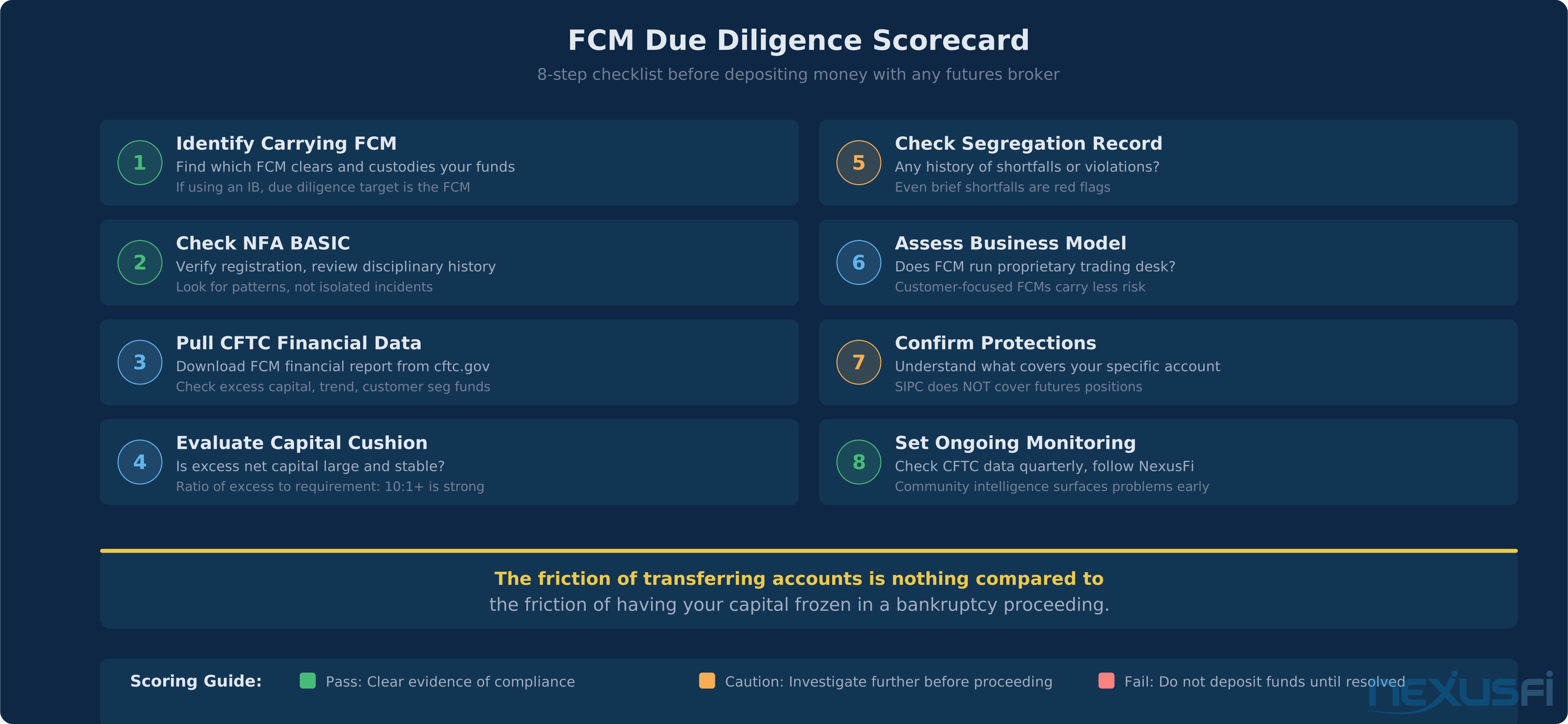
Capital Warning Signs #
- Excess net capital declining for 3+ consecutive periods — the buffer is eroding
- Excess net capital that's thin relative to customer obligations — a few percentage points above minimum leaves no room for error
- Capital composition shifting toward illiquid assets — receivables and hard-to-value positions replacing cash
- Growing customer receivables — this means customers owe the firm money, which becomes a problem if those receivables go bad
Segregation Warning Signs #
- Any segregation shortfall, however brief — the CFTC now issues enforcement actions for even short-duration violations
- Late or missing segregation filings — if the firm can't report on time, question their internal controls
- Material restatements — retroactive changes to previously filed numbers suggest problems with accuracy
Operational Warning Signs #
- Delayed trade confirmations — can indicate back-office strain
- Unexplained restrictions on withdrawals — an FCM that makes it hard to get your money out may have liquidity problems
- Rapid growth without proportionate infrastructure — taking on too many customers too fast strains risk management
- Clearing relationship changes — an IB that switches clearing FCMs frequently may be getting dropped for risk reasons
The NexusFi Community as Early Warning System #
One underappreciated advantage of being part of a trading community is the collective intelligence. When [Vision Financial Markets received a CFTC penalty for segregation violations] [5], NexusFi members flagged it immediately. When questions arose about AMP's financial stability, [the community tracked the CFTC data in real time] [6]. Forums like NexusFi often surface broker problems before they hit mainstream news.
Lessons from the Failures #
MF Global (2011) #
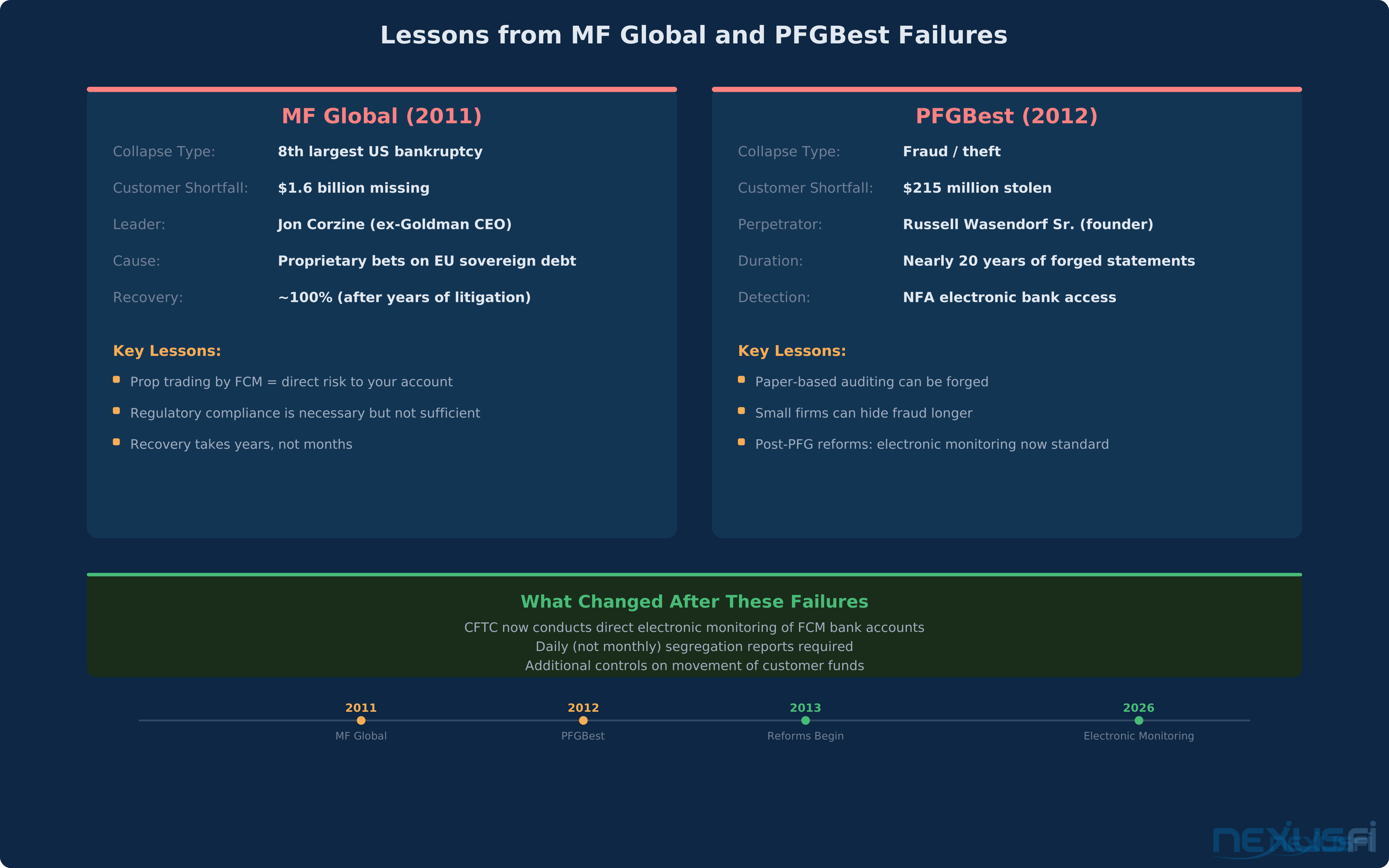
MF Global was the eighth-largest bankruptcy in U.S. history. The firm, led by former Goldman Sachs CEO and New Jersey Governor Jon Corzine, took massive proprietary bets on European sovereign debt using customer funds as collateral. When those bets went wrong, $1.6 billion in customer money was missing.
Key lessons:
Proprietary trading by your FCM creates direct risk to your account. As djkiwi documented in his [extensive analysis on NexusFi] [3]: "Interactive Brokers re-pledged or re-sold $7.9 billion of $16.7 billion of available client funds." Re-hypothecation — using customer assets to collateralize firm positions — is legal within limits, and MF Global exploited those limits through UK affiliates where "there is no minimum formula for hypothecating assets."
Regulatory compliance is necessary but not sufficient. MF Global was compliant with CFTC capital requirements until the final days. The problem wasn't that they broke rules — it's that the rules allowed for risk levels that could catastrophically fail. Understanding broker regulation and account safety means knowing both what the rules cover and where the gaps are.
Recovery takes years, not months. MF Global customers eventually recovered approximately 100% of their funds through the bankruptcy trustee, but the process took years. Having your capital frozen for two to three years is devastating for an active trader.
PFGBest (2012) #
PFGBest's founder, Russell Wasendorf Sr., forged bank statements for nearly 20 years to conceal the theft of $215 million in customer funds. He was caught only when the NFA gained direct electronic access to the firm's bank accounts and the numbers didn't match.
Key lessons:
Paper-based auditing can be forged. PFGBest passed regulatory audits for decades because Wasendorf was intercepting and fabricating the bank confirmation letters used to verify segregated fund balances.
Small firms can hide fraud longer. PFGBest was a mid-size FCM without the level of scrutiny applied to the largest firms. The PFG case demonstrated that firm size alone isn't a safety indicator.
Post-PFG reforms made the system stronger. As SMCJB noted on NexusFi, the CFTC now directly monitors broker segregated accounts electronically, eliminating the paper-based verification that PFGBest exploited. New rules require FCMs to file daily segregation reports rather than monthly, and impose additional controls on the movement of customer funds.
The SIPC Misconception: What Actually Protects Futures Accounts #
This is the most commonly misunderstood area of broker safety for futures traders.
SIPC Does Not Cover Futures Accounts #
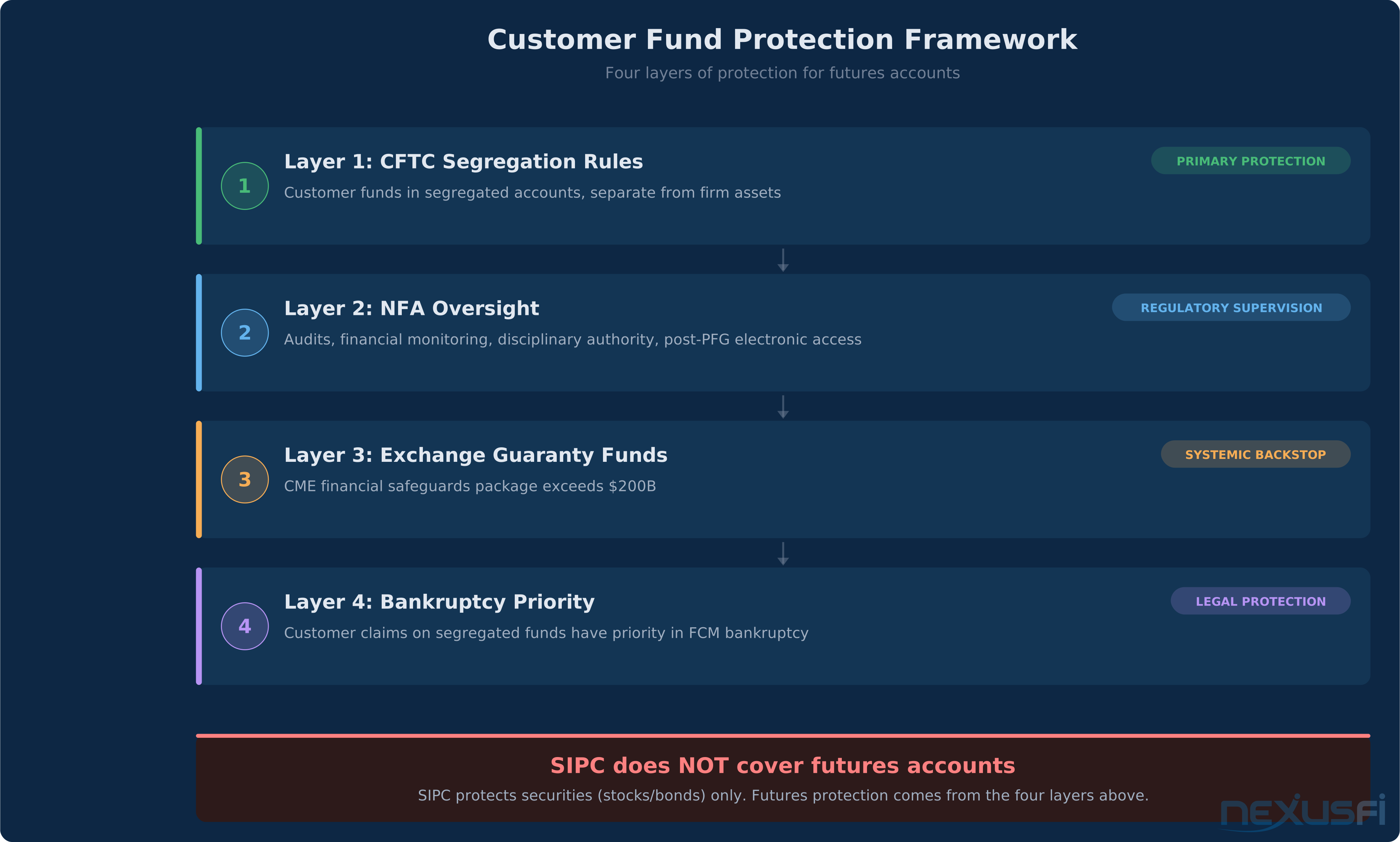
The Securities Investor Protection Corporation (SIPC) protects customers of securities broker-dealers — stock and bond accounts. It does not cover futures positions. If you trade futures through a firm that's also a registered broker-dealer (like Interactive Brokers), your securities account has SIPC coverage, but your futures account does not.
As djkiwi's research showed, some brokers offer workarounds: "If you open up a futures account without an equities account and deposit cash with IB it is covered by the SIPC as futures cash and equities cash is commingled." This cash-in-transit protection is useful but doesn't cover your actual futures positions or margin deposits.
What Does Protect Futures Accounts #
For futures customers, the protection framework is:
- CFTC Segregation Rules — Customer funds must be kept in segregated accounts, separate from firm assets. This is the primary protection and it's significant — in most FCM failures, segregated funds are identified and returned to customers (eventually). For the specifics on what brokers can legally do with your segregated money, CFTC Regulation 1.25 sets strict boundaries.
- NFA Oversight — The NFA conducts audits, monitors financial reporting, and has disciplinary authority over member firms. Post-PFG reforms much enhanced the NFA's ability to verify segregation compliance.
- Exchange/Clearinghouse Guaranty Funds — Exchanges maintain guaranty funds that provide an additional layer of protection against clearing member defaults. These funds are significant — CME's financial safeguards package [10] exceeds $200 billion. The clearing and settlement process itself is designed to prevent cascading failures.
- Bankruptcy Priority — Under the Commodity Exchange Act, customer claims on segregated funds have priority in FCM bankruptcy proceedings. This is why MF Global customers ultimately recovered their funds.
The Practical Takeaway #
Don't assume your futures account has the same protection as your stock account. It doesn't. The protections are different — not necessarily worse, but different. Customer segregation, when properly maintained and monitored, has a strong track record. But it depends on the FCM actually following the rules.
The Multi-Broker Strategy #
For traders with significant capital, spreading funds across multiple FCMs is a risk management strategy worth considering. As [djkiwi recommended on NexusFi] [7]: "I would not put more than 10% of my net worth in futures accounts" and suggested spreading that across multiple privately owned futures brokers "so exposure to any one broker is 5%."
This approach has clear advantages:
- Limits exposure to any single FCM failure — even a total loss at one broker doesn't wipe you out
- Provides continuity — if one broker freezes accounts, you can still trade through the other
- Enables comparison — running the same strategy across two brokers reveals differences in execution, fees, and service quality
The downside is operational complexity, higher minimum deposits, and the need to monitor multiple accounts. For most retail traders with sub-$100k accounts, the added complexity isn't justified. For traders with larger accounts, it's worth the overhead.
A Practical Due Diligence Scorecard #
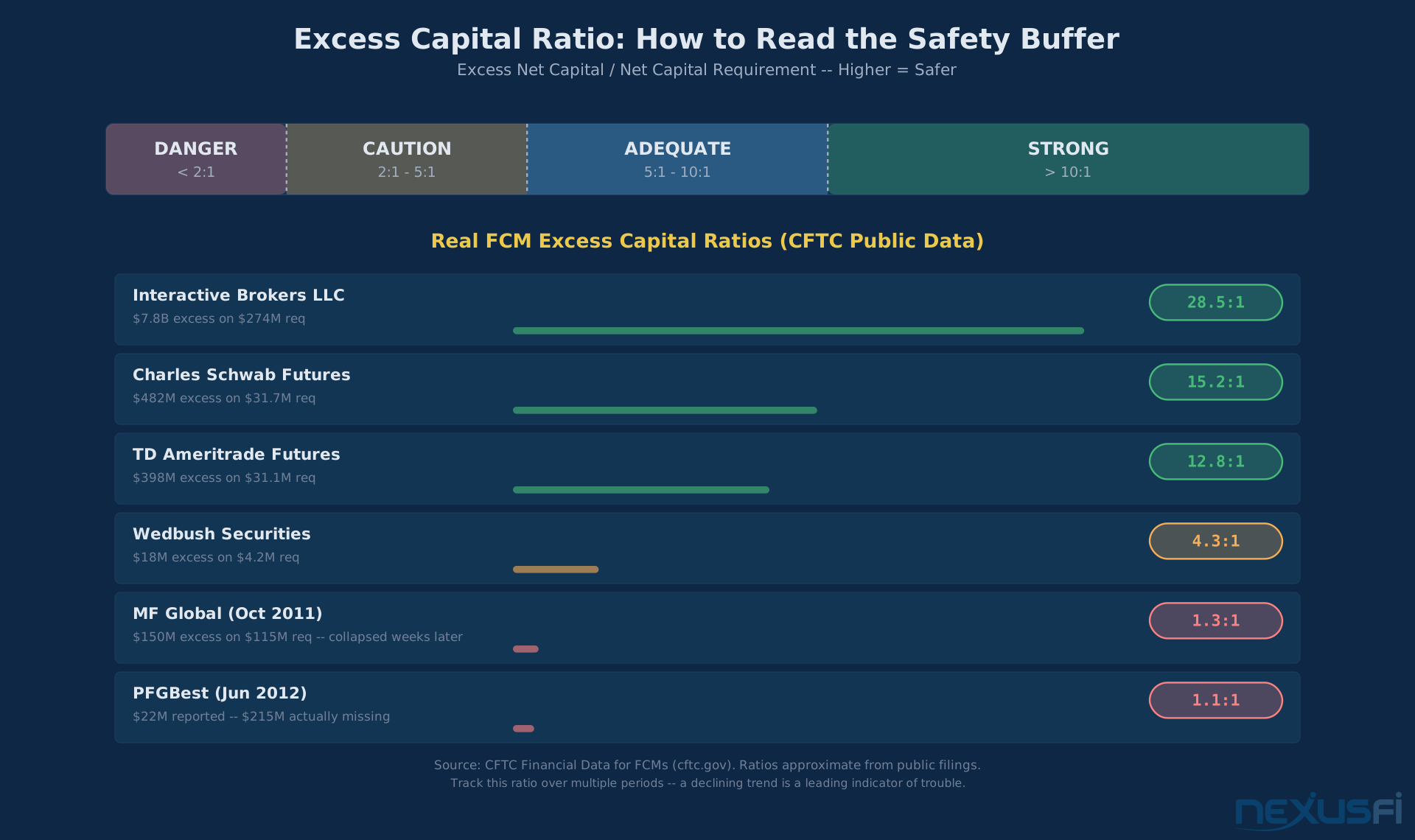
Before depositing money with any futures broker, work through this checklist. For a complementary systematic framework, see our Futures Broker Evaluation Framework.
Step 1: Identify your carrying FCM. If you're trading through an IB, confirm which FCM clears and custodies your funds. Your due diligence target is the FCM, not the IB.
Step 2: Check NFA BASIC. Verify registration status. Review disciplinary history. Look for patterns, not isolated incidents.
Step 3: Pull CFTC financial data. Download the FCM financial data report. Find your FCM and look at:
- Excess net capital (current level and trend over 3+ periods)
- The ratio of excess capital to net capital requirement
- Customer segregated funds obligations
Step 4: Evaluate the capital cushion. Is excess net capital large relative to the firm's customer obligations? Is it stable or declining? Is it primarily cash or dependent on illiquid assets?
Step 5: Check segregation compliance. Any history of segregation shortfalls? Any CFTC or NFA actions related to customer fund handling?
Step 6: Assess the business model. Does the FCM engage in proprietary trading? Is it part of a larger financial institution? Who are its clearing relationships? A firm focused primarily on customer business carries less risk than one running a large prop trading desk alongside customer accounts. Understanding how futures brokers make money helps you gauge where the risks lie.
Step 7: Confirm your protections. Understand exactly what covers your specific account. Don't assume SIPC applies to futures. Know the segregation framework and bankruptcy priority rules.
Step 8: Set ongoing monitoring. Check CFTC financial data quarterly. Set up NFA BASIC alerts if available. Follow NexusFi's Brokers forum for community intelligence on broker issues.
The Bottom Line #
Your broker's financial health is a risk factor you can actually monitor and manage. The data is public. The tools are free. The regulatory framework, while imperfect, provides meaningful protections when firms comply with it.
The traders who got hurt at MF Global and PFGBest weren't doing anything wrong as traders. They were at the wrong broker at the wrong time. The difference between "that was a scary headline" and "that was my retirement" often comes down to whether you spent an hour doing due diligence before depositing your money.
Check the numbers. Check them regularly. And if you don't like what you see, the friction of transferring accounts is nothing compared to the friction of having your capital frozen in a bankruptcy proceeding.
Knowledge Map
Go Deeper
Build on this knowledgeReferences This Article
Articles that build on this topicCitations
- — CFTC Capital Requirements for FCM's (2020) 👍 11“the amount of regulatory capital available to meet the FCM's minimum net capital requirement”
- — What if a broker declare bankruptcy!!! Ftx first whose next? (2022) 👍 6“In the US Customer Funds are required to be held in a separate segregated account”
- — Futures Broker Due Diligence Notes post PFG (2012) 👍 82“To conduct due diligence I spoke to the following people”
- — AMP Futures / AMP Global Review (2014) 👍 10“keep an eye on the CFTC website and especially the page about Financial Data for FCMs”
- — Zenfire no more? (2014) 👍 5“Vision Financial Markets CFTC segregation penalty”
- — Is Amp at risk of going under? (2020) 👍 7“CFTC report lists capital requirements and excess net capital”
- — AMP Futures / AMP Global Review (2014) 👍 17“not put more than 10% of net worth in futures accounts”