



FCM Bankruptcy and Futures Trader Protection: MF Global, PFG Best, and What Every Trader Needs to Know
Overview #
When your futures broker fails, you are not protected the way equity investors are. There is no SIPC. There is no government backstop. There is no $500,000 insurance policy waiting to make you whole. What protects you — when protection works at all — is a legal framework built around customer fund segregation and a futures-specific bankruptcy process that most traders never think about until accounts are frozen and the morning news is reporting their broker collapsed.
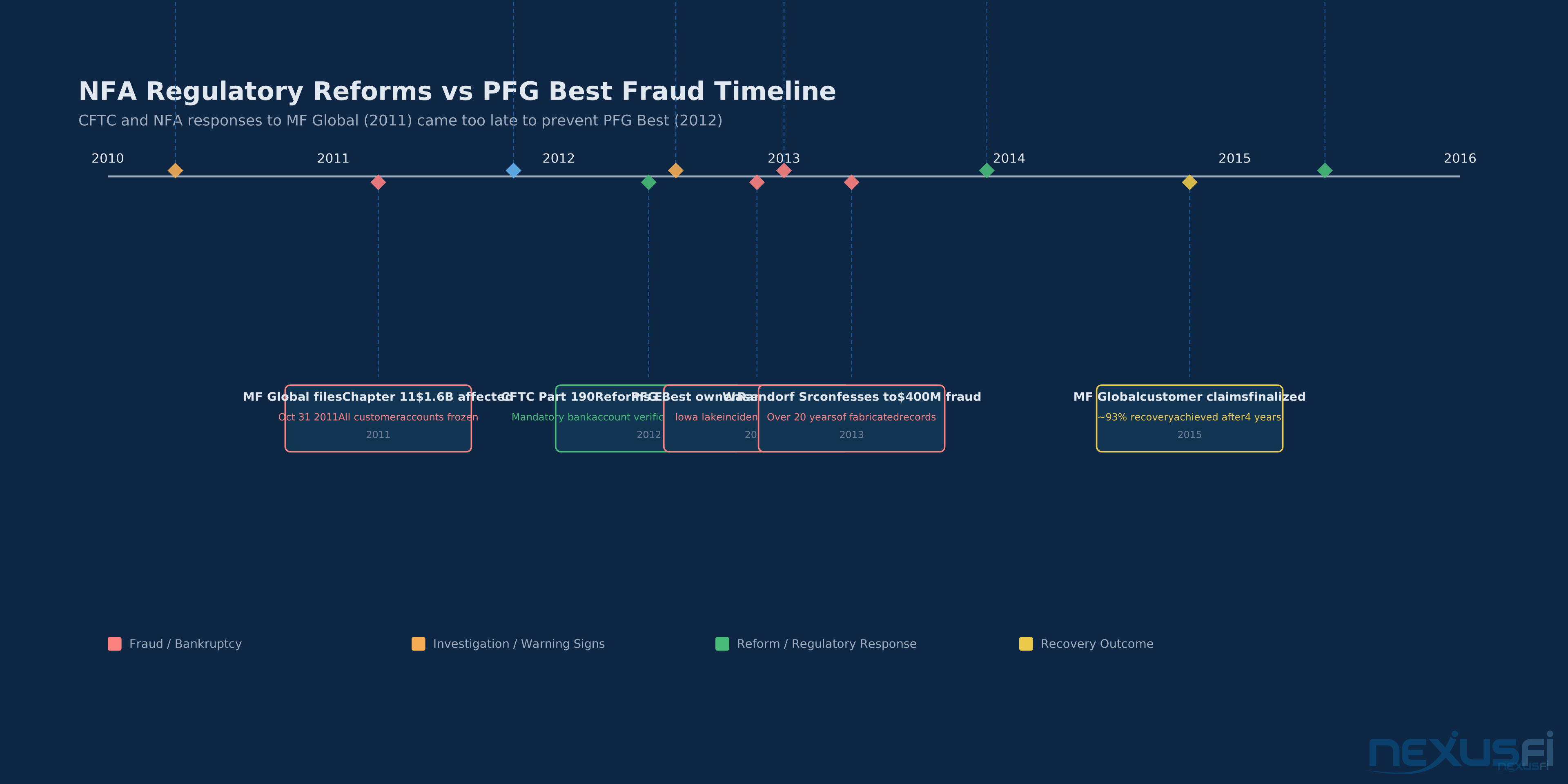
MF Global filed for bankruptcy on October 31, 2011, with $1.6 billion of customer money missing. PFG Best froze customer accounts on July 10, 2012, with $215 million in segregated funds that turned out never to have existed. Two failures, eighteen months apart, over 40,000 accounts disrupted, millions in losses that some customers never recovered. Both firms passed regulatory oversight. Both filed the required segregation reports. Both failed anyway.
This article explains how futures trader protection actually works, where it breaks down, and what practical steps separate traders who minimize their exposure from those who discover — after accounts are frozen — that "customer segregated funds" is a legal designation, not a guarantee.
Prerequisites: You should already understand how margin works (initial, maintenance, variation), what an FCM does as intermediary between customer and clearing house, and the basic distinction between futures and securities markets. If those concepts are new, start with Futures Margin Requirements and Futures Clearing and Settlement.
How the Protection Framework Is Supposed to Work #
Customer Segregation: The Legal Fence Around Your Money #
The entire futures customer protection framework rests on one concept: customer funds must be legally separated from the FCM's own money. CEA Section 4d(a)(2) mandates this. CFTC Regulation 1.20 operationalizes it, and the full regulatory text is available at the Electronic Code of Federal Regulations (17 CFR §1.20) and CFTC Regulation Answers — Reg 1.20. The idea is simple — your margin deposits and account equity belong to you, not to the firm, and the firm cannot use your money to fund its own operations, investments, or proprietary bets.
In practice, FCMs don't hold each customer's money in individual lockboxes. The segregation is pooled — all customer funds commingle in accounts that are designated "customer segregated" at approved depositories (typically major U.S. banks). The FCM tracks each customer's individual equity on its internal books, but the actual cash sits in shared accounts held separately from the FCM's proprietary capital.
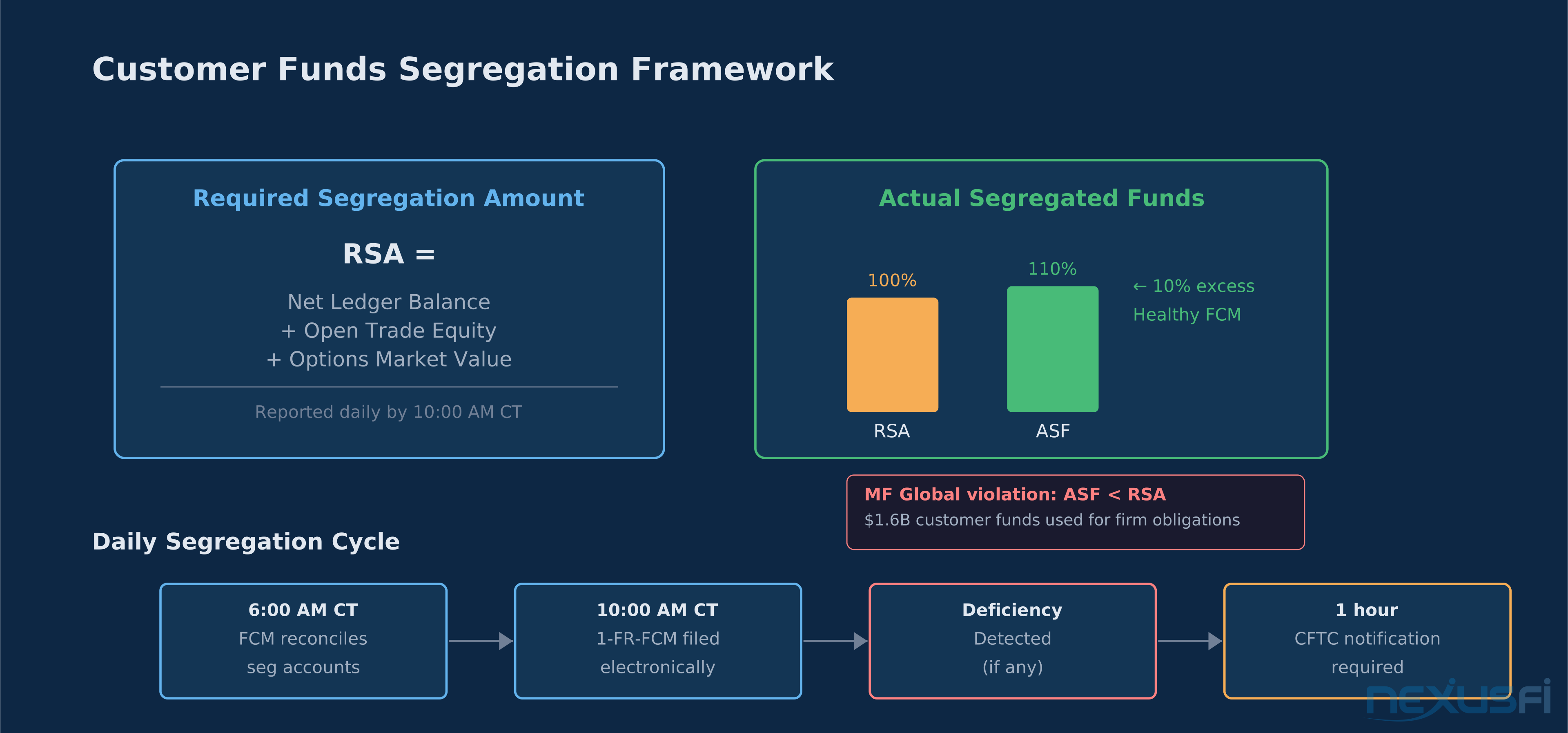
Every day, the FCM must calculate a Required Segregated Amount (RSA):
RSA = Customer Net Ledger Balance + Customer Open Trade Equity + Customer Options Market Value
The FCM must hold Actual Segregated Funds (ASF) at or above the RSA at all times. Daily reconciliation runs at 6:00 AM CT. The FCM files Form 1-FR-FCM (segregation computation) electronically with the CFTC by 10:00 AM CT the following business day. If a deficiency is discovered, the FCM must notify the CFTC within one hour (17 CFR §1.20(c)(3)).
On top of the RSA, FCMs typically maintain a voluntary "excess" cushion — funds in segregation beyond what's legally required. Healthy FCMs maintain 8-12% excess. This cushion absorbs short-term fluctuations without triggering a technical deficiency.
CFTC Regulation 1.25 restricts what FCMs can do with segregated funds while they hold them — investments must be in "high-quality, liquid, low-risk" instruments: U.S. Treasury securities, agency paper, and similar instruments with haircuts no greater than 2%. The full regulatory text is at 17 CFR §1.25 and CFTC Regulation Answers — Reg 1.25. The FCM cannot simply park your money in a money market fund of its own choosing or use it to buy corporate bonds.
This sounds solid. The legal architecture — pooled segregated accounts, daily calculation, restricted investment universe, immediate deficiency reporting — looks like meaningful protection. It should work. For 99% of FCMs over 99% of trading days, it does. The problem is the remaining 1%.
The Three-Tier Clearing Structure and Where FCM Risk Fits #
Understanding why FCM failure hits traders hard requires understanding where the FCM sits in the clearing chain:
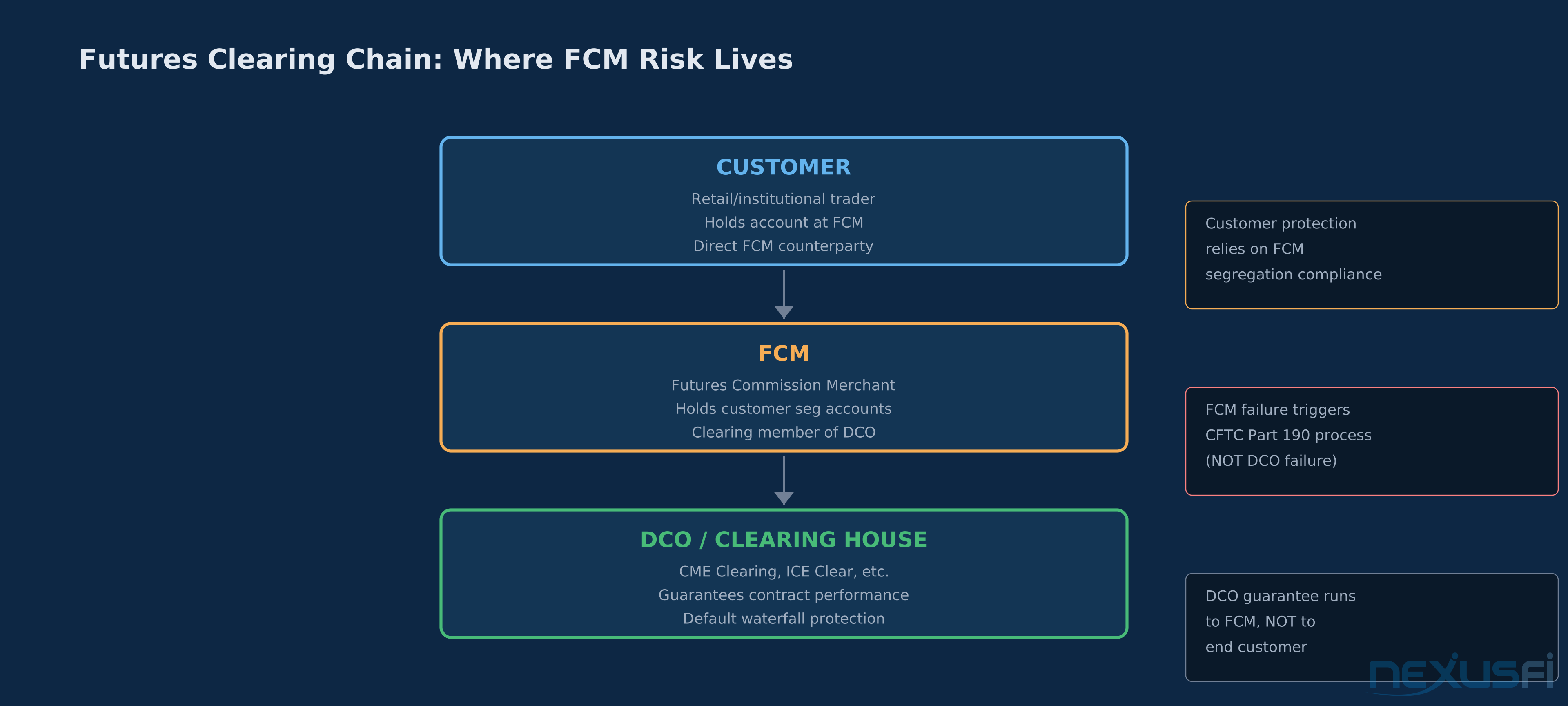
Customer → FCM → Clearing House (DCO)
At the clearing house level, your positions are guaranteed. CME Clearing, ICE Clear, and other derivatives clearing organizations (DCOs) guarantee contract performance through their own default waterfall — margin calls, guaranty funds, assessment rights. If a clearing member fails, the DCO has mechanisms to absorb the loss and maintain market integrity.
But the DCO guarantee runs to the clearing member (typically the FCM), not directly to the end customer. Your direct contractual relationship is with the FCM. If the FCM fails — not the clearing house — you're relying on the segregation framework and the CFTC Part 190 bankruptcy process, not the DCO guarantee.
This distinction matters. Clearing house failure and FCM failure are entirely different risk scenarios with different protections. What happened at MF Global and PFG Best was FCM failure — the clearing houses performed normally.
Case Study: MF Global (2011) -- When Segregation Gets Misused #
What Happened #
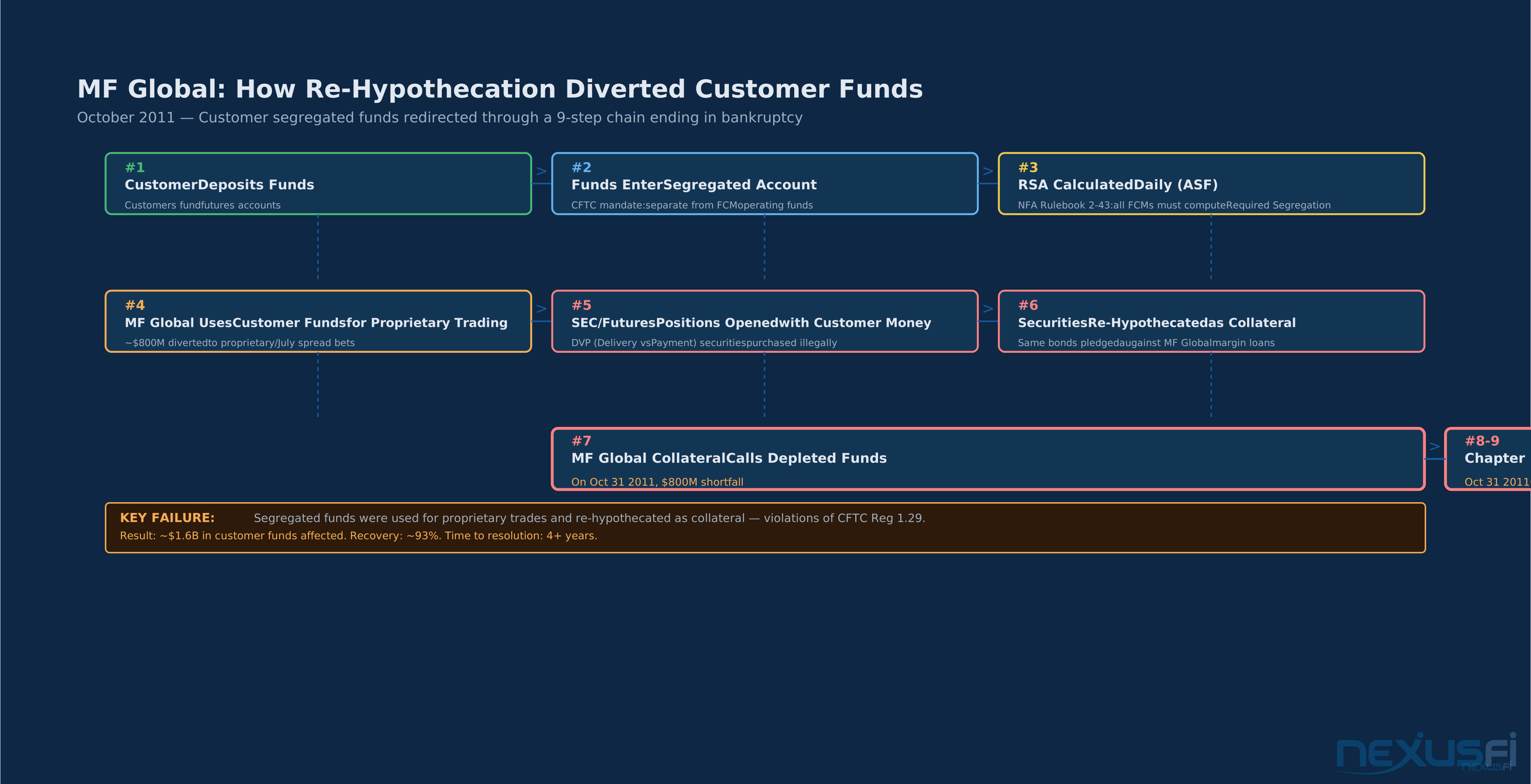
Jon Corzine joined MF Global as CEO in 2010 with a vision: transform a commodity brokerage into a full-service investment bank. The strategy involved betting heavily on European sovereign debt — primarily Italian, Spanish, and Belgian government bonds — through repo-to-maturity (RTM) transactions.
RTM transactions work like this: MF Global sold European bonds and simultaneously agreed to buy them back at maturity. Accounting rules let the firm treat these as off-balance-sheet sales rather than as borrowings, concealing the firm's effective leverage from investors. By October 2011, MF Global had accumulated $6.3 billion in European sovereign debt exposure on a capital base that couldn't support that position if bond prices moved against them.
They did move against them. As European debt fears escalated through 2011, MF Global's European positions deteriorated rapidly. Counterparties demanded additional margin. The firm needed cash immediately.
In the scramble for liquidity in the final days before bankruptcy, customer segregated funds were used to meet firm obligations. This violated CFTC Reg 1.25, which prohibits using customer seg funds for proprietary purposes. Approximately $1.6 billion in customer funds were transferred from segregated accounts to meet margin calls and operational obligations.
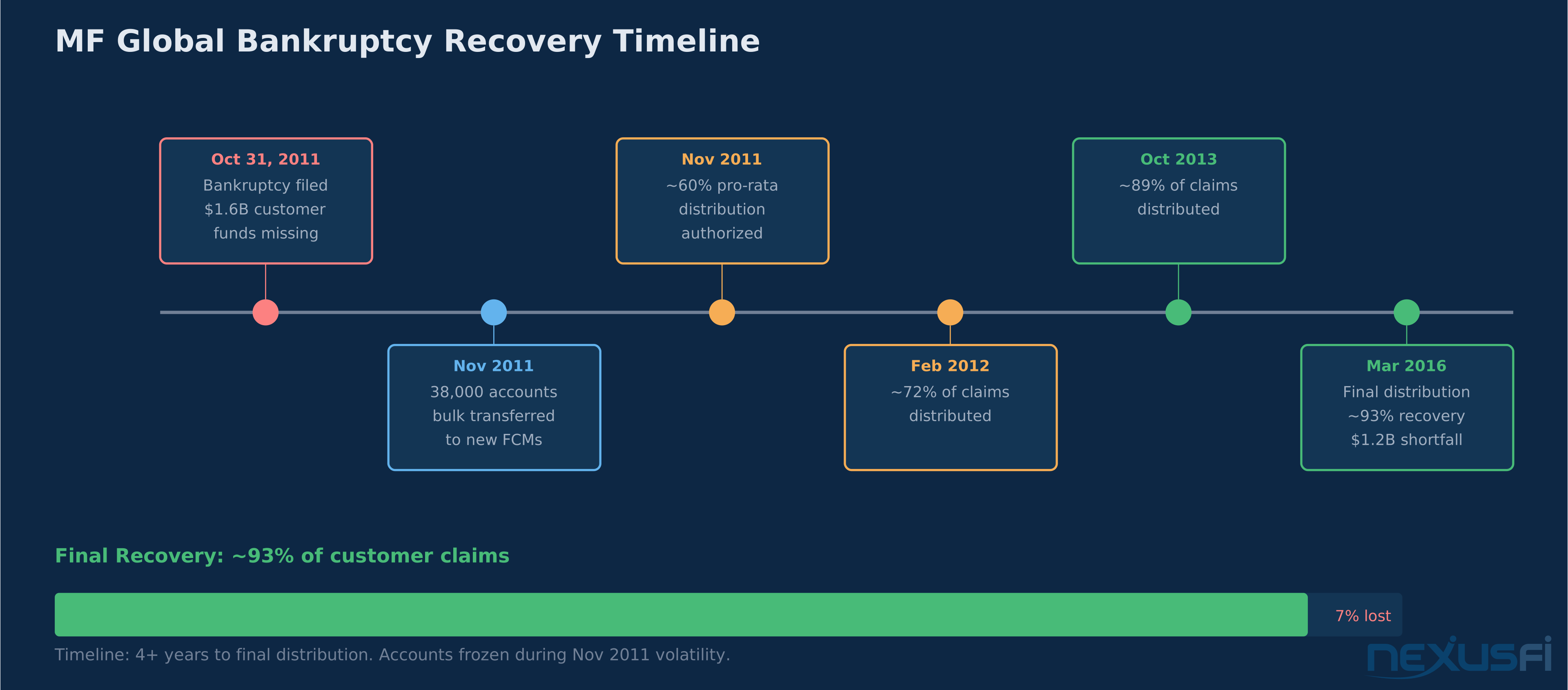
MF Global filed for bankruptcy protection on October 31, 2011.
MF Global's re-hypothecation of customer funds wasn't purely illegal improvisation — it was built into account agreements.
Read your account agreement, specifically the sections on hypothecation and rehypothecation.
The Recovery Timeline #
The Part 190 bankruptcy process moved the case through multiple distribution stages:
- November 2011: First bulk transfer of approximately 38,000 accounts to solvent FCMs (positions moved intact in days)
- November 2011: Trustee authorized initial ~60% pro-rata distribution
- February 2012: ~72% of eligible claims distributed
- October 2013: ~89% distributed
- March 2016: Final distribution — approximately 93% of customer claims recovered
The 7% residual shortfall — roughly $1.2 billion — was distributed pro-rata among affected customers. A trader with $100,000 in an MF Global account ultimately recovered approximately $93,000. The 2-5 year timeline to full recovery is the other hidden cost: positions couldn't be managed, markets moved, opportunity was lost.
The MF Global recovery looks relatively good from a distance. What it doesn't show is the operational chaos of accounts frozen at a critical time, positions that couldn't be exited during the November 2011 volatility, and four years of uncertainty about final recovery amounts.
Case Study: PFG Best (2012) -- When Fraud Defeats Segregation #
The Mechanics of a 20-Year Deception #
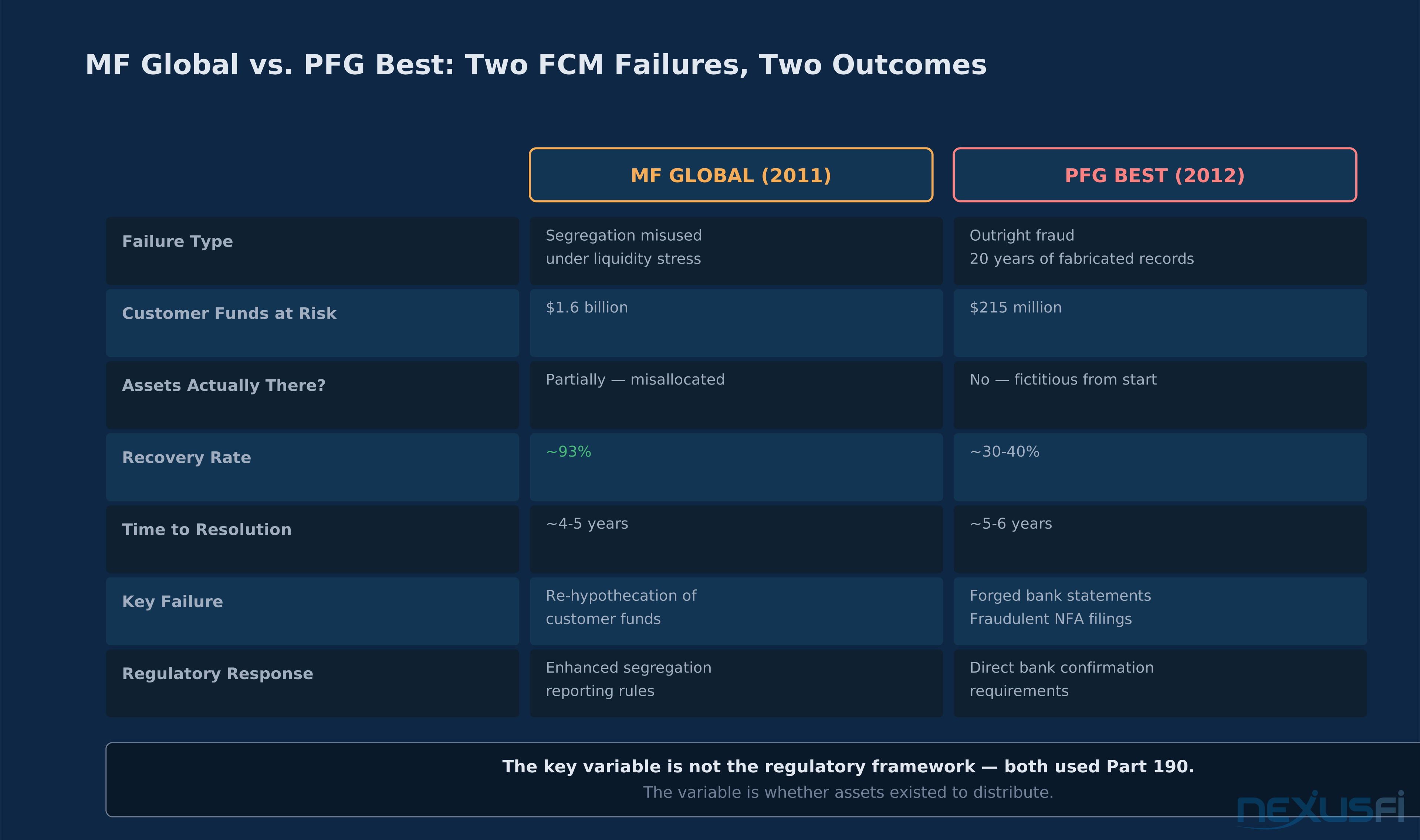
If MF Global shows what happens when segregation gets misused under liquidity stress, PFG Best shows what happens when the underlying assets simply don't exist.
Russell Wasendorf Sr. founded Peregrine Financial Group in 1980. By 2012, it operated as PFG Best, managing approximately $400 million in customer funds. For two decades — by Wasendorf's own admission in his suicide note — he fabricated the firm's segregation records.
The mechanics were almost embarrassingly simple. Wasendorf:
- Created fake bank statements from US Bank using Photoshop and similar tools
- Filed these fabricated statements with the NFA as required segregation documentation
- Rented a post office box using an address associated with US Bank, so NFA confirmation requests went to an address he controlled
- Answered those confirmation requests himself, forging bank official signatures
- Maintained this fraud through at least 20 years of required regulatory filings
The NFA's audit process relied on bank confirmations — letters sent to depositories asking them to confirm account balances. Wasendorf's PO box intercept meant every confirmation was answered by the fraudster himself. No one at the NFA or CFTC thought to verify that the confirmation address actually belonged to the bank.
The post-PFG Best investigation revealed that the NFA sent confirmation requests to addresses provided by the FCM itself — a fundamental internal control failure. This is why post-2012 reforms required direct electronic bank confirmations without FCM intermediation. But even that doesn't eliminate fraud risk — it reduces the simplest attack vector.
The Discovery and Outcome #
On July 9, 2012, Wasendorf attempted suicide and left a four-page handwritten confession detailing the fraud. NFA was informed that morning. Emergency action followed immediately. Customer accounts were frozen on July 10, 2012.
The difference from MF Global: the money wasn't misallocated — it was never there. The accounts showed $200 million in customer seg funds. The actual balance was approximately $5 million.
Recovery: Final distributions completed between 2013 and 2018 returned approximately 30-40% of customer claims — the lower range for customers who received only early distributions, higher for those who also received insurance proceeds and litigation settlement shares. A trader with $100,000 at PFG Best recovered $30,000-$40,000. The rest was gone.
The contrast with MF Global is stark: 93% recovery vs. 30-40% recovery, 5 years vs. 6 years. The variable isn't the regulatory framework — both cases went through Part 190 processes. The variable is whether assets existed to distribute.
The Core Distinction: No SIPC, No Safety Net #
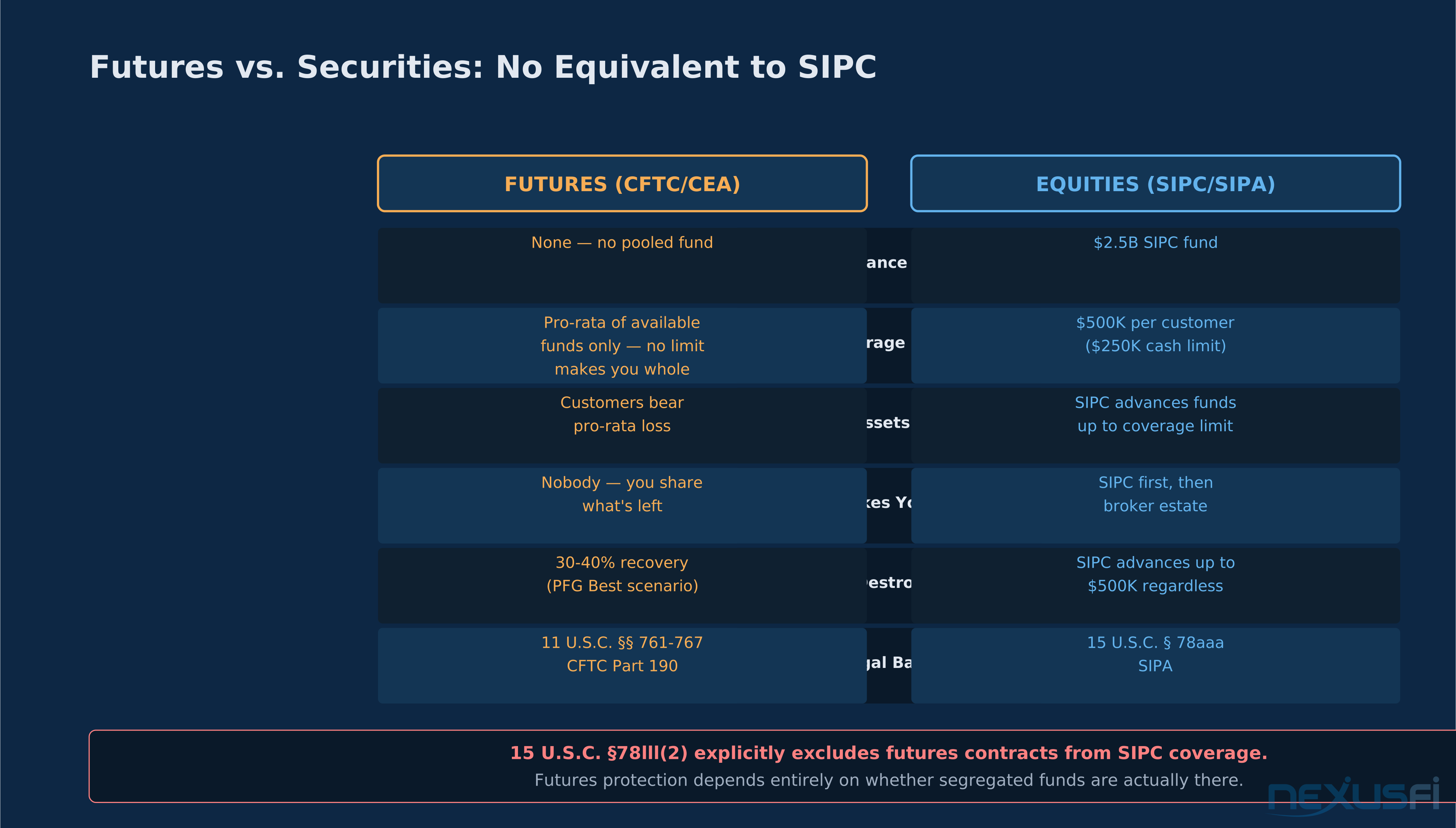
Here's the fact that surprises most traders coming from equity backgrounds: futures accounts are not covered by SIPC.
SIPC — the Securities Investor Protection Corporation — provides up to $500,000 in coverage (maximum $250,000 cash) when a securities broker-dealer fails. It's funded by member assessments from broker-dealers. When a covered firm fails, SIPC advances funds to make customers whole up to the limit, then pursues recovery from the failed firm's estate. Most securities broker failures result in 100% recovery up to the SIPC limit.
15 U.S.C. Section 78lll(2) explicitly excludes futures contracts from SIPC coverage. The statutory text is available at the U.S. House Office of the Law Revision Counsel and Cornell LII. Futures are not securities. SIPC does not cover them.
The legal framework for futures is entirely separate:
| Feature | Futures (CFTC/CEA) | Equities (SIPC/SIPA) |
|---|---|---|
| Insurance fund | None | $2.5B SIPC fund |
| Coverage limit | Pro-rata of available funds only | $500K per customer ($250K cash) |
| If assets missing | Customers bear pro-rata loss | SIPC advances funds up to limit |
| Who makes you whole | Nobody — you share what's left | SIPC (up to limit), then broker estate |
| Legal basis | 11 U.S.C. §§ 761-767 | 15 U.S.C. § 78aaa et seq. |
The fundamental difference: SIPC makes customers whole (up to limits) regardless of whether assets actually exist. Futures protection depends entirely on whether the segregated funds are actually there.
Some traders try to get partial SIPC coverage on futures accounts by maintaining combined securities/futures accounts at brokers like Interactive Brokers, where uninvested cash can be swept to a SIPC-covered securities account. This partial workaround helps with idle cash but doesn't protect margin held in the futures account at settlement time.
The "segregated funds" designation creates a false sense of security.
Segregation is a legal structure, not an insurance policy. The protection it provides depends entirely on whether the FCM actually complies with it.
CFTC Part 190: The Futures-Specific Bankruptcy Engine #
When an FCM fails, the ordinary bankruptcy rules don't apply. Futures commission merchant insolvency is governed by Subchapter IV of the Bankruptcy Code — 11 U.S.C. §§ 761-767, available at the Cornell LII 11 U.S. Code Chapter 7 Subchapter IV and the U.S. House Office of the Law Revision Counsel — as operationalized by CFTC Part 190 regulations. This is a specialized framework designed to prioritize customer protection and minimize market disruption.
How Part 190 Works #
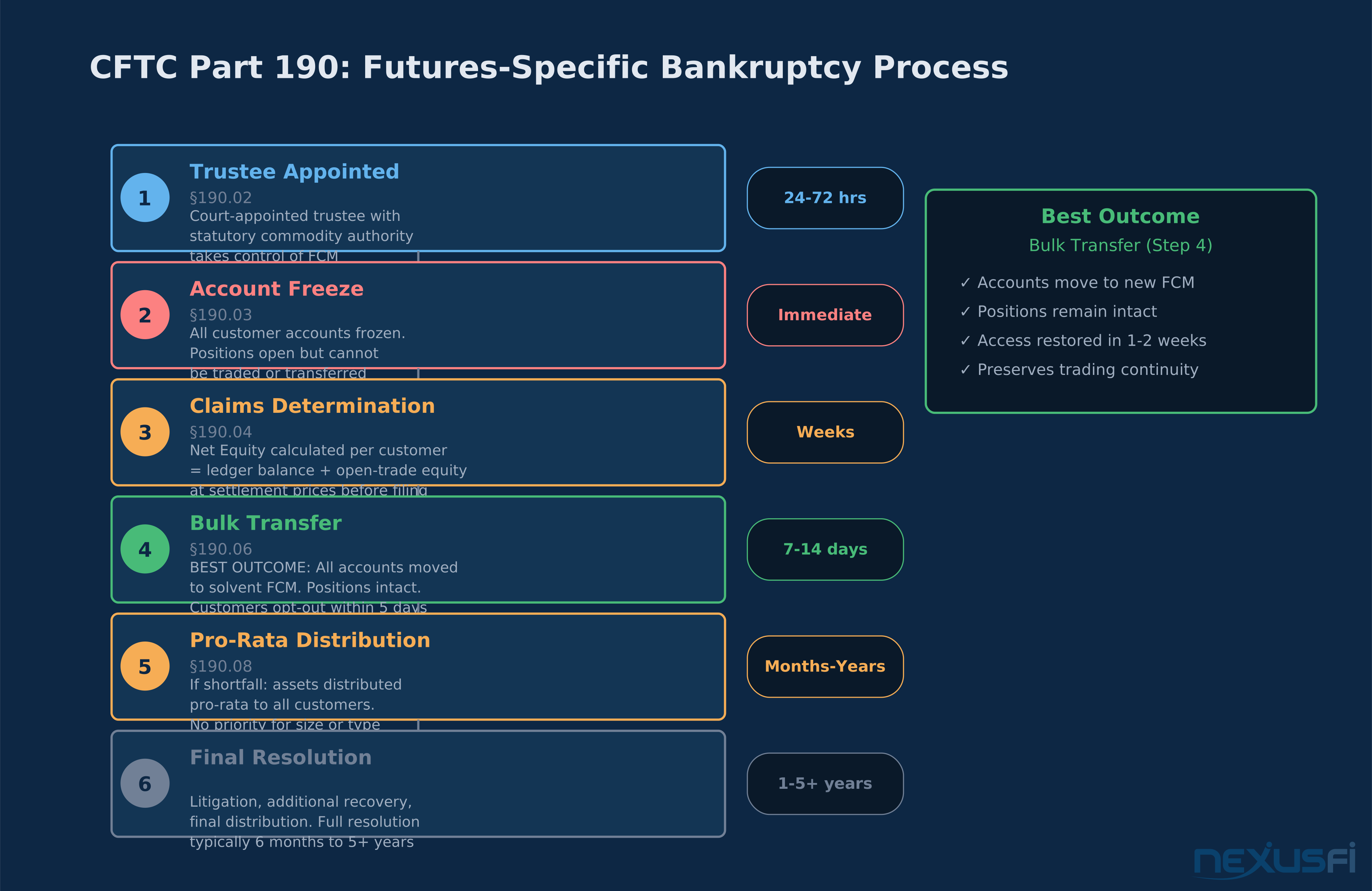
@olobay documented the actual Part 190 process in real-time during the PFG Best failure: the trustee was authorized for "marshaling and recovering the assets of PFG's estate, including customer property, and distributing those assets pursuant to the U.S. Bankruptcy Code and CFTC Part 190 rules." The six-step process unfolds as follows:
Step 1: Trustee Appointment (§190.02)
A court-appointed trustee takes control of the failed FCM's operations. The trustee is typically approved by the CFTC and has specific statutory authority to handle commodity customer accounts.
Step 2: Account Freeze (24-72 hours minimum)
All customer accounts are frozen immediately upon appointment. Positions remain open but cannot be exited, transferred, or used as collateral. Margin calls during this period create the first major risk — if markets move against your positions during the freeze, you may face forced liquidation at the trustee's discretion.
Step 3: Claims Determination (§190.04)
The trustee calculates each customer's "Net Equity" = ledger balance + open-trade equity, valued at settlement prices from the business day before filing. This becomes the basis of each customer's claim against the estate.
Step 4: Bulk Transfer (§190.06) — The Best Outcome
The trustee's first priority is executing a bulk transfer: moving entire customer accounts (positions + segregated funds) to a solvent FCM in one operation. Customers can opt out within 5 business days. When bulk transfer succeeds, accounts can be at a new FCM within 7-14 business days. Positions stay intact. This is what happened for most MF Global customers in November 2011.
Step 5: Pro-Rata Distribution (§190.08) — When Shortfalls Exist
If segregated funds are insufficient to cover all customer claims, the trustee distributes available assets pro-rata:
Your Distribution = (Your Net Equity Claim / Total Customer Net Equity Claims) × Available Segregated Property
If $80 million is available to cover $100 million in claims, every customer gets 80 cents on the dollar. There is no priority for larger accounts, no preference for commercial customers over retail, no mechanism to make anyone whole above their pro-rata share.
Step 6: Final Resolution
Full resolution typically takes 6-18 months for the first major distributions, with final distributions extending years further as litigation resolves and additional assets are recovered.
The bulk transfer mechanism is the futures trader's primary defense in FCM failure. Ask your FCM directly: "Do you have a pre-approved bulk-transfer agreement with a major clearing firm?" If the answer is vague, that's information. The ability to move accounts quickly preserves positions and dramatically reduces the disruption of FCM failure.
Post-Crisis Reforms: What Changed After 2011-2012 #
Both MF Global and PFG Best exposed significant gaps in the regulatory oversight framework. The CFTC and NFA responded with targeted reforms that addressed the specific failure modes while leaving the fundamental architecture intact.
LSOC for Cleared Swaps #
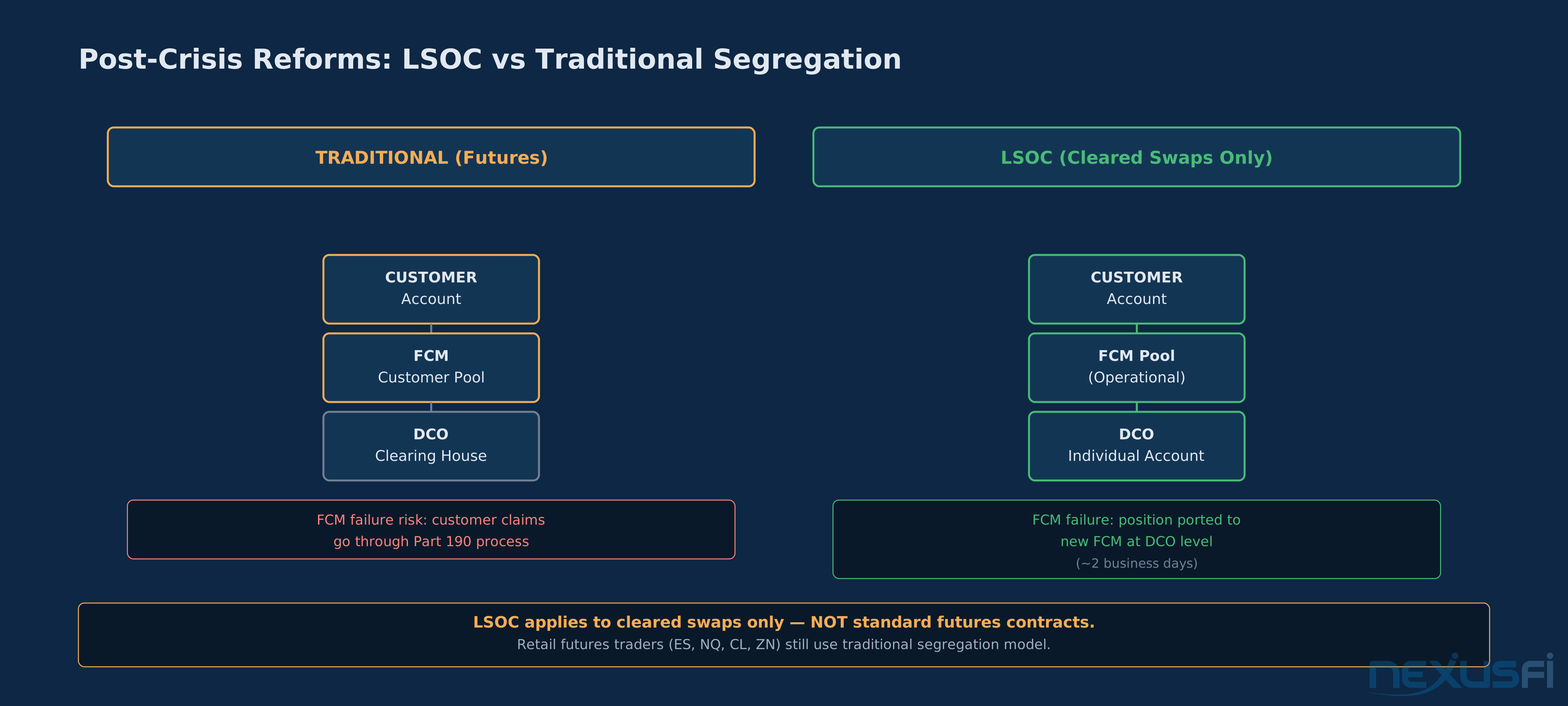
The most structurally significant reform was LSOC — Legally Segregated, Operationally Commingled — implemented through CFTC Reg 1.20(i) for cleared swaps. The CFTC Final Rule 2020-28300 formally established the LSOC model for cleared swap collateral, covering interest rate swaps, credit default swaps, and similar instruments cleared through DCOs.
Under LSOC, each customer's cleared-swap collateral is legally segregated at the DCO level, not just at the FCM level. Individual customer accounts exist at the clearing house. If the FCM fails, customer positions can be ported directly to a new FCM at the DCO level within approximately 2 business days — without the FCM trustee's involvement.
This is a significant structural improvement. The customer's relationship is partially with the clearing house, not solely with the FCM. For traders holding cleared swap positions, LSOC provides much stronger protection.
The limitation: LSOC applies to cleared swaps, not standard futures contracts. Most retail futures traders — trading ES, NQ, CL, ZN, and similar products — do not benefit from LSOC. Their protection remains the traditional segregation model.
Enhanced Segregation Reporting #
Post-MF Global, segregation reporting became more granular and real-time:
- Daily electronic filing of Form 1-FR-FCM via CFTC's E-Seg system by 10:00 AM CT
- Immediate deficiency notification (within 1 hour of discovery) per 17 CFR §1.20(c)(3))
- CFTC now receives data allowing same-day detection of potential segregation issues. @djkiwi had proposed precisely this kind of threshold-based monitoring after PFG Best: "On an ongoing basis, the regulator is alerted for reductions of say 5% of any FCM segregated bank account balance in a single day or other reductions over different time periods. If this threshold is exceeded then the FCM is required to provide documentation supporting this reduction." The post-reform CFTC Rule 1.20(c)(3) implements deficiency-triggered reporting, though not djkiwi's specific 5% threshold proposal.
Pre-MF Global, detection of segregation violations could take 30+ days. Post-reform, the detection window shrank to under 5 days for most violations. This doesn't prevent fraud, but it reduces how long a violation can fester before regulators act.
NFA Audit Process Changes #
PFG Best's fraud exploited a specific gap: confirmation requests routed to addresses controlled by the fraudster. Post-PFG Best, NFA implemented:
- Direct bank confirmations: Electronic confirmation requests sent directly to the depository bank, not mediated through the FCM
- Surprise audits: Minimum one unannounced audit per year (NFA Rule 2-18)
- Enhanced background checks: Principal-level background verification
- Audit finding publication: Material findings posted on NFA BASIC within 5 days of issuance
These reforms directly address the PFG Best attack vector. Direct electronic bank confirmations can't be intercepted by an FCM-controlled PO box. Surprise audits reduce the window for concealment.
What the reforms don't eliminate: sophisticated, multi-layered fraud that doesn't rely on a single verification loophole. The regulatory system is always catching up to the last failure, not the next one.
Post-crisis reforms reduced detection time for segregation violations from weeks to days. But detection is not prevention. A sophisticated fraud running for 20 years — like PFG Best — adapted to whatever controls existed at the time. The reforms address yesterday's attack vectors. Due diligence on your own FCM remains essential.
Protecting Yourself: The FCM Due Diligence Playbook #
The futures regulatory framework places the burden of counterparty risk assessment squarely on traders. There's no FDIC guaranteeing your deposits, no SIPC covering your shortfall, no government backstop when things go wrong. What follows are practical steps that experienced traders have developed in response to MF Global, PFG Best, and the ongoing reality of FCM counterparty risk.
Reading FCM Segregation Reports #
The CFTC publishes monthly FCM financial data at cftc.gov. Individual FCMs also publish their 1-FR-FCM segregation computations. Reading these takes 5 minutes per month once you know what to look at.
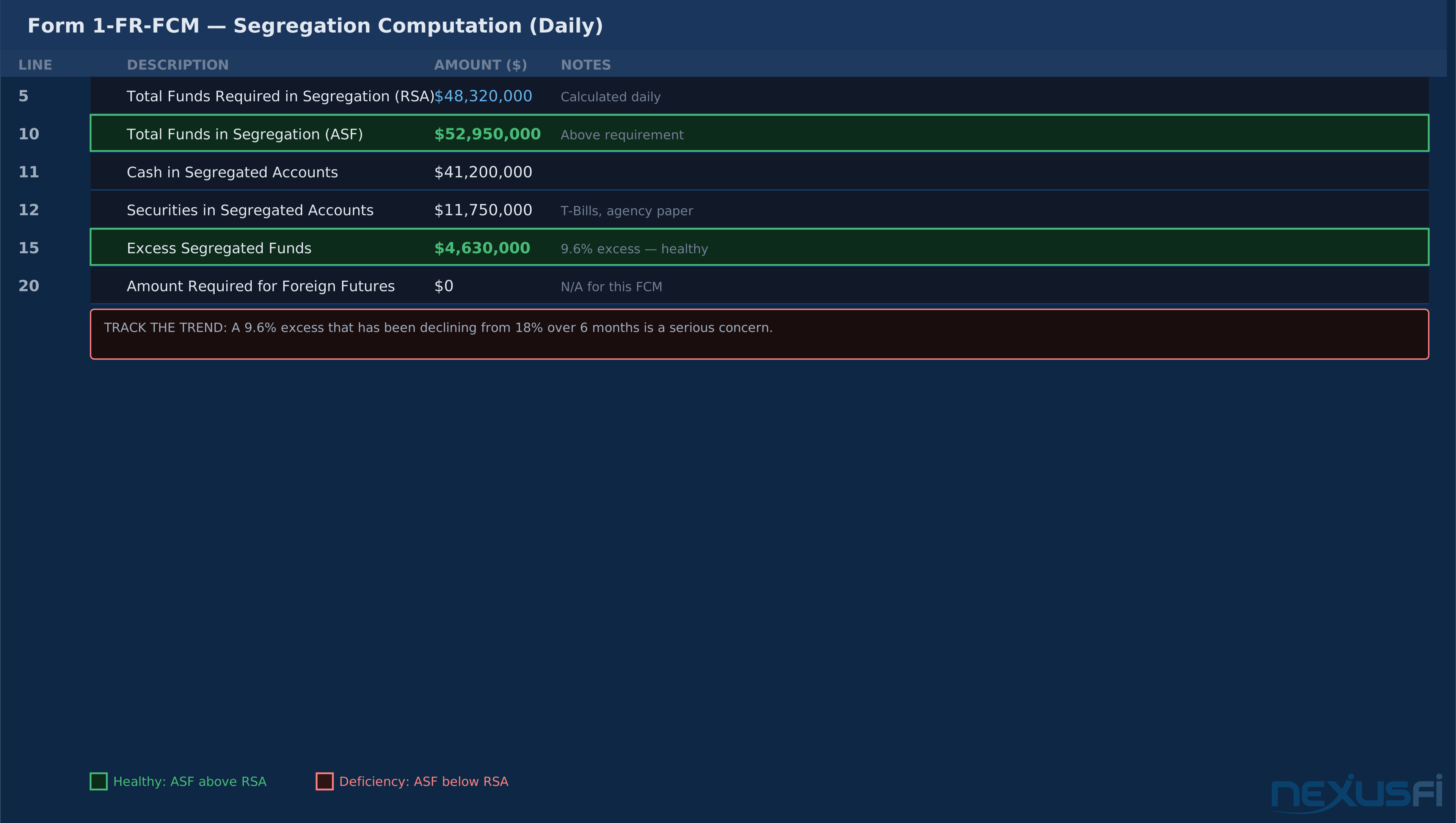
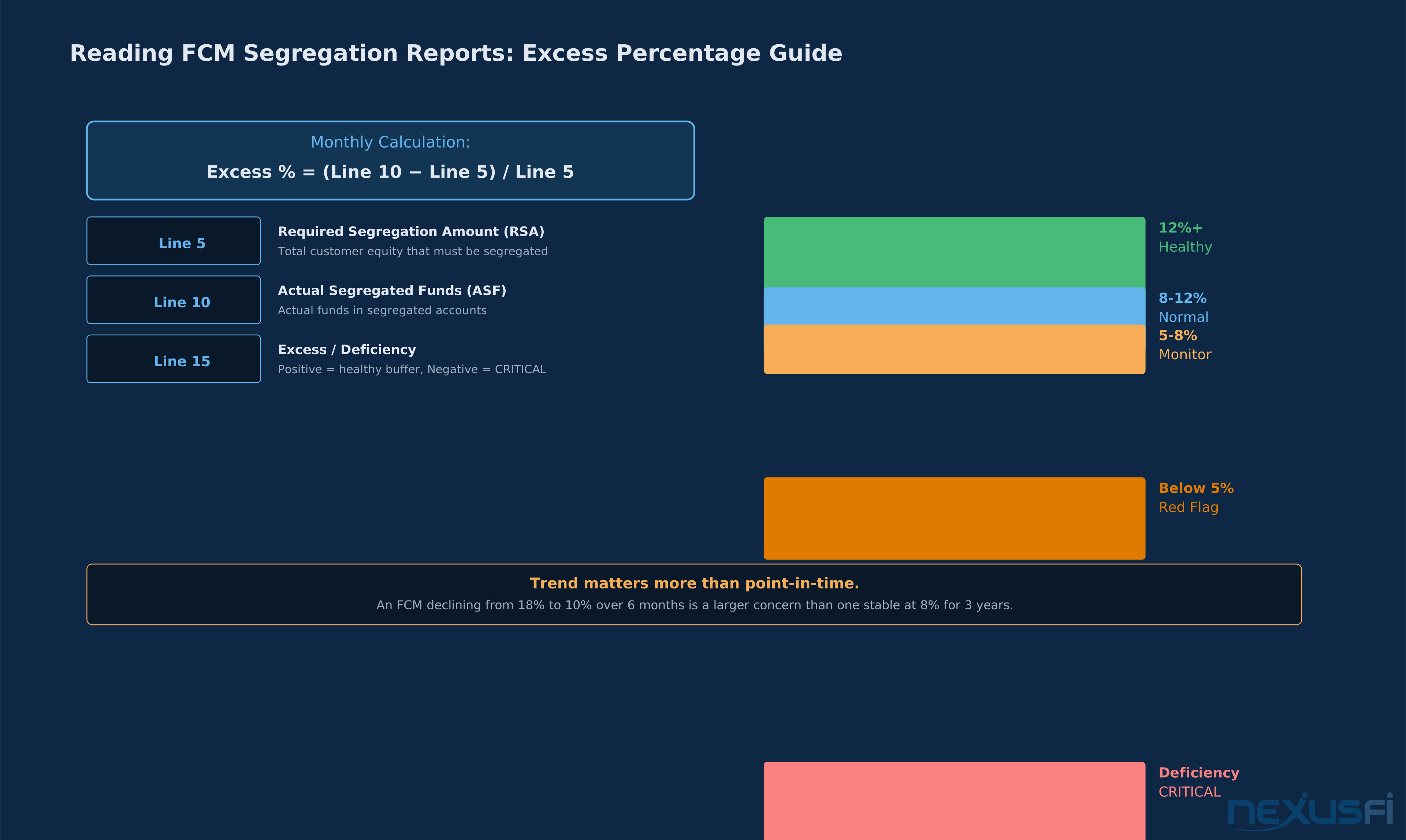
Key lines on the 1-FR-FCM:
- Line 5: Total amount required to be segregated (RSA)
- Line 10: Total funds in segregation (ASF)
- Line 15: Excess (positive) or deficiency (negative)
Your monthly calculation: Excess % = (Line 10 - Line 5) / Line 5
| Excess % Range | Interpretation |
|---|---|
| 12%+ | Healthy cushion — no concern |
| 8-12% | Normal operating range for established FCMs |
| 5-8% | Worth monitoring more closely |
| Below 5% | Red flag — investigate further |
| Any deficiency | Serious concern — contact FCM directly |
Trend matters more than point-in-time: An FCM at 10% excess that's been declining from 18% over six months deserves more scrutiny than an FCM that's been stable at 8% for three years. Track the trend.
Also check NFA BASIC for:
- Any recent disciplinary actions
- Current regulatory status
- Historical compliance record
- Latest audit findings
Multi-FCM Diversification #
The community consensus that emerged after MF Global and PFG Best is straightforward: large accounts shouldn't have all their capital at a single FCM.
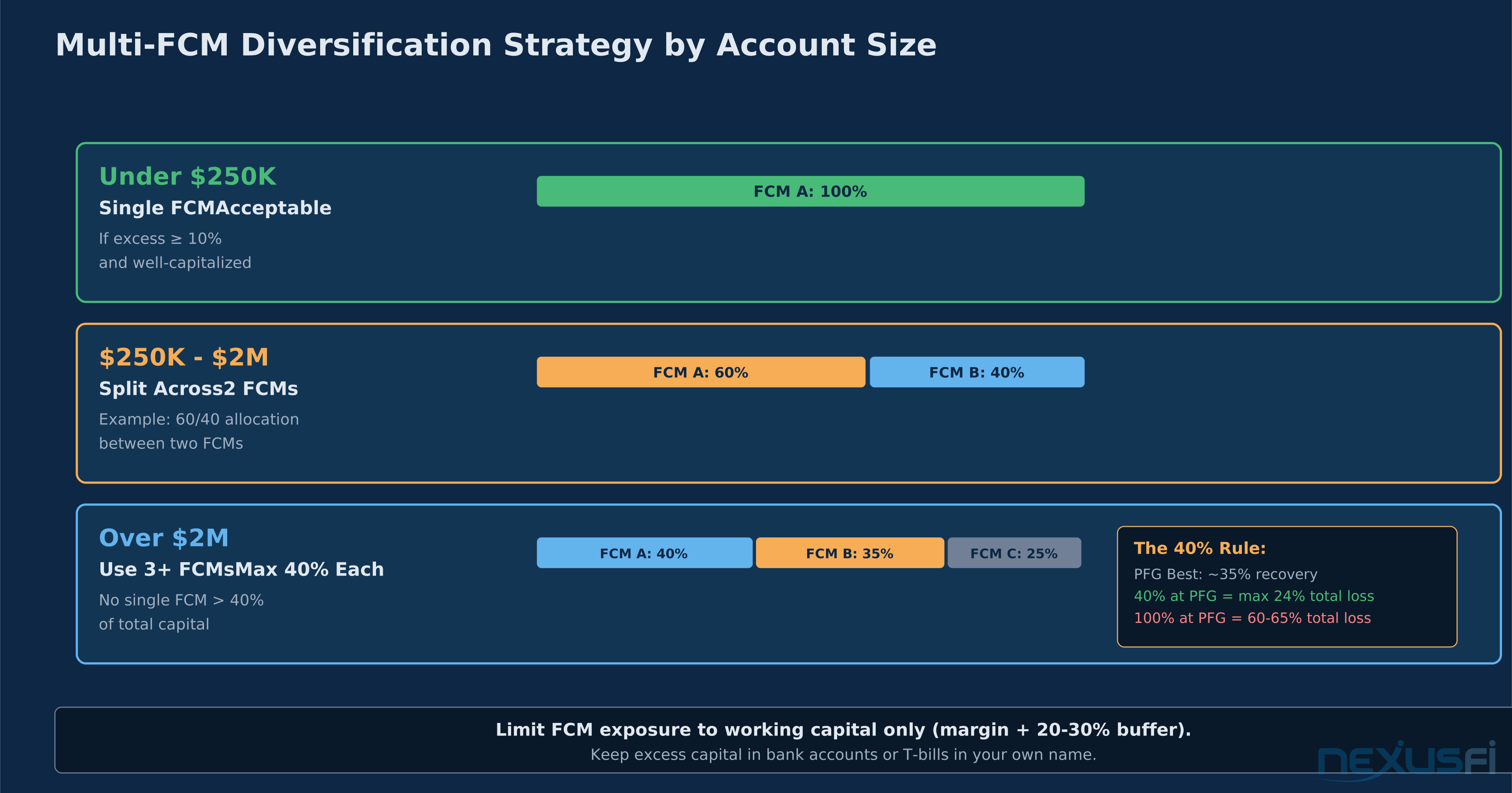
| Account Size | Recommendation |
|---|---|
| Under $250K | Single FCM acceptable if excess ≥ 10% and well-capitalized |
| $250K-$2M | Consider splitting across 2 FCMs (e.g., 60/40) |
| Over $2M | Use 3+ FCMs, maximum 40% at any single FCM |
The "40% rule" comes from an analysis of worst-case PFG Best recovery: approximately 30-40% of claims recovered. If you had 40% of capital at PFG Best, your maximum loss was 24-28% of total capital — painful but survivable. Had you concentrated 100% with PFG, you faced 60-70% loss.
Capital Management at the FCM #
Beyond diversification, limit how much of your total capital is exposed at any one FCM at any time. Many experienced traders maintain only working capital at their FCM — the margin required for active positions plus a reasonable buffer (20-30% above required margin).
Excess cash beyond working needs: keep in bank accounts, T-bills, or money market funds in your own name, separate from any FCM relationship. This limits your maximum FCM exposure regardless of what happens.
FCM Selection Framework #
When choosing an FCM, evaluate:
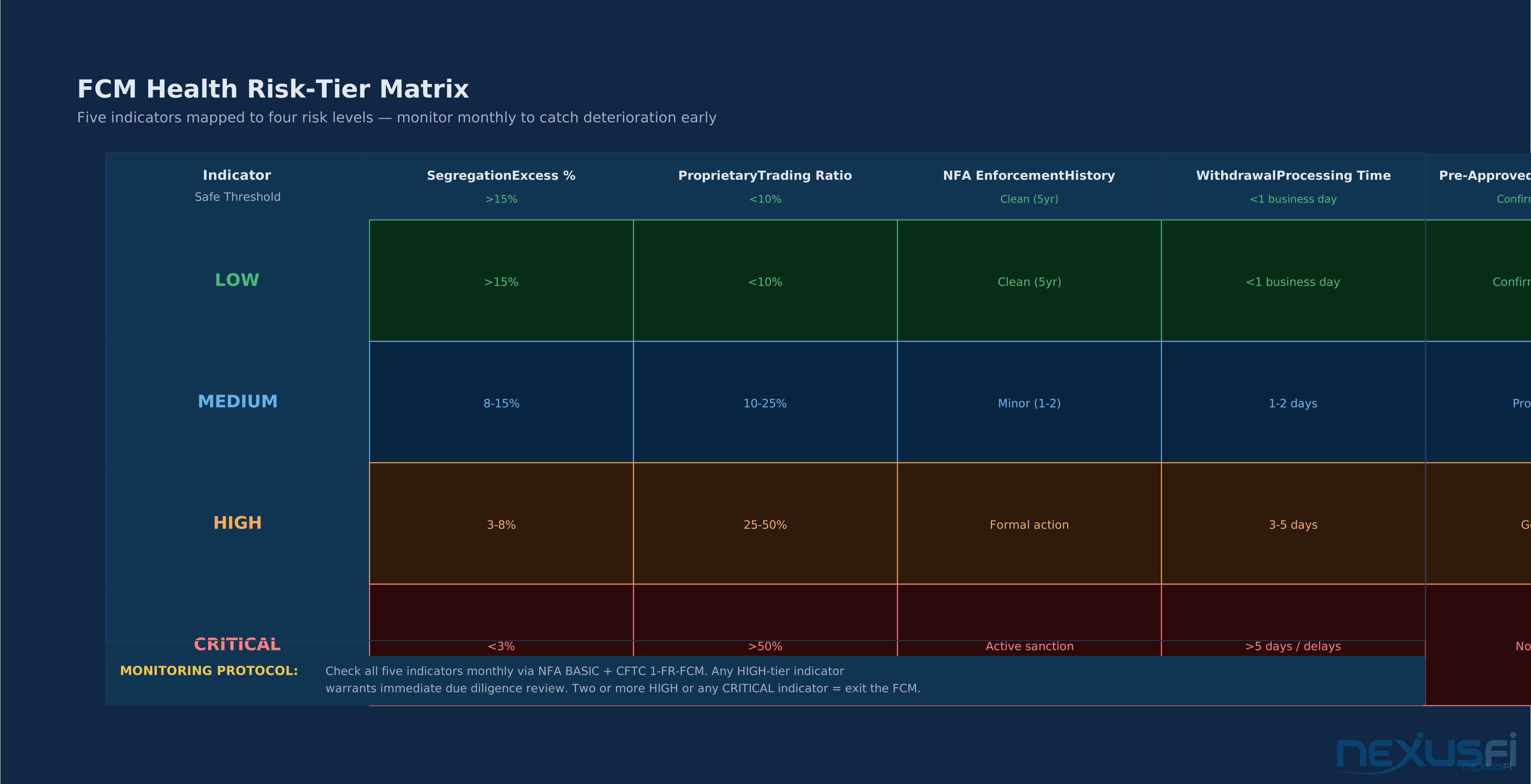
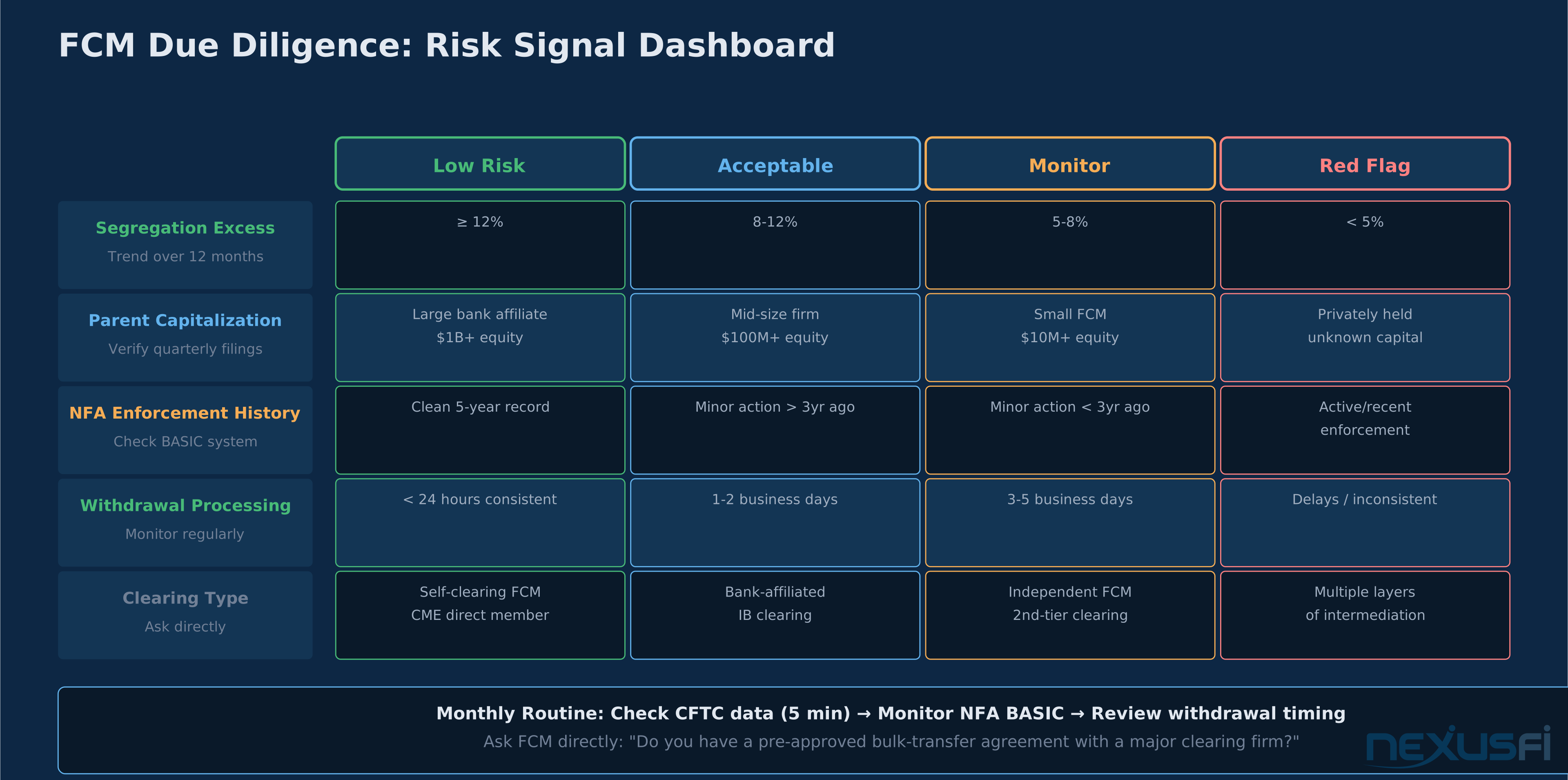
1. Parent company capitalization: FCMs backed by large bank-affiliated entities carry lower counterparty risk. Interactive Brokers Group, as a publicly traded company, publishes quarterly financials showing $9+ billion in equity. A privately-owned FCM with $5 million in excess capital is a at the core different risk proposition.
2. Segregation excess history: Consistent 8%+ excess over 12+ months is a positive signal. Volatile or declining excess is not.
3. Clearing relationships: Self-clearing FCMs (those with direct clearing member relationships at CME, ICE) have more direct control over customer accounts in a failure scenario. Introducing brokers who clear through a third party add another link in the chain.
4. Regulatory history: Any CFTC or NFA enforcement action in the past 5 years warrants investigation. Not all enforcement actions are fatal, but pattern matters.
5. Audit quality: Clean audit opinions with no material weaknesses. The PFG Best audits had material issues that were either missed or not acted upon.
6. Business model: FCMs that don't engage in proprietary trading have one fewer way to misuse customer funds. The djkiwi post-PFG analysis on NexusFi found that FCMs with active prop desks create additional channels through which customer assets could theoretically be exposed.
Warning Signs and Red Flags #
Beyond the quantitative checks, watch for behavioral signals:
- Unusual commission structures: Aggressively below-market pricing to attract large deposits can indicate an FCM desperate for customer assets
- Changes in withdrawal processing: If withdrawals that processed in 24 hours start taking a week, that's a liquidity signal
- Communication delays: An FCM that becomes hard to reach during market stress is either overwhelmed or hiding something
- Account statement discrepancies: Any mismatch between your own records and the FCM's statement warrants immediate follow-up
What to Do If Your FCM Fails #
If you see news suggesting your FCM is in distress:
- Don't panic-trade: Trying to exit all positions immediately may not be possible and adds market risk
- Preserve records: Download account statements, open position records, and all correspondence immediately
- Monitor official channels: CFTC and NFA publish official actions — follow these, not social media speculation
- Contact the trustee directly: Once a trustee is appointed, they establish a claims process with specific deadlines
- File your claim promptly: Trustee reports will establish claim filing windows; missing the deadline affects recovery priority
- Opt into bulk transfers if offered: Accepting a bulk transfer to a solvent FCM preserves positions and accelerates access to funds
The Realistic Assessment #
Here's the honest ledger: futures trader protection is adequate for normal FCM failures (operational problems, capital shortfalls, market stress) and inadequate for outright fraud. The comparison is MF Global's 93% recovery vs. PFG Best's 30-40% recovery. The framework worked reasonably well for MF Global because assets existed to distribute. It failed for PFG Best because the assets were fictitious.
Post-crisis reforms narrowed the window for both types of failure without eliminating them. Daily electronic reporting makes it harder to conceal an operational segregation shortfall for long. Direct bank confirmations make the PFG Best postal intercept attack much harder to execute. But "harder" is not "impossible," and "reduced detection time" is not "prevented."
The practical conclusion: choose FCMs with care, limit your exposure at any single FCM, monitor segregation reports monthly, maintain excess capital outside FCM accounts, and understand that the "protection" in the futures framework depends on whether the money is actually there.
That last point isn't cynicism — it's just the reality of how the framework operates. Segregation without verification is an honor system. The honor system works until it doesn't.
The futures customer protection framework is built on segregation (a legal requirement, not insurance) and Part 190 bankruptcy procedures (a prioritization of customer claims). It produces good outcomes when assets exist and poor outcomes when they don't. MF Global (93% recovery) and PFG Best (30-40% recovery) bracket the realistic range. No SIPC, no backstop — your protection is the due diligence you do before the FCM fails.
Knowledge Map
Prerequisites
Understand these firstGo Deeper
Build on this knowledgeReferences This Article
Articles that build on this topicCitations
- — Class Action Lawsuit: AMP Global Clearing LLC (2019) 👍 15“Understand where your money is, which FCM, and do your homework. And if you have substantial funds, it's prudent to diversify those funds across FCM's.”
- — PFGBest Accounts Frozen (PFG scandal big thread) (2012) 👍 82“With PFG it was blatant theft of client funds with what appears to be minimal assets to recover. The offer from CRT may appear to be generous in light of this as the risk of recovery appears to be much lower than MF Global.”
- — PFGBest Accounts Frozen (PFG scandal big thread) (2012) 👍 82“They took advantage of legal re-hypothecation rules to use client funds to back the broker's own trades and borrowing. It was in the agreements clients signed with MF-Global.”
- — PFGBest Accounts Frozen (PFG scandal big thread) (2012) 👍 25“Only keep enough money to conduct your day-to-day trading while having enough capital to assume the risk you're taking on. Be proactive about taking your profits out of your trading account on a normal basis.”
- — Futures Broker Due Diligence Notes post PFG (2012) 👍 35“The additional risk to customer funds occurs through the brokerage using client assets to collateralize its positions. This is perfectly legal and is sanctioned by the fed.”
- — Class Action Lawsuit: AMP Global Clearing LLC (2019) 👍 15“And don't let them tell you 'of course it's safe! Our funds are segregated!'. That will NOT save you, just look no further than the last several industry blow-ups where customers lost everything.”
- — Is Amp at risk of going under? (2020) 👍 7“There is NO INSURANCE for funds deposited at an FCM. Firms HAVE, WILL, and DO hide things from their accountants and the CFTC. The only smart thing to do is to accept this as fact, and try to protect yourself knowing ahead of time that such things exist.”
- — Futures Broker Due Diligence Notes post PFG (2012) 👍 3“On an ongoing basis, the regulator is alerted for reductions of say 5% of any FCM segregated bank account balance in a single day or other reductions over different time periods. If this threshold is exceeded then the FCM is required to provide documentation supporting this reduction.”
- — PFGBest Accounts Frozen (PFG scandal big thread) (2012) 👍 1“SIPC protection does not apply to futures accounts. The problem with PFGBest is that it looks like they said customer segregated funds were there, when they were not. In other words, people with PFGBest futures accounts are in for an ugly time.”
- — PFGBest Accounts Frozen (PFG scandal big thread) (2012) 👍 2“This includes marshaling and recovering the assets of PFG's estate, including customer property, and distributing those assets pursuant to the U.S. Bankruptcy Code and CFTC Part 190 rules.”
- — 17 CFR Part 1, Section 1.20 -- Required Daily Computation of Customer Segregated Funds (CFTC, govinfo.gov)
- — 17 CFR Part 1, Section 1.25 -- Investment of Customer Funds (CFTC, govinfo.gov)
- — 11 U.S.C. Sections 761-767 -- Commodity Broker Liquidation (U.S. House of Representatives Office of the Law Revision Counsel)
- — 15 U.S.C. Section 78lll(2) -- SIPC Exclusion for Futures Contracts (U.S. House of Representatives Office of the Law Revision Counsel)
- — CFTC Final Rule 2020-28300 -- LSOC Model for Cleared Swaps Collateral (CFTC Federal Register)