



Tradier Futures: The API-First Brokerage for Systematic Traders
Overview #
Most brokers are platforms with an API bolted on. Tradier built the API first and the brokerage around it. That's not marketing copy — it's a structural decision that shows up in how the account actually works, how the pricing is structured, and who their customer base skews toward.
Tradier Futures is a division of Tradier Inc., with the futures side operating as a DBA of Lazzara Consulting Inc., a Member of the NFA and CFTC. Trey Lazzara, SVP, has 25+ years running futures brokerage operations. Securities accounts are held at Tradier Brokerage Inc., Member FINRA/SIPC, with clearing through Apex Clearing. The futures accounts clear through Dorman Trading, a well-regarded futures clearing firm.
What you get:
- Futures access across commodities, indexes, currencies, energy, and metals
- REST API with sandbox environment for algo testing before going live
- 100+ platform integrations via CQG and Rithmic connectivity
- TradingView direct execution (the one most retail traders actually want)
- Bookmap integration with a 2-month Global+ trial on new funded accounts
- A hosted MCP server for AI-agent trading through Claude, Cursor, Gemini, and others
- Three subscription tiers: Lite (free), Pro ($10/mo), Pro Plus ($35/mo)
The drawback: this brokerage is built for people who know what they're doing. If you want hand-holding, research, or a full-service relationship, Tradier isn't it. If you want clean API access, competitive per-contract rates, and platform flexibility, it's a serious option.
This article covers the full picture — pricing, all-in costs, API structure, platform integrations, the MCP server, and how Tradier stacks up against Tradovate and NinjaTrader Brokerage for retail futures traders.
What "API-First" Actually Means for Futures Traders #
"API-first" is one of those terms that sounds impressive but rarely gets explained. Here's what it means in practice at Tradier:
The brokerage routes execution through standardized API layers. Every platform integration — TradingView, Sierra Chart, NinjaTrader, MultiCharts, any of the 100+ connected platforms — talks to Tradier through the same REST API endpoints that a developer would use to build a custom algorithm. The infrastructure is the same. You're not getting a degraded version.
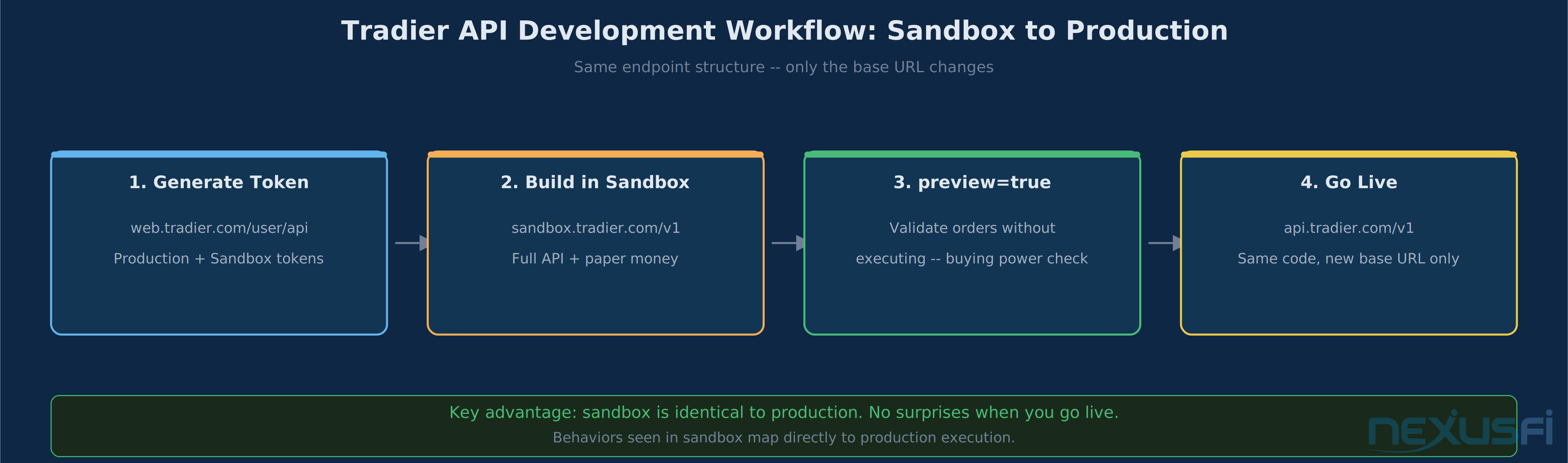
Sandbox environments exist before your first dollar goes live. Most traditional brokers test in production, which means you're paper trading on a system that's close-but-not-identical to live execution. Tradier's sandbox runs at https://sandbox.tradier.com/v1 with the same API structure as production at https://api.tradier.com/v1. The difference matters when you're debugging execution logic — a behavior you see in the sandbox maps directly to production.
Authentication is token-based, not session-based. Traditional broker APIs (looking at you, IBKR) require session management, TWS running, heartbeat maintenance. Tradier uses Bearer tokens. Generate your token once at web.tradier.com/user/api, store it, use it. Two tokens: one for production, one for sandbox. That's the setup.
Order types are standardized. The API accepts class (equity, option, multileg, combo, oto, oco, otoco), type (market, limit, stop, stop_limit), and duration (day, gtc, pre, post). For futures traders running systematic strategies, bracket orders and OTO/OCO chains work through the same endpoint structure.
Where this matters most: a discretionary trader at Tradier has access to the same infrastructure a quantitative developer is using. The platforms feel more capable because they're sitting on a cleaner API than most competing brokers offer.
Pricing Plans: The Three Tiers #
Tradier uses a subscription model rather than a commission-only structure. You pay a monthly fee for reduced per-contract rates, with the math favoring active traders at the Pro Plus tier.
Lite (Free)
No monthly fee. You pay full rack rate:
- Futures Micros: $0.75/contract
- Futures Standard: $1.50/contract
- Futures Options: $1.50/contract
- Stocks: $0.35/trade
- Equity/ETF Options: $0.35/contract
Plus: NFA, Exchange, Regulatory and Clearing/Routing fee of $0.35/contract on all futures contracts.
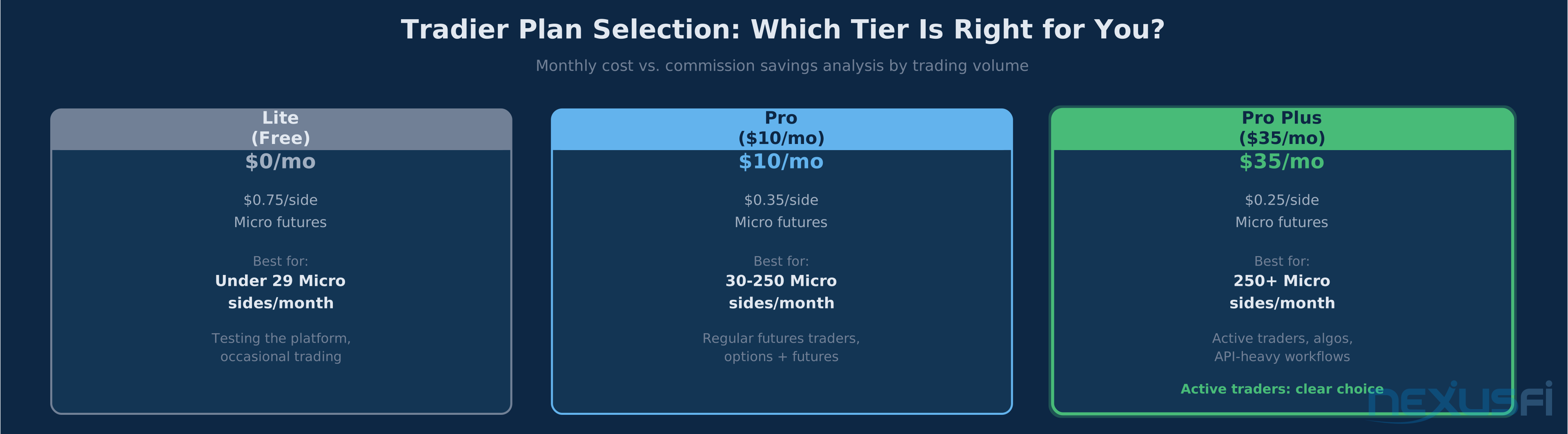
Lite makes sense if you're testing the account, trading lightly, or evaluating whether Tradier fits before committing. For active futures traders, you'll hit the break-even point for Pro quickly.
Pro ($10/month)
The most common entry point for active traders:
- Futures Micros: $0.35/contract
- Futures Standard: $0.75/contract
- Futures Options: $0.75/contract
- Stocks: Free
- Equity/ETF Options: Free (Index Options: $0.35/contract)
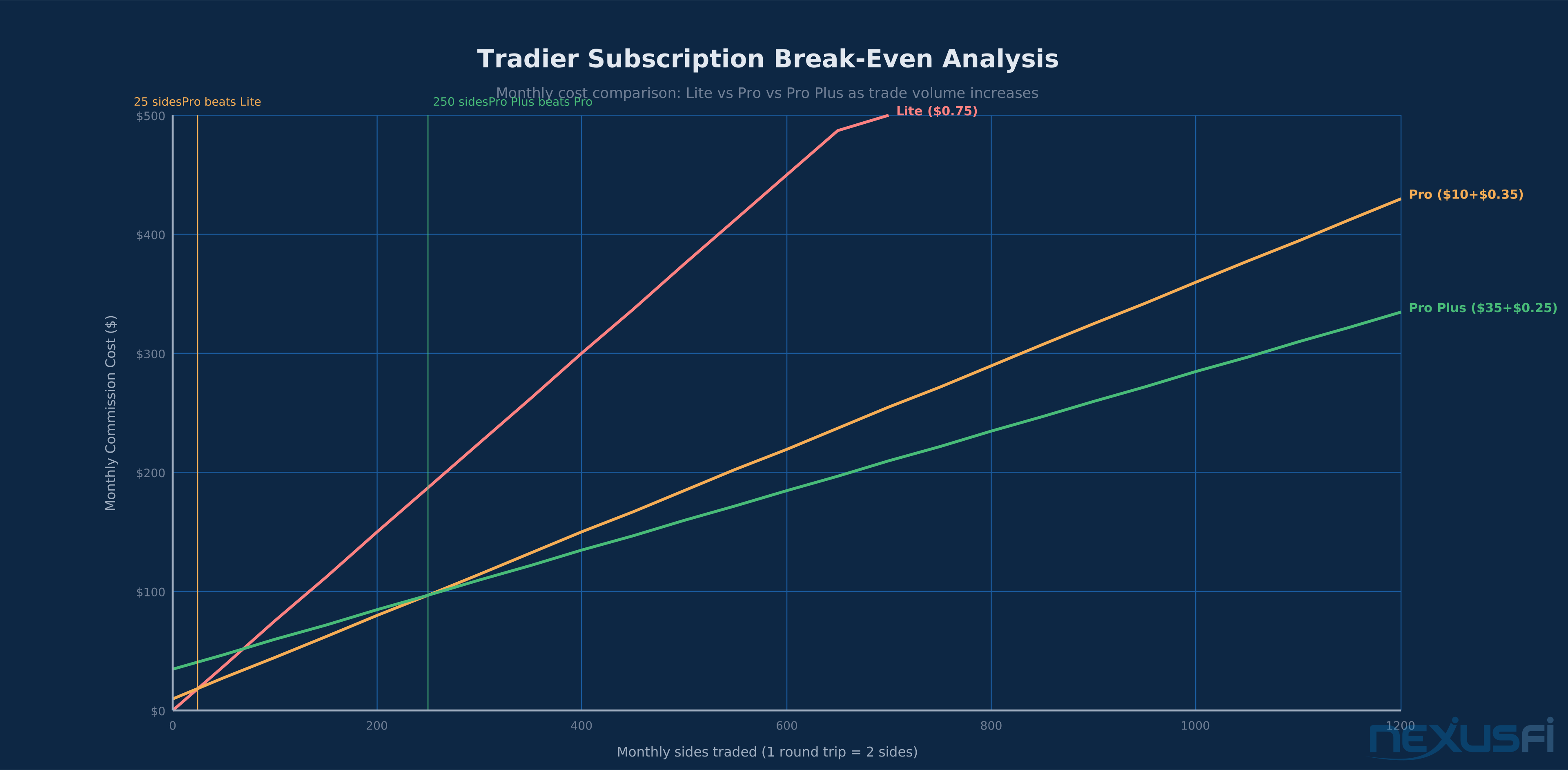
The $10/month subscription pays for itself at roughly 29 Micro contracts per month traded (switching from Lite). For anyone trading 100+ sides/month in Micros, Pro is the clear baseline.
Note: CQG connectivity adds $10/month. Rithmic adds $25/month. These platform connection fees are separate from the subscription.
Pro Plus ($35/month)
The active trader tier:
- Futures Micros: $0.25/contract
- Futures Standard: $0.50/contract
- Futures Options: $0.50/contract
- Index Options: $0.10/contract
- Stocks: Free
- Equity/ETF Options: Free
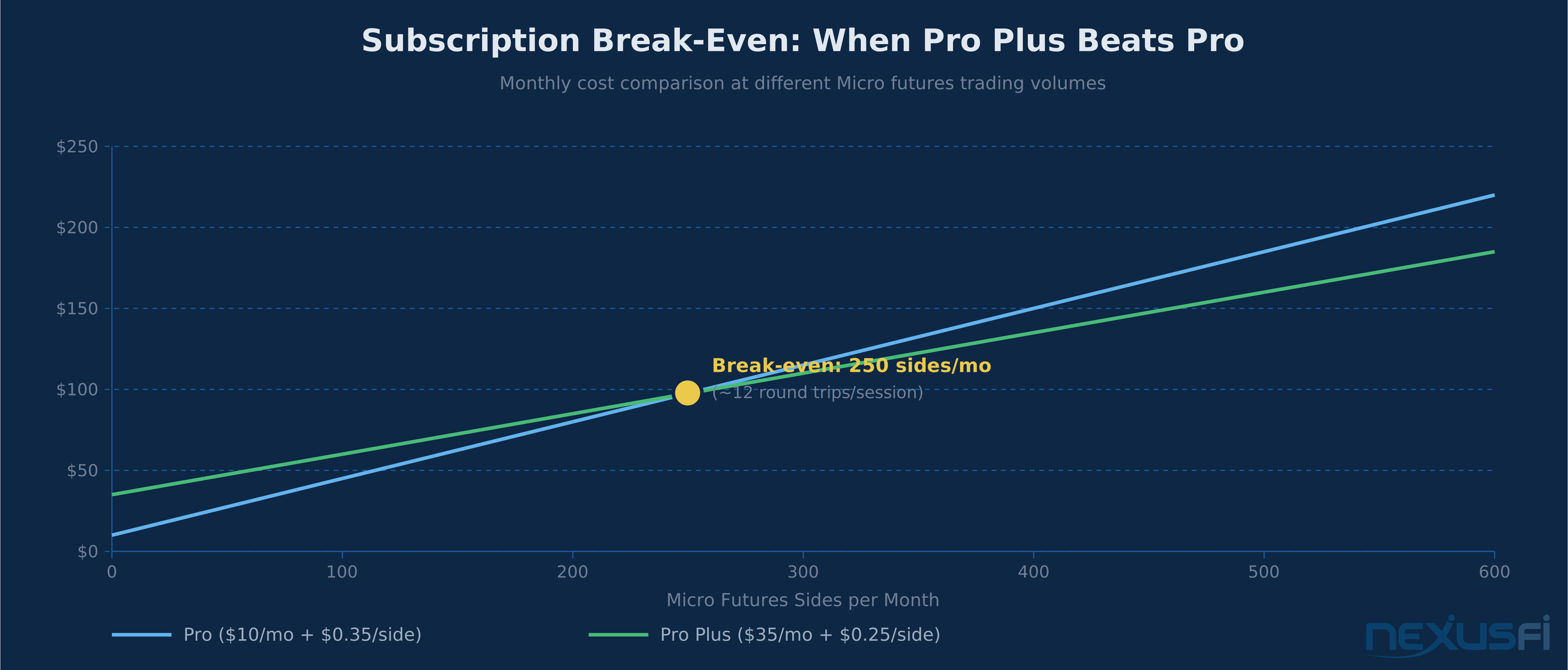
Pro Plus is the rate structure that competitive alternatives match. At $0.25/side for Micros, you're below most retail brokers on an apples-to-apples commission line. The break-even versus Pro: 250 Micro contracts/month (from the $10 to $35 monthly difference at $0.10/contract savings). Any trader doing 10+ MES per session is past that threshold immediately.
The True All-In Cost: What You Actually Pay #
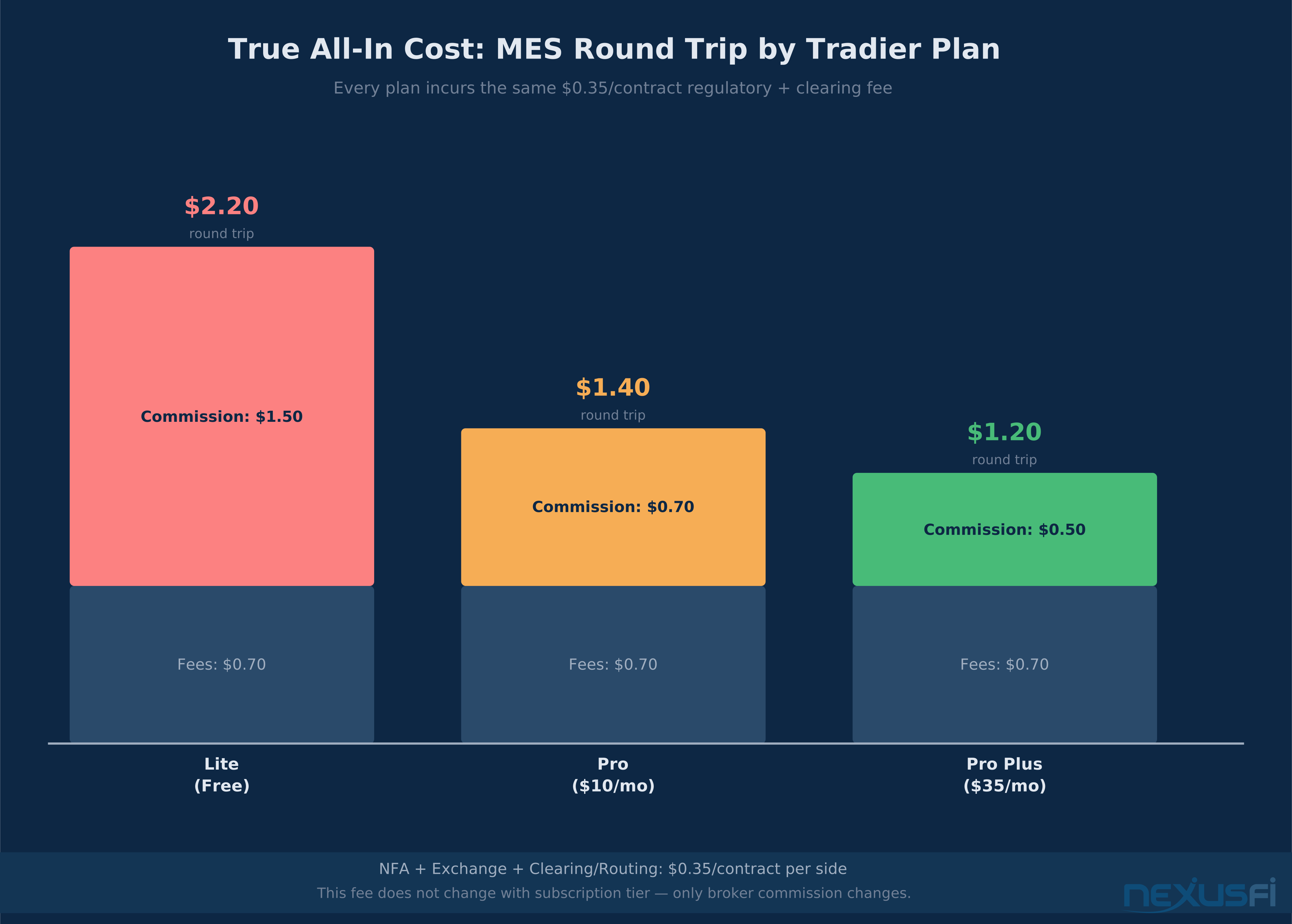
The advertised per-contract rates don't tell the full story. Every futures trade includes pass-through fees that Tradier doesn't control: NFA fees, exchange fees, and clearing/routing fees.
The $0.35/contract regulatory and clearing/routing fee is the key number. This applies across all plans, all contract types. CME raised exchange fees for Micro contracts in February 2023 — @SMCJB documented the increase in a well-followed NexusFi thread, noting MES/MNQ fees went from $0.30 to $0.35/side. Budget the pass-through so.
Example: One MES round trip on Pro Plus
| Fee Component | Per Side | Round Trip |
|---|---|---|
| Tradier commission (Pro Plus) | $0.25 | $0.50 |
| NFA + Exchange + Clearing/Routing | $0.35 | $0.70 |
| All-in per round trip | $0.60 | $1.20 |
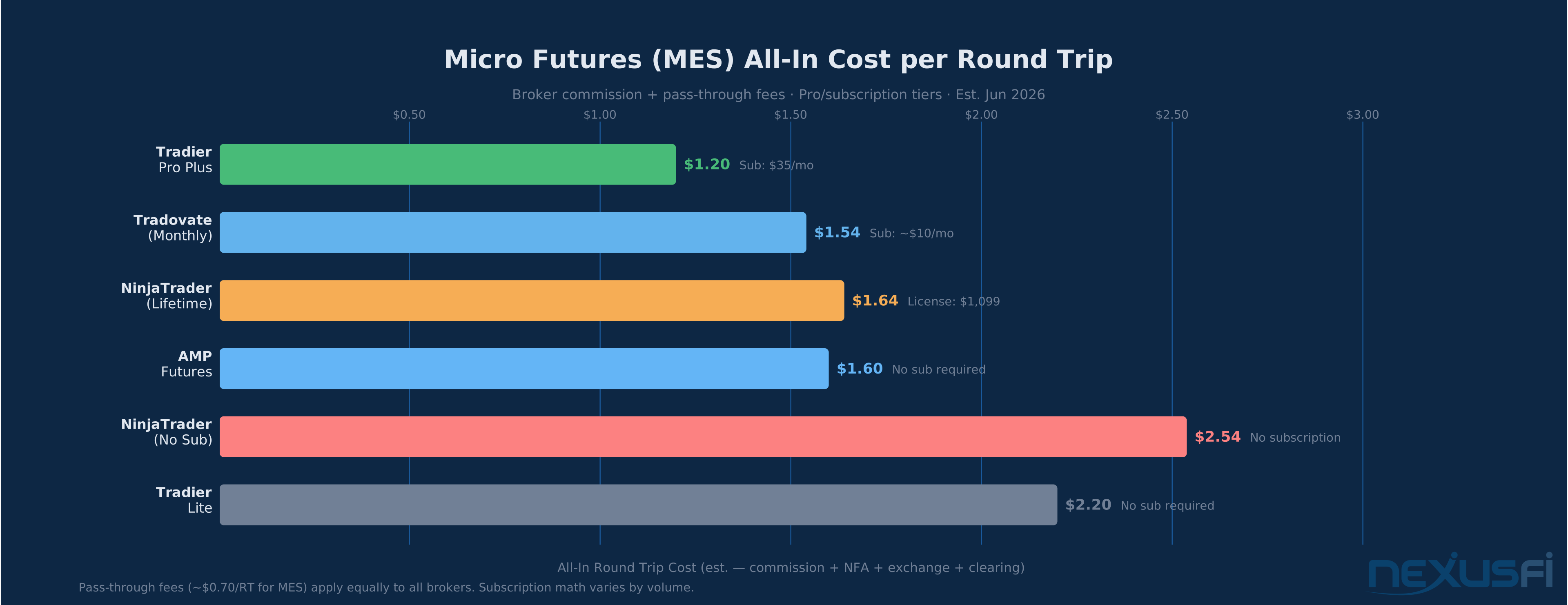
For comparison with the same all-in math:
| Broker | Per Side (Micro) | RT All-In (Est.) |
|---|---|---|
| Tradier Pro Plus | $0.25 | ~$1.20 |
| NinjaTrader Brokerage | $0.47 (sub) / $0.92 (no sub) | ~$1.64 / ~$2.54 |
| Tradovate (monthly) | ~$0.42 effective | ~$1.54 |
| AMP Futures | $0.45 | ~$1.60 |
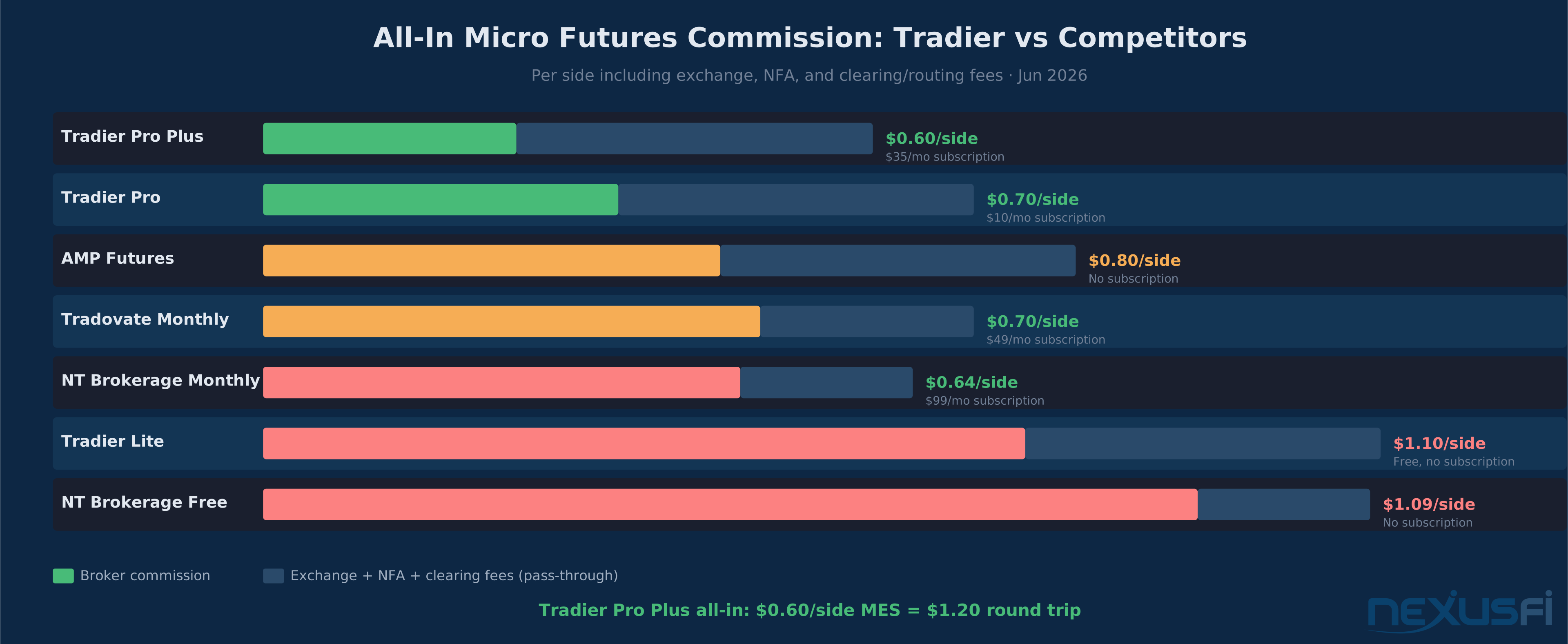
These are estimates — exchange fees vary by contract type and data subscriptions affect the comparison. But the directional picture is accurate: Tradier Pro Plus is competitive in the retail futures space.
The subscription math for Pro Plus: you're paying $35/month for access to $0.25 Micro commissions. At 350 Micro sides per month (or 175 round trips), the $35 premium versus Pro has paid for itself at the $0.10/contract savings rate. That's less than 10 MES round trips per day on a 22-session month.
Platform Integrations: The 100+ Ecosystem #
"100+ platforms" sounds like a round number someone made up. Here's what it actually means in practice.
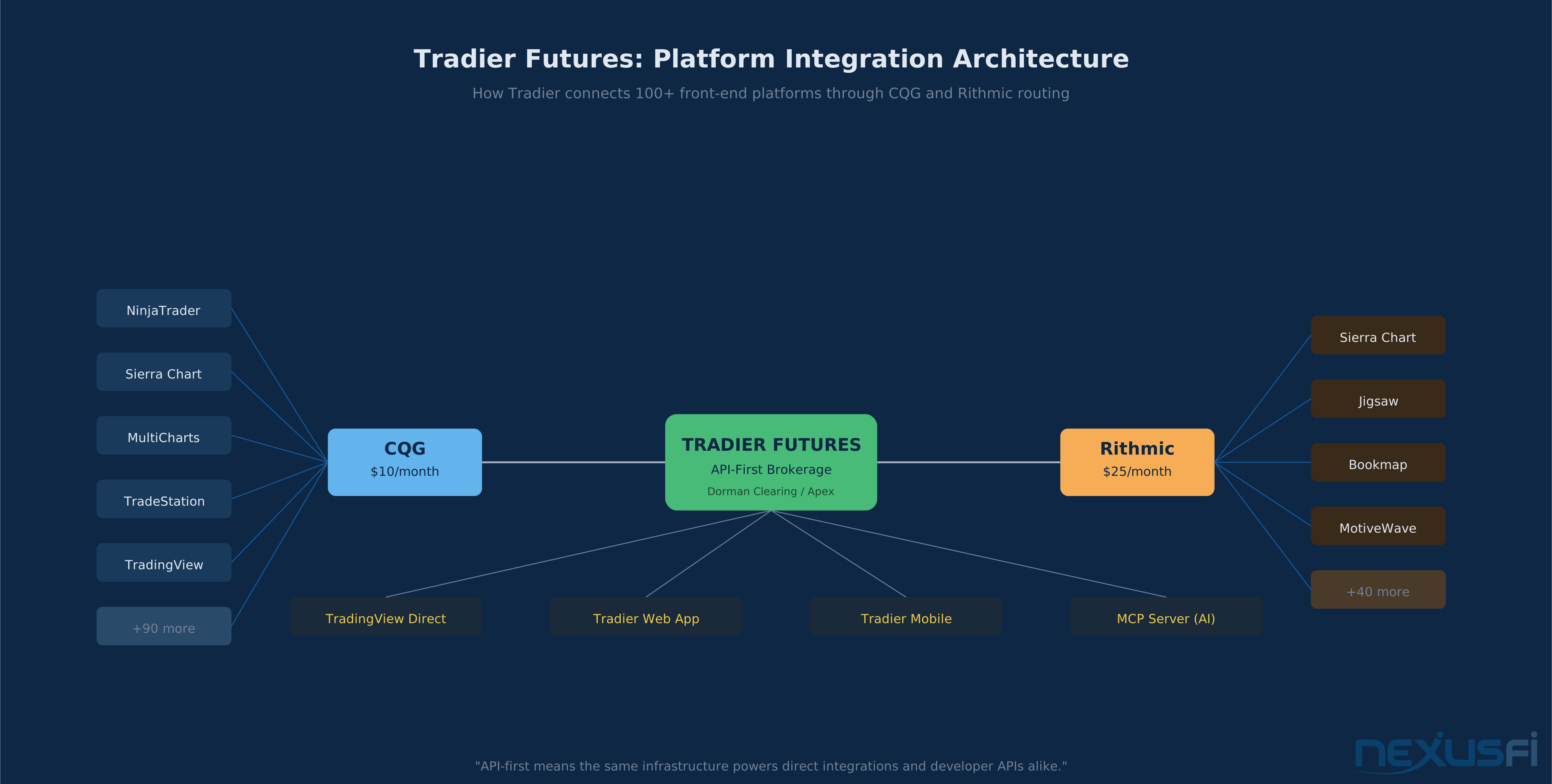
Tradier Futures routes execution through CQG and Rithmic connectivity. Both of these are industry-standard data and routing networks that support dozens of front-end platforms each. CQG handles the majority of the 100+ number.
What this means practically:
If your platform has CQG connectivity — and most serious trading platforms do — it connects to Tradier. This includes NinjaTrader (which has CQG as a primary routing option), Sierra Chart, MultiCharts, TradeStation, and many others. The quality of execution through CQG is the same regardless of which broker is behind it.
The CQG connection fee is $10/month. Rithmic is $25/month. These are non-negotiable pass-through costs if you're using a platform that requires those networks. If you're using TradingView or the Tradier native app, no connection fee applies.
TradingView is the standout integration. Tradier was one of the earlier brokers to enable direct execution from TradingView charts. For traders who do their charting in TradingView and want to execute from the same interface, this eliminates the need for a second application. The Elite offer — 12 months of TradingView Essential at no cost for new funded accounts — reflects this relationship.
Bookmap partnership: New funded Tradier accounts get 2 months of Bookmap Global+ free. For traders who want liquidity visualization and heatmap-based orderflow, that's worth approximately $200+ in subscription value. The DOM Pro and MBO Bundle are included.
In the NexusFi AMA thread, rickjames asked about DOM quality versus Jigsaw. @Tradier's Trey Lazzara confirmed directly:
"Jigsaw is very good. We offer both Rithmic and CQG, which are compatible with Jigsaw. I would suggest continuing to use Jigsaw if you are comfortable with it."
@Tradier (Trey Lazzara, SVP) — Tradier Futures AMA, 2026
The brokerage doesn't lock you into proprietary platform infrastructure.
The MCP Server: AI Agents Trading Directly #
This is the genuinely forward-thinking part of Tradier's tech stack.
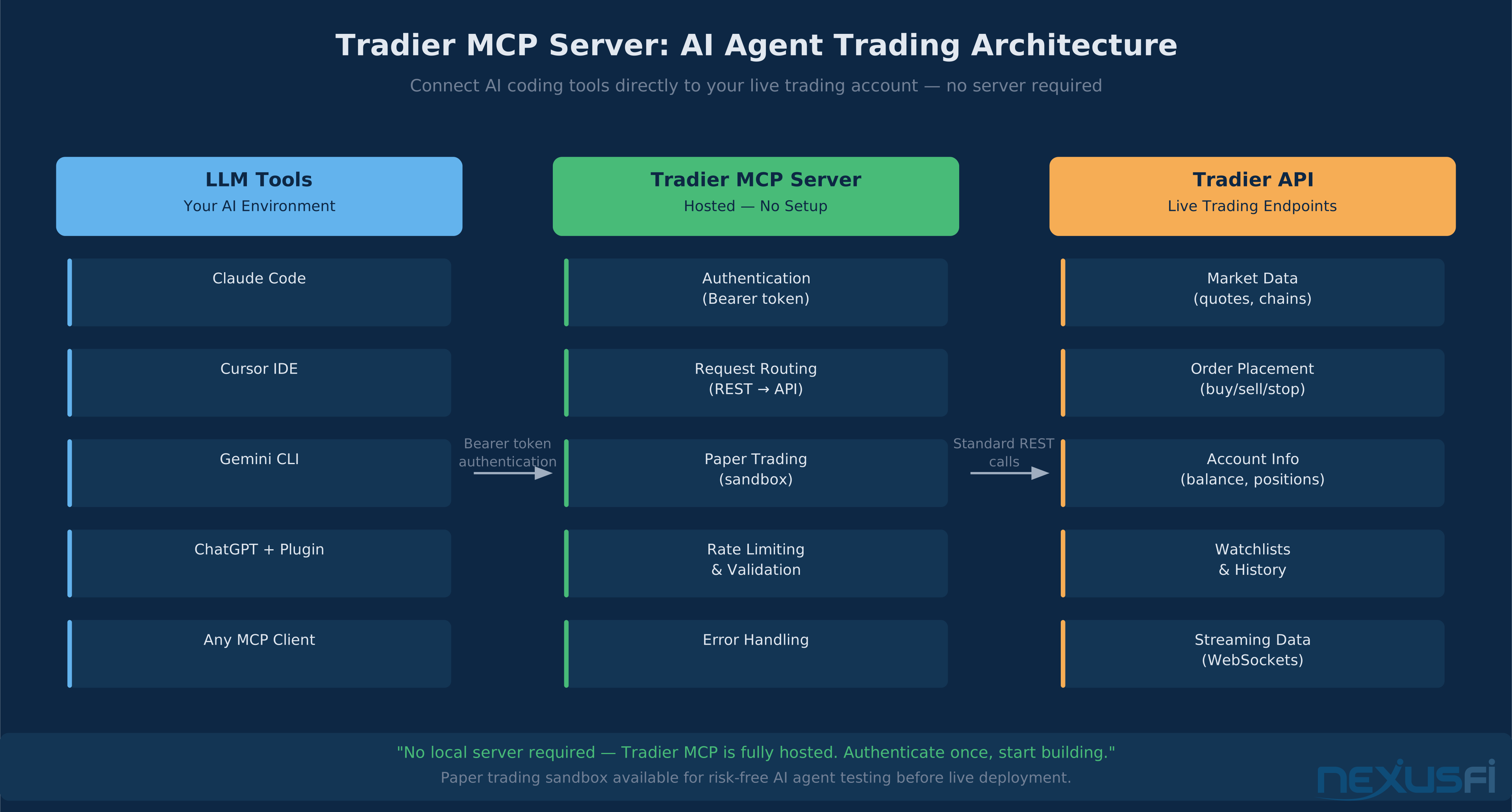
Most brokers' idea of "AI integration" is an analytics tool that tells you your win rate. Tradier launched a hosted MCP server that lets AI agents — Claude, Gemini, Cursor's AI, ChatGPT — execute trades, request market data, and interact with brokerage functionality directly through the API.
How it works:
1. Authenticate with your personal API token (same token as the standard REST API)
2. The MCP server is hosted by Tradier — no local server required
3. Your AI agent calls the MCP endpoints, which map to standard Tradier API actions
4. Available through Claude Code, Cursor, Gemini CLI, and other LLM tooling
Available through the MCP server:
- Market data
- Options chains
- Order placement
- Account balances and positions
- Watchlists
- Paper trading (sandbox)
The practical use case today isn't "AI trades your account autonomously." It's developer tooling. If you're writing a Python trading algorithm and want to use Claude or Cursor to help debug your execution logic, having the AI agent connect directly to the actual brokerage API — including paper trading — means the LLM is working with real system responses rather than hypotheticals.
For algo traders and developers, this cuts prototype-to-test time. Describe what you want to the AI, have it write the execution code, test it against the sandbox, iterate. The MCP server is the bridge.
The question that came up in NexusFi's AMA thread (post 909059): "What safeguards exist to prevent AI hallucinations from executing unintended trades?" This is a reasonable concern. Tradier's paper trading sandbox is the first line — you can test AI-generated execution logic without real capital at risk. The confirmation layer question remains important for production use. Use the preview=true parameter in order submissions to validate without executing — it runs all validation including buying power checks without submitting to the market.
REST API Structure: Getting Started #
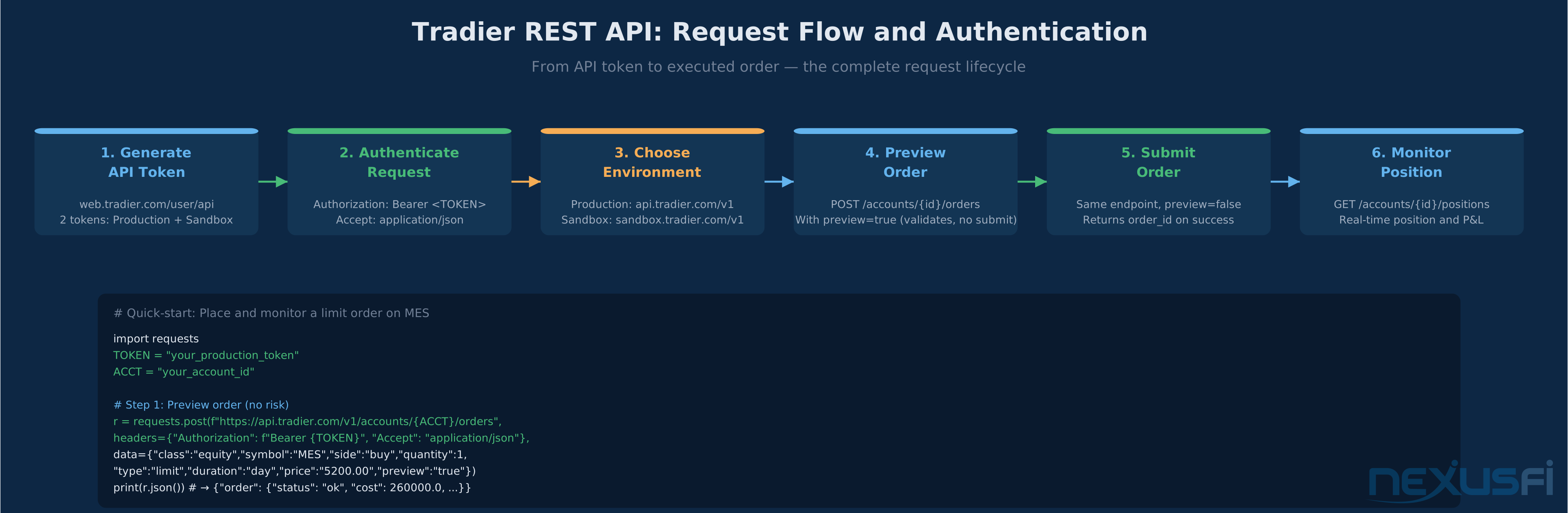
For traders who want to build custom tools or algorithms on Tradier's infrastructure, here's the practical start:
Authentication:
Authorization: Bearer
Accept: application/json
Content-Type: application/x-www-form-urlencoded
Two tokens from web.tradier.com/user/api:
- Production:
https://api.tradier.com/v1 - Sandbox:
https://sandbox.tradier.com/v1
First API call — fetching a quote:
curl -X GET "https://api.tradier.com/v1/markets/quotes?symbols=ESM25&greeks=false" \
-H 'Authorization: Bearer ' \
-H 'Accept: application/json'
Placing a futures order:
curl -X POST "https://api.tradier.com/v1/accounts/YOUR_ACCOUNT_ID/orders" \
-H "Authorization: Bearer " \
-H "Accept: application/json" \
-H "Content-Type: application/x-www-form-urlencoded" \
-d "class=equity&symbol=MES&side=buy&quantity=1&type=limit&duration=day&price=5200.00&preview=true"
The preview=true parameter runs full validation — buying power, margin, order validity — without submitting. Standard practice before enabling live execution.
Order types available:
type: market, limit, stop, stop_limitduration: day, gtc, pre, postclass: equity, option, multileg, combo, oto, oco, otoco
OTO (One-Triggers-Other) and OCO (One-Cancels-Other) work through the API, which means bracket orders for futures positions are supported programmatically. This is the critical feature for systematic risk management: entry, take-profit, and stop-loss as a single order submission.
Streaming data:
Tradier supports both HTTP streaming and WebSockets for real-time data feeds. WebSockets are the lower-latency option for tick-by-tick data requirements.
The sandbox environment supports the full trading API with paper money and delayed market data — identical structure to production. Test your execution logic thoroughly before going live.
What Tradier Is Not #
Before the "who should use this" section, the honest accounting:
No proprietary platform designed for futures. Tradier's native apps (desktop, web, mobile) work, but they're not built for professional futures trading the way NinjaTrader's ecosystem is. If you want an integrated charting + execution environment with orderflow tools, you'll be connecting a third-party platform via CQG or Rithmic — which adds that monthly connection fee.
Customer support is not a strength. Tradier is a self-service model. Tech support for API issues: techsupport@tradier.com. For a developer building a custom system, that's acceptable. For a trader expecting a dedicated brokerage rep who knows your account, it's a mismatch.
Research and analysis tools: none. Tradier explicitly does not maintain a research department as defined in CFTC Rule 1.71. The brokerage is infrastructure, not insight.
$5,000 minimum for the Elite offer. The NexusFi Elite offer (TradingView Essential + CME Level-1 data + Pro pricing) requires a $5,000 funded deposit. The general account minimum is lower, but the promotional tier assumes a meaningful starting balance.
Tradier vs Competitors #
Tradier vs NinjaTrader Brokerage
NinjaTrader Brokerage is the obvious comparison for NexusFi users. NT Brokerage is deeply integrated with the NinjaTrader platform — same login, same interface, no additional setup. Tradier requires you to connect NT as a platform via CQG ($10/month) if that's your front-end.
On pricing: NT Brokerage lifetime membership is $1,099 for $0.09/side Micros (excluding exchange fees) — that math works out at roughly 12,000+ sides traded, which makes sense for active traders committed to the NT8 ecosystem. Without the lifetime membership, NT Brokerage is $0.47-$0.92/side for Micros depending on subscription. Tradier Pro Plus is $0.25/side — a different cost structure worth comparing against your actual monthly volume.
On API: NT Brokerage's algorithmic access is through the NinjaScript/ATM strategy framework within NT8 — a purpose-built environment deeply integrated with the platform. Tradier takes a different approach, offering a standalone REST API for external programmatic access. The right choice depends on whether your automation workflow runs within NT8 or external to it.
Tradier vs Tradovate
Tradovate pioneered subscription-based "commission-free" pricing for futures — you pay for market data and the monthly subscription, not per-trade commissions. At volume, Tradovate's effective rate is highly competitive. Both Tradovate and Tradier offer API access, with different design philosophies.
NexusFi discussions (thread t=39433) compare the subscription vs. per-contract cost structures in depth — both models have different break-even points depending on trading volume. For traders who want to connect a different charting front-end beyond a single platform, Tradier's CQG connectivity provides an additional path to platforms like Sierra Chart, NinjaTrader, and MultiCharts.
Tradier vs AMP Futures
AMP is the low-cost leader for discretionary retail traders who just want low commissions and a simple setup. AMP's $0.45/side for Micros doesn't require a subscription but also doesn't offer a developer API with sandbox. For systematic traders, Tradier's API infrastructure is a significant differentiator.
@bobwest laid out the all-in cost framework in a NexusFi discussion on futures trading costs: "In futures, the term 'commission' usually just means the relatively small piece that goes to the broker, while 'commission and fees' includes the data/trade network and exchange per-trade fees — always compare total or 'all in' charges." The chart below applies that framework across the main retail alternatives.
Who Tradier Futures Is For #
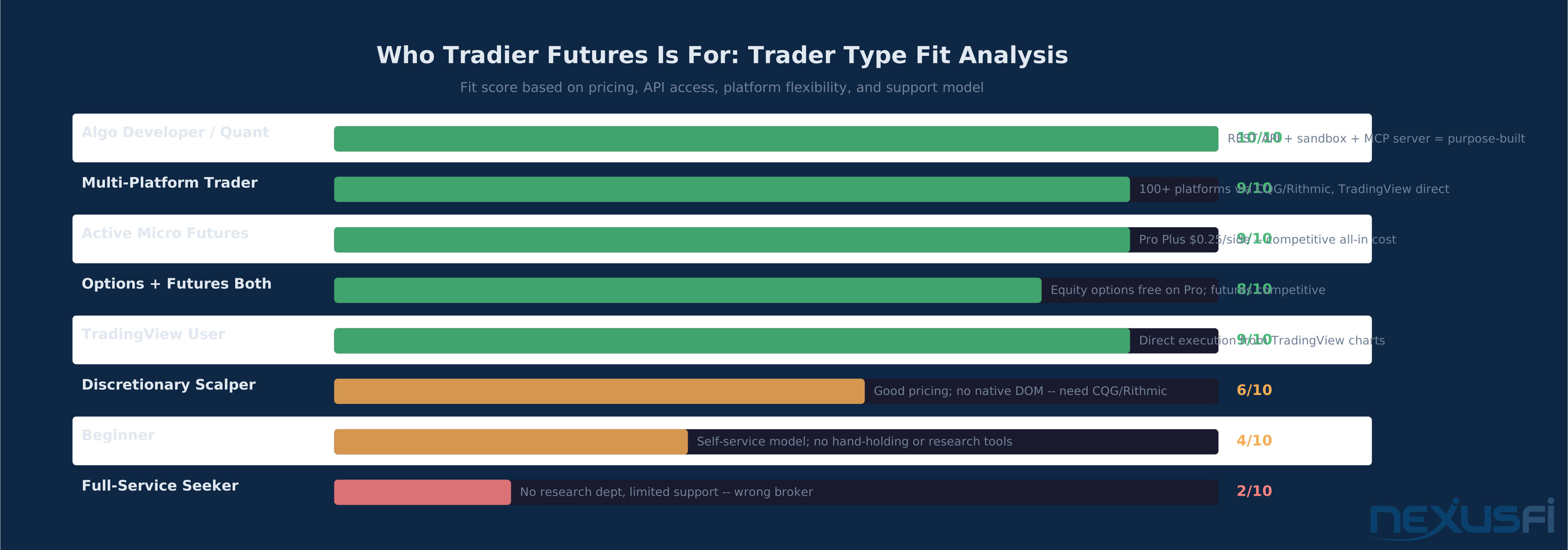
Algo developers and systematic traders. The REST API, sandbox environment, and hosted MCP server are built for you. Tradier is the brokerage that doesn't fight you when you want programmatic access.
Multi-platform traders. If you use TradingView for charting and want to execute there, or if you run NinjaTrader, Sierra Chart, or MultiCharts and want a different brokerage behind it, Tradier's CQG/Rithmic connectivity is the solution. You're not locked into a proprietary platform.
Active Micro futures traders. At Pro Plus ($35/month, $0.25/side), the all-in cost for Micro futures is competitive. Traders doing 150+ round trips per month will see meaningful savings versus paying $0.47-$0.92/side at traditional brokerages.
Options + futures traders. Tradier's Pro plan eliminates commissions on equity options entirely while maintaining competitive futures rates. If you trade both, the cost structure is unusually clean.
Developers building trading tools. Tradier's API is actively maintained, well-documented at docs.tradier.com, and includes both production and sandbox environments. The MCP server for AI agent integration is a current-generation feature.
Getting Started #
Account opening: Head to tradier.com and sign up. You'll need:
- Identity verification (standard KYC)
- Futures experience disclosure (NFA requirement)
- Funding ($500+ general, $5,000+ for Elite offer)
API token: After account approval, generate tokens at web.tradier.com/user/api. Production and sandbox tokens are separate.
Platform connection: If using TradingView, connect via the broker integration in TradingView's settings. For CQG-connected platforms (NinjaTrader, Sierra Chart, etc.), add CQG as a data/routing provider and configure your Tradier account credentials.
NexusFi Elite Members: Use the Elite offer link for the complete package — 12 months TradingView Essential, CME Level-1 data, and Pro plan pricing. Requires new account + $5,000 deposit within 30 days.
Link for Elite offer: nexusfi.com/elite_partner.php?do=process&offerid_30=1
Sandbox first. Before live trading, test your API connection, order routing, and any algorithmic logic in the sandbox (sandbox.tradier.com/v1). The sandbox is a genuine development environment, not a limited demo. Use it.
Futures Markets Available #
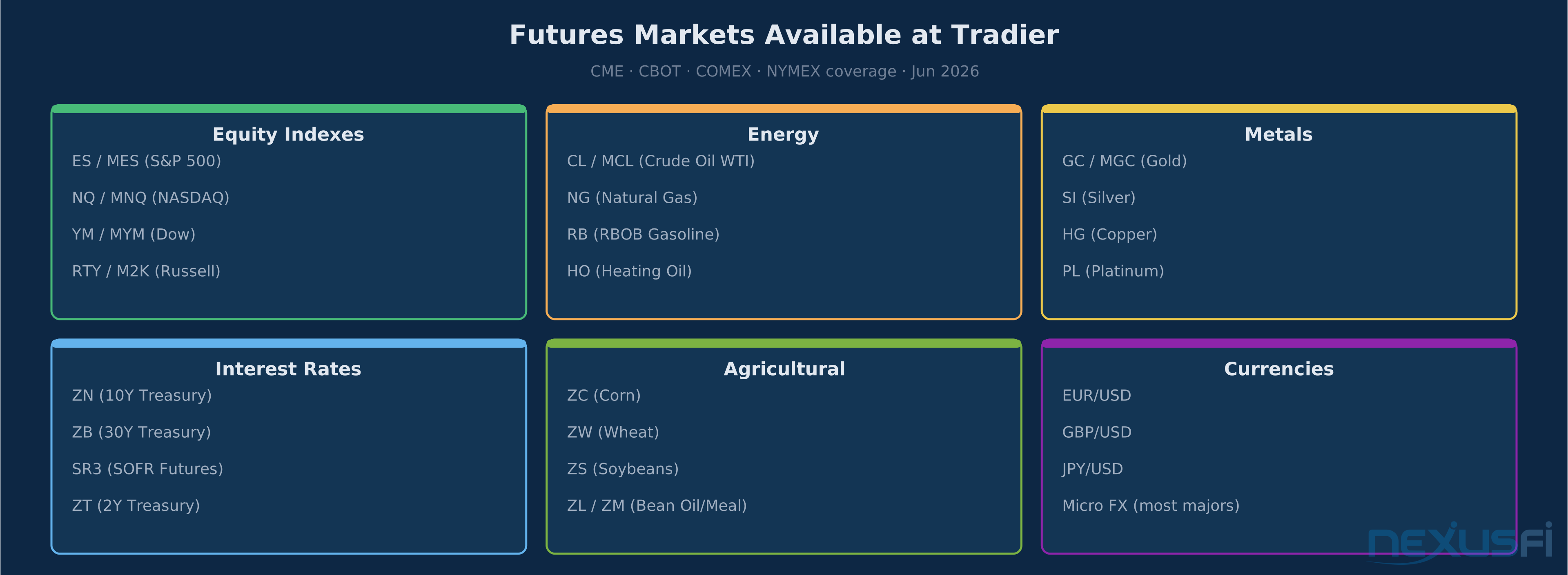
Tradier Futures covers the standard CME/CBOT/COMEX/NYMEX universe that most retail traders are interested in. You're not looking at exotic markets here — the focus is on liquid US-listed contracts.
Equity Indexes:
- ES (E-mini S&P 500) / MES (Micro E-mini S&P 500)
- NQ (E-mini NASDAQ-100) / MNQ (Micro E-mini NASDAQ-100)
- YM (E-mini Dow) / MYM (Micro E-mini Dow)
- RTY (E-mini Russell 2000) / M2K (Micro E-mini Russell 2000)
The Micro contracts are the practical starting point for most retail traders. At 1/10th the notional value of the standard contracts, Micros allow position sizing that standard accounts can absorb without excessive concentration risk.
Energy:
- CL (Crude Oil WTI) / MCL (Micro WTI)
- NG (Natural Gas)
- RB (RBOB Gasoline)
- HO (Heating Oil)
Metals:
- GC (Gold) / MGC (Micro Gold)
- SI (Silver)
- HG (Copper)
- PL (Platinum)
Interest Rates:
- ZN (10-Year Treasury Note)
- ZB (30-Year Treasury Bond)
- ZF (5-Year Treasury Note)
- ZT (2-Year Treasury Note)
- SR3 (SOFR futures)
Agricultural (CBOT): ZC (Corn), ZW (Wheat), ZS (Soybeans), ZL (Soybean Oil), ZM (Soybean Meal).
Currencies (CME): EUR/USD, GBP/USD, JPY/USD, AUD/USD, CAD/USD, with Micro FX available for most majors.
Note on market hours: Extended hours available — relevant for traders holding positions through overnight sessions or targeting Asia/Europe opens for index futures.
The full contract list covers what a retail futures trader would realistically trade. Niche contracts or smaller exchanges may not be available — verify specific contracts before onboarding if you have an unusual requirement.
The CQG vs Rithmic Question #
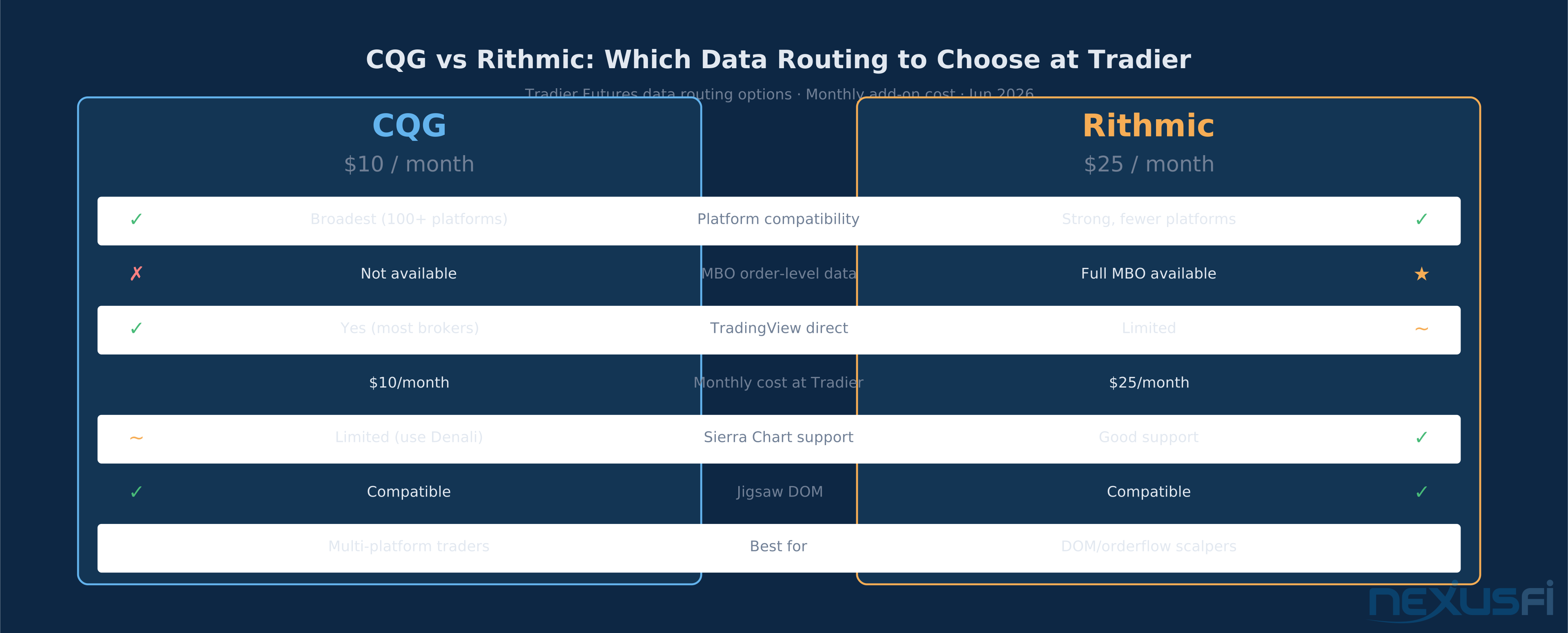
NexusFi members have debated CQG and Rithmic routing extensively. The relevant thread at Rithmic independent of broker? lays out the tradeoffs:
CQG ($10/month at Tradier):
- Broader front-end compatibility -- more platforms support CQG than Rithmic
- Generally well-regarded for execution latency at CME
- Required for TradingView direct execution at many brokers
- The industry's more widely deployed routing network
Rithmic ($25/month at Tradier):
- MBO (Market by Order) data capability -- see the full order book, not just price/size
- Strong DOM data quality
- Required for some specific platforms and institutional-grade data feeds
- Higher cost reflects the more detailed data offering
For most retail futures traders at Tradier, CQG at $10/month is the right choice. The $25/month Rithmic premium makes sense if you specifically need MBO data for advanced orderflow analysis or you're using a platform that only supports Rithmic.
As noted in a NexusFi discussion on data feeds and execution: "In a proper Rithmic vs CQG comparison on production, both route quickly to CME's matching engine." The execution quality difference at retail scale is minimal — the choice is mainly about data depth and platform compatibility.
If you're running NinjaTrader as your front-end with Tradier as the broker, CQG is the standard connection. @bobwest laid out the three-way relationship clearly in the Broker Other Than Ninja Brokerage thread:
The three-way relationship between platform, data feed, and broker is a recurring complexity in futures infrastructure that Tradier navigates cleanly through both networks.
Knowledge Map
Go Deeper
Build on this knowledgeReferences This Article
Articles that build on this topicCitations
- — Tradier Futures: Trey Lazzara, SVP - Ask Me Anything (AMA) (2026)“The API-first approach with 100+ platform integrations is solid -- TradingView direct execution alone is a significant draw for many here.”
- — Tradier Futures: Trey Lazzara, SVP - Ask Me Anything (AMA) (2026)“We offer both Rithmic and CQG, which are compatible with Jigsaw. I would suggest continuing to use Jigsaw if you are comfortable with it.”
- — Rithmic independent of broker possible? (2021) 👍 3“Rithmic: Have MBO and can see all order book. CQG: I think it is the cheapest choice with my US broker.”
- — Data feeds and execution - CQG, Rithmic, Tradovate (2025)“In a proper Rithmic vs CQG comparison on production, both route quickly to CME matching engines. The differences for retail traders are typically small.”
- — Broker Other Than Ninja Brokerage (2021) 👍 2“All of this involves the trade platform, your broker and Rithmic talking to each other. It is not just you and Rithmic in a vacuum.”
- — Tradier Pricing & Plans
- — Tradier Trading API Documentation
- — Tradier MCP Server
- — CME 2023 Fee Increases (MES +16%!) (2022) 👍 19“MES/MNQ/etc going from 30c to 35c. CME/CBOT/NYMEX/COMEX Exchange Transaction Fee Amendments Effective February 1, 2023.”
- — Costs associated with trading futures? (2020) 👍 7“In futures, the term commission usually just means the relatively small piece that goes to the broker, while commission and fees includes the data/trade network and exchange per-trade fees -- always compare total or all in charges.”